Beijinho do Brasil announce their second release with the highly anticipated follow-up from LA-based producer and multi-instrumentalist James Matthew Seven, featuring guest vocals on the A-side by Rio de Janeiro's Fabio Santanna.
Recorded in a small studio on the beach in Oaxaca, Mexico, "Feels Good, Do It" brings to mind a lost recording from Marcos Valle's time with Leon Ware. Funky and soulful with warm Fender Rhodes and a horn section reminiscent of Banda Black Rio, the tune is a breezy, mid-tempo ode to embracing life's pleasures. Originally with vocals in English, the track was translated and re-recorded in Rio de Janeiro by Fabio Santanna. Fabio has a long-established reputation in Brazil as a torchbearer of modern funk and boogie, continuing in the lineage of artists like Robson Jorge and Lincoln Olivetti. But with his releases on labels like Onda Boa and Dippin' Records (which sold out nearly instantly), his international reputation is steadily growing. He has a new 7" due out on Dippin' Records on October 10th, pushing his name to the forefront once again, right on time to generate more buzz for our next 45!
About the flip side, "Ilha Racional" (a nod to Tim Maia's Racional era):
I had this dream where I was in a dive bar discotheque somewhere in the Caribbean. A thick cloud of smoke hung in the air as the selector dropped this bass-heavy bop that had the whole crowd vibing. Then, out of nowhere, in walked Tim Maia with a bag of mushrooms. He proceeded to grab the mic and preach about this alien world of rational energy. Shit was bugged out. When I woke up, James Matthew Seven had sent me this track to check out.
quête:origin
- A1: Yaw - Where Will You Be
- A2: Flying Lotus Feat Andreya Triana - Tea Leaf Dancers**
- A3: Les Sins - Grind**
- B1: Noir & Haze - Around (Solomun Vox)**
- B2: Julien Dyne Feat Mara Tk - Stained Glass Fresh Frozen
- B3: Jitwam - Keepyourbusinesstoyourself
- C1: Dopehead - Guttah Guttah
- C2: Talc - Robot's Return (Modern Sleepover Part 2)**
- C3: Peter Digital Orchestra - Jeux De Langues**
- C4: Jai Paul - Btstu**
- D1: Beady Belle - When My Anger Starts To Cry**
- D2: Daniel Bortz - Cuz You're The One**
- D3: Joeski Feat Jesánte - How Do I Go On**
- E1: Nightmares On Wax - Les Nuits
- E2: Slf & Merkin - Tag Team Triangle**
- E3: Lady Alma - It’s House Music
- F1: Tirogo - Disco Maniac
- F2: Kings Of Tomorrow Feat April - Fall For You (Sandy Rivera's Classic Mix)**
- F3: Soulful Session, Lynn Lockamy - Hostile Takeover **Moodymann Edit
In 2016, a year after the 50th entry in the long-running series, none other but the iconic Detroit artist, DJ and producer Moodymann stepped up to helm the next landmark edition of DJ-Kicks, his first ever multi-artist DJ mix compilation. Following !K7's 40 th anniversary, this classic DJ-Kicks mix is now being repressed on coke bottle clear vinyl.
Born Kenny Dixon Jr., Moodymann is a one-of-a-kind electronic music icon, hailing from, and wholly synonymous with the Motor City. He is an outspoken, impossibly charismatic artist who has been putting a distinctive and soulful stamp on house and techno since the early 90s. Melting together jazz, funk, soul, blues and rock in captivating ways, he is responsible for some of electronic music’s most definitive tracks, EPs and LPs on labels like Planet E, Peacefrog and his own KDJ and Mahogani Music imprints. As able to serve up the sweetest and most sensual sounds as he is the darkest and most depraved grooves, his own unique voice and stream of conscious musings infuse expertly sought-out samples for music that is decisively alive and authentic.
Across 75 minutes and 30 tracks, Moodymann does not disappoint: despite being a notorious vinyl fetishist, Dixon’s aim is to present music of quality, not to one-up fellow collectors. Rather than serving up ridiculously rare or hard- to-find records, he instead focuses on creating a libidinous, blues-drenched mood that takes in heart-breaking soul, gorgeous hip-hop and love-fuelled house.
In addition to cuts from his own creative circle, the mix features 11 exclusive Moodymann edits. Like everything Kenny Dixon Jr. touches, his DJ-Kicks showcases the taste, skill, and soul of a dance music original.
Repress!
Undoubtedly one of the most addictive records of 2017, CamelPhat & Elderbrook's 'Cola' has been a defining musical moment of the year. Growing exponentially since its release, the track has captivated tastemakers, DJs and clubbers alike, topping charts and blowing up worldwide to become a true modern anthem. Leading on from the success of the original and some heavyweight remixes, three of which hit the Beatport top ten - for the first time on vinyl, comes a remix package set to continue 'Cola's' dance floor domination.
Rising superstar Franky Rizardo's suitably heavyweight remix comes correct with a club-friendly update that elevates the unmissable vocal hook and bottoms out the breakdown. Dario D'Attis' vinyl exclusive mix continues the club feel with rolling grooves, teasing breakdowns and shuffling hi-hats in a remix which packs a punch, guaranteed to get people moving from the get-go. Mousse T. flips the track completely, bringing those Glitterbox vibes to Defected, taking 'Cola' to the next level and going straight to Traxsource #1 in the process.
- On Green Dolphin Street
- Shadrack
- What Is This Thing Called Love?
- Count Every Star
- Moon River
- Gooden's Corner
- Two For One
High-definition audiophile pressing - 180g premium vinyl - the complete album plus bonus track from the same session, but not included on the original LP
This special edition presents the complete Grant Green LP 'Gooden's Corner' (1961) with an additional track recorded at the same session with saxophonist Ike Quebec joining the quartet on the seldom heard standard, Count Every Star by Bruno Coquatrix and Sammy Gallop. Grant Green - guitar Sonny Clark - piano Sam Jones - bass Louis Hayes - drums Ike Quebec - tenor sax (on 'Count Every Star' only) Rudy Van Gelder Studios, Englewood Cliffs, New Jersey, December 23, 1961. Original sessions recorded by Rudy Van Gelder & produced by Alfred Lion. "This is an album of real beauty and synergy between Green and pianist Sonny Clark, who along with Sam Jones on bass and Louis Hayes on drums rounds out the quartet. Green, an expert with standards, offers 'Moon River', 'What Is This Thing Called Love?', and 'On Green Dolphin Street'." - ****1/2 Michael Erlewine, All Music
Ace Records are delighted to reissue one of Parliament’s classic LPs, “Funkentelechy Vs. The Placebo Syndrome”. The album got to #2 in Billboard’s R&B chart and #13 on the Billboard Top 200 album chart.
Originally released in 1977, “Funkentelechy” found George Clinton and his crew on top form. Although best known for featuring their smash club hit ‘Flash Light’, every track on the album shines from ‘Bop Gun’ to ‘Wizard Of Finance’.
Ace are always known for going the extra mile and this reissue is not only pressed on 180gm vinyl but comes with the 8-page comic book that also graced the original issue.
There is no downstroke on this upstroke. This is the one.
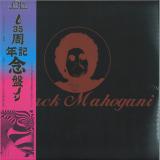
It’s been over 20 years since Kenny Dixon Jr., better known as Moodymann, released Black Mahogani—an album rich in atmosphere and emotion, offering a quintessential journey through deep house, soul, and jazz. Timeless yet modern, it’s an immersive and emotionally resonant experience that reflects the singular character of Detroit’s deep musical heritage.
Originally released in 2004, Black Mahogani is arguably one of Moodymann’s most revered and sought-after works. It completes the puzzle laid out by his rare and elusive KDJ 12” releases from the mid to late '90s. With the help of Detroit legends like the late Amp Fiddler, Roberta Sweed, and Norma Jean Bell, Dixon infused his analog soundscapes and samples with a new organic warmth—expanding the deep house genre while simultaneously paying homage to 1970s soul and cinematic soundtracks.
Dixon’s masterful control of tension—knowing exactly when to hold back and when to let go—makes Black Mahogani an enduring masterpiece. It's not just a landmark in electronic music, but a definitive statement in 21st-century Black American music.
Alan Vegas selbstbetiteltes Debüt-Soloalbum kam 1980 raus, zur gleichen Zeit, als Suicide ihr zweites Album "Suicide: Alan Vega and Martin Rev" veröffentlichten. Während Suicides Plattenlabel ZE Records das Duo in Richtung eines synthetischen Disco-Sounds drängen wollte, der von Moroders Produktion von Donna Summers "I Feel Love" inspiriert war, zog es Vega in eine andere Richtung. Er wollte tiefer in die Wurzeln seiner eigenen musikalischen Identität eintauchen, die von Blues, Rockabilly, frühem Rock ,n' Roll und seiner anhaltenden Liebe zu Elvis Presley geprägt war. Vega nutzte die Zeit zwischen den Aufnahmen mit Suicide, um seine selbst geschriebenen Songs auszuarbeiten, begann mit der Produktion seines ersten Albums und trat live auf, um diesen Sound weiterzuentwickeln. Wie auch in seiner bildenden Kunst schichtete Vega Klänge auf minimalistische, dynamische und bewusste Weise. Das Ergebnis war ein einzigartiges Album, das aus rohen Materialien entstand und tief in Vegas künstlerischer Vision verwurzelt war. Tracks wie die klassische Hymne "Jukebox Babe" mit ihrem schwungvollen Rhythmus und ihrer minimalistischen Selbstsicherheit fingen diesen Ansatz perfekt ein und wurden in Frankreich zu einem Hit. "Kung Foo Cowboy" hat einen südstaatlichen Touch und lehnt sich stark an den Blues an, während der goldene Pop-Glanz von "Ice Drummer" mit melodischem, aber klagendem Gesang, marschierenden Trommeln und einem geschmackvollen Mundharmonika-Solo überzeugt. "Bye Bye Bayou" ist ein eindringlicher Mutant-Rockabilly-Song, der den Rock der 50er Jahre mit Vegas exzentrischem Performance-Stil verbindet und später in der Coverversion von LCD Soundsystem aus dem Jahr 2009 neu interpretiert wurde, wodurch Vegas Solowerk einer neuen Generation vorgestellt wurde. In ähnlicher Weise würdigte die Coverversion von "Ice Drummer" durch The Flaming Lips Vegas Außenseitergeist. Jetzt von Josh Bonati anhand der Originalbänder neu gemastert und erstmals auf Streaming-Diensten verfügbar, wurde Alan Vega von Sacred Bones Records originalgetreu neu aufgelegt, wobei die rohe Intensität von Vegas Originalaufnahmen erhalten blieb und sie gleichzeitig für Hörer auf der ganzen Welt neu zugänglich gemacht wurden. "Alan Vega" ist mehr als ein Solo-Debüt, es ist eine Erklärung der künstlerischen Unabhängigkeit und Freiheit eines der einflussreichsten und kompromisslosesten Künstler New Yorks. Ohne die intensive Elektronik von Suicide, aber mit Vegas Außenseiter-Energie und Schärfe, übersetzt das Album den frühen Rock 'n' Roll durch einen Art-Punk-Filter, der sich als eigenständiges Kult-Meisterwerk bewährt hat.
The 17th sonic tale on Childhood Intelligence is Written, Produced & Mastered by German Electro artist E-Control. The Debut album entitled “D.N.E.”, presents a lifetime legacy compilation of Traxx, which were written and programmed throughout various years, ranging from 1996 - 2010. Inspired by the passion for 80s Electro, early Bleep, Techno and House - E-Control transforms sounds and rhythms into his own sequence - his own powerful & mystic D.N.A. engineered to the future.
Black[11,72 €]
Following his remix of Youthman by Echo Inspectors & Subset, Biodub returns to Primary Colours with his first original release for the label, the Dialogue EP.
The title track, Dialogue, shows Biodub’s familiar warmth and attention to detail, built around deep basslines, subtle textures, with a calm and reflective flow. It’s understated yet full of presence, a fine example of Biodub’s ability to communicate emotion through minimal elements.
Pablo Bolivar steps in for the Dream Dub Remake, offering a refined reinterpretation that expands the original into wider, dreamlike space. His version brings a smooth, rolling energy with gentle synth layers, flowing delays, and a steady, hypnotic rhythm that carries both warmth and clarity. It’s a standout moment on the release, highlighting the shared sensibility between both artists.
Grassland continues with a natural, organic movement, a balance of deep groove and open atmosphere, while Ubiport closes the record in a more introspective tone, marked by subtle echoes and restrained rhythm.Dialogue is a cohesive and thoughtful release that reflects the core sound of Primary Colours: immersive, detailed, and rooted in the deep dub tradition.
Green Marbled[11,72 €]
Following his remix of Youthman by Echo Inspectors & Subset, Biodub returns to Primary Colours with his first original release for the label, the Dialogue EP.
The title track, Dialogue, shows Biodub’s familiar warmth and attention to detail, built around deep basslines, subtle textures, with a calm and reflective flow. It’s understated yet full of presence, a fine example of Biodub’s ability to communicate emotion through minimal elements.
Pablo Bolivar steps in for the Dream Dub Remake, offering a refined reinterpretation that expands the original into wider, dreamlike space. His version brings a smooth, rolling energy with gentle synth layers, flowing delays, and a steady, hypnotic rhythm that carries both warmth and clarity. It’s a standout moment on the release, highlighting the shared sensibility between both artists.
Grassland continues with a natural, organic movement, a balance of deep groove and open atmosphere, while Ubiport closes the record in a more introspective tone, marked by subtle echoes and restrained rhythm.Dialogue is a cohesive and thoughtful release that reflects the core sound of Primary Colours: immersive, detailed, and rooted in the deep dub tradition.
Schneeweißes Vinyl. Zum ersten Mal seit seinem viralen Weihnachtsalbum ,A Joyful Sound", das 2020 rausgekommen ist, ist Kelly Finnigan (Monophonics) mit zwei neuen Original-Weihnachtsliedern zurück. ,I Can't Wait (For Christmas Time)" ist ein schwerer, aber entspannter Song mit einem geradlinigen Pop-Arrangement. Es ist dieser Rust-Belt-Soul-Sound mit den Harmonien, die südkalifornische Cruiser beflügeln: tief und emotional, mit genau der richtigen Instrumentierung, um Finnigans zarte Stimme in den Vordergrund zu rücken. Der Song wird auch von seiner Labelkollegin Kendra Morris und ihrer Band im Hintergrundgesang begleitet. Ähnlich wie frühere KF-Veröffentlichungen oder Perlen von The Escorts oder The Four Mints ist diese Platte für dich und deine Lieben gedacht, verpackt in hübsches Papier unter dem Baum bis zum Weihnachtsmorgen. Dann lass noch etwas Platz für Plätzchen und die B-Seite... ,Snowy Night In Ohio" fühlt sich an wie ein langsam fahrender Mitternachtszug, der sich von Cincinnati nach Memphis auf den Weg macht. Inspiriert von Finnigans erstem Winter in Ohio, seiner Liebe zu Gospelplatten und den Hornarrangements von Isaac Hayes. Dies ist ein wirklich herausragendes Instrumentalstück, das eiskalte Seele versprüht. Es enthält eine kurze Gesangsbotschaft von Finnigan, die sich wie ein Zeugnis und ein Herzensanliegen anfühlt. Mit dabei sind Terry Cole und Jimmy James von Colemine sowie Billy Aukstik und Morgan Price.
Grad_U returns to his legendary Redscale imprint with a re-press of one of the label’s most sought-after 12-inches. Originally released as part of the series that helped define modern dub techno, Redscale 02 showcases the Lithuanian artist’s unmistakable sound, deep, analog, and endlessly evolving.
Both sides carry Grad_U’s signature weight: hypnotic low-end movement, rolling chords, and perfectly balanced textures that blur the line between club tool and meditative listening piece. Once again, Redscale reminds us why it stands as one of the most respected labels in the global dub techno scene: no hype, no compromise, just deep, timeless sound.
- A1: Saturday Night Jamboree
- A2: My Baby Is Gone
- A3: In The Ghetto
- A4: Rockers
- A5: Thanks And Praise
- B1: What’s Wrong With The Youths
- B2: Choice Of My Own
- B3: Be Sure Of Your Brethren
- B4: Dreadlocks Postman
- B5: Live Up
- A1: Silver Rock
- A2: Satta Satta
- A3: Big M Jamming
- A4: Wipe Your Tears
- A5: Unity Rock
- A6: Johnny Clarke - I'll Never Fall In Love
- B1: Baldhead Ransom
- B2: Virgo Special
- B3: Walking Stick
- B4: Down False Leader
- B5: Head Of A Devil
- B6: The Best Version
Another excellent find here, an unreleased dub/instrumental album compiled by Lloydie Slim at the end of the 70s, featuring exclusive dubwise & instrumental cuts to many of his rhythms from earlier in the decade. As a bonus we've added 2 more tracks to the original 10 track album tape - the vocal & dub cuts to Johnny Clarke's "I'll Never Fall in Love Again", one of Slim's personal favorites of his productions. This single was originally released in 1975 in JA on his Don One label, and again in New York a few years later on his namesake Ivanhoe the Conqueror label. This album is a great listen which reminds us of the classic Channel 1 Revolutionaries instrumentals of the mid/late 70s.
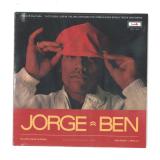
La Matta Records proudly presents the first official 7-inch, Tutto Ben, a rare “Italo-Brazilian” mini EP by iconic singer, guitarist, and composer Jorge Ben Jor. This edition includes Ana Maria (Remastered), originally recorded at the Teatro Sistina in Rome in 1978, while Falcão and Lorella were first released in 1983 on the CGD (Maracanà) label, part of Warner Music Italy, celebrating AS Roma’s league title. This 7-inch captures a pivotal moment in Jorge’s career, singing in Italian with Banda do Zé Pretinho in Rome. Acclaimed for his radiant spirit and admired by the genius art director Franco Fontana — who invited him to Rome several times — this fully remastered gem is now available for collectors and enthusiasts on vinyl.
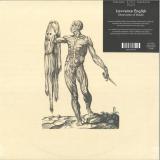
Do you remember the last time you were breathing consciously? Either way, you are likely doing it now. On his new album Observation of Breath« for the Swiss-based Hallow Ground label, Lawrence English worked exclusively with an organ for four compositions that are exercises in »maximal minimalism,« as their creator himself notes in a nod to Charlemagne Palestine, who coined this term. While it seems somewhat fitting that those four pieces based on a steady flow of air were conceived and recorded in a situation of accelerated standstill caused by a respiratory disease, the Room40 founder is not so much concerned with capturing the zeitgeist than rather incorporating the spirit of time itself. »It is a record about presence and patience,« he explains. Exploring the unique sonic affordances of a singular instrument, »Observation of Breath« is not only devoted to the durability of sound but also to its density. That it marks his debut on Hallow Ground after having shaped its sound by mastering most of the label’s releases in recent years is just as fitting then as its release following albums by Kali Malone and FUJI|||||||||||TA, whose innovative work with organ instruments have facilitated a rediscovery of their possibilities.English’s compositions however are neither directly indebted nor responding to these musicians. His exploration of the organ’s many facets started a decade ago when the composer was given access to an instrument built in 1889 that is presently housed at The Old Museum in Brisbane. After it had already played a crucial role on his seminal albums »Wilderness Of Mirrors« and »Cruel Optimism,« last year’s self-released »Lassitude« was the first record that English entirely composed and recorded with that instrument. »During the soft lockdowns, I spent many days playing to an empty concert hall, recording the pieces that became ›Lassitude‹ and then, this album,« says English in regards to an unfortunate situation that fortunately provided him with time and space—two major themes but also key qualities of the four new compositions. In this sense, he goes on, »Observation of Breath« resolves a number of the questions originally raised by »Lassitude.
The Danish label arbitrary presents Framework / Zwischen Remixes – a remix by German artistJan Jelinek and one by musician & label founder Mads Emil Nielsen originally made for a digital compilation, now published on 7" vinyl (arbitrary22).
For the CRXSSINGS release, Jan Jelinek remixed Nielsen’s Framework 10, a track from the Framework Book/CD (arbitrary01) based on sequences/recordings of sine waves and noise.
Side B: a rework by Mads Emil Nielsen of Jelinek’s voice collage and electronic sounds, from Zwischen – Marcel Duchamp, would you like or expect people to spin the wheel on your kinetic object Roue de Bicyclette?
Framework 10 (Remix) written & produced by Jan Jelinek, Berlin, 2019.
Zwischen/Marcel Duchamp (Remix) written & produced by Mads Emil Nielsen, Copenhagen, 2019.
Graphic design + score (cover, back: Framework 10) by Mads Emil Nielsen.
Mastered and cut by Kassian Troyer at D&M, Berlin.
A chopped-and-screwed love letter to the sounds of rebajada – half-speed cumbia, pioneered by Sonido Dueñez in the 1990s, and born from an overheated turntable motor that didn’t make the crowd stop dancing. With Debit’s treatment, rebajada becomes an ethereal, at times intense ambient tapestry that’s also a history lesson.
Spend any amount of time pacing the streets of Monterrey, the bustling city in the north of Mexico where Delia Beatriz, aka Debit, grew up, and you’ll be sure to catch traces of cumbia echoing from Bluetooth speakers, DIY soundsystems, or car stereos. An Afro-Latin dance form and »practica cultural« originating in Colombia in the early 19th century, cumbia evolved rapidly in the early 1900s, as a localised sound played on drums and flutes quickly modernised to integrate European instrumentation like the accordion. When it reached Mexico in the 1940s, the sound shifted again, fusing with mariachi styles and integrating further vallenato folk elements. Eventually, cumbia spread across the entirety of Latin America, splintering into a spectrum of different musical styles such as chicha in Peru, and cumbia villera in Argentina. And over in Monterrey, cumbia inadvertently found its own idiosyncratic groove.
From the 1950s to the 1970s, waves of immigrants from across Mexico and Latin America headed to Monterrey to find work, making a home in Colonia Independencia. Colombian cumbia records, shipped in from Mexico City, Houston, and Miami, became the soundtrack of the neighbourhood, relaying familiar stories to a rural working class adjusting to their new industrial reality. The sound struck a chord with locals, and huge street parties hosted by ramshackle soundsystems known as sonideros unified the diverse community. So when cumbia rebajada materialised serendipitously in the 1990s, it emphasised and highlighted the memory distortions at the heart of the immigrant experience. Local record collector, selector, and sonidero Gabriel Dueñez had been playing cumbia for hours one night when disaster struck: his turntable’s motor overheated and slowed down, turning the music into a warped groan, with half-speed voices echoing over wobbly accordion drones and splashy drums. But the crowd kept dancing, and Sonido Dueñez realised he’d struck gold – cumbia rebajada was born.
Over the next few years, he dubbed a popular series of mixtapes, hawking them at the flea market on the dried-up Santa Catarina riverbed beneath El Puente del Papa, the bridge that links downtown Monterrey with Independencia. These woozy archives became the stuff of legend, poetically but subconsciously shadowing DJ Screw’s series of epochal cassettes that appeared over the border in Houston. Beatriz uses Sonido Dueñez’s first two tapes as the starting point for »Desaceleradas«, entering into a dialogue with time, culture, and geography as she recalls the sonic ecosystem that surrounded her decades ago, long before she emigrated to the USA. If 2022’s acclaimed »The Long Count« was an attempt to recover concealed pre-Columbian history in the face of colonisation, »Desaceleradas« jumps forward, figuring out how memory and shared celebration can resist a more contemporary form of cultural erasure. As AI systems scrape, blend, and decontextualise culture around us, leaving vapid slop, »Desaceleradas« proposes a slower, more careful, and ultimately more human kind of engagement. It’s an archive with a pulse.
On »Empty Room,« David Granström works with slow transformations, cyclical and isometric patterns as well as just intonation as a way to create harmonic stability, allowing his long-form pieces to develop their own unique temporal and spatial qualities. A prolific figure in Stockholm’s experimental drone scene and a collaborator of Hallow Ground label mates Maria W Horn and Mats Erlandsson, the Swedish composer navigates through moments of quietude and crushing volume on these five tracks. Sonically and atmospherically, the pieces on »Empty Room« simultaneously call to mind Fennesz’s most meditative work or the physical experience of seeing Sunn O))) live, blending guitar recordings and synthesised sounds with forceful effects similar to those of Mario Díaz de Leon’s Oneirogen project while still being as moving and delicate as Alessandro Cortini’s solo work. The album is marked by melodies and harmonies that are the product of a peculiar working process that turned the composer into an intent listener collaborating with, rather than simply using technology.
Having been invited by the self-organising artist group The Non Existent Center for a residency to Ställbergs Gruva, a defunct iron ore mine in Sweden’s Bergslagen region, Granström took his guitar as a starting point for his compositional work that heavily relies on real-time sound synthesis. »I seldomly use the instrument as a sound source in the final compositions and rather transcribe and orchestrate the harmonic structures using sound synthesis,« he explains. »On this album however, I chose to include the actual recordings of the guitar in order to extend the spectra between non-referential synthetic sounds and embodied referential sounds.« Working with precise tunings in order to blend the timbre of the synthesis with the harmonic structures of the composition, he created composite sound objects in which the harmonic elements blend into each other.
Through the re-amplification of synthetic musical materials from the inside of the abandoned mine, his original compositions were enriched with site-specific sound qualities before he further refined them in a singular working process. Granström works with algorithmic and generative processes, using the SuperCollider programming environment and thus blurring the lines between generative and creative forms of composition. »One of the things that I like about this way of working is that it creates a distance between myself as a composer and myself as a listener of the music that is produced entirely by the system,« he says. Granström’s technologically aided eschewing of the conventions of composing doesn’t make the end result any less personal, however. By listening again and again to the newly generated output, Granström simply took on a different role in the process of finalising the music, with the technology and the sounds becoming his co-authors.
By creating systems that generate music, he gains a new perspective on (musical) time, says Granström. »There doesn't have to be a fixed length to the music at all,« he explains. »And by writing music with this in mind, my focus tends to shift towards writing cyclical structures that gradually change and transform over time.« Simple parts, in other words, that emerge as the five complex wholes that form »Empty Room,« a record that itself seems to take on different forms with every new listen.
For AI-41 Astral Industries presents a vinyl reissue of Robert Henke’s multifaceted concept album ‘Layering Buddha’. An erudite masterclass on sampling and composition, ‘Layering Buddha’ encapsulates the material process of metamorphosis and a well of nascent, ever-present potentialities. This new edition comes remastered by Henke himself.
Originally released in 2006, ‘Layering Buddha’ began with a curious encounter with the ‘Buddha Machine’ - a pocket-sized, battery powered playback device that, over the past two decades, has quietly achieved a cult status around the world. Conceived by the Beijing-based group FM3 (Christiaan Virant, Zhang Jian), the machine takes inspiration from Tibetan Buddhist prayer boxes and consists of nine sound loop compositions of varying length, which can be toggled with a single switch. Due to low production cost and manufacturing imperfections, each Buddha Machine is unique, giving slight variations in sound, pitch and duration.
Using a state of the art A/D converter Henke made high quality recordings from a single machine, providing the source material for the album. Through various processing and arrangement methods, new pieces emerged, most of them all deriving from a single source loop. The pieces were then set up on the computer as generative arrangements, living as continuously permutating structures that could theoretically go on forever - just as the loops do within the Buddha Machines…
The final pieces featured on the album are rendered excerpts of these infinite permutations, and therefore exist as momentary views on a perpetual machinery, as opposed to closed works. Upon initial exploration, it also became a natural development to format the work into an immersive multi-speaker performance - which premiered on January 31, 2007.
Within the music, subtle artefacts and idiosyncrasies are transmuted into new realms of texture and timbre. Through the extractive hand of subtle augmentations, an array of ethereal dimensions emerge from the vast unseen ocean. Suspended in a sense of timelessness, their undulating rhythms point to a pool of endless mysteries.