We Jazz Records is delighted to present the first ever vinyl release for two modern classic tracks by Swedish organist Eric Malmberg. Originally released in 2007 by the label Häpna on Malmberg's second solo album "Verklighet & Beat", the pair of tunes herein serve as proof of Malmberg's remarkable artistic vision, echoing both the pure pastoral beauty and the irresistible groove of his work. This release, part of the ongoing 7" series by We Jazz Records, follows the label's Artistic Director Matti Nives's 10+ years of obsession with the aforementioned Malmberg album after an initial chance encounter with the side A track on a WIRE Magazine compilation in 2007.
"Eric Malmberg's music is a small miracle. I don't want to call him a genius, because I don't want to jinx him. But I will say that he's a complete original, in addition to being a vastly talented musician. I will also say that his recordings and the two performances that I saw by Sagor & Swing merit a place on a short list of most enjoyed musical experiences of the last half decade. I could bleat about the quality of the work, but "most enjoyed" to me carries the stronger charge." – David Grubbs, New York, March 2007
"A special mention needs to go out to the phenomenal and totally bonkers 'Till minne av Lilly Lindström' a track which starts with a clean break, builds into dancefloor abusing Hammond-hammering mayhem and then ends up with lush string orchestrations and disco-lite sweeps. Insane and more enjoyable than you could possibly imagine - an album to totally lose yourself in, and one for anyone looking for something just that little different. Huge recommendation." – Boomkat
Buscar:origina
- A1: Robert Pico - Le Chien Fidèle
- A2: Annie Girardot - La Femme Faux Cils
- A3: Spauv Georges - Je Suis L'état
- A4: Zoé - Zoé
- A5: Jacques Da Sylva - Fou
- A6: Valentin - Je Suis Un Vagabond
- A7: Jacques Malia - Histoire De Gitan
- A8: Bernard Jamet - Raison Legale
- B1: Jean-Pierre Lebort - Barbara Au Chapeau Rose
- B2: Les Concentrés - Fils De Dégénérés
- B3: Les Missiles - Publicité
- B4: Hegessipe - Le Credi D'hegessipe
- B5: Marechalement Votre - Ethero Disco
- B6: Mamlouk - Decollez Les
- B7: Mozaique - L'amour Nu
- B8: Jean-Marc Garrigues - Je Dis Non
- B9: Penuel - Astronef 328
The journey through French-speaking pop archives continues with this fifth volume, packed with fuzz, gimmicks, and dissent. Far from the charts, the selected tracks display a great creative freedom, often backed by corrosive humor. Welcome to the surprising, kaleidoscopic, and colorful world of the late sixties and early seventies, Wizzz!
Born in Montauban, Robert Pico stumbled into music by chance when he met René Vaneste, then artistic director at Pathé-Marconi. René brought him to Paris to record his first 45 RPM EP in 1964. A year later, Pierre Perret introduced him to Vogue, where he recorded his second album with Claude Nougaro’s orchestra. Sylvie Vartan then introduced him to RCA, where he recorded four singles, including the astonishing "Chien Fidèle," a track backed by a hair-rising fuzz guitar. Alongside his solo career, he also composed for other artists like Alain Delon (the song was recorded but remains unreleased), Magali Noël, Bourvil, and Georges Guétary. In the Paris of the sixties, he mingled with Mireille Darc, Elsa Martinelli, Marie Laforêt, France Gall, Françoise Hardy, Petula Clark, Régine, Dani, Serge Gainsbourg, Joe Dassin, Franck Fernandel, Charles Level, and Roland Vincent. Despite his efforts and winning a Grand Prix Sacem for his final record, Robert Pico didn’t achieve the expected success in show business and decided to leave Paris and return to the Southwest, where he devoted himself to writing. He is the author of 23 books (including Delon et Compagnie, Jean-Marc Savary Editions 2025, a memoir about his youth and his many encounters). Today, he is relieved to never have become a celebrity and devotes himself to his work with passion.
In 1969, the Franco-Italian movie Erotissimo was released, directed by Gérard Pirès (who later directed Taxi in 1998, written and produced by Luc Besson). This pop comedy features Annie Girardot, Jean Yanne, Francis Blanche, Serge Gainsbourg, Nicole Croisille, Jacques Martin, and Patrick Topaloff. The soundtrack was written by Michel Polnareff and William Sheller, with lyrics by Jean-Lou Dabadie. "La Femme Faux-cils," performed by Annie Girardot. It recounts the feelings of a rich CEO's wife who seeks to develop her sex appeal under the influence of advertisement and magazines. Groovy, sparkling and light, this track, with ITS lush arrangements humorously critiques consumer society and feminine beauty standards.
“Je suis l’Etat” (1967) is the flagship track of the first EP by singer-songwriter Spauv Georges, aka Georges Larriaga, better known as Jim Larriaga (1941-2022). Born into a family of bakers, the young man was initially planning to become a hairdresser when he discovered English-speaking music through Elvis Presley and the Beatles. After this revelation, he decided he would become a songwriter and gave himself five years to succeed. He recorded his first two EP’s independently for RCA under the pseudonym Spauv Georges; meaning “that poor George”, a nickname given to him by the mother of her friend Jean-Pierre Prévotat (future drummer of the Players, Triangle, or Johnny Hallyday). Portraying a depressed and eccentric young man, Spauv Georges created corrosive and amusing songs that didn’t reach a wide audience, despite a TV appearance with Jean-Christophe Averty.
Supported by his loyal friend and fellow songwriter Jean-Max Rivière, Georges Larriaga met the future singer Carlos in the early '70s, then Sylvie Vartan’s assistant. He wrote songs for Carlos, including the popular "La vie est belle," "Y’a des indiens partout," and "La cantine", which went onto become a huge hit in 1972. He also composed for Claude François (“Anne-Marie”, 1971), Charlotte Julian (“Fleur de province”, 1972), helped launch child singer Roméo (who sold 4 million records), and later wrote the hit "Pas besoin d’éducation sexuelle" (1975) for the young Julie Bataille. In 1971, Jim recorded an album for Disc'Az: “L’univers étrange et fou de Jim Larriaga”, which featured pop gems like “La maison de mon père”.
The story of the song "Zoé" began when Pierre Dorsay, artistic director at Vogue Records, asked Swiss singer and musician Pierre Alain to write a song for a new female singer. The inspiration came when he realized that Zoé (the artist's name) was also the name of France's first atomic battery, created in 1948, which consisted of uranium oxide immersed in heavy water! The lyrics reflect a bubbling energy that must be handled with caution, while the instrumentation echoes this atomic theme, notably with the use of a theremin.
Zoé’s career lasted only as long as a single 45 RPM, but it seems Christine Fontane was the vocalist behind this pseudonym, who is known for several EPs, a good "popcorn" album in 1964, and a handful of children’s singles in the '70s. Regardless, the photograph on the cover is of a different girl entirely.
Later, Pierre Alain continued his career, writing songs for himself, Marie Laforêt, Danièle Licari, Alice Dona, Arlette Zola (3rd place in Eurovision 1982), and achieving multiple gold and platinum records in Canada. Also an inventor with several patents, president of the Romande Academy, and head of the French Alliance in Geneva, he now composes atonal music, books, and poetry. Moreover, he is also the host of "Les Mardis de Pierre Alain" at "Le P'tit Music'Hohl" in Geneva.
Filled with oriental choruses and fuzz guitar, "Fou" is from Jacques Da Sylva's only EP released by Vogue in 1967. Despite the quality of this recording, all traces of this singer disappear after this first effort.
Valentin is a baroque pop singer born in Belgium. He is the songwriter and composer of most of the tracks on his three singles released in the late 60s in Canada. A legend says that he reincarnated himself as Jacky Valentin during the 1970s for a rock'n'roll revival career in Belgium, but his older brother sadly debunked this story. Valentin's first two singles were arranged by Claude Rogen, a Parisian session pianist who had come to Canada to promote the song “Mister A Gogo”, a cover of David Bowie’s “Laughing Gnome”, adapted by singer Delphine, his wife at the time. Far from his usual network, Claude Rogen arranged music for Polydor, including the arrangements for “Je suis un vagabond” in 1969, a jerk tune with string arrangements and a furious optimism.
Jacques Malia wrote, composed, and recorded his only 45 EP for Festival in 1966. “Histoire de gitan” is an incredible beat track with bohemian scat that tells the story of a gypsy musician who came to Paris to make it in the Music-Hall, to no avail. The hero of the song and its author probably shared a similar fate, as Jacques Malia faded into anonymity after this remarkable attempt.
Bernard Jamet recorded two EPs for Barclay in the late sixties and co-wrote several songs with Christine Pilzer, Pascal Danel, and prolific songwriters Michel Delancray and Mya Simile. The track “Raison Légale” (1968), his masterpiece, immerses the listener in a courtroom right when a murderer is being judged, with jerk rhythm and free arrangements. A unique, paranoid, judicial, and psychedelic oddity.
Jean-Pierre Lebrot-Millers started his career in show business in 1967 as a singer and songwriter for the Philips label. After three singles, he wrote several songs of a new kind with his friend Pierre Halioche, in the midst of the sexual liberation movement and the democratization of drugs. With provocative lyrics, “Les filles du hasard” and “Barbara au Chapeau Rose” were released on a Philips singles in 1968. The character of Barbara was inspired by a queen of Parisian nightlife during the psychedelic years: model Charlotte Martin, who dated Eric Clapton from 1965 to 1968, then Jimmy Page from 1970 to 1983. Jean-Claude Petit’s arrangements, with a table-filled intro, soul brass, and Hendrixian guitar, emphasize the flamboyance of a hedonistic and sexy character, whose dog is named Junkie because “Junkie est un nom exquis”! The track was recorded live in three takes with a full orchestra.
Upon its release, the record was censored by Europe 1 and RTL due to its references to drug use. Jean-Pierre Lebrot was then banned from the airwaves and later dismissed by his record label. He changed his artist name to Jean-Pierre Millers, while his companion Pierre Halioche became D. Dolby for a new dreamy composition, “Chilla”, which Jean-Pierre produced himself with arrangements by Jean Musy. Once again, the song was immediately censored everywhere. After this setback, he decided to stop singing and started taking on odd jobs to support his Swedish wife and their son until the day he met Jean-Pierre Martin, then production manager at Decca, who had worked with Manu Dibango. Martin offered Jean-Pierre Lebrot-Millers, then employed at Rank Xerox, the position of artistic director at Decca. He accepted and became, a year later, promotion director (radio, press, TV). He worked on Julio Iglesias’s first album for Decca, which became a massive hit and allowed him to meet Claude Carrère. The latter asked him to write new songs and find their performers, much like a “talent scout.” It’s through him that Jean-Pierre discovered Julie Pietri and Corinne Hermès. He composed “Ma Pompadour” for Ringo, Sheila’s husband, and took the microphone again for the syncope hit “Rendez-Vous” in 1982.
That same year, Jean-Pierre Lebrot-Millers tried to release a track for which he had heavily gone into debt: “Si la vie est un cadeau”. Having recorded it in London, he presented it to numerous professionals, all of whom refused to get involved. The same thing happened with Antenne 2 and the Sacem when he proposed the song as France’s entry for Eurovision. He then met Haïm Saban, who was producing cartoon soundtracks and had just launched the Goldorak theme song. Saban, having listened to the song, declared it had the potential to become a hit. He sent Jean-Pierre and Corinne Hermès to meet the CEO of the Luxembourg radio and television network. The latter received them, asked to hear a verse and chorus a cappella in his office, and immediately hired them to represent Luxembourg at Eurovision 1983. They reworked the arrangements and recorded a new version with Haïm Saban as co-producer. The song ended up winning Eurovision 1983, a great comeback for our hero. He continued producing and hung out with the band Nacash in Belgium when a couple came to introduce their daughter for an impromptu audition in a hotel room. The girl sang “Les démons de minuit” while dancing to a radio cassette. Impressed, he had her take singing lessons for a year and composed a song for her (for which he had the melody and title, but no lyrics). This required him to go on the hunt for a lyricist, who ended up being Guy Carlier. They recorded the song, which was initially a ballad, at Bernard Estardy’s CBE studio, and gave the singer a new name: Melody. They showed the song around their industry network without success. Later, Estardy called Jean-Pierre to suggest changing the rhythm and making it pop-rock. Orlando, Dalida’s brother, liked the result and decided to co-produce the track. “Y’a pas que les grands qui rêvent » became a classic hit. The song has since been covered by Juliette Armanet (as a ballad, like the original) and Valentina.
Born into an aristocratic Breton family, Hervé Mettais-Cartier worked as a DJ at Queen Kiss, a nightclub in Poitiers, where he formed the band Les Concentrés with Michel (an actor) and Christian (a radio technician). Together, they created a repertoire of whimsical songs (“Ma bique est morte”, “J’suis un salaud”, “Fils de dégénéré”...) that they performed on stage dressed in white (in homage to “concentrated milk”). They performed at Bliboquet and Olympia in 1968 for the 10th edition of the “Relais de la chanson Française” organized by L’Humanité-Dimanche and Nous les Garçons et les Filles, sponsored by Pepsi Cola. Winners in the author-composer category, alongside Danish singer Dorte, their visibility allowed them to record a 45, and appear on television in Jean-Christophe Averty’s show. The A-side of the disc features Bruno le ravageur, a casatchok dedicated to Bruno Caquatrix, the director of Olympia, nicknamed in the song “Coq Atroce” or “croque-actrices”. The B-side is dedicated to “Fils de dégénéré”, a quirky tribute to Hervé's aristocratic roots, mixing absurdity with sophisticated vocal harmonies.
After Les Concentrés, Hervé Mettais-Cartier formed the duo La Paire et sa Bêtise with his friend Olivier Robert. They performed in Parisian cabarets and toured with Pierre Vassiliu. In the late 1970s, Hervé began a solo career. He recorded two albums for the Motors label in 1978 and 1979, which did not achieve their anticipated success due to lack of promotion. In 1980, he met Bernadette, with whom he started a family and created a “Chansons à voir” (songs to see) show that he performed until his death at the end of 2024.
Publicité comes from the final EP by the Missiles (Ducretet Thomson, 1966), a disc that also includes “La (nouvelle) guerre de cent ans”, featured on Volume 4 of our Wizzz! series. Please refer to the booklet for the story of the band.
“He’s 1.82 meters tall, 28 years old, weighs 135 kg, is black and Belgian”: this is the description of singer Hegesippe on the back of his sole single (Decca, 1967). He appears on the album cover wearing a Greek toga, like a hippie gag – we are at the end of the year 1967. In “Le crédo d’Hegesippe”, this former bodyguard of Antoine and the Charlots plays the delightful card of the thick brute converted to Flower-Power and non-violence, with arrangements by Jean-Daniel Mercier, aka Paul Mille.
“Ethéro-disco” was released on a promotional record for clients of the Maréchal company (Liège, Belgium) for the New Year 1979. Over a funky rhythm, celebrity impersonations (Brigitte Bardot, Jacques Dutronc, Fernandel…) deliver an enigmatic text about pharmaceutical products like ether, bismuth, and aspartate. The track was composed by Dan Sarravah (responsible for Joanna's “Hold-up inusité” featured on Wizzz! Volume 3) and Tony Talado, who was also a singer (one 45 in 1967), songwriter (with over a dozen credits between 1964 and 1985 in various styles from surf music to disco), author (Devenez Végétarien, Dricot Editions, 1985), ad designer, and psychologist.
Décollez-les is on the A-side of Mamlouk's only single, a pseudonym for Marsel Hurten, who is known for his work on several EPs in the late sixties, as well as composing music for Hervé Vilard’s “Capri, c’est fini”, Claude Channes' “La Haine”, Annie Philippe’s “On m’a toujours dit”, and Nancy Holloway’s “Panne de Cœur”.
This strange song, with Afrobeat horns and absurd dialogues between a chef and his kitchen staff, is the result of a collaboration between Marsel Hurten and one of his neighbors, a photographer from Pavillon-sous-Bois (93), where the musician settled after returning from the Algerian War. A music video was shot to promote the record.
Marsel Hurten was born in Tourcoing (59) into a musical family. At a young age, he joined the brass band founded by his grandfather, playing the piston before studying trumpet at the conservatory, as well as teaching himself how to play the guitar. As an orchestra musician, he toured in France, Belgium, Germany, and England. He released a series of solo 45’s between 1965 and 1968 for the DMF and Az labels before stopping recording to focus on working for other artists (Gilles Olivier, Noëlle Cordier…).
“L’amour nu” (Vogue, 1971) is the work of the short-lived Belgian band Mozaïque. The track, written by singer Jacques Albin, closely resembles another of his compositions, “Carré Blanc”, which he recorded in 1969 for Disc’AZ.
Represented by the Lumi Son micro-label based in Marignane (Côte d'Azur), Jean-Marc Garrigues released two 45 RPMs in the late sixties, defending the French jerk sound. The song “Je dis Non” is a short, joyful ode to youth, pop music, and rebellion.
Songwriter and performer Jacques Penuel released three singles. The first one, “Astronef 328” (Fontana, 1969), features a dizzying series of chords punctuated by sound effects, a sci-fi story, and arrangements by Jean-Claude Vannier.
We would like to sincerely thank Pierre Alain, Moon Blaha, Marsel Hurten, Bastien Larriaga, Jean-Pierre Lebrot-Millers, Bernadette Mettais-Cartier, Robert Pico, Olivier Robert, Claude Rogen, Micky Segura.
- A1: Mirai (Léviathan)
- A2: Adieu (Rue De La Victoire)
- A3: Sillons (Abyssinie)
- A4: Turquoise (La Fête Noire)
- A5: L’averse (Vendredi)
- B1: Tête En Bas (88888888)
- B2: Bol Chaud, Bol Froid
- B3: Filmer Du Feu (Inline Twist)
- B4: Water Signs (Saint-Donatien)
- B5: Le Malchin (Bleu Sous-Marin)
- B6: Loin De Vous (Gravité)
- B7: Mi Rey (Léviathan)
Here, Flavien departs from his usual creative process to embrace collaboration—because plouf! (Léviathan) is also the story of a dive, his first collective adventure with musicians he had always dreamed of working with: Michelle Blades (guitar), Kiala Ogawa (keys), Akemi Fujimori (bass), Cédric Laban (drums), and Thibaud Merle (winds).
Reworking these songs is a way of revisiting forgotten musical landscapes, shedding new light on them with a different perspective. It’s about transforming a solitary electronic record into a collective piece by exploring new textures and instrumental approaches.
With this album, Flavien Berger uses his early tracks as raw material—as if the 2015 Léviathan were now a kind of demo from which to extract the essence and create something entirely new. The project, like the music that drives it, is rooted in the idea of reinvention.
The result is a fresh sonic exploration where Léviathan’s tracks take on new forms—some staying true to their original versions, others completely reimagined, blending past and present.
- A1: Tomaga - Dub Divers
- A2: Zzmmyyhh - Ypy
- A3: Kuzaliwa Upya - Hieroglyphic Being
- A4: Hilal - Tarek Yamani
- A5: Vaguement (Haddadi) - Alan Strani
- B1: And The Ashes Of Our Burning Souls Will Fly Away - Ben Bertrand
- B2: Schein Davon - Conny Frischauf
- B3: Sitt-Il Muhanna - Aya Metwalli
- B4: Zumayyah (Remix) - Joakim
- C1: Yā Mal (Midaf ) - Poul Rovsing Olsen (Archive)
- C2: Zumayyah - Poul Rovsing Olsen (Archive)
- C3: Haddadi - Poul Rovsing Olsen (Archive)
- D1: Bahrï - Poul Rovsing Olsen (Archive)
2LP[24,75 €]
New FLEE publication focused on Arabian Gulf's pearl divers, their culture through their soundscape, traditional songs & rhythms. Including archival recordings and reinterpretations by moderns electronic artists such as Joakim, Tomaga, Ben Bertrand, Conny Frischauf, Hieroglyphic Being .....
Available as 2LP, black vinyls & 2LP+258p book (English & Arabic text) bundle.
The pearls of the Gulf have stoked the imagination and desire of people around the world for centuries, their magnificence matched only by the courage of the divers who found them. This project aims to honor the memory of these valiant free-divers, their culture and their music by the means of a 2XLP compilation with undisclosed original recordings of pearl divers and inspired modern-day compositions by artists like Tomaga, YPY, Ben Betrand, Tarek Yamani or Hieroglyphic Being. Along with that record, a 258 pages long book in Arabic and English is available featuring contributions from regional experts and artists to contextualize the tremendously rich theme that is pearling and its music.
Beijinho do Brasil announce their second release with the highly anticipated follow-up from LA-based producer and multi-instrumentalist James Matthew Seven, featuring guest vocals on the A-side by Rio de Janeiro's Fabio Santanna.
Recorded in a small studio on the beach in Oaxaca, Mexico, "Feels Good, Do It" brings to mind a lost recording from Marcos Valle's time with Leon Ware. Funky and soulful with warm Fender Rhodes and a horn section reminiscent of Banda Black Rio, the tune is a breezy, mid-tempo ode to embracing life's pleasures. Originally with vocals in English, the track was translated and re-recorded in Rio de Janeiro by Fabio Santanna. Fabio has a long-established reputation in Brazil as a torchbearer of modern funk and boogie, continuing in the lineage of artists like Robson Jorge and Lincoln Olivetti. But with his releases on labels like Onda Boa and Dippin' Records (which sold out nearly instantly), his international reputation is steadily growing. He has a new 7" due out on Dippin' Records on October 10th, pushing his name to the forefront once again, right on time to generate more buzz for our next 45!
About the flip side, "Ilha Racional" (a nod to Tim Maia's Racional era):
I had this dream where I was in a dive bar discotheque somewhere in the Caribbean. A thick cloud of smoke hung in the air as the selector dropped this bass-heavy bop that had the whole crowd vibing. Then, out of nowhere, in walked Tim Maia with a bag of mushrooms. He proceeded to grab the mic and preach about this alien world of rational energy. Shit was bugged out. When I woke up, James Matthew Seven had sent me this track to check out.
- A1: Yaw - Where Will You Be
- A2: Flying Lotus Feat Andreya Triana - Tea Leaf Dancers**
- A3: Les Sins - Grind**
- B1: Noir & Haze - Around (Solomun Vox)**
- B2: Julien Dyne Feat Mara Tk - Stained Glass Fresh Frozen
- B3: Jitwam - Keepyourbusinesstoyourself
- C1: Dopehead - Guttah Guttah
- C2: Talc - Robot's Return (Modern Sleepover Part 2)**
- C3: Peter Digital Orchestra - Jeux De Langues**
- C4: Jai Paul - Btstu**
- D1: Beady Belle - When My Anger Starts To Cry**
- D2: Daniel Bortz - Cuz You're The One**
- D3: Joeski Feat Jesánte - How Do I Go On**
- E1: Nightmares On Wax - Les Nuits
- E2: Slf & Merkin - Tag Team Triangle**
- E3: Lady Alma - It’s House Music
- F1: Tirogo - Disco Maniac
- F2: Kings Of Tomorrow Feat April - Fall For You (Sandy Rivera's Classic Mix)**
- F3: Soulful Session, Lynn Lockamy - Hostile Takeover **Moodymann Edit
In 2016, a year after the 50th entry in the long-running series, none other but the iconic Detroit artist, DJ and producer Moodymann stepped up to helm the next landmark edition of DJ-Kicks, his first ever multi-artist DJ mix compilation. Following !K7's 40 th anniversary, this classic DJ-Kicks mix is now being repressed on coke bottle clear vinyl.
Born Kenny Dixon Jr., Moodymann is a one-of-a-kind electronic music icon, hailing from, and wholly synonymous with the Motor City. He is an outspoken, impossibly charismatic artist who has been putting a distinctive and soulful stamp on house and techno since the early 90s. Melting together jazz, funk, soul, blues and rock in captivating ways, he is responsible for some of electronic music’s most definitive tracks, EPs and LPs on labels like Planet E, Peacefrog and his own KDJ and Mahogani Music imprints. As able to serve up the sweetest and most sensual sounds as he is the darkest and most depraved grooves, his own unique voice and stream of conscious musings infuse expertly sought-out samples for music that is decisively alive and authentic.
Across 75 minutes and 30 tracks, Moodymann does not disappoint: despite being a notorious vinyl fetishist, Dixon’s aim is to present music of quality, not to one-up fellow collectors. Rather than serving up ridiculously rare or hard- to-find records, he instead focuses on creating a libidinous, blues-drenched mood that takes in heart-breaking soul, gorgeous hip-hop and love-fuelled house.
In addition to cuts from his own creative circle, the mix features 11 exclusive Moodymann edits. Like everything Kenny Dixon Jr. touches, his DJ-Kicks showcases the taste, skill, and soul of a dance music original.
Repress!
Undoubtedly one of the most addictive records of 2017, CamelPhat & Elderbrook's 'Cola' has been a defining musical moment of the year. Growing exponentially since its release, the track has captivated tastemakers, DJs and clubbers alike, topping charts and blowing up worldwide to become a true modern anthem. Leading on from the success of the original and some heavyweight remixes, three of which hit the Beatport top ten - for the first time on vinyl, comes a remix package set to continue 'Cola's' dance floor domination.
Rising superstar Franky Rizardo's suitably heavyweight remix comes correct with a club-friendly update that elevates the unmissable vocal hook and bottoms out the breakdown. Dario D'Attis' vinyl exclusive mix continues the club feel with rolling grooves, teasing breakdowns and shuffling hi-hats in a remix which packs a punch, guaranteed to get people moving from the get-go. Mousse T. flips the track completely, bringing those Glitterbox vibes to Defected, taking 'Cola' to the next level and going straight to Traxsource #1 in the process.
- On Green Dolphin Street
- Shadrack
- What Is This Thing Called Love?
- Count Every Star
- Moon River
- Gooden's Corner
- Two For One
High-definition audiophile pressing - 180g premium vinyl - the complete album plus bonus track from the same session, but not included on the original LP
This special edition presents the complete Grant Green LP 'Gooden's Corner' (1961) with an additional track recorded at the same session with saxophonist Ike Quebec joining the quartet on the seldom heard standard, Count Every Star by Bruno Coquatrix and Sammy Gallop. Grant Green - guitar Sonny Clark - piano Sam Jones - bass Louis Hayes - drums Ike Quebec - tenor sax (on 'Count Every Star' only) Rudy Van Gelder Studios, Englewood Cliffs, New Jersey, December 23, 1961. Original sessions recorded by Rudy Van Gelder & produced by Alfred Lion. "This is an album of real beauty and synergy between Green and pianist Sonny Clark, who along with Sam Jones on bass and Louis Hayes on drums rounds out the quartet. Green, an expert with standards, offers 'Moon River', 'What Is This Thing Called Love?', and 'On Green Dolphin Street'." - ****1/2 Michael Erlewine, All Music
Ace Records are delighted to reissue one of Parliament’s classic LPs, “Funkentelechy Vs. The Placebo Syndrome”. The album got to #2 in Billboard’s R&B chart and #13 on the Billboard Top 200 album chart.
Originally released in 1977, “Funkentelechy” found George Clinton and his crew on top form. Although best known for featuring their smash club hit ‘Flash Light’, every track on the album shines from ‘Bop Gun’ to ‘Wizard Of Finance’.
Ace are always known for going the extra mile and this reissue is not only pressed on 180gm vinyl but comes with the 8-page comic book that also graced the original issue.
There is no downstroke on this upstroke. This is the one.
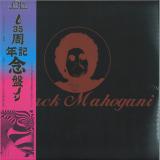
It’s been over 20 years since Kenny Dixon Jr., better known as Moodymann, released Black Mahogani—an album rich in atmosphere and emotion, offering a quintessential journey through deep house, soul, and jazz. Timeless yet modern, it’s an immersive and emotionally resonant experience that reflects the singular character of Detroit’s deep musical heritage.
Originally released in 2004, Black Mahogani is arguably one of Moodymann’s most revered and sought-after works. It completes the puzzle laid out by his rare and elusive KDJ 12” releases from the mid to late '90s. With the help of Detroit legends like the late Amp Fiddler, Roberta Sweed, and Norma Jean Bell, Dixon infused his analog soundscapes and samples with a new organic warmth—expanding the deep house genre while simultaneously paying homage to 1970s soul and cinematic soundtracks.
Dixon’s masterful control of tension—knowing exactly when to hold back and when to let go—makes Black Mahogani an enduring masterpiece. It's not just a landmark in electronic music, but a definitive statement in 21st-century Black American music.
Alan Vegas selbstbetiteltes Debüt-Soloalbum kam 1980 raus, zur gleichen Zeit, als Suicide ihr zweites Album "Suicide: Alan Vega and Martin Rev" veröffentlichten. Während Suicides Plattenlabel ZE Records das Duo in Richtung eines synthetischen Disco-Sounds drängen wollte, der von Moroders Produktion von Donna Summers "I Feel Love" inspiriert war, zog es Vega in eine andere Richtung. Er wollte tiefer in die Wurzeln seiner eigenen musikalischen Identität eintauchen, die von Blues, Rockabilly, frühem Rock ,n' Roll und seiner anhaltenden Liebe zu Elvis Presley geprägt war. Vega nutzte die Zeit zwischen den Aufnahmen mit Suicide, um seine selbst geschriebenen Songs auszuarbeiten, begann mit der Produktion seines ersten Albums und trat live auf, um diesen Sound weiterzuentwickeln. Wie auch in seiner bildenden Kunst schichtete Vega Klänge auf minimalistische, dynamische und bewusste Weise. Das Ergebnis war ein einzigartiges Album, das aus rohen Materialien entstand und tief in Vegas künstlerischer Vision verwurzelt war. Tracks wie die klassische Hymne "Jukebox Babe" mit ihrem schwungvollen Rhythmus und ihrer minimalistischen Selbstsicherheit fingen diesen Ansatz perfekt ein und wurden in Frankreich zu einem Hit. "Kung Foo Cowboy" hat einen südstaatlichen Touch und lehnt sich stark an den Blues an, während der goldene Pop-Glanz von "Ice Drummer" mit melodischem, aber klagendem Gesang, marschierenden Trommeln und einem geschmackvollen Mundharmonika-Solo überzeugt. "Bye Bye Bayou" ist ein eindringlicher Mutant-Rockabilly-Song, der den Rock der 50er Jahre mit Vegas exzentrischem Performance-Stil verbindet und später in der Coverversion von LCD Soundsystem aus dem Jahr 2009 neu interpretiert wurde, wodurch Vegas Solowerk einer neuen Generation vorgestellt wurde. In ähnlicher Weise würdigte die Coverversion von "Ice Drummer" durch The Flaming Lips Vegas Außenseitergeist. Jetzt von Josh Bonati anhand der Originalbänder neu gemastert und erstmals auf Streaming-Diensten verfügbar, wurde Alan Vega von Sacred Bones Records originalgetreu neu aufgelegt, wobei die rohe Intensität von Vegas Originalaufnahmen erhalten blieb und sie gleichzeitig für Hörer auf der ganzen Welt neu zugänglich gemacht wurden. "Alan Vega" ist mehr als ein Solo-Debüt, es ist eine Erklärung der künstlerischen Unabhängigkeit und Freiheit eines der einflussreichsten und kompromisslosesten Künstler New Yorks. Ohne die intensive Elektronik von Suicide, aber mit Vegas Außenseiter-Energie und Schärfe, übersetzt das Album den frühen Rock 'n' Roll durch einen Art-Punk-Filter, der sich als eigenständiges Kult-Meisterwerk bewährt hat.
The 17th sonic tale on Childhood Intelligence is Written, Produced & Mastered by German Electro artist E-Control. The Debut album entitled “D.N.E.”, presents a lifetime legacy compilation of Traxx, which were written and programmed throughout various years, ranging from 1996 - 2010. Inspired by the passion for 80s Electro, early Bleep, Techno and House - E-Control transforms sounds and rhythms into his own sequence - his own powerful & mystic D.N.A. engineered to the future.
Black[11,72 €]
Following his remix of Youthman by Echo Inspectors & Subset, Biodub returns to Primary Colours with his first original release for the label, the Dialogue EP.
The title track, Dialogue, shows Biodub’s familiar warmth and attention to detail, built around deep basslines, subtle textures, with a calm and reflective flow. It’s understated yet full of presence, a fine example of Biodub’s ability to communicate emotion through minimal elements.
Pablo Bolivar steps in for the Dream Dub Remake, offering a refined reinterpretation that expands the original into wider, dreamlike space. His version brings a smooth, rolling energy with gentle synth layers, flowing delays, and a steady, hypnotic rhythm that carries both warmth and clarity. It’s a standout moment on the release, highlighting the shared sensibility between both artists.
Grassland continues with a natural, organic movement, a balance of deep groove and open atmosphere, while Ubiport closes the record in a more introspective tone, marked by subtle echoes and restrained rhythm.Dialogue is a cohesive and thoughtful release that reflects the core sound of Primary Colours: immersive, detailed, and rooted in the deep dub tradition.
Green Marbled[11,72 €]
Following his remix of Youthman by Echo Inspectors & Subset, Biodub returns to Primary Colours with his first original release for the label, the Dialogue EP.
The title track, Dialogue, shows Biodub’s familiar warmth and attention to detail, built around deep basslines, subtle textures, with a calm and reflective flow. It’s understated yet full of presence, a fine example of Biodub’s ability to communicate emotion through minimal elements.
Pablo Bolivar steps in for the Dream Dub Remake, offering a refined reinterpretation that expands the original into wider, dreamlike space. His version brings a smooth, rolling energy with gentle synth layers, flowing delays, and a steady, hypnotic rhythm that carries both warmth and clarity. It’s a standout moment on the release, highlighting the shared sensibility between both artists.
Grassland continues with a natural, organic movement, a balance of deep groove and open atmosphere, while Ubiport closes the record in a more introspective tone, marked by subtle echoes and restrained rhythm.Dialogue is a cohesive and thoughtful release that reflects the core sound of Primary Colours: immersive, detailed, and rooted in the deep dub tradition.
Schneeweißes Vinyl. Zum ersten Mal seit seinem viralen Weihnachtsalbum ,A Joyful Sound", das 2020 rausgekommen ist, ist Kelly Finnigan (Monophonics) mit zwei neuen Original-Weihnachtsliedern zurück. ,I Can't Wait (For Christmas Time)" ist ein schwerer, aber entspannter Song mit einem geradlinigen Pop-Arrangement. Es ist dieser Rust-Belt-Soul-Sound mit den Harmonien, die südkalifornische Cruiser beflügeln: tief und emotional, mit genau der richtigen Instrumentierung, um Finnigans zarte Stimme in den Vordergrund zu rücken. Der Song wird auch von seiner Labelkollegin Kendra Morris und ihrer Band im Hintergrundgesang begleitet. Ähnlich wie frühere KF-Veröffentlichungen oder Perlen von The Escorts oder The Four Mints ist diese Platte für dich und deine Lieben gedacht, verpackt in hübsches Papier unter dem Baum bis zum Weihnachtsmorgen. Dann lass noch etwas Platz für Plätzchen und die B-Seite... ,Snowy Night In Ohio" fühlt sich an wie ein langsam fahrender Mitternachtszug, der sich von Cincinnati nach Memphis auf den Weg macht. Inspiriert von Finnigans erstem Winter in Ohio, seiner Liebe zu Gospelplatten und den Hornarrangements von Isaac Hayes. Dies ist ein wirklich herausragendes Instrumentalstück, das eiskalte Seele versprüht. Es enthält eine kurze Gesangsbotschaft von Finnigan, die sich wie ein Zeugnis und ein Herzensanliegen anfühlt. Mit dabei sind Terry Cole und Jimmy James von Colemine sowie Billy Aukstik und Morgan Price.
Grad_U returns to his legendary Redscale imprint with a re-press of one of the label’s most sought-after 12-inches. Originally released as part of the series that helped define modern dub techno, Redscale 02 showcases the Lithuanian artist’s unmistakable sound, deep, analog, and endlessly evolving.
Both sides carry Grad_U’s signature weight: hypnotic low-end movement, rolling chords, and perfectly balanced textures that blur the line between club tool and meditative listening piece. Once again, Redscale reminds us why it stands as one of the most respected labels in the global dub techno scene: no hype, no compromise, just deep, timeless sound.
- A1: Saturday Night Jamboree
- A2: My Baby Is Gone
- A3: In The Ghetto
- A4: Rockers
- A5: Thanks And Praise
- B1: What’s Wrong With The Youths
- B2: Choice Of My Own
- B3: Be Sure Of Your Brethren
- B4: Dreadlocks Postman
- B5: Live Up
- A1: Silver Rock
- A2: Satta Satta
- A3: Big M Jamming
- A4: Wipe Your Tears
- A5: Unity Rock
- A6: Johnny Clarke - I'll Never Fall In Love
- B1: Baldhead Ransom
- B2: Virgo Special
- B3: Walking Stick
- B4: Down False Leader
- B5: Head Of A Devil
- B6: The Best Version
Another excellent find here, an unreleased dub/instrumental album compiled by Lloydie Slim at the end of the 70s, featuring exclusive dubwise & instrumental cuts to many of his rhythms from earlier in the decade. As a bonus we've added 2 more tracks to the original 10 track album tape - the vocal & dub cuts to Johnny Clarke's "I'll Never Fall in Love Again", one of Slim's personal favorites of his productions. This single was originally released in 1975 in JA on his Don One label, and again in New York a few years later on his namesake Ivanhoe the Conqueror label. This album is a great listen which reminds us of the classic Channel 1 Revolutionaries instrumentals of the mid/late 70s.
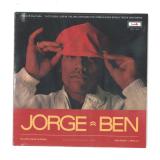
La Matta Records proudly presents the first official 7-inch, Tutto Ben, a rare “Italo-Brazilian” mini EP by iconic singer, guitarist, and composer Jorge Ben Jor. This edition includes Ana Maria (Remastered), originally recorded at the Teatro Sistina in Rome in 1978, while Falcão and Lorella were first released in 1983 on the CGD (Maracanà) label, part of Warner Music Italy, celebrating AS Roma’s league title. This 7-inch captures a pivotal moment in Jorge’s career, singing in Italian with Banda do Zé Pretinho in Rome. Acclaimed for his radiant spirit and admired by the genius art director Franco Fontana — who invited him to Rome several times — this fully remastered gem is now available for collectors and enthusiasts on vinyl.