
Buscar:osc


- Wednesday Main Titles - Danny Elfman
- Thing Follows Rowen
- Morticia And Wednesday
- Secret Library
- Scorpion Flashback
- The Monster
- Family Day
- Burning Outcasts
- Wednesday On The Case
- Dress Shopping
- Gomez Accused Of Murder
- A Dove And A Raven
- Gomez’ Story
- A More Than Adequate Father
- It’s A Snood
- Morticia’s Yearbook
- Devious Plan
- I Will Find You
- Searching The House
- The Monster Is Here!
- Uncle Fester
- Annoying Distractions
- Fester And Wednesday Stakeout
- Let’s Roll
- Wednesday Packs Up
- Crackstone Rises
- Goody Heals Wednesday
- Enid To The Rescue
- The Hug
- The End…?
- End Credits
- Stabbed In The Back
- First Kiss
33
“Danny Elfman’s musical score was to die for, and
it was incorporated into ‘Wednesday’’s joyfully
bleak coming-of-age story so brilliantly.” -
Double LP on Purple Goth with Smoky Shadow
vinyl, with full colour gatefold sleeve and inner
sleeves.
Composed by four-time Oscar nominee, two-time
Emmy winner Danny Elfman (‘Milk’, ‘Big Fish’,
‘Men in Black’, ‘Good Will Hunting’, ‘Live from
Lincoln Center’, ‘Desperate Housewives’, ‘The
Simpsons’) and three-time Emmy nominee Chris
Bacon (‘The Tick’, ‘Bates Motel’, ‘Smash’,
‘Gnomeo & Juliet’, ‘Sherlock Gnomes’,
‘Immanence’).
Elfman also composed music for Tim Burton’s
‘Beetlejuice’, ‘Batman and Batman Returns’, ‘The
Nightmare Before Christmas’, ‘Mars Attacks!’, ‘Big
Fish’ (for which Elfman earned one of his four
career Oscar nods) and ‘Alice in Wonderland’,
among others.
Chris Bacon is a protege of the great James
Newton Howard, and won an HMMA for ‘Gnomeo
& Juliet’, which he shared with James and Bernie
Taupin (Elton John).
Online - Promoted through all Lakeshore Records social
media.

- 01: Mrs. Sabra Bare Hampton Bolenkin
- 02: Mrs. Lena Bare Turbyfill Old Fool
- 03: Frank Bare Katie Morley
- 04: Marshall Ward Blue Ridge Mountain Blues
- 05: Mrs. Lena Bare Turbyfill Down In The Low Green Valley (Jealous Lover)
- 06: Mrs. Lena Bare Turbyfill & Ben Dugger Cindy
- 07: Mrs. Lloyd Bare Hagie Omie Wise
- 08: Mrs. Lena Bare Turbyfill & Mrs. Lloyd Bare Hagie Groundhog
- 09: Mrs. Sabra Bare Hampton & Oscar Hampton Partridge In A Pear Tree
- 10: Mrs. Lena Bare Turbyfill Jim Blake
- 11: Mrs. Lena Bare Turbyfill Paper Of Pins
- 12: Mrs. Lena Bare Turbyfill The House Carpenter
- 13: Mrs. Lena Bare Turbyfill George Collins
- 14: Mrs. Ethel Turbyfill Bare As I Went Out One Morning Fair
- 15: Mrs. Lena Bare Turbyfill Skip To My Lou
- 16: Mrs. Lloyd Bare Hagie & Mrs. Lena Bare Turbyfill Young Farmer
16
Folklorist Derek Piotr continues to excavate North Carolina mountain songs, presenting an assortment of archival recordings taking in Child Ballads, bawdy songs, play-party tunes, and old-time family singing - with a further focus on overlooked star Mrs. Lena Bare Turbyfill, of Elk Park, NC.
Tracks 1 and 9 recorded by Herbert Halpert near Morganton, North Carolina, April 19, 1939.
Tracks 2, 3, 5, 6, 7, 8, 10, 11, 12, 13, 14, 15 and 16 recorded by Herbert Halpert in Elk Park, North Carolina, April 12, 1939.
Track 4 recorded by Marshall Ward in Banner Elk, ca. 1979, transferred from analogue tape by Derek Piotr.
Curated by Derek Piotr.
Photograph of Mrs. Lena Bare Turbyfill courtesy of Elizabeth Gwyn.

long content, you may need to expand row to see all... Mutant freut sich, in Zusammenarbeit mit Milan Records das offizielle Soundtrack-Album zu Edgar Wrights Sci-Fi-Action-Thriller The Running Man zu veröffentlichen.Das Album enthält die Original-Filmmusik des Oscar-Preisträgers Steven Price (Gravity, Last Night in Soho, Baby Driver). The Running Man, bei dem Wright als Co-Autor und Regisseur fungierte, handelt von einem Vater aus der Arbeiterklasse, der alles daran setzt, seine kranke Tochter zu retten. Er nimmt an einer tödlichen TV-Gameshow teil, in der die Kandidaten 30 Tage lang überleben müssen, während sie von Profikillern gejagt werden. Durch seinen Instinkt, seinen Widerstand und seine Entschlossenheit wird er zum unerwarteten Publikumsliebling – und zu einer Bedrohung für das gesamte System.Wir sind große Fans von Edgar und Steven und freuen uns sehr, dass sie uns erneut ein fantastisches Kinoerlebnis bescheren. Steven Prices Score für The Running Man ist eine schillernde Mischung aus treibenden Beats, brodelnden Synthesizern und traditionellen orchestralen Elementen, die vor Einfallsreichtum und Stil nur so sprühen. Das Hauptthema besitzt eine elegante, zeitlose Qualität mit üppigen, beruhigenden Streichern, die eine hypnotische Melodie weben. Im Gegensatz dazu stehen die Titel der Gameshow-Sequenzen, die wirklich unterhaltsam, bombastisch und im Retro-Stil gehalten sind – was wiederum einen Kontrast zu den düstereren, dystopischen Stücken bildet, die im gesamten Werk verteilt sind. Im Film wirkt die Musik wie ein weiterer Charakter, der die Geschichte vorantreibt. Als eigenständiges Hörerlebnis ist sie fesselnd, dynamisch, macht großen Spaß und fängt die vielen Facetten und Stimmungen des Films perfekt ein.Die Vinyl-Edition mit dem Artwork von Luke Preece ist auf zwei farbige 140g-LPs gepresst. Sie enthält ein „The Truth“-Zine als Replika aus dem Film mit exklusiven Liner Notes von Edgar Wright und Komponist Steven Price.Ebenfalls auf CD erhältlich.

Following the success of the first vinyl release from the Moroccan label Sotor Records, featuring Zadig, Perc & Oscar Mulero, Sotor writes a new chapter in its discography with its second vinyl release. Meaning "lines" in Arabic, Sotor reflects its commitment to championing the diversity of the techno genre.
The label's ninth release, "Processing Range," is a musical ode to the lines of space-time. With four original tracks from the Portuguese producer, Sotor invites you on a techno journey between mental tension and physical release.
The album opens with DJ Dextro's "Controle," which delivers a massive, sharp rhythm, dystopian synths, and a true immersion into a techno black hole.
The journey continues with the second track on side A. This time, DJ Dextro unleashes an uncompromising version of "Blue Dot," achieving a precarious balance while showcasing his signature percussive style. The Portuguese artist delivers the perfect track to unleash a crowd.
On the B-side, DJ Dextro offers us the eponymous track, "Processing Range." We're quickly drawn into an allegory of this decadent modern world where humanity is rushing towards its own destruction. Expect dusty techno rhythms and that sumptuous synth that sounds like the end of times. Probably a future classic!
And you'll finish on a gentler but no less dynamic note from DJ Dextro. He concludes the EP with "31 Atlas," which will leave you weightless with its galloping bassline and abyssal synth.

10
"Lost in the spinning sound" is the 12th studio album by The Dining Rooms (Stefano Ghittoni and Cesare Malfatti) who, over the years, have delved into an original style that balances cinematic atmospheres with funk, dub and ambient music. Here they have invited just one vocal guest, Chiara Castello from I'm Not a Blonde, for a collaboration that delivers a slow, nocturnal, orchestral, very minimalist album, oscillating between folk and blues, with deeply meaningful lyrics that explore the intricate nature of interpersonal relationships. The album cover, an illustration by Sara Vivan, conveys the idea of metamorphosis and invites us to dive into the sounds that surround and protect us. This is also the main message of the album: losing ourselves in order to protect ourselves a little. Drifting along and finding new, safer and more peaceful shores.

Boutique-pressed 7" vinyls A-side: "Wonderin'" / B-side: "Dream"
Drawing influence from the likes of CAN, Faust, Mahavishnu Orchestra, and David Vorkhaus, Shakti Soundsystem traverses the borderlands of psychedelic rock, Krautrock, jazz fusion, and ritual improvisation. But this isn't a retro trip—this is future folklore.
Each track is a trance in motion, built on hypnotic basslines, spiraling melodies, and moments of ecstatic dissonance. The instrumentation is as unconventional as the process: Bulbul Tarang, modular synths, guitars, drums, and vocals that oscillate between invocation and surrender.
Their first singles have already made waves across tastemaker blogs and listener-curated Spotify playlists, includingNeo-Psychedelia, Psych Rock Melting Pot, Rock for when 26 King Gizzard albums aren't enoug and Psychedelic & Space Rock.
"Wonderin',"described by Analogue Trash (UK) as "an absorbing, psychedelic jam that thrives on hypnotic repetition and a raw, live energy,"introduced their trance-infused sound to a wider audience.
"Silver," hailed by RMAS (Mexico) as"a hypnotic journey between Krautrock and spoken word... a sonic delirium that recalls CAN and the free spirit of the European underground," cements their place in the modern psych scene.
- A1: Dornen - Decay 3:08
- A2: Lomi / Dornen - Black Ice 5:03
- A3: Lomi - Pulsar Flow 4:50
- A4: Dornen - Primary Mirror 3:28
- A5: Dornen - Signal 1:56
- A6: Lomi - Change Of Horizon 4:03
- B1: Lomi / Dornen - Interlude 3:44
- B2: Lomi - Étude 4:38
- B3: Dornen - Azimuth Descent- 2:58
- B4: Lomi - Pederzani Structure- 3:46
- B5: Dornen - Axis 2:54
- B6: Dornen - Radiation 4:43
12
A Sudden Burst of Noise is a study in equivalence between rotational frequency, material structure and sonic form. The album is based on sonified pulsar data and field recordings captured at a concrete radiotelescope located in the Eifel region of West Germany.
Following the core concept of BRUTALISM, architecture and infrastructure are not treated as backdrop but as structural agents. The radiotelescope – its reinforced concrete body, rotational mechanics and scientific function – serves as compositional framework. Rotational movement becomes rhythm. Structural tension becomes texture.
Measured cosmic data becomes sound.
The source material consists of astronomical measurement data translated into sound, combined with field recordings from the site itself: interacting with exposed concrete, mechanical resonance and electromagnetic presence. Dornen and Lomi process these elements into compositions that oscillate between abstraction and physical density.
The result is not a documentary representation of the site but a sonic architecture derived from it. Each track reflects a structural component: axis, mirror, descent, radiation. The record unfolds as a sequence of material states – from reduction and
erosion to rotation and amplification.
With A Sudden Burst of Noise, BRUTALISM continues its transformation of material, texture and structure into sonic forms. The vinyl format captures our site-specific research process as a physical object.

Geoglyph is the new duo project by Alohn and Khey Mysterio, a convergence of two deeply singular practices into a single subterranean signal. Their debut album arrives as the eighth reference on Organic Signs, not as a collection of tracks but as a carved artifact: six inscriptions pressed into vinyl, mapping a sonic territory where time, rhythm and texture are no longer linear, but layered like geological memory.
Through Geoglyph, Alohn and Khey Mysterio convey a message from below, or beyond. A pulse engraved from forgotten times in the basement of reality, reactivated by abyssal basses, vibrating layers and fractured textures. Exhumed from the subterranean strata where psychedelic dub, mineral techno and fractal dubstep fuse into raw energy, their music becomes a point of contact: every beat, every silence, every oscillation acting as a coordinate toward another perception. What unfolds is not simply sound design, but an invocation, rhythms as sigils, timbre as gnosis, signals that seem to arrive already charged with intention.
Across the album, Alohn’s guitar notes fall like cascades through the mix, dissolving at times into controlled feedback and crystallizing into melodic fragments that hover between tension and release. These organic gestures are interwoven with Khey Mysterio’s dense low-end architectures and rhythmic frameworks, creating a constantly shifting terrain: from weightless transmissions and ritualistic voices to moments of overwhelming propulsion where the music suddenly breaks open with tectonic force. The record moves fluidly between meditative suspension and explosive motion, never settling into a single state for long.
A strong undercurrent of what has come to be known as “druidstep” runs through the album, a term coined within the 95 Open Tabs universe to describe a form of dubstep untethered from genre convention, rooted instead in bass as ritual, in groove as invocation. Here it meets dub-techno pulse, psychedelic echoes and high-velocity 4×4 pressure, drawing subtle influence from underground bass cultures without ever becoming referential. The result is a body of work that feels both ancient and forward-leaning, cyclical rather than linear: a living geoglyph that reveals different meanings depending on how (and where) it is read.
As the final movement accelerates into its closing phase, the album releases its energy outward, with frequencies stretched toward their limits, leaving behind the trace of a completed ceremony. In this sense, Geoglyph’s debut stands as a defining moment within the Organic Signs continuum: a record that unfolds rather than explains, offering an experience to be entered, absorbed, and carried. With this release, the label continues to explore new sonic spaces, evolving and expanding while giving deeper meaning to its own essence. A message from beneath the surface, waiting for those willing to tune in.
Más de este género
6
INDUSTRIAS MEKANIKAS is back with the third instalment of the ANTIKHRIST VISIONS saga. This release is particularly symbolic: it’s the ninth in the catalogue, marked by the infernal numerology that runs right through the whole series. It’s a descent into a sonic underworld, where noise becomes ritual and pleasure is just pure agony.
The artist tasked with opening this new chapter of the saga is the mighty Óscar Mulero, an essential figure on the national electronic scene and one of our biggest international ambassadors, whose career has left a deep mark on contemporary music. Here, with Faceless, he delves into dark, precise, and devastating electro territory; a spiritual machine that dictates the pulse of chaos.
Next up, we’ve got Pressurized Modulator with Reddrum: hard, crunchy, industrial electro, absolutely buzzing with electrical tension and twisted sonic matter.
Closing out the A-side is Jacko Volvone (aka Hoax Believers) with Quieren Cerrar Las Fábricas: a track that expertly blends electro, techno, and post-punk echoes, resulting in a tense, distorted, and combative sound, like a working-class echo shouting from the abyss.
Flipping over, the B-side opens with Hanging Nuts (made up of Waje Martín, Fake Robotik, and Ruben Montesco). They unleash a murky descent of filthy, distorted, primal electro, slashed through with guitars and raw, guttural vocals: a genuine chant from beyond the grave. The second cut marks the debut of Techselektah & Phil Fork with Champagne No Potable: a raging street anthem packed with fury, energy, and social criticism, where Spanish vocals emerge amidst EBM structures that have that ‘80s spirit, reinterpreted with today’s raw edge. And the big finish is down to HBK1 alongside Rigor Mortis, with Instinto Caníbal: a full-on explosion of electro-industrial and EBM that awakens the body’s most primitive urges.
Antikhrist Visions Vol. III is a sonic summoning from the lands of Hades: ritualistic matter, organic sound, and primal force. A testament to pleasure and torment—Tormento do Gostar—etched into the vinyl as if it were molten iron.
Memento Mori.
9
Mean Field Mutation is a thermodynamic phenomenon occurring just below the vaporization point of voracious growth. It relies on the debris of false and almost forgotten narratives. Astral residue of consumer angst, echoes of obsolete newspeak and oscillations of promotional imbecilities collide with free floating particles hovering under the radar of the megamachine. In steady intervals, this results in a meltdown producing random waves of reconfigurations driven by cryptic but sanguine naivety.
Released on Lustpoderosa, Mean Field Mutation is the first musical output by Des Coda. Written and produced by Piero Scherer during the pandemic winter of 2021 in his bedroom studio in Zurich. Moving between playful
serenity and feral distortion, it was produced by layering sounds from field recordings, radio and TV clips, as wellas sequences from drum machines and analogue synthesizers. Taking a stance against commercial copyright, all stems of this production are available for download free of charge and ready to be reappropriated.
Des Coda is an open field for collaborative, cultural experiments beyond the conventional understanding of authorship and representation. It engages with an artistic position that defines the creative process as an interplay between context and concept. The resulting work is not a rigid product of authoritarian ingenuity, but a sensitive, living organism guided by the tensions between society and individual. Des Coda is the zestful curiosity rummaging through the rubble of the present in search of future aesthetics.

9
WRWTFWW Records is very happy to announce the release of Interwoven, the deeply moving collaborative album from Ken-ichiro Isoda and aus (Yasuhiko Fukuzono) — now available on limited edition transparent sea green colored vinyl LP housed in a heavyweight sleeve with selective-varnish 3D print, as well as in digipack CD and digital formats.
Recorded between Hachijo Island and Tokyo, Interwoven distills two visionary voices of Japanese ambient and electronic music into a single breath of feather-light and quietly luminous meditative sound.
Isoda is a revered figure of New-age and environmental music whose work on Oscilation Circuit – Série Réflexion 1 (originally released on famed label Sound Process) has long attained mythic status. He composes, notably with harp and wind instruments, produces contemporary music and video game scores, and crafts his very own brand of ambient music from the volcanic island of Hachijo-jima. Tokyo-based electronic composer and synth master aus is known for tender, melody-driven soundscapes. From the two artists comes a dialogue suspended between land and sea, bridging the generation gap and the physical distance between them.
What began as a series of sketches — impressions of water, islands, and shifting light — gradually evolved into an exchange without explanation, a correspondence of sound that dissolved boundaries. In that anonymity, both artists discovered an uncommon freedom: a place where each could move lightly and intuitively, without expectation. The music drifts with a gentle, intuitive grace: lingering piano, soft cinematic synths, and field recordings that unfold like whispered recollections, while flute and saxophone lines pass through like occasional breezes — a human presence felt as warmth more than form.
Interwoven is music for those who cherish stillness and the delicate beauty of the everyday. It’s music for admirers of Satoshi Ashikawa, Midori Takada, Satsuki Shibano, Hiroshi Yoshimura, Takashi Kokubo, Brian Eno, and all who seek a quiet refuge in sound.

Glasgow, Scotland duo Thomas + James deliver their silky-smooth dub laced sounds for Federsen’s Alt Dub with the four-track ‘Realtime’ EP.
Thomas + James are a Glasgow-based DJ and production duo whose sound reflects a deep immersion in electronic music. Raised in the city’s west end and shaped by early exposure to techno pioneers like Luke Slater, Slam and Jeff Mills alongside the atmospheric legacy of ’90s drum & bass, their productions lean into a dub infused, forward-looking aesthetic.
Drawing equally from house traditions via influences such as St Germainand Laurent Garnier, the pair blur the lines between dub techno, deep house, acid and minimal.
Their new EP onFedersen’s Alt Dub captures that hybrid vision with a maturity that belies their years, being born in 2006,marking them out as a quietly compelling new voice from Glasgow’s next generation.
Leading the release is the original title-track ‘Realtime’, setting the tone with a sturdy yet pared-back rhythm section, oscillating synth flutters, bouncy sub-bass and hazy textures that subtly shift across the arrangement.
Label boss Federsen steps in next with his interpretation, reducing the track to its deepest foundations and recasting it as a delicately drifting soundscape of evolving spatial echoes, weighty low-end pressure and restrained, muted drums.
On the flip, Thomas + James return with ‘Armonia’, an ethereal, dub-leaning deep house cut propelled by billowing pads, delayed vocal chants, fluid dub chords and a heavily swung, minimalist groove.
The EP closes with ‘X-Intense’, further highlighting the duo’s groove-driven signature sound as reverberant, airy stabs weave through breathy vocals and shuffled percussion to bring the release to a hypnotic conclusion.

Between flesh and silicon. “Under My Skin” (2026) is the first album by IADI, released by Neo Life. A record like few
others, highly conceptual, cover art included. Its essence lies in the folds of the increasingly ambiguous relationship
between man and machine, where the former designs the latter and, perhaps without fully realizing it, is gradually
destined to adapt and be reprogrammed by it. Each track of “Under My Skin” is, in fact, a sort of interface, connector, or
any other imaginative point of contact between two creative phases, amid emotional impulses and binary calculations.
The sonic architecture oscillates between analog warmth and algorithmic coldness, constructing landscapes in which
pulsating synthesizers and mechanical rhythms seem to question each other. There's no linear narrative, but rather a
progressive immersion in a zone of near-friction, where the comfort of technology coexists with more than a faint
musical uneasiness, like a background noise that never ceases to remind you who's truly in charge. In “Under My Skin”,
the machine is neither an enemy nor a simple instrument: it's a real presence, intimate, even tactile, amplifying desires,
fears, and dreams of dawns beyond the digital realm. Intelligent dance music. Less noise, more sensations. Electronic,
but profoundly human.
The final result, then, is a music project that speaks to the present, yet sounds like an X-ray of the future, capturing that
fragile moment when humanity and technology stop observing each other from afar and begin to merge, track after
track. It's no coincidence that IADI's album opens with “Impulse”, an immediate expression of an electrical impulse, for
both humans and machines, which is also the language of the nervous system, as fast as it is vital—pure energy and
rhythm, a track as intense as it is irregular. And after this introduction, it's the turn of the equally erratic “Axon”, whose
title describes the neuron that transmits the signal over distance, telling the listener to sit back and relax for a new
journey through the notes toward the more melodic “Cortex”. The cerebral cortex, the ultimate seat of thought and
memory, becomes the source from which the musical flow of the first part of the work is drawn.
Then, suddenly, an automatic, or instinctive, response to the constant succession of impulses: “Reflex”, or zerotemperature techno, with a fragmented pace, featuring vocal samples, breaks, and restarts. In the producer's
imagination, the subsequent, and conversely placid, “Neuron” represents the emotional core of the second part of the
work, providing a kind of respite from the seething vibrations. While the neuron is the basic unit of the nervous system,
the synapse is the functional connection point between one neuron and another effector cell, essential for the
transmission of nerve impulses and communication in the nervous system, enabling functions such as learning and
movement. Likewise, a track like “Synapse” once again illuminates the path traced by IADI. The more experimental and
streamlined “Static” instead suggests true ordered chaos. “Dreamstate” is the conclusion suspended in the void, relating
to that dreamlike state between waking and sleeping, where consciousness fades toward infinity and visions begin. Pure
fading into the subconscious. Eternal return to where it all began. Dancing is a form of consciousness. Every beat is a
question. IADI, however, holds all the answers you need.


Hypnotic Mindscapes returns with its sixth release, introducing Lisbon-based artist Jorge—by way of NYC—through a tightly constructed, high-fidelity four-track EP. Progressive-tinged tech-house meets crisp vocoders and understated oscillations in an acoustic inspired techno format, designed for peak-hour precision. Electro-breakbeat accents cut through deep, rounding out a sharp and focused trip.

Nala Sinephro veröffentlicht ihren ersten Original-Soundtrack für Benny Safdies Film "The Smashing Machine", der vor dem offiziellen Kinostart am 3. Oktober bei den 82. Internationalen Filmfestspielen von Venedig (mit 15-minütigen Standing Ovations!) Premiere feierte. Der Film erzählt die Geschichte des legendären Mixed-Martial-Arts- und UFC-Kämpfers Mark Kerr. Die Hauptrollen spielen Dwayne "The Rock" Johnson und die Oscar-nominierte Emily Blunt. Die Filmmusik wurde von Nala Sinephro komponiert, produziert, arrangiert, gemischt und gemastert. Mit dabei sind auch ihre langjährigen Weggefährten James Mollison, Nubya Garcia, Lyle Barton, Dwayne "Wonky Logic" Kilvington, Morgan Simpson, Natcyet Wakili, Mark Mollison und Sheila Maurice-Grey. Außerdem wirkt das Londoner Orchester Orchestrate mit, das bereits 2024 die Streicher für Sinephros hochgelobtes Album "Endlessness" lieferte.
Obwohl Sinephros Musik – meditativ, ätherisch und gewaltig – für eine Wrestlergeschichte paradox erscheinen mag, fand Marks Geschichte bei Sinephro Anklang, der die verborgenen Sanftheiten und Emotionen der Geschichte aufgriff. Die Filmmusik klingt immer noch unverkennbar nach Nala Sinephro – weitläufig mit gleichmäßiger Wärme, wunderschönen Streicherarrangements, leichten Themen, gemächlicher Harfe –, wurde aber intensiviert, um den Themen des Films zu entsprechen: Druck, Verlustangst, Sucht, Schmerz, vulkanische Beziehungen und das Gefühl des Hochgefühls.

A new duo and record label based in Madrid lands on the underground techno scene, led by Mike Gómez and José Castillo, the latter known for his aliases Milford and UHF, and also the owner of the electro label Gladio Operations.
Diorama is born with the intention of recovering the soul and essence lost in electronic music, which for some time has become practically homogeneous and predictable. With a timeless, fresh, and warm sound, Diorama produce rhythms close to dub and Detroit techno, mainly influenced by Juan Atkins, UR, and Basic Channel, among others.
This EP, titled Pacific Trak, begins with a nod to the old Scottish school, where they revive a forgotten track by British producer Anthony Scott, adding its imposing main chord to a true sea of melodic textures, bathed in exquisite acid. Spanish techno master Tadeo gives us his vision of Pacific Trak, exploring dub territories that remind us of past pieces released under the incomparable Maurizio label.
The B-side opens with Soul Memories, a manifesto of resistance that vibrates with detuned harmonies and raw bass lines, recalling the origins of Detroit’s primitive sound. The package closes with Polymorphic, a progression of relentless aquatic chords, set among careful and precise minimalist rhythms that oscillate between high-dynamics tech and dub.

- A1: Tout Est Bizarre (Feat Agnès Hélène)
- A2: Abanije (Feat Nayel Hóxò)
- A3: Soy Dos (Feat Agnès Hélène)
- A4: Viv Li (Feat Olivya)
- A5: Laissez Passer (Feat Agnès Hélène)
- B1: Ta Logbe Jongo (Feat Nayel Hóxò)
- B2: Soulshine (Feat Nayel Hóxò)
- B3: En Synchro (Feat Agnès Hélène)
- B4: Aïshododo (Feat Nayel Hóxò)
- B5: L’or & Le Sang (Feat Agnès Hélène)
10
Ayô Dele — which means "joy comes to me" in Yoruba — is neither a slogan nor a promised miracle. It is a breath of fresh air. That of an album born in the interstices, where the word find their way between shadow and light, between the disorder of the worldand the impulse to be .
At the heart of the project, Julien Gervaix and Damien Tesson, multi-instrumentalist beatmakers, share a groove language that is both dense and airy, where every detail breathes and finds its place.
With background in Afrobeat, Dub, Funk, Soul, Roots Reggae, and Electronic Music, they treat the studio to be their playground. Their music is a hybrid groove that speaks to the body: round or bouncing basslines, brass oscillating between melodic warmth and funk energy, textured guitars, arpeggios, enveloping Rhodes, clavinet that slides, presses, and embraces. Everything comes together with precision and flexibility, in an inventive and warm composition. The meeting of their experiences and sensibilities gives rise to open, generous music, made for dancing and vibration.
With Ayô Dele , Ireke is embarking on a new chapter: the duo is refining its style,allowing the voices to breathe. The groove remains the driving force but opens up to intimacy. This intimacy is carried by two unique female voices: Nayel Hoxo, a Beninese-Nigerian singer/rapper, and Agnès Hélène, who has already made a name for herself on Tropikadelic with "Petit a Petit". They don't sing side-by-side; they coexist, respond to each other, and sometimes intersect. But each follows her own path: Nayel, with the power of her words in Yoruba, offers songs of elevation, healing, and resistance — a light born in the cracks Agnès explores these cracks themselves: what wavers within us, what reinvents itself in bonds, glances, and gestures.
For one track, Olivya (Dowdelin) joins this dialogue in Martinican Creole. Her sunny soul sketches the contours of gentle resistance and celebrates rediscovered light.
Ayô Dele embodies a quiet yet radical determination: to smooth nothing over, to let plurality, contradictory emotions, and mixed heritage live. An album that moves forward through vibrations, that speaks of emancipation without slogans, love without clichés, anger without uproar.
Two women, two inner worlds: a sensitive complicity, a shared breath. Music that seeks not effect, but echo, weaving a living soundscape between reinvented traditions and contemporary textures. An alchemy faithful to the spirit of Underdog Records, where music unites and brings people together. Ayô Dele : "joy comes to me." A lucid joy, crossed by shadows, patiently regained. Music that welcomes, releases, gives, and in doing so, makes us feel good.
In a saturated world, Ayô Dele chooses nuance: transmission without emphasis, joy without naivety. An album that vibrates more than it demonstrates, that connects more than it imposes, and which, in its quiet clarity, resonates with a deep desire to be fully alive.

5
Following his debut appearance on HABITAT in 2024 with his standout ‘My Eyes Are Failing’ remix, Echonomist returns to serve up his ‘Dominator’ EP - a five-track release that captures the Greek artist’s unmistakable tension, groove, and analogue character, paired with high-caliber remixes from Fango and Toto Chiavetta. With previous releases on Innervisions, Exit Strategy, TAU, and Kompakt, Echonomist has steadily built a reputation for fusing raw emotion with forward-leaning sound design. His prolific output and effortless ability to experiment with various styles have long made him a respected figure within the global electronic landscape. Now, with his ‘Dominator’ EP, he brings that creative force back to Mind Against’s imprint in commanding form.
Opening with the title track, ‘Dominator’ immediately sets the tone: bustling energy, driving drums, and siren-like synths cut through a deep, Detroit-leaning atmosphere. ‘Modulator’ follows with a pulsing, oscillating bassline and rattling percussive breaks that coil around warped vocals. On ‘Use Your Illusions’, the pace becomes chuggier as he combines raw industrial drums with a thudding kick, dubby chords, and fizzing synths. The package is then elevated by two heavyweight reinterpretations, with Fango’s remix of ‘Dominator’ pushing the cut into a more intense, pressure-driven space, upping the ante with amplified rhythmic density. To close, Toto Chiavetta delivers an electro-laden rework, sculpting the track into a dense, atmospheric journey that prioritizes ever-evolving groove and textural depth.
Echonomist 'Dominator’ EP drops via HABITAT on 10th April 2025.

4
Refined, trippy, and beautifully hypnotic. PIRAT005 marks a deep and elegant statement from Pirat Records and delivers exactly the kind of timeless, hypnotic minimalism that turns heads on first listen and stays in the bag for years. A record built on restraint, texture, and atmosphere: rolling, seductive, and deeply functional for long sets and late hours. With a clear nod to that unmistakable Perlon-inspired aesthetic, Venedig moves with precision, subtle tension, and groove-driven detail, stripped back, but full of character. The collaboration spirit on this release gives it a special depth, while the overall sound remains focused, classy, and unmistakably underground.

4
Belgian artist, label boss and DJ, End-jy, glances back at one of his most revered releases to date, the 2003 ‘Red Alert’ EP, originally released on Lupp Records it marked a defining moment, earning widespread support from scene-shaping artists including Carl Cox, Tiësto, Marco Bailey, Dave Clarke and Mark Broom. Long regarded as a personal milestone, the track now returns in renewed form on the artist’s own label as MV08. This forthcoming EP revisits the original with fresh perspective, featuring a powerful remix from Pig&Dan alongside a newly reworked version by Dimitri Andreas and the artist himself, bridging the track’s enduring legacy with a contemporary evolution.
Pig&Dan take the reins first, extracting fragments of the original version of ‘Red Alert’ and reshaping them into a dub tinged, deep techno cut fuelled by circling synth stabs, robust percussion, tension building atmospherics and a driving bottom end. Following on is ‘Red Alert’ (Dimitri Andreas & End-jy 2026 Remix), the pair lay down a deeper, more hypnotic and minimalist interpretation courtesy of crisp, stripped-down drums and oscillating resonant synth flutters underpinned by the original’s dark, dubby aesthetic.
The original version of ‘Red Alert’ opens the flip side, capturing the essence of the underground at the turn of the millennium, the track fuses, gritty stabs with organic percussive elements, hypnotic siren like synths and a subtly evolving feel throughout.
‘Flexibeat’ then concludes the release, a composition that veers into the realms of early Detroit techno and electro via an amalgamation of twitchy synth pops, cinematic strings, saturated 808 drums and murky bass tones.
Already Supported by Jamie Jones, Calao, Amé, Marco Faraone, Timo Maas, Nick Varon, Steve Parry, Just Her, Dax J, Perc, Massimiliano Pagliara, Alex Neri.
4
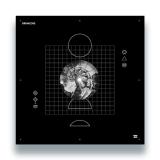
Drumcode returns with its flagship A-Sides series, led by a huge new Adam Beyer single that highlights the 20-track compilation.
If you want a snapshot of techno in any given year, look no further than Drumcode’s annual A-Sides compilation. The release broadly charts the evolution of the genre, while giving a platform to standout demo’s Adam Beyer has received across the course of the year with many emerging artists finding their music on Drumcode for the first time. Case in point – Wehbba, Charles D and Raxon who all debuted on the label via a track on the A-Sides series and have gone on to become regular contributors to Beyer’s influential labels.
This year’s compilation features an exciting mix of established heavy-hitters, alongside a slew of new faces set to make their mark on the genre. ‘We Don’t Say Please’ – is emblematic of Adam Beyer’s sound in 2025 – fresh, experimental and thriving on cross-genre pollinations, as elements of bass music, rap and techno collide, underpinned by a distinctive UK vocal. The results are inspiring.
Elsewhere, the 20-track compilation brims with highlights. HI-LO’s ‘NYC to Amsterdam’ has inflections of New York house fused with driving techno elements. Nicole Moudaber returns to DC in cahoots with the rising ZLATA for the super-charged ‘Report to the Dancefloor’. Oscar L & Charles D mint a new collaborative partnership with the immersive, spacey cut ‘Lift Me Up’. LUSU continue their red-hot run following the recent ‘Move 2 the Groove’ EP, and craft a straight-up mind-mashing single ‘LIKE THIS’. Mark Reeve is in trademark strong form with hypnotic ‘My Mind’, which comes to life via a massive synth led. The fantastic Kaufmann shares her ‘People are Strange’, a nod to a classic vox, re-contextualised for a modern techno audience.
As is tradition, a troupe of ascendant producers land on Drumcode for the first time. They include Uruguay’s Enzo Monza, who delivers the crisp ‘Late Night’ – a favourite of Beyer’s; Mattia Saviola, whose ‘Parallel Dimension’ is a powerful cut with fantastic sound design; Romanian artist Tao Andra, who shares the celestial ‘Unity’; and long-time industry stalwart AdamK, who makes a richly deserved Drumcode debut in partnership with Vikthor feat. MC Stretch on the stunning ‘Silence + The Sound’.

8
The Fuga compilation returns to Token with its seventh installment by a fresh batch of artists emphasizing the cryptic sound of the Belgian record label. The V/A displays urgency as its focal point, expanding and contracting its acoustic space throughout to channel instability. With eight contributions, Fuga VII sifts through nail biting arpeggios, frenzied percussion, and obscure ambiance to recalibrate techno's current soundscape.
Opening the compilation is contemporary techno mainstay Rene Wise with his debut contribution to the record label 'Rough Rider'. In this A1, Wise plays to his strengths by blending deep techno influences with hyper-focused rhythmic work. With a hint of tribalism, he conjures up synthwork from far off to whip motion into heavy drum patterns. Following this first track, STIPP and Sandrien take control in presenting 'Corrie', a sequence-forward groover that slides through drum programing to streamline rhythm. A shrill pad comes in at the halfway mark, completely lifting the energy of 'Corrie' to strain the track's obscurity with an ethereal counterweight. The brief passage of these kinds of elements provides a lot of dynamic to what would otherwise be a powerfully straightforward piece. Diving deeper, Red Rooms unveils 'Limited Sensory' as the next chapter of the compilation. Always swift and exact, the German artist continues to push into the ultra immersive with a web of elements that whiz by for a peaktime lock in. Cold in attitude, Red Rooms tunnels through 'Limited Sensory' with quick drumsand far-off percussive hits that rumble through the track. Stepping up afterwards is Lindsey Herbert with 'Oscillations in Space' - an appropriately named recording that experiments with mania as a tool for the dancefloor. Fast and spiraling, Herbert keeps her hands on the arpeggio's filter to contain tension through thunderous reverb transitions, balancing panic with pace. AgainstMe then stretches out the followup with the commanding 'Phase Shift' to double down on weight. Textural intimidation and stomping percussion is given the space it needs to perform on heavy weight sound systems, making it an austere middle point for Fuga. MAL HOMBRE then guides the listener to more elastic sound design in 'Critical Velocity', in a most appropriate Token fashion. Snowballing in intensity halfway through, MAL HOMBRE pushes the cutoff of his melody and programs snare rolls for vintage craze through the second section. Bells clash with ringing hats to fly the track along its course without looking back or letting go. Conor Wall takes control with 'The Strategy' that focuses on pace rather than melody, weaponizing metallic texture for a deep dancefloor experience. The ambiance does a lot of story telling here, marking breaks and riding through drops to provide grit to an already substantial record. This leads us to the final contribution in Fuga VII - 'Ad Libitum'. Here, Porteix emphasizes the conclusion of the compilation with mystery. The synths slither around pulsating rhythm, creating uninterrupted motion throughout the track's entirety. Porteix draws the curtains on an inquisitive note, keeping the suspense high until the next Fuga compilation comes around.

- A1: Les Masques - Il Faut Tenir (1969)
- A2: Isabelle Aubret - Casa Forte (1971)
- A3: Christianne Legrand - Hlm Et Ciné Roman (1972)
- A4: Jean Constantin - Pas Tant D'chichi Ponpon (1972)
- A5: Billy Nencioli & Baden Powell - Si Rien Ne Va (1969)
- B1-: Marpessa Dawn - Le Petit Cuica (1963)
- B2: Jean-Pierre Sabar - Vai Vai (1974)
- B3: Sophia Loren - De Jour En Jour (1963)
- B4: Isabelle - Jusqu’à La Tombée Du Jour (1969)
- B5: Sylvia Fels - Corto Maltesse (1974)
- C1: Frank Gérard - Comme Une Samba (1972)
- C2: Ann Sorel - La Poupée Des Favellas (1971)
- C3: Charles Level - Un Enfant Café Au Lait (1971)
- C4: Andrea Parisy - Les Mains Qui Font Du Bien (1970)
- C5: Audrey Arno - Quand Jean-Paul Rentrera (1969)
- C6: Aldo Frank - T’as Vu Ce Printemps (1970)
- D1: Christianne Legrand - Cent Mille Poissons Dans Ton Filet (1972)
- D2: Clarinha - Lemenja (1970)
- D3: Hit Parade Des Enfants - Aquarela (1976)
- D4: Jean-Pierre Lang - Tendresse (1965)
- D5: Magalie Noël - Une Énorme Samba (1970)
- D6: Françoise Legrand - La Lune
Ever since the late 1950s bossa-nova revolution, Brazil’s influence on French music has been undeniable. Pierre Barouh, Georges Moustaki and a vast array of lesser known artists, all made the Musica Popular Brasileira (MPB) an axis of promotion at the service of a cool and metaphysical, modern and mixed Brazilian lifestyle. Some were seduced by the poetic languors of the bossa, some were looking for fun, and others just loved the American hybridization of jazz-bossa, jazz-samba.
What is bossa nova? One of its creators, Joao Gilberto said: "Its style, cadence, everything is samba. At the very start, we didn't call it bossa nova, we sang a little samba made up of a single note - Samba de uma nota so .... The discussion around the origins of bossa nova is therefore useless”. It is nevertheless useful to remember that these magnificent Brazilian songs, which the guitarist describes as samba, were shifted and balanced around improbable chords. "I like things that lean, the in-betweens that limp with grace," said Pierre Barrouh, quoting Jean Cocteau.
With emotion, arrangements for violin and supple guitar licks, bossa nova rapidly changed. A transformation that can be heard in the Tchic, tchic, French Bossa Nova 1963-1974 compilation, the result of a cultural reappropriation, which traveled through the United States and supplemented itself in France.
A musical revolution that has remained significant, bossa nova was born in Rio. From 1956 to 1961, Brazil lived through its golden years. In five years, the country had invented its modernist style. Elected president in 1956, Juscelino Kubitschek de Oliveira, an elegant man with a broad forehead, brandished a promising slogan: "Fifty years of progress in five years". He quickly got to work. Not worried about increasing debt, he launched the project for a new federal capital, Brasilia, designed by the communist architect Oscar Niemeyer. Volkswagen opened state-of-the-art factories and created the “fusquinha”, the Beetle. In Rio, the Vespa made its first appearance. The Arpoador Surf Club crew run into the “girl” from Ipanema, Helô Pinheiro - the tanned garota ("chick"), between a flower and mermaid, who at 17 walked by the Veloso bar, where the fiery author and composer, Tom Jobim and Vinicius de Moraes, were getting drunk on whiskey. From then on, bossa symbolized cool.
In 1958, Joao Gilberto recorded Chega de Saudade, which the directors of Philips denied, calling it "music for fagots". The marketing director, who believed in it, secretly pressed 3000 78-inch vinyls and distributed them at schools around Rio, creating a tidal wave.
American jazzmen then took over. In particular, trumpeter Dizzy Gillespie and guitarist Charlie Byrd. In November 1962, the Brazilian Ministry of Foreign Affairs funded a "Bossa-Nova" concert at Carnegie Hall in New York, inviting the genre’s pioneers. Unprepared, the show soon turned to disaster. But the troupe was invited to the White House by Jackie Kennedy. The first lady loved "the new beat" and in particular Maria Ninguem, a song by Carlos Lyra, later covered by Brigitte Bardot.
In Brazil, the 1964 military coup quickly ended this euphoria. The destructive atmosphere that ensued pushed many Brazilian musicians to leave, if not to exile. Thus, Tom Jobim, Sergio Mendes and Joao Gilberto arrived to the United States. In New York, Joao Gilberto met saxophonist Stan Getz. At the time, he was married to the Bahianese Astrud Weinert Gilberto, who had a German father. She had never sung before, but she knew how to speak English. Getz therefore asked her to replace her husband on The Girl From Ipanema. The Getz/Gilberto record with Tom Jobim on piano, was released in March 1964. Phil Ramone, the "pope of pop" was in charge of sound.
Bossa nova arrived in Paris through the classic “guitar-voice” channel (Pierre Barouh, Baden Powell, Moustaki…) But France loved jazz and Paris had already welcomed its American contributors. All these good people were to pass through Saint-Germain-des-Prés. The cabaret l'Escale became the Mecca of Latin American sound where one could find Pierre Barrouh and his friends, such as the Camara Trio, samba-jazz aces, whose only record was published by the Saravah label. With a band strangely called Les Masques (a band that included Nicole Croisille and Pierre Vassiliu, among others), the Camara Trio recorded an interesting Brazilian Sound, including the track Il faut tenir which is present on this tasty compilation of rarities.
Other enlightened musicians can also be found on the compilation, such as Jean-Pierre Sabar (songwriter for Hardy, Auffray, Leforestier ...) and the French pop rock organist Balthazar. In 1975, Sabar recorded Aurinkoinen Musiikkimatka on a Finnish label, which featured the crazy Vai, Vai, included on this record. We are now following the footsteps of Brazilian electronic musicians such as Sergio Mendes, Eumir Deodato or Marcos Valle who created funk and disco sounds on their keyboards and synthesizers. A style that influenced Véronique Sanson when she wrote Jusqu’à la Tombée de la nuit in 1969 for Isabelle de Funès, the niece of Louis and a great friend of Michel Berger - Sanson did end up singing this track on her 1992 Sans Regret record.
The pinnacle of exoticism and travel, Sylvia Fels’ Corto Maltese includes bongos, sea mist and ocean sounds. The title was taken from Jacky Chalard’s concept album written in 1974, Je suis vivant, mais j’ai peur (I am alive, but I am scared), based on Gilbert Deflez’s science fiction novel.
However, bossa nova extended the scope of popularity. "In the 1970s, I was a fan of Sergio Mendes, Getz / Gilberto. I fell in love with this music that I knew because I had been an orchestral singer, " explained Isabelle Aubret, who in 1971 delivered a composite record of covers by the very funky Jorge Ben, Orfeu Negro, Tom Jobim, Vinicius de Morais and Jean Ferrat. "I recorded this album for Meys Records in Paris, far from Brazil, with wonderful musicians, François Raubert, Roland Vincent, Alain Goraguer...". The latter wrote the arrangements for Casa Forte, a very percussive title borrowed from Edu Lobo, one of the initiators of the bossa who spent time in California. "Jazz and bossa came together and produced very rhythmic music. I love singing, it allows me to dream, to have fun, to feel a high on stage, and these songs brought me joy, made me swing, my singing felt like a dance.”
The world tours of French singers and their desire for the tropics, often brought them to Rio with its hills, forests, caipirinhas and tanned bodies. There are surprises though, like this Iemenja (Iemenja is the goddess of the sea in the Afro-Brazilian candomblé religion). Not unlike the composer and musician Jean-Pierre Lang, based in Sao Paulo, Claire Chevalier taught Brazil to Brazil. In 1970, the singer and painter published a 45-inch vinyl, Mon mari et mes amants (My husband and my lovers), under the improbable pseudonym of Clarinha (little Claire). She was then living in Rio, with her husband, Joël Leibovitz, who founded a band called Azimuth, and who owned a record label specialized in "sambas enredos" songs for samba school parades.
For its B side, she asked Pierre Perret to come up with lyrics for a song composed by Carlos Imperial: "Oh goddess of the sea, o goddess Iemenja, I bring a white rose to adorn your long hair ..." . "Perret came to see us, and we had fun, remembers Joël Leibovitz. We wrote Lemenja for fun, we recorded it at the Havaí studio, behind the Central do Brasil the central station. Erlon Chaves, the arranger who worked with Elis Regina, joined us" adding his share of Afro-Brazilian percussions and funky brass to the mix.
There is a common misunderstanding in Franco-Brazilian history: that bossa, admittedly hedonistic, is perceived as funny, even though the poets who wrote the texts are often philosophizing on the human condition. Its French interpreters pull it towards a carnival inspired universe, far removed from its fundamental essence. Thus, Jean Constantin covered the famous Samba da minha terra, an ode to the art of samba written by the classic Bahian composer Dorival Caymmi, renaming it with the enticing title of Pas tant de tchi tchi pompon: "On your pier there is no tchi tchi / when you arch your back, you know everything is alright ”(lyrics by Gérard Calvi). This expedited bossa aims for the absurd, but retains a certain elegance.
Indeed, Jean Constantin was not an idiot, the rather large man had a huge mustache and liked fantasy, (Les pantoufles à papa, Le pacha, inspired by cha-cha-cha-cha, salsa and jazz) but he was also the lyricist of Mon manège à moi interpreted by Edith Piaf, the composer of Mon Truc en plume by Zizi Jeanmaire and the soundtrack of François Truffaut’s 400 Blows. Le Poulpe, published in 1970, from which this bossa is extract, was arranged by Jean-Claude Vannier, an accomplice of Serge Gainsbourg’s Melody Nelson. In short: "There is enough of samba / By looking at the parasol / Because my poor cabeza / Is going to die in the sun".
Even the American actress Marpessa Down, who was at the heart of the bossa nova revolution with her role as Euridyce in Marcel Camus’ film Orfeu Negro, winner of the 1959 Cannes Palme d'or, fed the clichée with Je voudrais parler au petit cuica - "Tell me how you manage to always make people want to dance / It's true, I must admit that I cannot resist your magic" - in consequence, once can hear the cuica, a little drum inherited from the Bantu.
But bossa nova had many angles. Societal, of course, pushing actresses who were symbols of women's liberation like Brigitte Bardot, Jeanne Moreau, or Sophia Loren to engage in the exercise of accelerated bossa. In February of 1963, Sophia Loren made a record in French in Rome, Je ne t'aime plus, featuring the song De jour en jour, a bossa written by two Italians, Armando Trovajoli and Tino Fornai, which was released a little later by Barclay. Bossa accompanied the 1960s, a decade of moral liberation. Ann Sorel, who interpreted La Poupée des favellas, caused a sensation with L’amour à plusieurs, a provocative song written by Frédéric Bottom and Jean-Claude Vannier. As for the actress Andrea Parisy, she displayed her bourgeois cheekiness in Marcel Carné's Les Tricheurs before interpreting Les mains qui font du bien. And Magalie Noël, the friend of Boris Vian, who sung Johnny fais-moi mal, was hired to sing Une énorme Samba, composed by Alain Goraguer (arranger to Gainsbourg, Bobby Lapointe and Jean Ferrat) with lyrics by Frédéric Botton.
But in the end, of what wood is bossa nova made of? The answer is given by Christianne Legrand, daughter of Raymond the conductor, and sister to Michel the composer: "With me, with jà" - jà means "immediately" in Portuguese. In 1972, the singer, an expert in vocal jazz and a member of the Double Six, published Le Brésil de Christianne Legrand. Two songs included on the Tchic Tchic compilation that demonstrate how bossa, jazz, funk, rock, etc. work like a swiss army knife: the music is used to denounce broken systems, or miracles, HLM et ciné roman, Cent mille poissons dans ton filet, two songs from the O Cafona soundtrack, a successful telenovela broadcast, at the time in black and white, on TV Globo. The first was adapted in French by the fighter and friend of the Legrand tribe, Agnès Varda. The second is content with a play on words, jostling them into a summer fun.
Véronique Mortaigne

- A1: Miami
- A2: Lullaby
- A3: Dryer
- A4: Dazzle
- A5: Green Eyes
- B1: Born Again
- B2: Did A Dj Ever Save Your Life
- B3: It Stopped Raining
- B4: The Walk
- B5: Seq24
- B6: Summers Almost Gone
- C1: Intro
- C2: St. Nazaire
- C3: Open Window
- C4: Cemetary
- C5: Hot Day
- C6: Rome
- C7 5: Am
- D1: Too Tired To Sleep (Awake)
- D2 12: Hours
- D3: Peace
- D4: Wildly Oscillating
- D5: Sugar Plums
- D6: Still
- D7: My Lovely
25
Once I Was Young and The Airplane Album find the producer taking yet another sonic right turn. "These records were made in the same year with a very similar creative process. I moved almost completely away from sampling, experimented more than ever with ambient and techno elements and used the album format as a way to tell a story about moments in my life." Once I Was Young is a storytelling work that journeys through analogue synth-pop, modulated techno and raw, dusty drums with otherworldly melodies. Moments of beauty come through escapist, naturalistic ambient tracks and fusions of Kraftwerkian sequencing with more classical piano, while stark, clubready grooves keep things moving. Airplane contrasts similar shades of light and dark, synthetic and organic, rough and smooth. Glitchy, imperfect analogue sounds, knackered drum machine grooves and eerie synth phrasing evoke a post-human world with icy atmospheres. Elsewhere, warmth comes from bittersweet melodies and loose, funky drums that ooze retro-future charm.
Once I Was Young and The Airplane Album show a diff erent side to Escobar, one that embraces introspection and experimentation while exploring a whole other world of meaningful machine soul

- A1: Elado - I Wanna Dance
- A2: Gee Lane & Dante Feat Jose Barranquero - Rhythm Roots
- A3: Marla Kether - One Time
- B1: Alma Negra Feat Pat Kalla - Soleil (Extended Version)
- B2: Musta - Afro Tonic
- C1: Alot - Mi Casa (Extended Version)
- C2: Arpy Brown & Kapote - Drop It Low
- C3: Daniel Monaco & Bop Feat Candy Voice - Sobby
- D1: Paul Older - Xylo
- D2: Melon Bomb – Galia
10
WILDSTYLE HOUSE is a new compilation series where Toy Tonics invites producers and DJs that have a very special, funky, unique sound to make one new track. The compilation should show the variability and diversity of house and disco TODAY. Like the wild music mix you can hear at the Toy Tonics events and the way Toy Tonics DJs combine many different styles of "4 to the floor" music into one new soulful, multi-style, and warm-sounding blended "genre." It's about the groove, about a new soul sound, the human feel, the organic and Y2K-inspired dance music that is growing and appeals to a new generation of dance music lovers.
This first part of the compilation includes unreleased music by:
Afro-funk and salsa-house producer talents ELADO, MUSTA, and ALMA NEGRA.
Garage house maestros MELON BOMB and Italian musician DANIEL MONACO (known for his New Wave disco and proto-house releases on Rush Hour and his work for Antal).
MARLA KETHER, the London bass player and DJ, who is known for her work with Little Simz, Oscar Jerome, and Loyle Carner, and has now started to release her own tracks.
Argentinian singer, musician, and DJ ALOT, combining proto-house vibes with Spanish rap.
Funk house producer and edit maestro PAUL OLDER, who is starting to become one of the key names of the new soul house scene (supported by DJs like Folamour, David Penn, Seth Troxler, Kirollus, Breakbot...).
And also Toy Tonics' own GEE LANE, KAPOTE, and ARPY BROWN contributed new tracks.
4
‘White Series #4’ marks the debut EP of Marc Feldmann and Dominik André as a producer duo. The record opens with ‘Natural Oscillation’
, a hypnotic techno piece where flowing percussion meets subtle trance influences. ‘A Breeze of Mistral’ builds on this energy with layered repetition and a deep pulse that unfolds gradually, drawing the listener further in. On the flip side, Audrey Danza reinterprets Natural Oscillation with a direct, dancefloor-focused approach. She sharpens the groove, raises the tempo, and pushes the track forward with her signature, driving drums and a tightly locked kick, transforming the original’s hypnotic flow into a no-frills cut. The EP slows the pace with ‘Discernible Rhythms’, a reflective, 80s-influenced synth chugger that adds warmth and restraint to the record. Released as a hand-stamped white label on Subject To Restrictions Discs, White Series #4 reflects and continues the label’s contribution to the more understated forms of electronic club music.

- 01: Devotional Fade
- 02: Clown Car
- 03: Morocco
- 04: Cool Whip
- 05: Soft Hold
- 06: Seven On The Floor
- 07: Arpeggio
- 08: End Of The Horn
Matt Gold and Dustin Laurenzi present Devotional Fade, a collaborative record of electroacoustic rhythmic improvisations – equal parts meditation and dance, released on We Jazz Records, 24th April. Laurenzi and Gold, key collaborators in the Chicago creative scene and with genre spanning artists such as Bill Callahan and Makaya McCraven, step forward here with a major artistic statement, a product of extended improv sessions capturing the duo's hypnotic interplay. This is the sound of two of Chicago's most vibrant instrumental voices listening deeply, communing in sound.
Recorded in Laurenzi's attic studio, Devotional Fade emerged from a series of weekly sessions over the course of a single month. The duo kept the tape rolling continuously each day and selected a number of immersive sonic worlds to present, oscillating between patient, sacred minimalism and wild, dancefloor-worthy combustion.
The pair set two parameters to heighten the sessions' stakes: editing would be kept to a minimum, and a rule of "no pitched overdubs" was put in place – ensuring that all melodic and harmonic gestures would have to be committed in real time. Laurenzi and Gold held true, only sparingly adding a stray shaker or brush to these already largely complete improvisations. Devotional Fade is imbued with quiet propulsion and ecstatic repetition.
Matt Gold is a guitarist, multi-instrumentalist, songwriter, and producer based in Chicago, IL. His work pulls from diverse traditions of electric and acoustic music. Matt has performed across six continents and contributed to over fifty recordings as a collaborator and instrumentalist, garnering critical praise from Pitchfork for playing "one of the most exhilarating guitar solos of recent memory, in any genre." Gold has several long-running collaborative bands spanning jazz, folk, experimental, and chamber music including Sun Speak, Storm Jameson, and Tin. He performs and records with an array of creative artists including Makaya McCraven, Marquis Hill, Jamila Woods, Natalie Merchant, and Greg Ward. Gold co-curates the record label and concert series Flood Music.
Chicago saxophonist/multi-instrumentalist Dustin Laurenzi has developed a personal approach to improvisation and composition that has garnered the attention of the city's creative music community. Laurenzi's music is inspired and informed by jazz, folk, and improvised music. His inventive improvisational sensibilities have made him a sought-after musician in many circles of Chicago's vibrant music scene and beyond. Laurenzi has toured extensively with songwriter Bill Callahan and is featured on Callahan's 2024 release Resuscitate! He has toured with Grammy award-winning artist Bon Iver and appears on the band's critically lauded 2016 release 22, A Million. Laurenzi has also performed with Jeff Parker & The New Breed, Marquis Hill, Makaya McCraven, Matt Ulery, Japanese Breakfast, and This Is The Kit.

11
Saxophonist, producer and composer Brian Allen Simon explores darker hues, transposing waking and altered states under his studio veil Anenon. On the deeply evocative new album 'Dream Temperature', he shifts electronic processing to the foreground, introducing digitized wind instruments and unworldly atmospherics, not heard since his innovating mid-late 2010s output.
A longtime Los Angeles resident, born and raised, Brian Allen Simon has expressively operated under the moniker Anenon, releasing the highly revered 'Petrol' (2016), 'Tongue' (2018) and the viscerally beautiful 'Moons Melt Milk Light' (2023), in a line of unwavering musical dialogues. While the penultimate album was a deliberate, reductive, entirely acoustic detour that was born out of a want to unplug, 'Dream Temperature' sees Brian primed with a newly discovered wind synthesizer as his central compositional tool, alongside acoustic piano and tenor saxophone. The entirety of the album's electronics are triggered by Brian's lungs, generating otherworldly synths modulated by expressive breath control, channelled through the laptop as the core processing chamber for added textural components and field recordings.
A free floating and heavy emotional resonance marks 'Dream Temperature' from beginning to end, invoking the feeling of waking up, still heavy from a night of half-remembered dreams, and continuing one's day in this state. Simon maps out the album's spatial voice early on the statement title track, a deep, yet compact cut, generated from digital saxophone rasps that whistle by in close proximity, along with haze filled textures and sub bass. There is a sonic oscillation of urban grit and pastoral drift throughout as tracks pass by like introspective thoughts, fueling both a tense and ethereal quality that underpins the album. Interluding solo and part-solo piano improvisations 'Last Sun 1' and '2' are positioned adjacent to the buffering digital soundscapes. Their softer, still processed timbres pierce the melancholic exterior, offering a contrasting tenderness that could echo the grace of Ry?ichi Sakamoto, the spiritualist rigor of ECM's Keith Jarrett and a touch akin to Aphex Twin's piano miniatures. 'Nulle Part 1+2' signals the first appearance of an acoustic wind instrument, as tenor saxophone flourishes are juxtaposed against noisy drones, all shouting at the void, with notes resurfacing like lost digital data.
The album was recorded at home during either sunset or nocturnal hours between September of 2024 and October of 2025, a period in which Brian found himself craving more lengthy and intimate studio time as he searched for more pronounced textural qualities amidst his new sonic ambitions. 'When The Light Appears, Boy' shows further evidence of this deeper universe, revealing a grittier edge as the album's essential blueprint is sonically inked. A sprawling expanse of wind synths rhythmically encircle the listener before a dreamy, ghostly ambience blankets 'Toyama'. The sound is evocative of the productions of post dubstep era luminaries such as Burial or the productions of HTRK's Nigel Yang. More isolating and enveloping than the previous all acoustic record, this is music both disorienting and yet warmly inviting all at once. A sonic diarist at heart, personal field recordings were also taken from Sardinia, Japan, Big Sur and LA which intersect at unexpected moments throughout the album's 31-minute play time.
'Dream Temperature' is a vital coalescence of both Simon's electronic and acoustic practices with repositioned electronics akin to earlier works, both haunting and elegant, yet still profoundly personal. Simon continuously resonates as an experimental outlier treading an enthralling, non-linear musical path. This music resolutely glows with an unknowing aura, like an untapped energy source waiting to be discharged.
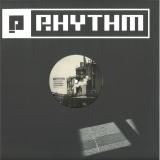

Demuir is a firm part of the deep house world by now and always brings sounds that are as sophisticated as his alias suggests they should be. This time, he's heading up a new EP for Selections that opens with 'Free', a percussive sound with organic, live-sounding drums that are woody and funky with smooth vocals and pads up top. Oscar P reworks it with a heavier, house-driven low end but keeps some playfulness in the trumpets. 'Fate For Faith' is a warm and steamy mix of bongos and hadn't drums with muffled beats and cosmic synth rays that reach for the stars. A cuddly dub closes down what is a heartfelt and human EP.

9
Zürich-based musician Angelo Repetto returns with his new album Between Worlds: Interference, released on Subject to Restrictions Discs. The record is the result of a unique collaboration with Argentinian visual artist Clara Grabowiecki, extending their immersive live project Between Worlds into a sonic and tangible form.
«This album is a continuation of the deep conversations Clara and I had about concepts of perception that led us to question silence, time, transcendence, and the future», says Repetto. «It’s not about finding answers, but about opening spaces where sound, image, and emotion can flow freely.»
Between Worlds: Interference oscillates between hypnotic rhythms, kraut-inspired synth layers, and psychedelic atmospheres – hallmarks of Repetto’s style that listeners may recognize from earlier releases such as Sundown Explosion and Kamiokande. At its core it is an invitation into an open dimension where disciplines, experiences, and realities dissolve into one another. It is both a deeply personal statement and a collective journey into new perceptual spaces.

13
Aufgewachsen in der Soundsystem-Kultur des englischen Leeds, kaufte sich George für einen Fünfer - mit freundlicher Genehmigung seiner Mutter - eine alte, ramponierte Lautsprecherbox, die er "Echo45" nannte. Über diese Box lernte er Kevin Harper kennen, ein Gründungsmitglied von Nightmares on Wax – eine zufällige Begegnung, die sein Leben verändern sollte. Mit dem neuesten Nightmares On Wax-Release "Echo45 Sound System" führt er diese Tradition nun einen Schritt weiter und liefert ein Mixtape ab, das sich wie eine Feier und ein Bekenntnis zugleich anfühlt. Ein lebendiger Soundsystem-Trip, inspiriert von der originalen Echo45-Lautsprecherbox, der mit furchtlosem Spirit Soul, Roots, Hip-Hop, Dub und elektronische Texturen verbindet. Mit einem sorgfältig zusammengestellten Ensemble von Kooperatoren – darunter Yasiin Bey, Greentea Peng, Sadie Walker, Oscar Jerome und Liam Bailey – spiegelt die LP nicht nur die Vergangenheit von Nightmares On Wax wider. Obwohl es tief in seinen Ursprüngen, der Soundsystem-Kultur und dem Piraten Radio verwurzelt ist, verkündet es mutig, wohin George geht. Limitierte Auflage auf goldfarbigem Doppelvinyl.

9
After a series of successful outings alongside sidekicks Ofofo and Zongamin, studio wizard MYTRON turns in his debut solo full-length for Multi Culti World Records. With contributions on Invisible Inc, Calypso, Bongo Joe, Kalahari Oyster Cult, LYO, Codek Records and Earthly Measures, Mytron has carved out a name for himself in a carefully-curated left-field quadrant of the indie-dance galaxy. Tuning his oscillators to myriad sounds — from dub and disco to krautrock — the London-based producer perhaps most notably channels the pristine compositional style of Kraftwerk. While most apparent in the use of vocoder, there’s a consistent efficiency of arrangement that recalls the man-machine in effervescent, idealistic fashion. Mytron manages to keep it simple, funky and musical — whimsical tunes that bop along with analog grit, wilderness, and wonk. There’s a warmth and wit that shine through every synth line, an understated confidence that speaks of years spent tangled in wires and waveforms, with an inclusive sonic eclecticism that flattens hierarchies between genres, geographies, and generations. Each influence is invited to the table, treated not as pastiche but invited to dine and dance in a space where kosmische dub disco and Afro rhythms can coexist without borders. The sleeve design echoes this philosophy: video-feedback patterns hinting at our modern screens, both portals and filters — coloured, distorted intermediaries through which we perceive the world. In the trippiest sense, the record is both reflection and refraction — a sonic mirror held up to an interconnected, glitchy reality. Tailored equally for DJ use and home-listening head trip, the album is meticulous, mischievous and merry.
BanBanTonTon review:
On Mytron’s debut long-player for Multi Culti groovy 21st Century leftfield house gear collides with Daniele Baldelli and Beppe Loda’s hugely influential `80s afro / cosmic. The 9 tracks are chunky, chugging and full of funky, funny noises. Old school B-lines mixing with eccentric electronics. Spinning, spiralling sounds.
Sugar is an electro-pop, vocoder confection, cut from the same sonic cloth as cult classics like Codek’s Tam Tam. Created from tough trap drums, splashing effects and a mutant Giorgio Moroder bass arpeggio. The title track, Propellor, pits Kraftwerk-esque hardware harmonised vocals against a bongo loop and a whistling hook. Playground has simian shrieks surround tumbling tom-toms. Highway Maintenance adds kosmische synths to a dance of woodblocks and buzzing bottom end. Keep On Dubbing is an organ-led, clip clopping percussive canter.
Tracks such as Speaker Can Talk, shot through with disco lasers blasts and recalling Curt Cress’ Dschung Tek, also lift the tempo up, but the bulk of the music here is a mid-tempo, techno drum circle. Squelchy sequences gurgling in and out of programmed percussion. On Quasar, spiky acid edges in and slowly takes over.
Key references that come to mind are Baldelli’s own turn-of-the-2000s Cosmic Sound Project productions, and Wolf Müller’s scene shaking sides on Themes For Great Cites, from around a decade later.
7
The union of Antwerp synthesist David Edren and Tokyo minimalist Hiroki Takahashi is a fit so natural as to feel preordained. Both traffic in subtle shades of contemplative electronics, marked by patience, space, and poetic restraint. And both have rich histories of curation and collaboration – Edren in the duo Spirit & Form alongside Bent Von Bent, and Takahashi as proprietor of the Kankyō record shop, as well as one fourth of cosmic ambient quartet UNKNOWN ME. Mutual fans of one another’s work, they began sharing stems in the latter half of 2020, which slowly blossomed into a collection of multi-hued compositions inspired by notions of connectivity and impermanence, translated for east and west: Flow | 流れ.
Opener “Dusk Decorum | 黄昏 礼節” maps the mood of what’s to come, elegantly pirouetting and percolating through an expanding vista of looming stars and half-light horizons. Takahashi describes Edren’s arrangements as evoking “a strange feel, something we haven't heard much of before.” The sensation is one of “in-betweenness,” a restless current whispering beneath the beauty, like seasons seen in time-lapse footage: flickering but infinite, transience turned permanent. Takahashi’s signature sculpture garden tones plot spiral patterns over which Edren cascades dazzling pointillist synthesizer coloration. The pieces veer between delicate and dilated, micro and macro, their aperture forever softly in flux.
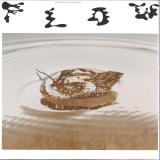
From the oscillating orchestral lullaby of “Stalactime | 鍾乳石時計” to the sweeping, sparkling dream sequence closer, “Shift Register | シフトレジスタ,” the album achieves the elusive goal of being more than the sum of its parts. This is music of rare air, elevated and amorphous, shimmering just out of reach. Though Edren and Takahashi have yet to cohabitate the same room in person (a fact that should be rectified soon by an astute festival booker), their palettes and poise are perfectly paired, twin fragilities woven into seven radiant and regenerative vibrational states. The cover design of a beatific, beaded leaf rippling on the surface of a hidden pond aptly captures the record’s muted majesty. Takahashi’s quiet pride is justified: “We are very happy with this time-consuming and carefully crafted work.”
