Second album from West London, singer-songwriter, producer and multi-instrumentalist, Oscar Lang. A split from his childhood sweetheart sent Lang spiralling, dramatically changing the course of the follow-up to the psychedelic-tinged fuzzy-rock of his 2021 debut Chew The Scenery at the same time as driving Lang into the most creatively fruitful period of his short career. The diversion has resulted in Look Now, an astounding record that makes Lang’s previous output sound like he was just testing the waters. Chew The Scenery and three melodically-breezy EPs that preceded it introduced Lang as a songwriter of rare talents but here is where he really lays down a marker, emerging with an album that takes in playful hooks, poignant lyricism, orchestral swells, ba-roque-pop instrumentation, a record that’s expansive but never overblown, intimate at the same time as being epic. It is his definitive artistic statement. Formats; CD, LP
Cerca:oscar lang
"Chew The Scenery is the long awaited debut album from indie wunderkind Oscar Lang. Led by the glorious psychedelic-rock of 'Stuck', it travels through piano-pop, lo-fi and grandiose songwriting, interspersed with charming interludes and asides, showcasing every side of Oscar Lang's hot-property songwriting talents." Available on CD and limited red vinyl
long content, you may need to expand row to see all... Mutant freut sich, in Zusammenarbeit mit Milan Records das offizielle Soundtrack-Album zu Edgar Wrights Sci-Fi-Action-Thriller The Running Man zu veröffentlichen.Das Album enthält die Original-Filmmusik des Oscar-Preisträgers Steven Price (Gravity, Last Night in Soho, Baby Driver). The Running Man, bei dem Wright als Co-Autor und Regisseur fungierte, handelt von einem Vater aus der Arbeiterklasse, der alles daran setzt, seine kranke Tochter zu retten. Er nimmt an einer tödlichen TV-Gameshow teil, in der die Kandidaten 30 Tage lang überleben müssen, während sie von Profikillern gejagt werden. Durch seinen Instinkt, seinen Widerstand und seine Entschlossenheit wird er zum unerwarteten Publikumsliebling – und zu einer Bedrohung für das gesamte System.Wir sind große Fans von Edgar und Steven und freuen uns sehr, dass sie uns erneut ein fantastisches Kinoerlebnis bescheren. Steven Prices Score für The Running Man ist eine schillernde Mischung aus treibenden Beats, brodelnden Synthesizern und traditionellen orchestralen Elementen, die vor Einfallsreichtum und Stil nur so sprühen. Das Hauptthema besitzt eine elegante, zeitlose Qualität mit üppigen, beruhigenden Streichern, die eine hypnotische Melodie weben. Im Gegensatz dazu stehen die Titel der Gameshow-Sequenzen, die wirklich unterhaltsam, bombastisch und im Retro-Stil gehalten sind – was wiederum einen Kontrast zu den düstereren, dystopischen Stücken bildet, die im gesamten Werk verteilt sind. Im Film wirkt die Musik wie ein weiterer Charakter, der die Geschichte vorantreibt. Als eigenständiges Hörerlebnis ist sie fesselnd, dynamisch, macht großen Spaß und fängt die vielen Facetten und Stimmungen des Films perfekt ein.Die Vinyl-Edition mit dem Artwork von Luke Preece ist auf zwei farbige 140g-LPs gepresst. Sie enthält ein „The Truth“-Zine als Replika aus dem Film mit exklusiven Liner Notes von Edgar Wright und Komponist Steven Price.Ebenfalls auf CD erhältlich.
Nala Sinephro veröffentlicht ihren ersten Original-Soundtrack für Benny Safdies Film "The Smashing Machine", der vor dem offiziellen Kinostart am 3. Oktober bei den 82. Internationalen Filmfestspielen von Venedig (mit 15-minütigen Standing Ovations!) Premiere feierte. Der Film erzählt die Geschichte des legendären Mixed-Martial-Arts- und UFC-Kämpfers Mark Kerr. Die Hauptrollen spielen Dwayne "The Rock" Johnson und die Oscar-nominierte Emily Blunt. Die Filmmusik wurde von Nala Sinephro komponiert, produziert, arrangiert, gemischt und gemastert. Mit dabei sind auch ihre langjährigen Weggefährten James Mollison, Nubya Garcia, Lyle Barton, Dwayne "Wonky Logic" Kilvington, Morgan Simpson, Natcyet Wakili, Mark Mollison und Sheila Maurice-Grey. Außerdem wirkt das Londoner Orchester Orchestrate mit, das bereits 2024 die Streicher für Sinephros hochgelobtes Album "Endlessness" lieferte.
Obwohl Sinephros Musik – meditativ, ätherisch und gewaltig – für eine Wrestlergeschichte paradox erscheinen mag, fand Marks Geschichte bei Sinephro Anklang, der die verborgenen Sanftheiten und Emotionen der Geschichte aufgriff. Die Filmmusik klingt immer noch unverkennbar nach Nala Sinephro – weitläufig mit gleichmäßiger Wärme, wunderschönen Streicherarrangements, leichten Themen, gemächlicher Harfe –, wurde aber intensiviert, um den Themen des Films zu entsprechen: Druck, Verlustangst, Sucht, Schmerz, vulkanische Beziehungen und das Gefühl des Hochgefühls.
- A1: Les Masques - Il Faut Tenir (1969)
- A2: Isabelle Aubret - Casa Forte (1971)
- A3: Christianne Legrand - Hlm Et Ciné Roman (1972)
- A4: Jean Constantin - Pas Tant D'chichi Ponpon (1972)
- A5: Billy Nencioli & Baden Powell - Si Rien Ne Va (1969)
- B1-: Marpessa Dawn - Le Petit Cuica (1963)
- B2: Jean-Pierre Sabar - Vai Vai (1974)
- B3: Sophia Loren - De Jour En Jour (1963)
- B4: Isabelle - Jusqu’à La Tombée Du Jour (1969)
- B5: Sylvia Fels - Corto Maltesse (1974)
- C1: Frank Gérard - Comme Une Samba (1972)
- C2: Ann Sorel - La Poupée Des Favellas (1971)
- C3: Charles Level - Un Enfant Café Au Lait (1971)
- C4: Andrea Parisy - Les Mains Qui Font Du Bien (1970)
- C5: Audrey Arno - Quand Jean-Paul Rentrera (1969)
- C6: Aldo Frank - T’as Vu Ce Printemps (1970)
- D1: Christianne Legrand - Cent Mille Poissons Dans Ton Filet (1972)
- D2: Clarinha - Lemenja (1970)
- D3: Hit Parade Des Enfants - Aquarela (1976)
- D4: Jean-Pierre Lang - Tendresse (1965)
- D5: Magalie Noël - Une Énorme Samba (1970)
- D6: Françoise Legrand - La Lune
Ever since the late 1950s bossa-nova revolution, Brazil’s influence on French music has been undeniable. Pierre Barouh, Georges Moustaki and a vast array of lesser known artists, all made the Musica Popular Brasileira (MPB) an axis of promotion at the service of a cool and metaphysical, modern and mixed Brazilian lifestyle. Some were seduced by the poetic languors of the bossa, some were looking for fun, and others just loved the American hybridization of jazz-bossa, jazz-samba.
What is bossa nova? One of its creators, Joao Gilberto said: "Its style, cadence, everything is samba. At the very start, we didn't call it bossa nova, we sang a little samba made up of a single note - Samba de uma nota so .... The discussion around the origins of bossa nova is therefore useless”. It is nevertheless useful to remember that these magnificent Brazilian songs, which the guitarist describes as samba, were shifted and balanced around improbable chords. "I like things that lean, the in-betweens that limp with grace," said Pierre Barrouh, quoting Jean Cocteau.
With emotion, arrangements for violin and supple guitar licks, bossa nova rapidly changed. A transformation that can be heard in the Tchic, tchic, French Bossa Nova 1963-1974 compilation, the result of a cultural reappropriation, which traveled through the United States and supplemented itself in France.
A musical revolution that has remained significant, bossa nova was born in Rio. From 1956 to 1961, Brazil lived through its golden years. In five years, the country had invented its modernist style. Elected president in 1956, Juscelino Kubitschek de Oliveira, an elegant man with a broad forehead, brandished a promising slogan: "Fifty years of progress in five years". He quickly got to work. Not worried about increasing debt, he launched the project for a new federal capital, Brasilia, designed by the communist architect Oscar Niemeyer. Volkswagen opened state-of-the-art factories and created the “fusquinha”, the Beetle. In Rio, the Vespa made its first appearance. The Arpoador Surf Club crew run into the “girl” from Ipanema, Helô Pinheiro - the tanned garota ("chick"), between a flower and mermaid, who at 17 walked by the Veloso bar, where the fiery author and composer, Tom Jobim and Vinicius de Moraes, were getting drunk on whiskey. From then on, bossa symbolized cool.
In 1958, Joao Gilberto recorded Chega de Saudade, which the directors of Philips denied, calling it "music for fagots". The marketing director, who believed in it, secretly pressed 3000 78-inch vinyls and distributed them at schools around Rio, creating a tidal wave.
American jazzmen then took over. In particular, trumpeter Dizzy Gillespie and guitarist Charlie Byrd. In November 1962, the Brazilian Ministry of Foreign Affairs funded a "Bossa-Nova" concert at Carnegie Hall in New York, inviting the genre’s pioneers. Unprepared, the show soon turned to disaster. But the troupe was invited to the White House by Jackie Kennedy. The first lady loved "the new beat" and in particular Maria Ninguem, a song by Carlos Lyra, later covered by Brigitte Bardot.
In Brazil, the 1964 military coup quickly ended this euphoria. The destructive atmosphere that ensued pushed many Brazilian musicians to leave, if not to exile. Thus, Tom Jobim, Sergio Mendes and Joao Gilberto arrived to the United States. In New York, Joao Gilberto met saxophonist Stan Getz. At the time, he was married to the Bahianese Astrud Weinert Gilberto, who had a German father. She had never sung before, but she knew how to speak English. Getz therefore asked her to replace her husband on The Girl From Ipanema. The Getz/Gilberto record with Tom Jobim on piano, was released in March 1964. Phil Ramone, the "pope of pop" was in charge of sound.
Bossa nova arrived in Paris through the classic “guitar-voice” channel (Pierre Barouh, Baden Powell, Moustaki…) But France loved jazz and Paris had already welcomed its American contributors. All these good people were to pass through Saint-Germain-des-Prés. The cabaret l'Escale became the Mecca of Latin American sound where one could find Pierre Barrouh and his friends, such as the Camara Trio, samba-jazz aces, whose only record was published by the Saravah label. With a band strangely called Les Masques (a band that included Nicole Croisille and Pierre Vassiliu, among others), the Camara Trio recorded an interesting Brazilian Sound, including the track Il faut tenir which is present on this tasty compilation of rarities.
Other enlightened musicians can also be found on the compilation, such as Jean-Pierre Sabar (songwriter for Hardy, Auffray, Leforestier ...) and the French pop rock organist Balthazar. In 1975, Sabar recorded Aurinkoinen Musiikkimatka on a Finnish label, which featured the crazy Vai, Vai, included on this record. We are now following the footsteps of Brazilian electronic musicians such as Sergio Mendes, Eumir Deodato or Marcos Valle who created funk and disco sounds on their keyboards and synthesizers. A style that influenced Véronique Sanson when she wrote Jusqu’à la Tombée de la nuit in 1969 for Isabelle de Funès, the niece of Louis and a great friend of Michel Berger - Sanson did end up singing this track on her 1992 Sans Regret record.
The pinnacle of exoticism and travel, Sylvia Fels’ Corto Maltese includes bongos, sea mist and ocean sounds. The title was taken from Jacky Chalard’s concept album written in 1974, Je suis vivant, mais j’ai peur (I am alive, but I am scared), based on Gilbert Deflez’s science fiction novel.
However, bossa nova extended the scope of popularity. "In the 1970s, I was a fan of Sergio Mendes, Getz / Gilberto. I fell in love with this music that I knew because I had been an orchestral singer, " explained Isabelle Aubret, who in 1971 delivered a composite record of covers by the very funky Jorge Ben, Orfeu Negro, Tom Jobim, Vinicius de Morais and Jean Ferrat. "I recorded this album for Meys Records in Paris, far from Brazil, with wonderful musicians, François Raubert, Roland Vincent, Alain Goraguer...". The latter wrote the arrangements for Casa Forte, a very percussive title borrowed from Edu Lobo, one of the initiators of the bossa who spent time in California. "Jazz and bossa came together and produced very rhythmic music. I love singing, it allows me to dream, to have fun, to feel a high on stage, and these songs brought me joy, made me swing, my singing felt like a dance.”
The world tours of French singers and their desire for the tropics, often brought them to Rio with its hills, forests, caipirinhas and tanned bodies. There are surprises though, like this Iemenja (Iemenja is the goddess of the sea in the Afro-Brazilian candomblé religion). Not unlike the composer and musician Jean-Pierre Lang, based in Sao Paulo, Claire Chevalier taught Brazil to Brazil. In 1970, the singer and painter published a 45-inch vinyl, Mon mari et mes amants (My husband and my lovers), under the improbable pseudonym of Clarinha (little Claire). She was then living in Rio, with her husband, Joël Leibovitz, who founded a band called Azimuth, and who owned a record label specialized in "sambas enredos" songs for samba school parades.
For its B side, she asked Pierre Perret to come up with lyrics for a song composed by Carlos Imperial: "Oh goddess of the sea, o goddess Iemenja, I bring a white rose to adorn your long hair ..." . "Perret came to see us, and we had fun, remembers Joël Leibovitz. We wrote Lemenja for fun, we recorded it at the Havaí studio, behind the Central do Brasil the central station. Erlon Chaves, the arranger who worked with Elis Regina, joined us" adding his share of Afro-Brazilian percussions and funky brass to the mix.
There is a common misunderstanding in Franco-Brazilian history: that bossa, admittedly hedonistic, is perceived as funny, even though the poets who wrote the texts are often philosophizing on the human condition. Its French interpreters pull it towards a carnival inspired universe, far removed from its fundamental essence. Thus, Jean Constantin covered the famous Samba da minha terra, an ode to the art of samba written by the classic Bahian composer Dorival Caymmi, renaming it with the enticing title of Pas tant de tchi tchi pompon: "On your pier there is no tchi tchi / when you arch your back, you know everything is alright ”(lyrics by Gérard Calvi). This expedited bossa aims for the absurd, but retains a certain elegance.
Indeed, Jean Constantin was not an idiot, the rather large man had a huge mustache and liked fantasy, (Les pantoufles à papa, Le pacha, inspired by cha-cha-cha-cha, salsa and jazz) but he was also the lyricist of Mon manège à moi interpreted by Edith Piaf, the composer of Mon Truc en plume by Zizi Jeanmaire and the soundtrack of François Truffaut’s 400 Blows. Le Poulpe, published in 1970, from which this bossa is extract, was arranged by Jean-Claude Vannier, an accomplice of Serge Gainsbourg’s Melody Nelson. In short: "There is enough of samba / By looking at the parasol / Because my poor cabeza / Is going to die in the sun".
Even the American actress Marpessa Down, who was at the heart of the bossa nova revolution with her role as Euridyce in Marcel Camus’ film Orfeu Negro, winner of the 1959 Cannes Palme d'or, fed the clichée with Je voudrais parler au petit cuica - "Tell me how you manage to always make people want to dance / It's true, I must admit that I cannot resist your magic" - in consequence, once can hear the cuica, a little drum inherited from the Bantu.
But bossa nova had many angles. Societal, of course, pushing actresses who were symbols of women's liberation like Brigitte Bardot, Jeanne Moreau, or Sophia Loren to engage in the exercise of accelerated bossa. In February of 1963, Sophia Loren made a record in French in Rome, Je ne t'aime plus, featuring the song De jour en jour, a bossa written by two Italians, Armando Trovajoli and Tino Fornai, which was released a little later by Barclay. Bossa accompanied the 1960s, a decade of moral liberation. Ann Sorel, who interpreted La Poupée des favellas, caused a sensation with L’amour à plusieurs, a provocative song written by Frédéric Bottom and Jean-Claude Vannier. As for the actress Andrea Parisy, she displayed her bourgeois cheekiness in Marcel Carné's Les Tricheurs before interpreting Les mains qui font du bien. And Magalie Noël, the friend of Boris Vian, who sung Johnny fais-moi mal, was hired to sing Une énorme Samba, composed by Alain Goraguer (arranger to Gainsbourg, Bobby Lapointe and Jean Ferrat) with lyrics by Frédéric Botton.
But in the end, of what wood is bossa nova made of? The answer is given by Christianne Legrand, daughter of Raymond the conductor, and sister to Michel the composer: "With me, with jà" - jà means "immediately" in Portuguese. In 1972, the singer, an expert in vocal jazz and a member of the Double Six, published Le Brésil de Christianne Legrand. Two songs included on the Tchic Tchic compilation that demonstrate how bossa, jazz, funk, rock, etc. work like a swiss army knife: the music is used to denounce broken systems, or miracles, HLM et ciné roman, Cent mille poissons dans ton filet, two songs from the O Cafona soundtrack, a successful telenovela broadcast, at the time in black and white, on TV Globo. The first was adapted in French by the fighter and friend of the Legrand tribe, Agnès Varda. The second is content with a play on words, jostling them into a summer fun.
Véronique Mortaigne
Oscar Mulero and Another Machines join forces together for the next installment of their Joven Prisionero Project. No less than seven cuts on the zeroes and ones version and a six cut vinyl gonna be released on our 78th release. You may wonder what's inside this new outcome, and the answer is easy and direct: Pure techno with no roundabouts. But techno is an open language and this duo speaks all dialects: From the merciless and bleepy Conocete to the functional and fast paced minimalism on De tunica roja passing thru the drilling Surrealista Entorno stopping via Birmingham on Persiguiendo ecos, breaking the grooves and going martian for Mundo Efimero, back to Birmingham again with El nuevo jardin to finalize the duties with Identidad Variable in a pure scifi mood. If you want to spend your money on a totally useful collection of tools here you have the perfect package. El Joven Prisionero delivers to you exactly what your bodies and minds need under the strobe light. Soon available in your trusted physical and digital dealers.
ince its opening in spring 2021, JUBG, a still young Cologne gallery for contemporary art, has specialized in the broad field of artists and collaborations working along artistic interfaces, especially those between visual art and experimental and/or electronic music. For example, JUBG has already hosted exhibitions by Markus Oehlen, Kim Gordon, Wolfgang Voigt, Matthias and Aksel "Superpitcher" Schaufler, Sven-Åke Johansson, and Emil Schult. Albert Oehlen, who is a kind of mentor and supporter of the gallery, was also a guest at Albertusstraße this summer, where he presented the exhibition D-I-E ORPHEUSMASCHINE together with Michael Wertmüller, Thomas Stammer and the poet Rainald Goetz.
It is only logical that the gallery now expands its sphere of activity to include its own label, on which music appears that comes from similar contexts as the artists listed above already suggest.
As catalog number 1, JUBG is now releasing the official soundtrack to "The Painter" from 2021. The film, German title "Der Maler", is a mixture of feature film and documentary and a collaboration between German director Oliver Hirschbiegel, best known for his Oscar-nominated film "Downfall", and Albert Oehlen, with whom Hirschbiegel has a long friendship, as they both once studied together at the Hochschule der Bildenden Künste in Hamburg.
The docu-fiction shows Oehlen struggling with a painting and pondering the meaning of his work. Oehlen is played by German actor and musician Ben Becker, accompanied by the off-screen voice of Charlotte Rampling. In the film, Becker makes a painting that Oehlen himself creates step by step behind the camera, while the actor improvises the process in front of the camera.
The wonderful music for this film comes from no less than two outstanding personalities whose individual biographies and musical signatures could hardly be better suited to this project. On the A-side it is Gudrun Gut, icon not only of the German electronic music scene since at least the 90's, singer, composer, DJ, label owner (Monika Enterprise) and of course founding member of the legendary 80's New Wave band Malaria. On the B-side it’s the world famous and award winning US avant-garde trumpeter and improvisational musician Nathan "Nate" Wooley, who has played with Fred Frith and John Zorn among others.

Gudrun Gut's tracks bear such beautiful titles as "Bewegung", "Küste" or "Weinen" and she once again pulls out all the stops of her great skills and decades of experience as a producer of the most diverse electronic music genres. These are unusual and much more experimental musical paintings that she creates here than on her recent solo works. Edgy, angular, raw and unpolished, yet always elegant and clever, she subverts the male artist madness depicted extensively in the film in her own unique way.
Nathan Wooley answers with the instrument he has been familiar with since childhood, the trumpet, with which he is able to create a ravishingly virtuosic noise. His pieces are more like sketches, often only 90 seconds or a few minutes long, but in all their abstractness underpin the narrative of the film almost perfectly.
A limited edition of 20 copies in total, painted and signed by Ben Becker, can be purchased directly through JUBG.
JUBG, eine noch junge Kölner Galerie für zeitgenössische Kunst, hat sich seit ihrer Eröffnung im Frühjahr 2021 auf das weite Feld von Künstler:innen und Kollaborationen spezialisiert, die entlang künstlerischer Schnittstellen tätig sind, insbesondere an denen zwischen bildender Kunst und experimenteller und/oder elektronischer Musik. So hat JUBG bereits Ausstellungen von Markus Oehlen, Kim Gordon, Wolfgang Voigt, Matthias und Aksel "Superpitcher" Schaufler, Sven-Åke Johansson und Emil Schult gezeigt. Auch Albert Oehlen, der eine Art Mentor und stiller Unterstützer der Galerie ist, war im Sommer dieses Jahres zu Gast in der Albertusstraße, wo er zusammen mit Michael Wertmüller, Thomas Stammer und dem Dichter Rainald Goetz die Ausstellung D•I•E ORPHEUSMASCHINE präsentierte.
Es ist nur logisch und folgerichtig, dass die Galerie ihren Wirkungskreis nun um ein eigenes Label erweitert, auf dem Musik erscheint, die aus ähnlichen Zusammenhängen und Sphären stammt, wie es die oben aufgezählten Künstler:innen bereits vermuten lassen.
Als Katalog-Nummer 1 veröffentlicht JUBG nun den offiziellen Soundtrack zu "The Painter" aus dem Jahr 2021. Der Film, deutscher Titel “Der Maler”, ist eine Mischung aus Spiel- und Dokumentarfilm und eine Zusammenarbeit zwischen dem deutschen Regisseur Oliver Hirschbiegel, vor allem bekannt für seinen Oscar-nominierten Film "Der Untergang", und Albert Oehlen, mit dem Hirschbiegel eine lange Freundschaft verbindet, studierten sie doch beide zusammen einst an der Hochschule der Bildenden Künste in Hamburg.
Die Doku-Fiktion zeigt Oehlen, wie er mit einem Gemälde kämpft und über die Bedeutung seines Werks nachdenkt. Oehlen wird vom deutschen Schauspieler und Musiker Ben Becker gespielt und von der Stimme von Charlotte Rampling aus dem Off begleitet. Im Film erstellt Becker ein Gemälde, das Oehlen selbst hinter der Kamera Schritt für Schritt anfertigt, während der Schauspieler den Prozess wiederum vor der Kamera improvisiert.
Die wunderbare Musik zu diesem Film kommt von gleich zwei herausragenden Persönlichkeiten, die mit ihren individuellen Biographien und musikalischen Handschriften kaum besser zu diesem Projekt passen könnten. Auf der A-Seite ist dies Gudrun Gut, Ikone nicht nur der deutschen elektronischen Musikszene seit mindestens den 90er Jahren, Sängerin, Komponistin, DJ, Label-Betreiberin (Monika Enterprise) und natürlich Gründungsmitglied der legendären 80er Jahre New Wave-Band Malaria, auf der B-Seite der weltberühmte und Preisgekrönte US-amerikanische Avantgarde-Trompeter und Improvisationsmusiker Nathan “Nate” Wooley, der u.a. mit Fred Frith und John Zorn zusammengespielt hat.
Gudrun Gut’s Tracks tragen so schöne Titeln wie “Bewegung”, “Küste” oder “Weinen” und sie zieht hier einmal alle Register ihres großen Könnens und ihrer jahrzehntelangen Erfahrung als Produzentin der verschiedensten elektronischen Musikspielarten. Es sind ungewöhnliche und sehr viel experimentellere musikalische Gemälde, die sie hier entwirft als auf ihren jüngsten Solo-Werken. Kantig, eckig, roh und ungeschliffen und dabei immer elegant und schlau, unterläuft sie den im Film ausgiebig dargestellten männlichen Künstlerwahnsinn auf ihre ganz eigene Art und Weise.
Nathan Wooley antwortet mit dem ihm seit Kindesbeinen vertrauten Instrument, der Trompete, mit der er in der Lage ist, einen hinreißend virtuosen Lärm zu erzeugen. Seine Stücke sind eher Skizzen, oft nur 90 Sekunden oder ein paar wenige Minuten lang, die in all ihrer Abstraktheit das Narrativ des Films nahezu perfekt untermalen.
Eine auf insgesamt 20 Exemplare limitierte Edition, bemalt und signiert von Ben Becker, ist direkt über die JUBG zu erwerben.
ROMÉO ELVIS & OSCAR AND THE WOLF
JARDIN
- 1: Lose My Baby
- 2: Chargé
- 3: Bon Sens
- 4: M'en Ballec
- 5: Fading Into You
- 6: Ceiling
- 7: Closer (Monet)
- 8: Crocodilla
Sometimes, the most beautiful stories begin simply between friends, over laughter, late nights and shared music. That’s how the collaboration between Oscar and the Wolf and Roméo Elvis was born. What started as an unexpected jam session after dinner soon evolved into something much greater: a modern-day Romeo and Juliet where two distinct worlds, North and South, pop and rap, light and shadow, meet and merge effortlessly.
Their first collaboration, “Ceiling”, captures that magic: the perfect balance between intimacy and grandeur, where contrast becomes harmony. Premiered live before 100,000 people during Belgium’s National Day celebrations, the single immediately resonated, becoming a radio hit and surpassing one million streams within weeks.
Now, the duo present JARDIN, an eight-track EP arriving this December. Here, Oscar and the Wolf and Roméo Elvis push each other beyond their comfort zones, exploring new sonic landscapes and blending their unique identities into one sound. From the pulsating energy of “Crocodila” and “Je M’en Balec”, to the tender alternative rock ballad “Lose My Baby”, and the groove-driven “Chargé (Monet)” or the club-ready “Bon Sense”, JARDIN unfolds like a living garden, a vibrant space where every track blossoms into something new.
To celebrate the release, the duo will perform together for the first time on December 15 and 16 at Ancienne Belgique in Brussels. Both shows sold out within hours, a testament to the excitement surrounding this groundbreaking collaboration.
With JARDIN, Oscar and the Wolf and Roméo Elvis don’t just unite genres and languages; they build a bridge between regions, emotions and artistic worlds, a celebration of sound, connection and friendship.
Vor zwanzig Jahren kam der Film „Brokeback Mountain“ heraus, der längst als jüngerer Klassiker Hollywoods gilt und mit seiner dramatischen und anrührenden Story ein riesiges Publikum erreicht hat. Oscars
gab es nicht nur für die beste Regie und das beste Drehbuch, sondern auch für die Filmmusik von Gustavo
Santaolalla (The Last Of Us, August: Osage County, Babel).
Das Soundtrack-Album zum Film wurde ebenfalls ein großer Erfolg, es enthält neben dem Score auch
Titel von u.a. Willie Nelson, Rufus Wainwright, Linda Ronstadt und Emmylou Harris. Zum zwanzigsten
Jubiläum des Films erscheint der Soundtrack jetzt weltweit erstmals als LP.
- Microcosm
- Echo Charlie Hotel Oscar
- Nearby Parallel Universes
- The Scream
- Legendarium
- Tact
- Combined Species
- Mahler's Pedal
- Found Material
- Toccata
- Ballad For Yourself
- Gigue
- Pyotr
- The Persistence Of Pitch Memory
- Spake Schumann
- Macrocos
Teddy Abrams, the Grammy Award winning conductor, composer, and multi-instrumentalist deemed by the New York Times as a “Maestro of the People,” and named Musical America’s 2022 Conductor of the Year, announces Preludes, an album of solo piano works composed and performed by Abrams and produced by Gabriel Kahane and Casey Foubert, via New Amsterdam Records.
Preludes is a contemplative, personal, and playful set of simple solo piano pieces whose recorded sonic identities were developed in collaboration with Gabriel Kahane and Casey Foubert. Kahane and Foubert “identified the personality of each Prelude and found a sound world for every track to match the intrinsic characteristics of the individual works.” The 16 pieces that make up Preludes take inspiration from the canon of classical piano works such as Bach’s Inventions and Bartok’s Mikrokosmos, yet they are imbued with Abrams’ immaculate compositional language and a depth in production uncommon to “classical” works.
Coming on the tail end of Abram’s Grammy Award Winning Piano Concerto (2023), Abrams explains: “After the crazy, frenetic, joyful energy of my Piano Concerto, I wanted to create a piano work that explored a completely different energy and soundscape. While the Piano Concerto is overtly populist, referencing American genres like jazz, funk, and Gospel music, the Preludes are meant to be introspective, intimate, and simple enough for pianists of many skill levels to play in both performance and home settings.
Repress of 2018’s classic compilation from Brownswood.
A primer on London’s bright-burning young jazz scene, this new compilation brings together a collection of some of its sharpest talents. A set of nine newly-recorded tracks, We Out Here captures a moment where genre markers matter less than raw, focused energy. Looking at the album’s running order, it could easily serve as a name-checking exercise for some of London’s most-tipped and hardworking bands of the past couple of years. Recorded across three long, fruitful days in a North West London studio, the crossover between each of the groups speaks to the close-knit circles which make up the scene.
Surveying the way that London’s jazz-influenced music had spread outside of its usual spaces in recent years, this album bottles up some of the vital ideas emanating from that burgeoning movement. Giving a platform to a scene where mutual cooperation and a DIY spirit are second-nature, it’s a window into the wide-eyed future of London’s musical underground.
Ubiquitous, much-lauded saxophonist Shabaka Hutchings is the project’s musical director. His own recent projects span from South Africa-connected, spiritually-minded jazz players Shabaka and the Ancestors to Sons of Kemet, who match diasporically-connected compositions with viscerally-direct live shows. His entry on the album, ‘Black Skin, Black Masks’, is typically difficult-to-define: with an off-kilter, shifting rhythmic backbone, repeated phrases – mirrored between clarinet and bass clarinet – shape the track with an alluring hue. His input ties together a deft, genre-agnostic sensibility that’s shared through all the players on the record.
Theon Cross – who’s also part of Sons of Kemet with Hutchings – starts his track, ‘Brockley’, with the solo, distinctive low rumble of his tuba. Winding and mesmeric, it sees tuba and sax lines winding together in rhythmic and melodic parallels. Ezra Collective – whose drummer and bandleader Femi Koleoso has toured with Pharaohe Monch – run a tight, Afrobeat-tipped rhythm on ‘Pure Shade’, with the final third changing gear into a melodic, momentous closing stretch.
Joe Armon-Jones, whose ludicrous chops on the piano have seen him touring with the likes of Ata Kak, showcases earworm-like, insistent motifs on ‘Go See’, balanced with a playful, improvisatory approach with room for ad-libbing and solos a-plenty. Taking a softer tact than many of the other entries, Kokoroko – whose guitarist Oscar Jerome has been making waves with his solo material – spin a lyrical, steady-paced meditation on ‘Abusey Junction’, matching chanted vocals with gently-played guitar.
Nodding to spiritual jazz influences, Maisha’s ‘Inside The Acorn’ is a wandering, explorative rumination, balancing delicate washes of piano and percussion with sharp interplay between flute and bass clarinet. In contrast, Nubya Garcia’s ‘Once’ is taut and carefully-poised, her tenor sax guiding a carefully-built energy to an explosive conclusion. And finally, Triforce’s ‘Walls’ is a performance in two parts: starting with Mansur Brown’s languorous, lyrical guitar, the second half switches up to a low-slung, g-funk-tipped groove.
Repress of 2018’s classic compilation from Brownswood.
A primer on London’s bright-burning young jazz scene, this new compilation brings together a collection of some of its sharpest talents. A set of nine newly-recorded tracks, We Out Here captures a moment where genre markers matter less than raw, focused energy. Looking at the album’s running order, it could easily serve as a name-checking exercise for some of London’s most-tipped and hardworking bands of the past couple of years. Recorded across three long, fruitful days in a North West London studio, the crossover between each of the groups speaks to the close-knit circles which make up the scene.
Surveying the way that London’s jazz-influenced music had spread outside of its usual spaces in recent years, this album bottles up some of the vital ideas emanating from that burgeoning movement. Giving a platform to a scene where mutual cooperation and a DIY spirit are second-nature, it’s a window into the wide-eyed future of London’s musical underground.
Ubiquitous, much-lauded saxophonist Shabaka Hutchings is the project’s musical director. His own recent projects span from South Africa-connected, spiritually-minded jazz players Shabaka and the Ancestors to Sons of Kemet, who match diasporically-connected compositions with viscerally-direct live shows. His entry on the album, ‘Black Skin, Black Masks’, is typically difficult-to-define: with an off-kilter, shifting rhythmic backbone, repeated phrases – mirrored between clarinet and bass clarinet – shape the track with an alluring hue. His input ties together a deft, genre-agnostic sensibility that’s shared through all the players on the record.
Theon Cross – who’s also part of Sons of Kemet with Hutchings – starts his track, ‘Brockley’, with the solo, distinctive low rumble of his tuba. Winding and mesmeric, it sees tuba and sax lines winding together in rhythmic and melodic parallels. Ezra Collective – whose drummer and bandleader Femi Koleoso has toured with Pharaohe Monch – run a tight, Afrobeat-tipped rhythm on ‘Pure Shade’, with the final third changing gear into a melodic, momentous closing stretch.
Joe Armon-Jones, whose ludicrous chops on the piano have seen him touring with the likes of Ata Kak, showcases earworm-like, insistent motifs on ‘Go See’, balanced with a playful, improvisatory approach with room for ad-libbing and solos a-plenty. Taking a softer tact than many of the other entries, Kokoroko – whose guitarist Oscar Jerome has been making waves with his solo material – spin a lyrical, steady-paced meditation on ‘Abusey Junction’, matching chanted vocals with gently-played guitar.
Nodding to spiritual jazz influences, Maisha’s ‘Inside The Acorn’ is a wandering, explorative rumination, balancing delicate washes of piano and percussion with sharp interplay between flute and bass clarinet. In contrast, Nubya Garcia’s ‘Once’ is taut and carefully-poised, her tenor sax guiding a carefully-built energy to an explosive conclusion. And finally, Triforce’s ‘Walls’ is a performance in two parts: starting with Mansur Brown’s languorous, lyrical guitar, the second half switches up to a low-slung, g-funk-tipped groove.
- 1: Playful Slowed
- 2: Ether Circus Harmonics
- 3: Celestial Piano
- 4: Stuck Run Baby
- 5: Seagulls
- 6: Downwards Spiral
- 7: Stuck
OONA Recordings is proud to announce the upcoming release of the soundtrack for The Girl With The Needle by Frederikke Hoffmeier. Hoffmeier, whom performs under the stage name Puce Mary, brings a raw, intense and atmospheric score to this Oscar-nominated film, which is contending for Best International Feature. Known for her bold, experimental approach to sound, Hoffmeier’s composition immerses listeners in the film’s dark, emotionally-charged world. Directed by Magnus von Horn, The Girl With The Needle premiered at the Cannes Film Festival, where it earned praise for its uncompromising vision. The film went on to receive a Golden Globe nomination for Best Non-English Language Film and won two prestigious awards at the European Film Awards, including Best Score for Hoffmeier’s hauntingly powerful work. The score to The Girl With The Needle is as dark as it is compelling, a masterclass in creating tension, unease, and raw emotional weight. Hoffmeier’s sound design is equal parts abrasive and intimate, drawing the listener into a world of fractured beauty. Her use of organic textures, electro-acoustic undertones, and dissonant, atonal melodies challenges traditional notions of film music, offering something deeply visceral and unpredictable. The Guardian described Hoffmeier’s score as "nerve-abrading," highlighting the relentless, uncomfortable energy that underpins the film. The Chicago Reader similarly calls the score haunting, noting how it amplifies the film’s stark atmosphere. Drawing comparisons to the intense works of composers like Mica Levi, Awards Radar Magazine praises Hoffmeier for pushing the film’s emotional core to its breaking point, deepening the agony of the protagonist. Throughout the film, Hoffmeier’s score becomes as much a character as the people on screen. Her collaboration with von Horn is marked by a shared vision of pushing the limits of cinema and sound. Screen Daily describes the score as "daring," with its aggressive, contemporary tones standing in stark contrast to conventional film scores. The result is a uniquely modern, avant-garde work that reflects the film's visceral and unsettling nature. Hoffmeier crafts a world of sound that lingers long after the credits roll. The soundtrack’s fusion of organic instrumentation with electro-acoustic elements and bold industrial sounds sets it apart from the ordinary. The British Film Institute notes how Hoffmeier’s "atonal score" creates an "enervating effect," pulling listeners deeper into the film’s raw emotional depths. The combination of brutal sound design and haunting melodies builds a layered, evocative listening experience, one that grows increasingly intense with every listen.
- A1: Esther Abrami / Vienna Radio Symphony Orchestra / - March Of The Women (Arr. For Violin And Orchestra By Esther Abrami) 2:33
- A2: Esther Abrami & Vienna Radio Symphony Orchestra & - Valse Di Fantastica 3:49
- A3: Esther Abrami / Vienna Radio Symphony Orchestra / - Flowers (Arr. For Violin And Orchestra By Janpeter Klöpfel) 3:08
- A4: Esther Abrami & Lavinia Meijer & Esther Abrami Ens - Hai Luli!, Vwv 1106 (Arr. For Violin, Harp And String Quintet By Janpeter Klöpfel) 3:18
- A5: Esther Abrami & Esther Abrami Ensemble - Wiegala (Arr. For Violin And String Quintet By Esther Abrami) 3:02
- B1: Esther Abrami / Esther Abrami Ensemble - Corta Jaca (Arr. For Violin And String Quintet By Janpeter Klöpfel) 2:39
- B2: Esther Abrami / Vienna Radio Symphony Orchestra / - Medhel An Gwyns 2:49
- B3: Esther Abrami / Esther Abrami Ensemble - O Virtus Sapientiae (Arr. For Violin And String Quintet By Penelope Axtens) 4:53
- B4: Esther Abrami / Vienna Radio Symphony Orchestra / - Apple Tree 1:59
- C1: Esther Abrami / Vienna Radio Symphony Orchestra / - Concerto For Violin And Orchestra (To The Memory Of My Mother) / I. Lento, Ma Non Troppo 6:56
- C2: Esther Abrami / Vienna Radio Symphony Orchestra / - Concerto For Violin And Orchestra (To The Memory Of My Mother) / Ii. Adagio 4:23
- C3: Esther Abrami / Vienna Radio Symphony Orchestra / - Concerto For Violin And Orchestra (To The Memory Of My Mother) / Iii. Allegro, Ma Non Troppo 6:07
- D1: Esther Abrami / Vienna Radio Symphony Orchestra / - Mi Teresita "Little Waltz" (Arr. For Violin And Orchestra By Janpeter Klöpfel) 3:20
- D2: Esther Abrami & Kim Barbier - Lua Branca (Arr. For Violin And Piano By Esther Abrami) 3:40
- D3: Esther Abrami & Kim Barbier - Solitude (Arr. For Violin And Piano By Esther Abrami) 3:49
- D4: Esther Abrami / Vienna Radio Symphony Orchestra / - Transmission 4:01
2x12"[31,05 €]
Die Violinistin Esther Abrami wirft auf ihrem Album "WOMEN" neue und erhellende Schlaglichter auf Komponistinnen. "Women" legt den Fokus auf die außergewöhnlichen Talente von 14 Komponistinnen aus unterschiedlichen Epochen und Genres und enthält neue Kompositionen der Oscar-Preisträgerinnen Rachel Portman und Anne Dudley sowie neue Arrangements von Werken historischer Komponistinnen wie Pauline Viardot, Chiquinha Gonzaga, Teresa Carreño und Ethel Smyth. Esther Abrami hat selbst einige dieser Stücke neu arrangiert und mit "Transmission" ein eigenes Orchesterstück für das Album komponiert. Im Mittelpunkt von "Women" steht die Weltersteinspielung von Ina Boyles Violinkonzert, eine poetische, spätromantische Komposition. Esther Abrami hat jedes Stück für das Album aufgrund einer besonderen emotionalen Verbindung zu den unterschiedlichen Frauen hinter der Musik ausgewählt: "Solange ich mich erinnern kann, war die einzige klassische Musik, die ich je gehört habe, von männlichen Komponisten geschrieben. Ich habe über 15 Jahre lang klassische Musik an renommierten Musikschulen studiert, aber in all den Jahren kein einziges Stück von einer Frau gespielt. Es war nicht so, dass ich sie diese Stücke aktiv vermieden hätte - sie waren einfach nicht Teil des Kanons. Ich fragte mich 'haben Frauen jemals klassische Musik komponiert?' und es stellte sich heraus, dass sie es taten, und ich entdeckte einen verborgenen Schatz. Ich verbrachte Monate mit Recherchen und tauchte in eine völlig neue Welt der Musik und faszinierenden Geschichten von Frauen ein, die im Schatten der Geschichte geblieben waren. Dieses Album ist meine Hommage an sie und eine Reise durch Jahrhunderte der Musik, erzählt durch die Stimmen von Frauen, die trotz aller Widrigkeiten komponierten, kämpften, lebten und schufen. Die Geschichten dieser Frauen inspirierten mich für meinen Karriereweg und zeigten mir wie wichtig es ist, dass zukünftige Generationen diese entdecken können. Ich hoffe, 'Women' kann eine neue Generation junger Mädchen dazu inspirieren, zu komponieren." Über ihre gesamte noch junge Karriere als professionelle Musikerin hinweg hat sich Esther Abrami dafür eingesetzt, Komponistinnen eine Stimme zu geben. In ihrem Podcast "Women in Classical" spricht sie mit einflussreichen Musikerinnen über ihre Karriere. Auch mit ihrer EP "Spotlight" mit dem Londoner "Her Ensemble", das ausschließlich aus Frauen und non-binären Musiker*Innen besteht, hat sie bereits wortwörtlich ein Schlaglicht auf Komponistinnen geworfen. "Women" führt diesen Weg konsequent fort und versammelt eine Reihe außergewöhnlicher Mitwirkenden, wie das ORF Radio-Symphonieorchester Wien unter der Leitung von Dirigentin Irene Delgado-Jiménez, die Pianistin Kim Barbier, die Harfenistin Lavinia Meijer und das Esther Abrami Quintet."Ich bin unglaublich glücklich mit einem so großartigen Orchester und tollen Musikerinnen an einem so persönlichen Projekt zu arbeiten. Diese Kompositionen mit einem Orchester zum Leben zu erwecken, ist eine Erinnerung, die ich nie vergessen werde."
- A1: Esther Abrami / Vienna Radio Symphony Orchestra / - March Of The Women (Arr. For Violin And Orchestra By Esther Abrami) 2:33
- A2: Esther Abrami & Vienna Radio Symphony Orchestra & - Valse Di Fantastica 3:49
- A3: Esther Abrami / Vienna Radio Symphony Orchestra / - Flowers (Arr. For Violin And Orchestra By Janpeter Klöpfel) 3:08
- A4: Esther Abrami & Lavinia Meijer & Esther Abrami Ens - Hai Luli!, Vwv 1106 (Arr. For Violin, Harp And String Quintet By Janpeter Klöpfel) 3:18
- A5: Esther Abrami & Esther Abrami Ensemble - Wiegala (Arr. For Violin And String Quintet By Esther Abrami) 3:02
- B1: Esther Abrami / Esther Abrami Ensemble - Corta Jaca (Arr. For Violin And String Quintet By Janpeter Klöpfel) 2:39
- B2: Esther Abrami / Vienna Radio Symphony Orchestra / - Medhel An Gwyns 2:49
- B3: Esther Abrami / Esther Abrami Ensemble - O Virtus Sapientiae (Arr. For Violin And String Quintet By Penelope Axtens) 4:53
- B4: Esther Abrami / Vienna Radio Symphony Orchestra / - Apple Tree 1:59
- C1: Esther Abrami / Vienna Radio Symphony Orchestra / - Concerto For Violin And Orchestra (To The Memory Of My Mother) / I. Lento, Ma Non Troppo 6:56
- C2: Esther Abrami / Vienna Radio Symphony Orchestra / - Concerto For Violin And Orchestra (To The Memory Of My Mother) / Ii. Adagio 4:23
- C3: Esther Abrami / Vienna Radio Symphony Orchestra / - Concerto For Violin And Orchestra (To The Memory Of My Mother) / Iii. Allegro, Ma Non Troppo 6:07
- D1: Esther Abrami / Vienna Radio Symphony Orchestra / - Mi Teresita "Little Waltz" (Arr. For Violin And Orchestra By Janpeter Klöpfel) 3:20
- D2: Esther Abrami & Kim Barbier - Lua Branca (Arr. For Violin And Piano By Esther Abrami) 3:40
- D3: Esther Abrami & Kim Barbier - Solitude (Arr. For Violin And Piano By Esther Abrami) 3:49
- D4: Esther Abrami / Vienna Radio Symphony Orchestra / - Transmission 4:01
Red Vinyl[28,99 €]
Die Violinistin Esther Abrami wirft auf ihrem Album "WOMEN" neue und erhellende Schlaglichter auf Komponistinnen. "Women" legt den Fokus auf die außergewöhnlichen Talente von 14 Komponistinnen aus unterschiedlichen Epochen und Genres und enthält neue Kompositionen der Oscar-Preisträgerinnen Rachel Portman und Anne Dudley sowie neue Arrangements von Werken historischer Komponistinnen wie Pauline Viardot, Chiquinha Gonzaga, Teresa Carreño und Ethel Smyth. Esther Abrami hat selbst einige dieser Stücke neu arrangiert und mit "Transmission" ein eigenes Orchesterstück für das Album komponiert. Im Mittelpunkt von "Women" steht die Weltersteinspielung von Ina Boyles Violinkonzert, eine poetische, spätromantische Komposition. Esther Abrami hat jedes Stück für das Album aufgrund einer besonderen emotionalen Verbindung zu den unterschiedlichen Frauen hinter der Musik ausgewählt: "Solange ich mich erinnern kann, war die einzige klassische Musik, die ich je gehört habe, von männlichen Komponisten geschrieben. Ich habe über 15 Jahre lang klassische Musik an renommierten Musikschulen studiert, aber in all den Jahren kein einziges Stück von einer Frau gespielt. Es war nicht so, dass ich sie diese Stücke aktiv vermieden hätte - sie waren einfach nicht Teil des Kanons. Ich fragte mich 'haben Frauen jemals klassische Musik komponiert?' und es stellte sich heraus, dass sie es taten, und ich entdeckte einen verborgenen Schatz. Ich verbrachte Monate mit Recherchen und tauchte in eine völlig neue Welt der Musik und faszinierenden Geschichten von Frauen ein, die im Schatten der Geschichte geblieben waren. Dieses Album ist meine Hommage an sie und eine Reise durch Jahrhunderte der Musik, erzählt durch die Stimmen von Frauen, die trotz aller Widrigkeiten komponierten, kämpften, lebten und schufen. Die Geschichten dieser Frauen inspirierten mich für meinen Karriereweg und zeigten mir wie wichtig es ist, dass zukünftige Generationen diese entdecken können. Ich hoffe, 'Women' kann eine neue Generation junger Mädchen dazu inspirieren, zu komponieren." Über ihre gesamte noch junge Karriere als professionelle Musikerin hinweg hat sich Esther Abrami dafür eingesetzt, Komponistinnen eine Stimme zu geben. In ihrem Podcast "Women in Classical" spricht sie mit einflussreichen Musikerinnen über ihre Karriere. Auch mit ihrer EP "Spotlight" mit dem Londoner "Her Ensemble", das ausschließlich aus Frauen und non-binären Musiker*Innen besteht, hat sie bereits wortwörtlich ein Schlaglicht auf Komponistinnen geworfen. "Women" führt diesen Weg konsequent fort und versammelt eine Reihe außergewöhnlicher Mitwirkenden, wie das ORF Radio-Symphonieorchester Wien unter der Leitung von Dirigentin Irene Delgado-Jiménez, die Pianistin Kim Barbier, die Harfenistin Lavinia Meijer und das Esther Abrami Quintet."Ich bin unglaublich glücklich mit einem so großartigen Orchester und tollen Musikerinnen an einem so persönlichen Projekt zu arbeiten. Diese Kompositionen mit einem Orchester zum Leben zu erwecken, ist eine Erinnerung, die ich nie vergessen werde."
- At Ends
- Copper Entries
- All Canals Dry
- On The Folding Of Leaves
- Servitude
- The Grinding Wheel
- Pale Stars
- Glory Fades
Glory Fades is a song book written using a common collaborative musical language developed by Yair Elazar Glotman and Mats Erlandsson, building intimate musical spaces, primarily focused on acoustic instrumentation with electronic counterparts contributing light and shade. Throughout the eight songs on the record, each piece unfolds according to its own logic while simultaneously reflecting the overarching tonality of the song book as a whole. The music focuses on the topography outlined by a melodic and harmonic modal framework and the exploration of the negative space found in the decay and in between the notes. There is a tension in this music caused by a reduced and stark emotional expression on the surface and the complex structures hidden underneath, where the harmonic material shimmers and shifts, and tempo and time signature modulates imperceptibly. The instrumentation forms a non-traditional chamber ensemble consisting of plucked and bowed acoustic guitars, zithers, bells, double bass, violin and percussion with additional treatments through manipulated tape and reamplification techniques. Mats Erlandsson is part of the vibrantly re-emerging field of drone music in Stockholm, Sweden, and is associated with practices characterized by the extensive use of sustained sound. Utilizing synthesized and recorded analog and digital sound, contaminated field-recordings and extensive tape processing his music slowly unfolds sets of precisely tuned harmonic material while textural properties of the imaginary rooms where the music takes form shifts, shimmers and moves from sparse and open to dense and claustrophobic. In addition to his own artistic practice, Erlandsson holds a position as studio technician at the world-renowned Elektronmusikstudion (EMS) in Stockholm and has frequently presented electroacoustic music and new music from Sweden in concert. Yair Elazar Glotman is a composer and a musician based in Berlin. Glotman trained in classical music as an orchestral contrabass player and in electroacoustic composition. His work for film as well as his independent musical releases are informed by both classical and electroacoustic traditions, and employs a range of improvisation, extended contrabass techniques, and a special interest in textural and spatial compositions and in combining analog and digital processing. His compositions for film began through his close work with the influential, late composer Jóhann Jóhannsson, writing additional music for Mandy (2018) and co-composing Last and First Men (2020). He also collaborated on two oscar-winning soundtracks (Joker and All Quiet on the Western Front). Glotman also regularly releases and performs his own music, which has been released on notable labels including Deutsche Grammophon, Bedroom Community and Subtext Recordings. As a duo Glotman and Erlandsson have been collaborating since 2015 and have previously released music on the labels Miasmah Recordings and 130701. This record is the third installment in a series of collaborative records and live presentations by Yair Elazar Glotman and Mats Erlandsson and will be their first published by XKatedral.
In Zusammenarbeit mit WaterTower Records ist Waxwork Records begeistert, den lang erwarteten BEETLEJUICE BEETLEJUICE Original Motion Picture Soundtrack zu veröffentlichen! Beetlejuice ist zurück! Der Oscar-nominierte, einzigartige kreative Visionär Tim Burton und der Oscar-Nominierte und Hauptdarsteller Michael Keaton treffen sich für Beetlejuice Beetlejuice, die lang erwartete Fortsetzung von Burtons preisgekröntem Beetlejuice, wieder. Keaton kehrt in seine ikonische Rolle zurück, an der Seite der Oscar-Nominierten Winona Ryder als Lydia Deetz und der zweifachen Emmy-Gewinnerin Catherine O'Hara als Delia Deetz, mit den neuen Darstellern Justin Theroux, Monica Bellucci, Arthur Conti in seinem Spielfilmdebüt, der Emmy-Nominierten Jenna Ortega als Lydias Tochter Astrid und dem Oscar-Nominierten Willem Dafoe. Nach einer unerwarteten Familientragödie kehren drei Generationen der Familie Deetz nach Winter River zurück. Das Leben von Lydia, die immer noch von Beetlejuice heimgesucht wird, wird auf den Kopf gestellt, als ihre rebellische Teenager-Tochter Astrid das mysteriöse Modell der Stadt auf dem Dachboden entdeckt und das Portal zum Jenseits... -Exklusive Vinyl-Variante von Light In The Attic -Doppel LP gepresst auf violettem mit weißem Smoke Vinyl und fluoreszierendem grünen Vinyl -Etching/Gravur auf D-Seite -Gatefold-Jacket -Kommt mit limitiertem 11x11 Kunstdruck -Artwork von Jiro Fujita -Mit Songs von Donna Summer, Bee Gees, Richard Marx und vielen mehr!
As a key representative of French neo-soul with ambitious intentions, the singer, songwriter, and composer Enchantée Julia has truly made her mark on the French scene with her second EP LONGO MAÏ, released in 2022 and available on vinyl for the first time. On this cathartic yet hedonistic project, whose title is a nod to her southern origins, she collaborates with the Saint-Etienne duo Terrenoire and rapper Benjamin Epps.
Julia places even more emphasis on vocal harmonies and sophisticated arrangements, whether on upbeat, sunny tracks or delicate, intimate ballads like "MOUSSA" (produced by The Hop), a personal and sensitive ode to the one she shares her life with—a mix of cathartic song and a message of hope, referencing the tough challenges they’ve faced together. The fear of happiness and love slipping through her fingers is also present in "VÉNUS," composed and arranged by Bastien Cabezon and Oscar Emch. As the opening track of the EP, it showcases Julia’s mastery in blending the French language with neo-soul influences from across the Atlantic, laying the foundation for a unique universe that unfolds throughout the project. The second single, "PLUS FORT QUE MOI," breaks down genre barriers: Julia’s enchanting voice is wrapped in a pop-driven production with electronic hints, crafted by Terrenoire. She continues this pop momentum with "QUESTIONS," where she releases her torments—both trivial and profound—over a groove-laden production with sharp percussion, courtesy of the much sought-after Parisian producer Crayon. Julia's bewitching voice shines on the bittersweet "SOS," which bears the scars of a past relationship. On "LONGO MAÏ," a dreamy ballad with trap-inspired rhythms, Enchantée Julia invites rapper Benjamin Epps for an anthem about brighter days ahead, reminding us of the importance of familial love. To close this second EP, Julia reunites with long-time friends, brothers Théo and Raphaël Herrerias, who form the duo Terrenoire. "TOUCHER TOI" forms a diptych with the track "MOUSSA" and reveals Julia's full potential, as she shines here in a French chanson style that she has previously explored less.
Oscar Smit (DJ Oscar) has been a fan and collector of, especially the latest, Christmas music
since the 1980s. As a connoisseur, he is invited almost annually by the national Dutch radio.
As a journalist, he writes for the Christmas blog Christmas A Go Go and music magazine
OOR.
“Nowadays, there are many young acts active in the Dutch underground scene that I find
original and good. I enjoy their concerts, which usually take place in small clubs. Being a
huge fan of Christmas music, I got the idea to ask a couple of my favorite young artists to
record a contemporary Christmas song. They could do this with complete freedom. Dutch
electro-garage duo De Delegatie chose to cover a song by Daniel Lohues (singer of Skik) and
Herman Finkers from 2009. The choice of the Haarlem electro-wave band Dorpsstraat 3
goes even further back. In 1976, Dutch ‘volks’singer Andre Hazes had his very first hit with
this Christmas song. The Amsterdam punky female trio Earwurms recorded a contemporary
and adapted version of ‘Jingle Bells’. Schlager punk trio Yodel Queen also includes two
women. They provide an impression of a flexitarian at the Christmas dinner. Both girl bands
are appearing on vinyl for the first time. XA4 is Xavier Boot. He has already released an
album on Philip Glass’s label and treats us here to minimal Christmas music. In contrast,
there is the maximal danceable dark-electro from the Amsterdammer Raderkraft. He has
already released a few records and is quite well-known abroad. On this record, Stippenlift,
a one-man project from Amsterdam, has the most experience with Christmas music. Every
year, he writes a new Dutch-language track, usually sad or melancholic in tone. This very
danceable song sounds optimistic for his standards. Truus de Groot is a category of her
own. She has been making music since the early eighties, in bands like Nasmak or Plus
Instruments. She is still active and proves that you can still make urgent music after such a
long time. She is an example for many young musicians. Her song is a variant of the music
from the timeless Charlie Brown Christmas film.” — Oscar Smit.
Oscar Smit (DJ Oscar) has been a fan and collector of, especially the latest, Christmas music
since the 1980s. As a connoisseur, he is invited almost annually by the national Dutch radio.
As a journalist, he writes for the Christmas blog Christmas A Go Go and music magazine
OOR.
“Nowadays, there are many young acts active in the Dutch underground scene that I find
original and good. I enjoy their concerts, which usually take place in small clubs. Being a
huge fan of Christmas music, I got the idea to ask a couple of my favorite young artists to
record a contemporary Christmas song. They could do this with complete freedom. Dutch
electro-garage duo De Delegatie chose to cover a song by Daniel Lohues (singer of Skik) and
Herman Finkers from 2009. The choice of the Haarlem electro-wave band Dorpsstraat 3
goes even further back. In 1976, Dutch ‘volks’singer Andre Hazes had his very first hit with
this Christmas song. The Amsterdam punky female trio Earwurms recorded a contemporary
and adapted version of ‘Jingle Bells’. Schlager punk trio Yodel Queen also includes two
women. They provide an impression of a flexitarian at the Christmas dinner. Both girl bands
are appearing on vinyl for the first time. XA4 is Xavier Boot. He has already released an
album on Philip Glass’s label and treats us here to minimal Christmas music. In contrast,
there is the maximal danceable dark-electro from the Amsterdammer Raderkraft. He has
already released a few records and is quite well-known abroad. On this record, Stippenlift,
a one-man project from Amsterdam, has the most experience with Christmas music. Every
year, he writes a new Dutch-language track, usually sad or melancholic in tone. This very
danceable song sounds optimistic for his standards. Truus de Groot is a category of her
own. She has been making music since the early eighties, in bands like Nasmak or Plus
Instruments. She is still active and proves that you can still make urgent music after such a
long time. She is an example for many young musicians. Her song is a variant of the music
from the timeless Charlie Brown Christmas film.” — Oscar Smit.
Oscar Smit (DJ Oscar) has been a fan and collector of, especially the latest, Christmas music
since the 1980s. As a connoisseur, he is invited almost annually by the national Dutch radio.
As a journalist, he writes for the Christmas blog Christmas A Go Go and music magazine
OOR.
“Nowadays, there are many young acts active in the Dutch underground scene that I find
original and good. I enjoy their concerts, which usually take place in small clubs. Being a
huge fan of Christmas music, I got the idea to ask a couple of my favorite young artists to
record a contemporary Christmas song. They could do this with complete freedom. Dutch
electro-garage duo De Delegatie chose to cover a song by Daniel Lohues (singer of Skik) and
Herman Finkers from 2009. The choice of the Haarlem electro-wave band Dorpsstraat 3
goes even further back. In 1976, Dutch ‘volks’singer Andre Hazes had his very first hit with
this Christmas song. The Amsterdam punky female trio Earwurms recorded a contemporary
and adapted version of ‘Jingle Bells’. Schlager punk trio Yodel Queen also includes two
women. They provide an impression of a flexitarian at the Christmas dinner. Both girl bands
are appearing on vinyl for the first time. XA4 is Xavier Boot. He has already released an
album on Philip Glass’s label and treats us here to minimal Christmas music. In contrast,
there is the maximal danceable dark-electro from the Amsterdammer Raderkraft. He has
already released a few records and is quite well-known abroad. On this record, Stippenlift,
a one-man project from Amsterdam, has the most experience with Christmas music. Every
year, he writes a new Dutch-language track, usually sad or melancholic in tone. This very
danceable song sounds optimistic for his standards. Truus de Groot is a category of her
own. She has been making music since the early eighties, in bands like Nasmak or Plus
Instruments. She is still active and proves that you can still make urgent music after such a
long time. She is an example for many young musicians. Her song is a variant of the music
from the timeless Charlie Brown Christmas film.” — Oscar Smit.
Hector Mad y DA/FR forman Axeek Electronics, y nos presentan su proyecto con tres temazos originales para su sello Matterwave, incluyendo además un remix de Orlando Voorn.
"The language must be tuned like a violin, and just as an excessive or insufficient vibration in the singer's voice or in the trembling of the strings makes the tone impure, so too the excess or lack of words spoils what is exposed."
Oscar Wilde, "De Profundis".
Four years after releasing their debut record, Indus are back in 2024 with Negra, their second album. This record explores the essence of the night through dance, seduction and mystery, while paying homage to Colombian amphibious cultures and the land as that place that has seen us moving and that we always return to. With these ten songs Barranquilla producer Oscar Alford, along with Andres Mercado and a select group of collaborators, builds a bridge between the sounds and histories of the Pacific and the Caribbean, bringing together territories like a river running through them and connecting them. Oscar says that on this record "there's this confluence of various cultural universes, on the one hand there's the traditional music of the coast and river areas, there are various maestros who collaborated on the record and they brought that, also there's electronica which is a universal language, and even hip hop and more urban genres like dembow." The record kicks off with "Deja," a ritual of initiation, a galactic, synthetic entrance into a place of plenty, a journey to the ethereal and the night. It's followed, like light and guide, by the song "Alfa Indi," with Gamero singer Nelda Piña, a release of electronic sounds evoking creation in all its senses. The night is an excuse for and a generator of desire, seduction and flirting in "Candela tu Trá," in collaboration with Tomás Llerena, grandson of the legendary Petrona Martínez. The earth is evident in tracks like "Canción del muerto," homage to the marimba maestro Gualajo, with his brother Pacho Torres and Bogotá rapper N. Hardem, a song that could be a farewell ritual and tribute to the land as the place to which we always return, one that holds the history of those who walked that land and left their mark on it. We hear this in "Corre Cimarrón" with Ka Oddun, portraying the journeys of fleeing enslaved ancestors as they tried to survive until they reached the palenque, a place of freedom. Negra explores the mysticism of the night and the cosmos within the Colombian musical tradition. A dialog between root rhythms, voices and synths with bases oscillating between techno-champeta, afro-tech and future-dembow. With this record Indus comes across as one of the most versatile acts on the Latin American scene, especially in the way they reinterpret ancestral music and resignify its sound.
SAM MORTON, das musikalische Duo, bestehend aus der Sängerin, Songwriterin und jüngst mit dem BAFTA (dem britischen Äquivalent zum Oscar) ausgezeichneten Schauspielerin und Regisseurin Samantha Morton und dem Musikproduzenten und Co-Songwriter Richard Russell, veröffentlichen ihr gemeinsames Debütalbum. Das Album trägt den Titel "Daffodils & Dirt" und wird am 14. Juni über XL Recordings veröffentlicht. In zwölf atmosphärischen Tracks bauen die beiden eine zutiefst persönliche musikalische Welt auf, die gleichzeitig intim und zart, aber auch kraftvoll und mitunter schroff wirkt. In der teilweise autobiografischen Songfolge bilden Russells spartanische Klanglandschaften das fragile Gerüst für Mortons wunderschönen wie ätherischen Gesang. Unterstützt werden sie dabei von einer Reihe musikalischer Freunde. Darunter Alabaster DePlume, Laura Groves, Jack Peñate und als zusätzliche Sängerin Ali Campbell (bei "Broxtowe Girl"). Obwohl Samantha Morton schon ihr ganzes Leben lang Musik liebt und sich mit ihr beschäftigt, ist dies ihr erstes Projekt als Musikerin überhaupt. Die Zusammenarbeit kam zustande, nachdem sie im Oktober 2020 in der BBC-Sendung "Desert Island Discs" auftrat und Russell zufällig zuhörte. Er war nicht nur von ihrer Songauswahl beeindruckt (einschließlich der gemeinsamen Vorliebe für ein bestimmtes Lied: "I Remember" von Molly Drake), sondern auch von der Art und Weise, wie die Musik ihre Lebenserfahrungen verwebt. Die beiden nahmen Kontakt auf und tauschten Ideen, Skizzen und Gedankenströme aus. Schließlich trafen sie sich Monate später im Studio und begannen eine spontane wie intensive und ergebnisoffene Zusammenarbeit, die sich für beide Künstler als kathartischer musikalischer Prozess erwies. "Daffodils & Dirt" wurde schließlich 2023 fertiggestellt und zeigt, wie es klingt, wenn Sound-Kosmen miteinander zu einer wunderschönen Fusionen verschmelzen. "Daffodils & Dirt" ist digital und als CD, LP und exklusive gelbe Indie-Vinyl erhältlich. Das Cover des Albums zeigt ein Archivfoto des renommierten britisch-amerikanischen Fotografen und bildenden Künstlers Nick Waplington, der das Leben in Nottinghams Broxtowe Estate zur gleichen Zeit dokumentierte, als Morton dort Mitte der 1980er Jahre aufwuchs. Bereits heute erscheint die neue Single "Let"s Walk In The Night" aus dem Album. "Let"s Walk In The Night" ist eine gespenstische, jenseitige Neuinterpretation des britischen Street Soul und wird von einem Video begleitet, bei dem Samantha Morton selbst Regie führte. Das Video wurde auf der jährlichen Goose Fair in Nottingham gedreht und ist das zweite Musikvideo, bei dem Morton Regie geführt hat, nach dem Video zu "Cry Without End", in dem sie auch die Hauptrolle spielte Anfang des Jahres.
Das letzte Musical von Rodgers & Hammerstein war ein Triumph. The Sound of Music wurde am 16. November 1959 im Lunt-Fontanne-Theater am Broadway uraufgeführt. Es wurde 1.443 Mal aufgeführt und erhielt fünf Tony Awards, darunter den für das beste Musical. Außerdem wurde das Album der Besetzung mit einer Goldenen Schallplatte und dem GRAMMY Award ausgezeichnet.
Florence Henderson spielte die Hauptrolle in der ersten nationalen Tournee, die mehr als zwei Jahre lang lief. Jean Bayless verkörperte die Rolle der Maria in der Londoner Originalproduktion, die mehr als sechs Jahre lang lief und lange Zeit den Rekord als am längsten laufendes amerikanisches Musical in London hielt. 1965 kam die Filmversion von The Sound of Music in die Kinos und schrieb Hollywood-Geschichte. Unter der Regie von Robert Wise und mit einer von Rodgers überarbeiteten Filmmusik (Hammerstein war 1960 verstorben, so dass Rodgers sowohl die Musik als auch die Texte für zwei im Film enthaltene Lieder schrieb: ”I Have Confidence” und ”Something Good”) und einem Drehbuch von Ernest Lehman konnte The Sound of Music mit einer Traumbesetzung aufwarten: Julie Andrews als Maria, Christopher Plummer als Kapitän, Eleanor Parker als Elsa, Peggy Wood als Mutter Äbtissin und Charmian Carr als Liesl. The Sound of Music wurde mit fünf Oscars ausgezeichnet, darunter für den besten Film, und ist das beliebteste Filmmusical aller Zeiten.
Oscar Peterson’s trio with Ray Brown and Ed Thigpen is widely regarded as Peterson’s “classic trio,” considered by fans as the most popular and in-demand of his long and storied career (featured on releases such as 1963’s Night Train and 1964’s We Get Requests). Recorded during their creative peak in 1964 (5 years into their collaboration), this previously unheard and unreleased live performance is destined to become a fan favorite from the Oscar Peterson vaults. In his memoir Peterson reflects on the dedication that Ray and Ed brought to the group:
"In addition to our trio rehearsals, therefore, Ray would call his own rehearsals in his or Ed’s room and they would simply practice ‘time.’ They created a flexible and multi-faceted rhythmical language that they could apply to any musical statement I might make and enhance any direction I might choose. In short, they practiced ‘all the possibles.’” - Oscar Peterson
JOHN WILLIAMS - berühmter Komponist von "Star Wars", "Jurassic Park" und "Der weiße Hai" und Gewinner von fünf Oscars, vier Golden Globes, sieben BAFTAs und 25 Grammys - machte sich zunächst durch seine Jazz-Aufnahmen einen Namen, die 1957 bei Bethlehem Records erschienen. BMG ist stolz darauf, das lange vergriffene Album WORLD ON A STRING auf Vinyl neu herauszubringen, auf dem der junge Williams Arrangements aus dem Harold Arlen Songbook vorträgt - darunter Favoriten wie "Over the Rainbow", "Come Rain or Come Shine" und "Stormy Weather".
YMO DRUMMER YUKIHIRO TAKAHASHI'S SOPHISTICATED CITY FUNK CLASSIC FROM 1978 CO-PRODUCED BY RYUICHI SAKAMOTO AND FEATURING HARUOMI HOSONO, MINAKO YOSHIDA AND TATSURO YAMASHITA. RELEASED FOR THE FIRST TIME OUTSIDE OF JAPAN - WITH REMASTERED AUDIO, LP COMES WITH OBI AND FOUR PAGE INSERT
Wewantsounds is delighted to announce the release of Yukihiro Takahashi's debut solo album 'Saravah!'. One of the key Japanese albums of the 70s, it was released in 1978 at a key time when, following his tenure with Sadistic Mika Band, Takahashi had just joined the nascent line up of Yellow Magic Orchestra. A sophisticated mix of Disco Funk, synth Pop, Ambient, French Exotica and Bossa Nova, the album has the stylish feel of a night out clubbing in Paris circa 1978. It’s the missing link between the City Pop scene of the late 70s and the synth sound of YMO which was about to revolutionise the world. Newly remastered by renowned engineer Mitsuo Koike, the LP features original artwork with photos by Masayoshi Sukita (David Bowie's Heroes), a 4-page insert and a new Introduction by Benjamin Barouh (Saravah records).
The month before recording the YMO debut album that would help alter the course of music, Yukihiro Takahashi entered the studio with his fellow band-members Ryuichi Sakamoto and Haruomi Hosono to record 'Saravah!' together with the cream of the Japanese scene. He drew his inspiration from globe-trotting French musician Pierre Barouh who had introduced Bossa Nova in France in 1966 with "Samba Saravah" (featured in soundtrack the Oscar Winner A Man And A Woman which he co-wrote) and subsequently launched Saravah Records.
'Saravah' starts off with a couple of French and Italian exotica classics ('Volare' and 'C'est Si Bon') with delicious touches of synth while 'Saravah!' a nod to Pierre Barouh, is a languid Bossa Nova with beautiful soulful strings arranged by Ryuichi Sakamoto. The album gets hotter with 'La Rosa' a superb mid tempo ambient funk featuring Takahashi's beat backed by Haruomi Hosono's bumping bass line, Sakamoto's Hammond Organ and Shigeru Suzuki's fluid guitar.
The first side ends with an amazing exotica-synth version of the standard 'Mood Indigo', announcing the midi revolution that was to come before things get funkier on Side Two starting with Ryuichi Sakamoto's superb up-tempo Disco instrumental ‘Elastic Dummy’ featuring soulful strings and horns with solos by Sakamoto and guitarist Tsunehide Matsuki. The album then moves on to the ambient synth pop of ‘Sunset’ before switching back to Disco Funk with 'Back Street Midnight Queen’ which. like 'Elastic Dummy' has become a dancefloor cult classic over the years.' Saravah! ends on a perfect note with the beautiful 'Present' a perfectly crafted pop song which Takahashi wanted to do in a City Pop mode, featuring a superb melody and high-class arrangements. The perfect soundtrack to an early morning stroll in the Paris streets as illustrated by Masayoshi Sukita's photos featured on the album cover.
A sophisticated album full of glitz and fun, 'Saravah!' gives a unique insight into the versatility the YMO musicians and how funky they could play under Yukihiro Takahashi's influence. This was a key time when the three musicians were just transitioning to a sound that would be dominated by synthesizers and 'Saravah' catch them just at that fascinating moment.
- A1: Realities . Com
- A2: I'm Starting A New Life Today
- B1: Mother Cross (We Think We Think)
- B2: A Better Day
- C1: Casting A Spell
- C2: You May Leave But This Will Bring You Back
- D1: Mother Cross (We Think We Think)
- D2: Itopia Chant
- D3: A Better Day
Nach dem Albumvorgänger „Acoustic Space“ (2019) ist „Spells“ der zweite Teil der ungewöhnlichen MusikTrilogie „The Invisible Light“, mit der der legendäre Grammy- und Oscar-Gewinner T Bone Burnett in Zusammenarbeit mit Jay Bellerose und Keefus Ciancia eine Verschmelzung von Trance, elektronischer, Folk-, Tribal- und Weltmusik versucht. Die „The Invisible Light“-Alben beschäftigen sich mit der These, dass unsere Gesellschaft über ein Jahrhundert lang elektronischer Programmierung, einer sogenannten „Programmierpandemie“, unterworfen wurde, die dazu führt, dass wir unsere Fähigkeit verlieren, Fakten von Fiktion zu unterscheiden.
Der mehrfache Grammy- und Oscar-Gewinner Burnett ist Produzent, Musiker und Songwriter. Er hat mit Bob Dylan, Elvis Costello, Roy Orbison u.a. zusammengearbeitet. Für das Album „Raising Sand“ von
Robert Plant und Alison Krauss wurde er mit dem Grammy für das Album des Jahres ausgezeichnet. Als Komponist für Film & TV ist Burnett inzwischen ebenso bekannt, u.a. für “The Big Lebowski” und “The Hunger Games”.
Repress!
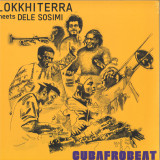
Funkiwala Records presents the third in the series of "Lokkhi Terra meets"albums, with the London fusionistas creating another unique sound-clash, this time with ex-Fela Kuti keyboardist and legendary UK Afro-beat ambassador Dele Sosimi, and members of his critically acclaimed Afro-beat Orchestra.
This particular collaboration has been bubbling away for a few years now, teasing audience expectations with a handful of sold out shows each year in between both bands busy schedules.
Featuring the two pianos of Kishon Khan and Dele Sosimi – Cuban percussionists/vocalists Geraldo De Armas (Yoruba Andabo), Oreste Noda (Ariwo), Javier Camilo (Ibrahim Ferrer) - a horn section led by Justin Thurgur (Bellowhead) featuring Yelfris Valdes (Sierra Maestra) and Graeme Flowers (Kyle Eastwood) to name a few – this is an All-star cast.
Kishon Khan's Lokkhi Terra have over a number of years now been quietly establishing themselves as one of London's more unusual heavyweight outfits, described as "Stunning Headliners… A majestic multi-cultural blend of sounds… effortlessly builds bridges between rolling Indian raga rhythms, Afro-Cuban grooves, Acid Jazz/funk and free flowing improvisation" (Timeout London). Included amongst the band members are London's top Cuban musicians, adding their infectious rich musical history to the city's melting pot.
When the band wanted to explore Cuban links with another of their favourite traditions, Afrobeat, who better to bring in then one of the Afrobeat originators – maestro Dele Sosimi – "Sosimi creates some of the most bewitching grooves in modern African music" E Jazz News.
Bringing together two Yoruba speaking musics - with different accents, from different sides of the Atlantic - Havana meets Lagos in London – A Cuban-Afrobeat-Experience. CUBAFROBEAT.
All About Jazz 4star review
A younger version of London's Grand Union Orchestra, founded by world-jazz pioneer Tony Haynes in 1982, Lokkhi Terra was put together by keyboard player Kishon Khan in 2005. Both ensembles have made a specialism of jazz / South Asian fusion, with Lokkhi Terra also giving as much attention to music from Cuba, where Bangladeshi-born, London-based Khan lived for a while in the early 2000s.
Cubafrobeat, as the title foretells, is a blend of Cuban dance music and Nigerian / Yoruban Afrobeat—a fusion rendered seamless by the synergies existing between Afro-Cuban and Yoruban music, language and mythology. The album is Lokkhi Terra's third and partners the band with the keyboard player and vocalist Dele Sosimi .
A young-going-on-child-prodigy member of Fela Kuti's Egypt 80, Sosimi went on to become musical director of Femi Kuti's Positive Force, before relocating to London and setting up Dele Sosimi's Afrobeat Orchestra, the finest Afrobeat band outside Nigeria, bar none, now with a string of consistently engaging albums under its belt. Cubafrobeat features Sosimi as lead vocalist on all four tracks, and on Fender Rhodes on two of them. His singing plays a prominent role in the Afrobeat Orchestra, but, such is the whirlwind impact of the band in full instrumental flight, that Sosimi is often thought of first and foremost for his keyboard and arranging talents. That may change by the time 2018 is over. Cubafrobeat is the third album in as many months to feature Sosimi as guest vocalist, spotlighting the gravitas, air of mystery, intimacy and ferocity his voice can bring to an occasion.
The first of these albums was the genre-bending spiritual-jazz band Emanative's Earth (Jazzman). One of the stand-out tracks, "Ìyáàmi," features Sosimi making obeisance to the titular Mother Goddesses of the Yoruba spirit worlds. His raw and intense invocations carry the track for nine mesmerising minutes. Otherwordly is not the half of it. Next up was dub / reggae / jazz band Soothsayers' Tradition (Wah Wah 45s), which featured Sosimi as lead vocalist on the compelling "Sleepwalking (Black Man's Cry)." Earth and Tradition are both outstanding albums and have previously been reviewed here.
Cubafrobeat is a total stonking blinder, too. It is an effectively nuanced affair, opening with the fiery "Afro Sambroso" and closing with the relatively reflective "Rumbafro." Sosimi's vocals light up the music, as do the several solos from trumpeters Graeme Flowers and Yelfris Valdes Espinosa and trombonist Justin Thurgur (a member of both Lokkhi Terra and the Afrobeat Orchestra). Sosimi and Kishon Khan's intertwining Fender Rhodes solos on "Cubafro" are also a delight, as is the drum and percussion section throughout.
The sound of summer, for sure, Cubafrobeat has enough depth and variety to make it something for all seasons.
Songlines 4star review
Lokkhi Terra are one of London's most authentic groups. They are a Latin-flavoured collective whose keyboard player and bandleader Kishon Khan segues from percussive montunos to complex Bengali rhythms and back, with jazz chops sparking funky and outward-looking fusions. Their collaboration with Dele Sosimi, Britain's foremost Afrobeat ambassador, has been bubbling for a while; here four tracks at ten minutes see musical conversations that never lose their sense of flow. An extensive line-up of stellar players, including trumpeter Yelfris Valdés, conguero Oreste Noda and trombonist Justin Thurgur, highlights the genre-crossing potential of world traditions. Opener 'Afro Sambroso' showcases batá drums from Gerardo de Armas Sarria before the track links Cuban grooves with Afrobeat. 'Timbafro' crackles and sways via Khan's organ, Sosimi's vocals and Oscar Martinez's timbales. 'Cubafro' features dazzling interplay between Khan, Sosimi and Javier Camillo's Spanish-language vocals. 'Rumbafro' is all rumba choruses, Yoruba vocals and Afrobeat horns. Rooted in their sources, but with musical threads intertwining, separating and reconfiguring – with grooves at a premium – this is a fusion lover's dream
With platinum and gold selling accolades across their catalogue of 5 albums The Pigeon Detectives return with album 6, an album influenced by their biggest hits but matured beyond them. Feeling like a band reborn The Pigeon Detectives have never really gone away, having quietly built a resurgent following at headline gigs and festivals across the UK with their high octane live show, the set is peppered with sing-a-long hits that have passed the test of time with flying colours attracting a younger audience to shows alongside a contingent of Pigeon ‘die hards’. Produced by Rich Turvey (Blossoms / The Courteeners / The Coral / Vistas / Oscar Lang / Jamie Webster) the album holds onto the infectious energy that drove the band to huge audiences on their early records, but has a contemporary feel to the production, arrangements and lyrics reflecting a band that have honed their craft and grown as a band and people.
Laura Poitras’ Oscar-nominated film »All the Beauty and the Bloodshed« is an epic, emotional and interconnected story about internationally renowned artist and activist Nan Goldin. Told through intimate interviews, photography, and footage, central to the story is her personal fight to hold the Sackler family accountable for the opioid crisis. The film cuts to the bone with its incandescent celebration of life and condemnation of those who threaten it. Art and activism are one and the same.
Helping to interweave Goldin’s past and present, multi-disciplinary duo Soundwalk Collective soundtrack her personal and political struggles to sublime effect. The contemporary sonic arts platform of founder and artist Stephan Crasneanscki and producer Simone Merli, the pair work with a rotating constellation of artists and musicians, developing site-and-context-specific sound projects through which to examine conceptual, literary, or artistic themes. And for all the beauty and the bloodshed on show here, the duo strike the balance just right; their compositions in collaboration with Zacharias Falkenberg and Johannes Malfatti producing a trance that oscillates between grace and madness.
Within the score, Crasneanscki draws connections with the life and work of German poet Friedrich Hölderlin, who was removed from society through confinement in institutions. In his last poems, written as fragments while he was plagued by mental illness, Hölderlin renders nature, in all its fragility and ephemerality. Similar themes merge in Laura's portrait of Goldin and serve as an inspiration for the composition of the choral songs and cantus within the soundtrack. Through the repetition of words and the layering of voices, the lyric scansion operates like a language possessed, echoing various styles from sacred music to modern minimalist techniques. The music is characterised by quivering strings and swells, de-tuning and lingering, shifting around the surreal, and creating a spectrum of musical experience. Exerts of Nan’s narration are featured in two of the tracks, her powerful narration offering a more direct approach to the storytelling.
In »All the Beauty and the Bloodshed,« Poitras shows protest is really Goldin’s great artwork: Her entire life had been leading to this moment of passionate expression, an inspired situationist gesture which fused the personal and the political. Art can change the world, which Poitras and Goldin tell us with powerful results. While there are multiple threads in this remarkable portrait which could have carried entire films, the soundtrack provides a sonic identity that helps keep track of proceedings. Utterly unique in their approach, Soundwalk Collective have delivered a gripping and thoughtful score, helping turn Goldin’s personal pain into culture-rattling impact.
"Hans Zimmer LIVE" versammelt mehr als zwei Stunden neuer Musik des in Frankfurt am Main geborenen Komponisten-Stars! Für das Album hat Hans Zimmer neue "Suiten" arrangiert, die auf einigen der bekanntesten Themen und Melodien aus seinen Oscar®-prämierten Filmmusiken basieren, darunter "Dune" und "Der König der Löwen" sowie für moderne Filmklassiker wie "The Dark Knight", "X Men: Dark Phoenix", "Dunkirk", "Gladiator", "Inception", "Interstellar", "Last Samurai", "Man of Steel", James Bond: "Keine Zeit zu Sterben", "Fluch der Karibik" und "Wonder Woman 1984".Gemeinsam mit seiner 20-köpfigen Band "The Disruptive Collective", in der eine Reihe langjähriger musikalischer Partner des Komponisten mitwirken, sowie mit dem Odessa Opera Orchestra und Chor hat Hans Zimmer ein episches Musikspektakel geschaffen, das stimmungsvolle klassische Arrangements und elektronische Elemente mit dem kraftvollen Sound einer Rockband verschmilzt."Ich wollte einfach ein tolles Album produzieren", sagt Zimmer, der "Hans Zimmer LIVE" ähnlich wie eine Studioproduktion an zehn Abenden seiner gleichnamigen Tour im Frühjahr 2022 aufzeichnete und mehrere Wochen damit zubrachte, das Album gemeinsam mit dem Produzenten Stephen Lipson abzumischen. "Ich wollte der Musik ermöglichen, auf neue Weise in ihrem eigenen Zusammenhang zu atmen, und ich bin absolut begeistert von dem fantastischen Team, das mich bei diesem Abenteuer unterstützt hat.""The Disruptive Collective" vereint Musiker, die schon lange mit Hans Zimmer zusammenarbeiten, etwa die Sänger*Innen und Komponist*Innen Lisa Gerrard ("Gladiator"), Lebo M. ("König der Löwen") und Loire Cutler ("X Men: Dark Phoenix"), die Cellistin Tina Guo ("Wonder Woman 1984") und Nick Glennie-Smith (musikalischer Leiter der Band). Zu den weiteren Solist*Innen zählen Andrew Kawczynski (Synthesizer, Schlagzeug), Pedro Eustache (Holzblasinstrumente), Refi (Gesang), Rusanda Panfili (Gesang), Guthrie Govan (Gitarren), Andy Pask (Kontrabass), Aicha Djidjelli (Trommeln), Steven Doar (Schlagzeug, Keyboards), Molly Rogers (Gesang), Juan Garcia Herreros Snow Owl (E-Bass), Nile Marr (Gitarren), Leah Zeger (Gesang), Holly Madge (Drumkit), Aleksandra Suklar (Schlagzeug). Hans Zimmer spielt auf dem Album eine Reihe verschiedener Instrumente.Die 2 CD-Version im Digipac enthält ein Booklet mit Bildern von der Live-Show und Illustrationen, einen persönlichen Text von Hans Zimmer und Texte zu allen Solisten.Die limitierte audiophile Vinyl-Version enthält 4 x 180g LPs im Quadfold mit bedruckten Innentaschen. Enthalten sind Bilder von der Live-Show und Illustrationen, ein persönlicher Text von Hans Zimmer und Texte zu allen Solisten. Direct Metal Mastering. 33 RPM.
- 1: Anthem
- 2: I Like That - Janelle Monáe
- 3: Outernet
- 4: Spider
- 5: Ballet Memory
- 6: I Got 5 On It (Feat. Michael Marshall) - Luniz
- 7: Beach Walk
- 8: First Man Standing
- 9: Back To The House
- 10: Keep You Safe
- 11: Don't Feel Like Myself
- 12: She Tried To Kill Me
- 13: Boogieman's Family
- 14: Home Invasion
- 15: Once Upon A Time
- 16: Run
- 17: Into The Water
- 18: Spark In The Closet
- 19: Escape To The Boat
- 20: Femme Fatale
- 21: Silent Scream
- 22: News Report
- 23: Zora Drives
- 24: Death Of Umbrae
- 25: Somber Ride
- 26: Immolation
- 27: Down The Rabbit Hole
- 28: Performance Art
- 29: Human
- 30: Battle Plan
- 31: Pas De Deux
- 32: They Can't Hurt You
- 33: Finale
- 34: Les Fleurs - Minnie Riperton
- 35: I Got 5 On It (Feat. Michael Marshall)
Waxwork Records is proud to present the Us Original Motion Picture Soundtrack featuring a score by composer Michael Abels. Us, released in March 2019, is an original nightmare written, directed and produced by Academy Awardr-winning visionary Jordan Peele (Get Out). Set in present day Santa Cruz on the iconic Northern California coastline, the film, starring Oscarr winner Lupita Nyong'o and Black Panther's Winston Duke, pits an ordinary American family against a terrifying and uncanny opponent: doppelgängers of themselves. A blockbuster that earned raves from critics and audiences alike, Us earned more than $250 million at the worldwide box office to become one the highest grossing R-rated horror films of all time, buoyed by an unexpected and innovative soundtrack and by a groundbreaking, terrifying original score by Abels. Us marks the second collaboration between composer Abels and Peele, who first worked together on Peele's 2017 Oscar-winning horror film, Get Out. For the Us score, Abels explored themes of duality and discord. "Sonically, what defines 'scary' is the unfamiliar," Abels says. "It is the things that we can't place, and that we don't expect, that take us to that place of fear. We wanted to really strike terror into the audience." Central to the score was the opening track, an anthem for the doppelgängers, known in the film as The Tethered. Abels hit on the idea of using choral elements. "Jordan really loves the sounds of voices, and the human voice is an incredibly expressive instrument that anyone can relate to," Abels says. "The anthem sounds a little like a march of people preparing for battle, like an uprising maybe, but the sounds are not in a recognizable language. In other parts of the film there are vocal effects, just these strange sounds. They're designed to really freak people out." Abels featured a 30 person choir, a third of them children, in the "Anthem," and implemented Eastern European instruments, violins, percussion and a virtual instrument called a Propanium drum. "It makes this trashy metal sound, but you can also play melodies on it," Abels said. "The Propanium drum has a sound that's both otherworldly but not electronic or like science fiction. It's a sound you can't quite put your finger on, which is why it works well in this film." Also included on the soundtrack is the 1995 hip-hop hit "I Got 5 On It" by Luniz and the stand-out track "I Like That" by Janelle Monáe. Abels also helped with a new arrangement of the Luniz hit, which is featured on the soundtrack as the 'Tethered Mix from Us'.
[xi] 35 I GOT 5 ON IT (FEAT. MICHAEL MARSHALL) [TETHERED MIX FROM US] - LUNIZ
Der berühmte Filmkomponist John Williams und Starcellist Yo-Yo Ma sind auf diesem einzigartigen Album zu erleben, das Ausdruck ihrer jahrzehntelangen Zusammenarbeit und Freundschaft ist."A Gathering of Friends" enthält zwei Konzerte, die John Williams für Yo-Yo Ma geschrieben hat, sowie Auszüge aus seinen Filmmusiken zu "Schindlers Liste", "Lincoln" und "München". John Williams selbst dirigiert die New Yorker Philharmoniker. John Williams und Yo-Yo Ma lernten sich vor etwa vier Jahrzehnten kennen, als der Oscar-prämierte Komponist Dirigent des Boston Pops Orchestra wurde und Ma gerade seine Solokarriere begann. Ihre Zusammenarbeit erstreckt sich von gemeinsamen Konzerten, der Zusammenarbeit bei Filmmusiken bis hin zur Amtseinführung von Präsident Barack Obama im Jahr 2008 und ist von einer dauerhaften gegenseitigen Wertschätzung geprägt. Von ihren ersten Begegnungen an erkannte jeder im anderen das Verständnis, dass, wie Williams es einfach ausdrückt, "Musik unser Sauerstoff ist".Im Mittelpunkt von "A Gathering of Friends" steht die Ersteinspielung von John Williams' neu überarbeiteter Version seines Cellokonzerts, das er 1994 für Ma komponierte und das beide bereits 2001 für Sony Classical aufnahmen. Während der Aufführungen des viersätzigen Konzerts in den letzten drei Jahrzehnten nahm Williams bereits erhebliche Änderungen an der Partitur vor. Ma merkte an, dass die neue Version sogar "größere Änderungen, strukturelle Änderungen" enthält, mit einem Schlusssatz, der "ein einziger glorreicher Song ist". Ebenfalls auf "A Gathering of Friends" zu hören sind neue Arrangements, die John Williams für Yo-Yo Ma von drei Stücken aus seiner mit dem Oscar ausgezeichneten Filmmusik zu "Schindlers Liste" geschaffen hat sowie ein neues Arrangement für Cello und Streicher von "With Malice Toward None" aus der Filmmusik zu "Lincoln" von 2012. Das Album schließt mit einem Duo-Arrangement für Ma und den Gitarristen Pablo Sáinz-Villegas von "Prayer for Peace" aus dem Film "München" von 2005. Alle drei Filmmusiken sind Teile der langjährigen Partnerschaft von Williams mit Regisseur Steven Spielberg.Das andere Konzertstück auf "A Gathering of Friends" ist "Highwood's Ghost", ein Stück von John Williams für Cello und Orchester, das die Freundschaft zwischen Williams und Ma im Bezug zum legendären Komponisten und Dirigenten Leonard Bernstein dokumentiert. Williams komponierte das Werk zur Feier des 100-jährigen Jubiläums von Leonard Bernstein in Tanglewood im Sommer 2018 und schrieb eindringliche Solopartien für Ma und die Soloharfenistin des Boston Symphony Orchestra, Jessica Zhou, die auch bei dieser Aufnahme mit dem New York Philharmonic die Harfe spielt."A Gathering of Friends" ist das musikalische Highlight einer langjährigen Freundschaft und ein großartiges Album für alle Fans der Musik von John Williams und Yo Yo Ma.
- 1: Switched For Life
- 2: Logos / The Matrix Main Title
- 3: Trinity Infinity
- 4: Switched At Birth
- 5: Switches Brew
- 6: Neo Con Brio
- 7: Follow The White Rabbit
- 8: Cold Hearted Switch
- 9: Neo On The Edge
- 10: Nascent Nauseous Neo
- 11: Through The Surveillance Monitor
- 12: A Morpheus Movement
- 13-: Bow Whisk Orchestra
- 14: Unable
Am 3. Juni erscheint das 3LP Album ”The Matrix (The Complete Score)” mit der gesamten Musik aus dem Original-Blockbuster-Film.
Mit insgesamt 44 neu gemasterte Tracks und ein exklusives Interview mit Komponist Don Davis! Die Matrix gilt seit langem als einer der einflussreichsten Filme aller Zeiten und läutete bei seiner Veröffentlichung 1999 eine neue Ära des Kinos ein. Unter der Regie der damals noch relativ unbekannten Wachowski-Geschwister schildert der Oscar-prämierte Film eine futuristische, dystopische Gesellschaft, in der die Menschen unwissentlich in einer simulierten Realität leben. Mit Keanu Reeves, Laurence Fishburne und Carrie-Anne Moss in den Hauptrollen verbindet The Matrix philosophische Grundsätze, CyberpunkKriegsführung und ausgefeilte Kampfsporttechniken mit bahnbrechenden Spezialeffekten. Der geschickt komponierte Soundtrack von Davis ist das Bindeglied zwischen der atemberaubenden Optik und der verblüffenden Handlung des Films.
Wie der Filmmusikjournalist Kaya Savas in seinem Interview mit Davis im Jahr 2020 feststellt, war die Filmmusik ”anders als alles, was man bis dahin in einem Action- oder Science-Fiction-Film gehört hatte.
Das gilt auch heute noch. Abgesehen von den Fortsetzungen gibt es keinen anderen Stil und keine andere Herangehensweise an die Vertonung von Science-Fiction- und Actionfilmen als die von The Matrix.”
Fiat Lux is the debut album by Tarta Relena, a Barcelona-based project featuring Marta Torrella and Helena Ros. The group approaches the oral traditions of the Mediterranean from a contemporary perspective using a unique combination of ancient vocal melodies and subtle electronic textures.
Tarta Relena’s inspiration for Fiat Lux comes from historical characters, such as the Virgin Mary and Hildegard of Bingen, and timeless verses that deal with the cyclic nature of the human experience: “E suïcidi i el cant” (1) is an adaptation of a traditional poem by Pashtun women in Afghanistan; “Esta montanya d’enfrente” (3) is a traditional Sephardic song; “Safo” (9) is based on the love poems by Sappho of Lesbos.
Singing in Catalan, Spanish, Greek, Latin, English, and even Sephardi, the language of Hispanic jews, Tarta Relena explore a complex array of Latin cultures through the simplicity of voice. They draw from vocal techniques that range from flamenco to jazz, introducing elements of electronic music to redefine the melodies.
In January 2019, Tarta Relena released their first EP, Ora Pro Nobis: eight a cappella songs with minimal electronics. In April 2020, they released their second EP, Intercede Pro Nobis: a five-song dialogue between voice and electronics.
Fiat Lux expands on past experimentations, moving away from organic harmonies to embrace digital textures and distortions. The musical production of Juan Luis Batalla and Òscar Garrobé is remnant of Holly Herndon or Eartheater.
Tarta Relena have perhaps been best described by Pitchfork in their review of Pack Pro Nobis: “Tarta Relena is a celebration of musical exchange. At a time of rising nationalisms across Europe, Tarta Relena’s songs are a testament both to the porousness of borders and the ideas that unite disparate cultures, running beneath the centuries like a pedal tone”.
With her very own musical language, pianist Julia Kadel has become a
regular talking point in jazz circles, releasing her first two records on Blue
Note/Universal she and her trio were nominated in 2015 for the
prestigious German Music Award Echo Jazz as "Newcomer of the year"
and Julia Kadel as "Female instrumentalist of the year"
Julia Kadel's variable competitions, her imaginative playing and the band's
striking improvisations became more courageous over time. On 'Kaskaden' they
have now reached a new dimension of detail and intensity. More determined than
ever, the trio balances the fine line between harmony and atonality, intuition and
reflection, poetry and austerity.The live qualities of the trio, which was founded in
2011, its subtle interaction and intuitive understanding encouraged the trio to
produce the new album under live conditions - especially as it took place in the
legendary MPS studio in Villingen (Black Forest, Germany). Its history dates back
to 1958, great jazz pianists such as Oscar Peterson, George Shearing, Monty
Alexander and Bill Evans once recorded here. With the Bösendorfer Grand
Imperial grand piano - once acquired for Friedrich Gulda - in the center
surrounded by classic analogue technology, Kaskaden was captured to tape oneto- one. This influenced not only the charismatic sound but also the special
atmosphere that characterises the album.
Furthermore, the location of the recording not only came as a surprise but
probably also as a small sensation to every fan of MPS as the Julia Kadel Trio is
the first MPS act after over 35 years recording again in the historic studios; the
popular German magazine Der Spiegel reported about it.