Search:ostinato

Styles
All
MARK MOLNAR - EXO

MARK MOLNAR

EXO

12inchCSTLP185
CONSTELLATION
06.06.2025

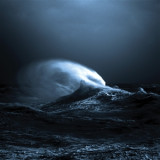
The Ottawa composer/performer and head of Black Bough Records plays every instrument on his CST debut: an accessibly avant-garde work of dark/ambient modern chamber music. Mark Molnar has been a linchpin of the Ottawa experimental music scene for over two decades, spanning contemporary classical, electroacoustic, industrial/noise, and improv. As a string player in a wide range of projects, an organizer and curator of innumerable shows, and via his own avantgarde label Black Bough Records, Molnar's unflagging contributions to independent music culture in Canada's capital city have been significant. EXO is his Constellation debut: a remarkable and bracing suite of post-classical composition on which Molnar plays every instrument. Meticulously self-recorded, primarily with strings, harp, and piano, EXO balances thematic melodicism, polytonality, and dissonance across three elegiac pieces of exquisitely expressive dynamism. This is exacting modern chamber music that blends formal and harmonic complexity with a solemn emotive sensibility accessible to a broad audience. Listeners that yearn for some edge and disquietude in a landscape of often all-too-approachable post-classical music should find EXO eminently worth their time and attention. While Molnar is a highly trained string player, and studied music under Aubrey Wolfe, microtonality with James Tenney, and composition with R. Murray Schafer, his trajectory has been entirely and intentionally outside the academy, signalling a socio-artistic commitment to DIY culture, forged from an early passion for the sonic worlds of post-hardcore, post-punk, no-wave, free improv, power electronics, and other independent/underground musics. His classically-informed works have been described as "tense currents of musical modernism invigorated with punk's raw vitality." EXO carries an undercurrent influenced by dark industrial and ambient metal in particular, with microphones purposely placed to pick up the low-end frequencies of the piano body, and of a bass drum positioned as a resonant skin in the acoustic space; an electroacoustic strategy organically meshed to the crisply defined and pristinely recorded pointillisms and polychords of strings, harp, and piano, which feed into this noisefloor of crepuscular sub-bass disquietude and decay. It's a production aesthetic that lends EXO a distinct undertow of tension and feeling, a sort of roiling maximalism where the chamber instrumentation traces arcs and waves of form and flow as if drawn from a dark, impervious ocean below. It also reinforces the profound hermeticism of Molnar's process, as a forbiddingly solitary creative act of immersion and navigation. The album artwork, featuring semiabstract stills of the sea by British photographer Ed Allen, further reifies this metaphor. The album's opening piece 'Sub Luna' (and its shortest at 8 minutes) showcases Molnar's adeptness at naturalistic and flowing complexity: tight cascades of climbing and descending chordal clusters hold their polytonal densities for various durations, yielding to more clarified harmonic suspensions and motifs, as melodic themes led primarily by violins in the higher registers provide a fractured lyricism. Molnar says: "the opening and closing figures of this piece act as opposing shorelines; the shorelines provide a reliable expression of range and key signature, and the tides come in and swallow them up, the motion of a body that addresses the relationship between states of lucidity and melodic figures." On 'Terre Sacer' everything happens in soupier waters, as a slow and doleful theme, anchored by grinding bass notes, circles in a gyre of dark resonances, until glistening strings gradually ascend to enrobe a plaintive and gently harrowing single-voiced ostinato over the composition's final third. Molnar's drone, ambient, minimalist, and goth-industrial influences are on display here. Side Two of EXO features the 18-minute multi-movement 'pallida Mors' (pale death): a waterfall of heterophony introduces dense chordal movements where strings are recorded and mixed to evoke pipe organ, in the album's most overtly dissonant and (anti)liturgical sequence. This gives way to ever more open and fragile spaces, before a resurgence of dark clusters and noise treatments introduces a final repeating piano coda, shrouded in devastated bass resonance, settling into what Molnar calls "a meditative hollow." Constellation is honoured to release this work by Mark Molnar, a longtime fellow-traveler whose selfless and boundlessly generous activities as an independent arts enabler sometimes obscure his own accomplished and uncompromising artistry. We trust EXO can help shed some much deserved light on this fine composer. Thanks for listening.

pre-order now06.06.2025

expected to be published on 06.06.2025

24,79

Last In: 2026 years ago
Repetition Repetition - Fit for Consequences: Original Recordings, 1984–1987
 
2

Fit for Consequences: Original Recordings, 1984–1987 is the first ever archival release from Repetition Repetition, the “two-man electric minimalist band” consisting of Ruben Garcia and Steve Caton hailing from Los Angeles in the mid 1980’s. Repetition Repetition’s unique blend of cosmic art-rock minimalism / maximalism was self-released across a series of cassettes produced in micro editions, and while garnering the attention and participation of luminaries such as Harold Budd, remained under the radar during the band’s existence. Fit for Consequences: Original Recordings, 1984–1987 collects select material from across the duo’s catalog.

It was over a plate of Mexican breakfast food when Ruben Garcia and Steve Caton first told Harold Budd of Repetition Repetition and the worlds they intended to explore by respective way of synthesizers and guitars --- a rendezvous instigated by the former’s fan mail to the legendary composer. If the upstarts entered this restaurant from a one-way street of admiration, they would leave with not only Budd’s interest but, sometime later, a blessing in the wake of many hours shared by the three in Garcia’s Los Angeles home recording studio: “This is going to be difficult, but God help them, I think they’re great,” noted Budd in a USC lecture in 1985. Now several degrees removed from prior rock music aspirations, the real game was afoot.

Between 1984 and 1988, Repetition Repetition operated within something akin to the underground of the experimental underground, although even that designation perhaps overstates the case. The duo’s sparse output consisted of three cassettes self-released on Garcia’s Third Stone Music label: Repetition Repetition (1985), Lakeland (1987), and The Machinist (1987). Their songs would also be included during this period on Trance Port Tapes’ vital scene-scanning compilations assembled by A Produce. Live performances occurred with similar infrequency, but Garcia and Caton counted converts in quality over quantity, numbering among them the aforementioned Budd, a Chambers Brother, and, judging by a memorably drop-jawed reaction following a rare Repetition Repetition gig, Jackson Browne.

Likewise, critical support materialized in the form of KCRW deejays Brent Wilcox and Dean Suzuki, whose steady airplay positioned Repetition Repetition’s music amidst fearless company like Jon Hassell, Hiroshi Yoshimura, and Richard Horowitz. Yet, to hear fellow Trance Port featured players like Tom Recchion and Bruce Licher of Savage Republic tell it, Garcia and Caton moved as ghosts --- a notion more vexingly endorsed by the silence of record companies that failed to come knocking --- and therein lies an overarching truth to the work itself.

Journey to the heart of Repetition Repetition and one discovers a collective ear impossibly attuned to the hypnotic possibilities of stylistic convergence, the resulting music possessed of seamless multimodalities which beckon to a glimmering plane of the disembodied. Where Caton sought his artistic fixes at an intersection of popular genres, Garcia zoned in on the sonically spare, drawing from the same wellspring as the Enos and Rileys of his personal avant-garde pantheon, and in their coming together the two tapped into a deeper cosmic source. Synthetic walls of keyboard sound in forever states of reprise met waves of shimmering --- and at times even punishing --- guitar in reply, their soundscapes hovering convincingly between, as suggested in fittingly dualistic fashion in a press kit assembled by Garcia, such disparate sensations as bird flight in one song and oil drilling in the next.

But don’t call it a push-pull dynamic, as this was a creative partnership founded upon fluidity and organicism by way of, naturally, repetition. In contrast to, say, the Bressonian ideal of repetitive motion as a great stripping away, the concept in the hands of Garcia and Caton equated to ascendancy via continuous unfolding, a maximal route to minimalism. To be sure, their recording philosophy morphed over the course of the act’s short history, and what started as a process defined by consistent in-person interplay developed into a more isolated method formulated by Garcia, who eventually took to his own one-man bedroom-studio sessions in order to fully chart any and all potential ostinato-loaded paths which he could travel down, the Tascam-captured resonances subsequently provided to Caton as blueprints from which to take flight himself, adding layer upon layer of steel to the proceedings.

If the practice and execution changed, however, the evidence certainly didn’t rest in the results: The seamlessness remained, and, despite the brevity of their time together, so has Repetition Repetition. With this finely calibrated collection of songs in Fit for Consequences: Original Recordings, 1984–1987, Freedom To Spend sees to it that the private worlds of Garcia and Caton can now be visited by all rather than just the count-‘em-on-both-hands lucky few whose musical endeavors or collector vocations carried them into this once-distant dimension.

Repetition Repetition’s Fit for Consequences: Original Recordings, 1984–1987 will be released on Freedom To Spend in vinyl and digital editions on May 30, 2025. The collection includes extensive liner notes from Bill Perrine, and wil be offered alongside Over & Over, a supplemental collection of music available exclusively as a mail order cassette from Freedom To Spend and RVNG Intl.

pre-order now30.05.2025

expected to be published on 30.05.2025

26,01

Last In: 2026 years ago
Masako Ohta, Matthias Lindermayr - Nozomi LP

Pianist Masako Ohta and trumpet player Matthias Lindermayr are back on Squama with 'Nozomi', the follow-up to their 2022 debut 'MMMMH'.
The Japanese title, which translates to ‘hope’, felt fitting, as the album was conceived during a time of personal loss for Ohta, during and after which music proved itself as a beacon of hope.
The music on Nozomi unfolds gently, with Lindermayr’s airy tone and lyrical playing being wrapped in Ohta’s chordal backing that moves from tender to tense and back over the course of the album. While most tunes were written by Lindermayr, the only exception being an interpretation of Ryuichi Sakamoto’s ‘Hibari’, the arrangements are largely improvised, letting the duo’s intuition guide the course and build the form.
Solemn slowness has become a signature trait of the Munich-based duo and it makes listening to their new record a healing retreat from the frantic chatter of the present.

out of Stock

Order now and we will order the item for you at our supplier.

21,81

Last In: 13 months ago
Nina Garcia - Bye Bye Bird LP

LP limited to 500 LP copies. Nina Garcia ’s first solo record widely available via international distribution. Nina has collaborated with artists like Stephen O’Malley, Sophie Agnel, Fred Frith, Antoine Chessex, Louis Schild, Leila Bordreuil, and supported for bands like Sonic Youth, SUNN O))). After a decade of performing concerts under the Mariachi guise, Nina Garcia has finally unveiled her unique approach in Bye Bye Bird, her first album under her name. Bye Bye Bird is her second solo album. With no pretence or demonstration, the album is a captivating blend of chiaroscuro, melodies, and raw emotion. Nina Garcia’s album takes on an almost documentary-like quality by adopting a simple approach to gesture and sound recording. It offers a candid portrayal of a moment, a lack, a state, and a breathtaking energy. With ostinato as her only credo, Nina Garcia’s music is an experiment in freedom, where the peaks answer the abysses, and the power of movement and the emotion of sound serves as her compass. From very short (01:28) to never very long (07:34), the eight tracks that make up this set explore a moment, a space, a mechanism, an intention or a way of doing things. As a common feature of almost all these pieces (all but one, the last), Nina Garcia explores a new technique. She adds to her instrumentation, reduced to the essentials (a guitar, a pedal and an amp), an electromagnetic microphone which, when held in hand, makes it possible to listen in on the exact zones where the vibration of the string creates a sound amid vast spaces of silence. The guitar is unplugged, and the body/instrument relationship changes in dimension. In this series of variations, you can get caught up in masses of noise seen from very, very close up, evocations of melodies in the making, feedback on ridgelines, pulsations that hold their own, modulations weakened by exhaustion and harmonic bursts that hint at better days to come. Neither hopelessly chthonic nor beatifically ethereal, Bye Bye Bird is a sum of musical pieces that make a whole and give voice to echoes of what has been, the presence of what is and the hope of what will be, a record movement in the form of flight and salvation. Since 2015, Nina Garcia has been researching and creating around the electric guitar, halfway between improvised music and noise. On numerous stages in Europe and North America, she has played occasionally with Stephen O’Malley, Sophie Agnel, Fred Frith, Antoine Chessex, Louis Schild or with Luke Stewart and Leila Bordreuil’s Feedback Ensemble, in addition to more regular formations in which she participates, such as the ensemble Le Un, mamiedaragon, Autoreverse (with Arnaud Rivière), duets with trombonist Maria Bertel and percussionist Camille Émaille, and the installation piece De Haut En Bas, De Bas En Haut Et Latéralement (with Christophe Cardoen, Jennifer Caubet, Etienne Foyer, Anna Gaïotti and Romain Simon). “Nina Garcia has been actively moving the art of noise guitar into surprising and intriguing new spaces. She has been at it for some time now, a bit of a secret weapon all the while hiding in plain sight. As I listen to her music and ruminate upon seeing her perform it brings me to a realization which I have with very few musicians: the ego inherent in making art can be transcended through a purity of direct action. At least that’s the feeling I have when experiencing Nina’s music which comes across as serious and radical and wholly engaged in the moment of its creative impulse.

pre-order now21.01.2025

expected to be published on 21.01.2025

28,99

Last In: 2026 years ago
JM SOLO - Gambit LP

Jm Solo

Gambit LP

12inchUJM003
U Jazz Me Records
22.11.2024

Black vinyl 180g made only in 100 numbered copies.

This record is different. It is different from what might be expected of Jan Emil Mlynarski by those who know him, from sold-out shows and platinum albums of his bands – Jazz Band Młynarski – Masecki and Warsaw Dance Combo, as an old-timer, curator and reenactor of pre-World War II Warsaw's plush dancehalls and backyards folklore. Quite likely they may not recognize him until the last song, when he removes his shaman mask and bows down: Yeah, that's really me, folks, your good ol' Jan Emil, the entertainer. They might not have even known that he ever played drums because in his flagship bands, clad in a white tux in the former or in a Peaky Blinder hat in the latter, he sings and plays mandolin banjo. In fact, Młynarski has been a drummer for a lot longer than a singer. He stands clear of the jazz mainstream but is active on the progressive scene. A record he contributed to, trumpeter Tomasz Dąbrowski's 2022 release The Individual Beings, was recognized by Downbeat magazine as "excellent" and awarded the highest rating of five stars.

However, this is the first instrumental record to bear his name. As an album by a drummer, it stands out from other records, especially as it features drums as the principal content rather than the performance by a band with a drummer as the leader. It's all about drums, there is neither an articulate melody – because the melodies that are there are only micro-linesencased in ostinato modules – nor is harmony as an intentional chord progression – because whatever harmony-wise there is, is rather a product of the counterpoint of overlapping voices. All sounds other than the drums make only a riverbed through which runs a raging stream of rhythms. And indeed, this record took off just with this stream. At first all the drums were recorded live onto an analog tape, all at once, without overdubs or editing. After that, synthesizer riffs were added, and the record was ultimately assembled on tape without the use of computers or complex postproduction, which sets it apart from most releases today.

Młynarski the drummer acknowledges that he follows the trail beaten by Art Blakey, Max Roach, Roy Haynes, and Billy Higgins, but he walks it in his own strides. He treats the jazz drumming with specific reversed engineering by decompiling the jazz drum kit originally compiled by the pioneer jazz drummers from an array of instruments that had made their way from a jungle to New Orleans, first to Congo Square and then to street brass bands.

This takes him back to the jungle, his drums don't sound like jazz drums, the snare is rare, and the hi-hat and ride aren't there at all. Instead, there are drums and bells from Nigeria, Ghana, Burkina Faso, and Côte d'Ivoire. He doesn't sound like a jazz drummer either, but like a gang of drummers, each playing their own rhythm, and it's hard to believe that all this is the work of one man.

Not only his drumware comes from the jungle, but also the software – his approach to rhythm and time. Its essence is polyrhythm and ostinato. The polyrhythmic matters were unveiled to Młynarski and Piotr Zabrodzki, his creative partner in many projects and co-composer/producer of this album, by the legendary eccentric veteran-drummer Władysław Jagiełło, who introduced them, aged thirteen, to his concept and practice of "17 Latino rhythms at once". Ostinato, an obstinate repetition of a phrase or rhythm, "arrests" time, turning its linear course into cyclical in-place rotations. This is specific not only to African music but also to cultural music of other regions and differs from Western artistic music in that it does not "run" to fulfil an aesthetic intention but "stays" to provide the framework for recurrent routines of communal proceedings.

So, this record is different. And, if you are different too, this is the record for you.

pre-order now22.11.2024

expected to be published on 22.11.2024

35,71

Last In: 2026 years ago
Piero Umiliani - Guerra E Distruzione LP 2x12"

Dive into the evocative soundscapes of the past with the first ever vinyl reissue of Piero Umiliani's 1972 library masterpiece, "Guerra E Distruzione." Known for his innovative and genre-defying compositions, Umiliani's work on this album encapsulates the raw emotions and tumultuous energies of war and destruction through a unique blend of orchestral finesse and experimental brilliance.

This exclusive reissue has been remastered for vinyl by Davide "Bassi Maestro" Bassi to capture the full depth and richness of the original recordings, bringing to life every nuanced note and intricate layer. Presented in a stunning gatefold jacket with opening in the inside, replicating the original pressing, the album's artwork is a tribute to its historical significance and artistic value, offering fans and collectors a visual and auditory feast.

Limited to just 500 copies, this release is a rare gem for connoisseurs of library music, soundtrack enthusiasts, and vinyl aficionados. Immerse yourself in the hauntingly beautiful and profoundly stirring world of "Guerra E Distruzione," a timeless work that stands as a testament to Piero Umiliani's enduring legacy in the realm of cinematic soundscapes.

©℗ 1972 – Liuto Edizioni Musicali. Licensed to Holy Basil Records.

pre-order now08.11.2024

expected to be published on 08.11.2024

27,52

Last In: 2026 years ago
HEIKO MAILE + JULIAN DEMARRE - NEOSTALGIA LP

Heiko Maile und Julian Demarre, vertraut mit dem Schreiben von Popsongs und Filmmusik, arbeiten seit dem Album-Klassiker "MEANWHILE" von Camouflage Mitte der 90er Jahre zusammen. Während Heiko seine Arbeit am perfekten Popsong kontinuierlich weiterführte, kam es bei Julian und Heiko unabhängig voneinander zu ersten Engagements im Bereich Filmmusik. Seit die beiden begannen, auch gemeinsam an Spielfilmen zu arbeiten, wuchs in ihnen stetig das Bedürfnis, eine Liebeserklärung an die elektronische Musik der 70er und 80er Jahre zu schreiben. Mit manch esoterischen japanischen Keyboards aus den 70er Jahren, die für den Klang von morgen entwickelt wurden, entstand so ein Werk für alle Tage danach - das genreübergreifende Album NEOSTALGIA, eine einzigartige und facettenreiche Mischung elektronischer Stile, verbunden mit einer Prise Krautrock. So finden sich dann auch auf so manchen Stücken Intros/Outros, Flöten, Flanger-Gitarren oder Vocoder, und sogar solche, die die Sechs-Minuten-Marke spielend erreichen.

pre-order now09.09.2024

expected to be published on 09.09.2024

23,49

Last In: 2026 years ago
SALMON (KIM) - ROCK FORMATIONS LP 2x12"

Salmon(Kim)

ROCK FORMATIONS LP 2x12"

2x12inchBANGLP25
BANG!
30.08.2024

KIM SALMON. Muss man da tatsächlich noch mehr Worte verlieren oder reicht es, zu sagen, das Mr SALMON der unerreichte Meister des Swamp Sounds ist? Mit seinem neuen Projekt und ,Rock Formations" ist er über alle Grenzen erhaben und entwickelt eine Theorie maximaler Brutalität. Dazu tragen auf den Instrumental-Stücken sicherlich die sechs Gitarren und zwei Schlagzeuge bei. Das erinnert an eine potente Mischung aus frühem Grunge der MELVINS oder GREEN RIVER mit BLACK SABBATH in der Ozzy-Ära und dem modernen Sound von Kim Salmons eigenen SCIENTISTS oder SURREALISTS.


[m] PUNK FATWA/AXES OF EVIL SEGUE INTO CHEAP'N'NASTY [LIVE] 04:40


[s] CHEAP'N'NASTY SEGUE INTO LICENSED 2 ROCK [LIVE] 02:30
[t] S.M.R [LIVE] 01:20
[u] THE AXES OF EVIL [LIVE] 03:34

pre-order now30.08.2024

expected to be published on 30.08.2024

25,84

Last In: 2026 years ago
KESSONCODA - OUTERSTATE LP

Gondwana"s newest stars are West London"s Kessoncoda, aka drummer Tom Sunney and keyboardist Fil Sowa. Standing firm between acoustic tradition and electronica, they are founded on a unique blend of melodic ostinato-laced piano and unwavering drums.

out of Stock

Order now and we will order the item for you at our supplier.

22,90

Last In: 16 months ago
David Rosenboom - Future Travel LP 2x12"

Black Truffle is thrilled to present the first vinyl reissue of David Rosenboom’s unique Future Travel, originally released on the short-lived Detroit label Street Records in 1981 and here presented in an expanded edition with an additional LP of wild, previously unheard live and studio material from the same period.

Future Travel emerged from the confluence of two important streams in Rosenboom’s work at this time. First, his exploration of ‘propositional music’, defined as ‘complete cognitive models of music’ that start from the radical question, ‘What is music?’ In this case, the music belongs to the universe of Rosenboom’s In the Beginning (1978-1981), in which proportional relationships determine the material available to the composer in all musical parameters (harmonic relationships, melodic shapes, rhythmic subdivisions, dynamics, and so on). Second, the work documents a key moment in Rosenboom’s long collaboration with synthesizer pioneer Don Buchla. Having played a role in developing concepts for some of the modules of the Buchla 300 Series Electric Music Box (an innovative analogue modular system controlled by micro-processors), Rosenboom went on to write the software for Buchla’s hybrid analogue-digital keyboard synthesiser, the Touché, the instrument heard most prominently here.

In a way that no purely analogue synthesizer could, the 300 Series and Touché allowed Rosenboom to work with the In the Beginning algorithms in real time, the synthesizers becoming ‘intelligent instruments’ that actively collaborate with the performer. Developing the open structures of the electronic pieces from In the Beginning, Future Travel explored the possibilities of simply ‘playing the system’, recording live at Francis Ford Coppola’s Zoetrope studio in San Francisco. Working from loose sketches, Rosenboom added acoustic instruments to the electronic sounds and, on some pieces, the processed voice of Jacqueline Humbert. Like Rosenboom’s collaboration with Humbert on the abstracted synth-chanson of Daytime Viewing, this music set out deliberately to challenge the ‘stratified and illusorily coagulated identities in the musical culture of the time,’ refusing distinctions between ‘serious’ and popular music. But where Daytime Viewing achieves this in part through genre references, Future Travel is bracingly sui generis, existing in a unique universe where radical formalisation à la Xenakis spontaneously gives rise to expressive jazz harmonies and old-timey folk melodies.

The crystalline quality of many of the Touché sounds gives Future Travel a sparkling, immediately enticing surface, its layers of shifting ostinato patterns pulsating outside conventional meter, rippling like waves on the surface of water. On opener ‘Station Oaxaca’, ping-ponging synth arpeggios and hand percussion accompany a sentimental violin melody, abruptly overtaken by layered keyboard runs, before the entry of tinkling marimba-like sounds reframe the scene as sci-fi Martin Denny exotica. ‘Time Arroyo’ begins as an austere study in staccato synth sounds in multiple overlapping tempi, reminiscent of Ligeti’s famous ‘clock’ rhythmic effects. Before long, it opens up into a melodic passage with the gentle heroism of classic Roedelius, which proves to be only a brief interlude before the layers of rhythmically distinct synthesiser patterns begin to build and accelerate into an increasingly dense cacophony. The wildest twists and turns are saved for the epic closer ‘Nova Wind’, where the arrangement focuses on Rosenboom’s virtuoso piano playing, perfectly embodying the project’s radical disregard of stylistic orthodoxies as he moves from hyperactive pointillistic flurries to a kind of space-age gospel.

At several points throughout the record, the distinctive voice of Jacqueline Humbert is heard reading passages from the text component of In the Beginning, a dialogue between The Double (an embodiment of humanity’s timeless desire to replicate itself in spiritual and technological copies) and two Spirit Characters. Fittingly, as all are conceived as embodiments of a future form of techno-human collective consciousness, distinctions between the three characters are not immediately evident in Humbert’s delivery, just as the music blurs the boundaries between intelligent computing and human spontaneity. Adorned with a striking retro-futurist cover (and here accompanied by extensive new liner notes and archival images), Future Travel is a time capsule of radical imaginings at the birth of our digital age, reminding us of utopian possibilities of which our own present seems so often to fall short.

out of Stock

Order now and we will order the item for you at our supplier.

33,57

Last In: 20 months ago
Various - UN AUTRE MONDE DANS NOTRE MONDE LP

This record invites you on an extraordinary journey, in the form of a spatio-temporal and transgenerational sound collage, into the parallel and singular universe of one of the major counter-culture movements of the 1960s fantastic realism. A cross between thematic compilation and sound creation, it offers a selection of rarities and nuggets with psychedelic and esoteric tonesby groups from the late 60's - early 70's French psychedelic scene, such as Haira, Guy Skornnik and Martin Circus, as well as previously unreleased tracks by major current and emerging bands such as The Limiñanas, Zombie Zombie featuring Pacôme Thiellement, The Penelopes or Terrains vagues, Rubin et le paradoxe featuring Brigitte Fontaine, Tuxedomoon or Exotourisme (Perez and Dominique Gonzalez Foerster). These tracks were created especially for the occasion. All mixed and interspersed with audio archives by Jacques Bergier, Louis Pauwels or Eugène Canseliet and sounds from installations designed by visual artists (Veronique Belland, Alexis Chapelain). At once cutting-edge and accessible to the uninitiated, between fantasy and science fiction, esotericism and occultism, popular culture and contemporary art, avant-garde and pop music, this disc offers a poetic ode to the Strange, to curiosity, to the capacity for wonder and the desire for knowledge, with a view to re-enchanting reality. Conceived by Jean-François Sanz (author, director and curator) and Hermione Volt (visual artist), in collaboration with Laurent Paulré (founder of the Contours label and producer at Radio France), and with the complicity of Céline Du Chéné (author and journalist), this album, an atypical sound object, is the musical extension of the eponymous group exhibition UN AUTRE MONDE ///DANS NOTRE MONDE, which opened at Galerie du Jour in Paris.

pre-order now17.05.2024

expected to be published on 17.05.2024

26,01

Last In: 2026 years ago
WYE OAK - SHRIEK + VARIATIONS LP 2x12"

In 2014, Wye Oak released Shriek, their fourth album. It was a necessary departure for Jenn Wasner and Andy Stack, who found themselves on uncertain ground after two years of constant touring for 2011's Civilian, living on opposite ends of the country and trying to revitalize their creative partnership. Wasner set aside her guitar for a bass. Stack took on the band's upper register, playing syncopated, meditative keyboard parts that interacted with Wasner's voice, which was newly freed from its call-and-response relationship to the guitar_what had been, until then, a signature of Wye Oak's sound. "This idea and the ensuing creative reworking of our band did what it was meant to do," Wasner writes in 2024. "It ended a long, painful period of creative stagnancy and reconnected me with the joy of making music." During that period, Wasner and Stack were introduced to William Brittelle, the Brooklyn-based composer whose 2019 LP Spiritual America featured Wye Oak, the Metropolis Ensemble, and the Brooklyn Youth Chorus. His orchestral reimaginings of five songs from Shriek (Shriek: Variations, if you will) are the centerpiece of this package, which serves not only to mark the tenth anniversary of a great album, but to demonstrate the richness of Wye Oak's compositions. Stack says of Shriek: Variations: "It's like looking at the songs in a funhouse mirror. The songs on Shriek can be stripped down or embellished_this is maximal embellishment. William took the album and blew it to smithereens, looking at it in a weird, prismatic way." Through Brittelle, Wasner and Stack found themselves at the intersection of classical, experimental, and pop music. Further collaborations, like the Brooklyn Youth Chorus- featuring No Horizon and Paul and Michi Wiancko's string arrangements on "My Signal" from The Louder I Call, The Faster It Runs, followed, as this connection fundamentally changed the way Wye Oak approached making records, incorporating an entirely new palette of sound into their work. That shift began here. Shriek: Variations may feel like a startling take on the material, something like light bursting into a room through drawn curtains, but Brittelle's arrangements are largely original to his first collaborations with Wye Oak a decade ago, suggesting that his maximalist arrangements have lived comfortably within the framework of Shriek the whole time, waiting for the right moment to emerge. It's a fitting reintroduction to the album, which upon its initial release was pigeonholed into the easy one-note talking point of being the "no-guitar" record. But even so, as that happened, Shriek quietly started to become a staple among Wye Oak's core fans. Here, with help from Brittelle's expansive compositions, the release draws attention back to the songwriting_how, regardless of the instrumentation, Wasner and Stack's uncanny musicwriting partnership at the core is what makes both Shriek and Wye Oak excellent. Joined by the Metropolis Ensemble, Paul Wiancko, and Lizzie Burns, Wye Oak turn songs like "Logic of Color" inside out, reaching towards a kind of pastoral bombast, Brittelle's aesthetic with Wasner and Stack as an anchor. In fact, "Logic of Color" in this iteration takes that "no-guitar" script and flips it, with Wasner playing the synthesizer ostinato on acoustic guitar at its center. If Shriek is a record that charts the depths of solemnity and inner space, its Variations, roiling in a sea of winds, brass, and strings, recolors that space and complicates it, a gorgeous, unexpected response to the original's siren call.

pre-order now22.03.2024

expected to be published on 22.03.2024

42,65

Last In: 2026 years ago
Gi-Lo - The Day Begins With A Loud Boom

Complete with 10" vinyl record and booklet presenting Laurianne Bixhain's photographic work and text by Chloe Chignell.

Presented at the Mudam (Museum of Modern Art of Luxembourg) and initiated by a photographic exploration by Laurianne Bixhain, the work "The day begins with a loud boom" interrogates the manner and extent to which we are defined by our relationship to the physical environment, and the cultural import of the techniques of production. Its imagery follows the trajectories of the materials subjected to the processes of diamond cutting and automotive glassware fabrication, and presents the traces of human intervention of which those materials are both the object and the repository.

The interplay of its imagery, music and text constitutes a theatrical whole: both the staging of the text and the sonorities create an architectural space within which each constituent object is deployed. That spatiality is shared and complemented by the text’s sonorous and performative qualities. Likewise, the elements of texture and abstraction in the imagery invoke our sense of touch, as a means of material and spatial appreciation.

The succeeding reiterations of the ostinato the day begins with are treated graphically by its progressive effacement, evoking the tension in assembly line work between repetition and linearity, accumulation and exhaustion, trace and erasure. Such attrition is equally conveyed by the harsh, impassive, and architectural qualities of both the images and the music which accompany the text. The latter notably deploys a range of insidious effects, from the marriage of dissonance and unsettling rhythm evocative of the competing cycles of multiple industrial machines, to sensual and reassuring sonorities which are contaminated by their contrast with the harsh acoustic aesthetic elsewhere.

pre-order now01.03.2024

expected to be published on 01.03.2024

26,35

Last In: 2026 years ago
Ennio Morricone - For a fistful of westerns LP

Ennio Morricone is known throughout the world for the Italian Western genre, but most of all for his famous soundtracks for Sergio Leone’s

masterpieces which have entered into popular culture on an international level, and here represented by iconic themes such as

A FISTFUL OF DOLLARS (1964), FOR A FEW DOLLARS MORE (1965), ONCE UPON A TIME IN THE WEST (1968), A FISTFUL OF DYNAMITE (1971) with extraordinary

soloists such as the whistle of Alessandro Alessandroni, the harmonica of Franco De Gemini, and Edda Dell’Orso’s soprano voice.


For the Westerns starring the legendary Giuliano Gemma - A PISTOL FOR RINGO and THE RETURN OF RINGO - both directed by Duccio Tessari, he wrote the songs

“Angel Face” (with lyrics by Gino Paoli) and “The Return of Ringo” respectively performed by Maurizio Graf with pop music arrangements that were popular at the time.

With PISTOLS DON’T ARGUE (1964) Morricone experiments with a still undefined pre-Leone sound, DEATH RIDES A HORSE (1967) presents a main theme for

guitars ostinatos, exotic flutes and choir. For LIFE IS TOUGH, EH PROVIDENCE? Ennio Morricone creates a theme that mixes religious elements for a female choir

with modern arrangements. And A FIST GOES WEST (1981) a late Western in which the composer himself interprets the Indian’s screams.

pre-order now23.02.2024

expected to be published on 23.02.2024

35,25

Last In: 2026 years ago
GIOVANNI DI DOMENICO - SUPERLIKE LP

Giovanni Di Domenico has now achieved a personal and unmistakable style within contemporary minimalism. His music always expresses a state of concentration, of recollection and contemplation toward a focal node. Repetition is experienced as alchemical state, as truth contained in the small nuances of change, in a crescendo that never reaches a climax. The atmosphere is intuition and is made up of a few compositional touches. To compose is to make synthesis, to unearth purity, simplicity and exactness. This new work for solo piano is almost an imaginary novel…the notes seem to tell of deserted streets, lonely walks in the night or runs down stairs. In this sense the musician is the writer of silence and the fleeting moment. And so, amid slow chords like Chopin or Satie, moods oscillate between brio and allegro, evoking the lightness of love, greater sadness and melancholy, as well as more restless and agitated ostinatos, the product of a more cathartic worldview.

pre-order now15.12.2023

expected to be published on 15.12.2023

18,45

Last In: 2026 years ago
Matt Calvert - Million Seller LP 2x12"

Million Seller is the new electro-acoustic album and project led by Matt Calvert, one of the founding members of the underground alt-rock sensation Three Trapped Tigers The inspiration for the project originated as Matt revisited his collection of early 70s releases by Herbie Hancock's Mwandishi group - some of the pianist's most overlooked and least understood albums. "The concept of Million Seller was to create a contemporary sound with similar elements to the Mwandishi band, putting the electronics and percussion at the forefront, merging organic and synthetic." Mwandishi (originally a sextet, later a septet with added electronics) had three horn players: Million Seller has none, instead using three synth players: Calvert himself is joined by Stale Storlokken of free- form experimental legends Supersilent, and by the unclassifiable improvisor Matthew Bourne. The line-up is completed by drummer Dave Smith, who brings his comprehensive knowledge of the Gambian tradition of Sabar drumming alongside his extensive jazz background, and a trio of guest musicians: Mamadou Saar on sabar and djembe drums, Kadialy Koudate on kora, and Sam Wilson on contemporary percussion. The results are a striking fusion of ancient and modern sounds, of heavy yet playful synth interactions topped by driving acoustic percussion, of wild improvisation mixed with moments of ambient beauty, all creating a sonic identity that's every bit as unique, wide-ranging and unforgettable as its inspiration.

pre-order now27.11.2023

expected to be published on 27.11.2023

39,29

Last In: 2026 years ago
Off World - 3

Off World

3

12inchCSTLP175
CONSTELLATION
03.11.2023

Off World presents the final album in its trilogy of surreal and spacious leftfield electronics. "A stellar project headed by Sandro Perri, one of the most singular producers in contemporary music" (Boomkat), this third volume is another distinctive collection of tracks constructed from semi-improvised ensemble recordings made over the past decade with a varied cast of coconspirators. Drew Brown, Matthew Cooper, Susumu Mukai and Andrew Zukerman join Perri again on a variety of synths and machines, along with violinist Jesse Zubot (Tanya Tagaq, Fond Of Tigers). Perri also continues to add organ and piano to the mix, while Volume 3 notably features first-time Off World contributors Nicole Rampersaud on trumpet and Martin Arnold on guitar, both mainstays of Toronto's vibrant improv and out-music scenes. The Quietus calls Off World "genuinely explorative_the musical equivalent of a Dali-esque landscape" which through all sorts of genre-defying twists and turns, at times evokes "offkilter, late Miles Davis ambience". Off World 3 doubles down on that jazz-adjacent trope in certain respects, while holding fast to Pitchfork's dictum that Perri "cultivates his own genreless brand of futurism." Marked by longer tracks than previous collections, three of the album's five songs clock in around the 10-minute mark, where overtly improvised instrumental playing wends its way across alternately bubbling and woozy electronic beds. "Impulse Controller" is a languidly skewed rhumba where ambling melodic undercurrents and dubby electronic pointillism provide a dulcet promenade for Rampersaud's Miles-esque trumpet excursions. "Ludic Loop" see-saws along in a slow synthy two-step, punctuated by Perri's restrained piano chords and Arnold's fried electric guitar. "Empasse" is perhaps most reminiscent of earlier Off World collections, though again slowed and stretched, with oozing synth bass ostinatos counterposed by ambient layers of viola and violin filigree from Zubot. These three centerpiece longform tracks each highlight one of the album's instrumental improvisers, and taken together, make for the most scintillating sedate and ruminant album in the trilogy. Off World 3 sounds as sui generis as ever, but in wrapping up the series, Perri sprinkles the project's emblematic alien surrealism with decidedly anthropic elements and temporalities. This final volume in the trilogy could also be seen as a re-statement of Perri's politico-aesthetic mission, as aptly celebrated by Pitchfork and its glowing 8.0+ reviews of Perri's 2018/2019 solo albums In Another Life and Soft Landing (released between Off World 2 and the present volume): a uniquely purposeful, subtly detailed cannon of songs "busy, vibrant, and bursting with life, but that aren't ever in a rush to get anywhere."

pre-order now03.11.2023

expected to be published on 03.11.2023

27,69

Last In: 2026 years ago
Sven Torstenson - Drugs LP

Sven Torstenson

Drugs LP

12inchBEWITH136LP
Be With Records
03.11.2023

Sven Torstenson's notorious Drugs is a loopdigga's fever dream, bursting with breaks for days and featuring possibly the most iconic cover of all library music's cult classics. First released in 1980, it's now a hyper-rare and seriously sought-after electronic album full of experimental soundscapes and samples just waiting to be flipped. It's both terrifying and terrifyingly good. So much so, it's been brilliantly sampled by Kendrick Lamar and Chance The Rapper.

The sleeve describes Drugs as containing "the newest dimensions of electronic sounds. Dramatic underscores for all problems of today's life and society, at the border between reality and delusion." That's pretty spot-on. The fast moving "Euphoria" is an incredible, unignorable opener. It's loaded with disorientating effects and really needs to be heard to be believed. It's followed by the gorgeous "Soft Hallucinations", containing quiet, meditative and beautiful sounds - as the title suggests. One listen and you'll want to live in the warm embrace of this beatless, harmonic gem. Sinister squelchy synth stabs don't distract from the sheer beauty of the track's main (gentle) thrust. They only serve to elevate its trippy magic.

Next up, "Sky Move"'s agitated and repetitive rhythm makes it an intense listen but with a broad melody that will appeal to many. "Destroyed Dreams" utilises a muffled church organ and it sounds heavenly to begin with but it gradually invites increasingly distorted elements. Yes, you've had trips like this, we're pretty certain. Mental! Talking of bad trips, never have they sounded so good as "Horror Trip"; this fractured drama-synth just needs some some dusty beats to hold it up - get involved.

"Floating Illusions" almost sounds like a beatless Spiritualized bomb from the early-mid 90s; melodic, synthy, church organ-drenched. The mournful, dramatic "Lost Chance" pulses along on a bed of acidy synths whilst "The Morning After" is the sonic equivalent of the extreme fear and doom experienced in the aftermath of the previous night's carnage. Whilst somewhat uncomfortable listening, again, it's pretty compelling thanks to the myriad effects being expertly utilised. Fascinating. The sprawling, fragmented "Random Thoughts" is described as containing "confused melody phrases" - yeah, pretty much sums this one up.

The B-Side is ushered in by "Heroin" and it's as sketchy as you might think, all mysterious minor chords with a dominating - but not overbearing - bass refrain. Next up, the dream-like synthy fanfare of "Night Trip" climaxes after a few minutes of dramatic, ecclesiastical sounds whilst "Day Trip" layers its melody over a repetitive rhythmic base.

Next up, one of the *REAL* highlights makes itself known. Absolutely not to be missed, "Dealer's Corner" is all shifting tenors from quiet to hectic and back around again. The hectic parts are like a totally synthed-out-the-eyeballs jazz-funk collective wigging out with the latest electronic toys from 1980. This one totally SMOKES.

The dramatic "Sad And Hopeless" is appositely replete with dissonant, minor church-organ chords whilst "Riding Pegasus" uses a creepy ostinato bass melody to create irrational bleepy menace that's ripe for sampling. The penultimate track, "Hopeless Chaos" is another disorientating trip, a bleepy confection of sounds and phrases whilst closer "Goin' Mad" is all electronic percussion with an unpleasant rhthymic feel and irritating melody. Music to annoy your partner with!

Established in Munich in 1965 by Gerard and Rotheide Narholz, Sonoton introduced library music to Germany. Initially intended to cater to the country's new TV market, the library also provided an avenue for Gerhard Narholz's astonishing musical prolificacy, and soon became a haven for a wide range of European composers and musicians. In 1969, Sonoton struck a deal with the British label Berry Music for international publishing rights, exposing its catalog to a worldwide audience; when Berry was bought out by EMI in 1973, Sonoton transitioned into a full-fledged international label, with successes in the library and commercial fields and many innovations to its credit. Now a worldwide operation with hundreds of producers and composers under its employ, Sonoton nonetheless remains an independently run business still helmed by its founders - a remarkable achievement in an era when nearly every other major library has been absorbed by a multinational conglomerate.

The audio for Drugs has been remastered by Be With regular Simon Francis, ensuring this release sounds better than ever. Cicely Balston's expert skills have made sure nothing is lost in the cut whilst the original, iconic sleeve has been restored here at Be With HQ as the finishing touch to this long overdue re-issue.

out of Stock

Order now and we will order the item for you at our supplier.

23,49

Last In: 2 years ago
Tarzana / Sun Araw - AQUA X: Super Coracle / Tarzana Split'

Introducing a super charged split LP featuring the talents of Cameron Stallones aka Sun Araw and Spencer Clark’s duo with Jan Andersen, Tarzana.
What originally started as an Aquapelago inspired residency in the summer of 2021 quickly developed into its own thing. Truth be told, both artists always surfed their own personal waves of musical freedom, so Aquapelagos Vol.2 album became AQUA X, a split offshoot work featuring rehashed Tarzana compositions on one side and a live presentation form Cameron’s residency in the island of Tenerife around Keroxen festival’s 13th Edition. With two artists very dear to us this split LP picks up perfectly on the aquapelagic concept and twists inside out into worlds high and below creating a further testament to both’s artists oeuvres. Here’s an extract of Professor Haywards original liner notes regarding the music:
‘’The tracks on this album reflect the geo-cultural position of Californian-based musicians, Cameron Stallones, (who records here under the Sun Araw moniker), and Spencer Clark and Jan Andersen’s (performing as Tarzana) with oceanic atmospheres and structures of feeling.
Sun Araw’s dedication to producing subtle, flowing, psychotropic compositions can be read as an attunement to the oceanic sublime. Recorded within the disused Keroxen tank in Santa Cruz harbour in Tenerife, The Canary Suite is an extended piece that features a mix of electronic pulses, short synthesizer fragments and distorted guitar bursts. The textures are relatively sparse throughout, with a linear emotional contour sustained by an ongoing melodic play within a defined band of possibilities before settling into a calmer, soothing and floating mood, like an aural floatation tank.
Tarzana’s tracks artfully blend simple synthesizer tones, vocal exhortations, and an assortment of treated instrument sounds to create a pulsing, wandering and restless music. Short rhythmic ostinato fragments push and pull against bold blown pipes and horns while subtle darker colours and shades intermittently move through the soundscape to intensify the mood. This is busy and dense music but with an orderly flow and internal sense of motion that sweeps up the listener in its wake, like a sailing ship propelled through tropical seas.’’

out of Stock

Order now and we will order the item for you at our supplier.

20,38

Last In: 8 months ago
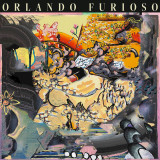
Vicente Atria - Orlando Furioso LP

“Orlando Furioso is a haunting, one-of-a-kind statement, from an important new voice in improvised music.” - Steve Lehman

“…imagining instruments that haven’t been invented yet: space harps, cosmic gamelan, Venusian banjo. It’s the purest distillation of Atria’s musical language, simultaneously grounded and unearthly.” - Stewart Smith for The Wire (November 2022)

“Making liberal use of microtonal harmony and hypnotic, ostinato rhythms – as well as the occasional stylistic smash-cut, reminiscent of John Zorn – Orlando Furioso announced itself on Wednesday as a punchy, creative force on the New York scene. (…) Atria’s rhythms had a welcoming, social propulsion, and the microtonality of his writing for keyboard proposed an individual – even insular – language.” - Seth Colter Walls for The New York Times.

Early European composers felt that their work reflected in its structure the divine nature of the material world. Via tuning, form, and contrapuntal alchemy, these musicians sought to illuminate and edify the complex and perfect order of existence. The music recorded here also reflects the contours of an ordered world, but it is no place any of us has ever visited. By assembling far-flung building blocks from the detritus of a 21st-century musical vocabulary, Orlando Furioso brings the listener into a bizarre new cosmos. The result is deeply expressive music that speaks not with the voice of a narrator or memoirist, but with that of a cartographer.

Like a science-fiction Dante, the listener is taken on a tour of many diverse and colorful provinces of an alien world. Though each composition references its own set of real-world musical locales (from the Andes to Indonesia to Italy to New Orleans), they are bound by stylistic consistency into a coherent, continuous geography. Permeating this world is an uncompromising commitment to microtonal harmony, rhythmic intensity, and an ability to deploy the esoteric (Nicola Vicentino's notorious 31-tone temperament) and the head-smackingly obvious (a surprise djent breakdown) with equal conviction. Though Vicente's compositions are steering the ship, serious recognition is due to all the players on the record for their ability to meet these demands.

Our omnivorous musical diets offer real abundance. They enrich our craft by providing access to limitless approaches from which to choose - more masters to study, traditions to absorb, and techniques to hone than is possible in multiple lifetimes. They can also inflict heavy and often contradictory burdens of influence. When every corner of the map has been charted, it becomes difficult to find a new direction in which to travel. One solution I hope to see more often is the one pursued on this record: breaking down distinct musical worlds into component parts and reassembling them into a language. When completed with precision and with no stone left unturned, the seams between the pieces vanish and the listener is deposited somewhere beautiful and strange, left to assign their sensations meanings of their own. - Mat Muntz

Orlando Furioso is led by Vicente and features David Acevedo, David Leon, Andrew Boudreau, Alec Goldfarb, Daniel Hass, Simón Willson, and Niña Tormenta. Orlando Furioso celebrated its release at Roulette Intermedium in Brooklyn, NY, as a part of Wet Ink Ensemble's 24th Season opening concert, a performance which The New York Times heralded as "virtuosic", "punchy, creative" and "even revelatory."

Winner of the Deutscher Jazz Preis: Best International Debut Album 2023

pre-order now01.09.2023

expected to be published on 01.09.2023

25,17

Last In: 2026 years ago
Natural Information Society - Since Time Is Gravity LP 2x12"

The next chapter of the Natural Information Society is here. Since Time Is Gravity, credited to Natural Information Society Community Ensemble with Ari Brown, presents a newly expanded manifestation of acclaimed composer & multi-instrumentalist Joshua Abrams nearly 15 year, 7 albums &-counting flagship ensemble. Joining the core NIS of Abrams (guimbri & bass), Lisa Alvarado (harmonium) Mikel Patrick Avery (drums) & Jason Stein (bass clarinet) are Hamid Drake (percussion), Josh Berman & Ben Lamar Gay (cornets), Nick Mazzarella & Mai Sugimoto (alto saxophones & flute), Kara Bershad (harp) & Chicago living legend of the tenor saxophone Ari Brown. Recorded live to tape at Electrical Audio & The Graham Foundation, cover painting Vibratory Cartography: Nepantla, by Lisa Alvarado. 2xLP on Eremite USA, 2xLP & CD on Aguirre/Eremite Europe. Out 14-04.

Since first developing Natural Information Society in 2010, Joshua Abrams has been gradually expanding the group’s conceptual underpinnings, its musical references & the sheer number of the group’s members. Its music is, in a sense, an expansive form of minimalism, based in repeated & overlaid rhythmic patterns, ostinatos & modality. Its roots, its scale & its meaning become clearer in time. If time is gravity, it also allows us to carry more. Having begun as fundamentally a rhythm section with Abrams’ guimbri at its core, the version here can stretch to a tentet, including six horns.

Abrams has been expanding his minimalism gradually, but he has long understood a key to minimalism’s potential: the breadth of its roots in the late 1950s & early 1960s, ranging from the dissatisfaction of young European-stream composers with the limitations of serialism to the simultaneous dissatisfaction of jazz musicians with the dense harmonic vocabulary of bop & hard bop. The former began exploring rhythmic complexity & narrow tonal palates in place of harmonic abstraction (Steve Reich’s Drumming, Philip Glass’ Music with Changing Parts; perhaps above all Terry Riley’s In C & his late ‘60s all-night organ & loop concerts); the later reduced dense chord changes to scales (signally with Miles Davis' Kind of Blue, but rapidly expanding with John Coltrane’s vast project). In the 1950s the LP record opened the world with documentation of Asian & African musics, key influences on both minimalists & jazz musicians. If John Coltrane’s soprano saxophone suggested the keening shehnai of Bismillah Khan, the instrument was rapidly taken up by two key minimalists, LaMonte Young & Riley, similarly appreciative of its flexible intonation, the same thing that kept it out of big bands.

If the guimbri, the North African hide-covered lute that Abrams plays with NIS, involves a rich tradition of hypnotic healing music associated with the Gnawa people, Abrams’ music also touches on other musics as well — other depths, memories & healings, different drones, rhythms & modes. As the group expands on Since Time Is Gravity, he has made certain jazz traditions in the same stream more explicit as well. If there is a mystical & elastic quality involved in the experience of time, both in direction & duration, you will catch it here. The parts for the choir of winds expand on the roles of Abrams’ guimbri, Mikel Patrick Avery & Hamid Drake’s percussion & Lisa Alvarado’s harmonium: at times, the winds are almost looping in the tentet version, each hitting a repeating note in turn, at once drone & distinct inflection on temporal sequence. The brilliance of the work resides in Abrams’ compositions, the NIS’ intuitive execution & in Ari Brown’s singular embodiment of the great tenor saxophone tradition, including the oracular genius of Eddie “Lockjaw” Davis, & Yusef Lateef. The three pieces by the expanded NIS featuring Brown —the opening “Moontide Chorus” & “Is” & the ultimate “Gravity”— have an immediate impact, & togther might be considered a kind of concerto for tenor saxophone. Here Brown presses almost indistinguishably from composed melody to improvised speech, getting so close to language that he might have a text. Everything here is a sign. Note the tap of the Rhythm Ace that links “Moontide Chorus” to “Is”, the attentive heart always present, even when signed by a machine. There’s a link here to the methodologies & meanings of dub music & the linear & vertical collage of beats, textures & tongues: treated with reverence, a sample of a beat-box can be as soulful, as hypnotic, as a mbira or a tamboura. If those pieces with Brown are heard as a suspended concerto, the three embrace & enfold the other works, like the sepals of a flower. That placement will also touch on the mysteries of our perception of time.

Particularly in “Is”, but elsewhere as well, a phenomenon of transcendence arises in which time appears to be tripartite, at once moving backwards & forwards & standing still. This is an act of technical brilliance certainly, but also an illumination of music’s ability to represent temporal consciousness through polymetrics. This particular listener has only heard it before in a few places, including the horn shouts & bowed basses of Coltrane’s Africa, in moments of Charles Mingus’ The Black Saint & the Sinner Lady, in certain pieces where tapes were literally running backwards, & earlier still in Dizzy Gillespie’s Cubana Be, Cubana Bop, in which the composer George Russell & conguero Chano Pozo found a music that spoke at once in the voices of Stravinsky’s Rite of Spring & the vestigial rites, rhythms & songs of the Yoruba language & Santeria religion of inland Cuba.

In Joshua Abrams’ compositions & the realization of them by the NIS, in the time of one’s close listening & memory thereof, distinctions between the “natural” & the “social”, the “quotidian” & the “transcendent” are erased, suspended or perhaps irrelevant. Consider two of the ensemble pieces, one named for nature, the other social science. In “Murmuration” the repeated wind figures of flute & alto saxophone combine with the interlocking patterns of harp, guimbri & frame drum (tar) to create a perfect moving stillness, not an imitation but a witness to the miracle of the starlings’ astonishing collective art, a surfeit of beauty that might be the ultimate defense tactic.

“Stigmergy” takes its name & concept from the Occupy movement’s Heather Marsh, who proposes a social system based on a cooperative rather than competitive models, one in which ideas are freely contributed & developed as ideas rather than an individual’s property. In its form, Abrams’ “Stigmergy” is the closes thing to traditional jazz, a series of accompanied solos by each of the wind players. However, the composed accompaniment is a radically collectivist notion: a repeated rhythmic figure, call it ostinato or riff, in which the different winds each play only a note or two of the figure, a concept both more collectivist & individualistic in its conception than any typical unison figure. It suggests another of the underlying recognitions that propel the Natural Information Society, the group as social organism, the teleology of hypnotic anarchy, all parts in place, functioning systematically, evolving & expressing itself, its nature & society, as a transformative organism.

George Lewis has described music as “a space for reflection on the human condition”. This suggests that, rather than a “distraction”, at least some music might serve as a distraction from distraction. It’s a focus, a clarity, a awareness, an external invitation to interiority, as if music itself is a model for form & contemplation, an organism contemplating for us or as us. If that is a possibility, & I am sure I have heard such musics, than this music is among them. How many of our rhythms, melodies & harmonies (cultural, historical, biological, psychic) might such music carry, translate & transform in the particulate ecstasy of our own murmuration? (Stuart Broomer, April 2022)

out of Stock

Order now and we will order the item for you at our supplier.

33,15

Last In: 2 years ago
Domenico Lancellotti - sramba. LP

Tom Zé and Faust collide in Domenico Lancellotti's "machine samba"

Domenico Lancellotti's SRAMBA reaches back to the roots of samba whilst completely revamping its blueprint, indoctrinating guitar and percussion-led rhythms with analogue synthesisers, courtesy of album producer Ricardo Dias Gomes.

The majority of SRAMBA was recorded over two months in The Cave - Domenico's home studio in Lisbon, the city both Brazilian ex-pats reside in, where the arrival of a couple of Russian-designed synths purchased by Ricardo influenced the direction of their initial experimentation: "Ricardo had these instruments, modular machines" remembers Domenico, "and I had my guitar, some percussion instruments. On the first day we started making sounds and recording them, and songs started to appear, sambas started to appear."

The son of a renowned samba songwriter, at home Domenico would watch his father play and compose. At parties, the adults would hand his father a tamborim (a small tambourine) and ask him to play along. "I grew up inside samba, it's my roots", he says. "For me, everything is samba, I bring it into whatever style of music I am making".

Domenico and Ricardo instantly saw how the synthesisers were not at odds with the sambas they were playing, instead they had a similar sound to its typical percussion instruments (ganza, repinique, surdo, tarol). What's more, they saw a connection with roots samba, the samba that existed before bossa nova and samba jazz came along. This was rhythmic samba, with grooves that could go on ad infinitum. "It's samba de clave, geometrically structured" says Domenico. "It's ostinato samba", adds Ricardo.

"Diga" is a great example of what their proposal is capable of, as what begins as a glitchy machine whirring into action soon turns into a glorious samba in which the gurgles and scratchy beats coming from the analogue equipment only add to the arrangement. Likewise, on "Tá Brabo" it's an aching melody from one of the synths that gives the guitar rhythm its needed counterpoint, and shows how the duo's greatest accomplishment is not in invention alone, but in creating a great samba album. It's an album that can go from the opening track "Ere" with its reverberant bass thud, mantra-like vocals and staccato rhythms to the string-accompanied "Nada Sera de Outra Maneira", a swooning samba that pays tribute to the Brazilian ensemble Tamba Trio, who along with Tom Zé's Estudando O Samba, Domenico names as the biggest influence on their treatment of samba.

Other important reference points are made clear on "Um Abraço No Faust". One of three instrumentals on the album its title riffs off a JoãoGilberto song, "Um Abraço no Bonfá", but whereas JoãoGilberto was giving a hug (um abraço) to bossa nova guitarist Luiz Bonfá, Domenico and Ricardo are giving theirs to the German avant-gardists Faust. "Quem Samba", with its horn section and dramatic melody give a whiff of Domenico's Italian ancestry, while "Descomunal" is devoid of rhythm whatsoever, guest vocalist Tori singing over a bed of electronic drums, cello and swirling synths, that highlights the duo's unwillingness to stick to a particular formula.

Both Domenico Lancellotti and Ricardo Dias Gomes are revered names within Brazilian music over the past 20 years. As a member of the +2's, with Moreno Veloso and Kassin, Domenico released a trio of albums on Luaka Bop in the early 00s that pioneered a new Rio samba sound with elements of funk and psychedelia. With Veloso and Kassin he would later form Orquestra Imperial, a big band intent on reviving ballroom (gafieira) samba, and that has worked with guest vocalists such as Seu Jorge, Elza Soares and Ed Motta. SRAMBA is his fourth solo album. Multi-instrumentalist Ricardo Dias Gomes first came to notice as a member of Caetano Veloso's band Cê which helped reinvigorate Caetano's career with a sound influenced by British new wave. As well as collaborations with Lucas Santtana, Negro Leo and Thiago Nassif, and work with his own group Do Amor, he has released a series of acclaimed solo albums that reveal a restless music-maker.

SRAMBA is a glorious showcase of the duo's style, uniting Domenico's playful lyrics and rhythmic, samba-rooted songs with with Ricardo's assured accompaniment of unorthodox textures and instrumentations. It may be a new language for samba, machine samba (samba de máquina), but as Domenico says, "samba da máquina is samba".

out of Stock

Order now and we will order the item for you at our supplier.

23,32

Last In: 2 years ago
De Fabriek - Music For Hippies 2x12"

Platform 23 again explores to the dense voids, this time with a touch of the funk, with a reissue of Dutch experimentalists De Fabriek and two tracks from their "Music For" cassette series, this time calling all Hippies.

Featuring both original and reinterpretations from modern-day heads, Dunkeltier and Khidja, this double-pack is something of an oddity, showcasing the bands' expansive range, moving away from the noise, drone and industrial soundscape releases they had become known for and crafting here, free flowing, groovy longform jams.

Active since the late 70s to today, De Fabriek (The Factory) have never considered themselves a real band - being also a label too - with an evolving and irregular line up centred around Richard van Dellen, they present their music and output as a kind of work-union.

With literally four decades and dozens of releases across all formats, 1988's cassette release, 'Music For Hippies', has become something of a cult curio, with the long improvisational tracks, Lullabye and Coming Down eschewing the rougher, industrial experience for something completely different.

In opener Lullabye, we go full leftfield P-Funk meets Motorik undertones. An incessant beat is laid from the start and doesn't cease for over 10 minutes, while spoken vocals call closer to the Krautrock realms of Can and hark to Liebezeit's stylised grooving best.

Analog, echo washed, with touches of glam and wrapped in simple effects pedal work, the secrets are passed to Dresden / Berlin inhabitant Dunkeltier aka Sneaker DJ aka Thomas Smorek. His darker moniker, appearing on obscure edits for Macadam Mambo and the much-missed Bahnsteig 23, his 'Hey Robot' mix adds bass, percussion, strings and synth to remold Lullabye into a late night, red light, basement denzien. This is followed by an additional, bonus reimagining, creating an all-new time piece, an ear worm of the best kind with Tik Tok Goes The Clock.

The second slab presents in Come Down, a more resembling De Fabriek werk. Edited to fit, the darkness is entered as snapshot vocal quips, oscillations and synthesised mutations are laid over a lazy, relentless ostinato rhythm where cymbals crash on the bar. Inviting, calling, De Fabriek's aptly titled downer is in fact, a joyous journey.

To complete, label affiliates, Khidja take a break from finalising their debut album to unfold their 'Psychebabble Mix', a dozen plus minutes of warped, twisted, cassette machinations that suck the listener further along the trip. Added bass propels their edit suddenly to a new direction, a hook for mind and for the open willed, the body. De Fabriek's "coming down lullabye" arriving on vinyl for the first time, with a twist and shake, calling deeper to acceptance.

out of Stock

Order now and we will order the item for you at our supplier.

29,12

Last In: 2 years ago
Pleasurewood - Psycho 2000 / White Spiritual
 
2
also available

Black Vinyl[11,56 €]


Psycho 2000 - A dark but funky theme that begins with an occulting Italian echo-oscillator drone that is soon followed by pulsating bass and breakbeat drums, leads to tremolo guitars, an ostinato on electric mandolas, strings climbing eloquent ladders, otherworldly electronics, and a cinematic finale.
An evocation of a parade of wooden nutcracker soldiers elaborately dressed in gold-trimmed black uniforms down a wide avenue decorated with mardi gras beads and animal skulls upon golden cobblestones toward a tornado spiralling out purple-hued glissandos and curlicues of elephant smoke.

White Spiritual - Head nod action, the twinkling of a late 60’s Vox Continental II with sickly transistors, the noodling matrix of an intergalactic telephone exchange carried on a bed of bouncy bass with a firm backbeat.
The Johnny Guitar Watson-esque bite and sting of a ‘67 Teisco guitar preludes slabs of unison dark brown moog and organ giving way to the dance of fingers over the black naturals and white sharps of the Continental II.

out of Stock

Order now and we will order the item for you at our supplier.

11,56

Last In: 2 years ago
Dur-Dur Band Int. - The Berlin Session

Tears are in the eyes of Xabiib Sharaabi, nicknamed the Somali King of Pop when he entered the stage of Berlin’s HKW. It is a mix of nostalghia, pain and joy. Like many Somalis he had been deprived overnight of both glamour and friends, the war in his homeland had sent him into exile. The glamorous discos and beachfront stages Mogadishu had once been famous for, had disappeared as the city was bombed to the ground. The King of Somali pop found himself stranded in Sweden, others like the members of Dur-Dur Band Int. ended up in London which until today has the largest Somali diaspora in Europe.

In the last decade many early recordings of Somalia’s funk, soul and disco era have been reissued. This record is not a reissue. The Berlin Session – is the first studio album of its kind since the golden days of Mogadishu came to a halt three decades ago. It is the living proof that Somali music is hot, funky and (!) well alive.

The record captures a historic reunion which took place in 2019 in Germany’s capital Berlin. London-based Dur-Dur Band Int. an eight-piece powerhouse of Somali live- music unites with three legendary Somali singers: Xabiib Sharaabi, Faduumina Hilowle and Cabdinur Allaale for a concert at Berlin’s HKW. Fueled with a restored sense of pride, the freshly reunited musicians decided to get together in a Neukölln studio for two amazing days of recording.

Female vocalist Faduumina Hilowle opens the album with an invitation to kickass: “Let’s shake off the dust, boys!” (Inta ka hurguf). Grooving with such a strong accent on the off-beat, any non-Somali listener may think of Reggae. But when you ask the musicians, they tell you: “They took it from us! It’s Dhaanto! It’s our rhythm”. Originating from the Ogaden region (now in neighbouring Ethiopia’s borders), Dhaanto dates back to the era of “clap & chant”. Some say it is an imitation of the camel’s bounce. Xabiib Sharaabi was once nick-named Somalia’s King of Pop for the body language and magnetising voice with which he incorporated the latest global musical trends - even recording two disco albums entirely in English. On the album Xabiib chooses to sing his Somali adaptation of “Lady” originally by Afrobeat pioneer Fela Kuti. Not unlike the Motown Sound of Detroit and Kingston’s Studio One: a small scene of musicians were fueling that new Somali Disco scene in Mogadishu. Cabdinur Allaale, the third vocalist on the album comes from neighbouring Djibouti. In the heydays the leader of then famous Sharaf Band was a frequent visitor, flying back and forth between Mogadishu, Hargeisa, Kismayo & Djibouti entertaining his fans on the Horn of Africa.

Dur-Dur Band Int. ‚The Berlin Session‘ brings the spirit, joy and hope of this era back: In the last decades Somalis stars have lived among us, spread all over the world, it is time to see them step into the limelight again.

Nicolas Sheikholeslami:
In 2015 Berlin-based Nicolas Sheikholeslami became fascinated by Somali music and ended up compiling a mixtape to share his passion. He did not know that his tape Au Revoir, Mogadishu Vol. 1 - Songs From Before The War would spark a massive international interest for Somali music. Soon later Nicolas co-compiled Sweet As Broken Dates: Lost Somali Tapes from the Horn of Africa for Ostinato records which got a Grammy-nomination in 2017. Berlin’s venue HKW took notice and asked him to set up a show with a selection of Somali artists from the golden era. This lead to this remarkable reunion. A studio was booked and within 2 days this album was recorded. The Berlin Session captures this emotional moment. In 2021/22 Nicolas Sheikholeslami finally sat down and mixed the recorded material. This record is the living proof that Somali music is hot, funky and well alive.

pre-order now03.03.2023

expected to be published on 03.03.2023

19,79

Last In: 2026 years ago
Various - 40th Anniversary 20th Century Box

A series of four limited edition box sets released to celebrate the 40th
Anniversary of the Etcetera label

This box features ten 20th Century music recordings from their catalogue:

Weill/ Pfitzner/ Barber: Sonatas for Cello & Piano (KTC1315)
Gubaidulina: Seven Words, In Croce, Cadenza (KTC1433)
Denyer: Finding Refuge in the Remains (KTC1221)
Schulhoff/ D'Indy/Bridge: String Sextets (KTC1475)
Nas/ Namavar/ Van Vlijmen: Pieces for Viola & Ensemble (KTC1397)
Van der Harst: Cara Mia (KTC1273)
De Raaff: Flute Concerto/ Der Einsame im Herbst (KTC1686)
Shostakovich: Sonata for Cello & Piano (KTC1686)
Wijdeveld: Lieder & Chamber Music (KTC1417)
Ten Holt: Canto Ostinato (KTD6007)

pre-order now30.09.2022

expected to be published on 30.09.2022

31,51

Last In: 2026 years ago
MARISA ANDERSON - STILL; HERE  LP

Marisa Anderson is one of the most eminent guitarists working today. Her lucid, eloquent approach to guitar music and composition has established her as an unparalleled artist and an insightful, coveted collaborator. Anderson"s work draws on a mosaic of folk musics and lives in conversation with myriad musical traditions. Her music is inviting and candid, beckoning the listener into sprawling ecosystems and intimate corners alike, from barren landscapes to verdant thickets, impassioned communal experiences to pensive reclusions. As a master of her instrument, Anderson translates abstractions into undeniably moving music, tracing through traditional folk tunes, imagined Sci-Fi films, and foggy sanctuaries of sound. Still, Here is Anderson at her most direct, laying bare her practice of processing and understanding the world through music and distilling that practice into pieces as expressive as they are transfixing. The pieces of Still, Here center around Anderson"s present. The album is a compendium of living moments captured by her preternatural ability to mold human realities into enduring, lyrical compositions. Away from the road for the longest stretch of her career, the making of Still, Here affirmed for Anderson the role of the guitar as an essential tool in processing external and internal realities. "I don"t get ideas and then turn to the guitar, rather I turn to the guitar to find out what my ideas are. I turn towards it for meaning." The discordance of protest and upheaval emanates from a propulsive acoustic ostinato and mournful dueling pedal steel guitars on "The Fire This Time," pausing only to allow space for the blare of sirens on the Portland street near Anderson"s studio. "The Crack Where the Light Gets In" rapturously revels in the glimmers of hope that peek through a pall of darkness. Across Still, Here, Anderson"s playing transmutes the tributaries of fluctuating emotions into a unified flow, stirring and sublime.

pre-order now23.09.2022

expected to be published on 23.09.2022

28,53

Last In: 2026 years ago
MARISA ANDERSON - STILL; HERE  LP

Marisa Anderson is one of the most eminent guitarists working today. Her lucid, eloquent approach to guitar music and composition has established her as an unparalleled artist and an insightful, coveted collaborator. Anderson"s work draws on a mosaic of folk musics and lives in conversation with myriad musical traditions. Her music is inviting and candid, beckoning the listener into sprawling ecosystems and intimate corners alike, from barren landscapes to verdant thickets, impassioned communal experiences to pensive reclusions. As a master of her instrument, Anderson translates abstractions into undeniably moving music, tracing through traditional folk tunes, imagined Sci-Fi films, and foggy sanctuaries of sound. Still, Here is Anderson at her most direct, laying bare her practice of processing and understanding the world through music and distilling that practice into pieces as expressive as they are transfixing. The pieces of Still, Here center around Anderson"s present. The album is a compendium of living moments captured by her preternatural ability to mold human realities into enduring, lyrical compositions. Away from the road for the longest stretch of her career, the making of Still, Here affirmed for Anderson the role of the guitar as an essential tool in processing external and internal realities. "I don"t get ideas and then turn to the guitar, rather I turn to the guitar to find out what my ideas are. I turn towards it for meaning." The discordance of protest and upheaval emanates from a propulsive acoustic ostinato and mournful dueling pedal steel guitars on "The Fire This Time," pausing only to allow space for the blare of sirens on the Portland street near Anderson"s studio. "The Crack Where the Light Gets In" rapturously revels in the glimmers of hope that peek through a pall of darkness. Across Still, Here, Anderson"s playing transmutes the tributaries of fluctuating emotions into a unified flow, stirring and sublime.

pre-order now23.09.2022

expected to be published on 23.09.2022

31,05

Last In: 2026 years ago
CELESTINE UKWU - NO CONDITION IS PERMANENT LP

Of the many great talents of the classic Nigerian highlife scene, none contained the existential depth, transcendence and grace of Celestine Ukwu. During his brief time in this world, he pursued education, music, and philosophy; first as a school teacher, then ultimately a singer, lyricist and musician, first as a member of Gentleman Mike Ejeagha's Premier Dance Band, and eventually fronting his own groups, The Music Royals and The Philosophers National. Beginning in the early 1970s, The Philosophers National established a radical shift in the possibilities of Nigerian highlife by moving away from the typical mid-century style and cutting a new path with a distinctly hypnotic and cerebral atmosphere. This sense of depth was apparent in the lilting, multi-layered and pulsing music of The Philosophers National, as well as the concise and clear-eyed lyrics sung so beautifully by Celestine Ukwu. The arrangements establish a living, breathing environment for each song; muted trumpet solos, hypnotic guitar runs, driving percussion; every instrument gracefully following a tide of patience, tranquility, wonder, climax, knowing and unknowing. "Celestine ditched the jaunty dance rhythms and relatively facile lyrics typical of the reigning highlife tunes, and ignoring the soul music tropes most of the highlife bandleaders were appropriating in an effort to inject new life to their ailing format. Instead Celestine concocted a new highlife style that was more contemplative and lumbering; with the layering of Afro-Cuban ostinato basslines and repetitive rhythm patterns that interlocked to create an effect that was hypnotic, virtually transcendental. Meanwhile, Celestine himself sang as he stood coolly onstage in a black turtleneck and a sportscoat, looking like a university professor. The message was clear: this was not necessarily music for dancing_even though the rhythms were compelling enough. This was music for the thinkers." - Uchenna Ikonne This LP compiles some of Celestine Ukwu's deepest and most affecting songs from the 1970s, which have been gorgeously restored and remastered by Tim Stollenwerk to highlight the brilliant details of Celestine and the entire Philosopher's National. Pressed on 160 gram black vinyl at Smashed Plastic in Chicago, and comes in heavy 3 spot-color jacket, with fold-over insert with bilingual lyrics and notes by Uchenna Ikonne (Comb & Razor Sound).

pre-order now05.08.2022

expected to be published on 05.08.2022

21,22

Last In: 2026 years ago
Infuso Giallo - Ocular Soda

»Infuso Giallo aka Philipp Carbotta originally hails from rural Western Germany, first cut his teeth in the music scene of nearby Cologne and conducts a host of activities in Berlin for a couple of years now – co-running the label Kame House, designing graphics and producing and playing leftfield electronic music. His debut LP Ocular Soda presents an intersection of these activities – self-released, self-designed and of course self-produced. Even before the first synth chords and reverse atmospheres of the two-part opener 'Every Waking Hour' tickle the ear, it is the eye that is drawn to the bright, cut-out style cover art – itself made up of two eyes on the front and what seem to be their rough shapes or discarded counterparts on the back.
To stay within that metaphor, Infuso Giallo's music is indeed of a reflective and calm nature, taking cues from Berlin School, library and New Age musics from roughly the 1970s to the 1990s – steadily repeating and slowly evolving ostinatos, lush digital pads, quirky filtered toplines and electronic percussion that mostly eschews four-four monotony in favor of much more subtle syncopations. Balearic bomb 'The Big Rip' with its big drums and acid bass turns the energy level up a notch while retaining the somnambulistic, lingering quality that makes Ocular Soda such a coherent listening experience – music on the sheath of waking and dreaming, both worlds and their inherent logics freely bleeding into each other. There are moments of great expanse, such as in 'Mole Gaze' – I couldn't help but see myself hovering somewhere in mid-air while the music unfolds as if on a great deserted plane below me. Maybe this is what it sounds like once the mole leaves his tunnels and takes in the sound of the world overground. 'Hello World', indeed, in its multitude of information to eye and ear, in its gently overwhelming quality. The title track 'Ocular Soda' closes the proceedings with a whimsical nod to 1970s botany-centered library music, its brooding chord sequence and sweet lead lines gradually fading in the distance. A fitting ending to an impressive LP of highly evocative, at times sombre and at times blissfully naive pieces that leave me yearning for more.«

Written, recorded & produced by Infuso Giallo in 2020 & 2021 in Berlin. Mixed by Philipp Janzen & Sebastian Blume at Dumbo Studios, Cologne. Mastered by Sam Irl in Vienna. Design by Infuso Giallo.

out of Stock

Order now and we will order the item for you at our supplier.

20,88

Last In: 4 years ago
MALCOLM JIYANE TREE-O - UMDALI

Charismatic trombonist and pianist Malcolm Jiyane debut album as frontman is more than merely one individual’s breakthrough. Workshopped and recorded within two days in Johannesburg, UMDALI stretches the idea of what it means to improvise within the context of jazz.

Operating from the fringes of the South African jazz scene, the enigmatic yet charismatic trombonist and pianist Malcolm Jiyane delivers a major contribution to the canon -- one shaped around dedications to key figures in his personal and professional life. Several years ago, Jiyane was dealing with the death of a band member, the birth of a daughter and the passing of his beloved mentor Johnny Mekoa, founder of the Music Academy of Gauteng, which Jiyane attended from a young age. These life-altering events give shape to the music’s emotional register and its thematic concerns.

In Black Music, his book of essays and critiques, Amiri Baraka makes the point that jazz musicians, be it in the construction of solos or in other aspects of composition, always draw on the works of their contemporaries or elders. How much outsiders pick up on that is really dependent on how au fait they are with the music. In this album, Jiyane finds comfort in this well-trodden path. Two songs make for great examples. Umkhumbi kaMa, a jazzfunk track celebrating the creative force as inhabited by women, the motif to Herbie Hancock’s Ostinato (Suite for Angela) is a clear reference, connecting in one swift move, not only the musical traditions of the Black Atlantic but also the struggles and triumphs of women across space and time. On the same note, the free-form Solomon, Tsietsi & Khotso, conjured in the same jam session that yielded SPAZA’s UPRIZE!, appears here in a more fleshed out form as Senzo seNkosi; a tender dedication to Malcolm Jiyane Tree-O bass player Senzo Nxumalo.

Jiyane’s path to the realisation of his debut album as frontman is more than merely one individual’s breakthrough. Workshopped and recorded within two days in Johannesburg, UMDALI, not unlike Miles Davis’ landmark Kind of Blue, stretches our idea of what it means to improvise within the context of jazz.

out of Stock

Order now and we will order the item for you at our supplier.

24,75

Last In: 4 years ago
ANDY LAVERNE QUARTET - FROZEN MUSIC

Frozen Music’ was recorded in New York City 32 years ago and like most of
pianist Andy LaVerne’s releases this album has not lost its original energy
and charm.
Tenor and soprano saxophonist Rick Margitza was then a young rising star under contract with Blue Note. Andy was already a prolific composer who penned
all the tunes of this album. Bassist Marc Johnson who was a member of Bill
Evans’s last trio gave graceful and subtle colouring to LaVerne’s compositions.
“Frozen Music, Andy LaVerne’s third album for SteepleChase, is a solid, modern
blowing session...he makes skilful use of suspensions, pedal points, and ostinatos, which along with the music’s floating harmonies, give the soloists a wealth
of elbow room.” - Mark Stryker, Cadence
Personnel: Andy LaVerne (piano), Rick Margitza (tenor and soprano saxophone), Marc Johnson (bass), Danny Gottlieb (drums)

pre-order now15.10.2021

expected to be published on 15.10.2021

29,20

Last In: 2026 years ago
KIRI RA! - KIRI RA!

Kiri Ra!

KIRI RA!

12inchOONA6
Oona Recordings
19.02.2021

The debut album from Kiri Ra! is an intuitive journey through landscapes of spectral otherness with colors of post classical minimalism, ambient folk and spiritual jazz. Starting as cross Baltic improvisation group in 2014, Kiri Ra! found form in the winter of 2016 when Finnish experimental artist Lau Nau, Finnish jazz saxophonist Linda Fredriksson, and Swedish pianist Matti Bye were commissioned by The Swedish Film Institute to create music for experimental amateur documentary films from its archive. Their debut album is made up entirely of improvised live studio recordings that stemmed from this film-scoring effort. With meticulous attention to detail and a sense of wonder, the players are collective witnesses to what can unfold between three musicians in a room. As illustrated on the tracks "Happlo'os" and "))Glänta//", softly played piano ostinatos, field recordings and bowed percussion set a visceral foundation for the saxophone to carve melodic tones of tingling melancholia. This warmth and sense of intimacy prevails throughout the album, as illustrated on the serene track "Linnesöndagen Gynnas Icke", whilst "Kites Över Gärdet" is an almost supernatural unfolding of timelessness.

pre-order now19.02.2021

expected to be published on 19.02.2021

25,17

Last In: 2026 years ago
MILAN W - IN BLOOM

Generative music seems to imply a systems approach to music, or a system that once created can utilise randomness in a creative way. The benevolence of nature’s creativity belies this musical term, and can flip the word ‘generative’ to mean to involve constantly flowing creativity with purpose. In Europe there was a time in the Pagan Renaissance when architecture would mirror nature’s generative quality. Sculptures and columns were to imply animation or movement.

That’s where Milan W.’s album comes through in 2020. His music involves the night shadows of Europe’s architecture and its growth. In Bloom personifies itself by showing Antwerp’s influential ‘Night Play’: a term that can relate to many European cities such as Bologna, Vienna, and so on and so on. The leftovers of Renaissance and gothic architecture are everywhere in Europe still; layers of ruins that can generate the impression of simultaneous time periods. Tracks like Spa and Helium Queen reveal and revel in the power of shadow movement that is generated by the night. In Milan W.’s past works, the poignant and simple creative play of dark wave and synth beat music was his vehicle for expression, but now on In Bloom he departs to a touching sidereal impressionism allied with Coil’s instrumental pieces on Horse Rotorvator — an album whose cover portrays the potential powers of the pavilion just as Milan W. is portraying the generative soul and alienation of Europe’s ‘Night Play’. Because of In Bloom we can come to believe that there is a secretive energy in alienation, a playfulness that is alight at Night.

out of Stock

Order now and we will order the item for you at our supplier.

18,03

Last In: 5 years ago
The Mighty Mocambos - Live At Groove City

Celebrating live music and record store culture.

After having completed the first run of shows for their recent album "2066" through UK, France and Germany, the Mighty Mocambos did an intimate performance at world-renowned Groove City Record Store in their hometown Hamburg.
Not content with just playing stripped down versions of existing material, the band wanted to step up a notch from the "tiny desk" type concert idea and decided to record unreleased tunes for a vinyl single capturing the live energy and crowd atmosphere with analog studio techniques. After having warmed up with a couple of songs from "2066", a cheerful crowd in the packed shop witnessed the band tracking magic takes of unheard songs directly to tape.
"St. Pauli Second Line", an instrumental live favourite with simple but irresistant swamp funk ostinatoes turned into a frenetic call and response chant workout midway of the song. Singer Nichola Richards' tune "Keep It Movin'", a mainstay of the band's live repertoire for years, was cut with great energy, finally finding its way onto wax. "Something's Missing" is a brand new tune with a raw sister funk vibe - written and arranged for the occasion, rehearsed once and performed live for the first time in the version you hear on this record.
While many live recordings a are mere mix of crowd noise and neglectable renditions of well-worn tunes that are unusable for DJs and hardly appealing to the dedicated listener, THE MIGHTY MOCAMBOS - Live At Groove City au contraire is a treat for turntableists and a testimony of the spark that a well-attuned live band can light up, combining the vibes of a concert with the no-nonsense analog sound of their well-loved studio recordings.

out of Stock

Order now and we will order the item for you at our supplier.

9,96

Last In: 5 years ago
Various - Domownicy Różnoracy Cz.1

After launching with Jaxe’s acid bomb Seekings earlier this
year, Dom Trojga is back with a bang (and five smiles). Uniting
artists from Ukraine and Poland, and ditching genre
considerations in favour of a shared wavelength, Domownicy
Różnoracy Cz.1 is all about further revelation of the imprint’s
purpose. First up is synth enchantress Poly Chain with the
storming ostinato of Moonhaze (first track ever signed to the
label, but not her last, by any means), followed by the beaming
legend SLG and his soother-shaker Hello Utopia. On the B-side
Jaxe strikes back, teaming up with the uncanny Bejenec
(CHECK OUT HIS LIVE SHOW, FOR REAL), for a hefty slab of
tekno-funk that is Seamless. Finally, label founder Eltron
rounds things up with his own quirky Rym Cymcym. The
beautiful label art has been drawn by the inimitable Martyna
Bolanowska. Playing this record is good for you, so don’t
hesitate.

out of Stock

Order now and we will order the item for you at our supplier.

8,03

Last In: 6 years ago
Mana - Seven Steps Behind LP 2x12"

Mana

Seven Steps Behind LP 2x12"

2x12inchHDBLP043
Hyperdub
09.04.2019

Since Danielle Mana's 2017 debut EP for Hyperdub, 'Creature', which was a taut, evocative suite of beatless, almost neo-classical electronics, we now find his music has caught an alien virus and started hallucinating. On 'Seven Steps Behind', the borders between reality and the weird have collapsed on each other, and with each listen through its zigzagging course, you're rewarded by its strange twists and turns. 'Seven Steps Behind' is an electronic album that doesn't always sound electronic; a great deal of the record has been created to sound like prepared pianos, harpsichords, cellos and flutes. At other times, sampled acoustic instruments and specially recorded sessions have been processed through software and careful editing. It's this sophisticated layering of contrasting versions of the same sources that help give this record its uncanny balance. The album also plays with your sense of time in its mostly drum-free hall of mirrors, pulling from minimalism, chamber music, dark jazz, and synthesiser experiments. Mana's singing voice also makes it's debut here, albeit adorned by abrasive FXs. His lyrics are encrypted in noise, in fitting with the music's chimeric character, casting images for the listener to decipher. His heavily manipulated voice enters on second track 'Myopia For The Future', sounding something like a singing motorbike pitched over bouncing ostinatos, or on 'No Body's inhuman, word-less range, where it's impossible to tell where the human finishes and the machine starts. Or in the case of 'Leverage For Survival' it's animal and machine. Here, as with the album's eponymous final track, a sensory assault subsides to reveal a heart-wrenching melancholy that anchors the record. Listening to 'Seven Steps Behind' is like stepping into a dream, with all the curious emotions and buried meaning that involves. Yet for all its restless, shifting energy it manages to hold both dissonance and melody in sweet proportion.

out of Stock

Order now and we will order the item for you at our supplier.

13,40

Last In: 6 years ago
Norman Connors - Love From The Sun

Re-mastering by: Ray Staff at Air Mastering, Lyndhurst Hall, London

This jazz recording is considered as the 'magnum opus' of master "drummer extraordinaire'', composer, arranger, producer, and leader Norman Connor's in a career that has spanned 4 decades. This recording is what many will consider the debut of the legendary vocalist Dee Dee Bridgewater who has since gone on to a brilliant career. Connor's put together an all-star group with Herbie Hancock and Onaje Allan Gumbs on piano and Fender Rhodes, Dr. Eddie Henderson on trumpet/flugelhorn, Carlos Garnett on tenor/soprano saxes, Gary Bartz on alto/soprano saxes, Buster Williams on bass, drummer/vocalist Bill Summers and Kenneth Nash on percussion, and effective, crucial cameos by master flautist Hubert Laws. On the song, "Love From the Sun'", Connors added Nathan Rubin on violin and Terry Adams on cello.

The 'best of the best' begins with the exotic theme of Hancock's "Revelation", doubled wordlessly and beautifully by Ms. Bridgewater over Williams bouncing ostinato bass pattern with flights of fancy from Hubert Laws on flute, and superb, luminous solos from Henderson's exotic trumpet, Garnett on soprano, and Hancock on Fender Rhodes. Garnett's "Carlos II" is another great composition with remarkable solos. Connors' own "Drums Around The Worlds'" is influenced by African and latin rhythms with emotional vocals from Summers and a drum-only section that builds in intensity. One of the high points of the album is Dee Dee Bridgewater's awesome, glorious vocalizing on Richard Clay's lovely "Love From The Sun", in one of the greatest performances in her career, arranged by Gumbs. Elmer Gibson's "Kumakucha" (The Sun Has Risen) is a blazing display of uptempo musicianship by Connor's driving drums, the propulsive congas of Summers and Nash, and exciting solos from Bartz, Henderson on trumpet, and Hancock's furious piano solo. The set ends with a marvelous "Holy Waters" composed and arranged by Garnett in a scorching performance by Bridgewater on vocals, Garnett unleashing one of the greatest solos in his storied career, followed by Gumbs' astute solo.

My Highest Recommendation.

By John Braswell

out of Stock

Order now and we will order the item for you at our supplier.

28,95

Last In: 7 years ago
Anii - Korzenie Ep

Anii

Korzenie Ep

12inchKOM380
Kompakt
09.03.2018

Born in Poland and now operating out of the ever-effervescent London, the adoptive city where she's learnt the ropes of music production and Djing, Anii - real name Ania Iwinska - has lived many lives in one. Yet if one thing's remained a constant over the years, no matter the harshness of the obstacles life threw at her, it's indeed a deep and inextinguishable love for music; be it behind the mixing desk at Wired Studios or in her own Shoreditch workroom, the key place where she's kept honing her skills with unfazed diligence, up to the point of making it her actual second home.

Anii lands her debut transmission on Kompakt and surely not the last. Named after the Polish word for 'roots', 'Korzenie' finds Ania threading her way in between subtle deep-house and techno folds, delving into the essential strength of her past and present to carve out an hypnotic maelstrom of traditional Polish music strings, tribal percussions and elegiac melodies. Coupling eerie ostinatos with stealthy bass moves, it's an ode to the magnitude of memory and power of resilience that reels out, blurring the line between late night club environment and further spacious, moony soundscapes.

out of Stock

Order now and we will order the item for you at our supplier.

10,88

Last In: 11 months ago
Items per Page:
N/ABPM
Vinyl