Sdban Records is delighted to announce the reissue of this genre-defying jazz album originally released on library label Selection Records in 1972.
Delving into the story of the American pianist and composer Phil Raphaël reveals more questions than answers. He was born in New York where he played with Charlie Parker, Jon Eardley and Howard McGhee, but a 1951 recording with Red Rodney for Prestige Records is the single remaining trace of his bebop days. Raphaël appeared under unknown circumstances in Belgium in the 1960s, playing among others at the 1966 Jazz Bilzen festival, and he eventually settled in Brussels. A multifaceted musician, he did not limit himself to jazz and also worked in pop groups, directed the music for the spectacle Hair, and even had a brief residency at Pol's Jazz Club where he played the music of Johann Sebastian Bach four nights per week.
His album 'Stop, Look, Listen', which was recorded with the rhythm section of Babs Robert's group, consists of four long genre-defying tracks colored by the dreamlike vocals of opera singer Rose Thompson. A surreal blend of genres, hard to pin down. It's highly imaginative jazz, that much is sure. Raphaël shifts from serene late night piano jazz to more free or even spiritual passages, magnificently paired with the otherworldly vocals of Rose Thompson. The LP was put out by Selection Records, a label that primarily issued library music at the time, and thus went largely unnoticed upon release. The recording makes clear that Phil Raphaël was a highly gifted artist whose talent will forever remain undervalued, since it was his only effort as a leader. Raphaël's passage through the Belgian nightlife was just as mysterious as his music, and few people seem to remember him. Drummer Bruno Castellucci describes him as remarkable, both as a musician and as a person: "He was a hippie before there were hippies. He wasn't part of the system but he had a system of his own."
quête:ot system
After more than two decades flexing his muscles on the local underground scene and gaining a legendary cult status on his Tenerife home turf, the island’s most famous postman, as he’s affectionately known by his consorts, Tomás de la Rosa aka Postman breaks radio silence to bulldoze his way through the canyons surrounding his hometown of Santa Cruz into an unknown and unsuspecting world. We present thus, Postman’s first ever album of original bangers, micro chopped two steppers and rage induced breakbeat anthems.
Constructed over the course of global confinement, Seeds of Light marks a return to creative activity from the man who regularly delivers your post (its not just a random artist name). Postman aka Tomás de la Rosa has taken his time, compiling sketches and unfinished songs, rummaging through the deep ends of his hardrive, stitching early production sketches with recent compositions, revising, reediting and rebuilding with a more mature and concise attitude, eventually completing, almost unintentionally, the perfect self referential retrospective album. Far from being just a compilation album, Tomás managed to create an explosive document, suspended in time, in which styles are intertwined regardless of fashions and fads – letting go of the ‘modern’ or ‘up to date’ burden - so common these days in electronic music.
It is not an easy album, like many of his previous work it demands extra attention to experience the full crystallization of his complex sound structures. We find ourselves in front of a truly surgically precise work of art whose result comes as a waterproof war machine, refined and incisive, resonating deep with soul and groove.
Postman develops his sound palette throughout the album from very basic sound snippets into a concrete dance world of synthetic sounds eventually creating a parallel reality where J. Dilla could be living in Chemnitz instead of Detroit and releasing records for a label called Raster-Throw. Glitch sampladelics!
Incursions into Grime are also abundant with nods to the ineffable East Man, reunions with his beloved Funkstörung or many other stimulating revisions of lifelong genres and breaks populate this multidimensional sound space, see soul, dancehall, breakbeat, two step and the UK hardcore continuum.
Special mention to the magnificent fluid artwork by the very talented Catalan visual artist Alba de Corral. A still photo from one of her kinetic AI systems programmed directly in code, which matches perfectly the essence of Postman's brutalist alien sound.
Vinyl limited to 200 copies
Often when music is constructed with synths and other electronically generated sound makers, their level of exactitude and control is such that the vocalist will either wittingly or otherwise seek to emulate the relative artifice of the soundscape. This is often done to great effect, think Kraftwerk. But what if there was a unit whose music was synth-generated but the vocals were coming from a hot-blooded, singing-for-the-cheap-seats approach? If done well, it’s a case of two great tastes that taste great together, which brings me to System Exclusive.
Their multi genre / time period collision is like a car accident where all parties walk away not only unscathed but sure they had a great time, like two different recording sessions sharing the same space and making it work. Vocalist Ari Blaisdell (previously of Lower Self, The Beat Offs) co-exists excellently amidst the driving beats and synth waves and her guitar further helps to jailbreak the tunes from the often sterile entrapments that synths provide. Matt Jones (previously of Male Gaze, Blasted Canyons, and continuing Castle Face behind-the-scenesman)’s smart use of live drums bring great juxtaposition against the machines. Ari’s irony-free sincere delivery is the perfect closer on this very cool record, recorded ably by Enrique Tena Padilla (Osees, Wand, Beach House) in their backyard studio mid-pandemic and adorned with original artwork by Miles Wintner (L.A. Takedown, Mr. Elevator, Devon Williams). If you don’t get this slab of goodness, well, that act of non-compliance will confirm you as the pain-in-the-ass that many have described you to be in great detail during Zoom chats. How dare they! Prove them wrong! Reduce their snark to mere pseudo-intellectual piffle! Your lifeline arrives in March. Grab it. — Henry Rollins
Clear Vinyl
Written and conceived by Stephan Crasneanscki, ‘LOVOTIC’ is a concept album by Soundwalk Collective, composed in collaboration with lauded actress and singer/songwriter Charlotte Gainsbourg. Featuring veteran techno stalwart AtomTM, rising singer/composer/performance artist Lyra Pramuk, celebrated actor Willem Dafoe, and writer/philosopher Paul B. Preciado, the album is released by the new Berlin-based Analogue Foundation.
Inspired by a relatively new field of research that seeks to explore and develop the possibilities of sexual and emotional relationships – and even love – between humans and robots, ‘LOVOTIC’ interrogates the impulses, ideas, and needs underlying this phenomenon. The project ventures into a future where sex, intimacy and desire are reformulated through the connection of humans, robotics, and artificial intelligence.
In an age of such hybrid entanglement with the machine, human identity requires the construction of new forms of intimacy, gender, and sexuality. At present, however, such technologies are primarily used to produce programs of limited sexual iterations that do not question the preformatted categories of gender and sexual orientation. In contrast, on ‘LOVOTIC’, Soundwalk Collective ask whether the future of sex and sexuality could instead be an exponentially expanding kaleidoscope. Where does the impulse of preference come from? What sets of words from our vocabulary can be communicated to the AI mind to generate a new identity for desire? Could the machine be another technology that brings us closer together?
Sonically ‘LOVOTIC’ is unidentifiable, artificial, and genuinely futuristic, occupying an amorphous androgynous netherworld at the borderlands between biotic and android. Traditional musical signposts are virtually non-existent, instead offering a mercurial, formless sound which mirrors the flourishing of gender fluidity it suggests could be on the horizon.
The production tangibly evokes the odd, rubbery textures of faux flesh, the slick virtual glide or glitchy mishaps of software, and the sleek shine of hardware. Gleaming sound design creates shard-like surfaces redolent of Alva Noto and Ryuichi Sakamoto’s ‘Glass’, the slippery stretched sonics Gabor Lazar, and the unsettling dark ambience of TOWERS and Hallmark ‘87.
At turns intimate and inviting, with whispering-in-your-ears ASMR vocals evoking blissful, heightened sexual states, within ‘LOVOTIC’ there’s optimism, but also unease; As well as the positive, it implies the negative ramifications of technology. At points a synthetic siren’s call appears to lure the listener to a darker place, with audio malfunctions suggesting dystopian science. Voices morph from gentle to distorted – a glitch in the system causing the mask to slip, like virtual lizards – ‘They Live’ or ‘V’ (?), for the metaverse age.
Here, Charlotte Gainsbourg invokes a being of unknown identity – an artificial eve, the oracle and the portal – speaking from an unspecified time in the future. The voices of AtomTM, Lyra Pramuk and Willem Dafoe weave in and out of Charlotte’s, often overlapping, merging into one another, expressing the entity of a being that’s ephemeral and in constant flux, oscillating between the natural and artificial. The record’s other bonafide singer, Lyra Pramuk’s delivery alternates between spoken word, operatics and partially- unintelligible language.
A multi-media project, ‘LOVOTIC’ also features the work of writer, philosopher and curator Paul B. Preciado – a leading thinker in the study of gender and body politics. Paul contributes a post-apocalyptic, quasi scientific and fictional text, which adds further fantasy, artistic and intellectual depth, augmenting the listener’s experience. Like all the best Sci Fi, his words seem prescient, describing what could become a likely reality in the future. Paul performs his written texts on the opening and closing tracks of the album; ‘The Age Of Mutation’ (in Spanish) and ‘Primate Love’ (in English).
Soundwalk Collective is an experimental sound collective helmed by Stephan Crasneanscki in collaboration with Simone Merli, which operates in a continuously rotating constellation of sound artists and musicians. The Collective’s approach to composition combines anthropology, ethnography, non-linear narrative, psycho- geography, the observation of nature, and explorations in recording and synthesis.
- A1: Sampuesana - Los Dinners
- A2: La Borrachita - Junior Y Su Equipo
- A3: Paga La Cuenta Sinverguenza - Manzanita
- A4: Infinito - Hugo Blanco Y Su Arpa Viajera
- B1: El Jardinero - Manzanita Y Su Conjunto
- B2: Feito Parrandero - Los Feos
- B3: Bien Bailadido - Junior Y Su Equipo
- B4: Saturno 2000 - Los Santos
- C1: La Danza Del Mono - Lucho Gavilanes
- C2: Capricho Egipcio - Conjunto Tiupico Contreras
- C3: El Chacarero - Los Gatos Blancos
- C4: Pa Oriente Me Voy - Los Atomos De Paramonga
- D1: Alegrate - Junior Y Su Equipo
- D2: Todo Lo Tengo De Ti Menos Tu Amor - Grupo Celeste
- D3: La Fuga Del Bandido - Los Ecos
Analog Africa delves deep into the scene of the Mexican's sonideros (sound-system operators) to present the "Rebajada" movement they've created using locally made pitch controls, speakers and sound effects.
"In 2010, I had asked Eamon Ore-Giron - aka DJ Lengua - if he would be interested in compiling a Latin project for Analog Africa, and if so, if he had a theme in mind. He replied, “Have you ever heard of rebajada?“ The question mark above my head, together with the wall of China, must have been the only other object visible from out of space because Eamon, probably noticing I got paralysed, continued, “Rebajada in Spanish means “to reduce, to lower”. It’s basically Mexican sonideros (soundsystem operators) slowing down the beat of a Cumbia to create a much more tangible music to dance to. I’ll send you a mix I made last year and let me know what you think.“ And so he did.
That mix was called Rebajada Mota Mix and I began listening to it on a loop. Although I was not immediately hooked it was intriguing from the get-go, and so I kept listening until magic began unfolding. Slowed down music allows you enough time to hear right through it, revealing itself in ways I had rarely experienced before. Everything became more transparent and I was noticing sounds normally only perceptible by bats. A near psychedelic experience. That mysterious mix included a few Ecuadorian songs by Junior y su Equipo - aka Polibio Mayorga (a cult figure in the sonidero scene), a couple of Mexican tunes, one Colombian, and various Peruvian songs, undoubtedly the driving force behind this project.
The sonidero who brought Peruvian and Ecuadorian music to Mexico was the legendary Pablo Perea from Sonido Arco-Iris, and although his fingerprints are all over the compilation Saturno 2000, this selection of songs in rebajada is exclusive to DJ Lengua. With the exception of a few classics from Polibio Mayorga and La Sampuesana – the queen of all rebajadas – most of these songs were probably never performed as such before, let alone released.
So how did rebajada come to be? In a nutshell; Rebajada started with two families of brothers – the Pereas and the Ortegas – who travelled all over Latin America and returned to Mexico with heavy loads of records which they would sell to the various sonideros always on the lookout for new tunes. Colombian beats especially seemed to fit almost perfectly with the Mexican dance steps – but they were just a bit too fast. As a result some sonideros began experimenting with equipment, and Marco Antonio Cedillo of Sonido Imperial created a revolutionary pitching system that could slow records down to an extent other players could only dream about. And so rebajada was born . . . or so we thought.
At the same time in north of the country, in Monterrey, sonidero Gabriel Dueñez almost got electrocuted by a short circuit that nearly set his record player on fire. As a result the platter started spinning in slow motion for the rest of the party, turning Cumbia into a different affair altogether. The youngsters went crazy for it and started harassing the sonidero with requests to record cassettes for them. Reluctant at first, Dueñez finally began recording a series of pirated cassettes called “Rebajada” which included mainly Colombian cumbia and porro in slow-mo exclusively. Those tapes took the city by storm and turned rebajada into a celebrated and defiant movement of the youth.
Of course it would not be a Mexican urban legend if it didn’t include dramaturgical elements, and so for nearly 30 years, until this day and probably for ever, both cities have been arguing and claiming ownership the creation of rebajada for themselves. But sonidera Joyce Musicolor, who never has time for such trivial arguments, got straight to the point: “Rebajada, and the equipment to perform it, is from here Mexico City but it was Monterrey that popularised it.“
The second strike of Leipzig’s new electro offshoot sets
Friedrich Ernst on the offensive. With these four new tracks
he progressed his sound signature from a playful but
reected 8bit world soundtrack on SELF001 to a rm and
gritty b-boy attitude. With SELF002 the do-it-yourself label
team of DJ Unisex and Friedrich Ernst back up nothing less
than their label mission: "We believe in the human mind as a
self-learning system" – and it has the basement dance in the
eye. Classic electro otakus will parté about the succinct
elements that ts each other seamlessly on Class Beat while
the groove remains alert and phantasmagoric. Back 2 The
Ol_ Skool invites two breakdance crews to battle out who
owns the oor: the pale electro robot boys on the left and the
hoover sound loving UK hardcore girls on the right. Wildstyle
is the living proof that a tight 808 groove still smashes
especially hard when complimented with a proper breakbeat.
Best played loud and from vinyl. The last bit of the whole
enchilada is almost tranquilizing until you realise how far
your stone rolled already. Rhythm Control is a crowd pleaser
with endless qualities. Collaboration partner Dominik
Widmann delivers the stunning artwork again for their
ongoing conceptual series with his acrylic paintings.
Included as A2 inlay print in every record.
Tubby did three original dub albums, “Dub From The Roots, “The Roots Of Dub” and the third is “Brass Rockers” with Tommy McCook ’pon the flying cymbals. Where he mixed it with the horn going in and out in a dub way and one named “Shalom Dub” you can call Tubby’s too because he mixed the versions as they were off the forty fives.
King Tubby and Producer Bunny “Striker” Lee are intertwined in the birth of Dub Music. After discovering a mistake that made a “serious joke” (more of which later…) they went on to release the first pressings of this new musical genre namely “Dub Music”. Tubby’s vast knowledge of electronics and Bunny’s vast catalogue of rhythms would lay the foundations of what today is taken as a standard…. The Remix / Version cuts to an existing vocal tune.
Osborne “King Tubby” Ruddock was born in Kingston, Jamaican the 28th January 1941 and grew up in the High Holborn Street area of downtown Kingston. He studied electronics at Kingston’s National Technical College and also on two correspondence courses from the USA. When he had qualified, Tubby began repairing radios and other electrical appliances in a shack in the back yard of his mother’s home. His work in the early days included winding transformers and building amplifiers for Kingston’s Sound Systems. Tubby built his first Sound System in 1957 playing jazz and Rhythm and Blues at local weddings and birthday parties His reputation as a man who knew and understood both electronics and music grew steadily and as the sixties drew to a close. Tubby purchased his own basic two track equipment. He installed this alongside his dub cutting machine, a homemade mixing console and his impressive collection of Jazz albums in the back bedroom of his home at 18 Dromilly Avenue which he christened his music room.
Dynamic Sounds upgraded to sixteen track recording in 1972 and Tubby purchased, again with the help of a deal brokered by Bunny Lee. The old four track equipment and the MCI console from their Studio B. The four tracks now gave him far wider scope to work with and he began to create a new musical form where the bass and drum parts were brought up while the faders allowed Tubby to ease the vocal and rhythm in and out of the mix. It was only a matter of time before Tubby’s dub plate experiments began to make it on to vinyl and the first ever long playing King Tubby releases would feature a collection of his mixes to a selection of Striker’s rhythms. So please sit back and enjoy this historic set of sounds. Lovingly restored and with a few extra gems added to the CD editions. These releases were the first to carry the name of King Tubby and the first to credit the great musicians that contributed so much to the rhythms that made these albums possible.
Hope you enjoy the set……
- A1: Assimilation (Feat Dylema)
- A2: His Mother's Eyes (Feat Jermain Jackman)
- A3: The Investigator (Feat Brother Andrew Muhammad)
- A4: Break The Chains
- A5: A Police Service, Not A Police Force (Feat Lee Jasper)
- A6: Hackney Ain't Innocent (Feat Yolanda Lear)
- B1: On The Daily (Feat Ugochi Nwaogwugwu)
- B2: Say Black (Feat Dylema)
- B3: The Babylon Encounter (Feat Janette Collins & Leroy Logan)
- B4: Witness The Whiteness (Feat Adam Elliot Cooper)
- B5: Lifeline (Feat Zara Mcfarlane)
Red vinyl[27,35 €]
The Brkn Record is a new project led and produced by Jake Ferguson, the co-founder and bass player for the UK's foundational deep jazz outfit the Heliocentrics. With fellow Heliocentrics co-founder and legendary drummer Malcolm Catto, Ferguson has been a regular collaborator with globally recognised artists including Archie Shepp, Mulatu Astatke, Melvin Van Peebles, Orlando Julius and many others. The Architecture of Oppression Part 1 represents Ferguson's debut as a bandleader and orchestrator, and manifests as a committed and soulful response to ongoing and systemic anti-black racism, social oppression and state violence both at home in London and across the globe. Combining poetry, testimony and song with rich and cinematic backdrops, Ferguson has produced a sui generis sound that conjures flavours of Arthur Verocai, Ennio Morricone, classic library productions, Madlib-style deep-jazz beat science, and psychedelic soul. With bandmate Malcolm Catto on drums, Ferguson draws on their long years of collaborative experience in the Heliocentrics to build an album of striking texture and depth.
- A1: Assimilation (Feat Dylema)
- A2: His Mother's Eyes (Feat Jermain Jackman)
- A3: The Investigator (Feat Brother Andrew Muhammad)
- A4: Break The Chains
- A5: A Police Service, Not A Police Force (Feat Lee Jasper)
- A6: Hackney Ain't Innocent (Feat Yolanda Lear)
- B1: On The Daily (Feat Ugochi Nwaogwugwu)
- B2: Say Black (Feat Dylema)
- B3: The Babylon Encounter (Feat Janette Collins & Leroy Logan)
- B4: Witness The Whiteness (Feat Adam Elliot Cooper)
- B5: Lifeline (Feat Zara Mcfarlane)
Black vinyl[25,42 €]
The Brkn Record is a new project led and produced by Jake Ferguson, the co-founder and bass player for the UK's foundational deep jazz outfit the Heliocentrics. With fellow Heliocentrics co-founder and legendary drummer Malcolm Catto, Ferguson has been a regular collaborator with globally recognised artists including Archie Shepp, Mulatu Astatke, Melvin Van Peebles, Orlando Julius and many others. The Architecture of Oppression Part 1 represents Ferguson's debut as a bandleader and orchestrator, and manifests as a committed and soulful response to ongoing and systemic anti-black racism, social oppression and state violence both at home in London and across the globe. Combining poetry, testimony and song with rich and cinematic backdrops, Ferguson has produced a sui generis sound that conjures flavours of Arthur Verocai, Ennio Morricone, classic library productions, Madlib-style deep-jazz beat science, and psychedelic soul. With bandmate Malcolm Catto on drums, Ferguson draws on their long years of collaborative experience in the Heliocentrics to build an album of striking texture and depth.
- A1: Triston Palma - Bad Boys
- A2: Tony Tuff - Never Trouble Trouble
- A3: Robert Ffrench - Single Life
- A4: Michael Palmer - String Up The Sound System
- A5: Puddy Roots - Champion Bubbler
- A6: Ashanti Waugh - Police Police
- A7: Triston Palma - Fancyness
- B1: Phillip Frazer - A Little Bit Of Love
- B2: Bill Blast - Barrel Mentality
- B3: Cutty Ranks & Triston Palma - Inner City Blues
- B4: Michael Forbes - Reggae Fever
- B5: Tony Carver - Ethiopia
- B6: Eddie Constantine - Strawberry
- B7: Rod Taylor - The Lord Is My Light
At the beginning of the eighties reggae music became increasingly in tune with what was happening in Kingston’s dance halls… probably more so than at any time since the sound system operators had started to make their own shuffle and boogie recordings in the late fifties. The international audience and the critics were too busy looking for a new Bob Marley to appreciate what was happening downtown and failed to acknowledge that this was a return to the real, raw roots of the music. Brash, confident, young record producers who were totally in tune with the youth audience stepped forward and seized the moment…
Oswald ‘Ossie’ Thomas began his apprenticeship in the music business at the age of fourteen and served his time as a record salesman for Bunny ‘Striker’ Lee and Winston ‘Niney The Observer’ Holness before moving on to Miss Sonia Pottinger’s Tip Top Records.
“I ended up working in three record stores on Orange Street from 1976 to 1981… Yeah man! Me deh ‘pon me bicycle till I buy my motorcycle! Them days records were coming out left, right and centre… every day!” Ossie Thomas
It was during his time with Miss Pottinger that Ossie began to produce records for himself and in 1979 Ossie and Phillip Morgan began the Black Solidarity label based deep in the Kingston ghetto on Delamere Avenue. Phillip initially inspired Ossie to start the label and soon Triston Palma, Phillip Frazer and “a youth named Gary Robertson” joined in although Gary later left for Canada.
The Soul Syndicate rehearsed in the Delamere Avenue area and Tony Chin gave Ossie a cut of a rhythm that he used for Triston Palma’s ‘A Class Girl’… the label’s inaugural release. The record was a sizeable success and paved the way for hit after hit after hit on Black Solidarity. Ossie worked with just about everybody who was anybody during this critical period of the music’s development including vocalists Robert Ffrench, Little John, Sugar Minott, Frankie Paul and most notably Triston Palma.
“But Delamere must be considered as a music street sheltering as it does such artists as Junior Byles, Don Angelo, Triston Palma, Phillip Frazer and producer Ossie of the Black Solidarity label…” Beth Lesser
And the man who had made his name in the business selling other people’s records now became one of the most important and influential record producers of the era.
With grateful thanks to: Paul Coote, Nick Hodgson & Hasse Huss
23H23 is back in town... a superb Crystal Distorsion tune... One of the rare of a kind... Full out love of a music style creator... and all the other tunes trying, tiding and overfooding for more : Ixindamix in her funky live exercise... always surprised me and I luv that sound... Kindaz and his style too... Gravos bugging the tribe for more experimental groove : big 3rd type encounter ! Attention the extract we builded up does not show the end of the tune .. but finally you get 3 minutes of a round confortable kick... ahaha big I say again... 25D, Redge, Assolm System, Gravos... some other 23 heads of all kind will joice you up to the nirvana of the magic clock ! 23H23 of march or november 2023 !... ouuups... 2022 !
Brooklyn-based musician, producer, and DJ Peter Matson returns to Bastard Jazz with a dance-floor ready 12" and digital EP, "The Right Way." The EP builds on Peter's 2019 release for the label - "Short Trips" - as well as his work as the bandleader for Underground System, and a slew of other solo and collaborative projects over the last two years.
Working from the ground up to produce a batch of 3 original tracks, Matson takes his sensibility as a DJ and musician and blends them into an unique whole, crafting sprawling arrangements into club-ready productions. With overall recording quality and ear for detail taking center stage, "The Right Way" boasts an impressive list of musical collaborators including a standout A-side feature from Ibibio Sound Machine's vocalist Eno Williams on the Afro-Disco workout "Call and Answer." Two beautifully conceived instrumentals on the flip-side dip into slow burning Italo ("The Right Way") and Balearic ("PB (Ça Va)") territories, while the UK duo Faze Action helm remix duty, pushing "Call and Answer" toward their signature Afro-meets-ProtoHouse & Disco vibe.
The EP weaves Matson's affinity for club music with the African influences for which he is known, culminating in a release that is both genre-bending and timelessly danceable. "The Right Way" is out digitally on Bastard Jazz Recordings February 25th, 2022, with the 12" to follow shortly after.
Alex Cameron has always been a great storyteller,
finding his ways into the depths of the places where not
many others are looking, and ‘Oxy Music’ continues on
that trajectory. It’s filled with stories of people who fall
outside the system and exist in the grey areas of life.
And much like 2017’s ‘Forced Witness’, ‘Oxy Music’ is a
work of fiction. In its design - its music, lyrics and
tracklist - lies the journey a person can take, if the
circumstances present themselves - down the road of
heavy drug and alcohol abuse. Initially inspired by Nico
Walker’s ‘Cherry’, Cameron was spurred into yet another
commentary on American Life, this time about the opioid
crisis that has taken over the country.
Alex says about ‘Oxy Music’: “The album is a story, a
work of fiction, mostly from the perspective of a man.
Starved of meaningful purpose, confused about the state
of the world, and in dire need of a reason to live - a
person can, and according to the latest statistics,
increasingly will, turn to opioids. This is one of those
people.”
While ‘Oxy Music’ could be dark, it’s instead brighter and
more buoyant than much of Cameron’s previous work, a
shift in mood first seen across 2019’s ‘Miami Memory’.
It’s told from a place of optimism and through the lens of
Cameron, in the way that only he can tell it.
Co-mixed by Mount Kimbie’s Kai Campos.
Past collaborators include Angel Olsen, Brandon
Flowers (The Killers), Jason Williamson (Sleaford
Mods), Kirin J Callinan and Roan Yellowthorn.
“Boot licking, piss drinking, finger frigging, tit tweaking, love biting, arse licking, shit stabbing, motherfucking, spunk loving, ball busting, cock sucking, fist fucking, lip smacking, thirst quenching, cool living, ever giving…”
There’s no fairer introduction to ‘Fist’, Joshua James’ latest contribution to Phantasy, than to advise one simply to prepare themselves. Sampling iconic performance artist, club promoter and designer Leigh Bowery, James connects the expert dancefloor pressure he exacts each weekend as one of London’s best-loved club residents with the unapologetic, defiant legacy of a personal hero. None other than Peaches then takes up the remix mantle for ‘Fist’, intertwining the provocations of two radical performers and connecting three generations of underground queer culture in one sonic menage-a-trois, perhaps the straight-up rudest club record in recent memory.
On the original production, James shifts his sound in a heavier direction still since last summer’s euphoric Amber Rush, which was remixed by labelmate and friend Daniel Avery. A bouncing industrial tilt underscores the heavy-duty production, as Bowery, originally recording alongside Richard Torry in their band Minty, espouses a catalogue of sexual acts - some specialist, all sensational - as James pushes dancers further down into the belly of some revolting rave beast.
A multi-faceted match to Bowery themselves, Peaches continues a decades-long journey dedicated to genre and gender deconstruction with her wild and playful take on ‘Fist’. Dripping in cybernetic club juice, Peaches wraps herself around Bowery’s own teaches on the mic, easily matching his demands as she careens towards a system-rattling techno conclusion.
Breaking News! DJs Pareja and Matias Aguayo have joined to form the dance project MDM Factory!
Modern transcendental Techno music for those who know, and those who want to learn!
In a turmoil of events nightlife would change forever, and confined to their respective places - A flat in Buenos Aires and a house in the jungle Diego Irasusta, Mariano Caloso and Matias Aguayo joined forces to create new communication on distance via music.
Taking all their dance floor knowledge and dreaming of sound systems and togetherness in a better future, DJs Pareja & Aguayo put their minds, bodies and souls to work on this stunning EP that will please the forward thinking underground freaks as well as the big room techno pros.
Let’s dive into this divine mess of glorious dance floor jams from the future...
A1. Curvas Peligrosas
With the first track it becomes clear what this is all about: Wobbly metamorphous sounds from outer space jamming with stomping and bass driven techno beats of tomorrow, a new kind of rave, hypnotic and seductive, utterly strange but wonderfully catchy and contagious in a good sense, harsh shuffled hiatus and alternating kick drums, a relentless bassline and sophisticated electronic sounds in a a permanent evolution resembling and invoking altered states of consciousness.
A2. Love Boat
This new rave anthem seems like a classic you haven’t heard about. Muscle memories from dancefloor days trigger your body as you listen on your headphones, awaiting the chance to play it out soon, hopefully, as the dance floors slowly reopen. Alternating between parts of kickdrum, clap and snare awesomeness, and the mangled rave signals that slowly morph into a more concrete melody reminiscent of ancient dreams of the future, this track has it all for the club kids of today.
B1. La Vida Loca
The title track is a tech banger that will please those who dig Kenny Larkin, Claude Young, The Surgeon, Dave Clark or any other star in the nocturnal sky of Techno Techno, as well as the lovers of DJs Pareja’s classic Cómeme Clubbangers, or the more Techno side of Mr. Aguayo. Definitely has the potential to become a huge hit if enough djs that don’t rely on algorithms get their hands on it
B2. Las Llaves
The closer is hyper modern tech funk at its best. Percussive greatness as you can find it on many Cómeme releases is triggered in a different way, “sabroso” rhythms that are played in the light and purposeful way of an elegant jazz drummer, pave the way for an always evolving psychedelic lead synth sound, that will be a useful tool for the dj who knows when to keep the groove, prolonging those magic times between the risings...
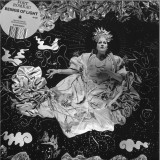
- Followup to 2015's Insides. - RIYL: Jacques Greene, Leon Vynehall, DJ Seinfeld, Project Pablo - Features cover art by Salvador Dalí protégé Steven Arnold. - Silver halide (gray + black marble) vinyl limited to 1,500 copies worldwide - Vinyl is housed in a black dust sleeve inserted in to a matte varnish jacket with metallic silver spot color // After a run of critically-acclaimed singles and EPs, British producer Michael Greene, aka Fort Romeau, returns to the full-length format with Beings of Light, the long-awaited follow-up to 2015's Insides and his second LP on Ghostly International. While a prolific DJ who orients many of his productions for the dancefloor, Greene still sees the album as the ultimate statement of intent, "a space to stretch out, to speak in full paragraphs rather than stunted sentences." He has explored several stylistic fragments in recent years (including the summer 2018 anthem "Pablo," hailed a Best New Track by Pitchfork), but when faced with the extended pause to the dance community in 2020, Greene felt compelled to focus on a larger body of work. Embracing a back-to-basics mentality, he amassed over a dozen hours of sounds, asking himself throughout the sessions: "Does the music move you? Is it honest?" He came out the other end with Beings of Light, an expressive collection traversing rainy day ambient, moonlit disco, and dream-like techno in pursuit of the power found within our subconscious. Album opener "Untitled IV" ushers in a sprinting tempo in its exploration of the human voice, a recurring device in the Fort Romeau project. Greene uses it as a compositional layer, disembodied with its context often opaque or reduced to a single phrase. Here the voice is scattered in percussive twitches, colliding with a kick drum to induce a near state of hypnosis as horns sound off in the distance. Propulsive standout "Spotlights'' is Greene's ode to the romanticised New York City that lives in our hearts, nocturnal and carefree. A vocal snippet repeats the title with a breezy poise, reminiscent of classic house cuts. "Ramona'' honors the beloved Robert Johnson club in Offenbach, Germany. Hazy, spacious, and sustained, Greene designed the beat with their system in mind, "also with a strong nod to the more modern lineage of exceptional minimal house music from Frankfurt," he says. Two ambient pieces surround the track, "(In The) Rain" sets the scene and "Porta Coeli" (a Latin phrase which loosely translates to "heaven's gate") soundtracks the comedown. The album's closer, the title track, is an arc constructed with atmospheric textures, euphoric swings of percussion, and a well-placed piano refrain, "Beings of Light" is adaptive; one could imagine it reverberating from a club, scoring the emotional apex of a film, or radiating through the realm of dreams.
- A1: Tyrell (2021 Remaster) 03 42
- A2: Take The Bus (2021 Remaster) 05 14
- A3: Rollen Rink (2021 Remaster) 06 09
- A4: Close, But Not Quien (2021 Remaster) 06 01
- A5: The Official Gm Ski-Wm Theme (2021 Remaster) 01 07
- B1: Temko (2021 Remaster) 05 20
- B2: Boom (2021 Remaster) 06 33
- B3: Madshoes (2021 Remaster) 05 38
- B4: Obvious (2021 Remaster) 03 36
- C1: No Ketting (2021 Remaster) 05 30
- C2: Blob Return (2021 Remaster) 02 12
- C3: Bonden (2021 Remaster) 04 54
- C4: Mimi (2021 Remaster) 01 41
- C5: 11 25 (2021 Remaster) 04:40
- D1: Die Mondlandung (2021 Remaster) 11 00
First time vinyl issue of this 1997 Mego classic. General Magic, the duo of Ramon Bauer and Andi Pieper, who, alongside Pita, first pioneered the classic Mego sound on the Fridge Trax 12” in 1995. The following year proved to be formulative when Mego released Frantz alongside a slew of game changing releases from Farmers Manuel, Pita and Fennesz.
Originally released as MEGO 010 Frantz presented a thrilling digression from what was in vogue in music at the time. This was the advent of portable computing and the Vienna based label was at the forefront of harnessing the potential of audio within this new technology.
At once smart and playful these releases reconfigured once disparate genres such as industrial, techno, glitch and the avant garde, folding them into a bright, audacious and euphoric new system of sound. The music on Frantz (named after the Austrian skier, Franz Klammer) still pushes the boundaries of acceptable audio constructions with it’s startling fried electricity and twisted sensibility. The sense of joy in the audio discovery is palatable as techno laced explorations unfold a variety of unexpected and unprecedented sonic manoeuvres.
Tyrell launches proceedings as schizophrenic stuttering handclaps simultaneously slice into pieces as it propels forward. The bending of the brain is on display with the likes of ‘Obvious’ and ‘Close, But Not Quien’. Temko skewers digital debris in which a ghost melody comes to the fore. Brazen rhythms mobilize the tracks ‘No Ketting’ and ‘Bonden’ whilst the Official GM Ski-WM Theme is a short stab of priceless pop wizardry skittering about a strange exhilarating melody in homage to the finest of winter activities.
This reissue also includes ‘Die Mondlandung’ which was released as a 12” in 1995 (MEGO 002), and has never been released anywhere, physical or digital, since. This track is based on the live German TV coverage of the moon landing. An apt theme for the abundance of exploration contained within this classic release.
--
About Frantz ... and Peter (by Ramon Bauer & Andi Pieper, November 2021):
Listening to the test pressings of the remastered Frantz album for the first time on vinyl, 25 years after the original release on the then still young Mego label in 1997, felt like uncovering an ancient artefact. In those exciting days during the mid-1990s, together with the late Peter Rehberg, we founded a label called Mego to further explore the wonders of electronic music. And that is what we did for the next 10 years until everything became too much with the label in somewhat rough waters. So we dropped out of music business and pursued different things. It was Peter who continued producing and releasing music with the restarted label, now called Editions Mego. Until his unexpected death in July 2021, he developed Editions Mego into the grown-up and much acclaimed outfit for which it is known today. We will forever miss Peter’s inspiring personality and his uncompromising creativity. His legacy will live on in his music and in the vast and rich Mego and eMego catalogues. We are humbled and proud to have played a role in those formative years of the label.
Peter approached us in October 2020 with the idea to do a vinyl reissue of Frantz, just in time for the 25 year anniversary of its release. That came as a complete surprise for us, General Magic had not released any music or performed live for over 15 years. Anyway, we were delighted with the prospect of having that General Magic "classic" remastered (by the exceptional Russell Haswell) and released for the first time on vinyl on Editions Mego.
Frantz is a collection of tracks that we produced in 1995 and 1996 right after recording “Fridge Trax” (with Peter) and “Die Mondlandung” (which comes as a bonus track on this reissue). At that time, we started to migrate our analogue gear to 64 MB RAM computers and used almost every other digital thing that yielded a sound by any means. We even deliberately crashed our then so-called "Powerbooks" and scratched self-produced CD-Rs until they produced previously unheard sounds. Real time audio processing with computers was barely a thing back then (before SuperCollider was released), but cheerful massaging of sound files yielded interesting results and the future looked bright. Listening to Frantz today, with decades of distance, there are some parts that might appear dated by modern standards, but the energy and the general magic of that period is well captured.
All Frantz tracks were produced in Andi's studio in Berlin and at Mego Vienna. The Mego studio/office was a vivid place located in an old factory on the outskirts of Vienna. We shared the place with Tina Frank, who created most of the early Mego covers and videos. Other artists, musicians and friends were hanging out there almost every day. Many ideas on Frantz are a product of that particular environment. “Mimi”, for example, is based on a field recording in the backyard of the factory, where we also shot the video for “Tyrell”. “11.25” contains sounds from the Prague train station we regularly passed through on the night train travelling between Vienna and Berlin. Other sounds were sourced from the early internet and mangled on the computer, carefully preserving those early audio codec artefacts. While working on the Frantz tracks at the Mego Vienna studio, Peter was usually around, as he was literally working and living there. And so, of course, he also made an impact on that album: It might not be widely known but Peter even appeared on Frantz contributing his voice to the choir on “The Official Ski WM Theme”.
Let there be Frantz!
AD 93 presents the new album from Polish composer Wojciech Rusin. Syphon is the second instalment of an ‘alchemical’ trilogy which started with The Funnel on Akashic records. The record consists of speculative medieval and renaissance music, imagined composed in the future, where it is reconstructed from the ashes of the past, via incomplete fragments.
"In a future where the old semantic systems don't apply anymore, what we are left with is some kind of delirium."
The album features 3D printed instruments, multilayered bagpipe chanters, double recorders and other hybrids. With additional voices of soprano Eden Girma and Emmy Broughton.
Artwork by Wojciech Rusin and Nicola Tirabasso. Mastered by Rupert Clervaux.
Having produced the Emskee – Wall To Wall 12” released early 2021, AE boss Mr Fantastic is back with another slab of essential Hip Hop made without pretence or adhering to modern trends – in others words, how it used to be. Featuring Teekay of Dragon Fli Empire, hailing from Calgary, Canada, ‘Breakdown’ is a stand-alone single with no plans as being part of any album release right now and comes with the Instrumental version on the flip. Pressed on black vinyl and supplied in full colour card sleeve, as is the standard high-quality packaging from AE Productions.
Although only being acquainted via the internet, Mr Fantastic and Teekay have mutual admiration for each other’s work which lead to this collaboration. This funky 45 features crisp drums and disco funk samples that have been chopped into that good old Hip Hop. The beat has a reasonably sparse stabbing feel with subtle wah-wah guitar between the stabs which bounces along not just at a perfect tempo for DJ’s but also sonically perfect for a big sound system, hence this track being picked for a single release and packs that punch that sounds best played loud. No moody introspective thing here, this is crowd rocking Hip Hop.
Teekay’s rhymes flow over the beat like it is 2nd nature to him because, well, it is 2nd nature to him, and is further evidence of why his group Dragon Fli Empire alongside DJ Cosm, have been able to maintain a steady string of superb releases going all the way back to 2002 and have toured Canada, USA and Europe. The chorus features Mr Fantastic’s turntable skills backing up Teekay’s vocal giving a nicely conceived and executed song structure with a little help from 2 of Soul and Funk’s legends.
The artwork for this one was hand painted by Bristol graffiti heavyweight Turroe who favoured a nod to comic book covers for the theme which was then scanned and arranged into the sleeve format with courtesy of AE artwork regular Nick Pointon of Fine Print.
As the 21st century was born, so Kreator underwent what was nothing less than a seismic creative rebirth. By this time, the iconic German band had released nine studio albums in the 1980s and '90s, which had established them as one of the most important metal names of these decades.In the first period, they had helped to shape and pioneer the thrash scene through such releases as 'Pleasure To Kill' (1986), 'Terrible Certainty' ('87) and 'Extreme Aggression' ('89). During the following decade, the band had opened up exciting horizons of experimentation on albums like 'Coma Of Souls' (1990), 'Renewal' ('92) and 'Endorama' ('99).
Now, though, it was time to move into a fresh era, as vocalist/guitarist Mille Petrozza explains.
“During the 1990s, we were definitely experimenting with what the band were doing. But (drummer) Ventor and I decided that for this album – our first of the new millennium – we wanted to go back to the sort of sound that we had at the start of Kreator. In other words, to get back to the reason why we began the band in the first place.”
There was also new guitarist introduced, as Sami Yli-Sirniö (who had made his reputation with Finnish band Waltari) took over from Tommy Vetterli. The latter (also known as Tommy T. Baron) had joined in 1996 and played on the 'Oucast' (1997) and 'Endorama' albums.
The producer for this album was Andy Sneap, who was now making a name for himself as one of the pre-eminent masters of this art in the modern metal world.“I had known and liked Andy since the days he had been the guitarist in Sabbat, as they were signed to Noise Records as Kreator were on that label. He was our first choice to work on this new project. I liked what he'd done for Testament on their album 'The Gathering' (released in 1999). He had given them a sound they'd never had before, and that really was what we were after. It was natural and organic, and also very modern. I remember phoning him at his Backstage Studios in England (Ripley in Derbyshire). And Warrel Dane, the vocalist in Nevermore, answered. Andy was producing their new album at the time ('Dead Heart In A Dead World', 2000). And when I heard this, again I was very impressed. So, I was delighted when he agreed to produce the new Kreator album.”
The album title came from something Petrozza had read. “In a book I came across a comment that John F. Kennedy said (in 1962). This was: "Those who make peaceful revolution impossible will make violent revolution inevitable”. I thought 'Violent Revolution' would make a good title for an album. So, I kept it in my mind for this record. I think 'Violent Revolution' is a title that makes a real impact.”
One interesting aspect of the track listing was that the 52 second instrumental 'The Patriarch' actually came after the opening song 'Reconquering The Throne'. Fans might have been expected that it would have opened the album. But for Petrozza, there was a logical reason for this not to happen. “We really wanted to lead off with a thrashing track, to show everyone what we were now doing musically. After 'Endorama', it was important that everyone should recognise this was a new era for Kreator.”
'Violent Revolution' is without question an excellent album. While in some ways it does hark back to the glories of the band's earlier days, nonetheless it does not sound at all nostalgic. The performances and production values are very much part of the contemporary era, and the strength of the compositions themselves are of the highest values. Rising to the challenge offered by a new generation of ambitious metal bands, Kreator proved they were far from being a spent force. Unlike so many of their peers, here was a band who still had so much creativity to offer, and were also clearly excited themselves by what they were doing. And when you hear the band themselves enjoying the entire process, then you know this is a bona fide revitalisation.