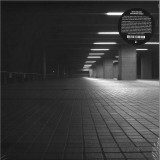
Parallel Traces of the Jewel Voice by dj sniff is a project that takes inspiration from historical narratives and personal memories constructed around The Jewel Voice Broadcast (Gyokuon Hoso) that took place on 15th August 1945. Contrary to common belief, Emperor Hirohito did not speak live on air to announce the surrender of Japan on this day. Instead, two lathe-cut discs with his recorded voice were skilfully mixed and played by NHK engineer Shizuto Haruna. Haruna’s proto-DJ/turntablist performance was heard not only in Japan but also throughout the colonized territories in Asia, marking the end of World War II and Japanese rule.
Interested in these aspects which often have been overlooked within the Japanese narratives of this historical event, dj sniff conducted research in both Taiwan and Japan. Over the course of 3 years he collected various materials that include; interviews and field recordings, audio samples extracted from phonograph discs and recordings sessions with improvising musicians, and a re-reading of the Imperial Rescript on Surrender in Chinese. These were used to compose two compositions that are paired differently depending on their distribution format.
The vinyl release is a multi-sided disc with two parallel grooves cut on one side, which in effect plays a different composition depending on where the stylus is cued. The other side has no audio but features two silkscreened lines that refer to how Haruna played the original lathe-cut discs. For the digital release, each composition is independently assigned to the left and right channel and is heard simultaneously.
Additionally, an extensive text written by dj sniff accompanies this release. Sniff uncovers technical details of the recording and broadcasting of the emperor’s voice that took place over 75 years ago. He also reflects on his encounters with the elderly community in Taiwan who spoke fluent Japanese and shared their personal stories after listening together to records from their childhood.
DJ Sniff – Biography
dj sniff (Takuro Mizuta Lippit) is a musician, curator, and educator. His work builds upon a distinct practice that combines DJing, instrument design, and free improvisation. His collaborations include Evan Parker, Otomo Yoshihide, Paul Hubweber, Tarek Atoui, Senyawa, and Ken Ueno.
He was the Artistic Director of STEIM in Amsterdam between 2007 to 2012 and a Visiting Assistant Professor at the School of Creative Media, City University Hong Kong between 2012 to 2017. He is now based in Tokyo where he is the Co-Director of AMF (Asian Meeting Festival) and teaches at Kyoto Seika University.
Buscar:other form
- A1: King L Man - Dream House (Channel Alegria Edit)
- A2: Tupperwear - Aguataca
- A3: Usted - Arde, Loro Parque
- A4: Lagoss - La Gorvorana
- A5: Postman - Violet Flame
- B1: Lagoss - Las Galanas
- B2: King L Man - Voltage
- B3: Postman - End Of The Dark
- B4: Tupperwear - Montaña Blanca
- B5: Usted - Salió De La Nevera. (Featuring Okydoky)
Ltd to 100 copies
Yearly compilation album RADAR by KEROXEN, introducing the second volume in the series of themed based albums showcasing the talents and misfortunes of carefully selected musicians/bands based in the Canary Islands.
Where Radar Vol.1 (KXN012, 2020) focused its sights on rock oriented music, Vol.2 looks at the more experimental, free flowing side of electronic and sample based music, also Made in Tenerife this last year (2021).
The format stays the same as Vol.1: 4 different artists are invited to contribute 2 tracks, no rules other than do their own thing. The result being an extraordinary amalgamation of various genres and styles of the electronic music cannon including: smoky dub beats by King L. Man, tropical casiotone divagations by Usted, inverted & polyrhythmic workouts from the Tupperwear duo, ultra precise dub-tech-2step edits by Postman and organic psychedelics by freak trio Lagoss.
Yet another crucial document from a region you usually do not associate with forward thinking music, more than a simple compilation, RADAR 2 unveils the thin veil of new and uncompromising music being produced in and around the orbit of the Keroxen Collective.
It seems the Atlantic isolation works as a catalyser here, judging from the copious amount of different and challenging music we’ve been seeing from this corner of the world over the last few years. We invite you to dive with us, in the wild remote tropical waters of RADAR vol.2.
Back in stock
Afro-Danish saxophonist John Tchicai spent his youth playing alongside the greats- recording and performing in NYC with Albert Ayler, John Coltrane, Archie Shepp and Don Cherry amongst many others.
Following a meeting at the Coimbra Jazz festival in 2004, he agreed to record with John Coxon and Ashley Wales. The beautiful resulting album sold out almost immediately on its release in 2005 and is available here for the first time on vinyl.
Eloquently balanced between Eric Dolphy and Lee Konitz, his wise and lyrical......' alto saxophone and bass clarinet playing make this .....one of his finest recordings....' (Richard Williams in The Guardian)
Essential.'
Lieve is the long-awaited second LP by British electronic music producer Holy Other, the first new music since 2012. Emerging from an extended stay at Bidston Observatory on the Wirral, Lieve was recorded throughout 2020 in the North West of England. Using the acoustics of the observatory — the cavernous basement and the geometrically-perfect wooden domes — Holy Other recorded and resampled material that would become the bedrock of Lieve.
A marker in the sand as his first output since 2012’s critically acclaimed Held, these recordings — including the voice of NYX’s Sian O’Gorman, violin from Simmy Singh and saxophone from Daniel Thorne — were cut, manipulated and pieced together to form Lieve.
“How do you break up with a place?”
Have you ever tried to leave your problems behind? No matter how hard you try to reshape yourself, your past remains. This is an album about L(i)eaving, coming to terms with the past, and trying to live in the present.
Much like his past work, Holy Other leaves the listener to draw their own semantic conclusions from the record. The lyrics are ambiguous — ghostly voices, whispers and stutters interwoven with his signature sound palette.
Still, the expressive mood from prior releases remains intact, even if these intimate textures and deft rhythms pick up more mature questions about false starts and failed escapes.
The title track single Lieve breaks almost a decade of silence, finding the language to articulate painful feelings, exhaling, and moving forward.
Iiro Rantala plays the piano with “emotional magnetism and musical intelligence.”
He has a “virtuosic prowess as an improviser capable of enormous idiomatic and emotional range.” This praise from the American magazine Downbeat’s review of the Finnish pianist’s third studio-recorded solo album for ACT, ‘My Finnish Calendar’ (2019), sums up the astonishing variety which people who know his playing well might almost start to take for granted.
The citation for the 2016 JTI Jazz Prize in Trier also does well to define the way audiences take him to their heart: “Rantala can sweep listeners off their feet, he can be clown and magician, charmer and virtuoso, maverick and humorist.”
This is the emotional and stylistic versatility which Ranta-la brings to the live solo recital. It is a form he is drawn to strongly; there can be very few pianists who have explored the art of solo playing quite as intensively and consistently as Rantala. A typical recital will contain, among other things, pieces from his previous solo albums for ACT - ‘Lost Heroes’, ‘My Working Class Hero’ and ‘My Finnish Calendar’. As he explains, “I like the form of the solo recital because of the freedom and responsibility I have. Freedom comes from the fact of being alone on stage and responsibility from the fact that I can’t really rely on anything, except myself.”
‘Potsdam’, recorded live in concert at Nikolaisaal in Potsdam on 27 November 2021 is, however, the first time that one of Rantala’s many live solo recitals has been released as an album by ACT. It is a very fine exposition indeed of the contrast and the continuity of which he is capable, not just in the shape of the recital as a whole, but also within individual tunes. After a beautiful and welcoming ‘Twentytwentyone’, Rantala launches into ‘Time for Rag’, which sounds like the accompaniment for a madcap Buster Keaton film. The central section of John Lennon’s ‘Woman’ is quite clearly inspired by the driving R&B style of Richard Tee, a pianist whom Rantala particularly admires, but this leads masterfully into an ending which is at first wistful and calm, but then troubled by the Finn leaning into the piano and creating a dark and discomforting mood by plucking a low string.
There is a beautiful inevitability about the final two tunes on the album. The exuberance and brashness which inflect Bernstein’s ‘Candide’ overture right from the first fanfare are irresistible. Rantala follows this, by way of complete contrast, with ‘Somewhere’ from ‘West Side Story’. Potsdam was recorded the day after the passing of Stephen Sondheim. Rantala explains how deeply this affected
him: “Sondheim was magical. As a writer and composer. ‘West Side Story’ is one of the greatest achievements of mankind. And he was so young, when he wrote all those lines: ‘Say it loud and there’s music playing. Say it soft and it’s almost like praying, Maria’.
LTD Edition!
Tindersticks neues Album "PAST IMPERFECT The Best of Tindersticks '92-'21'" erscheint am 25. März 2022 über City Slang. Die Band feiert ihr dreißigjähriges Bestehen und präsentiert auf dem Album gesammelte Werke aus ihrer umfassenden Geschichte. Außerdem wird die Band in diesem Frühjahr auf eine ausgedehnte Europatournee gehen, mit unter anderem Terminen in Berlin, München und Hamburg.
"Both Sides of the Blade", ist der einzige bisher unveröffentlichte Song auf "Past Imperfect" und ist ein zärtliches Stück, das für Claire Denis' kommenden Film "Avec amour et acharnament" mit Juliette Binoche in der Hauptrolle geschrieben wurde und am 12. Februar 2022 bei den Berliner Filmfestspielen Premiere feiert.
Als Meister des intimen und ausladenden Stimmungsgesangs haben die Tindersticks über drei Jahrzehnte hinweg ihre eigenen Wege beschritten und haben bei ihren düsteren und weitreichenden Erkundungen des Herzens stets auf Trends verzichtet. "PAST IMPERFECT The Best of Tindersticks '92-'21" zeichnet die 30-jährige Reise der Band in einer unvergleichlichen Chronologie mit 20 Titeln nach. “Each step a story", wie Tindersticks-Frontmann Stuart Staples bei "How He Entered" sagt. Und jeder Song eine neue Wendung in dieser Geschichte.
Format:
- Limitierte 140G 4LP Box inkl. Livealbum (2LP) - LP1 & 2 Best Of im transparenten orangenen Vinyl, das Livealbum 2LP erscheint im schwarzen Vinyl und ist erstmalig auf Vinyl erhältlich! Inklusive Downloadkarte
TRACKLISTING LTD Box Set:
PAST IMPERFECT the best of tindersticks 92 - 21:
- A1: End Transmission (Album Version)
- A2: Too Little Too Late
- A3: Ashes
- A4: Mother
- B1: White Cells
- B2: Avissos
- B3: Womb
- C1: Neon Dream
- C2: All Else Fails
- C3: Time To Die
- D1: End Transmission (John Beltran's Sweet Sunny Mix)
- D2: White Cells (Yui Onodera Remix)
- D3: Neon Dream (Elwd Vinyl Edit)
- D4: Time To Die (Heathered Pearls Remix)
Stelios Vassiloudis enters an inspiring new phase as he unveils his sophomore LP All Else Fails available March 25th via Balance Music.
Hailing from Athens, Greece, Stelios Vassiloudis poses a triple threat as a composer, producer and DJ. Having been active in the electronic music scene since the early 2000s he has cultivated his own brand of distinctive ambience reflective of his rich and diverse musical background; transcending the dance floor via an emotional narrative of complex soundscapes, intricate harmonies and hypnotic rhythms. Over the past decade Stelios has released music under various other monikers, yet this new endeavour is his most diligent to date - allowing him to rediscover his love for making music during the process, "I'm more hopeful, inspired and determined than ever before."
Ten years on from the release of his debut LP, Stelios' detail-oriented offerings remain incomprehensibly thought-provoking and thorough with this new album. Noticeably dissimilar to any previous efforts, Stelios consciously took a step back from the pressure of maintaining a steadily flowing supply of functional, club-oriented music and as the world stood still amidst the pandemic, he embraced the opportunity to reconnect and express himself with a broader musical vocabulary. He admits that: "with the world around us seemingly on the fast track to Armageddon, the music ended up being very much reflective of the sadness and helplessness I felt."
All Else Fails is a stimulating odyssey to anyone listening. Harmonically dense, arcadian glistens seep throughout the ten tracks, each complementary to the next. Bask in the wistful iridescence and you won't be disappointed.
Stelios carved his way into electronic music by traversing around the globe as a DJ and performer - performing at intimate underground bars in Beirut, festivals in Miami, after-hours in Tokyo, beaches in Goa and mega clubs in Argentina. Having developed a formidable discography on esteemed labels such as Bedrock, Poker Flat, Ovum, Constant Sound and Darkroom Dubs, among others, Stelios' studio prowess and coveted productions cemented his reputation as a versatile and acclaimed artist. His intense passion and drive for innovation in music serves as the fuel to keep him inspired and relevant, qualities that no doubt ensure his reputation as an artist of the highest calibre, will endure.
For Susanna, nothing happens in a vacuum. Every creative act responds to what's come before. And by exploring this dialogue, we can learn new things about ourselves and the world. This idea has inspired the Norwegian artist throughout her near two1decade career. It's behind her unforgettable covers of classic songs and her interpretations of the paintings of Hieronymous Bosch. And it found its purest expression on 2020's Baudelaire & Piano, a stripped back song cycle setting texts from the 19th century French poet's The Flowers of Evil. In Elevation, its followup, Susanna's engagement with Baudelaire's work blossoms into a collaborative enterprise, combining tape, spoken word and song. The result is a unique musical conversation spanning centuries and disciplines; a "time travelling" project, as Susanna puts it, that moves between creative dimensions. She brings collaborators back into the process, nurturing connections made over a series of Baudelaire & Piano live shows presented in 2020 and 2021. Composer1improviser Delphine Dora offers teasing renditions of the original French texts, layering spoken recitation and otherworldly singing in a set of atmospheric vignettes. And tape recorder soundscapes from Stina Stjern-familiar from Susanna's Hieronymous Bosch project Garden of Earthly Delights (2019)-frame the album with hiss, hum and soft fingers of melody, like mist settling on a landscape. These contributions deepen the album's mystery and its evocative power. The result is an engrossing interleaving of sounds and registers; and, as Susanna describes it, "an intuitive and collective ceremony of the ethereal and mystical in life." Elevation features work by American occultist artist Cameron (1922-1995), an adherent of Aleister Crowley's Thelema movement. Her illustrations "Witch Woman", "Pan" and "Danse" adorn the release, which will be available on cassette as well as in the usual digital, CD and vinyl formats.Oslo-based artist Susanna has released music as Susanna and the Magical Orchestra and 'just' Susanna since 2004, through labels like Rune Grammofon, ECM Records and her own outlet SusannaSonata. She has collaborated with artists like Jenny Hval, Bonnie 'Prince' Billy and John Paul Jones, highly active with different projects, songwriting/composing, and making personal interpretations of other people's songs.
Formed in Oakland in the early 1970s, the Sons and Daughters of Lite recorded Let The Sun Shine In, their only LP, which has now achieved holy grail status among collectors. Let The Sun Shine In is a spiritual recording filled with soul, funk, jazz, and African percussion. The musical collective described themselves as a mix of African rhythms, Latin flavors, and Far Eastern textures. This album was virtually unknown to DJs and collectors until Michael McFadin's discovery in the late 80s. He then scoured the bay area and bought up multiple copies for his record store The Groove Merchant on Haight Street in San Francisco, many of which were bought from flea markets and the dollar bins of other shops. The outrageously funky title track became a jazz dance classic, courtesy of heavy radio and club play by top UK DJ and tastemaker Gilles Peterson.
Rare Nigerian Afrobeat-Afropop Album.
First vinyl reissue since 1985.
Solo Album by Ofege Frontman Melvin Ukachi.
First Ever Release Outside Of The African Continent.
180g BLACK vinyl limited to 500 copies (w/obi strip). Non-Returnable.
Melvin Ukachi needs little introduction, the Lagos (Nigeria) based vocalist and bandleader is a living legend. Melvin is known for his fantastic solo albums, his vocals for the afrobeat star-groups M.F.B. and Ozzobia…but his biggest legacy is without a doubt him being the singer and bandleader of Ofege.
Melvin formed Ofege in the early 1970s (when he and the other band members were all still a bunch of teenagers). Due to their vibrant combo of sweet harmonies, hooks & fuzz, Ofege would become one of the most legendary Nigerian groups of all time, with expressive sales and national stardom to follow. At the turn of the century (and because of tracks appearing on various compilations) Ofege would receive international acknowledgment for being the first of their kind and THE ultimate West-African psychedelic funk band!
Melvin Ukachi recorded four milestone albums with Ofege: ‘Try and Love’ (1973) ‘The Last of The Origins’ (1976), ‘Higher Plane Breeze’ (1977) and ‘How Do You Feel’ (1978). When the Ofege story came to an end, Melvin recorded two astonishing solo albums: ‘Evolution-Bring Back The Ofege Beat’ (1981) and ‘I am Ok’ (1985). Both of his solo recordings have now become much sought-after holy grails for collectors and fans alike.
On the album we are presenting you today (I AM OK from 1985) the listener is treated to Ofege’s trademark sound…but we’re also shown a perfect glimpse of the late 70’s afrobeat works combining soul, jazzy rhythms, William Onyeabor style laid back electro funk synths & fluid boogie-danceability. The female backing vocals and handclaps by Princess Bunmi Olajubu (Femi Kuti) also deserve a special mention because they add so much depth and grooves to this amazing record.
Expect some serious local ‘all-star’ guest musicians on this record as well. Next to him playing the synth, Jake Sollo also produced this gem of an album! To top things off the tracks were recorded and mixed at the legendary RAS Studio in Akwa, Nigeria…all slickly engineered by John Malife (Black Children Sledge Funk Band, T-Fire, BLO).
‘I AM OK’ was released on CRS Nigeria in 1985 and is a total Afro-pop-funk classic that begs for a special place in your record collection. It’s tight, funky and Melvin’s soulful vocals are to die for. This record is a monster!
Tracklist:
I'm Ok , I Don't Mind , Come and Dance , We are Fine , Keep on Loving Him , Wanted , I Wanna Hide You
Rare Nigerian Afrobeat-Funk from 1976.
First vinyl reissue since 1976.
First Ever Release Outside Of The African Continent.
Comes With Insert/Liner Notes.
180g BLACK vinyl limited to 500 copies (w/obi strip) - Non-Returnable.
THE FRIIMEN MUZIK COMPANY (also known as FRIIMEN) was formed after the Biafran war in 1973-1974 in the town of ABA in the eastern part of Nigeria. Aba was the Number 1 Music Hub in the entire Eastern Region of Nigeria. While bands and artists like ‘Ofege’ and ‘Fela Kuti’ ruled the LAGOS scene, bands like ‘Friimen’ and ‘The Apostles’ were ruling the ABA scene.
Before forming the band, most of its members were already working together as freelance session musicians backing up solo artists on several recordings and concerts (or were playing in military bands that gradually became civilian bands because the war had just ended). FRIIMEN members’ credits were numerous and they played, wrote or performed on recordings from well-known acts like The Funkees, The Jets, The Apostles…and countless others.
When they started concentrating on writing their own songs, the group instantly took off and became an overnight hit that resulted in them doing multiple successful nationwide tours. FRIIMEN would go on to record three albums: Free Man (1976), We Can Get It On (1978) and Merry Man (1979). All three albums were released on the Aba based label Anodisc Records (THE key label to be on if you wanted your music heard and out there), Anodisc also released hit records by ‘Sweet Unit’ and ‘Voice Of The Cross’ but The Friimen Muzik Company was the label’s signature band.
The Friimen Muzik Company was so solid that every new group or artist wanted the Friimen to back them up in the recording studio. As a result, Anodisc Records received tons of demo cassettes from aspiring artists…the label would then first consult the Friimen members to see if these new acts were worthy of giving a chance to record and release an album for Anodisc. Over the course of the years the band went through several line-up changes…but in 1980 the band finally broke up and their story came to an end.
The album we are presenting you today (Free Man from 1976) was recorded at the famous Decca Studios in Lagos and comes swinging right out of the gate with a set of no less than EIGHT monster tunes. Expect nothing less than crazy afrobeat and over the top melodic funk influenced by a wide array of artists (both local and international). Mesmerizing solos, captivating grooves, impeccable sequences that turned many heads…everything you need to get a dancehall into a complete uproar. The musicians’ skills are just plain incredible! FREE MAN is a quintessential record that every serious collector or fan needs to have in his/her collection.
This reissue also comes with an insert featuring pictures of the band and extensive liner notes from band-member Arthur Freds.
Tracklist:
Release Yourself , Free Man , My Dreams , Funky Workshop , Word of the Lord , We'll Get Our Share , You Can't Change Anything , Gimme Some Time
Ruth B is releasing her sophomore album "Moments In Between" via Downtown Records. With the breakout success of her debut single “Lost Boy,” Ruth B. emerged as an immediately captivating artist who drifts between moody realism and a dreamworld of her own making. An occasional poet who created her own storybooks as a child, the Canadian- Ethiopian singer/songwriter/pianist infuses all her songs with a raw emotional honesty, even as she lets her imagination wander into fantastically charmed terrain. On her sophomore album Moments In Between, Ruth pushes that dynamic to a new level of boldness and sophistication, embracing her most beautifully strange impulses while delivering her most impactful work to date. As the daughter of immigrants from Ethiopia, Ruth grew up on music from her parents’ native country and later discovered the artists who would become formative influences on her songwriting, such as Stevie Wonder and Lauryn Hill. After taking up piano at the age of eight and singing her entire life, Ruth began writing songs in her late teens and soon came up with “Lost Boy.” Initially posted on Vine in 2015, the Peter Pan-inspired piano ballad quickly went viral, with listeners undeniably drawn to Ruth’s heart-on-sleeve storytelling. By the end of 2015, she’d released her gold-certified debut EP The Intro, which led to such triumphs as winning Breakthrough Artist of the Year at the 2017 Juno Awards. Made with producers like Joel Little (Lorde, Taylor Swift) and Mike Elizondo (Fiona Apple, Regina Spektor), her gold-certified full-length debut Safe Haven arrived in 2017 and earned her three Juno nominations, including Album of the Year and Artist of the Year. Executive-produced by Patrick Wimberly (Solange, Blood Orange, Ellie Goulding), Moments In Between finds Ruth also working with producers like Ido Zmishlany (Demi Lovato, Shawn Mendes), Justin Raisen (Angel Olsen, Santigold), Doug Schadt (Maggie Rogers, Ashe), and D’Mile (a five-time Grammy Award-winner known for his work with Khalid and Ty Dolla $ign). In a departure from the minimalist alt-pop of Safe Haven, the album unfolds in a more elaborate and kaleidoscopic sound, yet never overshadows the understated power of Ruth’s vocals or the pure vulnerability of her songwriting. “For me writing songs has always been therapeutic, and I hope that hearing my songs helps other people in the same way,” she says. “Whether they’re feeling lonely or heartbroken or happy, I want them to know that someone else understands what they’re going through.”
- A1: Deux Ans Plus Tôt (02:24)
- A2: Trilogie I (Tâm) (04:04)
- A3: Trilogie Ii (Belles Larmes) (01:33)
- A4: Trilogie Iii (Phoenix Rouge) (02:24)
- A5: Les Rivières Vont À La Mère (04:32)
- A6: Pour Marthe (04:08)
- B1: Mon Âme Vers La Tienne (02:19)
- B2: Sur L’embarcadère / Ðêm Tàn Be^´n Ngu?? (04:14)
- B3: Maman (02:31)
- B4: Le Rêve Noir (02:11)
- B5: Je Revive (01:57)
- B6: Regarde Maintenant (03:43)
- B7: La Floraison Du Bambou (02:52)
We finally made it: BEWITH100LP! And what better way for a re-issue label to celebrate such a landmark catalogue number than to give it to a record of new music. We couldn’t resist when the artist is Official Be With Family Member Kenny Dickenson and when the music is his lovely, lovely score to French-Vietnamese artist Mai Hua's 2020 documentary film “Les Rivières”. If you enjoy the more minimal, intimate piano of the likes of Nils Frahm or John Carroll Kirby’s solo work, you’re certain to fall for this beautiful album.
Taking six years to make, Mai’s film explores what happened when she brought her dying grandmother to France, pulling together four generations of women from the same family. Kenny’s score accompanies all the pretty things, sad things, dirty, beautiful, happy, broken and reborn moments of these women’s experiences.
The whole score is built around delicate, sparkling piano motifs. At times they’re joined by cello and complemented with ambient chords and other flourishes. It’s a very particular palette that Kenny and Mai established early on, as Kenny explains: “We had agreed on a particular sonic aesthetic early on in the process - to use specific and relatively minimal instrumentation, reflecting the intimacy of the picture. So piano and cello were quite prominent in instructing a sense of space and immediacy. Until I had to get the junkyard percussion out… ”
When it comes to describing the end results, Kenny’s happy to wear his influences on his sleeve:
“When the director and I sat down for the creative meetings early in the process, we watched ‘Wolf Children’, a Japanese animation film by Mamoru Hosoda. The amazing soundtrack by Masakatsu Takagi was a launching point for me and thereafter I leaned into more modern classical composers - Reich, Sakamoto, Glass as well as Jon Hassell’s Fourth World output. Richard Reed Parry’s ‘Music for Heart and Breath’ was a good early touchstone for me and Mark Hollis’ sparse, considered and deliberate approach was a constant presence. Also labels like Ghostly, ASIP and the ubiquitous Erased Tapes should probably get a nod here too…”
We’d even suggest there’s the occasional Yann Tiersen moment in there too.
Out of sheer necessity the collaboration between Kenny and Mai continued beyond this initial creative direction. With Kenny speaking neither French nor Vietnamese, Mai acted as translator, a process that naturally lead to discussing the film beyond just what was being said in the footage. Mai herself explains just how successful this relationship felt to her: “Music plays a very important role in all my work, particularly in Les Rivières. I cried every time Kenny sent me a new composition. I felt understood in a way that words cannot describe. It was absolutely magical and I am so happy if this music can make your soul vibrate too.”
Kenny composed much of the music in London, at the same time that Mai was shooting and editing. As the film took shape and the music also evolved, another challenge presented itself when Kenny relocated to Los Angeles part way through, resulting in Arnulf Lindners beautiful cello taking on new shapes- multi sampled, played and manipulated by Kenny into new compositions.
What Kenny has put together for the film score release is definitely a “soundtrack LP”, with the music arranged to work as a proper album in its own right that should be listened to from start to finish. Indeed the album also includes a new piece “Pour Marthe” that Kenny composed in memory of Mai’s grandmother who died after the film was finished.
Kenny’s personal highlight is also ours: “When I listen back to the album as a whole now, I never want part II of the Trilogy (Belles Larmes) to end. I have fond memories of recording it and I love how the dynamic of the piece gradually evolves from falling on the ‘1 and the 3’ to the ‘1 and the 2’. It’s so short and sweet, I keep wanting it to last for longer. But it’s kind of perfect as it is.”
Pretty much our sentiment for the album as a whole.
Running a record label means we often get asked advice about pressing a record. In this case the music was too good not to offer to release it ourselves. To Kenny, having the Les Rivières score on vinyl also feels like the final part of the project.
“It’s a beautiful thing to have it on vinyl. It’s quite an intimate soundtrack so there’s something really perfect about being able to listen to it on that format. When I was a kid, my Uncle Pat who used to work at Woolworths would visit and bring random records from their record department over to us. I can remember listening to “Theme From Exodus” by Ernest Gold. I had no idea what it was about but the imagery it conjured up when listening to that record was just mind blowing to me at that age. Soundtracks can have their own life on vinyl I think, and removed from their original context is this unique format for reinvention. So I’m excited that people who haven’t (and have for that matter) seen the film can have that experience.”
This might not be a re-issue, but the Les Rivières film score album has still been given the full Be With treatment. The vinyl has been mastered by Simon Francis (under Kenny’s ever-watchful eye/ear, of course), cut by Pete Norman and pressed at Record Industry. The sleeve follows the film’s poster and other promotional material, including Lucile Gomez’s almost magical illustration.
We’re under no illusions that many people reading this will have seen “Les Rivières”, but that doesn’t really matter when it comes to listening to the score. Just on its own, Kenny’s music still captures the robustness and the delicacy of lives lived.
Some forty years into one of music’s most impactful, sometimes tense and yet curiously enduring partnerships, Tears For Fears have finally arrived together at The Tipping Point – the group’s ambitious, accomplished and surprising first new studio album in nearly two decades. Tears For Fears find themselves back in peak form at The Tipping Point, an inspired song cycle that speaks powerfully and artfully to our present tense here in 2021. This is an album that vividly recalls the depth and emotional force of the group’s earliest triumphs. Imagine a far more outward-looking take on TFF’s famously introspective 1983 debut album The Hurting set in an even more mad world, or 1985’s Songs From The Big Chair bravely confronting even bigger issues in our increasingly unruly world. Or even 1989’s The Seeds Of Love that sows a mix of love and other emotions. The Tipping Point is the bold, beautiful and powerful sound of Tears For Fears finding themselves together all over again. Available as a 1CD Mintpack, a 1CD deluxe digipak (with extra track), a Gatefold Balck 1LP.
Mattiel, the Atlanta based group made up of Mattiel Brown and Jonah Swilley, announce
the release of their third album, ‘Georgia Gothic’, on Heavenly Recordings. ‘Georgia
Gothic’, a magic third in Mattiel’s run of full-length albums, was shaped in the quiet
seclusion of a woodland cabin in the north of the Atlanta duo’s mother-state; “Some
faraway place that just Jonah and I could go where there would be no distractions,
nothing else going on, and we could turn everything off and only focus on writing songs,”
reflects Brown.
Where 2017’s self-titled debut and its 2019 follow-up Satis Factory were written with what
Swilley refers to as a “hands-off” approach - he arranging the music and Brown the lyrics
and vocals, the two working largely separately - the making of ‘Georgia Gothic’ was, for
the first time, a truly collaborative undertaking. “This was the first time we made a point to
just be together and work out ideas in the same room. That was the initial intention... it
was about learning what each other wanted to accomplish on a sonic level, and then just
trying different things out,” Swilley continues. “Everything happened backwards. Normally,
you’d have friends that make a band... with us, we started making music from the jump,
and then became homies.”
Cultivated by time spent together on the road touring the first two albums, it is this
newfound sense of intimacy between Mattiel’s members that enabled the writing of
‘Georgia Gothic’ not as two separate musicians, but rather as one creative entity. The
album remained within the four walls of Brown and Swilley’s private world for much of its
evolution - with recording taking place in a simple studio set up by the pair in the
borrowed room of a dialysis centre, Swilley in the producer’s seat - until, nearing
completion, it was transferred into the trusted hands of the Grammy award-winning John
Congleton (whose extensive list of credits includes artists as diverse as Angel Olsen, Earl
Sweatshirt, Erykah Badu and Sleater Kinney) for mixing.
Not only does the affinity between its creators translate into an electric synergy between
‘Georgia Gothic’s words and music - the brine-shock of Brown’s taut lyricism cut against
the bourbon-smoothness of Swilley’s instrumentation - but here too are the palpable
spoils of experimentation, each party trustful enough of the other to trial and error their
practices into new geometries. Swilley puts this wide palate, in part, down to the place
they call home. “I definitely feel like being from Georgia allows us to have a certain way of
approaching music.” Brown chimes in: “We haven’t really highlighted where we’re from in
the past two records, even though those were also written in Georgia. There’s so much
great art and great music that’s come from Georgia, from all different types of genres and
all over the state - but take R.E.M. and OutKast: there’s this weirdness that I can’t really
put my finger on.” Swilley concurs: “It’s the same with the B-52s, the Black Lips... it
doesn’t feel like L.A., it doesn’t feel like New York, it feels like another planet. We’re not
really in a ‘scene’ here in the same way. You have to make your own sound, create your
own identity.”
And it is precisely the forging of Mattiel’s distinct musical identity that ‘Georgia Gothic’
signals; its members guiding each other ever-homewards not just in a geographical or
sonic sense, but spiritually, too.
Initial LP pressing on Red Hot coloured 140g vinyl with digital download code. (Once this
format has sold out, a black 140g vinyl edition with digital download - HVNLP202 - will be
made available.)
2001’s »Anima« was the third album released by Sasu Ripatti under his Vladislav Delay moniker and marked a turning point in the stylistic development of the prolific producer. Clocking in at roughly 62 minutes, the single piece draws on dub aesthetics while working with Musique concrète-like methods through the liberal use of samples to create a dreamlike logic. Muffled voices, lush chords, subtle rhythms and indefinable sound events are not so much integrated into a composition with a predetermined outcome but rather engage with each other freely in a constant sonic flow, forming constellations in one moment before moving on to connect with other elements in the next one. »Anima« marked the first time Ripatti was using a DAW in his working process, creating a piece constantly in motion that subtly evolves over time. This vinyl reissue on the German Keplar label follows up on the 20th anniversary edition of 2000’s »Multila« and will be complemented by a ten-minute long version of the original piece, previously only available on the CD version released by the artist on his own Huume label in 2008.
After the release of his »Ele« and »Entain« albums in 1999 and 2000, respectively, Ripatti took the 1998 independent movie »Hurlyburly« as a conceptual starting point to experiment with different gear and production methods. »Until then I had worked with an old MSQ-700 MIDI sequencer and an Ensonic EPS16 sampler/sequencer that had one or two MB of sampling memory and mixed the music live on a Mackie, which was very limiting arrangement-wise,« says Ripatti. Loading a slightly shortened version of the film into his DAW however allowed him to play along to it with the DrumKAT MIDI controller, triggering and playing all the sounds that can be heard on »Anima« while also contributing synths, bass and other sounds during repeated playthroughs before mixing a total of six stereo tracks together. »This way, after I had edited out most of the few parts that had music in them, I was in the movie; almost like an extra character playing music,« explains Ripatti. »This was certainly the most organic way in which I have ever made music, and I have never again approached another record like this.«
While »Anima« sounded like an unusual Vladislav Delay record at the time of its release, it also prefigured many of the developments Ripatti would go through in the course of his long career. Combining visceral immediacy with a sense of abstraction, it is far more than a mere missing link in his discography but rather a conceptually and musically outstanding piece of work that remains as engaging as it was 21 years ago.
All tracks composed and recorded by Vladislav Delay.
Originally released on Mille Plateaux in 2001.
Remaster and cut by Kassian Troyer @ D&M.
Art direction and design by Marc Hohmann.
Text by Kristoffer Cornils.
Steve Vai has continually challenged notions of traditional guitar playing
and composition – and on more than one occasion even reimagined the
very instrument itself."I don't sit around and say, 'Okay, what can I do now
that pushes the boundaries?," Vai explains about his approach to the
guitar
"What I do say to myself is, 'Okay, Vai – what are you going to do now that's going
to interest you, that's going to fascinate you, and that's different than anything
you've done before?"The answer to that question comes in the form of Vai's
newest and 10th solo album, 'Inviolate', a nine-song opus that does indeed push
the boundaries of instrumental guitar music – this time out, Vai quite literally
invented not just a new guitar, but also a new guitar-playing technique. The Hydra,
the elaborate three- necked steampunk- inspired guitar that Steve holds on the
album cover, is actually played on the song 'Teeth of the Hydra'. On the other hand
(no pun intended), Steve recorded and played the song 'Knappsack' with just his
left hand, after his right arm was in a sling following shoulder surgery.
At the same time, 'Inviolate' presents his most focused, streamlined and perhaps
invigorating music in years. The album features a host of esteemed musicians,
including Billy Sheehan, Vinnie Colaiuta and Terry Bozzio.
Classic Rock - Album Review Classic Rock - Soundtrack To My Life feature
Fireworks – 2-page interview Fireworks - Album Review The Guitar Mag - 8-10
page Interview Guitar Techniques - Album Review GT332 9th Feb Guitar
Techniques - Q&A 9th Feb GT332. Guitar Interactive - Front cover & substantial
feature Guitarist - Front cover/Guest Editor/8-10 page feature Guitarist - Album
Review HRH - Album Review HRH - interview Powerplay - Interview Prog - My Prog
Hero feature on John Petrucci Rock Candy - 8-Page Interview Feb/Mar iss Total
Guitar - Interview
10th anniversary reissue of this rhythmically churning one-man-band monster of an album, recorded in a single inspired studio session & originally released in 2012 on Editions Mego.
From the original Editions Mego press release:
“For anyone who still associates Oren Ambarchi exclusively with the clipped, bass-heavy tones of solo electric guitar works such as Suspension, this rhythmically churning one-man-band monster of an album-length piece might seem to come out of nowhere. However, listeners who have followed the breadth of his work for the last few years (solo and in projects with collaborators from Jim O’Rourke to Stephen O’Malley and Keith Rowe to Keiji Haino) will have noted how Ambarchi has allowed increasingly clear traces of his enthusiasms as a music listener (for classic rock, minimal techno and 70’s fusion, among other areas) to surface in his performances and recordings, all the time filtering them through his signature long-form structures and psychoacoustic sonics.
Recorded in a single inspired studio session, Sagittarian Domain displaces Ambarchi’s trademark guitar sound from the centre of the mix, its presence felt only as an occasional ghostly reverberated shimmer. Endlessly pulsating guitar and bass lines sit alongside electronic percussion and thundering motorik drumming (familiar from his work with Keiji Haino) at the core of the piece, locking into a voodoo groove like Faust covering a 70’s cop show theme. The work is founded on hypnotic almost-repetition, the accents of the drum hits and interlocking bass and guitar lines shifting almost imperceptibly back and forwards over the beat as they undergo gradual transformations of timbre. Cut-up and phase-shifted strings enter around the half-way mark like an abstracted memory of the eastern-tinged fusion of the Mahavishnu Orchestra’s classic Visions of the Emerald Beyond, before returning for an extended, stark yet affecting come-down coda, equal parts Gavin Bryars and Purple Rain.
While Sagittarian Domain contains traces of a diversity of influences, it mines all of them to uncover something that is clearly an extension of Ambarchi’s own investigations up to this point, exhibiting the same care for micro-detail and surrender to the physicality of sound that are present in all of his work, extending them in new ways to repetition, pulse and rhythm”.
Pink Vinyl
"In the beginning there was Jack... And Jack had a groove." We know this old tale pretty well. But what do these words really mean? And does this meaning even exist nowadays?
Our fellow musician and sound researcher Stas Sharifullin, known as HMOT, presents his report Jack Studies in the form of a release on the Instrument, Gost Zvuk sublabel. Formally, it is a reissue of his single Prolegomena to Home Music Ontology, released in 2017 on Cyland. But these old tracks have been expanded, remastered by Rupert Clervaux and complemented by the two new ones. HMOT originally prepared the tracks on Jack Studies for release on Gost Zvuk, so these instrumentations are finally coming home after a long journey. Context is everything - and in the new environment, this music speaks even louder.
Originally, house music was associated with HIV/AIDS activism and the fight against racial oppression, among other things - and this was completely lost in translation in Russia. House was stripped of its political and symbolic potential, and Jack Studies tries to show how the context is slowly fading from our memory. But it's not just an observation. It's a tool of light intrusion that the author has already tested in his DJ sets. Once, he says, he played Instrumentation IV (Encore) for eleven minutes at the Kantine am Berghain.
Now that we are finally talking about Western and Eastern ways of making it in music, Jack Studies is more relevant than ever. You can see it not only as a joke said louder this time, but also as a critique of modern house music. You can also see it as a reflection on our strangeness to house music and how we can interpret it in our own way; as Sharifullin astutely suggests, as home music. He sees no line between tragedy and comedy, citing the plays of Samuel Beckett as the root of Jack Studies' irony. "They are funny and somber at the same time. To me, this release is sad, but the music here is joyful." Home music is the paradox. But it is also the beginning of something new. And in the beginning there was... what? Jack Studies has an answer.
- A1: Just Because .. (Lp1 Just Because)
- A2: Sticks In My Brain
- A3: Under Nylon
- A4: Take A Look
- A5: Soft Images
- A6: Brittle Hero
- B1: Dirty Hands
- B2: Willy Nilly
- B3: Lovely Monster
- B4: Welcome To The Dissidents
- B5: Pure Delight
- B6: Mouvement
- B7: Bent At The Window
- C1: You Are My Jail (Lp2 Sleep Is A Luxury)
- C2: It's So
- C3: I Met The Best
- C4: Hidden Inside
- C5: Andrei Roublev
- C6: Doron Doron
- D1: Hunted
- D2: Not Waiting
- D3: Broken Memory
- D4: The Light Goes Through My Mouth
- D5: 24 Love On My Side
- E3: Wagui
- E4: Never Never
- E5: I Love The Lovers
- E6: Other Souvenir
- E7: Unchanged (Version)
- F1: Not Such A Joke
- F2: Without Face
- F3: Meine Liebe
- F4: Shake Your Flowers
- F5: Makes Me Blind
- F6: It's No Use
- G1: Moons & Mouths (Lp4 Hot Paradox)
- G2: Hot Paradox
- G3: My Analyst "Assez
- G4: Pressure
- G5: Berlin Wall
- H1: He Saw The Light
- H2: Inside Out
- H3: I Never Tried
- H4: Where To Find It
- H5: Like A Lion
- I1: 22£ (Lp5 Accident Of Stars)
- I2: No Crying
- I3: He Calls The Sky Hector
- I4: Bit Of Smile
- I5: Lonely In His Farm
- E1: Just Because
- J1: Your Passion
- J2: Position
- J3: Searchin
- J4: Top Of The Pyramids
- J5: Lost & Late
- J6: War Game
- J7: Accident Of Stars
- J8: No Hands
- E2: No Hands
Minimal Wave presents The Complete Collection 1980-1988, a five LP box set by the highly lauded French group Martin Dupont. The band formed in Marseille in 1980 and consisted of Alain Seghir, Brigitte Balian, Beverley Jane Crew, and Catherine Loy. They were immensely talented with a rare dynamic between them that was likely inspired by a combination of their magnetic personalities, creative vision and and the home studio where they recorded. The music they made was colorful, enthusiastic and delicate, but also melancholy and mysterious. A mixture of hot and cold, light and dark. They made electronic music that incorporated guitars and clarinets and are described by many as a New Wave band yet they truly transcended genres. They had some mainstream success finding themselves opening for bands like The Lotus Eaters, The Lounge Lizards and Siouxsie and the Banshees, without any intention of ever being a commercial enterprise. In Beverley Jane Crew’s words, “the songs just tumbled out in a completely organic and spontaneous way and as soon as they were recorded on the four track, they were shared with friends on tapes, openly and excitedly.”
They released three studio albums: Just Because, Sleep Is A Luxury and Hot Paradox, one cassette entitled Inédits 1981-1983 and one 7” single entitled Your Passion. In 2008, Minimal Wave released a compilation of selected tracks entitled Lost And Late. Now one decade later, MW releases its first box set for this phenomenal band.
The Complete Collection 1980-1988 consists of all of Martin Dupont’s recorded material to date in the form of five 180 gram vinyl LPs and spans 60 songs recorded between 1980 and 1988. Along with the five LPs, the box contains a 12 page LP-sized full color booklet featuring previously unpublished photographs of the band, their history, and select song lyrics. The box itself is bound in platinum grey linen, with black foil type and both booklet and box are designed by NYC based artist Peter Miles. All five LPs are pressed on black 180 gram vinyl and feature the original artwork of the French artist Yves Cheynet.