'they've quietly found themselves elevated into the psych scenes premier league.' Drowned In Sound
'when they go pedal-to-metal it rarely fails.' Mojo Magazine
'The Lucid Dream are rapidly becoming major players in an ever-increasingly crowded psych scene..utterly seductive.' The Quietus
'one of the most enthralling bands in the UK.' Far Out Magazine
The Lucid Dream return in October with the release of their 4th album, 'Actualisation'.
Driven by fans raising £10,000 to help replace all equipment robbed after a Paris show in early 2017, a new album became the instant focus in the summer of 2017 for a rejuvenated The Lucid Dream.
'Actualisation' is soaked in the influence of acid house, amalgamated with dub and kosmische. It will again see them acknowledged for venturing into pastures new, setting themselves apart from 'genres', 'scenes' or what any other act are currently doing.
The album was penned over the summer of 2017 by Mark Emmerson (vocals/guitar/synths), using only the classic Roland 303/808 synths, bass and vocals as tools for writing. Inspiration for the writing was formed via continuous listening to the Chicago to UK acid house works of 1986-1992, the focus predominantly on the groove.
Several months on from those writing sessions and The Lucid Dream have completed their 4th album in 5 years. A record made for the dancefloor.
Recorded at Whitewood Studios, Liverpool, with Rob Whiteley, the album is produced alongside long-time collaborator Ross Halden (Ghost Town Studios, Leeds), with mastering via Dean Honer (All Seeing I/I Monster/The Moonlandingz).
The confrontational techno-punk of 'Alone In Fear' opens the album, a 9-minute attack fuelled by the frustration and anger spawned by Brexit, government and a realisation of what 2018 Britain currently is.
Recent single 'SX1000' (the first work from the album, unveiled via 12' vinyl in April this year) is the band's first move into pure acid house. The acid house fusion runs throughout the record, represented furthermore by 'Ardency', a track already praised by live critics when aired live for the first time earlier this year as 'even on first hearing, would've raised the roof of The Hacienda'.
The 2-part opus of 'Zenith' follows, commencing with a space-dub/house instrumental groove before building into a track that will go for your head as much as your hips. Only 'Breakdown' harks back to sounds of old for the band, a little reminder of the skull-crushing impact they can make when stripped to the bare bones. 'No Sunlight Dub' closes the album, a dark-dub that invites the classic acid-house tool (Roland 808) into the dub. The track makes a stop-off into drum 'n' bass/jungle along the way before rounding up in a manner suited to Lee Perry, King Tubby, Augustus Pablo and other Jamaican greats.
The Lucid Dream formed in Carlisle, Cumbria, in 2008. A string of sold-out 7s was followed by the debut longer player, 'Songs Of Lies and Deceit', in August 2013. The initial vinyl pressing of the debut album (500 copies) sold out within 2 days, and was backed by a main stage slot at Kendal Calling, and supports to Death In Vegas and A Place To Bury Strangers (full UK tour).
The bands 2nd album ('The Lucid Dream') was released in March 2015 to further acclaim. This included 2 BBC 6 Music sessions and plays across most shows on the station, as well as plays from BBC Radio 1 (Huw Stephens) and BBC Radio 2. Further press followed from Uncut, The Skinny, Louder Than War, and Drowned In Sound, who named the album #7 UK album of 2015. Supports to Clinic and A Place To Bury Strangers also coincided.
3rd album, 'Compulsion Songs' was released in September 2016, on Holy Are You Recordings. The vinyl pressing of the album sold-out within a day, prompting an immediate 2nd press, with pre-sales of the album topping 1,000 before release. The album was backed by a headline UK tour, and a main slot at Liverpool International Festival of Psychedelia (for which they were singled out for major plaudits from The Quietus, The Skinny and Drowned In Sound). The album again received acclaim from the likes of Mojo, Uncut, Classic Rock Magazine, BBC Radio 2 (Huey Morgan) and across the board on BBC 6 Music (Lauren Laverne, Marc Riley, Tom Ravenscroft, Gideon Coe, Stuart Maconie).
'Actualisation' is released on 19th October 2018 (CD/download/ltd red vinyl/standard black vinyl), via Holy Are You Recordings.
Cerca:other form
'they've quietly found themselves elevated into the psych scenes premier league.' Drowned In Sound
'when they go pedal-to-metal it rarely fails.' Mojo Magazine
'The Lucid Dream are rapidly becoming major players in an ever-increasingly crowded psych scene..utterly seductive.' The Quietus
'one of the most enthralling bands in the UK.' Far Out Magazine
The Lucid Dream return in October with the release of their 4th album, 'Actualisation'.
Driven by fans raising £10,000 to help replace all equipment robbed after a Paris show in early 2017, a new album became the instant focus in the summer of 2017 for a rejuvenated The Lucid Dream.
'Actualisation' is soaked in the influence of acid house, amalgamated with dub and kosmische. It will again see them acknowledged for venturing into pastures new, setting themselves apart from 'genres', 'scenes' or what any other act are currently doing.
The album was penned over the summer of 2017 by Mark Emmerson (vocals/guitar/synths), using only the classic Roland 303/808 synths, bass and vocals as tools for writing. Inspiration for the writing was formed via continuous listening to the Chicago to UK acid house works of 1986-1992, the focus predominantly on the groove.
Several months on from those writing sessions and The Lucid Dream have completed their 4th album in 5 years. A record made for the dancefloor.
Recorded at Whitewood Studios, Liverpool, with Rob Whiteley, the album is produced alongside long-time collaborator Ross Halden (Ghost Town Studios, Leeds), with mastering via Dean Honer (All Seeing I/I Monster/The Moonlandingz).
The confrontational techno-punk of 'Alone In Fear' opens the album, a 9-minute attack fuelled by the frustration and anger spawned by Brexit, government and a realisation of what 2018 Britain currently is.
Recent single 'SX1000' (the first work from the album, unveiled via 12' vinyl in April this year) is the band's first move into pure acid house. The acid house fusion runs throughout the record, represented furthermore by 'Ardency', a track already praised by live critics when aired live for the first time earlier this year as 'even on first hearing, would've raised the roof of The Hacienda'.
The 2-part opus of 'Zenith' follows, commencing with a space-dub/house instrumental groove before building into a track that will go for your head as much as your hips. Only 'Breakdown' harks back to sounds of old for the band, a little reminder of the skull-crushing impact they can make when stripped to the bare bones. 'No Sunlight Dub' closes the album, a dark-dub that invites the classic acid-house tool (Roland 808) into the dub. The track makes a stop-off into drum 'n' bass/jungle along the way before rounding up in a manner suited to Lee Perry, King Tubby, Augustus Pablo and other Jamaican greats.
The Lucid Dream formed in Carlisle, Cumbria, in 2008. A string of sold-out 7s was followed by the debut longer player, 'Songs Of Lies and Deceit', in August 2013. The initial vinyl pressing of the debut album (500 copies) sold out within 2 days, and was backed by a main stage slot at Kendal Calling, and supports to Death In Vegas and A Place To Bury Strangers (full UK tour).
The bands 2nd album ('The Lucid Dream') was released in March 2015 to further acclaim. This included 2 BBC 6 Music sessions and plays across most shows on the station, as well as plays from BBC Radio 1 (Huw Stephens) and BBC Radio 2. Further press followed from Uncut, The Skinny, Louder Than War, and Drowned In Sound, who named the album #7 UK album of 2015. Supports to Clinic and A Place To Bury Strangers also coincided.
3rd album, 'Compulsion Songs' was released in September 2016, on Holy Are You Recordings. The vinyl pressing of the album sold-out within a day, prompting an immediate 2nd press, with pre-sales of the album topping 1,000 before release. The album was backed by a headline UK tour, and a main slot at Liverpool International Festival of Psychedelia (for which they were singled out for major plaudits from The Quietus, The Skinny and Drowned In Sound). The album again received acclaim from the likes of Mojo, Uncut, Classic Rock Magazine, BBC Radio 2 (Huey Morgan) and across the board on BBC 6 Music (Lauren Laverne, Marc Riley, Tom Ravenscroft, Gideon Coe, Stuart Maconie).
'Actualisation' is released on 19th October 2018 (CD/download/ltd red vinyl/standard black vinyl), via Holy Are You Recordings.
Feldermelder's "The Sound Of" is a collection of tracks created in hotel rooms around the world. These little anthems tell stories about places filled with a sense of purpose, a particular emptiness, or a feeling of transit. Places that have fallen out of snyc with the rest of the world. "The Sound Of" is a homage to personal moments worth keeping alive in one's memory.
The flexi disc features the track "Harmony" and was an insert in Zweikommasieben Magazine #14. The screen-printed inlay by Mathias Forbach / Fichtre features an index of sounds and frequencies used in the composition. The flexi disc comes with a download code for four additional tracks.Feldermelder's influences range from the decomposed structure works of old pioneers of Electronic Music to classical Jazz, electronic and analog music from the now, before and tomorrow. The diversity of the music that inspires him, finds reflection in his own sonic adventures, forming his ever evolving sound, combining as map and compass to guide his artistic outbursts. Feldermelder is co-founder of -OUS records and member of the art collective encor.studio. He has been performing internationally with his recent audiovisual live show "Erratic" and the AI-driven installation "Initiation", among others.
4th album from Dutch electronic duo Tangent .
Limited Edition 180gm Orange vinyl LP w/DL of full CD tracklisting.
Previous coverage from Arctic Drones, Collective Zine, Igloomag, Soundblab
Approaching Complexity is the fourth album from Netherlands based ambient-beats duo Tangent.
This follow-up to 2016s Collapsing Horizons finds the duo expanding their sound by adding reoccurring expressive piano themes to their composite of skyward ambience and unfolding beat formations.
The album is said by the duo of Ralph van Reijendam and Robbert Kok to be 'about the transition from basic forms to complex struc- tures which are often seen in nature during the transi- tioning of seasons.' They add that 'Life awakens from hibernation and evolves from being introverted to becoming extroverted, even building upon the remnants of previous cycles and evolving into new realms.'
Approaching Complexity for Tangent is all about their evolution as progression has been a clearly defined constant in their output as a whole. Each work effort- lessly transitioning unto its predecessor.
OTHER TITLES FROM TANGENT
- MD248 / Collapsing Horizons / LP
After many years of steady work Bristol-based artist JoeFarr created a well-respected profile on his own, He is now joining the label showing a side of his works that many never saw probably, and others always knew but never saw on a record. Development always takes time, and time is nothing when the art comes out in his true form. This is 'Dedicate' an very important record that represent something deeper than a peace of wax, label boss Emmanuel took the big responsibility to remix the title track and make his own view of JoeFarr's dedication.
Lithuanian based label Sodai started its journey in 2016, making it a label still in it's infancy but making a big impression. Owned by artist Gardens Of God, who started the label to create his own 'no limits' plat-form for his experimental sounds and projects. While at the same time a platform to give other artists the chance to also have freedom with art and music.
With releases from Raxon, Few Nolder and Third Son under their belt, the label shows no sign of slowing down, next in line is Italian producer Alex Schaufel (Suara, Diynamic) who is welcomed to the label with a his heavy hitting four track EP entitled 'Roots'.
HINOSCH are a duo of Koshiro Hino from Osaka and Stefan Schneider from Düsseldorf, they first (met and) began their collaborative work of musical interaction and exploring contrasting possibilities in 2017. After a number of concerts in the EU and in Japan a debut EP (HINOSCH EP/TAL05) was released in late 2017. Fully instrumental, their first full-length album HANDS offers a more steeply focussed approach than its largely improvised predecessor.
Encouraged by the momentum generated during a number of on-the-spot recordings in Osaka, where Schneider had held a residency in April 2017, the overall sound of the album has been honed down through meticulous studio engineering. One of the outstanding qualities of HANDS certainly is an unprejudiced approach of sound and song structures. The instrumentation is condently reduced to a small range of analogue and digital machines. Snatches of tape-loops deliver lower-pitched vocal and drum machine samples. This characteristic technical set up soon proved ideal in order to dene a tactile vocabulary of fully unsynchronized rhythm patterns. The word tactile perfectly conjures that quality which is the very essence of HANDS. It is the result of the manner in which interdependent threads of rhythm units are deliberately disconnected to form a cohesive, soulful and exible whole. Most tracks on HANDS are devoid of a central motif and examine an unpredictable dialogue. A fantasy of constant change and a search for musical suggestions is the most vital ingredient in this abstract environment.
The album title HANDS refers to physical aspects of electronic music production. Every live concert of Hinosch usually starts out with a hand shake between Hino and Schneider. The general process of collective music making, programming, button pushing, playing, recording, decision making, all demand utmost concentration. The image on the front of the abum sleeve (designed by Takashi Makabe) reects the general approach of HANDS: layers of tuckled fabrics confronting one another to articulate a form for themselves to no other end than their own orchestration.
After having emerged from the ever thrilling Osaka music scene onto the international playgrounds of electronic music just a few years ago Koshiro Hino's solo activities as YPY and his involvement with the band GOAT have already garnered him a very favourable international reception. Stefan Schneider has over the years produced and collaborated with a.o. Joachim Roedelius (Cluster), Arto Lindsay, Klaus Dinger (NEU!), Dieter Moebius (Cluster), Alexander Balanescu, John McEntire (tortoise), Katharina Grosse, Bill Wells and St.Etienne.
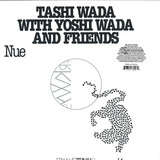
Composer Tashi Wada has performed for years with his father Yoshi Wada—artist, composer, and early member of the Fluxus movement. However, they have rarely appeared together in studio settings. Nue, the fourteenth entry in RVNG Intl.'s intergenerational FRKWYS series, finally brings Tashi and Yoshi, along with an eclectic group of close friends and extended family, together on tape.
Nue draws on aspects of Tashi's background for his widest vision to date—among them the minimalist bagpipe music of Yoshi, who co-composed three of the tracks, the psychoacoustic and perceptual explorations of his mentor, composer James Tenney, and reimagined forms of ancient and devotional music. The album, however, is not a tribute to the past or a recapitulation of familiar sounds. Instead, Nue is an intertwining of people and ideas as a means of growing, of looking inward to move outward, and of looking back to move forward.
To achieve this growth, Tashi assembled a core group of fellow travelers, including Yoshi, composer Julia Holter, producer Cole MGN, and percussionist Corey Fogel, to give life to this multifaceted suite. As an experience, Nue subtly navigates the interactions, intimacy and spaciousness of this group.
The album's title itself is a nod to Tashi's abiding interest in duality and the unknown: nue is a mythological Japanese chimera with the face of a monkey, the legs of a tiger, and a snake for a tail, a composite form, at once disturbing and otherworldly. But, as the composer points out, nue is also French for naked—stripped of complexity, bare and exposed, but also raw and essential.
From the doubling of tones—and the world of harmonic nuances such an action produces—to the rich interplay between individual musicians, all baring their own personalities and experiences through shared performance, Tashi's compositions allow space for these elements to join and grow. The multipartite creature that is an ensemble melds in the simplicity and purity of the music itself.
As explained by Tashi, each part was written with an individual in mind, not simply an instrument. And each individual performer makes their mark, from Holter's vocal performances on the cresting, oceanic 'Mutable Signs' and 'Ondine' with guest vocalists Simone Forti, Jessika Kenney and Laura Steenberge, to Fogel's resonant, precise percussion on 'Bottom of the Sky.' Producer Cole MGN, who has worked extensively with artists like Beck and Ariel Pink, helped to create a world of sound with minimal yet multi-dimensional materials. Like many of its influences, Nue uses deceivingly simple means to create complex, coherent worlds and narratives.
Tashi notes the influence of legendary Brazilian writer Clarice Lispector, whose work looked inward, investigating memory and emotion and dream, to understand the often overwhelming world outside the self. Like Lispector's classic novel Near to the Wild Heart, Nue cleaves these archetypal dualities—world/self, old/new, complex/simple—to create a work that allows them to coalesce into something singular.
As Tashi states in his liner notes: 'My desire was to create something both old and new sounding—ancient and futuristic—and ultimately something of its own world and other. Nue is a vision, an endless night of dreams, and a personal history of sorts, full of joys and demons.'
If you check the credits of The Rolling Stones' Goats Head Soup LP from 1973 you'll find a certain "Pascal" listed on the percussion section. That is none other than Los Angeles based artist Nicolas Pascal Raicevik (1933-1994), aka 107-34-8933, aka Head, aka Nik Pascal, aka Nik Raicevic. Besides his hitting the bongoes on the Stones album, Nik was a great artist on his own, both as a painter and as a musician. As a musician, he was a pioneer in the use of synthesizers, preceeding the Berlin school by some years when his Head LP was released on on Buddah in 1970. Buddah probably saw in Head the opportunity to cash in some money from the remains of the psychedelic scene - the three tracks on the LP are named after drugs used in the late sixties. The sounds, however, are accomplished works that show Raicevic as one of the most interesting pioneers in the use of synths. The album probably didn't do too well, since Buddah didn't renew the contract with Raicevic, who instead took his own way releasing his works on his very own Narco Records and Tapes label. Between 1968 and 1975 Narco would issue 4 LPs credited either to Nik Raicevic (Beyond The End... Eternity) or Nik Pascal (The Sixth Ear, Magnetic Web and Zero Gravity) plus one credited to 107-34-8933 (Numbers, which is in fact the same LP as Buddah's Head, albeit with different cover art). Copies of these LPs came with an ironic sticker over the shrinkwrap that read "Do not listen to this LP if you are stoned".
1972 saw the release of The Sixth Ear (Narco NR666), this time credited to Nik Pascal. A more complex work than Beyond The End..., it adds consistent rhythmic patterns to the mix with the addition of bongoes and also explores some interesting chord progressions.
Besides his musical explorations, Nik was also an interesting painter. His paintings are auctioned from time to time, and are consciousness expanding works influenced by abstract cubism and surrealism, some kind of Salvador Dalí on drugs exploring the outter and inner space. All the artwork on the sleeves of his LPs is done by himself. Spacey landscapes and psychedelic colours that fit perfectly to the music they contain.
"Nik Raicevic's music is at the intersection of radical psycho-electronic weirdness and kraut kosmische music (in particular the scifi-hypno-minimal modules of Conrad Schnitzler in Grun, Rot and Blau). It presents mega epic & tripped out electronic improvisations.
"This is an absolute must for collectors and fans of visceral, neurotic soundscapes." (progarchives)
"As far as late-60s / early-70s American Bedroom' Electronic Music goes, these LPS have to be among the first transmissions from this sector, made all the more attractive when coupled with Raicevic's alien topographIes - the covers are high-color portrayals of Venusian lanes, knotted growths, & future-past architecture in a style you might equate with Vintage' sci-fi pulp-novel covers - & copious Downer' sentiment. This music is imbued with a sort of lonely, anti-social sensibility that's about as far as you can get from the Academic' Early Electronic vector. I will say that if the Steve Birchall, Cellutron & the Invisible, and/or Pythagoron™ seed your garden, this will likely do the same." (twoheadeddog)
Never reissued before on vinyl format, the Wah Wah reissue features original sleeve artwork made of paintings and drawings by Nik himself and reproduction of the famous ironic "Do not listen if you are stoned" sticker. Limited edition, 500 copies only.
If you check the credits of The Rolling Stones' Goats Head Soup LP from 1973 you'll find a certain "Pascal" listed on the percussion section. That is none other than Los Angeles based artist Nicolas Pascal Raicevik (1933-1994), aka 107-34-8933, aka Head, aka Nik Pascal, aka Nik Raicevic. Besides his hitting the bongoes on the Stones album, Nik was a great artist on his own, both as a painter and as a musician. As a musician, he was a pioneer in the use of synthesizers, preceeding the Berlin school by some years when his Head LP was released on on Buddah in 1970. Buddah probably saw in Head the opportunity to cash in some money from the remains of the psychedelic scene - the three tracks on the LP are named after drugs used in the late sixties. The sounds, however, are accomplished works that show Raicevic as one of the most interesting pioneers in the use of synths. The album probably didn't do too well, since Buddah didn't renew the contract with Raicevic, who instead took his own way releasing his works on his very own Narco Records and Tapes label. Between 1968 and 1975 Narco would issue 4 LPs credited either to Nik Raicevic (Beyond The End... Eternity) or Nik Pascal (The Sixth Ear, Magnetic Web and Zero Gravity) plus one credited to 107-34-8933 (Numbers, which is in fact the same LP as Buddah's Head, albeit with different cover art). Copies of these LPs came with an ironic sticker over the shrinkwrap that read "Do not listen to this LP if you are stoned".
Magnetic Web was released in 1973. It appeared under the Nik Pascal monicker and showed a clear evolution in sound, favoured by the addition of an Arp 2600 and some rhythm boxes. It also included percussions and cymbals. The Two Headed Dog site thinks "this is his masterpiece in all of its acid-laced glory."
Besides his musical explorations, Nik was also an interesting painter. His paintings are auctioned from time to time, and are consciousness expanding works influenced by abstract cubism and surrealism, some kind of Salvador Dalí on drugs exploring the outter and inner space. All the artwork on the sleeves of his LPs is done by himself. Spacey landscapes and psychedelic colours that fit perfectly to the music they contain.
"Nik Raicevic's music is at the intersection of radical psycho-electronic weirdness and kraut kosmische music (in particular the scifi-hypno-minimal modules of Conrad Schnitzler in Grun, Rot and Blau). It presents mega epic & tripped out electronic improvisations.
"This is an absolute must for collectors and fans of visceral, neurotic soundscapes."
"As far as late-60s / early-70s American Bedroom' Electronic Music goes, these LPS have to be among the first transmissions from this sector, made all the more attractive when coupled with Raicevic's alien topographIes - the covers are high-color portrayals of Venusian lanes, knotted growths, & future-past architecture in a style you might equate with Vintage' sci-fi pulp-novel covers - & copious Downer' sentiment. This music is imbued with a sort of lonely, anti-social sensibility that's about as far as you can get from the Academic' Early Electronic vector. I will say that if the Steve Birchall, Cellutron & the Invisible, and/or Pythagoron™ seed your garden, this will likely do the same."
Never reissued before on vinyl format, the Wah Wah reissue features original sleeve artwork made of paintings and drawings by Nik himself, and reproduction of the famous ironic "Do not listen if you are stoned" sticker. Limited edition, 500 copies only.
If you check the credits of The Rolling Stones' Goats Head Soup LP from 1973 you'll find a certain "Pascal" listed on the percussion section. That is none other than Los Angeles based artist Nicolas Pascal Raicevik (1933-1994), aka 107-34-8933, aka Head, aka Nik Pascal, aka Nik Raicevic. Besides his hitting the bongoes on the Stones album, Nik was a great artist on his own, both as a painter and as a musician. As a musician, he was a pioneer in the use of synthesizers, preceeding the Berlin school by some years when his Head LP was released on on Buddah in 1970. Buddah probably saw in Head the opportunity to cash in some money from the remains of the psychedelic scene - the three tracks on the LP are named after drugs used in the late sixties. The sounds, however, are accomplished works that show Raicevic as one of the most interesting pioneers in the use of synths. The album probably didn't do too well, since Buddah didn't renew the contract with Raicevic, who instead took his own way releasing his works on his very own Narco Records and Tapes label. Between 1968 and 1975 Narco would issue 4 LPs credited either to Nik Raicevic (Beyond The End... Eternity) or Nik Pascal (The Sixth Ear, Magnetic Web and Zero Gravity) plus one credited to 107-34-8933 (Numbers, which is in fact the same LP as Buddah's Head, albeit with different cover art). Copies of these LPs came with an ironic sticker over the shrinkwrap that read "Do not listen to this LP if you are stoned".
Nik's last album, Zero Gravity (Narco NR123) came under the Nik Pascal name and had a fantastic side long piece on the title track which reminisces of the works of Cluster. B side features four tracks that also bear some Conrad Schnitzler reminiscences. This was to be Nik's last LP before he would sell all his synths to ex car racer and future electronic/ambient music star Steve Roach.
Besides his musical explorations, Nik was also an interesting painter. His paintings are auctioned from time to time, and are consciousness expanding works influenced by abstract cubism and surrealism, some kind of Salvador Dalí on drugs exploring the outter and inner space. All the artwork on the sleeves of his LPs is done by himself. Spacey landscapes and psychedelic colours that fit perfectly to the music they contain.
"Nik Raicevic's music is at the intersection of radical psycho-electronic weirdness and kraut kosmische music (in particular the scifi-hypno-minimal modules of Conrad Schnitzler in Grun, Rot and Blau). It presents mega epic & tripped out electronic improvisations.
"This is an absolute must for collectors and fans of visceral, neurotic soundscapes."
"As far as late-60s / early-70s American Bedroom' Electronic Music goes, these LPS have to be among the first transmissions from this sector, made all the more attractive when coupled with Raicevic's alien topographIes - the covers are high-color portrayals of Venusian lanes, knotted growths, & future-past architecture in a style you might equate with Vintage' sci-fi pulp-novel covers - & copious Downer' sentiment. This music is imbued with a sort of lonely, anti-social sensibility that's about as far as you can get from the Academic' Early Electronic vector. I will say that if the Steve Birchall, Cellutron & the Invisible, and/or Pythagoron™ seed your garden, this will likely do the same."
Never reissued before on vinyl format, the Wah Wah reissue features original sleeve artwork made of paintings and drawings by Nik himself, and reproduction of the famous ironic "Do not listen if you are stoned" sticker. Limited edition, 500 copies only.
An Invitation To Disappear is the debut LP by British electronic musician Inland aka Ed Davenport - and his first release for A-TON. Based on his soundtrack for a video installation by conceptual artist Julian Charrière, Davenport has recast the material and field recordings into eight tracks of rhythmically intricate electronics and spectral, ambient techno, inspired by Charrière's visually striking, 76-minute tracking shot through a palm plantation toward a totemic soundsystem on full blast.
Both the album and original soundtrack were created in response to the 200th anniversary of the eruption of Indonesia's Tambora volcano in 1815, which plunged the world into darkness and caused a series of extreme weather conditions. At the time, the natural climate change crisis resulted in numerous global famines and is known throughout the northern hemisphere as 'The Year Without Summer', with global communities forced to adapt to sudden radical changes in temperature and weather.
An Invitation To Disappear offers a contemporary parallel, leading viewers - and listeners - down a seemingly endless direct path of gridded palms from dawn to dusk; a bio-commercial monoculture where ancient jungle once flourished. Light flickers between rows of fruit-laden trees and a distant fire burns in the undergrowth where the border between natural image and computer simulation breaks down. At the same time, formerly incoherent rumblings of sub-frequencies begin to transform into the contours of rhythm. This is reflected sonically in eight perspectives on the lush, synthetic jungle, made of myriad buzzing fauna, morphing melody and colossal bassweight. All paths lead toward an apocalyptic dancefloor, though speeds vary widely; rhythms dissolve from straight to broken, synth tempos operate by their own internal clocks (and logic). Juxtaposing industrial agriculture with rave culture, the album explores the industrialization and refinement of nature, and the new strange forms emerging from the synthetic grids of both.
As Inland, Davenport has previously contributed soundtracks to other installations by the Swiss-born Charrière, whose artistic practice focuses on bridging environmental science and cultural history, often taking place in remote geophysical locations, including ice fields, volcanos and radioactive sites.
Julian Charrière is a French-Swiss artist based in Berlin. A former student of Olafur Eliasson at the Institut für Raumexperimente, Charrière's art explores post-romantic constructions of nature, staging tensions between deep or geological timescales and those relating to mankind. His work has previously been shown across the globe, including at the main exhibition of the Venice Biennale in 2017, a solo show at Kunsthalle Mainz this past Spring and an upcoming solo show at the Berlinische Galerie opening September 26.
Inland (real name Ed Davenport) is a British producer, DJ and founder of Counterchange Records based in Berlin. Known for his detailed and explorative house and techno releases on his own label, Infrastructure, Naïf and more, Davenport has recently gravitated toward the contemporary art world, finding inspiration in the cross-pollination between Berlin's art and music scenes. Previous sound design collaborations with Charrière have been exhibited in institutions such as the Musée des Beaux-Arts de Lausanne in 2014 and Thyssen- Bornemisza Contemporary in Vienna in 2017.
The gallery version of An Invitation To Disappear premiered this past April at the Kunsthalle Mainz and will be on display at the Berlinische Galerie as part of Charrière's solo exhibition As We Used to Float, opening September 26, 2018. The LP will premier live together with the video installation during a special presentation in Berghain the same day for Berlin Art Week.
Four slabs of no nonsense, bassline-driven rollers. ST, our favourite son and the first release on our 'slow to grow' label is back for 004. An extension beyond the deep excursions of 001, if you caught that you may know what to expect, if not... think 3am at 'Racket on a quality biscuit with the bass bins shaking. If you've never been to 'Mad Racket' then we suggest you visit sometime +++ two head-bent remixes in the form of locked grooves on each side from our other love, Jon Watts (Jon & Hugh - OTIS002). Cause life is cyclical xx
- A1: Zavoloka -.Transmutatsia
- A2: Mimicof - Love Control Feat. Hprizm
- A3: Benjamin Brunn - Joy
- A4: Retina.it - Horses
- B1: Mads Emil Nielsen - Unfold
- B2: Mads Emil Nielsen - Untitled Percussion Loop
- B3: Mimicof - Spark
- B4: Pierce Warnecke - Bogusstratagem
- B5: Mads Emil Nielsen - Circles
- C1: Zavoloka - Inflame
- C2: Retina.it - Rodeo
- C3: Retina.it - Gauchos
- C4: Benjamin Brunn - Alloy
- D1: Pierce Warnecke - Shiftform
- D2: Pierce Warnecke - Hddxenoglossy (And The Machine Spoke)
- D3: Mads Emil Nielsen - Framework 12
- D4: Mimicof - Cycle
- D5: Benjamin Brunn - Coy
»sichten« refers both to »opinions« as well as the »examination of material«. in lose sequence, we will invite friends and colleagues, but especially music lovers to share their opinions on music with us or to look through their collected materials in order to present music that tends to be out of the focus of current media channels. as a label for electronic music our focus is on examining exactly this genre. but in the context of the series, we are rather looking for more hidden, unknown, perhaps forgotten music. we want to present the yet undiscovered, and also offer a platform for other cultural environments with different musical approaches. each issue will be supervised and compiled by a curator. an introductory text shall explain the ar- tistic approach of the respective curator. in this sense, the format of a double lp can only provide a first insight and wants to invite to a more in-depth research. for the first issue of the series, »sichten 1«, we asked frank bretschneider to compile his own, very personal selection of current electronic music. his choice fell on six artists, whose different styles me- ander between accessible music on the one hand and very abstract compositions on the other hand.
"sichten" bezieht sich sowohl auf "Meinungen" als auch auf die "Auseinandersetzung mit dem Material". In loser Folge laden wir Freunde und Kollegen, vor allem aber Musikliebhaber ein, ihre Meinung zur Musik mit uns zu teilen oder ihre gesammelten Materialien durchzusehen, um Musik zu präsentieren, die nicht im Fokus der aktuellen Medienkanäle steht. als label für elektronische musik liegt unser schwerpunkt auf der untersuchung genau dieses genres. im rahmen der serie suchen wir aber eher nach verborgener, unbekannter, vielleicht vergessener musik. wir wollen das noch unentdeckte präsentieren und auch eine plattform für andere kulturelle umgebungen mit unterschiedlichen musikalischen ansätzen bieten. Jede Ausgabe wird von einem Kurator betreut und zusammengestellt. Ein einleitender Text soll den künstlerischen Ansatz des jeweiligen Kurators erläutern. In diesem Sinne kann das Format einer Doppel-LP nur einen ersten Einblick geben und will zu einer vertieften Recherche einladen. für die erste ausgabe der serie "sichten 1" haben wir frank bretschneider gebeten, seine eigene, sehr persönliche auswahl aktueller elektronischer musik zusammenzustellen. seine auswahl fiel auf sechs künstler, deren unterschiedliche stilrichtungen ich zwischen zugänglicher musik einerseits und sehr abstrakten kompositionen andererseits unterscheiden.
Having previously featured on Comb and Razor's popular compilation 'Brand New Wayo', Caribou's 'The Longest Mixtape: 1000 Songs For You' (twice) and remixed by numerous DJs including Kornél Kovács. It has long been over due that Nigerian synth-funk legend Dizzy K gets the reissue he deserves, teaming up with London based record label Sticky Buttons for a very special double LP compilation.
Dizzy K Falola is one of Nigeria's most adored disco funk artists form the early 80's. His career was propelled by EMI Nigeria who brought him to notoriety with his first album 'Excuse Me Baby', released in 1982. Excuse Me Baby became an instant success in Nigeria and within 3 months he was back in the studio recording his second album and touring with international superstars such as The Whispers. The success of his work came both from the creative collaboration of musicians and their progressive style of synth-funk and disco influenced heavily by western artists. The team included Nkono Teles, Felix Liberty and Dizzy K's mentor and manager Tony Okoroji amongst others who together formed the disco funk that infected the homes, streets and clubs of Lagos. Noted in 'Hip Hop Africa: New African Music in a Globalizing World', Dizzy K's song titled Saturday Night Raps which features on Excuse Me Baby is thought to have been on of the earliest examples of commercial African Rap music. It was examples like this that showed Dizzy K was bringing something new to the Nigerian boogie scene.
With careful restoration by Colin Young at See Why Audio, (who's expertise and talents have graced some of the most iconic reissues of recent years, including "Who Is William Onyeabor" and Charanjit Singh's "Synthesizing: Ten Raga's to a Disco Beat") and vinyl mastering conducted by The Carvery, cutting the masters on a Neumann VMS70 mastering lathe originally used in Nashville's CBS studio to cut Motown classics. This is an uncompromising vinyl package covering Dizzy K's first 3 albums from '82-'84. Compiled for the dance floor and offering Sticky Buttons take on the bright boogie goodness of Dizzy. With personal liner notes from the artist and fresh artwork by the team this is a record that cuts to the point.
'Garage bands suddenly obtain cult status and become the antithesis of their initial appeal'
Garage Class were a group of reluctant outliers who produced one of the finest contributions to the wave of UK DIY music that emerged during the late 70s and early to mid-80s.
Hailing from Alsager in North West England and comprised of Tim Shutt (vocals) Phil Murphy (lead guitar) Clive Williams (guitar) Lynne Sanders (bass) and Phil Bourne (drums / bass on studio recordings) Garage Class originally went by the name of The Pits before their then manager Steve Hurt imposed an alias which, though unpopular within their ranks, would nevertheless reflect the shambolic art they would eventually capture on their first and only single.
As The Pits the group offered a loutish inflection on glam-punk flamboyance, evoking Johnny Thunder hitting the north and remaining disowned yet undeterred in a dreary old boozer. But as Garage Class the group distilled a roughcast and homespun primitivism that felt quintessentially their own. In this they proved too unruly to be assimilated into any wider scene. Early gigs descended into acrimony and recognition proved elusive. Yet what they managed to make back then now sounds like an extraordinary article of underdog ambition.
Released in 1984, four years after it was originally recorded, the Terminal Tokyo single is an unlikely triumph of exceptional messthetic punk. Though raw and unpolished the songs here are precariously pop-minded and indisputably anthemic. The titular A-side reveals the dry and detached drawl of Shutt aka The Subliminal Kid, a sharp, jaded and poetic voice that has some of the most iconic lines never heard in punk. Accompanied by second-hand guitars, on-the-fly handclaps and a chorus like a terrace chant this is the cult hit that never was, a heroically artless masterpiece that has all the ragged character and misfit euphoria of Swell Maps and The Buzzcocks if they were more impulsive and boisterous, and left to their own devices in the remote margins of a Cheshire town. The original B-side is here substituted for I Got Standards, a track that, until now, has somehow remained unreleased. An ideal twin to Terminal Tokyo there's the same brusque and dog-eared quality to the band's delivery, as well as the same upfront emphasis on strong hooks and insistent momentum. Yet again, Shutt is on impeccable form, perfecting an inflated, adolescent antagonism that has all the sardonic, malcontented charm of similarly 'shirty' buggers like Dan Treacy (Television Personalities), Patrik Fitzgerald and Mark Perry (Alternative TV).
Although never accepted in their own time both tracks represent a brief but inspired moment of fervent imperfection, one that epitomized the best of a diffuse and autonomous underground movement spearheaded by The Desperate Bicycles and built upon by the likes of Amos & Sara, The Homosexuals, The Cleaners From Venus and Family Fodder. Like them Garage Class were situated at a point where punk, art, humour and a sense of stubborn independence all intersected.
In the years since Terminal Tokyo has accumulated a retrospective appeal among certain trusted circles, with Jon Dale celebrating the single in his exhaustive and essential Story of UK DIY for Fact Magazine, and original copies regularly changing hands for a foolish forty quid or so. With this inaugural release on the Outer Reaches label Terminal Tokyo is not only restored for the very first time but given a worthy expansion courtesy of JD Twitch (Optimo).
Continuing his own fascination with the fringe history of UK DIY - documented on his own outstanding compilation Cease & Desist: DIY! (Cult Classics From The Post Punk Era 1978-1982) and in his re-edits of Crass Records classics for an early release on RVNG INTL - Twitch reinterprets I Got Standards as an incisive, dubwise outing that pictures Jaki Liebezeit and Muslimgauze on a bender in England's provinces, tasked with remixing the raw product of local punks. A new slant on Garage Class' crude magnificence, built to play loud on contemporary soundsystems.
Although the latter part of 1980 spelled the end for Garage Class with members moving on to other projects (Bourne fell in with The Colours Out of Time, Murphy went on to front The Regular Guys and Shutt eventually left to form Happy Refugees) this reissue attempts to give their fleeting time together and the unique single statement they made the treatment it deserves. If this means Garage Class have obtained cult status, their initial appeal remains. Just listen for yourself.
- 01: Adrift
- 02: Become Real
- 03: Cipher
- 04: Lithic
- 05: Isolation Waves
- 06: Vanta
- 07: Across Time
- 08: Hymnal
- 09: Blood Rain
- 10: Prima
- 11: Fragility
- 12: Bodied
- 13: The Circle Is Complete
Planet Mu are excited to announce Ital Tek's 'Bodied', the follow up to his acclaimed 2016 album 'Hollowed'. Stepping in a different direction from that album, It's as if Hollowed's detailed world has been fleshed out and filled with the spectre of human voices.
As on his last album, the sounds on 'Bodied' are highly designed, but this time barely a whisper of dance music remains. Instead it's built around acoustic elements and ghostly choral arrangements, refracted and transformed into atmospheric, alien forms which are given the time to settle and transform. Rhythm is used only as a tool to give his world a sense of dark, mechanical momentum.
Alan explains; "After completing 'Hollowed' I had over a year away from writing any of my own material. I was working, composing music for a video game and a number of different projects. I needed to find a way back in and I rediscovered the joy of music being a release as opposed to a job. I was getting up really early and sketching out lots of ideas very fast, squeezing in quick bursts of writing at the beginning or end of long studio day spent working on other musical projects."
"It was important for me to define the world that the album was going to inhabit before taking it any further, so I put a much greater focus into the sound design and palette than I had before. I wanted to make the music sound very physical, geometric, and monolithic, as if it inhabited a physical space."
"On 'Bodied' the music focuses on the interplay between the minuscule and the vast, beauty and brutalism. With this album I was much more concerned with dynamics and the discipline of holding tension; the use of space and silence to provide a counterpoint to the intensity."
"Most importantly, I was keen for there to be a human acoustic foundation, so I did a lot of live recording of cello, violin, harp and guitar - anything I could get my hands on. I was certain that I wanted there to be a greater vocal presence - nothing lyrical or at the forefront but to give it an underlying organic quality - to impart some humanity into the music."
As Ital Tek moves further from his roots, he's creating new sounds and spaces in which his music can exist. It's up to the listener to decide what kind of world 'Bodied' evokes, but it's certainly one that's beautiful and rewarding to spend time in.
- A1: Dreaming Of Me
- B1: Ice Machine
- C1: New Life (Remix)
- D1: Shout (Rio Mix)
- E1: Just Can't Get Enough (Schizo Mix)
- F1: Ant Second Now (Altered)
- G1: Depeche Mode - "Sometimes I Wish I Was Dead
- H1: Fad Gadget - "King Of The Flies" (Flexi Disc)
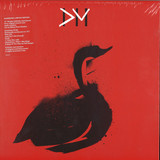
Depeche Mode - Speak & Spell 12" Single Box
Depeche Mode realized the format's potential and embraced the power of 12" vinyl and the avenues of innovation it opened up. The 12" single allowed the band to explore new sonic possibilities while the physical beauty of the packaging gave Depeche Mode room to develop a sophisticated and commanding visual aesthetic. Depeche Mode used their singles discography as a means of offering left field remixes and other delights for their fans.
Each box set in the series will contain the singles from each Depeche Mode album on audiophile-quality 12' vinyl, with audio remastered from the original tapes and cut at the legendary Abbey Road Studios. The artwork for the exterior of each of the new box sets draws on street art iconography inspired by the original releases, while the vinyl sleeves themselves feature the original vinyl single artwork.
Speak & Spell | The 12' Singles contains a facsimile reproduction of the rare Flexi Disc 'Sometimes I Wish I Was Dead' b/w 'King of the Flies' (the Fad Gadget track as on the original release); Dreaming Of Me 12': 'Dreaming of Me' b/w 'Ice Machine'; New Life 12': 'New Life (Remix)' b/w 'Shout! (Rio Mix)'; Just Can't Get Enough 12': 'Just Can't Get Enough (Schizo Mix)' b/w 'Any Second Now (Altered)'; original single poster reproduction; download card.
One afternoon in 1975, friend and fellow music traveler, Harold Schroeder, showed up at Poo-Bah Record Shop where Tom Recchion worked selling records and experimental music to people, forcing them to buy albums that he swore would change their lives. Harold asked if Tom wanted to share in a studio space close to the shop. After seeing it Tom immediately said "YES!". They moved in and divided the space in half. On Tom's half he made drawings, paintings, performances, video, sculptures, installations, and music. Harold had his all set up for music with his newly acquired Steiner-Parker synth and guitars and things. At the beginning they played under the name The Two Who Do Duets. Soon the late-night jam sessions that took place in the back of Poo-Bah moved over to the fourth floor of 35 South Raymond. It was pretty beat up and derelict, the way one imagines an artist's studio to look. They could make all the noise they wanted. No one else was on their floor. The music heard on this LP has remained unheard since it was recorded and was created just before and right after the inaugural concert by the Los Angeles Free Music Society (LAFMS) groups Le Forte Four, Doo-Doettes, and Ace & Duce. That concert took place in late January 1976. The sessions on this release feature members of the newly formed and expanded Doo-Doettes, which now included Dennis Duck, Juan Gomez, Harold Schroeder, and Tom Recchion, as well as Ju Suk Reet Meate from Smegma and Ace, of Ace & Duce. 35 S. Raymond eventually became a sort of LAFMS headquarters, with Chip Chapman of Le Forte Four, artist and future Extended Organ vocalist/guitarist Paul McCarthy, and soon to become singer for Nervous Gender, punk/folk artist Phranc, who along with many other artists and musicians, moved into the building. 35 S. Raymond allowed for free expression and explorations of all sorts. Some wild parties ensued, not to mention the luxury of endless hours of experimentation. Parking was free and so was the art and music. Ace found the tapes for side one ("Tom's Studio") in his archive and Ju Suk Reet Meate found the tapes for side two ("50 Of Every American Are Machines") and edited them both for this release. No overdubs or remixing was emplo