Suche:other form

Styles
Alle
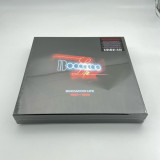
Various - BOCCACCIO LIFE - 1987-1993 10x12" LP (Boxset)
 
40

(10x12" box set, limited to 1000 copies, with premium finishing, uniquely numbered, incl. 10 records in individually printed sleeves, a booklet detailing the club's history & exclusive stickers) Boccaccio has secured its place among legendary venueslike Paradise Garage in New York and The Hacçinda in Manchester. Its bold fusion of emerging electronic genres such as New Beat, Acid, House, and Techno was way ahead of its time, drawing music lovers and clubbers from across Belgium and beyond.


Belgian label Music Man Records presents Boccaccio Life 1987-1993, a new compilation offering a fresh perspective on the legacy of the iconic Belgian club Boccaccio - often associated with the short-lived New Beat movement. The 40-track compilation highlights the raw and futuristic early house and techno sounds that were heard in the pioneering club.

Located in rural Destelbergen (Belgium), just a stone's throw from Ghent, Boccaccio has secured its place among legendary venues like Paradise Garage in New York and The Hacçinda in Manchester. Its bold fusion of emerging electronic genres such as New Beat, Acid, House, and Techno was way ahead of its time, drawing music lovers and clubbers from across Belgium and beyond. Sundays at Boccaccio were unlike anywhere else-offering sounds you couldn't hear anywhere else.

Boccaccio Life 1987-1993 is carefully curated by resident DJ Olivier Pieters and club regular Stefaan Vandenberghe, standing as the ultimate testament to a club that was more than just a venue. For those who experienced it, it was a community - a way of life. Hence the club's full name: Boccaccio Life.

This compilation stands as a testament to an innovative time in electronic music, capturing the raw, futuristic sounds of early house and techno. It sheds light on another side of Boccaccio, one that goes far beyond the short-lived New Beat scene. A carefully curated selection of 40 tracks, resonating with those who were there by offering familiar classics, while also reaching a new generation-those who never experienced it firsthand.

With tracks from Blake Baxter, Virgo, Frankie Knuckles, Tyree, and A Guy Called Gerald, the unmistakable influence of black American pioneers is clear-the originators of the firstanalog house and techno sounds. On the other hand, UK sound innovators such as The Orb and LFO bring both sharp textures and rough breakbeats to the table.

Club staple tracks include dreamy excursions from Roger Sanchez under his Egotrip moniker, the relentless basement house of Circus Bells by Robert Armani on Dance Mania, an uplifting take on a hip-house cut from The D.O.C. (Portrait of A Masterpiece in the CJ Ed-Did-It Mix), a timeless remix of UK Formation's Age of Chance from 1994, and an alternate take on The Tape by Boccaccio club regular and Belgian producer Frank De Wulf, taken from his B-Sides project.

While not always the obvious hits, these tracks have gracefully withstood the test of time, and were exclusive to Sundays at Boccaccio. Now, they are finally available to experience together in one collection, offering a timeless snapshot of a unique era.

nicht am Lager

Bestelle jetzt und wir bestellen den Artikel für dich beim Lieferanten.

168,03

Last In: vor 8 Monaten
Syd Barrett - ‘AN INTRODUCTION TO SYD BARRETT’

An Introduction To Syd Barrett, is a reissue of the 2010 collection that brought together for the first time the tracks of Pink Floyd and Syd Barrett on one compilation.

David Gilmour, who originally worked on Syd Barrett's two solo albums, as co-producer of The Madcap Laughs and as producer of Barrett, was the executive producer for the album. Damon Iddins and Andy Jackson at Astoria Studios remixed five tracks including ‘Octopus’, ‘She Took A Long Cool Look’, ‘Dominoes’ and ‘Here I Go’, with David Gilmour adding bass guitar to the last track. Pink Floyd's ‘Matilda Mother’ also received a fresh 2010 Mix.

The album features the original 24-page booklet and graphics plus all lyrics, and was designed including the cover art by long time Pink Floyd associate the late Storm Thorgerson and his estimable studio.

Born in Cambridge in 1946, Roger Keith 'Syd' Barrett was the primary songwriter, guitarist and original lead vocalist in the first incarnation of Pink Floyd. He formed the band in the mid-1960s with drummer Nick Mason, bassist Roger Waters and keyboard-player Richard Wright. With their groundbreaking, semi-improvised sets at the legendary UFO Club in London's Tottenham Court Road, they became the prime movers of British psychedelia.

Barrett wrote the warped pop vignettes ‘Arnold Layne’ and ‘See Emily Play’, the group's two hit singles from 1967, as well as 'Apples And Oranges', and the lion's share of the material – the dreamy ‘Matilda Mother’, ‘Chapter 24’ and the whimsical ‘Bike’ – on their debut album The Piper At The Gates Of Dawn. Recorded at EMI's famed Abbey Road Studios while the Beatles were making Sgt Pepper's Lonely Hearts Club Band, Pink Floyd's first album has proved an enduring classic, referenced by everyone from David Bowie to Spiritualized via The Damned.

Barrett contributed ‘Jugband Blues’ to A Saucerful Of Secrets, the band's follow-up, but his behaviour became increasingly erratic and he left in April 1968, a few months after the addition to the group of his Cambridge friend David Gilmour on guitar and vocals.

Syd Barrett's first solo album, The Madcap Laughs, was a long time coming but made the Top 40 on its release in January 1970. Barrett followed in November that year, and contains tracks such as ‘Baby Lemonade’ and ‘Gigolo Aunt’ that provided the names for two cult US groups in the 80s and 90s.

Over the last four decades, Syd Barrett has become the ultimate rock enigma. In 1975, he paid an eerie visit to his former band mates at Abbey Road while they were recording ‘Shine On You Crazy Diamond’, the centrepiece of the Wish You Were Here album he had inspired. He never entered a studio again. In 2001, he was the subject of a BBC Omnibus documentary.

He died in July 2006 but his legacy lives on in the music of R.E.M., Robyn Hitchcock, Julian Cope, Spiritualized, Blur and countless other groups. Earlier this year, Faber and Faber published Syd Barrett: A Very Irregular Head, an exhaustive biography by long-time fan Rob Chapman.

An Introduction To Syd Barrett provides a handy overview of this visionary talent, this madcap genius whose star shone brightly yet burnt out all too quickly.

nicht am Lager

Bestelle jetzt und wir bestellen den Artikel für dich beim Lieferanten.

39,45

Last In: vor 11 Monaten
Oh No Noh - As Late As Possible (LP)

Looking behind the obvious, forming an orchestra out of everyday surroundings.

Finding the essence in the trivial, clarity in the complex, poetry in simplicity. All of this is part of the goal, meaning and character of Oh No Noh, the project of Leipzig-based guitarist, robot programmer, magnetic tape crumpler and composer Markus Rom. All of this floats and shines through "As Late As Possible", the third Oh No Noh album, which will be released on April 4th, 2025.

The focus of this album, as the title "As Late As Possible" suggests, was patience. A creative lingering, the selfimposed principle of letting ideas mature, consciously leaving them lying and looking at them again in order to discover and refine new things. Always looking for new ways of producing musical sounds, Markus Rom has been blurring the boundaries between LoFi, Indietronica, Postrock, Kraut and Pop with his solo project for several years. His main instruments for this are electric guitar, MIDI robots, tapes and samples. For “As Late As Possible”, Rom expands his setup with a new sound sources (acoustic guitar, banjo, organ) and musical guests: Damian Dalla Torre (Squama) on bass clarinet and Andi Haberl (the Notwist, Sun) on drums.

“As Late As Possible” continues the signature of past releases and adds new facets. Rom's distinctive looping in and over each other is particularly evident in the tracks “Missing the Point”, “Orb” and “Almost Everywhere”. With "Loot", a straightforward and folk-pop piece finds its way onto the album and coexists with math-trained tracks like "Dog Years" or "Dot", which conjure up associations with Weilheim bands like COUCH. The tracks "Bliss of Disconnect" and "Fawn" were created in collaboration with the featured guests Liz Kosack and KMRU. The confidently unplanned is one of the principles around which Oh No Noh itself is also continuously evolving. Part of this development: the radio series "Oh No Noh Radioh", which has so far consisted of over 40 parts, for which Rom invites a guest in each episode to research music together along roughly defined concepts, ideas and inspirations. Together with technology composer Hainbach, free jazz artist Limpe Fuchs and sound artist Elsa M’Bala, for example, encounters were created whose patient search and find and whose controlled coincidences also characterize “As Late As Possible” – but here concentrated, concise, and with all the love of sound and experimentation always committed to the song. With this will to create a song-like narrative, to move, to develop, “As Late As Possible” remains suspended and searching. Its concentration seems light-footed, its happy accidents well-placed, the melancholic beauty of outdated technologies, forgotten musical toys and broken noise sources always forward-looking. Music like the one that comes about when someone programs an entire robot band, which then becomes just a friendly part of the whole.

The artwork for “As Late As Possible” was created by Leipzig comic artist Anna Haifisch. The album was mixed by Adam Lenox and mastered by Frida Claeson Johannsson.

nicht am Lager

Bestelle jetzt und wir bestellen den Artikel für dich beim Lieferanten.

19,12

Last In: vor 11 Monaten
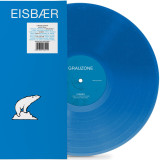
Grauzone - Eisbär

Grauzone

Eisbär

12inchWRWTFWW041BLUE
WRWTFWW Records
23.04.2025

2025 Blue Vinyl Repress

WRWTFWW Records is very honored to announce the official reissue of Grauzone's essential 1981 maxi single with timeless classic "Eisbär", proto-techno beast "FILM 2", and romantic synth ballad "Ich Lieb Sie", just in time for the 40th anniversary of the Swiss band's formation. The three-track vinyl is sourced from the original reels, cut at 45rpm, and comes with its iconic artwork on a 350gsm sleeve.

Ich möchte ein Eisbär sein...Written by Martin Eicher after a nightmare in which he saw talking polar bears on the walls, and with music by the Grauzone crew consisting of Martin and his brother Stephan Eicher, Marco Repetto, Christian "GT" Trüssel, and Claudine Chirac (on saxophone), "Eisbär" is the most recognizable title from the band, a sublime mix of ingredients reflecting the transitional era it comes from - the raw energy of punk music still palpable, combined with the audacity of early electronics, the warm groove of a disco gem, beautifully fragile lyrics, and one of the best basslines ever. It became a mega hit, totally unplanned, but how could you resist such a track

"FILM 2" is the ultimate b-side monster, a menacing all-instrumental pre-techno masterpiece, slowly building to a magnetizing frenzy. An instant underground favorite, it was famously heard played at both speeds depending on the scenes and DJs you were frequenting, 45rpm as it was first intended, and 33rpm for the cosmic experience (search Daniele Baldelli's Cosmic C75 1982 mixtape online for a great example of this).

The maxi single ends with "Ich Lieb Sie", a synth-pop meets doo-wop ballad, a true love song oozing with innocence. Simple, stylish, and just right.

At the crossroads of post-punk, new wave, pop, and electronic experimentation, the Eisbär maxi offers three songs that are technically different but hold the same spirit, the perfect embodiment of Grauzone's music - wild, unpredictable, and youthful, yet sophisticated, catchy, and ingenious. The magic recipe for the good stuff.

Stephan Eicher went on to be, arguably, the most successful Swiss musician ever, with an international career extending from pop chanson to experimental escapades and collaborations with Moondog, artists Sophie Calle and John Armleder, and author Martin Suter among many other luminaries. Marco Repetto flourished as a techno and ambient producer, releasing multiple projects including releases on Aphex Twin's Rephlex label.

Grauzone and WRWTFWW will continue to collaborate on the band's 40th anniversary reissue campaign, with numerous projects planned for the year, including a vast selection of music, visuals, and literature never available before.

nicht am Lager

Bestelle jetzt und wir bestellen den Artikel für dich beim Lieferanten.

14,71

Last In: vor 72 Tagen
SOICHI TERADA - APE ESCAPE ORIGINAPE SOUNDTRACKS IN A BOX (Boxset 4x12")
 
44

4XLP. Hardcover slipcase box. Liner notes from Soichi Terada, Colour: translucent red, clear, blue, and yellow vinyl

It has been 25 years since the release of Saru Get You (サルゲッチュ), known stateside and in the UK as Ape Escape. Ape Escape marked a significant milestone for the PlayStation, as it was the first game to require use of the PlayStation's DualShock (analog) controller. In Ape Escape, the use of the analogue sticks goes beyond camera rotation and acts as an extension of Kakeru's (Spike's) own character, controlling his many gadgets like the stun club, time net, and sky flyer. It's a unique form of control that, really, didn't become popularized until the release of the Nintendo Wii. It feels like a distinctly Japanese design, the sort of off-the-wall design that is either embraced or rejected on a global scale. In Ape Escape's case, the mechanic caught on.

Ape Escape is fast, frantic, and—at times—downright frustrating. Pipo monkeys dash, taunt, and swim away from your advances. They ride water monsters, fly UFOs, and even shoot uzis! Whether it's Kakeru, his friends, or the monkeys themselves, the characters are always running across the levels. This mad dash is enhanced by the game's soundtrack, composed by legendary composer Soichi Terada. As he recalls, the director of the production said, "Spike and his friends always have the image of running." In response, Terada happily produced fast songs with an average speed of over 170bpm. The resulting gameplay and audio is a match made in heaven.

Ape Escape is the first game soundtrack Mr. Terada ever created. The producers of the game heard one of his singles, "Sumo Jungle," and thought his frenetic drum-and-bass (Jungle) would be perfect for the game. The marriage of Ape Escape's charming overworld and Soichi's upbeat compositions is nothing short
of sublime. Especially now, it is difficult to separate the mischievous Pipos and fast-paced action from Soichi Terada's silky smooth synthesizer and heart-pounding bass. Earlier this year (2024), Soichi Terada's Ape Escape work was celebrated by the six-track EP Apes in the Net, which includes music from Ape Escape 1 and 3 (Terada did not compose the series' second installment). The label, Rush Hour Music, has prestigiously championed almost all of Soichi Terada's music, especially his (specifically non-VGM) house, jungle, and drum and bass releases (Sounds from the Far East, Asakusa Light, and more).
Before Apes in the Net, Terada's Ape Escape music was only available on CD, released in Japan around 2010. This release featured reconstructed tracks created by Mr. Terada himself, identical to the music arrangements featured in the game. The biggest difference, of course, was that they were of higher fidelity than was originally available on the PS1 disk format. Completing all of the aforementioned releases is this box set, released by Far East Recording in partnership with Cartridge Thunder and officially licensed by Sony Computer Entertainment. This box set release includes four LPs, housed individually by a hardcover slipcase. This box set includes every song from Ape Escape 1, except those available on Apes in the Net. This box set release also includes one bonus song, previously unreleased anywhere else (including the game itself!).

The music on this box set was meticulously mastered by Justin Perkins of Mystery Room Mastering. Using Mr. Terada's premastered source files, the music was completely and specifically mastered for vinyl. Rounding out the audio is absolutely stunning artwork created by Gobo3D. CT worked with Gobo to recreate some of Ape Escape's most iconic characters, referencing the original Japanese guidebook and other promotional materials. The result is visually delicious 300dpi artwork that takes you straight back to 1999. As uber-fans of the original PlayStation game, Cartridge Thunder and Far East Recording are proud to celebrate Soichi Terada's music and pay our respects to such a legendary PlayStation franchise—on the original hardware's 30th anniversary no less! It's with a happy heart, then, that Far East Recording and CT present to you Soichi Terada's Ape Escape Originape Soundtracks in a Box.

Please note: due to licensing exclusivity, this release does not include tracks previously released on Apes in the Net

nicht am Lager

Bestelle jetzt und wir bestellen den Artikel für dich beim Lieferanten.

106,68

Last In: vor 11 Monaten
Ibex Band - Stereo Instrumental Music LP 2x12"

The Ibex Band, with Giovanni Rico and Selam Woldemariam at the creative helm, provided the musical backbone for legends like Aster Aweke, Girma Beyene, Tilahun Gessesse, Mulatu Astatke, and Mahmoud Ahmed, including the iconic album Ere Mela Mela, shaping modern Ethiopian music as we know it today. This 1976 album (Ge’ez Year 1968) played a pivotal role in that legacy and has now resurfaced to set the record straight.

There’s a tendency to talk about the seventies as a golden age of Ethiopian music. There are good reasons for that, and just as good reasons against it. However, the notion of a golden past privileges the role of Western explorers and suggests that the pinnacle of Ethiopia’s musical culture is something only a foreigner can appreciate and unearth. It downplays the complexities of Ethiopia’s culture and history, creating an artificial divide between then and now. And it underestimates the constantly evolving sound that has followed.

The legendary musical outfit The Ibex Band, later metamorphosed into The Roha Band, has played a central role in defining the sound of many of the greatest stars on the music scene of Ethiopia from the mid-seventies onwards–but their golden output has never really waned. The story of the origins of the band that provided the musical backbone for greats such as Aster Aweke, Girma Beyene, Tilahun Gessesse, backing the solo career of group member Mahmoud Ahmed as well as backing Mulatu Astatke and many others has yet to be properly told.

Two misconceptions plague the image of Ethiopian music, one is that the music is pure because it is, by some notion, unexploited, the other is that it is all traditional. To begin with, a combination of political changes between the late sixties and the mid-nineties created an environment where only the most dedicated and skilled musicians struggled on and pursued a musical career against fierce odds. The whole Ibex Band, with Giovanni Rico and Selam “Selamino” Seyoum Woldermarian at the creative helm, are arguably the origo of the vibrant scene in the mid-seventies, and the said pair are foremost responsible for not only navigating the band through troubled times, but also modernizing the 6/8 chickchicka rhythm to a contemporary form. Giovanni laid the rhythmic foundation with heavy looped basslines that reinvented traditional melodies as dance music, and with Selamino’s innovative guitar work they influenced scores of musicians from Abegaz Kibrework Shiota to Henock Temesgen. Even Giovanni’s Fender bass and Selamino’s Gibson guitar inspired younger musicians in their choice of instruments. Not only in choice of instruments but also in sound–even as the digital revolution hit Ethiopian music, a lot of popular music still took its cue from the masters from Ibex and Roha.

Ibex emerged out of the ashes of the sixties group the Soul Echos band, adding Giovanni and Selamino to their ranks and taking their cues from a slew of influences, such as Motown and The Beatles, fused with traditional music. A tighter-knit unit than most bands at the time – Ibex has remained six to seven members throughout their whole career, compared to many bands that were as large as fifteen or sixteen men strong when Ibex set out. Their playing has been viciously focused, economical yet heavy. Just a year before the recording sessions of the album in your hands, Giovanni and Selamino made a contribution to the popular musical lexicon of Ethiopia that was simply defining the popular sound: their arrangement and recording of bandmate Mahmoud Ahmed’s solo effort and real commercial breakthrough tune and eponymous album, Ere Mela Mela, from 1975.

Selamino has never limited himself to being an adroit lead guitarist, but has always been a scholar of history, and as such he has probably contributed as much to modern Ethiopian music with his guitar playing and compositions as with a deepened understanding of modern or contemporary – Zemenawi – Ethiopian music. Selamino’s contributions serve as a metaphor for those of the whole band, at one and the same time creating and defining a new, danceable and updated sound anchored in Giovanni’s bass, whilst also elevating the broader scene through their support for others on the scene and on top of that, increasing the understanding of the music.

There is an understandable desire to romanticize the musical heyday Ibex and Roha were at the forefront of, because so much of the output is sorrowfully hard to come by. Ibex creativity was nothing short of ridiculously fierce compared to many of their Western contemporaries. Based on their sheer recorded output alone they could have usurped the title “hardest working in show business” from James Brown, recording more than 250 albums or 2500 songs in the seventies and eighties. Some only surface as cassettes today, others were never given full LP release, and some are simply impossible to find today. In the light of that, it’s nothing short of a miracle that the recording Stereo Instrumental Music from 1976 (Ge’ez Year 1968) has resurfaced. Unearthed in perfect condition on a chrome cassette, this is musical history comes alive–to set the future straight. Stereo Instrumental Music was recorded in collaboration with Karl-Gustav Lundgren, a Swedish national working for the Radio Voice of the Gospel. It took two sessions at the Ras Hotel ballroom in Addis Ababa. The Ibex Band was the first band in Ethiopia to employ a four-track recorder for their recording (the first available in the country, lent by Karl-Gustav). Later the same week, Giovanni and Selamino realized that, lengthwise, the recorded material fell short of what they wished for, so they recorded four more tracks in one more session on a single-track recorder. The Ras Hotel and Ghion Hotel, where the Ibex Band held musical residencies were to Ethiopia in general and Addis Ababa in particular what Motown was to the USA and Detroit a few years earlier – a hotbed of musical creativity and showmanship.

The most astonishing thing about Ethiopian music of the last half century is how tradition and modernity are intertwined. Because of this feature, it’s kind of hard to tell when there ever was or when we are in a “golden age”. So much of music from the past has been criminally neglected, but because of the hardships in the past, it would be an oversimplification to say that said past was a golden age. Probably, the golden age is what we are approaching, because for the first time both the past and future are accessible, and the monumental contributions from before can lay a firm foundation for a thriving music scene today. The Ibex Band stands firmly in the past, present and the future. That, if anything, is golden.

The detailed history of Stereo Instrumental Music is in many ways unique. To begin with, it couldn’t have been recorded earlier (there were no four-track recorders available) and it really couldn’t have been recorded afterwards either, at least not in the years directly following, because of the toll the musical scene took from the unfavorable political climate that followed when the nascent Derg regime and rival groups tried to assert themselves, the musical equipment lent from The Voice of Gospel Radio simply disappeared from Ethiopia when the radio station folded in 1977. Karl-Gustav Lundgren,
the Swedish foreign national who assisted during the recording, worked with the Ethiopian Evangelical Church Mekane Yesus at the time, recalls how they only had about fifteen minutes to get the microphones in place for the recording as to not alert neither the management at Ras Hotel nor the authorities and most importantly, to complete the recording before the curfew came into effect at midnight. In leaping to the opportunity to use previously unavailable equipment to push their sound forward and improvising to meet the logistical challenges, the Ibex Band displayed the very avant-gardism and adaptability that explains their longevity as a band through the years. The recording of Stereo Instrumental Music is from a given time in history, but it sounds as beyond time.
Much of the energy that burst out of the scene that Stereo Instrumental Music came out of dissipated or got sidetracked during the societal changes Ethiopia went through in the 1970s and 80s. Whilst leaders might have professed to be revolutionary, the work ethic of the Ibex Band can truly be described as that. They never called it quits, but adapted, toured extensively abroad in Africa, Europe, and the Middle East, and found ways to work even in the face of the curfew that curtailed a lot of musical life. They even played major arenas in the nineteen eighties, despite said curfew and restrictions. The whole extent of their legacy has never been told, but their music speaks louder than words, so therefore… tune in to the Ibex Band’s Stereo Instrumental Music.

nicht am Lager

Bestelle jetzt und wir bestellen den Artikel für dich beim Lieferanten.

24,33

Last In: vor 9 Monaten
Rhiannon Giddens & Justin Robinson - What Did The Blackbird Say To The Crow
  • 1: Rain Crow
  • 2: Brown’s Dream
  • 3: Hook And Line
  • 4: Pumpkin Pie
  • 5: Duck’s Eyeball
  • 6: Ryestraw
  • 7: Little Brown Jug
  • 8: Going To Raleigh
  • 9: Country Waltz
  • 10: Molly Put The Kettle On
  • 11: Fly Around My Pretty Little Miss
  • 12: John Henry
  • 13: Love Somebody
  • 14: Ebenezer
  • 15: Old Joe Clark
  • 16: Old Molly Hare
  • 17: Marching Jaybird
  • 18: Walkin’ In The Parlor

Rhiannon Giddens reunites with her former Carolina Chocolate Drops bandmate Justin Robinson on What Did the Blackbird Say to the Crow, an album of North Carolina fiddle and banjo music. Produced by Giddens and Joseph "joebass" DeJarnette, the album features Giddens on banjo and Robinson on fiddle, with the duo playing eighteen of their favourite North Carolina tunes: a mix of instrumentals and tunes with words.

Many were learned from their late mentor, the legendary North Carolina Piedmont musician Joe Thompson; one is from another musical hero, the late Etta Baker, from whom they also learned by listening to recordings of her playing. Giddens and Robinson recorded the album outdoors and on location at Thompson’s and Baker’s North Carolina homes, as well as the former plantation Mill Prong House. They were accompanied by the sounds of nature, including two different broods of cicadas, which had not emerged simultaneously since 1803, creating a true once-in-a-lifetime soundscape. The duo, along with four other string musicians including the multi-instrumentalist Dirk Powell, will embark on the Rhiannon Giddens & The Old-Time Revue North America tour in April.

“With the assaults on reality going on in the world today, we wanted to offer another kind of record, like walking back onto a gravel or dirt road while a stampede goes the other way,” Giddens says. “With the cicada choir, this record could’ve only happened at a certain time in the last 120 years. We doubled down on place, time, realness, and old-fashioned front porch music. It’s a reminder that another way exists, with music made for your community’s enjoyment and for dancing–not solely for commercial purposes.

“What is the role of music in our society?” she wonders. “How do we de-couple it from unfettered capitalism, where music is a product and musicians are incidental? How do we use the tools and system that we have been bequeathed in a way that reminds us of other ways of being?” Robinson adds, "Recording this album felt like being back in the saddle. Just this time Joe is not here, and his fiddle is under my chin. The album is about home, the cicadas, the storms, the music, and the people who make it feel like home."

Thompson was one of the last musicians of his era and his community to carry on the southern Black string band tradition. He played a crucial role in the lives of Giddens and Robinson, who, along with their Carolina Chocolate Drops bandmate Dom Flemons, spent their formative years learning from Thompson in traditional apprentice/mentor relationships. His influence has guided all of their artistic journeys as well as their mission to keep the legacy of the Black string band tradition alive.

In further tribute to Giddens’ North Carolina roots, What Did the Blackbird Say to the Crow will arrive just a week before Biscuits & Banjos, the inaugural edition of her first festival, which highlights the deep roots and enduring legacy of Black music, art, and culture while fostering community and storytelling. The sold-out festival will feature a much-anticipated Carolina Chocolate Drops reunion, their first performance together in more than a decade.

vorbestellen18.04.2025

erscheint voraussichtlich am 18.04.2025

32,35
CHIME OBLIVION - CHIME OBLIVION
  • 1: Incidental Synth 5
  • 2: Neighborhood Dog
  • 3: Kiss Her Or Be Her
  • 4: The Fiend
  • 5: Incidental Synth 4
  • 6: Heated Horses
  • 7: The Uninvited Guest
  • 8: And Again
  • 9: The Mythomaniac
  • 10: Smoke Ring
  • 11: Incidental Synth 7
  • 12: I'm Not A Mirror
  • 13: Grass
  • 14: Cold Pulse
  • 15: The Catalogue
auch erhältlich

Black Vinyl[34,24 €]


CHIME OBLIVION began out of the blue. David Barbarossa reached out to John Dwyer saying he was a fan of OSEES and he was invited to a show in London. The two hung out and hit it off, "then I rabbit holed on Bow wow wow too…," Dwyer recalls. "I reached out to David and suggested that we try and write some songs together... I flew David out, we met at my studio and spent five days writing basin drums ideas." The two got to know each other and had a lot of laughs. Dwyer then brought in Weasel Walter, knowing that he would be perfect "to add all that legitimate old-school weird proto-punk no wave guitar scratch to it, which of course he did masterfully." Next came Tom Dolas to play fuzzy marimba, and the fabulous H.L. Nelly, "as I knew her from a record I’d put out back in the day for a band called Naked Lights from Oakland. I knew that she could pull off the vocal style I had in mind." Together, the group created their debut self-titled album, due for release via Deathgod on April 18th. CHIME OBLIVION will be released as a 45 rpm 12" vinyl, CD & on digital. They're sharing the first taste of the album today, in the form of lead single, "NEIGHBORHOOD DOG." "For fans of Adam & the Ants, Bow Wow Wow, Crass, The Slits, and any other wierdo punk we fell in love with as youths." CHIME OBLIVION is due for release on April 18th via Deathgod.

vorbestellen18.04.2025

erscheint voraussichtlich am 18.04.2025

34,24
CHIME OBLIVION - CHIME OBLIVION

CHIME OBLIVION began out of the blue. David Barbarossa reached out to John Dwyer saying he was a fan of OSEES and he was invited to a show in London. The two hung out and hit it off, "then I rabbit holed on Bow wow wow too…," Dwyer recalls. "I reached out to David and suggested that we try and write some songs together... I flew David out, we met at my studio and spent five days writing basin drums ideas." The two got to know each other and had a lot of laughs. Dwyer then brought in Weasel Walter, knowing that he would be perfect "to add all that legitimate old-school weird proto-punk no wave guitar scratch to it, which of course he did masterfully." Next came Tom Dolas to play fuzzy marimba, and the fabulous H.L. Nelly, "as I knew her from a record I’d put out back in the day for a band called Naked Lights from Oakland. I knew that she could pull off the vocal style I had in mind." Together, the group created their debut self-titled album, due for release via Deathgod on April 18th. CHIME OBLIVION will be released as a 45 rpm 12" vinyl, CD & on digital. They're sharing the first taste of the album today, in the form of lead single, "NEIGHBORHOOD DOG." "For fans of Adam & the Ants, Bow Wow Wow, Crass, The Slits, and any other wierdo punk we fell in love with as youths." CHIME OBLIVION is due for release on April 18th via Deathgod.

vorbestellen18.04.2025

erscheint voraussichtlich am 18.04.2025

34,24
FEX - Subways Of Your Mind (TMMS Version) (7")

Imagine having a song go viral for 17 years - without even knowing it. That's exactly what happened to the German 1980s band FEX. And this isn't just any song - it's The Most Mysterious Song on the Internet, a track that puzzled music detectives for decades before finally being identified in November 2024. Now, it has been officially released - twice.

The Story in Brief:
Sometime around 1984, a song was broadcasted on NDR Radio. The name of the song was Subways Of Your Mind - only found out 40 years later in November 2024. Back then, a listener recorded the NDR show on cassette, a common practice at the time. Decades later, the tape resurfaced, but while most songs from the recording were identified, one remained an enigma. On March 18, 2007, the track was uploaded to the internet in an attempt to uncover its origins. Due to its now-iconic opening lyric, it was tentatively titled Like The Wind. Over time, the mystery deepened, and the song was given a nickname: The Most Mysterious Song - or simply TMMS.

Starting in 2019, a dedicated Reddit group, TheMysteriousSong, now boasting over 63,000 members, took up the search. They meticulously documented every lead, hoping to solve the riddle of the song's origins. Then, in 2024, the breakthrough: Reddit user marjin1412 reached out to musician Michael Hädrich after discovering a reference to his band FEX in an old newspaper article. Hädrich, FEX's keyboardist, provided a recording from an old demo cassette which included an alternative version of the song. On November 4, 2024, the mystery was officially solved: FEX was the band, Subways Of Your Mind was the title.

What Happened Next:
Since then, FEX has released two singles - both featuring Subways Of Your Mind - through the Berlin-based independent label The Outer Edge. First, the demo cassette version was pressed onto vinyl, as the original NDR radio recording remained lost (see EDGE-028). The Remastered Demo Mix single instantly topped Bandcamp's global charts, holding the #1 spot for several days. By then, it was clear: this was more than just an internet curiosity. A real fanbase had formed. Enthusiastic comments on the sales page ranged from "best post-punk song to ever exist" to "FEX themselves (are) perhaps the most underrated musicians of all time."

But the story didn't end there. A higher-quality version of the NDR radio recording was rediscovered in late december, remastered, and now sent for a second vinyl pressing: the TMMS Version. This new vinyl 7" is backed with Talking Hands another great and unissued song that was found on the demo cassette.

Fame Comes with a Price
Suddenly, time isn't standing still for FEX. The band had to come to terms with the fact that they had become Lostwave super stars. A FEX fan club quickly formed on Reddit, fan-hosted FEX parties are popping up, and the internet is demanding more - an album, merchandise, live performances. But how does a band prepare for a comeback after a 40-year hiatus?

For now, FEX is carefully considering their next steps. Their demo cassette contains six songs - and a few other recordings have resurfaced which probably could be restored and compiled. But foremost, a brand new re-recording of Subways Of Your Mind is in progress.

One thing is certain: The Most Mysterious Song will continue its unstoppable journey around the world. Don't miss this (second) chance to own a piece of music history!

nicht am Lager

Bestelle jetzt und wir bestellen den Artikel für dich beim Lieferanten.

14,08

Last In: vor 12 Monaten
Merzbow - Collection 001-010 (LP 10x1" Box + Book)
  • Collection 001 - 001 A 23:46
  • Collection 001 - 001 B 23:48
  • Collection 002 - 002 A 18:12
  • Collection 002 - 002 B 20:54
  • Collection 003 - 003 A 22:14
  • Collection 003 - 003 B1 09:33
  • Collection 003 - 003 B2 05:25
  • Collection 004 - 004 A 16:11
  • Collection 004 - 004 B1 07:08
  • Collection 004 - 004 B2 09:52
  • Collection 005 - 005 A1 08:38
  • Collection 005 - 005 A2 08:54
  • Collection 005 - 005 B1 07:14
  • Collection 005 - 005 B2 03:53
  • Collection 005 - 005 B3 03:57
  • Collection 005 - 005 B4 04:03
  • Collection 006 - 006 A1 17:35
  • Collection 006 - 006 A2 05:12
  • Collection 006 - 006 B 23:12
  • Collection 007 - Merzrock B1 + Dubbing 5 11:21
  • Collection 007 - Merzrock A1 + Anemic Pop 1 02:00
  • Collection 007 - Merzrock A1 + Anemic Pop 2 08:32
  • Collection 007 - E-Study #3-1 + Merzsolo 1 15:49
  • Collection 007 - E-Study #3-1 + Merzsolo 2 05:58
  • Collection 008 - Concrete Tape Ph#1~ 05:19
  • Collection 008 - E8 A1 + 006 A1 06:03
  • Collection 008 - Merzsolo 10/6.81 A1 10:36
  • Collection 008 - E8 B2/Concrete Tape Ph#1~ 06:28
  • Collection 008 - Sans Titre Merz 1 + Tape Loops 04:54
  • Collection 008 E6 A3 + Concrete Tape Ph#1~ 06:46
  • Collection 008 - Merzsolo 10/6.81 A5 + Violin 03:21
  • Collection 009 - N.a.m.4 + E-8 06:11
  • Collection 009 - Telecom 1/3 + N.a.m.5 17:32
  • Collection 009 - E-3-1-1 11:24
  • Collection 009 - E-3-1-2 01:50
  • Collection 009 - Tape Loop + Noise 1 (Concrete Tapes) 02:39
  • Collection 009 - Tape Loop + Noise 2 (Concrete Tapes) 04:25
  • Collection 010 - 007 B1 + Ah Corps 11:47
  • Collection 010 - E3 B2 + Ah Corps 11:28
  • Collection 010 - N.a.m.6 With Radio & Tapes 22:47

Carrying on their longstanding dedication to the seminal output of Merzbow, Urashima returns with what is unquestionably their most ambitious release to date: “Collection 001-010”, a deluxe, 10 LP vinyl box set limited to 299 copies, gathering together the entirety of the project’s first ten releases, originally released in 1981. Encountering the band in its early incarnation of the duo of Masami Akita and Kiyoshi Mizutani, raw, exposed and bristling with energy, foreshadowing numerous trajectories they would follow over the coming years, these astounding full lengths - the majority of which have never been released on vinyl - come housed in a beautifully produced, deluxe wooden box, with each LP in its own individual sleeve reproducing the original artwork, and a LP-sized 32-page book containing reproductions of artworls and collages by Masami Akita, an interview conducted by Jim O'Rourke, and liner notes penned by Lasse Marhaug, Thurston Moore, and Akita himself, amounting to what is unquestionably one of the most historically significant releases we’re likely to encounter in 2025.

Deluxe Edition of 299 copies, remastered from the original analog tapes by Masami Akita, each LP comes in its individual sleeve reproducing the original artwork, also includes a LP-sized 32-page book. ** Since its founding during the late 2000s, the Italian imprint, Urashima, has become a definitive voice in the landscape of noise. Bringing forth beautiful limited edition releases, they’ve sculpted a singular vision of one of the most vibrant and revolutionary bodies of experimental sound to have graced the globe. Among the many projects that they have supported over the decades, there has been an undeniable dedication to the output of the seminal Japanese noise outfit, Merzbow, making a significant amount of the project’s out of print back catalog available across a range of formats. Now they return with what is arguably their most stunning and ambitious release dedicated to the project to date: “Collection 001-010”, gathering the entirety of Merzbow’s first ten releases, largely privately released by the band on cassette across 1981, in a deluxe, 10 LP vinyl box set. Representing what is effectively ground zero in Japanese noise and collectively amounting to some of the most sought after releases ever produced within that movement, Urashima’s truly beautiful collection comes fully remastered by Masami Akita himself from the original tapes, presenting all but a small number in their first ever vinyl pressings, with each LP housed in its own individual sleeve reproducing the original artwork, alongside a LP-sized 32-page book containing reproductions of artworks and collages by Masami Akita, an interview conducted by Jim O'Rourke, and liner notes penned by Lasse Marhaug, Thurston Moore and Akita himself. Towering with energy and groundbreaking creative vision, within the realms of noise and experimental music, releases don’t get more monumental or historically important than this!

Merzbow came roaring onto the Tokyo scene in 1979, and remains, to this day, one of the most prolific and aggressively forward-thinking projects in experimental music. Eventually becoming the solo vehicle for the efforts of Masami Akita, in its earliest incarnation the project was the duo of Akita and Kiyoshi Mizutani, taking their name from German artist Kurt Schwitters' pre-war architectural assemblage, The Cathedral of Erotic Misery or Merzbau, and quickly set out to challenge entrenched notions of what music could be. Embracing technology and the machine, even in its earliest iterations, Merzbow pushed toward new territories of the extreme, arriving at a space of pure, unadulterated sonic onslaught that has continued, for over 40 years, to set the pace for the entire genre of noise, and has remained one of the movement’s most important, definitive voices, continuously laying the groundwork for countless artists who have followed in its wake.

When dealing with historical gestures, there’s an invertible aura surrounding original line-ups and early statements, and rightfully so. It is often within a band’s debut that we catch the purest glimpse of the raw energy and creative ferment that made them what they are. This is certainly the case when regarding the coveted early releases of Merzbow, capturing the emergence of the project in its form as the duo of Masami Akita and Kiyoshi Mizutani as they helped set the blue print from the then emerging movement of Japanese noise. Over the course of its nearly five decades of activity, Merzbow has always been noted for how prolific and ambitious the project is. This was no less the case in the very beginning. While they were active for roughly two years prior, in 1981 alone they issued ten self-released cassettes numerically titled “Collection 001-010”, albums which have both individually and collectively become holy grails in the realms of noise, with only two - “Collection 007” and “Collection 009” - ever receiving vinyl reissues prior to now.

As Lasse Marhaug deftly articulates in the newly commissioned liner notes for “Collection 001-010”, despite having been recorded in different location across a span of time, the sum total of Merzbow’s first ten releases might be best regarded as a single release to be listened to in the same, durational sitting, with the material standing well apart from what most came to expect from Merzbow, while foreshadowing numerous trajectories the project would take over the coming years. Not only do these recordings feature a vast array of instrumentation - tapes, acoustic and electric guitar, violin, drums, voice, recorder, organ, found sounds, clarinet, homemade and prepared instruments, a vast arsenal of effects and electronics, and piano, to only begin to scratch the surface - the majority of which would disappear from the project’s active sources of sound generation over the subsequent years, but there is a slow pacing and raw sense of openness and exposure that reveals strong connections to the avant-garde improvisations of groups like AMM, Musica Elettronica Viva, and Gruppo di Improvvisazione Nuova Consonanza, the psychedelia of groups like Taj Mahal Travellers and Flower Traveling band (both of whom Akita mentions having seen in youth within his interview with Jim O’Rourke), and rock in general - albeit in fully abstracted forms - unspooling as brittle, pointillistic, textural, raw and abrasive forms, that occasionally flirts with unexpected tonal sensibilities. As Marhaug describes it in his excellent liner notes: «Sonically, “Collection” sounds more sparse and stripped. It’s dry sounding, up-front, no reverb, and there’s less heavy low-end grime and thin on the signature frequency sweeps. Viewed in a 1981 context, musically, it’s more akin to what the LAFMS (Los Angeles Free Music Society) pool of artists were doing at that time than what was happening in industrial music... There’s a strong playfulness throughout, like the sound objects are being explored for the first time, without neither restraint nor hurry. Events are allowed to be fully examined before the music moves on, or simply cuts off. To a large degree, the music on “Collection” feels acoustic in nature, although a Electro-Harmonix ring-modulator features prominently throughout.»

Easily described as a rarely encountered revelation into the original and earlier documented studio sound of Merzbow, “Collection 001-010” collectively amounts to an engrossing sonic journey in its own right, while also allowing for important, often overlooked connections drawn from numerous other creative wellsprings, notably free jazz, underground rock, the output of European and Japanese avant-garde music, as well as Dada, Fluxus, and Mail Art, much of which, beyond the illumination made possible by the sounds, Jim O’Rourke’s fantastic interview with Akita, published in the booklet, further explores, offering great insights into the origins of Merzbow and the thinking behind the project, as well as aspects of the earliest days of Japanese noise.

vorbestellen18.04.2025

erscheint voraussichtlich am 18.04.2025

288,19
Various - orn in the City of Tanta: Lower Egyptian Urban Folklore and Bedouin Shaabi from Libya's Bourini Reco
  • A1: Basis Rahouma - بسيس رحومة,- Yana Alla Nafsa Masouda يانا اللي نفسي مسدوده (Blocked From What I Want)
  • A2: Sheikh Amin Abde -L Qader الشيخ أمين عبد القادر, Mould Fi Madina Tanta مولد في مدينة طنطا (Born In The City Of Tanta)
  • A3: Samah سماح, - Shawish Aldawriat شاويش الدورية, (Patrol Sargeant)
  • A4: Mahmoud Al-Sandidi محمود الصنديدي, - Ana Mish Hafwatak (Part 2) انا مش حفوتك, (I Don’t Miss Your Love)
  • B1: Abu Bakr Abdel Aziz (Aka Abu Abab) أبو بكر عبد العزيز,- Al Bint Al Libya أل بينت أل ليبيا (The Girl From Libya)
  • B2: Sheikh Amin Abdel Qader الشيخ أمين عبد القادر, - Mawal Al Layl Kolo Makasib موال الليل كله مكاسب (Mawaal: The Spoils Of An All-Nighter)
  • B3: Abu Saber أبو صابر, - Ya Allah Ank Zinat يا الله انك زينة (Oh, God, You Are Beautiful)
  • B4: Reem Kamal ريم كمال, - Baed Al Yas Yjini بعد اليأس يجيني (After Hopelessness, He Comes To Me)

“Egypt’s “official” popular music throughout much of the 20th Century was a complex form of art song steeped in tradition, well-loved by the middle and upper classes, and even accommodating to certain non-Arabic influences. It was highly structured by professional musicians working an established industry centered in the capitol, Cairo. However, far from the bustling cosmopolitan center of Cairo, north and northwest, in towns like Tanta and Alexandria and extending across the Saharan Desert to the Libyan border, dozens of fully marginalized artists were developing a raw, hybrid shaabi/al-musiqa al-shabiya style of music, supported by smaller upstart, independent labels, including the short-lived but deeply resonant Bourini Records. Launched in the late 1960s in Benghazi, Libya, Astuanat al-Bourini اسطوانات البوريني (Bourini Records) published some 40 to 50 titles from 1968 to 1975. Bourini released 7-inch 45 RPM singles by 15 artists, all but one of them Egyptian, igniting brief careers for Alexandrian singer Sheikh Amin Abdel Qader and the blind Bedouin legend Abu Bakr Abdel Aziz (aka Abu Abab). The tracks compiled here comprise a full range of styles covered by the label, while highlighting some of its most gobsmacking moments, from Basis Rahouma’s beastly transformation into a growling and barking man-lion by the end of “Yana Alla Nafsa Masouda,” to Reem Kamal’s hopeful-if-bitter handclapping party pivot “Baed Al Yas Yjini,” which descends into an almost Velvet Underground outro-groove of nihilistic dissonance. All the tracks on this compilation were laid down in stark divergence from the mainstream Egyptian popular music topography of heightened emotions buoyed by lush arrangements. The contrast is most evident in Mahmoud al-Sandidi’s “Ana Mish Hafwatak,” wherein his voice weaves heavily but deftly through a constant accordion drone, and Abu Abab’s “Al Bint al Libya,” a sparse, slow-burning lament with minimal percussion, violin, and Abab’s nephew Hamed Abdel Muna'im Mursi on lyre. Whereas the Egyptian mainstream was aspirational, attempting to reflect Egyptian culture at its most refined, the performances captured by Bourini were manifestations of everyday life lived by the mostly otherwise ignored masses. More than half century old, this music has lost none of its urgency, presence, or relevance. We hear these artists as if they’d just joined us in our living room, and not on a stage decades ago surrounded by tens of thousands of long-forgotten acolytes.

vorbestellen18.04.2025

erscheint voraussichtlich am 18.04.2025

28,36
Outback - Strangers/Reggie's Thang

An exclusive 7" re-release of this psychedelic funk ballad from Tulsa's "Outback" Band. As featured on Now-Again's 'More Loving On The Flipside' compilation, "Strangers (In Our Homeland)" epitomises the expression of social & political change during an era of psychedlia infused music. In partnership with the two surviving members of Outback, both Symphonical & Now-Again are proud to showcase the voice of independent artists.

----------

The origin of "Outback" dates back to the late 50s, a five-piece blues outfit named "Little Lo and the Rest of Us" included music educator & bass guitarist Edward "Cha-Cha" Cherry, saxophonists Eugene "Buggy" Roach & James "Flab" Farley whom, alongside drummer Roscoe J. Dabney III "Roach", Ronnie Wilson on trumpet, guitarists Roy "Rochester" Walker & Michael Collins, would form The Magnificent Seven, the house band for Tulsa's 'Rose Room'.


Alumni of Booker T. Washington High School, The Magnificent Seven influenced & set the standard for the Tulsa sound, as demonstrated through their only single, recorded in 1966, the two part 'Pluck-A-Pluck'. 'The Sevenettes', the groups' female vocal trio, included the rotation of Lena Luckey Wilson, Gwendolyn French, Rose Brewer Lewis, Jeanetta Williams & Maxayn. The Magnificent Seven, led by "Cha-Cha", toured nationally throughout the 60s with their infectious, raw R&B sound, and were the platform for many of Tulsa's talent including Ronnie & Charlie Wilson who would later create the GAP Band.


Roscoe J. Dabney III, the first Black Panther to establish the Tulsa chapter in 1969 known as the NCCF (National Committee to Combat Fascism), proposed the name change to "Outback" in the early 70s. Their sound & formation was changing from R&B to Psychedelic, from the grit to the phase, epitomised by their unique line-up of having two bassists playing simultaneously, both Reggie Cherry & "Chilly" Willie Lewis, the musical foundation to their only recorded single, "Strangers (In Our Homeland)" & "Reggie's Thang".


Song writer & band affiliate, Maurice Pope, produced the lyrics to "Strangers (In Our Homeland)" and handed over the musical attributes to Willie Lewis & Outback to convey his message, as sung by Lena Luckey Wilson. Dabney recalls the song is based on religious scriptures, whilst highlighting the parallel of Black slavery in the U.S.


"Reggie's Thang", written by Dabney's cousin, bassist Reggie Cherry, provides a psychedelic instrumental, a sound which Lena recalls is what set apart Outback from other Tulsa groups. As well as playing clubs, the seated shows provided an environment for the group to showcase their musicianship to those who wanted to be immersed & listen.


Their single, released on Empathy, was recorded in 1972, and are the only known recordings by Outback. Recorded live onto 8-track at a studio located at on East Pine St in the heart of Tulsa's Black community, an independent & unknown studio located on a strip mall.


The Outback members who recorded are:


Lena Luckey Wilson - Vocals

Roscoe J. Dabney III "Roach" - Drums

"Chilly" Willie Lewis - Bass

Reggie Cherry - Bass

Edward "Cha-Cha" Cherry - Keys

Joyce Daws - Trumpet

Roy Walker "Rochester" - Guitar

Robert Luckey "Uncle Bobby"- Percussion

Fredy Berry "Freddy" - Tenor Sax


Band leader & group manager: Edward "Cha-Cha" Cherry

Booking Agent: Ernie Fields Sr.

In 1973 whilst performing in Ft. Worth, TX, Buck Ram approached Willie Lewis backstage and invited him to join The Platters, Lewis accepted. Supposedly, a recording deal was offered to Outback in exchange, which never happened.


The group continued in various formations after Lewis left, however as an integral member, the feeling never equalled their original form and soon after dissolved.


Leon Russell approached Lena Lucky Wilson in 1974 to go on tour with the GAP Band as their backing singer, upon returning Tulsa Lena moved to Los Angeles to pursue her musical career with Leon & Mary Russell amongst various others.


Dabney continued music and became a TV producer & director in 1976.


The only surviving members of Outback today are Lena Luckey Wilson & Roscoe J. Dabney III.

vorbestellen11.04.2025

erscheint voraussichtlich am 11.04.2025

14,71
Aaron Landsman / Norman Westberg - Night Keeper LP

Night Keeper is a collaborative album by New York City-based artist Aaron Landsman and former Swans guitarist Norman Westberg that is based on the former's eponymous play. Westberg recorded it together with performer Jehan O. Young for the Swiss Hallow Ground label, with Landsman serving as the record’s producer. The original piece was first performed in the Spring of 2023 at The Chocolate Factory Theater in Queens and filled the stark industrial space with spoken text, choreography, projections, and music in dim light and, occasionally, complete darkness. Westberg and Young afterwards brought it to the studio to record it as a two-part
album in whose course his textural sounds, based on loops and samples, set the stage for her soothing, sonorous vocal performance. »Night Keeper« is a performance inspired by sleeplessness and the wanderings of the human mind at night—about time and memory.
Westberg and Young elegantly capture its essence in these roughly 44 minutes with a somnambulic album, letting sound and meaning flow into each other. The initial spark for Night Keeper was a run of almost sleepless nights in different neighbourhoods of a city that is perpetually insomniac. Instead of trying to force himself to go back to sleep by any means necessary, Landsman started writing down his thoughts. As he explains in the liner notes—accompanying the music along with drawings made by audience members during the performances—he started listening to the particular way in which the voice in his head navigates time and language. Accordingly, the texts that Young reads on the record form a diverse collection of specific moments, imagining different speakers and evoking different
situations. Westberg complements, accentuates, and juxtaposes these with different means. Ominous drones, soaring melodies, rhythmic bass sounds: the guitarist, whose latest release for Hallow Ground was 2021’s First Man In The Moon with Polish double bassist Jacek Mazurkiewicz, conjures up distinct sound worlds in which Young can let Landsman’s scenes unfold to gripping effect.
Landsman makes it clear that »Night Keeper« was intended as an invitation to »stay up, look out the window, let what’s happening outside spark reveries or predictions« or even take it on a stroll through the neighbourhood—at night, of course. Much like the original piece, this album is then one dedicated to wandering around, both mentally and physically.

vorbestellen11.04.2025

erscheint voraussichtlich am 11.04.2025

25,17
Miles Davis Quintet - Relaxin' with the Miles Davis Quintet
  • If I Were A Bell
  • You're My Everything
  • I Could Write A Book
  • Oleo
  • It Could
  • Happen To You
  • Woody 'N You

One of Mile Davis's fnest recordings, an example of one of the 20th century's great ensembles reaching the pinnacle of their craft, a masterpiece by any measure Like his other titles, Relaxin' features a variety of material the band performed simultaneously in concert: the format is perfect for Davis (trumpet), John Coltrane (tenor sax), Philly Joe Jones (drums), and Red Garland (piano). The results are consistently superior in both song selection and execution.

vorbestellen11.04.2025

erscheint voraussichtlich am 11.04.2025

21,64
Katelyn Clark & Mitch Renaud - Ouroboros

On Katelyn Clark and Mitch Renaud's »Ouroboros,« astronomical and astrological phenomena, concepts and symbols such as the Great Year or the Eternal Return serve as the starting points for sonic explorations and experimentations. Focusing on a uniquely tempered range of frequencies, from low-enddrone rumbles to airy pipe swirls, the duo develops a minimalist and highly evocative sonic universe on their debut album for Hallow Ground.

Working as composers, improvisers and curators in Canada's vibrant experimental and early music scenes, Clark and Renaud began developing »Ouroboros« through extensive improvisation with a reduced setup. Clark, who has worked extensively with historical keyboards since her studies in Amsterdam and Siena, played a small pipe organ modeled after a 14th-century instrument while Renaud brought a modular synthesizer and his interest in feedback systems to the collaboration. Later, the duo further refined their artistic dialog and the sonic interactions of the two instruments through the shared space of a two day recording session in Vancouver. Subtle crackling, acoustic beating and other (psycho-)acoustic effects in five pieces document this encounter, giving the music a profound physicality while hinting at the bodily presence of the two collaborators.

Just as the cyclicality of natural phenomena or the repetition of planetary movements is both a scientific fact and of the cultural imaginary, the sound worlds of »Ouroboros« are fundamentally rooted in time and space while transgressing the idea of a »here and now« through their conceptual links to geological and planetary time. The interplay of portative organ and modular synthesizer, which merge fluidly and in ever-changing ways, leads to a kind of circularity, a timelessness, a no-time. At the same time, the movements and subtle changes undermine the idea of repetition in the negative sense. After all, the Eternal Return, as Gilles Deleuze writes in regard to Nietzsche, is not the return of the same but a repetition of repetition. The only constant is change, the production of new intensities, of new forms of life – and of new frequencies.

vorbestellen11.04.2025

erscheint voraussichtlich am 11.04.2025

25,17
Various - SPANDAU20 010 2x12"

Various

SPANDAU20 010 2x12"

2x12inchSPND20010
SPANDAU20
11.04.2025

Spandau20, an imprint named after the Western Berlin district and focused on artists from the area, delivers techno in all diverse forms - from warehouse and electronic peak time beats to breaks and IDM, balancing the old and new school sounds flawlessly. With a focus on vinyl releases, for the collectors, Spandau20 has lately also focused on its label nights, with showcases at Fabric, Bassiani and many others. The label's 10th release features 10 tracks that epitomise the musical diversity of Spandau20 and the progressive musical mindset of its roster, calling on the label favourites and Spandau natives to deliver brand new and exciting music. This special release even features one track that all artists have worked on together: 'Come Closer', a swarming, slithering beginning featured as the VA's opener. Its barely coherent female vocal echoing amidst a cacophony of demon-like effects. The chilling ambience captured at the offset transcends into the first full length track by Elli Acula, 'Floating Eyes', a cur characterised by an authoritative, pounding bass featuring calculated percussive rolls and metallic overtones to make for a face-scrunching opener to this devilish collection of works. FJAAK follow for the first of twin cameo appearances, partnering up with fellow live supremo and hardware aficionado KiNK. On 'Overbridge' the trio deliver a cavernous, rolling number driven by a deep thrumming bass in addition to a razor-edged lead synth, and pulsating technopattern. Dajusch is known for incorporating his years of classical study in with his immersive musical style - and with his VA effort the Berlin native neatly showcases this. Easing the energy slightly, 'Move' escalates from its warm, melodic intro into rumbling goliath of a beat comprising a looping, slew of gassy harmonics. The momentum of the release shifts considerably with the introduction of acutely versatile producer, DJ and sound artist Claus. The artist from Spandau leans his track 'Bloomscroll' towards sparse, dubby sonics in which he intricately ties together to form churning, burgeoning soundscape. FJAAK jolt proceedings back into the techno groove with their signature blend of arresting sub-bass and reverberating rhythms, which come thick, fast and heavy on 'Jackfruit'. The abstract wonder of Anna Z's broken-beat like stylings is fully explored on 'Icy Liq'. It's outlandish and amorphous in its execution, causing a clattering percussive chaos that's choicely pieced together by the modular-extraordinaire. Nikk stealthy moves into breaks territory with his track 'Down In The Shadows', packing a trap-like snare with an acid-flecked melody and dawn-breaking, dream-like textures. The penultimate track on the VA is 'Tufted'. J.Manuel expertly employs a chorus of robot-like sonics that course through a short-circuiting low-end to produce a pacy, inescapable journey via a whirling, merciless beat. He is joined by the legendary producer Tobi Neumann for their menacingly ambient number titled 'Fennec.' In parts a nod to UK dubstep, the duo concocts a fierce admixture of styles bolstering tribal-like components with industrialised overtones and methodically crafted drum-fills.

nicht am Lager

Bestelle jetzt und wir bestellen den Artikel für dich beim Lieferanten.

22,27

Last In: vor 7 Monaten
DJ Narciso - Diferenciado

Dj Narciso

Diferenciado

12inchP056LP
Príncipe
11.04.2025

Narciso has been running parallel to most of his contemporaries, staying close to the main lane but researching in his own distinctive way. He takes pride in "being free from limitations and conventions. To me, music doesn't follow fixed rules; it is a field for experimentation, where any sound can be transformed into something pleasing to the ear". Depending on what one considers "pleasing", this is a pretty challenging set of tracks. The artist never loses the balance, though, mindful of a certain "dance" context in which this music thrives, but it is also that same context that is being constantly twisted and reshaped into other forms. Some of those provide fresh ground for others to follow; some are of such individuality that no one else dares disturbance; some quickly return to a safer way of communication.

"Diferenciado" does communicate, but like words can be changed to sound different and still mean the same, such are music and sound with Narciso. It's not about alienation of the listener nor alienation of the self from the surrounding areas. "I believe music is present in everything around us." And if anyone can say her/his/their music "reflects vision, experience and perception", you know the end result is not often surprising or even that different from previous examples. Well, we stand by "Diferenciado" in its obvious distinctiveness, and if all the blurb so far may read like a nervous justification it's just because of the excitement in helping put this out into the world.

As a founding element of RS Produções, where Nuno Beats, DJ Lima, DJ Nulo and Farucox are also found, Narciso has been contributing to a spiritual and creative atmosphere that permeates the environs of Lisbon where that golden, inspired air has to fight for space with many kinds of instability. The beauty and drama of opening tracks "Ziu Ziu" and "Cabelinho" (this one with mate Farucox) should be able to touch any sensitive soul that appreciates the quirkiness often attached to pure expression. As in "Pipipi" too, for example, where melody and rhythm gently and moodily lead you into a brief but sudden interruption feeling like a change into another state of being. Do not shy away. Narciso steps up as himself, not as representative of whatever or whoever.

vorbestellen11.04.2025

erscheint voraussichtlich am 11.04.2025

25,17
Dennis Brown - Tribulation Times

Dennis Brown has always been cited as Jamaica’s favourite singer. While Bob Marley set out to conquer the world, Dennis’s popularity on the island grew with every year. Overseas success also came Browns way with crossover hits like the massive ‘Money In My Pocket’. He will always be fondly remembered on the sound systems across the caribbean as the Crown Prince of Reggae.

Dennis Brown (b Dennis Emanuel Brown,1957, Kingston, Jamaica) began his illustrious career at the grand age of eleven like many of the other child singers at Coxsonne Dodds Studio One stable. His first hit in 1969 a cover of Van Dykes ‘No Man Is An Island’ still stands the tests of time and also its follow up cut ‘If I Follow My Heart’ as Reggae classics. The 1970’s saw Dennis build on his reputation by working with all the top Jamaican producers and
studio’s perfecting his sound. Lloyd Daley, Impact, Joe Gibbs, Aquarius and Derrick Harriott to name but a few. But it was his work with producer Winston ‘Niney’ Holness that he enjoyed the most success and many say recorded his best work for. Where many of the other producers stayed with the tried and tested Lovers Rock formula that did prove so popular with Dennis’s voice, producer Niney the Observer as he is fondly called, pushed him into a more roots led direction, over stark rhythms created by Niney’s studio band Soul Syndicate.

Two outstanding albums were put together ‘Just Dennis’ (1975) built on a collection of singles they had recorded together, ’Cassandra’, ’Westbound Train’, ’No More Will I Roam’ and ‘Conqueror’. The second 1977 set ‘Wolf and Leopards’ made up again of singles the prolific two had cut including, ‘Here I Come’ (a live favourite that Dennis always liked to start his set with) and ‘Children of Israel’ made these both strong roots era albums.

We have stayed with this period for our Dennis Brown album. Some of the above-mentioned cuts are present alongside the timeless crossover hit ‘Money In My Pocket’ (1979) produced by Niney but often credited as a Joe Gibbs production as it was released (and sweetened by adding Orchestration for the foreign market place) on his label. By the way this is the original Jamaican version (unsweetened) that you will find on this album a more truthful version in our humble opinion. His voice reigns supreme across these Niney produced cuts ‘Smile like An Angel’ ‘Silver Words’, ‘Play Girl’ and the fantastic ‘Poor Side Of Town’ (helped along by the great harmonies of the Heptones group), ‘Tribulation’ and ‘We Will Be Free’. Dennis Brown’s prolific catalogue of tunes that also found an outlet on his own DEB inprint (named after his initials) stands to show what a great artist he was and what a fine team he and Niney made when in the studio creating these magical moments. So sit back and enjoy a killer set of tunes compiled by Niney himself...Tribulation Times indeed and long may the records of the Crown Prince of Reggae Dennis Brown rule the world.....

nicht am Lager

Bestelle jetzt und wir bestellen den Artikel für dich beim Lieferanten.

13,40

Last In: vor 12 Monaten
WALTER VERDIN - PING PONG LP 2x12"

Walter Verdin

PING PONG LP 2x12"

2x12inchCORTIZONA030
CORTIZONA
10.04.2025

2LP in printed inner sleeves + 12 page booklet with detailed info, secrets and unpublished pictures written by Walter Verdin himself. This collection dives deep into Verdin's prolific and experimental music from 1980 to the beginning of this millennium, capturing an era of a DIY punk spirit, improvisation, creative freedom and swimming against the tide.


We are thrilled to announce the upcoming release of 'Pingpong', a 2LP compilation showcasing previously unreleased works by Walter Verdin, the founding member behind Pas De Deux, the Belgian band which delivered 80's cult classics 'Rendez-Vous' & 'Cardiocleptomanie'. This collection dives deep into Verdin's prolific and experimental music from 1980 to the beginning of this millennium, capturing an era of a DIY punk spirit, improvisation, creative freedom and swimming against the tide.

This album is not just a compilation-it's a sonic journey into Verdin's unique approach to music-making, which he nurtured in the AV studio at KU Leuven's Audiovisual Department (AVD). Having begun his civil service there in 1980, Verdin was exposed to a rich array of audio and video tools that would shape his work for years to come. From the outset, Verdin's process was defined by an openness to experimentation, where he would explore sound and music organically rather than following pre-existing concepts.

The songs on Pingpong reflect his fascination with creating spontaneous, layered compositions. These recordings were made using limited tools, such as his duophonic Yamaha CS-40M synthesizer, borrowed drum machines, and tape loops, and were further enriched by techniques such as reverb and vintage sound manipulation. The results are raw, tactile, and full of personality-often more vibrant and personal than the polished, commercial recordings that would follow in professional studios.

Throughout the 1980s and 1990s, Verdin developed his craft, regularly drawing from his diverse interests in film history, soundtracks, video art, and avant-garde music. His innovative use of tape recorders, improvisational techniques, and later, MIDI and digital tools, makes for a fascinating and varied listening experience. This compilation includes everything from proto-techno and abstract new wave to avant-pop songs, sample-driven experiments, and the oddball TV-inspired tunes that have long been a staple of his work.

This selection is a true reflection of Verdin's "keen amateur" approach: a method focused on discovery, happy accidents, and unexpected results. These compositions aren't about achieving technical perfection, but about capturing moments of sonic exploration and transformation. The 21 recordings have been meticulously curated, with some tracks freshly arranged while others remain true to their original, unedited forms.

'Pingpong' finally brings these forgotten gems into the light. The album includes not only unreleased music but also fragments from Verdin's video art and multimedia projects, offering a rare glimpse into his creative evolution over two decades. Stretching up the boundaries between medium and message, aligning his own musical univers.

Take a deep breath and dive into the works of an artist whose explorations pushed his boundaries of sound and technology.

A Belgian sonic cut up, ping ponging in between many worlds.

nicht am Lager

Bestelle jetzt und wir bestellen den Artikel für dich beim Lieferanten.

27,31

Last In: vor 12 Monaten
Artikel pro Seite:
N/ABPM
Vinyl