On Katelyn Clark and Mitch Renaud's »Ouroboros,« astronomical and astrological phenomena, concepts and symbols such as the Great Year or the Eternal Return serve as the starting points for sonic explorations and experimentations. Focusing on a uniquely tempered range of frequencies, from low-enddrone rumbles to airy pipe swirls, the duo develops a minimalist and highly evocative sonic universe on their debut album for Hallow Ground.
Working as composers, improvisers and curators in Canada's vibrant experimental and early music scenes, Clark and Renaud began developing »Ouroboros« through extensive improvisation with a reduced setup. Clark, who has worked extensively with historical keyboards since her studies in Amsterdam and Siena, played a small pipe organ modeled after a 14th-century instrument while Renaud brought a modular synthesizer and his interest in feedback systems to the collaboration. Later, the duo further refined their artistic dialog and the sonic interactions of the two instruments through the shared space of a two day recording session in Vancouver. Subtle crackling, acoustic beating and other (psycho-)acoustic effects in five pieces document this encounter, giving the music a profound physicality while hinting at the bodily presence of the two collaborators.
Just as the cyclicality of natural phenomena or the repetition of planetary movements is both a scientific fact and of the cultural imaginary, the sound worlds of »Ouroboros« are fundamentally rooted in time and space while transgressing the idea of a »here and now« through their conceptual links to geological and planetary time. The interplay of portative organ and modular synthesizer, which merge fluidly and in ever-changing ways, leads to a kind of circularity, a timelessness, a no-time. At the same time, the movements and subtle changes undermine the idea of repetition in the negative sense. After all, the Eternal Return, as Gilles Deleuze writes in regard to Nietzsche, is not the return of the same but a repetition of repetition. The only constant is change, the production of new intensities, of new forms of life – and of new frequencies.
quête:other form
Spandau20, an imprint named after the Western Berlin district and focused on artists from the area, delivers techno in all diverse forms - from warehouse and electronic peak time beats to breaks and IDM, balancing the old and new school sounds flawlessly. With a focus on vinyl releases, for the collectors, Spandau20 has lately also focused on its label nights, with showcases at Fabric, Bassiani and many others. The label's 10th release features 10 tracks that epitomise the musical diversity of Spandau20 and the progressive musical mindset of its roster, calling on the label favourites and Spandau natives to deliver brand new and exciting music. This special release even features one track that all artists have worked on together: 'Come Closer', a swarming, slithering beginning featured as the VA's opener. Its barely coherent female vocal echoing amidst a cacophony of demon-like effects. The chilling ambience captured at the offset transcends into the first full length track by Elli Acula, 'Floating Eyes', a cur characterised by an authoritative, pounding bass featuring calculated percussive rolls and metallic overtones to make for a face-scrunching opener to this devilish collection of works. FJAAK follow for the first of twin cameo appearances, partnering up with fellow live supremo and hardware aficionado KiNK. On 'Overbridge' the trio deliver a cavernous, rolling number driven by a deep thrumming bass in addition to a razor-edged lead synth, and pulsating technopattern. Dajusch is known for incorporating his years of classical study in with his immersive musical style - and with his VA effort the Berlin native neatly showcases this. Easing the energy slightly, 'Move' escalates from its warm, melodic intro into rumbling goliath of a beat comprising a looping, slew of gassy harmonics. The momentum of the release shifts considerably with the introduction of acutely versatile producer, DJ and sound artist Claus. The artist from Spandau leans his track 'Bloomscroll' towards sparse, dubby sonics in which he intricately ties together to form churning, burgeoning soundscape. FJAAK jolt proceedings back into the techno groove with their signature blend of arresting sub-bass and reverberating rhythms, which come thick, fast and heavy on 'Jackfruit'. The abstract wonder of Anna Z's broken-beat like stylings is fully explored on 'Icy Liq'. It's outlandish and amorphous in its execution, causing a clattering percussive chaos that's choicely pieced together by the modular-extraordinaire. Nikk stealthy moves into breaks territory with his track 'Down In The Shadows', packing a trap-like snare with an acid-flecked melody and dawn-breaking, dream-like textures. The penultimate track on the VA is 'Tufted'. J.Manuel expertly employs a chorus of robot-like sonics that course through a short-circuiting low-end to produce a pacy, inescapable journey via a whirling, merciless beat. He is joined by the legendary producer Tobi Neumann for their menacingly ambient number titled 'Fennec.' In parts a nod to UK dubstep, the duo concocts a fierce admixture of styles bolstering tribal-like components with industrialised overtones and methodically crafted drum-fills.
Narciso has been running parallel to most of his contemporaries, staying close to the main lane but researching in his own distinctive way. He takes pride in "being free from limitations and conventions. To me, music doesn't follow fixed rules; it is a field for experimentation, where any sound can be transformed into something pleasing to the ear". Depending on what one considers "pleasing", this is a pretty challenging set of tracks. The artist never loses the balance, though, mindful of a certain "dance" context in which this music thrives, but it is also that same context that is being constantly twisted and reshaped into other forms. Some of those provide fresh ground for others to follow; some are of such individuality that no one else dares disturbance; some quickly return to a safer way of communication.
"Diferenciado" does communicate, but like words can be changed to sound different and still mean the same, such are music and sound with Narciso. It's not about alienation of the listener nor alienation of the self from the surrounding areas. "I believe music is present in everything around us." And if anyone can say her/his/their music "reflects vision, experience and perception", you know the end result is not often surprising or even that different from previous examples. Well, we stand by "Diferenciado" in its obvious distinctiveness, and if all the blurb so far may read like a nervous justification it's just because of the excitement in helping put this out into the world.
As a founding element of RS Produções, where Nuno Beats, DJ Lima, DJ Nulo and Farucox are also found, Narciso has been contributing to a spiritual and creative atmosphere that permeates the environs of Lisbon where that golden, inspired air has to fight for space with many kinds of instability. The beauty and drama of opening tracks "Ziu Ziu" and "Cabelinho" (this one with mate Farucox) should be able to touch any sensitive soul that appreciates the quirkiness often attached to pure expression. As in "Pipipi" too, for example, where melody and rhythm gently and moodily lead you into a brief but sudden interruption feeling like a change into another state of being. Do not shy away. Narciso steps up as himself, not as representative of whatever or whoever.
Dennis Brown has always been cited as Jamaica’s favourite singer. While Bob Marley set out to conquer the world, Dennis’s popularity on the island grew with every year. Overseas success also came Browns way with crossover hits like the massive ‘Money In My Pocket’. He will always be fondly remembered on the sound systems across the caribbean as the Crown Prince of Reggae.
Dennis Brown (b Dennis Emanuel Brown,1957, Kingston, Jamaica) began his illustrious career at the grand age of eleven like many of the other child singers at Coxsonne Dodds Studio One stable. His first hit in 1969 a cover of Van Dykes ‘No Man Is An Island’ still stands the tests of time and also its follow up cut ‘If I Follow My Heart’ as Reggae classics. The 1970’s saw Dennis build on his reputation by working with all the top Jamaican producers and
studio’s perfecting his sound. Lloyd Daley, Impact, Joe Gibbs, Aquarius and Derrick Harriott to name but a few. But it was his work with producer Winston ‘Niney’ Holness that he enjoyed the most success and many say recorded his best work for. Where many of the other producers stayed with the tried and tested Lovers Rock formula that did prove so popular with Dennis’s voice, producer Niney the Observer as he is fondly called, pushed him into a more roots led direction, over stark rhythms created by Niney’s studio band Soul Syndicate.
Two outstanding albums were put together ‘Just Dennis’ (1975) built on a collection of singles they had recorded together, ’Cassandra’, ’Westbound Train’, ’No More Will I Roam’ and ‘Conqueror’. The second 1977 set ‘Wolf and Leopards’ made up again of singles the prolific two had cut including, ‘Here I Come’ (a live favourite that Dennis always liked to start his set with) and ‘Children of Israel’ made these both strong roots era albums.
We have stayed with this period for our Dennis Brown album. Some of the above-mentioned cuts are present alongside the timeless crossover hit ‘Money In My Pocket’ (1979) produced by Niney but often credited as a Joe Gibbs production as it was released (and sweetened by adding Orchestration for the foreign market place) on his label. By the way this is the original Jamaican version (unsweetened) that you will find on this album a more truthful version in our humble opinion. His voice reigns supreme across these Niney produced cuts ‘Smile like An Angel’ ‘Silver Words’, ‘Play Girl’ and the fantastic ‘Poor Side Of Town’ (helped along by the great harmonies of the Heptones group), ‘Tribulation’ and ‘We Will Be Free’. Dennis Brown’s prolific catalogue of tunes that also found an outlet on his own DEB inprint (named after his initials) stands to show what a great artist he was and what a fine team he and Niney made when in the studio creating these magical moments. So sit back and enjoy a killer set of tunes compiled by Niney himself...Tribulation Times indeed and long may the records of the Crown Prince of Reggae Dennis Brown rule the world.....
- A1: She Loves Me
- A2: Dansons Dans
- A3: Nobody Moved
- A4: Dance Riff
- A5: No Trip
- B1: Shadance
- B2: Sequence X
- B3: A Cut & A Wipe 2024
- B4: Aceton
- B5: Iootd Dream Feat. Adrienne Altenhaus
- C1: Constant Click Feat. Adrienne Altenhaus
- C2: Mission Control
- C3: Princeton
- C4: A Car
- C5: Sonate Part Iii
- C6: Kunst-Zaken '87
- D1: Minimalize
- D2: Linda
- D3: À Saint-Tropez
- D4: A Shadow
- D5: Abstractions
2LP in printed inner sleeves + 12 page booklet with detailed info, secrets and unpublished pictures written by Walter Verdin himself. This collection dives deep into Verdin's prolific and experimental music from 1980 to the beginning of this millennium, capturing an era of a DIY punk spirit, improvisation, creative freedom and swimming against the tide.
We are thrilled to announce the upcoming release of 'Pingpong', a 2LP compilation showcasing previously unreleased works by Walter Verdin, the founding member behind Pas De Deux, the Belgian band which delivered 80's cult classics 'Rendez-Vous' & 'Cardiocleptomanie'. This collection dives deep into Verdin's prolific and experimental music from 1980 to the beginning of this millennium, capturing an era of a DIY punk spirit, improvisation, creative freedom and swimming against the tide.
This album is not just a compilation-it's a sonic journey into Verdin's unique approach to music-making, which he nurtured in the AV studio at KU Leuven's Audiovisual Department (AVD). Having begun his civil service there in 1980, Verdin was exposed to a rich array of audio and video tools that would shape his work for years to come. From the outset, Verdin's process was defined by an openness to experimentation, where he would explore sound and music organically rather than following pre-existing concepts.
The songs on Pingpong reflect his fascination with creating spontaneous, layered compositions. These recordings were made using limited tools, such as his duophonic Yamaha CS-40M synthesizer, borrowed drum machines, and tape loops, and were further enriched by techniques such as reverb and vintage sound manipulation. The results are raw, tactile, and full of personality-often more vibrant and personal than the polished, commercial recordings that would follow in professional studios.
Throughout the 1980s and 1990s, Verdin developed his craft, regularly drawing from his diverse interests in film history, soundtracks, video art, and avant-garde music. His innovative use of tape recorders, improvisational techniques, and later, MIDI and digital tools, makes for a fascinating and varied listening experience. This compilation includes everything from proto-techno and abstract new wave to avant-pop songs, sample-driven experiments, and the oddball TV-inspired tunes that have long been a staple of his work.
This selection is a true reflection of Verdin's "keen amateur" approach: a method focused on discovery, happy accidents, and unexpected results. These compositions aren't about achieving technical perfection, but about capturing moments of sonic exploration and transformation. The 21 recordings have been meticulously curated, with some tracks freshly arranged while others remain true to their original, unedited forms.
'Pingpong' finally brings these forgotten gems into the light. The album includes not only unreleased music but also fragments from Verdin's video art and multimedia projects, offering a rare glimpse into his creative evolution over two decades. Stretching up the boundaries between medium and message, aligning his own musical univers.
Take a deep breath and dive into the works of an artist whose explorations pushed his boundaries of sound and technology.
A Belgian sonic cut up, ping ponging in between many worlds.
- A1: Kotms Ii Intro Ft Kingpin Skinny Pimp
- A2: Ultra Shxt Ft Key Nyata
- A3: Set It Ft Maxo Kream
- A4: Hot One Ft Tiacorine & A$Ap Ferg
- A5: Black Flag Freestyle Ft That Mexican Ot
- A6: Headcrack Interlude Ft Kingpin Skinny Pimp
- A7: G'z Up Ft 2 Chainz & Mike Dimes
- A8: Lunatic Interlude
- B1: Sked Ft Kenny Mason & Project Pat
- B2: Choose Wisely Interlude Ft Kingpin Skinny Pimp
- B3: Cole Pimp Ft Ty Dolla $Ign & Juicy J
- B4: Wishlist Ft Armani White
- B5: Hit The Floor Ft Ski Mask The Slump God
- B6: Hoodlumz Ft A$Ap Rocky & Playthatboizay
- B7: Kotms Ii Outro Ft Kingpin Skinny Pimp
Neon Green Vinyl[32,98 €]
Denzel Curry's forthcoming King Of The Mischievous South Volume 2 finds him presenting a sequel to the project, and bringing back the sound, that helped launch his career. While the first installment of King Of The Mischievous South was performed from the perspective of his Raven Miyagi persona, a name bestowed upon him by Raider Klan founder SpaceGhostPurrp, Volume 2 finds Curry operating under his Big Ultra persona -- an elevated version of Raven Miyagi that is bragadocious and revels in the success that Curry has seen over the last decade of his career. Creating King Of The Mischievous South Volume 2 has been a goal of Curry's for some time, though his earliest attempts to do so ultimately morphed into other projects, namely his 2016 album Imperial and 2020's 13LOOD 1N + 13LOOD OUT. It wasn't until he stopped overly attempting to create Volume 2 that its songs started to emerge naturally.
Given the project's sound, which pays homage to the great musical heritages of the South -- from Memphis to Houston and Curry's own South Florida -- its features include the region's greats, both old and new, as well as others whose style is indebted to the South's musical legacy. Features include fellow former Raider Klan member Key Nyata, Memphis stalwarts Juicy J and Project Pat, Texas' Maxo Kream, That Mexican OT and Mike Dimes, North Carolina’s TiaCorine, Atlanta's 2 Chainz and Kenny Mason and South Florida's Ski Mask The Slump God and PlayThatBoiZay, as well as ASAP Ferg and ASAP Rocky, among others. The project more broadly and the intentional inclusion of Rocky and Ferg is Curry's attempt to show what could have been had relationships not soured with SpaceGhostPurrp, fulfilling the promise that existed at the rise of their respective careers in the early 2010s.
With all of the otherworldly adventures Denzel has taken listeners on over the course of his last few conceptually-driven albums, this project serves as a showcase for the fun, spontaneity and technical mastery that has made him one of rap's most in-demand talents over the course of the last decade.
- A1: Do U Fm
- A2: Novelist Sad Face
- A3: Green Box
- A4: Dusty
- A5: The Linda Song
- A6: Dm Bf
- B1: I Tried
- B2: Melodies Like Mark
- B3: Wildcat
- B4: How U Remind Me
- B5: Pocky
- B6: Bon Tempiii
- B7: Pt Basement
- B8: Alberqurque Ii
- B9: Mary's
Yellow Coloured Vinyl[29,37 €]
Kneading dough is tricky – you should know how it’s supposed to feel. If you try too hard you could make it worse. It’s a beautiful practice – creation with a gentle touch, to work at something so it can be left alone. “If it’s too drawn out it’s awful. It’s easy to give too much.” Dance in the mirror. Contemplate your veiny hands. Who do they remind you of?
You begin by mixing flour and water. “What happens when your people die? Why’d they move the rock to the other side of Ulster Park?” Eliza Niemi asks two seemingly unrelated questions in a rising melody with guitar accompaniment, like fingers playing spider up to the nape of your neck. Gentle pressure. Strands of gluten form to bind the mix. A new question lingers in the binding. When she admits “but I don’t know how to tell if I’m feeling it or not,” that question surfaces through the text. It is reiterated throughout the album. When I’m working with dough I think the same thing to myself.
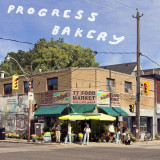
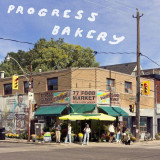
On Progress Bakery, her second album as a solo artist, Eliza knows to leave some questions alone – to let juxtaposition and tension be the proof. It doesn’t have to be hard. The feelings and revelations they provoke rise in the heat. The smell is sweet. Crispy on the outside and soft all the way through. She playfully slip-slides through words and sounds and images, delighting in surprise, skimming ideas like stones cast across clear water, touching down briefly with uncommon grace.
The question provoked between those opening lines resurfaces in the strands between songs – “Do U FM” is fully formed and beautifully layered, while “Novelist Sad Face” is a short, acapella rendering of gentle curiosity. What is holding these ideas together? Some songs demand more, seem to carry a whole load – eventually the skipping stone will halt to sink and resume its idle duty – while others drift in and out of focus, the way thoughts and dreams become interwoven before the mind is sunk into true sleep.
Music and words don’t always have to interact. Where she decides to keep them apart gives a new contour to where and how she puts them together. The kind of thing you’re supposed to take for granted with songs and their singers comes alive in Eliza’s hands – the little miracle of mixing, kneading, stretching, and stopping.
So often on Progress Bakery, Eliza teases out truth and meaning by asking questions. “Do I wanna be crying?” “Do you want me good or do you want me bad?” “Do I need an eye test?” “I’m writing songs in my head while you’re going over stuff with me — is that cruel??” In “Pocky” Eliza ends with a question that feels to me like the actual biography, succinct and revealing:
I don’t wanna be made to see
I just wanna ask “what’s that?”
Grace that ought to be rare, but in its care and precision is offered humbly, with great generosity, and without announcing itself. Eliza’s simple, miraculous music is given further form and shape by a group of collaborators – invaluable guest musicians Jeremy Ray, Evan Cartwright, Steven McPhail, Kenny Boothby, Ed Squires, Carolina Chauffe, Dorothea Paas, Louie Short, and Avalon Tassonyi. Together with Louie Short, who recorded, mixed, and produced the album along with Jeremy Ray and Lukas Cheung, Eliza has cultivated a richness in sound and texture that prods and provokes the ticklish ear. Barely audible guitar tinkering, a brief lo-fi field recording of trumpets, the harmonic clicking of a looped synthesizer, a flourish of reeds, a child’s conversation, each uncanny sound perfectly placed, rippling out under a soft breeze.
Lay in bed alone at night and ask aloud to the stillness,
“What were you doing at the Albuquerque Airport?
What were you doing there??”
And hear your question answered by a dream of swelling, undulating cellos. Try to grasp at the melody and structure. It’s not an answer (if there could be one), but it moves deeper, closer to the weird layer of fleeting moments and disconnected images, barely perceptible at its core. Wait for the dream reel to click into place.
Eliza took me for a ride in Nicole (her beloved Dodge Grand Caravan) and told me she’d been thinking of the album as an embodiment of transition – and I think every transition, known or unknown, carries the weight of new meaning, skittering off the surface tension of life as you know it, creating ripples, sometimes bouncing off and sometimes breaking through. There is a trick you can use to tell if a dough is glutinous enough. You’re supposed to stretch it out as thin as you can without breaking it and hold it up to the light. If you can see through, even if it renders the world murky and uncertain, you should leave it alone. I love this trick. It’s one that Eliza seems to know intuitively: work gently and ask questions and don’t always expect answers, and when you can, take a glimpse at something new, and then leave.
Kneading dough is tricky – you should know how it’s supposed to feel. If you try too hard you could make it worse. It’s a beautiful practice – creation with a gentle touch, to work at something so it can be left alone. “If it’s too drawn out it’s awful. It’s easy to give too much.” Dance in the mirror. Contemplate your veiny hands. Who do they remind you of?
You begin by mixing flour and water. “What happens when your people die? Why’d they move the rock to the other side of Ulster Park?” Eliza Niemi asks two seemingly unrelated questions in a rising melody with guitar accompaniment, like fingers playing spider up to the nape of your neck. Gentle pressure. Strands of gluten form to bind the mix. A new question lingers in the binding. When she admits “but I don’t know how to tell if I’m feeling it or not,” that question surfaces through the text. It is reiterated throughout the album. When I’m working with dough I think the same thing to myself.
On Progress Bakery, her second album as a solo artist, Eliza knows to leave some questions alone – to let juxtaposition and tension be the proof. It doesn’t have to be hard. The feelings and revelations they provoke rise in the heat. The smell is sweet. Crispy on the outside and soft all the way through. She playfully slip-slides through words and sounds and images, delighting in surprise, skimming ideas like stones cast across clear water, touching down briefly with uncommon grace.
The question provoked between those opening lines resurfaces in the strands between songs – “Do U FM” is fully formed and beautifully layered, while “Novelist Sad Face” is a short, acapella rendering of gentle curiosity. What is holding these ideas together? Some songs demand more, seem to carry a whole load – eventually the skipping stone will halt to sink and resume its idle duty – while others drift in and out of focus, the way thoughts and dreams become interwoven before the mind is sunk into true sleep.
Music and words don’t always have to interact. Where she decides to keep them apart gives a new contour to where and how she puts them together. The kind of thing you’re supposed to take for granted with songs and their singers comes alive in Eliza’s hands – the little miracle of mixing, kneading, stretching, and stopping.
So often on Progress Bakery, Eliza teases out truth and meaning by asking questions. “Do I wanna be crying?” “Do you want me good or do you want me bad?” “Do I need an eye test?” “I’m writing songs in my head while you’re going over stuff with me — is that cruel??” In “Pocky” Eliza ends with a question that feels to me like the actual biography, succinct and revealing:
I don’t wanna be made to see
I just wanna ask “what’s that?”
Grace that ought to be rare, but in its care and precision is offered humbly, with great generosity, and without announcing itself. Eliza’s simple, miraculous music is given further form and shape by a group of collaborators – invaluable guest musicians Jeremy Ray, Evan Cartwright, Steven McPhail, Kenny Boothby, Ed Squires, Carolina Chauffe, Dorothea Paas, Louie Short, and Avalon Tassonyi. Together with Louie Short, who recorded, mixed, and produced the album along with Jeremy Ray and Lukas Cheung, Eliza has cultivated a richness in sound and texture that prods and provokes the ticklish ear. Barely audible guitar tinkering, a brief lo-fi field recording of trumpets, the harmonic clicking of a looped synthesizer, a flourish of reeds, a child’s conversation, each uncanny sound perfectly placed, rippling out under a soft breeze.
Lay in bed alone at night and ask aloud to the stillness,
“What were you doing at the Albuquerque Airport?
What were you doing there??”
And hear your question answered by a dream of swelling, undulating cellos. Try to grasp at the melody and structure. It’s not an answer (if there could be one), but it moves deeper, closer to the weird layer of fleeting moments and disconnected images, barely perceptible at its core. Wait for the dream reel to click into place.
Eliza took me for a ride in Nicole (her beloved Dodge Grand Caravan) and told me she’d been thinking of the album as an embodiment of transition – and I think every transition, known or unknown, carries the weight of new meaning, skittering off the surface tension of life as you know it, creating ripples, sometimes bouncing off and sometimes breaking through. There is a trick you can use to tell if a dough is glutinous enough. You’re supposed to stretch it out as thin as you can without breaking it and hold it up to the light. If you can see through, even if it renders the world murky and uncertain, you should leave it alone. I love this trick. It’s one that Eliza seems to know intuitively: work gently and ask questions and don’t always expect answers, and when you can, take a glimpse at something new, and then leave.
LINER NOTES BY BOOM BASS
A FIRST ALBUM AFTER SIGNING THE CONTRACT TO RELEASE OUR DEBUT ALBUM, WE WERE SUDDENLY INUNDATED WITH AN OVERWHELMING NUMBER OF TASKS.
TOWARD THE END OF THE 20TH CENTURY,MUSIC PRODUCTION WAS STILL A HEAVILY INDUSTRIAL PROCESS. FACTORIES MANUFACTURED CDS, VINYL RECORDS, AND EVEN AUDIO CASSETTES, WHICH WERE THEN SHIPPED BY TRUCK TO WAREHOUSES BELONGING TO VARIOUS FRENCH MAJOR LABELS. DEDICATED TEAMS BRAINSTOR-MED IDEAS, DEVISED STRATEGIES, AND ORCHESTRATED PLANS TO DISTRIBUTE THESE RECORDS TO SPECIALIZED STORES. AT THE TIME, RADIO, TELEVISION, AND THE PRESS HELD THE KEYS TO SUCCESS.
WITHOUT THEIR SUPPORT, REACHING THE GENERAL PUBLIC, OR EVEN A NICHEA UDIENCE, WAS NEARLY IMPOSSIBLE.OUR FIRST ALBUM AS CASSIUS, SLATED FOR RELEASE IN JANUARY 1999, SPARKED GENUINE EXCITEMENT WITHIN THE VIRGIN RECORDS TEAM. AS A FORMER ARTISTIC DIRECTOR, I KNEW THIS LEVEL OF ENTHUSIASM WAS RARE. FOR PHILIPPE AND ME, STEPPING INTO THE SPOTLIGHT WAS A COMPLETELY NEW EXPERIENCE.
AFTER YEARS OF WORKING BEHIND THE SCENES FOR OTHERS,FOCUSED AND IMMERSED IN THE STUDIO, WE WERE NOW AT THE FOREFRONT, ENTIRELY INCONTROL. THIS SHIFT BROUGHT A WHIRLWIND OF EMOTIONS: AMBITION FUELED OUR FEARS,AND CREATIVE CHAOS OFTEN BLURRED OUR JUDGMENT ABOUT WHEN TO STOP REFINING OURWORK.NAVIGATING DECISIONS AS A DUO, WE QUICKLY DISCOVERED THE COMPLEXITIES OF PARTNERSHIP AND PRODUCTION. WITHOUT MANAGEMENT, WHOSE CRITICAL ROLE IS OFTEN TO SHIELD ARTISTS FROM THEIR OWN TENDENCIES, WE OCCASIONALLY STRUGGLED TO MAKE THE RIGHT CHOICES.
YET, EXCITEMENT AND SHEER JOY ULTIMATELY PREVAILED, AND WE THREW OURSELVES WHOLE HEARTEDLY INTO THE ADVENTURE. AS POSITIVE FEEDBACK ROLLED IN FROM SUBSIDIARIES, MARKETING BUDGETS EXPANDED, AND THE ALBUM'S RELEASE STRATEGY SKYROCKETED TO NEW HEIGHTS.
DAFT PUNK'S GROUNDBREAKING ALBUM HOMEWORK HAD JUST OPENED THE DOOR FOR FRENCH ELECTRONIC MUSIC TO REACH GLOBAL AUDIENCES. FOR ARTISTS ROOTED IN DJ CULTURE,THIS WAS A TURNING POINT. FRENCH ACTS WERE FINALLY BEING INVITED TO PLAY AT BURGEONING FESTIVALS AND ICONIC CLUBS. THE BRITISH AUDIENCE WAS THE FIRST TO EMBRACE US, AND WEEKEND AFTER WEEKEND, WE TOURED THE UK.
INSPIRED BY THOSE NIGHTS BEHIND THE DECKS, WE SUGGESTED RELEASING A VINYL FEATURING EXTENDED VERSIONS OF TRACKS FROM 1999. DESIGNED AS A PROMOTIONAL DJ TOOL, IT CELEBRATED EXPANSIVE, LONG-FORM TRACKS REMINISCENT OF THE ONES WE LOVED TO PLAY, AN HOMAGE TO OUR EARLY EXPERIMENTS WITH NDLESS LOOPS, LIKE DINAPOLY FROM 1996.
THE VINYL WAS PRESSED IN AN EXTREMELY PROMO LIMITED SERIES, ECHOING OUR EARLY MAXI-SINGLES AND THE RARE RECORDS WE USED TO HUNT FOR AS COLLECTORS. FOR FANS, IT WAS A CHANCE TO OWN SOMETHING TRULY UNIQUE; FOR US, IT WAS A FINAL OPPORTUNITY TO RE-EXPLORE THEA LBUM'S MUSIC.PRODUCED IN THE STYLE OF LA FUNK MOB'S EP, WITH THE TWO OF US IN A RECORDING BOOTH SURROUNDED BY FLOPPY-DISK MACHINES AND TWO OR THREE SYNTHS, THE ALBUM'S SONGS WERE STRUCTURED AND MIXED DIRECTLY IN STEREO ON A DAT (DIGITAL AUDIO TAPE).
MOST TRACKS, ORIGINALLY VERY LONG, WERE EDITED INTO A COHERENT, HOUR-LONG LISTENING EXPERIENCE. THE DJ TOOL WAS ASSEMBLED FROM THOSE ORIGINAL MIXES, AS A FINAL, FREE WHEELING VARIATION OF OUR THREE WEEKS OF FUN IN THE STUDIO.HOLDING THAT VINYL TODAY BRINGS BACK VIVID MEMORIES OF THOSE EARLY TRAVELS, THE NIGHTCLUBS AT THE CUSP OF TRANSFORMATION, THE CROWDS GETTING YOUNGER AT NEW PARTIES, AND THE VINYL RECORDS THAT WERE JUST STARTING TO FADE FROM DJ BOOTHS.
I ALSO RECALL BEING 32 YEARS OLD, NAVIGATING THIS EVOLVING WORLD. NOW, AS I PREPARE FOR THE UPCOMING CASSIUS CLUB TOUR, I'M STRUCK BY HOW CLOSELY IT MIRRORS THE ERA OF THE DJ TOOL RELEASE. TWENTY-FIVE YEARS LATER, I FEEL INCREDIBLY FORTUNATE TO STILL BE DOING THIS.
IN THE STUDIO, PHILIPPE ONCE SHOUTED, "CASSIUS IN THE HOUSE !" INTO MY EAR. TODAY, I FEEL LIKE TELLING HIM, "I'M GOING BACK TO OUR ROOTS."BOOMBASS.
'199 DJ TOOL", 2025 UNRELEASED ALBUM BY CASSIUS FEATURING 8 EXCLUSIVE EXTENDED VERSIONS OF THE MOST ICONIC TRACKS FROM THE ALBUM 1999 AND THIS EXCLUSIVE SHORT STORY BY BOOMBASS.
- When She Walked In With The Dawn
- Someone Indistinct
- Once I Had A Love
- Evensong
- To Whom It May Concern
- Night Vision 1
- A Swimmer In A Summer River
- Morning In A Great City
- Chandeliering - On The Ceiling
- Night Vision
- Wherever You Are
'Wherever You Are' is a new solo piano album, played and composed by John Foxx. Most of the recordings were made at home and in the early hours of morning in the weeks following his rare live performance at Kings Place, London in October 2023, as part of the BBC Radio 3 'Night Tracks' event. 'Around dawn is the best time to play piano,' says Foxx. 'Self-critical mechanisms mostly dormant, so I'm free to invent and enjoy for a while. The piano faces a window overlooking a valley surrounded by hills, where the sun comes up. There's often an early mist in the valley - and quite often, it rains. Some notes and sounds resonate with remembered experiences and you get glimpses of times and people. It's valuable. Quiet. Free association, myriad moments orbiting - and off you go.' He adds: 'Lately I'm realising how we get formed by other people. Everyone we know or knew, who affects the way we think and the way we see things - even in a small way, has a voice, and all those voices remain in a sort of lifelong conversation. I hear them all the time. It's not at all frantic, it's more oceanic - calm and pleasant and it eventually makes us the way we are. Luckily, I seem to have met - and meet - mostly good, generous, bright people and I'm still learning a great deal from all of them. They give you the touchstones, the maps, the weather. It's how we find our way. So - simply, thanks. Wherever you are.'
Another foggy day in Yorkshire. A steel grey sky. Raindrops tracing one another down the windowpane. Kirk Barley sits in his studio and assembles compositions from scraps of found sound and live instrumentation. Melodies swell, withdraw and repeat like waves. Time slows. Accelerates. Slows again. The light bends, tweaked at the edges. Twisted by rhythms that never quite resolve.
Written, recorded and produced by Barley in Yorkshire in early 2024, Lux picks up where 2023 LP Marionette leaves off, conjuring a mystical, reflective space between formal minimalism and sonic imaginaries of northern landscapes.
And yet, where Marionette relied at times on more recognisable field recordings, Lux leans into Barley’s skill as an instrumentalist and sound designer, working from a palette of short samples and utilising a variety of alternate tuning systems to build, layer and coax his compositions into being. Most evident on tracks ‘Vita’, ‘Sprite’ and ‘Descendent’, these tunings create an otherworldly harmonic language that is easier to perceive than describe.
Alongside more familiar instruments of guitar, bass, drums, organ and clarinet, here Barley draws on plastic saxophones and bells, and recordings of glass, wood and metal sound objects to provide the organic matter. Rather than directly representative of the natural world, Lux enters into a dialogue with it which, like the grasses and flowers of the album’s cover, exists somewhere between reality and artifice.
On album opener ‘Cache’, Barley constructs his own sense of time from a recording of an umbrella crank, a sparse and spectral piece which hints at memories embedded in the track’s title. Introspection blossoms into new life on ‘Vita’, crumpling again into the percussive ambience of ‘Verre’. A track that takes its harmonic lead from the clinks of glass, it features Barley’s long-time collaborator Matt Davies on drums, whose nuanced, tonally sensitive playing gives ‘Verre’ a fizzing, ice-like quality.
There are several moments where Lux picks up on themes Barley explored under electronic moniker Church Andrews on recent works with Davies, stretching and distorting temporalities most explicitly on ‘Descendent’, whose ritualistic air unfurls around a pattern in exponential decline.
Embracing the surrealism Barley absorbed over years watching classic film noir and the works of David Lynch and Federico Fellini, Lux wends its way through the enchanted sound worlds of ‘Sprite’ and ‘Balanced’ before arriving at the album’s title track.
An expression of his recent experiments in live, prepared guitar, ‘Lux’ brings the album back to earth, returning us to the room where the rain has stopped, the clouds have parted, and the soft warmth of the spring sun is pouring in through the open window.
Established artist management company Palm Artists will be launching a new label this May. Named Palm Recs, the maiden release comes from fast-rising British-collective Girls Of The Internet in the form of the below single, Above.
The group described how Moloko’s The Time Is Now inspired them, stating: “We had the words running through our minds for a few weeks, just thinking about where they took us. It sparked us into writing Above. All the best love songs have a shot of poison. Musically, we were back at Patrick Adams meets Basic Channel.”
It’s a blissful five-minute offering, made up of rounded percussion and a warming underlying groove. Gentle kick-hat combos make up the overarching rhythm, whilst soothing vocals accentuate the track’s reflective nature. Dreamy chords soon meander into rolling key chimes to form an emotive, feel-good cut.
Girls Of The Internet have swiftly risen up the electronic music ranks since their debut release four years ago. Known for an eclectic disco-inspired sound both behind the decks and in the studio, their productions have found a welcome home on Defected, Classic Music Company and Heist Recordings in recent years, receiving support from Nemone, The Blessed Madonna and Axel Boman in the process.
Palm Artists is an East London based artist management company with over a decade of experience in developing some of the most exciting and successful musicians in the UK. Managing the likes of Gorgon City, Sonny Fodera, Adelphi Music Factory and a myriad of other industry heavyweights, the company has received several accolades over the years including; the BBC Sound Of 2019 while releasing multiple chart-topping singles, critically acclaimed album campaigns and delivering global tours for their roster. 2021 will see Palm Recs release a series of singles and remixes from some of their favourite up and coming acts, with producers such as Preditah, Fideles and many others soon to be debuting on the imprint.
‘The Return of Pachyman’ is a supernatural force
from a brave new world that’s a little bit San Juan,
a little LA, and a whole lot of Channel One in
Kingston, Jamaica. Designed to be a resurrection
of sound systems from the past through which we
can celebrate a post-Trump future, the record
shows that blasting off into reggae’s deep space
has never gone out of style.
Pachy García (aka Pachyman) is perhaps best
known as the drummer / vocalist for the LA-based
band Prettiest Eyes, a unique pop-noise project
that reflects his other formative interest, synth
punk. He thinks of ‘The Return of Pachyman’ the
same way King Tubby might - an ‘X-ray’ of reggae
music, breaking it down to its bare bones.
Originally a guitarist, he moved to Los Angeles in
the early 2010s and developed his passion for
dub. From there, he started recording bass, drums
and piano and collecting recording equipment in
his basement studio, which he calls 333 House.
With ‘The Return of Pachyman’, García wants to
show how the Caribbean flow is transnational, a
vibe that resounds from Jamaica to San Juan to
Southern California. “With this project, I was
looking to make positive music and radiate good
energy; something to kinda disconnect from the
negative things that were happening at the
moment,” Garcia explains. “I am trying to make this
project a service for humanity in the sense that I
just wanted to shine a positive light.”
Bon Iver's debut full-length For Emma, Forever Ago has been making major waves in critics circles based on the strength of an early artist-pressed advance cd and a couple awe-inspiring sets at CMJ in October 2007. The New York Times called it "irresistible" and Pitchfork stamped its early review of the album with a Recommended tag. For those of you hiding away in a cabin of your own, it's time that you hear the story, and more importantly, the music. Bon Iver (pronounced: bohn eevair; French for "good winter" and spelled wrong on purpose) is a greeting, a celebration and a sentiment. It is a new statement of an artist moving on and establishing the groundwork for a lasting career. For Emma, Forever Ago is the debut of this lineage of songs. As a whole, the record is entirely cohesive throughout and remains centered around a particular aesthetic, prompted by the time and place for which it was recorded. Justin Vernon, the primary force behind Bon Iver, seems to have tested his boundaries to the maximum, and in doing so has managed to break free from any pre-cursing or finished forms. It wasn't planned. The goal was to hibernate. Vernon moved to a remote cabin in the woods of Northwestern Wisconsin at the onset of winter. He lived there alone for three months, filling his days with wood splitting and other chores around the land. This solitary time slowly began feeding a bold, uninhibited new musical focus. The days slowly evolved into nights filled with twelve-hour recording blocks, breaking only for trips on the tractor into the pines to saw and haul firewood, or for frozen sunrises high up a deer stand. All of his personal trouble, lack of perspective, heartache, longing, love, loss and guilt that had been stock piled over the course of the past six years, was suddenly purged into the form of song.
- A1: God Made Me Funky - The Headhunters
- A2: Spanish Twist - The I. B. Special
- A3: Breakaway - The Valentines
- A4: Top Of The Stairs - Collins & Collins
- A5: Dont Let The Green Grass Fool You - The Spinners
- A6: Black Balloons - Syl Johnson
- B1: Soulshake - Peggy Scott & Jo Jo Benson
- B2: I Can't Make It Anymore - Richie Havens
- B3: You Got To Have Money - The Exits
- B4: Pull My String (Turn Me On) - The Joneses
- B5: Run For Cover - The Dells
- B6: On Easy Street - O.c. Smith
- B7: It Ain't No Big Thing - The Radiants
- C1: Summertime - Billy Stewart
- C2: In The Bottle - Brother To Brother
- C3: Hard Times - Baby Huey
- C4: Maggie - Johnny Williams
- C5: When - Joe Simon
- C6: Pouring Water On A Drowning Man - James Carr
- C7: That's Enough - Roscoe Robinson
- D1: Blackrock “Yeah, Yeah” - Blackrock
- D2: Golden Ring - American Gypsy
- D3: Search For The Inner Self - Jon Lucien
- D4: Life Walked Out - The Mist
- D5: In The Meantime - Betty Davis
- D6: Beautiful Feeling (Single Mix) - Darrell Banks
Soul music has always been in Paul Weller’s blood from early Jam covers of Martha & the Vandellas 1963 classic ‘Heatwave’. Along with other forms of music, soul found its way into Paul’s record collection, nourishing his ears and informing his own songwriting
We don’t need to recap a questing musical career from the Jam to the Style Council and then blossoming into one of the most productive and revered careers of any UK solo artist. Paul has written anthems, standards and a songbook that have always developed from his own feelings.
Whilst Paul has talked about his love of soul music he has, before now, simply been too busy to sit down and curate a collection of his favourite tracks and get it into the record racks.
Ace Records are honoured and delighted to finally release that Paul Weller curated collection which he has aptly titled, “That Sweet Sweet Music”.
This 2-LP set and CD open the curtains on 26 tracks that are some of Paul’s favourite soul records most of which nestle on vinyl in his own collection. He can still recall paying £70 for his copy of Jon Lucien’s 1971 ‘Search For The Inner Self’ 7” at a record shop in Leicester in the 90s. Some of these tracks are soul classics like James Carr’s 1966 ‘Pouring Water On A Drowning Man’ and Brother to Brother’s brilliant take on Gil Scott Heron and Brian Jackson’s ‘In The Bottle’ from 1974. Others are deliciously obscure wonderous gems like the A-side of Blackrock’s sole 1971 single ‘Blackrock “Yeah, Yeah”’, ‘Life Walked Out’ from the same year by the Mist or Syl Johnson’s ‘Black Balloons’ taken from his 1970 album “Is It Because I’m Black?”.
There are plenty of big vocal hitters such as Darrell Banks, Spinners, Joe Simon, O.C. Smith, the Dells and Betty Davis. Whilst the core is vocal soul the music does branch out with Paul selecting a wicked instrumental from the flipside of the Isley Brothers’ ‘Twist & Shout’ from 1962 and the funky jazz of the Headhunters ‘God Made Me Funky’, the A-side of their first 1975 seven-inch.
- Love In Store
- Can’t Go Back
- That’s Alright
- Book Of Love
- Gypsy
- Only Over You
- Empire State
- Straight Back
- Hold Me
- Oh Diane
- Eyes Of The World
- Wish You Were Here
If every significant artist has an underrated gem in its catalog, then Mirage is that album for Fleetwood Mac. An obvious return to relative simplicity after the dramatic tension of Rumours and experimental ambitions of Tusk, the 1982 album finds the band re-grouping after a brief hiatus and again climbing to the top of the charts. Extremely well-crafted, well-produced, and well-performed, the double-platinum effort distills the group’s hallmark strengths into a filler-free set that never runs short of addictive pop hooks or daft accents.
Sourced from the original analog master tapes, pressed at Fidelity Record Pressing in California, and housed in a Stoughton jacket, Mobile Fidelity’s numbered-edition 180g 45RPM 2LP set presents Mirage in reference sound for the first time. The efforts co-producers/engineers Ken Caillat and Richard Dashut went to capture the splintered albeit formidable band can be heard with stunning accuracy, range, depth, and detail.
Though Rumours understandably gets a permanent spot in the audiophile hall of fame, the smooth, clear, and dynamic sonics on Mirage confirm that the record that stood as Fleetwood Mac’s last effort for five years deserves a place in the same vaunted arena. The presence and imaging of Mick Fleetwood’s percussion alone on this reissue might have you wondering how this slice of soft-rock bliss has gone under-noticed for decades. Other prized aural aspects — separation, definition, impact, tonal balance — are also here in spades.
Like much surrounding Fleetwood Mac in the 1980s, arriving at Mirage was not easy. Caillat searched for studios located outside of Los Angeles on a mission to change up the vibe of the band’s prior recording sessions. Everyone settled on Le Chateau in France, where relations between some members remained icy — and cooperation with the producers strained. Battles with exhaustion, bitterness, and addiction further informed the proceedings at the 18th century complex in the French countryside, where even communal meals were allegedly eaten in silence.
Inevitably, the feelings that co-producer Lindsey Buckingham, Stevie Nicks, Christine McVie, and company harbored — as well as the situations in which they found themselves — drifted into the songwriting. In its rapid ascent to rock-star royalty status, Fleetwood Mac drifted apart, embarked on solo pursuits, and found it was lonely at the top. Emptiness, the illusion of dreams, the longing for love, the want to escape to bygone times of innocence and happiness: Such themes inform a majority of the narratives. Even if the lyrics regularly take a back seat to easygoing arrangements that allow Mirage to come on like a refreshing breeze on a sunny summer afternoon.
Home to three Top 25 singles in the U.S. and having occupied the pole position of the Top 200 album charts for five weeks, Mirage rightfully resonated with the mainstream and attracted listeners on both sides of the pond. And how, via a smart blend of sugary melodies, warm harmonies, interlaced notes, nimble rhythms, taut structures, and passionate vocals. Not to mention the presence of what arguably remains Nicks’ signature song, the biographical “Gypsy,” a meditation on the loss of her close friend Robin Anderson that teems with majesty, mystery, and mysticism — and which gets an assist from Buckingham’s shaded tack piano and richly strummed guitar chords.
Its ranking as an all-time classic aside, that No. 12 hit has plenty of company when it comes to brilliant pop turns on Mirage. On the subject of Nicks, the raspy singer gets a little bit country on “That’s Alright.” Its clip-clopping pace and two-stepping progression complement subtle vocal swells that emerge during the final verse of a tune that is ostensibly about leaving but still conveys forgiveness and grace. And what would a Fleetwood Mac record be without Nicks drawing on the tools of the supernatural — cards, dreams, wolves, and the like — on the twirling “Straight Back.”
Despite the potency of Nicks’ primary contributions, Mirage seemingly unfolds as a tight competition between Buckingham and McVie — and one that ultimately ends in a draw. Buckingham’s salvos include the contagious “Can’t Go Back,” a yearning to time-travel back to the past that’s complete with hall-of-mirrors backing vocals; “Oh Diane,” out-of- left-field ear candy sweetened with hiccupped vocals and salt-and-pepper-shaken grooves; the chiming “Eyes of the World”; and “Empire State,” a delightfully fluttering track whose high-range vocals, lap harp notes, and ringing xylophones hint at the galaxies of sound that would erupt on Tango in the Night.
Then there’s McVie. As elegant, understated, and coolheaded as she’s ever been on record, she pours her heart out on cuts that revolve around her inevitable split with Beach Boy Dennis Wilson. In the process, she punctuates Mirage with a characteristic not always associated with catchy pop music: emotional weight, and the sense of dreaded acceptance in the face of dreams deferred.
“I wish you were here/Holding me tight,” McVie sings over a delicate melody on the album-closing piano ballad “Wish You Were Here.” Though they hoped otherwise, for the members Fleetwood Mac, distance and separation were always close at hand. Believing otherwise, inviting nostalgia, and pretending everything was fine only amounts to a mirage.
Earthly Measures are very excited to bring to you 'Doroja', an album by Santiago Córdoba & The Bauls of Bengal. Different to past releases, EM explores another part of the world, introducing you to the traditional sounds of Bengal & its talented musicians.
Doroja, is the third album by Argentinian musician Santiago Córdoba, this time in collaboration with The Bauls of Bengal. Recorded at the Hansadhwani Studio in Calcutta, India, where Santiago arrived with only a synthesiser, some effects, and a Legüero Bass Drum (an Argentine percussive instrument used mostly in local folklore) - this album was first conceived in December 2017 during a residency in this mythical city, together with The Bauls of Bengal.
The Bauls believe the body and mind are the sources of all truths and that the expression of freedom cannot be restrained by the labelling of genres or religions, something which is evidently expressed in their music. This provides the perfect foundations for this album to develop without limitations and too effortlessly flow to whichever realms both Santiago and the Bauls of Bengal wish to take us too.
The album combines traditional songs of the Bauls, rhythmic Jhumar instrumental improvisations with the Argentinian legüero bass drum, and other compositions created together in the studio. The result is a melodic mixture/dialogue of cultures, folklore and ancestral sounds with modern influences that help create an experimental and addictive sound full of electronic textures.
Participating in these first recordings: Arpita Chakraborty (vocals), Chandan Ray (dotara), Pijush Baul (Vocals, Dubki) and Tanmoy Pan (percussion), who later, are joined by other artists from different latitudes to achieve a captivating fusion: Matías Romero on strings (Formosa, Argentina), Guilherme Peluci from Mineiro on winds and Daniel Guedes on percussion (Belo Horizonte, Brazil), Porteños Walter Broide on tabla and Cobra Rod on bass (both members of Poseidotica), and the Spanish Ángel Calvo on trumpet.
The album was mixed by Rodrigo Cursach at Delta Uno Estudio, mastered by Daniel Ovie, and the fascinating cover art is by Alejandro Sordi. It will be released on vinyl by the UK based label Earthly Measures, in addition to being available on all digital platforms.
‘Doroja’ means portal, and this album is indeed a magical portal to music, song and dance. Santiago's only means of communication with Bengali colleagues functioned as an astral portal to build the sounds of this journey through strange and unfathomable landscapes that captivate and surprise by building bridges between different cultures of our planet.
Santiago Córdoba is a multi-instrumentalist musician born in the city of Buenos Aires who has been developing his unique sound both with his solo project and with prominent bands from the Argentinian independent music scene. He has been developing his solo career through deep musical and spiritual searching, with the infinite journey as a primary objective.
In recent years, he has lived in places such as Madrid, Beirut and Berlin and has released two albums: ‘Corso’ (2015) and ‘En Other Places’ (2019).
The Italian 80s avant garde / anarcho scene is explored in this limited 12” release presenting Nengue and their previously unreleased cover version of the new wave classic Los Ninos Del Parque and the electro pop wave African Beat.
The tumultuous political climate of the 1960s through 1980s inspired Italian artists to craft an introspective, psychological musical landscape. As civil unrest, violent demonstrations, and political murders became commonplace, Italy's centres of intellect vibrated with activist energy. This atmosphere gave birth to a unique, mechanized sound that blended electronic elements with a raw, discordant aesthetic, reflecting the chaotic spirit of the times.
Through vintage forms of social networking and music sharing, a community led process steered the scene, publishing zines and records that grasped alternative concepts of music and lifestyle.
Nengue, were similar to many of these lo-fi, retro-future electronic music pioneers. Based in Rome, their music / art backgrounds flowed with anti-art, extreme noise, futurism, industrial, experimental, martial, folk, free jazz and exotica.
With a couple of releases as a duo, as was often the case, they appeared in numerous other projects and the music was a mixture of their individual backgrounds.
Extraordinarily, only appearing on a couple of obscure cassette compilations, indicative of the time, the quality of Nengue’s productions stands testament. Originally approached to reissue their Cosmic meets Kraftwerk inspired African Beat, a wonderful yet simple electronic idiom, layers of electronica rising, each element an addition flow, vocals the release’s waves.
However, the discovery of their cover of Los Ninos Del Parque – describing it as ‘powerful anarchic nonsense’ – is rightfully now the primary focus.
Acting as some Brutalist interpretation, its sharp electronics and industrial vocals, propel you to a brick-strewn squat party and a place in anarcho folklore.
These are matched with a remix / remake by Berlin’s Bionda e Lupo. Presenting a ‘Neumisch’, Sneaker’s exacting studio mastery and Sano’s additional vocals are a blessing – a new duo version – dynamic and wonderfully special.
To complete, the powerful dub of African Beat closes. Stepping out of his time as one half of Romanian duo Khidja (DFA / Hivern Discs), Andrei Rusu builds on his recent solo releases / remixes for Malka Tuti with a fantastic, bottom heavy version, perfectly building with expertise, an EP for the basements of today that was made in the dark times of the past.
OHYUNG aka Lia Ouyang Rusli describes their new album as “my trans self and my former self in conversation, from both perspectives.” The record represents their lengthy, complicated, but crucial journey between lives, strewn with both doubt and excitement. It is an ecstatic, pop-oriented shift in direction from an artist primarily known for noise, experimental hip-hop, and ambient music, but carried with sleek confidence, maturity, and a silvery, hallucinogenic shimmer that reveals Rusli’s experimental background. It is, writes Rusli, “sometimes written from a dark place and other times from a place of happiness.” Throughout, darkness and light rise and fall in layers of phased strings, trip-hop drum production, and earworming vocal lines.
Also a film score composer, Rusli’s songwriting craft is meticulous and nuanced. You Are Always On My Mind was, perhaps surprisingly, formed primarily from processed “generic string loops” found in online sample packs - a strange and wilfully jarring reminder that what seems to be is not always what is. Recontextualised, these string loops enshadow the simplicity of their origins and reveal a grace and purposefulness perhaps not even imagined by their authors, subtly drawing out euphoria and tension in equal balance.
Rusli also writes of the influence of rave culture central to their transition, and of the record’s production and theme. “It’s a declaration of love for raves and the dark hazy rooms that helped me to be free and true with myself— seeing other people who are so free and beautiful and thinking that one day that can be me— that’s me in the future.” But there is also a fear and unease present. Key moment “no good” explores “the worst version of myself as a trans person, feeding doubt to my pre-transition self” with its core lyric anyone can see / I’m no good for you, delivered over a relentless beat, swooning strings, and glistening synthesis.
Later, “i swear that i could die rn” renders a Spectreish Motown beat lamenting and lush with breathy synths and knife-edge melodies that eventually yield a hazy, gliding string section, created again from mutated, spliced, and transitioned royalty-free sample packs. The track is about “seeing my beautiful friends at raves and feeling at home appreciating the harsh noises of hardcore techno and acid. Feeling that I could die at this moment and be happy.”
- Oath
- Augury
- Knife Edge Effect
- Tears In The Fibre
- A Silent Bridge
- End Transmission
- Home
OATH EDITION[34,87 €]
With breakneck rifs and explosive dynamics already earning a formidable reputation for avant-garde post-metal quartet Telepathy, their fourth album `Transmissions' sees the band turn their gaze inward to explore the rich sonic landscape of their creative and cultural origins. A new arsenal of cinematic synth textures and alien soundscapes pushes the band's genre-defying ethos towards more nostalgic and introspective ter- rain as they come to terms with the unknown. The band's latest ofering `Transmissions' marks the culmination of four years of introspection, experimentation and revitalisation for Telepathy, representing the band at its expressive core. Inspired by faded photographs unearthed in the brother's family home and the surprise discovery of a long lost relic, `Transmissions' is a cluster of musical messages that hurtles between nostalgic snapshots of the past and the everyday chaos of the present. Amongst precious memories and family treasures, the Turek brothers stumbled upon a recording of the frst radio broadcast of statesman Jo'zef Pilsudski, widely regarded as the founder of modern Poland. The wonder and optimism in his voice, captured over 100 years ago, ignited an inspirational drive to refect this time- less sense of awe in the present by pushing their musical creativity further than ever before. This revolutionary reinvention is immediately apparent on the opening track and lead single `Oath', which poured efortlessly out of the band in just one day. A recreation of that famous radio transmission introduces eight formidable minutes of widescreen rifs, thundering drums and otherworldly synth work that simultaneously feels like the blink of an eye. Subsequent track `Augury' rises from the dying whispers of `Oath', signalling Telepathy's renewed focus on composition and storytelling. The sense of open space and weightlessness from the song's halftime groove, soaring guitar arpeggios and an audio sample declaring that "the answer lies in the future" pushes the band beyond the familiar into exciting, uncharted territory. FOR FANS OF Tool, Russian Circles, The Ocean (Collective), Hans Zimmer, Mogwai, Kokomo