Search:other form

Styles
All
Jensen Interceptor - Interception

Interception, the second long player from Jensen Interceptor following 2018's Mother, is something of a state-of-the-nation that finds Melas consolidating several eras of his career, past and present, to form a distinct new sound that is the most experimental work he has produced to date.

In 2024, a freak accident at an event he was playing left him with multiple broken bones in his foot. The forced downtime became an opportunity for introspection, allowing him to revisit earlier projects and explore new musical territories. Blending his signature electro with genres such as IDM, footwork, and baile funk, Melas used this recovery period to fuse old influences with fresh global sounds. "Since I started making music I've always made music geared towards use in my DJ sets but there's always been an urge to explore the deeper side of electronic music.
That time off after the accident gave me the space to dive into genres and really experiment.
" The accident came at a time when he had already spent time, like so many others though the COVID-19 pandemic, assessing his next move. A full tour schedule had left him feeling constrained by the limitations of working in a single genre. As such, Interception is the end point of this reassessment and the start point of what Melas sees as the next stage of his musical evolution.
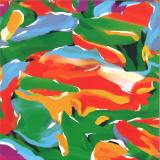
"I really wanted to challenge and, I guess, prove myself in other spheres, to take my music to a new place. I've never wanted to be too repetitive and found that expectations, imagined or real, were forcing me to get stuck on a specific sound both in my productions and DJ sets." This renewal is reflected in the title of the album, which eagle-eyed fans will note is the same as the first EP that was released under the Jensen Interceptor moniker, and the emotional and personal nature of the LP is likewise mirrored in the abstract impressionism of the artwork created by fellow Australian, Brodie Kaman, the artist behind the visual look of Lady Gaga's recent Mayhem LP as well as works for FKA Twigs, Nine Inch Nails, and more.
The design-resembling oil drifting across a microscope slide-uses a mix of vivid pastels and moody darks to express the album's emotional depth: a collection of distinct elements coalescing into something richer and more evocative.

In Stock

On Stock and ready to ship

26,47
Marshall Jefferson - Yellow Meditation For The Dance Generation inc. Joakim remixes

Utter presents Marshall Jefferson's previously unreleased meditation opus 'Yellow Meditation For The Dance Generation' alongside two remixes from French production maestro Joakim.

Marshall Jefferson: Chicago House music pioneer, creator of the anthemic ‘Move My Body’, an original collaborator of Adonis, Ce Ce Rogers and Roy Davis Jr., production mastermind of countless dancefloor classics such as Phuture’s ‘Acid Tracks’, Sterling Void’s ’It’s All Right’, Hercules’ ‘7 Ways’… and the soothing voice behind a 36 minute healing meditation guide. Yes, really.

But let’s rewind, slightly.

In 2017, Marshall was approached and encouraged by Ian ‘Snowy’ Snowball to write his autobiography and the pair set about putting Marshall’s account of the history of House music together. The book, ‘Marshall Jefferson: Diary of a DJ’ was published in 2019.

Following the book’s release, Ian and Marshall's collaboration continued and during the pandemic an outlandish idea arose to create a piece of music combining Ian's interest in meditation (he runs Club Chi specialising in Shibashi Qigong - a form of Tai Chi Qigong - which is a gentle form of movement therapy/exercise) and Marshall's willingness to experiment musically to see what might be possible.


The result is ‘Yellow Meditation For The Dance Generation’, where Marshall vocalises Ian’s lyrics in his instantly recognisable voice. The keen-eared out there may also recognise aspects of the music itself as a stripped back, lengthened and far mellower version of Marshall’s 1985 obscurity ‘Vibe’:

“I would take tapes to the Music Box and Ron Hardy would play my music. ‘Vibe’ was one of those tracks. I recorded ‘Vibe’ in 1985, but it became one of my tracks that I just forgot about until some guy on Facebook sent me a recording of it that was taken from a club. The only person who I ever gave a recording of ‘Vibe’ to was Ron Hardy. The other people I know who had copies of the track were Gene Hunt and Emanuel Pippin (DJ Spookie).

"The original version of ‘Vibe’ was made using a Roland 707, Roland JX-8P keyboard and a Roland 727 drum machine. I was still working at the Post Office at the time, and this was pre-‘Move Your Body (The House Music Anthem)’. ‘Vibe’ has the building blocks for ‘Move Your Body’ because it was using the instruments on the track that I discovered what I could do with the bass sound, to make a track like ‘Move Your Body’.”


Still, Ian’s initial intention for ‘Yellow Meditation’ was function and it was designed to be a ‘Sequential Relaxation Exercise’ focusing on the Solar Plexus. Bearing this in mind, Marshall took a bare-bones and hypnotic approach to this particular re-recording of ‘Vibe’ so that the voice takes centre stage and listeners (hopefully) find themselves on a meditative journey. In fact, this long-form track was always intended as a private tool purely for meditation at Club Chi rather than released to the public - after all, Marshall had also created and released a more drum heavy, ’traditional’ club-focused 'Vibe Three' instrumental version for that very purpose - but a chance airing of the full 36 minute version changed its path.


Much like those 1985 ‘Vibe’ cassettes, Marshall had sent the track to a few close contacts, one of whom was Kieran at Phonica Records who aired it over the shop’s basement soundsystem. Its unorthodox nature caught the ear of colleague Alex (of Utter) and the seeds of a physical release were planted.

Eventually, with the full-version carefully whittled down to a vinyl friendly length of 24 minutes, full track parts in hand and a b-side to fill, Alex sought out one of his favourite producers to take up the remix reigns: Joakim. The Tigersushi co-founder and Crowdspacer boss has a long history of boundary-pushing remixes that straddle both dancefloor functionality and experimentation. This time the original material resulted in Joakim coming up with a number of ideas and he finally delivered two versions - one club focused (‘Vertical’), the other more introspective and meditative (‘Horizontal’), both of which appear on the final 12”.

The limited edition 12” also includes a download code giving buyers access to all of the vinyl tracks plus an 18 minute extended version of Joakim’s ‘Horizontal’ remix, its instrumental counterpart (for those who can live without Marshall's voice) and full 12 minute acapella (for those who can't!)


Alex

a A1. Yellow Meditation For The Dance Generation (Edit) 24:00
b B1. Yellow Meditation For The Dance Generation (Joakim's Vertical Remix) 9:09
9:05

In Stock

On Stock and ready to ship

27,31
M.S.B. - Most Significant Beat

Sunny Crypt reaches double digits on their release catalogue with a fully remastered new edition of the now sought after debut EP from Most Significant Beat. M.S.B. is an electronic music project active since the early 90s, formed by Maurizio Martinucci and Saverio Evangelista; their first record - originally released by Marco Passarani’s Nature Records in 1994 - is a masterclass in hypnotic patterns, pulsating rhythms and mind-bending leftfield techno. While “Heart Thinks Wide” and “A Flux To Follow” on A side give more breath to lushy textures and classy, dreamy pads, B side
reflects more carefully another aspect of the duo’s background with a rawer, electro leaning, percussion driven sound palette; in fact, both Martinucci and Evangelista have deep roots in the industrial and experimental music scenes. Martinucci has been a member of Clock DVA since 2010, while also working on a wide array of projects including The Anti Group and his solo Pragma alias. Evangelista, on the other hand, has been a core member of the cult industrial outfit Esplendor Geométrico since 1990.

In Stock

On Stock and ready to ship

17,61
Wally Badarou - Simple Things (LP)

Wally Badarou is a synth pioneer and musical polymath. But rarely does he sing over his sumptuous tracks. The 6 songs that comprise new record Simple Things finally realise Wally's vision for select backing tracks from his beloved Colors Of Silence.

The tracks were originally developed back in 2001 for the release of the original CD; here, Wally has “simply" added overdubs and vocals to their mastered mixes with some discerning edits. Simply put, Simple Things is another slice of simply stunning Wally Badarou genius.

Simple Things has been decades in the making. Indeed, Wally struggled not only with the idea of singing these wonderful songs himself but singing them in English and writing his own lyrics, while wrestling with the sensational backing tracks, which themselves seemed to have taken on a life of their own.

As Wally explained to us: "In addition to the instrumental artist I have been known as, so far, there has always been a singer who simply was not sure he was, up until now. Even though “Back To Scales Tonight”, my very first album, was, indeed, a song album."

Opener "It Couldn't Be You" embellishes the uptempo groove of soca-funk gem "The Lights Of Kinshasa". As Wally explained to us, it's about “a simple love story somewhere, one rainy night, under the lights of Kinshasa. A woman, a man, online dating, quite usual in our times. Then they meet, almost missing each other." The guide vocal Wally had laid for Colors Of Silence - with an organ sound - seemed striving for words in Linguala, a Congolese language he could not speak. Therefore the decision to do it himself was not an easy one, for it had to be in English to fit his singing. We think it turned out pretty good!

"You Can't Hide Always" vocalises Wally's deep concerns set to the propulsive "Smiles By The Millions": "Populism, ostracism, radicalism, ethics and values all turned upside down worldwide, are they all inevitably exacerbated by our social networks? It could all melt down one day, like a house of cards in the ocean of fake news and false prophecies”. Wally wanted to keep the track as bare as possible but, inevitably, the backing vocals and the synth-brass arrive ultimately to present a welcome 70s flavour, with no snare-drum added.

The bright and breezy "We'll Make It Again" adds vocals to "Where Were We", a tropical, reggae-tinged bounce through the islands. Here's Waly: "Where were we when we last said: "I love you"? Simple words to express something quite common, but never quite simple to deal with. A simple song about the resilience of the broken hearts.” The reggae came from it being conceived when Wally was scoring for “Third World Cop”, a 1999 Jamaican action movie.

"Walk Straight Ahead" provides Wally's gorgeous, contemplative and idiosyncratic vocals to the deep serenity of Colors Of Silence highlight, "Amber Whispers". It's a gliding, divine, mini melodic masterpiece. It'll make you swoon in its extreme beauty. As Wally describes, "it started as just whispers, sweet amber whispers. Then the colour turned darker, as darker skies seemed to fall upon us while the whole world keeps on walking ahead, straight ahead, regardless of the blatant warnings, feeling much too comfortable in conformity. Initially, the verses were to be spoken only. I realised they could be sung all the while, without overshadowing the ethereal atmosphere." Amen.

The serene, celestial "Painting My Life Blue" presents the vocal version of "Days To Wonder". Says Wally, "how does it feel when your second half is gone after decades of riding life together? Past the temporary loss of your bearings, you come to realise you've been blind to the essential, and suddenly you can see...For this most intimate song of mine, I had tried to come up with a melody on top of the existing backing track, long before realising the melody was in the keyboard part already. It just needed to be properly mixed with it."

The profoundly emotional "Just Two Lovers" works up the formerly-too-brief and glorious "Crystal Falls" into a much fuller masterpiece and features acoustic guitar sparkle before fully glistening with some gentle head-nod percussion. Waly explains further: "Dear little green men, please tell me, what is it about us that makes you want to come and visit us so often (contrary to Fermi's assertion)? And here is the reply I believe I heard them sing: "You've got the key you've been searching for: Love”. I reverted to the initial backing track I had made around 1985, which already bore the melody, and which I added acoustic guitars to, before singing it." An astounding closer.

A synth specialist, there can be few artists more under-appreciated given their vast influence than Wally Badarou. His solo work practically defined the sound of the Balearic DJs of the 1980s, and thus the more sophisticated sound of dance culture thereafter. He was one of the Compass Point All Stars (with Sly and Robbie, Barry Reynolds, Mikey Chung and Uziah "Sticky" Thompson), the in-house recording team of Compass Point Studios responsible for a series of albums in the 1980s recorded by Grace Jones, Tom Tom Club, Mick Jagger, Black Uhuru, Gwen Guthrie, Jimmy Cliff and Gregory Isaacs. Badarou's keyboard playing could also be heard on albums by Robert Palmer, Marianne Faithfull, Herbie Hancock, M (Pop Muzik), Talking Heads, Manu Dibango and Miriam Makeba. He also produced Fela Kuti. Phew!

When we asked Wally about the significance of this collection's title, he explained: "These are "Simple things” that everyday’s life seems to build upon. The simplest are the harder to describe, but when satisfactorily described i.e. with simple words, they are the more genuine and authentic to express and share. I’ve immersed myself in other classic song lyrics, something I hardly did before, just to appreciate the genius behind the simple words they were made of, and had a great time studying how powerful they were in expressing complex ideas such as love."

Recording was twofold: first, most of the backing tracks were recorded in 2001, in Wally's studio in Normandy, mostly using hardware synths and Yamaha digital consoles. Then, he fine-tuned the melodies and wrote the lyrics in late 2023, then added some overdubs and sang them all during summer 2024. States Wally, "Digital Performer was and remains the DAW I’ve been using throughout, ever since the 80s."

Wally's sophisticated synth textures and expressive keyboard runs are so full of character, so full of life, that this work of art transcends any easy genre categorisation. Meticulously remastered and cut by both Simon Francis and Cicely Balston respectively, it has been pressed to the highest possibly quality at Record Industry in Holland. Sometimes, the simple things are the most extraordinary.


In Stock

On Stock and ready to ship

26,68
MAURICE POTO DOUDONGO - THE LOST ALBUM

Unearthed from the Crammed Discs vaults after nearly four decades (Originally recorded in 1987), a hidden gem finally sees the light. Maurice Poto Doudongo’s The Lost Album arrives on vinyl for the first time—limited to 500 copies, with printed inner sleeve featuring release notes and photographs.

Back in the hazy margins of late-’80s Brussels, where boundary-blurring sounds were seeping through the cracks of pop music, a young autodidact named Maurice Poto Doudongo was crafting music that didn’t quite belong to any scene. Born in Kinshasa and growing up in Belgium, Maurice was a sonic nomad—raised on Franco, Miriam Makeba, and Tabu Ley Rochereau, transfixed by James Brown and Prince, and shaped by the fertile collision between African music and experimental electronics occurring all around him.

Leaving school at 16 to concentrate on music full-time, he began recording on borrowed 4-tracks, using cardboard boxes for percussion, and absorbing whatever sounds the airwaves served him: “Music has no frontier,” he says. “You take what you like. Prince, Fela, Papa Wemba—there is no contradiction. It’s all part of the sound.”

The result? A record that’s equal parts analog drum machine funk, homegrown Afro-pop futurism, and new wave R&B-informed synth poetry. Marc Hollander, founder of Crammed Discs, met Maurice through his friend and associate, musician/producer Vincent Kenis and quickly recognized the spark. The two began working in earnest, preparing tracks intended for a full-length release that, for reasons lost to time and memory, never materialized—until now.

Marc remembers: “The album was never completely finished. “Bolingo” was the only track that came out on a Crammed compilation at that time… and the rest sat on the shelf for decades until we started opening the Crammed vaults.”

Maurice recalls the session as being, “like an unstoppable current”. Listening now, the Lost Album feels both of its time and well beyond it. While tracks like “Momo” sound not a million miles away from the slinky and sophisticated Balearic pop ambience of Wally Badarou’s Echoes album, "Passport Train" shakes itself loose of any genre boundaries, veering into free-form Afro-electronica and tough electronic rhythm. Others pulse with a sweet and soulful groove that suggests dance floors dreamed of but never reached.

In decades hence, Maurice never left music, and the music never left him. Now working mainly as an arranger, he describes his job as being like that of a musical psychologist: “Someone comes to me with their sound, and before anything I have to understand their mind and heart,” he explains. That same intuitive fluency can be heard across this entire album—music that listens before it speaks, that absorbs before it asserts.

This reissue is more than a remastering. It’s a second breath. Sourced from cassette roughs and 24-track demos, carefully restored with Maurice’s blessing, and released as a complete album on vinyl for the very first time, The Lost Album isn’t lost anymore.

It just took nearly 40 years to find its way to you. - Editions de Lux

In Stock

On Stock and ready to ship

24,79
PSYCHONAUT - WORLD MAKER LP 2x12"

A record born of insurmountable joy and simultaneous profound loss; World Maker marks a time of great change for Psychonaut, both personally and musically, as the band burn away the philosophical narrative complexities of previous offerings with a searing, panoramic clarity that implores us to savour the beauty of the now as a means of leaving a legacy for the future. The traditional, three-piece line up of Belgian, psychedelic post-metal collective Psychonaut has long belied the compositional prowess, captivating narrative depth and crushing live presence of a band now operating at the forefront of forward-thinking, contemporary heavy music. Having sent a shockwave through the post-metal and prog scenes with their three times repressed Pelagic Records debut Unfold The God Man in 2020 before following it up with the transformative metaphysical complexities of 2022's Violate Consensus Reality, Psychonaut have played prestigious Belgian open-air festivals like Alcatraz, Rock Herk and Boomtown Festival as well as boutique events such as Soulcrusher, Roadburn Redux and A Colossal Weekend whilst sharing stages across Europe with the likes of Amenra, Brutus and Pelagic labelmates The Ocean and PG.Lost. The seed of World Maker took shape just as the campaign for Violate Consensus Reality came to a close, with the news that guitarist/vocalist Stefan De Graef was to become a father. This tilting of life's axis led De Graef, like most fathers-to-be, to re-assess what was really important. As such, the music he was inspired to write felt free of the band's previous philosophical and spiritual foundations and instead took the form of life lessons for his unborn son, a legacy of love in case something were ever to happen. This hopeful euphoria shines keenly throughout World Maker as an uncharacteristically optimistic warmth; from the reverberating Rhodes organ on the titular opening track and the meandering, free-jazz inspired guitar solo that introduces `Everything Else is Just The Weather' to elements of world music, electronica and the otherworldly voice of Dutch multi-instrumentalist and old friend Anthe Huybrechts (Anthe/Helion Creek) most notably on tracks like `Origins' which also features tabla, a pair of indian hand drums, as its propulsive heartbeat. Whilst Psychonaut's giant riffs, punishing polyrhythms and guttural vocal rage are more resplendent than ever, there is a wider dynamic spectrum to World Maker that sees the band proudly exploring their more delicate, intimate extremes as well as their most aggressive and abrasive. Not long after the birth of De Graef's son came the devastating news that both his own father and Psychonaut bassist/vocalist Thomas Michiels' father had been diagnosed with advanced cancers. Living day-to-day and torn between joy and grief, the band found themselves shedding the grand scope and world-shattering agenda of Violate Consensus Reality to focus on the here and now. Lead single `Endless Currents', the first full track on the album, explodes in a barrage of staccato guitar tapping but mellows to let the powerful, newly pared back lyrics ring out as a call to embrace the flow and follow joy. The song's final few words `Lead the way. / Soar. / Everlong.' double as both a greeting and a goodbye as the trio build their formidable post-metal might to a thunderous breaking point. Similarly, the pulsing, propellant `Stargazer', named so for De Graef's son being born in stargazer position, pairs delicate guitar motifs and folk-inflected optimism with huge and sprawling breakdowns as some of the band's most genre-pushing work to date; asking difficult but important questions of what happens next. It is `And You Came With Searing Light' though that most immediately exemplifies Psychonaut's redirected ambition on World Maker, as euphoria collides with blinding fury. The first track written for the album, `_Searing Light' is easily the most complex and initially wouldn't sound out of place on Violate Consensus Reality. Originally meant to be the new album's opening track; the decision to defer its impact, not to mention its compositional and dynamic gravity, speaks of a fundamental change to the band's very core. The words "Discover the world with wide eyes" recurring throughout speak as much to those having lost a part of their world as they do to those seeing it for the first time. Amidst such turbulent times, the band found strength and support within their Post-Metal community. The album was recorded and produced by the band alongside their longtime collaborator and close friend Chiaran Verheyden (Hippotraktor) with help and advice from Psychonaut's live engineer Victor, who will no doubt make this album sound just as awesome on stage. Even the artwork for World Maker was a family affair, being designed by close friend Sam Coussens of Belgian cosmic sludge metallers Pothamus. In the face of life's soaring highs and desolate lows, World Maker is direct and brave without sacrificing any of Psychonaut's raw power, creative innovation or inimitable musical depth. Where their previous full-length offerings have charted grand introspective courses through time and space, World Maker is breathtaking in its uncompromising clarity: a father singing to his newborn son as a son bids his own father farewell. FOR FANS OF Mastodon, Russian Circles, Tool, Gojira, The Ocean, Pelican, Hypno5e, Cult Of Luna, Amenra

In Stock

On Stock and ready to ship

29,83
Shropshire Number Stations - Recordings of Covert Shortwave Radio Stations (Shropshire & Mid-Wales) (MC)

Perhaps you've chanced upon a Number Station, unwittingly as you scour the shortwave bands, and heard a cold, disconnected voice repeating simple commands endlessly into the ether. Or maybe you've scanned past a series of bleeps and pips, or pockets of noise, thinking nothing of them, as you seek a favoured music station. These are messages, to those who know how to receive them, and are able decode them in their various forms and configurations.

Shropshire Number Stations - Recordings of Covert Shortwave Radio Stations charts the covert shortwave radio stations broadcasting silently through the air around us, to aspirant agents in the fields of Shropshire, UK and the counties which surround it. These two continuous sides include recordings of 19 such lay-stations, captured by Eric Loveland Heath at various points over the last few years. The true nature of these amateur networks may never be known, nor might their cyphers ever be revealed. These are recordings of their activities, made conceivably for the sake of posterity alone, offering a glimpse into clandestine worlds otherwise obscured from view.

In Stock

On Stock and ready to ship

16,39
Various - The World Is But a Place of Survival: Ethiopian Begena Songs (TAPE)

The begena is a large ten-stringed lyre which is part of the traditional Amharic heritage of Ethiopia. The Amharas, who have long formed the politically and culturally dominant people of Ethiopia, mainly inhabit the central and northern part of the country. In the majority, they follow the monophysite Orthodox Tewahido Church established in the early fourth century AD.

Music plays a very important part in the life of the church. Most of the liturgy is sung and, contrary to secular music, it is accompanied by percussion instruments only. The begena occupies a special place because it is the one melodic instrument exclusively dedicated to the spiritual repertory. Because of its mythical origin, it is highly respected. Tradition holds that the begena was given to king David by God, and brought to Ethiopia by Menelik I, together with the Ark of the Covenant. It has always been the instrument of kings and nobles. Played by pious men and women of letters, it never became widespread. But it never disappeared either, not even under the Derg regime (1974-1991) which had banned the instrument.

Among Amhara string instruments, the begena is the most carefully crafted, especially with regard to the ornately sculpted crossbar. Its ten gut strings are cleaned and twisted several times. The characteristic buzzing timbre equalled by no other Amhara instrument is due to the enzirotch, that is, small bits of leather placed between each string and the bridge. This plays an important part in the sound production by creating a brief contact between the string and the upper rim of the bridge, thus modifying the vibrating properties of the string. In this manner, the spectrum of the sound is considerably enhanced (up to over 10 kHz).

The begena is a very powerful instrument, it keeps the devil thirty steps away, and its presence in the home wards off malicious spirits. Priests and preachers recommend its presence, especially during Lent (Fassika Tsom) when the Orthodox Amharas ponder their sins and repent. Because of its spiritual import, the begena generates intense emotion. According to some musicians, playing the begena brings them into direct contact with God or the Virgin Mary. The religious role of the begena is underscored by the shape of the instrument, each part symbolises an important element of the faith. The crossbar for instance, which reaches across the entire width of the instrument, represents God who is above all things. The belly which "gives birth" to the sound represents the Virgin Mary, and the ten strings recall the Ten Commandments.

Recorded by Stéphanie Weisser in Addis Ababa, Ethiopia, March 2002-December 2005.

Mastered by Renaud Millet-Lacombe.

Issued under license from VDE-Gallo, Switzerland.

In Stock

On Stock and ready to ship

16,18
Jack Horner - FR044

A bit of backstory behind this release, I first met Hilton (Jack Horner) at an event in 2012 that took place in a venue called Crucifix Lane (also known as Jack's, now defunct due to expansion of London Bridge station). He's good friends with Krome & Time who were performing that night and I remember chatting with him about jungle (I was still a very eager young lad that was in his first year of raving and very keen to talk about jungle/hardcore/d&b to anyone that would be willing to endure it!) and he mentioned that he used to make jungle in the 90s. I asked who he was and when he told me he was Jack Horner, I went mental because I was a big fan of the 2nd release on Spectrum Records (The Hoover & I Got This Feeling) and to actually meet the person behind those tunes was a really special situation for me to be in.

Unfortunately, I was too shy to get any contact details for him and I never saw him again or knew anyone that had a way of getting in touch with him. That was until very recently, when he had started attending Distant Planet events in London & I got the chance to meet him again, only to be shocked by him telling me that he had been following me & my music and was a fan of me & my label! This time, I made sure that I was able to get contact details for him, I was not going to make the same mistake as last time!

Last December, he messaged me asking if I would be up for doing a remix of The Hoover & I was quite unsure about doing it because of how much I really enjoy the original and feel like it does pretty much everything it needs to do with the sounds used. But, I thought it would be worth a try so I gave it a go and Hilton really liked the outcome (which was a huge relief ????), even though I was a bit too scared to change too much of it haha.

He then asked if I would be interested in releasing it on Future Retro London, which I'd never considered doing because I thought he would have had his own plans for it but I was willing to try & see if we could make a release out of this. I messaged Dwarde & Kid Lib to ask if they'd be up for doing remixes of the same tune (at the time, we only had access to the samples from The Hoover) and they both were and they did great work taking the original track in different directions, each in their own way.

Around the time of making The Hoover, Hilton made another tune with similar samples called After The Pain, which was never released, but he still had the tune. The problem is that he only had it in the form of a cassette recording, which wasn't very good quality and probably would not be easily cleaned up for release. So, I decided to remake the tune from scratch, using the samples I had from The Hoover, as well as sourcing & recreating other sounds used. I was able to remake the whole tune arrangement & then Kid Lib mixed it down to make it sound more sonically similar to how it would have sounded when it was originally made back in 94/95.

Anyway, story time over, big thanks to Hilton for his co-operation & assistance on making this release happen, to Dwarde & Kid Lib for their remix work & a special shout going out to Hughesee for going through Hilton's collection of floppy disks to find & record the samples for The Hoover.

In Stock

On Stock and ready to ship

16,39
Yom x Ceccaldi - Le Rythme du Silence

This is the story of an artist in search of sound and breath: an artist who dares to question the rhythm of silence—an invitation to rethink music, sound, and musical collaboration. This is the story of a journey that, after opening countless paths, has finally found its vessel—and its messengers. Three artists of profound musical truth and radical freedom, merging into an exceptional trio that crosses genres and transcends words in a journey toward pure emotion.

Le Rythme du Silence is the culmination of this long search. Yom delivers it here with violinist Théo Ceccaldi and cellist Valentin Ceccaldi—kindred spirits in sound. “I’ve been working on this idea of the ‘rhythm of silence’ for years,” Yom explains. “I first heard the phrase from a Sufi master, describing the foundation of meditation. It struck something deep in me. I’ve practiced meditation for a long time, and we often think of it as a kind of stillness—opposed to noise and life. But in truth, the rhythm of silence enables meditation. It means accepting that the world continues to move and live around you, even as you try to be still. I wanted to compose from that place. To imagine sound as vibratory matter—the primal substance of creation. That required letting go of fixed structures: forgetting melodies, abandoning the idea of a constructed solo. I needed to leave behind music as a system, and touch sound as a living, breathing entity. It took years. Many projects led me elsewhere. But with the Ceccaldi brothers, I finally found the right resonance. Working with them was simply obvious—it was indredibly powerful.”

Yom first rose to prominence reimagining Jewish traditional music with his 2008 debut New King of Klezmer Clarinet. Since then, his path has led through rock (With Love, 2011; You Will Never Die, 2018), electronic utopias (The Empire of Love, 2013), meditative and sacred soundscapes (Prière, 2018), and countless unclassifiable hybrids (Unue, 2009; Green Apocalypse, 2010). It was inevitable that he would eventually cross paths with the free-spirited Théo and Valentin Ceccaldi—two artists who also place collaboration and genre-blurring at the heart of their artistic development. Their projects are always bold, demanding, and full of life (Kutu, Tricollectif, ONJ, Velvet Revolution, Grand Orchestre du Tricot, Lagon Noir, Constantine, etc.). And so, when the three met within the iXi string quartet, something clicked.
“I was seated between the two of them in the quartet,” Yom recalls, “and I could feel their energy flowing from both sides—it was wild! They’re so tuned into each other, they don’t need words. It’s like they’re connected by musical Wi-Fi. The groove happens instantly. They’re precise when they want to be—thanks to their experience in pop-influenced projects —but they can also let go completely, diving into pure sound. That’s exactly what this project needed.”

Without a single rehearsal, the trio formed instinctively. They began performing Yom’s compositions live, unfolding them into a single continuous piece, where clarinet and strings stretch the limits of sound and breath.
Bowed, plucked, or prepared with clothespins, the Ceccaldi strings engage in a playful and intense dialogue with Yom’s custom B-flat clarinet. Through their imaginative listening and fearless invention, air and space open into a vast new soundscape—one that lies somewhere between meditation and healing music.

“When Yom shared the concept of the rhythm of silence, we were immediately drawn in,” says cellist Valentin Ceccaldi. “There’s a deep intensity and spiritual commitment in his music that really spoke to me. With this trio, we’re trying to dive into the core of sound—but also to create a kind of communion with the audience. It’s like gradually turning up the volume on silence, and realizing it’s made of countless tiny sounds—the music of particles in motion" This stripped-down intensity demands full presence—body and mind—of these three musicians, vibrationally connected in a state close to trance. With them, we enter a journey - not religious, but sacred nonetheless.
The Rhythm of Silence becomes an echo of our most intimate, most distant inner landscapes.
An album—and a trio—to return to without end.

In Stock

On Stock and ready to ship

22,06
Netinho - Du Du Du Domingo (Joutro Mundo Edit) (7")

For its sixth release, Rio de Janeiro’s Onda Boa label sees founder Joutro Mundo, step up once again - this time reviving and re-vibing Netinho’s independent 1980s bop, “Du Du Du Domingo”.

Netinho first made his mark in the 1960s as the drummer for Brazilian beat icons Os Incríveis, then again in the 1970s with the heavier, lysergic sounds of Casa das Máquinas. By the 1980s, he had turned toward a new vision, inspired by the spiritual group Amor e Caridade. Released on his own imprint, Manancial do Amor, 1982’s Apartamento 97 – Projeto Amor & Caridade Vol. 2 brought together heavyweights Zé Rodrix, Faísca, and Manito to expand on this funky, pop-rock chapter first introduced with 1980’s Amor & Caridade Vol. 1.

According to Netinho, a year passed in search of inspiration for the follow-up LP before he began receiving notes and poems through his medium, dictated to her by his “protector.” Following that divine intervention, the album’s songs were completed in just two days—including the standout track, “Du Du Du Domingo,” an ode to the beauty of a Sunday afternoon after the toils of the workweek.

Side A presents the original track, lovingly remastered, in all its stripped-down, idiosyncratic glory. A bubbling synth bass paired with a nimble electric bass line set the stage for the plunky synth melody that defines this anomalous yet infectious gem—before giving way to a samba break and a wafting crowd noise that instantly transports you to a sunny Sunday by the sea.

On the B-side, Joutro Mundo injects a new vitality into the track with crisp hi-hats, a thumping kick, and other subtle studio magic. The samba break is brought forward, while the electric bass line—previously bubbling beneath the surface—rises to center stage around the three-minute mark. True to form, Joutro Mundo avoids the obvious, drawing on his deep crates and production sorcery to conjure up yet another gem for the balearic heads and other lovers of left-field dancefloor deviance.

In Stock

On Stock and ready to ship

13,03
Auntie Flo - Birds of Paradise

Celebrated DJ, producer, and sonic explorer Auntie Flo (aka Brian d’Souza) — described by The Guardian as “one of global club culture’s most vital voices” — returns this autumn with ‘Birds of Paradise’: a rhythmically rich, emotionally resonant, and ecologically grounded new album, out 23 October via his A State of Flo imprint. The album will be launched with a special live show at London’s Jazz Caféon the same day.

‘Birds of Paradise’ draws on d’Souza’s global club experience while deepening his connection with the natural world. Built around classic Roland drum machines and iconic vintage synths, the record is a joyful, body-driven celebration of rhythm and movement, but one grounded in ecology and place. The album’s spiritual centre lies in Saligao, Goa, near d’Souza’s maternal homeland where his Auntie Florie (where the name is derived from) is buried. Where he found his ‘paradise’ nearby, staying in a converted fisherman’s hut and recorded dawn choruses from a riverside studio overlooking mangrove-lined waters. Environmental textures from Japan also make their way into the music, creating a sonic map rooted in lived experience.

“Birds of Paradise is about finding beauty and rhythm in a chaotic world. It’s about listening, to nature, to our bodies, to what’s real. It’s a reminder that dance music can be both joyful and grounded.” The album blends Afro-Latin polyrhythms with Western 4/4 patterns, fusing instinctive, dancefloor energy with field recordings that anchor the music in the earth. Described by d’Souza as “tropical with a few deeper edges, a balance of light and dark.”

The new record follows the acclaimed ‘In My Dreams, I’m A Bird and I’m Free’, which earned 4 stars and Global Album of the Month from The Guardian, featured in Disco Pogo’s Albums of the Year, and received support from Luke Una, Resident Advisor, Juno, Bandcamp, Mixmag, DJ Mag, Electronic Sound, The Skinny, Beatport, Ban Ban Ton Ton, and more. The album’s launch show at Omeara London sold out. Other recent projects include the ‘Outernational Dance’ EP on cult label Multi Culti, event series ‘Plants Can Dance (and Mushroom’s Sing)’ which explore plant and fungi bioelectricity as a means of live composition, and ‘Black Beacon’, a haunting cassette release and soundwalk series recorded on the abandoned military island of Orford Ness. There, d’Souza explored the eerie intersection of nature, decay, and deep time, gaining special access to restricted buildings to capture long-form soundscape compositions.

Alongside his production work, d’Souza has emerged as a leading voice at the intersection of sound and science. He curated music for Imperial College’s groundbreaking psychedelic therapy trials, developing six-phase playlists to guide participants through psilocybin-assisted sessions treating conditions such as fibromyalgia and gambling addiction. His five-hour ambient set at Watching Trees Festival, selected as Resident Advisor’s Mix of the Day, continued this exploration into the therapeutic potential of sound in altered states. He also spent six months collaborating with BBC producer Tom Raine on a documentary for BBC World Service, centred on a two-week journey through Kenya and Goa. There, he performed live, led plant music workshops, and joined a deep listening retreat rooted in field recording. “I realised my studio isn’t just four soundproofed walls filled with instruments — it’s the journey itself. It’s the people I meet, the natural world I listen to, and the connections I feel.”

This same commitment to deep listening fuels his live concept Plants Can Dance, a project that combines the biosonification of plants and fungi with modular synthesis. The next event, on 14 September at Hideout Hackney Wick, will feature performances by Stella Z and Lapalace, with d’Souza and resident Lamine playing live alongside responsive plants in collaboration with Repot Hackney Wick and the label Music To Watch Seeds Grow By. “I’ve spent years exploring how electronic music can connect us, not just to each other, but to the natural world. Whether it’s translating mushroom data into melody or capturing birdsong at dawn, it’s about finding resonance across bodies, ecosystems, and machines.”

Rooted in his Goan and Kenyan heritage and shaped by years of travel and collaboration, d’Souza’s creative mission is simple: to reconnect the electronic world with the natural one. Through A State of Flo, he continues to blur the boundaries between club culture, sound art, and ecological awareness.

In Stock

On Stock and ready to ship

19,12
Various - The World Is But a Place of Survival: Ethiopian Begena Songs LP 2x12"

The begena is a large ten-stringed lyre which is part of the traditional Amharic heritage of Ethiopia. The Amharas, who have long formed the politically and culturally dominant people of Ethiopia, mainly inhabit the central and northern part of the country. In the majority, they follow the monophysite Orthodox Tewahido Church established in the early fourth century AD.

Music plays a very important part in the life of the church. Most of the liturgy is sung and, contrary to secular music, it is accompanied by percussion instruments only. The begena occupies a special place because it is the one melodic instrument exclusively dedicated to the spiritual repertory. Because of its mythical origin, it is highly respected. Tradition holds that the begena was given to king David by God, and brought to Ethiopia by Menelik I, together with the Ark of the Covenant. It has always been the instrument of kings and nobles. Played by pious men and women of letters, it never became widespread. But it never disappeared either, not even under the Derg regime (1974-1991) which had banned the instrument.

Among Amhara string instruments, the begena is the most carefully crafted, especially with regard to the ornately sculpted crossbar. Its ten gut strings are cleaned and twisted several times. The characteristic buzzing timbre equalled by no other Amhara instrument is due to the enzirotch, that is, small bits of leather placed between each string and the bridge. This plays an important part in the sound production by creating a brief contact between the string and the upper rim of the bridge, thus modifying the vibrating properties of the string. In this manner, the spectrum of the sound is considerably enhanced (up to over 10 kHz).

The begena is a very powerful instrument, it keeps the devil thirty steps away, and its presence in the home wards off malicious spirits. Priests and preachers recommend its presence, especially during Lent (Fassika Tsom) when the Orthodox Amharas ponder their sins and repent. Because of its spiritual import, the begena generates intense emotion. According to some musicians, playing the begena brings them into direct contact with God or the Virgin Mary. The religious role of the begena is underscored by the shape of the instrument, each part symbolises an important element of the faith. The crossbar for instance, which reaches across the entire width of the instrument, represents God who is above all things. The belly which "gives birth" to the sound represents the Virgin Mary, and the ten strings recall the Ten Commandments.

Recorded by Stéphanie Weisser in Addis Ababa, Ethiopia, March 2002-December 2005.

Mastered by Renaud Millet-Lacombe.

Issued under license from VDE-Gallo, Switzerland.

In Stock

On Stock and ready to ship

28,36
Various - MENTAL GROOVE CLASSICS VOL. 4 LP 2x12"

File under house, breakbeat, techno and warehouse rave music. The Mental Groove Classic series returns with a treasure trove of rare and hard to find tracks plucked from the personal collection of label founder Olivier Ducret, a pivotal figure in Switzerland's acid house and rave-era party scene.


The compilation is inspired by a moment in time when musical boundaries were being redrawn in a wave of carefree optimism and the freedom that fueled new rave scenes across Europe and beyond.

The Mental Groove Classics series returns with a treasure trove of rare and hard-to-find tracks plucked from the personal collection of label founder Olivier Ducret, a pivotal figure in Switzerland's acid house and rave-era party scene.


On Volumes Two and Three of the series released last year, Olivier Ducret (founder of Mental Groove and Musique Pour La Danse, half of WRWTFWW) takes us back to the turn of the '90s. It was a time when he was promoting parties in fields, squats, forests, warehouses and former factoriesin and around Geneva, all while working behind the counter of a record shop called Mental Groove. While others in Switzerland's emerging dance music scene gravitated towards trance and garage, Olivier and his crew opted for a sound focused on bass, breaks, and techno. This unique approach was inspired by their regular trips to clubs, raves, and record shops in the UK. Drawing directly from his own record box and a memory bank full of euphoric dancefloor moments, this fourth installment sees Olivier reaching for more cuts of near-mythical rarity, genuinely overlooked gems, and undeniably brilliant classics - each selection has left a long-lasting impression on the local raving landscape. It's an autobiographical audio document, a historical archive, and a personal musical statement all rolled into one. The compilation is inspired by a moment in time when musical boundaries were being redrawn, if not exploded, in a wave of carefree optimism and thefreedom that fueled new rave scenes across Europe and far beyond.


Original artwork by Mark Wigan, co-owner of Soho's Brain Club and an artist of early British club culture.

In Stock

On Stock and ready to ship

25,17
CAIN - Lineage

CAIN

Lineage

12inchFG015
Fine Grains
29.09.2025

Continuing the percussive-driven and emotive themes from his previous EPs, CAIN reaches beyond the boundaries of experimental electronic and Celtic music from the Scottish Highlands. "Lineage" is the result of a life-long goal to combine his passion and experience in these respective worlds. The album includes Brighde Chaimbeul on Scottish small pipes, James Mackenzie on flute and vocals by Katie Mackenzie.

The common thread that connects his discography is the intense rhythmic and melodic elements that convey his love of ‘infectious rhythm, ethereal beauty, or an otherworldly strangeness’. His productions have garnered support from DJs like Ben UFO, Gilles Peterson, Peggy Gou, Hunee, Haai, Erol Alkan, Ame, Oneman, and Midland, amongst others. Balancing rhythmic precision with profound harmonic depth, CAIN weaves evocative builders that ignite dancefloors at peak time and reveal intricate sonic tapestries in the intimate confines of headphones.

CAIN's musical background is rooted in traditional Scottish bagpipe music, which evolved through his competitive performances on an international level. His experience and knowledge enhanced CAIN’s understanding of how regional folk music reflects specific environments and cultures. Through the competition circuit he met Brìghde Chaimbeul, out on the scenic games fields of Uist, Glenfinnan and many others. He also competed against James Mackenzie, an amazing piper and flautist. James is a former member of the band Breabach. His wife, Katie Mackenzie is a superb Gaelic singer.

The recordings with James and Katie were done on the island of Bernera, off the Isle of Lewis in the Outer Hebrides and recordings with Brìghde were made in Edinburgh.

Mastered by Sam at Precise, Design by Alexander Horne, Pressed and printed at Record Industry

In Stock

On Stock and ready to ship

20,80
L'Empire Des Sons - L'Empire Des Sons (LP)

An elusive cult gem resurfaces through Glossy Mistakes. Originally released in 1986, L'Empire Des Sons is an otherworldly blend of synth pop, folk experimentation, and cinematic percussive layers-dreamlike, poetic, and wildly ahead of its time. L'Empire Des Sons was a fleeting yet powerful transmission from the fringes of the French underground-an album that blurred genre lines and evaded easy classification. Fusing experimental folk, lo-fi synth pop, and avant-garde textures, the record exists in its own sonic universe: poetic, layered, and fiercely independent. Formed in Saint-Étienne by percussionist and composer Dominique Lentin (Dagon, Fille Qui Mousse) and first-time vocalist Bipé Redon, L'Empire Des Sons emerged from the vibrant DIY spirit of the early 1980s. Their paths crossed during the interdisciplinary project L'Opéra Quotidien, and what followed was an intuitive, deeply collaborative process. "I would bring in lyrics and my voice," Bipé recalled, "and Dominique would shape the music around the atmosphere or rhythm suggested by the words." The result is a collection of songs that feel both meticulously constructed and completely free. Ethnic percussion, marimbas, xylophones, and synthesizers dance around Bipé's surreal, fragmented lyrics-little sonic postcards from imagined worlds. There's a theatricality here, but it never feels forced; rather, it's playful, intimate, and raw. Despite their inventiveness, L'Empire Des Sons remained a well-kept secret-circulating only in select avant-garde circles and eventually becoming an extremely sought-after collector's item. Now, thanks to Glossy Mistakes, this lost artifact returns to the world with new life: remastered from the original tapes, pressed on vinyl for the first time with extended liner notes. L'Empire Des Sons was never meant to be boxed in. Like the quote from Brian Eno that opens their liner notes-"For the world to be interesting, you have to be manipulating it all the time"-their music resists stasis. It evolves, shifts, surprises. And now, it finally gets the audience it always deserved.

In Stock

On Stock and ready to ship

21,81
Amelia Cuni - Melopea LP

Black Truffle is pleased to announce Melopea, presenting two new pieces highlighting the incredible voice of Amelia Cuni (1958-2024), the great Italian singer, based in Berlin in later life, whose mastery of the classical Indian dhrupad developed in parallel with a commitment to contemporary experimental approaches. After two stunning archival releases documenting traditional dhrupad performances in India in the 1990s (BT079 and BT092), the two side-long pieces here embody the freedom with which Cuni explored new contexts and settings for her singing.

Both make use of a long recording of Cuni singing the pentatonic Raag Bhoop (or Bhopali) made in 2012 by her partner Werner Durand in Berlin. ‘Melopea’ began from Cuni and Durand’s superimposition of this recording with violinist Silvia Tarozzi and cellist Deborah Walker’s performance of Éliane Radigue’s ‘Occam River II’. Inspired by the beauty of this chance encounter (and other experiments with non-synchronous collaboration during the pandemic years), Tarozzi and Walker recorded independently, without hearing Cuni’s voice but ‘having her present in memory’. Tarozzi and Walker’s bowed strings places Cuni’s magisterial performance in a new context, emphasising, as Radigue commented upon hearing the initial layering of her piece with Cuni’s voice, a shared ‘searching toward the partials, overtones, these natural constituents of acoustical sounds in their richness’. Beginning with whispered bowed harmonics, the violin and cello swap the stability of dhrupad’s traditional tanpura drone for a slowly evolving, uneasy web of harmonic interactions recalling some of Harley Gaber’s work, sometimes sitting on dissonances for long periods or allowing changing interference patterns to come to the fore. Primarily focusing on her lower register, Cuni’s performance demonstrates her mastery of microtonal pitch subtleties, elegant sweeping glissandi and meditatively unhurried pacing.

The continuation of the same recording by Cuni forms the foundation of ‘Bhoop-Murchana’, with Anthea Caddy on cello and Werner Durand on soprano saxophone. In contrast to the randomised layering of the first piece, here Durand and Caddy have carefully selected pitches based on the raag Cuni sings, using the ‘Murchana’ form, which uses the constituent notes of the raag as tonics of new raags, retaining the same interval structure. Both players who have developed tones of striking depth and harmonic purity on their instruments, Caddy and Durand’s patient long tones are simultaneously rigorously grounded in the physical properties of sound and possessed of an immaterial, floating quality. Combined with Cuni’s voice and, near the piece’s end, her contributions on hammered and plucked tanpura, the effect borders on miraculous. To surrender to this music is like slipping into an onsen pool, feeling the instantaneous release of every tension. Accompanied by liner notes from Durand, Tarozzi and Walker, Melopea is both a moving tribute to the profound art of Amelia Cuni and, for the uninitiated, a perfect introduction to it.

In Stock

On Stock and ready to ship

23,49
VARIOUS - Ryukyu Rare groove Revisited - Okinawa Pops 1957-1978 LP

A compilation of rare and unique pop songs sung in Okinawa's unique musical scale with rock and soul grooves. It is based on “Ryukyu Rare Groove” released in 2003 and its sequel “Ryukyu Rare Groove 2” in 2006. This is a renewed version of those two albums, with more carefully selected and new songs included.

The Yara Families, the symbol of this series, as well as songs by Shokichi Kina, the originator of Okinawan folk rock, Mitsuko Sawamura, who made a breakthrough from Okinawa into American musical films, and Teiko Saito (Teiko Taira), a jazz singer who released her debut album in 2022 at the age of 86 and became a topic of conversation, The album contains 14 precious tropical groove songs. A renewed version of “Ryukyu Rare Groove” is now available in analog format!

The compilation “Ryukyu Rare Groove” became a hot topic as many people became addicted to its unique groove, which was created by applying Western arrangements to Okinawan scales and traditional Okinawan music. Ryukyu Rare Groove Revisited” is now available in analog format.
It features 14 precious tropical grooves, including not only the iconic Yara Families from this series, but also songs by Shokichi Kina, the originator of island song rock, and Teiko Saito (Teiko Taira), a jazz singer who released her debut album in 2022 at the age of 86 and became a hot topic.
Ryukyu Rare Groove Crossover,” a selection of jazz arrangements of Okinawan melodies and folk songs, was also released simultaneously, featuring MURO selection
‘Diggers Dozen’ and Kiyoshi Yamaya's Okinawan folk song Jazz Funk, which was featured on the ‘Ryukyu’ 7-inch from Tropic Night Records. and other instrumentals,

including Latin big band jazz by Naoteru Misuna and the Tokyo Cuban Boys.

In Stock

On Stock and ready to ship

39,71
Exit - The Little Green Monster/One More Hour (7")

Exit were a five-piece ensemble of journeymen musicians from the lone star state of Texas who came together in the early 1980’s to record a handful of popular local 45’s including two Football-mania songs. The groups line-up consisted of lead guitarist and vocalist Clennis High, rhythm guitarist Lonnie Jones, his brother Johnny K. Jones the groups keyboardist, bassist Frank Houston Jr and George Oliver on Drums.

Clennis High, a promising Football player with a flair for playing the guitar began his early musical career while attending Wheatley High school. Aged 17, Clennis played on several Crazy Cajun, Huey P Meaux’s recording sessions for Eugene Gamble and Barbara Lynn. Further recording sessions on Roy Head followed before he accepted an invitation by his neighborhood friend Willie Parnell to play alongside a group of fellow students in a band called ‘The Drells’. ‘The Drells’ had been founded by Archie Bell in 1966 pulling together neighborhood friends James Wise, base singer Cornelius Fuller, Billy Butler, Willie Parnell joined later by Archie’s brother Lee Bell. Clennis would play with ‘Archie & The Drells’ through their time on Skipper Lee Frazier’s Ovide label often accompanied by the ‘Texas Southern University Toronadoes’ where they scored a hit with the dance instruction song “Tighten Up” which on the strength of Atlantic Records picked the group up. Clennis played on all 3 of the Drells studio albums “Tighten Up”, “I Can’t Stop Dancing” and There’s Gonna Be A Showdown” under Gamble and Huff’s tutelage before quitting to return home to complete his degree. He continued to play with several local Houston bands including the Cold Four who recorded the sort after “Love And Care/Low Riden” (Drells).

Clennis later formed ‘The Reality Band’ with his friend Jerald Grey which introduced him to George Oliver and Frank Houston Jr. Occasionally ‘The Reality Band’ played with other groups, one group in particular (which Jerald previously knew) being an outfit from Conroe, Texas called the ’58 Engineers.

‘The 58 Engineers’ were founded by Johnny and Lonnie Jones, taking their name from the Army unit Johnny served with during his time in the service. By 1973 having grown to 8 members the group entered the studio to record the highly collectable and popular funk outing “The Funky Fly (Part1 & 2)” on their own Bryant Records label (Bryant being the Jones brother’s mother’s maiden name).

As members of the ‘58 Engineers’ moved on, the Jones brothers found themselves working more and more with the ‘Reality Band’ so when Jerald Grey too later moved on the remaining ‘Reality Band’ members Clennis, George and Frank having grown fond of the two “Country Brothers from Conroe” as they affectionally called the Jones’s made the decision to continue working with them, which led to the foundation of the group, Exit.

During 1980 the recently formed Exit recorded the first of their two Football -mania songs but it is from the groups 1981 release “Success/One More Hour” (Dat-Tex 105) that Soul Junction have taken the splendid ballad “One More Hour” to pair with the flipside of the groups third release “The Little Green Monster” (Dal-Tex 106) which is now highly regarded and sort after by sweet soul/lowrider connoisseurs alike. Both of these songs have been put back-to-back to feature on Soul Junction’s forthcoming September 45 release.

In Stock

On Stock and ready to ship

17,86
Anatolian Weapons & The Spy - DDS10

With its 10th edition, Dalmata Daniel's split series brings together two artists who have both left their mark on the label's compilations, now presenting their first full releases on the imprint. Anatolian Weapons and The Spy approach electronic music from different angles, one rooted in hypnotic techno rituals, the other in raw electro and post-punk energy. Both craft sounds that thrive in the shadows of the dancefloor.

On the A-side, Anatolian Weapons delivers three cold, hypnotic cuts. "Trapped" opens with heavy EBM percussion and a buzzkill bassline, setting a tense, mechanical tone. "Further Spiralling Down" sinks deeper into darkness with a grinding low end, tight drums, and electro-tinged claps, forming the side's relentless highlight. "Apathy Through Shock" closes with pounding, catatonic rhythms and a mournful, otherworldly melody, pushing the listener into disorienting depths.

Flipping over, The Spy's raw, electro-driven energy takes hold. "Same Blur" channels sharp electro beats with a punkish sneer and cosmic synth lines. "Falling", featuring The Spy's own vocals, leans into melancholic new wave, pairing bouncy rhythms with bittersweet melodies. The closing "Pretending" drifts into the darkest corners, offering low-slung, haunted electro layered with distant, spectral harmonies.

In Stock

On Stock and ready to ship

11,35
Items per Page:
N/ABPM
Vinyl