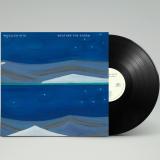
Presenting the third thematic volume on the “Aquapelagos" series - a collection of split LPs where selected artists offer their own take into water surrounded cultures and communities. After the initial release of the Anthology compilation Aquapelago in 2022 (Discrepant ,CREP91) and the split LP Atlantico by Lagoss & Banha da Cobra (Keroxen, KRXN027) as well as the direct collaboration LP Índico by Mike Cooper & Pierre Bastien we proudly introduce an the third volume in the series in the shape of no other than two inspiring artists, Vica Pacheco and Pak Yan Lau. Two different sound journeys inspired by the majestic and peaceful Pacific Ocean, the vastest, largest and deepest ocean of our planet.
Vica Pacheco’s composition takes a calm meditation approach where water flutes and synths brush shoulders to create a ever expanding mind journey whereas Pak Yan Lau’s ambitions Neo classical piece, The Ocean in Us, talks about that grand overwhelming feeling, that vast space deep under, on the bottom of the Pacific. Both compositions were recorded and created with the particular wet acoustics of the Tank in Santa Cruz de Tenerife in mind.
From Philip Hayward and Matt Hill’s liner notes: ‘’The Pacific is a complex space, comprising a third of the Earth’s surface. A cascade of islands runs along its eastern flank, down from the Kamchatka peninsula, through Japan, Taiwan, The Philippines, Melanesia and on to Australasia. In its watery heart the islands of Micronesia and Polynesia stretch across huge distances, north-east to the Hawaiian archipelago, south east to Rapa Nui and south west to Aotearoa and Chatham island. Closer to the shores of the Americas lie Tierra del Fuego, the Galapagos Islands, Haida Gwaii and the Aleutians. This is a space that resists easy characterisation. The Pacific laps the shores of Japan and Chile, the beaches of Australia’s East Coast and the cold, damp coasts of British Colombia and Alaska alike. Indeed, the space is so vast that it is a world in itself and one rarely navigated in its entirety. In this manner, strands of genres and the songs that reflect them are components in an intricate mesh of associations.‘’ Philip Hayward and Matt Hill, April 2022
Cerca:other two
At the start of this summer, following a three-year hiatus for Daphni (punctuated only by his first ever collaborative Daphni track ‘Unidos’ alongside Sofia Kourtesis), he dropped ‘Sad Piano House’. The track represented something of a continuation in the Daphni catalogue, its roots growing from Cherry’s ‘Cloudy’ and its subsequent Kelbin remix, something in that song’s makeup having a profound effect when played on dancefloors by Snaith and countless others. ‘Sad Piano House’ deployed more intangibly irresistible bendy piano to equally satisfying effect and continues to achieve similarly rhapsodic dancefloor saturation.
Though a sizeable gap for Daphni releases, between Cherry and Butterfly however of course sits Honey, the latest Caribou album and one that saw the more instantaneous and dancefloor leaning traits of Daphni peaking through the cracks more than ever before. This blurring of the lines leads to an intriguing collaboration in Butterfly’s lead single ‘Waiting So Long (feat. Caribou)’. An unlikely duo - in that both artists are the same man, Dan Snaith - ‘Waiting So Long’ is not so much an identity crisis, ego trip, or the result of a chemical spill in the Snaith laboratory. It’s simply a track that Snaith felt for the first time belongs to both aliases, and might appeal to fans of both. He has never sung on a Daphni track before, and did not set out with the intention to do so this time, and yet this strange billing was born.
Daphni music has always been Snaith’s way of hitting directly to the core of the dancefloors he spends so much of his time playing to, and those dancefloors have been steadily expanding as his name grows, with the music following suit. This album however also draws from further back with a definite kinship to the very first Daphni album, the invigorating bag of ideas that was Jiaolong.
Butterfly is a showcase of the wonderful variety and surprising twists and turns that made that album such an exciting new prospect and that still to this day make Snaith such an intriguing DJ. There are more heavy hitters here, tracks that fill those dancefloors better than anyone, like ‘Clap Your Hands’ which picks up the energy of ‘Sad Piano House’ and flips it, exposing the gritty and intoxicating underbelly of Snaith’s hitmaking side, while retaining the playful urgency that runs through all of his work of late. Meanwhile ‘Hang’’s comic-strip horns are unpinned by gleeful force, unrelenting and thrillingly unshakeable. Elsewhere though comes a clutch of other tunes that might creep out somewhere more off the beaten path, a path Snaith has never stopped seeking in amongst his larger billings. ‘Lucky’ is squirmy and elusively intoxicating, ‘Invention’ skitters down meandering, inviting corridors, ‘Talk To Me’ grumbles and broods in the murk, and ‘Miles Smiles’ could roll on endlessly, so confident in its groove. There are no obvious peaks in these tracks or unifying moments, in fact many of them really have no business being on the dancefloor at all, and yet in the right setting, they could be the most fun to be had all night.
One such club is a good microcosm for the ethos of Butterfly as a whole. “Around the time I was finishing up this album I played a long set in a club called Open Ground in Wuppertal, Germany.” Snaith recalls, “It’s kind of, in one sense, the platonic ideal of the kind of club I’d want to play in. Every single decision has been taken, at great expense, with the aim of making the perfect sounding medium sized club room. But on top of it being the perfect acoustic environment it also is run by an amazing collection of people in a way that gives it a sense of community that dance music at its best provides. It is an absolute pleasure to play in that room to a crowd of people who come from all over. Playing in there you feel like you can play anything, and I played works in progress of pretty much every track on this album in my set there. Don’t get me wrong, I love playing a short set at a festival or in a more raw warehouse kind of club where you bang it out and only really functional music works but on record I guess the point of these Daphni records is to keep in mind a more expansive idea of dance music where the parameters are broad and the church is broad. I think that actually, putting really functional stuff next to weirder tracks (both on an album and in a dj set) might be the thing that’s still most interesting to me.”
This is the feeling that’s most palpable on Butterfly, and in every single time you see Snaith DJ. Right from the inception of the Daphni alias - and even before that – the thrill of trying stuff out, pushing at the boundaries has always been there and on Butterfly is present in all its twists and turns. It leaps all over the place and yet it hangs together, never feeling like a grab bag of dancefloor utilities but rather a distillation of all the strings to Snaith’s bow, exhilaratingly human and unified by one singular concept – simple and joyful exploration.
For Metro Beirut’s latest release, Cem Mo steps forward with his debut vinyl EP, a record that bridges the roots of Chicago and Detroit house with his own deep and textured approach to groove.
Born in Ankara and having taken piano lessons at an early age, Cem drifted from classical into jazz, re-teaching himself harmony and improvisation before finding his way into production. After moving to Amsterdam in 2016, the city’s community and music scene expanded his horizon, shaping a sound that treats producing like improvising, with curiosity for grain, color, and repetition, where subtle shifts make all the difference. Along the way, Cem has released on Handy Records and Rhythm Section, while his project Nowhere People has appeared on Artisjok Records.
This EP brings together a tight circle of artists who deepen its character. Saxophonist Moritz Schuster, known for his work across electronic music and past work with Cem and Malik Kassim, formerly known as Retromigration, delivers a striking, free-flowing performance charged with raw intensity. On “The Hard Way”, Franco Corica joins Cem for a deep, soulful, jazz-leaning moment that feels both reflective and quietly defiant. Finally, longtime friend Malik pulls up with a dancefloor remix that preserves Cem’s melodic sensibility while adding his own loose, resulting in a circular dialogue between two artists who’ve grown side by side.
Artwork: Shahd Issa
- 1: Urn Burial
- 2: The Redness In The West
- 3: The Third Migration
- 4: They Came Like Swallows
- 5: The Living Theater
- 6: The Oceans Are Crying
- 7: Insight
Black Vinyl[30,67 €]
They Came Like Swallows is the first album-length collaboration between Thurston Moore and Kramer (now officially Bonner Kramer), two giants of alternative/ experimental music. The accomplishments and influence of these two artists in the world of independent music cannot be overstated and the result of their artistic union is a startlingly cohesive statement that burns through landscapes of primitive outsider rock, avant-garde composition, progressive ambient and further locales boldly and beautifully unnamable. “Kramer and I reconnected in Miami, Florida, a few years back, many many years after each of us had departed NYC on separate life adventures. It was only a matter of time before Kramer and I started making plans to record together and with his irrepressible due diligence he quickly set up a mobile recording contraption in the pad I was decamped in, the Florida sunshine flowing through the palm leaves, lithe lizards skittering across the windowsills, and we just went for it.
Kramer had the idea to cover a Joy Division tune, a left turn from the improvisations we had been tracking, though wholly in keeping with both our sensibilities of light and dark unifying in transcendent songwriting, both of us devotees of 'the song' as well as 'the freedom.’ What transpired is They Came Like Swallows, a session we immediately felt should exist as a prayer to the war-torn souls of the families of Palestine continually decimated by the brutality of genocide. We agreed beyond words to offer our music as a sonic activism and as a beneficent energy. This album is our duo exchange for human dignity, it is our soul music for any semblance of a peaceful planet.” ~ Thurston Moore “For the first time in our nearly 45 years of friendship, we had identical time windows open to make a record together,” recounts Kramer. After all this time not a moment is wasted as the duo immediately taps into the heightened core of improvisational tension across these seven offerings. Volcanic opener “Urn Burial” notches a similar historic union (John Cale and Terry Riley) to meet the circumstances of the moment, with swirling mists of organ and pounding toms over guitar that thickens the atmosphere with jagged, grimy dissonance.
Solemn strings open the second track, “The Redness In The West,” with Kramer’s cello and viola in dueling bow beneath the high tension drive and sustain of Thurston’s electric guitar, tapping out a Morse code of tension that mounts endlessly into a fog of inevitable war by the end. Moore and Kramer’s sense of experimentalism is in free and full grandeur throughout They Came Like Swallows, though the duo keep a strong and constant sideways eye on melody, composition and architecture, to the ends that any strict lines between song and improvisation are blurred beyond qualification.
As if to punctuate this point, Swallows closes with a nightwork cover of Joy Division’s “Insight,” a doleful coda that breathes out with a solemn inner grace under Thurston’s instantly stylistically recognizable guitar melodies as they weave into he and Kramer’s unison voices. As the lone vocal piece and only traditional ‘song’ form on the album, “Insight” is unique to this set and as a closing statement draws connective lines back to the kind of dynamic, electrified melodicism that wove deep, melancholy patterns into the untamed fire of Sonic Youth’s Sister and Daydream Nation. In the album’s final moments, the two voices repeat the lyric “I’m not afraid anymore” as mantra, underscoring the heavy, unsettled themes and methods that preceded it. Kramer describes the creative process of They Came Like Swallows: “I had composed and recorded a few pieces at my home studio over the course of a couple weeks. Thurston was spending the winter in South Florida, so I flew down and spent a few days recording his guitar parts in his home there. Watching him spontaneously compose his parts was pretty astonishing, to say the least. Once we'd finished working on those pieces, we began improvising and following wherever the music pointed us, and another few pieces were born. We got straight to it, without anything driving us other than the joy of finally working together.
My personal goal was to remain present and catch as many surprises as I could from Thurston's guitar work, and there were plenty during those few days. We had a fucking blast.” Thurston’s contributions here will be readily familiar to any acolytes of his other works, the through-line between his inspired playing, cradled in Kramer’s meticulous, solid arrangements. “If I had to make this record again, I'd do it all exactly the same way,” Kramer says. “It’s like jazz, you don't think about it. You just do it. It was miraculous, and you don't fuck with a miracle.”
They Came Like Swallows is the first album-length collaboration between Thurston Moore and Kramer (now officially Bonner Kramer), two giants of alternative/ experimental music. The accomplishments and influence of these two artists in the world of independent music cannot be overstated and the result of their artistic union is a startlingly cohesive statement that burns through landscapes of primitive outsider rock, avant-garde composition, progressive ambient and further locales boldly and beautifully unnamable. “Kramer and I reconnected in Miami, Florida, a few years back, many many years after each of us had departed NYC on separate life adventures. It was only a matter of time before Kramer and I started making plans to record together and with his irrepressible due diligence he quickly set up a mobile recording contraption in the pad I was decamped in, the Florida sunshine flowing through the palm leaves, lithe lizards skittering across the windowsills, and we just went for it.
Kramer had the idea to cover a Joy Division tune, a left turn from the improvisations we had been tracking, though wholly in keeping with both our sensibilities of light and dark unifying in transcendent songwriting, both of us devotees of 'the song' as well as 'the freedom.’ What transpired is They Came Like Swallows, a session we immediately felt should exist as a prayer to the war-torn souls of the families of Palestine continually decimated by the brutality of genocide. We agreed beyond words to offer our music as a sonic activism and as a beneficent energy. This album is our duo exchange for human dignity, it is our soul music for any semblance of a peaceful planet.” ~ Thurston Moore “For the first time in our nearly 45 years of friendship, we had identical time windows open to make a record together,” recounts Kramer. After all this time not a moment is wasted as the duo immediately taps into the heightened core of improvisational tension across these seven offerings. Volcanic opener “Urn Burial” notches a similar historic union (John Cale and Terry Riley) to meet the circumstances of the moment, with swirling mists of organ and pounding toms over guitar that thickens the atmosphere with jagged, grimy dissonance.
Solemn strings open the second track, “The Redness In The West,” with Kramer’s cello and viola in dueling bow beneath the high tension drive and sustain of Thurston’s electric guitar, tapping out a Morse code of tension that mounts endlessly into a fog of inevitable war by the end. Moore and Kramer’s sense of experimentalism is in free and full grandeur throughout They Came Like Swallows, though the duo keep a strong and constant sideways eye on melody, composition and architecture, to the ends that any strict lines between song and improvisation are blurred beyond qualification.
As if to punctuate this point, Swallows closes with a nightwork cover of Joy Division’s “Insight,” a doleful coda that breathes out with a solemn inner grace under Thurston’s instantly stylistically recognizable guitar melodies as they weave into he and Kramer’s unison voices. As the lone vocal piece and only traditional ‘song’ form on the album, “Insight” is unique to this set and as a closing statement draws connective lines back to the kind of dynamic, electrified melodicism that wove deep, melancholy patterns into the untamed fire of Sonic Youth’s Sister and Daydream Nation. In the album’s final moments, the two voices repeat the lyric “I’m not afraid anymore” as mantra, underscoring the heavy, unsettled themes and methods that preceded it. Kramer describes the creative process of They Came Like Swallows: “I had composed and recorded a few pieces at my home studio over the course of a couple weeks. Thurston was spending the winter in South Florida, so I flew down and spent a few days recording his guitar parts in his home there. Watching him spontaneously compose his parts was pretty astonishing, to say the least. Once we'd finished working on those pieces, we began improvising and following wherever the music pointed us, and another few pieces were born. We got straight to it, without anything driving us other than the joy of finally working together.
My personal goal was to remain present and catch as many surprises as I could from Thurston's guitar work, and there were plenty during those few days. We had a fucking blast.” Thurston’s contributions here will be readily familiar to any acolytes of his other works, the through-line between his inspired playing, cradled in Kramer’s meticulous, solid arrangements. “If I had to make this record again, I'd do it all exactly the same way,” Kramer says. “It’s like jazz, you don't think about it. You just do it. It was miraculous, and you don't fuck with a miracle.”
Double 12" release
The Story — From the Streets of Rome to the Male Productions Label
In the early 1990s, Rome lived in a kind of suspended moment. The city was still tied to its historic clubs, yet in the outskirts—inside abandoned warehouses, quarries along the coastline, and the wooded parks north of the capital—something new was beginning to stir. A nocturnal, constantly shifting movement fuelled by a hunger for freedom and a sonic curiosity that reached far beyond the mainstream.
Moving through this ferment was Francesco “Chicco” Furlotti. First an organizer of unconventional parties and underground nights, he soon became one of the driving forces behind Rome’s itinerant rave scene. Furlotti sensed that a wave of change was about to sweep across the city. It wasn’t just about parties: it was the rise of a culture, a new way of thinking about music, community, and belonging.
It was within those nights—later held with official permits, properly built sound systems, and an ever-growing crowd—that Furlotti recognized the existence of a distinctly Roman sound, and the need to capture it, preserve it, and give it tangible form.
So, in 1991, he decided to take a bolder step: to found an independent record label—small, determined, and far removed from the commercial logic that dominated at the time.
That was the birth of Male Productions.
Male was not a label like any other: it was a workshop, a gathering point, a creative hub where DJs, producers, friends, and wanderers converged. Within that environment, an artistic core took shape—Stefano Di Carlo, Leo Young, and Mauro Tannino, along with other collaborators orbiting around Furlotti. From their synergy emerged a project whose very name declared its mission:
The True Underground Sound of Rome.
The collective did not simply aim to release music; it sought to tell a story of Rome through sounds that defied categorization: house, techno, ambient, electronic mysticism, psychedelic visions… a unique blend, instantly recognizable, emotional, and experimental. The sessions unfolded using essential yet razor-sharp gear: Roland drum machines, analogue synthesizers, Akai samplers, stripped-down mixers. Few tools, endless imagination.
The first result of this work was the 12” Secret Doctrine, released in 1991 in an extremely limited run—around 500 promotional copies, according to accounts. The record captured something that until then had floated only in the air of Roman raves: enveloping atmospheres, deep rhythms, melodies built to make the mind travel far beyond the dancefloor. A sound that did not imitate what was happening in Detroit, London, or Berlin, but absorbed those influences and re-sculpted them with a distinctly Roman sensibility.
Yet, precisely because it was independent and detached from commercial circuits, Male’s output remained sparse: few EPs, few copies, irregular distribution. Over time, those records became rare artifacts—almost mythical objects within the Italian electronic scene. The legacy of Male Productions seemed destined to survive only in the memories of those early years, in the stories told after raves, and in the private archives of a handful of collectors.
Many years later, thanks to the almost accidental rediscovery of a few original copies of the first two releases issued by Male Productions, it became possible to undertake a meticulous process of recovery and restoration of the audio etched into those grooves, with the aim of preserving as fully as possible the quality and character of that unrepeatable sound.
We are therefore able today to present — at last in a complete and faithful form — the first two mixes created for Male Productions, now released on a double vinyl that brings back into the present the exact moment when it all began: the nomadic nights of the raves, Furlotti’s vision, the creativity of Di Carlo, Young and Tannino, and the sonic identity of a Rome in the midst of transformation.
This is not merely a reissue.
It is a historical document.
A fragment of a culture that changed the city.
The authentic sound of the Roman underground, finally returned to the world.
Concrete City's two residents re-emerge with 'Serious Coin', the second long-player from label head DJ Superherb and long-time collaborator Ten Years Lost. Where their 2023 debut basked in heat-hazed hedonism, this follow-up sharpens the focus. At times deeper, and consistently drawing from the pair's shared language, Serious Coin is an unmissable entry in the Full Dose catalogue.
Across eight tracks, the duo lean further into their soulful instincts, balancing weighty low-end pressure with a distinctly human emotional warmth. Vocoded vocals, coalescing with dungeon synths, being carried by heavily swung rhythms represent a new strand in the pair's musical DNA.
The album captures the stillness of early morning city streets, yet still manages to push rhythmic elements forward. Barely-present samples and subtly detuned synths give the tracks a lived-in feel, as if they’ve already soundtracked a hundred late nights before reaching your speakers.
Like the first, this album has one foot firmly in dancefloor utility and the other in headphone introspection. Don't miss this dustier and deeper evolution to the Full Dose sound!
- A1: Hekt & Valeria Litvakov - Someday
- A2: Hekt - Up In The Air, So
- A3: Hekt - Baby
- A4: Hekt - Without You
- A5: Hekt - Beautiful
- A6: Hekt - You Won’t Believe
- B1: Hekt - Big Things
- B2: Hekt & Smerz - Forever
- B3: Hekt - Anytime Anywhere
- B4: Hekt - Promise
- B5: Hekt - Dream
- B6: Hekt - But I Can’t Really Show You
- B7: Hekt - Just Like You Said
Hekt's debut album Forever is released 1st May 2026 on Numbers, with the first single "Someday" featuring Valeria Litvakov out now.
Made with his friends Henriette Motzfeldt & Catharina Stoltenberg (solo and together as Smerz), Copenhagen-based composer/producer Fine Glindvad (who records as Fine), and Valeria Litvakov, Forever is built around juxtaposition: pop and bass brushing shoulders with dopamine fueled EDM. The record is a funhouse of mirrors where polystyrene arpeggios skitter underneath uplifting chords.
As Hekt describes the record: "Forever is desire and digital synthesis, car rides and lingering perfume. It’s missing someone who was never really there, holding on to something you didn’t want in the first place. The songs you hear when you’re falling in love on the dancefloor, and the songs you hear when you open your eyes and realize it’s just you alone with the DJ, the last one to leave. Songs to make out and break up to. A party so good you get depressed it can’t last forever."
Forever is a continuation of Hekt's work exploring the emotional core of pop music. "Someday" is the soundtrack to a hundred imagined futures with strangers in the club, as pristine arps and heartswelling chords skitter under Valeria Litvakov's ruminations, both lovestruck and terrified. Smerz add a level of fantastic to the slanted otherworldly pop of "Up in the Air, So" and "Forever." On both tracks, the melodies are squishy and impressionistic, the sound of all those memories we make in dance floors, taxis home, and in the blurry morning sunshine as we adjust to reality.

And while guest vocalists abound on Forever, Hekt also takes a turn at the mic himself. On "Without You" he shakes up a perfectly mixed cocktail of melancholy and beauty. And on "Promise" his voice is turned into another melodic accent against the fragile IDM sound design. Elsewhere he turns up the aggro. Dueting with Catharina Stoltenberg on Boys Noize's secret weapon, "Anytime Anywhere," the two trade bars across a compressed field of static and feedback while little hints of sub and wiry synths circle the edge of the stereo.
Hekt's music has always attempted to redefine what club music can and might be. This reimagining of the very basic building blocks of the dance floor is felt across Forever where he leans into the emotions of 2010s EDM. "What I loved about hardstyle and jumpstyle was the emotional intensity that kind of music can bring if you’re in the right setting. And I think that is what has stuck with me from EDM too. Emotional intensity," he explains. "It’s just been the soundtrack to some of the most fun moments in my life." On "But I Can't Really Show You," he compresses the EDM-era into 3-minutes. Vocal catharsis, dubstep womp, and soaring chords make it sound like the entirety of Tomorrowland being processed through MAX/MSP. This Skrillex-meets-Calvin Harris colossus is designed to destroy every sub woofer as it pulls on every last heart string.
And then there are the straight-up club stompers. "Baby" is UK club music reimagined with the steely lines of Danish modernism - think DJ Q going b2b with Errorsmith. It has a bassline made out of flubber with a vocal chopped beyond recognition as it bounces across chromatic synth lines. Even when he strips things down on the slinky garage-esque "Big Things," there are still unexpected twists and turns. The melody sounds like an Ibiza House compilation played in reverse, alongside drums that swing in and out of psilocybin bleeps and bloops. On other tracks like "Dream" and "You Won't Believe," the tropes of dance musics past, present, and future are dissolved in baths of synthesis and polished sound design.
Forever is a record where club music and Scandinavian EDM seamlessly mixes into avant-garde pop. Hekt has crafted singular and unclassifiable love songs alongside effortless bangers, making an ode to those eternal dance floor moments where time stops and you start hoping for something big.
Clusters of Noise LPR-V006, kicks off 2026 for Loopaina Records with a powerful vinyl release crafted by two standout names in the international techno scene: Oliver Rosemann and Carmelo Ponente. Photo taken in Mundukalogue between both artists, each delivering their own raw, focused vision of contemporary techno.
The A-side features one original track from each artist, clearly defining their individual styles.
On the B-side, they switch roles to offer remixes of each other's work-expanding the sonic palette of the release while maintaining a cohesive and impactful sound.
Clusters of Noise is a bold statement for the new year at Loopaina Records: quality sound, committed artists, and a strong devotion to the vinyl format while embracing digital as well. A solid, high-impact release that perfectly captures the spirit of the label.
All music written and produced by Oliver Rosemann & Carmelo Ponente
- A1: Intuition, Nimbus (5:34)
- A2: Alignment, Orbits (7:46)
- B1: Impatience, Magma (11:15)
- B2: Persistence, Buds (8:27)
Caterina Barbieri & Bendik Giske's At Source resounds music as wellspring, that which is essential and unknowable, and yet utterly primary. It finds two acclaimed composer-musicians building a world together in self-contained collaboration between analogue synthesis and an extended approach to the saxophone that conjures its own universe of sound. It is at once intimate and cosmic, drawing on the challenges and possibilities of their artistic exchange, tearing down technique to access all the expansive possibilities of their sonic meeting point.
At Source is a document of the world of sound to be conjured when two artists strive for something together, discovering the expansions and limitations of performance by bodies and machines. It is not an exercise in assimilation, but in productive exchange and creative confrontation. It does not draw on outside energies or influences, but grapples with what there is to find in their respective playing. "It also reflects how natural the collaboration was," says Barbieri, "a meeting at the source which was spontaneous, graceful and natural".
Barbieri and Giske first met and were enthralled by one another's performances at Kunsthaus Glarus in 2019, a meeting that spurred conversations on the power of transitions as a compositional force. Giske later contributed a rework of Fantas for Fantas Variations (Editions Mego, 2021), an ambitious undertaking to rescore Barbieri’s work for his saxophone and voice, a challenge Giske had started undertaking two years prior as an ongoing practice of transcription. “The request came as a proof of aligned ideas”, says Giske.
Their new collaborative project then started during an artistic residency in Milan’s ICA in 2021, by invitation of swiss artist and curator Jan Vorisek, as the world was emerging from lockdown. This meeting, and the preceding closure of sites for cultural exchange, made their work together 'feel like springtime' says Barbieri. Giske, who was on the brink of releasing his sophomore album, Cracks, then joined Barbieri's light-years tour, which functioned as an inaugural incarnation of her newborn label and platform through a series of multi-artist curated shows with appearances of Lyra Pramuk, Nkisi, MFO, among other artists.
Through the tour, they continued to develop material live, and this release, laid down in the studio, is true to that ever-evolving process of creation, where live feedback stays essential to the vitality of this collaborative effort. The tracks are each named with two evocative words that contain the two poles of their sound. Theirs is both abstract and cosmic, in the synth as machine undermined by Barbieri's naturalistic playing, and in Giske's continuous exploration of the symbiosis between his instrument, voice, and body. These binaries, of body and machine, posed various challenges, notably in how the stepped patterns Barbieri uses were near-impossible to translate for Giske's body to perform, and other times where mathematical resolutions were needed to sync their playing. Explains Giske: "It forced me to go to the core of what I am and what I have to offer”. Barbieri says that it "explores the liminality between the machine and the human, and the vulnerability in this process".
At Source is testament to two divergent practices finding a whole cosmos in which to convene; music is crystalised and made utterly enveloping through the focused and critical work of two musicians working at their peak. The versions here are, temptingly, "just one of many versions" of this abundant source material Giske explains. Like the best collaborations, At Source is more than the sum of its parts – bringing more to the feast than the simple combination of two musicians, promising versions upon versions of the exquisite material captured here.
Based in Rennes and founder of the Vives label in 2020, Weever has been exploring the interplay of light and shadow for over 10 years, crafting abstract soundscapes and textured sonic tunnels of unparalleled musical breadth. He elegantly blends industrial and baroque sounds to construct sonic cathedrals. His music is both utterly raw and meticulously crafted.
L’âge de la Galère :
started this EP in 2020. At the time, I had just finished my studies, it was a pretty difficult period and I had made a track, or rather a melody, that I thought was amazing. I held onto it all these years without ever releasing it. 2020 was a tough year overall. The big question was: What am I going to do with my life? Hence the title L’âge de la Galère
The title really started to make sense when I began putting tracks together for Micheal. Around that time, I was reading Those of 1914 by Maurice Genevoix. For those who don’t know it: it’s written as a journal and tells the story of the author and his fellow soldiers in the trenches during World War I.
I’ve always been passionate about the two World Wars, I watch every film, old and new, I listen to the soundtracks, and so on. Same with period films, especially medieval ones. I love drawing inspiration from them.
So naturally, I imagine and create around that. It comes easily because it’s always been my universe. And when I make music, those kinds of images inevitably come out, even subconsciously.
So I created and told an audio story through my 6 tracks.
“It’s 1914. The story of many men who, upon hearing the sound of the bells, are met with the announcement of a war like no other. Most of them are young, some very young, and they are drafted into the French and German armies. They have no military experience, and the first battles are so violent that many won’t make it back. Very few will earn the glory they deserve.
The conditions are appalling, everything is in short supply, and the men are exhausted. Still, they must hold on.
Leaving carelessly from beneath their mothers’ skirts, too few returned. Many were left traumatized, and an entire generation was forever changed.”
2024 repress
In February 2021, Jan Jelinek's seminal album "Loop-Finding-Jazz-Records" turned 20. The anniversary repress, a double LP with two bonus tracks (B-sides from the Tendency EP, 2000), is a little late to the party.
What the press said about Loop-Finding-Jazz-Records:
“Don’t be misled by the title, though for there isn’t a finger-snapping rhythm c bebop lead anywhere on the album. Instead, Jelinek chooses to explore the visual effect moiré - two shifting patterns creating an implied third dimension - in the audio realm.” (Alternative Press)
“The title acts as explanation for the studio technique that provided the basis for this album, snippets of other people’s arrangements deconstructed through a sampler into loops and then splashed onto an audio canvas.” (ATM)
“Jelinek’s sound evolved out of his dislike for (and inability to play) keyboards.” (RPM)
“Jelinek has abstracted his sources beyond recognition, looping his millisecond samples into flickering patterns of sonic moiré laid atop a dub Techno framework. (...) Jelinek might as well have sampled a horn player’s hissing intake of breath – it would have been ‘jazz’ enough for his purposes.“ (The Wire)
“It’s a perfect inversion of conventional music, a sonic negative. Everything that would typically be foreground is moved back or pushed off the screen altogether, and the flecks of sonic debris that would normally be covered by other sounds are left to carry the melody and rhythm.” (Pitchfork)
“All you need to know is that these onomatopoeic non-specific songs (...) are warm, paradisical creations”. (NME)
“Listen carefully and you’ll hear textures slowly unfolding and mutating. Presuming you’ve not fallen asleep of course.” (iDJ)
“At times, it’s all a bit dripping tap Japanese water torture; so sedentary it drowns in its own motionlessness” (DJ)
“Loop Finding Jazz Records' is a genuine modern classic whose re-release is anything but a cynical mortgage repayment exercise. Consider this a second chance, then pretend you had it all along.” (Boomkat)
PS:
“I’ve been fortunate enough to see Jan Jelinek live once, at Tonic NYC (...). Wearing a black and white striped shirt, he looked like a nihilistic Charlie Brown.” (beachsloth)
Label welcomes Tunisian-based artist Ahmet Mecnun to the label for the first time with open arms and with sincere hope it is not the last due to high level admiration for his artistic output. Ahmet has crafted M.E.S.S.A with dark flavour oozing throughout the EP that has unified the audio trips together in a complete story. The remix duties of the A-side track have been taken by none other than Uruguayan mastermind Marcos Coya who has provided his take on this matter and has done it flawlessly so. The synergy between the two artists from different backgrounds and cultures but same ideology of music has resulted in M.E.S.S.A to take the shape it has now. The dark times are coming so it is best to go into the loop state of mind to avoid or to welcome psycho override depends on the mood and current feeling one might be going through.
One more year and a new edition of our ANAØH INVITES vinyl series.
As is tradition, in this third volume, Dig-It and Fixon, hosts of the label, invite two artists to join them and release four original tracks on a special edition 12′ vinyl.
For this new edition, we have two artists whom we truly love and respect.
On one hand, until a few months ago, the mysterious BLK_BETTY an artist with few appearances but undoubtedly a powerful and forward-thinking producer, a true representative of that jacking and energetic sound.
On the other hand, we are honored to welcome the legendary The Advent, a living icon of pure Techno, who has delivered a track that gives us goosebumps and brings back the essence of his early 2000s sound, the most aggressive and powerful The Advent.
We are honored to celebrate 9 years of work with this 12′ vinyl edition alongside artists we deeply admire, and we hope you love it as much as we do.
From México with Love. Fixon & Dig-It
Rekids begins 2016 with the launch of an exciting new talent. South Korea-born DJ and producer Peggy Gou has been honing her production skills since her days in London. Having moved to the UK capital at age 14, she began producing tracks at a prodigious rate while studying university, honing her sound and refining her skills with advice from some of the city's most renowned DJs and producers until she had crafted an initial selection that will form her debut EP, set for release Rekids in January 2016.
Now based in Berlin, Gou has drawn on her years of DJing to help shape a sound that draws on Detroit & NYC house, as well as the African rhythmic sensibility and boogie funk influences she shares with Early Sounds duo Nu Guinea, with whom she had piano lessons and sought production advice from as her music took shape. In addition to her work as a stylist and fashion producer, Gou has also drawn on her art & design abilities to create the EP artwork.
The Art of War 12" includes two original productions plus a remix from White Material's Galcher Lustwerk. The original mix of Troop centres on a funk bassline which propels its dream-like tropical groove, while Lustwerk's remix re-purposes the track as a Fred P-esque jazz-infused star-gazer. The EP's other original production, In Sum, again asserts Gou's talent for raw, propulsive rhythms and subtle melodies.
- A1: Black Loops - Soul To Soul Communication
- A2: Tuccillo - Move It Again
- A3: Timmy P - Big Bad
- B1: Chez Damier & Ben Vedren - Conspiracies
- B2: Agnès - Mrnb (Safe And Effective Mixx)
- C1: Cinthie - Hudd House
- C2: Jovonn - Dance Off
- C3: Iron Curtis - Speak To Te, Baby (20Th Anniversary Mix)
- D1: Dj Sneak -Ten Times 10
- D2: Darius Syrossian - Get Static
- E1: Eddie Leader - From The H.u.d.d
- E2: Groove Armada - Play Me Raw
- F1: Oliver Dollar - Sp Beater
- F2: Tiger Stripes - Touch Me
- F3: Olive F - Bangers And Mash
- G1: St. David - The Screaming
- G2: Seven Davis Jr - Infrasound
- H1: Mark Farina & Homero Espinosa - Look Around You
- H2: Rhythm Plate - Posthumous
- H3: Dfra & Nick Weraver - Heat Beats Fast
For two decades, Hudd Traxx has stood as a pillar of underground house music – a label defined by longevity, taste, and its ability to bridge the old school with the new. To mark its twentieth anniversary, the revered UK imprint presents ‘20 Traxx From The Hudd’, a specially curated, all-new twenty-track compilation handpicked by label founder Eddie Leader.
The compilation brings together a global, star-studded lineup of artists who embody the Hudd Traxx ethos: soulful, inventive, and uncompromisingly underground. Contributions come from Groove Armada, Seven Davis Jr., Chez Damier, Cinthie, Jovonn, Oliver Dollar and others, offering a snapshot of the label’s wide-ranging influence. From the silky deep house depths of Black Loops’ opener ‘Soul to Soul Communication’, to the unmistakable analog warmth across Cinthie’s ‘Hudd House’, to the raw, stripped-back energy of Seven Davis Jr.’s ‘Infrasound’, the collection captures the many deeper shades of house Hudd Traxx has championed for twenty years.
Founded in 2005, Hudd Traxx has served as a trusted home for pioneering artists such as Nightmares On Wax and Matthew Herbert, guided by Eddie Leader’s consistent curatorial vision and unwavering commitment to craft. As a producer, his releases on Classic, Robsoul, and Balance Alliance have been supported by Laurent Garnier, Josh Wink, Disclosure, and many more. ‘20 Traxx From The Hudd’ isn’t just a celebration of the past; it’s a fervent reminder that Hudd Traxx remains as relevant and vital as ever.
Laseech, a Croatian producer and Cosada label owner with releases on BBE, Lumberjacks In Hell, Red Ember Records, and Forbidden Dance, is continuing a string of excellent releases with Rising Soul. Known for his dedication to house music, Laseech has built an international reputation through collaborations and remixes with some of the genre's most respected architects, including Ron Trent, Patrice Scott, Javonntte, and Dego. "Rising Soul is actually one of the first tracks I did back in 2017 while I was heavily into sampling. I was jamming with my MPC1000, and Rising Soul came up. I never thought that it would become such an effective song that works on the dancefloor every time." Laseech explains. Kez YM, a highly respected Japanese producer and DJ, has been a key figure in the global house music scene for almost two decades. Originally from Chiba and now based in Berlin, his unique approach to house music has led to releases on esteemed labels such as City Fly, Faces Records, Yore, and 4Lux. When describing his version of the track, Kez simply stated: "VIBES." Well, no one will argue with that. The last version comes from Cycle Records' founder Jan Kincl, a prominent Croatian music producer and DJ with releases on labels like BBE, Far Out, Sonar Kollektiv, and Get Physical. "I've been playing Andrej's original for years. He undoubtedly made some good stuff recently, but this one remains among my firm favourites from him. Kez delivered a beautiful version that took it further towards jazz territory, so I decided to make a version that would bridge those two." Jan explains. "I knew we could build a very good record around Rising Soul, with versions that would give DJs different options for different moments during the party. I guess we did a good job because some of the early supporters include DJs from all over the place - Laurent Garnier, Alex Barck from Jazzanova, Marcel Dettmann, Alex Nut (Eglo), Sasse, Chicago's K' Alexi Shelby, Lakuti, Ian Friday and Truncate, among others.
Two decades into his winding voyage through music, culture and creativity, Tom Trago has become part of the densely woven fabric of the Dutch electronic scene - a producer, DJ, label owner, collaborator, remixer, radio host and DJ's DJ who is renowned not only for his impressive productivity, but also the genuine depth and variety of his work. While it was Trago's distinctive DJ sets that once grabbed headlines - he famously held residencies at renowned Amsterdam institutions Trouw and De School, and for a decade spent much of his time jetting between some of the most renowned clubs in Europe - in recent years Tom has cut down on appearances. Today, he chooses to be far more selective about where (and when) he DJs or performs live, often working with a handful of cherished venues and festivals while ensuring that his travels are sustainable and inspiring. Instead of the grind of touring and hedonistic night-time activity, Trago has chosen to focus on music-making, alongside semi-regular forays into radio broadcasting (NTS, Radio Radio, BBC Radio and EchoBox). He now spends most of his days producing and remixing at his new SR-3 studio in Alkmaar and his seaside home-come-studio in Bergen aan Zee. As part of these lifestyle and career changes, Trago took time to look deeper, not only inside himself, but also for musical inspiration. Tom has always loved, and devoted time to, digging into a wide variety of production styles, using this inspiration to develop a trademark personal production style, but in recent years he has taken it even further. Fuelled by a desire to challenge himself, Tom consistently tries new things in the studio while channeling all he's learned during a career that has moved forwards at breakneck speed. Since making his debut in 2006, Trago has released six critically acclaimed albums (two of which, the eclectic, beat-focused, career-spanning, Patta-released archive dive, 18, and the dancefloor excursion, Trembala, appeared in 2022); extensively worked with Dutch electronic music institutions Rush Hour and Dekmantel; collaborated with countless friends and contemporaries (Charlie Soul Clap, Awanto 3, Maxi Mill, Steffi, San Proper, Seth Troxler, and BokBok included); remixed artists including New Order, Carl Craig, Cassius, Tiga and Erol Alkan, and championed a swathe of fellow Dutch producers via the Voyage Direct label he founded in 2009. In 2025 Tom returns to legendary Dutch label Magnetron Music, home to Fatima Yamaha, DMX Krew, Legowelt, Staygold and many other, to release his Magnus Opus; Ignorance.
- Pure Comedy
- Total Entertainment Forever
- Things It Would Have Been Helpful To Know Before The Revolution
- Ballad Of The Dying Man
- Birdie
- Leaving La
- A Bigger Paper Bag
- When The God Of Love Returns There'll Be Hell To Pay
- Smoochie
- Two Wildly Different Perspectives
- The Memo
- So I'm Growing Old On Magic Mountain
- In Twenty Years Or So
Blue & White Corona Vinyl[32,35 €]
Schwarzes Vinyl! Doppel-LP im Klappcover. Ursprünglich 2017 rausgebracht und jetzt zum ersten Mal in Europa über Sub Pop erhältlich! Pure Comedy, das dritte Album von Father John Misty, ist eine komplexe, oft sarkastische und ebenso oft berührende Reflexion über die verwirrende Torheit der modernen Menschheit. Father John Misty ist das Projekt von Singer-Songwriter Josh Tillman. Wir könnten viel über Pure Comedy sagen, zum Beispiel, dass es ein mutiges, wichtiges Album in der Tradition amerikanischer Songwriting-Größen wie Harry Nilsson, Randy Newman und Leonard Cohen ist, aber wir denken, es ist am besten, wenn sein Schöpfer es selbst beschreibt. Los geht's, Mr. Tillman: Pure Comedy ist die Geschichte einer Spezies, die mit einem unvollständig entwickelten Gehirn geboren wurde. Die einzige Überlebenschance dieser Spezies, die sich auf einem grausamen, unberechenbaren Felsen wiederfindet, umgeben von anderen Spezies, die in dieser ganzen Sache viel geschickter zu sein scheinen (und für die sie eine Delikatesse sind), besteht darin, sich auf andere, etwas ältere, halb ausgebildete Gehirne zu verlassen. Diese Abhängigkeit bekommt im Laufe der Geschichte verschiedene Namen, wie ,Liebe", ,Kultur", ,Familie" usw. Mit der Zeit und da sich ihre Gehirne als bemerkenswert gut darin erweisen, Bedeutung zu erfinden, wo keine ist, wird die Spezies zum Lieferanten immer bizarrerer und raffinierterer Ironien. Diese Ironien sollen helfen, mit der abscheulichen Verletzlichkeit der Spezies fertig zu werden und zu versuchen, ihre Fantasie mit der Monotonie ihrer Existenz in Einklang zu bringen. So in etwa. Pure Comedy wurde 2016 in den legendären United Studios (Frank Sinatra, Ray Charles, Beck) in Hollywood, Kalifornien, aufgenommen. Produziert wurde es von Father John Misty und Jonathan Wilson, die Tonarbeit übernahm Mistys langjähriger Tontechniker Trevor Spencer und die Orchesterarrangements stammen vom bekannten Komponisten und Kontrabassisten Gavin Bryars (bekannt für seine umfangreichen Soloarbeiten und seine Zusammenarbeit mit Brian Eno, Tom Waits und Derek Bailey). Black Vinyl. Originally released in 2017 & now available for the first time in Europe via Sub Pop! Pure Comedy, Father John Misty's third album, is a complex, often-sardonic, and, equally often, touching meditation on the confounding folly of modern humanity. Father John Misty is the brainchild of singer-songwriter Josh Tillman. While we could say a lot about Pure Comedy including that it is a bold, important album in the tradition of American songwriting greats like Harry Nilsson, Randy Newman, and Leonard Cohen we think it's best to let its creator describe it himself. Take it away, Mr. Tillman: Pure Comedy is the story of a species born with a half-formed brain. The species' only hope for survival, nding itself on a cruel, unpredictable rock surrounded by other species who seem far more adept at this whole thing (and to whom they are delicious), is the reliance on other, slightly older, half-formed brains. This reliance takes on a few different names as their story unfolds, like "love," "culture," "family," etc. Over time, and as their brains prove to be remarkably good at inventing meaning where there is none, the species becomes the purveyor of increasingly bizarre and sophisticated ironies. These ironies are designed to help cope with the species' loathsome vulnerability and to try and reconcile how disproportionate their imagination is to the monotony of their existence. Something like that. Pure Comedy was recorded in 2016 at the legendary United Studios (Frank Sinatra, Ray Charles, Beck) in Hollywood, CA. It was produced by Father John Misty and Jonathan Wilson, with engineering by Misty's longtime sound-person Trevor Spencer and orchestral arrangements by renowned composer/double-bassist Gavin Bryars (known for extensive solo work, and work with Brian Eno, Tom Waits, Derek Bailey).
Big Science Records is proud to unveil a brand-new split 12” EP — crafted equally for peak-time energy and post-rave reflection — from the label’s co-foun-ders, NVST and Warzou.It’s been a minute since our last vinyl release — the Leo James edition — and we’re excited to be back with an ultra-limited, hand-stamped pressing. Four tracks total: two from each of these kindred artists, the duo behind Big Science.We’re constantly making, exchanging, and living through music — daily, weekly, endlessly. “Nothing is real, nothing exists,” says NVST. And yet, this release feels like a moment where the invisible becomes tangible — the private tracks we’ve shared and cherished with each other now find their place in the world. They’re here. They’re real.
Allein' by Quarks is a timeless piece of German electro-pop culture that captures the nostalgia of Berlin’s wild & spaced out 2000s like no other!
Originally released on the duo's third album "Trigger Me Happy", the single was later released as a 12" with two massive remixes that were only available on vinyl.
Whether it's Sascha Funke's haunting minimal techno masterpiece or Swayzak's colourful & electrifying banger - both remixes leave no doubt that this 12" will bring goosebumps & tears of joy to every dance floor until the end of time!
With all original masters & DATs lost, this reissue has been carefully restored & remastered from the original vinyl by Dubplates & Mastering. Sounding crystal clear & ready for the club in 2026!
goodbye.
Visionary producer Ibrahim Alfa Jr, who's been traversing the rave's farthest fringes since the late '90s, returns with his most focused and concise set to date, an anthology of undulating, bass-heavy experiments that surveys techno and its distorted history, printing fractured pulses and cybernetic synths over vanishing snapshots of jazz, funk, trip-hop, broken beat, dub and ambient music. It's a body of work that coalesced during a difficult time for Alfa.
After returning to Brighton and sobriety in 2022, he was diagnosed with a pulmonary embolism, subsequently suffering two debilitating heart attacks. With his immune system compromised, isolation was the only option, so for months on end Alfa devoted each waking hour to his art, recording samples, building digital synths and effects and meticulously sequencing some of his waviest, most experimental material to date. Over this period he finished over 500 tracks, writing impulsively and constantly challenging himself. "There was nothing to hold me back," he explains. "I just had music, I didn't know if I would see the next day."
Now recovered from his ordeal, Alfa looks back at this prolific period with optimism and fondness. It was a chance for him to reconnect with his art holistically, writing purely for himself without any outside influence. Because, at this stage in his life, Alfa has already been through a series of artistic evolutions. When he was still just a teenager, he penned a slew of grinding, jacking techno 12"s (under a variety of mysterious monikers) in the late '90s before re-emerging a decade ago with the acclaimed 'Hidden By The Leaves', an album made up of deeply personal archival tracks that were thought to have been lost. A few years later, Alfa returned wholeheartedly with a series of records for Mille Plateaux that redrew the boundaries of his "Black political music without words." And on 'Infinite Black Inside', those different strands are muddled with Alfa's profound life experiences and he expresses himself free of any self-imposed boundaries, writing quickly on a hybrid analog-digital setup to document as many ideas as possible.
There's a palpable sense of liberation that drives the album's opening track, 'Subutrax', lubricating polyrhythms that isolate the connective tissue between footwork and Detroit techno as they slip between looped electric piano vamps and vaporous synths. On 'Naked Lunchbreak' meanwhile, the beat generation's excesses are illustrated by mesmeric fast-paced acoustic drums that Alfa balances out with brassy drones and euphoric keys. He captures rubbery hits from a Ghanaian djembe on 'Drum Slinger', re-sequencing them into seismic waves that rumble underneath live woodwind blasts. And on 'Capture', decelerated breaks and garbled voices tumble into humid pads, suspending the album somewhere between the chill-out room and the night sky. It's a record of new beginnings and fresh narratives that collapses the hardcore continuum, revealing a sonic signature that's Alfa's alone.
After a longtime interest in the beguiling music of Nathan Dawidowicz, Hell Yeah now hooks up with the leftfield downtempo producer for their second full-length album, FLUFF. The immersive record features three long, winding and mystical soundscapes that blend trance and experimental into spiritual and ritualistic escapes.
Dawidowicz was born in Milan to a Polish-Lithuanian mother and a Cameroonian father, but grew up in an ultra-Orthodox Jewish community in Jerusalem. Because of that, their sound is deeply rooted in childhood experiences playing the piano at religious ceremonies, as well as taking inspiration from their father’s DJing throughout the '80s and '90s. Now based in Berlin, Dawidowicz has explored expression through music on labels like Luspoderosa, where they released their debut solo album, Sanctuary of Ideas.
It was when Calm and David Holmes started playing the epic, 23-minute 'Capricorn Rising Over Jerusalemite Temple' from that album that Hell Yeah founder Marco was encouraged to get in touch with Dawidowicz. A few months later, talk turned to releasing this new album, which comes with artwork by Spain's Alicia Carrera.
'Skeptic Afro Jr.' kicks off and soon sinks you into slinky, ever-evolving rhythms. It's a slowly evolving work of sound where the focus shifts from snaking basslines to lumpy drums, cosmic leads to life-affirming chords. 'Scintilla (Feat. Hannah Schraven)' is a deep and downtempo trip into dub and techno, with undulating drums and exotic melodies that escort you into otherworldly realms of spiritualism. Last of all are 'Deep Fluff' and a hidden track (Feat. Leo Börger), two cinematic explorations of deep space where acoustic frequencies and molten synths rewire your brain and connect you to a higher power.
FLUFF is another deeply personal and inward journey packed with transcendental experiences.
DJ FEEDBACK:
"That's such an outstanding piece of work - played two at the beginning on Saturday. Probably my favourite release of the year so far!" Sean Johnston ALFOS
"this is great! 3rd repeat. It’s so nice" Vladimir Ivkovic
"Just listened to Nathan's record and it really sounds amazing... Probably the best thing you've put out to my ears ;-) I love the way he bridges the sounds of the past with contemporary storytelling, taking you on a very long trip which you never want to leave!" Alexis Le Tan
"yeah Fluff is a wonderful weird one!" Axel Boman
"I love him" David Holmes
Strong one on Voyage Direct from Rotterdam's Benny Rodrigues...TIP!
The label say "Benny Rodrigues seems to delight in confounding critics. Since making his debut alongside Darko Esser with 2007's Underwater Records--released 'Paradox', the Rotterdam--based DJ has surprised and excited at every turn.
Variously delivering woozy tech--house, rave revivalism, stripped--back minimal, jackin' acid, wide--eyed deep house and, under his occasional ROD alias, shirts--off warehouse techno. Along the way, he's released music on some of Europe's most prestigious labels, including Desolat, Soma, EC Records, Be As One and Wolfskuil Records.
Here, he makes his debut for Tom Trago's Voyage Direct imprint with two undulating, hypnotic, heads--down tracks that blur the boundaries between house and techno. Rhythmically loose but impressively tough - like all of Rodrigues' best productions - both cuts are built around mesmerising late night grooves and intoxicating chords.
'Master French' kicks things off, lacing nagging shakers, subtle synth strings and fluttering chords over a robust, shuffling tech--house groove. Rodrigues works the mix like a master, bringing elements to the fore before sliding them into the background. It's a simple, heads--down, 4am groove, but it's executed brilliantly.
'Z', on the other hand, is an altogether breezier affair, with repetitive, new age-- inspired synthesizer melodies seemingly drifting over a rock solid house groove. Notable ride cymbals and warm beats proper the track forward, giving it a humid, tropical feel. This is music to move the body, mind and soul. "
Haino sings. Hasunuma plays. It’s a minimal framework, but what emerges is a boundary-blurring sonic exploration. Across the album, Haino’s voice threads through Hasunuma’s layered soundscapes built from analog synths, electric guitar, piano, field recordings, and more. Haino entered the studio with only lyrics in hand, improvising melodies in response to Hasunuma’s evolving arrangements. The result is a work of deep trust, intuition, and sonic tension.
Keiji Haino and Shuta Hasunuma’’s creative connection began in 2017 with an impromptu performance in Shibuya—Hasunuma on a Buchla modular synthesizer, Haino responding with the Japanese national anthem, “Kimigayo.” That moment sparked their unlikely collaboration.
In 2018 Haino appeared at the Hasunuma-organized event “MUSIC TODAY IN KYOTO” at Rohm Theater, alongside Nobukazu Takemura, Manami Kakudo, Elena Tutatchikova, Kukangendai among others. In September 2021 during the pandemic, the two performed "U TA" for the first time at in Shibuya. They began planning the album soon afterwards.
For the recording of U TA, Haino entered the studio with only the lyrics in hand, with no knowledge of what sounds Hasunuma would produce. Responding to Hasunuma’s music in real time, Haino composed the melodies and layered in his voice on the spot. With additional sessions at Hasunuma’s private studio and Haino’s preferred studio, the album was completed.
All melody and vocals by Keiji Haino
All instrument, written, played, arranged, mixed and produced by Shuta Hasunuma
Recorded by zak at st-robo studio, Shuta Hasunuma at Studio i.M.O and windandwindows
Mastered by Rashad Becker at clunk
Production Management: Eishin Yoshida, Kento Ono (windandwindows)
For Temporal Drift: Yosuke Kitazawa, Patrick McCarthy
Art Direction: Aiko Koike
Special Thanks to Toshihiko Kasai, Ryoichi Kiyomiya, zAk, Yumiko Ohno
license
Where maturity evolves into a signature sound, the personal and musical journey becomes one. Chromadelia by Italian producer and live artist Ness refines two decades of precision and craft. It is techno reduced to its core logic - direct, functional, and self-aware. Ness' process moves from spontaneous jams to detailed sculpting, a continuous sequence where improvisation gradually becomes structure. Randomness plays a role, but only as the foundation for his architecture. The result is music that feels both deliberate and fluid, shaped by intuition and refined through years of practice. Minimalism here isn't merely an aesthetic choice, but an organic conclusion -- drawn from experience and the trust that less can truly reveal more. The four tracks on Chromadelia extend this clarity onto the dance floor: sharp, beepy, metallic, rhythmically charged, yet open enough to let each element breathe. Introspection and club-functionality coexist seamlessly, each amplifying the other. In Chromadelia, Ness demonstrates that every tone, every pulse serves a purpose, offering a clear reflection of an artist who has learned to let precision speak louder than complexity.
- A1: Jonathan Kaspar – Her
- B1: Robag Wruhme – Ratibor Numida
- B2: Ja Ck - Neverland
- A1: Butch – Straight Tripping
- B1: Josh Wink – Self Acceptance
- B2: Raxon – Believe In Mi
- A1: Dino Lenny – Sayonara Chicago
- B1: Extrawelt – Mindwear
- B2: Frank Sonic & Dist_42 – Silberschwein
- A1: Guy J – Alive Again
- B1: Riccardo De Polo – Melancholia
- B2: Johannes Volk – Vaporized Memories
- A1: Harvey Mckay – Tears In Rain
- B1: Damiano Von Erckert - Mad Man (I Told You What I Know)
- B2: Fedele - Zommerfest 25
Vol.2[89,03 €]
For its 25th anniversary, Cocoon Recordings returns to its roots with an elaborate vinyl LP box set, marking the first part of a two-volume anniversary project. 25 Years Cocoon Recordings – Volume
One brings together exclusive contributions from international artists who have defined the sound and diversity of the label over the past two decades, complemented by fresh talents who are helping to shape its future.
Over the span of 25 years, Cocoon Recordings has created a catalog that now comprises hundreds of releases, 12-inches, albums, mix CDs, and iconic compilation box sets, always bridging past, present, and future. While firmly rooted in techno and house, the label has also provided space for electronica,
ambient, and other evolving genres.
25 Years Cocoon Recordings – Volume One is more than just a compilation. It is both a homage to the label’s history and a glimpse into what lies ahead. With exclusive tracks that embody the Cocoon sound in all its depth and complexity, this release marks a milestone in the legacy of one of electronic
music’s most influential labels, arguably the strongest compilation in Cocoon’s history. To mark this special occasion, Sven Väth’s label presents the first of two carefully curated volumes, uniting 15 exclusive tracks from international artists in celebration of nearly three decades of Cocoon
Recordings. The luxurious 5x12" box set features a spectral-reflective foil finish and includes contributions from renowned names such as Butch, Robag Wruhme, Josh Wink, Guy J, and Dino Lenny, alongside longtime companions of the label including Extrawelt, Harvey McKay, Johannes
Volk, and Raxon. New discoveries of recent years, Jonathan Kaspar and Riccardo De Polo, enrich the release in their own distinctive ways. The compilation is completed by the unmistakable talents of Damiano von Erckert, Fedele, and ja:ck, who provide the perfect conclusion to the first of two parts.
This release sets the stage for what's next: a daring diptych where musical voices emerge, shining with originality and passion, carrying the spirit forward. The story is just beginning. Something special is on the horizon. One can only wonder which artists will shine on the second chapter.
Vita Noctis is a curious Belgian formation that, in a more experimental vein, recorded two cassette tapes featuring a dark and distorted sound blending industrial with minimal, darkwave, and synthpop. Active during the 1980s, they remained inactive for many years until Dark Entries Records revived their work in 2011, releasing recordings created between 1984 and 1986. This encouraged Kris and Martine, the current members of the band, to continue the legacy of Vita Noctis by creating new music.
This EP is a selection of tracks created by Vita Noctis from the 2000s onwards. It includes songs that have never been released before, such as “Betrail,” an extended version of the song “Engaged,” along with other tracks that will appear on vinyl for the first time, marking the first release of Casual Strippers Rubicon Records. Also the EP comes with an insert featuring an image of Vita Noctis printed on yellow paper.
Hope you enjoy!
- A1: Hurts And Noises
- A2: Wake Up
- A3: I Don't Wanna Be A Rich
- A4: Terrorist Bad Heart
- A5: Provocate
- A6: Lucifer Sam (Pink Floyd)
- B1: Happy!?
- B2: So Lazy
- B3: I Feel Down
- B4: Stupido
- B5: Guilty
- B6: Caroline Says (Loo Reed)
UILTY RAZORS, BONA FIDE PUNKS.
Writings on the topic that go off in all directions, mind-numbing lectures given by academics, and testimonies, most of them heavily doctored, from those who “lived through that era”: so many people today fantasize about the early days of punk in our country… This blessed moment when no one had yet thought of flaunting a ridiculous green mohawk, taking Sid Vicious as a hero, or – even worse – making the so-called alternative scene both festive and boorish. There was no such thing in 1976 or 1977, when it wasn’t easy to get hold of the first 45s by the Pistols or the Clash. Few people were aware of what was happening on the fringes of the fringes at the time. Malcolm McLaren was virtually unknown, and having short hair made you seem strange. Who knew then that rock music, which had taken a very bad turn since the early 1970s, would once again become an essential element of liberation? That, thanks to short and fast songs, it would once again rediscover that primitive, social side that was so hated by older generations? Who knew that, besides a few loners who read the music press (it was even better if they read it in English) and frequented the right record stores? Many of these formed bands, because it was impossible to do otherwise. We quickly went from listening to the Velvet Underground to trying to play the Stooges’ intros. It’s a somewhat collective story, even though there weren’t many people to start it.
The Guilty Razors were among those who took part in this initial upheaval in Paris. They were far from being the worst. They had something special and even released a single that was well above the national average. They also had enough songs to fill an album, the one you’re holding. In everyone’s opinion, they were definitely not among the punk impostors that followed in their wake. They were, at least, genuine and credible.
Guilty Razors, Parisian punk band (1975-1978). To understand something about their somewhat linear but very energetic sound, we might need to talk about the context in which it was born and, more broadly, recall the boredom (a theme that would become capital in punk songs) coupled with the desire to blow everything off, which were the basis for the formation of bands playing a rejuvenated rock music ; about the passion for a few records by the Kinks or the early Who, by the Stooges, by the Velvet mostly, which set you apart from the crowd.
And of course, we should remember this new wave, which was promoted by a few articles in the specialized press and some cutting-edge record stores, coming from New York or London, whose small but powerful influence could be felt in Paris and in a handful of isolated places in the provinces, lulled to sleep by so many appalling things, from Tangerine Dream to President Giscard d’Estaing...
In 1975-76, French music was, as almost always, in a sorry state ; it was still dominated by Johnny Hallyday and Sylvie Vartan. Local rock music was also rather bleak, apart from Bijou and Little Bob who tried to revive this small scene with poorly sound-engineered gigs played to almost no one.
In the working class suburbs at the time, it was mainly hard rock music played to 11 that helped people forget about their gruelling shifts at the factory. Here and there, on the outskirts of major cities, you still could find a few rockers with sideburns wearing black armbands since the death of Gene Vincent, but it wasn’t a proper mass movement, just a source of real danger to anyone they came across who wasn't like them. In August 1976, a festival unlike any other took place in Mont-de-Marsan – the First European Punk Festival as the poster said – with almost as many people on stage as in the audience. Yet, on that day, a quasi historical event happened, when, under the blazing afternoon sun, a band of unknowns called The Damned made an unprecedented noise in the arena, reminiscent of the chaotic Stooges in their early adolescence. They were the first genuine punk band to perform in our country: from then on, anything was possible, almost anything seemed permissible.
It makes sense that the four+1 members of Guilty Razors, who initially amplified acoustic guitars with crappy tape recorder microphones, would adopt punk music (pronounced paink in French) naturally and instinctively, since it combines liberating noise with speed of execution and – crucially – a very healthy sense of rebellion (the protesters of May 1968 proclaimed, and it was even a slogan, that they weren’t against old people, but against what had made them grow old. In the mid-1970s, it seemed normal and obvious that old people should now ALSO be targeted!!!).
At the time, the desire to fight back, and break down authority and apathy, was either red or black, often taking the form of leafleting, tumultuous general assemblies in the schoolyard, and massive or shabby demonstrations, most of the time overflowing with an exciting vitality that sometimes turned into fights with the riot police. Indeed, soon after the end of the Vietnam War and following Pinochet’s coup in Chile, all over France, Trotskyist and anarcho-libertarian fervour was firmly entrenched among parts of the educated youth population, who were equally rebellious and troublemakers whenever they had the chance. It should also be noted that when the single "Anarchy in the UK" was first heard, even though not many of us had access to it, both the title and its explosive sound immediately resonated with some of those troublemakers crying out for ANARCHY!!! Meanwhile, the left-wing majority still equated punks with reckless young neo-Nazis. Of course, the widely circulated photos in the mainstream press of Siouxsie Sioux with her swastikas didn’t necessarily help to win over the theorists of the Great Revolution. It took Joe Strummer to introduce The Clash as an anti-racist, anti-fascist and anti-ignorance band for the rejection of old-school revolutionaries to fade a little.
The Lycée Jean-Baptiste Say at Porte d’Auteuil, despite being located in the very posh and very exclusive 16th arrondissement of Paris, didn’t escape these "committed" upheavals, which doubled as the perfect outlet for the less timid members of this generation.
“Back then, politics were fun,” says Tristam Nada, who studied there and went on to become Guilty Razors’ frontman. “Jean-Baptiste was the leftist high-school in the neighbourhood. When the far right guys from the GUD came down there, the Communist League guys from elsewhere helped us fight them off.”
Anything that could challenge authority was fair game and of course, strikes for just about any reason would lead to increasingly frequent truancy (with a definitive farewell to education that would soon follow). Tristam Nada spent his 10th and 11th unfinished grades with José Perez, who had come from Spain, where his father, a janitor, had been sentenced to death by Franco. “José steered my tastes towards solid acts such as The Who. Like most teenagers, I had previously absorbed just about everything that came my way, from Yes to Led Zeppelin to Genesis. I was exploring… And then one day, he told me that he and his brother Carlos wanted to start a rock band.” The Perez brothers already played guitar. “Of course, they were Spanish!”, jokes their singer. “Then, somewhat reluctantly, José took up the bass and we were soon joined by Jano – who called himself Jano Homicid – who took up the rhythm guitar.” Several drummers would later join this core of not easily intimidated young guys who didn’t let adversity get the better of them.
The first rehearsals of the newly named Guilty Razors took place in the bedroom of a Perez aunt. There, the three rookies tried to cover a few standards, songs that often were an integral part of their lives. During a first, short gig, in front of a bewildered audience of tough old-school rockers, they launched into a clunky version of the Velvet Underground's “Heroin”. Challenge or recklessness? A bit of both, probably… And then, step by step, their limited repertoire expanded as they decided to write their own songs, sung in a not always very accurate or academic English, but who cared about proper grammar or the right vocabulary, since what truly mattered was to make the words sound as good as possible while playing very, very fast music? And spitting out those words in a language that left no doubt as to what it conveyed mattered as well.
Trying their hand a the kind of rock music disliked by most of the neighbourhood, making noise, being fiercely provocative: they still belonged to a tiny clique who, at this very moment, had chosen to impose this difference. And there were very few places in France or elsewhere, where one could witness the first stirrings of something that wasn’t a trend yet, let alone a movement.
In the provinces, in late 1976 or early 1977, there couldn’t be more than thirty record stores that were a bit more discerning than average, where you could hear this new kind of short-haired rock music called “punk”. The old clientele, who previously had no problem coming in to buy the latest McCartney or Aerosmith LP, now felt a little less comfortable there…
In Paris, these enlightened places were quite rare and often located nex to what would become the Forum des Halles, a big shopping mall. Between three aging sex workers, a couple of second-hand clothes shops, sellers of hippie paraphernalia and small fashion designers, the good word was loudly spread in two pioneering places – propagators of what was still only a new underground movement. Historically, the first one was the Open Market, a kind of poorly, but tastefully stocked cave. Speakers blasted out the sound of sixties garage bands from the Nuggets compilation (a crucial reference for José Perez) or the badly dressed English kids of Eddie and the Hot Rods. This black-painted den was opened a few years earlier by Marc Zermati, a character who wasn’t always in a sunny disposition, but always quite radical in his (good) choices and his opinions. He founded the independent label Skydog and was one of the promoters of the Mont-de-Marsan punk festivals. Not far from there was Harry Cover, another store more in tune with the new New York scene, which was amply covered in the house fanzine, Rock News (even though it was in it that the photos of the Sex Pistols were first published in France).
It was a favorite hang-out of the Perez brothers and Tristam Nada, as the latter explained. “It’s at Harry Cover’s that we first heard the Pistols and Clash’s 45s, and after that, we decided to start writing our first songs. If they could do it, so could we!”
The sonic shocks that were “Anarchy in the UK”, “White Riot” or the Buzzcocks’s EP, “Spiral Scratch” – which Guilty Razors' sound is reminiscent of – were soon to be amplified by an unparalleled visual shock. In April 1977, right after the release of their first LP, The Clash performed at the Palais des Glaces in Paris, during a punk night organised by Marc Zermati. For many who were there, it was the gig of a lifetime…
Of course, Guilty Razors and Tristam were in the audience: “That concert was fabulous… We Parisian punks were almost all dressed in black and white, with white shirts, skinny leather ties, bikers jackets or light jackets, etc. The Clash, on the other hand, wore colourful clothes. Well, the next day, at the Gibus, you’d spot everyone who had been at this concert, but they weren’t wearing anything black, they were all wearing colours.”
It makes sense to mention the Gibus club, as Guilty Razors often played there (sometimes in front of a hostile audience). It was also the only place in Paris that regularly scheduled new Parisian or Anglo-Saxon acts, such as Generation X, Siouxsie and the Banshees, the Slits, and Johnny Thunders who would become a kind of messed-up mascot for the venue. A little later, in 1978, the Rose Bonbon – formerly the Nashville – also attracted nightly owls in search of electric thrills… In 1977, the iconic but not necessarily excellent Asphalt Jungle often played at the Gibus, sometimes sharing the bill with Metal Urbain, the only band whose aura would later transcend the French borders (“I saw them as the French Sex Pistols,” said Geoff Travis, head of their British label Rough Trade). Already established in this small scene, Metal Urbain helped the young and restless Guilty Razors who had just arrived. Guitarist for Metal Urbain Hermann Schwartz remembers it: “They were younger than us, we were a bit like their mentors even if it’s too strong a word… At least they were credible. We thought they were good, and they had good songs which reminded of the Buzzcocks that I liked a lot. But at some point, they started hanging out with the Hells Angels. That’s when we stopped following them.”
The break-up was mutual, since, Guilty Razors, for their part, were shocked when they saw a fringe element of the audience at Metal Urbain concerts who repeatedly shouted “Sieg Heil” and gave Nazi salutes. These provocations, even still minor (the bulk of the skinhead crowd would later make their presence felt during concerts), weren’t really to the liking of the Perez brothers, whose anti-fascist convictions were firmly rooted. Some things are non-negotiable.
A few months earlier (in July 1978), Guilty Razors had nevertheless opened very successfully for Metal Urbain at the Bus Palladium, a more traditonally old-school rock night-club. But, as was sometimes the case back then, the night turned into a mass brawl when suburban rockers came to “beat up punks”.
Back then, Parisian nights weren’t always sweet and serene.
So, after opening as best as they could for The Jam (their sound having been ruined by the PA system), our local heroes were – once again – met outside by a horde of greasers out to get them. “Thankfully,” says Tristam, “we were with our roadies, motorless bikers who acted as a protective barrier. We were chased in the neighbouring streets and the whole thing ended in front of a bar, with the owner coming out with a rifle…”
Although Tristam and the Perez brothers narrowly escaped various, potentially bloody, incidents, they weren’t completely innocent of wrongdoing either. They still find amusing their mugging of two strangers in the street for example (“We were broke and we simply wanted to buy tickets for the Heartbreakers concert that night,” says Tristam). It so happened that their victims were two key figures in the rock business at the time: radio presenter Alain Manneval and music publisher Philippe Constantin. They filed a complaint and sought monetary compensation, but somehow the band’s manager, the skilful but very controversial Alexis, managed to get the complaint withdrawn and Guilty Razors ended up signing with Constantin with a substantial advance.
They also signed with Polydor and the label released in 1978 their only three-track 45, featuring “I Don't Wanna be A Rich”, “Hurts and Noises” and “Provocate” (songs that exuded perpetual rebellion and an unquenchable desire for “class” confrontation). It was a very good record, but due to a lack of promotion (radio stations didn’t play French artists singing in English), it didn’t sell very well. Only 800 copies were allegedly sold and the rest of the stock was pulped… Initially, the three tracks were to be included on a LP that never came to be, since they were dropped by Polydor (“Let’s say we sometimes caused a ruckus in their offices!” laughs Tristam.) In order to perfect the long-awaited LP, the band recorded demos of other tracks. There was a cover of Pink Floyd's “Lucifer Sam” from the Syd Barrett era – proof of an enduring love for the sixties’ greats –, “Wake Up” a hangover tale and “Bad Heart” about the Baader-Meinhof gang, whose actions had a profound impact on the era and on a generation seeking extreme dissent... On the album you’re now discovering, you can also hear five previously unreleased tracks recorded a bit later during an extended and freezing stay in Madrid, in a makeshift studio with the invaluable help of a drummer also acting as sound engineer. He was both an enthusiastic old hippie and a proper whizz at sound engineering. Here too, certain influences from the fifties and sixties (Link Wray, the Troggs) are more than obvious in the band’s music.
Shortly after a final stormy and rather barbaric (on the audience’s side) “Punk night” at the Olympia in June 1978, Tristam left the band ; his bandmates continued without him for a short while.
But like most pioneering punk bands of the era, Guilty Razors eventually split up for good after three years (besides once in Spain, they’d only played in Paris). The reason for ceasing business activities were more or less the same for everyone: there were no venues outside one’s small circuit to play this kind of rock music, which was still frightening, unknown, or of little interest to most people. The chances of recording an LP were virtually null, since major labels were only signing unoriginal but reassuring sub-Téléphone clones, and the smaller ones were only interested in progressive rock or French chanson for youth clubs. And what about self-production? No one in our small safety-pinned world had thought about it yet. There wasn’t enough money to embark on that sort of venture anyway.
So yes, the early days of punk in France were truly No Future!
Challenger was the debut and unique album from the iconic and unique italo disco band Baby's Gang. Altough oficially it had only two singles (Happy Song and Challenger), some other labels found extra tracks to be released as single (America) when Memory Records decided to focus on new releases. Produced by Anfrando Maiola (KOTO), Stefano Cundari and Alessadro Zanni, 'My LIttle Japanese Boy' is one of those tracks so it was worth buying the album. The album did not neither included the original version for Happy Song, but a 'Remix'. Probably someone back in the days should have made this EP including both track...now we have done it. This 12" included the original versions plus two Razor's Edit to make it more DJ Friendly.
Repress.
Fast-rising Dutch DJ/producer BELLA becomes the first new artist signing to Sally C’s Big Saldo’s Chunkers imprint, with the inspiring ‘Note to Self’ EP – her debut production.
Relationships are key for Sally C. Since the inception of Big Saldo’s Chunkers in 2020, she’s released three carefully chosen EPs, all from her own studio. When she met BELLA while playing a festival in Amsterdam during summer 2022, the click was instantaneous, with the pair going on to play an impromptu b2b that day. Vibing both musically and energetically, they kept in touch, with BELLA sending Sally her maiden productions ‘Note To Self’ and ‘Orchestra Spring’. Sally connected so deeply with the tracks that they’d form the backbone of her debut artist EP on Big Saldo’s Chunkers.
One listen to the final EP and it’s not hard to see why Sally wanted to emboss them as Chunkers. Three fresh originals taking in influence from ‘90s house, acid, electro and prog, all with a unique hard-to-pin-down energy that makes them hit with a special swing.
The title track – also the first production made for the EP - sees BELLA lay down a sonic blueprint – both for her own sound and the full body of work. “This set the vibe and guided me through the creative process. I was really trying to make something that felt my own, that was also unique and not something I’ve heard before,” she shares. ‘Note to Self’ is heavy on attitude and bounce, driven by banging old skool drums, a rapid-fire grime-style vocal and a duo of synth lines – one uplifting, the other mining a slick ‘80s sheen, and the results are memorable. An absolute tune that Sally’s delighted to add to the Chunker catalogue.
‘Orchestra Spring’ is the perky sequel, a wicked one-two punch of kaleidoscopic groovy house with lashings of attitude that loves to scribble outside the lines with lots of retro samples and trippy energy. ‘Odd Symphony’ completes the trio, a blazing late-night cut driven by a gurgling acid underbelly, gritty drums and warm chords, giving the EP a brilliant afterglow.
The third instalment in the Disco Pogo Tribute series celebrates the best electronic post-punk band on the planet, LCD Soundsystem.
This follows the hugely successful Disco Pogo Tribute books on Daft Punk and Aphex Twin that have been reprinted numerous times.
As with both previous books the people behind Disco Pogo have a long-standing relationship with James Murphy, LCD Soundsystem and the wider DFA crew which gives them a unique insight into the band.
The book is edited by Disco Pogo editor Jim Butler and features interviews, essays and features from the best music journalists working today, alongside a timeline, family tree, gear and gig lists. There are also archive LCD Soundsystem features from Jockey Slut and Dummy magazine.
The book features an iconic cover portrait of James Murphy by unofficial/official LCD photographer Ruvan Wijesooriya, plus a huge amount of exclusive, never-before-seen photography from Ruvan, Tim Soter, Tim Saccenti and other photographers who have been close to LCD since the very beginning of their career.
The book is hardback, even chunkier than the previous books at 308 pages and is beautifully designed and printed with a (sound of) silver ribbon and spine cloth.
The book is the same size and format as the two previous books and will sit perfectly alongside them on any music lover's bookshelf.
- A | Side A
- B | Side B
Another DINTE tape curated by cult WFMU show and blogger Bodega Pop; Gary Sullivan's long-running project rooted in a passion for digging for music in bodegas and cell-phone stores across NYC's boroughs. This edition focuses in on late 1990s and early 00s hip-hop & rnb from across Southeastern Asia.
"While on a work trip to Chicago in the mid-2000s, I was craving a bowl of pho. A bit of sleuthing led me to hop on the red line "L" up to Argyle Street, ground zero of Chicago's Little Saigon. In the 1960s, Chicago restaurateur Jimmy Wong invested in property on Argyle Street with a vision to build the city's new Chinatown, a kind of mall with pagodas, trees, and reflecting pools. In 1971, the Hip Sing Association, a labor/criminal organization, established itself in the area, and along with Wong, they bought up 80% of the buildings on a three-block stretch of the street. Wong reportedly broke both hips in an accident, leaving his dream to wither; in 1979, Charlie Soo of the Asian American Small Business Association brought it back to life.
Soo expanded the area into a vibrant mix of Chinese, Vietnamese, and other Southeast Asian businesses, pushing for renovations, including an Argyle station facelift and the Taste of Argyle festival. At the time I exited the station and crossed the street to get a better look at a shop with a poster for A Vertical Ray of the Sun in the window, the area was home to some 37,000 Vietnamese residents.
Opening the door, I was gobsmacked by a cavernous Southeast Asian media store, bigger than any I'd been to in Dallas, Montreal, New York, or Seattle. I spent some time at the bins, pulling out collections by some of my then-favorite singers — Giao Linh, Khánh Ly, Phương Dung — before approaching the register to ask the young woman behind the counter if the they carried any Vietnamese rap. It was a longshot, I knew, but if such a thing existed on physical media and anyone carried it, it would be this place.
'Have you heard Vietnamese rap?' she replied, her tone of voice and facial expression betraying a comically exaggerated level of distaste. I admitted my ignorance but assured her that I had long cultivated a high threshold for cheesy pop music of all kinds and genuinely tended to like hip hop from around the world.
She rolled her eyes and pointed to an area I had missed. I walked toward a far corner of the store and knelt over a small box on the floor sparsely populated with CDs, VCDs, and cassettes. I pulled out half a dozen Vietnamese hip hop compilations and a strange-looking CD with a cavalcade of odd typefaces in a queasy multitude of colors: THAILAND RAP HIT, it boasted, with 泰國 "燒香" 勁歌金曲 below it. The information on the back provided an address in Kuala Lumpur and the titles in Thai and English translation. The first track included three simplified Chinese characters after the English-language version of the title, "The Chinese Association": 自己人.
WTF was going on here? Walking back to the register, I waved the CD, asking "What's up with this one?" She gave me a look. I placed it on the counter so she could bask in the cover's full glory. She shrugged. "I'm guessing it's Thai rap?" She looked disappointed in me when I said I'd take it.
It turned out to be a Malaysian pressing of half-Chinese Thai hip hop artist Joey Boy's third album, Fun Fun Fun from 1996, and it completely changed my sense what the genre could sound like. The rapper's self-assured, effortless, silly-but-cool rapid-fire delivery weaved in and out of the most bizarre, antic beats I'd ever heard. The six Vietnamese hip hop CDs were a mixed bag, mostly "serious" sounding mimicry of US rapping over predictable production, but the highs were very high. When I got home and listened to it all, I made a point to find as much hip hop from this part of the world as I could.
The tracks collected here provide a limited but potent reflection of the two-decade ascendency
and ultimate world-takeover of hip hop, as it displaced rock and its endless variants for millions of listeners. This not a fair and balanced overview of regional production: I've only included tracks from Cambodia, Indonesia, Myanmar, Philippines, Thailand, and Vietnam. Nor is this a biggest or most important artists collection; instead, I've tried to recapture the pure visceral thrill of that first time I heard Joey Boy, choosing bangers that sound like nothing else, from nowhere else."
—Gary Sullivan
Take Me, I’m Yours is the first collaboration album between Alan Abrahams and Jan Jelinek. Released through the latter’s faitiche, it builds upon multi-layered vocal sketches by the former. The Paris-based artist, primarily known for his work as Portable and Bodycode, supplied Jelinek with multi-layered song sketches that the German artist subjected to a rigorous process of manipulation, excavating the ambiguities of the original material and transforming its rhythms into subtle pulses. Take Me, I’m Yours is neither a typical Abrahams record nor a classic Jelinek album—it is something third, mediating between the physicality of the voice and the abstraction of electronic sound design.
The two had crossed paths before really getting to know each other after Abrahams invited Jelinek to play at one of his Süd Electronic parties. The idea of a collaboration emerged slowly. “It started as an experiment, and over the past few years grew from a few tracks into this album,” says Abrahams. He describes recording the basic material as a “tantalizing” process, not knowing how Jelinek would transform his material, some of which was based on wordless chanting, while other tracks were working with lyrical content. However, their mutual trust allowed Jelinek to remove the harmonies, radically reduce the rhythms, and concentrate on Abrahams’ voice.
Jelinek heard something “fragile” in this voice, “moments of doubt and dark premonitions.” He points to Forever as an example. “Alan’s original song reminded me of classic vocal house, but his voice seemed to almost break,” he says. “This contradiction made the piece even bigger, because we hear a singer in the moment of an awakening.” He further accentuated such tensions through arrhythmic synth modulations and time-stretching algorithms, while also adding concrete sounds from a variety of sources. With its dedication to both transforming and amplifying the emotional qualities hidden within Abrahams’ pieces, Take Me, I’m Yours functions as a dialogue between those two singular artists.
W.R.F. was formed in 2015 by Nina and late studio partner Andrew Weatherall to help wrangle the vast output recorded together beyond his solo releases.
Spotlighting nine tracks from the Apparently Solo series of EPs recorded between 2016- 2019 and released on Bandcamp in 2023, this lustrous time capsule marks the culmination of Walsh and Weatherall’s creative relationship born after they clicked at London’s earliest acid house clubs, becoming partners then managers of their Sabres Of Paradise/Sabrettes labels before taking different paths by the late '90s.
An accomplished musician, Nina had learned the art of studio technology by the time they reunited and started working together in 2012. Created at her Facility 4 Studio situated in the dangerous, gang-ridden no man’s land between Streatham and Mitcham, Anamchara captures the super-prolific creative stretch starting in 2015 that produced Weatherall’s Convenanza and Qualia solo sets, W.R.F.’s The Phoenix Suburb (And Other Stories) plus a whole lot more. According to Nina, Andrew envisioned the spectacular ‘Borderland’ as natural successor to ‘Smokebelch’, his most revered track. When it came to his remix, Nina enlisted renowned viola virtuoso Sarah Sarhandi and composed new harmonies with Pachelbel’s Canon in D Minor in mind.
The set also catches the breakthrough period when, through Nina’s careful coaxing, Andrew started using the computer system she’d set up to better express his musical visions by arranging the elements, grooves and melodies she sent him. Still considered the UK’s greatest DJ-producer, Andrew’s arrangements were inspired by his club-igniting sets. “This allowed me to mix the colours for his palette whilst he was painting the picture,” says Nina. Anamchara straddles the gamut of musical styles explored by W.R.F. at this time, from slower paced psychedelic “drug chug” outings ‘We Two’. ‘Heat To Meat Ratio’, ‘Hidden Watchers Part 1’ to banging acid house and techno sometimes inspired by the violence outside the studio door, including ‘SCHLAP’, ‘Crack-Ed’ and churning acid juggernaut ‘Yacidik’ (“After much dangling of the acid carrot, Andrew took a bite and, after one familiar raised eyebrow, never looked back,” says Nina).
Many tracks fly elements from the enormous sonic library Nina inherited from late partner Erick Legrand that she called The Akashic Library of Sound. Marking Andrew’s 2016 admission into the vault, ‘Rattly Old Puffin’ boasts Erick’s psychedelic guitar and tumbling drum loop Weatherall would run with, including on ‘Borderland’. “Erick was like our third member,” says Nina.
Bringing down the curtain, ‘Alma’’s exquisitely poignant melody that unfolds over thirteen time-stopping minutes was composed by Nina while navigating Erick’s birth and departure date anniversaries to accompany Andrew’s reading from Gordon Burn’s 1991 same-named novel at 2018’s Durham Literary Festival. Burn’s novel imagines early 60s popstrel Alma Cogan, who succumbed to cancer in 1966 surviving to reflect on fame. “Now it just makes me think of Erick. And every time I hear those well-placed cymbal crashes I can only think of the Captain himself.”
A beautiful grand finale for this astonishing selection of pure gold from the vaults.
Kris Needs / 2026
- 1: Private Symphony (Feat. Stuart Murdoch)
- 2: The Cold Collar (Feat. Gruff Rhys)
- 3: Love Is A Life That Lasts Forever (Feat. Molly Linen)
- 4: First Moonbeams Of Adulthood
- 5: Road To The Amber Room
- 6: Hachi No Su (Feat. Saya From Tenniscoats)
- 7: In Portmanteau (Feat. Field Music)
- 8: Irreparable Parables
- 9: Spectators In The Absence Of God (Feat. Kathryn Joseph)
- 10: Soul Enters The Ocean Sun Climbs Out The Sea
Pink Vinyl[26,26 €]
Very limited numbers, orders will need to be confirmed.
For his new album, Irreparable Parables, Andrew Wasylyk felt a strong desire to write a set of songs featuring an element hitherto rare in his work: the human voice. Equally strong was the conviction that he did not want to sing them himself.
The Scottish multi-instrumentalist and composer set about assembling a group of guest singers, sending out the songs to wherever they were in the world. The vocals were recorded remotely and then, like migrating birds, winged their way back to Scotland. The result is an album of great beauty which, perhaps preeminently in Wasylyk’s work, expresses the vulnerability and resilience of the human spirit.
Six singers appear on the record, represented by six songbirds illustrated on the sleeve by Clay Pipe Music’s Frances Castle. The cuckoo is a nod to Belle and Sebastian’s 2004 single ‘I’m A Cuckoo’, that band’s Stuart Murdoch being the first voice you hear on the new album. When the vocal for ‘Private Symphony #2’ arrived, says Wasylyk, “it was everything that I was looking for and more. But this is Stuart Murdoch. Of course he’s going to make something incredibly beautiful and thoughtful.”
The song lyrics were, for the most part, written by the singers. The music is Wasylyk’s creation. He navigates a sound world that lies somewhere beyond the borders of classical and jazz, ambient and abstract. It is difficult to describe, but easy to understand, which is to say to feel. That is the way Wasylyk’s work is experienced: as a feeling. It takes you back to childhood, perhaps, to feelings of comfort and safety, or to memories of walks at sunrise and sunset, or to the way a shadow falls on a particular field in a particular place at a particular time in your life. This is consoling music. That is why, though pretty, it is not merely pretty. These are songs to shore up the soul.
Wasylyk writes in a room, in his native Dundee, full of “half broken” instruments. He picks these up, plays a little, seeking an idea, a feeling, a door that lies ajar. The musical palette of Irreparable Parables includes brass and woodwind, a six-piece string section, guitar, bass, drums, vibraphone, Mellotron, Fender Rhodes, tape loops, synthesisers and percussion. The strings were arranged by the cellist Pete Harvey, a long-term collaborator.
Among the other guest vocalists are Gruff Rhys of the Super Furry Animals, Saya Ueno from Japan’s Tenniscoats and Peter Brewis from Field Music. Wasylyk himself takes the lead vocal on the title track, though a throat infection and touch of pitch-shifting have altered his singing in a way that even he, having fallen out of love with his own voice, finds acceptable.
The heart of the record can, arguably, be found in two tracks, ‘Love Is A Life That Lasts Forever’ and ‘Spectators In The Absence of God’, sung respectively by Molly Linen and Kathryn Joseph. The former, bright with trumpets, was inspired by the writing of Derek Jarman. “I was feeling deeply upset about the world and wanted to try and write some- thing that was obviously hopeful,” Wasylyk says.
‘Spectators …’ offers an emotional counterpoint. It is an “apocalyptic hymn” that seems to grapple with watching human suffering from afar, too distant to be at physical risk, but experiencing the psychological wounding, and feelings of helplessness, even complicity, that come with constant awareness of other people’s pain. “Kathryn’s a pal, I love her dearly, and she’s a brilliant artist who really feels what she writes,” Wasylyk says. “The cracked tenderness of her voice is spellbinding.”
The album closes with an instrumental piece, ‘Soul Enters The Ocean Sun Climbs Out Of The Sea’, all piano and strings, that offers a sense of resolution and ascension. A good moment, too, for Wasylyk to reflect upon the artistic companionship that he enjoyed while making this record – the songbirds that answered his call: “These humans are incredible at what they do. I’m deeply grateful and feel so lucky. It blows my mind.”
To submit or to surrender? Robert Johnson resident Oskar Offermann doesn’t have the answers, and that’s kind of the point. Things change: one moment you’re touring the globe as a recognizable face of one of the greatest clubs in the world, the next you’ve started a new life as a teacher. How do you handle that shift? On this record, Offermann doesn’t offer solutions so much as trace his own way through it, reflecting the whole process in his music and creative work.
Whatever the story, whatever the case, Oskar Offermann can still produce some of the most emotive, bleepy, strange dance music out there and this 12 inch is the proof. Sonically and conceptually it leans into that precise, melancholic German school: at points drawing from 80s wave and experimental music, then flirting with trancey motifs and closing in divinely crafted breakbeat. In just four tracks it packs in a surprising amount of functional range, exactly what you’d expect from one of RJ’s longest-standing residents. The A- and B-sides mirror each other: they open at full intensity, tempos pushed well past the 130 BPM mark, easy to imagine ripping through a peak-time floor – and still both sides land on something far more personal and reflective.
Even inside a framework of high-intensity club tunes, Oskar’s character shines through loud and proud. Think the slightly disjarring yet melodically captivating winds in the middle of the B1 trance induced number “Accepting”, or the masterfully paced build of opener “Planet Interface”. The same goes for A2 “Televise Improvise” and B2 “Sei mal nur lieb”: on paper they should feel like breathers next to the two behemoths, but they don’t. Offermann crams so much substance and personality into them that they become quietly dangerous. There’s that magical mix of squelchy acid, rough low end and naturalistic melodies on B2, and the relentless emotional drive of A2 “Televise Improvise”. Oskar is really, really good at making dance music irresistible.
Character, skill and honesty in one record, meant for the attentive listener and the brave DJ. A rare combination nowadays, get it fast!
The Éthiopiques series returns! Essential archive recordings from an extremely fruitful period in Ethiopian music.
Before “Swinging Addis” took over the world, there was Moussié Nerses Nalbandian — the Armenian-born composer who shaped modern Ethiopian music. Mentor, arranger, and pioneer, he laid the foundations of Ethio-jazz.
This Éthiopiques volume revives his forgotten legacy, recorded live by Either/ Orchestra First issue ever with new exclusive photos and in depth liner 8-page insert.
“Ethiopian jazzmen are the best musicians that we have seen so far in Africa.
They really are promising handlers of jazz instruments.”
Wilbur De Paris
(1959, after a concert in Addis Ababa)
አዲስ፡ዘመን። *Addis zèmèn* **A new era.**
The time is the mid-1950s and early 1960s, just before "Swinging Addis" bloomed – or rather boomed – onto the scene. Brass instruments are still dominant, but the advent of the electric guitar, and the very first electronic organs, are just around the corner. Rock’n'Roll, R’n’B, Soul and the Twist have not yet barged their way in. Addis Ababa is steeped in the big band atmosphere of the post-war era, with Glenn Miller's *In the* *Mood* as its world-wide theme song, neck and neck with the Latin craze that was in vogue at the same period. Life has become enjoyable once again, with the return of peace after the terrible Italian Fascist invasion of Ethiopia (1935-1941). The redeployment of modern music is part and parcel of the postwar reconstruction. *Addis zèmèn* – a new era – is the watchword of the postwar period, just as it was all across war-torn Europe.
The generation who were the young parents of baby boomers** were the first to enjoy this musical renaissance, before the baby boomers themselves took over and forever super-charged the soundtrack of the final days of imperial reign. Music is Ethiopia's most popular art form, and very often serves as the best barometer for the upsurge of energy that is critical for reconstruction. Whether it be jazz in Saint-Germain-des-Prés or the *zazous* who revolutionised both jazz and French *chanson* after the *Libération*, be it Madrid's post-Franco Movida, or Dada, the Surrealists and *les années folles* that followed World War I, the periods just after mourning and hardship always give rise to brighter and more tuneful tomorrows. Addis Ababa, as the country's capital, and the epicentre of change, was no exception to this vital rule.
**Two generations of Nalbandian musicians**
Nersès Nalbandian belonged to a family of Armenian exiles, who had moved to Ethiopia in the mid-1920s. The uncle Kevork arrived along with the fabled "*Arba Lidjotch*", the** "*40 Kids*", young Armenian orphans and musicians that the Ras Tafari had recruited when he visited Jerusalem in 1924, intending to turn their brass band into the official imperial band. If Kevork Nalbandian was the one who first opened the way of modernism, pushing innovation so far as to invent musical theatre, it was his nephew Nersès who would go on to become, from the 1940s and until his death in 1977, a pivotal figure of modern Ethiopian music and of the heights it. Going all the way back to the 1950s. Nothing less. And it is Nersès who is largely to thank for the brassy colours that so greatly contributed to the international renown of Ethiopian groove. While the younger generations today venture timidly into the genealogy of their country's modern music, often losing their way amidst a distinctly xenophobic historiographical complacency, many survivors of the imperial period are still around to bear witness and pay tribute to the essential role that "Moussié Nersès" played in the rise of Abyssinia's musical modernity.
Given the year of his birth (15 March 1915), no one knows for sure if Nersès Nalbandian was born in Aintab, today Gaziantep (Turkiye/former Ottoman Empire) or on the other side of the border in Alep, Syria... What is certain is that his family, like the entire Armenian community, was amongst the victims of the genocide perpetrated by the Turks. Alep, the place of safety – today in ruins.
Before Nersès then, there was uncle Kevork (1887-1963). For a quarter of a century, he was a whirlwind of activity in music teaching and theatrical innovation. *Guèbrè Mariam le Gondaré* (የጎንደሬ ገብረ ማርያም አጥቶ ማግኘት, 1926 EC=1934) is his most famous creation. This play included "ten Ethiopian songs" — a totally innovative approach. According to his autobiographical notes, preserved by the Nalbandian family, Kevork indicates that he composed some 50 such pieces over the course of his career. This shows just how much he understood, very early on, the critical importance of song as Ethiopia's crowning artistic form. Indeed, for Ethiopian listeners, the most important thing is the lyrics, with all their multifarious mischief, far more than a strong melody, sophisticated arrangements or even an exceptional voice. (This is also why Ethiopians by and large, and beginning with the artists and producers themselves, believed for a long time — and wrongly — that their music could not possibly be exported, and could never win over audiences abroad, who did not speak the country's languages).
Last but not least, one of Kevork's major contributions remains composing Ethiopia's first national anthem – with lyrics by Yoftahé Negussié.
Nersès Nalbandian moved to Ethiopia at the end of the 1930s, at the behest of his ground-breaking uncle. Proficient in many instruments (pretty much everything but the drums), conductor, choir director, composer, arranger, adapter, creator, piano tuner, purveyor of rented pianos,... he was above all an energetic and influential teacher. From 1946 onwards, thanks to Kevork's connexion, Nersès was appointed musical director of the Addis Ababa Municipality Band. In just a few years, Nersès transformed it into the first truly modern ensemble, thanks to the quality of his teaching, his choice of repertoire, and the sophistication of his arrangements. It was this group that would go on to become the orchestra of the Haile Selassie Theatre shortly after its inauguration in 1955, which was a major celebration of the Emperor's jubilee, marking the 25th anniversary of his on-again-off-again reign.
At some point or other in his long career, Nersès Nalbandian had a hand in the creation of just about every institutional band (Municipality Band, Police Orchestra, Imperial Bodyguard Band, Army Band, Yared Music School…), but it was with the Haile Selassie Theatre – today the National Theatre – that his abilities were most on display, up until his death in 1977. To this must be added the development of choral singing in Ethiopia, hitherto unknown, and a sort of secret garden dedicated to the memory of Armenian sacred music, and brought together in two thick, unpublished volumes. Shortly before his death (November 13, 1977), he was appointed to lead the impressive Ethiopian delegation at Festac in Lagos, Nigeria (January-February 1977).
His status as a stateless foreigner regularly excluded him from the most senior positions, in spite of the respect he commanded (and commands to this day) from the musicians of his era. Naturally gifted and largely self-taught, Nerses was tirelessly curious about new musical developments, drawing inspiration from the very first imported records, and especially from listening intensely to the musical programmes broadcast over short-wave radio – BBC *First*. A prolific composer and arranger, he was constantly mindful of formalising and integrating Ethiopian parameters (specific “musical modes”, pentatonic scale, and the dominance of ternary rhythms) into his “modernisation” of the musical culture, rather than trying to over-westernise it. It even seems very probable that *Moussié* Nerses made a decisive contribution to the development of tighter music-teaching methods, in order to revitalise musical education during this period of prodigious cultural ferment. Flying in the face of all the historiographical and musicological evidence, it is taken as sacrosanct dogma that the four musical modes or chords officially recognised today, the *qǝñǝt* or *qiñit* (ቅኝት), are every bit as millennial as Ethiopia itself. It would appear however that some streamlining of these chords actually took place in around 1960. It was only from this time onward that music teaching was structured around these four fundamental musical modes and chords: *Ambassel*, *Bati*, *Tezeta* and *Antchi Hoyé*. A historical and musical “details” that is, apparently, difficult to swallow, especially if that should honour a *foreigner*. Modern Ethiopian music has Nersès to thank for many of its standards and, to this day, it is not unusual for the National Radio to broadcast thunderous oldies that bear unmistakable traces of his outrageously groovy touch.
- 1: Lake Walk
- 2: Lazy Daisy
- 3: Ups & Downs
- 4: Silently
- 5: There Was A Nice Sunset
- 6: Somewhere Good
- 7: Slow Island
- 8: Movin’ On
If – in some parallel universe (or perhaps a not-so-distant-future version of the one we’re already sentenced to living in) – the evil overloads of artificial intelligence were actually successful in their attempts to create convincingly enjoyable “original music,” more specifically tasked with wholly encapsulating my own personal tastes by data-chugging some cocktail of – oh, I don’t know – the posters on my wall, the records in my “most listened to” pile, the mixtapes I made for others, intensive physical scans of my auditory cortex, amygdala, hippocampus, heart strings, whatever else they have splayed out on their autopsy table with the intention of generating one all-encompassing “perfect band” based on the fruitful sum of their findings – that band, for me, would be (or would at least sound exactly like) the Tara Clerkin Trio. It is, quite simply, without exception, the music I wish to hear.
Formed in Bristol UK (where none of them are from yet all of whom are deeply engrained) in 2020, the Tara Clerkin Trio – as it somewhat democratically exists today, despite the singular authority implied by its name – consists of the titular Tara Clerkin, her partner Sunny Joe Paradisos, and Sunny’s brother, Patrick Benjamin. I’ll confess, I don’t know what their respective roles are within the operation and there’s only a very small part of me that cares to learn, as one of my favorite qualities in an objective listening experience is the mystery of who is playing what, which sounds are “authentic” versus synthesized, which chunks are performed “live” in a room together versus meticulously Frankenstein’ed from measure to measure, or how exactly the overall sound is so (seemingly) effortlessly achieved. Though, I suspect, if and when I do witness a live performance by this band at any point, my enjoyment of the music will not be lost in my better understanding of it.
With two extraordinary mini-albums – In Spring (2021) and On The Turning Ground (2023) – making a splash on London’s formidable World of Echo label in wake of their self-titled 2020 debut, this upcoming Somewhere Good LP is, in many ways, the band’s most realised work. In running their usual gauntlet of idiosyncratic (*an overused adjective for which here there is regrettably no sufficient alternative) approaches, Clerkin & co. colour in and outside of compositional lines over the course of 40+ celebratory minutes - never wallowing, despite inherently somber subject matters of self-defeat, disease, displacement, restlessness, gentrification - allowing their arrangements and improvisations ample space and time to situate, stretch out, breathe, cross-pollinate, and ultimately take deeper hold on the listener’s imagination – all while somehow sounding more like themselves than ever before.
Of course, there are traceable influences herein, if one felt that such comparisons were necessary to properly examine and enjoy this music (they aren’t)… Being the big dumb American from the small boring town that I am, cornfed on ‘90s alternative radio with the enchantingly exotic sounds of Maxinquaye and Mezzanine emanating from my chunky tube television, I can’t help but to make a blatantly obvious reference to a “Bristol sound”, ie the whole trip-hop trip, the pastoral crooning over the suggestive urban grime of cracked electro/piano treatments, the digitally-yet-primitively reconstructed James Bond soundtrack string-beats, etc.. But the Tara Clerkin Trio is so infinitely much more than that. There are elements of avant-pop, modern classical, kraut-folk, audio verité, dare I say indie rock (and not of the beer guzzling, masturbatory fuzz-flex variety but perhaps more like a Trish Keenan-fronted Faust, Adrian Sherwood at the mixing desk of If You’re Feeling Sinister, or – in expanding on our alternate reality – a world in which High Llamas cut a full-length for Warp Records with Andrew Weatherall on coffee duty).
The hazy, unmappable skyline-mirage of droning harmonium, upright bass, peculiarly accentuated wind instruments, acoustic guitar, hushed yet literally mighty keys combine to hypnotizing effect. The band may make underlying nods to jazz, sure, but it’s not appropriation, it’s that they have the actual chops to build it out. Beneath the janky samples and oddball percussive embellishment lies actually great drumming. Beyond the manipulated vocal witchery and woefully reflective plain-spoke moments are Tara’s subtly inspired melodies, sung with what might honestly be the glue to the whole crazy equation. A calming consistency throughout the otherwise unpredictably dynamic, boldly intuitive, uniquely British exploration of this (their own) universe in song. – Ryan Davis (Chicago, February 2026)