"In 2019, metal musicians CC McKenna (drums) and Doug Weiand (lead guitars) set forth on a dark musical path - aligning diverse metal influences with otherworldly channelings of alchemy, the occult and all things esoteric. Little did they know, the final ingredient of their impending amalgamation was on the horizon, set to emerge as DEATH DEALER UNION. After meeting acclaimed frontwoman Elena Cataraga (a.k.a. Lena Scissorhands of modern metal frontrunners Infected Rain), a musical pact was instantly formed - propelling the band into the studio with producer Valentin Voluta (also recognized for his work with Infected Rain) to conjure their lauded debut collaborations “Borderlines” and “Beneath The Surface”. The tracks went on to premiere in 2022 with top-notch music video visuals, garnering nearly 1 million views on YouTube alone to date.
Buscar:otherworld
Delta Funktionen's new project Immediate Proximity with the second release of the IMPROX series. A wide range of tracks with an axis of two powerful and archetypal tracks that serve as the central characters of this captivating EP. Both tracks exude a fierce and piercing energy, ready to strike with unrelenting intensity. On the flipside, the stage is set for their ultimate battle, resulting in a clash of violent beats and crystalline otherworldly landscapes. Adventurous and fresh!
Trumpeter, bandleader and composer Matthew Halsall announces landmark new album An Ever Changing View, an expansive, immaculately conceived project which presents Halsall’s signature blend of jazz, electronica, global and spiritual jazz influences.
An Ever Changing View will be released on September 8th on Gondwana Records (the label Halsall founded 15 years ago) ahead of a landmark show at The Royal Albert Hall in London on September 21st and UK and EU tour dates.
Halsall who has been hailed as one of the leading figures of the UK jazz renaissance has never seen himself as part of any one sound or scene: he builds his own sonic universe instead. An Ever Changing View finds him at his most experimental yet, once again expanding his sound and production techniques to create his unique brand of deeply meditative music.
During the album's creation, he was staying in both a beautiful architect’s house with breath-taking sea views and a striking modernist house, where he composed what he saw “like a landscape painting”. In these new environments, Halsall wanted to capture “the feeling of openness and escapism” and to approach making music again from scratch. “I hit the reset button and wanted to have complete musical freedom,” he says. “It was a real exploration of sound.”
It was hearing jazz on the dancefloor as a teenager that first opened up new possibilities in Halsall’s mind and his music has long drawn on his love for the spiritual jazz of Alice Coltrane and Pharoah Sanders and contemporary electronica from the likes of Warp Records and Ninja Tune. An Ever Changing View melds those forms in a way that feels heady and, at times, even otherworldly. One of the album’s starting points was Halsall’s ever-expanding box of percussion, from congas and kalimba to various clusters of seeds, bells and chimes, which he sampled and looped to use as a foundation for the songs – a first for him and his band. Elevating, charming, totally modern jazz tracks jostle with deft warm magic realism; and laid back grooves with hand percussion, deep bass and the gorgeous glisten of the Fender Rhodes meet hip-hop beats. Halsall himself sparkles, illuminating his beautiful tapestries of sound with lithe, glistening elegiac trumpet.
Trumpeter, bandleader and composer Matthew Halsall announces landmark new album An Ever Changing View, an expansive, immaculately conceived project which presents Halsall’s signature blend of jazz, electronica, global and spiritual jazz influences.
An Ever Changing View will be released on September 8th on Gondwana Records (the label Halsall founded 15 years ago) ahead of a landmark show at The Royal Albert Hall in London on September 21st and UK and EU tour dates.
Halsall who has been hailed as one of the leading figures of the UK jazz renaissance has never seen himself as part of any one sound or scene: he builds his own sonic universe instead. An Ever Changing View finds him at his most experimental yet, once again expanding his sound and production techniques to create his unique brand of deeply meditative music.
During the album's creation, he was staying in both a beautiful architect’s house with breath-taking sea views and a striking modernist house, where he composed what he saw “like a landscape painting”. In these new environments, Halsall wanted to capture “the feeling of openness and escapism” and to approach making music again from scratch. “I hit the reset button and wanted to have complete musical freedom,” he says. “It was a real exploration of sound.”
It was hearing jazz on the dancefloor as a teenager that first opened up new possibilities in Halsall’s mind and his music has long drawn on his love for the spiritual jazz of Alice Coltrane and Pharoah Sanders and contemporary electronica from the likes of Warp Records and Ninja Tune. An Ever Changing View melds those forms in a way that feels heady and, at times, even otherworldly. One of the album’s starting points was Halsall’s ever-expanding box of percussion, from congas and kalimba to various clusters of seeds, bells and chimes, which he sampled and looped to use as a foundation for the songs – a first for him and his band. Elevating, charming, totally modern jazz tracks jostle with deft warm magic realism; and laid back grooves with hand percussion, deep bass and the gorgeous glisten of the Fender Rhodes meet hip-hop beats. Halsall himself sparkles, illuminating his beautiful tapestries of sound with lithe, glistening elegiac trumpet.
Building off of the themes of identity, storytelling and experimentation on her critically acclaimed debut album, Khonnar (2018), Deena Abdelwahed’s upcoming album Jbal Rrsas is the next chapter of a reimagining of what club music could be. The album spans seven tracks of bass, techno, and experimental music, with Abdelwahed consulting with masterminds like Tunisian composer and multi-instrumentalist Khalil Hentati, aka Khalil Epi, and Iraqi-British multi-instrumentalist, composer, and researcher Khyam Allami, as well as Egyptian mastering engineer Heba Kadry, to help realise her vision.
Jbal Rrsas starts with the seductively apocalyptic opener, The Key to the Exit, a deconstructed sha’bi production. With tracks like Six as Oil and the delightfully intense Violence for Free, Abdelwahed leads users to a desert rave, where industrial rhythms are left unbridled. Abdelwahed’s vocals on Complain and Pre-Island are powerful and exposed, confidently placed on dizzying avant-garde productions. The Wire previously said “Khonnar is an assured debut that sits on the edge of a whole swathe of possibilities, not only sonic but also geographical, social and political.” With Jbal Rrsas finds Abdelwahed deftly navigating through those possibilities, frequently pushing against genres, labels, and social identifiers, while elevating club music to otherworldly heights.
- 1: Hello
- 2: A Love From Outer Space
- 3: Crack Up
- 4: Timewind
- 5: What's All This Then?
- 6: Snow Joke
- 7: Off Into Space
- 8: And I Say
- 9: Yeti
- 10: Conundrum
- 11: Honeysuckleswallow
- 12: Long Body
- 13: In A Circle
- 14: Fast Ka
- 15: Miles Apart
- 16: Pop
- 17: Mars
- 18: Spook
- 19: Sugarwings
- 20: Back Home
- 21: Down
- 22: Supervixens
- 23: Insect Love
- 24: Sorry
- 25: Catch My Drift
- 26: Challenge
A.R. Kive collates the three most astonishing works from that most miraculous of duos - A.R. Kane - comprising the ‘Up Home’ EP from 1988 that signified the band’s dawning realisation of their own powers and possibilities, their legendary debut LP ‘sixty nine’ (1988) and its kaleidoscopic, prophetic double-LP follow up ‘i’ (1989).
In founder-member Rudy Tambala’s new remastering, the music on these pivotal transmissions from the birth of dream pop, have been reinvigorated and re-infused with a new power, a new depth and intimacy, a new height and immensity. Vivid, timeless and yet always timely whenever they’re recalled, these records still force any listener to realise that despite the habits of retrospective myth-making and the
safe neutering effects of ‘genre’, thirty years have in no way dimmed how resistant and dissident to critical habits of categorisation A.R. Kane always were. Never quite ‘avant-pop’ or ‘shoegaze’ or ‘post-rock’ or any of those sobriquets designed to file and categorise, A.R. Kive is a reminder that those genres had to be coined, had to be invented precisely to contain the astonishing sound of A.R. Kane, because
previous formulations couldn’t come close to their sui generis sound and suggestiveness. This is music that pointed towards futures which a whole generation of artists and sonic explorers would map out. Now beautifully repackaged, remastered and fleshed out with extensive sleeve notes and accompanying materials, ‘A.R. Kive’ reveals that 35 years on it’s still a struggle to defuse the revolutionary and inspirational possibility of A.R. Kane’s music.
A.R. Kane were formed in 1986 by Rudy Tambala and Alex Ayuli, two second-generation immigrants who grew up together in Stratford, East London. From the off the pair were outsiders in the culturally mixed (cockney/Irish/West Indian/Asian) milieu of the East End, with Alex and Rudy’s folks first generation immigrants from Nigeria and Malawi, respectively. The two of them quickly developed and fostered an innate and near-telepathic mutual understanding forged in musical, literary and artistic exploration. Like a lot of second-generation immigrants, they were ferocious autodidacts in all kinds of areas, especially around music and literature. Diving deep into the music of afro-futurist luminaries such as Sun Ra, Miles Davis, Lee Perry and
Hendrix, as well as devouring the explorations of lysergic noise and feedback from contemporaries like Sonic Youth and Butthole Surfers, they also thoroughly immersed themselves in the alternate literary realities of sci-fi and ancient history (the fascination with the arcane that gave the band their name), all to feed their voracious cultural thirsts and intellectual curiosity.
It was seeing the Cocteau Twins performing on Channel 4 show the Tube that spurred A.R. Kane into being - “They had no drummer. They used tapes and technology and Liz Fraser looked completely otherworldly with those big eyes. And the noise coming out of Robin’s guitar! That was the ‘Fuck! We could do that! We could express ourselves like that!’ moment”, recalls Tambala - and through a mix of
confidence, chutzpah, ad hoc almost-mythical live shows and sheer innocent will the duo debuted with the astonishing ‘When You’re Sad’ single for One Little Indian in 1986. Immediately dubbed a ‘black Jesus & Mary Chain’ by a press unsure of WHERE to put a black band clearly immersed in feedback and noise, what was immediately apparent for listeners was just how much more was going on here - a
tapping of dub’s stealth and guile, a resonant umbilicus back to fusion and jazz, the music less a conjuration of past highs than a re-summoning of lost spirits.
The run of singles and EPs that followed picked up increasingly rapt reviews in the press, but it was the ‘Up Home EP’ released in 1988 on their new home, Rough Trade that really suggested something immense was about to break. Simon Reynolds noted the EP was: Their most concentrated slab of iridescent awesomeness and a true pinnacle of an era that abounded with astounding landmarks of guitar-reinvention, A.R. Kane at their most elixir-like.
If anything, the remastered ‘Up Home’ that forms the first part of ‘A.R. Kive’ is even more dazzling, even more startling than it was when it first emerged, and listening now you again wonder not just about how many bands christened ‘shoegaze’ tried to emulate it, but how all of them fell so far short of its lambent, pellucid wonder. This remains intrinsically experimental music but with none of the frowning orthodoxy those words imply. A.R. Kane, thanks to that second generation auto-didacticism were always supremely aware about the interstices of music and magic, but at the same time gloriously free in the way they explored that connection within their own sound, fascinated always with the creation of ‘perfect mistakes’ and the possibilities inherent in informed play.
‘sixty nine’ the group’s debut LP that emerged in 1988 had
critics and listeners struggling to fit language around A.R. Kane’s sound. As a title it was telling - the year of ‘Bitches Brew’, the year of ‘In A Silent Way’, the erotic möbius between two lovers - and as originally coined by the band themselves, ‘dream pop’ (before it became a free-floating signifier of vague import) was entirely apposite for the music A.R. Kane were making. Crafted in a dark small basement studio in which Tambala recalls the duo had “complete freedom - We wanted to go as far out as we could, and in doing so we discovered the point where it stops being music”. There was an irresistibly dreamy, somnambulant, sensual and almost surreal flow to ‘sixty nine’s sound, but also real darkness/dankness, the ruptures of the primordial and the reverberations of the subconscious, within the grooves of remarkable songs like ‘Dizzy’ and ‘Crazy Blue’. Alex’s plangent vocals floated and surged amidst exquisite peals of refracted feedback but crucially there was BASS here, lugubrious and funky and full of dread, sonic pleasure and sonic disturbance crushed together to make music with a center so deep it felt subcutaneous, music constructed from both the accidental and the deliberate, generous enough to dance with both serendipity and chaos. ‘sixty nine’ remains - especially in this remastered iteration - ravishing, revolutionary.
The final part of this ‘A.R. Kive’ contains 1989’s astonishing double-LP ‘i’ which followed up on ‘sixty nine’s promise and saw the duo fully unleash their experimental pop sensibilities over 26 tracks, plunging the A.R. Kane sound into a dazzlingly kaleidoscopic vision of pop experiment and play. Suffused with new digital technologies and combining searingly sweet and danceable pop with perhaps the duo’s strangest and boundary-pushing compositions, the album did exactly what a great double-set should do - indulge the artists sprawling pursuit of their own imaginations but always with a concision and an ear for those moments where pop both transcends and toys with the listeners expectations. Jason Ankeny has noted that “In retrospect, ‘i’ now seems like a crystal ball prophesying virtually every major musical development of the 1990s; from the shimmering techno of ‘A Love from Outer Space’ to the liquid dub of ‘What’s All This Then?’, from the alien drone-pop of ‘Conundrum’ to the sinister shoegazer miasma of ‘Supervixens’ — it’s all here, an underground road map for countless bands to follow.” Perhaps the most overwhelmingly all-encompassing transmission from A.R. Kane, ‘i’ bookended a three year period in which the duo had made some of the most prophetic and revelatory music of the entire decade.
After ‘i’ the duo’s output became more sporadic with Tambala and Ayuli moving in different directions both geographically and musically, with only 1994’s ‘New Clear Child’ a crystalline re-fraction of future and past echoes of jazz, folk and soul, before the duo went their separate ways. Since then, A.R. Kane’s music has endured, not thanks to the usual sepia’d false memories that seem to maintain interest in so much of the musical past, but because those who hear A.R. Kane music and are changed irrevocably, have to share that universe which A.R. Kane opened up, with anyone else who will listen. Far more than other lauded documents of the late 80s it still sounds astonishingly fresh, astonishingly livid and vivid and necessary and NOW.
Clearlight returns, two years on from his DNO debut alongside regular collaborator Owl, with five otherworldly solo excursions.
What’s most striking about the Belgian’s work is the way he brings digital textures to life. Like an alien biosphere that doesn't abide by our own natural laws, his soundscapes are irregular and uncanny, but in a way that makes them feel all the more real.
Tracks like ‘Super Strong’ and ‘Heavy Feet’ sway and wobble to cumbersome beats, lumbering through swamps of croaking, chirping, fizzing things. The former eventually collapses into total abstraction, while the latter endures blasts of technoid bass, like the retrorockets of some hulking spacecraft coming in to land.
‘Spinning Head’ is powered by a buzzing oscillator that rolls back and forth across the stereo field. Paired with assorted clattering, clanking percussive debris, it’s an unnerving yet oddly pleasant experience, as if someone were rummaging around between your ears to help find a part that’s come loose.
Lead track ‘Water Willy’ is stranger still. Shifting from something akin to an exotica record played at the wrong speed to a melancholy whalesong lullaby, its twangs, chimes and plodding bass pulse create an eerie but beautiful ambience reminiscent of the deep ocean.
Only bonus track ‘Salt Cube’ is willing to break the spell, upping the pace to deliver the EP’s most traditionally dancefloor-friendly cut in the form of glitchy minimal d&b, with a heavyweight halftime switch post-breakdown.
Taking sounds from the club, but clearly not feeling forced to cater for it, Clearlight grows alternate realities that feel familiar, but offer wondrous, illuminating new experiences. Step inside and join him.
Rhythms of postmodern realism at the very bottom of the DNO.
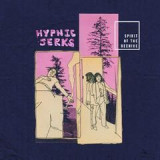
Unlike the spiraling momentum of the band's sophomore LP, pleasure suck, the spirit of the beehive takes a more grounded approach here, though the ground it's standing on is equally otherworldly. Dreamy is a fitting adjective, but the ten tracks on Hypnic Jerks never fully slip into the peaceful character of dream-pop. Hypnic Jerks has the quality of an indescribable dream fading from memory as you slowly begin to regain consciousness. Its warped guitar tones, transcendental synths and smattering of eerie audio samples conjure this purgatorial space between reverie and reality. It's an arena where the songs unexpectedly contort themselves and take on different textures, morphing in and out of one another. Once the celestial harmonies, balmy keys and creeping false climax of album closer it's gonna find you roll past, it's clear that the spirit of the beehive has secured a seat at this decade's table of musical visionaries.
Mysteries Of The World is the stunning final studio album from legendary Philly supergroup MFSB. Expertly co-written and produced with the mighty Dexter Wansel, it features the untouchable, sparkling masterpiece "Mysteries Of The World". The whole album is truly exquisite; a stylish, classy collection of pure Philly soul and orchestral jazz-funk.
MFSB, an acronym for Mother, Father, Sister, Brother, was formed by producers Gamble & Huff of Philadelphia International Records. The band's roots can be traced back to the house band at the legendary Sigma Sound Studios, where they played on numerous hit records by artists like The O'Jays, Harold Melvin & The Blue Notes and The Stylistics. Mysteries Of The World comprises slick jazz-funk grooves, mostly penned by Wansel, who produced a fair chunk of the album in a similar style to his space-funk records. MFSB's smooth sound is retained but it receives a fresh, elegant and jazzy upgrade. While this album is as mellow as the rest of the latter-period MFSB recordings, it never forgets the group's soul music underpinnings.
Swaggering, well-timed horn blasts, sweeping strings and a percolating, hard thumping slap-bassline combine to devastating effect on amazing opener "Manhattan Skyline". It's a sexy mid-tempo instrumental which sets us up nicely for what follows. Essays could be written analysing the perfection of title track. Arguably the finest jazz-funk instrumental ever made, it's absolutely magnificent. Featuring musicianship of the highest calibre, the band play with their trademark tight discipline, cooking up a syncopating rhythm with an array of exploratory keyboard riffs wrapped around a punchy bassline sent from heaven. It sounds like house music, it's that ahead of its time. The string intro is sumptuous, hypnotic and divine and that's all before the beat hits. The track fuses classical, jazz and funk into a musical journey that you never want to end. Absolutely flawless, it's a dramatic disco dancefloor killer.
Says Dexter Wansel himself: "You know, of all the songs I wrote/produced/arranged for MFSB, this is for me the most different. I think it's an experiment in rhythmic, soft sonic synth and live string and harp combinations. I composed it in an effort to blend a funky groove, along with synthesis, and orchestral sounds. There are 3 synthesizers: Oberheim 4 voice, Polymoog, and of course Arp 2600v. And, as I remember, I recorded the track with the rhythm section, string, harp and flute players first. Then I added synthesis."
The profound elegance remains in abundance on the slinky, harp-laced "Tell Me Why"; Carla Benson's beautiful voice truly shines on this sophisticated cut. The side closes out in dramatic style with the string-drenched "Metamorphosis". It's a staccato, Blaxploitation groove workout featuring wah-wah guitar, creeping basslines, rich horn solos and soulful vocals drifting in and out of the mix. The bouncy, irrepressible "Fortune Teller" opens the B side in the bass-heavy orchestral funk style before the beautiful "Old San Juan" glides in, a Balearic-adjacent track with intricate arrangements, building its mellow soul groove around an atypical flamenco guitar hook. Melancholy, guitar-led instrumental "Thank You Miss Scott" is a real highlight, with gorgeous flute, string and percussive elements whilst closer "In the Shadow" works an otherworldly synth line into its bossa nova groove.
An essential record for fans of Philly soul and groovy jazz-funk, Mysteries Of The World was mastered for vinyl by Simon Francis and cut by Cicely Ralston for Alchemy at AIR Studios. The stunning artwork, the work of renowned illustrator Robert Giusti, was restored at Be With HQ to round out this beautiful reissue.
Life On Mars is the 1976 debut album by the American R&B/jazz fusion singer, arranger, musician, composer and conductor Dexter Wansel. The album is considered to be a "space-funk" classic, inspired by David Bowie's "Life On Mars?". Wansel composed his own sci-fi sounds with swirling, ring-like oscillators, cosmic sub tones, and metallic, otherworldly leads using his signature ARP 2600 synthesizer. Wansel's pioneering synth sound was shared on numerous records with artists like MFSB, Billy Paul, Evelyn "Champagne" King, Teddy Pendergrass, and The Jones Girls. The album inspired other artists and Wansel's "Theme From The Planets" drum beat intro is hailed as being one of the first foundation beats of hip-hop. His sampled music has been used by Kanye West, Lil Wayne, Drake, Rick Ross, J. Cole, Wiz Khalifa, and Ice Cube amongst others.
Life On Mars is available as a limited edition of 1500 individually numbered copies on translucent blue coloured vinyl.
London label Mysticisms knows how to dig out some truly lush house grooves whether that's in the form of unreleased house meets IDM, classic reissues or debuts from new school artists. N-GYNN falls into that latter camp having started to make waves on the likes of Hamam House Pleasure Club and his Superlux Records label. He explores a dreamy and cuddly house world here with rolling analogue drums, wispy new-age percussion and whimsical cosmic melodies that all make for otherworldly grooves. 'Journeys' has the feeling of an ancient ritual in the sky, 'Alistera' is a kaleidoscope of colour and 'Kebaya' has a more earthy Afro feel. 'Funk Break Beat' closes with a jumbled groove peppered with dial tones, string loops and bulbous acid.
Gatefold single vinyl LP with an 8 page 12" size bookelt in the other side of the gatefold.
We're thrilled to announce the return of Tobor Experiment, the visionary musical project led by the enigmatic Giorgio Sancristoforo, to the Bearfunk fold. After a twelve-year hiatus, Tobor Experiment emerges from the shadows with their second LP, "Available Forms". Picture the ethereal ambiance of a dimly lit jazz club colliding with the futuristic vibrations of a 1970s sci-fi TV show, and you'll begin to grasp the sonic experience that awaits. Giorgio draws on a whole host of musical inspirations, from the name checked Tim Gane & Letitia Sadier to the moog pioneers Claude Denjean & Jean Jaques Perrey. With the moogsploration of contemporary jazz Tobor Experiment invites listeners on an extraordinary musical odyssey where jazz meets electronica meets nu-disco.
Prepare to be captivated from the very first note of the infectious opener, "Lowpass Risotto" as Tobor Experiment masterfully combines familiar elements with their unique artistic vision. Resonating with undertones reminiscent of the timeless classic "Take Five" the track immediately grabs your attention. While the familiar drum shuffle sets a comforting foundation, Tobor Experiment takes an unexpected twist by infusing the composition with squelchy Moog lines and captivating hollow body guitar solos. The result is a harmonious blend of nostalgia and innovation that transports you to an entirely new sonic realm.
Continuing the journey, the mesmerizing 6/8 rhythm of "Up!" pays homage to the iconic sounds of Stereolab while showcasing Tobor Experiment's innovative spirit. As enchanting synth pads weave through the air, you find yourself immersed in a dream-like state, carried away by the hypnotic shifting patterns of the bass and drums.
With "Astounding Stories" Tobor Experiment returns to the energetic vibes of the album opener, inviting you to surrender to a sonic tapestry rich with musical exchanges. In traditional jazz style we receive solo's from all parties. Each instrument adding its unique voice to the narrative, creating a dynamic and engaging musical conversation.
As the album progresses, "Moonscape Dust" emerges, drawing inspiration from the atmospheric brilliance of "Low." This track serves as a portal to an otherworldly sonic landscape where time and space lose their hold. Here, organic drums step aside, making way for a low-fi drum pattern that lays the foundation for ethereal synth pads. The composition invites you to explore the depths of your imagination, transcending earthly boundaries and allowing you to float in an immersive soundscape.
The album's closing track, "Monsters" has an air of "Air" about it... the ethereal synths beckon you to surrender to the weightlessness of space, just allow yourself to be carried away by the infectious rhythms, intricate melodies, and atmospheric textures that shape this extraordinary musical journey.
Each track on "Available Forms" showcases Tobor Experiment's exceptional ability to transcend musical boundaries, creating a genre-bending album that defies all expectations. From start to finish, the soundscape presented is a testament to Tobor's relentless pursuit of musical innovation. Each composition is a fusion of diverse elements, seamlessly blending organic instruments and electronic textures in a way that challenges traditional genre classifications.
The AI-generated artwork serves as a portal to an alternate dimension. Paying homage to the retro-futuristic aesthetic of 1970s science fiction TV shows, it captures the essence of the album's fusion between organic and electronic realms.
- Gumbo’! 4 Tha Folks, Hold On
- Wayans Bros
- Roscoe’!
- Fk U Mean/ Hold Me Dwn
- Bussin’ (Cold)
- Pink & Green, White & Gold
- Back’!
- Doin Tew Much. (In My Mama Name)
- 4: Sho’7
- Living Proof (Family)
- Scurrrrd
- Smile (Wit Yo Gold)
- Call Tha Bro (Tapped In)
- Bravo’!
- Voicemails Uptown
- Big Ole
- Lng Hair Dnt Care
- Play On’! Inshallah
Pink Siifu’s latest release, GUMBO!, is another sprawling Afrocentric vision from one of the boldest voices in contemporary rap. Following up on 2020’s NEGRO, the album’s songs are as rich and varied as its titular stew. Siifu’s boundless style makes for an unpredictable but rewarding ride across the album’s 18 tracks, as he explores the diverse sounds of his influences and breaks new ground with a unique class of co-stars.
Siifu, born Livingston Matthews and raised between Alabama and Cincinnati, has already notched a conspicuous list of collaborations in his burgeoning career, from legendary producer the Alchemist to Australian electronic group the Avalanches. Siifu also embodies various inspirations through a range of alter-egos, often producing under the moniker “iiye,” or as half of the duo B. Cool-Aid with Ahwlee, both of which appear on GUMBO!.
The variety of guest features and production on GUMBO! only elevates Siifu’s ability to push the boundaries of genre and song structure. “Voicemails Uptown” (produced by Soulection’s Monte Booker) is the second of two back-to-back posse cuts, sporting five plus vocalists each. “Lng hair dnt care,” the album’s first single, was produced by Ted Kamal, who first garnered attention for his outside-the-box edits of contemporary rap staples. And while several of the album’s tracks are well within his bag, the jazzy, drumless loop on “Fk U Mean/Hold Me Dwn” could’ve been a cut off of his collab album with Virginia rapper Fly Anakin, FlySiifu’s.
Though rife with standout tracks, GUMBO! is greater than the sum of its parts. Siifu’s ambitious range and impressive pool of features create an otherworldly listening experience. Overall, it reflects an intense desire for self-expression and creative growth, one which he shares with many of his influences. Like Outkast, Sun Ra, Baraka, or Bad Brains, his unique soundscapes re-imagine a genre without restrictions, breaking new ground in search of artistic and personal freedom.
The concept of strict musical genre has arguably been dead for decades, and the latest offering from Danish powerhouses Gustaf Ljunggren and Emil de Waal once again reinforces this notion. Their third collaborative album "Stockholm Kobenhavn", a spacious, cinematic and boundaryless exploration of their shared musical connection is set to release on July 7th on April Records. Emil de Waal has been one of Denmark"s leading drummers for three decades. Gustaf Ljunggren initially studied the saxophone at the Rhythmic Conservatory of Copenhagen, where whispers spread throughout the school that he was the best saxophone player in town and yet never practiced. His career has seen him prove that he can bring grace, musicality and heart to any instrument he touches, from the pedal steel guitar, to the bass, piano, and more. In the words of Danish multi-instrumentalist Kresten Osgood, "Although an instrument may be new to him he is able to play it like he has had a lifetime of experience working with it. Over the years I think the only instrument I haven"t seen him play is the drums." "Stockholm Kobenhavn" has a vast array of influences including Jazz, Americana, Film Music and Electronica. It is full of space, coaxing the listener into a meditative state and inviting them to drift away with their own imagination. The record plays as a series of open-ended sketches or moods, absent of big defining melodies or familiar song-like structures. Each piece evolves over time, providing musical interest in the form of rhythmic ideas, rich harmony, texture, and repetitive melodic patterns from a guitar or rhodes. Imaginative electronic production techniques combine the warm sounds of acoustic instruments with a constantly developing palette of otherworldly textures and effects. Grounded by an unwavering pulse, the combination of programmed beats and acoustic drums provide the hypnotic foundation over which the pair explore and challenge their common musical ground. The album closes with an intimate recording from a performance at STUK in Belgium, with a comforting guitar-led Americana tune bringing the listener back into the room and sharing in the joy the duo have felt in playing together over the past twenty years.
Four more lively, lovely electro offerings from Plant 43, the second in a limited edition series of EPs focussed on tracks written over the course of the winter of 2022/23. Opener 'Submolecular Shifting' is bright and bubbly, joining the dots between Kraftwerk and Model 500, while 'Eccentric Elliptical Orbit' follows on slower and more grandiose, echoing early New Order's icy cool synth sounds. 'Encased' has a more otherworldly Aphex-like feel, although the juddering, on-off bass keeps it plugged into the dancefloor. 'The Forgotten Storm' closes proceedings, more low key again and graced with ethereal, adding angelic choirs. Energised enough and streamlined enough to be good dancefloor gear, but expertly executed and, as ever, brimming with enough personality to be a decent home listen as well.
Be With present the first ever reissue of the ultra rare double pack DJ promo of Malcolm McLaren & Bootzilla Orchestra's "Call A Wave". Originally slipping out in 1989 to a select few, there were rumoured to be only ever 300 copies pressed. Indeed, the entire package never got a proper release and now goes for a small fortune.
Say what? Bootsy Collins, Jeff Beck and Malcolm McLaren, all in one band, composing over a Barry White sample? And that's just the original. But you can forget about that for now. Here we have the incredibly sought-after "DFC Dance Mix", mixed by Massimino Lippoli of Morenas / Sueño Latino fame for the legendary DFC Italy. It's a throbbing, vital, dramatic slice of dreamy ambient house. A deep, entrancing track that's both blissful and dancefloor dynamite. It features the iconic, disaffected female vocal chopped up over elegant piano snatches, Beck's ace guitar stylings over rolling, heavy drums and a killer, hypnotic bassline with sparkling harp coming and going. It's exotic, otherworldly and brimming with that very special late 80s/early 90s Mediterranean vibe. Yes, it's Balearic, it's House. Above all else, it's a pure uncut slice of halcyon summer days, pressed on wax.
But on side B we also have the mesmeric "Breakdown Mix", again mixed by DFC Italy. For some, *this* is the mix to have - and who are we to argue? This time, the vocals are treated so they're uttered backwards, contributing to the wonderfully disorienting magic of this particular mix.
And how could we forget the equally iconic "Orbital Mix"? Not by the actual group Orbital, but courtesy of S'Express's Mark Moore & William Orbit, no less. A brilliant, beautiful remix that's perhaps more musical. They make more obvious use of the sample from the original Barry White track ("I'm Gonna Love You Just a Little More Baby") that Malcolm was inspired by. Flip over to Side D to find the duo's uber-horizontal "Return To The Deep Ambient Mix", a floaty, beatless gem that'll leave you swooning.
To round out this quite astonishing package, the "New Age Mix", again coming from the DFC Italy camp, elegantly sends us off into the cosmos with minimal percussion and maximum vibes.
Every mix on this DJ double pack is truly killer. Simon Francis remastered the original audio for this release and Cicely Balston's precise cut for Alchemy at AIR Studios ensures this 2x12" well and truly pumps. The immaculate Record Industry pressing will ensure this incredibly sought-after masterpiece finds a home in many more DJ boxes this and every summer. For the artwork, we've recreated the original DJ promo, a plain white gatefold sleeve complete with the iconic burnt orange hype sticker. Hold tight. Roof down, tops off.
Jade Warrior is the debut self-titled and self-produced album by Jade Warrior, released in 1971 as part of the progressive rock movement. The album sets the scene for what the majority of the band's albums were to sound like, mixing various ethnic sounds with a progressive and otherworldly sound, as well as sudden changes between slow acoustic guitar melody, to distorted and heavy electric guitar with a faster tempo.
In an era defined by futility, isolation, and precarity, it can be difficult to envision a utopia. But on Skeleten’s thrilling, immersive debut album, Under Utopia, the Sydney musician dares to imagine new ways of being that are not characterized by doom or despair. Across eleven tracks of free-flowing, transcendent, and often euphoric electronic music, Skeleten praises the power of comradery and community; while dreaming of a future that is joyously boundless.
Skeleten, real name Russell Fitzgibbon, has always been fascinated by the ideas of utopias. He’s thought a lot about how the concept has shifted and morphed throughout history, and how the goal post for a utopia is always moving further and further away. “We're more familiar with the idea of a dystopia in the modern world - that's more close to our consciousness. I think on this album I wanted to explore the importance of imaging and embodying a new world.”
Written before and during the pandemic, the album was born out of a desire to connect with others and to shake the mantle of introspection that had been placed on his previous works. From the opening notes of the otherworldly album opener “Generator”, it's clear that this record prioritises immediate pleasures without forgoing intimacy. The lyrics are also more explicit, reaching outward with inviting choruses and mantra-like melodies. “I think the album came out of the experience of feeling this great desire to reconnect and dreaming of the power of community,” says the musician.
This is especially present in lead single ‘Sharing The Fire’, a song that crackles with optimism. A sprawling dance track with pulsating synths and Fitzgibbon’s gentle, warm vocals, the song is about futures that are full of brightness and bliss. As the artist repeats in the song’s chorus: “for all that you know, summer could be around the corner.” The song is about an “almost frustrated desire to connect with more people and feel that sense of community through shared goals.” The accompanying video clip, shot on 35mm, is similarly invested in ideas of companionship and gathering. Shot in a clinical, drab office space, friends and revelers fill the space with warmth and energy.
Elsewhere, this invocation of paradise is infused in the stripped-back, singular title track “Under Utopia”. The song was significant to Fitzgibbon, as it allowed him to gather all his thoughts and ideas about his new music under one message. “It’s something I wrote when I had this collection of songs and wanted to give it a single voice, which was about seeing the world entirely new, full of hope and beauty, and all of us underneath pushing it upwards.”
An antidote for gloom presented in Under Utopia is the transformative power of love. There’s “Heart Full Of Tenderness”, a woozy, languorous love song, awash with cloudy vocals and glistening synths; the truncated beats and hypnotic pleading of “Territory Day” and “Right Here It’s Only Love” which explores the icier and ambient side of R’n’B.
Another hallmark that characterizes Under Utopia is Fitzgibbon’s airy and spacious mix, which gives his songs room to sprawl out and simmer; as well as allowing his calming baritone to come to the fore. This is notable in the contemplative, synth-laden “Colour Room”, the funk-tinged “Walking On Your Name,” the previously released “No Drones in the Afterlife,” and the beloved early single “Mirrored,” which speaks of finding yourself through a connection to those around you.
Fitzgibbon has been enmeshed in the Sydney music scene for years. Skeleten emerged out of a need to experiment and make music without worrying about the outcome. “It was just me making music that felt right, and very much focusing on this kind of meditative aspect of exploring without any goal,” says Fitzgibbon. But as the project has evolved, the artist has gained clarity on what he hopes his music will achieve: bringing people together, and creating an atmosphere of elation. Or as Fitzgibbon puts it on Under Utopia’s hallucinatory album closer “We’re gonna get everything we need in the world.”
Originally released in 95’ via CD on the seminal U.S ambient label, Silent, Numinous Island is the result of live jam sessions between Yokota and Castle. Several original tracks were recorded to DAT tape and then mixed to create a long form audio travelogue to an otherworldly destination. The result is something similar to the KLF’s Chill Out paired with Yokota’s unmistakable sound palette and Castle’s gift for storytelling.
The vinyl edition has been faithfully edited by David Fogarty for uninterrupted hi–fidelity vinyl playback, maintaining the original track sequencing and energy of the CD version.