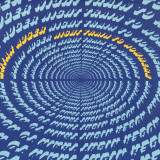
Something a little special for the landmark AE Productions catalogue number AE050. Recorded circa 2012 and intended for release on High Noon Music, Mr Fantastic and J. Todd’s follow up to their superb ‘All The Critics’ has sat in the vaults ever since. With AE’s 50th release coming up we arranged with the kind help of High Noon Music to release ‘Don’t Worry’ on AE as originally intended on 7” with the instrumental on the flip, albeit around 11 years later.
The beat starts with a nice slice of Funk guitar which leads into Mr Fantastic’s customary big crunchy drums and a booming 808 sub kick. The intro sample then doesn’t reappear as is but is chopped to pieces and replayed with all guitar and bass parts taking on an entirely new groove which sits on the drums perfectly and is augmented with additional sounds.
Milwaukee’s finest J. Todd graces the track with a nice aggressive pacey flow which works as a nice counter balance to the vocal on ‘All The Critics’ and giving the track a more hardcore underground feel. J. Todd’s freestyle and tongue in cheek braggadocios battle rhymes ride the beat with ease which provides an easy listen considering the tough feel of the track.
We dug out an image taken around the time of recording to keep it in keeping with the image that may have been selected at the time had it been released. The audio is the original master from 2012 so as to retain the original flavour of the track but was done by our mastering engineer of choice Rola @ Khameleon Sounds. We hope you agree that the wait was worthwhile.
Cerca:our sound
Le Magnifique is a cult film. Many a viewer has memorized the lines of this character, whose role was tailor-made for Jean-Paul Belmondo. In the year of our Lord 1973, Belmondo reunited with director Philippe de Broca, a pair who, decades before the Jean Dujardin version of OSS 117, were unknowingly making meta cinema. The film's soundtrack, by Claude Bolling, successfully navigates between the first and second degree, without ever sinking into the clumsiness of "fantasy music". For the record, Claude Bolling is none other than the chief composer of the all-female group Les Parisiennes and of some 100 film scores, including Borsalino, which is certainly the best-known. Above all, he is a genius of French jazz, whose talent makes his music sound relaxed and familiar, even when you're listening to it for the first Tme. From the very first track on the album, "TaQana", postcard images of Mexico spring to mind. Claude Bolling plays with the codes of film music without ever losing a certain communicaTve jubilaTon. With the soundtrack to Le Magnifique, Claude Bolling equals the Anglo-Saxon masters of the easy-jazz pop genre, such as Henri Mancini. Fans of jerks to dance to at the ambassador's parTes will be delighted by the composiTon "Pop Mod". Even today, those who invented the term "lounge core" would go out of their way to own an original Claude Bolling vinyl. Thanks to Claude Bolling and his original French Touch, before thedays of Dimitri From Paris and Bob Sinclar who, if they hadn't been able to take advantage of this musical and cinema to graphic heritage, wouldn't have had anything to sample.
On our latest Mojuba sublabel Frekoba, we welcome JJ, a friend of ours who we love for his unique approach to a truly diverse colorful palette of club tracks on his debut for us called OOPS! So what do these four tracks sound like?
Imagine a night at a club like Panorama Bar where Soundstream, Lil Silva & Errorsmith are having a blast. Now you are in the right zone to have fun with JJ's debut 12". House, Disco, UK funky and off-kilter cut-up grooves for your enjoyment, have fun!
- A1: Anticipation?
- A2: It Was So Easy?
- A3: Alone? - Demo *
- A4: The Best Thing?
- A5: Dan, My Fling?
- B1: I've Got To Have You?
- B2: The Love's Still Growing?
- B3: Summer's Coming Around Again?
- B4: Our First Day Together?
- B5: Embrace Me, You Child?
- C1: Legend In Your Own Time?
- C2: That's The Way I've Always Heard It Should Be?
- C3: The Carter Family?
- C4: Angel From Montgomery?
- C5: Julie Through The Glass?
- D1: His Friends Are More Than Fond Of Robin?
- D2: Reunions?
- D3: The Right Thing To Do?
- D4: We Have No Secrets?
- D5: You're So Vain?
Als Carly Simon bei Jac Holzmans Elektra Records unterschrieb, war dies der Beginn einer Beziehung, die auf Vertrauen und gegenseitiger Bewunderung beruhte.
Zur Feier ihrer Zusammenarbeit hat Jac eine Sammlung von Tracks aus Carlys ersten drei Elektra-Alben zusammengestellt, die seiner Meinung nach ihre Zusammenarbeit und den Bogen ihrer Partnerschaft am besten repräsentieren. Mit Erinnerungen von Jac und Carly, herausgegeben von Ted Olson, erforscht diese "Sammelalbum"-Sammlung die Art und Weise, wie ein junges Talent und ein erfolgreicher Labelboss zusammenwirkten, um einen Sound zu schaffen, der die Singer/Songwriter-Bewegung definierte, die mit dem Feminismus der frühen 1970er Jahre zusammenfiel.
It's not because one might have worked with people like Jimi Hendrix, John McLaughlin and Rod Stewart throughout their career that Italo-Disco wouldn't get the best of your work. A great example of the Italian phenomenon's infectiously widespread grip is British rock keyboardist Brian Auger's path, when he found himself in a Milanese recording studio during the mid 80's and recorded his last known release in that decade. Powerfully fusing decades of rock and jazz education with the synthetic hysteria of the time (and culture), the result is a classic downtempo number that has found its way into some of our favorite DJ sets for a while now. Vocal and instrumental are featured on the A-side and in addition the B-side offers a new remix where things take somewhat of a catastrophic turn into what sounds like Brian getting on the wrong train to a K-hole, probably not for most dance floors. Meticulously remastered at manmade mastering in Berlin.
- 1: Hello
- 2: A Love From Outer Space
- 3: Crack Up
- 4: Timewind
- 5: What's All This Then?
- 6: Snow Joke
- 7: Off Into Space
- 8: And I Say
- 9: Yeti
- 10: Conundrum
- 11: Honeysuckleswallow
- 12: Long Body
- 13: In A Circle
- 14: Fast Ka
- 15: Miles Apart
- 16: Pop
- 17: Mars
- 18: Spook
- 19: Sugarwings
- 20: Back Home
- 21: Down
- 22: Supervixens
- 23: Insect Love
- 24: Sorry
- 25: Catch My Drift
- 26: Challenge
A.R. Kive collates the three most astonishing works from that most miraculous of duos - A.R. Kane - comprising the ‘Up Home’ EP from 1988 that signified the band’s dawning realisation of their own powers and possibilities, their legendary debut LP ‘sixty nine’ (1988) and its kaleidoscopic, prophetic double-LP follow up ‘i’ (1989).
In founder-member Rudy Tambala’s new remastering, the music on these pivotal transmissions from the birth of dream pop, have been reinvigorated and re-infused with a new power, a new depth and intimacy, a new height and immensity. Vivid, timeless and yet always timely whenever they’re recalled, these records still force any listener to realise that despite the habits of retrospective myth-making and the
safe neutering effects of ‘genre’, thirty years have in no way dimmed how resistant and dissident to critical habits of categorisation A.R. Kane always were. Never quite ‘avant-pop’ or ‘shoegaze’ or ‘post-rock’ or any of those sobriquets designed to file and categorise, A.R. Kive is a reminder that those genres had to be coined, had to be invented precisely to contain the astonishing sound of A.R. Kane, because
previous formulations couldn’t come close to their sui generis sound and suggestiveness. This is music that pointed towards futures which a whole generation of artists and sonic explorers would map out. Now beautifully repackaged, remastered and fleshed out with extensive sleeve notes and accompanying materials, ‘A.R. Kive’ reveals that 35 years on it’s still a struggle to defuse the revolutionary and inspirational possibility of A.R. Kane’s music.
A.R. Kane were formed in 1986 by Rudy Tambala and Alex Ayuli, two second-generation immigrants who grew up together in Stratford, East London. From the off the pair were outsiders in the culturally mixed (cockney/Irish/West Indian/Asian) milieu of the East End, with Alex and Rudy’s folks first generation immigrants from Nigeria and Malawi, respectively. The two of them quickly developed and fostered an innate and near-telepathic mutual understanding forged in musical, literary and artistic exploration. Like a lot of second-generation immigrants, they were ferocious autodidacts in all kinds of areas, especially around music and literature. Diving deep into the music of afro-futurist luminaries such as Sun Ra, Miles Davis, Lee Perry and
Hendrix, as well as devouring the explorations of lysergic noise and feedback from contemporaries like Sonic Youth and Butthole Surfers, they also thoroughly immersed themselves in the alternate literary realities of sci-fi and ancient history (the fascination with the arcane that gave the band their name), all to feed their voracious cultural thirsts and intellectual curiosity.
It was seeing the Cocteau Twins performing on Channel 4 show the Tube that spurred A.R. Kane into being - “They had no drummer. They used tapes and technology and Liz Fraser looked completely otherworldly with those big eyes. And the noise coming out of Robin’s guitar! That was the ‘Fuck! We could do that! We could express ourselves like that!’ moment”, recalls Tambala - and through a mix of
confidence, chutzpah, ad hoc almost-mythical live shows and sheer innocent will the duo debuted with the astonishing ‘When You’re Sad’ single for One Little Indian in 1986. Immediately dubbed a ‘black Jesus & Mary Chain’ by a press unsure of WHERE to put a black band clearly immersed in feedback and noise, what was immediately apparent for listeners was just how much more was going on here - a
tapping of dub’s stealth and guile, a resonant umbilicus back to fusion and jazz, the music less a conjuration of past highs than a re-summoning of lost spirits.
The run of singles and EPs that followed picked up increasingly rapt reviews in the press, but it was the ‘Up Home EP’ released in 1988 on their new home, Rough Trade that really suggested something immense was about to break. Simon Reynolds noted the EP was: Their most concentrated slab of iridescent awesomeness and a true pinnacle of an era that abounded with astounding landmarks of guitar-reinvention, A.R. Kane at their most elixir-like.
If anything, the remastered ‘Up Home’ that forms the first part of ‘A.R. Kive’ is even more dazzling, even more startling than it was when it first emerged, and listening now you again wonder not just about how many bands christened ‘shoegaze’ tried to emulate it, but how all of them fell so far short of its lambent, pellucid wonder. This remains intrinsically experimental music but with none of the frowning orthodoxy those words imply. A.R. Kane, thanks to that second generation auto-didacticism were always supremely aware about the interstices of music and magic, but at the same time gloriously free in the way they explored that connection within their own sound, fascinated always with the creation of ‘perfect mistakes’ and the possibilities inherent in informed play.
‘sixty nine’ the group’s debut LP that emerged in 1988 had
critics and listeners struggling to fit language around A.R. Kane’s sound. As a title it was telling - the year of ‘Bitches Brew’, the year of ‘In A Silent Way’, the erotic möbius between two lovers - and as originally coined by the band themselves, ‘dream pop’ (before it became a free-floating signifier of vague import) was entirely apposite for the music A.R. Kane were making. Crafted in a dark small basement studio in which Tambala recalls the duo had “complete freedom - We wanted to go as far out as we could, and in doing so we discovered the point where it stops being music”. There was an irresistibly dreamy, somnambulant, sensual and almost surreal flow to ‘sixty nine’s sound, but also real darkness/dankness, the ruptures of the primordial and the reverberations of the subconscious, within the grooves of remarkable songs like ‘Dizzy’ and ‘Crazy Blue’. Alex’s plangent vocals floated and surged amidst exquisite peals of refracted feedback but crucially there was BASS here, lugubrious and funky and full of dread, sonic pleasure and sonic disturbance crushed together to make music with a center so deep it felt subcutaneous, music constructed from both the accidental and the deliberate, generous enough to dance with both serendipity and chaos. ‘sixty nine’ remains - especially in this remastered iteration - ravishing, revolutionary.
The final part of this ‘A.R. Kive’ contains 1989’s astonishing double-LP ‘i’ which followed up on ‘sixty nine’s promise and saw the duo fully unleash their experimental pop sensibilities over 26 tracks, plunging the A.R. Kane sound into a dazzlingly kaleidoscopic vision of pop experiment and play. Suffused with new digital technologies and combining searingly sweet and danceable pop with perhaps the duo’s strangest and boundary-pushing compositions, the album did exactly what a great double-set should do - indulge the artists sprawling pursuit of their own imaginations but always with a concision and an ear for those moments where pop both transcends and toys with the listeners expectations. Jason Ankeny has noted that “In retrospect, ‘i’ now seems like a crystal ball prophesying virtually every major musical development of the 1990s; from the shimmering techno of ‘A Love from Outer Space’ to the liquid dub of ‘What’s All This Then?’, from the alien drone-pop of ‘Conundrum’ to the sinister shoegazer miasma of ‘Supervixens’ — it’s all here, an underground road map for countless bands to follow.” Perhaps the most overwhelmingly all-encompassing transmission from A.R. Kane, ‘i’ bookended a three year period in which the duo had made some of the most prophetic and revelatory music of the entire decade.
After ‘i’ the duo’s output became more sporadic with Tambala and Ayuli moving in different directions both geographically and musically, with only 1994’s ‘New Clear Child’ a crystalline re-fraction of future and past echoes of jazz, folk and soul, before the duo went their separate ways. Since then, A.R. Kane’s music has endured, not thanks to the usual sepia’d false memories that seem to maintain interest in so much of the musical past, but because those who hear A.R. Kane music and are changed irrevocably, have to share that universe which A.R. Kane opened up, with anyone else who will listen. Far more than other lauded documents of the late 80s it still sounds astonishingly fresh, astonishingly livid and vivid and necessary and NOW.
"We never even planned to release a full-length album, and here we are with our second! "Deities of Deathlike Sleep" was conceived and recorded with the same mindset and the same team as our previous recordings, keeping it quick, spontaneous and enjoyable. This time it turned out a bit more dynamic, with the pummeling fury interspersed with some doom, gloom and darkness. But still, it's simply ten tracks of Swedish Fucking Death Metal, the way we love it"
The vocalist Mikael Stanne is also active in "Dark Tranquility" and highly popular band "The Halo Effect".
Other members from Dark Tranquility, Novarupta, Pagandoom, Vordor, Novarupta, Ex-Katatonia and more!
The previous album "Into The Maw of Death" was well received and topped the charts in Sweden when released!
Working with Bat For Lashes producer David Kosten (aka Faultline), the recording of Man Alive was completed mainly in a chapel in North Wales. The album sounded unique. Nothing dates like the future, yet Man Alive sounds dateless, placeless, and as a result, stands up perfectly many years later.
Man Alive was only the beginning of the group's adventures in – to use their words – 'Mismatched styles of music mashed together.' The result is often exhilarating; there are Brazilian drums and a prog guitar breakdown in Schoolin', classical influences, as well. Its subject matter is often way outside the realms of conventional songwriting; MY KZ, UR BF explored the different Americas: the cosy self-centred domesticity of programmes such as Friends versus a foreign policy
based on killing; Qwerty Finger examines imperialism. Anglo Saxon guilt is also present.
The album's artwork was striking – a photograph of a fox by Swiss photographer, Laurent Geslin, reflecting the track Tin (The Manhole) which deals with the theme of depression, through, as the band said in 2010, "the story of an urban fox that ingests all our pollution and grows massively in a sort of dream sequence. We chose photos of an urban fox for this reason, but we partly attacked the code of the digital image to create a glitch distortion . . . a reference to digital manipulation and chaos as well as our modern lives online".
Released in August 2010, Man Alive made the UK Top 20 and was well reviewed.
For example, BBC Music commented that the group "know more than most how to craft a song, how to make an album. They know how to give it depth, light and dark, and they - crucially - know when to stop." Man Alive was shortlisted for the 20th Mercury Music Prize in 2011.
The original LP edition of the album is super- scarce, released before the 'vinyl revival' kicked in, hence the original pressing now selling in the high three figures.
This re-issue is presented with scrupulous attention to the detail of the original UK first pressing, complete with gatefold sleeve, poster and 8 page booklet. It is pressed on 140gm vinyl.
Described as a musician's musician, Allen's sound is built on a foundation of pop, rock, Americana, Roots and Blues influences. Jon Allen has a soulful, whiskeysoaked voice and a striking gift for melody. He has never been content to be pigeonholed, as demonstrated by the eclecticism of his albums to date.Of the album Jon writes ''The last few years have felt like a pressure cooker slowly increasing to boiling point. There is sense of threat and a feeling of impending doom. Living in a large urban centre during a global pandemic brought out a sense of paranoia. We became more aware of our need for space, our need for silence and to be close to nature to get above the noise of a city. I'm absorbing all the time and everything from the famous Will Smith slap to missing people inspired the songs. How close are we all to the tipping point? What are we likely to do in heat of the moment? What will stress do to us when pushed? But light
follows dark, and there are the moments of simplicity and you can count your blessings for the simple things life has to offer".
It is always our pleasure to have new talents in the house, and we've been following Notzing's development since long ago. His approach to techno is absolutely personal and complex, hard and intrincated, mental and physical.
Protae is the first missile in this box full of weapons, a super busy techno exercise with compacted drums, drilling synth lines and random metallic hits breaking the monotony. The effect on the floor is devastating and has been tested extensively in dancefloors worldwide by label owner Oscar Mulero in the past months. 7 minutes of pure dancefloor mayhem.
Fagus continues with the sickness, with hysterical synth washe repeating an hypnotic chant, adding layers of sound as the groove goes by. Repetition is here the key to proper trance, not exactly with pleasant tones but by aggression.
Ekaterin is gummy and elastic with formant synth sounds chewing frequencies and changing constantly in shape. Another mental mantra with a physical drive.
Molniya slows down the pace and dives into profound sound scapes full of unnatural underwater sounds and washes providing a feeling of scuba diving.
To end this sonic odyssey, Emision goes completely beatless, growing from the profound sub bass frequencies to crispy and crunchy surface noises, creating the soundtrack of floating in outer space with no gravity. Please beware of the super intense bass tones when playing on a big sound system.
The perfect combination of experimentation and punchiness, keep an eye on this guy, is gonna make some proper noise in the coming years.
- Hox A
- Echo A.d
- The Pit
- Hox B
- A Web, A Knot, A Tangle
- But At What Cost?
- Æthervision
- Little Ghosts
- Hox C
- S.c.c. (Surge Cell Continuum) / Hox D
- The Rift / Hox Z / Desolation Overdrive
- Doom Country
Black[26,01 €]
Antifreeze Green Vinyl. Black Market Brass is proud to present Hox, due out on Colemine Records on September 8, 2023. Their third LP is a new take on afrobeat that combines traditional grooves with heavy, hypnotic, sci-fi sounds that reflect the band's myriad of influences as record collectors across genres. "We didn't leave the traditional afro-beat sound behind, but we did allow ourselves to pull from different places with less hesitation." Shared saxophonist Cole Pulice. Like their previous albums, the 9-piece band recorded Hox live to tape. "The sound and aesthetic of the analog recording process is important for this kind of music," Pulice explained. "We're looking to capture lightning in a bottle." With that, the album features several sections of heavily processed synthesizers, harsh glitches, fuzzed out guitars, and a burning percussion section that pays homage to the traditional drumming cultures of Nigeria and Ghana. The performances are dynamic and confident. The grooves are infectious and hypnotic. BMB has pushed further into musical experimentalism, but at the end of the day, they're still making dance music. Krautrock, free-jazz, doom metal - the inspirations for Hox stem from all kinds of musical backgrounds, but the sound is far from scattered. It's a polished, innovative record that's sure to exceed expectations and keep the listener engaged from start to finish.
A long-in-the-works project of ours, here comes A Tribe Called Kotori's first foray into full-length territories, as the immensely talented Rampue takes us on a melancholy-riddled ride across his phantasmatic mindscapes. A true sound explorer, deftly steering his ship down the junction of electronica, abstract and balearic-infused prog house, the Berlin-based vibist has us transfixed and elevated throughout the twelve cuts that form the backbone to this lushly textured promenade in sound - at times understatedly euphoric, at others rivetingly exotic.
Of the creative process that lead to 'Bubblebath Trance', Rampue explains "It all started and ended in the same moment: my cherished feline companion, my laptop awash with an unintended bath, and alas, a dearth of backups. The resultant calamity, an echo of chaotic tranquility." Under the generous layer of irony lies some unaltered truth about Rampue's debut long-player for A Tribe Called Kotori: this sense of serenity that goes with stepping into this warm and bubbling primitive chaos of sorts infuses the listening experience far and wide. Distantly emulating the "euphonious strains" of iconic PS1 video games soundtracks from his youth days, the album has us surfing a constant paradox of emotions, wistful but not abandoning itself to sorrow, dynamic yet suspended in some sort of mind-expanding stasis. As if you were looking at the world beneath you in exploded view, conscious of all thing, slowly moving up the many layers of our atmosphere towards uncharted skies.
A paragon of Rampue's most poignant take on classic electronica tropes, 'Harmonie' blazes with a poetic fire that engulfs about everything in its wake. Just figure yourself riding a chocobo across the sand-covered expanse of North Corel (toasting to the FFVII nerds here) as this blasts out in the distance. From this trancey bubblebath emerge lots of musical shades and nuances, from the nicely dubbed-out, brass-heavy coastal jazz of 'Schattenschranz' to the choppy, trip-hop-adjacent future electronics of 'Inside', via the exuberantly joyous mess of faux-organic number 'Tripomatic' and cinematic charisma of 'Ich hasse Sonne' high-flying orchestrations.
Connecting the dots between that trance-indebted ebullience and further downtempo-friendly attraction, 'Verfahren' perhaps encompasses best what 'Bubblebath Trance' is about: gracefully walking the tightrope in-limbo nostalgia-soaked inner movements and a powerful outward thrust, burning to let the feelings ooze out from the shell that holds them.Clad in purely 90s-compatible breaksy motion, 'Salz' is another attempt to reconcile emotional and physical dissonance, like kneading all states - solid, liquid and vaporous - into an impossible mega-vibe of its own; malleable, strong and enveloping in equal measure. Borrowing from two-step and UK garage, 'Take Away' is a definite high in Rampue's master unfolding of musical twists and turns, summoning a Boarder Community-esque atmosphere and clashing it alongside floor-ready footwork motifs to fascinating effect.
An ode to his studio companion, 'Buchla Trip' finds Rampue's exploring his machinic friend's quirky yet soulful array of electronic potentialities - making it sound like a conversation you'd have with R2-D2 in the heart of a Sandcrawler, whereas 'Kajal' beams us up to a fragmented headspace, halfway altered PC-Pop and arps-loaded electronica on amphetamines. Effusive and transporting, the title-track 'Bubblebath Trance' could well figure as the album's no.1 medley in essence: a bountiful lucid dream of dancing forms, colours and sentiments to wrap your head around, confidently drifting from a liminal state of consciousness down the rapids of one's troubled inner workings.
Rounding off the package, the languid ambient finale of 'Die Leiden des hungrigen Fruehstuecks' rubber-stamps the feeling that 'Bubblebath Trance' belongs to that rare category of albums. The ones that mint their own alphabet aside from typical norms and expectations, teaching you the ropes of their new language as it unreels between your ears - real and unreal, elusive to any other meaning than the one your guts and brains will be inclined to give it to, in real time. A crystal-pure object if you will, that shall not reveal its secrets, even after a thousand listens and just as many wowing moments.
Antifreeze Green Vinyl. Black Market Brass is proud to present Hox, due out on Colemine Records on September 8, 2023. Their third LP is a new take on afrobeat that combines traditional grooves with heavy, hypnotic, sci-fi sounds that reflect the band's myriad of influences as record collectors across genres. "We didn't leave the traditional afro-beat sound behind, but we did allow ourselves to pull from different places with less hesitation." Shared saxophonist Cole Pulice. Like their previous albums, the 9-piece band recorded Hox live to tape. "The sound and aesthetic of the analog recording process is important for this kind of music," Pulice explained. "We're looking to capture lightning in a bottle." With that, the album features several sections of heavily processed synthesizers, harsh glitches, fuzzed out guitars, and a burning percussion section that pays homage to the traditional drumming cultures of Nigeria and Ghana. The performances are dynamic and confident. The grooves are infectious and hypnotic. BMB has pushed further into musical experimentalism, but at the end of the day, they're still making dance music. Krautrock, free-jazz, doom metal - the inspirations for Hox stem from all kinds of musical backgrounds, but the sound is far from scattered. It's a polished, innovative record that's sure to exceed expectations and keep the listener engaged from start to finish.
Recorded in 1995 and 1996, mostly in John Fahey"s room at a Salem, Oregon boardinghouse, the performances on Proofs and Refutations prefigure the ornery turn of the page that marked Fahey"s final years, drawing another enigmatic rabbit from his seemingly bottomless musical hat. Cloaked in the language of dogma - what is he proving? refuting? - this is Fahey dancing a jig in the Duchampian gap, jester cap bells a-jingling. True believers? He"s got something for you: an uncompromising vision that you can sneer at ("guy can"t play anymore and refuses to concede!") or embrace as evidence of his genius ("the reinventor does it again!"). Skeptics? He"s there with you, too: sending up the fallacy of certitudes altogether. Institutions, systems, accepted wisdoms. Heroes. Alternative facts, indeed. Right out of the gate, Fahey re-materializes before us, somewhere between Oracle of Delphi and Clown Prince at Olympus. Mounting a thundering dialectic from on high, "All the Rains" resembles nothing else in his extensive discography - betraying roots in everything from Dada to Episcopal liturgical chant - and contains nary a plucked guitar note. You can"t fool him! When the lap steel of yore appears on "F for Fake," it serves more as soundbed for an extended sequence of vocal improvisations, running the gamut from wordless Bashoian caterwauling to free-form (but decidedly fake) Tuvan, even revealing a burnished falsetto in the process. Fahey takes on a different kind of provocation in the two acoustic guitar-based tracks closing Side 1 - "Morning" parts 1 and 2 - the first of 4 recordings in this session that have him wrestling with the ghost of Skip James, perhaps Fahey"s effort to wrench the "bitter, hateful old creep" (his words) back into the grave. Anchoring Side 2 is the two-part "Evening, Not Night," the second half of his extended cathexis on James (and the latter"s avowed castration complex - another story for another day, perhaps). Bit of a chill in the air - where"s the impish Fahey from earlier? Unmistakably working through some psychic wounds here, we might think: the unheimlich rendered in glistening viscera. Or is he playing with our notions of authenticity, of his reputation as troubadour of raw emotional states, a pilgrim of the ominous, the simmering unconscious? These cards are kept decidedly close to the vest. The opening and closing pieces again feature Fahey"s guitar as drone soundbed - employing distortion, oscillation, and an altogether absurd quotient of reverb to create texture and harmonics that are - if we wanna go there - not dissimilar to the sustained tonic clusters of Tibetan singing bowls, the hurdy gurdy, Hindustani classical music, or La Monte freaking Young. Portions of this material appeared on obscure late "90s vinyl in the 7" or double-78 rpm format, but as a "session" it has lain dormant more than a quarter century now. Taken together, we can now see these tracks as secret blueprints to latter-day Fahey provocations, several years prior to records like 1997"s City of Refuge and Womblife.
Faitiche welcomes Andrew Black aka blackbody_radiation. His debut album Ultra Materials gathers six ghostly drones, created with the help of sound masking.
Andrew Black, who hails from one of the UK's post industrial North West Milltowns has a sensitive feeling for space and its acoustics. Having trained as a designer and operated within the realms of architecture and public space, it was only natural to extend his interest to manipulating field recordings.
The six pieces collected on Ultra-Materials provide an insight into Black's highly sensitive minimalism: they stand for a subtly meandering mediation on room acoustics and place, which are manipulated with the help of sound masking, among other things - that is, the addition and superimposition of artificially generated frequencies to mask unwanted sounds.
Sometimes the pieces are reminiscent of warm engine noise, sometimes one thinks of carefully captured natural phenomena. Their strength lies in their elusiveness: free of concrete attributions or musical location, they can unfold their hypnotic pull without revealing anything about their origins. Harmonics at times shimmer, at times warble and at times coexist. It is an attempt to get in touch with our listening abilities.
- 01: Dark Matter
- 02: Flume
- 03: Château H
- 04: Heliconia
- 05: Disobey
- 06: Zen Roller
- 07: Whiplash
- 08: God Intentions
- 09: Last Tango In Glasgow
- 10: Tae The Moon
- 11: Starlounger
Gold nugget vinyl (2023 repress)! A masterclass in cinematic psychedelia, `God Intentions' is the third studio album from Glasgow outfit Helicon and is due out April 28 on Fuzz Club. Their most ambitious and collaborative album to date, it was recorded at Dystopia, Glasgow with producers Luigi Pasquini and Jason Shaw, mastered by RIDE's Mark Gardener and includes contributions from the Rhona MacFarlane String Quartet, Lavinia Blackwall (Trembling Bells), Mark O'Donnell (Tomorrow Syndicate), Sotho Houle (French avant-garde violinist) and Anna McCracken. Talking about the new record, guitarist/vocalist John-Paul Hughes says: "`God Intentions' is inspired by my brother Gary's story and a few other influences. It's a journey through regret, redemption and resurrection. Our familiar darkness is there, but the record carries a fresh and uplifting positivity. I had a clear idea of how I wanted it to sound and feel long before it began. We're so pleased we achieved it. We managed to hold true to the idea whilst allowing the string quartet, Sotho, Lavinia, Anna, Mark, Jason, Luigi and other collaborators the space to put their mark on it. The album art, by San Francisco-based collage artist Nina Theda Black, captures the depth and breadth of themes and sounds we brought together to create a kind of motion in your mind."
180g ultra clear vinyl, download card included. Western Mystery Tradition' is the third studio album from Detroit, MI via Brooklyn, NY outfit Moonwalks and is due for via Fuzz Club. A departure from the band's DIY psych-rock roots to a more mature and polished sound, the album was produced by Mattiel's Jonah Swilley and recorded in May 2019 at Detroit's acclaimed (and rumored haunted) Masonic Temple with Bill Skibbe (Jack White, The Kills) in a lodge belonging to the Free Masons' Detroit chapter. "Western Mystery Tradition was conceived in the winter of 2019 amidst a polar vortex in Detroit, Michigan", Moonwalks recall of the record's origins: "At the time and in between touring, we lived together in a house on the west side that lacked a working stove and had no power in half of the building. The band - trapped indoors due to temperatures in the negatives and massive amounts of snow - drew inspiration from our isolated state amidst a bleak Michigan winter." Moonwalks consists of Kerrigan Pearce (drums), Jacob Dean (guitar), and Kate Gutwald (bass). Originating in Detroit's DIY scene, the trio started out playing in warehouses and makeshift venues across the city. Since then, they've gone on to tour extensively throughout North America and Europe supporting acts like The Murlocs, Metric, Julian Casablancas & The Voidz, Thee Oh Sees, The Liminanas, and The Mystery Lights to name a few
Like a nervous amalgam of Death Grips' blown out bass frequencies, This Heat's jittery spasms, and Young Widows' imposing oratory, DITZ have created a sound that's equally suited for degraded dance floor gyrations and forward- thinking hardcore shows. At times a blurry tirade against invasive social media and at other times a celebration of cheap rolling tobacco, "Riverstone" was crafted while the band was on tour and deep in the delirium of road fatigue as an ode to the
hallucinatory spirit of their exhaustion. "Riverstone" by DITZ is available today on all digital platforms.
DITZ singer Cal Francis explains, "We wrote this track on a day off on our July tour. Caleb had recently bought this sub phatty and had taken it with him so we were trying to find anyway to make it fit in a track. I think we were listening to lots of Death Grips and hardcore that week. The lyrics were related to whatever we were talking shit about that day. Dirt cheap baccy and annoying invasive TikToks.
It's hard to recall."
Nous'klaer Audio presents Martinou - Chiral, the follow full-length up to his 2021 album Rift. This time nine tracks across two vinyls. An album flowing 'in a way' like Rift, but it's different: More outspoken, heavier sound design and it peaks on a blissful note. ''Open up the blinds and take me there. We'll break the surface tension. We'll dive in. I'm locked in your devotion. You give an inclination to our demise. It will be our exit. To bliss, we'll be its guardian. Once there was love. Clear as glassy water. No ripples, no waves. I followed while you led. Our arrival was warm. Hot, even. Stunning to a startling degree. Hands intwined, frolicking towards the blue. Hours passed, and white heat cede to an orange hue. We cooled down. Red. We rallied. Black. It began. Into the deep darkness we ran. White sand, it has a tendency to get everywhere. Salt water will only dehydrate you more. Shriveled and dry. Scratchy and coarse. More. And then we were lost. Fingers once locked grew distant. Morning, dear. Where have you gone? We looked. A glimpse from afar. Red. We rallied. Shall we share a bottle of wine? Black, lost again. Afternoon, friend. Where were you? Red. Alone. Black. We rallied. Shall we try somewhere new? Sand and salt. Evening, sir. Reservation for one? Reservations a plenty, I say. Evening, miss. Dining alone? Aren't we all? Dining, miss, not dying. Oh, yes, alone. Black. Sand and salt. I found you. No. No. Wait, do I know you? You feel like a dream. Don't touch me. Move along, sir. Who are you? Leave. Who are you? Where did you go? Keep moving. I am, I will. Time to move on. I'm moving! Leave. Don't touch me. Leave. Why are you? Exit. Purple. Orange. Yellow. White. Blue. Morning, dear. Shall we have breakfast? I think I'll sleep some more. But it's our last day. I know. See you downstairs when you're ready. OK. I open up the blinds. A bird breaks the surface tension. Locked in. To Devotion? No. Demise. An inclination. Reverie. Take me there. Where? Exit (To Bliss) '' Text by Gregory Markus
Clearlight returns, two years on from his DNO debut alongside regular collaborator Owl, with five otherworldly solo excursions.
What’s most striking about the Belgian’s work is the way he brings digital textures to life. Like an alien biosphere that doesn't abide by our own natural laws, his soundscapes are irregular and uncanny, but in a way that makes them feel all the more real.
Tracks like ‘Super Strong’ and ‘Heavy Feet’ sway and wobble to cumbersome beats, lumbering through swamps of croaking, chirping, fizzing things. The former eventually collapses into total abstraction, while the latter endures blasts of technoid bass, like the retrorockets of some hulking spacecraft coming in to land.
‘Spinning Head’ is powered by a buzzing oscillator that rolls back and forth across the stereo field. Paired with assorted clattering, clanking percussive debris, it’s an unnerving yet oddly pleasant experience, as if someone were rummaging around between your ears to help find a part that’s come loose.
Lead track ‘Water Willy’ is stranger still. Shifting from something akin to an exotica record played at the wrong speed to a melancholy whalesong lullaby, its twangs, chimes and plodding bass pulse create an eerie but beautiful ambience reminiscent of the deep ocean.
Only bonus track ‘Salt Cube’ is willing to break the spell, upping the pace to deliver the EP’s most traditionally dancefloor-friendly cut in the form of glitchy minimal d&b, with a heavyweight halftime switch post-breakdown.
Taking sounds from the club, but clearly not feeling forced to cater for it, Clearlight grows alternate realities that feel familiar, but offer wondrous, illuminating new experiences. Step inside and join him.
Rhythms of postmodern realism at the very bottom of the DNO.