Brighton (UK) punks THE BAR STOOL PREACHERS have announced their new EP 'Below The Static', which features reimagined versions of songs from the bands 2022 album 'Above The Static'. The EP is out 13th September 2024 via Pure Noise Records. Speaking about the new EP the band said, "For this release, we really wanted to highlight how good the songwriting was. We were stoked with how well the album went down but we really wanted to expose some of the more vulnerable elements and fuck with the format a bit. To hear such strong fxmale vocals, and having heavy guitar riffs on cellos/violins etc. really got us excited about these songs again. Some of the versions are stripped right back to just a voice and one instrument. It's the band like you've never heard it before, and really breathes a different life into the songs."
Buscar:out noise
- 1: The Three ‘O’ Clock - Jet Fighter
- 2: The Rain Parade - Don’t Feel Bad
- 3: True West - Lucifer Sam
- 4: Bangles - Going Down To Liverpool
- 5: Thin White Rope - Down In The Desert
- 6: Game Theory - 24
- 7: The Dream Syndicate - Definitely Clean
- 8: The Long Ryders - Too Close To The Light
- 9: Green On Red - Illustrated Crawling
- 10: 28Th Day - Pages Turn
- 11: The Dream Syndicate - That’s What You Always Say
- 12: The Pandoras - In And Out Of My Life (In A Day)
- 13: The Long Ryders - Ivory Tower
- 14: The Three ‘O’ Clock - With A Cantaloupe Girlfriend
- 15: Bangles - All About You
- 16: The Rain Parade - Talking In My Sleep
- 17: The Three ‘O’ Clock - Her Heads Revolving
- 18: True West - Shot You Down
- 19: Wednesday Week - If Only
- 20: Thin White Rope - Exploring The Axis
- 21: The Rain Parade - Mystic Green
- 22: Green On Red - Lost World
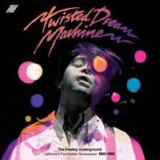
Futurismo proudly present a celebration of the Paisley Underground scene with TWISTED DREAM MACHINE The Paisley Underground / California’s Psychedelic Renaissance: 1982-1986, the next volume in their Altered Vision compilation series.
This collection draws from the neo psychedelic movement that took hold in California during the early to mid 80’s, one that melded the psychedelia, country, garage rock, avant-garde and pop of the 60’s with the DIY ethos of the then burgeoning punk scene, a hypnotic amalgamation of sound that came in staunch contrast to the blown out sonic excesses of the time.
Twisted Dream Machine takes you on a trip from the city to the desert, as the kaleidoscope of noise drifts from the The Dream Syndicate’s Velvet Underground inspired take on Crazy Horse and The Three O’Clock’s chiming baroque powerpop, to Rain Parade’s dreamy Beatlesesque melodies and the Bangles hook-laden Love inspired pop. Also featured are the wondrous sounds of Green On Red, The Long Ryder’s, Game Theory, True West, Thin White Rope and others highly worth your attention. If you are not familiar with some of the bands here, you will surely question how that is possible. The Paisley Underground, if anything, encapsulated a certain musical mindset, an outlook where the past and the future would collide in the moment. This thread would bond the bands, yet each honed it’s own sound in a twisted incarnation of the seeds planted two decades earlier. Whilst the ‘scene’ did remain contained, its influence did in fact spread throughout mainstream culture as the Bangles stuck a chord into the heart of MTV, whilst Prince took inspiration from the movement in his own songwriting and the naming of Paisley Park, as well as signing The Three O’Clock to his label and writing one of the Bangles biggest hits.
As you listen to the tracks on Twisted Dream Machine you will be reminded that there is still music left to discover and inspire, this compilation is aimed to hopefully delight longtime fans, as well as ignite a passion for those new to the bands. The Paisley Underground was the sound of neo psychedelic rock, it was subterranean pop...in
the classic sense, it was alternative rock before the term existed, a distillation of the fundamentals present at the dawn of rock ‘n’ roll, with a twist. The bands of the Paisley Underground may have been writing out of their own time, but as you listen to them in today’s context these songs should be heard as landmarks, rather than throwbacks. After all, nothing this good should stay underground. This 2xLP comes on limited edition coloured vinyl, it is housed in a gloss laminated outer sleeve with colour inner sleeves and contains a large fold-out poster with unseen photos and liner notes by Lisa Fancher of Frontier. Also available on CD with Gloss laminated Sleeve and Fold Out Poster.
- Opium Warlords Away Team
- Feel The Strength
- The Essence Of Life
- Faschionista
- Men Behind The Sun
- War Against Suicide
- The Mad Titan
- It Never Happened
- Vox Populi
- Legionari
- Everything Goes
- Wwii
- Der Heilige Berg
- The Holy Sweat
- Parasites
- The Hashashin
- Alien Harvest
- Ancient Wisdom
- The Rape Of Europe
- Amazing Race
- Erotomania
- Angels Of Chaos
- Pain And Love
- March
Transparent Green Vinyl[26,68 €]
Opium Warlords' sixth album "Strength!" out on Svart Records in September 2024! Opium Warlords, led by Sami Albert ”Witchfinder” Hynninen (Reverend Bizarre, The Puritan, The Candles Burning Blue), return with their sixth album Strength! It is a versatile but tight combination of pussy techno, sludge, industrial pop, hardcore punk, drone, shamanistic pulse, noise, heavy metal, old school gothic rock and march music. It is a take on European rhythmic patterns: stagnant factory beat – no groove, no swing, just a rhythm of industrialism that pierces through different genres and styles. Comparing to the dark and oppressive Nembutal (2020), Strength! is significantly more light-hearted, with its postmodern lyrics emitting from sources such as shampoo bottles and television UFO series to the Pan-Europa myth or morbid lore of death-hungry Transylvanian Iron Guard. However, the sting of irony and sarcasm is balanced with more serious subjects: Strength! is a hate/love letter to Europe and a self-reflection on Machiavellian and Nietzschean philosophies of strength and elitism. True to the band’s soul everything is covered with pure toxic misanthropy. Strength! 2LP/digital/2CD will be released 13th of September on Svart Records. Album’s first outtake, Erotomania, is out right now via digital services worldwide.
- Opium Warlords Away Team
- Feel The Strength
- The Essence Of Life
- Faschionista
- Men Behind The Sun
- War Against Suicide
- The Mad Titan
- It Never Happened
- Vox Populi
- Legionari
- Everything Goes
- Wwii
- Der Heilige Berg
- The Holy Sweat
- Parasites
- The Hashashin
- Alien Harvest
- Ancient Wisdom
- The Rape Of Europe
- Amazing Race
- Erotomania
- Angels Of Chaos
- Pain And Love
- March
Black Vinyl[24,16 €]
Opium Warlords' sixth album "Strength!" out on Svart Records in September 2024! Opium Warlords, led by Sami Albert ”Witchfinder” Hynninen (Reverend Bizarre, The Puritan, The Candles Burning Blue), return with their sixth album Strength! It is a versatile but tight combination of pussy techno, sludge, industrial pop, hardcore punk, drone, shamanistic pulse, noise, heavy metal, old school gothic rock and march music. It is a take on European rhythmic patterns: stagnant factory beat – no groove, no swing, just a rhythm of industrialism that pierces through different genres and styles. Comparing to the dark and oppressive Nembutal (2020), Strength! is significantly more light-hearted, with its postmodern lyrics emitting from sources such as shampoo bottles and television UFO series to the Pan-Europa myth or morbid lore of death-hungry Transylvanian Iron Guard. However, the sting of irony and sarcasm is balanced with more serious subjects: Strength! is a hate/love letter to Europe and a self-reflection on Machiavellian and Nietzschean philosophies of strength and elitism. True to the band’s soul everything is covered with pure toxic misanthropy. Strength! 2LP/digital/2CD will be released 13th of September on Svart Records. Album’s first outtake, Erotomania, is out right now via digital services worldwide.
At it’s core, Watchhouse (formerly known as Mandolin Orange) is a duo - Andrew Marlin and Emily Frantz - from Chapel Hill, NC. Their harmonies are ethereal, their chemistry vibrant, bringing to mind the atmosphere invoked by classic duos such as Emmylou Harris and Gram Parsons, or Gillian Welch and David Rawlings. Andrew and Emily provide the foundation of the group's timeless Americana sound, while enlisting a full band to flesh out their dynamics.
This Side of Jordan is the group's 3rd full length album and debut release on Yep Roc Records. Since signing to the label and releasing This Side of Jordan in 2013, the band has made quite a bit of noise on the folk/Americana circuit. They’ve received critical acclaim from NPR Music, Rolling Stone, The Wall Street Journal, Garden & Gun, No Depression and more. Their catalog has surpassed over 500 million streams and they’ve sold out worldwide tours. They have headlined Red Rocks and have graced the stage of the Ryman, Bonnaroo, and Newport Folk Festival.
"Glossolalia" ist das dritte Solo-Album von Dale Crover, dem weltbekannten Schlagzeuger der Melvins, Nirvana und Redd Kross sowie Sänger und Gitarrist von Altamont. Das von Crover und Toshi Kasai produzierte Werk strotzt nur so vor Nuggets-Garagenrock, Proto-Metal-Riffs und herrlich verschwommenem Psych-Pop. Die erste Single des 11-Song-Albums ist "Doug Yuletide". Der Track ist einer von zwei "Glossolalia"-Songs, bei denen Crover mit dem Gitarristen Dan Southwick zusammenarbeitet, seinem langjährigen Freund und Altamont-Bandkollegen. Aber Southwick ist nicht der einzige Freund, der auf Glossolalia zu hören ist: Kim Thayil von Soundgarden (Leadgitarre bei "I Quit" und "Rings"), Ty Segall (Leadgitarre bei "Spoiled Daisies" und "I Waited Forever"), Rob Crow von Pinback ("Don't Worry About It", "Rings" und "I Waited Forever") und Tom Waits' ungelenkes, in Zungen gesprochenes Intro beim Titelstück. "Glossolalia" ist Crovers bisher fokussiertestes Statement als Solokünstler. In seiner Gesamtheit zeigt das neue Album, dass Crover, so wie die Melvins in ihrem vierten Jahrzehnt weiter wachsen und sich entwickeln, auch als Solokünstler neue Schritte unternimmt. Inmitten des inspirierten Geplappers von Waits, des glorreichen Schredderns von Segall und Thayil und vielem mehr, sticht vor allem die Robustheit von Crovers Vision hervor. Diese Platte zeigt, dass seine Gesamtästhetik genauso stark wie sein legendärer Schlagzeugdonner ist. ENGAs he began plotting his new solo album, Dale Crover _ world-renowned drummer for the Melvins, Nirvana and Redd Kross, and singer-guitarist for Altamont _ realized that, unlike with his prior two full-lengths, he was starting from scratch. "I didn't have any songs," he says, "so I just went on this writing spree." The result is Glossolalia, Crover's third LP under his own name and arguably his most focused statement yet as a solo artist: 11 catchy yet eccentric tracks that move from Nuggets-y garage rock to crafty proto-metal riffage and gorgeously hazy psych-pop, touching on everything from a bad teenage trip to the charms of the late, great Jane Birkin, and featuring input by illustrious guests including Ty Segall, Soundgarden's Kim Thayil and none other than Tom Waits. What stands out across the record is the sturdiness of Crover's vision. He's modest about his ambitions _ "It's just kind of like extra credit," he says, about having a solo outlet apart from his main band _ but as this record shows, his overall aesthetic hits just as hard as his legendary drum thunder.
Brussels is a highway where rainbow-fuelled melancholia kids race its track, mountain and road bikes. Endless summers cherish the collective chosen chaos of the city; every corner displays wild micro-natures, buzzing insects, and rare weeds fourishing organically; tape hiss and AM radio compression are the soundtrack of everyday life. And hear! Originated in the Brussels DIY, indie rock and noise scene, a new kid on the block appears: Another Dancer.
They deal in utopian music - of the open, welcoming and whatsoeverish kind. It’s fresh, snotty, neurotic art-rock deeply rooted in 80s/90s DIY aesthetics. The songs on their debut album balance gently between forgotten pop hits and broken sound experiments. In their world, any shitload of weird, random, and badly synchronized sounds unveil broken-hearted pop mastery. In the Another Dancer universe, radios are stuck to WFMU and Soulseek is a self-conscious AI producing 80ies psychedelic FM-rock.
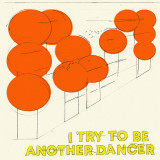
Brussels-based Another Dancer is outdated, wild at heart and elegantly shy. Their full album I Try to Be Another Dancer is out September 10th on Bruit Direct Disques and Aguirre.
"Flashes of the shambolic post-punk of Good Sad Happy Bad and the goofy, fraternal synth-pop of the blog-era gem Teenagers can be seen, often simultaneously, across the new single from the Brussels-based band Another Dancer. Vocals are layered on top of each other to a conversational near-cacophony, like you’ve been placed at the center of a Dry Cleaning show where everyone is, improbably, in a good mood. Sunny synth sweeps jostle next to bent, jangly guitar lines for a song that finds a special kind of vibrance in its mess. — Jordan Darville”
Everything is out of control / from melting pots to melting poles - das aktuelle Album der Grazer Alternative-Bande The Base lässt unsere Welt abgeranzt und hässlich glänzen. So beginnt es gleich wie ein dunkler, erdiger field holler. Bei einem field holler rufen sich Sklaven, Gefangene oder Zwangsarbeiter Worte und Sätze zu, die durch ihre Wiederholung den Rhythmus zum Arbeiten angeben - und zum Überleben. Sing or die! Everything falls apart / and everyone is acting smart. Norbert Wally und seine beiden Spießgesellen starten ihre torture de force im tiefen Süden, in der Ursuppe des Rock`n`Roll, im tiefen Sumpfland des Delta-Blues. Aber The Base sind weit davon entfernt, eine Bluesplatte aus dem Schlamm und Dreck auszugraben. Bei "It's all Going South" stehen eher Bands wie Fun Lovin' Criminals, The Clash oder Pixies Pate. The Base verstehen Blues als Brandbeschleuniger: Die Stories, die Statements, die Visionen - kaum je waren Norbert Wally (Voice/Guitars), Albrecht Klinger (Bass) und Karlheinz Miklin Jr. (Drums) so politisch, so sozialkritisch, so wütend. Und nie waren sie so sarkastisch wie 2024. Blues, das heißt Tanzen auf dem Vulkan. Lachen beim eigenen Begräbnis. Und die Fäuste ballen, wenn miese Abzocker das Gute und Schöne beflecken um aus der Wahrheit eine Ware zu machen. Der Opener "High Time For Panicking" ist ein Meisterwerk für sich: Innerhalb von eineinhalb Minuten schießt er uns vom Pre-War Blues alter Lomax-Shellacs in den lärmigen Groove einer New Wave Combo, die um ihr Leben spielt. Der Titeltrack "It's All Going South" flimmert der Ferne wie ein Wüstenkaktus in, der gerade von Mr. Tarantino in einem 1967er Chevrolet Impala Sport Sedan niedergewalzt wird: dünenweise Hall auf der massiv geforderten Gitarre, die in Slow-Mo durch die Story wandert. Ein Bass, der vor Clint Eastwood den Hut zieht. Die Atmosphäre: Calexico deluxe. "Alles geht den Bach runter" so Wird die titelgebende Redewendung ins Deutsche übertragen. "Chemically Speaking Alcohol Is Still A Solution" könnte als Antwort auf alle gutgemeinten Versuche gehört werden, eine Welt voller Diktatoren, Kriegsgerät und Wahnsinn mit Vinyasa-Yoga und Lactobacillus bulgaricus im Joghurt zu retten. Waren die vorhergehenden Alben betont reduziert und puristisch, so gönnen sich The Base auf "It's All Going South" Backgroundchöre, fetten Vintagesound und lassen ausgiebige Studioeffekte. Das sitzt jedoch alles wie angegossen und zeigt die Qualität der Songs, denen knapp anliegende Taucheranzüge ebenso gut stehen wie schillernd verbrämte Kostüme. Niemand zieht aus dem Wort "happy" so viel Melancholie wie Norbert Wally und folgerichtig ist auch die Single-Auskoppelung "Waiting for June" ein Liebeslied, das gar keines ist. Aber der zwingendste Grund das Album anzuhören heißt "No One's Safe". Ein Song der sich wie ein Drillbohrer durch das Innenohr zur Großhirnrinde vorarbeitet. Soundcollagen, Voice-Over, eigenartiger Noise - immer tiefer bohrt sich der Song, bis er den Erdkern erreicht. Norbert Wally zeigt in seiner Stimme eine elegante Verletzlichkeit, die an einen David Bowie der 70er-Jahre erinnert. Die Intensität von OK Computer drängt sich auf. Niemand ist sicher. Game over! "It's All Going South" ist die bisher schmerzhafteste, politischste Platte von The Base. Wie schade, wir werden alle untergehen - und das kann zumindest verdammt sexy klingen.
- Suffocate City (Feat. Spencer Charnas Of Ice Nine Kills)
- Blood Mother
- Doom And Gloom
- Holy Water
- Dark Thoughts (Feat. Danny Worsnop)
- You’re So Ugly When You Cry (Feat. Bert Mccracken Of The Used)
- Chernobyl
- Dopamine
- Voodoo Doll (Feat. Eva Under Fire)
- Happier Than You
- Alien
- Generation Psycho
- Stay Weird
- Hearse For Two
The Funeral Portrait stands to represent the outcasts from all walks of life. The misunderstood, the weird, neurodivergent, LGBTQ+, marginalised or otherwise given an unfair hand in life. To offer a sense of community, a place to belong and a space where they can feel safe and accepted for their differences. The band members all grew up as 'the weird kid' who was saved by music and alternative culture, so they now feel obligated to return this favour to the younger generation. This message is shouted to the masses through their over-the-top theatrics and dramatic, almost blown out presentation. The Funeral Portrait believes in the power of Devotion to their Music and to their unwavering fanbase, The Coffin Crew. The ritual is beginning and they want everyone involved. Join them to share your devoutness; excuses for not attending are forbidden.
2024 repress
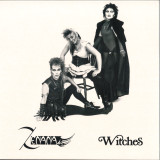
Rush Hour’s RSS series excels in unearthing buried treasure, offering a second chance for artists and releases that have long been overlooked. That’s certainly the case with ‘Witches’, the superb sole single by British 1980s wave trio Zenana.
Originally released on seven-inch by the tiny PRM label in 1986, ‘Witches’ was the product of a sister-brother songwriting team whose music was mostly recorded in the front room of a terraced house in Nanpean, a small industrial village in Cornwall, England’s most south-westerly county. While the single was infectious, impeccably produced and dancefloor-ready, it sold in limited quantities at the time.
Zenana’s story can be traced back to the early 1980s, when singer-songwriter Anita Tedder founded the all-female trio as a vehicle for her musical ambitions. To bring her songs to life, she joined voices with her brother Mike, an early adopter of electronic music who had built a studio – nicknamed MFR, short for ‘Mike’s Front Room’ – in his Cornish home.
Countless Zenana tracks were recorded at ‘MFR’ between 1984 and ’86, with the resultant demo cassette securing the band a management contract, a slew of live bookings, a video shoot and even a television appearance. Buoyed by this underground success, they headed to the remote Sawmills Studio in Cornwall – famously only accessible by boat – to re-record ‘Witches’, a song inspired by local folk tales of witches gathering near Mike’s home.
While this version of ‘Witches’ failed to make an impact at the time, it has become something of a cult classic following its’ rediscovery by crate digger Kiernan Abbott – and subsequent championing by other dusty-fingered DJs including Antal, Skyrager, Trevor Jackson and Luke Una – in early 2023. The buzz inspired Zenana to perform live again for the first time in decades, with the story of their surprise comeback being covered by British media outlets including the BBC and (more surprisingly) the Daily Mail.
Now presented in re-mastered form, ‘Witches’ is a genuinely slept-on gem. Propelled forwards by punchy drum machine beats, a killer synth bassline and fizzing keyboard sounds, the song benefits greatly from strong vocals and an extra-percussive middle eight layered with vocalisations, cosmic spoken word sections and swirling noises.
It comes backed by a brand-new extended ‘spell of love’ courtesy of Bristol duo Bedmo Disco, AKA music journalist Matt Anniss (author of Join The Future: Bleep Techno and the Birth of British Bass Music) and DJ/production partner Gareth Morgan. Anniss is a long-time friend of Mike and Anita Tedder who has fond memories of visiting Mike’s home studio with his family around the time that ‘Witches’ was recorded.
Working from Zenana’s original MFR eight-track recording (tapes of the single version were lost years ago), Anniss and Morgan have turned in the extended ‘dance mix’ the track never had first time around. More atmospheric, clandestine and dancefloor-focused, it offers authentic nods to New York proto-house, mid-80s Shep Pettibone dubs, and the pioneering synth-pop productions and dub mixes of Factory Records regular Martin Rushent.
'Good Time' is the debut album from Austin, TX noise-pop band DAIISTAR, due out September 8th via Fuzz Club. Creating a narcotic blend of noise and melody, the band takes their inspiration from the neo-psychedelic era of the 80s and 90s and pull it into the future with modulating synthesisers, heavy guitars, bouncing bass lines, and spiralling hooks. 'Good Time' was produced by The Black Angels' Alex Maas and engineered by James Petralli of White Denim. Made up of Alex Capistran (guitar/vocals), Nick Cornetti (drums), Misti Hamrick (bass) and Derek Strahan (keys), DAIISTAR formed in the spring of 2020, just weeks before the pandemic started. "To us, these songs were a glimmer of light", Capistran says: "Starting a band at the peak of the pandemic to some might seem ill-timed, but to us it was a way to escape for a moment. There was something to look forward to and we kept our heads in the future. These songs guided us through some dark times and hopefully they can do the same for you. GOOD TIME is here." Pressing info for LP: 180g neon orange vinyl, printed inner-sleeve, download card included
On their seventh long player The Breaks - their second for Joyful Noise Recordings - SUUNS are lost in limbo. For some artists, being caught in flux may result in songs that are either naive, out of touch or both, simply as a consequence of being cut off from human civilization. But for SUUNS, a band who have grown more than comfortable in the oblique and the intermediate, it actually had the opposite effect. The Breaks marks the Montreal experimental rock outfit's most emotionally resonant and tonally rich collection of music to date. The trio of Ben Shemie, Joseph Yarmush and Liam O' Neill leans more zealously than ever into their pop instincts. Yet remarkably enough, with that same dauntless abandon, SUUNS have mined a more extreme sonic palette this time around, one that stretches far beyond their core fundamentals as a band. The Breaks finds Shemie, O'Neill and Yarmush gleefully experimenting with loops, synths, samples and MIDI-instruments like a post-millennial Tangerine Dream messing with downtempo triphop beats. O' Neill took point in the producer's chair for The Breaks, arranging, structuring and editing many of Shemie and Yarmush's ideas from sporadic rehearsal sessions into Pro Tools, reimagining the songs over and over during a two-year time frame. Forged between countless plane rides, road trips, van tours and text threads, The Breaks became a product of endurance and a lot of trial-and-error. It's a record forged in tight fissions of freedom, where spells of whispered intimacy - like on the stunning ballad "Doreen" - are allowed to branch out into the vast glacial dreamscapes of the album's majestic title track. It captures SUUNS at their most panoramic, curious and exuberant: a constant relay of being adrift and enlightened anew, geared up to eleven. And guess what: the wheels keep on spinning.
If there's one musician in the last decade that you may hear in wildly diverse musical contexts it is Belgian electric bassist and sound sculptor Farida Amadou. Not only can you enjoy the unerringly skillful command she has over her instrument but also the transformative power to reinterpret and expand her material in spontaneous and unconventional ways.
Amadou is self-taught and radically aware of her idiosyncratic relationship with the bass guitar. She neither emulates the virtuosos of the electric bass, nor does she use the instrument as a pure sound generator that merely emits humming and feedback. She takes a completely independent and unique approach. This freedom enables her to create an overwhelming wall of sound, as well as simple, clear structures that are rhythmically concise yielding a wide associative space that lands somewhere between free jazz and noise.
Her work is often concentrated and circular where motifs are established and developed outward. It is an organic sound in the literal sense of the word, constantly in motion, yet resting in itself. The three solo pieces she has recorded for Week-End Records emphasize her impressive ability to ignite ecstasy from tranquility, to fan out a whole range of moods from a few potent ideas.
These attributes make her a musician who enriches every group she plays in, because she is present with her assured and crystallized sound but refrains from being domineering. However, her strengths are even more apparent when she plays solo: the contrasts between the dark, heavy clouds of sound and the rhythmic passages, and the transitions between movements which always sound "logical" yet surprising.
Her new solo album, "When It Rains It Pours" presents Amadou as an inspired improviser who follows her musical intuition and acumen to create a truly unique soundworld. Rarely has improvised music sounded so succinct and compelling.
Wenn es in den letzten zehn Jahren eine Musikerin gegeben hat, die man in den unterschiedlichsten musikalischen Kontexten immer wieder hören will: nicht weil sie eine passable Mitspielerin wäre, sondern weil sie diese Kontexte jedes Mal bereichert und auf spontane, unkonventionelle Weise erweitert, umdeutet, in neue transformiert, dann ist es die belgische E-Bassistin und Klangskulpteurin Farida Amadou.
Sie ist Autodidaktin - und sie versteht diese Selbstaneignung des Instruments radikal. Weder eifert sie den Virtuosen des E-Basses nach, noch verwendet sie das Instrument als reinen Klangerzeuger, der bloß Brummen und Feedbacks von sich gibt. Sie geht von einem völlig eigenständigen Ansatz aus. Der ermöglicht es ihr, eine überwältigende Wall of Sound zu kreieren genauso wie einfache, klare Strukturen, die rhythmisch prägnant sind und einen weiten Assoziationsraum zwischen Free Jazz und Noise eröffnen.
Ihre Musik ist konzentriert, hat einen langen Atem, kreist um Motive, entwickelt daraus neue Linien, die Amadou im Spiel weiterverfolgt. Es ist ein im Wortsinne organischer Sound, ständig in Bewegung, dabei in sich ruhend. Die Stücke, die sie für Week-End Records aufgenommen hat, unterstreichen ihre beeindruckende Fähigkeit, aus der Ruhe die Ekstase zu entfachen, aus wenigen Ideen eine ganze Palette an Stimmungen aufzufächern.
Das macht sie zu einer Musikerin, die jede Gruppe, in der sie spielt, bereichert, weil sie präsent ist, ohne zu dominieren, weil ihr Sound so prägnant ist, ohne die anderen zu übertönen. Im Solo treten die Stärken ihres Spiels aber noch stärker hervor: die Kontraste zwischen zwischen dunklen, schweren Klangwolken und den rhythmischen Passagen, vor allem die Übergänge, die immer „logisch“ klingen, aber zunächst unerwartet kommen und ihren eigenen Weg einschlagen. Ihr neues Solo-Album, “When It Rains It Pours” zeigt sie als inspirierte Improvisatorin, die sich nie bloß ihren Einfällen hingibt, sondern die Ideen zu Ende denkt, oder besser: spielt. Selten klang improvisierte Musik so kompakt und zwingend.
Individually, Kronos Quartet and Sun Ra are two of the most groundbreaking names in contemporary music. The former is the legendary San Francisco-based string quartet that laid a blueprint for what concert music could become, working with the likes of John Cage, Tanya Tagaq, and Astor Piazzolla. The latter was a singular jazz and avant-garde bandleader, as well as a philosopher and poet, who honed an extraordinary strain of cosmic experimental music from the 1950s until his ascension in 1993. As a capstone to Kronos Quartet’s 50th anniversary, the group has joined forces with the Red Hot Organization for the new album Outer Spaceways Incorporated: Kronos Quartet & Friends Meet Sun Ra. It’s stacked with some of the most innovative artists active today — everyone from multidimensional electronic musician Jlin, to Moor Mother and DJ Haram’s radical noise / rap project 700 Bliss, to abstract hip hop luminaries Armand Hammer, to avant-garde hero Laurie Anderson, to minimalist pioneer Terry Riley.
Finish Ticket sind zurück mit ihrem lang erwarteten zweiten Album "Echo Afternoon", das am 6. September über Better Noise Music erscheint. Bekannt für die Ehrlichkeit, Leidenschaft und emotionale Offenheit, die das Trio in die Alt-Szene einbringt, haben sie sich als Band etabliert, die man im Auge behalten muss, während sie bereits Tourneen mit Twenty One Pilots, AWOLNATION und Nothing But Thieves absolviert haben und im letzten Jahr beim Lollapalooza aufgetreten sind. Das Album "Echo Afternoon", das unter anderem die Fan-Favoriten "Changing" und "Let You Go" enthält, erscheint Digital, auf CD und als Vinyl in limitierter Auflage.
On August 16, Toronto-based musician and producer David Psutka aka ACT! (fka Egyptrixx / Anamai / Ceramic TL) will release his latest project ‘Face to Face, Day by Day’ for his own Halocline Trance imprint.
This is is Psutka’s third album proper as ACT! following the release of the “sonic mixtape” ‘Universalist’ in 2018 and the augmented reality soundtrack ‘Grey Matter AR’ in 2021; a series of Snapchat filters created by artist Karen Vanderborght and soundtracked by ACT! which explored the poetic and existential potential of AR and social media.
“Aesthetic accidents in the periphery of the ‘work’ can be the message. In 2018, at an Egyptrixx concert at Bagni Misteriosi de Teatro Franco Parenti - a gorgeous, sprawling outdoor pool theatre in Milan - I had a clarifying moment. Gigs around then had mostly been in pummelling, dark music venues, so I wasn't prepared for this expansive space (and the thoughtful work of the organisers who had layered sheets of plastic film on the pool to parallel eco-materialist themes from a previous album). It was the midday soundcheck that struck me most - brittle digital sounds from the set echoed off the colonial Milanese facades and ricocheted down the Via Carlo Botta, pinging off buildings in the distance and clashing with the noise of traffic, tourists and whatever else. It was a strange, collisionist moment, and a reminder that my essential approach to music is, above all, a preoccupation with the materiality of sound.
Everything on Face to Face, Day by Day began as an improvisation. Openness to accidents and the emotional complexity that comes from centering them in composition has become important to my work, and helps the music go beyond the possibility of what is playable, imaginable. I also wanted to channel adventurous solo pop records of the 1970’s and 80’s, like Yasuaki Shimizu, Jon + Vangelis and Stevie Wonder. These came from an interesting era in commercial music as studio production techniques became increasingly formalised as compositional devices, like AMS RMX16 percussion sounds and early digital stereo effects.
Like many musicians, I’ve been travelling and performing less since the pandemic and as a result, have wanted studio sessions to feel more collaborative and improvisational. There were great writing and recording sessions for this album. Vox, synth, sax and guitar jams - much of what ended up on the record isn’t edited much, if at all. I jammed a sm57 into Colin Fisher’s sax bell and created feedback loops using various preamps and distortion units. The clunky sounds were sampled and used as percussion elements. I also had a great synth jam session with Jeremy Greenspan at Barton Building Studio in Hamilton, which was recorded by filmmaker Liz Adler.
I’ve had a few months to sit with this album and see clear throughlines connecting it to previous projects. There are aspects of the experiential and structuralist sound design ideas from the EGYPTRIXX records; and also some arrangement tricks borrowed from ANAMAI - specifically, the use of interruptionist sound events. Perhaps most of all, it feels connected to the Ceramic TL + Ipek Gorgun record ‘Perfect Lung’ and its splattered take on musical complexity. “ (David Psutka)
In addition to ACT!, Psutka has released music with numerous projects including Anamai, Egyptrixx and Ceramic TL, he has collaborated widely with artists such as Junior Boys, Ipek Gorgun, and Kuedo as well as Jessy Lanza (2016) and an official remix for Massive Attack’s ‘Hymn of the Big Wheel (2012). The contributions on this album, from Robin Dann and Ben Gunning, reflect the deeply collaborative nature of the Halocline Trance label and the Toronto creative scene more broadly.
Many of Psutka’s releases have received critical acclaim from media outlets such as Pitchfork, Exclaim, The Quietus and Resident Advisor. As a live performer, he has toured extensively including performing at Sonar Festival, Roskilde, Mutek, MOMA PS1 Warm-UP and CTM Festival. He’s also presented sound installations at various institutions such as Galeria Civica Commune di Modena, and Art Gallery of Ontario (AGO).
In 2015, Psutka launched Halocline Trance as a home for his various sound projects, events and collaborations. Now a creative collective and label, it has grown to include a diverse array of artists including Casey MQ, Xuan Ye, Myst Milano, Colin Fisher and others. The label is described as “genre-agnostic” and conceptually open, supporting work across a wide spectrum of creative fields including soundtrack recording, AR design and traditional artist albums. Their impeccable roster also includes, theorist/improviser Eldritch Priest, and AR/VR artist Karen Vanderborght. In recent years, Halocline Trance has established itself as a platform that facilitates many of Canada’s most exciting creative music projects. Many of the releases have received critical acclaim from outlets including Pitchfork, Exclaim, Bandcamp and Resident Advisor.
Black Truffle is thrilled to present a Song for two Mothers / Occam IX the first ever solo release from Laetitia Sonami. Born in France in 1957, Sonami studied with Éliane Radigue in Paris before moving to California in 1978 to study electronic music at Mills College, going on to make important innovations in the field of live electronics interfaces and multi-media performance. Sonami is perhaps most closely associated with one of her inventions, the Lady’s Glove, an arm-length tailored glove fitted with movement sensors allowing the performer fluidly to control digital sound parameters and processing, as well as motors, lights and video playback. Having performed with the Lady’s Glove for 25 years, Sonami retired it in 2016, turning her attention to the interface/instrument heard and pictured here, the Spring Sprye.
In Sonami’s own description, “The Spring Spyre is composed of three thin springs that are attached to reverb tank pickups, mounted on a metal ring. The audio generated when the springs are touched, rubbed or struck is analyzed in Max/MSP. The extracted features are then used to train machine learning models in Wekinator and Rapidmax and control the audio synthesis in real time. We never actually hear the springs.” After decades of aversion to documenting her work on recordings, a Song for two Mothers / Occam IX treats listeners to two side-long performances with the Spring Spyre: the very first piece developed for the instrument and the most recent, the two contrasting remarkably in sound palette, energy and form. A Song for two Mothers (2023) spins an intricate web of rippling synthetic burbles, rapid sweeps and fizzing textures. Performed in real time with the sensitive and partly uncontrollable Spring Sprye ("a bit tyrannical," Sonami calls it), the music is delicate yet chaotic. Abrupt gestures hover against a backdrop of silence, "devoid of spatial or temporal direction". After several minutes, the sound-world becomes metallic and percussive, tapping and ticking in pointillistic flurries before a wavering harmonic cloud emerges, sprinkled with resonant drips and pops.
Occam IX is a radically different proposition. At the outset of Sonami’s exploration of the Spring Sprye, she asked her former teacher Éliane Radigue to compose a piece for it—and her: like all of Radigue’s work since she ceased working with analogue electronics at the beginning of the 21st century, Occam IX is written not only for an instrument but also for a particular performer. These scores are developed verbally, through meetings and conversations between performer and composer; each is grounded in an image (usually kept from listeners, to avoid influencing their experience); all magnify the subtlest acoustic phenomena and require great commitment and patience from the performer. Sonami’s is one of the few Occam pieces to make use of electronics, bringing it closer to Radigue’s famous longform pieces for ARP 2500. Beginning from a rumbling low tone, the listener is gradually immersed in slowly lapping waves of synthetic tones, eventually thinning out into delicate bell-like pings against a background of white noise, reminiscent of one of the most beautiful sections of Kyema from the Trilogie de la Morte.
Accompanied by notes from Sonami, her longtime collaborator Paul DeMarinis, and Radigue, and illustrated with scores, photographs and images of the Spring Spyre, a Song for two Mothers / Occam IX is an essential document celebrating an under-recognised pioneer of electronic music and performance.
The impact, influence, and importance of Run-D.M.C.'s self-titled debut – the album that invented hardcore hip-hop and bridged rap, rock, and funk in then-unparalleled ways – cannot be measured. The first full-length record released by Profile Records, the 1984 set permanently changed the sound of music, broadcast streetwise wisdom to every corner of the country, and made the notion of a one-man band a distinct reality. Bolstered by an incendiary blend of staccato deliveries, stark beats, aggressive exchanges, evocative hooks, and socially conscious messages, Run-D.M.C. still hits listeners in the jaw with the same intensity it did nearly 40 years ago when it could be heard booming from ghetto blasters carried around city blocks nationwide.
Sourced from the original master tapes, pressed on MoFi SuperVinyl, and strictly limited to 3,000 numbered copies, Mobile Fidelity's 180g SuperVinyl 33RPM LP is the definitive-sounding version of the groundbreaking work cited by Rolling Stone as the 378th Greatest Album of All Time. This reissue also represents the first time this gold-certified effort has been presented in audiophile quality. Benefitting from the ultra-low noise floor, superb groove definition, and dead-quiet surfaces of SuperVinyl, Run-D.M.C. now plays with a clarity, immediacy, punchiness, and directness worthy of the artistry, urgency, and intellect of the trio's material.
The brilliance of Russell Simmons and Larry Smith's production comes into view as if the music is being broadcast on a giant system in a small club — only more focused, lively, and unlimited. Free of dynamic constraints and fatiguing harshness, this LP invites you to turn up the volume and experience the raw, rough, invigorating songs that changed the look, sound, and feel of hip-hop overnight. Think the trio’s sparse framework of drum machines, tag-team rhymes, keyboard accents, and turntable scratches is stuck in the mid-80s? Spin MoFi’s SuperVinyl LP and gain new appreciation for the music, messages, and production on display on Run-D.M.C.
Recorded in the wake of two successful and pioneering singles, both included on the album, Run-D.M.C. effectively took a sheet of coarse-grit sandpaper to the polish, sheen, and linear presentation of all the hip-hop that preceded it. Stripped to bare-bones foundations, the songs grab your attention and shake you by the collar with a combination of industrial-leaning rhythms, staggered deliveries, dance drama, and hard, minimalist percussion. Then there are the lyrics.
The LP broadcasts a smart mix of boots-on-the-ground reports, uplifting advice, and then-nascent b-boy culture. In one fell swoop, its narratives and music rendered the scene’s proclivity toward glamor and softness passé. Run-D.M.C.’s tough, cool-minded fashion sense showed the trio walked its talk and gave fans — particularly those living in long-ignored urban areas — heroes which with they could identify. Kangol hats, black jeans, leather jackets, Adidas sneaks, and gold chains were the new currency.
In every regard, Run-D.M.C. signifies the birth of modern hip-hop. Never more obviously than on the groundbreaking “Rock Box,” where rap and rock were first fused. As the first hip-hop video to receive regular rotation on MTV, the track eviscerated racial and social boundaries, awakened musicians and listeners to new possibilities, and redefined both popular music and, ultimately, popular culture. As the Roots’ Questlove has stated, it “ knocked down many obstacles, enabling hip-hop to become the new gospel."
Such teaching includes the real-world scripture of “Hard Times,” utopian hopefulness of “Wake Up,” and observational truths of “It’s Like That.” Released as the group’s debut single well before its eponymous album, the latter tune established themes and outlooks Run-D.M.C. would embrace during its career. Namely, the keen awareness of various prejudices, economic ills, and disruptive violence as well as the knowledge that education, self-motivation, and hard work were the ways to escape disadvantages and disillusionment.
Inspired and inspirational, the song reflects the spirit and shrewdness that courses throughout Run-D.M.C. That includes a detailed account of the trio’s not-so secret weapon (“Jam-Master Jay”), purpose statement (“Hollis Crew (Krush-Groove 2)”), and a revolutionary hybrid autobiographical narrative-dis track (“Sucker M.C.’s (Krush-Groove 1)”) widely regarded as one of the best hip-hop songs ever created. The same can be said for every moment on Run-D.M.C.
MoFi SuperVinyl
Developed by NEOTECH and RTI, MoFi SuperVinyl is the most exacting-to-specification vinyl compound ever devised. Analog lovers have never seen (or heard) anything like it. Extraordinarily expensive and extremely painstaking to produce, the special proprietary compound addresses two specific areas of improvement: noise floor reduction and enhanced groove definition. The vinyl composition features a new carbonless dye (hold the disc up to the light and see) and produces the world's quietest surfaces. This high-definition formula also allows for the creation of cleaner grooves that are virtually indistinguishable from the original lacquer. MoFi SuperVinyl provides the closest approximation of what the label's engineers hear in the mastering lab.
Typically, a band's big indie label debut doesn't come 15 albums into its career, but with Constant Smiles' Paragons, here we are. Primary songwriter and sole "constant" member Ben Jones_who considers Constant Smiles a collective_sees its impressive output as a way to document the group's evolution. Since its live debut as a noise duo on Ben's home of Martha's Vineyard in 2009, Constant Smiles has grown to include contributions from 50 other members, all of whom have personal connections to the group's extended family. And while the collective has indulged an array of musical whims along the way - including Ben's penchant for penning a new set's worth of material for each live performance - Constant Smiles' sound has tightened up considerably over their past couple of albums, in large part as a result of Ben's working relationship with Mike Mackey, who has become his main creative partner. This increased focus manifests on Paragons in the band's most cohesive batch of songs to date, ranging from shimmering psych-pop excursions to bittersweet, piano and string-accented strummers, and an execution that feels like a massive step forward for the band. Through its recent forays into dream pop and shoegaze (Control) and synth-pop (John Waters), Constant Smiles has learned how to incorporate its experimental inclinations more fluidly into the mix. Artists like Yo La Tengo, and the more recent Rat Columns, are good touchstones for Constant Smiles' musical approach - tethering to an indie-pop core while perennially mining genres, always finding new ways to intrigue listeners and pursue a unique vision. Paragons was produced and engineered by Ben Greenberg in the last two weeks of December 2020 at Gary's Electric, with additional recording done by Ben Jones at his home studio, The Void, and his Aunt Leanne's house. The album was mixed at Circular Ruin Studio and mastered by Josh Bonati. The band on Paragons consists of Jai Berger (who performed "Introduction"), Spike Currier (bass and synth), Matthew Addison (drums), Emma Conley (violin), Nicky Wetherell (cello), Adam Lipsky (piano), and Ben Greenberg (guitar and Mellotron).
WRWTFWW Records is continuing its fruitful and blissful collaboration with New York ambient / jazz / downtempo musician Danny Scott Lane with the first ever vinyl release for his 2021 cassette album Caput. The 12-track beauty is available as a limited edition LP (500 copies worldwide) housed in a marvelously designed heavy 350gsm sleeve. The album is also available digitally.
Originally released on cassette only, Caput is desert music inspired by the city, a serene and cozy soundtrack of contemplative synth, mini pleasure-grooves, and botanical ambient jazz, sure to gently pacify the emotionally conflicted and make small moments the best moments. Scott Lane’s smooth downtempo is like a cushiony bubble of simple life, protecting the mind from noise and stress. It’s the comforting hand on the shoulder, the blanket that keeps warm, the easy Sunday morning breakfast - caring chillout music to escape from the brouhaha.