Following her debut album, I’ll Look for You in Others (Past Inside the Present), earlier this year, Patricia Wolf joins Spain’s Balmat label with See-Through, her second album. See Through finds the Portland, Oregon musician and field recordist continuing to develop her signature style of ambient, balancing radiant soundscaping with a carefully expressive sensibility. But the new album is also marked by an important difference. Where I’ll Look for You in Others was largely written in response to the death of a loved one, See-Through represents a kind of rebirth.
“After a long period of grief, I had been hoping to find my way to a place of lightness, peace, playfulness, curiosity, and sensuality again,” Wolf says. “What I was surprised and pleased to find is that for the most part, I had.”
She wrote and recorded many of the album’s songs quickly, in preparation for an August 2021 broadcast on the online radio platform 9128 Live. Excited for the opportunity to play live after more than a year of the pandemic, Wolf decided to write all new material for the event, working with a lean setup of Octatrack, Roland Synth Plus 10, Make Noise 0-Coast, and Novation Summit. (In fact, Wolf was the first sound designer invited to create patches for the Summit.) She also picked up an acoustic guitar that her brother had loaned her. “I decided to take the surrealist approach of ‘pure psychic automatism’ to see what poured out of me,” she recalls. “Woodland Encounter,” “Under a Glass Bell,” “The Grotto,” “The Mechanical Age,” “The Flaneur,” and “Psychic Sweeping” are all products of those sessions; the through line holding them together is their exploratory spirit and clarity
of vision.
Other songs, like “A Conversation With My Innocence,” “Recalibration,” and “Psychic Sweeping,” wrestle with the traumas of the preceding year. Though they may linger on the heaviness of loss, Wolf says, “What I discovered is that a stronger archetype had grown inside me to steer my emotions and thoughts to a better place.” Likewise, “Wistfulness” and “Upward Swimming Fish”—her first experiments with VST synthesizers—balance the bittersweet embrace of melancholy with the freedom to choose happiness.
“Pacific Coast Highway,” the album’s lone song with drums, might at first seem like an outlier. But it also signals Wolf’s interest in finding a fusion between the introspection of ambient and the togetherness of beat-oriented music. “Experiencing loss and isolation is what drove me into gentler territories of sound,” she says, “but I want to start making more beat-oriented music. After an extended period of loss and isolation, I’m ready to experience more joyous and social things.”
Listeners with keen ears might recognize the album’s closing song, “Springtime in Croatia”: A different mix of the song originally appeared on the 2021 digital compilation secondnature & friends Vol. II, from the Seattle label secondnature. This marks its first appearance on vinyl, however, and its spiritual home is undoubtedly here, at the close of See-Through. As the bookending answer to the opening “Woodland Encounter”—another song in which field recordings play a crucial role—it closes the circle of an album that is itself keyed to the steadily turning cycles of life.
Suche:out noise
- A1: It's Time 03 05
- A2: Life Ahead 03 21
- A3: Peace In Your Head 02 52
- A4: Holy Mountain 02 29
- A5: Jellyfish 02 04
- A6: Talk Olympics 02 41
- A7: Prayer 02 03
- A8: Moon Eyes 02 49
- B1: Sweet Danger 02 40
- B2: Not In Surrender 03 19
- B3: Instant Animal 03 32
- B4: Strong Bone 02 04
- B5: Born In This Body 03 22
- B6: Just My Luck 03 00
- B7: Happy Head 03 06
Neon Orange Transparent Vinyl[32,35 €]
ALBUM Obongjayar's forthcoming sophomore ‘Paradise Now’, is an ambitiously fresh global prospect, with roots grounded in his own wide-ranging world of influences. It’s everything from pop to punk, dance to Afrobeat, funk to folk, refracted through a thrilling new perspective. “I wanted an album that I could listen to from start to finish on a night out.” But he still considers it something of a Trojan Horse. Recorded between London and LA with UK alt-rap mainstay Kwes Darko ( Pa Salieu, John Glacier) and Grammy-winning production trio Beach Noise (Kendrick Lamar, Baby Keem, Bakar), the record is as emotionally complex and broad as Obongjayar has ever been, even within its contagious candy coating.
As the so-called “Latin boom” becomes a new anchor for hard-swung club sounds, it is crucial to recognize that the region’s musical culture extends far beyond dembow edits and the pop-trap hybrids that have edged into the mainstream. Monterrey-born, New York City-based producer and DJ Delia Beatriz, aka Debit, returns to NAAFI with Potpourri, a generous and kinetic collection of dancefloor-oriented tracks filled with percussive flourishes, squelching 303 basslines, and rhythmic mutations that actively challenge the status quo. Rather than rebuilding “Latin sounds” as a fixed category, the album rethinks their internal logic, tracing the evolution of techno and house in cities like Detroit, Chicago, and New York alongside parallel innovations emerging in Mexico, Colombia, and across the wider Latin world. Positioned on the bridge between Mexico and the US, Potpourri does not seek synthesis as a gesture of smooth fusion, but as a site of disruption.
The album can be heard as a loose follow-up to System (2018), Debit’s NAAFI-released EP that expanded the sonic potential of tribal guarachero through triplet-driven rhythms, industrial pressure, and noisy reconstruction. Potpourri retains guaracha as a structural backbone while drawing further influence from veteran DJ and producer Javier Estrada—who also appeared on System—and particularly from his fast-paced, nonlinear style of mixing. That approach becomes a formal principle here: canonical structures are dismantled, repetition is avoided, and tracks evolve without sacrificing propulsion. Coming after the introspective temporal inquiry of Desaceleradas and the speculative historical acoustics of The Long Count, Potpourri arrives as a deliberate surge of energy. As Beatriz explains: “It’s a manifesto for rethinking form and sound in dance music. By stepping outside traditional structures and embracing the potpourri approach, I’m creating new meaning with familiar rhythms. I’ve also been applying this to my DJ sets, using it as a tool to break free from established norms and explore new narrative possibilities.”
Years in the making, Potpourri imagines an alternate timeline in which the psychedelic squelch of acid—echoing pioneers such as DJ Pierre and Mr. Fingers—and the dub-inflected atmospheres of Basic Channel entered into direct and sustained contact with Latin American club mutations. Those references are legible, but never merely quoted. Instead, they are folded into syncopated hi-hats, overdriven kicks, and unstable arrangements that absorb both the intensity of the parties Beatriz remembers from Monterrey and the abrasive edge she sharpened at DIY noise shows in New England. The result is unmistakably a dancefloor record—heard in tracks as forceful as “Pero like” and the peak-time pressure of “tuvesuerte”—but one saturated with grotesque, psychedelic atmospheres, where sounds dissolve into hoarse croaks, acidic smears, and anxiety-inducing growls. Here, the rave becomes not simply a site of release, but a platform for navigating identity, hybridity, and artistic formation across borders. Moving through peaks and ruptures, Potpourri reveals a party narrative that is not linear but multidimensional.
By folding together the fluidity of DJ culture, the experimental charge of acid, and the rhythmic vitality of guaracha, Potpourri proposes a space of formal and political innovation within Latin America’s rapidly expanding electronic music landscape. It is a record that refuses containment, pushing against the templates through which Latin electronic music is often consumed, and insisting instead on friction, instability, and transformation as generative conditions for the dancefloor.
Between Faith and Noiz represents the exact point where faith and inner chaos coexist.
It's an introspective journey toward the center of the mind: the space where thought becomes distorted, where sound turns into a reflection of doubt, where faith is tested within one's own noise.
Noiz symbolizes that internal, mental, and emotional noise that distorts reality - the voices, the interference, the overload of stimuli.
Faith, on the other hand, is the thread that keeps direction, the spark that survives when everything vibrates and collapses.
The EP portrays that invisible struggle between believing and falling apart, between the silence that soothes and the noise that purifies.
Each track acts as a stage of that journey: the oath (Faith and Oath), the wound (Ulcerate), the essence (Oxeo), the connection (Captures Spirits), and finally, the release (Noiz).
It's not about finding faith outside, but rebuilding it from within the noise.
After a series of successful outings alongside sidekicks Ofofo and Zongamin, studio wizard MYTRON turns in his debut solo full-length for Multi Culti World Records. With contributions on Invisible Inc, Calypso, Bongo Joe, Kalahari Oyster Cult, LYO, Codek Records and Earthly Measures, Mytron has carved out a name for himself in a carefully-curated left-field quadrant of the indie-dance galaxy. Tuning his oscillators to myriad sounds — from dub and disco to krautrock — the London-based producer perhaps most notably channels the pristine compositional style of Kraftwerk. While most apparent in the use of vocoder, there’s a consistent efficiency of arrangement that recalls the man-machine in effervescent, idealistic fashion. Mytron manages to keep it simple, funky and musical — whimsical tunes that bop along with analog grit, wilderness, and wonk. There’s a warmth and wit that shine through every synth line, an understated confidence that speaks of years spent tangled in wires and waveforms, with an inclusive sonic eclecticism that flattens hierarchies between genres, geographies, and generations. Each influence is invited to the table, treated not as pastiche but invited to dine and dance in a space where kosmische dub disco and Afro rhythms can coexist without borders. The sleeve design echoes this philosophy: video-feedback patterns hinting at our modern screens, both portals and filters — coloured, distorted intermediaries through which we perceive the world. In the trippiest sense, the record is both reflection and refraction — a sonic mirror held up to an interconnected, glitchy reality. Tailored equally for DJ use and home-listening head trip, the album is meticulous, mischievous and merry.
BanBanTonTon review:
On Mytron’s debut long-player for Multi Culti groovy 21st Century leftfield house gear collides with Daniele Baldelli and Beppe Loda’s hugely influential `80s afro / cosmic. The 9 tracks are chunky, chugging and full of funky, funny noises. Old school B-lines mixing with eccentric electronics. Spinning, spiralling sounds.
Sugar is an electro-pop, vocoder confection, cut from the same sonic cloth as cult classics like Codek’s Tam Tam. Created from tough trap drums, splashing effects and a mutant Giorgio Moroder bass arpeggio. The title track, Propellor, pits Kraftwerk-esque hardware harmonised vocals against a bongo loop and a whistling hook. Playground has simian shrieks surround tumbling tom-toms. Highway Maintenance adds kosmische synths to a dance of woodblocks and buzzing bottom end. Keep On Dubbing is an organ-led, clip clopping percussive canter.
Tracks such as Speaker Can Talk, shot through with disco lasers blasts and recalling Curt Cress’ Dschung Tek, also lift the tempo up, but the bulk of the music here is a mid-tempo, techno drum circle. Squelchy sequences gurgling in and out of programmed percussion. On Quasar, spiky acid edges in and slowly takes over.
Key references that come to mind are Baldelli’s own turn-of-the-2000s Cosmic Sound Project productions, and Wolf Müller’s scene shaking sides on Themes For Great Cites, from around a decade later.
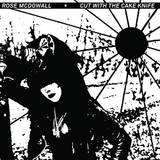
Cut The With The Cake Knife was recorded by Rose McDowall in 1988/89 following the break up of her group Strawberry Switchblade. Produced with the aid of several musicians in several studios, the album features songs written for the fabled second Strawberry Switchblade album. More importantly perhaps it showcases the honest, direct and life-affirming songs of one of the greatest unsung songwriters of the modern pop era at a tumultuous time in her career.
Tibet opens the set and could be one of the best pop songs you've never heard. The innate sadness of the songs' content - the loss of a friendship, impending sorrow - is heightened to heart-melting level by McDowall's pop nous and melodic sensibility. Choruses and hooks are everywhere on Cake Knife, from the outsider take on stadium 80s pop in Wings Of Heaven to the spiraling, ecstatic So Vicious, a glorious anthem that highlights the human fragility in McDowall's vocal performance, an instrument that has never lost the naïve purity it first exemplified in Strawberry Switchblade's early 80s recordings. The centerpiece of the album, the title-track, is the greatest Switchblade pop chart hit that never was. Like the veiled melancholy of her former group's hits, Cut With The Cake Knife hints at a darkness beneath the gloss, a darkness that saw McDowall delve into more esoteric territory with her subsequent recordings and collaborations. Cut With The Cake Knife serves as the bridge between the pop music McDowall had been making with her friends Jill Bryson, Lawrence from Felt and Primal Scream to what became a more extreme, deep sound informed by neo-folk and post industrial music.
Rose McDowall's role in the canon has always been one of an outsider. Beginning in Glasgow's East End in the avant proto-noise group The Poems, achieving fame briefly in the 80s and then disappearing into counter-cultural folklore, the emphasis in the internet-age has been skewed towards her image and cultural significance. Unseen to many, her solo work, her groups Sorrow and Spell and her collaborations with a whole host of underground luminaries have still touched lives. As McDowall elucidates: 'They're real sad songs, about real life. I've had people come up to me to say I'd connected with them and helped them. I remember a gig in America when we made a whole room cry. It was bizarre. A couple at the front of the stage started crying and then these two boys beside and suddenly everyone was crying. And I thought, "that's power."
Night School's issue of Cut With The Cake Knife includes unpublished photographs, extensive sleeve notes from Rose McDowall and 2 bonus tracks culled from the bootleg 7' 'Don't Fear The Reaper.' First vinyl pressing is Clear w/ Black swirl; 500 only / has DL card and booklet, with a poster
CD has extensive booklet and is packaged in anO-Card.
Western Lore presents the second part of an absolute jaw dropper of an LP from the enigmatic L own, the producer behind 2024’s much lauded Forgotten Paradise Bootlegs (which flew out so rapidly on Bandcamp, none of the ltd run of copies made it to retail).
Deep, musical, textural & blissed out jungle tekno wizardry across a range of tempos, Daybreak Survivors is a journey like no other. Emotive and dripping with nostalgia whilst sounding distinctly futuristic, L own effortlessly carves out a unique sound that shines like beacon in a sea of noise.
Grace & Raffaella is the first collaborative release by ML and Vittoria Totale. Over nine tracks, the album strikes a deceptively minimalist tone, taking in a ton of musical as well as literary references. An elegy on a journey back to the present, with all the hushed intensity of an informed fever dream, Grace & Raffaella has a magic-realist feel. Its vocal parts serve as loopy self-fulfilling prophecies. Cut off from the sun, the gorge grows darker. Using an electroacoustic sense of spacing, as well as abstracted current-day club influences, with scraps of background noise fading in and out, this album's use and treatment of a snippet-like narrative is its core aesthetic. A digital gleam drenches the spoken bits into instances of subtle surrealism. Like a kitchen sink drama stripped of all deadweight. We are on the edge of relinquishing all control here. Rip up your diary and let go of the language of the old ones. Grace & Raffaella is a seductive slice of modern hyper-pop that defines its own intentions over and over again.
Real Lies’ new album ‘WE WILL ANNIHILATE OUR ENEMIES’ will arrive on April 16th 2025 via Tonal. The album is about taking the hand of someone you love intensely and running headlong into the chaos and noise and grinding forces that dominate modern life. It follows gilded 2024 collaborations with Mall Grab, Kettama and Drain Gang’s YEAR0001 label. Lyricist Kevin Lee Kharas and producer Patrick King created the record in their studio, hidden away under a railway bridge somewhere in London’s Zone 3. Three pictures stared down at them from the walls throughout, including an image of a young Sasha Shulgin in the relief print style of Che Guevara t-shirts sold at Camden Market, and a photo of an orbiter fairground ride in flight, taken sometime in the early 2000s. Kharas’ lyrical inspiration comes when he steps away from the tsunami of data flooding his consciousness and paces London’s rain-soaked streets late at night. “I wanted the songs on WWAOE to confront modern reality head-on, unflinching,” he explains. “I didn’t want to whine about a lost past. I didn’t want nostalgia. I wanted to learn to love the modern world, with all its horrors and futility.” After a teenhood spent playing in hardcore bands, the duo found ecstasy at a squat party for the first time, and moved to London. Since then, they’ve made music about finding romance and fun when the moon is up, becoming a cult act in the process.
Spanish producer Pedro Vian and Japanese noise icon Merzbow reunite for A Wheel of Mani, out June 20, 2025, on 12” vinyl via Modern Obscure Music. Building on their previous collaboration, the album fuses hypnotic atmospheres with extreme noise, blending spirituality and digital experimentation. Vian’s ethereal pads meet Merzbow’s blistering textures, dissolving boundaries between harmony and chaos.
Album Sampler[22,27 €]
Metalheadz and Quartz present Interloper, a body of work years in the making that captures the evolution and persistence of a truly singular producer. Sparked by an invitation from Goldie in 2018, the project developed organically into a statement piece, shaped by shifting environments and a relentless drive to refine his craft. Quartz, also known as Elliot Garvey, has long stood apart from the noise. A Welsh producer with little interest in visibility or self-promotion, he has built a reputation on substance alone. Interloper reflects that focus: textured, brooding, and meticulously detailed, balancing grit and clarity while maintaining the looming tension that defines his sound. The album’s title hints at Garvey’s place within the culture - present but never fully belonging - and the music carries that same sense of quiet defiance. Intense without theatrics and deeply personal without pretence, Interloper is a record that doesn’t ask to be seen, only to be felt.
e B3. One Last Word ft. Selena Jones (Posthumous) Outro
[e] B3. One Last Word [ft. Selena Jones] (Posthumous) [Outro]
[e] B3. One Last Word [ft. Selena Jones] (Posthumous) [Outro]
[e] B3. One Last Word [ft. Selena Jones] (Posthumous) [Outro]
[e] B3. One Last Word [ft. Selena Jones] (Posthumous) [Outro]
[ft. Selena Jones] (Posthumous) [Outro]
[ft. Selena Jones] (Posthumous) [Outro]
‘Açid Blüüs Räägs Vol.2’ is the latest evolution of the sound of last year’s Volume 1. The debut album was described by Joe Banks for Shindig! Magazine as; “Shivering slabs of drone blues transcendentalism…a burning junkyard of sheet metal blues… Hot stuff.” Volume 2 builds on the skronk blues guitar, sax and electronic drones of it’s predecessor, to explore cosmic free jazz, concrete exotica and dub, channelling influences of Moondog, Terry Riley, 75 Dollar Bill and Wolf Eyes. Playing like the imagined film soundtracks to a dystopian, re-wilded, post eco crash world in the style of Tarkovsky's ‘Stalker’ and ’Solaris’, Jodorowsky's surreal desert western ‘El Topo’, or the early novels of JG Ballard. This new collection sees the addition of minimal analogue drum machine loops as well as live instrumental contributions from the new players of the ever evolving Invocation band, plus some superstar guest contributors.
Featuring five brand new tracks, including the forthcoming single; ‘Cosmic Fanfare’, has already picked up BBC 6 Music support from Gideon Coe. The new album was mixed by Alex McGowan (aka Captain Future) of Space Eko Studios and features Invocation band regulars Rick Jensen of Apocalypse Jazz Unit, Skronk and Oneirologist on sax and bass clarinet, Will Emms aka Tiki Eerie on melodica, horns and claviola, plus special guest appearances from Duke Garwood on clarinet and Mikey 'Moondog' Chestnut of Snapped Ankles on bass synth. “….Acid fried kosmiche blues meets drone raag transcendentalism”. Jonny Halifax is a primitivist free blues outsider, sonic shaman of the acid fuzzed lap steel guitar, demented blower of the howling harmonica of doom. His new band project now combines avant swamp blues heaviosity with kosmic free jazz experimentalism in a fluid collective of godless raag brut improvisations - sonic visions of an hallucinatory apocalyptic near future. Inspired by Henry Flynt’s avant bluegrass experiments fusing country blues with eastern acoustic musical stylings, Spacemen 3’s contemporary sitar music, and the monolithic drone doom immersion of Sunn 0))), THE JONNY HALIFAX INVOCATION build hypnotic instrumental soundscapes using lap steel and homemade slide guitars, harmonica and alto sax. Underpinned by layers of acoustic and electronic drone instruments and fed through an arsenal of pedalboard electronics that would make Kevin Shields weep, the blues are transmogrified, unhinged, reduced and re-imagined as intoxicating, trance-inducing, feedback-drenched noise paintings. THE JONNY HALIFAX INVOCATION follows Jonny’s junkshop skronk blues one man band Honkeyfinger, and the Julian Cope endorsed gospel fuzz psychedelia of Jonny Halifax & The Howling Truth, whilst not forgetting his ambient drone metal side project; Deathenteredinerror. His musical CV also includes studio contributions to tracks by Andrew Weatherall’s Two Lone Swordsmen, UK metal behemoths Orange Goblin, Heck and Melting Hand.
Tastemaker and cult figure among some, noise vendor among others… lurking somewhere in the shadows between London and Paris, the man known as Sheet Noise emerges out of the blue with his debut LP, Shostakovich's 5th Played Backwards in a Concrete Silo.
A direct shock to the system: equally beautiful and evil, abrasive yet uncomfortably calming. The feeling that something is about to happen at any minute—impending love or hatred blaring from the speakers at breakneck speeds. Heavy-duty, reactor-melted junglism; twisted samples buried under layers of dust and static; familiar voices in unfamiliar places.
This eight-track album is as intense as it can get. Don’t call it ambient. Don’t call it jungle. Don’t call it noise. Just strap yourself into the electric chair and get ready for the end.
A classic in the making.
The White Chief project has been defined by her creator as the background character for self_sabotage deconstruction. Deeply inspired in early Industrial, Noise and Power Electronics taking, musically and conceptually some development model acts like Throbbing Gristle or Whitehouse, and certain complex lyrical compositions like could be some Fad Gadget tracks, Maria Barros, a colombian dj and producer known as Gatasanta delivers 5 dense, raw, noisey and dark cuts with the aesthetical connotation of the violent modern times, created among other analogical sounds with multiple Moog bass lines. This record includes also, two tracks from AMAS, Gatasanta's first live project with artist performer Ivana Ray Singh, both artists based in Barcelona. These two tracks appears on the EP as a tribute to the duo's early years of electronic production and performance tours around. All tracks has been produced 100% hardware.
After years of shaping the UK underground from behind the scenes, Alex Nut steps out with his first official solo EP, serving up an intoxicating blend of Spiritual Jazz, Deep House, Dub, Hip Hop and analog electronics. The Present Under Construction EP is rooted in a deep musical language and future-facing energy, it captures a moment of creative transformation and exploration.
Built up over a few years from rough sketches made on an old MPC2000XL, the tracks were revisited, reshaped and eventually brought to life in the studio with longtime friend and collaborator Sam Crowe (Cleo Sol, Lianne La Havas). Together, they added a range of analogue sounds using the Dave Smith Prophet Rev 2, a Fender Rhodes, and a Moog Sub 37. Those recordings were then chopped, resampled, and restructured into the versions you hear on the record today. The records lead track 'andthenitstarted' features saxophonist James Mollison (Ezra Collective, Nala Sinephro) and includes remixes from Detroit House legend Patrice Scott and fellow Eglo Records alumni Last Nubian.
Best known as a DJ, broadcaster, curator and co-founder of Eglo Records, Alex has spent over a decade championing soulful underground music, through fabled Radio shows to legendary club nights, his fingerprints are all over a scene that continues to evolve. Initially making noise alongside the likes of Floating Points, Steven Julien, and Fatima, Alex Nut has long been a cornerstone of the UK's soulful underground. His work continues to champion the evolution of Jazz, Soul, House, and Broken Beat — nurturing a generation of artists now reshaping the global soundscape.
- A1: Bass Intro/There’s Something Goin’ On/Love
- A2: Respond/React
- A3: Section
- A4: Lazy Afternoon Pt 1
- A5: Distortion To Static
- B1: Proceed
- B2: One Shine
- B3: Mellow My Man
- B4: It Just Don’t Stop
- B5: Panic!!!!!
- B6: I Remain Calm
- C1: Lazy Afternoon Pt 2
- C2: Datskat
- C3: Concerto Of The Desperado
- C4: Do You Want More?!!!??!
- C5: Swept Away
- C6: Lazy Afternoon Pt 3
- D1: Silent Treatment
- D2: The Unlocking (Feat Ursula Rucker)
- D3: Proceed 2
- D4: The Lesson Pt. 1 (Feat Dice Raw
In 1995 The Roots burst onto the scene with their seminal debut album, Do You Want More?!!!??! that garnered critical acclaim and cemented them as a powerhouse group fusing elements of various genres with their signature live instrumentation. Thirty years later in March of 2025, The Roots played a three day, six show residency at the legendary Blue Note Jazz club in New York City where they celebrated their debut by playing it in full – performing many tracks that hadn’t been performed live in decades. The performance also brought out special guest appearances from long-time collaborators, Ursula Rucker, Dice Raw and Rahzel, Godfather of Noise.
To cap off the 30 Year Anniversary, The Roots will release the full performance on vinyl. The 2xLP, gatefold package is pressed Black vinyl, and features 21 tracks. ?uestlove spent tireless hours perfecting the mixing and mastering with Glen Forrest and Colin Mohnacs to ensure all elements of the performance were represented on the vinyl.
- A1: One Of These Days 02 53
- A2: Magnificent Fall 04 38
- A3: Boneless (Grizzly Bear Remix) 02 53
- A4: Blank Air 04 34
- A5: Avalanche 02 33
- B1: Run Run Run (Ada Remix) 05 17
- B2: Red Room 05 22
- B3: Come In 03 43
- B4: Solo Swim 05 51
- C1: Sleep (Odd Nosdam Remix) 03 06
- C2: Intro Live From Alien Research Center 09 01
- C3: Who We Used To Be 03 31
- C4: Das Verschwinden 01 10
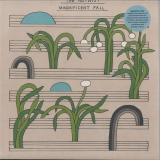
Magnificent Fall, The Notwist's new rarities compilation, compiles some special and wild moments from this unique German indie group's rich history. They've always snuck gorgeous songs and thrilling remixes onto split singles, extended plays, and other formats, across their career, and pieced together here – compiled thoughtfully, with sensitivity to flow and the listening experience – these thirteen selections work as a kind of ‘shadow narrative’ of The Notwist, an alternative index of the possibilities this shape-shifting group uncovered during their time together.
They've been smart to let go of chronology when sequencing Magnificent Fall, so the songs here move across phases and stages of The Notwist's career, helmed by brothers Markus and Micha Acher. This approach makes plenty of sense, as this music compiled here abstracts from two impulses – to push forward and not repeat what has come before, while building from the group's very specific musical language. Just one example: the loveliness of the instrumental “Avalanche”, from 2020's Ship, follows elegantly from the happy-sad glitch-pop of “Blank Air”, from a 2010 split with former member Martin Gretschmann's project Console. Different phases, different memberships, shared concerns.
The Notwist have always been interested in and open to community, and one of the many ways they reach out to others is through the remix. There are three here, sent back to The Notwist from different corners of the world, both aesthetically and geographically: Grizzly Bear take on “Boneless”, Ada tackles “Run Run Run”, and Odd Nosdam submerges “Sleep” in noise and clatter. Another connection, of course: Odd Nosdam is part of The Notwist's extended family, through Markus and Micha Acher's 13 & God project with fellow Anticon artists Themselves and Subtle.
So, the music on Magnificent Fall traverses varying terrain – abstract hip-hop, chamber pop, sweet and simple folk song, indietronica, free-floating improvisation. There are several unreleased songs, as well, drawn from across the group's history. Core to it all, though, the thing that makes The Notwist so singular, is the thumbprint of the Acher brothers, their gently poetic way of moving through the world and welcoming other musicians and artists into the fold, expressively and with generosity.
Historically aware without being nostalgic, Magnificent Fall is the perfect way to introduce The Notwist's reissue programme with Morr Music, too, including a box set, and the group's eight albums, documenting their three-and-a-half decades of music and community-making. Looking back to move forward? It's a very good idea.
Samuel Kerridge, with his signature sonic arsenal, stands alone in the worlds of rhythm and noise. A singular artist, his music is to be appreciated on its own terms. Here, he returns to James Ruskin's Blueprint Records with the eleven track album, "Memoir Of Disintegration".
The British producer has been carefully turning techno inside-out for over a decade. Taking a distinctly post-punk approach to the genre, he has become an integral part of Regis' legendary imprint Downwards. Kerridge has helped to define the label's contemporary sound: broken techno and snarling punk, informed by industrial music and metal.
Samuel Kerridge has released seven EPs and five albums (including a collaboration with Dva Damas' Taylor Burch) and his recent, "Kick To Kill", has become something of a statement of intent, blossoming into a new label and event series with a focus that broadens beyond techno tracks into full-blown song writing. Aside from his solo work, he collaborates with OAKE in what he describes as the "power metal techno" duo UF, and has recently started his own guitar band, Death Disco.
Kerridge ran the Berlin-based Contort label and party series and curated the legendary Berlin Atonal festival for three years, underlining his credentials as a stalwart figure in the world of experimental, boundary-pushing techno. He's also an accomplished live performer, most recently developing a hybrid live-DJ set that dismantles hundreds of tracks into a sampler to make new music in real time. It's an inventive process that places him in the lineage of iconic and ground-breaking techno acts, while still carrying the flag for the darkest corners of underground electronic music.
Channeling inventive sound design into incisive, characterful techno variations, Jurango returns to Livity Sound with an eight-track double EP — his longest release to date. Taíno Gold captures a moment in time for Bristol-based Nate Reece's continually evolving sound as it draws on the full spectrum of UK club music.
Following a debut for Livity's reverse label in 2021 and last year's An Amorphous Mass EP, Reece is more assured than ever tackling a variety of club-focused cuts. The tracks on the release all came together before, during and after a two-month visit to Reece's grandparents' home — an idyllic tropical environment in a small community at the top of a hill in the northern part of Jamaica.
Taíno Gold refers to the island's indigenous Taíno community and the legend of a witch luring Spanish settlers into a trap on the Martha Brae river. There are no messages explicitly embedded in the music, but the release is both a personal reflection of Reece's own experiences and family heritage, plus a reminder about the enduring sceptre of colonialism and the continued need to fight against it. From absorbing Jamaica's fraught history through museum and plantation visits to the abundant nature in the garden surrounding his grandparent's house, the double EP marks a place in time for Reece, with eight advanced, ear-catching tracks as the end result.
From the cascading arps of 'Black Torches' to the tunnelling chords of 'Waiting For Trelawny', the melodic dimension of the Jurango sound is more confident than ever. 'Hibiscus' is a shimmering celebration of dub techno and crooked drum pressure and 'Chalk On Trees' basks in aqueous, fathoms-deep pads to close out the EP. Elsewhere, Reece brings new textural and tonal detail to his percussive workouts, splashing acidic noise around the angular experimentation of 'Maybe It's Broken' and firing off double-time rhythms to inject 'Double Sevens' with infectious urgency.
With the space afforded by a longer release, Reece widens out the scope of his artistic identity while absorbing the particular scene and setting that surrounded him while making the tracks. Taíno Gold is a vibrant next step for Jurango and a natural continuation of his work with Livity Sound.
Livity Sound is a label set up by Peverelist in 2011 as a vehicle for a raw and exploratory strain of UK techno, rooted in the heritage of UK dance music and sound system culture. It has since become one of the UK's foremost protagonists for cutting edge underground electronic music.
Where music resists becoming personal confession, it creates its own narrative - abstract, precise, and unbound by outside noise. Vibraform by Berlin-based hardware and live artist Peryl provides an analytical yet deeply instinctive view on music. It reflects the duality between flow and restraint, between self-exploration and the healthy act of setting limits. At its core lies a certain nonchalance - a refusal to act on voices and trends while maintaining full commitment to sound itself. Meticulous sound design, unpredictable, morphing basslines and an intentional timeless aesthetic offer a rare window into Peryl's creative state of mind. Even as he tries to sidestep personal narratives, emotions inevitably surface in the music, subtly shaping its character. The result is not a confessional piece of work, but an abstraction that remains universal rather than private, while still carrying a trace of personal truth. Four tracks that are striking a rare balance between novelty, grace and aggressive functionality, including a remix by R?dh?d, offer to find purpose in the act of believing that sooner or later art reveals a logic of its own. ? 2025 The Third Room All tracks written & produced by Dennis Strobel B2 remixed by Mike Bierbach Mastered by Ahmet Sisman Artwork by Daniel Bornmann & Lennard Makosch (STUEDIO.XYZ) Distribution by Clone Pressing by Matter Of Fact