Happy we can introduce a new addition to our catalog THINNER005, an EP called
“ & . . “
as the title tells, it’s a joint release by our friends, KOOLMFL, Sonic Weapon &. . Lemmi Ash
“& . . “ EP includes three club tracks, which been power played by Powder over these years in many different moment.
Each track can add a distinctive touch to the night, as like completing your cocktail with lemon and/or lime.
_
KOOLMFL, fka K-LINE and Sonic Weapon is our regular suspects from Nagoya, motor city of JAPAN.
Some may know them putting out a shared EP “G” before on Thinner Groove and now they back to it again.
atonbow by KOOLMFL features words of a space traveller in state of peaceful sorrow, seemingly communicating their honest thought to the loved one who might not be hearing, Can you hear me ? … Hi astronaut, at least we can :)
KOOL’s clicky drum work pass the words to the floor, and the party breaks down with sudden synth and take all of us home.
,
On track HOMIE, Sonic Weapon shows his signature fast boogie style again in a new approach with much dubbed out, ear pleasing, filtering, minimalistic, and stylistic way. The texture keeps changing but keeping the groove.
Feels like the beauty of watching a bridge getting slowly collapsing after somehow you made it to the other side.
& . .
We also want to introduce Lemmi Ash, a Swedish duo formed by Samo DJ and Martinou, newly joining the TG spectrum,
The duo previously had a release from ESP institute and each of them countless solo appearance on various releases . . .
Nonetheless, they a good long time friend and perfect fit for this release.
The duo features comfy calming ear tickling electronic sound with some kiddish, animalistic, or primitive humor in their own balance. This track Presence grooves with a leaning forward racing gamey phrase drifting around the mini synth explosion, feels like a joyful cruise during regardless the intense highway.
Buscar:out of city
Dave Saved makes his debut release on studio 33 with Passing Images, an entrancing suite of hazy dance floor mementos, infused with a characteristic chopped and screwed soul.
As if heard through the dusty circuits of an android's dying memory drive, replaying songs picked up during its lifetime and mixing them into elegiac reveries in a final flashback of its existence, the sound is glowing with a patina hued warmth that feels uncannily familiar.
It's a considerably more dance oriented work than Dave's previous output but with a distinctly textural approach to the composition as well. The result is a densely vaporous sublimation of pure emotion. All refracted through an almost ghostly view of dance music's potentially hypnagogic effect, by way of repetitive progression and dreamy abstraction.
It’s a family affair. One formed almost thirty years ago, back in the mid-nineties, when the pair joined seminal French jazz combo Olympic Grammofon. For twenty-four years they have worked together as Bumcello, each complementing the other, echoing polar opposites. The Boom in Bumcello is none other than Cyril Atef, incisive drummer, relentlessly pushing beats towards new horizons. The Cello is Vincent Ségal, cellist without blinkers and extraordinary musical alchemist. Since 1999, these two die-hard music fans, coming together for mercurial results, have released one record after the other whilst conquering the hearts of their live audiences, old regulars as well as new recruits. We have all been seduced by the way their music leapfrogs categories - these two experts are much more interested in kindred spirits than pigeonholing, and this very spirit is celebrated on more than one track of this ninth record, whose concept is original to say the least.
Everything began with an idea by Cyril Atef - a soundtrack based upon drawings penned by Marin, Vincent’s son, architect and visual artist. The musicians involved then coached their reaction to these images on a score, and the pair were charged with collating and adjusting the results. These thirteen ink drawings, in a heroic fantasy vein, constituted a matrix which was then to serve as a guide, like a roadmap through a singular and multi-faceted labyrinth. The key to this sonic fresco is in Bumcello’s image – an eclectic aesthetic twinned with a great sense of contrast. Herein lies the trademark of this entity animated by the gift of musical ubiquity, gorged on scales and rhythms, capable of a slap as much as a gentle caress. From classical music to electronics, from improvised music to sophisti-pop, everything is allowed with no preconceived ideas. They can even reclaim the traditions of others, all the better to propel them towards new horizons - this is how the very history of music has always panned out.
If you listen between the lines and look at the details, more than one piece bears witness to the moments and individuals that have impacted the criss-crossing lives of Vincent and Cyril. The track Crash is the perfect excuse to create a Jamaican-style jam with New York inflections, and we can see, in capital letters, the name Hilaire Penda, playing alongside Bumcello at the Apollo Theater in the associated drawing. This bass player from Cameroon, who died on 5th November 2018, was more than just a friend for the two Frenchmen. He was one of the family. Similarly, they give a nod to another Cameroonian, and another departed friend - singer of rock band les Têtes brûlées, Zanzibar, through the vocals of fellow countryman Zanzi. The ghost of Rémi Kolpa Kopul, emblematic voice of Radio Nova, haunts the margins of Spark Av, in a vocal sample with a smattering of effects. As for I Remember Tim, it directly honours the memory of Timothy Jerome Parker, aka The Gift Of Gab, another friend who left us in 2021. Tim is depicted in a drawing with the docks of Oakland in the background, and it’s his alter ego within Blackalicious, Chief Xcel, who remotely added his signature to the track, notably by adding the words of Lateef The Truthspeaker to brass and woodwind sounds.
These are the only additions to Bumcello’s original nucleus, all the better to create a genuine musical concoction where Vincent Taurelle is in charge of production and mixing sessions recorded live and direct. He is also invited for a twinkle on the keys (piano, synths, Wurlitzer, organ), on a handful of tracks. Already at the commands of previous opus Monster Talk, always taking care over the slightest detail, the one that makes all the difference, this pianist is now also part of the family. “Everything he brings is perfect, whether added though slight touches or through very important choices”, say the two members of a combo which today, appears to us under the guise of a trio, adding an extra dimension to a far-reaching mix, in the image of the veiled or more explicit tributes making up the cornerstones of this release.
Booker, a drawing where we see the musicians enter a club, honours James Booker, great pianist from New Orleans who has always fascinated Vincent, in a genre that is off-beat and gender defying. Her Story was created by Cyril in support of the Iranian women’s movement. Aysyen Kampe evokes, even in the original drawing, a tradition that remains impactful for Bumcello – Haitian mysticism, and Ouï Khouïette Ouï conjures up the beats of the Allaoui, a war dance from Western Algeria, one they have taken part in in the past with the help of Cheikha Rabia. They deliver a metal version, original and surprising, especially as Marin Ségal’s drawing features the Nicholas Brothers, those iconic dancers of the 30s jazz scene!
Resolutely hard to pin down, Bumcello’s beats can initially take on the structure of disjointed house, though Sangre begins like a film soundtrack, “in a Mexican style” adds Vincent, who was at the origin of this track. A delicate alap on the cello can open up onto afrobeat rhythms, a well-pitched voice can enchant, like on the amazing The City Has Eyes which has everything of a hummable pop hit. Emblematic of this manner of encompassing all music without being exclusive, Le Grand Sommeil, a direct reference to the Howard Hawks movie inspired by Raymond Chandler, a precursor of David Lynch, begins nice and smooth but ends on a wild tempo, on a drum’n’bass tip, as in the good old days of Cithéa, when this Party story began in the other century.
Returned to us from early 90s Japan are the holy holy sounds of Ghost. Their collective, clearly inspired by various forms of transcendental music throughout history, created a new syncretic psychedelia with these albums, mixing the texture and vibe of multinational forms of traditional music, with strummed antique stringed instruments and the haunting wail of a recorder on top of their heavy beats and guitars. The considerable depth of this approach was explored through 2014 over another five Ghost LPs, as well as the further explorations to the present day of leader Masaki Batoh, as a solo artist and with The Silence, Damon & Naomi, Helena Espvall and most recently, nehan. These first three Ghost titles were originally released by P.S.F. on CD in 1990, 1992 and 1994, respectively, radiating enigma and energy in palpable waves with their original sound. After the acclaim that greeted Drag City"s 1996 US release of Lama Rabi Rabi, we quickly reissued all three on vinyl - and they quickly went out of print! At which point, Ghost had Snuffbox Immanence and Free Tibet ready to go. And then, Hypnotic Underworld. And then, and then . . . . Now, it"s been 25 years since they were last offered on vinyl. In the twenty-year sweep of Ghost history, these first three releases qualify as primitive early Ghost - sort of like a German Os Mutantes (or perhaps a Brazilian Amon Düül). The subterranean presence of a diversity of progressive/avant classic rock influences (Pink Floyd, Incredible String Band, Captain Beefheart, Scott Walker, Led Zeppelin, Popol Vuh, Third Ear Band, to name but a few) provokes further synthesis, making for an entirely new meditation on the traditional order of psychedelic music. The first two studio albums, each one an iteration of Ghost"s unique lysergic folk music, were followed by the monolithic "live in various places" happening of Temple Stone, which raised the trippiness levels considerably. But this was only the end of the beginning . . .
After 25 years of living his dream as one of hip hop’s most respected producers, Hi-Tek is digging back into his roots with a brand new trio of instrumental vinyl LPs. “Werk Road (1997 MPC 60)” is the third volume of the series, each featuring a selection of restored and remastered beats, carefully chosen from an archive of DAT tapes. These LPs manage to both provide a window into Tek’s development and to shine light on the work of an already enormously talented musician whose beats would’ve sounded right at home on classic releases from the mid-1990s.
1997 is when the name Hi-Tek began to develop a global buzz, largely due to the combustible indie-rap scene. He’d moved on from the now-shuttered Beatbox Studios in his hometown of Cincinnati and began building his first proper home studio in his new apartment on Werk Road. With a borrowed Akai MPC 60 drum machine as the foundation, he began churning out beats at a more prolific rate than ever.
In addition to placements on debut LPs by Mood and Royal Flush, Tek would make his name in 1997 as one-half of the duo Reflection Eternal with Brooklyn MC Talib Kweli. Their Rawkus Records debut 12” “Fortified Live” was an instant smash, and it quickly placed him at the top of the class of up-and-coming beatmakers. His unique balance of bassline-driven grooves behind soulful samples would eventually lead him to be in high demand for artists across the spectrum of the genre, and in short time he was producing for Common, Snoop Dogg, Raphael Saadiq, Dr. Dre, 50 Cent, and others from all over the country.
The work featured on “Werk Road (1997 MPC 60)” reveals an artist who would not only become one of the most respected producers in rap, but one of the cultural ambassadors of his home city of Cincinnati for over 25 years. In 2022, Hi-Tek was inducted into the Cincinnati Black Music Walk of Fame alongside luminaries like The Isley Brothers, Bootsy Collins and Midnight Star, and remains the most successful hip hop artist that the city has ever produced.
1961, Port Richmond, Staten Island, NYC: Five kids stumble into a community center, sent by their parents to keep them off the streets and out of trouble. A lifelong friendship is formed over their shared love of doo-wop. The kids start learning harmony and the next thing they know they're cutting records. The group begins to gain steam as they take their act to the packed clubs around New York City. But history has other plans for the boys. First, The Beatles invade America, making doo-wop yesterday's news. Then, the United States invades Vietnam and two of the five boys are sent off to the jungle. Reintroducing: The Splendids. 61 years after their initial formation, the group has reconvened to cut two truly breathtaking records. With three of the five surviving original members weaving together heartfelt harmonies, the group has regenerated themselves and enlisted the help of multi-platinum soul singer Eamon to sing lead. Eamon is no stranger to doo-wop, as he got his start in the music business touring the Northeast as a young boy with a group his father Walter formed in the 90's. With this father and son reunion on these two tracks, the listener is taken back to a time when walking down the street you might come across a gang of youth singing their hearts out on a street corner, serenading the city with their souls. The Splendids hired Los Angeles based producer and multi-instrumentalist Dan Ubick to produce the records and conjure up the retro rhythm and blues sounds of the 1960's. Frequent Eamon collaborator the Oklahoman Benj Heard was then brought on to mix and produce the vocals. Both Ubick and Heard's sonic fingerprints add texture and groove to the groups legacy on 'Cry Baby Cry' and 'Blame My Heart'. Generations have come together from coast-to-coast to take back what history took from them. Enjoy the sweet, sweet sounds of true soul. Enjoy The Splendids.
- Surfin Bird
- King Of The Surf
- Tube City
- My Woodie
- Sleeper
- A-Bone
- Dance Bird Beat
- True Love
- Bad News
- Malaguena
- Ghost Riders In The Sky
- Whoa Dad!
- Ubangi Stomp
- Walkin My Baby
- Bird Bath
- Reelin & Rockin
The Trashmen's defining moment, 1963's "Surfin' Bird," is perhaps the ultimate lightning-in-a-bottle record. Their first true studio recording, it captures the group's interminable energy and mastery of live performance. But it also is the culmination of spirit and experiment that turned it into something new and, from the perspective of 50 years, unique. This collection shows them to be variously a first-rate surf band, a great protopunk outfit, solid rockers with the raw essence of the earliest originators of the sound, and adept enough to work in some comedy and country. This scope of ability and interest is probably the true basis of the band's following now. But "Surfin' Bird" has more tenacity than other bands' entire better-performing catalogs, and with it, the Trashmen created a work that is arguably today the most relevant release from that storied decade.
"Best Of The Trashmen" by Trashmen includes the following tracks: "Tube City", "Sleeper", "Dance Bird Beat", "Bad News" and more.
This version of the album comes White vinyl.
- A1: Rocco808, Randy Marx, Grp & Yoshiya Terayama Not On The Sidelines - Street Fighter 6 Main Theme 3:30
- A2: Randy Marx, Grp & Yoshiya Terayama Reinvent The Game - Variation A 1:55
- A3: Yoshiya Terayama Fighting Ground - Menu 2:14
- A4: Yoshiya Terayama Fighting Ground - Menu Composure Remix 1:29
- A5: Yoshiya Terayama Fighting Ground - Menu Burning Remix 1:08
- A6: Shigeyuki Kameda Genbu Temple - Stage Battle 3:17
- A7: Shigeyuki Kameda Down & Out - Extreme Battle 1:14
- A8: Shigeyuki Kameda Back & Forth - Extreme Battle 1:22
- A9: Shigeyuki Kameda Rules & Regulations - Extreme Battle 1:43
- A10: Shigeyuki Kameda Heaven & Hell - Extreme Battle 1:31
- A11: Shigeyuki Kameda Smash & Grab - Extreme Battle 1:22
- A12: Shigeyuki Kameda Normal Battle - Extreme Battle 2:12
- B1: Larry Herron & Yoshiya Terayama World Tour - Menu Hit The Streets 0:59
- B2: Yasumasa Kitagawa Body Shop 2:22
- B3: Yasumasa Kitagawa World Tour - Tutorial 2:03
- B4: Yasumasa Kitagawa Metro City (Day) 1:37
- B5: Yasumasa Kitagawa Metro City Downtown - Stage Battle 4:47
- B6: Yasumasa Kitagawa One And Only 2:28
- B7: L I O, Cecilia Stalin & Yasumasa Kitagawa All Over The World 4:20
- B8: Yoshiya Terayama Colliding Forces - Bosch's Theme 3:42
- C1: Yoshiya Terayama Taking Aim - Luke's Theme 2:57
- C2: Shigeyuki Kameda Mr. Top Player - Jamie's Theme 3:23
- C3: Yoshiya Terayama Walk With Grace - Manon's Theme 3:12
- C4: Yoshiya Terayama Ninjastar Pop - Kimberly's Theme 3:14
- C7: Shigeyuki Kameda Diosa Del Sol - Lily's Theme 3:50
- D1: Yoshiya Terayama The Plunderer - Jp's Theme 3:08
- D2: Shigeyuki Kameda Årachnid** - Juri's Theme 3:32
- D3: Daniel K. Solovitz & Chris B. Harris All Right! - Dee Jay's Theme 3:51
- D4: Shigeyuki Kameda R.e.d. - Zangief's Theme 4:16
- D5: Shigeyuki Kameda Kumadori - E. Honda's Theme 3:19
- D6: Shigeyuki Kameda Zilra Zilra - Blanka's Theme 4:16
- E1: Shigeyuki Kameda Viator - Ryu's Theme 3:56
- E2: Yoshiya Terayama Sharpened Sonic - Guile's Theme 2:36
- E3: Shigeyuki Kameda Overtrip - Cammy's Theme 3:02
- E4: Yoshiya Terayama Spirit Of The Flame - Ken's Theme 3:11
- E5: Yasumasa Kitagawa Not A Little Girl - Chun-Li's Theme 3:48
- E6: Yoshiya Terayama The Great Sunlight - Dhalsim's Theme 2:50
- E7: Yoshiya Terayama Training Room - Stage Battle 3:51
- F1: Yoshiya Terayama & Katsuhisa Asari Battle Hub 8:31
- F2: Yoshiya Terayama & Katsuhisa Asari Battle Hub - Stage Battle 3:52
- F3: Shigeyuki Kameda Carrier Byron Taylor - Stage Battle 3:16
- F4: Haruki Yamada Ranger's Hut - Stage Battle 3:28
- F5: Shigeyuki Kameda Barmaley Steelworks - Stage Battle 3:42
- G1: Shigeyuki Kameda Bathers Beach - Stage Battle 3:49
- G2: Shigeyuki Kameda Dhalsimer Temple - Stage Battle 3:40
- G3: Haruki Yamada Old Town Market - Stage Battle 3:39
- G4: Shigeyuki Kameda King Street - Stage Battle 3:10
- G5: The Sound Room & Shigeyuki Kameda Tian Hong Yuan - Stage Battle 3:53
- G6: Yoshiya Terayama Thunderfoot Settlement - Stage Battle 3:38
- H1: Haruki Yamada Fête Foraine - Stage Battle 3:02
- C5: Vaughn Faison, Gabby Byrd & Yoshiya Terayama Bushin Ninjastar Cypher - Kimberly's Super Art 2:38
- H2: Shigeyuki Kameda Colosseo - Stage Battle 3:27
- H3: Yasumasa Kitagawa The Macho Ring - Stage Battle 3:37
- H4: Yasumasa Kitagawa Suval'hal Arena - Stage Battle 3:38
- H5: Yoshiya Terayama Bushin Ninjastar Cypher - Instrumental 1:28
- H6: Grp & Yoshiya Terayama Not On The Sidelines - Instrumental 3:29
- H7: Grp & Yoshiya Terayama Reinvent The Game - Instrumental 1:55
- H8: Yasumasa Kitagawa All Over The World - Instrumental 2:13
- C6: Shigeyuki Kameda Pankration - Marisa's Theme 3:40
Im Juni 2023 wurde "Street Fighter 6" veröffentlicht und bricht seitdem Verkaufsrekorde. Nun erscheint der Hip-Hop geladene Soundtrack von Yoshiya Terayama und CAP-JAMS mit Beiträgen von Künstlern wie GRP, Shigeyuki Kameda, Daniel K. Solovitz, Chris B. Harris, Yasumasa Kitagawa, The Sound Room, Haruki Yamada und Katsuhisa Asari bei Sony Masterworks. Tauchen Sie mit diesem Sammlerstück in die Welt des Fighting Ground ein und lassen Sie sich von der musikalischen Energie von "Street Fighter 6" verzaubern! Die limitierte 4 LP-Box enthält ein 28-seitiges Art Book, eine Slipmat und ein Stickersheet.
- The Black Angels' classic sophomore album - Special color edition pressed on Metallic Silver Wax. - Triple LP housed in a Stoughton tri-fold gatefold jacket // "The Black Angels bring the aura of mid-1966 the drilling guitars of early Velvet Underground shows, the raga inflections of late-show Fillmore jams, the acid-prayer stomp of Austin avatars the 13th Floor Elevators everywhere they go, including the levitations on their second album, Directions to See a Ghost. Mid-Eighties echoes of Spacemen 3 and the Jesus and Mary Chain also roll through the scoured-guitar sustain and Alex Maas' rocker-monk incantations. But he knows what time it is. 'You say the Beatles stopped the war," Maas sings in `Never/Ever.' `They might've helped to find a cure/But it's still not over.' Even so, this medicine works wonders." - David Fricke, Rolling Stone Last time we met The Black Angels, they were staring into the desert sun somewhere outside of Austin, Texas. Two years later, night has fallen and the spirits have come out. It's time for The Black Angels to provide Directions On How To See A Ghost. If you're familiar with Passover, the band's 2006 debut, you'll know that The Black Angels's music alone is enough to invoke spirits. There's a name for the band's sound; they call it `hypno-drone 'n roll'. It's the sound of long nights on peyote, of dreams of a new world order, and of half-invented memories of the seamy side of '60s psychedelia. While the Iraq war is still a major influence on the band's lyrics, there are new forces at work here, including Eugene Zamyatin's dystopian novel We and in Christian Bland's words "psychic information from the past and future." See, The Black Angels really are in contact with ghosts. "Civil War battlefields are prime spots for seeing ghosts," says Bland. "One time at Kennesaw mountain in Georgia, I was climbing the mountain in the middle of June and it must have been close to 100 degrees, but in this one particular spot it was very cold. The hairs on my neck stood up and I knew something strange was happening. Then the wind whispered something like `retreat,' and I did. I later learned that the spot where I was on the battlefield was known as `the dead angle', the place where the fiercest fighting took place. The confederates ended up retreating from the mountain towards Peachtree Creek." The Black Angels formed in Austin, Texas, in 2004, comprising from six people (now five) from very different backgrounds. Singer/vocalist Christian Bland is the son of a Presbyterian Pastor and was raised in a devoutly religious household. Bassist / guitarist Nate Ryan was born on a cult compound and drummer Stephanie Bailey claims she's a descendent of Davy Crocket. She and Alex Maas (vocals/guitar) believe a little girl in a red linen dress haunts the group's home. The band released Passover in 2006 to critical acclaim for both the album and the song "The First Vietnamese War". Most of all, Passover established The Black Angels as a band with brains, balls and a strong message. And this time around, the message is there to read in a 16-page booklet that comes with the album. "Our central theme is that people need to open up their minds and let everything come through, and to learn from past mistakes," says Christian. "Only then will we understand the reality of this world and progress beyond where we are now as humans. We've built upon that theme with Directions to See a Ghost. We want people to study the booklet we are providing with the album in hopes that they will be able to relate each song to something in their life." _"War is Peace. Freedom is Slavery. Ignorance is Strength. Keep Music Evil."_
Introducing the anticipated 7" re-release of the Equasions single 'It's So Hard To Say "So Long"' & 'World Of Lonliness'. A timeless soul/funk single recorded in San Antonio in 1971, revered by sweet soul collectors internationally, has now become available for the first time in over 50 years through Symphonical Records, in partnership with band leader/songwriter, Robert Williams.
This limited repress is a testament to the sound of San Antonio. The Equasions were immersed in the city's defining impression, performing alongside other local acts Royal Jestors, Sunny & The Sunliners, The Primes, Joe Jama plus many more, all of whom worked to carve out the Alamo sound, one that resonates continues to inspire today.
The 5-piece vocal group, led by Robert Williams, consisted of Vernon Shannon, James Hartfield, Ricky Cotton, and Lamar Sumter. Brackenridge High School graduates, the group were formerly known as 'The Volumes', with their first single being released on Manny Guerra's imprint, 'Garu'. Two years later, the group switched members and formed their new name, recording their single at Joey Internationals studio.
Robert remarks that both songs were written as a universal message; for no one in particular but everyone can relate to. 'It's So Hard To Say "So Long"', is a poignant sentiment to lost love, yet hope created through beautiful harmonies, whereas 'World Of Lonliness' is a psychedelic reflection of society of the era, which Robert mentions remains true today.
- Senseless
- Inner Qualities
- Needle
- Fallen
- Competition In Hatred
- Love Story?
- Drift Apart
- Dragon
- My Source
- Serenade
- Illumination
- Fascistproof Armour
- City Of Hope
- Still The 17Th Century
- Despertar
- All Of Us
- Nothing
- Emptiness
- Monster
- Le Sacre De Sang
- Let's March!
- Junior
- Highway Tonight
- The Rumble
- Easy Digestion
- Showdown
- No. 1
- Centipede
- The Preacher
- Take It Away
- Shuffle The Deck
- La Musica Continua
- Confront Yourself
- Thousand Years
- Rising Fire
- Lifestyle
- Darkness Of Ignorance
- Spiritual Game
- Revolution
- Remark Of Frustration
- Demo
- Not Free
- Dragon
- All Of Us
- Skulls
- Meat Is Murder
- Crashing
- Desasir
- Rebels Rule
- Top Of The World
- Still United!
Orange, yellow, cyan blue, aqua blue, baby blue vinyl. Limited to 400 copies
After being out of print for decades, End Hits Records has partnered with the Swedish hardcore punk legends ABHINANDA to re-release their complete discography on vinyl. Founded in 1992 in Umea, now recognized as a European punk hub, ABHINANDA played a significant role in shaping the history and development of the 90's hardcore scene. Alongside their contemporaries REFUSED (with whom they frequently shared and swapped members), they were instrumental in the international breakthrough and popularization of Scandinavian hardcore. Much credit for this goes to singer Jose Saxlund, who, along with Dennis Lyxzen (Refused, Int. Noise Conspiracy), operated the Straight Edge label "Desperate Fight" and played a vital role in consistently releasing recordings from the thriving Swedish scene. Finally, the entire ABHINANDA discography will be available once again, this time on strictly limited vinyl: The five-vinyl box set comes in an elegant cardboard slipcase, with each individual record housed in a gatefold cover and accompanied by a large-format poster. Additionally, there are numerous never-before-seen pictures, along with detailed liner notes/interviews featuring band members and contemporaries such as Dennis Lyxzen (Refused), Vique Simba (Revelation Records, Simba Zine+Records), Sara Almgren (Doughnuts, Int. Noise Conspiracy), and Kate Tucker-Reddy (108). The box set includes the three full-length albums "Senseless," "Self Titled," and "The Rumble," as well as a double LP featuring all demo recordings, EPs, and 7" tracks. The music has been completely remastered, and the artwork has been entirely updated.
Adeen Records is on a roll right now and this time out they welcome the Detroit hero that is Marcellus Pittman for a new and beguiling four-track 12". Known for his work with The 3 Chairs collective as well as his solo jams, this Motor City mainstay opens up with 'You Always Hank Bank One Time' which is a real mental maze of rickety loops and blurts of degraded synth. 'Another Spring Lover' is another rusty and lo-fi piece of archetypal Detroit house that is very clearly machine music but with a unique sense of human soul. 'I'm Gonna Be The Everything' is a raw drum track with sparse, heartwarming chords and 'Slick Nickle Pladium Investment' is a knackered downbeat hip-hop closer. Magnificent.
Minas 'Num Dia Azul' is a sublime slice of private press bossa nova meets jazzy MPB perfection. Warm and bubbling with youthful spirit, the music is simultaneously loose in swagger, yet slick and tight. The album was originally released in 1983 and reflects the great music coming out of Rio at the time, yet 'Num Dia Azul' wasn't recorded in Rio, but actually in the USA.
Recorded in North Carolina just after Patricia and Orlando Haddad had graduated from the North Carolina School of the Arts, the record was only released for the Brazilian market on their own Blueazul Records imprint. As with most private press labels, they could only afford to have it pressed in small quantities. To add to its later obscurity, hundreds of copies were also destroyed in a house fire. They say cream always rises to the top, and fast forward to the 2010s, the word amongst collectors and DJs was spreading about this mythical under-the-radar recording. People from across the globe were contacting Patricia and Orlando for more information, hoping to secure themselves a copy. Luckily the original tapes had remained with the artists and were in great condition, so in 2016 the pair ran a successful Kickstarter campaign to have it remastered and repressed.
For this Mr Bongo 2023 re-issue, we have tried to keep it as close to the original 1983 version as possible, both in the packaging and audio presentation. The CD version comes with bonus tracks. We are super proud to keep Patricia and Orlando's serene recordings in the circulation that they deserve to be. One for fans of Brazilian artists such as Burnier & Cartier, Edu Lobo and Joyce. We are sure those fans will lose themselves in the alluring textures of 'Num Dia Azul'
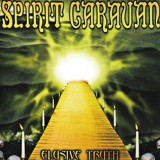
‘Elusive Truth’ was the second full-length record by D.C.-area doom rock Spirit Caravan led by the all time heavy lifer Scott ‘Wino’ Weinrich (The Obsessed, St. Vitus, Shrinebuilder, Probot). Originally released in 2001 and now remastered. “On this, Spirit Caravan's second foray into the long-player format, the band has collectively slowed down the tempo, and dropped the mood into even more contemplative territory. As the grandfather of modern stoner rock, Wino has certainly dipped his guitar picks in LSD this time around. Even though the engineering and production is bone dry and bottom heavy, Wino's psychedelic guitar work -- especially his stinging, busy leads -- has been ratcheted up a few clicks, even if the overall aesthetic is darker, and the superb musicianship from the trio simplified. The listener may be reminded of Hawkwind powered by an enormous diesel engine. As a title, Elusive Truth may indicate Wino's searching nature as a musician, and his attempt to continue down the sonic path through darkness, and through light. With this album, the listener is most certainly in darker territory.”
Back in stock!
NULLPTR never fails. Since emerging in 2016 with the Optical LP, Eddie Symons' project has become a byword for top-draw contemporary electro productions. After triumphantly returning to Sheffield's Central Processing Unit with 2020's Future World full-length, NULLPTR follows that album up with a new quartet of machine-funk slammers. Striking a balance between highwire, twitchy rhythm programming and some deft textural work, the Terminus EP demonstrates exactly why the NULLPTR name is so respected in the world of electro.
The first half here almost showcases the two sides of the NULLPTR sound in microcosm. Opening track 'Connected' zips along like one of the racers from a Wip3out game. The 808s are all booming breakbeats and hissing-piston hats, with a jittery synth bassline nipping in and out of the spaces left vacant by the drums. Atop these swirl eerie keyboard pads, the reverb from them draping across the rest of the instruments like fog above a city. By contrast, following cut 'Mesospheric Cruise' is the yin to 'Connected's yang. Where its predecessor was tense and coiled, this lilting number is expansive and open like a primetime Virginia joint - though the point where the wistful house pads strip back to foreground the twinkle-toed electro beat still has a pleasing crunch to it.
The B-side of Terminus serves dystopian snap from the off. Genre masters Drexciya are invoked by 'Syndicate'. The needle-gun bassline here turns itself inside-out across these five minutes, and all the while the tune is laced with some evocative shadow-realm synth pads. A similar energy courses through the EP's closing title-track, a cut which also brings into play a booming four-to-the-flour that gives it an unstoppable sense of forward-motion. Like 'Connected' and 'Mesospheric Cruise' - indeed, like all of the NULLPTR material that Central Processing Unit has brought us down the years - these jams will sound positively devilish when deployed in a dark basement.
The Terminus EP sees electro don NULLPTR (Eddie Symons) deliver four slices of unadulterated machine-funk heat.
RIYL: Virginia, Cardopusher, Drexciya, Silicon Scally
- A1: Porcelain Id Feat. Emma - Habibi (R U Alone?)
- A2: Porcelain Id - Low Poly
- A3: Porcelain Id - You Are The Heaven
- A4: Porcelain Id - Adam Coming Home
- B1: Porcelain Id - Moon
- B2: Porcelain Id - Feeling
- B3: Porcelain Id Feat. Emma - Brilliant
- B4: Porcelain Id - Cellophane
- B5: Porcelain Id - Man Down!
- B6: Porcelain Id Feat. Youniss - Reach Me/Reaching Higher
- B7: Porcelain Id - Lights!
You just moved to the big city, you end up at a party where you don't know anyone and someone walks up to you and asks: "Hey, are you alone here?". That is exactly the feeling that Porcelain id describes on their debut album Bibi:1, short for the Arabic pet name Habibi. Porcelain id is the pseudonym under which Hubert Tuyishime (they/them/their) has been unleashing unique songs since 2020.
The album - inspired by their move from a quiet provincial town to Antwerp - is the soundtrack to walking into city traffic during rush hour and trusting to get out of the chaos in one piece. It is an ode to exciting encounters with complete strangers and to the friends you can come home to afterwards. A story about being a stranger in a city you've romanticized for so long, the rejection that comes with it, and the false nostalgia with which you look back on it all later on.
At first hearing, the completely English-language Bibi:1 may seem like a brusque farewell to the autobiographical intimacy and lo-fi singer-songwriter music on the previously released EPs Mango and Reprise, and especially on songs like Vlaanderen. But to Porcelain id it feels like an organic evolution. One towards more abstraction, experimentation and electronics, but never detached, and still building on the core of Porcelain id.
The new sound is the result of an intense collaboration with producer and partner in crime Youniss Ahamad, who, despite their different musical backgrounds, immediately felt challenged after Porcelain id's legendary elevator pitch: 'I want to make something that is situated between Nick Cave and the Bad Seeds and Yeezus by Kanye West'.
Together they drew the blueprint for Bibi:1 in Youniss' home studio. Track by track, without looking back. A sporadic, but rigid process that added to the intensity of the album. In the studio, the songs were taken to a higher level. The two invited a pack of talented friends and young musicians to the studio to add parts, a stark contrast to the solitary approach of previous EPs. Aram Abgaryan (recording engineer/synths/vocals), Nard Houdmeyers (guitar), Tim Caramin (drums), David Idrisov (bass), Alban Sarens (sax) and Emma Hessels (vocals) came by. Aram Santy was at the controls during the mixing sessions.
The result sounds like the ultimate symbiosis of Porcelain id and Youniss. Lofi, but ambitious. Fragile, but rough. Poppy, but disruptive. Sometimes challenging. Then welcoming again. Sometimes even danceable. Each song forms a small vignette that is part of a diverse, but coherent unity. Adam Coming Home and Low Poly are closest to the melancholy of Porcelain id's earlier work, while Lights! strikes a new path. First single Man Down, on the other hand, is inspired by the Antwerp students who drown every year and sounds like a wandering nightly stroll through the city. For Brilliant, David Idrisov was asked to 'play bass as if Chet Baker were not a trumpet player, but a bass player', a bizarre assignment that he accomplished with verve. And Cellophane flirts with emo trap and was sung with raspberries between the teeth, to simulate the effect of grills.
Nach der überraschenden Rückkehr 2023 für eine Reihe feierlicher, ausverkaufter Konzerte in UK und Europa starten die Post-Rock-DIY-Helden The Boxer Rebellion in ein vielversprechendes Jahr 2024, das noch einmal in die Tiefe geht und ihre neue 'Open Arms' EP einläutet, ein pulsierendes, kristallines Mantra, das in limitierter 500er Auflage auf cremefarbenem Vinyl erscheint. Neue schimmernd-epische Songs wie 'Powdered Sugar' und 'Lightness Out Of Darkness' oder das kathartische 'As Man As Alive As The City' bestätigen, dass die Band nicht nur zurück ist, sondern auch in einem Ausbruch dringender, aktualisierter Kreativität eine klare Linie von ihrer Vergangenheit zur Gegenwart zieht.
Danielle Boutet’s P »Pièces« is a mysterious artifact of Quebecois marginalia, self-released in 1985. Moving from languid ennui to high drama, »Pièces« is a dreamy gestalt, an album that borders Chanson, spoken-word, jazz noir, and minimalism, conjured from the chasm between acoustic and electronic realms. »Pièces« allows us a window into the highly intimate songcraft and compositional skill of an artist who longed to linger not in the public eye, but in relation with others and the world around her.
Born in Quebec City, Boutet studied music at the University of Montreal, where she focused on composition and percussion, before becoming involved in Montreal’s feminist and lesbian art scene. Primarily written, performed, and recorded by Boutet, with voice, guitar work, and technical assistance by Sylvie Gagnon, Pièces was created during a paradigm shift in home recording. Originally composed for the piano, Boutet and Gagnon utilized a consumer-friendly Tascam 4-track Portastudio and versatile Yamaha DX-7, alongside guitar, bass, marimba, and the human voice, to expand and contemporize the original composition’s scope.
Inspired by prog rock and British poet and musician Anne Clark, »Pièces« translates Boutet’s influence by moving between sunny, wistful fairytale and dark, wintry dirge. Filled with longing marimba, vertiginous, startling synth pads, and folk guitar, each track on Pièces offers a wholly unique proposition. Some are modal and rife with the ethereal psychological tension of a sci-fi soundtrack, while others are more like entering a smoke-laced lounge, the entertainer embodying seduction.
With the sprechgesang of artists like Serge Gainsbourg, there is an intense intimacy to Boutet’s delivery, sometimes as if she is performing for an audience of one. As one lyric goes, translated to English from French: “Like holograms/ Images from a world/ That inhales souls/ And exudes drama.” Another song contains an excerpt from The Tao of Physics: “The eastern sages specify clearly that they do not identify an ordinary void, but rather, a void having an infinite creative potential.”
To English-language audiences, the album’s title, »Pièces«, might seem to simply refer to the eleven different pieces. The title can also, of course, refer to parts of a larger whole, but Boutet is keen to point out that there is also another meaning: In French, a pièce is a room. On the cover of the original cassette, Boutet is seen sitting on a chair, alone in an empty apartment, a cable snaking at her feet. Listening to »Pièces« is like entering eleven different rooms: whether a study encased in shadow, a greenhouse left to wither in an eternal frost, or a divine nave.
Boutet sold a few dozen copies around Montreal, a scene mostly occupied by the new wave explosion de rigueur, but the inclusion of Pièces in the 1987 issue of Ladyslipper—the North Carolina-based mail order catalog that championed women musicians of all calibers and careers—led to more exposure throughout North America. “In the catalog,” Boutet says, “they included it in the New Age section, but I was, and still am, aware that this album is relatively unclassifiable.”
Boutet would release one more album, titled Musiques Urbaines, before getting pulled in the direction of interdisciplinary art and theory. “Although I never stopped making music, I lost all interest in public diffusion or performance,” Boutet says. Despite her departure from performance and publicly releasing music, she left behind a strange and enthralling document of Montreal’s 1980s feminist fringe, an aural document of the historic moment when self-recorded music and its practical potential became a prismatic reality.
Danielle Boutet’s Pièces arrives February 16, 2024 as part of uncommon¢ (“uncommon sense”), an open-ended, serialized endeavor from Freedom to Spend that provides new meaning for rarefied recordings from music’s outermost fringe.