An unmissable pairing of Texan-born soul queens! Ruby Wilson was Memphis based for most of her life whilst Emily spent her formative years in Houston before relocating to Stockton, CA, to raise her family. Both were signed to Malaco Records in Jackson, MS, where these two timeless example of Southern Soul were recorded nearly 30 years apart and now appear on 7” vinyl for the first time.
Ruby Wilson first came to our attention in the mid-70s with two singles on T.K. subsidiary Glades, with Number One In Your Heart and the funkier Sky High both still sounding good today. She signed to Malaco during their most fruitful period, and her self-titled album in 1981, from which this classy below-midpaced selection comes, despite being a typically polished affair never reached the highs with the label that Jewel Bass, Fern Kinney, and of course Dorothy Moore had set over the previous few years. It remained her only outing with them, but she went on to make a further three albums in the late 80s with the Hot Cotton Jazz Band, one with the Climax Jazz Band, and finally back on her own A Song For You (2000 Cadre Ent.) and Show You A Good Time (2005 Unkut Music). She became an accomplished actress and was also known as the Queen Of Beale Street for her many club performances in Memphis. Sadly, Ruby died in 2016, but hopefully this release on Jai Alai will help us remember what a talent she really was.
Not only is Emily David an extraordinary talent, she is a remarkable woman too. Her only album Queen Emily was a direct result of her finishing as a semi-finalist of America’s Got Talent in 2008 at the tender age of 40. She was no stranger to talent shows having won a Sammy Davis Jr award in 1999, but back then, as a single-mother decided to put her singing career on hold to bring up her two daughters. One day her troubled sister arrived to stay but left without taking her two boys with her, so Emily felt she had to bring up her nephews as well. Her dreams of a musical career had evaporated but years later her daughters encouraged her to try once again.
It was almost a year after America’s Got Talent that Malaco boss Tommy Couch Jr. called out of the blue and offered her a contract without meeting her. As Queen Emily, a digital 4-track EP was released in the US, but her eponymous CD album, bizarrely released by Malaco in the UK before the US, is one of the best examples of 21st century Southern Soul, steeped with the label’s trademark live instrumentation by the Muscle Shoals Horns Rhythm Section and contains a number of polished standards such as Use Me, Angel In Your Arms, I Betcha Didn’t Know That and Going Crazy. However, it is the George Jackson-penned ballad Throw Away Me that really stands out and deservedly received critical acclaim in the UK at the time. It now gets a very welcome vinyl debut on Jai Alai and makes for a fabulous pairing.
Поиск:out of the blue
Все
Oscillate / verb – to move or swing back and forth in a regular rhythm. Alexander Flood has developed and refined a strong, progressive voice and style on his kit through his 17 years performing and studying. Previously graduating top of his year, he has been the recipient of many prestigious awards including Australia's Best Up-andComing Drummer in both 2012 and 2016, The John ‘Slick’ Osborne Scholarship in 2017 and the Helpmann Academy Jazz Award for Top Overall Graduate in 2018. In 2020 he signed with 6x Grammy nominee Christian Scott aTunde Adjuah to release Alex’s debut LP “HEARTBEAT” and “The Space Between” in 2022. 2023 finds Alexander aligning w/ Berlin’s Jakarta Records to release LP “Oscillate” - a blistering, hard-hitting meld of infectious rhythms, pulsing keys, and a swingin’ groove that melds into a genre-defying conglomeration of creative compositions and collaboration. In mid 2022 Alex travelled from Australia to Berlin, where he assembled a dream team crew of creative innovators featuring Hungarian keyboard player Àbáse, Australian bass guru Horatio Luna, and Brazilian flautista Paulo Cedraz. Together the group cut six unique dance tracks at Berlin’s iconic Jazzanova Studios, engineered by Grammy nominated Axel Reinemer. From the shuffling broken beats and dancing flute melodies in title track “Oscillate” to the experimental uptempo “Deja Vu”, the momentum of the music ceases to stop. “U R THA 1” features a driving jungle sound of repitched drums, vocal chops and 808 bass, and “Berlin” captures a classic funky 90s house feel powered by 4-on-the-floor kick and melodic basslines from Horatio Luna. Paulo Cedraz shines on flute in the Caribbean influenced “Ginealach”, and the LP finishes with the head-bopping “Hüpf” giving the listener a taste of some down-tempo beat music atop a bed of Àbáse’s lush rhodes. From top to bottom, the unique voices and powerful musicianship of each band member is obvious. Australian influence is at the core of the sound not only through the bass and drum chair, but through the punchy characteristic mix by Melbourne’s Lewis Moody and master by Gareth Thomson. The final piece of the puzzle was bringing in Alex’s childhood drum and percussion teacher Joel Prime, where they overdubbed additional percussion parts together in London. Artwork was stunningly put together by Robert Winter (Suff Daddy, Bluestaeb, K, Le Maestro) with visualizers put together by the stalwart KARL-F. Jakarta is ecstatic to share such a high-water mark of an album, out everywhere physically / digitally May 12th. Check the accompanying Press Sheet for Campaign Schedule and more. Besides online promotion from the label and artist profiles, the album will further be promoted by external agencies within the US and UK.
Motörizer, das 19. Studioalbum von Motörhead, wurde ursprünglich am 26. August 2008 veröffentlicht und war das dritte Album der Band, das von Cameron Webb produziert wurde. Motörizer war das erste Album der Band, das in den USA auf Platz 82 der Charts einstieg;
auch in Deutschland erreichte es Platz 5. Die Leadsingle "Rock Out" wurde als offizieller Titelsong für WWE Unforgiven verwendet. BMG bringt das Album auf transparentem, blauem Vinyl und als Digipak wieder heraus.
Blue Vinyl
Inkl. 12" Booklet. Alte Straßenköter-Weisheit: Die besten Partys sind immer die, zu denen man nicht eingeladen ist. Man braucht sich keine Gedanken um die Abendgarderobe zu machen, hat außer einem halbvollen, abgestandenen Wegbier nix in der Hand, was als Mitbringsel herhalten könnte, bedient sich gleichwohl mit absoluter Selbstverständlichkeit am Schnapsregal des Gastgebers, hinterlässt als Überraschung für den Tag danach eine Stange Mittelstrahl im Zahnputzbecher und tanzt vor allen Dingen möglichst auf allen Tischen so, dass man immer mit dem Kopf voran in der Hochzeitsbowle landet. Die Zuschauer sollen sich schließlich an diesen wunderschönen Abend erinnern können. Möglichst für immer. BUBONIX aus Limburg machen das, um das oben skizzierte Wedding-Crasher-Prozedere mal durch die Subkultur-Szene-3D-Brille mit einer Tüte Popcorn in der Hand anzuschauen, seit Jahren nicht anders. Jene bandgewordene Voodoo-Zeremonie des Punk und Hardcore um Sänger und Vorzeige-Wildsau Thorsten Polomski hat eigentlich immer schon auf jeder Party den größten Eindruck hinterlassen, und das obwohl (oder aber eben gerade weil) sie eigentlich nie und nirgendwo so richtig reingepasst hat. Das war schon auf alten Scheiben wie "Please, Devil Send Me Golden Hair" oder dem letzten Album "Capsaicin" der Band vor gut 15 Jahren nicht anders. Und jene wunderbar unbedarfte Assitüde treibt die frisch reunierte, um zwei alte Bandmitglieder geschrumpfte Combo (Sarah De Castro und Nenad Grbavac) auf ihrem neuen Album "Through The Eyes" so sehr auf die Spitze, dass man mit debilem Grinsen und ungläubigem Kopfschütteln vor dem Plattenspieler hockt und die HC-Punk-Referenz-Synapsen im Kopf so wild flackern und blinken wie die Weihnachtsbeleuchtung auf einer Front Porch irgendwo in Texas. Welcome back, BUBONIX _ ach nee: FUCK LOVE, MAKE VIOLENCE TO ÄRSCHE! (Ingo Donot)
LTD BLUE COLORED
Das Debütalbum des Queer-Alt-Rock-Duos Arxx aus Brighton enthält neben den Singles 'Call Me Crazy' ft. Pillow Queens und 'Couldn't Help Myself' (bbc Radio 1 Introducing Track of the Week) auch die neueste Auskopplung 'The Last Time', produziert von Steve Ansell (Blood Red Shoes) produziert und gemastert von Katie Tavini (Arlo Parks). Der Song, ein ansteckendes Paket bittersüßer Emotionen, hüllt den Hörer in eine einfühlsame Decke aus kathartischer und doch ambivalenter Post-Herzschmerz-Wärme ein, indem es mit lyrischen Dissonanzen spielt und Gefühle von Niedergeschlagenheit, Selbstmitleid und Akzeptanz gegenüberstellt.
Irish-born, Manchester-based Kerrie is a multi-disciplinary artist, incorporating live sets, DJing, producing and running her label Dark Machine Funk across her repertoire of work. Now, Kerrie follows up last year's 'Raw Regimen' (BP063) with a second EP for James Ruskin's seminal Blueprint Records.
Having garnered a rich musical education through working at and holding a DJ residency for one of the UK's most respected record shops Eastern Bloc, Kerrie's in-depth knowledge and unwavering dedication to music shines through her notable back catalogue and bolshy, unforgiving DJ and Live sets. Honing her craft for over a decade, Kerrie has played worldwide in celebrated venues such as Tresor, Berghain, fabric, FOLD, Elsewhere NYC and festivals including Freedom Medellin, Freerotation, Drift and Basilar.
First learning to mix via her brother's turntables in the early 2000s, it wasn't until 2009 that Kerrie invested in her own set-up and built an extensive record collection, covering everything from ambient, electronic, house, EBM, acid, electro, and her go-to genre, techno. Kerrie delivers tough moods from the turntables, as conveyed in her mixes for Reclaim Your City, Bassiani, SLAM and Crack, where she carefully blended high-energy styles of UK, Detroit, and European techno, many of which stem from the 90s and the 00s. It's frequent to hear Kerrie weave broken elements into her mixes too, chopping up the 4/4 groove at just the right moment to keep things propulsive. Kerrie's Live sets are fast becoming renowned for their trippy motifs and high impact on the dancefloor, applauded by Berlin's long-running club Tresor, where she made several appearances with her Elektron machines. Kerrie's Live set at Freerotation in 2019 was one of the festival's most talked-about debuts, and this year, Kerrie will return to and debut at multiple festivals and clubs across Europe and the Americas.
Following well-received releases on labels such as Don't Be Afraid, Cultivated Electronics, I Love Acid and Symbolism, Kerrie launched her imprint Dark Machine Funk DMF in 2020. The label homes her distinctly raw aesthetic and honours her love for dark, gritty, metallic and industrial sounds melded with elements of funk, heavily influenced by second-wave Detroit artists, UK techno and music by some of her favourite artists; James Ruskin, Blawan and Surgeon. Kerrie's first release on DMF, 'Inner Space PT1', was praised by Resident Advisor, who credited her ability to make "lean, fierce techno that knows how to groove."
2022 was a watershed year for Kerrie's productions. She debuted on the monumental UK techno label Blueprint with her EP 'Raw Regimen', which landed acclaimed reviews. Truly welcomed to the Blueprint family, Kerrie shares her second EP on the label in May and joins the crew at Blueprint showcases around the globe. This year marks the release of Kerrie's 10th EP on vinyl, and considering her consistent output on DMF, Blueprint and many more labels, the producer shows no sign of slowing down.
Coming to international prominence in more recent years, regardless of her decade-long tenure in Manchester's vibrant scene, Kerrie is deeply invested in the culture of electronic music, starting from her teenage era as a raver in Ireland up to her innovative projects today. In 2017, she founded Eastern Bloc's in-house event space to nurture local talent, which remains at the heart of Manchester's music community. Having ended her 11-year stint at the shop in 2023 to fully commit to the studio and accommodate her increasingly busy tour schedule, Kerrie is forging a long-lasting path fuelled by drive, passion, authenticity and a community-first way of thinking.
Since relocating to Brazil some years back, Needs Music co-founder Lars Bartkuhn has returned to his long-held love of musical improvisation. Although it’s a product of his jazz roots and classical training, the German producer has constantly found new ways to apply it to his work in the sphere of electronic music.
‘Dystopia’, his first solo album for almost nine years, was born out of two interlinked ideas: a desire to create improvised music without the aid of computer sequencers or an electronic drum set, and a deeply held love of storytelling through sound. Bartkuhn set to work improvising with modular synthesizers, acoustic instruments and hand percussion, later adding light-touch overdubs to a handful of pieces. When he listened back to the recordings, an aural narrative emerged, and you’ll hear it if you listen to the album from start to finish, as is intended.
As you’d expect from a musician and composer of Bartkuhn’s undoubted ability, ‘Dystopia’ is a stunning album – an undulating, expansive ambient journey packed with emotional resonance. While Bartkuhn naturally sees it as a logical progression of his previous ambient-leaning work with Kabuki as The First Minute of a New Day (and particularly their self-titled 2020 album Séance Centre), ‘Dystopia’ also features subtle nods to many of his long-held musical loves, including John Hassell’s ‘fourth world’ recordings, the impossible-to-pigeonhole 1970s catalogue of deep jazz imprint ECM, and the far-sighted American minimalism of Terry Riley and Steve Reich.
The album’s emotional depth is evident early on, with the slow-burn title track – all bubbling electronics, billowing chords, clarinet-style notes and gently strummed guitars offering the most melancholic and bittersweet of openings. The becalmed ‘A Drop Of Water In The Ocean’ follows, with discordant aural textures and hand percussion mimicking the rolling ocean, before ‘Largo (Calm Before The Storm)’ hints at unsettling times ahead.
‘Water and Warm Air’, the only track on the album whose starting point was not Bartkuhn’s cherished modular set-up, bleeps and bubbles across the sound space, adding a starry and otherworldly slant to proceedings, while ‘Disembodied Journey (Parts 1, 2 and 3)’ is a sublime, slowly unfurling journey in three movements – all Tangerine Dream style synthesizer motifs, Pat Metheny-esque guitars and jazz-fusion instrumentation.
So the album continues, with the poignant warmth and looped motifs of ‘Still Existing’ and the sparse, dubbed-out minimalism of ‘Do You Know How To Get Out?’ – a kind of 21st century jazz-fusionist’s take on sparse electronic hypnotism – giving wat to closing cut ‘Into The Waves’, a gentle combination of undulating electronic arpeggios and echoing instrumentation that offers a hopeful and undeniably picturesque conclusion.
Fittingly, the album cover features a painting by the late Dutch artist Franz Deckwitz (1934-94), whose images of alien landscapes were used by Phillips on a series of music concrete compilations. The image featured on the cover of ‘Dystopia’, depicting a deep blue ocean and shoreline, was painted by Deckwitz in Amsterdam in the late 1970s and inspired by a trip to the island of Ponza, Italy.
Matt Anniss
Tom Trago returns to Rush Hour after 10 years with a wonderfully accomplished mini-album, tip!
During the years he spent living in Amsterdam, when his DJ career seemed to become an unstoppable juggernaut, Tom Trago was a regular visitor to Deco Sauna, a local institution that helped him “decompress” and de-toxify his body. Eventually, a more extended period of “decompression” was needed, with Trago moving to the coast to reassess his priorities and spend more time with his young family.
‘Deco’, his sixth album and first for Rush Hour in a decade, was recorded following an extended absence from club dancefloors, as Trago cut back on DJ commitments to prioritise family life. When he returned to the studio, often with his daughter by his side, Trago initially struggled to get back into the groove. The desire to make dancefloor-focused music had – temporarily, at least – deserted him; instead, he found himself drawn towards a desire to create “electronic lullabies” and music that reflected his more pastoral environment (his home backs on to a patch of woodland in which he would walk every day).
Returning to his most familiar synthesisers – and specifically the first synthesiser he bought, on credit, as a young DJ and wannabe producer – Trago set about navigating different musical routes without the straight-jacket of club-focused dancefloors. Occasionally, old friends from Amsterdam would join him in the studio – Tracey and Maxi Mill, both of whom are part of his Voyage Direct label roster, contributed to tracks on the album – but for the most part the production process was a solo endeavour: musical therapy for an artist determined to do things differently after years spent making club hits and sweat-soaked peak-time workouts.
The results are rarely less than spellbinding. Trago sets his stall out with opener ‘Dark Oak’, a gorgeous, colourful, sun-bright scene-setter co-produced by Tracey that layers tumbling lead lines, chiming melodic motifs and kaleidoscopic chords atop the gentlest of bubbly beat patterns. Maxi Mill lends a hand on ‘Central Park’, a deep and hypnotic excursion marked out by rhythmic bleeps, minimalistic beats and layered melodies, and the summer sun-down rush of ‘Never Peace a Puzzle’, where kaleidoscopic synth sounds, meandering solos and looped electronic stabs rush towards a dancefloor of the mind.
Trago’s desire to create “electronic lullabies” for his young daughter comes to the fore on ‘To Be Left Unlocked’, a hypnotising fusion of spacey electronic motifs, Steve Reich style (synth) marimba melodies and slowly building musical intensity, while the echoing Fender Rhodes riffs, squelchy synth-bass, glistening guitar notes and sparse, snappy post hip-hop beats of ‘When The Sky Is Watching Us’ doff a cap to the producer’s roots as a bedroom beat-maker.
Given the project’s genesis, it’s perhaps fitting that Trago chose to conclude proceedings with ‘It Might Be Forever’ and the digital only ‘Blue Dope’, the album’s most rejuvenating, immersive, and vibrant moments. Both feature sustained chords painted with vivid aural brush strokes and come blessed with the merest hint of a rhythmic pulse – a thread that subtly runs throughout Trago’s most mature and musically rich album to date.
Matt Anniss
Blue Spirits was the last of trumpeter Freddie Hubbard’s 1960s studio albums for Blue Note. This bluesy and spirited offering featured five evocative Hubbard originals including “Soul Surge,” “Outer Forces,” and “Jodo,” each given a richly textured arrangement for an ensemble including four horns.
This stereo Tone Poet Vinyl Edition was produced by Joe Harley, mastered by Kevin Gray from the original analog master tapes, pressed on 180g vinyl at RTI, and packaged in a deluxe gatefold tip-on jacket.t
It's good to have this one available again. Dorothy Moore's 1976 soul classic 'Misty Blue' became an Ibiza chill-out anthem in 2002. As 'Misti Blu' it got high-profile plays by Mary Anne Hobbs, Pete Tong and Mixmaster Morris and even David Mancuso charted in his end-of-year highlights. Now the sundown gem gets reissued here on a tidy 7" as a superb rework from Claude Money. The crooning vocals remain the highlight with sultry trumpets and lavish downtempo rhythms. What's more, we're told that a new live disco and house version are also to come this year.
Terry Callier was an American soul, blues, folk and jazz guitarist, and singer songwriter born in Chicago. His debut album was recorded in
1964 but due to problems it was eventually released in 1968 as The New Folk Sound of Terry Callier. His soul, jazz, folk influences were prominently featured on the albums in the following years, which were released on different major labels. Callier continued to perform and tour until 1983, when he gained custody of his daughter and retired from recording music, working for the University of Chicago and obtained a degree in sociology. In the late 1980s British DJ’s discovered his old recordings and the famous rare-groove/jazz label Acid Jazz released his unknown track “I Don’t Want To See Myself (Without You)” in 1983. Timepeace was recorded in 1998 after a 15 year long career break and won the United Nations’s Time For Peace award for outstanding artistic achievement contributing to world peace.
The album features “People Get Ready/Brotherly Love” composed by Curtis Mayfield, the title song “Timepeace” featuring Pharoah Sanders on tenor-saxophone and 7 more tracks.
- A1: Springtime
- A2: Sitting In The Park (Feat. Jaedan Camstra)
- A3: Give Me A Chance
- A4: La Fonda (Feat. Peter Kuli)
- A5: Boardwalk
- A6: Beautiful Sight
- B1: Austin Drizzle
- B2: Tropical Storm
- B3: Soul
- B4: As The Sun Goes Down
- B5: Lighthouse
- B6: Gnomo
- B7: Sea Song
- C1: Pink Lemonade
- C2: Miller Time (Feat. Ian Ewing)
- C3: Sweet Serenade
- C4: Loungin
- C5: Delfino Plaza
- C6: Neon Dreams
- C7: Streetlights
- C8: Memories Of You
- D1: Blue
- D2: Mellow Out
- D3: Sand Dune (Feat. Goosetaf)
- D4: Downtown Downpour
- D5: Midnight Pursuit
- D6: Late Night Stroll
- D7: Dusk
- D8: Meet Me By The Lake (Ft. Jaeden Camstra)
- E1: Good Evening
- E2: Stadium Sauce (Feat. Ian Ewing)
- E3: Kirkland Jeans
- E4: I Miss You Baby (Feat. Funkmammoth)
- E5: Hotel Rio
- E6: Costa Del Sol
- E7: Daisy (Feat. Cloudchord)
- E8: Steppin Out
- E9: Revisitingthe Dune
- F1: Sentimentality
- F2: Aqua Teen
- F3: Piano Bar
- F4: Antigua Supermarket
- F5: Sundown
- F6: Come With Me
- F7: Mako
- F8: Twinkle
- F9: Go To Sleep
OVERVIEW: Engelwood, or Matt Engels, is a viral 24 year-old future funk, lo-fi, hip-hip and electronic music producer from Brooklyn, NY. Drawing on influences from producers like Flamingosis and Vanilla, as well as Japanese Funk and Soul music, Engelwood’s music could best be described as the soundtrack to your trip to the beach. The blends of funk, soul and tropical music, together, creates a unique fusion of sounds you can relax or dance to. Engelwood is also known for his productions for Dillon Francis, bbno$, Cuco, sophie meiers, Mia Gladstone, and Yung Gravy’s biggest hits such as “Knockout” and “Yung Gravity.”
F# A# ∞ was recorded at the original Hotel2Tango in spring 1997 on a rented 16-track tape deck and supplemented with various field recordings. In the preceding year, the band had taken shape as a quasi-orchestral outfit involving most of the players that would go on to make three more records and tour the world many times. This is the first recorded document of Godspeed as a large band and is soaring, fragile, awkward, heartbreaking stuff. Constellation released a vinyl-only pressing of 500 copies in August 1997, with LP jackets hand made by the label, the band, and various local artisans. It has since gone through dozens of re-presses, with virtually all of the original packaging elements preserved. The opening monologue on Side One ("Dead Flag Blues") is taken from Incomplete Movie About Jail, an unfinished film by Efrim.
- A1: Cherie Vico
- A2: Kavudu
- A3: Ejie
- A4: Staring Into The Blues
- A5: Sweet Rainbow
- A6: On My Own
- A7: La Petite
- A8: Je E Moi Le Piano
- A9: Bonne Annee
- A10: Birds Go Die Out Of Sight
Eine Entdeckung für Fans von klassischem World- und Folk-Pop a’la Paul Simon, Van Morrison u.a. „Come Back To Me“ ist nach langer Pause das Album-Comeback von Peter One, in den 1980er Jahren
Folk-Pop-Star in Westafrika. Er spielte er in großen Arenen und erreichte mit TV- und Radioshows ein riesiges Publikum. Anfang der 1990er Jahre entschied er sich, in die USA auszuwandern. Unter dem
Eindruck der damaligen Krise des Musikgeschäftes wechselte er in einen Job in der Krankenpflege, schrieb allerdings weiterhin Songs und spielte Gitarre.
Seine Berühmtheit holte ihn in den USA wieder ein, als dort ein Album von 1985 neu aufgelegt wurde und zur Wiederentdeckung seiner Musik führte. „Come Back To Me“ ist jetzt das offizielle Comeback von
Peter One, mit eingängigen neuen Songs in Englisch, Französisch und Peters afrikanischer Muttersprache.
Nearly two years after the release of his last full-length offering California Poppy 2, Rexx Life Raj, returns with his latest album The Blue Hour. The 12-track project includes “Save Yourself,” “Jerry Curl,” “Beauty in the Madness,” and “Balance.” Guest appearances include Wale, Larry June, Russ, and Fireboy DML. According to the artist, “This album is about transition. This album is about grief. This album is about experiencing every emotion and not running from them. This past year and a half have been so insane that I could make another 20 albums about it. From losing my parents, to moving out of places I grew up in and made me who I am, all while trying to maintain some type of balance and sanity. I tried to be as honest and intentional with this project as possible. Creating it helped me in ways I can’t even explain. I pray it does the same for someone else.”
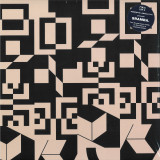
Tom Zé and Faust collide in Domenico Lancellotti's "machine samba"
Domenico Lancellotti's SRAMBA reaches back to the roots of samba whilst completely revamping its blueprint, indoctrinating guitar and percussion-led rhythms with analogue synthesisers, courtesy of album producer Ricardo Dias Gomes.
The majority of SRAMBA was recorded over two months in The Cave - Domenico's home studio in Lisbon, the city both Brazilian ex-pats reside in, where the arrival of a couple of Russian-designed synths purchased by Ricardo influenced the direction of their initial experimentation: "Ricardo had these instruments, modular machines" remembers Domenico, "and I had my guitar, some percussion instruments. On the first day we started making sounds and recording them, and songs started to appear, sambas started to appear."
The son of a renowned samba songwriter, at home Domenico would watch his father play and compose. At parties, the adults would hand his father a tamborim (a small tambourine) and ask him to play along. "I grew up inside samba, it's my roots", he says. "For me, everything is samba, I bring it into whatever style of music I am making".
Domenico and Ricardo instantly saw how the synthesisers were not at odds with the sambas they were playing, instead they had a similar sound to its typical percussion instruments (ganza, repinique, surdo, tarol). What's more, they saw a connection with roots samba, the samba that existed before bossa nova and samba jazz came along. This was rhythmic samba, with grooves that could go on ad infinitum. "It's samba de clave, geometrically structured" says Domenico. "It's ostinato samba", adds Ricardo.
"Diga" is a great example of what their proposal is capable of, as what begins as a glitchy machine whirring into action soon turns into a glorious samba in which the gurgles and scratchy beats coming from the analogue equipment only add to the arrangement. Likewise, on "Tá Brabo" it's an aching melody from one of the synths that gives the guitar rhythm its needed counterpoint, and shows how the duo's greatest accomplishment is not in invention alone, but in creating a great samba album. It's an album that can go from the opening track "Ere" with its reverberant bass thud, mantra-like vocals and staccato rhythms to the string-accompanied "Nada Sera de Outra Maneira", a swooning samba that pays tribute to the Brazilian ensemble Tamba Trio, who along with Tom Zé's Estudando O Samba, Domenico names as the biggest influence on their treatment of samba.
Other important reference points are made clear on "Um Abraço No Faust". One of three instrumentals on the album its title riffs off a JoãoGilberto song, "Um Abraço no Bonfá", but whereas JoãoGilberto was giving a hug (um abraço) to bossa nova guitarist Luiz Bonfá, Domenico and Ricardo are giving theirs to the German avant-gardists Faust. "Quem Samba", with its horn section and dramatic melody give a whiff of Domenico's Italian ancestry, while "Descomunal" is devoid of rhythm whatsoever, guest vocalist Tori singing over a bed of electronic drums, cello and swirling synths, that highlights the duo's unwillingness to stick to a particular formula.
Both Domenico Lancellotti and Ricardo Dias Gomes are revered names within Brazilian music over the past 20 years. As a member of the +2's, with Moreno Veloso and Kassin, Domenico released a trio of albums on Luaka Bop in the early 00s that pioneered a new Rio samba sound with elements of funk and psychedelia. With Veloso and Kassin he would later form Orquestra Imperial, a big band intent on reviving ballroom (gafieira) samba, and that has worked with guest vocalists such as Seu Jorge, Elza Soares and Ed Motta. SRAMBA is his fourth solo album. Multi-instrumentalist Ricardo Dias Gomes first came to notice as a member of Caetano Veloso's band Cê which helped reinvigorate Caetano's career with a sound influenced by British new wave. As well as collaborations with Lucas Santtana, Negro Leo and Thiago Nassif, and work with his own group Do Amor, he has released a series of acclaimed solo albums that reveal a restless music-maker.
SRAMBA is a glorious showcase of the duo's style, uniting Domenico's playful lyrics and rhythmic, samba-rooted songs with with Ricardo's assured accompaniment of unorthodox textures and instrumentations. It may be a new language for samba, machine samba (samba de máquina), but as Domenico says, "samba da máquina is samba".
Ebalunga!!! is thrilled to announce the first official reissue of the self-released, self-produced, and self-titled 1985 LP Scott Seskind. The album is a lo-fi singer-songwriter jewel. Don’t miss it.
“Authentic and personal, at times it reminds this writer of luminaries such as Jackson C. Frank, PF Sloan, Skip Spence, and Phil Orchs while never feeling derivative.
The songs are melodic and haunting, fueled by existential woes, political angst, and good ol’ fashioned love. Scott’s rich voice has an unpretentious gravitas, his simple-yet-effective guitar playing ranging from delicate fingerpicking to angry bashing.
Created at home on a Tascam 4-Track Portastudio, the recording features few frills and is all the better for it. Unlike most mid-80s records it sounds like it could have come from any time since the late ’60s onwards. As a testament to its greatness, and despite the late recording date, it even gets a nod on Patrick Lundborg’s “Acid Archives” compilation website, Lysergiawhere it’s described thus: “Late phase downer-loner folk and singer-songwriter trip, mostly acoustic, some tracks with a small band.” – Andrew Ure for Ugly
Things.Read a long story about the album in the upcoming Shindig! issue: Story about Scott Seskind in Shiding Mag.
The reissue is available on vinyl with a lyric insert.
Mastering (as always) by Jessica Thompson.
Feedbacks and reviews:
“Almost totally inheralded singer-songwriter Scott Seskind gets the reissue treatment, and I couldn’t be happier. About a year ago I pulled Seskind’s sole vinyl release out of the used bin of a Boulder record store, and with its almost Wallace Berman-esque cover art, could immediately suspect it was something special. The first listen didn’t dispel that notion one bit; here was an impressively captivating and moving collection of four-tracked bedroom folk of the highest order, with an out-of-time vibe that didn’t really snyc with its 1984 recording date. Definitely on the loner-ish end of the folk spectrum, with some aspects of the album harkening back to Skip Spence’s iconic Oar, while other moments revealed the urgency of the ’80s lo-fi revolution. But most importantly, the songs were just really, really great and managed to remain haunting long past their leaving.
Here, I thought, is an album that needs to be heard by more people, NOW. I asked around amongst some record collecting friends and discovered it was pretty highly rated by a small circle of people in the know, and that it had even managed to garner a mention in the Acid Archives despite its late recording date, and most excitingly that there was talk that the digital reissue label Yoga had managed to track Seskind down and secure the rights to his LP. (…) So here we have it, the best songs from Seskind’s eponymous LP. (…) I really hope this release continues to garner the listeners that it deserves.” – Michael Klausman
“The one that struck us the most this year was the almost totally unheralded work of singer-songwriter Scott Seskind, who recorded an impressively captivating and moving collection of four-tracked bedroom folk of the highest order, with an out-of-time vibe that doesn’t really sync with its original 1984 release date. Definitely on the loner-ish end of the folk spectrum, with songs that are really, really great and which manage to remain haunting long past their leaving. Truly an album that deserves to be heard by more people immediately. ” – Other Music