,,Hologramm" is the new EP by Schwefelgelb.
Remix contributions by Nastia Reigel and Norbak make it a 5 track Techno heavyweight.
An intriguing combination of positive, joyful atmosphere and gritty, pushy sound aesthetic spans all over the record. "The Show" and its euphorigenic rising stabs appears like what could be transformed into an Euro Dance anthem easily.
Yet the aware and well curated production holds it firmly in the zone of Techno and House underground. Speaking House, here's "In Mein Glas" - a sportive track with an irresistible bounce foiled by a lackadaisical vocal line, which gives it a comic twist.
As "Fieber" keeps the bounce we're getting a little more aggressive again: a delicate distortion, a dominant bass and a groovy drive. In all these 3 original tracks it's the melange of melodic motives, vocal highlights, crispy production as well as versatile creative details, which creates this specific sound that gets you hooked. It is lightness however wrapped in an Industrial musical language.
That said, the remixes proof how a new energy can be revealed by more minimal re-interpretations. Nastia Reigel, getting hands on "The Show", pushes drums and a fresh rhythmic play of vocal chops into the foreground. A sparse break followed by a powerful drop adds a strong climax. Norbak's approach on "In Mein Glas" takes the melodic motive and embeds it into a dubby space, not giving up on the hard-hitting kick.
"Hologramm" will be released on 140 g colored vinyl and digitally, April 10th, on n-PLEX.
Поиск:ov
Все
- A1: Dam Swindle Feat. Dj Minx - Back To The Old School
- A2: Supershy - Pyrenees
- A3: Dan Ivy Feat. Biyi - Location
- B1: Kolter - Need U, Want U
- B2: Cinthie - U Gotta Believe
- C1: Folamour Feat. Lyma - Won't Let U Down
- C2: Kerri Chandler - Kerriousity
- C3: Fouk - Head Spin
- D1: Dam Swindle Feat. Haile Supreme - Not Enough (Two Soul Fusion Aka Louie Vega & Josh Milan Remix)
- D2: Lolu Menayed - After Sax
- E1: Riva Starr Feat. Ziyon - Take Up The Space
- E2: Dam Swindle Feat. Jungle By Night - Call Of The Wild (Makèz Remix)
- E3: Elisa Elisa - Coco Coco
- F1: Life On Planets & Plaisance - Keep Going
- F2: Dj Sneak - Lovin' Me
- F3: Ossie - My Heart, Your Heart
Dam Swindle tap Kerri Chandler, Louie Vega, Folamour, Cinthie & more on 100th Heist release.
The ‘House of House’ V/a takes in nineteen all-new tracks from some of house music’s most revered names and new-school talent.
Dam Swindle present ‘House of House’, a triple vinyl V/a compilation marking the one-hundredth release milestone on Heist Recordings, landing on 8th May 2026. Across nineteen all-new tracks, ‘House of House’ reads like a roll call of modern house royalty.
The compilation features contributions from scene legends and contemporary torchbearers alike, including Kerri Chandler, Two Soul Fusion (AKA Louie Vega & Josh Milan), Folamour, Cinthie, Kolter, DJ Sneak, and Supershy, the dance music alias of Tom Misch, alongside rising talents like Papa Nugs, Lolu Menayed, and many more.
From the old-school magic of tracks like Dam Swindle’s ‘Back to the Old School’ feat. DJ Minx and Kolter’s ‘Need U, Want U’, to the jazzy, soulful depths of Kerri Chandler’s ‘Kerriousity’ and Superhy’s ‘Pyrenees’, to the peak-time energy of Papa Nugs & Mixolydian’s ‘Let Go’ and Elisa Elisa’s ‘Coco Coco’, the compilation captures the full spectrum of house sounds that have shaped the world of Heist Recordings over the past 13 years.
Launched in 2013, Heist Recordings has become a high benchmark for quality house music – a home for legendary artists like Cinthie and DJ Sneak, and a breeding ground for new talent from Kassian to Make`z. Dam Swindle have cemented their place among the upper echelons of modern house, with three critically acclaimed LPs, collaborations with the likes of Kerri Chandler, Tom Misch, and a relentless tour diary.
‘House of House’ reflects the ethos that has defined our label since day one: a home for house heads who bring genuine soul to club music, whether they’re legendary originators or new-school up-and-comers. Heist’s one-hundredth release is more than just a number – it’s a testament to the community, creativity, and legacy we’ve built, release after release.
As always enjoy the music and play it loud.
Much love, Heist HQ
The eighth release on the BINÄR-Label is an EP consisting of an opening, two peak time and a closing track by Mary Yuzovskaya. The focal point was on the storytelling which includes a deep sound over dance floor oriented cuts ending with a warm hug. The tracks are mastered by Ricardo Esposito.
Be The Mountain (2026) is the latest release from Detroit-based musician STS. The record explores a serene and introspective world shaped by organically morphed textures and slowly evolving soundscapes.
While largely drumless, the album maintains a subtle rhythmic backbone - not through traditional percussion, but through modulated pads, shifting synths, and carefully sculpted ambience. The music moves and breathes without overt propulsion, finding tension and momentum through tone, density, and motion rather than beats.
Much of the record was written during a period of sustained physical and mental strain. A time when daily effort fought against perceived limits. Instead of responding with heavier or more aggressive material, the music became a quiet counterweight to the intensity. These tracks function as an escape from chaos. They are built from patience, repetition, and a gradual transformation.
The title reflects a central idea behind the record: confronting something that initially feels insurmountable, only to realize that the enduring force is the one within us all.
Be The Mountain is about endurance, not as struggle, but as presence.
A two-tracker rooted in movement and memory.
It’s Girls Night / Long Hair marks a confident next step for the Amsterdam-based, Dutch-Argentinian artist, pushing deeper into darker, more physical territory. Built from warped drum patterns, low-end pressure and distorted, inhuman textures, it leans fully into a percussion-led, club-focused sound.
It’s Girls Night is immediate - fast, raw, and unrelenting.
Long Hair pulls things into a heavier, more ritualistic space - broken rhythms, slower tension, deeper atmosphere.
Shaped by formative nights in places like De School, the EP reflects a direct connection to the dancefloor - where repetition, intensity and immersion take over.
A concise, impactful release and the first in a series with fabric Originals
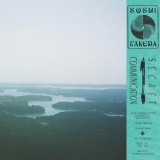
Tokyo deep house master Soshi Takeda returns with a long-awaited six-song sequel to 2021’s landmark Floating Mountains, surfing deeper into mystery, motion, and liquid dreams: Secret Communication. Recorded across 2022 and 2023 at his home studio with a unique assemblage of 80’s and 90’s hardware, the tracks cruise through a latticework of skyways on lush pads, bubbling bass, and blissed BPMs, dusted in sunrise acid and cosmic piano. His is a dance music of idyllic emotions and inner worlds, yearning for new horizons.
Dramatic events overlapped with the album’s creation: “Wars broke out. On the other hand, my child was born. There were sad and beautiful moments in my life.” Secret Communication contains vistas, valleys, glimpses of lives unled, swirling above the grey noise of the city. From the jazzy daydream of “Can Imagination Transcend Distance?” to the sleek starlight house of “Rainstorm” to the farewell ecstasy of the title track, Takeda’s music touches and transports, a portal to places beyond. Fantasy and feeling, intention and inspiration, all become one: “When I listen to beautiful deep house, I feel a mysterious atmosphere. Dreamy scenes come to mind. I aim to create that sound.”
Cassette[14,50 €]
Aspen is very proud to introduce ‘Non Sonett’ by the Christian Wallumrød Ensemble. This ensemble is a pioneering Norwegian chamber group whose work on ECM and Hubro has redefined the boundaries between jazz, contemporary composition and folk music.Across seven albums, the ensemble has developed a highly distinctive l anguage built on restraint, timbral nuance and collective interplay, placing it among the most influential European ensembles of the 21st century.
Bringing together some of the finest musicians in Norway, the ensemble draws on a rare collective sensitivity, where each player contributes to a deeply integrated and texturally rich sound world.
With Non Sonett, the Christian Wallumrød Ensemble opens a new chapter that grows directly out of recent years of work in more solitary and cross-disciplinary contexts. In this period, Wallumrød has developed material for solo performance as well as for dance, allowing ideas to take shape in more fluid and exploratory formats. Some of this material now finds its way into the ensemble, where it is met by the possibilities offered by instrumentation, collective playing, and the distinct voices of the musicians. At the same time, older pieces—originating in entirely different settings— re-emerge here in new forms, reshaped by the ensemble context.
A defining aspect of Non Sonett is the way many of the pieces function less as fully determined compositions and more as open frameworks: starting points, suggestions, or “springboards” for music. These structures invite response rather than prescribe outcome, relying on the ensemble’s inherent sensitivity and capacity to realize and transform the material in performance. The result is music that feels both precise and fluid, shaped in equal measure by composition and by the interpretative presence of the players.
Central to this album is a continued deepening of Wallumrød’s long-standing interest in ambiguity and in dissolving boundaries between different musical elements and expressive worlds. By placing contrasting materials and associations side by side—sometimes subtly, sometimes more overtly—the music opens up spaces where meanings remain fluid and interconnected. On Non Sonett, this approach is taken a step further, allowing these juxtapositions to play an even more active role in shaping the music’s character and flow.
This approach connects closely with the ensemble’s broader artistic trajectory. Over time, the Christian Wallumrød Ensemble has developed a language that is immediately recognizable—marked by reduction, clarity and a deep attention to sonic detail. While each release has its own character, the underlying aesthetic remains consistent: a focus on the inner life of sound itself. Rather than foregrounding gesture or virtuosity, the music draws the listener toward the smallest elements, where meaning emerges gradually through texture, spacing and timbre.
The listening experience becomes one of concentration and proximity, where each sound carries weight, and the accumulation of detail forms a larger whole. References may be sensed—to early polyphonic music, Norwegian folk traditions, or more recent experimental practices—but these are absorbed into a singular musical language that resists categorization.
As with the ensemble’s recent work, Non Sonett also continues the integration of electronics as a fundamental part of the sound world. Each musician engages with electronic elements alongside their acoustic instruments, creating a layered and dynamic sonic environment. At times, this leads into extended, exploratory passages reminiscent of analogue musique concrète; at others, electronics operate almost imperceptibly, subtly altering and extending the acoustic textures in real time.
vinyl[21,81 €]
Aspen is very proud to introduce ‘Non Sonett’ by the Christian Wallumrød Ensemble. This ensemble is a pioneering Norwegian chamber group whose work on ECM and Hubro has redefined the boundaries between jazz, contemporary composition and folk music.Across seven albums, the ensemble has developed a highly distinctive l anguage built on restraint, timbral nuance and collective interplay, placing it among the most influential European ensembles of the 21st century.
Bringing together some of the finest musicians in Norway, the ensemble draws on a rare collective sensitivity, where each player contributes to a deeply integrated and texturally rich sound world.
With Non Sonett, the Christian Wallumrød Ensemble opens a new chapter that grows directly out of recent years of work in more solitary and cross-disciplinary contexts. In this period, Wallumrød has developed material for solo performance as well as for dance, allowing ideas to take shape in more fluid and exploratory formats. Some of this material now finds its way into the ensemble, where it is met by the possibilities offered by instrumentation, collective playing, and the distinct voices of the musicians. At the same time, older pieces—originating in entirely different settings— re-emerge here in new forms, reshaped by the ensemble context.
A defining aspect of Non Sonett is the way many of the pieces function less as fully determined compositions and more as open frameworks: starting points, suggestions, or “springboards” for music. These structures invite response rather than prescribe outcome, relying on the ensemble’s inherent sensitivity and capacity to realize and transform the material in performance. The result is music that feels both precise and fluid, shaped in equal measure by composition and by the interpretative presence of the players.
Central to this album is a continued deepening of Wallumrød’s long-standing interest in ambiguity and in dissolving boundaries between different musical elements and expressive worlds. By placing contrasting materials and associations side by side—sometimes subtly, sometimes more overtly—the music opens up spaces where meanings remain fluid and interconnected. On Non Sonett, this approach is taken a step further, allowing these juxtapositions to play an even more active role in shaping the music’s character and flow.
This approach connects closely with the ensemble’s broader artistic trajectory. Over time, the Christian Wallumrød Ensemble has developed a language that is immediately recognizable—marked by reduction, clarity and a deep attention to sonic detail. While each release has its own character, the underlying aesthetic remains consistent: a focus on the inner life of sound itself. Rather than foregrounding gesture or virtuosity, the music draws the listener toward the smallest elements, where meaning emerges gradually through texture, spacing and timbre.
The listening experience becomes one of concentration and proximity, where each sound carries weight, and the accumulation of detail forms a larger whole. References may be sensed—to early polyphonic music, Norwegian folk traditions, or more recent experimental practices—but these are absorbed into a singular musical language that resists categorization.
As with the ensemble’s recent work, Non Sonett also continues the integration of electronics as a fundamental part of the sound world. Each musician engages with electronic elements alongside their acoustic instruments, creating a layered and dynamic sonic environment. At times, this leads into extended, exploratory passages reminiscent of analogue musique concrète; at others, electronics operate almost imperceptibly, subtly altering and extending the acoustic textures in real time.
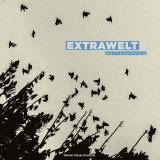
A new EP by Extrawelt is always something special, as they continually manage to reinvent themselves while remaining unmistakably true to their sound. The a-side „Moonster“ of their latest record forms a subtle and almost magical bridge to early musical influences such as Immortal Coil, Chris & Cosey, The Cure, and Throbbing Gristle.
In doing so, they reclaim, or rather reintroduce, a powerful, mystical element into their music, one that is integrated so naturally it feels as if it has always been an essential part of Extrawelt’s sonic DNA. Beyond that, the track unfolds through numerous facets, constantly shifting and evolving. Just when you think it is settling into a familiar direction, small variations emerge, keeping the piece remarkably alive and unpredictable.
You can clearly sense how much fun Extrawelt had working on this track. It is bursting with ideas, energy, and vitality, radiating a playful confidence that makes it endlessly engaging.
The b1 track „Bettermaker“ takes a different route, dedicating itself entirely to a single mood. Through subtle pitch bending and a carefully shaped tonal palette, the track unfolds with a slightly eerie, enchanted atmosphere.
From beginning to end, „Bettermaker“ remains focused and unwavering. There are no breaks or dramatic shifts in direction, instead, the piece commits fully to its initial setting. A monolithic, almost mantra like motif forms the core, creating a distinctive ambience, mystical, shadowy and faintly oriental in character.
This atmosphere is carried and reinforced by percussive, ethno inspired drums, which add an organic, ritualistic pulse. The result is a hypnotic soundscape that draws its strength from consistency and depth rather than contrast, inviting the listener into a secluded, otherworldly space.
The final piece of the EP „Popcorn Forever“ reveals another side of Extrawelt’s thinking. The track unfolds like a curious experiment in motion. Instead of building toward a predictable climax, sounds are gradually tossed into an ever running loop fragments, textures and small rhythmic ideas appearing almost casually, as if the piece were assembling itself in real time.
At first the elements seem loosely connected, sometimes abstract, sometimes slightly mischievous in the way they twist and bend. It almost feels like an impossible construction task. But Extrawelt’s experience quietly guides the process. Bit by bit the scattered parts begin to communicate with each other.
Repetition becomes the hidden engine. With every return of the loop new details slip into the structure, and what once appeared random slowly starts forming relationships inside the listener’s mind. The track never forces a clear explanation, yet the brain begins to tie the loose ends together almost automatically.
Popcorn Forever therefore works beautifully as a kind of transit piece within the EP. It moves between ideas, linking moods rather than closing them off. In typical Extrawelt fashion, the result is playful, slightly surreal and full of subtle discoveries that reveal themselves over time.
San Francisco Symphony, Seiji Ozawa
Dvořák: Symphony No.9 ”From the New World”; Carnival Overture...
Seiji Ozawas Antritt als Musikdirektor des San Francisco Symphony Orchestra im Jahr 1970 wurde später
von Barack Obama anschaulich beschrieben: „Mit seinem Mop-Haarschnitt, seinen Rollkragenpullovern
und seinen Liebesperlen sah er fast aus wie ein Beatle“. Diese Aufnahme von Dvořáks Sinfonie „Aus der
Neuen Welt“ aus dem Mai 1975 war eine der letzten, die von Philips in Quadrophonie aufgenommen und
speziell für diese Neuauflage neu abgemischt wurde.
Die neue audiophile Vinyl-Reihe DECCA PURE ANALOGUE präsentiert legendäre Aufnahmen aus den
Archiven von Decca und Philips in einer völlig neuen Klangqualität. Die renommierten Emil Berliner Studios haben diese in 100 % analoger Qualität (AAA) mit speziell für diese Reihe entwickelten Technologien
neu gemastert.
Jede Veröffentlichung der Serie wird auf 180 g schweren Virgin-Vinyl-Schallplatten gepresst und in einer
luxuriösen Gatefold-Edition präsentiert, mit Original-Artwork und Liner Notes, zusätzlichen Fotos und
Faksimiles der Bandboxen und Aufnahmedokumentation. Darüber hinaus enthält jede handnummerierte
Limited Edition neue Liner Notes, in denen die Geschichte der Aufnahme sowie der technische Prozess der
Neu-Veröffentlichung detailliert beschrieben werden.
To celebrate the 20-year anniversary of our label Jamaican Recordings and to mark the sad one year passing of the musical maestro reggae producer Bunny `Striker’ Lee, we have pulled together a brand new collection of some great Bunny Lee rhythms.
Our label started way back with initial meetings with Bunny Lee and a promise to keep his music available, out on the streets. He will be sorely missed but will live on through his extraordinary musical legacy and we hope to add to this by including this release to the stable of an unbeatable catalogue.
Legendary record producer Bunny `Striker’ Lee’s vast selection of rhythms were ever present at any Sound Clash or Dance worth talking about in the early to mid-1970’s.
Where the version found on the b-side of a single or special dub cut on acetates, would be played to win over the people and conquer the dance. Bunny Lee was the undisputed rhythm master and on this special release he is also the MC telling the crowd how it is and that any rival sound system should watch out as he has the rhythms that can reign supreme. The band cutting these timeless rhythms were a group of top Jamaican musicians Bunny had put together called The Aggrovators.
The Aggrovators were a group of reggae musicians that usually featured Carlton `Santa’ Davis on drums playing alongside Robbie Shakespeare on bass, with other musicians added like Earl `Chinna’ Smith on guitar and Tommy McCook and Vin Gordon and Lennox Brown added for horn arrangements. Keyboards and organ duties normally fell
to musicians Ansel Collins and Bernard ‘Touter’ Harvey. The band was named after singer Eddie Grant had repeated the phrase to Bunny Lee on one of his many trips to England, that such and such artist was giving him `Aggro’. This was a term used in England in the 1970’s by the Skinhead followers of reggae music. A term shortened
from the word `Aggrovation’, meaning trouble, fighting or making the situation worse. Bunny Lee was so taken with this term that on returning to Jamaica, not only did he name his group of musicians the `Aggrovators’ but he also named his record shop situated at 101 Orange Street `Agro Records’.
We have compiled some great tracks recorded by this fantastic group of musicians. With the added extra magic of Mr Bunny Lee calling it out as only he can on the microphone.
Yes Run Sound Boy Run the version master is here…Respect
- 1: Leonard's Chair
- 2: Forest Mountain Forest
- 3: Sing To Forget
- 4: Jean-Luc Godard Directs
- 5: Clouds
- 6: Not Over Yet
- 7: Carlito's Way
- 8: Song For Elon Musk
- 9: Eventide
- 10: We're All Here
Hot Creations Spring 2026 Vinyl Sampler featuring four of the Hottest recent release on Hot Creations.
After a year in which Joe Rolét’s ‘No Hesitating’ on Hot Creations became one of the biggest tracks of 2025 earning a spot in Mixmag’s ‘30 Best Dancefloor Bangers of 2025’, UK favourite Max Dean’s own
interpretation give s whole new energy to the track. Max’s remix reframes it even further for maximum peak-time impact. The bassline is murkier, the cuts sharply, and the overall momentum makes it a powerful weapon for DJs looking to keep crowds moving. Next up is ‘Sweat’, a collaborative drop from in-demand rising talents Locky and Mad.Again, bringing together two distinct voices shaped by London’s underground. ‘Sweat’ is a monster of a track, delivering punchy, driving drums, weighty bass, and tightly coiled grooves designed for peak-time floors, it’s a collaboration that feels rooted, purposeful, and built for the club!
On the flip and L.P Rhythm delivers his 90s-driven house aesthetic with ‘Want Somebody’, leaning into the warmth and swing of the era he draws so much influence from, the production blends crisp percussion, squiggly acid basslines, and soulful vocal flashes into a sharp, club-focused flip of a ’90s house classic - built and re-purposed for packed rooms and late-night energy. Final track ‘Freaks’ from Joshwa, brings a hypnotic blend of infectious vocal chops, punchy percussion, and growling low-end heat built for late-night dancefloors. Another four track banger!
VA – Memories. Untold is a delicate and emotionally rich compilation from TAMIZDAT, capturing the subtle beauty of deep and tech house with a gentle, melancholic twist. Thoughtfully curated for sunset sessions and introspective moments, this four-track vinyl release drifts between ambient textures, melodic phrasing, and dubby undertones—crafted for open-air environments and graceful transitions.
A1. Joshua Pendergrass – The Leopard (Frederick Ansgar Remix) opens the record with an ambient-infused deep house piece—warm, slow-moving, and deeply involving. It invites the listener into a calm, curious, and emotionally attentive state.
A2. Dubsud – Memories (BarBQ Remix) follows with a more upbeat, melodic character. Playful yet refined, it offers a bright continuation of the journey, carrying momentum without losing its emotional depth.
On the flip, B1. Heward, Kirill Matveev – Your Gentle Breath emerges like a breeze—floaty, nuanced, and ideal for that golden-hour moment. It’s an elegant piece full of space, subtlety, and feeling.
B2. Nj Helder – Gazi closes the release with dubby warmth and light breakbeat elements, a soothing yet rhythmically engaging finale—like the last light fading over a distant horizon.
Featuring label mastermind Kirill Matveev, MixCult regulars Heward, Joshua Pendergrass, BarBQ, and Dubsud, the record is further elevated by South African talent Nj Helder, whose presence brings a soulful character to its closing chapter.
Memories. Untold is evocative, chilled, and designed for those who seek emotional connection through sound—a graceful companion for deep listening and open skies.
TAMIZDAT is a division of MixCult Records
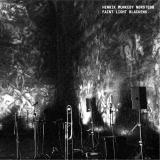
On his fourth solo album, and debut work for Nick Klein's Psychic Liberation imprint, Henrik Munkeby Nørstebø presents »Faint Light Blackens«, a negotiation between the atomized instrumentation of the solo trombone is pushed towards a full range wall of sound over the concise sprawl of seven distinct acts on two sides of a vinyl record.
The seven acts that make up the album were developed specifically for recording within Emanuel Vigeland’s »Tomba Emmanuelle«. The fresco within the mausoleum anchors themes of existential weight, ripe with weighted imagery of love, birth, and death. The solemn space is a cavernous acoustic terrain wherein reverberant reverie makes it almost impossible to speak aloud, let alone sing through horn and electronics. This chamber's expanse is baked into the compositional directions employed on »Faint Light Blackens«.
Experientially, the record was produced in a long form performance gesture, with no overdubs. While edited to fit the record format, no additional post production coloring took place. Here Nørstebø shines as an instrumentalist, wherein the symbiosis of the site specific architecture and his sound sources are synced. At once musing and brooding, the gamut of emotive sonic landscapes is at play for a fully dynamic listening experience. The territory in Nørstebø’s vocabulary through interplay with the mausoleum is not vaulted , unlike Vigeland’s urn’ed ashes. On »Faint Light Blackens«, the spirit takes bound beyond the cavern and reanimates the listeners stereo alters for a holistic listening experience of perfectly challenging electroacoustic endeavors.
Henrik Munkeby Nørstebø – acoustic & amplified trombone, monotron, feedback, sound files.
Recorded by Espen Reinertsen October 10. and 11. 2023 in Tomba Emmanuelle, Oslo Norway.
Cover Photos and mix by Henrik Munkeby Nørstebø
Mastered by Helge Sten (Deathprod) at Audio Virus Lab
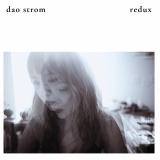
Redux, an ambient-folk album from Portland, Oregon musician, poet, and multimedia artist Dao Strom, is a collection of nine resurrected pieces. Reimagining songs she initially composed as a member of the Austin, Texas alt-country and singer-songwriter scenes of the early 2000s, Strom reworks these lost songs into ambient-folk mini-epics—part grounded and earthly, part ethereal and otherworldly. Drawing on an intimate yet spacious palette of folk, ambient, and experimental textures, woven through with a poetics of vulnerability and quiet emotion, Redux explores song as gently reverberant fields of layered vocals over finger-picked guitars with touches of electronics and sampling. Strom’s musical journey initially began in a roots and acoustic vein, simultaneously with her career as a fiction writer. In the years since, she has moved from Austin, Texas to Juneau, Alaska to Portland, Oregon; her work too has expanded across genres into more experimental formats of poetry, music, and multidisciplinary art. In returning to these earlier songs, Strom reclaims and revives them, exploring her relationships to time, voice, and the continuances of emotion and memory. The word redux means “brought back; revived”; a sense of something restored—earlier renditions of some of the Redux songs were recorded with Austin-based collaborators and producers; some songs were written in that time period but never recorded. Produced, performed, and recorded by Strom alone in her home studio, Redux is a return and reemergence of the artist to her own most personal, intuitive structures and atmospheres of voice, sound, and song. Released on cassette by Antiquated Future Records, and reissued on vinyl in 2026 by Disasters By Choice.
Dao Strom is an artist who works with three “voices”—written, sung, visual—to explore hybridity and contemplate the intersection of personal and collective histories. Her music releases move between “song-poem” cycles and ambient-folk albums. She is the author/composer of several hybrid projects that blend poetry, music, and visual art into unique multimodal experiences, including Tender Revolutions/Yellow Songs, a song-cycle with set of four chapbooks, jointly released by Beacon Sound, Antiquated Future Records, and The 3rd Thing Press (2025), and Instrument/Traveler’s Ode, a poetry-art collection and song-cycle released by Fonograf Editions and Antiquated Future Records (2020). Born in Vietnam and based in Portland, Oregon, Strom began her musical journey in the early 2000s, when she first began infusing into the context of “Americana” folk/roots music her own diasporic Vietnamese experience and stories. Her music has since moved in more experimental directions, resisting easy categorization, yet still maintaining tendrils of folk ethos. She also writes songs about the ineffable nuances of emotion, memory, and connection, as captured on the album, Redux, which gathers songs from across her songwriting years into an ambient-folk setting, self-produced and recorded by Strom, released on cassette in 2022 by Antiquated Future Records, and reissued on vinyl in 2026 by Disasters By Choice. As a multidisciplinary artist, Strom has presented performance and installations at venues such as the Time Based Art Festival (Portland Institute for Contemporary Art) and Moving Poets Novilla in Berlin, Germany, and has received awards from the Creative Capital Foundation, Spark Artist Award, and others. Strom is also a founding member of She Who Has No Master(s), a collective of Vietnamese women writers and artists making polyvocal poetry-art works as a means of reaching across borders.
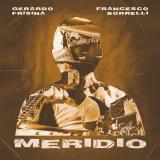
a collaboration forged over the years with Francesco Borrelli, a sound engineer, musician and performer who has shaped Gerardo’s recordings for the last ten years and more. It embodies the natural evolution and fulfillment of a shared journey, a dedicated pursuit of sound and vision, and a creative dialogue where concept and execution become one.
“Meridio” primarily defines the project’s geographical roots: Francesco, from Naples, and Gerardo, with ties to southern Calabria, carry a Mediterranean sensibility that emerges organically, not as a mere reference but as an attitude: a sense of fluid rhythm, a constant tension between order and improvisation, between elegance and instinct. The titles of the two tracks included on this 7-inch single – ‘Partenope’ and ‘Ligea’, muses and symbols of the Mediterranean Sea – draw on mythological imagery and further reinforce the connection to a profound cultural dimension.
The result is a dense yet layered sound that openly embraces the funk and progressive aesthetics of the 70s and 80s, reprocessing them in a contemporary spirit; a language effortlessly moving between arrangement and production, between timbral exploration and rhythmic immediacy.
We are excited to continue our work with Art P / Art Programming by finally offering the first full-length work from this Bremen-based electronic group. Originally released only on cassette in 1983, the self-titled album has now been fully restored and remastered, complete with bonus tracks and unreleased mixes unearthed from a rare demo.
The LP opens with "Wesen vom anderen Stern" ("Beings from Another Planet"), a downtempo, 808-driven electro synth wave track with German lyrics telling a story of aliens capturing earth, becoming the new "Herren" (lords), while humans are reduced to mere "objects." Art Programming founding member Jens-Markus Wegener notes that this track has always been a favorite during live performances, and it's easy to imagine how the futuristic sounds would have blown people away at the time.
Next is the electro/proto-techno title track "Art Programming," which we previously issued on a limited 12" in its full-length form. With its straightforward Roland 808 rhythms, catchy synth lines, and vocoder vocals, it's a classic example of German electro, and one of the earliest proto-techno tracks - long before Cybotron claimed the techno mantle. Its extensive break and electronic twist make it an early precursor to the genre. Wegener recalls that this track was created exclusively by him and Grotelüschen, with Grotelüschen contributing most of the melodic elements, while Wegener focused on drum machine programming and vocoder vocals.
On "That's Me," the album welcomes back singer Claudia Roebke. Although it's an electronic composition, Roebke adds a rock-infused, almost psychedelic vibe to the song. The lyrics, written by Wegener, depict a person obsessed with their appearance, using irony to critique societal beauty norms, questioning the obsession with perfection and attraction.
The album continues with a series of uptempo electro tracks: "Videoscreen," "La Gare," and "Genscher Pull 'N' Push." The first two feature slightly different mixes from an earlier demo that we personally prefered over the versions that were available on the final cassette release. "Videoscreen" expands on the theme of social isolation, with lyrics reflecting on a world obsessed with watching video all day - a topic that resonates strongly with today's culture of doom scrolling and social media addiction.
Next up, "Genscher Pull 'N' Push" is an incredible electro/wave/proto-techno track recorded in October 1982 with a political edge. Originally omitted from the album, it was only available on the demo cassette we mentioned earlier. The song takes aim at German politics, with lyrics that shout "bitte geh nach links / bitte geh nach rechts" ("please go to the left" and "please go to the right"), referencing the shifting political allegiances during the 1982 coalition change, when Genscher's party, the FDP, left the Helmut Schmidt cabinet to join the CDU/CSU opposition. The track was never released as the political topic had become outdated just a few months later.
The album closes with "Light and Fire," which originally served as the album's opening track. Its quirky, upbeat vibe now makes for a fitting outro.
The gear used on this album reads like a dream list for early 80s electronic music production: Roland Jupiter 4, TR 808, TB 303, System 100, SVC 350, Korg Mono/Poly, Moog Prodigy, FRICKE-Sequenzer, Roland CSQ-100 Sequenzer, Coron DS-8, MM 12/2, Sony TC 399, TEAC-244 Portastudio, Ibanez DM 1000, EH-Electric Mistress, EV-Micro. This unique lineup of equipment sets the album apart from NDW releases of the era, lending it a distinct sound with heavy proto-techno leanings and that straightforward electro vibe we all love.
The album is being released as a very limited edition of 300 copies on transparent red vinyl, complete with a full picture sleeve and lyrics inlay. This is yet another rediscovered and restored 80s gem on our label that you definitely don't want to miss!
- A1: Status Quo - Rockin‘ All Over The World
- A2: Rainbow - Since You Been Gone
- A3: The Rubettes - Juke Box Jive
- A4: Blondie - Heart Of Glass
- A5: Roy Orbison - Only The Lonely
- A6: Dion - Runaround Sue
- A7: Ray Charles - Hit The Road Jack
- B1: Secret Service - Oh Susie
- B2: Buggles - Video Killed The Radio Star
- B3: Bruce Channel - Hey! Baby
- B4: Hello - Till Him
- B5: Elvis Presley - It‘s Now Or Never
- B6: Fifth Dimension - Monday, Monday
- B7: Brian Hyland - Sealed With A Kiss
Vol. 1[13,87 €]
Mit „Golden Chart Hits Of The 60s & 70s Vol. 2“ erscheint eine sorgfältig zusammengestellte Vinyl-Compilation, die die größten Chart-Hits zweier legendärer Musikjahrzehnte vereint. Diese Schallplatte lässt den unverwechselbaren Sound der 60er und 70er Jahre wieder aufleben – voller Nostalgie, Lebensgefühl und zeitloser Melodien.
Die Auswahl reicht von mitreißendem Rock über eingängigen Pop bis hin zu unvergesslichen Evergreens. Mit legendären Künstlern wie Status Quo, Rainbow, Blondie, The Rubettes und Secret Service bietet diese Compilation eine abwechslungsreiche Mischung aus internationalen Klassikern, die Musikgeschichte geschrieben haben.
Das warme, authentische Klangbild der Vinyl-Pressung sorgt für ein besonderes Hörerlebnis und macht diese Zusammenstellung zu einem echten Highlight für Liebhaber analoger Musik


![San Francisco Symphony, Seiji Ozawa - Dvořák: Symphony No.9 ”From the New World”; Carnival Overture [Decca Pure Analogue]](https://www.deejay.de/images/l/1/6/1234816.jpg)