A song about Colostomy - from the opening bars you might think so. but it gets worse. 'X rated' stuff.
the label say 'Djoko is no stranger to Voyage Direct. Having first appeared on the label way back in 2012, he's returned numerous times since, becoming an integral member of the imprint's growing family of artists. Elsewhere, he's delivered material on Tuskegee, Mobilee and Leftroom, amongst others, developing an approach that takes inspiration from numerous styles of house and techno. However, little he's previously released can match the raw, eyebrow-raising lust and sexually charged funk of Dirty Talk'.
Driven forward by Djoko's sleazy, whispered spoken word vocal, the original version combines the rubbery, bass-heavy rhythms of classic, Dance Mania-style ghetto house, the delay-laden guitar flashes of vintage NYC proto-house, and the kind of darting, funk-fuelled keys - provided by fellow Dutch producer Kid Sublime - that recall the glory days of '80s electrofunk. Djoko provides an alternate version in the shape of the thrusting, stripped-back Club Dub', with his breathy Accapella' rounding off the A-side.
On the flip, two Voyage Direct stalwarts take it in turns to rework the track. First up is label boss Tom Trago, who builds on Djoko's elastic percussion with some dense new drum hits of his own. These are combined with spacey synths and sharp string stabs, giving Dirty Talk' a more classic techno/house fusion flavour. In contrast, Werner uses the opportunity to turn in a triple-X-rated interpretation full of bounding, Chicago-influenced beats, intergalactic pads, sleazy acid lines, and sweaty, surging drum fills. It's a fittingly breathless remix.'
Suche:p o l style
Paul Murphy’s Claremont 56 label welcomes a genuine legend of UK music to its roster – Chaz Jankel, the man whose dizzying musicality and love of soul, funk and disco did much to shape the sound of Ian Dury’s Blockheads band in the late 1970s and early ‘80s.
A virtuoso keyboardist with a deep love of Black American music, Jankel’s arrangements and compositional skills were key to the success of their records, the funkiest of which not only became crossover pop hits – see ‘Hit Me With Your Rhythm Stick’ and ‘Reasons To be Cheerful, Part 3’ in particular – but also saw heavy rotation in now iconic New York clubs including the Paradise Garage and Studio 54.
This continued during the formative years of his solo career, with ‘My Occupation’, ‘Questionnaire’ and ‘Glad To Know You’ (later famously re-edited and dubbed out for nu-disco dancefloors by Todd Terje) all becoming club hits. The great Quincy Jones also covered Jankel’s infectious single ‘Ai No Carrida’, while experimental, club-ready synth-jam ‘3,000,000 Synths’ was also influential during the early years of the electro movement.
For his Claremont 56 bow, Jankel has delivered an all-new workout recorded earlier this year, the simply titled ‘Rhumba Jam’. A typically warm, groovy and rolling affair, it features Jankel delivering infectious, stretched-out Rhodes electric piano solos over toasty bass, clipped guitar licks, warm bass, accordion-style synth motifs and a densely layered Rhumba rhythm. While relaxed and sun-soaked, it also has bags of Balearic dancefloor potential.
Murphy remixes under his now familiar Mudd alias, leaning into the track’s languid Balearic vibe while keeping a firm focus on the dancefloor. Beginning with an enticing mix of metronomic drums and jangly acoustic guitars, Murphy slowly layers up key elements of Jankel’s original – think rubbery bass, rhythmic handclaps, mazy synth sounds and those wonderful, stretched-out solos. It’s a version that pays due reverence to the quality of Jankel’s musicianship, production and arrangement while subtly extending it and reframing it for 21st century Balearic dancefloors.
ZUKU’s second release see’s the spotlight turn to Scouse maestro and long-time label friend, Brent. He delivers an EP steeped in electronic influences, weaving together elements of house, disco, and electro.
Across five club-ready tracks, expect huge basslines, hefty kick drums, retro-styled vocoders, paired with 80s influenced synth work driving each piece forward. A beautiful record created with pure class, backed by Brent's extensive knowledge of dance music production.
Berlin-based Amy Dabbs makes a long-awaited return to Shall Not Fade with Green Room EP - four uptempo club heaters spanning UKG, high-energy house, and breaks.
The EP’s title pays homage to Renate’s Green Room, the floor within the renowned Berlin club where Dabbs has held her residency since early 2023. Each track was both written for and road-tested at her monthly Dabbs Traxx events in this space, where she’s cultivated a tight-knit community of UKG lovers in the heart of Berlin.
“When I started writing this EP, my goal was to create music that would fit perfectly into my nights in the Green Room, bringing in the London sounds I grew up on, across all the genres I usually play at Renate. This EP is a tribute to everything Renate has given me: opportunity, community, and a platform for my authentic UK sound.”
Opening track Take Me High launches straight into peak-time territory, with old-school-inspired rave stabs, staccato vocal flicks, and deep, subby basslines. Over You turns the heat up even further - a track built from choppy vocals and UKG basslines before melting into a warm chord progression; a perfect example of Dabbs’ ability to fuse high-energy rhythms with spine-tingling emotion.
On the flip side, Style & Pattern, featuring the signature tones of London’s Alfie Fraser, is a pure UKG cut - underpinned by lush pads and arpeggiators, topped with Alfie’s unmistakable live vocals to create an uplifting dancefloor heater dripping with London swagger. Closing the EP, The Way delivers a tear-jerking breakbeat finale, layering syncopated percussion, emotive vocals, and an old-school piano breakdown; it’s a sublime end-of-the-night moment and a fitting closing track for an EP which honours one of Berlin’s most beloved clubs.
- A1: Hard Up For A Man (Kfm Radio Introduction)
- A2: Hard Up For A Man
- A3: Hard Up For A Man (Kfm Radio Orgasm Outro)
- A4: I Need Love
- A5: Yesterday's Lovers
- A6: Man Power (Kfm Radio Introduction)
- A7: Man Power
- A8: You've Got To Work Harder, Try Harder (Acapella)
- A9: A Real Man
- A10: Female Drag (Kfm Radio)
- A11: The Man In My Life
- A12: Anything Is In Your Key
- A13: You're A Man
- B1: I Live In Prestwich, Manchester (Kfm Radio)
- B2: Rock And Roll Makes Me High
- B3: Sex Slaves Of New Orleans (Kfm Radio Introduction)
- B4: Sex Slaves Of New Orleans
- B5: The Piano And Me Are Great Friends (Kfm Radio)
- B6: Lady
- B7: Little Lady Dynamite (Kfm Radio Introduction)
- B8: Little Lady Dynamite
- B9: Love Power
- B10: Once You've Been Touched By Love (Acapella)
- B11: Where's The Feeling? (Kfm Radio Introduction)
- B14: Paris Is For Lovers
- B15: I Don't Give Up (Acapella)
- B16: Through The Night
- B17: See You At The Next Show (Kfm Radio)
- B12: Where's The Feeling?
- B13: Cult Following (Kfm Radio)
Housewives, househusbands, ladies, gentlemen, and everyone in between… Avril A is ready for relaunch.
A - V - R - I - L
Never released Hi-NRG, synth-pop, wonky rock n' roll from a queer Manchester underground icon of the 80s and 90s.
By day, Avril Eventhal was a housewife in North Manchester's Orthodox Jewish community. By night, she was the fabulous Avril A, a larger than life cabaret performer who found a loyal audience in gay venues across the country and was adored for her outrageous live shows.
With her signature leopard print dress and feather duster in hand she delivered an unforgettable song and dance routine - as it was billed, “an audio-visual assault on the audience”.
She celebrated her unconventional style, finding joy and space for creative reinvention with the queer community.
Avril died in 2017, leaving behind a massive archive of material documenting every aspect of her career in songwriting and performance. For two years, Memory Dance has been working with Avril's niece and family on a digitisation and restoration project bringing these audio recordings back to life.
Presenting this limited edition 300 picture disc vinyl on Warehouse Manifesto from label boss GAMADON with the original sci-fi inspired Daleks In The Dancehall and five excellent remixes by Kafkactrl, C-System, Code Rising, Robodrum and EKATA. The style of tracks vary considerably and encompass a variety of Techno and Electro infused influences - all with a heavy punch and sure to get you moving on the dancefloor. This is part two of a three part series from GAMADON with remixes from some of the best in the business.
Test Pilot is the second solo album by Michael Zodorozny, post-punk icon and founding member of Crash Course in Science. On Test Pilot, he continues to explore his personal and poetic interpretation of the post-punk, new wave and no wave sound. Homemade and self-invented instruments complete his specific, extraordinary style that leans towards EBM and thrusting electro. After contributing to the latest Celldod album, the Swedish master of dark synths returns the favour here on the track Higher. Test Pilot was produced by Matia Simovich aka INHALT, and Michael Zodorozny himself painted and designed the cover art.
Quartz is a respected drum & bass head with a precise and minimalist - but always cinematic - production style and that's clear again on this new one for Droogs. The A-side features solo cut 'Duplicity', which is a stark and electrifying trip into drum & bass darkness with tight basslines and subtle shifts that prove less is more. The B-side, 'Black Prism,' sees Quartz team up with Overlook for a throwback to raw 90s techstep and all the tight but manic breakbeat action that comes with it. It's a tune of unrelenting tension that resolves into an unexpectedly serene close. Sophisticated stuff from all.
MAXED OUT MAXI EP OF THE HIGHEST ORDER FROM TAPES, HONOURING JAHTARI'S 20 YEARS OF D.I.G.I.T.A.L. BUSINESS IN FINEST STYLE...LOADED WITH RIB-8-BIT PRESSURE!
Four digital dancehall scorchers with two accompanying 8-bit versions meticulously crafted with the soundsystem session in mind!
Tapes has been spreading wonky saturated riddim goodness since his ground breaking “Hissing Theatricals” EP in 2009. Now, after a brief hibernation in the northern spawning pools, he’s spinning up his reels once again to present a new killer set of amphibian friendly, nintendo-fied sound system depth charges!
The “Photos of My Frog EP” is croaking off with its oddly addictive namesake: a surefire pond party starter – Ribbit! Hopping along, the adorable but tuff “Cleat Skank” and its gameboy driven pollywog follow, swinging their 8bit melody lasso till the cows come home. Yeehaw!
“Ramp Up” on B is a dense and raw FM synth digi banger, sure to fry any nearby circuits, so best beware! “Back Cramp Riddim” then turns up the low end even more and swirls its drums and synths into the next delay vortex, warping into a pixelated 8bit conclusion.
Whatever your taste in insects there’s something on this record for any lover of vintage dancehall and amphibious wild life alike!
These are going to fly out - sticky tongues at the ready!
A collection of earlier and newer works by LFU
combined in one EP.
On November 14, 2025 !K7 Records released DJ-Kicks by Eris Drew. She chose 'Oh Echt' by LFU as the opening track of her mix.
The style of 'Oh Echt' is not easy to categorize. Electronic breakbeats with Detroit hi-hat patterns and a typically pushy four-to-the-floor kick. The funky, staccato bassline and mysterious strings take you back to the eighties and the added funky organs and stabs complete the story. The "Oh Echt" Main Mix is the instrumental mix of the 'Vogel Mix' in which the 'Oh Echtapella' is incorporated.
The first design of 'Boom Boom Tracking' was in 2011 for a DJ/DRUM performance that LFU did. He picked it up again in 2014, but did not finish it until 2024. This big beat floor filler contains chemical beats accompanied by electrostabs and a deep, dark bassline. If you listen intently to this song on a regular audio device, you might notice a thump on every 1 of the 4 beats, but when it's played on a good, big sound system, you can't miss this tension in your stomach. 'Boom Boom Tracking' it is!
Downtempo percussive track 'Tjeetje' is the first track LFU has made in North Coast Studio in 2001. 'Slow Forward' was the third song he completed there in 2003, the same place where he met Ben Baan of Fruitcake, who played the piano part.
Initially, 'Queen Cubana' did not make it as a remix of Eddy Zoey's 'No Soy Cubano' in 2017. In this new version, LFU removed his vocals, except for "Step". LFU took inspiration from Katy Perry's 'Bon Appetit' and turned it into a rhythmic slow jam with carefully programmed beats, resulting in a spectacular funky joint.
Downtown E-Style Sound Crawlers
The electronic producer Franz Kirmann returns to Bytes for his eighth solo album. The “Almadies” are long wooden boats used by Senegalese fishermen. It is also the name of the neighborhood where Kirmann grew up, in the suburbs of Dakar, Senegal, near the Atlantic Ocean. "These new compositions are the result of sound experiments conducted over the past few months and reflections on the concept of mind-constructed geographies," Kirmann explains. "The way memories and souvenirs shape an image of a place or country that is part reality, part fantasy, part cliché, yet also deeply personal. This experience is influenced by education, social background, history, and other socio-economic factors. " The ten tracks are crafted from collages of electronic sounds blended with field recordings from various places Kirmann has visited — from Dakar to the Caribbean, as well as London and Paris. His aim is to blur the line between electronically generated sounds and real soundscapes, creating music where it becomes difficult to distinguish the real from the constructed. All the sounds on the album were produced using synthesizers and field recordings. No drum machines, percussion or traditional acoustic instruments were used. Influences include Brian Eno and John Hassell’s Fourth World, Vol. 1: Possible Musics (1980), described by Hassell as "a unified primitive/futuristic sound combining features of world ethnic styles with advanced electronic techniques" , which also works in the context of Almadies. Another big influence was Ariel Kalma’s Le Temps Des Moissons (1975) as well as artists including O Yuki Conjugate and Robert Aiki Aubrey Lowe to Susumu Yokota and Michael Banabila.
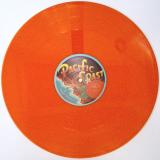
Sam Robson continues to reissue gems from the vaults of his initially short-lived Pacific Coast House Recordings imprint, which released a string of superb West Coast house singles between 1999 and 2003. This split 12” originally landed way back in 2001 and has become something of an in-demand rarity in recent years. The now-familiar Teflon Dons handle side A, wrapping jaunty, spaced-out stabs, intergalactic pads, echo-laden vocal snippets and TB-303 style moody electronics around a hybrid acid house/tech-house groove on the swirling and immersive early morning delights of ‘Vice’. Over on side B, Robson dons his The Coastal Commission guise for a deeper, dub-flecked and breakbeat-enhanced house workout that adds cosmic spoken word snippets and effects-laden ambient chords to the San Fran deep house template drawn up by Dubtribe Soundsystem and Charles Webster.
Marking its 10th release, Sounds of Sirius Music presents a deep, curated journey from a constellation of close producer friends, each adding their own energy to the label’s evolving sound.
The record opens with Akela's hypnotic Ritual33, followed by Daniel Meister, who delivers his signature minimal groove. On the flip, rising New Zealand talent Isaac Denny teams up with label founder Herman Saiz on a track that blends raw expression with a refined touch.
LUKEA closes the release with a deep, laid-back, galactic cut that lands the record with style. A milestone release shaped for introspective moments and late-night floors alike.
Limited to 200 pieces. Each record comes on heavy 180g vinyl, handnumbered and with an exclusive art print inside. Launching both his debut record and the very first release on brand-new label Tennis Is Good, Justus Rokah kicks things off with the Disco Fizz EP.
The title track blends soul, funk and disco into a sparkling groove – a Motowninspired homage to Sektmate, evoking rooftop sunsets and live jam vibes straight out of the ’70s. Warm, musical, and made to get you vibing.
On the flip, Tennis Is Good (the duo of Justus Rokah & Flemming Bassedow) strip things down for the floor: a raw, driving house rework with pumping bassline, grinding kick and Detroit-tinged chords. Pure underground energy designed for peak-time moments. A strong first statement from Rokah – bridging soul, disco and house in his very own style.
Punching in with his debut vinyl EP for Fluid Funk, Chilean house producer Massiande follows up to a string of head-turning releases on an array of labels, including Jimpster’s Freerange Records. His much anticipated new offering, “Essential”, packs all the attributes of his vivid, floor-focussed vision, taking us on a bouncy ride across densely forested coastal house scapes and heavy-lidded electronics. Draped in washed-out pads and cottony textures, Massiande’s tracks have us floating in a chromatic daze of sorts, light-hearted and somewhat nostalgic, but above all hopeful and resilient.
A textbook slab of Massiande’s ever-expanding palette of woozy house tropes and silken disco touch, A1 “Tears” (also presented in bare instrumental form on the flip side B2) has it all, from the euphonic synths arrangements to the no-nonsense, club-igniting jack and irresistible footwork, via the infectious bass and Chicago-style soulfulness of its vocals. Proper fiery number and absolute weapon for any DJ seeking either impactful elegance in a peak-time context or to rekindle the flame when the after gets a bit too prosaic and requires that extra funky boost to get back on tracks. Grooviness exemplified.
More of a straightforward affair, A2 “Essential” unflappably beckons us on the path of utter vaporous escapology with its pulsating tableau of FX-soaked machine talk, semi-acidic bass and zero-G synthwork painting the sky all shades of pastel. The result is a rather captivating piece of weightlessly intuitive though carefully engineered sonic daydream. Injecting further oomph to the groove, B1 “Come On” pulls out a symbiotic collage of Sino-flavoured melody, Stax-ian vox sampling and straight out Detroit house-indebted propulsion, neatly showcasing both Massiande’s broad spectrum of influences and that idiosyncratic take of his on the said genres’ tried-and-tested leitmotivs.
Souldynamic swings back onto the Samosa label with the mesmerizingly rhythmic West-Side Of Afrika Vol. 2.
We kick off the A-Side with ‘Touma’ – a truly hypnotic tribal afro vapour that entices you into the fire-lit night. A heavy dub-style bass just about dominates above the rhythmic ensemble, whilst the haunting chanted vocals elevate the track to ethereal levels. Stunning. No wonder Ron Trent has been spinning this one in his sets for the past few weeks – it’s right in that spiritual zone where deep house meets ancestral ritual.
Second track on Side A is the happiness trip that is ‘M.I.L’. Rolling drums, marimbas and a killer bassline merge with the flighty guitar riffs and smiling vocals. You could be in a bar listening to the music live in the room, smoke filling the spaces and dim lights offering a glimpse of good times.
Heading over to Side B and you find the enchanting ‘DJA’ awaiting. A deep roller of a tune, Souldynamic shifts the gears whilst serving the entrees. A truly magnificent slice of West-African vibes, ‘DJA’ has it all from the gorgeous vocals to the chugging, hypnotic beat.
Track 2 on Side B is the sultry ‘N.T.F.P’. The BPMs are touched down a notch for this one but don’t let that fool you. ‘N.T.F.P’ is a musical celebration of joyous beats, slaps, claps, brass and Afro vocals. You don’t get it much more authentic than this.
West-Side Of Afrika Vol. 2 is like a shapely hand in the perfectly fitted glove that is the Samosa label. A truly stunning piece of vinyl with every track as strong as the last. A sure-fire winner.
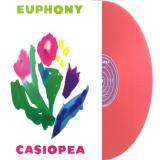
- A1: The Wind From The Sun
- A2: Shadow Man
- A3: Super Sonic Movement
- A4: Old Times
- A5: Bayside Express
- B1: Sentimental Avenue
- B2: Solid Swing
- B3: Hacker
- B4: Pure Green
- B5: Red Zone
- B6: Shallow Dreams
Japanese crossover and fusion are hot again now. As either an outgrowth of, or a spin-off phenomenon from, the global reappraisal of city pop,
Japanese fusion has been rapidly rising since around last year.
This was the second release on AURA, the band’s own label established under Polydor, and their 13th studio album overall.
Because they had continued recording overseas for some time, they chose not to bring in guest musicians for this album, instead settling into their
home base at STUDIO JIVE and creating it solely with the band members.
As a result, the album offers a fresh and lively sound that returns to the group’s roots.
Alongside the live staple "SUPER SONIC MOVEMENT," it is also packed with new attempts, including the Japanese-flavored "Old Times," the technodriven big band-style jazz track "SOLID SWING," and the high-speed Latin funk number "RED ZONE."
This also became the final CASIOPEA album for the duo of Tetsuo Sakurai and Akira Jimbo.
2025 Repress
When people think of Tough Gong they usually think of Bob Marley and rightly so, as he was nicknamed and often called Tough Gong and from this his early releases which came out on the Tough Gong label. But Tough Gong was also the name of a recording complex named after Bob Marley hat included a top level recording studio, pressing plant and distribution centre that would allow reggae music to carry on many years after his sad and too early demise.
Bob Marley had take over the former residence of Island Records boss Chris Blackwell the Island House, 56 Hope Road around 1974. Just before the 'Smile Jamaica' concert on 03rd December the same year the house was ambushed by gunmen. Bob's manager Don Taylor was hit 5 times AND Bob was shot in the arm and his wife Rita Marley was hit in the head by a stray bullet. How no one was fatally injured is staggering. Immediately after the concert Bob Marley started his self imposed exile from Jamaica, settling in London, England. This would lead to the aptly named exodus album being recorded there in the summer of 1977. It would not be until the 'One Love' peace concert in Kingston's national arena on the 22nd April 1978 that would see Bob's return to the island. Marley felt is was important to show his commitment to the people of Jamaica and on his return to 56 Hope Road he began construction of his own recording studio with the help of music mogul Tommy Cowen. Unfortunately Bob Marley's short life would end on the 11th May 1981 from cancer which originated form a football injury. His passing would lead to 56 Hope Road being turned into a museum to the legend of reggae music.
A new location would have to be found to carry on Bob's work which was 220 Marcus Garvey Drive, Kingston 11. The buyer would be Rita Marley and the Tough Gong International Organisation.
Engineers working at the new facility included Errol Browne who had worked at Treasure Isle studios and Hopeton Overton Browne known as 'Scientist', named by the great producer Bunny 'Striker' Lee who worked with him previously at King Tubbie's and Channel One's studios described his ground breaking style as being like that of a scientist.
We focus for this release on the work carried out by the great Scientist on the songs of the Black Solidarity Label run by Ossie Thomas (aka Joe The Boss) recorded at Tough Gong studios. One of the foremost recording, pressing and distribution facilities on the Jamaican island set up from the work of Bob Marley to carry forward reggae music. Hope you enjoy this set......