Red Vinyl
"Platinum Scatter is a trip along the fringes of music that could still be classified as drum and bass but without the obvious markings of the genre while meeting and merging with forms of techno or music from the wider bass spectrum. I designed this album to be something of a focused journey that should work equally as a cerebral listening experience as much as it should function in clubs. I consider this to be my most conceptual body of work to date, and I hope that you will enjoy its approach to multi-layered rhythms and minimal but striking forms."
- Current Value
Search:p run
Albrecht Schraders erstes in kompletter Eigenregie produziertes Album "Soft" fasziniert nicht nur mit einem eindrucksvoll breiten Sound- und Genre-Spektrum, in der die kompositorische Handschrift Schraders immer erkennbar bleibt, sondern auch mit Texten, die so konkret wirken wie selten zuvor: "Als ich noch jung war / Ging es mir seltsam." Mit "Soft" gelingt Albrecht Schrader ein Album von nicht nur inhaltlicher sondern gerade auch musikalischer Vielfältigkeit, das hierzulande seinesgleichen suchen dürfte. Es schließt selbstbewusst an die Tradition von Popmusik an, die sich schon immer um die Fusion von komplexer und bis ins Detail präzise auskomponierter Musik mit gleichzeitig vorzeigbarer Catchiness und Pop Appeal (Du wunderst dich über den Zeitpunkt, Cardigan of Love) gekümmert hat. Und es wirkt so, als hätte Schrader den Faden, der 2015 mit der ersten Single "Leben in der Großstadt" begann, mit seinem kommenden Album "Soft" im Jahr 2023 nun endlich entrollt. Von 2016 bis 2019 leitete Schrader für das "neo magazin royale" das Rundfunktanzorchester Ehrenfeld. Albrecht Schrader schreibt und produziert Musik für Theater, Film, Fernsehen, Games und andere Künstler*innen.
Red Vinyl
It has been exactly ten years since Finders Keepers first intrepidly entered Andrzej Korzyński’s cavernous musical vault, but it is only today that we are able to proudly announce the safe retrieval on what we consider the true heavy psych holy grail of the Polish composer’s mind-bending oeuvre. By cruel coincidence this welcome event has sadly come during the same year as the composer’s tragic passing. However, in true Korzyński style, alongside his previous Finders Keepers releases, the legacy he has left behind in this one final lost soundtrack project alone has come with musical riches beyond anyone’s wildest expectations.
The comprehensive elusive archive of the deeply psychedelic soundtrack to Andrzej Żuławski’s forbidden film Diabeł (The Devil) is perhaps the most detailed dossier one could wish to find – including audio sketches, rejected proposals and pre-butchered variations that play out like an intense and veritable creative conversation between the director and the maestro, both of whom are widely recognised as true mavericks of socialist-era Poland’s fertile artistic landscape. Never intended for anything as conventional as a straightforward movie tie-in promotional disc (state owned Eastern European record labels rarely did this), the music in this archive has required special forensic inspection. Let’s say the devil is in the detail. The 7” record you are now holding is more than just a companion piece, and it is far from a selection of the (non-existent) poppy title themes to promote a full feature-length album. This standalone release is wholly unique in its own right, giving Finders Keepers listeners a final access all areas snoop into the mind of one of the pillars of our alternative musical community.
As those familiar with Żuławski and Korzyński’s long-running relationship will understand (a methodology best exemplified in the schizoid soundtrack to the film Possession), their exchanges were deeply nuanced and often complicated, with lots of artistic “tennis” thrown into the mix. The key plot in this behind-the-scene fable is that after delivering his original off-kilter psychedelic score to the director, maestro Korzyński was asked to make the music “totally unique, like something from another planet”, to which Korzyński took his tapes, pulled down the vari-speed to a guttural grind and continued to recompose over the top using avant-garde electro-acoustic techniques while deploying psychedelic skills of guitarist Winicjusz Chróst. This limited record release proudly boasts Korzyński’s original uptempo awkward psychedelic pop music prior to the doom laden growls that make the official films soundtrack a true Goliath of Eastern European soundtrack composition. Which, when recontextualised, will stand as a veritable face-melter for stoner rock fans. As one of Finders Keepers deepest conquests, we are delighted to share The Devil Tapes… What is a grail without the wine.
Soul Jazz Records are releasing Count Ossie and The Mystic Revelation’s seminal 1975 album Tales of Mozambique in an expanded double album/single CD/digital format, fully remastered and with the inclusion of two bonus rare single-only tracks, full sleevenotes, exclusive photographs and interview.
Count Ossie is the central character in the development of Rastafarian roots music, nowadays an almost mythical and iconic figure. His importance in bringing Rastafarian music to a populist audience is matched only by Bob Marley’s promotion of the faith internationally in the 1970s.
Count Ossie’s drummers performed on the first commercially released single to integrate Rastafarian traditional music with popular music: the vocal group The Folkes Brothers’ groundbreaking song ‘Oh Carolina’, recorded for producer Prince Buster in 1959. In 1966 his drummers greeted the momentous arrival of Haile Selassie at Kingston airport.
His legendary jam sessions up in his Rastafarian compound in the hills of Wareika, Kingston, are famous for the many Jamaican musicians who attended including The Skatalites players – Roland Alphonso, Don Drummond, Johnny Moore, Lloyd Knibbs – and many others.
The Mystic Revelation of Rastafari formed in Kingston, Jamaica, in 1970, a union of Count Ossie’s Rastafarian drummers – variously known as his African Drums, Wareikas or his Afro-Combo – and the saxophonist Cedric Im Brooks’ horns group, The Mystics.
The Mystic Revelation of Rastafari are the defining group in bringing authentic Rastafarian rhythms into the collective consciousness of popular music, their unique music is at once rooted in the deep traditions and rituals of traditional drumming and chanting alongside a forward-thinking, even avant-garde, artistry influenced by the likes of John Coltrane, Sun Ra, Pharoah Sanders and other pioneering African-American jazz artists radicalised and charged by the civil rights movement of the 1960s.
Tales of Mozambique is a truly unique and fascinating ground-breaking album.
Count Ossie and The Mystic Revelation of Rastafari are the central group featured on Soul Jazz Records recent "Rastafari - The Dreads Enter Babylon” a collection showing the influence of Rastafari in Reggae and Jamaican popular culture.
Soul Jazz Records will also be releasing Count Ossie and The Rasta Family 'Man From Higher Heights’ in the near future.
* Bonus tracks
REVIEWS
" All roads in Rastafarian roots music lead to Count Ossie.He’s the lead character in this compelling subplot, the musician who was one of the first to put Rasta tenets into the heart of popular music.
He did so from his camp in the hills above Kingston, Count Ossie and his drummers casting a spell on the musicians who gathered to check him out and then went on to spread the word about the powerful nyabinghi rhythms and mesmerising percussion.
This is a reissue of the 1975 album Count Ossie made with his Rastafarian drummers and saxaphonist Cedric ‘Im’ Brooks’s group The Mystics.
It’s a groundbreaking, majestic work, by turns righteous in tone and joyous in execution. It’s the sound of Ossie and his ensemble narrating a history lesson and you’d be daft not to want to find out more." IRISH TIMES
Barely heard in his lifetime (1961-2002) but hailed as an outsider hero of ur-punk since 2009’s ‘Cosmic Lightning’ compilation, J.T. IV strikes back!
15 unheard-of tracks found on an obscure cassette tape make the schizo split in his music - rabid rock & roll fantasy and cold-eyed acoustic introspection - an epic. ‘The Future’ is J.T. IV’s mad magnum opus.
The 2009 comp LP, ‘Cosmic Lightning’, cast his tragic silhouette up on the big screen
for all to see: the lost boy, alone in the world, standing before the mic and releasing
his inner star with glee and vengeance, his antisocial visions flying high atop a raging
funnel of distorted guitars and blunt rhythms. Or couched, childlike, within a heart
breaking billow of acoustic guitars - a schizophrenic split that only magnifies the
display of his deep emotions.
‘The Future’ goes even further, excavating fifteen recordings from a previously
unheard-of cassette entitled ‘The Best Of Johnny Zhivago Retrospective 1979–1993’,
and adding four more uncollected tracks from his slim (and impossible to find
anyway) discography.
Of these nineteen tracks, eight are covers - and J.T. IV’s picks, from Velvets to Mott
the Hoople, Roxy Music, Lee Hazlewood, The Kinks, Eno and Stephen Sondheim,
sharpen our image of the misfit adrift; on the outside looking in, but maybe just a few
steps away from his goal.
‘The Future’ unfolds like an epic, as both sides of J.T.’s persona - the street-smart,
damaged rocker and the heart struck poet of the scene - live on together in the best
performances of his short career.
A punk of the old order, John Henry Timmis IV was born in 1961 into a dysfunctional,
abusive and eventually broken family. By the mid-70s, he was desperate to get out,
running away from his mother’s home several times while still a teenager living in the
greater Chicagoland area. At wit’s end, she had him committed to the Menninger
Clinic for a year or so. Released on his own reconnaissance, he began his meteoric
ascent to the mythic level of self-aggrandizement in which he appears here. Inspired
by the underground, proto-punk sounds in the air (the likes of which any sharp-eyed
young thing might chance upon in the back pages of Creem, Crawdaddy, Trouser
Press, etc.) and desperate to be heard himself, J.T. presented like the scabby
younger brother of Bangs and Laughner: born only to rock, his musical conception a
rabid personality crisis of proselyte elitism and nihilist excess.
Now, 20 years on from his passing, ‘The Future’ is ever farther away from the world
in which he struggled so mightily - but his stinging iconoclasm, whether screamed
from Marshall amps or mic-ed up close, feels ever more powerfully infused with his
unique breadth of illness and essence.
These songs represent the two sides of J.T. - and while they emanate from the 80s,
they find themselves potently renewed in the polarized world of today, making ‘The
Future’ a worthwhile destination for everyone who ever had a heart touched by the
transgression and freedom promised by rock & roll.
When the 60’s turned into the 70’s there was a musical crossroads. The American blues had had it’s run with teens on both sides of the Atlantic long enough so that the blues-offspring named rock’n’roll had to expand or die. It did not die, it expanded in all kinds of directions! And right there in the crossroads between blues-based rock and all the world’s other sub-genres of rock, something happened to the blues. The format got experimented with, expanded and almost made unrecognizable. But at the same time the roots to the original ’real’ blues was never lost. Where Peter Green left Fleetwood Mac in 1970 with the track «Green Manalishi», where Johnny Winter stretched his musical legs, where ZZ Top bought Marshall full stacks and shot from the hip, and last but not least where the legend himself, Muddy Waters, stretched the limits of that was ’legal’ with the album «Electric Mud». And not to forget Jimi Hendrix, Free, Canned Heat and the rest of the gang from the Woodstock-era. The result was a highly electric musical revolution, where e.g. the newly born genre hard rock walked hand in hand with traditional delta blues. It is out from this musical mud The Devil and the Almighty Blues have found their inspiration. Formed in 2010, their music is slow, heavy, melodic and raw, all without losing the almighty blues out of sight. Filled with a profound love for the old heroes of the blues walking hand in hand with rock, metal, country and last but not least punk.
- A1: Summer Of ‘69
- A2: Everything I Do
- A3: Run To You
- A4: Heaven
- B1: Can't Stop This Thing We Started
- B2: Cuts Like A Knife
- B3: Please Forgive Me
- B4: Straight From The Heart
- B5: Hidin’ From Love
- C1: When You're Gone
- C2: Here I Am
- C3: When You Love Someone
- C4: Back To You
- C5: Have You Ever Really Loved A Woman
- A1: Adyta (The Neverending Embrace)
- A2: Sensorium
- A3: Cry For The Moon (The Embrace That Smothers Part 4)
- B1: Feint
- B2: Illusive Consensus
- B3: Façade Of Reality (The Embrace That Smothers Part 5)
- C1: Run For A Fall
- C2: Seif Al Din (The Embrace That Smothers Part 6)
- C3: The Phantom Agony
- D1: Veniality
- D2: Triumph Of Defeat
- D3: Feint (Piano Version)
2022 markiert das 20-jährige Jubiläum der Symphonic-Metal-Titanen EPICA. Nach fast 1 Million verkauften Alben weltweit und über 300 Millionen kombinierten Streams auf allen digitalen Plattformen hat die niederländische Band ihr Talent, Metal mit einzigartigem Operngesang zu kombinieren, unter Beweis gestellt.
Jetzt gibt es nun die Neuauflagen der EPICA Alben „The Phantom Agony“, „Consign To Oblivion“ als Expanded Version (inklusive 3 und 4 Bonustracks) und „Design Your Universe“ (Zum Ersten Mal als „Remixed Version“ auf Vinyl) , die zu Meilensteinen des Genres und Raritäten auf dem physischen Markt geworden sind.
Cutting their teeth as teens in a West Bromwich bedroom, The Sea Urchins were nothing like the heavy metal that seemed to fill every bar in the UK Black Country. Fringe haircuts, perfect trousers, suede jackets and infectious tambourines gave plenty of hints as to their youthful ambition, but nothing could fully prepare you for just how utterly spellbinding these songs would be. Compiling their fanzine-only flexi material with the full complement of singles for Sarah Records, Stardust runs chronologically from late 1986 to the middle of 1989, beginning with the singles split for Clare Wadd’s Kvatch and Matt Haynes’ Sha La La, before hitting the first of what would be an even hundred releases from the new label Wadd and Haynes would form - Sarah.
The song that launched a legendary label and defined a sound, a scene, a place and time; “Pristine Christine” still rings out as immediate and magical today as it did on first listen. What a glorious jangly rush racing around the corners of pop’s history! The band would reach such heights time and again over the course of this three year burst. The melancholy swinging folk of “Everglade” and it’s wonderfully yearning vocal; the organ-fueled british invasion garage rock sing-a-long of “Solace”; the playful psych pop of “A Morning Odyssey”; the acoustic sweep of “Wild Grass Pictures”; the perfectly named “Summershine” leaving you with a ramshackle smile out on the dancefloor. All of it is just so filled with delicate humanity, yet somehow absolutely perfect.
As Bob Stanley said about the shimmering ballad “Please Rain Fall” while bestowing it with NME Single Of The Week (an honor also bestowed upon “Pristine Christine”), “think of some variations on the word marvelous and you’re most of the way there.”
In their time, they might have seemed wildly out of step, but it’s not crazy to say that things could have been very different for the likes of Radiohead, The La’s, and Oasis without The Sea Urchins. Liner notes by Television Personalities legend Dan Treacy.
Orange Vinyl
Cutting their teeth as teens in a West Bromwich bedroom, The Sea Urchins were nothing like the heavy metal that seemed to fill every bar in the UK Black Country. Fringe haircuts, perfect trousers, suede jackets and infectious tambourines gave plenty of hints as to their youthful ambition, but nothing could fully prepare you for just how utterly spellbinding these songs would be. Compiling their fanzine-only flexi material with the full complement of singles for Sarah Records, Stardust runs chronologically from late 1986 to the middle of 1989, beginning with the singles split for Clare Wadd’s Kvatch and Matt Haynes’ Sha La La, before hitting the first of what would be an even hundred releases from the new label Wadd and Haynes would form - Sarah.
The song that launched a legendary label and defined a sound, a scene, a place and time; “Pristine Christine” still rings out as immediate and magical today as it did on first listen. What a glorious jangly rush racing around the corners of pop’s history! The band would reach such heights time and again over the course of this three year burst. The melancholy swinging folk of “Everglade” and it’s wonderfully yearning vocal; the organ-fueled british invasion garage rock sing-a-long of “Solace”; the playful psych pop of “A Morning Odyssey”; the acoustic sweep of “Wild Grass Pictures”; the perfectly named “Summershine” leaving you with a ramshackle smile out on the dancefloor. All of it is just so filled with delicate humanity, yet somehow absolutely perfect.
As Bob Stanley said about the shimmering ballad “Please Rain Fall” while bestowing it with NME Single Of The Week (an honor also bestowed upon “Pristine Christine”), “think of some variations on the word marvelous and you’re most of the way there.”
In their time, they might have seemed wildly out of step, but it’s not crazy to say that things could have been very different for the likes of Radiohead, The La’s, and Oasis without The Sea Urchins. Liner notes by Television Personalities legend Dan Treacy.
Dividing Lines ist eine Sammlung emotional starker Denkmäler des ewigen Aufruhrs der Menschheit und mag eine düstere Platte für dunkle Zeiten sein, aber in seinem Herzen liegt eine Botschaft der Hoffnung auf bessere Zeiten.
Wenn die Zukunft dieses Planeten düster aussieht, wird zumindest der Soundtrack spektakulär sein. Dividing Lines ist ein Album voller Schatten und Licht, Verzweiflung und Hoffnung; die menschliche Erfahrung, gerendert in schillernden Breitbildfarben und mit all der Intensität und Leidenschaft aufgeführt, die Thresholds mehr als drei Jahrzehnte aktiven Dienst geprägt haben. Die britischen Könige des Prog Metal sind zurück und bereit, die Welt erneut zu erobern.
Während "Legends Of The Shires" eine in sich geschlossene Erzählung darstellte, die es THRESHOLD ermöglichte, ihrer Fantasie freien Lauf zu lassen, verzichtet "Dividing Lines" auf diesen konzeptionellen Ansatz zugunsten einer traditionelleren Gruppe von Songs, die durch ein verschwommenes, aber unverkennbares gemeinsames Thema verbunden sind.
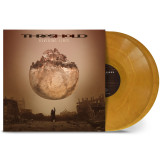
Gold Vinyl
Dividing Lines ist eine Sammlung emotional starker Denkmäler des ewigen Aufruhrs der Menschheit und mag eine düstere Platte für dunkle Zeiten sein, aber in seinem Herzen liegt eine Botschaft der Hoffnung auf bessere Zeiten.
Wenn die Zukunft dieses Planeten düster aussieht, wird zumindest der Soundtrack spektakulär sein. Dividing Lines ist ein Album voller Schatten und Licht, Verzweiflung und Hoffnung; die menschliche Erfahrung, gerendert in schillernden Breitbildfarben und mit all der Intensität und Leidenschaft aufgeführt, die Thresholds mehr als drei Jahrzehnte aktiven Dienst geprägt haben. Die britischen Könige des Prog Metal sind zurück und bereit, die Welt erneut zu erobern.
Während "Legends Of The Shires" eine in sich geschlossene Erzählung darstellte, die es THRESHOLD ermöglichte, ihrer Fantasie freien Lauf zu lassen, verzichtet "Dividing Lines" auf diesen konzeptionellen Ansatz zugunsten einer traditionelleren Gruppe von Songs, die durch ein verschwommenes, aber unverkennbares gemeinsames Thema verbunden sind.
Originally released in 1969 in a quantity so low that it was once rumored
to not even exist (seriously)
While groups like The Holy Modal Rounders were turning traditional American
folk on its head in the states throughout the 60s, The Maglory Dengluch's
approach took influence from the Scottish and Irish. Armed with banjos, tin
whistles, kazoos, and jugs they recorded the now infamous album to tape.
Officially released for the first time since the storied 99-copy, 1969 run on the long
defunct Granta label and includes exhaustive new liner notes from the band and a
download card with the entire album as well as five bonus tracks recorded during
the same session.
Espen Friberg’s solo album debut. Sun Soon is Espen Friberg´s solo album debut, consisting of eleven compositions made up of synthesizer and field recordings. The album is formed as a collage, with compositions patched on a Serge modular synth and field recordings. The patches portray the mood and wandering in mountains and forests – while at the same time meditating on the area of the Norwegian valley Hallingdal´s local history. The collage technique is something Friberg uses in both his musical and visual art. The album is meditative and exploratory, and at the same time playful and immediate. Trucks, trash cans, flowing streams, lemon soda, horses and wandering mountains, find its place between slow melodies, scratching, sinus tones and bass lines. Dissonances and harmonies come together in gliding transitions and abrupt stops, while an electronic willow flute sings and the sun is rising. The recording is done at Leveld Kunstnartun in Ål in Hallingdal, later mixed and produced in collaboration with Jenny Berger Myhre. The project captures the ambiance in the valley around Leveld, through Espen´s experiences in nature, but also from the paintings of Marianne Røthe Arnesen and Gøsta Munsterhjelm. Espen Friberg is known as an artist, designer, illustrator, cartoon creator and musician, and has received numerous awards and stipends for his work. In the beginning of 2000 he was a part of establishing the design studio Yokoland, but later started his own studio. In addition to his visual practice he has built a sound studio consisting of complex synthesizer systems and a variety of obscure electronical instruments and effect processors. He has been a central person in experimental and electronic music in Norway. He started and runs the record company Take It Easy Policy in collaboration with Emil Høgset, and has been a curator for the concert series Rett Ned. Since 2005 he has participated in a long line of sample albums under different artist names, before releasing his first EP under his own name in 2015. After this he has released six different albums with Øivind Olsen, André Borgen and Marianne Røthe Arnesen. Friberg has been active on the concert stage, both as a solo artist and in different collaborations. 1.Lazy cobweb 2.Wandering mountain 3.Gøsta Munsterhjelm 4.Foggy glow 5.Pasture patch 6.Motor sunup 7.Thirteen paintings 8.Marianne Røthe Arnesen 9.Sinuous river (part one) 10.Sinuous river (part two) 11.Orange moss bridge
Released for the first time on vinyl and remastered by Mikey Young '3-19-98' is 400 Blows at their purest form. Sonic assault galore. Formed in Los Angeles in 1997 after a few lineup changes, 400 Blows gained notoriety throughout Los Angeles and beyond with their menacing stage presence which would practically destroy everything in its path. 1998 saw the release of their first record “3.19.98” and after three years of laying siege to eardrums and soundboards everywhere, the sixteen track double record “Black Rainbow” had them touring with At the Drive In in 2001. Showing no signs of slowing down, 400 Blows had hit the ground running when they signed to the lionized roster of Gold Standard Laboratories in 2005 to release “Angel’s Trumpets and Devil’s Trombones,” which was followed by a European tour with The Locust and appearances with The Mars Volta at All Tomorrows Parties.
Hot off the heels of Official UK no.1 and soundtrack to the first summer after lockdown Afraid To Feel, skyrocketing duo LF SYSTEM satisfy fans' cravings for a powerful disco anthem with follow-up single Hungry (For Love).
Still relishing in the success of Afraid To Feel, the duo have now earned over 150M total global streams, landed Clara Amfo’s ‘Hottest Record’ on BBC Radio 1 and certified Platinum, all before being crowned the Official UK no.1 after rocketing past Beyonce, Harry Styles, Drake, George Ezra and knocking Kate Bush off the no.1 spot.
Remaining there for eight consecutive weeks as the longest running no.1 record of 2022 behind Harry Styles, Afraid To Feel is the longest running dance no.1 in chart history, matching Calvin Harris’ One Kiss and cementing the nation’s appetite for a credible dance smash.
Now set to share a slice of Scotland across the UK with their new release, LF SYSTEM will host the ultimate pattie parties with pop up raves at independent fast food chains across Edinburgh, Manchester, and London. Meanwhile, later this month LF SYSTEM will give 100 fans a chance to hear Hungry (For Love) for the first time in an exclusive live set at Metropolis Studios with a special vinyl pressing that features Afraid To Feel on the b side, marking the first time the smash hit will be available on vinyl since its release.
For Conor Larkman and Sean Finnigan of LF SYSTEM, their success follows humble beginnings in the Scottish countryside, playing football against each other as teenagers on rival teams and raving at Scotland’s best clubs. They give credit for their dance hits to home village parties, soundtracked by Motown where Sean's Dad would share classic 70s records with them to dig into. Naturally, LF SYSTEM soon dropped disco edits of their own in 2020 including Dancing Cliché, which Danny Howard discovered and played for nine weeks on his BBC R1 show, earning over 4M streams and further plays from Sarah Story and Charlie Hedges.
Since then they have captured the attention of the whole industry and have played a bucket list headline Boiler Room set in Edinburgh, marking a full circle moment for the lads who were previously club residents for its promoters FLY CLUB. Continuing a flourishing tour schedule across the summer, LF SYSTEM graced BBC Radio 1’s Dance Party Weekend in Ibiza, played b2b with Danny Howard at Amnesia and sold out their first headline show at Night Tales in London.
Hungry for their next anthem, LF SYSTEM demonstrates a soaring dexterity of two ambitious producers deep in their creative prime, now whisking up a weapon exuding vibrancy and disco-edged orchestral joy. Sampling Sandy Gang’s bubbly 70s record Hungry and featuring warm sonic textures blended with rousing strings, Hungry (For Love) is set to leave fans drooling for more.
Marking his second for Northern Electronics, Rune Bagge's new album, Grab a Star, narrates a melancholic thread through a brilliantly luminous astral-electro scene. Carving an achingly delicate relief through six tracks, there's a neon hinge to the emotive mechanisms at work, offsetting the meditative armature with sheer torque and a blustered spirit.
Moullinex makes his debut on Crosstown Rebels with a three-track EP titled A Fistful of Stars. The release highlights the multi-dynamic approach of the artist, who blends enchanting electronic melodies with club-orientated moods. Fascinated by the solar system, Moullinex's music conveys cosmic feels and radiant energy, perfect for an open-minded dancefloor.
The title track unfolds with a lugging kickdrum and lustrous chords, meandering into a celestial soundscape that tingles the senses—a poignant opener. On the flip, Atacama Skies bristles with shaker-led percussion and tribal drums before a starry synthline winds between the beats. Closing tune JFC switches the vibe with an elastic bassline and choppy rhythm, in typical Moullinex style, he penned it live in one afternoon.
Moullinex is a producer, DJ and co-founder of the label Discotexas. He runs the imprint alongside fellow Portuguese artist Xinobi. Together, the pair release nu disco, melodic techno and organic house by international producers spanning Anja Schneider, Diana Oliveira, Oma Nata and many more. Having spent his early years looking up at the star-spangled sky, Moullinex pursued a career in astronomy while developing a passion for music, science and art. Today, Moullinex combines each field into electronic music production, evoking exuberant sounds for reflective listening and club-based audiences. With a versatile aesthetic, Moullinex has remixed tracks by Cut Copy, Sebastien Tellier, Royksopp and Robyn.
“For the last decade, Calum Lee AKA Paleman has steadily built a powerful catalogue of releases showcasing his unique percussive and textural take on electronic music. In 2020 he launched a new alias ‘Fresnel Lens’ that showcases his film scoring work and more experimental, explorative personal works running alongside his continuing work as Paleman. After 2021’s self-released PLMN005, 2 Fresnel Lens albums and a short film OST, Paleman turns to Florence based Sublunar Records in 2022 for his next release and longest work to date – ‘Veiled’. The release encapsulates a considered and focused writing process informed by rhythm, momentum, abstract moods and a desire for tangible visceral sound design orbiting techno, UK experimental electronic music, and early electronics. ‘Veiled’ begins with a statement of precision, opener Bite gallops into action with polyrhythmic vactrol loops and grainy incisive modular sound design. The LP moves through moods, spaces and tempos arriving at the distilled and appropriately named ‘Mandible’ that chews into the previous tracks’ themes with a stumbling urgency and an insectoid textural palette. Veiled feels like the culmination of a decade of Paleman works, a collection of tracks and merged sonics that represents his experiments, his club focused minimal works and his more recent explorations on PLMN and as ‘Fresnel Lens’ with drone, experimental and cinematic work. ‘Veiled’ paves the way for a new decade for Paleman, condensed and focused, whilst simultaneously expressive, experimental and free.