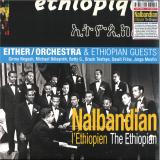
The Éthiopiques series returns! Essential archive recordings from an extremely fruitful period in Ethiopian music.
Before “Swinging Addis” took over the world, there was Moussié Nerses Nalbandian — the Armenian-born composer who shaped modern Ethiopian music. Mentor, arranger, and pioneer, he laid the foundations of Ethio-jazz.
This Éthiopiques volume revives his forgotten legacy, recorded live by Either/ Orchestra First issue ever with new exclusive photos and in depth liner 8-page insert.
“Ethiopian jazzmen are the best musicians that we have seen so far in Africa.
They really are promising handlers of jazz instruments.”
Wilbur De Paris
(1959, after a concert in Addis Ababa)
አዲስ፡ዘመን። *Addis zèmèn* **A new era.**
The time is the mid-1950s and early 1960s, just before "Swinging Addis" bloomed – or rather boomed – onto the scene. Brass instruments are still dominant, but the advent of the electric guitar, and the very first electronic organs, are just around the corner. Rock’n'Roll, R’n’B, Soul and the Twist have not yet barged their way in. Addis Ababa is steeped in the big band atmosphere of the post-war era, with Glenn Miller's *In the* *Mood* as its world-wide theme song, neck and neck with the Latin craze that was in vogue at the same period. Life has become enjoyable once again, with the return of peace after the terrible Italian Fascist invasion of Ethiopia (1935-1941). The redeployment of modern music is part and parcel of the postwar reconstruction. *Addis zèmèn* – a new era – is the watchword of the postwar period, just as it was all across war-torn Europe.
The generation who were the young parents of baby boomers** were the first to enjoy this musical renaissance, before the baby boomers themselves took over and forever super-charged the soundtrack of the final days of imperial reign. Music is Ethiopia's most popular art form, and very often serves as the best barometer for the upsurge of energy that is critical for reconstruction. Whether it be jazz in Saint-Germain-des-Prés or the *zazous* who revolutionised both jazz and French *chanson* after the *Libération*, be it Madrid's post-Franco Movida, or Dada, the Surrealists and *les années folles* that followed World War I, the periods just after mourning and hardship always give rise to brighter and more tuneful tomorrows. Addis Ababa, as the country's capital, and the epicentre of change, was no exception to this vital rule.
**Two generations of Nalbandian musicians**
Nersès Nalbandian belonged to a family of Armenian exiles, who had moved to Ethiopia in the mid-1920s. The uncle Kevork arrived along with the fabled "*Arba Lidjotch*", the** "*40 Kids*", young Armenian orphans and musicians that the Ras Tafari had recruited when he visited Jerusalem in 1924, intending to turn their brass band into the official imperial band. If Kevork Nalbandian was the one who first opened the way of modernism, pushing innovation so far as to invent musical theatre, it was his nephew Nersès who would go on to become, from the 1940s and until his death in 1977, a pivotal figure of modern Ethiopian music and of the heights it. Going all the way back to the 1950s. Nothing less. And it is Nersès who is largely to thank for the brassy colours that so greatly contributed to the international renown of Ethiopian groove. While the younger generations today venture timidly into the genealogy of their country's modern music, often losing their way amidst a distinctly xenophobic historiographical complacency, many survivors of the imperial period are still around to bear witness and pay tribute to the essential role that "Moussié Nersès" played in the rise of Abyssinia's musical modernity.
Given the year of his birth (15 March 1915), no one knows for sure if Nersès Nalbandian was born in Aintab, today Gaziantep (Turkiye/former Ottoman Empire) or on the other side of the border in Alep, Syria... What is certain is that his family, like the entire Armenian community, was amongst the victims of the genocide perpetrated by the Turks. Alep, the place of safety – today in ruins.
Before Nersès then, there was uncle Kevork (1887-1963). For a quarter of a century, he was a whirlwind of activity in music teaching and theatrical innovation. *Guèbrè Mariam le Gondaré* (የጎንደሬ ገብረ ማርያም አጥቶ ማግኘት, 1926 EC=1934) is his most famous creation. This play included "ten Ethiopian songs" — a totally innovative approach. According to his autobiographical notes, preserved by the Nalbandian family, Kevork indicates that he composed some 50 such pieces over the course of his career. This shows just how much he understood, very early on, the critical importance of song as Ethiopia's crowning artistic form. Indeed, for Ethiopian listeners, the most important thing is the lyrics, with all their multifarious mischief, far more than a strong melody, sophisticated arrangements or even an exceptional voice. (This is also why Ethiopians by and large, and beginning with the artists and producers themselves, believed for a long time — and wrongly — that their music could not possibly be exported, and could never win over audiences abroad, who did not speak the country's languages).
Last but not least, one of Kevork's major contributions remains composing Ethiopia's first national anthem – with lyrics by Yoftahé Negussié.
Nersès Nalbandian moved to Ethiopia at the end of the 1930s, at the behest of his ground-breaking uncle. Proficient in many instruments (pretty much everything but the drums), conductor, choir director, composer, arranger, adapter, creator, piano tuner, purveyor of rented pianos,... he was above all an energetic and influential teacher. From 1946 onwards, thanks to Kevork's connexion, Nersès was appointed musical director of the Addis Ababa Municipality Band. In just a few years, Nersès transformed it into the first truly modern ensemble, thanks to the quality of his teaching, his choice of repertoire, and the sophistication of his arrangements. It was this group that would go on to become the orchestra of the Haile Selassie Theatre shortly after its inauguration in 1955, which was a major celebration of the Emperor's jubilee, marking the 25th anniversary of his on-again-off-again reign.
At some point or other in his long career, Nersès Nalbandian had a hand in the creation of just about every institutional band (Municipality Band, Police Orchestra, Imperial Bodyguard Band, Army Band, Yared Music School…), but it was with the Haile Selassie Theatre – today the National Theatre – that his abilities were most on display, up until his death in 1977. To this must be added the development of choral singing in Ethiopia, hitherto unknown, and a sort of secret garden dedicated to the memory of Armenian sacred music, and brought together in two thick, unpublished volumes. Shortly before his death (November 13, 1977), he was appointed to lead the impressive Ethiopian delegation at Festac in Lagos, Nigeria (January-February 1977).
His status as a stateless foreigner regularly excluded him from the most senior positions, in spite of the respect he commanded (and commands to this day) from the musicians of his era. Naturally gifted and largely self-taught, Nerses was tirelessly curious about new musical developments, drawing inspiration from the very first imported records, and especially from listening intensely to the musical programmes broadcast over short-wave radio – BBC *First*. A prolific composer and arranger, he was constantly mindful of formalising and integrating Ethiopian parameters (specific “musical modes”, pentatonic scale, and the dominance of ternary rhythms) into his “modernisation” of the musical culture, rather than trying to over-westernise it. It even seems very probable that *Moussié* Nerses made a decisive contribution to the development of tighter music-teaching methods, in order to revitalise musical education during this period of prodigious cultural ferment. Flying in the face of all the historiographical and musicological evidence, it is taken as sacrosanct dogma that the four musical modes or chords officially recognised today, the *qǝñǝt* or *qiñit* (ቅኝት), are every bit as millennial as Ethiopia itself. It would appear however that some streamlining of these chords actually took place in around 1960. It was only from this time onward that music teaching was structured around these four fundamental musical modes and chords: *Ambassel*, *Bati*, *Tezeta* and *Antchi Hoyé*. A historical and musical “details” that is, apparently, difficult to swallow, especially if that should honour a *foreigner*. Modern Ethiopian music has Nersès to thank for many of its standards and, to this day, it is not unusual for the National Radio to broadcast thunderous oldies that bear unmistakable traces of his outrageously groovy touch.
quête:page 119
DJ Nobu: A Japanese artist who was inspired by Jeff Mill's performance at Liquid Room and has become a world widely known DJ.
Masakazu Hiroishi: A project manager of "Live at Liquid Room" at Sony Music Japan n 1995
Images are taken from the video shot in 1995: the quality is rough per the artist's intention.
212 pages, Softcover, A4 (210x300mm) x 17mm spine, 950gr, English
Visual Documentary: Jeff Mills at Liquid Room, Tokyo filmed on Saturday, October 28, 1995 (135pages)
Interviews: Jeff Mills / DJ Nobu / Masakazu Hiroishi (60pages)
- A1: Growing On Me (Feat Jeremy Page)
- A2: Ready (Feat Jeremy Page)
- A3: Under Your Window (Feat Jeremy Page)
- A4: Tired Of Missing You (Feat Jeremy Page)
- A5: Tomorrow (Feat Jeremy Page)
- A6: Caught Up (Feat Jeremy Page)
- B1: Tell Me Why, You Again (Feat Jeremy Page &Amp; Camille Trust)
- B2: Look At You (Feat Jeremy Page)
- B3: Sidelines (Feat Jeremy Page)
- B4: Sure (Feat Jeremy Page)
- B5: A Long Short Story (Feat Jeremy Page)
Burgos and Page's sophomore album, A Long Short Story, is a conceptual journey through the rise and fall of a fleeting yet profound love—one that blossomed, thrived, and withered within the span of four seasons. Each track unfolds like a page torn from Johnny's mind, capturing every stage of the relationship's evolution in raw, chronological detail. From the euphoric highs of newfound passion to the crushing weight of unreciprocated love and the bittersweet process of healing, A Long Short Story weaves a sonic tapestry of grand emotions, immersing listeners in the beauty, pain, and impermanence of love.
The London based singer and keyboard player Dominic Appleton, known since the early eighties for his musical activity in the post punk/dream pop band Breathless, and perhaps even more for his vocal contributions to the legendary This Mortal Coil project on 4AD, joins forces with the Milanese producer and sound artist Matteo Uggeri, active from 1993 behind several projects spanning from industrial to post-rock and ambient soundscapes, known for collaborating with artists such as Maurizio Bianchi, Nocturnal Emissions, Controlled Bleeding, De Fabriek, OvO, Giuseppe Ielasi, Lau Nau, Giulio Aldinucci and many more.
Starlight Assembly’s first album, “Starlight and Still Air”, was released in 2021 by the American label Beacon Sound. In Italy the album received amazing reviews in all four of the main music monthlies. It was album of the month in Blow Up and Rockerilla ran a four page interview. Several articles and reviews were made, including a special issue on Foxy Digitalis by Brad Rose.
A remix project was launched afterwards, including old and new friends and fans of the two S.A. members: among the others, Robin Rimbaud/Scanner, Auscultation, Gabriel Saloman (Yellow Swans), Patricia Wolf, Insides, Julia Sabra with Fadi Tabbal, Sawako and Pan American.
The new album, “There Will Be Fireworks”, continues the duo’s complex cross-genres approach to music by melding Uggeri’s intricate musical textures with Appleton’s sweet and melancholic melodies, in this case even supported by the haunting guitars of Gary Mundy (in Breathless as well but also in Ramleh and Broken Flag’s label manager). The tracks on this album are more songlike, the journey more cohesive, with the artists playing more to one another’s strengths. The mastering will be done by Martin Bowes/Attrition, making it even more powerful and clean for its publication on Silentes (ex-Amplexus), historic italian label well known for releases by Rod Modell, Gigi Masin, Dirk Serries, Eraldo Bernocchi, Merzbow, Fabio Orsi and the latest releases by AUBE and much more.
1) WAIT FOR THE WORLD
2) TIME
3) THIS DESERT
4) ALL THE LOVE THE STANDS BESIDE US
5) MOTH TO THE FLAME
6) FRICTION
7) SYMPHONY IN MELANCHOLY
8) THE NOT DEAD
9) RELIEF
+
10) THERE WILL BE FIREWORKS (ghost track)
B&W Photobook collection about 1998/2001.
Free parties in Paris (mainly) and Groningen, and some others...
meanwhile, Livia Saavedra, the photographer, initiated many ways... Women rights, refugees... Making no noise... Doin' it.
The idea was not to make a book when she took these argentic pictures.
This project is a gathering cleaner to her.
And for some of us it's a good way to remember. Without a word needed...
----------------------------------------------
Enjoy those 110 pages and enjoy a story that cannot be written... and photographied !
24cmx24cm / 110 Page
Niveau Zero Edition
Preface by Lionel Pourtau.
Our Autumn/Winter ‘25/’26 issue includes huge deep dive cover features on 90s legends The KLF, Belgium’s most famous rock/rave DJ/producer duo/band SOULWAX and the relentlessly creative HAAi.
Plus 1-800 GIRLS, WAH WAH 45s, Ghost Assembly, Electroclash, Daniel Vangarde, Happy Mondays, Japanese Ambient/Environmental Music, Wu-Tang Clan, Saint Etienne, Carl Craig, Colleen Murphy, Basement Jaxx, Crooked Man and Luke Una, Jesus Loves The Acid, Shanti Celeste, Arthur Baker and much more.
204 pages (yes we’ve increased the pagination again) of quality music journalism by the world’s best music writers plus beautiful photography and design in a glossy print magazine.
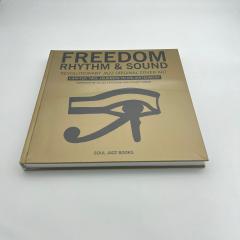
Freedom, Rhythm and Sound showcases the stunning graphic works of independently published jazz record cover designs in the 1960s, 70s, 80s and beyond, from radical jazz musicians such as Sun Ra, John Coltrane, Pharoah Sanders, The Art Ensemble of Chicago and others. This second Freedom, Rhythm and Sound book is a new ‘chapter’, featuring hundreds more unique, rare and beautiful jazz record cover designs.
This book documents the continued development in jazz as African-American artists set out on new journeys to enlightenment, heading out into Europe at the end of the 1960s. The artwork of these (often self-produced) record cover designs during this era reflected their radical agenda, spiritual awareness and singular search for musical and personal freedoms. From raw, DIY aesthetics to lyrical and poetic illustrations, sometimes containing futuristic worlds and ancient landscapes, the designs are always bold, strikingly graphic, and most importantly capture the spirit of the music, giving them a unique beauty. The book also includes sections on African-American poets and writers, Civil Rights and Black Power Movement leaders (Martin Luther King, Malcolm X) and early musical pioneers (Yusef Lateef, Max Roach, Art Blakey and others), all of which helped influence and shape the world of radical and spiritual jazz from the 1960s and onwards to its rebirth today. Since the 1980s, Gilles Peterson has been a pivotal figure in the club scene, renowned for his genre-defying approach to music with jazz at its core. As one of the UK’s most iconic DJs, he has spent over 40 years shaping music trends as a radio presenter, club DJ, producer, and festival curator.
He hosts a flagship show on BBC Radio 6 Music and, in 2016, launched Worldwide FM. He is founder of the Worldwide Festival in the South of France and We Out Here festival in the UK. He runs the label Brownswood Recordings, dedicated to discovering and promoting new talent and bringing fresh voices to the global stage. Stuart Baker founded Soul Jazz Records in 1992. For more than 30 years the record company has released over 500 records covering a genre-defying array of non-mainstream musical worlds – Jazz, Reggae, Punk, Latin, Brazilian, Disco, African, Gospel, Acid House and more.
In 2017, part of Stuart Baker’s jazz record collection (much of which appears in Freedom, Rhythm and Sound) was featured and displayed as part of the Soul of a Nation: Art in the Age of Black Power exhibition at Tate Modern in London, and subsequently at The Broad in Los Angeles (2019) and Brooklyn Museum (2019). Soul Jazz Books launched in 2007, a similarly diverse and critically acclaimed publishing house with graphic art, culture and photography titles that include ‘Voguing and The House Ballroom Scene of New York’, ‘Dancehall – The Rise of Jamaican Dancehall Culture’, ‘Yo! The Early Days of Hip-Hop’, ‘Freedom, Rhythm and Sound – Revolutionary Jazz Cover Art 1965-83’, ‘Punk 45 – The Singles Cover Art of Punk 1976-80’ and others. Reviews of the first Freedom, Rhythm and Sound: “A remarkable book” The New Yorker “If there can be such a thing as a revolutionary coffee table book, Freedom Rhythm & Sound is it―a chance to wallow in the Afrocentric visual language of the non-mainstream black jazz vinyl of this extraordinary fertile and creative period.” Eye “Like the uncompromising music they represent, all the covers broadcast a sense of bold, brazen ideology” Pitchfork “A definitive account of a complex passage of cultural upheaval.” The Independent “For decades, no one was sure how to refer to this extraordinary music.
Calling it ‘fire music’ does justice to its incandescent spirit, still burning from the pages of a book that preserves the memory of a special time.” The Guardian “These sleeves are the original independent legacy to America’s premier art form – Jazz. In terms of African-American cultural expression they are part of a long line of thought that was charged in the 1960s by John Coltrane, Martin Luther King, Ornette Coleman, Malcolm X and others” The Wire “A hefty compendium of radical jazz cover art” Mojo
- 11: Symphonie Égyptienne
- 12: Dhikr / Requiem / Golgotha
- 01: Ikhtitaf Fi Assaraya – &Quot; L&Apos;Enlèvement Au Sérail &Quot; (Mozart / Traditionnel)
- 02: Double Quatuor En Fa K. 496 – Pour Clarinette, Violon, Alto, Violoncelle, Arghul, Rababa, Kawala, Tabla, Doff Et Sagat (Mozart)
- 03: Lamma Bada Yatathanna / Symphonie N°40 (Mozart / Traditionnel)
- 04: Mahdiyat – &Quot; Berceuses &Quot; (Mozart / Traditionnel)
- 05: Concerto Pour Oud Et Piano N°23 (Mozart)
- 06: Hamilu Lhawa Tahibou / Aria De Papageno N°20 (Mozart)
- 07: Yaman Hawa / Thamos Roi D&Apos;Égypte (Mozart / Traditionnel)
- 08: Mawwall (Traditionnel)
- 09: Double Quatuor En Mi Bémol K. 374 – Pour Clarinette, Violon, Alto, Violoncelle, Arghul, Rababa, Kawala, Tabla, Doff Et Sagat (Mozart)
- 10: Ouazat Al Kahira – &Quot; L&Apos;Oie Du Caire &Quot;
Halfway between the West and the East, Mozart l'Égyptien was born from the idea of producer Hugues de Courson and Ahmed El Magghrabi to create a dialogue between Mozart's work and the richness of Egyptian music. Released in 1997, this album became an essential reference in the history of musical fusion, enjoying worldwide success. It is now available for the first time on double vinyl, accompanied by a 4-page bilingual booklet (English/French) recounting the genesis and history of this unique project.
AVAILABLE FOR THE FIRST TIME ON VINYL ● 4-PAGE BOOKLETAVAILABLE FOR THE FIRST TIME ON VINYL ● 4-PAGE BOOKLETAVAILABLE FOR THE FIRST TIME ON VINYL ● 4-PAGE BOOKLET
AVAILABLE FOR THE FIRST TIME ON VINYL ● 4-PAGE BOOKLET
j 10. Ouazat al Kahira – " L'Oie du Caire " [Mozart]
[k] 11. Symphonie égyptienne [Mozart]
[Mozart / Traditionnel]
- 05: Mabo Maboe (Traditionnel) + Gigue De La Quatrième Suite En Mi Bémol Majeur Pour Violoncelle
- 06: Bombé (Extrait) + Ruht Wohl, Ihr Heiligen Gebeine
- 08: Mamoudo Na Sakka Baya Boudouma Ncombi (Traditionnel) + Prélude N°14 Bwv 883
- 12: Okoukoué (Traditionnel) + Cantate 147
- 01: Cantate 147 (Extrait)
- 02: Sankanda (Traditionnel) + Lasset Uns Den Nicht Zerteilen
- 03: Mayingo (Traditionnel) + Fugue Sur Mayingo
- 04: Herr, Unser Herrscher (Passion Selon St. Jean, Chorus N°1)
- 07: Pepa Nzac Gnon Ma (Traditionnel) + Prélude De La Partita Pour Violon N°3
- 09: Agnus Dei (Messe En Si, Bwv 232)
- 10: Ikokou (Traditionnel)
- 11: Inongo (Traditionnel) + Invention À Trois Voix N°3 En Ré Majeur Bwv 789
- 13: Was Mir Behagt, Ist Nur Die Muntre Jagd (Chorus Dit &Quot; La Chasse &Quot;)
- 14: Cantate 7, Jésus Que Ma Joie Demeure
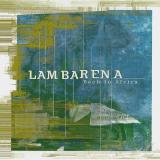
Combining Bach with traditional Gabonese music, Lambarena pays tribute to Albert Schweitzer, a doctor and musician who settled in Lambaréné in 1913. Conceived by Hughes de Courson and Pierre Akendengué, this extraordinary project brings together more than 250 artists and blends organ, baroque choirs, and African percussion in a musical celebration of rare intensity. A true timeless classic, it is now available for the first time on double vinyl, accompanied by a 4-page bilingual booklet (English/French) recounting the history of this unique album.
b 02: Sankanda (traditionnel) + Lasset uns den nicht zerteilen [Passion selon St. Jean]
[e] 05: Mabo Maboe (traditionnel) + Gigue de la quatrième suite en mi bémol majeur pour violoncelle [extrait]
[f] 06: Bombé (extrait) + Ruht wohl, ihr heiligen Gebeine [Passion selon St. Jean, mouv. 62]
[h] 08: Mamoudo Na Sakka Baya Boudouma Ncombi (traditionnel) + Prélude n°14 BWV 883 [extrait]
[l] 12: Okoukoué (traditionnel) + Cantate 147 [extraits]
- Feather Treasure
- Gentle Chaperone
- Dewayne
- I Still Hear Lorelei
- Winter's Empty Pages
- Dead End Pools
- Oh, My Sitter
- Forever, I've Been Being Born
- My Sweet Hereafter
- A New Medium
,Forever, I've Been Born" ist das erste neue Album von Jesse Sykes & The Sweet Hereafter seit ,Marble Son" aus dem Jahr 2011 und das fünfte Album der Band seit 2002. Es umfasst eine Reihe meisterhafter Folk-Rock-Songs, emotionale Lieder, die von offenem Herzen stammen und in ihrer Helligkeit dennoch tief ätherisch und melancholisch sind. Das Album, das zehn Jahre lang entstanden ist, dreht sich um die Kraft von Jesses unglaublicher Stimme, die noch nie so schön, bewegend und eindringlich intim war. Der E-Gitarrist Phil Wandscher umrahmt diese Songs meisterhaft mit klassischen und gebrochenen Tönen, einem Duett aus Verletzlichkeit und Stärke, das häufig am Rande des Abgrunds steht.
Coach Party return with their explosive second studio album, ‘Caramel’ via Chess Club Records.
Coach Party are poised to make their mark on 2025 and beyond with their new album ‘Caramel’, it is a melody packed, infectious record born from the shared experiences and unity of the bands four members: Jess Eastwood, Steph Norris, Guy Page and Joe Perry. Produced by the band’s own Guy Page, it channels the introspection and bite of bands like Hole, Sprints, Turnstile, and Amyl and the Sniffers. Clocking in at 33 minutes, it’s a sharp, melody-driven record that expands on the themes of their 2023 debut ‘Killjoy’ — heartbreak, identity, and finding your voice.
The band have built a reputation for intense, sweat-soaked live shows, touring with the likes of Queens of the Stone Age, Wet Leg and Royal Blood, and making festival appearances at Glastonbury and Rock en Seine. With ‘Caramel’, they push their sound further than ever, hook-heavy, emotionally honest, and made for the big stage.
- A1: Glory Boys (3.28)
- A2: Shake And Shout (3.05)
- A3: Going To A Go Go (2.52)
- A4: Get Ready (3.21)
- A5: Don’t Look Down (2.39)
- A6: One Way World (3.24)
- A7: Only Madmen Laugh (3.44)
- B1: One Day (In Your Life) (4.35)
- B2: New Dance (4.53)
- B3: Life’s A Movie Too (3.20)
- B4: The Sound Of Confusion (3.04)
- B5: Three Wise Monkeys (3.38)
- C1: Soho Strut (4.05)
- C2: Lost In The Night (3.33)
- C3: Somewhere In The City (2.41)
- C4: I Could Be You (If I Wanted To) (2.53)
- C5: Dance Master (3.35)
- C6: Let Your Heart Dance (2.44)
- D1: My World (4.30)
- D2: I’m Not Free (But I’m Cheap) (9.25)
- D3: Time For Action (2.34)
- D4: Big Beat (2.56)
In April 2003, Secret Affair returned to the stage at London’s legendary Scala for a show that captured everything fans love about the band: sharp songs, soulful playing, and the unmistakable fire of the Mod revival spirit.
Live at the Scala brings the energy of that night back to life, presented in stunning audio across double vinyl & 2CD. From the driving beat of Time for Action to the passion of Let Your Heart Dance and the punch of My World, the Scala setlist is a powerful reminder of why Secret Affair remain one of the defining bands of their era.
RECORDED AT THE SCALA, LONDON, 18th JUNE 2003 and released on vinyl for the first time.
The Original Secret Affair Line-up
Ian Page - Vocals, Trumpet
David Cairns - Guitar, Backing Vocals
Dennis Smith - Bass
David Winthrop - Drums
Paul Bultitude – Saxophone
For his last solo record ‘Through a Room’, Bill Nace shifted his usual saturated guitar sound and added tapes, hurdy gurdy, doughnut pipe, bird calls and the mysterious Japanese taishōgoto. Setting up for the final night of his three day residency at OTO with only the taishōgoto soundchecked, Nace hoped that Parker would arrive with his small soprano as its opposite. “I’ve been interested in state change, you know, playing until there’s a shift in time.” Known for his development of multiphonics to produce a constantly shifting pattern, Evan Parker has evolved an instantly recognizable sound - his work the soprano most distinct. Happily, it was the soprano Evan brought with him and as soon as the two start to play they entwine - taking off in a double helix of keys and reed primed for endless reconfiguration. Space warps under the velocity of playing, the pitch rising unrelentingly. It felt like unending lift off in the room, sheer energy until the last note makes remember your feet have been on the floor the whole time. Total time bending shredding.
–
"They had never played together before. They had never even met each other before this springtime 2024 concert at London’s Café Oto.
Evan Parker, circular breathing maestro of the saxophone, a legend in the universe that is Free Improvisation since the late 1960s and Bill Nace, one of the most intriguing experimental “noise” guitarists of the 1990s/2000s underground scene.
For those of us who have been enamored by the live and documented work of both these gents, this Café Oto duo was a must-hear event. It could have gone anywhere musically and that would have been totally fine. Particularly with Evan having a history of being thrown into a variety of challenging collaborations throughout his career, employing the learned elegance of trust in his own sensitivity to listening, responding, leading, following, sparring, intertwining, dialoguing, creating in the instant and, essentially, dignifying the non-hierarchical grace of chance.
The aesthetics of socialist consideration in Evan Parker’s playing, in his community of expanded and personal technique, for a younger player such as Bill Nace, strikes an exemplary model. This notion of respect would be entirely the reason Nace, when offered a residency at the most critical “new music” room in England, would request to play in duo with Parker.
Bill Nace came to prominence mostly during the apex of experimental music activity in and around Western Massachusetts in the early days of the aughts, with a focus on visual art and free improvisation guitar action. He could be found in the daytime hours, his head hanging down over a notepad, penning fine-tuned illustrations and abstract line drawings, while in the evenings he’d be attending any number of basement noise gigs, many of which he’d be participating in. His guitar style came across as being informed as much as by the physicality of his writing utensils in friction to the page as it was to his hearing and redefining of radical recordings ranging anywhere from the Black Unity Group to Black Flag.
Utilizing various metal files and other small cylindrical objects Bill would allow his guitar and amplifier to be in tandem with the improvisatory movements of his body as the instrument balanced, intentionally and, at times, precariously, upon his lap. The performances came across thrilling and daring and they would be mostly in the context of venues nothing more than a low-ceilinged damp and dank New England basement, a clutch of people hanging onto rusty pipes or sitting up on dilapidated washer/dryer machines, the shards of Bill’s “file guitar” sounds ringing out like the most alive music on Earth.
By the time Bill reached Café Oto in early 2024 he had relocated to Philadelphia all the while releasing a succession of collaborative LPs on his Open Mouth label to present his developing progression of solo and collaborative work. He also would find himself considerably engaged with playing the electric taishōgoto, a keyboard-activated string instrument from Japan which can exist as a one, two, four, five, or six string oblong sound object. Bill’s approach to the taishōgoto would not be too unlike his approach to the traditional electric guitar, though no outboard implements such as files, sticks, and rocks are utilized. The similarity would lie wholly with Bill’s full immersion of high velocity action-playing where, with the taishōgoto, an electric drone beauty occurs. The flurry of sonics and resultant harmonics emanating from the amplifier (which Bill opts to dial into with borderline loud-as fuck volume settings) furthers the meta-mantra properties of the instrument in an astounding display of drone dynamism.
This sound world of Bill’s two-stringed taishōgoto on this Café Oto night worked beautifully with Evan Parker’s improvisatory saxophone conceptions. The duology achieved instant lift off at ground zero only to find it’s eventual finale as if it were organically ordained. Time seemingly morphed from its ancient human construct of control, rendered inconsequential to the torrential transcendence of the room wildly activated by the magic resonance of the multi-directional pan-spatial sonance of the music as if it were some beatific blessing. It was one of those nights where art as a liberating force of spirit gifted the listeners with an offering of exaltation and joy. It was entirely mystical and mind blowing. A night of Total Music."
Thurston Moore, London, 2025
- Nobody You'd Know
- Amazing Things
- Teenage Guitar
- Something Beautiful
- Clean White Page
- Do Whatever You Want
- Hearts Been Broken Before
- All The Toys
- It's Gotten Quiet Round Here
- Somebody Good Thinks I'm Good
Amazing Things is an album about death which isn't morose, slow, or quiet. A year ago Darren lost a friend to cancer. Amazing Things is an album about death which isn't morose, slow, or quiet. Instead, it is packed with joyful, melodic guitars and some of Darren's prettiest tunes. It is sometimes very sad, but also heartfelt, loving, and rewarding. Darren recorded the album almost entirely solo and this time he has dug deep into his primary instrument, the electric guitar, creating a sound that is rich in tone and texture. Darren Hayman is a British songwriter best known for his work with late 90s band Hefner, but has since made more than 20 albums dealing with astronauts, the English Civil War, William Morris, Lidos, and Thankful Villages. He lives in South London with his dog.
- 01: Grotesque (Chapter 2)
- 02: Duo + 1
- 03: Night Out (Theme From Early Snow In Munich)
- 04: Paraphrase Sw (Theme For Stevie Wonder)
- 05: Feat. Zdenka Kovacicek - Peep Show (Theme From Early Snow In Munich)
- 06: Love Experiment (End Credits From Whatever You Can Spare)
- 07: Video Games (Theme From Early Snow In Munich)
- 08: Whatever You Can Spare (Orchestral Version)
- 09: Early Snow In Munich (Opening Credits)
- 10: The Forrest Date (Theme From Whatever You Can Spare)
- 11: The Graduates (Theme From The Graduates)
- 12: Oberhausen (Theme From Way To Your Neighbour)
- 13: Winter's Wish (Theme From Winter's Wish)
A new release from Fox & His Friends Records, Chapters (Screen & Stage Dancefloor Jazz from Yugoslavia 1971-1984) by Ozren Depolo brings to light a trove of previously unreleased music spanning more than a decade of his work in film, theater and television. This gatefold audiophile 180g LP, including a 12-page booklet with archival photos and detailed liner notes, offers for the first time a full album composed exclusively of Depolo's own authorship, drawn from master tapes held in private and institutional archives. Mastering and cutting was done by Frank Merritt from The Carvery Ozren Depolo rarely pursued opportunities to record original material, in part due to a general lack of interest among local publishers in jazz discography. Yet he was more than a gifted composer: he was also an accomplished saxophonist, clarinettist, flutist, pianist, arranger and occasionally, a jazz journalist who contributed articles to specialized programs on Radio Zagreb. Depolo also played in international big bands alongside jazz greats such as Clark Terry, Oliver Nelson and Gerry Mulligan, as well as in formations led by Bosko Petrovic, including the Nonconvertible All Stars and the B.P. Convention Big Band. He was a member of ensembles including The Alfi Kabiljo Orchestra, The Dragutin Diklic Ensemble, Jugoslovenska Pop Selekcija, The Stipica Kalogjera Octet, Vaclav Zahradnik & His East All Stars Band and the Zagreb Jazz Quintet. As both composer and arranger, he produced a significant body of work for large jazz orchestras and small ensembles. He was deeply engaged in jazz improvisation and avant-garde classical music, recording numerous chamber pieces for saxophone. A long-standing member of Acezantez, Zagreb's renowned contemporary music ensemble, he also collaborated with international figures such as Ted Curson, John Lewis, Johnny Griffin, Art Farmer, Leo Wright, Art Taylor, Slide Hampton and Lucky Thompson. This selection also includes his collaboration with Igor Savin and jazz vocalist Zdenka Kovacicek who were played on Karl Lagerfeld's fashion shows. The release demonstrates how Depolo was able to shift fluidly between idioms: from driving big-band passages to intimate chamber-like arrangements, from funk-tinged motifs to lyrical, impressionistic soundscapes. This stylistic breadth, always anchored in his deep jazz and funk sensibility, gave his music an adaptability perfectly suited to the hybrid world of stage and screen. The LP highlights that versatility while also presenting the coherence of his artistic voice, one that had gone unrecognized precisely because it was dispersed across so many contexts.
Wewantsounds is delighted to announce the release of Akiko Yano"s cult 1979 album 7 O"Clock in Tokyo, recorded live in September 1978 at a pivotal moment in Japanese music history, just as Yellow Magic Orchestra was about to take the world by storm (Yano would tour the world with the group in 1979). Featuring a very funky Yano performance accompanied by Haruomi Hosono, Ryuichi Sakamoto and Yukihiro Takahashi, plus Tatsuro Yamashita and Minako Yoshida, the album is presented outside Japan for the first time, with remastered audio, original artwork, and a four-page insert including new liner notes by Paul Bowler.
- 1: I See Your Spirit
- 2: Queen Mary
- 3: Silhouette
- 4: Elegant Illusion
- 5: The War Within
- 6: Bury The Ashes
- 7: Corridor
- 8: Gloria
- 9: Same Page
- 10: Paris
- Stand In Line
- Find My Way
- Word Up!
- Don't Say It's Over
- The Only One
- Something Worthwhile
- Seems Like I'm Losing You
- Crying Over You
- One Reason
- Vicious Heart
Fresh from the success of 2024"s "Hombres", "Gun" continue their comeback with this revitalised edition of Swagger. Originally released in 1994, the album featured their hit single "Word Up", a cover of the Cameo"s pop song that they transformed into their own tongue-in-cheek hard rock banger which charted all over Europe and went to the top 10 in the UK. The Deluxe Double CD package contains a 24 page booklet with brand new liner notes written by Joel McIver featuring an interview with Dante (vocals) and Giuliani "Jools" Gizzi (guitar), plus archive photos from the original singles. The Green Vinyl version features renewed and replicated cover art, and contains an 8 page insert with brand new liner notes written by Joel McIver featuring an interview with Dante (vocals) and Giuliani "Jools" Gizzi (guitar), plus archive photos from the original singles.
- You're So Cool
- All In A Day's Work
- Guerilla Warfare
- Joyful Sounds
- Above The Gun
- 4: Hours
- In A Metal Box
- No Emotion
- Inhibitions Run Wild
- Looking For The Hotel 10 Shoot It Down
- 12: Xu
- Saunty Sly Chic
- Why Me
- No Time
- Everything
- Won't Have To See You
- Inja
- Every Five Minutes
- A Cappella
- Beyond Explanation
- Learning Disco
- Echo Loop
- He Dreamed About The Corner
- Don't Turn Back
- America Today
- Don't Put Me In A Guillotine
- Kill The Unborn
Due to demand (and that we zero copies of their vinyl studio album left, and only a few of their live vinyl album), we've compiled all the tracks from both (and more - see below), we're reissuing them both on a 2xCD with a 24-page booklet. Before Suicide had really made it to the West Coast, Grey Factor were working in a similar realm - early post-punk, a little before punk (as such) and proto-industrial music. Here's what the band has to say: The future is tricky - and while we may have been left behind, this is our attempt to catch up with it. We offer a double CD capturing everything we've ever recorded. The Future Arrives Without You includes the previously released vinyl LPs - 1979-1980 A.D. Complete Studio Recordings and A Peak In The Signal: Live 1979-1980_plus a few surprises, including our first new studio tracks in 45 years. Both songs are covers, Wire's 12XU and Campag Velocet's Sauntry Sly Chic, and nine more lost studio tracks. 12XU was a jolt of pure adrenaline_two minutes of perfection from one of the era's best bands, a huge influence on us. Sauntry Sly Chic, from a group few remember but we never forgot, had one of the most infectious grooves we had ever heard. We also loved their lead singer's live getup: a cycling helmet and fencing gear. Perfection. These tracks inspired us to head back into the studio after four decades away. On A Peak In The Signal, we've added nine unreleased pieces we call the In-Betweens. Created out of necessity in 1979-1980, pre-recorded and played between our live performances, these sonic interludes filled the dead space while we reprogrammed our temperamental analogue synths between songs. Absurd, experimental, audience favourites.
Compiled of interviews, features, opinion pieces and contributions from
across the local independent Brighton scene, this magazine offers an
accessible new perspective into the incredible music and art present in the
city
Featuring local staples such as: Bones Ate Arfa, Cordelia Gartside, Trip Westerns,
Hutch, Big Long Sun and many more; as well as containing unique insight into the
multidisciplinary art scene inside the city through pieces with local promoters, poets,
record labels and venues. The magazine also contains a digital download for a
compilation of Brighton indie music that features in the back pages.