Songs about the unity of Sudan, peace between Muslims and Christians and the fate of war orphans, backed by grooves equally taking influence from Arabic sounds, American funk as well as neighboring Ethiopia.
Kamal Keila was among the first artist we met in Sudan during our two trips to Khartoum and Omdurman last year. He is one of the key figures of the Sudanese jazz scene that was a vital part of the musical culture in Sudan from the mid 1960s until the islamist revolution in the late 1980s. When we meet Kamal he luckily presented us with two mold covered studio reels.
Each tape included five tracks. One with English lyrics and another with Arabic ones. Musically you can hear the influence of neighboring Ethiopia much more than on other Sudanese recordings of the time, as well as references to Fela and American funk and soul. His lyrics, at least when he sings in English which gave him more freedom from censorship, are very political. A brave statement in the political climate of Sudan of the last decades, preaching for the unity of Sudan, peace between Muslims and Christians and singing the blues about the fate of war orphans called "Shmasha".
A note inside one of the boxes specified the track titles, durations and the fact that the sessions were recorded on the 12th of august 1992. Both sessions stand as a hearable testament how Kamal Keila stuck to a sound aesthetic from decades ago, while incorporating current events into his lyrics.
Kamal Keila's album is the first in a series of releases covering the Sudanese jazz scene on Habibi Funk. Be on the lookout for albums by The Scorpions and Sharhabeel coming soon.
2LP + Download Code + 8 Page Booklet
Поиск:page 2
Все
- A1: She Loves Me
- A2: Dansons Dans
- A3: Nobody Moved
- A4: Dance Riff
- A5: No Trip
- B1: Shadance
- B2: Sequence X
- B3: A Cut & A Wipe 2024
- B4: Aceton
- B5: Iootd Dream Feat. Adrienne Altenhaus
- C1: Constant Click Feat. Adrienne Altenhaus
- C2: Mission Control
- C3: Princeton
- C4: A Car
- C5: Sonate Part Iii
- C6: Kunst-Zaken '87
- D1: Minimalize
- D2: Linda
- D3: À Saint-Tropez
- D4: A Shadow
- D5: Abstractions
2LP in printed inner sleeves + 12 page booklet with detailed info, secrets and unpublished pictures written by Walter Verdin himself. This collection dives deep into Verdin's prolific and experimental music from 1980 to the beginning of this millennium, capturing an era of a DIY punk spirit, improvisation, creative freedom and swimming against the tide.
We are thrilled to announce the upcoming release of 'Pingpong', a 2LP compilation showcasing previously unreleased works by Walter Verdin, the founding member behind Pas De Deux, the Belgian band which delivered 80's cult classics 'Rendez-Vous' & 'Cardiocleptomanie'. This collection dives deep into Verdin's prolific and experimental music from 1980 to the beginning of this millennium, capturing an era of a DIY punk spirit, improvisation, creative freedom and swimming against the tide.
This album is not just a compilation-it's a sonic journey into Verdin's unique approach to music-making, which he nurtured in the AV studio at KU Leuven's Audiovisual Department (AVD). Having begun his civil service there in 1980, Verdin was exposed to a rich array of audio and video tools that would shape his work for years to come. From the outset, Verdin's process was defined by an openness to experimentation, where he would explore sound and music organically rather than following pre-existing concepts.
The songs on Pingpong reflect his fascination with creating spontaneous, layered compositions. These recordings were made using limited tools, such as his duophonic Yamaha CS-40M synthesizer, borrowed drum machines, and tape loops, and were further enriched by techniques such as reverb and vintage sound manipulation. The results are raw, tactile, and full of personality-often more vibrant and personal than the polished, commercial recordings that would follow in professional studios.
Throughout the 1980s and 1990s, Verdin developed his craft, regularly drawing from his diverse interests in film history, soundtracks, video art, and avant-garde music. His innovative use of tape recorders, improvisational techniques, and later, MIDI and digital tools, makes for a fascinating and varied listening experience. This compilation includes everything from proto-techno and abstract new wave to avant-pop songs, sample-driven experiments, and the oddball TV-inspired tunes that have long been a staple of his work.
This selection is a true reflection of Verdin's "keen amateur" approach: a method focused on discovery, happy accidents, and unexpected results. These compositions aren't about achieving technical perfection, but about capturing moments of sonic exploration and transformation. The 21 recordings have been meticulously curated, with some tracks freshly arranged while others remain true to their original, unedited forms.
'Pingpong' finally brings these forgotten gems into the light. The album includes not only unreleased music but also fragments from Verdin's video art and multimedia projects, offering a rare glimpse into his creative evolution over two decades. Stretching up the boundaries between medium and message, aligning his own musical univers.
Take a deep breath and dive into the works of an artist whose explorations pushed his boundaries of sound and technology.
A Belgian sonic cut up, ping ponging in between many worlds.
NOW is pleased to announce the latest addition in the Millennium series – NOW – Millennium 2006-2007 - out June 14th! Showcasing more unforgettable sounds of the 2000s, from two great years in music. 85 tracks across 4CDs, showcasing more unforgettable sounds of the 2000s from two fantastic years in music! Available as a standard 4CD set and as a special edition 4CD set, housed in ‘hard-back-book’ packaging, including a 28-page booklet featuring a summary of the year, a track-by-track guide, a quiz, and original singles artwork. Also available on a 31 track 2-LP set, pressed on one in stunning opaque orange and white vinyl on the other.
- The Olive Garden / Night Sky
- Bearing The Cross
- Jesus Arrested
- Peter Denies Jesus
- The Stoning
- Song Of Complaint
- Simon Is Dismissed
- Flagellation / Dark Choir / Disciples
- Mary Goes To Jesus
- Peaceful But Primitive / Procession
- Crucifixion
- Raising The Cross
- It Is Done
- Jesus Is Carried Down
- Resurrection
The Passion of the Christ is a 2004 biblical drama film by Mel Gibson with music composed by John Debney. The soundtrack received an Academy Award nomination for Best Original Score and it was on the first place in both Top Christian Albums and Top Soundtracks in 2004. In 2005, the album won a Dove Award for Instrumental album of the year at the 36th GMA Dove Awards. The soundtrack succeeds as a coherent, moving, well-executed musical statement whether or not one has seen the film. The album is a combination of folk instruments, Eastern-tinged harmonics, solo, and choral voices. Debney worked together with Indian master violinist and vocalist L. Shankar, and singer/double-violinist Gingger Shankar. The Passion of the Christ is available as a limited edition of 750 numbered copies on gold coloured vinyl and includes a 4-page booklet.
- A1: Montego Bay - Everything (Paradise Mix) 04 59
- A2: Atelier - Got To Live Together (Club Mix) 06 06
- A3: Golem - Music Sensations 04 56
- B1: The True Underground Sound Of Rome Feat. Stefano Di Carlo - Gladiators 05 26
- B2: Eagle Parade - I Believe 04 26
- C1: Dj Le Roi - Bocachica (Detroit Version) 05 28
- C2: Green Baize - Synthetic Rhythm 01 41
- C3: M.c.j. Feat. Sima - Sexitivity (Deep Mix) 05 30
- D1: Kwanzaa Posse Feat. Funk Master Sweat - Wicked Funk (Afro Ambient Mix) 06 31
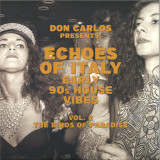
- D2: Progetto Tribale - The Bird Of Paradise 06 29
- D3: Mbg - The Quite 06 59
Vol 1[28,99 €]
Googling “paradise house”, the first results to pop up are an endless list of European b&b’s with whitewashed lime façades, all of them promising “…an unmatched travel experience a few steps from the sea”. Next, a little further down, are the institutional websites of a few select semi-luxury retirement homes (no photos shown, but lots of stock images of smiling nurses with reassuring looks). To find the “paradise house” we’re after, we have to scroll even further down. Much further down.
It feels like yesterday, and at the same time it seems like a million years ago. The Eighties had just ended, and it was still unclear what to expect from the Nineties. Mobile phones that were not the size of a briefcase and did not cost as much as a car? A frightening economic crisis? The guitar-rock revival?! Certainly, the best place to observe that moment of transition was the dancefloor. Truly epochal transformations were happening there. From America, within a short distance one from the other, two revolutionary new musical styles had arrived: the first one sounded a bit like an “on a budget” version of the best Seventies disco-music – Philly sound made with a set of piano-bar keyboards! – the other was even more sparse, futuristic and extraterrestrial. It was a music with a quite distinct “physical” component, which at the same time, to be fully grasped, seemed to call for the knotty theories of certain French post-modern philosophers: Gilles Deleuze, Félix Guattari, Paul Virilio... Both those genres – we would learn shortly after – were born in the black communities of Chicago and Detroit, although listening to those vinyl 12” (often wrapped in generic white covers, and with little indication in the label) you could not easily guess whether behind them there was a black boy from somewhere in the Usa, or a girl from Berlin, or a pale kid from a Cornish coastal town.
Quickly, similar sounds began to show up from all corners of Europe. A thousand variations of the same intuition: leaner, less lean, happier, slightly less intoxicated, more broken, slower, faster, much faster... Boom! From the dancefloors – the London ones at least, whose chronicles we eagerly read every month in the pages of The Face and i-D – came tales of a new generation of clubbers who had completely stopped “dressing up” to go dancing; of hot tempered hooligans bursting into tears and hugging everyone under the strobe lights as the notes of Strings of Life rose up through the fumes of dry ice (certain “smiling” pills were also involved, sure). At this point, however, we must move on to Switzerland.
In Switzerland, in the quiet and diligent town of Lugano, between the 1980s and 1990s there was a club called “Morandi”. Its hot night was on Wednesdays, when the audience also came from Milan, Como, Varese and Zurich. Legend goes that, one night, none less than Prince and Sheila E were spotted hiding among the sofas, on a day-off of the Italian dates of the Nude Tour… The Wednesday resident and superstar was an Italian dj with an exotic name: Don Carlos. The soundtrack he devised was a mixture of Chicago, Detroit, the most progressive R&B and certain forgotten classics of old disco music: practically, what the Paradise Garage in New York might have sounded like had it not closed in 1987. In between, Don Carlos also managed to squeeze in some tracks he had worked on in his studio on Lago Maggiore. One in particular: a track that was rather slow compared to the BPM in fashion at the time, but which was a perfect bridge between house and R&B. The title was Alone: Don Carlos would explain years later that it had to be intended both in the English meaning of “by itself” and like the Italian word meaning “halo”. That wasn’t the only double entendre about the song, anyway. Its own very deep nature was, indeed, double. On the one hand, Alone was built around an angelic keyboard pattern and a romantic piano riff that took you straight to heaven; on the other, it showcased enough electronic squelches (plus a sax part that sounded like it had been dissolved by acid rain) to pigeonhole the tune into the “junk modernity” section, aka the hallmark of all the most innovative sounds of the time: music that sounded like it was hand-crafted from the scraps of glittering overground pop.
No one knows who was the first to call it “paradise house”, nor when it happened. Alternative definitions on the same topic one happened to hear included “ambient house”, “dream house”, “Mediterranean progressive”… but of course none were as good (and alluring) as “paradise house”. What is certain is that such inclination for sounds that were in equal measure angelic and neurotic, romantic and unaffective, quickly became the trademark of the second generation of Italian house. Music that seemed shyly equidistant from all the rhythmic and electronic revolutions that had happened up to that moment (“Music perfectly adept at going nowhere slowly” as noted by English journalist Craig McLean in a legendary field report for Blah Blah Blah magazine). Music that to a inattentive ear might have sounded as anonymous as a snapshot of a random group of passers-by at 10AM in the centre of any major city, but perfectly described the (slow) awakening in the real world after the universal love binge of the so-called Second Summer of Love.
For a brief but unforgettable season, in Italy “paradise house” was the official soundtrack of interminable weekends spent inside the car, darting from one club to another, cutting the peninsula from North to centre, from East to West coast in pursuit of the latest after-hours disco, trading kilometres per hour with beats per minute: practically, a new New Year’s Eve every Friday and Saturday night. This too was no small transformation, as well as a shock for an adult Italy that was encountering for the first time – thanks to its sons and daughters – the wild side of industrial modernity. The clubbers of the so-called “fuoriorario” scene were the balls gone mad in the pinball machine most feared by newspapers, magazines and TV pundits. What they did each and every weekend, apart from going crazy to the sound of the current white labels, was linking distant geographical points and non-places (thank you Marc Augé!) – old dance halls, farmhouses and business centres – transformed for one night into house music heaven. As Marco D’Eramo wrote in his 1995 essay on Chicago, Il maiale e il grattacielo: “Four-wheeled capitalism distorts our age-old image of the city, it allows the suburbs to be connected to each other, whereas before they were connected only by the centre (…) It makes possible a metropolitan area without a metropolis, without a city centre, without downtown. The periphery is no longer a periphery of any centre, but is self-centred”.
“Paradise house” perfectly understood all of this and turned it into a sort of cyber-blues that didn’t even need words, and unexpectedly brought back a drop of melancholic (post?)-humanity within a world that by then – as we would wholly realise in the decades to come – was fully inhuman and heartless. A world where we were all alone, and surrounded by a sinister yellowish halo, like a neon at the end of its life cycle. But, for one night at least, happy."
Transport yourself to the vibrant streets of Havana with the Buena Vista Social Club's eponymous album, a captivating journey into the heart of Cuban music! Recorded in 1996 by acclaimed producer Ry Cooder, this timeless masterpiece celebrates the rich tapestry of Afro-Cuban rhythms and soulful melodies that have enchanted audiences for generations.
Buena Vista Social Club is both the name given to this extraordinary group of musicians and the album, recorded in just seven days in 1996 in Havana's 1950s vintage EGREM studios. From the infectious energy of "Chan Chan" to the heartfelt nostalgia of "Dos Gardenias," each track immerses listeners in the intoxicating blend of son, bolero, and guajira styles. Led by legendary musicians such as Ibrahim Ferrer, Compay Segundo, and Omara Portuondo, the Buena Vista Social Club ensemble delivers performances that are as exuberant as they are intimate, capturing the essence of a bygone era while igniting a passion for Cuban music that knows no bounds.
The acclaim of the original album has elevated the artists (including Ibrahim Ferrer, Rubén González and Omara Portuondo) to superstar status, inspired an award-winning film by Wim Wenders, and has contributed to popularizing Cuba's rich musical heritage. Produced by Ry Cooder for World Circuit, the timeless quality of the music and the sheer verve of the veteran performers have ensured that this will go down as one of the landmark recordings of the 20th century.
This 45 RPM Analogue Productions reissue pressed by Quality Record Pressings on four dead-silent LPs makes every note a transcendent experience. Meticulously crafted using the finest materials and exacting standards, this reissue pays homage to the golden age of vinyl, capturing the warmth and depth of the original recording in stunning detail. The package includes a 12-page booklet with lyrics and stunning studio images, topped off by a tip-on old style gatefold double pocket jacket made by Stoughton Printing.
Embark on a musical odyssey filled with warmth, joy, and the irresistible allure of Havana nights!
Mr. K with two slices of Philadelphia disco, from smooth and slinky on our A-side to all-out floor pounding disco madness on the B.
Janice McClain, rightly adored for her Garage classic “Smack Dab In The Middle” (feat. on MXMRK-2068) but her second single is a real under-the-radar treat. The comfortably laid back groove somewhere between a stepper and simmering midtempo disco, classy and danceable as the finest Philly soul. Originally on a small LA-based label in 1983 (and sounding like it could have come out a good five years earlier), written and produced by McClain’s uncle Milt Tennant and his writing partner Thom Page, the same team responsible for “Smack Dab” — all Philadelphia rooted, so the sound should come as no surprise. Add McClain’s heartfelt and uplifting vocal and we easily have a lost classic. Mr. K’s edit trims the rare 12-inch version down for maximum sonic fidelity for its first appearance in a 7-inch format.
The flip side vibe goes in a completely different direction, although once again has its roots in Philly. The disco remake of the standard “Brazil” was a massive hit for the Ritchie Family in 1975, topping Billboard’s dance charts and getting deep into the Top 20 on the Hot 100. The group itself was a studio concoction led by veteran producer Richie Rome, with legendary trio Sweethearts of Sigma handling vocals — you’ll recognize their trademark harmonies from other huge classics like “Ain’t No Stoppin’ Us Now” and “Love Is The Message", studious listeners will detect a lot of similarities in the vamp section of “Brazil” and “Love Is…” as the MFSB house band launches into their trademark groove. This vamp section is unfortunately truncated on the original 7-inch single, but the always-attentive ear of Mr. K picks this point to begin his edit, starting where the original single faded out and giving us a full four-plus minutes of galloping disco delight.
Two flavors, both as tasty as it gets, all on one compact piece of wax! Another essential addition to your collection.
- A1: Malibu
- A2: Caroline
- A3: Rushmere
- A4: Monochrome
- A5: Truth
- B1: Where It Belongs
- B2: Anchor
- B3: Surrender
- B4: Blood On The Page
- B5: Carry On
Black Vinyl[25,63 €]
Pierre Bujeau is an expert at creating temporary escape zones—musical structures to evade the everyday. Sometimes he works collectively as part of the mysterious French groups Omertà and Tanz Mein Herz. But it’s when he’s on his own, performing as Megabasse, that he offers the most complete break from reality. His kit is simple: a few bottles of cheap lager, twin Fender amps, and his double-necked guitar. An instrument like this normally signals maximum rockist excess—think Jimmy Page, Geddy Lee, or that dude from the Eagles. In Pierre’s hands, it becomes more like a zither or a dulcimer, producing soft chiming patterns that build against themselves until the sound of the room, passed back and forth between his two amps, starts to blur everything, and we are away in another world. Wait, though—let down your yoga bun and don’t light the palo santo yet. The new space he creates has nothing to do with smug wellness. It’s a rough, do-it-yourself psychedelia, scuffed but hopeful. Not a perfect blank space to be your best self in, but instead a communal dreaming, an uncanny place where all are welcome.
Until now, without catching him live, the Megabasse experience has been difficult to find: CD-Rs, short-run tapes, and one blink-and-you-missed-it LP. Thankfully, this record on Efficient Space, a reissue of some pieces that were previously only available on a small cassette edition, will put that right. Here are two long, intricate pieces, and something new—a shorter track that hints at a move toward beautiful, burnt-out guitar soli.
Unless you are very lucky, wise, or rich, life imposes its structures on you. Maybe a record of shimmering, tranced guitar is all you need to get out from underneath?
- 1: Maybe It Was All A Dream
- 2: Waiting On The Dust To Settle
- 3: The Music Man
- 4: Dirty Martini
- 5: I Got People
- 6: Twin Sized Beds
- 7: Deja Voodoo
- 8: A Bigger World
- 9: Holiday (Crush)
- 10: Nobody Meant To Slow You Down
- 11: Do Not Disturb Me
- 12: Dreams Come True
The Austin, TX-based singer-songwriter—whose decades-long career has seen six full-length studio albums, three EPs, countless collaborations, and an illustrious supergroup project in Glorietta—spent a season of rest away from his focus on writing songs. In the wake of the end of a long relationship, he wanted to prioritize processing his grief as a human, not as an artist bleeding on the page. “I love all the records I’ve made in the past. But in making them, there was always the thought in the back of my mind of where and what it could get me. I made both creative and business decisions with a goal in mind... a goal that often never came. This time it was all about just the joy of making it, about having fun with it.”
- Intro/Warlord
- Dogs Of War
- Forever Free
- Requiem
- Crusader
- Light In The Sky
- Iron Wheels
- Ain't Gonna Take It
- Crash Dive
- Refugee
- Solid Ball Of Rock
- Great White Buffalo
- The Eagle Has Landed
- Princess Of The Night
- Can't Stop Rockin
- Denim & Leather
- Wheels Of Steel/Demolition Alley
Saxon are an English heavy metal band formed in Barnsley in 1975. As leaders of the new wave of British heavy metal (NWOBHM), they had eight UK Top 40 albums during the 1980s. They established themselves among Europe's most successful metal acts. The band tours regularly and have sold more than 23 million records worldwide The Eagle Has Landed - part II was recorded during their European tour in support of their Dogs of War album (MOVLP3570). It delves deeply into the band's latter-day catalog and offers excellent sound quality to boot. It's packed with fan favourites and features guitar legend Yngwie Malmsteen as a guest on the track "Denim and Leather". The Eagle Has Landed - part II is available a limited numbered edition of 1000 copies on translucent red vinyl and contains a 4 page booklet and additional cover print.
Celebrate 50 years of RUSH with their first-ever complete career anthology. . Igniting the experience are the very first two singles “Not Fade Away” and “You Can’t Fight It” remastered & reissued for the first time ever. The collection showcases 7 unreleased tracks including five 1974 live selections with the non-album songs “Bad Boy” and “Garden Road,” a Vault Edition of “The Trees” with an alternate guitar solo, and the very last performance with Neil Peart in Los Angeles on August 1, 2015 of “What You’re Doing / Working Man / Garden Road.” The 104-page hardcover book features new Hugh Syme 50th anniversary artwork along with stunning new song illustrations, photos and liner notes by renowned rock journalists David Fricke and Philip Wilding..
50 tracks on 7 180g LPs featuring selections from every studio, live and deluxe reissue album
- Cannibal
- Greatest Gift
- Monsters
- Owner's Lament
- She Said
- Mess
- El Espectro
- Lay Screaming
- Mary Had A Little Drug Problem
- For Crying Out Loud
- Moron's Moron
- Skin Drips
- This Is Bliss
- Flying Houses
- Crazy Dan
- Eyeball
- Big Bone Lick
- Unlike A Baptist
- Damned For All Time
- Ain't That Love
- Untitled 1
- Holes
- Albino Slug
- Spit A Kiss
- Untitled 2
- Holes
- Final Kiss
- Amicus
- Cheese Plug
Born out of the early 1980's Austin noise punk scene, Scratch Acid deliberately eschewed the loud, fast rules of hardcore as everything they didn't want to be and embraced a weirder, artier sound. The band's eventual permanent line-up consisted of David Yow on vocals, Brett Bradford on guitar, David Wm. Sims on bass, and Rey Washam on drums. During their brief existence from 1982 to 1987, the band released 3 records, including a full-length album (Just Keep Eating) and two EPs (S/T EP, Berserker). On March 14, 2025, Touch and Go Records will release the Scratch Acid Box Set - limited to 2000 sets worldwide. Remastered by Bob Weston at Chicago Mastering Service, the box set includes 180-gram clear LP pressings of all three releases as well as a 24-page booklet featuring exclusive behind-the-scenes photos, liner notes by David Yow, Brett Bradford, and photographer/journalist Pat Blashill, as well as full-color paintings by contemporary artist Mark Todd from the same era as the cover art for the S/T EP and Berserker releases. In addition, this limited Scratch Acid box set includes an exclusive clear vinyl 7" with both tracks the band contributed to the 1986 Touch and Go Records compilation, God's Favorite Dog. The 7-inch includes cover art by Mark Todd as well.
Roger Waters is set to release a Super Deluxe Boxset of The Dark Side Of The Moon Redux on Friday, March 14, 2025, with special live versions of the iconic songs from Roger’s appearances at The London Palladium on October 8 & 9, 2023.
The Super Deluxe Boxset includes: • The Dark Side Of The Moon Redux on Gold Vinyl (2LP), CD, Blu-ray: Dolby Atmos Mix, 96/24 Audio. • The Dark Side Of The Moon Redux Live on Gold Vinyl, CD, Blu-ray: 96/24 Audio. • Roger Waters Track by Track video interview. • A 4 x 10-inch Vinyl from the original Redux album cut at 45 RPM for: Money, Time, Speak To Me / Breathe and Us & Them, each with an artwork etched B-side. • A 40-page Commemorative Book of Photographs from The Making of the Album, Rehearsals, and Roger Waters Redux Live at The London Palladium. • Hand numbered Certificate of Authenticity. Limited Edition of 3000 copies
Waters Quote: “All that is gone, all that’s to come? Looking back or looking forward, Dark Side of the Moon offers you choice. The choice is yours. Darkness or the Light”.
- Nyc Weather Report
- The Devil In The Wishing Well
- If God Made You
- 100: Years
- Angels & Girlfriends
- Dying
- Infidel
- Disneyland
- Maybe I
- The Taste
- One More For Love
- Nobody
Five for Fighting achieved a hit record with "Superman (It's Not Easy)" in 2001 leading to his America Town album going Platinum.
For the follow-up, The Battle Of Everything, John Ondrasik went into the studio with Bill Bottrell, best known for his production work with Sheryl Crow.
On the influences behind Battle and its recording, Ondrasik said, "When I was a kid I could put on Dark Side of the Moon, turn up the sound in my headphones, lie down in the dark, and go away. I wanted that experience again, and so Bill and I were ambitious to the point of absurdity. If we wanted drama, we'd get a thirty-piece orchestra. If we wanted a rock edge, we went after it with reckless abandonment. It was like doing my own private Quadrophenia."
The Battle for Everything was released in 2004. The first single, "100 Years" was a top 40 hit on the Billboard Hot 100 chart. The album itself was certified Platinum in 2009. and is now finally available on vinyl for the first time.
This is a limited edition of 500 individually numbered copies on gold coloured vinyl. The LP contains a 4-page booklet with lyrics and pictures.
Very little is known about Joe Prichard or his sidekicks, except that the band, which hailed from Missouri, drew its inspiration from influences far and wide, resulting in each of the five tracks being very different in character, ranging from the power chords and staccato guitar breaks of the Jimmy Page variety, to the throaty sax of 12-bar blues specialists Climax as well as the dual guitars of ZZ Top. There’s even a nine-minute jam a la Jethro Tull or Traffic with flute and sax giving a decidedly jazzy feel to proceedings. Originally released in 1974, this is another extremely rare record now reissued by Riding Easy Records. "Pro-sounding 1970s rarity with a ballsy rock sound and songs ranging from ambitious prog over bluesy bar-rock into macho FM rock postures. It’s solid across the board with excellent guitar leads, soulful vocals, and a versatile band. Keyboards, woodwinds and elaborate arrangements provide a prog-AOR vibe that may turn some off, although there’s enough groove to keep one’s attention throughout the four long tracks." – (Acid Archives)
Boxset w/ CD Bluray Green & Black Vinyl[109,87 €]
ROCK SUPERGROUP ENVY OF NONE RETURN WITH HIGHLY ANTICIPATED
SECOND ALBUM 'STYGIAN WAVES' - PRESENTED ON DIGIPAK CD WITH
16-PAGE BOOKLET, INCLUDES ARTWORK & LYRICS / BLACK LP / INDIE
EXCLUSIVE BLUE VINYL LP / LIMITED EDITION BOX SET INCLUDES CD &
BLU-RAY (WITH DOLBY ATMOS, 5.1 SURROUND & HI-RES STEREO MIXES & 4
PROMO VIDEOS), PLUS GATEFOLD GREEN & BLACK MARBLE LP WITH
INDIVIDUAL BAND MEMBER PRINTS
Black Vinyl[28,36 €]
ROCK SUPERGROUP ENVY OF NONE RETURN WITH HIGHLY ANTICIPATED
SECOND ALBUM 'STYGIAN WAVES' - PRESENTED ON DIGIPAK CD WITH
16-PAGE BOOKLET, INCLUDES ARTWORK & LYRICS / BLACK LP / INDIE
EXCLUSIVE BLUE VINYL LP / LIMITED EDITION BOX SET INCLUDES CD &
BLU-RAY (WITH DOLBY ATMOS, 5.1 SURROUND & HI-RES STEREO MIXES & 4
PROMO VIDEOS), PLUS GATEFOLD GREEN & BLACK MARBLE LP WITH
INDIVIDUAL BAND MEMBER PRINTS
- A1: Amor Verdadero
- A2: Alto Songo
- B1: Habana Del Este
- B2: A Toda Cuba Le Gusta
- C1: Fiesta De La Rumba
- C2: Los Sito' Asere
- C3: Pío Mentroso
- D1: María Caracoles
- D2: Clasiqueando Con Rubén
- D3: Elube Changó
'A Toda Cuba le Gusta', the classic debut album by the Afro-Cuban All Stars. The frst in a trilogy of extraordinary albums recorded by World Circuit in a single two-week session
at Havana's EGREM studios, 1996. The other albums, which share many of the same personnel, were 'Buena Vista Social Club' and 'Introducing Rubén González'. Remastered by Bernie Grundman from the original analogue tapes and now available
for the frst tme on double 180gm heavyweight vinyl, housed in a gatefold sleeve and presented alongside a 32 page booklet as part of World Circuit's classic album series. Plays at 45rpm.
- A1: Definition Of A Thug
- A2: Still Ballin' (Feat Trick Daddy - Nitty Remix)
- A3: Until The End Of Time (Feat Richard Page - Rp Remix)
- B1: Never Call U B**Ch Again (Feat Tyrese)
- B2: They Don't Give A F**K About Us (Feat The Outlawz)
- C1: Keep Ya Head Up
- C2: Ghetto Gospel
- C3: Brenda's Got A Baby
- D1: Thugz Mansion
- D2: When I Get Free
- D3: Dopefiend's Diner
Grey Vinyl Repress
Best of 2Pac is a posthumous greatest hits compilation series from Tupac Shakur released in two parts: Thug and Life. Both albums were released on December 4, 2007 in the United States and December 3, 2007 in the United Kingdom. Both compilations consists mostly of songs released before his death.