The discovery of Doris Dennison's score represents a genuine musicological breakthrough—what once would have been "a tree falling in the woods" thirty years ago now holds the potential to render "a thunderous clap in our minds." While researching Anna Halprin's lesser-known collaborators, scholar Tom Welsh uncovered the archives of AA Leath, one of Halprin's principal dancers. Buried within these materials was Dennison's handwritten score for Earth Interval, dated May 1956. Born in Saskatchewan, Canada, in 1908, and raised near Seattle, Dennison (1908-2009) encountered John Cage while teaching Dalcroze eurythmics at the Cornish College of the Arts. She joined Cage's earliest percussion quartet—alongside Margaret Jansen, the composer and his wife Xenia—in the group widely regarded as having performed the first complete concert of percussion music in the United States. This historic December 1938 concert was followed by tours and the landmark May 1941 performance at the California Club, comprising Cage and Lou Harrison's Double Music, the premiere of Cage's Third Construction, and Harrison's 13th Simfony.
As Bradford Bailey observes in his extensive liner notes, Earth Interval demonstrates "an extraordinary balance of elements that imbues the piece with a sense of clarity, directness, and constraint that is both distinct and ahead of its time." The work's most remarkable innovation lies in its approach to extended techniques, particularly Dennison's notation for the central movement: "In 2nd movement, 1st player lowers + raises a gong into a tub of water while beating." This technique, absorbed from Cage's experimental vocabulary, generates what Bailey describes as "fields of acoustic abstraction that bend and warp time through sustained resonances, beat, and space." The temporal sophistication of these manipulations anticipated Karlheinz Stockhausen's Mikrophonie I (1964) and Annea Lockwood's water-based sound investigations by over a decade. After joining Mills College as dance accompanist, Dennison maintained crucial connections to the Bay Area's experimental scene, collaborating with figures like Merce Cunningham and programming Cage's music throughout the 1950s.
Comprising three movements—Land Form, Air Tide, and Earth Play—Earth Interval is scored for recorder, drums, gongs, maracas, muted gongs, and bowl gongs. In total, the piece is just under eight minutes: "a fleeting glimmer of moment in time, a life spent at the cutting edge, and a singular creative vision that packs a powerful punch." When viewed in historical context, placed in contrast to roughly contemporaneous avant-garde percussion works by Cage, Harrison, Louis Thomas Hardin (Moondog), and Harry Partch, or important precursors like Edgard Varèse's Ionisation (1931) and Henry Cowell's Ostinato Pianissimo (1934), it's clear that Dennison was following her own path. Earth Interval is not derivative. It is a precursor to what was yet to come, alluding to developments of avant-garde and experimental music that wouldn't begin to appear on the cultural landscape until the 1970s and '80s, with the emergence of Post-Minimalism and more idiosyncratic artists and ensembles like Midori Takada, Ros Bandt, Peter Giger, Frank Perry, Christopher Tree, Michael Ranta, Gamelan Son of Lion, and Niagara.
This recording by Chicago's Third Coast Percussion, captured in March 2022, represents the first complete documentation of this pioneering work. The ensemble's interpretation reveals the piece's remarkable contemporaneity while maintaining its historical specificity. Where Cage, Harrison, and Partch employed "self-consciously off-kilter polyrhythms," Dennison's rhythmic sensibility anticipates minimalist developments by nearly a decade, yet integrates "forceful rests, as well as sharp shifts in sonic character, tempo, and meter, that break the momentum and breathe a sense of life into the piece's structure." This positions her work closer to Post-Minimalism decades before its emergence. The architectural approach demonstrates Dennison's understanding that "the composer almost entirely disappears" in favor of phenomenological listening experience, creating what might be called an egoless music that places its realities and meaning entirely in the ear of the beholder. The present recording, realized by Chicago's distinguished Third Coast Percussion ensemble, represents a significant achievement in experimental music scholarship and performance practice. As specialists in the Cage tradition and contemporary percussion repertoire, Third Coast Percussion approached Earth Interval with the historical sensitivity and technical precision required to illuminate Dennison's subtle compositional innovations. The March 2022 recording sessions, engineered by Colin Campbell, capture both the work's intimate chamber music qualities and its bold exploration of extended techniques. The ensemble's interpretation reveals the piece's remarkable contemporaneity—its ability to speak directly to current musical concerns while maintaining its historical specificity.
This recording serves multiple scholarly functions: it provides the first complete documentation of Dennison's compositional voice, offers insight into the broader network of experimental music practitioners surrounding Cage and Harrison, and demonstrates the sophisticated level of compositional thinking that was occurring within the Bay Area's dance-music collaborations of the 1950s. The work's emphasis on phenomenological listening—what might be called an "egoless" approach to musical experience—places it within a lineage of American experimental music that prioritizes perceptual process over compositional personality. The work's original obscurity—limited to AA Leath's performances at venues like the 1957 Pacific Coast Arts Festival at Reed College—paradoxically allowed it to remain "entirely on its own terms," free from the constraints of historical categorization. Drawing on Jacques Derrida's Archive Fever, the argument emerges that "the archive can acknowledge, celebrate, and resurrect" overlooked voices, transforming our understanding of experimental music history. The present Blume edition, featuring Third Coast Percussion's authoritative interpretation, includes a lavishly illustrated 16-page booklet designed by Bruno Stucchi / dinamomilano, containing complete scholarly apparatus, historical photographs, and detailed production notes. This recording enables "cross-temporal intersectionality," allowing Dennison to "belong to a newly formed and more dynamic understanding of the present and past," demonstrating how forgotten voices can reshape entire historical narratives when given proper scholarly attention and performance advocacy.
Buscar:page 25
2025 Repress
A tale of paramount love for machines and the inextinguishable power of subjugation that lies in these button-studded boxes teeming with cabled bowels that feel so intimidating to the uninitiated, Italo Brutalo's longed-for debut album "Heartware" is a 12-track voyage across 25 years of intense synth collecting, fiddling,
composing and endless loving for audio synthesis and the art of how robots make human bodies jack.
Throughout the twelve cuts that compose "Heartware", a feeling of retro-gazing, candidly playful glee prevails. Looking right in the eye of the era when dazzling flipper visuals and static-filled VHS glitches
reigned supreme, Italo Brutalo invites us to witness first-hand his own textbook smorgasbord of fast-wheeling arpeggios and vocodized hoodoo ("Heartware", "Reach Horizon"), dystopian digital sunsets by the beach ("I Feel Lonely"), early hip-hop-informed whackin' n' thumpin' ("Analog Bars") and the slo but hard churn of a robot heist score ("Nobody Moves").
A lush tapestry of woozy exotic pads set in contrast with a deft and aggro drum programming ("As Above So Below"), followed by a new-beat oriented hammer-drop that shall leave no raver unscathed ("Heat of the Knight"), Italo Brutalo shifts the scope to radical effect whilst maintaining that cohesive headspace flush with the iconic 80s-to-90s-sourced assets. The hardware used in the making of "Heartware" is obviously the star here, and the inner sleeve pays tribute to that: the ideas behind the album have been there waiting to find their way out for over twenty years!
From adrenalin-boosting fractals of keyboard razzle-dazzle ("Chemical Element") to straight out pumping EBM primed for hi-octane mosh pits down the basement ("You Are Welcome"), via polyrhytmic percs-driven assaults and sizzling hot synth-smithery ("Into a Sampler"), the pressure levels never falter. Yet, Italo Brutalo sure knows how to weave further oneiric, softer narratives for your mind to frolic in unhindered ("Dream Machine") and rounds it all off with a total, space-opera'esque epic bound to have you spinning out of orbit into the great unknown ("Eternia").
"Heartware" is released in a neat double-vinyl gatefold package presenting the concept and machines involved in its making, including a twelve-page booklet featuring Italo Brutalo's key pieces of gear.
- Incredible Loudness
- Devils Game
- Arson
- Mercenary
- Heavy Metal
- Death By Whips
- Rundown Quarter
- Alcohol
- Intro
- Zombie Attack
- Deadly Intention
- Mercenary
- Poison
- Alien
- Thunder And Lightning
- Acid Death
- Screaming Victims
Beer Galaxy Vinyl[32,35 €]
High Roller Records, reissue 2025, black vinyl, ltd 250, gatefold, 16 pages A4 booklet, Original cassette transfer, audio restoration and mastering by Patrick W. Engel at TEMPLE OF DISHARMONY in October 2023.
- Incredible Loudness
- Devils Game
- Arson
- Mercenary
- Heavy Metal
- Death By Whips
- Rundown Quarter
- Alcohol
- Intro
- Zombie Attack
- Deadly Intention
- Mercenary
- Poison
- Alien
- Thunder And Lightning
- Acid Death
- Screaming Victims
Blacki Vinyl[30,88 €]
High Roller Records, reissue 2025, beer galaxy vinyl, ltd 250, gatefold, 16 pages A4 booklet, Original cassette transfer, audio restoration and mastering by Patrick W. Engel at TEMPLE OF DISHARMONY in October 2023.
Green Vinyl[41,13 €]
Monaco (originally released in 2000) is the self-titled second and final studio album
by Monaco, following their debut album Music for Pleasure (1997).
Now 25 years after its original release, the album is finally available, for the first time ever, on vinyl.
Monaco was a side project (1995–2000) of Joy Division and New Order bass player Peter Hook, alongside David Potts,
the sole remaining member of Revenge. The album reflects Hook and Potts’ shared passion for blending rock with electronic and dance music. The album features the single I’ve Got A Feeling.
For vinyl enthusiasts, this 25th-anniversary expanded edition comes as a deluxe gatefold 2LP set, pressed on Crystal Clear vinyl
This version includes a 4-page booklet and five bonus tracks and is limited to 500 individually numbered copies.
Crystal Clear[41,13 €]
Monaco (originally released in 2000) is the self-titled second and final studio album
by Monaco, following their debut album Music for Pleasure (1997).
Now 25 years after its original release, the album is finally available, for the first time ever, on vinyl.
Monaco was a side project (1995–2000) of Joy Division and New Order bass player Peter Hook, alongside David Potts,
the sole remaining member of Revenge. The album reflects Hook and Potts’ shared passion for blending rock with electronic and dance music. The album features the single I’ve Got A Feeling.
For vinyl enthusiasts, this 25th-anniversary expanded edition comes as a deluxe gatefold 2LP set, pressed on Crystal Clear vinyl
This version includes a 4-page booklet and five bonus tracks and is limited to 500 individually numbered copies.
If this LP exists it is thanks to the vision, energies, work and perseverance of Thomas M. Lopez, aka Meatball Fulton. He is the president and one of the founding members of the ZBS Foundation (ZBS stands for Zero Bullshit), where the audio dramas written by Lopez himself were born. Dramatic programs with stories that blended noir, comedy and science-fiction genres such as Ruby The Galactic Gumshoe or Jack Flanders were produced to critic and public acclaim. It was in Ruby The Galactic Gumshoe that the Android Sisters, who would later have their own spin-off series, first appeared. The characters represent two robotic siblings that Tom Lopez created under big influence from Do Androids Dream of Electric Sheep?, the Philip K. Dick novel that was taken to cinema by Ridley Scott in Blade Runner. The Androids were performed by actresses Ruth Maleczech and Valeria Wasilewski.
The big success of these “cosmic and comic” sci-fi series, as they are described in the ZBS Foundations website, led to the releasing of cassette tapes, CDs, USBs and podcasting of the stories. Along with these, several music albums were also released in different formats. One of them is Songs Of Electric Despair, the first of two released by the Android Sisters. The songs contained are written by Tom Lopez and his long time collaborator experimental musician Tim Clark.
The Android Sisters Songs Of Electronic Despair LP was originally released as a ZBS Foundation cassette and also as a vinyl LP on Vanguard in 1984. It featured 11 compositions (two bonus tracks not on the original LP have been added to the Wah Wah reissue) on which the experimental synthesizer music of Tim Clark finds a perfect counterpoint in the deliciously surrealistic, cosmic social satire of Tom Lopez’s texts, magically performed by the robotic, yet sensual voices of the Android Sisters as performed by Maleczech and Wasilewski. Clark composed and performed the backing tracks on the Synclavier II synthesizer.
The Wah Wah reissue comes with two bonus tracks not on the original 1984 LP, respects the beautiful original album artwork and enhances it with a 4 pages full colour insert with notes and lyrics of the songs.
BARBARELLA MEETS PHILLIP K. DICK!
RIYL : SYNTH POP CYBERPUNK with DEVO’s sense of humor, LOGIC SYSTEM, FRANK CHICKENS or even some 1990s things to come such as LIKE A TIM or ARPANET.
If this LP exists it is thanks to the vision, energies, work and perseverance of Thomas M. Lopez, aka Meatball Fulton. He is the president and one of the founding members of the ZBS Foundation (ZBS stands for Zero Bullshit), where the audio dramas written by Lopez himself were born. Dramatic programs with stories that blended noir, comedy and science-fiction genres such as Ruby The Galactic Gumshoe or Jack Flanders were produced to critic and public acclaim. It was in Ruby The Galactic Gumshoe that the Android Sisters, who would later have their own spin-off series, first appeared. The characters represent two robotic siblings that Tom Lopez created under big influence from Do Androids Dream of Electric Sheep?, the Philip K. Dick novel that was taken to cinema by Ridley Scott in Blade Runner. The Androids were performed by actresses Ruth Maleczech and Valeria Wasilewski.
The big success of these “cosmic and comic” sci-fi series, as they are described in the ZBS Foundations website, led to the releasing of cassette tapes, CDs, USBs and podcasting of the stories. Along with these, several music albums were also released in different formats. One of them is Songs Of Electric Despair, the first of two released by the Android Sisters. The songs contained are written by Tom Lopez and his long time collaborator experimental musician Tim Clark.
The Android Sisters Songs Of Electronic Despair LP was originally released as a ZBS Foundation cassette and also as a vinyl LP on Vanguard in 1984. It featured 11 compositions (two bonus tracks not on the original LP have been added to the Wah Wah reissue) on which the experimental synthesizer music of Tim Clark finds a perfect counterpoint in the deliciously surrealistic, cosmic social satire of Tom Lopez’s texts, magically performed by the robotic, yet sensual voices of the Android Sisters as performed by Maleczech and Wasilewski. Clark composed and performed the backing tracks on the Synclavier II synthesizer.
The Wah Wah reissue comes with two bonus tracks not on the original 1984 LP, respects the beautiful original album artwork and enhances it with a 4 pages full colour insert with notes and lyrics of the songs.
BARBARELLA MEETS PHILLIP K. DICK!
RIYL : SYNTH POP CYBERPUNK with DEVO’s sense of humor, LOGIC SYSTEM, FRANK CHICKENS or even some 1990s things to come such as LIKE A TIM or ARPANET.
This edition explores identity, presence and the fragmentation of self.
It features a standout work by iconic Los Angeles photographer Parker Day, whose hyper-saturated portraits dissect the construction of persona and the tension between surface and essence.
Design is handled by legendary New York illustrator Braulio Amado, injecting the project with bold typographic energy and haunting visual language.
The zine includes poetry by Cristiano Grim, alongside original music by:
Foie Gras – drone and reimagined Americana from San Francisco / Los Angeles
Machino – Mexican electronic producer out of LA, blending distorted guitars, psychedelic riffs, and cinematic pulse into a sound that feels like driving through a neon fever dream
Valley Latini – dark Latin pop performer from New York
David Oliver Rose – post-punk rude boy from New York
Nick Hadad – dark ambient producer based in New York
FAKE4-MASK VS PERSONA presents a 25-page, 11x11” offset-printed, paired with a 12” 180g vinyl record featuring all contributing artists.
Audio mastering by Spaventi Studio.
It operates as both an aesthetic object and a critical inquiry, merging the disciplines of literature, music, photography, and design into a single act of publication as performance.
- A1: Oops!... I Did It Again
- A2: Stronger
- A3: (I Can’t Get No) Satisfaction
- A4: Don’t Go Knockin’ On My Door
- A5: Don’t Let Me Be The Last To Know
- B1: What U See (Is What U Get)
- B2: Lucky
- B3: One Kiss From You
- B4: Where Are You Now
- B5: Can’t Make You Love Me
- C1: When Your Eyes Say It
- C2: Dear Diary
- C3: Girl In The Mirror (Ex-Us Bonus Track)
- C4: You Got It All (Ex-Us Bonus Track)
- C5: Heart (B-Side To “Lucky”)
- C6: Walk On By (B-Side To “Stronger”)
- D1: Oops!...I Did It Again (Riprock ‘N’ Alex G. Ooops! We Remixed Again! (Radio Edit))
- D2: Lucky (Jack D. Elliot Radio Mix)
- D3: Stronger (Miguel Migs Vocal Edit)
- D4: Don’t Let Me Be The Last To Know (Thunderpuss Radio)
- D5: Stronger (Adamusic Remix)
- D6: Oops!...I Did It Again (Pessto Remix)
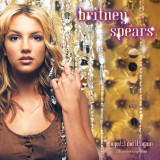
In May 2000, pop princess supreme Britney Spears released her second studio album Oops!... I Did It Again, which features Stronger, Lucky and the title track Oops!... (red leather jumpsuits and the necklace from The Titanic were never looked at the same again!). The massive commercial success debuted at #1 in 20+ counties, selling 1.3 million copies in its first week, breaking the SoundScan record for highest debut album sales by a female artist.
Britney’s record was broken 15 years later in 2015 by Adele’s 25. Considered one of the best-selling albums of all time, to date, it has sold ~20 million copies worldwide. 25 years later, with Britney’s trailblazing influence still being seen in pop artists today, we are delighted to release a 25thANNIVERSARY EDITION 2-LP DELUXE vinyl release. Featuring an alternate cover, a 20-page booklet of never-before-seen and rarely seen photos of the era PLUS 2 new remixes, “Stronger (Adamusic Remix)” & “Oops!...I Did It Again (Pessto Remix)” on black vinyl
- Collection 001 - 001 A 23:46
- Collection 001 - 001 B 23:48
- Collection 002 - 002 A 18:12
- Collection 002 - 002 B 20:54
- Collection 003 - 003 A 22:14
- Collection 003 - 003 B1 09:33
- Collection 003 - 003 B2 05:25
- Collection 004 - 004 A 16:11
- Collection 004 - 004 B1 07:08
- Collection 004 - 004 B2 09:52
- Collection 005 - 005 A1 08:38
- Collection 005 - 005 A2 08:54
- Collection 005 - 005 B1 07:14
- Collection 005 - 005 B2 03:53
- Collection 005 - 005 B3 03:57
- Collection 005 - 005 B4 04:03
- Collection 006 - 006 A1 17:35
- Collection 006 - 006 A2 05:12
- Collection 006 - 006 B 23:12
- Collection 007 - Merzrock B1 + Dubbing 5 11:21
- Collection 007 - Merzrock A1 + Anemic Pop 1 02:00
- Collection 007 - Merzrock A1 + Anemic Pop 2 08:32
- Collection 007 - E-Study #3-1 + Merzsolo 1 15:49
- Collection 007 - E-Study #3-1 + Merzsolo 2 05:58
- Collection 008 - Concrete Tape Ph#1~ 05:19
- Collection 008 - E8 A1 + 006 A1 06:03
- Collection 008 - Merzsolo 10/6.81 A1 10:36
- Collection 008 - E8 B2/Concrete Tape Ph#1~ 06:28
- Collection 008 - Sans Titre Merz 1 + Tape Loops 04:54
- Collection 008 E6 A3 + Concrete Tape Ph#1~ 06:46
- Collection 008 - Merzsolo 10/6.81 A5 + Violin 03:21
- Collection 009 - N.a.m.4 + E-8 06:11
- Collection 009 - Telecom 1/3 + N.a.m.5 17:32
- Collection 009 - E-3-1-1 11:24
- Collection 009 - E-3-1-2 01:50
- Collection 009 - Tape Loop + Noise 1 (Concrete Tapes) 02:39
- Collection 009 - Tape Loop + Noise 2 (Concrete Tapes) 04:25
- Collection 010 - 007 B1 + Ah Corps 11:47
- Collection 010 - E3 B2 + Ah Corps 11:28
- Collection 010 - N.a.m.6 With Radio & Tapes 22:47
Carrying on their longstanding dedication to the seminal output of Merzbow, Urashima returns with what is unquestionably their most ambitious release to date: “Collection 001-010”, a deluxe, 10 LP vinyl box set limited to 299 copies, gathering together the entirety of the project’s first ten releases, originally released in 1981. Encountering the band in its early incarnation of the duo of Masami Akita and Kiyoshi Mizutani, raw, exposed and bristling with energy, foreshadowing numerous trajectories they would follow over the coming years, these astounding full lengths - the majority of which have never been released on vinyl - come housed in a beautifully produced, deluxe wooden box, with each LP in its own individual sleeve reproducing the original artwork, and a LP-sized 32-page book containing reproductions of artworls and collages by Masami Akita, an interview conducted by Jim O'Rourke, and liner notes penned by Lasse Marhaug, Thurston Moore, and Akita himself, amounting to what is unquestionably one of the most historically significant releases we’re likely to encounter in 2025.
Deluxe Edition of 299 copies, remastered from the original analog tapes by Masami Akita, each LP comes in its individual sleeve reproducing the original artwork, also includes a LP-sized 32-page book. ** Since its founding during the late 2000s, the Italian imprint, Urashima, has become a definitive voice in the landscape of noise. Bringing forth beautiful limited edition releases, they’ve sculpted a singular vision of one of the most vibrant and revolutionary bodies of experimental sound to have graced the globe. Among the many projects that they have supported over the decades, there has been an undeniable dedication to the output of the seminal Japanese noise outfit, Merzbow, making a significant amount of the project’s out of print back catalog available across a range of formats. Now they return with what is arguably their most stunning and ambitious release dedicated to the project to date: “Collection 001-010”, gathering the entirety of Merzbow’s first ten releases, largely privately released by the band on cassette across 1981, in a deluxe, 10 LP vinyl box set. Representing what is effectively ground zero in Japanese noise and collectively amounting to some of the most sought after releases ever produced within that movement, Urashima’s truly beautiful collection comes fully remastered by Masami Akita himself from the original tapes, presenting all but a small number in their first ever vinyl pressings, with each LP housed in its own individual sleeve reproducing the original artwork, alongside a LP-sized 32-page book containing reproductions of artworks and collages by Masami Akita, an interview conducted by Jim O'Rourke, and liner notes penned by Lasse Marhaug, Thurston Moore and Akita himself. Towering with energy and groundbreaking creative vision, within the realms of noise and experimental music, releases don’t get more monumental or historically important than this!
Merzbow came roaring onto the Tokyo scene in 1979, and remains, to this day, one of the most prolific and aggressively forward-thinking projects in experimental music. Eventually becoming the solo vehicle for the efforts of Masami Akita, in its earliest incarnation the project was the duo of Akita and Kiyoshi Mizutani, taking their name from German artist Kurt Schwitters' pre-war architectural assemblage, The Cathedral of Erotic Misery or Merzbau, and quickly set out to challenge entrenched notions of what music could be. Embracing technology and the machine, even in its earliest iterations, Merzbow pushed toward new territories of the extreme, arriving at a space of pure, unadulterated sonic onslaught that has continued, for over 40 years, to set the pace for the entire genre of noise, and has remained one of the movement’s most important, definitive voices, continuously laying the groundwork for countless artists who have followed in its wake.
When dealing with historical gestures, there’s an invertible aura surrounding original line-ups and early statements, and rightfully so. It is often within a band’s debut that we catch the purest glimpse of the raw energy and creative ferment that made them what they are. This is certainly the case when regarding the coveted early releases of Merzbow, capturing the emergence of the project in its form as the duo of Masami Akita and Kiyoshi Mizutani as they helped set the blue print from the then emerging movement of Japanese noise. Over the course of its nearly five decades of activity, Merzbow has always been noted for how prolific and ambitious the project is. This was no less the case in the very beginning. While they were active for roughly two years prior, in 1981 alone they issued ten self-released cassettes numerically titled “Collection 001-010”, albums which have both individually and collectively become holy grails in the realms of noise, with only two - “Collection 007” and “Collection 009” - ever receiving vinyl reissues prior to now.
As Lasse Marhaug deftly articulates in the newly commissioned liner notes for “Collection 001-010”, despite having been recorded in different location across a span of time, the sum total of Merzbow’s first ten releases might be best regarded as a single release to be listened to in the same, durational sitting, with the material standing well apart from what most came to expect from Merzbow, while foreshadowing numerous trajectories the project would take over the coming years. Not only do these recordings feature a vast array of instrumentation - tapes, acoustic and electric guitar, violin, drums, voice, recorder, organ, found sounds, clarinet, homemade and prepared instruments, a vast arsenal of effects and electronics, and piano, to only begin to scratch the surface - the majority of which would disappear from the project’s active sources of sound generation over the subsequent years, but there is a slow pacing and raw sense of openness and exposure that reveals strong connections to the avant-garde improvisations of groups like AMM, Musica Elettronica Viva, and Gruppo di Improvvisazione Nuova Consonanza, the psychedelia of groups like Taj Mahal Travellers and Flower Traveling band (both of whom Akita mentions having seen in youth within his interview with Jim O’Rourke), and rock in general - albeit in fully abstracted forms - unspooling as brittle, pointillistic, textural, raw and abrasive forms, that occasionally flirts with unexpected tonal sensibilities. As Marhaug describes it in his excellent liner notes: «Sonically, “Collection” sounds more sparse and stripped. It’s dry sounding, up-front, no reverb, and there’s less heavy low-end grime and thin on the signature frequency sweeps. Viewed in a 1981 context, musically, it’s more akin to what the LAFMS (Los Angeles Free Music Society) pool of artists were doing at that time than what was happening in industrial music... There’s a strong playfulness throughout, like the sound objects are being explored for the first time, without neither restraint nor hurry. Events are allowed to be fully examined before the music moves on, or simply cuts off. To a large degree, the music on “Collection” feels acoustic in nature, although a Electro-Harmonix ring-modulator features prominently throughout.»
Easily described as a rarely encountered revelation into the original and earlier documented studio sound of Merzbow, “Collection 001-010” collectively amounts to an engrossing sonic journey in its own right, while also allowing for important, often overlooked connections drawn from numerous other creative wellsprings, notably free jazz, underground rock, the output of European and Japanese avant-garde music, as well as Dada, Fluxus, and Mail Art, much of which, beyond the illumination made possible by the sounds, Jim O’Rourke’s fantastic interview with Akita, published in the booklet, further explores, offering great insights into the origins of Merzbow and the thinking behind the project, as well as aspects of the earliest days of Japanese noise.
A comprehensive overview of soul music from the great state of Illinois, this 732-page, two volume set chronicles over 3200 artists, 1200 record companies, and 10,000 individual releases between the years of 1960 and 1990. From Chicago to Cairo, East St. Louis to Kankakee, from The Accents to Ze-Majestiks, Soul Music Of Illinois serves as discography, field manual, atlas, telephone directory, and coffee table book, all presented in glorious full-color and wrapped in handsome woven linen. Product dimensions: H - 11.25” / L - 10.25” / W - 2.6” / Weight - 10lb 3oz.
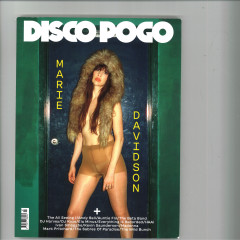
Our Spring/Summer ‘25 issue features a deep dive on Madonna’s New York nightclub roots and her links with the dancefloor ever since plus a rare interview and photo shoot in LA with DJ Harvey and our third cover is the super cool Marie Davidson.
Plus we have features on Auntie Flo, Pan Amsterdam, Ela Minus, Tryouts, Mark Pritchard & Thom Yorke, DJ Koze, Andy Bell, Everything Is Recorded, The Sabres of Paradise, The Wild Bunch, Kevin Saunderson, HAAi and lots more.
184 pages of quality music journalism by the world’s best music writers plus beautiful photography and design in a glossy print magazine.
Issue 6 is completely sold out and we expect this issue to do the same so please order asap to secure copies.
- 1: Prologue
- 1: 2 The Sweet
- 1: 3 Music Box - Philip Glass
- 1: 4 Row Houses
- 1: 5 Graffiti
- 1: 6 Rows And Towers
- 1: 7 What's Candyman?
- 1: 8 I Thought We Could/The Turn
- 1: 9 Joke Summoning
- 1: 0 End Of Clive And Jerrica
- 1: Brianna Finds Bodies
- 1: 2 Brianna's Mirror Dream
- 1: 3 The Library
- 1: 4 The Elevator
- 1: 5 Frantic Painting
- 1: 6 You Should Say It
- 1: 7 End Of Finley
- 1: 8 Frantic Cycles
- 1: 9 The Story Of Daniel Robitaille
- 1: 20 Brianna In The Studio
- 1: 2 The End Of The Kids
- 1: 22 Anthony's Arm
- 1: 23 Got Taken
- 1: 24 Called To Row Houses
- 1: 29 End Of Burke
- 1: 30 Brianna Says His Name
- 1: 3 Music Box (Reprised) - Philip Glass
- 1: 32 Cabrini Walk (Bonus Track)
- 1: 33 Cabrini Walk Ii (Bonus Track)
- 1: 34 The Bridge (Bonus Track)
- 1: 25 The Laundromat
- 1: 26 Young William
- 1: 27 Leaves A Stain
- 1: 28 William Chases Brianna
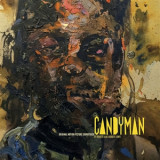
The Complete Film Music Composed by Robert Aiki Aubrey Lowe - 2xLP 180 Gram Colored Vinyl - Old-Style Tip-On Gatefold Jackets with Satin Coating and a Built-In Booklet Page - Composer Liner Notes - 12 Page Art Gallery Exhibit Catalogue // In partnership with Universal Pictures, Metro Goldwyn Mayer (MGM) and Monkeypaw Productions, Waxwork Records is thrilled to present CANDYMAN Original Motion Picture Soundtrack by Robert Aiki Aubrey Lowe. Directed by Nia DaCosta (next year's The Marvels) from a screenplay by Oscarr winner Jordan Peele, Win Rosenfeld and DaCosta, Candyman, currently in theaters nationwide, is a fresh take on the blood-chilling urban legend and a contemporary incarnation of the 1992 cult horror classic. About Robert Aiki Aubrey Lowe: Robert Aiki Aubrey Lowe (b.1975) is an artist, curator and composer who works primarily with, but not limited to, voice and modular synthesizer for sound in the realm of spontaneous music. Along with analog video synthesis works, he has brought forth an A/V proposal that has been a focus of live performance and installation / exhibition. The marriage of synthesis and the voice has allowed for a heightened physicality in the way of ecstatic music, both in a live setting and recorded. The sensitivity of analogue modular synthesis echoes the organic nature of vocal expression, which in this case is meant to put forth a trancelike state. Lowe's works on paper tend towards human relations to the natural/magical world and the repetition of motifs. The deluxe 2xLP vinyl release features 180-gram colored vinyl, old-style tip-on gatefold jackets with satin coating and a built-in booklet page, liner notes by composer Robert Aiki Aubrey Lowe, a 12-page art gallery exhibition catalogue, artwork by Sherwin Ovid and Julian Williams and puppetry art by Manual Cinema.
- A1: Easy Tonight
- A2: Bloody Mary (A Note On Apathy)
- A3: Superman (It’s Not Easy)
- A4: America Town
- A5: Something About You
- A6: Jainy
- B1: Michael Jordan
- B2: Out Of Love
- B3: The Last Great American
- B4: Love Song
- B5: Boat Parade
- B6: Alright
- B7: Do You Mind (Hidden Track)
America Town is the second studio album by American pop rock artist Five for Fighting. The album contains two of his most well-known songs, “Easy Tonight” and the Grammy-nominated “Superman (It’s Not Easy)”.
America Town features ten new songs and two songs that were re- recorded from the Message album (“Love Song” and “The Last Great American”). The album features a hidden track, “Do You Mind”.
America Town is now available on vinyl for the first time. This is a 25th anniversary edition of 1000 individually numbered copies on translucent blue coloured vinyl. The package contains a 4-page booklet.
- 01: Alejandro Mendoza - Cumbia Indígena
- 02: Alejandro Mendoza - María
- 03: Alejandro Mendoza - Solo Botas
- 04: Andrés Narváez - No Tengo Na&Apos;
- 05: Andrés Narváez - Me Voy Pa&Apos; La Europa
- 06: Ismael Ortíz - Los Aguacatales
- 07: Ismael Ortíz - Suénale El Tambó
- 08: Ismael Ortíz - Acabación De Ismael
- 09: Marqueza Mercado - Cumbia En El Magdalena
- 10: Marqueza Mercado - Mujer Costeña
- 11: Marqueza Mercado - Que No Muera El Folclor
In 2019, Resistencia Sonora was launched as a collaborative project where urban resistances and ethnic-peasant rural resistances converge in the greater area of Montes de Maria, situated in Colombia's western Caribbean region. This initiative originates in one of the musical epicenters of ancestral sounds that have fostered a now global recognition for styles such as gaita, cumbia, bullerengue, son palenque and son de negro, as well as Sabanero accordion music like porros and pajaritos.
The aim of this extensive project has been to serve as a rare living archive of festive gatherings, conversations, knowledge exchange, and co-creative processes that have spawned specifically from the municipality of Ovejas, which sits in the Sucre Department of Montes de Maria. Resistencia Sonora's documentation in Ovejas is more than just a musical recording, rather an all-encompassing snapshot of a very real folkloric life within neighborhoods such as El Bolsillo, El Corea and La Ciudadela. The initial inspiration of the project can be credited to a specific call to arms from composer Andrés Narváez, who expressed the dream to record his own original compositions set amongst this region's local history. Andrés, like many leaders from the old sabanas beyond Montes de Maria, is a social leader and land-rights activist. He proposed not only to record his songs but also to invite other musicians and composers to take part in this documentation, an extended hand to uphold the legacies, knowledge, and traditions of the region's elders.
All songs recorded between 2022-23 on location in Ovejas and Bogotá, Colombia. Mixed in Brooklyn by Names You Can Trust and mastered by Frank Meritt at The Carvery, London. Limited Edition 250 vinyl press with included 12-page booklet and liner notes in English and Spanish.
An extremely prolific artist, whose work encompasses composition, opera, theatre, radio plays, film or performance, Ergo Phizmiz returns in due time to the Discrepant fold long after his 'Two Quartets' and 'Disco Carousel' - under his given DW Robertson name - albums. A purveyor of the Creative Commons rights, Phizmiz has been deploying much of his work on the ever expanding Free Music Archive directed by WFMU since the early 2000's, creating a sprawling and defiant body of work that defies given and stale notions of sound hierarchies, history and copyright through a process that comprises collage, sampling, reappropriation, songwriting, covers and pretty much any available media with a playful and thoughtful approach.
For this new Discrepant entry, Phizmiz goes back in time to push into the future a number of pieces recorded more than two decades ago creating this perpetual motion outside a linear chronologic progression. Anticipating by almost 20 years the memefication of ASMR videos, 'Selected Ambient & ASMR Works 2001-2003' - itself a pun on the AFX classics - embraces the ambient tag not at its functional face value, but instead as a means to the "evocation of imaginary spaces, and correspondingly the invention of their sonic environments". Collecting recordings from a myriad of instruments - violin, xylophone, banjo, kora, found percussion and so on...-, shortwave radio and field recordings to create loops with different lengths that play with and/or against themselves continuously in a process "(dis)conjunction" not far removed from Feldman's 'Why Patterns?' or hip-hop's sampledelia. A free-floating temporal space that collapses the flashing images of Angelfire pages unto Web 2.0 sense of displacement.
- A1: Trapped
- A2: Dirt Farm
- A3: Chess
- A4: Summerville
- A5: Research
- A6: Under The Floor
- A7: Nice Replica
- A8: Culpable
- A9: Laboratory
- A10: Lab Partners
- A11: Definitely Class Five
- A12: Go Go Go
- A13: Trap Him
- A14: Don't Go Chasing Ghosts
- A15: Mini-Pufts
- A16: Down The Well
- A17: The Temple Resurrected
- A18: The Plan
- A19: Suit Up
- A20: No, I'm Twelve
- A21: Getaway
- A22: Callie
- A23: Protecting The Farm
- A24: Showdown
- A25: Reconciliation
Ghostbusters: Afterlife is available as a limited edition of 2500 copies on “Muncher” coloured vinyl (crystal clear & transparent green). The heavyweight gatefold sleeve has a special UV Spot varnish + embossing finish. The package contains a printed innersleeve and 4-page booklet (featuring several of your favorite mini-pufts!) and a special litho of the gatefold artwork.
Ghostbusters: Afterlife is co-written and directed by Jason Reitman and stars Carrie Coon, Finn Wolfhar, Mckenna Grace, Annie Potts, and Paul Rudd. The film follows a single mom and her two kids who arrive in a small town, where they begin to discover their connection to the original ghostbusters and the secret legacy their grandfather left behind.
Rob Simonsen rejoins director Jason Reitman with his score for Ghostbusters: Afterlife, having scored The Front Runner & Tully for the director. Other recent film scores include The Friend, The Way Back, and Love, Simon. Based in Los Angeles and ever with his finger on the pulse of contemporary music, he co-founded the influential collective The Echo Society with the mission ‘to inspire, challenge, enrich and connect the community through the creation and performance of new sonic and visual art’. Simonsen’s debut artist album Rêveries was released in 2019 on Sony Masterworks.
s*x m*ney dr*gs is the third studio album from Chicago rapper Lucki, and debuted at number 15 on the US Billboard 200, marking Lucki’s second consecutive top 25 release on the chart. At 15 tracks, the album includes explosive tracks such as 2021 Vibes, Mubu, No Bap, & Gemini Love, and features a lone guest appearance from equally mercurial rapper, Veeze. To commemorate the one year anniversary of its release, s*x m*ney dr*gs is receiving the vinyl treatment. The standard variant is pressed on Sweetart Colored Vinyl, housed in a gatefold jacket, and includes a 12 page full color booklet.
- 01: American Idiot
- 02: Jesus Of Suburbia
- I. Jesus Of Suburbia
- Ii. City Of The Damned
- Iii. I Don't Care
- Iv. Dearly Beloved
- V. Tales Of Another Broken Home
- 03: Holiday
- 04: Boulevard Of Broken Dreams
- 05: Are We The Waiting
- 06: St. Jimmy
- 07: Give Me Novacaine
- 08: She's A Rebel
- 09: Extraordinary Girl
- 10: Letterbomb
- 11: Wake Me Up When September Ends
- 12: Homecoming
- I. The Death Of St. Jimmy
- Ii. East 12Th St
- Iii. Nobody Likes You
- Iv. Rock And Roll Girlfriend
- V. We're Coming Home Again
- 13: Whatsername
- 01: American Idiot (Live)
- Ii. City Of The Damned
- Iii. I Don't Care
- Iv. Dearly Beloved
- V. Tales Of Another Broken Home
- 03: Holiday (Live)
- 04: Are We The Waiting (Live)
- 05: St. Jimmy (Live)
- 06: Boulevard Of Broken Dreams (Live)
- 07: Favorite So
- 08: Shoplifter
- 09: Governator
- 10: Too Much Too Soon
- 11: Are The Waiting (Vh1-Storytellers)
- 12: St. Jimmy (Vh1-Storytellers)
- 13: Give Me Novacaine (Vh1-Storytellers)
- 14: Homecoming (Vh1-Storytellers)
- 01: American Idiot
- 02: American Idiot (Alt. Version)
- 03: Jesus Of Suburbia
- 04: Holiday/Blvd. Of Broken Dreams
- 05: Are We We Are/St. Jimmy Opera
- 06: Novacaine
- 07: She's A Rebel
- 08: Radio Baghdad
- 09: Cluster Bomb
- 10: Wake Me Up When September Ends
- 02: Jesus Of Suburbia (Live)
- 11: Homecoming (Nobody Likes You)
- 12: Everyone's Breaking Down
- 13: Just Another Year
- 14: Lowlife
- 15: What's Her Name
- 01: American Idiot (Live)
- 02: Jesus Of Suburbia (Live)
- 03: Holiday (Live
- 04: Boulevard Of Broken Dreams (Live)
- 05: Are We The Waiting (Live)
- 06: St. Jimmy (Live)
- 07: Give Me Novacaine (Live)
- 08: She’s A Rebel (Live)
- 09: Extraordinary Girl (Live)
- 10: Letterbomb (Live)
- 11: Wake Me Up When September Ends (Live)
- 12: Homecoming (Live)
- 13: Whatsername (Live)
- 14: Minority (Live)
- 15: We Are The Champions (Live)
- I. Jesus Of Suburbia
2x12" Vinyls[38,61 €]
Green Day’s seventh studio album American Idiot was released in September 2004 and has since sold over 23 million copies worldwide. The album is a punk rock opera masterpiece that won the Best Rock Album at the 2005 Grammy Awards©. Five hit singles were released from the album: “Boulevard of Broken Dreams”, “Holiday”, “Wake Me Up When September Ends”, “Jesus of Suburbia”, and the title track, “American Idiot”.
Limited Edition Super Deluxe Box Sets (vinyl and CD) will be released on October 25th, 2024, to celebrate the 20th Anniversary of this legendary album.
The CD Super Deluxe contains 4 CDs which feature the original album and also includes 15 unreleased demos, a 15-song 2004 concert from Irving Plaza, NYC (9 songs previously unreleased), and 14 tracks that were released as B-Sides and bonus tracks. The box set is completed with two Blu-rays that feature the film “Heart Like A Hand Grenade”, 35 minutes of Green Day live at the BBC, and a new, unreleased documentary: “20 Years of American Idiot” plus a 48-page book, an enamel pin set, sticker sheet, and cloth patch.