
Сделать предзаказ14.11.2025
он должен быть опубликован на 14.11.2025
32,56 €
он должен быть опубликован на 14.11.2025

2025 Repress
Jim Coles once again turns the tide towards a new horizon and travels further into the echo chamber. Leading on from the much-lauded ‘Secret Location’ mini-album with Seekersinternational, one-offs such as ‘Open Palms dub’ (Dub Stuy) and other teasings, ‘Acid Dub Studies’ is the fully-fledged result of the merging of the calligraphic expression of the 303 Acid bassline with the stern sway of Dub Reggae and the hazier edges of Dub Techno and Ambient music.
For those who have been paying close attention, this project will come as a welcome return to the vulnerability and playfulness of early Om Unit records such as his sub-radar single from 2010 ‘Lightgrids/Lavender’ (All City Records) or the unearthed chugging ambience of ‘Friend of Day’ (Idle Hands) and indeed in some sense draws from similar wellsprings as moments on 2013’s Bass classic ‘Threads’.
Whilst being perhaps an ‘interim project’ this is still a vital and important expression of exploration and playfulness. A study in the true sense and borne out of a subtle but pervasive frustration with the rigidity found in musical words he has up to now been cohabiting, Acid Dub Studies comes from the pressing need to break with perceived expectation and to explore an honest and natural space away from the genre labels and tags that had been often lazily applied to his sizeable catalogue of music.
With no desire to reinvent the wheel, rather to paint pictures in an honest framework, the LP was crafted using a medley of classic analogue mixing techniques inspired as much by the adventurous dubbing of Adrian Sherwood as by the inward-delving haze of Scott Monteith’s Deadbeat project. Created during a period of lonely introspective walks through his home town of Bristol, the cover art is a photograph of some of the iron kerbstones that are found almost exclusively in the characterful and hardy city which were installed in the late 1800’s to protect pavements from cart wheels. Something about the permanence of those iron slabs and cobblestones inspired a sense of comfort and determination.
Acid Dub Studies is due for release as yet another self-released label-free project leading on from recent EP titles ‘Violet’ and ‘Submerged’ both of which hinted at some of the shapes found in this full length album.
Once again Jim has shown a rare convincing adaptability that few electronic artists can embody. Another step on the journey of personal and creative curiosity that fans are sure to appreciate.
Есть у нас в наличии и готов к отправке

Taupe’s latest album release, waxing | waning delivers jazz experimentalism, ‘skronk’, avant-rock, and electronics, by the Glasgow-based trio, due out via Minority Records. Across its seven tracks, waxing | waning captures Taupe’s approach – bold and boundary pushing – shaped by a fresh shift in the band’s dynamic and compositional approach.
Taupe’s waxing | waning, co-composed and realised by its players in a studio that was once an undertaker’s premises in Glasgow, is an absolutely affirmative album, an act of cultural defiance in desperate times.
Comprising Mike Parr-Burman (guitar, bass guitar, electronics), Jamie Stockbridge (alto and baritone saxophones) and Alex Palmer (drum kit, percussion), Taupe work up a storm of skronk, free jazz and harmolodic frenzy whose closest relations include Zu, Melt Banana and John Zorn. However, waxing | waning is from its opening, stuttering blasts, an exercise in seeking out and claiming new territory, finding unique and novel permutations in which jazz, rock, electronics interbreed at breakneck pace. Here is a group determined to say and do things they don’t get to say and do elsewhere in their musical lives.
‘Lemonade Tycoon’ hits the ground skronking. It’s cubistic jazz, cumulative in its impact, avoiding the white lines of the conventional freeway, bridling, bustling, coming at you from all angles – a three way conversation of astonishing rapidity, fast track, telepathic communication – everyone from James Chance to Albert Ayler coming at you at once, before morphing in to a spidery scrawl of electronics and furious percussion. ‘Anti-Bird-Spike BirdNest’s‘ title somehow sums up the sort of mental images evoked by the music – its sheer creative disobedience, as if being chased in vain, like a delivery rider evading capture by ICE agents -– shapeshifting, assuming different shades, sprouting metal quills and, in its midsection, seeming almost to swallow itself alive, before regurgitating itself in a sublime mess.
‘Interlude (Stride)’ is not exactly ambient, more a horizontal enmeshment of percussion, drones, reverberant noise, electronics, a sonic mulch. ‘allcapsallbold' reminds of early Aksak Maboul, in its playfulness, a haywire series of short phrases, subject to mechanical interference, a complex weave of irregular rhythms, increasingly eloquent sax phraseology and caustic guitars, which land heavier and heavier. ‘Pet Boss' is the new jazz equivalent of a highly evolved, mature conversation among brilliant equals, sharp, empathetic, complementary, rising to a collective, joyful noise. On the title track, electronics descend like a shower of bright particles, intensifying in their luminosity, whitening the skies, as sax and drums kick up a tempestuous, spontaneously sculpted noise that summons the ghosts of the great free jazz players, before a dark calm descends slowly. Finally, ‘Turn Push Kick’, a burgeoning chatterstorm of electronics, before the group kicks in, at angles to one another, led by abrasive guitars, reminiscent of Sunn O))) in their ritualistic concussion, riffing, digging deep amid squealing sax and piledriving percussion.
он должен быть опубликован на 06.03.2026
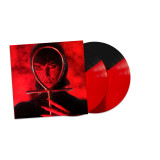
Die zweite LP des Duos aus Megan Louise und Johnny Jewel (Chromatics) wurde in LA und Palm Springs, Kalifornien, geschrieben und aufgenommen. Inspiriert von der ultralebendigen Welt der 1970er Giallo-Filme schrieben Desire den Soundtrack ihrer Träume mit ihren Lieblingsinstrumenten: Minikorg, Jupiter 8, 909, Mellotron, Simmons Rhythm Modules, String Machine, D-50, Fender Rhodes. Während House-Rhythmen die Grundlage ihrer Erzählungen bilden, ergänzen pulsierende Synthwave- und Daytime-Drama-Seifenopern die Farbpalette des Albums. Gesungen wird auf Englisch, Französisch und Koreanisch, was der Mischung noch mehr Dramatik verleiht. Durch all das hindurch gibt es den Optimismus des Kompasses der wahren Liebe, der uns durch all das Chaos navigiert, das das Leben zu bieten hat.
Закажите сейчас, и мы закажем товар для вас у нашего поставщика.

Caroline Says' haunting new album, The Lucky One, is a poignant exploration of how the ghosts of past relationships linger, sometimes holding more sway over our hearts and minds than our current connections. We revisit these ghosts through evocative landscapes of our memories - hometown bars, road trips, and late-night swims. Through a series of fractured and persistent memories these songs capture the bittersweet realization that the past, though imperfect, can sometimes be a more comforting and meaningful companion than the present. Opening track, "The Lucky One," confronts death's role in shaping our memories head-on, as it ponders the way death freezes a person in time, forcing us to confront the complexities of grief and its lasting impact on our relationship with the one we lost. Other tracks delve into the complexities of relationships that naturally grow apart as life takes us in different directions. For example, "Faded and Golden" reflects on the bittersweet nature of reunions with old friends, where the idealized memories of youth can clash with the realities of the present. Then, "Actors" takes this a step further, acknowledging the influence of perception and desire in friendships, and the idea that in many ways "all friendships are imaginary friendships," as it confronts the disappointment of inauthentic connections, and the facades we sometimes put on in relationships. "Roses" began when Caroline was looking through her grandma's collection of commemorative Kentucky Derby glasses, each one etched with the name of a winner. The song delves into the story of "Sunday Silence," the horse that won the year Caroline was born. Researching the horse's journey from near-Triple Crown glory to retirement in Japan sparked a metaphor - a pressured being (the horse) desperately trying to please but ultimately disappointing. The owners eventually selling the horse becomes a relatable symbol of unmet expectations, and the sting of falling short despite our best efforts. Album closer, "Something Good," revisits Caroline's Alabama childhood. Lost on a recent trip to Birmingham, unable to find the familiar path to a riverside hangout, the experience becomes a powerful metaphor; we can't always retrace the paths in our memories, but those memories, however unreliable, continue to shape us. In the end, The Lucky One celebrates this enduring power, acknowledging how past relationships and experiences, even those lost to the haze of time, continue to inform the stories we tell ourselves, and the way we navigate the present.
он должен быть опубликован на 11.10.2024

Ursprünglich im September 2000 auf Science/Virgin veröffentlicht, festigte Solaris Rupert Parkes' Rolle als unverwechselbare Kraft im Bereich des Underground-Dance und führte einige seiner Zuhörer in die Irre, indem es sich vom mathematischen Drum and Bass seines Debüts Modus Operandi entfernte. Diese Wiederveröffentlichung wird hier mit akribischer Aufmerksamkeit für die Details der ursprünglichen britischen Erstpressung präsentiert und ist auf zwei 140g-LPs erhältlich. Modus Operandi wurde 1997 veröffentlicht und war sowohl ein Kritiker-Liebling als auch ein kommerzieller Erfolg, der Photek als eine Art schattenhafte Leitfigur in der Welt des Drum and Bass etablierte, nachdem er in den Jahren zuvor bei Metalheadz gelernt hatte. Solaris, das drei Jahre später erschien, wurde mit Spannung erwartet; hier spielte Photek mit Form und Genre. Glamorama mit seiner stark verhallten Bearbeitung der Stimme der Künstlerin Marie-Jos Jongerius klingt nicht unähnlich zu David Byrnes und Brian Enos klassischen Cut-ups von My Life In The Bush of Ghosts. Wo Solaris von seinem Vorgänger abweicht, ist der wunderschöne Deep-House-Sound von Mine To Give und Can't Come Down, die beide von der Chicagoer Legende Robert Owens gesungen werden und Photeks Techno-Seele mehr Herz verleihen. Wie um seine Kritiker zum Schweigen zu bringen, zeigten die unerbittlichen achteinhalb Minuten von Infinity, dass nur wenige die Grenzen von Drum and Bass so weit hinausschieben können wie Photek. Photek ist heute ein etablierter Film- und Fernsehkomponist in Hollywood. Dennoch wird seine Arbeit liebevoll in Erinnerung behalten und sehr respektiert.
Закажите сейчас, и мы закажем товар для вас у нашего поставщика.

audioMER. is honoured to announce the release of a new LP; Make Visible the Ghosts with music by Aki Onda (US/JP) and artwork by Paul Clipson (US). This album is the follow-up of Aki Onda’s Cinemage project Lost City—with Loren Connors and Alan Licht—released on audioMER. in 2015.
On Make Visible the Ghosts, New York-based musician Aki Onda composed the soundtrack for the images of the San Francisco experimental filmmaker Paul Clipson, who suddenly passed away on February 3, 2018.
In 2009, Clipson and Onda met at the Amsterdam Schiphol Airport for the first time and shared a ride to the International Film Festival Rotterdam, where they presented audio-visual works in the same bill. Since then, the two artists – known for their highly personal approach with Super 8, 16mm, cassette Walkman and radio – maintained a close friendship over the next nine years. Their works deal with memory, time, space, and those reflections, and they had a lot to share.
Onda and Clipson completed their collaboration work Make Visible The Ghosts—a combination of vinyl LP of Onda’s music and large-size collage artwork by Clipson—a few months before Clipson’s departure from life. The work is composed of the materials they used for their performance in New York in 2012 and developed over the three years from 2015 to 2017. Onda notes:
“The loss of Paul has left a huge hole in our mind including his friends and collaborators. Paul is no longer here, and this is a chance to remember him and his images that extended and expanded our perception of how the world can be seen and heard.”
Закажите сейчас, и мы закажем товар для вас у нашего поставщика.
