Buscar:palm

Estilos
Todo
Subjoi - Reflections EP

London’s SlothBoogie records welcomes Subjoi to its roster with his four-track ‘Reflections’ EP.

Hailing from Warsaw in Poland and now residing in Adelaide, Australia, Subjoi has been gaining steady traction in the House scene over the past five years, racking up releases on the likes of clipp.art, Shall Not Fade’s Lost Palms sub-label, Lobster Theremin sub-label Distant Hawaii and 13th Hour amongst others. Here we see him joining the roster of SlothBoogie Records with some more soul-infused and sun-drenched house cuts.

Up first on the EP is ‘At A Time’, seeing Subjoi lay down an amalgamation of disco string, brass and vocal samples atop a swinging drum groove, dynamically evolving with filter sweeps and a loopy feel throughout. ‘Gone’ follows next and employs more classic house tropes courtesy of a bouncy piano line, robust drums and hooky vocal chops.

Opening the B-side is ‘What You Do’, shifting things aesthetically to 2-step drums alongside airy stab sequences, bubbling synth melodies and processed R&B style vocal lines. ‘Sapporo Nights’ completes the EP next on a deeper tip, journeying through hazy string lines, warm bell chimes, heavy doses of sub bass and stripped-back, bumpy drums.

Disponible

En el almacen y preparando para el envío

13,03
REES - Devils Club EP

Rees

Devils Club EP

12inchCWPT003
CWPT
01.07.2022

Following releases from label founder Palms Trax, a reissue of eighties Chicago House innovator Rog’e, and a pair of cassette mixtapes from Berlin-based selectors Enchanted Rhythm and Budino, CWPT looks to the North-East of England for its next release, live and direct from REES.

Hot on the heels of a twelve-inch on Bordello A Parigi and underscoring a slowly simmering reputation as one of the brightest stars of his community, REES’s debut on CWPT is a classy and globally informed perspective on house, disco and acid styles.

Undistilled rhythm is at the heart of Rees’s vision of club culture; on title track, Devils Club, it’s effect makes itself known immediately, driving a channel of lively percussion towards a series of tasteful breakdowns that are both propulsive and alluring. On ‘Magic’, a confidently raw, loose drum loop accelerates into a glossy, psychedelic speed-chase that’s pure Miami Vice reimagined in Middlesbrough.

On the flip, two versions of ‘The Spirit’ tastefully expand beyond REES’s musical borders and into warm, cinematic territory, blending tropically tinted instrumentation with (and then without) an entrancing vocal sample.

Disponible

En el almacen y preparando para el envío

13,03
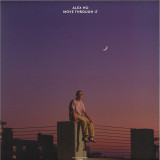
ALEX HO - MOVE THROUGH IT LP

Debut album from Alex Ho out of Los Angeles.

In his foundational essay on Los Angeles, L.A. Glows, the essayist Lawrence Weschler speaks on the city's uncanny, immediately recognizable light; "The late-afternoon light of Los Angeles—golden pink off the bay through the smog and onto the palm fronds." Weschler traces the city's mysterious refracted light from the iconic paintings of David Hockney through the city's frequent portrayal on film and TV, noting its ability to put residents into a state of "egoless bliss."

Similarly, Alex Ho's new album for Music From Memory, 'Move Through It', radiates with the unmistakable LA glow. While the Pasadena native's studio work is just now coming to light, Ho has long been a fixture in the Los Angeles dance music scene, throwing what are perhaps the city's most musically expansive warehouse events and carving out a singular voice as a DJ, as heard on his brilliant Moony Habits show for NTS. The eight-track record, however, lands in a more contemplative zone, better suited for a golden hour drive than a night out.

Though it's his first record, 'Move Through It' is the accomplished work of a fully-formed artist, produced patiently between 2017 and 2020 with help from friends including Baba Stiltz, Phil Cho, Damon Palermo and John Jones. "Mark," the Koanic track conclusion side A, is an arpeggiated slow burn reminiscent of Pino Donaggio's brilliant score for Brian De Palma's 1984 film Body Double. Ho's stunning, pure falsetto soars above gentle melodies. "Miss Suzuki," the piece that originally caught the ear of MFM's Jamie Tiller and Tako, opens the record with a blue, cinematic sway. Ho's facility for poignant melodies—easily conveyed through saxophone, vibes, various keyboards and his own voice—shines on "College Crest Drive," as well as the title track. The lyrical "Move Through It" and the restrained and beautiful closing cut, "TYFC," are abetted by glimmering Kraut guitar figures courtesy of John Jones.

While Ho's rhythms and melodies paint a crystal-clear musical vision, the music's emotional centre is more elusive, indicative of a yearning feeling synonymous with the City Of Angels. Hitting these hazy and subtle notes, Move Through It falls within a canon of sun-addled records spanning from Herb Alpert's "Rotation" to Dam-Funk's Private Life trilogy as Garrett. An immersive and concise statement, Alex Ho's 'Move Through It' is as warm and uncanny as the city that inspired it, a definitive LA album.

Disponible

En el almacen y preparando para el envío

20,38
Lilly Palmer - We Control EP

Lilly Palmer

We Control EP

12inchDC258
Drumcode
27.04.2022

One of the most exciting names to emerge on the techno scene in recent times, Lilly Palmer makes her long-awaited Drumcode EP debut.

The German artist is a thrilling performer, who backs up her kinetic DJ sets with a quality body of production work. We got a taste of her talent when she contributed ‘Amnesie’ to A-Sides Vol.10 and elsewhere she’s dropped heat on labels including Octopus Records, Senso Sounds and her own Spannung Records imprint.

‘We Control’ is a satisfying label debut exhibiting her stealth-like ability to work a dancefloor with a variety of driving techno moods. The title track embodies a key-driven Motor City vibe, before thrilling waves of jagged synths and ravey effects take the cut into brain spangling bosh territory. ‘Resistance’ builds tension and anticipation in equal parts and is a vibe-heavy tool needed for every set. ‘Plasma’ is a full-force weapon that highlights why there’s so much excitement surrounding the rising artist. The EP closes with ‘Don’t Look Back’, as deep pulsating layers of bass cascade towards the finish line.

Disponible

En el almacen y preparando para el envío

14,24
Comtron - The Roaring Twenties LP 2x12"

After a long hiatus in Comtron releases they are back. Stronger than ever. Comtron (Fatima Yamaha and Rimer London) are known for they're critical view on society, the financial and political world. From dark and twisted electro tracks to pumpin' big room, gimmicky techno, deep swirling ambient and slow house beats, this double 12" has no flaws.

Disponible

En el almacen y preparando para el envío

19,87
Victor Ruiz / Ilija Djokovic / Veerus - A-Sides Vol.10 (Vinyl 3 of 5)

A rare treat for Drumcode faithful: A-Sides Vol.10 is set to drop in December, the second edition of the beloved series to come in 2020.

Fuelled by the extra time and space to be creative during lockdown, Drumcode’s collective of artists have stepped up. Across 17 contributions, the producers have gone deeper into their sonic repertoire, crafting powerful, yet reflective works that capture the range of the label’s sound.

Jay Lumen leads the way with a rousing riff-driven weapon, ‘Galactic Rainbow’, while Ramon Tapia brings us the muscular gem ‘Drum Control’, mixing up ruffneck techno with a barrage of synapse-tickling synths in the second half. Both rousing highlights of the compilation.

Victor Ruiz, Drumcode’s most prolific contributor in 2020, dishes up ‘Love Story’, led by a huge vocal lead. Zimmz also returns with ‘Tension’, which deftly combines deep squelchy grooves with a silky synth interlude. Thomas Hoffknecht follows up his debut on Vol.9 with ‘Escape’, keeping listeners on their toes with dynamic, choppy shifts throughout. Veerus joins with another stirring addition ‘I Know’, reinforcing why Beyer rates him so highly.

Elsewhere a string of debutants feature: buzzy newcomer Lilly Palmer gives us ‘Amnesie’, a brilliantly pummelling and eerie cut; Alex Lentini & Stomp Boxx serve up ‘Expanders’ mixing up drone effects, trippy vocals and an unsettling melody line; and Patrik Berg’s ‘Activated’ is full-bodied techno that drops down into funky rhythms.

Long-time DC family member Bart Skils brings his A-game with the thrilling no-nonsense ‘Solid State’ that hits like a steam train. Likewise, Alan Fitzpatrick who brings a momentous slab of techno energy with ‘Rochus’, while Thomas Schumacher, now feeling like a regular on the imprint, crafts another dark techno opus, this time in collaboration with CAITLIN.

There’s even a special appearance by the chief Adam Beyer, who makes a welcome return with the progressive-tinged ‘Changes’, driven by organic tones and spacey atmospherics. The track stands as his first original contribution to A-Sides since 2017.

Disponible

En el almacen y preparando para el envío

14,50
Ramon Tapia / Thomas Hoffknecht / Adam Beyer / Timmo - A-Sides Vol.10 (Vinyl 2 of 5)

A rare treat for Drumcode faithful: A-Sides Vol.10 is set to drop in December, the second edition of the beloved series to come in 2020.

Fuelled by the extra time and space to be creative during lockdown, Drumcode’s collective of artists have stepped up. Across 17 contributions, the producers have gone deeper into their sonic repertoire, crafting powerful, yet reflective works that capture the range of the label’s sound.

Jay Lumen leads the way with a rousing riff-driven weapon, ‘Galactic Rainbow’, while Ramon Tapia brings us the muscular gem ‘Drum Control’, mixing up ruffneck techno with a barrage of synapse-tickling synths in the second half. Both rousing highlights of the compilation.

Victor Ruiz, Drumcode’s most prolific contributor in 2020, dishes up ‘Love Story’, led by a huge vocal lead. Zimmz also returns with ‘Tension’, which deftly combines deep squelchy grooves with a silky synth interlude. Thomas Hoffknecht follows up his debut on Vol.9 with ‘Escape’, keeping listeners on their toes with dynamic, choppy shifts throughout. Veerus joins with another stirring addition ‘I Know’, reinforcing why Beyer rates him so highly.

Elsewhere a string of debutants feature: buzzy newcomer Lilly Palmer gives us ‘Amnesie’, a brilliantly pummelling and eerie cut; Alex Lentini & Stomp Boxx serve up ‘Expanders’ mixing up drone effects, trippy vocals and an unsettling melody line; and Patrik Berg’s ‘Activated’ is full-bodied techno that drops down into funky rhythms.

Long-time DC family member Bart Skils brings his A-game with the thrilling no-nonsense ‘Solid State’ that hits like a steam train. Likewise, Alan Fitzpatrick who brings a momentous slab of techno energy with ‘Rochus’, while Thomas Schumacher, now feeling like a regular on the imprint, crafts another dark techno opus, this time in collaboration with CAITLIN.

There’s even a special appearance by the chief Adam Beyer, who makes a welcome return with the progressive-tinged ‘Changes’, driven by organic tones and spacey atmospherics. The track stands as his first original contribution to A-Sides since 2017.

Disponible

En el almacen y preparando para el envío

14,08
Ricardo Villalobos & Oren Ambarchi - Hubris Variation

RE-RELEASE OF THE RECORD ORIGINALLY RELEASED ON 2016-11-18!

Oren Ambarchi's recent Editions Mego release Hubris gets the remix treatment courtesy of electronic music legend Ricardo Villalobos.
Villalobos expertly tranforms Ambarchi's layered web of countless sustained and pulsating palm-muted guitars into a funky, mesmerising and propulsive long-form piece.
key selling points:
- Electronic music legend Ricardo Villalobos remixes Oren Ambarchi
- Original track by Oren Ambarchi taken from the album HUBRIS (Editions Mego EMEGO 227)
-. Villalobos expertly tranforms Ambarchi's layered web of countless sustained and pulsating palm-muted guitars into a funky, mesmerising and propulsive long-form piece.
- Photograph by Estelle Hanania - Sculptures by Daniel Druet - Design by Stephen O'Malley
- Vinyl cut by Rashad Becker at Dubplates & Mastering

Disponible

En el almacen y preparando para el envío

19,79
Afroman - Crazy Rap

Afroman

Crazy Rap

12inchCLO7170LP
X-Ray Records
01.05.2026
  • A1: Crazy Rap (Colt 45 & 2 Zig Zags)
  • A2: She Won't Let Me Fuck
  • A3: Humpin
  • A4: High On The Highway
  • A5: High On The Highway, Pt. Ii
  • B1: Palmdale
  • B2: Because I Got High
  • B3: Happy To Be Alive
  • B4: Smokin' Hay
  • B5: Weed Life
Reservar01.05.2026

debe ser publicado en 01.05.2026

30,04
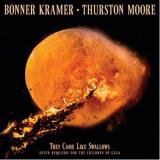
BONNER KRAMER | THURSTON MOORE - THEY CAME LIKE SWALLOWS - SEVEN REQUIEMS FOR THE CHILDREN OF GAZA LP
  • 1: Urn Burial
  • 2: The Redness In The West
  • 3: The Third Migration
  • 4: They Came Like Swallows
  • 5: The Living Theater
  • 6: The Oceans Are Crying
  • 7: Insight
También disponible

Black Vinyl[30,67 €]


They Came Like Swallows is the first album-length collaboration between Thurston Moore and Kramer (now officially Bonner Kramer), two giants of alternative/ experimental music. The accomplishments and influence of these two artists in the world of independent music cannot be overstated and the result of their artistic union is a startlingly cohesive statement that burns through landscapes of primitive outsider rock, avant-garde composition, progressive ambient and further locales boldly and beautifully unnamable. “Kramer and I reconnected in Miami, Florida, a few years back, many many years after each of us had departed NYC on separate life adventures. It was only a matter of time before Kramer and I started making plans to record together and with his irrepressible due diligence he quickly set up a mobile recording contraption in the pad I was decamped in, the Florida sunshine flowing through the palm leaves, lithe lizards skittering across the windowsills, and we just went for it.

Kramer had the idea to cover a Joy Division tune, a left turn from the improvisations we had been tracking, though wholly in keeping with both our sensibilities of light and dark unifying in transcendent songwriting, both of us devotees of 'the song' as well as 'the freedom.’ What transpired is They Came Like Swallows, a session we immediately felt should exist as a prayer to the war-torn souls of the families of Palestine continually decimated by the brutality of genocide. We agreed beyond words to offer our music as a sonic activism and as a beneficent energy. This album is our duo exchange for human dignity, it is our soul music for any semblance of a peaceful planet.” ~ Thurston Moore “For the first time in our nearly 45 years of friendship, we had identical time windows open to make a record together,” recounts Kramer. After all this time not a moment is wasted as the duo immediately taps into the heightened core of improvisational tension across these seven offerings. Volcanic opener “Urn Burial” notches a similar historic union (John Cale and Terry Riley) to meet the circumstances of the moment, with swirling mists of organ and pounding toms over guitar that thickens the atmosphere with jagged, grimy dissonance.

Solemn strings open the second track, “The Redness In The West,” with Kramer’s cello and viola in dueling bow beneath the high tension drive and sustain of Thurston’s electric guitar, tapping out a Morse code of tension that mounts endlessly into a fog of inevitable war by the end. Moore and Kramer’s sense of experimentalism is in free and full grandeur throughout They Came Like Swallows, though the duo keep a strong and constant sideways eye on melody, composition and architecture, to the ends that any strict lines between song and improvisation are blurred beyond qualification.

As if to punctuate this point, Swallows closes with a nightwork cover of Joy Division’s “Insight,” a doleful coda that breathes out with a solemn inner grace under Thurston’s instantly stylistically recognizable guitar melodies as they weave into he and Kramer’s unison voices. As the lone vocal piece and only traditional ‘song’ form on the album, “Insight” is unique to this set and as a closing statement draws connective lines back to the kind of dynamic, electrified melodicism that wove deep, melancholy patterns into the untamed fire of Sonic Youth’s Sister and Daydream Nation. In the album’s final moments, the two voices repeat the lyric “I’m not afraid anymore” as mantra, underscoring the heavy, unsettled themes and methods that preceded it. Kramer describes the creative process of They Came Like Swallows: “I had composed and recorded a few pieces at my home studio over the course of a couple weeks. Thurston was spending the winter in South Florida, so I flew down and spent a few days recording his guitar parts in his home there. Watching him spontaneously compose his parts was pretty astonishing, to say the least. Once we'd finished working on those pieces, we began improvising and following wherever the music pointed us, and another few pieces were born. We got straight to it, without anything driving us other than the joy of finally working together.

My personal goal was to remain present and catch as many surprises as I could from Thurston's guitar work, and there were plenty during those few days. We had a fucking blast.” Thurston’s contributions here will be readily familiar to any acolytes of his other works, the through-line between his inspired playing, cradled in Kramer’s meticulous, solid arrangements. “If I had to make this record again, I'd do it all exactly the same way,” Kramer says. “It’s like jazz, you don't think about it. You just do it. It was miraculous, and you don't fuck with a miracle.”

Reservar01.05.2026

debe ser publicado en 01.05.2026

32,35
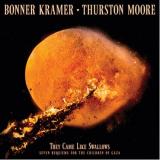
BONNER KRAMER | THURSTON MOORE - THEY CAME LIKE SWALLOWS - SEVEN REQUIEMS FOR THE CHILDREN OF GAZA LP

They Came Like Swallows is the first album-length collaboration between Thurston Moore and Kramer (now officially Bonner Kramer), two giants of alternative/ experimental music. The accomplishments and influence of these two artists in the world of independent music cannot be overstated and the result of their artistic union is a startlingly cohesive statement that burns through landscapes of primitive outsider rock, avant-garde composition, progressive ambient and further locales boldly and beautifully unnamable. “Kramer and I reconnected in Miami, Florida, a few years back, many many years after each of us had departed NYC on separate life adventures. It was only a matter of time before Kramer and I started making plans to record together and with his irrepressible due diligence he quickly set up a mobile recording contraption in the pad I was decamped in, the Florida sunshine flowing through the palm leaves, lithe lizards skittering across the windowsills, and we just went for it.

Kramer had the idea to cover a Joy Division tune, a left turn from the improvisations we had been tracking, though wholly in keeping with both our sensibilities of light and dark unifying in transcendent songwriting, both of us devotees of 'the song' as well as 'the freedom.’ What transpired is They Came Like Swallows, a session we immediately felt should exist as a prayer to the war-torn souls of the families of Palestine continually decimated by the brutality of genocide. We agreed beyond words to offer our music as a sonic activism and as a beneficent energy. This album is our duo exchange for human dignity, it is our soul music for any semblance of a peaceful planet.” ~ Thurston Moore “For the first time in our nearly 45 years of friendship, we had identical time windows open to make a record together,” recounts Kramer. After all this time not a moment is wasted as the duo immediately taps into the heightened core of improvisational tension across these seven offerings. Volcanic opener “Urn Burial” notches a similar historic union (John Cale and Terry Riley) to meet the circumstances of the moment, with swirling mists of organ and pounding toms over guitar that thickens the atmosphere with jagged, grimy dissonance.

Solemn strings open the second track, “The Redness In The West,” with Kramer’s cello and viola in dueling bow beneath the high tension drive and sustain of Thurston’s electric guitar, tapping out a Morse code of tension that mounts endlessly into a fog of inevitable war by the end. Moore and Kramer’s sense of experimentalism is in free and full grandeur throughout They Came Like Swallows, though the duo keep a strong and constant sideways eye on melody, composition and architecture, to the ends that any strict lines between song and improvisation are blurred beyond qualification.

As if to punctuate this point, Swallows closes with a nightwork cover of Joy Division’s “Insight,” a doleful coda that breathes out with a solemn inner grace under Thurston’s instantly stylistically recognizable guitar melodies as they weave into he and Kramer’s unison voices. As the lone vocal piece and only traditional ‘song’ form on the album, “Insight” is unique to this set and as a closing statement draws connective lines back to the kind of dynamic, electrified melodicism that wove deep, melancholy patterns into the untamed fire of Sonic Youth’s Sister and Daydream Nation. In the album’s final moments, the two voices repeat the lyric “I’m not afraid anymore” as mantra, underscoring the heavy, unsettled themes and methods that preceded it. Kramer describes the creative process of They Came Like Swallows: “I had composed and recorded a few pieces at my home studio over the course of a couple weeks. Thurston was spending the winter in South Florida, so I flew down and spent a few days recording his guitar parts in his home there. Watching him spontaneously compose his parts was pretty astonishing, to say the least. Once we'd finished working on those pieces, we began improvising and following wherever the music pointed us, and another few pieces were born. We got straight to it, without anything driving us other than the joy of finally working together.

My personal goal was to remain present and catch as many surprises as I could from Thurston's guitar work, and there were plenty during those few days. We had a fucking blast.” Thurston’s contributions here will be readily familiar to any acolytes of his other works, the through-line between his inspired playing, cradled in Kramer’s meticulous, solid arrangements. “If I had to make this record again, I'd do it all exactly the same way,” Kramer says. “It’s like jazz, you don't think about it. You just do it. It was miraculous, and you don't fuck with a miracle.”

Reservar01.05.2026

debe ser publicado en 01.05.2026

30,67
Avital Rolnick - The Space Withini (LP, Postcard)

Wondrous ethereal folk songs by a reclusive pen pal of Maxine Funke, first introduced to A Colourful Storm by Funke while sharing music and ideas during her Australian tour. Ghost faced pansies. A moth coloured cat. Cauliflowers, cabbages undying. I hear the spine of the dictionary crack. Is what they call a creature who only wakes at dusk. And turning backs. My afternoon has turned pitch black. For a trace. For a shape. I wipe the steam from the window like the bloom on a grape. Ghost faced pansies. A moth coloured cat. Light of stars long since died.

Reservar24.04.2026

debe ser publicado en 24.04.2026

20,59
TV STAR - MUSIC FOR HEADS
  • 1: The Package
  • 2: Reality Cheque
  • 3: Two Revolutions
  • 4: Texas Relation
  • 5: Greener Pastures
  • 6: For Heads
  • 7: Lodestar
  • 8: Koresh Me Down
  • 9: Out Of My Bag
  • 10: Strawberry Hero

Manchmal hörst du eine Band, die sich gleichzeitig neu und vertraut anfühlt, und das lässt dich innehalten. TV Star ist so eine Band. In den letzten Jahren hat die fünfköpfige Band aus Seattle-Tacoma, Washington, still und leise an ihrer Stärke gearbeitet - EP für EP, Show für Show -, bis ihr lang erwartetes Debütalbum ,Music For Heads" rauskam und klar machte: Sie haben sich zu etwas Besonderem entwickelt. Eine Mischung aus jangly-psych, Garage-Grit und Soft-Focus-Tiefe; diese Songs leuchten von innen heraus mit einer beeindruckenden Originalität. In einer Zeit, in der so viel Musik in algorithmischer Gleichförmigkeit verschwindet, klingt TV Star trotzig menschlich. Auf den zehn Tracks der LP schärft die Band ihre Instinkte, die sie über die Jahre verfeinert hat - sie kombiniert zeitlose Pop-Sensibilität, psychedelisch angehauchten Jangle in der Tradition von The Brian Jonestown Massacre, punkige Rhythmussektionen und Vocals, die mit der Wärme von Mojave 3 dahinschweben, um etwas ganz Eigenes zu schaffen. Mit Music For Heads greifen sie nicht nur auf die Musik der Vergangenheit zurück, sondern treiben eine neue Welle voran. Die Band wurde 2020 aus der gemeinsamen Bewunderung für den Psych-Rock der 90er Jahre, klassischen Shoegaze und Alt-Country-Underdogs gegründet. Der Startschuss fiel, als jemand die Kassette ,Electriclarryland" der Butthole Surfers aus dem Jahr 1996 von der Wand nahm und auf den Track ,TV Star" zeigte. Was folgte, war weniger die Gründung einer Band als vielmehr die Entstehung eines kleinen Ökosystems. Ashlyn Nagel (Gesang, Keyboard), Bryan Coats (Gitarre), Che Hise-Gattone (Gitarre), Mark Palm (Bass) und Tucker Devault (Schlagzeug) brachten ihre eigenen Instinkte, Eigenheiten und musikalischen Hintergründe mit ein, bis die Songs schließlich nach allen gleichzeitig klangen. Aufgenommen in einer Reihe gemütlicher Studios im Nordwesten - The Unknown in Anacortes und ein paar Verstecken in Seattle - ist ihr Debütalbum ,Music For Heads" eine Mischung aus klirrender Gitarrenmusik, psychedelischem Pop und authentischem Indie-Rock, ohne sich ganz auf einen Stil festzulegen.

Reservar24.04.2026

debe ser publicado en 24.04.2026

22,27
Teho Teardo - Twin Peaks and Other Infinities LP
  • A1: Falling
  • A2: Eravamo Senza Saperlo
  • A3: Fuochi Alleati
  • A4: Laura Palmer’s Theme
  • A5: Twin Peaks Theme
  • A6: L’insonnia Delle Rondini
  • A7: L’unico Confine È La Pelle
  • A8: The Ghost Of Piacenza
  • A9: And The Birds Will Have Their Say
Reservar24.04.2026

debe ser publicado en 24.04.2026

26,01
Byard Lancaster - Us

'At the beginning of the 1960s, at the Berklee College of Music, Byard Lancaster met some feisty friends: Sonny Sharrock, Dave Burrell and Ted Daniel. It is easy to see why he rapidly became involved in free jazz. Once he was settled in New York, he appeared on Sunny Murray Quintet, recorded under the leadership of the drum crazy colleague of Albert Ayler.
'In 1968, the saxophonist and flutist recorded his first album under his own name: It’s Not Up To Us. The following year he came to Paris in the wake of… Sunny Murray. He would come back to France in 1971 (again with Murray) and in 1973 (without Murray for a change). This is when he met Jef Gilson, the pianist and producer who encouraged him to record under his own name again. On Palm Records (Gilson’s label), he would release four albums: Us, Mother Africa, Exactement and Funny Funky Rib Crib.

'Us, the first of the four records was recorded on November 24th, 1973 with Sylvin Marc on electric bass (a Fender… Lancaster?) and the evergreen Steve McCall on drums.
'On the album, the trio works from the John Coltrane model; free jazz shook up by the timely contributions of the bassist, followed by a mesmerizing atmospheric music. Then, Lancaster delivers a sinuous solo path, which is a reminder of his unique tone. On the album’s companion single, the trio launches into great black music of a different genre which would lead the clairvoyant François Tusques to claim that Byard Lancaster is an “authentic representative of soul/free jazz”, to sum up this is Great Black Music!'

No en stock

Haga su pedido ahora y le encargaremos el artículo en nuestro proveedor.

27,94

Ültimo hace: 18 Días
Various - Tchic Tchic: French Bossa Nova 1963-1974  Colored Edition LP 2x12"
  • A1: Les Masques - Il Faut Tenir (1969)
  • A2: Isabelle Aubret - Casa Forte (1971)
  • A3: Christianne Legrand - Hlm Et Ciné Roman (1972)
  • A4: Jean Constantin - Pas Tant D'chichi Ponpon (1972)
  • A5: Billy Nencioli & Baden Powell - Si Rien Ne Va (1969)
  • B1-: Marpessa Dawn - Le Petit Cuica (1963)
  • B2: Jean-Pierre Sabar - Vai Vai (1974)
  • B3: Sophia Loren - De Jour En Jour (1963)
  • B4: Isabelle - Jusqu’à La Tombée Du Jour (1969)
  • B5: Sylvia Fels - Corto Maltesse (1974)
  • C1: Frank Gérard - Comme Une Samba (1972)
  • C2: Ann Sorel - La Poupée Des Favellas (1971)
  • C3: Charles Level - Un Enfant Café Au Lait (1971)
  • C4: Andrea Parisy - Les Mains Qui Font Du Bien (1970)
  • C5: Audrey Arno - Quand Jean-Paul Rentrera (1969)
  • C6: Aldo Frank - T’as Vu Ce Printemps (1970)
  • D1: Christianne Legrand - Cent Mille Poissons Dans Ton Filet (1972)
  • D2: Clarinha - Lemenja (1970)
  • D3: Hit Parade Des Enfants - Aquarela (1976)
  • D4: Jean-Pierre Lang - Tendresse (1965)
  • D5: Magalie Noël - Une Énorme Samba (1970)
  • D6: Françoise Legrand - La Lune

Ever since the late 1950s bossa-nova revolution, Brazil’s influence on French music has been undeniable. Pierre Barouh, Georges Moustaki and a vast array of lesser known artists, all made the Musica Popular Brasileira (MPB) an axis of promotion at the service of a cool and metaphysical, modern and mixed Brazilian lifestyle. Some were seduced by the poetic languors of the bossa, some were looking for fun, and others just loved the American hybridization of jazz-bossa, jazz-samba.


What is bossa nova? One of its creators, Joao Gilberto said: "Its style, cadence, everything is samba. At the very start, we didn't call it bossa nova, we sang a little samba made up of a single note - Samba de uma nota so .... The discussion around the origins of bossa nova is therefore useless”. It is nevertheless useful to remember that these magnificent Brazilian songs, which the guitarist describes as samba, were shifted and balanced around improbable chords. "I like things that lean, the in-betweens that limp with grace," said Pierre Barrouh, quoting Jean Cocteau.


With emotion, arrangements for violin and supple guitar licks, bossa nova rapidly changed. A transformation that can be heard in the Tchic, tchic, French Bossa Nova 1963-1974 compilation, the result of a cultural reappropriation, which traveled through the United States and supplemented itself in France.

A musical revolution that has remained significant, bossa nova was born in Rio. From 1956 to 1961, Brazil lived through its golden years. In five years, the country had invented its modernist style. Elected president in 1956, Juscelino Kubitschek de Oliveira, an elegant man with a broad forehead, brandished a promising slogan: "Fifty years of progress in five years". He quickly got to work. Not worried about increasing debt, he launched the project for a new federal capital, Brasilia, designed by the communist architect Oscar Niemeyer. Volkswagen opened state-of-the-art factories and created the “fusquinha”, the Beetle. In Rio, the Vespa made its first appearance. The Arpoador Surf Club crew run into the “girl” from Ipanema, Helô Pinheiro - the tanned garota ("chick"), between a flower and mermaid, who at 17 walked by the Veloso bar, where the fiery author and composer, Tom Jobim and Vinicius de Moraes, were getting drunk on whiskey. From then on, bossa symbolized cool.

In 1958, Joao Gilberto recorded Chega de Saudade, which the directors of Philips denied, calling it "music for fagots". The marketing director, who believed in it, secretly pressed 3000 78-inch vinyls and distributed them at schools around Rio, creating a tidal wave.

American jazzmen then took over. In particular, trumpeter Dizzy Gillespie and guitarist Charlie Byrd. In November 1962, the Brazilian Ministry of Foreign Affairs funded a "Bossa-Nova" concert at Carnegie Hall in New York, inviting the genre’s pioneers. Unprepared, the show soon turned to disaster. But the troupe was invited to the White House by Jackie Kennedy. The first lady loved "the new beat" and in particular Maria Ninguem, a song by Carlos Lyra, later covered by Brigitte Bardot.

In Brazil, the 1964 military coup quickly ended this euphoria. The destructive atmosphere that ensued pushed many Brazilian musicians to leave, if not to exile. Thus, Tom Jobim, Sergio Mendes and Joao Gilberto arrived to the United States. In New York, Joao Gilberto met saxophonist Stan Getz. At the time, he was married to the Bahianese Astrud Weinert Gilberto, who had a German father. She had never sung before, but she knew how to speak English. Getz therefore asked her to replace her husband on The Girl From Ipanema. The Getz/Gilberto record with Tom Jobim on piano, was released in March 1964. Phil Ramone, the "pope of pop" was in charge of sound.

Bossa nova arrived in Paris through the classic “guitar-voice” channel (Pierre Barouh, Baden Powell, Moustaki…) But France loved jazz and Paris had already welcomed its American contributors. All these good people were to pass through Saint-Germain-des-Prés. The cabaret l'Escale became the Mecca of Latin American sound where one could find Pierre Barrouh and his friends, such as the Camara Trio, samba-jazz aces, whose only record was published by the Saravah label. With a band strangely called Les Masques (a band that included Nicole Croisille and Pierre Vassiliu, among others), the Camara Trio recorded an interesting Brazilian Sound, including the track Il faut tenir which is present on this tasty compilation of rarities.

Other enlightened musicians can also be found on the compilation, such as Jean-Pierre Sabar (songwriter for Hardy, Auffray, Leforestier ...) and the French pop rock organist Balthazar. In 1975, Sabar recorded Aurinkoinen Musiikkimatka on a Finnish label, which featured the crazy Vai, Vai, included on this record. We are now following the footsteps of Brazilian electronic musicians such as Sergio Mendes, Eumir Deodato or Marcos Valle who created funk and disco sounds on their keyboards and synthesizers. A style that influenced Véronique Sanson when she wrote Jusqu’à la Tombée de la nuit in 1969 for Isabelle de Funès, the niece of Louis and a great friend of Michel Berger - Sanson did end up singing this track on her 1992 Sans Regret record.


The pinnacle of exoticism and travel, Sylvia Fels’ Corto Maltese includes bongos, sea mist and ocean sounds. The title was taken from Jacky Chalard’s concept album written in 1974, Je suis vivant, mais j’ai peur (I am alive, but I am scared), based on Gilbert Deflez’s science fiction novel.


However, bossa nova extended the scope of popularity. "In the 1970s, I was a fan of Sergio Mendes, Getz / Gilberto. I fell in love with this music that I knew because I had been an orchestral singer, " explained Isabelle Aubret, who in 1971 delivered a composite record of covers by the very funky Jorge Ben, Orfeu Negro, Tom Jobim, Vinicius de Morais and Jean Ferrat. "I recorded this album for Meys Records in Paris, far from Brazil, with wonderful musicians, François Raubert, Roland Vincent, Alain Goraguer...". The latter wrote the arrangements for Casa Forte, a very percussive title borrowed from Edu Lobo, one of the initiators of the bossa who spent time in California. "Jazz and bossa came together and produced very rhythmic music. I love singing, it allows me to dream, to have fun, to feel a high on stage, and these songs brought me joy, made me swing, my singing felt like a dance.”


The world tours of French singers and their desire for the tropics, often brought them to Rio with its hills, forests, caipirinhas and tanned bodies. There are surprises though, like this Iemenja (Iemenja is the goddess of the sea in the Afro-Brazilian candomblé religion). Not unlike the composer and musician Jean-Pierre Lang, based in Sao Paulo, Claire Chevalier taught Brazil to Brazil. In 1970, the singer and painter published a 45-inch vinyl, Mon mari et mes amants (My husband and my lovers), under the improbable pseudonym of Clarinha (little Claire). She was then living in Rio, with her husband, Joël Leibovitz, who founded a band called Azimuth, and who owned a record label specialized in "sambas enredos" songs for samba school parades.


For its B side, she asked Pierre Perret to come up with lyrics for a song composed by Carlos Imperial: "Oh goddess of the sea, o goddess Iemenja, I bring a white rose to adorn your long hair ..." . "Perret came to see us, and we had fun, remembers Joël Leibovitz. We wrote Lemenja for fun, we recorded it at the Havaí studio, behind the Central do Brasil the central station. Erlon Chaves, the arranger who worked with Elis Regina, joined us" adding his share of Afro-Brazilian percussions and funky brass to the mix.

There is a common misunderstanding in Franco-Brazilian history: that bossa, admittedly hedonistic, is perceived as funny, even though the poets who wrote the texts are often philosophizing on the human condition. Its French interpreters pull it towards a carnival inspired universe, far removed from its fundamental essence. Thus, Jean Constantin covered the famous Samba da minha terra, an ode to the art of samba written by the classic Bahian composer Dorival Caymmi, renaming it with the enticing title of Pas tant de tchi tchi pompon: "On your pier there is no tchi tchi / when you arch your back, you know everything is alright ”(lyrics by Gérard Calvi). This expedited bossa aims for the absurd, but retains a certain elegance.

Indeed, Jean Constantin was not an idiot, the rather large man had a huge mustache and liked fantasy, (Les pantoufles à papa, Le pacha, inspired by cha-cha-cha-cha, salsa and jazz) but he was also the lyricist of Mon manège à moi interpreted by Edith Piaf, the composer of Mon Truc en plume by Zizi Jeanmaire and the soundtrack of François Truffaut’s 400 Blows. Le Poulpe, published in 1970, from which this bossa is extract, was arranged by Jean-Claude Vannier, an accomplice of Serge Gainsbourg’s Melody Nelson. In short: "There is enough of samba / By looking at the parasol / Because my poor cabeza / Is going to die in the sun".

Even the American actress Marpessa Down, who was at the heart of the bossa nova revolution with her role as Euridyce in Marcel Camus’ film Orfeu Negro, winner of the 1959 Cannes Palme d'or, fed the clichée with Je voudrais parler au petit cuica - "Tell me how you manage to always make people want to dance / It's true, I must admit that I cannot resist your magic" - in consequence, once can hear the cuica, a little drum inherited from the Bantu.


But bossa nova had many angles. Societal, of course, pushing actresses who were symbols of women's liberation like Brigitte Bardot, Jeanne Moreau, or Sophia Loren to engage in the exercise of accelerated bossa. In February of 1963, Sophia Loren made a record in French in Rome, Je ne t'aime plus, featuring the song De jour en jour, a bossa written by two Italians, Armando Trovajoli and Tino Fornai, which was released a little later by Barclay. Bossa accompanied the 1960s, a decade of moral liberation. Ann Sorel, who interpreted La Poupée des favellas, caused a sensation with L’amour à plusieurs, a provocative song written by Frédéric Bottom and Jean-Claude Vannier. As for the actress Andrea Parisy, she displayed her bourgeois cheekiness in Marcel Carné's Les Tricheurs before interpreting Les mains qui font du bien. And Magalie Noël, the friend of Boris Vian, who sung Johnny fais-moi mal, was hired to sing Une énorme Samba, composed by Alain Goraguer (arranger to Gainsbourg, Bobby Lapointe and Jean Ferrat) with lyrics by Frédéric Botton.

But in the end, of what wood is bossa nova made of? The answer is given by Christianne Legrand, daughter of Raymond the conductor, and sister to Michel the composer: "With me, with jà" - jà means "immediately" in Portuguese. In 1972, the singer, an expert in vocal jazz and a member of the Double Six, published Le Brésil de Christianne Legrand. Two songs included on the Tchic Tchic compilation that demonstrate how bossa, jazz, funk, rock, etc. work like a swiss army knife: the music is used to denounce broken systems, or miracles, HLM et ciné roman, Cent mille poissons dans ton filet, two songs from the O Cafona soundtrack, a successful telenovela broadcast, at the time in black and white, on TV Globo. The first was adapted in French by the fighter and friend of the Legrand tribe, Agnès Varda. The second is content with a play on words, jostling them into a summer fun.


Véronique Mortaigne

Reservar17.04.2026

debe ser publicado en 17.04.2026

27,31
I Am An Instrument - Vol. 2 & 3

I Am An Instrument

Vol. 2 & 3

12inchIAAI003
IAAI Music
17.04.2026out soon

The recordings on Volume II were captured in Copenhagen, Denmark on January 18, 2020. Guided as much by human instinct as by musical intention, the ensemble moved through the evening with a shared sensitivity…listening, responding, and trusting the moment as it unfolded. Though Morten McCoy admits to having felt quite ill that evening, nothing in the music suggests restraint. Instead, what remains is a vivid, playful exchange, where McCoy and Johannes Wamberg carry both Part I and Part II as a flowing conversation, speaking through sound rather than words.

Part I begins abruptly, almost throwing the listener back in time to the exact moment the improvisation was born. Jonathan Bremer steps to the forefront, providing a solid, melodic bassline as Kristoffer and Eliel, perfectly in sync, lay down a steady foundation for whichever voice chooses to rise above the rhythm.

This is also one of the few I Am An Instrument recordings to feature two guitarists. Johannes Wamberg leads the way, shaping the harmonic direction, while Steven Jess Borth II adds subtle rhythmic textures through muted palm work, deepening the groove without ever stepping into the foreground.

Part II unfolds with Morten McCoy on his Moog One, delivering a beautiful, expansive solo. Using a carefully chosen patch, the sound pulses through the rhythm, moving with the groove rather than above it, riding the beat like a wave through the ocean.
Shaped by trust, presence, and collective improvisation, Volume II captures a group deeply attuned to one another, allowing intuition and momentum to guide the unfolding form.
——
Volume III was recorded in Copenhagen on March 5, 2020. Little did anyone know that only days later, the world would be placed on pause for years. Captured just before that moment of global stillness, this session carries a heightened sense of presence, a final gathering before silence reshaped everything. Recorded in a space more commonly associated with a club atmosphere, the music draws on a different kind of energy and immediacy. With Eliel Lazo unable to attend, the group invited Victor Dybbroe of Girls In Airports to join on percussion, subtly reshaping the ensemble while preserving its core spirit. Part I opens with Steven Jess Borth II calling out on tenor saxophone, answered by Morten McCoy on Wurlitzer electric piano. The piece gradually unfolds into a meditative groove, patient and expansive, carrying the listener through an eight-minute journey of layered rhythm and restraint.

Part II begins with Jonathan Bremer on stand up bass, slowly joined by the rest of the ensemble as each voice enters with intention. Midway through, an unexpected vocal melody from Borth emerges, drenched in reverb and delay, later reappearing as a melodic line on the tenor saxophone.

Part III is led by Morten McCoy on Wurlitzer electric piano. His signature melodic language sets the direction, guiding the ensemble while leaving ample space for the music to breathe and evolve through collective improvisation. Reprise returns to the closing moments of Part II, its title reflecting its origin. The familiar groove reappears, transformed into a distinctly Jamaican-influenced rhythm, over which Borth delivers a final tenor saxophone solo, bringing the conversation to rest.

Any questions about any of these products feel free to get in touch and we'll help you out!

[a] a1. Part I [Vol.2]
[b] a2. Part II [Vol.2]
[c] a3. Part I [Vol.3]
[d] b1. Part II [Vol.3]
[e] b2. Part III [Vol.3]
[f] b3. Reprise [Vol.3]

Reservar

El artículo no se ha publicado. Tú puedes reservar ahora el artículo y después de ser pagado se te será enviado.

25,63
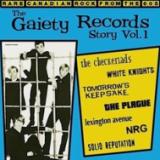
Various - The Gaiety Records Story Volume 1 LP
  • Checkerlads - Baby Send For Me
  • Checkerlads - You Just Can't Hide
  • White Knights - Love That's True
  • White Knights - Promise Her Love
  • Tomorrow's Keepsake - High And Mighty
  • Plague - Face Of Time
  • Plague - High Flyin' Bird
  • Lexington Avenue - Bird Collector
  • Lexington Avenue - Sound The Alarm
  • Nrg - Take Me Back Home
  • Solid Reputation - Brown Eyed Girl

Formed by Don Grashey and Lloyd Palmer in Winnipeg, Manitoba, Gaiety Records was an outlet for many relatively obscure but excellent Canadian garage and rock bands during its existence. They released their own singles as well as sub-licensing material to other labels, such as RCA (49th Parallel), Columbia (Jarvis Street Revue and Souls of Inspyration), Decca, Epic, Musicor, and others. Features the Checkerlads , White Knights , Tomorrow's Keepsake, Lexington Avenue, NRG , Solid Reputation, and the Plague , including their face melter, 'Face of Time' and the essential psych classic 'High Flyin' Bird'.

Reservar17.04.2026

debe ser publicado en 17.04.2026

33,82
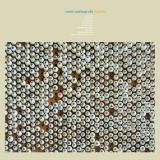
Oren Ambarchi - Hubris (10th Anniversary Remaster) (LP)

Newly remastered version of Oren Ambarchi’s long out-of-print classic Hubris originally released on Editions Mego in 2016. Expertly remastered by audio wizard Joe Talia who worked with the original mixes, highlighting the myriad details of the audio with forensic precision, previously unheard up until now.

From the 2016 press release:
Hubris continues the exploration of relentless, driving rhythms heard on Ambarchi’s Sagittarian Domain (2012) and Quixotism (2014). Where those records looked to Krautrock and techno for their starting points, the sidelong opening track here begins from the perhaps unlikely inspirations of disco and new wave, drawing particularly from Ambarchi’s love of Wang Chung’s soundtrack to William Friedkin’s To Live and Die in L.A. Leaving behind the song-forms of these reference points, Ambarchi weaves a sustained and pulsating web of layered palm-muted guitars from which individual voices rise up and recede, eventually setting the stage for some lush guitar synth from Jim O’Rourke. Arnold Dreyblatt collaborator Konrad Sprenger contributes overtone-rich motorized guitar, pushing the piece into a satisfying intersection of shimmering minimalism and rhythmic drive that smoothly builds up until the entrance of Mark Fell’s electronic percussion in its final section.
After a short second part, in which Ambarchi, O’Rourke and crys cole pay tribute to the skewed harmonic sense of Albert Marcoeur with a track built from layered guitar figures and abstracted speech, the long final piece pushes the concept of the first side into darker and denser areas. Joined by electronics from Ricardo Villalobos and the twin drums of Will Guthrie and Joe Talia, the layered guitars of the first piece are transformed into a raw and tumbling fusion-funk groove that calls to mind early Weather Report or even the first Golden Palominos LP. As this stellar rhythm section rides a single repeated chord change into oblivion, a series of spectacular events emerge in the foreground: first, aleatoric synthesizer burbles from Keith Fullerton Whitman, then slashing skronk guitar from Arto Lindsay, until finally Ambarchi’s own fuzzed-out harmonics take center stage as the piece builds to an ecstatic frenzy. Few artists could hope to include such an incredible variety of collaborators on one record and still hope for it to have a unique identity, but Ambarchi manages to do just that, crafting three pieces that emerge directly out of his previous work while also pushing ahead into new dimensions.
Players: Oren Ambarchi, crys cole, Mark Fell, Will Guthrie,
Arto Lindsay, Jim O’Rourke, Konrad Sprenger, Joe Talia, Ricardo Villalobos, Keith Fullerton Whitman.

No en stock

Haga su pedido ahora y le encargaremos el artículo en nuestro proveedor.

22,27

Ültimo hace: 28 Días
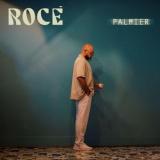
ROCÉ - PALMIER

ROCÉ

PALMIER

12inchHCLP4
Modulor Records
10.04.2026

THE RAPPER ANDPRODUCER"S NEW ALBUM
Palmier is producer and rapper Rocé"s new album. At the crossroads of Sade and Rakim, the album unfolds an impeccable flow over gentle melodies, the mellow sound of the saxophone softening the sharpness of the spoken truths. Rocé delivers a melody of hope, and appreciation of determination in the face of the impossible. "La Voie Lactée" features the captivating voice of Natacha Atlas and the sublime orchestrated violins of Samy Bishaï, the whole thing wrapped up in the style reminiscent of Isaac Hayes" soul and Portishead"s trip-hop. "Laisse les enfants courir" reveals a soulful hip-hop,between powerful groove and relentless flow, where Rocé blends political lucidity and poetic verse while Cisko"s subtle arrangements sculpt an organic, sensitive landscape, poised between tension and serenity. On "Lunaire", Rocé surprises us right away, with a sharp and melodic flow. Driven by powerful imagery and sharp lyrics, the track transforms anger into creative energy. It portrays an artist outsidethe mainstream, awareof the world"s failings but determined to create his own haven. Palmier embodies the melancholy of unfinished struggles, perseverance, and the promise of a brighter dawn.

Reservar10.04.2026

debe ser publicado en 10.04.2026

26,01
Artículos por página
N/ABPM
Vinyl