'Body Riddle', ein Highlight des frühen Clark-Katalogs, von Produzenten wie Arca, Rustie und Hudson Mohawke als massgeblicher Einfluß bezeichnet, wurde unter persönlicher Betreuung von Clark neu für mehr Dynamik remastered und erscheint erstmals wieder seit 16 Jahren.
-----
BIO: Chris Clark arbeitet seit 20 Jahren mit Musik und Ton. Schon in jungen Jahren wurde er von Warp Records gesignt und veröffentlichte bis dato 13 Alben und eine Vielzahl an EPs und Singles. Sein jüngstes Studioalbum 'Playground In A Lake' für das Klassik-Label Deutsche Grammophon verschmolz sein Markenzeichen, die elektronische Musik, mit den Streichertönen des Cellisten Oliver Coates, der Geigerin Rakhi Singh und des Budapest Art Orchestra.
Nach seiner ersten Filmmusik für die Sky/Canal+ TV-Serie 'The Last Panthers' schrieb Clark die Scores zu 'Rellik' (BBC1/HBO) und das Drama 'Kiri' (Channel 4/Hulu). Kürzlich lieferte er die Filmmusik für Apple TV+ 'Lisey's Story', basierend auf Stephen Kings gleichnamigem Roman, sowie für 'Daniel Isn't Real', einem psychologischen Horrorfilm von Spectre Vision, der Produktionsfirma des Nicolas Cage-Kultfilms 'Mandy'. Dieser OST wurde ebenfalls von der Deutschen Grammophon veröffentlicht.
Chris arbeitete mit der Choreografin Melanie Lane zusammen und vertonte 12 zeitgenössische Tanzprojekte, darunter die Aufführung ihres Soloprojekts 'Tilted Fawn' im Sydney Opera House und zuletzt 'Personal Effigies', das im März 2018 mit dem Kier Choreographic Prize ausgezeichnet wurde, sowie 'WOOF' für die renommierte Sydney Dance Company.
Chris' umfangreiches Verzeichnis an Remixen für Künstler wie Thom Yorke, Massive Attack, Depeche Mode, Max Richter, Battles und Nils Frahm wurde 2013 als Doppelalbum 'Feast / Beast' veröffentlicht.
'What's always set Clark apart is his eclecticism, dynamism, and flair for the dramatic... His tracks don't drop as much as they slip or swerve... He'll end a techno album with eight minutes of beatless, sky-cracking ecstasy and it will make sense. He's allergic to the idea of standard sounds and presets. And unlike many of his more insular peers, Clark can be open to sentimentality — not schmaltz — as much as a belief in humanness and all its inexact wonder. In electronic music's never-ending battle between man and machine, he's seeking a third way.' - Pitchfork
Cerca:panther
On Halfway to Eighty, riff-heavy anthems like "Helping Hand" are courtesy
of Wachtel, while art-rock thrashers like "Slacker" are Shaheen's
handiwork, and smirking punk numbers like "False Equivalent" are
Michicoff's
("What good can it bring now? / We're barely evolved" sings Michicoff on that last
song, a squall of guitars swirling around his trembling tenor.) When you keep an
ear out for them, you can hear each distinct personality in the songs, but taken as
a whole, it's yet another primo Panthers set of post-Cramps, post-DEVO outsider
rock and roll. Taken at full, Halfway to Eighty is an embrace of much more than
just a band. It's a statement of dedication to the calling of music - to sticking with
making art as long as you want to, age be damned.
Soul icon Otis Redding made immeasurable contributions to the form. As a singer-
songwriter, producer, arranger and talent scout, Redding was responsible for some of the
music’s biggest and most lasting hits during the 1960s, though his death in an airplane crash
in 1967 brought his life and career to a tragically premature end. He was born Otis Redding
Junior in 1941 in the small town of Dawson, Georgia, the son of a sharecropper and preacher,
and moved to the city of Macon at the age of two, where he learned to sing at the Vineville
Baptist Church. After singing in the high school band, he performed weekly gospel songs on
radio station WIBB, winning local talent contests after being inspired by Little Richard and
Sam Cooke. Since his father became ill with tuberculosis, Redding began supporting the
family at the age of 15, working as a gas station attendant, a digger of water wells, and
occasionally by playing piano with pianist Gladys Williams at the Hillview Springs Social
Club. Then, in 1958, Redding had a repeat prize run at a talent contest held by broadcaster
Hamp Swain, bringing him first into a group called Pat T Cake and the Mighty Panthers, and
later into Little Richard’s band (during a time when Richard switched rock and roll for
gospel). Moving to Los Angeles in late 1960, debut single “She’s All Right” was issued on
the Trans World label (a subsidiary of Al Kavelin’s Lute Records), credited to The Shooters
featuring Otis; following the birth of their first child and his subsequent marriage to Zelma
Atwood, Redding recorded the popular “Shout Bamalam” for Macon’s Confederate Records
(who swiftly reissued it on the Orbit label since some radio stations objected to the original
label’s confederate flag logo, during a time of terrible racial segregation in the South).
Redding cut the movingly emotive “These Arms Of Mine” at Stax studios in Memphis in
1962, backed by Booker T and the MGs, which surfaced on the subsidiary Volt label in
October, reaching the charts some six months later (and eventually selling a reported 800,000
copies). Subsequent singles “What My Heart Needs” and “Pain In My Heart”/“Something Is
Worrying Me,” recorded in September 1963, formed the bulk of debut album, Pain In My
Heart, which was padded out by standard cover tunes of songs such as “I Need Your Lovin’,”
Ben E King’s “Stand By Me” and Little Richard’s “Lucille.” The album, which surfaced at
the start of 1964, reached the top 20 of the US R&B chart and also hit the Billboard Hot 100;
this edition has an alternate track listing that includes the Trans World debut single tracks
“She’s All Right” and “Getting’ Hip,” as well as “Mary Had A Little Lamb,” the B-side to
“That’s What My Heart Needs.” Carefully remastered, spinning at 45 rpm for enhanced qudio quality.
- A1: Space Exploration
- A2: Symbiotes Arrive
- A3: First Contact
- A4: Eddie’s Blues
- A5: Run, Eddie, Run
- A6: What’s Wrong With Me
- A7: Panic At The Bistro
- A8: Humans...such Poor Design
- A9: Self Defense
- B1: Pedal To The Metal
- B2: Eyes, Lungs, Pancreas
- B3: You Want Up?
- B4: Venom Rampage
- B5: Annie, I’m Scared
- B6: Parasite
- B7: Unexpected Ally
- B8: Battle On The Launch Pad
- B9: You Belong With Us
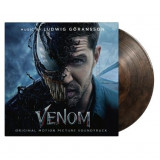
Venom is the 2018 superhero film which features the Marvel Comics characters Eddie Brock and Venom. It’s the first film in Sony’s Spider- Man Universe (SSU) and is directed by Ruben Fleisch. Venom follows the story of failed reporter Brock (Tom Hardy) who is bonded to an alien entity, giving him superpowers as long as they share the same body. The being takes a liking to Earth and decides to protect it. The film was a box-office success and in 2021, the sequel Venom: Let There Be Carnage was released.
Its score is composed by Ludwig Göransson, who worked before with Ruben Fleisch on the successful Black Panther, for which he received the Grammy Award for Best Score Soundtrack For Visual Media and the Academy Award for Best Original Score. The Swedish composer has also scored films such as Tenet and the Rocky franchise entries Creed and Creed II. As a record producer, he has received an equal amount of acclaim, having produced for Adele, Chance The Rapper, Travis Scott and Childish Gambino, including Gambino’s iconic hit “This Is America”.
Venom is available as a limited edition of 1500 individually numbered copies on “Black Clouds” coloured (crystal clear & black marbled) vinyl. The album is housed in a deluxe gatefold sleeve with a silver foil finish, includes a printed innersleeve and an exclusive fridge magnet.
- A1: Slash
- A2: Look What We Do (Feat Jones)
- A3: Beat 100 (Feat Cola Boyy, Mocky & Marc Rebillet)
- A4: Beat 8
- A5: Beat 5 (Feat St Panther & Rae Khalil)
- A6: Cgeool (Feat Rae Khalil)
- A7: Don't Look
- A8: Money & Guns
- B1: Beat 2 (Feat Oddisee)
- B2: Song 13 (Feat The Koreatown Oddity)
- B3: Watch Me Heal (Feat Pawpaw Rod)
- B4: Green Grass
- B5: All That You Wanted
- B6: Falling (Feat Madeintyo)
- B7: Mag Ik In Je Huid (Feat Faberyayo)
- B8: Beat 3 (Feat St Panther)
In a generation of musicians that came of age in postwar Japan, Kazuki Tomokawa stands as a pioneer of radical individualism, with a sound marked by shocking intimacy and blistering honesty. In his third album, A String of Paper Cranes Clenched between My Teeth, released by Harvest Records in 1977, Tomokawa creeps "ever more inward," as Kiichi Takahara writes in the record's original introductory text-embracing an attitude pervasive amongst musicians of the time who interrogated the prosaic and the profound alike, eschewing politics and society in favor of an "attitude of total self-containment." Tomokawa recorded the album over the course of a month-from August 24 to September 25, 1977-at Tokyo's famed Onkio Haus studio in the bustling Ginza district. The arrangements, accordingly, are amped up: paired with the Black Panther Orchestra, Tomokawa's "screaming philosopher" vocals find their match with the orchestra's electric guitar, bass, piano, tuba, and ground-thumping drums played by the Brain Police's Toshi Ishizuka-who appears on Tomokawa's first three records and remains his collaborator to this day. "This is Kazuki Tomokawa in the flesh," concludes Takahara. A String of Paper Cranes Clenched between My Teeth is, in Tomokawa's uncanny way, able to cut through facade and artifice in pursuit of truth. "You call that life?" he heckles, exhausted by the melodrama and nihilism of youth counterculture, "try saying you're alive!"
Raw Poetic produzierte sein neues Album 'Laminated Skies' mit seinem Buddy und häufigen Kollaborateur Damu The Fudgemunk und Gastmusikern wie Pat 'P' Fritz (git) und Luke Stewart (bass). Musikalisch schöpft das mehrdimensionale Werk aus den Genres, die Hip-Hop ausmachen, und Einflüssen aus allen Facetten des Spiritual Jazz. 'Laminated Skies' ist Raw Poetics sechstes Soloalbum und das erste offizielle auf einem Label. Qualität ist ein stetiges Synonym des Künstlers, der auf einen reichhaltigen Lebenslauf mit den Eltern in der Black Panther-Bewegung, mit seinem Onkel Jazzlegende Archie Shepp, als Lead-MC des Duos Panacea (Rawkus) und mit Kollabos mit K-Def, Blu und Kev Brown zurückschauen kann. Das gemeinsam mit Damu produzierte 'Ocean Bridges' (2020) mit dem Saxophonisten Archie Shepp wird als eines der besten Alben des Jahres gefeiert.
High Roller Records, reissue 2022, red/ grey bi-color split vinyl, ltd 250, gatefold cover, poster, orange vinyl bonus 7", A5 photo, mastered for vinyl by Patrick W. Engel at Temple of Disharmony, original 1989 sound
High Roller Records, reissue 2022, fire splatter vinyl, ltd 250, gatefold cover, poster, orange vinyl bonus 7", A5 photo, mastered for vinyl by Patrick W. Engel at Temple of Disharmony, original 1989 sound
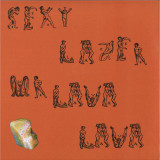
All you need is Lava. Lava is all you need…
Disco’s most erotic walking, talking light show Sexy Lazer makes his debut on Riotvan with three delightfully cosmic oddities and odysseys. At points sleazy, at other points sparkling, forever loaded and coded with space, each of the three originals promises full immersion and escapism.
Zone out to the woodwind wonderment of ‘Fluting In Space’, freak out to the synth-powered bliss of ‘Future’ and totally trip out to the much darker and pensive Black Strobe-like ‘Jing Jang’. Meanwhile on the remix front label co-boss Panthera Krause gets his prowl on with the swampy, sweaty tropical twist on ‘Future’ while Axel Boman gets his dub on with his take on ‘Fluting In Space’.
Three stellar originals, two star-gazing versions, one beautiful trip into the deep unknown. Show some lava!
Between May and September 1970, pianist François Tusques recorded »Piano Dazibao«, an album on which he multiplied joyful escapades as a critical iconoclast. The following year Tusques recorded »Dazibao N°2«, which shows him as an incisive commentator of his times. Following in the footsteps of Don Cherry, who he had met a few years earlier in Paris, Tusques made a plea for “friendship between all the peoples of the world” to the sound of Universalist hymns which transported us from Africa to Asia. But it is really a song to America, evoking the assassination of the activist George Jackson and the mutiny in Attica prison, before covering “Seize the Time” by Elaine Brown – three years after the release of Dazibao N°2, she became the first (and only) woman to lead the Black Panther Party.
The turmoil of Piano Dazibao, was opposed, on Dazibao N°2, by long, labyrinthine tracks with alternating discords and repetitions. Often using prepared piano, Tusques was more percussive (even heady) than ever, exposing a melody with solid hammer strikes or painting an image which radiated peace in spite of the storms. Piano Dazibao and Dazibao N°2 thus form the two sides of one coin, which displays the effigy of François Tusques, an international national monument.
Raw Poetic produzierte sein neues Album 'Laminated Skies' mit seinem Buddy und häufigen Kollaborateur Damu The Fudgemunk und Gastmusikern wie Pat 'P' Fritz (git) und Luke Stewart (bass). Musikalisch schöpft das mehrdimensionale Werk aus den Genres, die Hip-Hop ausmachen, und Einflüssen aus allen Facetten des Spiritual Jazz. 'Laminated Skies' ist Raw Poetics sechstes Soloalbum und das erste offizielle auf einem Label. Qualität ist ein stetiges Synonym des Künstlers, der auf einen reichhaltigen Lebenslauf mit den Eltern in der Black Panther-Bewegung, mit seinem Onkel Jazzlegende Archie Shepp, als Lead-MC des Duos Panacea (Rawkus) und mit Kollabos mit K-Def, Blu und Kev Brown zurückschauen kann. Das gemeinsam mit Damu produzierte 'Ocean Bridges' (2020) mit dem Saxophonisten Archie Shepp wird als eines der besten Alben des Jahres gefeiert.
- A1: Ebo Taylor - Amponsah
- A2: Moussa Doumbia - Keleya
- A3: Amadou Balake - Super Bar Konon Mousso
- A4: Mangue Konde & Les 5 Consuls - Pop Konde
- A5: Manu Dibango - The Panther
- B1: Peter King - Ajo
- B2: Itadi - Ayala
- B3: Marumo - Khomo Tsaka Deile Kae
- B4: Apples - Mind Twister
- B5: The Wings - Gone With The Sun
- C1: Kelenkye Band - Jungle Music
- C2: Super Elcados - Get Up & Do It Good
- C3: The Apagya Showband - Kwaku Ananse
- C4: Orlando Julius - Get The Funk (Feat Ashiko)
- C5: Alemayehu Eshete - Temeles (Feat Hirut Beqele)
- D1: Livy Ekemezie - Friday Night
- D2: Willy Nfor - Boogie Down In Africa
- D3: Shina Williams & His African Percussionists - Agboju Logun (Mr Bongo 7" Edit)
- D4: Soul Brothers - Bayeza
- D5: Teaspoon & The Waves - Oh Yeh Soweto
Pressed on DJ-friendly 7” vinyl in multiple colors - "Wakanda Funk Lounge” is a svelte four-song slab of hologram funk. Inspired to create a new, unofficial soundtrack to Marvel's Black Panther, SassyBlack says the EP “is about black freedom... Star Trek and Star Wars have always had bars and concerts. There’s no culture without music. And so when M’Baku invites me to come and perform in one of Wakanda’s funk lounges, this EP is the music I'd perform there." SassyBlack has been described as a “blaxploitation, sci-fi warrior queen.” She's also a multi-talented, space-aged songwriter, beatmaker, composer, and singer. Her music has been described as “electronic psychedelic soul,” with roots in experimental hip-hop, R&B, and jazz. Before going solo, she recorded and performed as half of the Afrofuturist hip-hop duo THEESatisfaction. Her music has received attention from Okayplayer, Afropunk, The Fader, Pitchfork, Bitch magazine, and others. The “Wakanda Funk Lounge” EP is a limited-edition, individually-numbered 7” single. Every copy is a different color. The cover was designed by visual artist Wutang McDougal. Drop the needle on any track and discover funky new tunes that remind us Wakanda’s main export is “VIBE-ranium.” This record is perfect for DJs who love 45s.
These three offerings from Michael James might fit into the minimal/tech bracket comfortably but there's a free flowing, shuffling sense of funkiness that undeniably runs through them all that defies all the usual 'shoulder twitch' stereotypes about the genre. 'Signal Issues' employs a panther-like bass hovering under the radar, with the briefest of breakbeat snippets adding the growing syncopation. 'Still Waiting' continues the technofunk mission, a sea of underplayed bleepery augmenting the groove, while 'Rush Hour' has a breezier and more open vibe and perhaps a more classic techno feel, proper graceful like.
Rare South African Funk/Soul album from 1977 - First vinyl reissue since 1982 - First ever release outside of the African Continent - 180g black vinyl // Harari was a band that was deeply rooted in pan-African politics, the parallel cross-influences of the Black Panther Movement and Black Consciousness. African American soul music and Soweto Soul contributed to the way Harari became purveyors of all the styles we know today as Afro-soul, Afro-pop and Afro-jazz. The Beaters/Harari left behind a body of work that fused traditional African sounds with rock, funk, jazz, soul and psychedelia into a unique and coherent sound. It shows their ability to capture the many genres flying around South Africa during a time of intense political and cultural shifts. The album we are presenting you today (Genesis from 1977) comes swinging right out the gate with a set of six monster anthems, explosive up-tempo jams, gorgeous vocal harmonies and chants, Afro-centric fusions of rock, funk and indigenous influences. The album is packed with mesmerizing drum-grooves, psychedelic improvisations and catchy Afrobeat rhythms. This is a quintessential Harari record that every serious collector or fan needs to have in his collection. Originally released in 1977 on Gallo Records South Africa (and later repressed in 1982 on the same label), Tidal Waves Music now proudly presents the first official reissue of this rare album (original copies tend to go for LARGE amounts on the secondary market_that is if you're lucky enough to come across one). This is also the FIRST time 'Genesis' is being released outside of the African continent. This unique record comes as a deluxe 180g vinyl edition (strictly limited to 500 copies) with obi strip and featuring the original artwork.
- A1: The Link Is About To Die
- A2: I Enjoy It
- A3: Pista (Fresh Start)
- A4: Ffs
- A5: Tropico
- B1: Las Panteras
- B2: Good To Go!
- B3: Change Of Heart
- B4: Tripping At A Party
- B5: Try The Circle!
- B6: Lindsay Goes To Mykonos
Panthers prowling through a desert. Cowgirls swaggering into a saloon and kicking up dust. Riding shotgun with a Tarantino heroine. Having the fiesta of your lives under a giant piñata with all your friends. Los Bitchos’ hallucinatory surf-exotica is as evocative as it is playful: the London-based pan-continental group could well be your new favourite party band with their instrumental voyages that are the soundtrack to setting alight to a row of flaming sambucas and losing yourself to the night. They’ve got a bun-tight knack for a groove – and they’ve got the best fringes in rock’n’roll too.
Serra Petale (guitar), Agustina Ruiz (keytar), Josefine Jonsson (bass) and Nic Crawshaw (drums) hail from different parts of the world but met via all-night house parties, or through friends, in London. Their unique sound binds them together, though, taking in a
retrofuturistic blend of Peruvian chicha, Argentine cumbia, Turkish psych and surf guitars. They are London’s answer to Khruangbin, if Khruangbin spent all weekend getting slammed on cheap tequila in
a Dalston dive bar.
- A1: Phedee – Mmm Pizza
- A2: Space Gang – Forgive
- A3: Kenny Segal – Worlds To Run
- A4: Dream Panther – Late Night Gymnopaedie
- A5: Ahee – Hmu
- A6: Eraserfase – Sapphire
- A7: Elusive – Wake And Bake
- A8: Elos – Not The Best
- B9: Gnome Beats – Linestepper
- B10: Daedelus – Special Re: Quest
- B11: Clyde – Smile At You
- B12: Shrimpnose – Seething
- B13: Dj Nobody – Sioux's Reign
- B14: Rah Zen – Ritual
- B15: Nastynasty – Loner
- C16: Jon Casey – Banga
- C17: Dmvu – Creature Comforts
- C18: Woolymammoth X Holly – All Jokes Aside
- C19: Huxley Anne – Nin
- C20: Gangus – Palo Santo
- C21: Thook – Taken
- C22: Alphafox – Sauced Up
- D23: Bleep Bloop – F12
- D24: Dj Ride X Stereossauro X Holly – Lightspeed
- D25: Wylie Cable – Change Your Name
- D26: Qrtr – And Still
- D27: Snakefoot – Cloud Chamber
- D28: Speak – Plants Fill The Room
- D29: Context Chameleon – Komorebi
- D30: Odd Nosdam – 24 P9
September 2021 marks the 10th anniversary of Dome of Doom. Collecting 30 tracks spanning from 2011-2021, label founder Wylie Cable put together Decade of Doom as a reflection of the first pillar in a long and continuing story—and the many phases the label has experienced thus far. Decade of Doom comprehensively serves as a homage to many of the artists, people and experiences that tell the label’s story, splintering outward toward an abundance of communities that continue to nourish one another. These tentacles all leading back to the hand-selection of releases Cable has diligently been at the heart of since the first vinyl and cassettes were pressed.
[c] A3 Kenny Segal – Worlds To Run [VIP Dub]
[z] D26 QRTR – And Still [Interlude]
The Room will be Ricky Reed’s first artist album since becoming a house-hold-name producer, and launching his own label with Nice Life Recording Company. The project features Leon Bridges, Jim James of My Morning Jacket, Dirty Projectors, Terrace Martin, Duendita, Ayoni, Lido Pimienta, St. Panther & John-Robert and more. The Room is a title that came to him in the wake of the death of George Floyd and the galvanizing of the Black Lives Matter movement across America and the world. He wanted to create a communal place where it’s as necessary to cry as it is to rejuvenate; where it’s as vital to be angry as it is to find joy. The music is an invitation to share experiences, commiserate, rejuvenate, and offer hope. It is upbeat in places, meditative always, and has real soul to it. Ultimately, Reed feels fundamentally changed by quarantine, particularly with his process of creating. All the songs were written via text and voice memos. The Room feels like an offering to the world at a time when Reed was back in the process again. Back at a new start. “When this comes out, whether it is well or not, the only thing that matters is that I made it.”