Search:paper plane project

Styles
All
  • 1
ohayoumadayarou - Sokoni Naimono LP
  • A1: Crawl
  • A2: Tamanegi
  • A3: Nishisumiji
  • B1: Paper Airplane
  • B2: Planet
  • B3: Mo Osoi

Rachel of chelmico's solo project “ohayoumadayarou” releases her first LP, 『Sokoni Naimono』
Featuring six tracks created alongside sound producer ESME MORI, relying on “the feeling of the moment” without a clear theme.
The drifting sound and the rhythm of words that make you pause momentarily bring to light the small discomforts and tenderness found within everyday life.

pre-order now26.12.2025

expected to be published on 26.12.2025

45,59
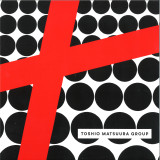
Toshio Matsuura Group - Loveplaydance - 8 Scenes From The Floor LP 2x12"

Brownswood Recordings are proud to present the reissue of Toshio Matsuura’s 2017 cult classic LOVEPLAYDANCE, issued for the first time as a complete album on limited edition red and white double vinyl.


The project focuses on covers, presenting classics & influential tracks in a new context. This new edition includes a cover of the Rotary Connection’s classic "Black Gold of the Sun'' featuring Afro-Cuban singer Daymé Arocena and her prodigious Havana-based players, as well as the high energy re-lick of Byron Morris and Unity’s ‘Kitty Bey’, a classic from Gilles Peterson’s seminal afternoon session at Dingwalls in the 1990s; neither included on the original vinyl LP.


On ‘LOVEPLAYDANCE’, legendary Tokyo DJ and producer Toshio Matsuura charted a new direction by casting musical cornerstones in a fresh light. The TOSHIO MATSUURA GROUP features Tom Skinner (drummer for Smile, Sons of Kemet, amongst others) as its musical director, as well as some of the UK’s most exciting jazz-influenced musicians. Drawing on years of surveying and curating different corners of music, Matsuura deftly combined this talented pool of players into one singular, wide-ranging album. A co-founder of Japan’s United Future Organisation (aka U.F.O.), this record sees Matsuura reconnect with longstanding friend and collaborator Gilles Peterson. Releasing the album via Brownswood Recordings in the UK, it’s a continuation of a relationship which started as a bridge between London’s then-blossoming jazz scene and Tokyo’s new musical vanguard of the early ‘90s. This album continues that two-way dialogue between Japan and the UK.


The scope of the music reflects the breadth of Matsuura’s interests; It ranges from Bugges Wesseltoft’s Detroit-influenced, dancefloor-minded jazz, stretched out into a more meditative contemplation, to Flying Lotus’ LA-rooted, Brainfeeder beatmaking, translated from laptop-to-live, given a new, equally idiosyncratic lease of life. Elsewhere, Carl Craig’s iconic ‘At Les’ is taken in a looser direction, the overtones of euphoria cast in a different hue.


They’re touchpoints which hint at interests in the different, diffuse corners of electronic music, and how they connect to jazz and improvisation. Featuring an all star line up of some of the best players London has to offer, line up includes Nubya Garcia, Yazz Ahmed, Yussef Dayes and more.

out of Stock

Order now and we will order the item for you at our supplier.

35,25

Last In: 2 years ago
GUNN, STEVE & DAVID MOORE - REFLECTIONS VOL.1: LET THE MOON BE A PLANET
  • 1: Over The Dune
  • 2: Painterly
  • 3: Scattering
  • 4: Basin
  • 5: Morning Mare
  • 6: Libration
  • 7: Paper Limb
  • 8: Rhododendron
also available

Vol.2[24,79 €]

Vol.3[22,27 €]


Steve Gunn and David Moore's Let the Moon be a Planet is a volume of improvisatory exchanges between classical guitar and piano, and a meeting place where two artists become acquainted through instrumental dialogue without a single expectation distracting them from the joy and open field possibility of collaboration. A project enveloped by an aura of reciprocity, Let the Moon Be a Planet unfolded from an invitation to connect between two New York-based musicians who admired each other's work but had never intersected: guitarist and songwriter Steve Gunn, whose solo, duo, and ensemble recordings represent milestones of contemporary guitar-guided material, and pianist and composer David Moore, acclaimed for his minimalist ensemble music as the leader of Bing & Ruth. The exchange began remotely as Gunn and Moore responded to one another's solo improvisations, embarking on a synergistic progression of deep listening and connection through musical conversation. "We were both fans of each other's music and this was a chance to try a different process which was much more open," says Moore. "It felt like something I needed personally as an artist, to not be so controlling over the final output, and to truly collaborate with somebody else." Similarly for Gunn, who was exploring new pastures and passages in classical guitar when the dialogue began, the project was an invitation for pure conversation and exchange, creating space for him to revisit foundational forms with his playing: "I was trying to break out of what I was doing, to have something that just pulled away all the elements of usual structured things." Let the Moon Be a Planet intertwines the trajectories of two musicians acclaimed for pushing the boundaries of their instruments, unified by a shift away from what they recall as more "detail-oriented" approaches to composition. Fueled by the magnetism of their call and response exercise, Gunn and Moore set out on a nomadic songwriting venture without an intended destination. "We didn't know it was going to be an album," Gunn explains. "There was never pressure on us to complete or make something. It was interesting to start realizing that this could be an album and to take a step back_ to arrive at a project after the fact." Calibrating their focus to connect with a spectrum of inner and external emotional realities, the duo found their way into a world where the most subtle of gestures can eternally flow. Let the Moon be a Planet is an ode to experimentation over outcome; it holds a candle light to the corners of introspection and captures the patterns that flicker within. Cast across the compositions of the album is a gritty, filmic grain _ a quality that emerged partially from recording "without the greatest microphones" or their usual studio environments. For both artists, this lo-fi sensitivity felt integral to the record and its production, and they worked closely with engineer Nick Principe to preserve its otherworldly haze in the final mixes. Across the record's eight compositions, the rippling impulses of Gunn and Moore's inner worlds converge in the spirit of two strangers wandering the same path, engaged in a daydream state of natural back and forth. Melodic tableaux arise, drift and disperse across serene open spaces, painted in earthy hues of nylon string and balmy, undulating keys _ side by side, the duo converse in tessellating motifs and gestures of lucid introspection, cultivated by a shared desire for intuitive play. "This project was such a simple idea," says Gunn. "It got down to the very core of where I am or where I was, and where I'm trying to be as a musician. Making this record became a very beneficial ritual for me, almost a meditative process." As Moore recalls, "Our only motivation for making these tracks was that it felt good to make them and there was nothing else behind it_ I don't know that I've ever made a record that came about so naturally." While Let the Moon Be a Planet was envisioned through a deeply collaborative process, it uncovered a path for Gunn and Moore to respectively return home as musicians. Imbued with the forces of interconnection and balance, the record is an exploration of creative synergy while following the currents of inner experience _ of looking outwards to arrive at one's natural self. Steve Gunn and David Moore's Let the Moon Be a Planet will be released March 31, 2023 in LP, CD, and digital editions. The album represents the first volume of Reflections, a new series of contemporary collaborations orchestrated by RVNG Intl. A portion of the proceeds from this release will benefit St. John's Bread and Life, whose mission is to respect the dignity and rights of all persons by ensuring access to healthy, nutritious food and comprehensive human services resulting in self-sufficiency and stability.

pre-order now31.03.2023

expected to be published on 31.03.2023

22,06
Steve Gunn & David Moore - Let The Moon Be A Planet LP

Steve Gunn and David Moore’s Let the Moon be a Planet is a volume of improvisatory exchanges between classical guitar and piano, and a meeting place where two artists become acquainted through instrumental dialogue without a single expectation distracting them from the joy and open field possibility of collaboration.
A project enveloped by an aura of reciprocity, Let the Moon Be a Planet unfolded from an invitation to connect between two New York-based musicians who admired each other’s work but had never intersected: guitarist and songwriter Steve Gunn, whose solo, duo, and ensemble recordings represent milestones of contemporary guitar- guided material, and pianist and composer David Moore, acclaimed for his minimalist ensemble music as the leader of Bing & Ruth.
The exchange began remotely as Gunn and Moore responded to one another’s solo improvisations, embarking on a synergistic progression of deep listening and connection through musical conversation. “We were both fans of each other’s music and this was a chance to try a different process which was much more open,” says Moore. “It felt like something I needed personally as an artist, to not be so controlling over the final output, and to truly collaborate with somebody else.”
Similarly for Gunn, who was exploring new pastures and passages in classical guitar when the dialogue began, the project was an invitation for pure conversation and exchange, creating space for him to revisit foundational forms with his playing: “I was trying to break out of what I was doing, to have something that just pulled away all the elements of usual structured things.”
Let the Moon Be a Planet intertwines the trajectories of two musicians acclaimed for pushing the boundaries of their instruments, unified by a shift away from what they recall as more “detail- oriented” approaches to composition. Fueled by the magnetism of their call and response exercise, Gunn and Moore set out on a nomadic songwriting venture without an intended destination.
“We didn’t know it was going to be an album,” Gunn explains. “There was never pressure on us to complete or make something. It was interesting to start realizing that this could be an album and to take a step back... to arrive at a project after the fact.”

pre-order now31.03.2023

expected to be published on 31.03.2023

25,17
Pixey - Dreams, Pains & Paper Planes

Dreams, Pains & Paper Planes will be Pixey’s first longer form project since the glittering Sunshine State EP arrived in October 2021, which had followed her hugely acclaimed early-2021 debut EP for Chess Club, Free To Live In Colour. The Sunshine State EP’s lead single and title track was crowned Tune Of The Week by Jack Saunders at BBC Radio 1, and received further airplay from Clara Amfo (who also had the EP’s second single ‘Take Me On’ on regular rotation), Mollie King in her Best New Pop playlist and Introducing’s Gemma Bradley. The EP was awarded a second consecutive 5* review from Dork Magazine who subsequently placed Pixey on the 2022 Hype List, to add to her list of accolades including The Sunday Times’ Breaking Act, Notion’s Internet Crush, The Daily Star’s Rising Star, and DIY’s Neu artist.


Commenting on the mini-album, Pixey says: “Dreams, Pains & Paper Planes is my biggest release to date. The majority of the record was written, recorded and produced by myself in my bedroom, alongside a couple of studio tracks. Genre bending was something I wanted to experiment with, tailoring to the moods of each song but still keeping to the core big beat elements. I wanted to write a record that kept a sunny sound but was more anxious lyrically. More than anything, I want the listener to feel like they can dip into an alternate world for a while, whether it’s comforting or not”

pre-order now24.02.2023

expected to be published on 24.02.2023

30,04
Ataxia - Out Of Step LP 2x12"

Having torn up raves for well over a decade, the Detroit duo Rickers and Ted Krisko AKA Ataxia present their debut longplayer ‘Out Of Step’. Featuring guest spots from close peers DJ Minx, Andrés and Mr Joshooa, they twist house, techno, electro, breakbeat and rave into revitalized new shapes; embellished with a touch of soul, funk and hip hop. With backgrounds in hardcore and punk, Ataxia’s debut is suffused with that energy, attitude, and approach; this is raw, lean and unashamedly no-nonsense dance floor tackle that goes straight for the jugular. Heavily analogue, the album experiments with tape saturation, which harks back to the duo’s formative years in bands, recording demos to cassettes. These straight-up, in-the-red tracks give preference to overdriven drum machines, rather than generic polished sheen, but conversely, it’s all deceptively well-crafted too; ‘Out Of Step’ is a standout record that’s big in character, bringing to mind the renegade spirit of Underground Resistance, and the bombastic brilliance of The Prodigy and Chemical Brothers.

Defiantly optimistic despite the state of the world, a “life is good” vocal sample meets minor chords sliding over 808 hats on the exemplary house/techno pumper ‘Detroit Gospel’, before a lighter moment on the album, but no less impactful with its hefty low-end thump, is ‘Pine Island’ featuring Motor City hero Andrés. Together they cook up a Motown-inspired house cut awash with horn swells and backup singers, bouncing to wide swung funk bass, in classic 313 style. ‘Language’ turns the club on its head – busting out one of the most distinct basslines in recent times, and bristling with buzzy, undulating chords, whilst ‘Maxia’ features influential Detroit royalty DJ Minx. Inspired by her classic ‘A Walk In The Park’, with a fat distorted kick and stealthy bass groove, this is low-slung, stripped-back, heads-down coolness. The high-tech funk of ‘Spit In Your Percolator’, is laser-guided in its efficiency, with a strobe-like, increasingly intensifying energy, peppered with clever, tripped up vocal chops. With the next cut, conveyor belt noises and fast churning low-end gives way to a dubbed-out breakdown, on the deep breakbeat roller ‘98 Degrees’. Charged with a blistering, rave intensity, ‘Number Streets’, is a futuristic distorted techno workout that booms through the subs, whilst ‘The Formulator’ mixes filtered snippets, abstract synth noises and melodic bleeps with a bassline echoing Paperclip People’s ‘The Floor’. Closer to the UK definition of hardcore, combining 4/4 and breakbeat, ‘The Pusher’ evokes the spirit of late 80s orbital raves, adding a natty keys solo, and deadly bass used sparingly, for even deadlier effect. ‘Feels Like’ sees Rickers and Ted team up their studiomate and fellow TV Lounge resident and club booker, Mister Joshooa. Inspired by Photek but also almost UKG in style, this breakbeat session is stamped with MJ’s signature chopped vocals and intricate rhythmic interplay. The bubbling, wobbly loose swing of ‘WM’ is constructed around a classic chopped-up MTV cribs sample, with a filtered vocal creating a far out psychedelic effect – all of which is propelled apace by a huge bruising LFO. The LP concludes in fine style with ‘Dance The Bridge’, where bouncy beats and wigged-out keys meet bright, gently uplifting synth chords that bring a clear-skied mood; ending the record as it began, on an optimistic note.

‘Out Of Step’ marks another chapter in the ongoing relationship between Life and Death co-founder DJ Tennis and Ataxia. Their connection goes back to the earliest days of the label, where they played gigs together on some of Tennis’ initial visits to Detroit. It’s a friendship that’s blossomed organically over the last decade through their shared love of punk and hardcore, and led to the fruition of one of Ataxia’s most compelling projects to date. Labels to release Ataxia’s output include legendary Detroit techno imprints Planet E and KMS, plus the seminal American house label Nervous Records. Their catalogue also includes music for Visionquest, Leftroom, 20/20 Vision and Seth Troxler’s Play It Say It.

out of Stock

Order now and we will order the item for you at our supplier.

22,65

Last In: 13 months ago
Maastricht Research - Idle Animation LP

Following the Kota Motomura and Exterior debuts earlier this year, it’s another first from Hobbes Music. Maastricht Research is a brand new project from Scottish artist Jonathan Hunter producing ambient/drone style material. Jonathan was part of the quartet behind the much-loved Slabs Of The Tabernacle parties at Glasgow's now-legendary La Cheetah club back in the late 00s/early 10s. He's also one half of The Three Lives, whose debut EP, Mud & Flame and follow-up Across & Beyond were released recently by Glasgow's Full Dose label.

Written and recorded over a number of years, whilst living in Amsterdam, Glasgow and Dublin, the Maastricht Research vibe is about as horizontal as it gets and is the perfect soundtrack to long, lazy days and balmy eves in the park, by the pool, in the bath etc! There are zero beats. It's proper ambient / drone music and could well have been beamed in from another dimension, planet or century altogether, including field recordings, atmospheric fx, lush and eerie pads, with the occasional snatch of a weird vocal and generally other-worldly sounds.

The record owes a debt to the likes of Manuel Gottsching, Cluster, Susumu Yokota, Detroit Escalator Company, Astral Industries and Alessandro Cortini, among others…

Mastered by Keith 'Radioactive Man' Tenniswood, Idle Animation will now be out at the end of October on extremely limited edition 12" vinyl, with CMYK printed labels, contained in a plain white sleeve with 3mm spine (reverse board for natural finish) including full colour artwork plus titles* printed using a Risograph on 135gsm ‘Context Natural’ A3 paper and finally all packaged in a polyurethane bag. *printed on the ‘Obi flap’ - excess paper folded around the spine.

"Loving it. Beautiful stuff here - all tracks doing it for me" ROLANDO (UR)

"This is great! Will use in on Ambient Flo" AUNTIE FLO

"Really diggin the MaastrichtResearch release" INTERGALACTIC GARY

"Love this, thanks for sending" DOMENIC (Sub Club)

"This sounds fantastic!" NICK CRADDOCK (Gateway To Zen)

"Really liking the sound of the record. Dublin air tugging on his emotive side by the sounds :)" JOHN HECKLE

"Mesmerizing music, something we all need to listen to because of so much chaos and stress in the world...with this, just sit back and zone out for a bit and regain balance...." DAN CURTIN

"This is nice music, thank you for sharing it with me. A3 is the one for me, really nice vibe" ARIO (Astral Industries)

"More emotive and soulful ambience and drone from this red hot label. Maastricht Research have been reviving the Poolside revellers at Pikes morning sessions this summer" DRIBBLER (Pikes, Café del Mar, Ibiza)

out of Stock

Order now and we will order the item for you at our supplier.

35,25

Last In: 3 years ago
Lee Tracy & Isaac Manning - Is it What You Want

As the sun sets on a quaint East Nashville house, a young man bares a piece of his soul. Facing the camera, sporting a silky suit jacket/shirt/slacks/fingerless gloves ensemble that announces "singer" before he's even opened his mouth, Lee Tracy Johnson settles onto his stage, the front yard. He sways to the dirge-like drum machine pulse of a synth-soaked slow jam, extends his arms as if gaining his balance, and croons in affecting, fragile earnest, "I need your love… oh baby…"

Dogs in the yard next door begin barking. A mysterious cardboard robot figure, beamed in from galaxies unknown and affixed to a tree, is less vocal. Lee doesn't acknowledge either's presence. He's busy feeling it, arms and hands gesticulating. His voice rises in falsetto over the now-quiet dogs, over the ambient noise from the street that seeps into the handheld camcorder's microphone, over the recording of his own voice played back from a boombox off-camera. After six minutes the single, continuous shot ends. In this intimate creative universe there are no re-takes. There are many more music videos to shoot, and as Lee later puts it, "The first time you do it is actually the best. Because you can never get that again. You expressing yourself from within."

"I Need Your Love" dates from a lost heyday. From some time in the '80s or early '90s, when Lee Tracy (as he was known in performance) and his music partner/producer/manager Isaac Manning committed hours upon hours of their sonic and visual ideas to tape. Embracing drum machines and synthesizers – electronics that made their personal futurism palpable – they recorded exclusively at home, live in a room into a simple cassette deck. Soul, funk, electro and new wave informed their songs, yet Lee and Isaac eschewed the confinement of conventional categories and genres, preferring to let experimentation guide them.

"Anytime somebody put out a new record they had the same instruments or the same sound," explains Isaac. "So I basically wanted to find something that's really gonna stand out away from all of the rest of 'em." Their ethos meant that every idea they came up with was at least worth trying: echoed out half-rapped exhortations over frantic techno-style beats, gospel synth soul, modal electro-funk, oddball pop reinterpretations, emo AOR balladry, nods to Prince and the Fat Boys, or arrangements that might collapse mid-song into a mess of arcade game-ish blips before rallying to reach the finish line. All of it conjoined by consistent tape hiss, and most vitally, Lee's chameleonic voice, which managed to wildly shape shift and still evoke something sincere – whether toggling between falsetto and tenor exalting Jesus's return, or punctuating a melismatic romantic adlib with a succinct, "We all know how it feels to be alone."

"People think we went to a studio," says Isaac derisively. "We never went to no studio. We didn't have the money to go to no studio! We did this stuff at home. I shot videos in my front yard with whatever we could to get things together." Sometimes Isaac would just put on an instrumental record, be it "Planet Rock" or "Don't Cry For Me Argentina" (from Evita), press "record," and let Lee improvise over it, yielding peculiar love songs, would-be patriotic anthems, or Elvis Presley or Marilyn Monroe tributes. Technical limitations and a lack of professional polish never dissuaded them. They believed they were onto something.

"That struggle," Isaac says, "made that sound sound good to me."

In the parlance of modern music criticism Lee and Isaac's dizzying DIY efforts would inevitably be described as "outsider." But "outsider" carries the burden of untold additional layers of meaning if you're Black and from the South, creating on a budget, and trying to get someone, anyone within the country music capital of the world to take your vision seriously. "What category should we put it in?" Isaac asks rhetorically. "I don't know. All I know is feeling. I ain't gonna name it nothing. It's music. If it grabs your soul and touch your heart that's what it basically is supposed to do."

=

Born in 1963, the baby boy of nine siblings, Lee Tracy spent his earliest years living amidst the shotgun houses on Nashville's south side. "We was poor, man!" he says, recalling the outhouse his family used for a bathroom and the blocks of ice they kept in the kitchen to chill perishables. "But I actually don't think I really realized I was in poverty until I got grown and started thinking about it." Lee's mom worked at the Holiday Inn; his dad did whatever he had to do, from selling fruit from a horse drawn cart to bootlegging. "We didn't have much," Lee continues, "but my mother and my father got us the things we needed, the clothes on our back." By the end of the decade with the city's urban renewal programs razing entire neighborhoods to accommodate construction of the Interstate, the family moved to Edgehill Projects. Lee remembers music and art as a constant source of inspiration for he and his brothers and sisters – especially after seeing the Jackson 5 perform on Ed Sullivan. "As a small child I just knew that was what I wanted to do."

His older brother Don began musically mentoring him, introducing Lee to a variety of instruments and sounds. "He would never play one particular type of music, like R&B," says Lee. "I was surrounded by jazz, hard rock and roll, easy listening, gospel, reggae, country music; I mean I was a sponge absorbing all of that." Lee taught himself to play drums by beating on cardboard boxes, gaining a rep around the way for his timekeeping, and his singing voice. Emulating his favorites, Earth Wind & Fire and Cameo, he formed groups with other kids with era-evocative band names like Concept and TNT Connection, and emerged as the leader of disciplined rehearsals. "I made them practice," says Lee. "We practiced and practiced and practiced. Because I wanted that perfection." By high school the most accomplished of these bands would take top prize in a prominent local talent show. It was a big moment for Lee, and he felt ready to take things to the next level. But his band-mates had other ideas.

"I don't know what happened," he says, still miffed at the memory. "It must have blew they mind after we won and people started showing notice, because it's like everybody quit! I was like, where the hell did everybody go?" Lee had always made a point of interrogating prospective musicians about their intentions before joining his groups: were they really serious or just looking for a way to pick up girls? Now he understood even more the importance of finding a collaborator just as committed to the music as he was.

=

Isaac Manning had spent much of his life immersed in music and the arts – singing in the church choir with his family on Nashville's north side, writing, painting, dancing, and working various gigs within the entertainment industry. After serving in the armed forces, in the early '70s he ran The Teenage Place, a music and performance venue that catered to the local youth. But he was forced out of town when word of one of his recreational routines created a stir beyond the safe haven of his bohemian circles.

"I was growing marijuana," Isaac explains. "It wasn't no business, I was smoking it myself… I would put marijuana in scrambled eggs, cornbread and stuff." His weed use originated as a form of self-medication to combat severe tooth pain. But when he began sharing it with some of the other young people he hung out with, some of who just so happened to be the kids of Nashville politicians, the cops came calling. "When I got busted," he remembers, "they were talking about how they were gonna get rid of me because they didn't want me saying nothing about they children because of the politics and stuff. So I got my family, took two raggedy cars, and left Nashville and went to Vegas."

Out in the desert, Isaac happened to meet Chubby Checker of "The Twist" fame while the singer was gigging at The Flamingo. Impressed by Isaac's zeal, Checker invited him to go on the road with him as his tour manager/roadie/valet. The experience gave Isaac a window into a part of the entertainment world he'd never encountered – a glimpse of what a true pop act's audience looked like. "Chubby Checker, none of his shows were played for Black folks," he remembers. "All his gigs were done at high-class white people areas." Returning home after a few years with Chubby, Isaac was properly motivated to make it in Music City. He began writing songs and scouting around Nashville for local talent anywhere he could find it with an expressed goal: "Find someone who can deliver your songs the way you want 'em delivered and make people feel what you want them to feel."

One day while walking through Edgehill Projects Isaac heard someone playing the drums in a way that made him stop and take notice. "The music was so tight, just the drums made me feel like, oh I'm-a find this person," he recalls. "So I circled through the projects until I found who it was.

"That's how I met him – Lee Tracy. When I found him and he started singing and stuff, I said, ohhh, this is somebody different."

=

Theirs was a true complementary partnership: young Lee possessed the raw talent, the older Isaac the belief. "He's really the only one besides my brother and my family that really seen the potential in me," says Lee. "He made me see that I could do it."

Isaac long being a night owl, his house also made for a fertile collaborative environment – a space where there always seemed to be a new piece of his visual art on display: paintings, illustrations, and dolls and figures (including an enigmatic cardboard robot). Lee and Issac would hang out together and talk, listen to music, conjure ideas, and smoke the herb Isaac had resumed growing in his yard. "It got to where I could trust him, he could trust me," Isaac says of their bond. They also worked together for hours on drawings, spreading larges rolls of paper on the walls and sketching faces with abstract patterns and imagery: alien-like beings, tri-horned horse heads, inverted Janus-like characters where one visage blurred into the other.

Soon it became apparent that they didn't need other collaborators; self-sufficiency was the natural way forward. At Isaac's behest Lee, already fed up with dealing with band musicians, began playing around with a poly-sonic Yamaha keyboard at the local music store. "It had everything on it – trumpet, bass, drums, organ," remembers Lee. "And that's when I started recording my own stuff."

The technology afforded Lee the flexibility and independence he craved, setting him on a path other bedroom musicians and producers around the world were simultaneously following through the '80s into the early '90s. Saving up money from day jobs, he eventually supplemented the Yamaha Isaac had gotten him with Roland and Casio drum machines and a Moog. Lee was living in an apartment in Hillside at that point caring for his dad, who'd been partially paralyzed since early in life. In the evenings up in his second floor room, the music put him in a zone where he could tune out everything and lose himself in his ideas.

"Oh I loved it," he recalls. "I would really experiment with the instruments and use a lot of different sound effects. I was looking for something nobody else had. I wanted something totally different. And once I found the sound I was looking for, I would just smoke me a good joint and just let it go, hit the record button." More potent a creative stimulant than even Isaac's weed was the holistic flow and spontaneity of recording. Between sessions at Isaac's place and Lee's apartment, their volume of output quickly ballooned.

"We was always recording," says Lee. "That's why we have so much music. Even when I went to Isaac's and we start creating, I get home, my mind is racing, I gotta start creating, creating, creating. I remember there were times when I took a 90-minute tape from front to back and just filled it up."

"We never practiced," says Isaac. "See, that was just so odd about the whole thing. I could relate to him, and tell him about the songs I had ideas for and everything and stuff. And then he would bring it back or whatever, and we'd get together and put it down." Once the taskmaster hell bent on rehearsing, Lee had flipped a full 180. Perfection was no longer an aspiration, but the enemy of inspiration.

"I seen where practicing and practicing got me," says Lee. "A lot of musicians you get to playing and they gotta stop, they have to analyze the music. But while you analyzing you losing a lot of the greatness of what you creating. Stop analyzing what you play, just play! And it'll all take shape."

=

"I hope you understood the beginning of the record because this was invented from a dream I had today… (You tell me, I'll tell you, we'll figure it out together)" – Lee Tracy and Isaac Manning, "Hope You Understand"

Lee lets loose a maniacal cackle when he acknowledges that the material that he and Isaac recorded was by anyone's estimation pretty out there. It's the same laugh that commences "Hope You Understand" – a chaotic transmission that encapsulates the duality at the heart of their music: a stated desire to reach people and a compulsion to go as leftfield as they saw fit.

"We just did it," says Lee. "We cut the music on and cut loose. I don't sit around and write. I do it by listening, get a feeling, play the music, and the lyrics and stuff just come out of me."

The approach proved adaptable to interpreting other artists' material. While recording a cover of Whitney Houston's pop ballad "Saving All My Love For You," Lee played Whitney's version in his headphones as he laid down his own vocals – partially following the lyrics, partially using them as a departure point. The end result is barely recognizable compared with the original, Lee and Isaac having switched up the time signature and reinvented the melody along the way towards morphing a slick mainstream radio standard into something that sounds solely their own.

"I really used that song to get me started," says Lee. "Then I said, well I need something else, something is missing. Something just came over me. That's when I came up with 'Is It What You Want.'"

The song would become the centerpiece of Lee and Isaac's repertoire. Pushed along by a percolating metronomic Rhythm King style beat somewhere between a military march and a samba, "Is It What You Want" finds Lee pleading the sincerity of his commitment to a potential love interest embellished by vocal tics and hiccups subtlely reminiscent of his childhood hero MJ. Absent chord changes, only synth riffs gliding in and out like apparitions, the song achieves a lingering lo-fi power that leaves you feeling like it's still playing, somewhere, even after the fade out.

"I don't know, it's like a real spiritual song," Lee reflects. "But it's not just spiritual. To me the more I listen to it it's like about everything that you do in your everyday life, period. Is it what you want? Do you want a car or you don't want a car? Do you want Jesus or do you want the Devil? It's basically asking you the question. Can't nobody answer the question but you yourself."

In 1989 Lee won a lawsuit stemming from injuries sustained from a fight he'd gotten into. He took part of the settlement money and with Isaac pressed up "Saving All My Love For You" b/w "Is It What You Want" as a 45 single. Isaac christened the label One Chance Records. "Because that's all we wanted," he says with a laugh, "one chance."

Isaac sent the record out to radio stations and major labels, hoping for it to make enough noise to get picked up nationally. But the response he and Lee were hoping for never materialized. According to Isaac the closest the single got to getting played on the radio is when a disk jock from a local station made a highly unusual announcement on air: "The dude said on the radio, 107.5 – 'We are not gonna play 'Is It What You Want.' We cracked up! Wow, that's deep.

"It was a whole racist thing that was going on," he reflects. "So we just looked over and kept on going. That was it. That was about the way it goes… If you were Black and you were living in Nashville and stuff, that's the way you got treated." Isaac already knew as much from all the times he'd brought he and Lee's tapes (even their cache of country music tunes) over to Music Row to try to drum up interest to no avail.

"Isaac, he really worked his ass off," says Lee. "He probably been to every record place down on Music Row." Nashville's famed recording and music business corridor wasn't but a few blocks from where Lee grew up. Close enough, he remembers, for him to ride his bike along its back alleys and stumble upon the occasional random treasure, like a discarded box of harmonicas. Getting in through the front door, however, still felt a world away.

"I just don't think at the time our music fell into a category for them," he concedes. "It was before its time."

=

Lee stopped making music some time in the latter part of the '90s, around the time his mom passed away and life became increasingly tough to manage. "When my mother died I had a nervous breakdown," he says, "So I shut down for a long time. I was in such a sadness frame of mind. That's why nobody seen me. I had just disappeared off the map." He fell out of touch with Isaac, and in an indication of just how bad things had gotten for him, lost track of all the recordings they'd made together. Music became a distant memory.

Fortunately, Isaac kept the faith. In a self-published collection of his poetry – paeans to some of his favorite entertainment and public figures entitled Friends and Dick Clark – he'd written that he believed "music has a life of its own." But his prescience and presence of mind were truly manifested in the fact that he kept an archive of he and Lee's work. As perfectly imperfect as "Is It What You Want" now sounds in a post-Personal Space world, Lee and Isaac's lone official release was in fact just a taste. The bulk of the Is It What You Want album is culled from the pair's essentially unheard home recordings – complete songs, half-realized experiments, Isaac's blue monologues and pronouncements et al – compiled, mixed and programmed in the loose and impulsive creative spirit of their regular get-togethers from decades ago. The rest of us, it seems, may have finally caught up to them.

On the prospect of at long last reaching a wider audience, Isaac says simply, "I been trying for a long time, it feels good." Ever the survivor, he adds, "The only way I know how to make it to the top is to keep climbing. If one leg break on the ladder, hey, you gotta fix it and keep on going… That's where I be at. I'll kill death to make it out there."

For Lee it all feels akin to a personal resurrection: "It's like I was in a tomb and the tomb was opened and I'm back… Man, it feels so great. I feel like I'm gonna jump out of my skin." Success at this stage of his life, he realizes, probably means something different than what it did back when he was singing and dancing in Isaac's front yard. "What I really mean by 'making it,'" he explains isn't just the music being heard but, "the story being told."

Occasionally Lee will pull up "Is It What You Want" on YouTube on his phone, put on his headphones, and listen. He remembers the first time he heard his recorded voice. How surreal it was, how he thought to himself, "Is that really me?" What would he say to that younger version of himself now?

"I would probably tell myself, hang in there, don't give up. Keep striving for the goal. And everything will work out."

Despite what's printed on the record label, sometimes you do get more than one chance.

out of Stock

Order now and we will order the item for you at our supplier.

11,72

Last In: 3 years ago
Lee Tracy & Isaac Manning - Is it What You Want LP

As the sun sets on a quaint East Nashville house, a young man bares a piece of his soul. Facing the camera, sporting a silky suit jacket/shirt/slacks/fingerless gloves ensemble that announces "singer" before he's even opened his mouth, Lee Tracy Johnson settles onto his stage, the front yard. He sways to the dirge-like drum machine pulse of a synth-soaked slow jam, extends his arms as if gaining his balance, and croons in affecting, fragile earnest, "I need your love… oh baby…"

Dogs in the yard next door begin barking. A mysterious cardboard robot figure, beamed in from galaxies unknown and affixed to a tree, is less vocal. Lee doesn't acknowledge either's presence. He's busy feeling it, arms and hands gesticulating. His voice rises in falsetto over the now-quiet dogs, over the ambient noise from the street that seeps into the handheld camcorder's microphone, over the recording of his own voice played back from a boombox off-camera. After six minutes the single, continuous shot ends. In this intimate creative universe there are no re-takes. There are many more music videos to shoot, and as Lee later puts it, "The first time you do it is actually the best. Because you can never get that again. You expressing yourself from within."

"I Need Your Love" dates from a lost heyday. From some time in the '80s or early '90s, when Lee Tracy (as he was known in performance) and his music partner/producer/manager Isaac Manning committed hours upon hours of their sonic and visual ideas to tape. Embracing drum machines and synthesizers – electronics that made their personal futurism palpable – they recorded exclusively at home, live in a room into a simple cassette deck. Soul, funk, electro and new wave informed their songs, yet Lee and Isaac eschewed the confinement of conventional categories and genres, preferring to let experimentation guide them.

"Anytime somebody put out a new record they had the same instruments or the same sound," explains Isaac. "So I basically wanted to find something that's really gonna stand out away from all of the rest of 'em." Their ethos meant that every idea they came up with was at least worth trying: echoed out half-rapped exhortations over frantic techno-style beats, gospel synth soul, modal electro-funk, oddball pop reinterpretations, emo AOR balladry, nods to Prince and the Fat Boys, or arrangements that might collapse mid-song into a mess of arcade game-ish blips before rallying to reach the finish line. All of it conjoined by consistent tape hiss, and most vitally, Lee's chameleonic voice, which managed to wildly shape shift and still evoke something sincere – whether toggling between falsetto and tenor exalting Jesus's return, or punctuating a melismatic romantic adlib with a succinct, "We all know how it feels to be alone."

"People think we went to a studio," says Isaac derisively. "We never went to no studio. We didn't have the money to go to no studio! We did this stuff at home. I shot videos in my front yard with whatever we could to get things together." Sometimes Isaac would just put on an instrumental record, be it "Planet Rock" or "Don't Cry For Me Argentina" (from Evita), press "record," and let Lee improvise over it, yielding peculiar love songs, would-be patriotic anthems, or Elvis Presley or Marilyn Monroe tributes. Technical limitations and a lack of professional polish never dissuaded them. They believed they were onto something.

"That struggle," Isaac says, "made that sound sound good to me."

In the parlance of modern music criticism Lee and Isaac's dizzying DIY efforts would inevitably be described as "outsider." But "outsider" carries the burden of untold additional layers of meaning if you're Black and from the South, creating on a budget, and trying to get someone, anyone within the country music capital of the world to take your vision seriously. "What category should we put it in?" Isaac asks rhetorically. "I don't know. All I know is feeling. I ain't gonna name it nothing. It's music. If it grabs your soul and touch your heart that's what it basically is supposed to do."

=

Born in 1963, the baby boy of nine siblings, Lee Tracy spent his earliest years living amidst the shotgun houses on Nashville's south side. "We was poor, man!" he says, recalling the outhouse his family used for a bathroom and the blocks of ice they kept in the kitchen to chill perishables. "But I actually don't think I really realized I was in poverty until I got grown and started thinking about it." Lee's mom worked at the Holiday Inn; his dad did whatever he had to do, from selling fruit from a horse drawn cart to bootlegging. "We didn't have much," Lee continues, "but my mother and my father got us the things we needed, the clothes on our back." By the end of the decade with the city's urban renewal programs razing entire neighborhoods to accommodate construction of the Interstate, the family moved to Edgehill Projects. Lee remembers music and art as a constant source of inspiration for he and his brothers and sisters – especially after seeing the Jackson 5 perform on Ed Sullivan. "As a small child I just knew that was what I wanted to do."

His older brother Don began musically mentoring him, introducing Lee to a variety of instruments and sounds. "He would never play one particular type of music, like R&B," says Lee. "I was surrounded by jazz, hard rock and roll, easy listening, gospel, reggae, country music; I mean I was a sponge absorbing all of that." Lee taught himself to play drums by beating on cardboard boxes, gaining a rep around the way for his timekeeping, and his singing voice. Emulating his favorites, Earth Wind & Fire and Cameo, he formed groups with other kids with era-evocative band names like Concept and TNT Connection, and emerged as the leader of disciplined rehearsals. "I made them practice," says Lee. "We practiced and practiced and practiced. Because I wanted that perfection." By high school the most accomplished of these bands would take top prize in a prominent local talent show. It was a big moment for Lee, and he felt ready to take things to the next level. But his band-mates had other ideas.

"I don't know what happened," he says, still miffed at the memory. "It must have blew they mind after we won and people started showing notice, because it's like everybody quit! I was like, where the hell did everybody go?" Lee had always made a point of interrogating prospective musicians about their intentions before joining his groups: were they really serious or just looking for a way to pick up girls? Now he understood even more the importance of finding a collaborator just as committed to the music as he was.

=

Isaac Manning had spent much of his life immersed in music and the arts – singing in the church choir with his family on Nashville's north side, writing, painting, dancing, and working various gigs within the entertainment industry. After serving in the armed forces, in the early '70s he ran The Teenage Place, a music and performance venue that catered to the local youth. But he was forced out of town when word of one of his recreational routines created a stir beyond the safe haven of his bohemian circles.

"I was growing marijuana," Isaac explains. "It wasn't no business, I was smoking it myself… I would put marijuana in scrambled eggs, cornbread and stuff." His weed use originated as a form of self-medication to combat severe tooth pain. But when he began sharing it with some of the other young people he hung out with, some of who just so happened to be the kids of Nashville politicians, the cops came calling. "When I got busted," he remembers, "they were talking about how they were gonna get rid of me because they didn't want me saying nothing about they children because of the politics and stuff. So I got my family, took two raggedy cars, and left Nashville and went to Vegas."

Out in the desert, Isaac happened to meet Chubby Checker of "The Twist" fame while the singer was gigging at The Flamingo. Impressed by Isaac's zeal, Checker invited him to go on the road with him as his tour manager/roadie/valet. The experience gave Isaac a window into a part of the entertainment world he'd never encountered – a glimpse of what a true pop act's audience looked like. "Chubby Checker, none of his shows were played for Black folks," he remembers. "All his gigs were done at high-class white people areas." Returning home after a few years with Chubby, Isaac was properly motivated to make it in Music City. He began writing songs and scouting around Nashville for local talent anywhere he could find it with an expressed goal: "Find someone who can deliver your songs the way you want 'em delivered and make people feel what you want them to feel."

One day while walking through Edgehill Projects Isaac heard someone playing the drums in a way that made him stop and take notice. "The music was so tight, just the drums made me feel like, oh I'm-a find this person," he recalls. "So I circled through the projects until I found who it was.

"That's how I met him – Lee Tracy. When I found him and he started singing and stuff, I said, ohhh, this is somebody different."

=

Theirs was a true complementary partnership: young Lee possessed the raw talent, the older Isaac the belief. "He's really the only one besides my brother and my family that really seen the potential in me," says Lee. "He made me see that I could do it."

Isaac long being a night owl, his house also made for a fertile collaborative environment – a space where there always seemed to be a new piece of his visual art on display: paintings, illustrations, and dolls and figures (including an enigmatic cardboard robot). Lee and Issac would hang out together and talk, listen to music, conjure ideas, and smoke the herb Isaac had resumed growing in his yard. "It got to where I could trust him, he could trust me," Isaac says of their bond. They also worked together for hours on drawings, spreading larges rolls of paper on the walls and sketching faces with abstract patterns and imagery: alien-like beings, tri-horned horse heads, inverted Janus-like characters where one visage blurred into the other.

Soon it became apparent that they didn't need other collaborators; self-sufficiency was the natural way forward. At Isaac's behest Lee, already fed up with dealing with band musicians, began playing around with a poly-sonic Yamaha keyboard at the local music store. "It had everything on it – trumpet, bass, drums, organ," remembers Lee. "And that's when I started recording my own stuff."

The technology afforded Lee the flexibility and independence he craved, setting him on a path other bedroom musicians and producers around the world were simultaneously following through the '80s into the early '90s. Saving up money from day jobs, he eventually supplemented the Yamaha Isaac had gotten him with Roland and Casio drum machines and a Moog. Lee was living in an apartment in Hillside at that point caring for his dad, who'd been partially paralyzed since early in life. In the evenings up in his second floor room, the music put him in a zone where he could tune out everything and lose himself in his ideas.

"Oh I loved it," he recalls. "I would really experiment with the instruments and use a lot of different sound effects. I was looking for something nobody else had. I wanted something totally different. And once I found the sound I was looking for, I would just smoke me a good joint and just let it go, hit the record button." More potent a creative stimulant than even Isaac's weed was the holistic flow and spontaneity of recording. Between sessions at Isaac's place and Lee's apartment, their volume of output quickly ballooned.

"We was always recording," says Lee. "That's why we have so much music. Even when I went to Isaac's and we start creating, I get home, my mind is racing, I gotta start creating, creating, creating. I remember there were times when I took a 90-minute tape from front to back and just filled it up."

"We never practiced," says Isaac. "See, that was just so odd about the whole thing. I could relate to him, and tell him about the songs I had ideas for and everything and stuff. And then he would bring it back or whatever, and we'd get together and put it down." Once the taskmaster hell bent on rehearsing, Lee had flipped a full 180. Perfection was no longer an aspiration, but the enemy of inspiration.

"I seen where practicing and practicing got me," says Lee. "A lot of musicians you get to playing and they gotta stop, they have to analyze the music. But while you analyzing you losing a lot of the greatness of what you creating. Stop analyzing what you play, just play! And it'll all take shape."

=

"I hope you understood the beginning of the record because this was invented from a dream I had today… (You tell me, I'll tell you, we'll figure it out together)" – Lee Tracy and Isaac Manning, "Hope You Understand"

Lee lets loose a maniacal cackle when he acknowledges that the material that he and Isaac recorded was by anyone's estimation pretty out there. It's the same laugh that commences "Hope You Understand" – a chaotic transmission that encapsulates the duality at the heart of their music: a stated desire to reach people and a compulsion to go as leftfield as they saw fit.

"We just did it," says Lee. "We cut the music on and cut loose. I don't sit around and write. I do it by listening, get a feeling, play the music, and the lyrics and stuff just come out of me."

The approach proved adaptable to interpreting other artists' material. While recording a cover of Whitney Houston's pop ballad "Saving All My Love For You," Lee played Whitney's version in his headphones as he laid down his own vocals – partially following the lyrics, partially using them as a departure point. The end result is barely recognizable compared with the original, Lee and Isaac having switched up the time signature and reinvented the melody along the way towards morphing a slick mainstream radio standard into something that sounds solely their own.

"I really used that song to get me started," says Lee. "Then I said, well I need something else, something is missing. Something just came over me. That's when I came up with 'Is It What You Want.'"

The song would become the centerpiece of Lee and Isaac's repertoire. Pushed along by a percolating metronomic Rhythm King style beat somewhere between a military march and a samba, "Is It What You Want" finds Lee pleading the sincerity of his commitment to a potential love interest embellished by vocal tics and hiccups subtlely reminiscent of his childhood hero MJ. Absent chord changes, only synth riffs gliding in and out like apparitions, the song achieves a lingering lo-fi power that leaves you feeling like it's still playing, somewhere, even after the fade out.

"I don't know, it's like a real spiritual song," Lee reflects. "But it's not just spiritual. To me the more I listen to it it's like about everything that you do in your everyday life, period. Is it what you want? Do you want a car or you don't want a car? Do you want Jesus or do you want the Devil? It's basically asking you the question. Can't nobody answer the question but you yourself."

In 1989 Lee won a lawsuit stemming from injuries sustained from a fight he'd gotten into. He took part of the settlement money and with Isaac pressed up "Saving All My Love For You" b/w "Is It What You Want" as a 45 single. Isaac christened the label One Chance Records. "Because that's all we wanted," he says with a laugh, "one chance."

Isaac sent the record out to radio stations and major labels, hoping for it to make enough noise to get picked up nationally. But the response he and Lee were hoping for never materialized. According to Isaac the closest the single got to getting played on the radio is when a disk jock from a local station made a highly unusual announcement on air: "The dude said on the radio, 107.5 – 'We are not gonna play 'Is It What You Want.' We cracked up! Wow, that's deep.

"It was a whole racist thing that was going on," he reflects. "So we just looked over and kept on going. That was it. That was about the way it goes… If you were Black and you were living in Nashville and stuff, that's the way you got treated." Isaac already knew as much from all the times he'd brought he and Lee's tapes (even their cache of country music tunes) over to Music Row to try to drum up interest to no avail.

"Isaac, he really worked his ass off," says Lee. "He probably been to every record place down on Music Row." Nashville's famed recording and music business corridor wasn't but a few blocks from where Lee grew up. Close enough, he remembers, for him to ride his bike along its back alleys and stumble upon the occasional random treasure, like a discarded box of harmonicas. Getting in through the front door, however, still felt a world away.

"I just don't think at the time our music fell into a category for them," he concedes. "It was before its time."

=

Lee stopped making music some time in the latter part of the '90s, around the time his mom passed away and life became increasingly tough to manage. "When my mother died I had a nervous breakdown," he says, "So I shut down for a long time. I was in such a sadness frame of mind. That's why nobody seen me. I had just disappeared off the map." He fell out of touch with Isaac, and in an indication of just how bad things had gotten for him, lost track of all the recordings they'd made together. Music became a distant memory.

Fortunately, Isaac kept the faith. In a self-published collection of his poetry – paeans to some of his favorite entertainment and public figures entitled Friends and Dick Clark – he'd written that he believed "music has a life of its own." But his prescience and presence of mind were truly manifested in the fact that he kept an archive of he and Lee's work. As perfectly imperfect as "Is It What You Want" now sounds in a post-Personal Space world, Lee and Isaac's lone official release was in fact just a taste. The bulk of the Is It What You Want album is culled from the pair's essentially unheard home recordings – complete songs, half-realized experiments, Isaac's blue monologues and pronouncements et al – compiled, mixed and programmed in the loose and impulsive creative spirit of their regular get-togethers from decades ago. The rest of us, it seems, may have finally caught up to them.

On the prospect of at long last reaching a wider audience, Isaac says simply, "I been trying for a long time, it feels good." Ever the survivor, he adds, "The only way I know how to make it to the top is to keep climbing. If one leg break on the ladder, hey, you gotta fix it and keep on going… That's where I be at. I'll kill death to make it out there."

For Lee it all feels akin to a personal resurrection: "It's like I was in a tomb and the tomb was opened and I'm back… Man, it feels so great. I feel like I'm gonna jump out of my skin." Success at this stage of his life, he realizes, probably means something different than what it did back when he was singing and dancing in Isaac's front yard. "What I really mean by 'making it,'" he explains isn't just the music being heard but, "the story being told."

Occasionally Lee will pull up "Is It What You Want" on YouTube on his phone, put on his headphones, and listen. He remembers the first time he heard his recorded voice. How surreal it was, how he thought to himself, "Is that really me?" What would he say to that younger version of himself now?

"I would probably tell myself, hang in there, don't give up. Keep striving for the goal. And everything will work out."

Despite what's printed on the record label, sometimes you do get more than one chance.
out of Stock

Order now and we will order the item for you at our supplier.

23,49

Last In: 3 years ago
MONDO GENERATOR - DEAD PLANET

With Dead Planet Oliveri has taken a band once considered a side project and turned it into a full-fledged rock and roll powerhouse. As has been his trademark when he had written songs with Kyuss or QOTSA, this album just oozes with punk rock ethos. Combined with the stoner rock influences that he helped create, this album is a study in excess and self-indulgence. And that is exactly what makes it so damn good. - Ed Thompson

pre-order now18.09.2020

expected to be published on 18.09.2020

18,45
LaBrecque & Barakat - Terminal Desert

PAUL LABRECQUE (SUNBURNED HAND OF THE MAN) and GHAZI BARAKAT (PHAROAH CHROMIUM) present two epic cosmic, dystopian tracks where guitars, synths and traditional instruments blend into an anarchic sound system.

After excessive years in rock bands like THE GOLDEN SHOWERS or his solo project BOY FROM BRAZIL, time had come for the German-Palestinian artist GHAZI BARAKAT to develop a new aesthetic - the birth of his alias PHAROAH CHROMIUM where BARAKAT creates "meta-music for meta-people in a meta-world", or in other words:a mutoid blend of post-krautrock, psychedelism, free jazz, ancient rituals, science fiction and electronics. So far the Berlin based sonic performer released a couple of solo albums on labels like GRAUTAG or TAPEWORM and a triple LP with krautrock legend GÜNTER SCHICKERT. For his latest output he decided to simply use his civilian name BARAKAT, as does PAUL LaBRECQUE (SUNBURNED HAND OF THE MAN) who contributesguitar and synthesizer to the two side-long tracks. "Jajouka Pipe Dream" is a clear reference to the MASTER MUSICIANS OF JAJOUKA, with lots of flutes and percussion, a very rhythmical, ritualistic track, while "Planet R-101" turns out a spacey trip with elements of krautrock and Kosmische Musik / Berliner Schule.

What may sound contradictionary on paper functions perfectly on LP - freeform / free-floating music, absorbing and integrating a wide range of influences and inspirations, sounds and styles - and highly psychedelic!

Credits:

Ghazi Barakat: guembri, moog synthesizer, beats, Rauschpfeife

Paul LaBrecque: guitar, synthesizer

Mastered and cut by Rashad Becker at D&M, Berlin

Artwork + photography: Nicolas Moulin

out of Stock

Order now and we will order the item for you at our supplier.

17,61

Last In: 5 years ago
Coops - No Brainer

Coops

No Brainer

12inchHFRLP070
HIGH FOCUS RECORDS
25.05.2018

Tune after tune, Coops consistently delivers truly original and unique music, his newest single 'Jetpack' taken from
the recently announced 'No Brainer' project is no exception. Twist up a paper plane and take ight with Coops as he transports us out of the mundane into completely uncharted territory with this perfectly executed audio/visual experience. At High Focus Records, we are rm believers in artistic freedom, so when an artist as versatile as Coops delivered this 14 track project, it was a 'No Brainer' to share these highly innovative creations with the
world. 'Jetpack', alongside previous singles 'That Jazz', 'Bob Dylan' & 'What You Want' can all be found on Coops'
forthcoming 'No Brainer' project which is now available to pre order on limited edition splatter vinyl, CD, cassette tape and on all digital platforms. This forthcoming record showcases Coops' versatility and creative approach to his craft displaying a broad palette of sounds and moods. The cosmic cover art shows the two sides of the brain, representing the different approaches Coops has taken when crafting this project, ranging from experimental modern soundscapes to that classic Hip Hop sound. 'No Brainer' isn't really a album but more an experiment... I made most of these tracks alongside music I'd been making for an album... People have always tried to categorise me as a "Boom-Bap artist" but that I have never been. I am constantly making music of different styles and never work on one project at a time. Sadly some of these tracks never see the light of day, even though they are still of high quality and sick, so this time it was a 'No Brainer' that I put some of these tracks out.' - Coops
Coops - 'No Brainer' is offcially released on the 27th of April 2018 on High Focus Records.

out of Stock

Order now and we will order the item for you at our supplier.

18,61

Last In: 7 years ago
  • 1
Items per Page:
N/ABPM
Vinyl