Pioneer of the electronic scene and co-creator of iconic projects like Age Of Love and BBE, Bruno Sanchioni returns with the fourth installment of his acclaimed series: Capture EP 4.
This new chapter delivers four powerful and hypnotic tracks, each crafted with the precision and flair that define Sanchioni’s legacy. With deep grooves, acid-tinged lines, and a finely tuned sense of progression, the EP invites listeners into an immersive and energetic sonic journey.
Capture EP 4 further cements Sanchioni’s reputation as a master of electronic storytelling—pushing boundaries while staying true to the spirit of the underground. A compelling addition to his ever-evolving discography, and a must-have for those who seek depth and intensity on the dancefloor.
French:
Pionnier de la scène électronique et co-créateur de projets emblématiques tels que Age Of Love et BBE, Bruno Sanchioni revient avec le quatrième volet de sa série acclamée : Capture EP 4.
Ce nouvel opus dévoile quatre titres percutants et hypnotiques, façonnés avec la précision et la sensibilité sonore qui font la marque de Sanchioni. Entre grooves profonds, lignes acidulées et constructions immersives, cet EP embarque l’auditeur dans un voyage aussi intense qu’élégant.
Avec Capture EP 4, Bruno Sanchioni confirme une fois de plus son statut de maître de la narration électronique — explorant de nouveaux territoires tout en restant fidèle à l’ADN de l’underground. Un disque incontournable pour les amateurs de sons authentiques, profonds et puissants.
Cerca:para x
For their first album as Gilla Band (formerly Girl Band), the
foursome have redrawn their own paradigm. ‘Most Normal’ is like
little you’ve heard before, a kaleidoscopic spectrum of noise put in
service of broken pop songs, FX-strafed Avant-punk rollercoaster
rides and passages of futurist dancefloor nihilism.
Lockdown robbed Gilla Band of any opportunity to try the new
material out live, but the pandemic also incinerated any idea of a
deadline for the new album. They were free to tinker at leisure, to
rewrite and restructure and reinvent tracks they’d cut, to, as
drummer Adam Faulkner puts it, “pull things apart and be like,
‘Let’s try this. We could try out every wild idea.’”
The group also fell under the spell of modern hip-hop, “where
there’s really heavy-handed production and they’re messing with
the track the whole time,” says Fox. “That felt like a fun route to go
down, it was a definite influence.”
‘Most Normal’ opens with an absolute industrial-noise banger that
sounds like a manic house party throbbing through the walls of the
next room as a downed jetliner brings death from above. What
follows is unpredictable, leading the listener through a sonic house
of mirrors, where the unexpected awaits around every corner.
The common thread holding ‘Most Normal’’s ambitious Avant-pop
shapes together is frontman Dara Kiely. Throughout, he’s an antic,
antagonistic presence, barking wild, hilarious, unsettling spiels,
babbling about smearing fish with lubricant or dressing up in binliners or having to wear hand-me-down bootcut jeans (“It was a
big, shameful thing, growing up, not being able to afford the look I
wanted and having to wear all my brother’s old clothes,” says
Kiely).
‘Most Normal’, then, is a triumph, the bold work of a group who’ve
taken the time to evolve their ideas, to deconstruct and reconstruct
their music and rebuild it into something new, something
challenging and infinitely rewarding. It’s a headphone masterpiece.
It’s a majestic exploration of the infinite possibilities of noise. It’s a
bold riposte to your parochial beliefs on whatever a pop song can
or should be. It’s the best work these musicians have put to
(mangled) tape.
Parallel Visions - PV002 | ORIGINS 01 Parallel Visions launches its new ORIGINS series with a heavy first instalment, showcasing a roster of rising and established talent pushing raw, driving techno.
PV002 brings together six powerful cuts from Lars Huismann, Frazi.er, LPV, Primal, Jehra, and marks the debut release of Liam Cappello. Expect pulsing grooves, stripped-back intensity, and nods to old-school techno roots, all designed for maximum impact on the floor. The ORIGINS series sets the tone for Parallel Visions: forward- thinking techno built with authenticity, energy, and an uncompromising underground edge.
For the 58th outing of the Wrecks anthology we're very happy to welcome the new Argentinian producer Gaston Cabrera to the ranks. Gaston has piqued our interest for a while now with his unique and atmospheric productions and it's a pleasure to have him join the Klasse Wrecks family. The 'Prohibido' EP doesnt waste anytime getting to the point, a snarling beast that goes straight for the jugular. Spooky techno tropes mix with the best of yesteryear electro house stylings, it's a sound that feels new and exciting yet at the same time very familiar. Both raw and musical, the 4 song record could soundtrack either a long lost John Carpenter horror or a Tron-esque retro sci-fi movie.
Con todo el freestyle que el funk puede tener Igor Gil conocido como Mailu nos entrega su debut álbum en 12” “Martian Princess Arrives”
Nada nos hace más felices en Sofa Tunes que descubrir nuevos artistas al gran público, aunque Mailu ya es de la casa hace muchos años. Las primeras impresiones sobre la tierra de esta ordinaria princesa marciana están recogidas en clave de funk electrónico en un maravillosos 12” cuyo artworks corre a cargo de la ilustradora Elena Vera. Una plástica más propia de Herbie Hancock, Clavinet o Rhodes, Slap Bass son los ingredientes que Mailu este maravilloso teclista ha utilizado para poner banda sonora a este aterrizaje marciano.
Esta colección de 10 tracks nos trasladan al lounge bar más bizarro de la galaxia. 10 temas con abruptos finales extraidos de los cálidos lives del artista navarro.
1er Single: Que asco “Original Mix”
Marco Bon steps onto wax for the first time with a debut 12" that unfolds as a four-part manifesto in sound - at once euphoric and minimalistic, meticulously sculpted through a fiercely independent, DIY approach.
This record is the culmination of more than three decades spent on the fringes and in the heart of club culture — nights of listening, learning, and absorbing the unspoken codes of the dance floor. Each track distills those years into something lived-in yet forward-looking, timeless yet unmistakably personal.
- A1: Ayce & Spirit Of House - Top Of The World Ft Stephanie Sounds
- A2: The Wild Violets - Sweet Redemption
- A3: Golden Gate & Inaya Day - My Name Is Love
- B1: Gabriel Deb - Turn Around Ft Michelle Weeks
- B2: Milfredo & Derrick Carter - Didn't I (Derrick Carter Remix)
- B3: Fatback Band - (Are You Ready) Do The Bus Stop (Bustin' Loose’s Disco Express Remix)
- B4: Monsieur Van Pratt - Stimulation Ft Suki Soul (James Juke's Hot Take)
- C1: Bustin' Loose & Magnolia - Paradise Ft Catalina
- C2: Disco Feelings - Cosmic Martini
- C3: La Felix - Hot Ft Relaye (De Soffer Remix)
- C4: Bayside & Felmann - I Believe Ft Alyssah
- D1: Generoco - The Express
- D2: Dirty Supercar - Get Down Boogie (John Morales Remix)
- D3: Third Attempt - A Little Deeper
- D4: Meridian & Aleisha Lee - It Ain’t Easy
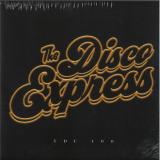
Regarded as one of London's "leading disco labels" The Disco Express is one of the most consistent and influential forces in the modern nu-disco scene.
A record label, international event series and DJ collective, TDE is dedicated to original, soul-infused house and disco music. With a global family of artists, the label blends vintage warmth with modern energy to honour the past whilst envisioning the future.
TDE100 is a 15 track compilation that distills the label's essence. Packed with fresh originals and hand-picked gems, the compilation blends funk, soul, nu-disco, house, and electronica. Crafted to move seamlessly from peak-time dance floors to laid-back Sunday listening, it's both timeless and forward-thinking.
Pressed across 2 X LP’s in a Gatefold Sleeve featuring John Morales / Derrick Carter & Inaya day.
This is original house & disco for 21st century dance floors and this train ain't slowing down anytime soon…
The occasion of possibility runs through Ben Bertrand's new album Relic Radiation. It is all backdrops and layers. Hints of the emotive and the distant. Confronting the classical with what is new, looking for an expressive space. Melancholy, not melancholy. Contemplation on a midnight blizzard. Dust motes in a sunbeam. Sand dunes and microwaves.
Ever since 2018 and the release of his first solo album, Ben Bertrand has been working up his own interpretation of the bass clarinet as an instrument of the avant-garde. Touching upon ambient and cosmic as well as earthy sceneries, his is a gentle musical paradox come to life. Let go of explicit pleasantries, Relic Radiation is the polymathic interpretation of a frozen intercom, of a subdued intent of contact. The music is competent and familiar, distant without being distant. There is no predefined form or context here. It is a different kind of colour.
As musical moments and modi become enormous, things break down into exploration. On the crystal shores of perception, Relic Radiation leaves a lot of space for interpretation. It is never loud, although it works loud. An at times almost sequenced feel to treated and overdubbed bass clarinet and clarinet notes adds to a feeling of paradox. Every voice, every gesture indicates a way in. The electron is now an immeasurable wave."
Fetter’s Body of Noise erupts at the threshold between ravey hypnosis and avant-pop experiment, slithering through the hinterlands of unconscious desire. Nine shape-shifting tracks conjure haunted landscapes where beauty refuses clarity and dancefloor logic warps underfoot. Vocals swoon, drift, and demand—stacking into fragments that multiply and weave through saturated pulses and shimmering, snarling synths.
Opening track "Like a Rose" traces a dreamer’s transition into the unstable physics of a perplexing but familiar dream world, where they gradually become lucid. “Beast” follows up humming with shadowed urgency, threading a path through self-sabotage and metamorphosis. “Spathiphyllums” drifts a while in a lush lostness, aching for something new before fracturing into wild, cathartic collapse. Side B’s “Do I Exist? (D.I.E)” and “The Longing” spiral into existential wonder, searching for a human origin story—both personal and collective—against a backdrop of uncertainty, while “Headache” thrusts forward as an absurd and insistent manifesto to stay the course and harness one’s own power within the madness.
Body of Noise is crafted not only for sweating bodies in motion, but for distorting time and opening psychic portals, where surrender becomes strategy and uncertainty transforms into ecstatic navigation. Rooted in all-hardware improvised production and shaped by Fetter’s years of boundary-blurring visual and performance art, their debut LP feels alive and in flux. Reminiscent of a spectral pop chorus trapped in a loop of broken machinery, or a lost broadcast from a dancefloor in a parallel realm, Body of Noise is a journey into chaos, transformation, and a bold refusal to be contained.
About Fetter:
Fetter makes clubby self-destructing noise pop to dance and weep to. Oscillating between ethereal and pounding, their all-hardware, largely improvised live sets take listeners through a foggy wilderness of saturated rhythms and menacing synth lines, a golden voice guiding the way through. Fetter is the stage moniker of multimedia artist Jess Tucker. Their performances take place in clubs as well as galleries, often incorporating video, installation, and interactive performance art elements to create other-worldly surrounds of mesmerizingly unhinged bodies and faces.
There’s something Stavroz wants to share with you. ‘Take a seat’
Let it all sink in. Let your feet rest. Let your thoughts drift. Stavroz invites you to step away from the noise, from the scrolling, from the pre-packaged nonsense, from the GPT’s doing the thinking for you. It’s a gentle reminder to pause. To breathe. To remember how it feels to simply… wonder.
Stavroz offers their soundtrack to take that step back with them, guided by them. A journey, spanning over one hour, touching different genres while maintaining their signature sound. Stavroz has matured.
14 songs join you in that step, on vinyl no less! All the more reason to avoid skipping to the instant satisfaction part. Just start on side A and end on side D. Pop it on your record player, turn up the volume… and take a seat.
Celebrated DJ, producer, and sonic explorer Auntie Flo (aka Brian d’Souza) — described by The Guardian as “one of global club culture’s most vital voices” — returns this autumn with ‘Birds of Paradise’: a rhythmically rich, emotionally resonant, and ecologically grounded new album, out 23 October via his A State of Flo imprint. The album will be launched with a special live show at London’s Jazz Caféon the same day.
‘Birds of Paradise’ draws on d’Souza’s global club experience while deepening his connection with the natural world. Built around classic Roland drum machines and iconic vintage synths, the record is a joyful, body-driven celebration of rhythm and movement, but one grounded in ecology and place. The album’s spiritual centre lies in Saligao, Goa, near d’Souza’s maternal homeland where his Auntie Florie (where the name is derived from) is buried. Where he found his ‘paradise’ nearby, staying in a converted fisherman’s hut and recorded dawn choruses from a riverside studio overlooking mangrove-lined waters. Environmental textures from Japan also make their way into the music, creating a sonic map rooted in lived experience.
“Birds of Paradise is about finding beauty and rhythm in a chaotic world. It’s about listening, to nature, to our bodies, to what’s real. It’s a reminder that dance music can be both joyful and grounded.” The album blends Afro-Latin polyrhythms with Western 4/4 patterns, fusing instinctive, dancefloor energy with field recordings that anchor the music in the earth. Described by d’Souza as “tropical with a few deeper edges, a balance of light and dark.”
The new record follows the acclaimed ‘In My Dreams, I’m A Bird and I’m Free’, which earned 4 stars and Global Album of the Month from The Guardian, featured in Disco Pogo’s Albums of the Year, and received support from Luke Una, Resident Advisor, Juno, Bandcamp, Mixmag, DJ Mag, Electronic Sound, The Skinny, Beatport, Ban Ban Ton Ton, and more. The album’s launch show at Omeara London sold out. Other recent projects include the ‘Outernational Dance’ EP on cult label Multi Culti, event series ‘Plants Can Dance (and Mushroom’s Sing)’ which explore plant and fungi bioelectricity as a means of live composition, and ‘Black Beacon’, a haunting cassette release and soundwalk series recorded on the abandoned military island of Orford Ness. There, d’Souza explored the eerie intersection of nature, decay, and deep time, gaining special access to restricted buildings to capture long-form soundscape compositions.
Alongside his production work, d’Souza has emerged as a leading voice at the intersection of sound and science. He curated music for Imperial College’s groundbreaking psychedelic therapy trials, developing six-phase playlists to guide participants through psilocybin-assisted sessions treating conditions such as fibromyalgia and gambling addiction. His five-hour ambient set at Watching Trees Festival, selected as Resident Advisor’s Mix of the Day, continued this exploration into the therapeutic potential of sound in altered states. He also spent six months collaborating with BBC producer Tom Raine on a documentary for BBC World Service, centred on a two-week journey through Kenya and Goa. There, he performed live, led plant music workshops, and joined a deep listening retreat rooted in field recording. “I realised my studio isn’t just four soundproofed walls filled with instruments — it’s the journey itself. It’s the people I meet, the natural world I listen to, and the connections I feel.”
This same commitment to deep listening fuels his live concept Plants Can Dance, a project that combines the biosonification of plants and fungi with modular synthesis. The next event, on 14 September at Hideout Hackney Wick, will feature performances by Stella Z and Lapalace, with d’Souza and resident Lamine playing live alongside responsive plants in collaboration with Repot Hackney Wick and the label Music To Watch Seeds Grow By. “I’ve spent years exploring how electronic music can connect us, not just to each other, but to the natural world. Whether it’s translating mushroom data into melody or capturing birdsong at dawn, it’s about finding resonance across bodies, ecosystems, and machines.”
Rooted in his Goan and Kenyan heritage and shaped by years of travel and collaboration, d’Souza’s creative mission is simple: to reconnect the electronic world with the natural one. Through A State of Flo, he continues to blur the boundaries between club culture, sound art, and ecological awareness.
LORD PARAMOUR IS BACK!
After their first big break, the duo returns with "Doom", a second album as daring as it is captivating.
At the helm are DJ Marrrtin, graffiti artist, beatmaker, Stereophonk label captain, member of Funky Bijou, Aktshun, Tino & Marrrtin… & Ajax Tow, DJ-cosmonaut and all-round musician, known for his unpredictable and eclectic sets.
DOOM is a true sonic odyssey: edgy breakbeats, hallucinatory psychedelic vibes, oriental grooves in the style of post-Bollywood library music, a hint of 70s krautrock… and always that downtempo, post-punk, and space groove that is their signature style.
An album like a journey through a cosmic mixtape—retro, futuristic, romantic, and radically free. DOOM isn't just a record. It's a sonic adventure. An imaginary soundtrack. A stylish slap.
Edition of 300 ex - Hand mande Screen printed cover - Hand numbered.
Two sides, two heatwaves pulled from the depths of Afro-diasporic analogue archives and reborn for contemporary dancefloors.
On the A-side, “Chiacchiere di Lavoro” is a razor-sharp re-edit of a Nigerian track, that is just like its new producers: obscure and way ahead of their time. The B-side dives into the Antilles: "Taxi Safari" is a rare tropical gem, reworked with finesse by editing maestros Lance and Disco Strummer.
But what is La Sirenetta?
La Sirenetta – “The Mermaid” in Italian – is a name that evokes memories of a Riviera discotheque, the faded glamour of a beach club, or a fried fish shack glowing in the sunset.
In fact, this La Sirenetta is a sub-label of Maledetta Discoteca Records, dedicated to digging, selecting, and editing analogue World Black Music bangers from the ’80s and giving them a second life.
The formula? High-quality, highly collectible 12” double-siders.
All La Sirenetta records are a limited edition, one-time pressing only. Don't miss them!
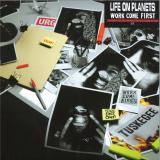
Tuskegee continues apace with ‘Work Come First’ from Life on Planets, a flawless blend of classic house, R&B, and conscious songwriting, remixed with finesse by Omar S and Soul Clap’s Charles Levine.
A modern-day hymn to hustle and stride, ‘Work Come First’ doesn’t chip away at the soul in pursuit of success. Working in collaboration with like-minded producer Seven Davis Jr., Phill Celeste applies his key alias to a triumphant, full-bodied songwriting moment. Led by beautiful organ piano, mingling with the artist’s defiant vocals and defined by the feel of a full live band, ‘Work Come First’ continues Life On Planets' beguiling, genre-crossing journey.
In ever-charismatic and minimal mode, Detroit icon Omar S breaks down ‘Work Come First’ into core elements for the floor, blowing out the system and applying Life on Planets’ vocal performance to a raw, lo-fi arrangement with a hint of street soul. In neat parallel, Charles Levine delves into the more full-bodied, rich elements of the track, tripping on the sophisticated funk long associated with the Soul Clap founder’s oeuvre.
Complimenting both takes, producer Seven Davis Jr. provides an alternate ‘Sev’s mix’, a little rougher around the edges for dancers under red lights.
The Toxic Funk series keeps the dancefloors moving, and for Volume 17 we welcome back the ever-funky duo Suckasidewith a pair of groove-heavy gems pressed on 7" vinyl. DJ B-Side and Sucka Timmy once again show their mastery of blending classic soul, funk, and RnB flavors with breakbeat punch.
The A-side, Hot Pants I Just Wanna Love You (112 BPM), is pure sunshine soul on wax – bright and upbeat with crisp breakbeats, silky vocal chops, and infectious horn stabs. Its warm groove and steady energy make it the perfect opener for a DJ set or a surefire way to lift any crowd.
On the flip, Dang Lazy (SuckaSide 45 Edit) kicks things up a notch with a faster, more driving funk workout. The bassline struts, the drums snap, and playful vocal snippets dance over the top, all tied together with Suckaside's tight, polished production. It's a party starter with a cheeky edge – perfect for when the floor is already buzzing and you want to take it higher.
Parallax explores the shifting boundary between human intuition and algorithmic logic, a space where two perspectives converge and blur until the center is lost. Composed through a hybrid system of voltage-controlled hardware and digital manipulation, the five tracks apply FM synthesis, granular processing, and bit-level degradation to rigid electro structures. Sequences are shaped by modulation instability and clock drift, gradually disrupting pattern integrity and simulating a loss of systemic control. Precise yet disrupted grooves hint at a deeper malfunction, as if something is corrupting the system from within. Parallax is the gap between the human who creates and the algorithm that imitates.
For their first album as Gilla Band (formerly Girl Band), the
foursome have redrawn their own paradigm. ‘Most Normal’ is like
little you’ve heard before, a kaleidoscopic spectrum of noise put in
service of broken pop songs, FX-strafed Avant-punk rollercoaster
rides and passages of futurist dancefloor nihilism.
Lockdown robbed Gilla Band of any opportunity to try the new
material out live, but the pandemic also incinerated any idea of a
deadline for the new album. They were free to tinker at leisure, to
rewrite and restructure and reinvent tracks they’d cut, to, as
drummer Adam Faulkner puts it, “pull things apart and be like,
‘Let’s try this. We could try out every wild idea.’”
The group also fell under the spell of modern hip-hop, “where
there’s really heavy-handed production and they’re messing with
the track the whole time,” says Fox. “That felt like a fun route to go
down, it was a definite influence.”
‘Most Normal’ opens with an absolute industrial-noise banger that
sounds like a manic house party throbbing through the walls of the
next room as a downed jetliner brings death from above. What
follows is unpredictable, leading the listener through a sonic house
of mirrors, where the unexpected awaits around every corner.
The common thread holding ‘Most Normal’’s ambitious Avant-pop
shapes together is frontman Dara Kiely. Throughout, he’s an antic,
antagonistic presence, barking wild, hilarious, unsettling spiels,
babbling about smearing fish with lubricant or dressing up in binliners or having to wear hand-me-down bootcut jeans (“It was a
big, shameful thing, growing up, not being able to afford the look I
wanted and having to wear all my brother’s old clothes,” says
Kiely).
‘Most Normal’, then, is a triumph, the bold work of a group who’ve
taken the time to evolve their ideas, to deconstruct and reconstruct
their music and rebuild it into something new, something
challenging and infinitely rewarding. It’s a headphone masterpiece.
It’s a majestic exploration of the infinite possibilities of noise. It’s a
bold riposte to your parochial beliefs on whatever a pop song can
or should be. It’s the best work these musicians have put to
(mangled) tape.
Forgotten Paradise is a new vinyl series from Western Lore, focussed on exploring the full breakbeat hardcore &
Jungle Tekno tempo range through a collection of 12” singles & EPs
After an under the radar, vinyl only bootleg 12” kicked off the series in 2024 (and flew out so rapidly on Bandcamp, none of the ltd run of copies made it to retail), L own, the producer behind the record returns to the series for the first of a two part long player showcasing the depths of his sound.
Deep, musical, textural & blissed out jungle tekno wizardry across a range of tempos.
Wrong Filament embodies Robert Piotrowicz's creation of fictional traditional music - not studied but invented, a utopian and oniric construct that becomes tangible in sound. These imagined traditions act as communal forces of music-making, resisting dominant structures of power.
The album unfolds in six dense compositions built on rhythm, repetition and minimal melodic gestures that draw on archetypal patterns of Eastern European traditions. Entirely synthetic yet strikingly instrumental in character, they develop as autonomous sound events, expanding into multi-part forms that evoke the physicality of ensemble performance - as if played by an imagined community of musicians.
Rather than reconstruction, Piotrowicz invents forged dances - a pre-techno of sorts, where complex meters and dense textures point to a parallel history of collective sound beyond industrial uniformity. They imagine a utopian and fictional genealogy of collective sound: one where industrial modernity yields to more unstable, communal energies.
This is celebratory music with invocatory charge: calls to dance, echoes of ceremony, microtonal melodies shaped by emotional weight, and traces of Eastern ornamentation stretched through synthetic means. Wrong Filament sacralises performance through sound alone, spinning a world where spectres of collective experience vibrate against the limits of rupture and resistance.
These pieces confront the traces of violence inscribed in body and memory, yet also affirm freedom, emancipation and integration. They manifest celebration, identity and resistance while opening a path toward liberation and shared needs that exceed social, private and intimate categories.