A glorious night of no particular significance, Totally, the new album by Baba Stiltz. Recorded in Helsinki in studio with a drummer and overdubs committed in 5 days. Ballroom- sink songs of loss, grief, long drives on the I-5, centralized acquisitions, and corrective conditioning towards the prolonged effects of computerized lifestyles.
Every song looks you straight in the eyes, crooked and veering towards a light fixture off the side of the mirror. Ambivalence and assertions track us, down some gauzy networked afternoon. Relatively, perfectly, three dimensional. Proportions as they appear to us from outer intuition. Sometimes meaning is evoked through pure nothingness. Concealed and nothing known. We have no need for any paradise informed by anything beyond what is directly in front of us.
Stone repetition thwarts the possibility of control and surrenders itself to understanding. Who are we, and what are we trying to understand? To understand being universally greater than being understood. There are soap operas everywhere for those with eyes to see. You don’t have to look as hard as we currently look. The dramatic is everywhere, we breathe it unintentionally, then we come to hate it. Haptic, embodied facts of a tedious life lodged in the jowls of history. Everything under the
sky being the best bedlam has to offer. Your family, your relationships, your memory. As you eat a burger you are reminded of every sharp protrusion and corner under the florescent lights, the same lights you see when you’re born, and although unconfirmed, when you die.
Some of these songs were written years ago, some recently. The bookshelf and television set come into full view. Women/men come and go. Stars and poseurs collapse under their alienated contradictions, the search for truth yields to continued gradients of probability (collapse). Spatial order maintains itself through perceptional feeling. Silence, singing along to Roger Miller, people entering and leaving, figures hovering over you in your dreams and waking hours. Cool and fun, Totally
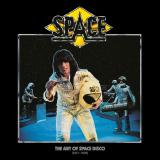
Major figure in electronic music and pioneer of cosmic disco, Space was founded in 1977 by Didier Marouani.
"Magic Fly", its first single, embodies its futuristic DNA (a melodious, cosmic and disco-inspired composition). Following its worldwide success, 3 albums were released in 2 years :
- "Magic Fly" (1977), blending melodic richness with synthetic innovation, delivered both dancefloor hits and midtempo tracks.
- "Deliverance" (1977) is a typical 70s concept album, ranging from disco to cosmic electronic music.
- "Just Blue" (1978) is a more melancholic album featuring broader orchestrations and complex harmonies.
These 3 records sold over 10 million copies worldwide.
"The Art Of Space Disco (1977-1978)" presents Space's most iconic tracks and sums up two fruitful intense years of musical innovation.
- The Vinyl comes in as 1LP Crystal Clear. It includes 4 edits : Carry On Turn Me On, My Love Is Music, Deliverance & Running In The City.
- The Double CD features original versions . It includes 2 additional tracks (Symphony, Velvet Rape) and 8 remixes (never released physically before) produced in 2026 by artists whose musical careers were shaped by Space.
- CD & Vinyl Exclusive liner notes by Jean-Yves Leloup.
- All tracks have been remastered by Alex Gopher
TIM HECKER’s latest work approaches a form of secular musical transcendentalism from within the battered temple of spirituality.
Recorded in a church in Reykjavik, Iceland and using a pipe organ as the primary sound source, this new piece is essentially a live recording. In reality, it exists in a nether world between captured live performance and meticulous studio work, melding the two approaches to sonic artifice as a unity. It is in parts a document of air circulating within a wooden room, and also a pagan work of physical resonance within a space once reserved for the hallowed breath of the divine.
While the title of the piece “Hatred of Music” might be a clue, the album is also partly an attempt to confront a pervasive negativity surrounding music. Historical rituals of destroying pianos, mountains of pirated CDRs pushed by bulldozers in Eastern Europe, or the melancholy of the digital music era began as sideline motifs which quickly informed the work on this record. They also really didn't at all. Despite that the context is wide open in such a form of musical abstraction, the substance of these immersive compositions showcases Heckerʼs continued mastery of organizing sound into a visceral near entity. It is an almost physical presence that the listener feels as much as hears.
This work is a significant contribution to Hecker's oeuvre, one which spans over ten years of musical production. Ravedeath is an enigmatic document of beauty and force. The album was recorded mostly over the period of one day in July of 2010. Iceland-based musician Ben Frost assisted with the engineering and performs on this recording.
RECEIVED AN 8.6 BEST NEW MUSIC RATING FROM PITCHFORK.
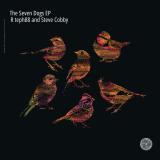
On Oath's latest, the imprint keeps the jazz-fuelled atmospheres going with 'Seven Dogs', an EP that serves up an astonishing excursion through deeply hypnotic melodies and idiosyncratic grooves, courtesy of an iconic link-up between Rteph88 aka Robin Taylor-Firth and Steve Cobby.
Taylor-Firth and Cobby are musicians whose careers are so richly storied, broad-ranging, and impactful that it's difficult to summarise their output and impact in so few words. Both Taylor-Firth and Cobby firmly established themselves in the 90s, being involved in some of the era's most prominent and celebrated groups and for releasing some truly era-defining records. As such, their discographies reach far and wide, from house and techno cuts through to downtempo, drum'n'bass and leftfield, there is little that is left uncovered, and this spirit remains with them both as they continue to explore the outer parameters of their sounds.
Taylor-Firth, a songwriter, arranger, and producer, is perhaps best known for his long association with Warp Records and its sublabel Nucleus, and for his work as a member of Nightmares on Wax, where his signature keyboard playing style became a staple of the group's legendary sound. Alongside this, he has hundreds of songwriting and arranging credits on a dizzying array of records, and was a member of house music group Anon and Pio Bo alongside Richard Barratt - to name but a few selected highlights of his extraordinary career. Cobby's career is distinguished by his multitude of releases under a variety of aliases, along with his helming of a number of imprints, including Pork Recordings and his most recent label Déclassé. Experimenting with a wide variety of genres and sounds, perhaps his best-known work was with the duo Fila Brazillia alongside Dave McSherry, who released a plethora of immersive and innovative records in the 90s and beyond.
'Seven Dogs' represents a shared passion, vision, and musicality, two languages borne of similar spaces but reaching through time, space, and existence in creating a richly veiled musical experience that draws from lifetimes spent within the nucleus of music's soul. The EP speaks of the present as such as the past and indeed future, hinting with motifs that feel right at home within sun-kissed skies and within the walls of the chill out rooms. 'Early Doors', the EP's opener, displays the core fundamentals of the unfolding experience, namely the intrinsic relationship between keys and drums and how they express tone and mood. The piano gently caresses, ethereally floating with space to grow, as the drums lightly swing into life, providing an engrossing and rhythmically diverse groove that nods as much as it dives. The title track lands next and leads with a more driving feel. Sonically, the track leads with an oozing bass sequence that worms through the mid range before retreating under an array of compelling piano chords. The drums once again provide a strong backbone, allowing the melodic elements up top to fully express themselves - in a myriad of ways, murmuring and clamouring all at once.
'Visiting Hobo' brings the groove down a few notches. Slightly sombre in its delivery, the piano and bass interchange above a sparse yet hard-hitting groove, with as much emphasis placed on the emptiness as on the melodically full sections. The piano has a certain tonality here, with the notes containing a large amount of textural reverb that helps the track feel alive, almost growing out of the speakers. Wrapping things up is 'Titled', which begins with the keys and an array of whimsical features. The drums allow themselves time to grow into being, but when they do, they simmer within an enriching melange. It's a fitting end to a record that abounds with sonic consideration, environmental and emotive feeling, where two technicians bring their best and serve up four tracks of such sublimeness and thoughtfulness. One to drift deep within, on those hot summer days….
In a blizzard of crushed breaks and dissonant tones, Shelley Parker lands on Sneaker Social Club with her third album, Screed. Taking a forensic approach to noise sculpture and harmonic interference, the UK-based artist maintains a fringe perspective on the legacy of hardcore-derived dance music, extrapolating the renegade spirit of the earliest innovators into unexplored zones where sound art and sound systems collide.
Parker's path through the underground has been informed by her art school background, equally at home in the parallel world of galleries, installations and institutions as she is in the club. This dualistic dimension to her practice charges her music with an outsider spirit that manifests across 10 striking new productions on Screed. Focusing on the sound over an umbrella concept, it's an album that rejects comfortable, functional formulae in favour of original expression.
There are plenty of forthright structures for DJs and dancers to lock onto, from the militaristic techno thrust and tightly clipped breakbeat loop of 'Relentless' to the splayed boom bap guiding the giddy string sequences of 'Stargazer Lily'. The insistent pulse of 'April' meanwhile offers only the faintest of paths to navigate dense thickets of jerky, swinging static and metallic clamour. 'Georgian Wire' closes the record out on dissembled drum licks with a brittle patina - a scooped out closer with the skeletal remains of a rave dialect that's second nature to someone with as much skin in the game as Parker.
In amongst those tracks lies a wide-ranging tapestry of rhythmic, textural and emotional approaches, from head-knocking beatdowns to billowing clouds of dub techno, angular stabs and industrial smudges. On Screed, Parker proves herself to be peerless and purposeful in her quest to find new forms within the well-worn canon of hardcore and rave.
Afro-Latin electronic producer, global-sounds inspired DJ, and bassist for Little Simz, Marla Kether returns with her highly-anticipated second EP Luso, released on Strut Records.
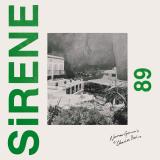
Norman Gervais and Charles Bals return after last year’s Transcoastal compilation with their first project for the Italian label Periodica Records and its newly founded imprint, Periodica International.
The concept behind SiRENE 89 is quite particular and took six years to develop. It is presented as the live recording of one long evening, with different bands taking the stage one after another on the terrace of a Mediterranean holiday resort in 1989, inspired by the places Charles and Norm remember from their summer holidays around that time.
The songs were recorded between 1982 and 1993 and gathered from small-time artists, beach-club vagabonds, local micro-labels, library records and privately released tapes. The music moves lightly between mystical ballads, digital samba and loose, sunburnt dance songs, carried by drum machines, not-quite-tuned guitars and college-band voices.
The audience on the terrace remains quietly present throughout, joining the tracks into one continuous, partly improvised set. By the end, it feels less like a compilation and more like a place where you have spent the night, proving that charm can carry further than perfection.
Mink & Shoes' is a gooey drip of murky low slung slinky disco, falling somewhere in between smokey retro-futurism and hazy desolation.
It's a seductively squiggling romp through the outer reaches of the cosmos — sky-crawlingly atmospheric, slow-motion dance floor abstraction for acid heads and space cadets. With Navid Izadi's intoxicating vocals it's quite something, and comes in three flavours: dub, radio and original.
Label co-founder CRYME releases his third solo EP on the Berlin-based imprint, paving the way for a new, more subtle direction. Across these four tracks we find the artist diving deeper into a sound he's been shaping over the last few months. More adventurous, experimental, still driving and dancefloor-focused. This one is for the early mornings at festivals - that moment when the sunlight starts to break through the fog and the night turns into day. From bubbly, techy and quirky minimal on the A-side to more dubbed and spaced-out cuts on the B-side with a more atmospheric feel. Overall complex music full of movement that's still easy to listen to but keeps the crowd moving.
Label co-founder CRYME releases his third solo EP on the Berlin-based imprint, paving the way for a new, more subtle direction. Across these four tracks we find the artist diving deeper into a sound he's been shaping over the last few months. More adventurous, experimental, still driving and dancefloor-focused. This one is for the early mornings at festivals - that moment when the sunlight starts to break through the fog and the night turns into day. From bubbly, techy and quirky minimal on the A-side to more dubbed and spaced-out cuts on the B-side with a more atmospheric feel. Overall complex music full of movement that's still easy to listen to but keeps the crowd moving.
shishi, das sind drei Frauen, die an den Ufern der litauischen Ostsee Post-Punk und Indie-Rock mit Surf-Einflüssen spielen. Diese physische Split-EP (und ihr Debüt auf Vinyl) enthält die neue QUEEN DEYONNA-EP und die frühere FAQ-EP. Ihre Musik verwandelt die Angst und Paranoia einer Welt im Umbruch in kathartische Verrücktheit. Ihre Live-Auftritte sind legendär - voller reichhaltiger dreistimmiger Harmonien, ineinander verwobener Gitarrenparts, grooviger Basslinien und treibender Schlagzeugbeats.
After two highly praised singles on consecutive Razor-N-Tape Family Affair compilations, Dennis Liber brings his signature tropical disco sound to the Astro Danza EP, his first solo outing on the label. Inspired by years living in and creating community in the Caribbean, the EP brings together an international crew of musical cohorts to take listeners on a journey through different shades of paradise. From the hypnotic night time energy of the title track, to the tropical joy of Être Heureux (with a standout remix from French producer Anoraak), and the dreamy celebration of feminine freedom in Femme Papillon, the Astro Danza EP is the cosmic and sensual sound of endless summer!
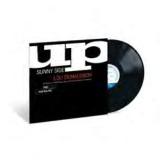
Altsaxofonist Lou Donaldson wurde schnell zu einer festen Größe des Blue-Note-Labels, nachdem er 1952
als Sideman an der Seite von Thelonious Monk und Milt Jackson zu hören gewesen war. Noch im selben
Jahr begann er, eigene Sessions als Bandleader einzuspielen und blickte, als er 1960 ins Van Gelder Studio zurückkehrte um sein hervorragendes Album ”Sunny Side Up” aufzunehmen, bereits auf ein Dutzend
Aufnahmesessions unter eigenem Namen zurück. In vielerlei Hinsicht ist das Album ein Paradebeispiel für
den typischen Blue-Note-Hard-Bop-Sound: eine Mischung aus swingenden Standards und bluesgetränkten
Eigenkompositionen, die von einem Quintett mit viel Gefühl und Ausdruck interpretiert werden.
Porch Light's debut album, Hush. Pressed on Classic Standard Black vinyl with a 12” Record Jacket and Printed Inner Sleeve, limited to just 1,000 copies.
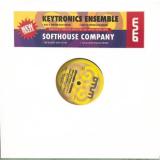
It all began in the late 1980s with *Calypso of House* by K.T.E. (released by Irma Records), a track that made history
in Italian house music.
The man behind the project, Francesco "Kekko" Montefiori, went on to collaborate with Claudio Rispoli (aka DJ
MozArt) under the name SOFTHOUSE COMPANY, creating cult classics like *What You Need*.
He later formed the duo Montefiori Cocktail with his twin brother, Federico "Chicco" Montefiori, touring the world together.
Now, the story continues.
Kekko Montefiori and Lorenzo "Meo" Meoni (resident DJ at BICIO PAPAO)
are launching OTUM Records to revive the Softhouse Company and Keytronics Ensemble projects.
The goal: to capture the original energy of the Italian House Music "Golden Age" and project it into the future.
No nostalgia—just high-quality dance music.
"Otum" means "excellent" in the slang of Italy’s Romagna region.
Love or its absence dominates the intimate songs on the new album from ARBORIST – the musical outlet of Mark McCambridge. Looking For Love, Arborist’s fourth album of exquisitely inventive Americana, places us firmly in his hometown of Belfast, allowing it to act as a microcosm of the wider-world, with all its foibles and charms. We find fictional protagonists scouring the dark corners of the city, wiling-away afternoons in strip clubs, wandering the streets in all weather and reflecting on the harsh reality of modern society, all in search of an elusive love – emphasising our need for it now more than ever.
Looking for Love is ARBORIST’s first album to be self-produced by McCambridge, largely from his home studio in Belfast – and at times it feels like we are in the room with him. It’s a different kind of record for him as previously he has always sought collaboration; whether it be with Kim Deal who chose to sing intertwined harmony on his debut single “Twisted Arrow”, or recording in The Curfew Tower owned by The KLF’s Bill Drummond who described Mark’s songwriting as being “riven with more loss than any record since Leonard Cohen quit this world”, and who Matthew E White and his Spacebomb band collaborated with to such astonishing effect on the previous Arborist LP, 2023’s An Endless Sequence of Dead Zeros, winner of the prestigious Northern Ireland Music Prize. This time, with no outside producer steering the way, McCambridge found that the quiet hours were where he felt most at ease, despite periods of trial and error, and, by his own admission, moments of feeling genuinely lost in it all.
Despite playing many of the parts himself, McCambridge still called upon old friends from the community around him; Spacebomb’s resident bassist Cameron Ralston (Bonnie Light Horseman, Hiss Golden Messenger) again features throughout the record, alongside Eamon Ferris (The Waterboys) on drums, with the great and the good from Belfast’s vibrant music scene. Grainne Meyer plays concert harp and Aga Olek plays violin for the quasi-title track “Looking 4 Love” – an off-kilter love-letter to Belfast. Meilana Gillard provides a sleazy saxophone on “Bye Bye Johnny Cash” – a seedy tale of a man obsessively visiting a dancer in a club, and The Larne Community Youth Choir provide backing vocals for “Go Kill The Fatted Calf” – a song Mark wrote about his son growing up, a take on the parable of the prodigal son, with Jonny Ashe’s blistering guitar solo adding an album highlight. The Errigal Ensemble String Quartet and Aisling Agnew’s breathtaking flute solo feature on “What Is It You’re Asking” – a song about love, or its absence, both personally and universally in these times.
McCambridge was recently honoured with a “Fellowship” by the Seamus Heaney Centre at Queen's University Belfast where he collaborated with such illustrious names from the literary world as Nick Laird, Caoilinn Hughes and Conor McPherson. Through the University he was given access to the music department's Steinways and pipe organs, and decided to try one out for the album’s centrepiece “I’ve Been A Flaneur”. As Mark explains, "The drone on the pipe organ — and the sound of it starting and stopping — was so visceral that I decided to try a half-written song against it right there and then, and this came out in one take… The song was a breakthrough artistically - I don't think I'll ever record in the same way again after this."
The album was engineered by longtime collaborator Ben McAuley (Van Morrison) and mixed by Jimmy Robertson (Anna Calvi, Beth Gibbons, Fat Dog). The results are staggering, devastating and uplifting in equal measure, calling to mind albums such as Songs Ohia’s Magnolia Electric Co., The Divine Comedy’s Regeneration, The Blue Nile’s Hats and Wilco’s Ode to Joy, as well as early-70s records from John Cale, John Lennon and Bill Fay.
Belfast native Mark McCambridge played his first show as Arborist supporting James Yorkston. A solo tour followed, and impressive performances led to notable support slots alongside Low, Cat Power, Echo & The Bunnymen and Guy Garvey. Arborist's debut single, the Americana-tinged "Twisted Arrow," caught the attention of the critics with an astonishing duet with Kim Deal of The Breeders. The debut album Home Burial (2016) and its follow-up, A Northern View, both received glowing praise, from The Guardian ("instant classic" ----) to MOJO ("devastatingly bleak… upliftingly beautiful" ----) to Uncut (8/10), with BBC 6 Music play from Cerys Matthews, Cillian Murphy, Lauren Laverne, Radcliffe and Maconie and Gideon Coe — and Steve Lamacq calling single "Taxi" "one of those records that makes you immediately stop what you're doing." He went on to even greater success with the 2023 Northern Irish Music Prize winning third LP, An Endless Sequence of Dead Zeroes, which was recorded at SpaceBomb Studios in Virginia with musician and producer Matthew E White. For his fourth LP, Looking For Love, he has signed with Fika Recordings and with a tour approaching in November, 2026 looks set to be a seminal year for the Irish artist.
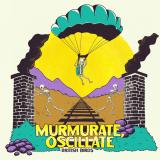
Murmuration’ is the low hum made by vast, beautifully choreographed flocks of starlings as they simultaneously flap their wings and take to the sky. Some people say that the frequency of this unique, rumbling, oscillating sound can cure diseases...
One of the most exciting live bands in the UK, British Birds combine the garage-punk energy of Billy Childish, the wry English sophistication of XTC and the witty pop inventiveness of The Lovely Eggs. Like a murmurating flock of starlings, they create a unique sound, and might even be able to cure diseases.
Based in Chorley, Lancashire, British Birds are a resolutely DIY band. Bobby records and mixes all the music; Emma creates all the artwork. Their first two albums were self-released, selling hundreds of copies at gigs and at a few chosen record stores. British Birds didn’t wait for permission to take flight. They just got on with it. Their songs are sophisticated, hard-hitting, and very skilful. It may be DIY, but it’s big and it’s ambitious.
Sessions for Marc Riley and Gideon Coe have followed, along with tours supporting The Bug Club, BC Camplight and Lovely Eggs.
‘Murmurate, Oscillate’ kicks off with Lie Down With Dogs, Stand Up With Fleas, a rousing expression of exasperation at our passivity in the face of lame authority. British Birds are acute observers of the English political scene, shrouding their observations in humour and surrealism. Polka Dot Eyes is another piece of sharp social observation: it portrays Lancashire lads – friends from school – who join the Army and return home physically and mentally damaged. The song is simultaneously disturbing, funny and catchy as hell. From the fog of disinformation and doubt that surrounds us all in 2020s Britian, British Birds embrace the darkness, but with wit and verve – no slogans, no easy answers – and with an energy that helps us escape the mundanity of a declining island. This might all sound a bit bleak, but it’s not: every single one of the songs on this album has a chorus as big as a house.
There are personal songs too: Scary Movies is a poignant description of Bobby and Emma’s grandfather, who delighted in showing them horror films when they were kids – giving them sneak previews of the darkness they’d come to embrace as adults; Just Like Them is a celebration of introversion: it might not be fun, but it’s better than being an idiot. (Paradoxically, any other introverts who hear this song will feel impelled to join in in the chorus.) Blame Game and Thunder Claps examine the darkness inherent in relationships: there is always an impending storm, if you recognise the low hum of the imminent thunder. Once again: the choruses of these songs confound the melancholy sentiment.
You’ll get the same impression if you see British Birds live: Bobby’s ferocious guitar and dark lyrics are counterpointed with Emma’s sometimes haunting, sometimes playful vocal responses and insistent rhythms. You’ll be swept away by the energy of a band who don’t know the meaning of limits. And as the songs get darker and darker the smile on your face gets wider and wider.
The core members of British Birds are siblings Bobby and Emma Townson, working from their HQ-cum-nest in Chorley. Drums are by Dominic Lawson (apart from Michael Aindley on ‘Just Like Them’). Bass is by James Robinson.
British Birds will be embarking on a headline tour of the UK in early 2027.
A stylish selection of city pop, funk and modern soul from Japanese label Nippon Columbia, selected by DJ Notoya and featuring cult classics and rarities by Hiroshi Sato, Hatsumi Shibata, Hitomi 'Penny' Tohyama & many more.
Annotated by Notoya with journalist Nick Luscombe and artwork by Optigram.
Newly remastered audio.
The selection on ‘Tokyo Glow’ starts with 'Kimugare' a relaxed mid-tempo track by Kumi Nakamura, actually a famous actress who only recorded one album in 1980 for Columbia.
The set continues and flows effortlessly with the sunshine grooves of Miyuki Maki, Hatsumi Shibata and cult keyboard player Hiroshi Sato before the pace starts going faster and funkier with New Generation Company, Kengo Kurozumi - with his superb boogie, 'Juggler'
- and one of the queens of the genre, Hitomi 'Penny' Tohyama with 'Tuxedo Connection'.
Another fine example on the set is the mid-tempo groove of "I Wander All Alone Part III" by New Generation Company, an aggregate group of some of the best Japanese session musicians led by arranger Katz Hoshi and including Hiroyuki Namba (key), Kazuo Shiina (gtr) and Yutaka Uehara (ds) who all played with Tatsuro Yamashita among many others.
There are many other excellent examples in 'Tokyo Glow', showcasing the diversity and specificity of Japanese City Pop during the late 70s and 80s.
Nippon Columbia opened their much-guarded vaults to curator DJ Natoya. Tracks were remastered in Tokyo and the result, ‘Tokyo Glow’, is a unique insight into a most creative period in Japanese music.