quête:para

Genres
Tout
Jan Jelinek - Loop-Finding-Jazz-Records 2x12"

2024 repress

In February 2021, Jan Jelinek's seminal album "Loop-Finding-Jazz-Records" turned 20. The anniversary repress, a double LP with two bonus tracks (B-sides from the Tendency EP, 2000), is a little late to the party.
What the press said about Loop-Finding-Jazz-Records:
“Don’t be misled by the title, though for there isn’t a finger-snapping rhythm c bebop lead anywhere on the album. Instead, Jelinek chooses to explore the visual effect moiré - two shifting patterns creating an implied third dimension - in the audio realm.” (Alternative Press)
“The title acts as explanation for the studio technique that provided the basis for this album, snippets of other people’s arrangements deconstructed through a sampler into loops and then splashed onto an audio canvas.” (ATM)
“Jelinek’s sound evolved out of his dislike for (and inability to play) keyboards.” (RPM)
“Jelinek has abstracted his sources beyond recognition, looping his millisecond samples into flickering patterns of sonic moiré laid atop a dub Techno framework. (...) Jelinek might as well have sampled a horn player’s hissing intake of breath – it would have been ‘jazz’ enough for his purposes.“ (The Wire)
“It’s a perfect inversion of conventional music, a sonic negative. Everything that would typically be foreground is moved back or pushed off the screen altogether, and the flecks of sonic debris that would normally be covered by other sounds are left to carry the melody and rhythm.” (Pitchfork)
“All you need to know is that these onomatopoeic non-specific songs (...) are warm, paradisical creations”. (NME)
“Listen carefully and you’ll hear textures slowly unfolding and mutating. Presuming you’ve not fallen asleep of course.” (iDJ)
“At times, it’s all a bit dripping tap Japanese water torture; so sedentary it drowns in its own motionlessness” (DJ)
“Loop Finding Jazz Records' is a genuine modern classic whose re-release is anything but a cynical mortgage repayment exercise. Consider this a second chance, then pretend you had it all along.” (Boomkat)
PS:
“I’ve been fortunate enough to see Jan Jelinek live once, at Tonic NYC (...). Wearing a black and white striped shirt, he looked like a nihilistic Charlie Brown.” (beachsloth)

pas en stock

Commandez maintenant et nous commanderons l'article pour vous chez notre fournisseur.

26,01

Derniere entrée: 29 jours
Deltron 3030 - Deltron 3030 LP 2x12"
  • A1: State Of The Nation Featuring – Damon Albarn
  • A2: 3030
  • A3: The Fantabulous Rap Extravaganza Featuring – Prince Paul
  • A4: Things You Can Do
  • B1: Positive Contact
  • B2: St. Catherine St. Featuring – Beans, Mr. Lif, P. Wingerter, Peanut Butter Wolf, Verna Brown
  • B3: Virus
  • B4: Upgrade (A Brymar College Course)
  • B5: New Coke Featuring – Mark Ramos-Nishita
  • C1: Mastermind
  • C2: National Movie Review Featuring – Brad Roberts
  • C3: Madness
  • C4: Meet Cleofis Randolph The Patriarch Featuring – Mc Paul Barman
  • C5: Time Keeps On Slipping Featuring – Damon Albarn
  • C6: The News (A Wholly Owned Subsidiary Of Microsoft Inc.) Featuring – Hafdis Huld
  • D1: Turbulence (Remix) Remix – Mark Bell
  • D2: The Fantabulous Rap Extravaganza Part 2 Featuring – Prince Paul
  • D3: Battlesong
  • D4: Love Story
  • D5: Memory Loss Featuring – Sean Lennon
  • D6: The Assman 640 Speaks

Following the release of Deltron 3030, all three members participated in the Gorillaz' self-titled debut album. With Del aka Deltron Zero on vocals, Dan the Automator aka The Cantankerous Captain Aptos on production, and Kid Koala aka Skiznoid the Boy Wonder on turntables, this album takes the listener on a paranoid journey set in a dystopian year 3030 dealing with viruses, the apocalypse, an oppressive government, and a war waged against a huge company called the Corporate Bank of Time that rules the universe, all to the well-crafted and consistent musical backing of the Automator. Appearances by Damon Albarn (The Gorillaz, Blur), Prince Paul, Peanut Butter Wolf, DJ Money Mark, Paul Barman, Mark Bell (Bjork, production), Sean Lennon, and Mr. Lif compliment Del's vocal style and add the right amount of flavor to this classic period piece.

pré-commande06.02.2026

il devrait être publié sur 06.02.2026

34,41
London Symphony Orchestra, Claudio Abbado - Strawinsky: Petruschka (Original Source Series #10)

London Symphony Orchestra, Claudio Abbado

Strawinsky: Petruschka (Original Source Series #10)

2x12inch4868049
Deutsche Grammophon
06.02.2026

Petruschka ist eines von drei Balletten, die Igor Strawinsky während seiner „russischen“ Periode komponierte. Mit Petruschka zeigte Strawinsky seine neo-folkloristische Seite und brachte eine bunte Straßenmenge mit einem Zauberer und seinen Puppen, Händlern und Mumien auf die Ballettbühne. Damit zeigte
er der Welt, dass Jahrmarkt und klassische Musik kein Widerspruch sind.
Dies ist eine der wenigen Produktionen der DG, bei der parallel digital auf 2 Spuren und analog auf 8
Spuren aufgenommen wurde. Durch die Verwendung des analogen 8-Spur-Masters ist diese Aufnahme nun
zum ersten Mal in rein analoger Form erhältlich.
Die audiophile Vinyl-Serie The Original Source präsentiert herausragende Aufnahmen der 1970er Jahre
in ganz neuer Klangqualität. Dafür haben die renommierten Emil Berliner Studios die originalen Vier- und
Achtspur-Bänder mit eigens für die Produktion der Serie entwickelten Technologien in 100% analoger Qualität (AAA) neu gemastert und geschnitten. Die klanglichen Unterschiede zu den Originalveröffentlichungen sind beträchtlich: Größere Klarheit, mehr Feinheiten und Verbesserungen im Frequenzgang, zugleich
weniger Nebengeräusche und Verzerrungen ermöglichen ein audiophiles Hörerlebnis wie nie zuvor.
Auf 180g Vinylplatten und in einer Deluxe-Gatefold Edition mit Originalcovers und -texten werden die
Exemplare dieser Serie limitiert und nummeriert veröffentlicht, begleitet von zusätzlichen Fotos und Faksimiles der Aufnahmeprotokolle und Bandkartons.

pré-commande06.02.2026

il devrait être publié sur 06.02.2026

48,70
ACID MOTHERS TEMPLE & THE MELTING PARAISO U.F.O. - Electric Heavyland (2x12")
  • A1: Atomic Rotary Grinding God ~ Quicksilver Machine Head (15:44)
  • B1: Loved And Confused (17:03)
  • C1: Phantom Of Galactic Magnum (18:57)
  • D1: Atomic Rotary Grinding God ~ Blues For Black Bible (Live) (19:36)

We’ve purged the Acid Mothers Temple archives once again, resurrecting another classic album ‘Electric Heavyland’.
Originally released in 2002 on CD only (via Alien 8 Recordings), ‘Electric Heavyland’ is presented here for the first time on vinyl, remastered and with a whole bonus live side!
Housed in a beautiful gatefold sleeve with heavy use of the original black and metallic silver ink artwork
“Suddenly, my world explodes as the band pounces on the joint with some hell-blues, laced with sci-fi laser transmissions. Jesus H. Fuck, this is loud. There comes a point when heavy jamming and pure noise meet, and that point is tearing shit up at this very moment.” Pitchfork
Of key note for AMT diehards/collectors. Side D was recorded live at at the 2nd Acid Mothers Temple Festival December 13th 2003 with Yamazaki Maso (Masonna) as a guest.
Makoto says "we have played this song, Atomic Rotary Grinding God live only once, this is that recording"
Produced, engineered and mixed by Kawabata Makoto live recorded by Takayama Manabu (original source is VHS video tape)

pré-commande06.02.2026

il devrait être publié sur 06.02.2026

24,33
LONG HOURS - SHAKE AWAY

LONG HOURS

SHAKE AWAY

12inchBRLP377
BEAST RECORDS
06.02.2026

" Shake away " After many hours of work, the no wave, synth punk crooner has produced his best album yet. The voice is soulful and deep, and each track seems paradoxically spontaneous and thoughtful, while the production is perfect for bringing out all these catchy hits.It inevitably brings to mind Alan Vega at his best, but with that Australian touch that makes this album so personal .

pré-commande06.02.2026

il devrait être publié sur 06.02.2026

23,49
Jen Chapin - reVisions: Songs of Stevie Wonder LP
  • 1: You Haven't Done Nothin
  • 2: Master Blaster (Jammin')
  • 3: Visions
  • 4: Higher Ground
  • 5: Renewable
  • 6: Jesus Children Of America
  • 7: If It's Magic
  • 8: She's Gone
  • 9: Pastime Paradise
  • 10: Big Brother

In 2008, accompanied solely by her husband, bassist Stephan Crump , and saxophonist Chris Cheek, she created reVisions in which she reimagined a collection of Stevie Wonder songs to offer social commentary on Barack Obama's historic rise to power. As much a testament to Chapin's unique artistic sensibility as a celebration of the enduring appeal and relevance of Wonder's songs, ReVisions, which also includes sensibility as a celebration of the enduring appeal and relevance of Wonder's songs, ReVisions, which also includes two self- penned numbers, puts a new spin on Wonder classics like 'Masterblaster (Jammin'),' 'You Haven't Done Nothin',' 'Higher Ground' and 'Village Ghetto Land.' Bolstered with new liner notes featuring a recent interview with Jen Chapin, ReVisions: The Songs Of Stevie Wonder is reissued in 2026 as part of the Chesky Original Masters series on 180g One Step Pressing Vinyl LP and Hybrid Stereo SACD

pré-commande06.02.2026

il devrait être publié sur 06.02.2026

38,61
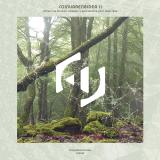
Soinuarenbidea II - Sintesis de Paisaje sonororos y Electrónica post industrial

Una interpretación de Soinuarenbidea II debería partir de esta premisa: todo es posible, nada es aleatorio, y en sí mismo es un imposible de aleatoriedades. El escenario planteado explora la idea de realidad aumentada desde una percepción sonora, ambiental y colectiva. La obra transita hacia adelante y hacia atrás recreando experiencias extintas de porvenir incierto, tratando de facilitar un fin pacificador. Cada pieza sonora se crea, se despliega, se repliega y se destruye, en una torsión permanente de toda la realidad que hace posible cada fragmento musical, cada identidad acústica, cada espacio sonoro. Lo onírico, la ficción, y el viaje están continuamente presentes, y es en el transitar de cada fragmento donde se produce el diálogo de la exposición musical. Los elementos de esta ficción se recrean continuamente, en un continuum donde se entrelazan y se van contorsionando a medida que crecen o decrecen con cada fragmento de síntesis concreta. Los temas explícitamente musicales son el magma que conduce a dar voluptuosidad al disco, siendo la piel un contexto o límite que en sí mismo fluctúa indefinidamente en texturas y configuraciones posibles. Y la urdimbre del silencio es la síntesis que está continuamente presente y que trata de cohesionar los fragmentos en continua colisión expresiva. Las grabaciones de campo proporcionan el material sonoro concreto, y como un fractal sonoro cada una de ellas ofrece diferentes grados de interpretación que a su vez conduce a nuevos fragmentos y nuevas creaciones. Así que se puede pensar que esta es una síntesis de una posible realidad, pero interpretable en infinidad de maneras. Un movimiento y una estaticidad implícitas que generan estructuras y dinámicas acústicas. Lo que se escucha no es real, pero en sí mismo forma parte de la realidad, creando un escenario expectante. Lo cinematográfico, plástico y teatral, danzante y dinámico cobra importancia en este juego, porque se trata de contar una historia, una experiencia recreada desde los puntos de vista del arte visual. Es a su vez hilo conductor y entretenimiento, discurso político y puro divertimento. Es desde este espacio de convivencia artística que tiene sentido la totalidad y justifica el formato sonoro planteado. La contradicción de la obra es patente en el formato, y es a su vez el planteamiento de una accidentalidad en el devenir vital. Contenedor de Ruido recoge todas estas contradicciones y las manifiesta en la obra Soinuarenbidea II. Es una historia sonora, es un cuento acústico. Es un fragmento de vitalidad en imágenes audibles. Es una invitación a la reflexión, a la crítica, al disfrute, a la meditación, a la celebración. Y sobre todo es esperanzadora apreciación de la realidad como algo maleable que confeccionamos colectivamente, que requiere de una paciente observación y la participación colectiva global, en un mundo finito pleno de diversidades y del que ignoramos prácticamente todo, al que deberíamos volver con respeto y devoción.

Soinuarenbidea II-ren interpretazio batek premisa honetatik abiatu beharko luke: dena da posible, ezer ez da ausazkoa, eta, berez, ausazkotasun ezinezko bat da. Planteatutako agertokiak errealitate areagotuaren ideia aztertzen du, soinu-, ingurumen- eta talde-pertzepzio batetik abiatuta. Lanak aurrera eta atzera egiten du, etorkizun zalantzagarriko esperientzia desagertuak birsortuz eta helburu baketsua lortzen saiatuz. Soinu-pieza bakoitza sortu, hedatu, tolestu eta suntsitu egiten da, musika-zati bakoitza, identitate akustiko bakoitza eta soinu-espazio bakoitza ahalbidetzen dituen errealitate osoaren etengabeko bihurdura batean. Onirikoa, fikzioa eta bidaia etengabe daude presente, eta pasarte bakoitzaren joan-etorrian gertatzen da musika-erakusketaren elkarrizketa. Fikzio honen elementuak etengabe birsortzen dira, continuum batean, non sintesi zati zehatz bakoitzarekin hazi edo txikitu ahala elkar lotzen eta bihurritzen diren. Esplizituki musikalak diren gaiak diskoari atsegintasuna ematera eramaten duen magma dira, azala testuingurua edo muga izanik, testura eta konfigurazio posibleetan mugarik gabe aldatzen dena. Eta isiltasunaren irazkia etengabe presente dagoen sintesia da, zatiak etengabeko adierazpen-talkan kohesionatzen saiatzen dena. Landa-grabazioek soinu-material zehatza ematen dute, eta soinu-fraktal batek bezala, horietako bakoitzak interpretazio-maila desberdinak eskaintzen ditu, eta horrek, aldi berean, zati eta sorkuntza berrietara eramaten du. Beraz, pentsa daiteke errealitate posible baten sintesia dela, baina hamaika modutan interpreta daitekeena. Egitura eta dinamika akustikoak sortzen dituzten mugimendu eta estatikotasun inplizitu bat. Entzuten dena ez da erreala, baina, berez, errealitatearen parte da, eta agertoki espektakularra sortzen du. Zinematografikoak, plastikoak eta antzerkikoak, dantzariak eta dinamikoak garrantzia hartzen dute joko honetan, ikusizko artearen ikuspegitik birsortutako istorio bat, esperientzia bat, kontatzea baita helburua. Aldi berean, hari gidaria eta entretenimendua da, diskurtso politikoa eta dibertimendu hutsa. Elkarbizitzarako espazio artistiko honetatik osotasunak zentzua du eta planteatutako soinu-formatua justifikatzen du. Obraren kontraesana nabarmena da formatuan, eta, aldi berean, bizi-bilakaeran istripu-tasa bat planteatzea da. Zarata-edukiontziak kontraesan horiek guztiak jasotzen ditu eta Soinuarenbidea II obran adierazten ditu. Soinu istorio bat da, ipuin akustiko bat. Bizitasun zati bat da, irudi entzungarrietan. Hausnarketarako, kritikarako, gozamenerako, meditaziorako eta ospakizunerako gonbidapena da. Eta, batez ere, itxaropentsua da errealitatea modu kolektiboan egiten dugun gauza xaflakor gisa hautematea, behaketa pazientea eta partaidetza kolektibo globala eskatzen dituena, dibertsitatez betetako mundu mugatu batean, ia guztia kontuan hartzen ez duguna, eta errespetuz eta debozioz itzuli beharko genukeena.

An interpretation of Soinuarenbidea II should start from this premise: everything is possible, nothing is random, and in itself is an impossible randomness. The proposed scenario explores the idea of ​​augmented reality from a sonic, environmental, and collective perception. The work moves back and forth, recreating extinct experiences of an uncertain future, seeking to facilitate a peaceful end. Each sound piece is created, unfolds, retreats, and is destroyed, in a permanent twisting of all reality that makes each musical fragment, each acoustic identity, each sonic space possible. The dreamlike, the fictional, and the journey are continually present, and it is in the transit of each fragment that the dialogue of the musical exposition takes place. The elements of this fiction are continually recreated, in a continuum where they intertwine and contort as they grow or diminish with each fragment of concrete synthesis. The explicitly musical themes are the magma that leads to the work's voluptuousness, the skin being a context or boundary that in itself fluctuates indefinitely in possible textures and configurations. And the warp of silence is the synthesis that is continually present and seeks to unite the fragments in a continuous expressive collision. The field recordings provide the concrete sound material, and like a sonic fractal, each one offers different degrees of interpretation that in turn lead to new fragments and new creations. So one can think of this as a synthesis of a possible reality, but interpretable in an infinite number of ways. An implicit movement and staticity that generate acoustic structures and dynamics. What is heard is not real, but in itself is part of reality, creating an expectant scenario. The cinematic, plastic and theatrical, dance and dynamic aspects take on importance in this game, because it is about telling a story, an experience recreated from the perspective of visual art. It is at once a common thread and entertainment, political discourse and pure entertainment. It is from this space of artistic coexistence that the whole makes sense and justifies the proposed sound format. The contradiction of the work is evident in its format, and it is, in turn, the presentation of an accidentality in the course of life. Noise Container gathers all these contradictions and manifests them in the work Soinuarenbidea II. It is a sound story, an acoustic tale. It is a fragment of vitality in audible images. It is an invitation to reflection, to critique, to enjoyment, to meditation, to celebration. And above all, it is a hopeful appreciation of reality as something malleable that we collectively craft, requiring patient observation and global collective participation, in a finite world full of diversity and of which we know practically nothing, to which we should return with respect and devotion.

Paisajes sonoros, diseño sonoro, drones y música grabada, realizada y arreglada para Contenedor de Ruido por David Aranaz. Coro: Basandere Ahotsak. Producido y mezclado por David Aranaz. Mástering: Estanis Elorza. Fotografía: David Aranaz. Texto: David Aranaz. Traducción: Saioa Aranaz Oreja. Trabajo y Diseño artístico: Cristina Martinez. Edición: Contenedor de Ruido Producciones y Sarbide Music. Distribución: Contenedor de Ruido.

Contenedor de Ruido agradece el apoyo en la realización de Soinuarenbidea II al coro Basandere Ahotsak y en especial a Eva Orbara Goicoa.

Soinuarenbidea II está dedicado al pueblo palestino.

Paisajes y objetos Sonoros, samplers y otras músicas transformadas para Soinuarenbidea II
Burlada: Paseos sonoros matinales por Merindad de Sangüesa, Calle Mayor, Capuchinas, Parque Uranga y varias iglesias y plazas. Pasajes del cotidiano: basura de papel, cristal y plástico.
Pamplona: Cementerio de San José. CEIP Sanduzelai /// Quinto Real: Fábrica de Armas, Puerto de Urkiaga y alrededores. Suite del silencio, bosques en movimiento /// Fábrica de armas de Orbaiceta: regatas, biosques, paseo sonoro hasta regata /// Belate: Puerto de Belate y alrededores. Vacas en pradera junto a las turberas /// Bardenas Reales: Suite de guitarra y Suite del silencio, estepa desértica /// Austria: Tranvías de Graz y Viena. Muchedumbre del metro de Viena.
Voces cinematográficas de: Matanza en Texas, Robocop, Espíritu Sagrado, Solo los Amantes Sobreviven, Voces de Gaza, Yojimbo, Terciopelo Azul, Los 7 Magníficos.
La pista A2 está dedicada a la memoria de David Lynch.
La pista B4 está dedicada a Eva Orbara Goicoa.
Pista A4: Contiene interpretaciones de piano de Three Piano Pieces Op.11 de Arnold Schoenberg.
Pista A5: Es una interpretación expandida con síntesis FM del Concerto Op. 24 - Etwas lebhaft - de Anton Webern.
Pista A7: Contiene la canción Besarkatu ninduzun (Letra de Josune López y música de Josu Elberdin) en interpretación de Basandere Ahotsak en la iglesia de Burutain bajo la tormenta.
Pista B2: Contiene la canción Recuerdos de la Alhambra (Fernando Tárrega) en interpretación torsionada de David Aranaz Sarasa.
Pista B14: Contiene la canción Agur María (Letra y Música de Estíbaliz Robles “Estitxu” y arreglo exclusivo de Alfonso Ortiz para Basandere Ahotsak) en interpretación de Basandere Ahotsak.

Equipamiento para Soinuarenbidea II.
Micros de condensador SE7, configuración XY y ORTF; Micros de cinta ORTIZ LUTHIER configuración XY y Blumlein; Grabadoras MARANTZ y ZOOM; Sintetizadores y samplers Elektron MONOMACHINE SPS-1, MACHINEDRUM SFX6 y MODEL:SAMPLES. Dave Smith MOPHO. Torso Electronics S-4. Sintetizador Modular 333 DIY; Guitarra clásica ALHAMBRA 6P; Esculturas Sonoras tipo Baschet, cristal y metales; Mesa Soundcraft FX16ii; Interface de Audio RME Babyface Pro FS; DAW Logic Pro; Procesamiento de modelado analógico con Acústica Audio, Waves, Softube, Brainworx, Sonible, Analog Obsesion, Tokio Dawn. Metering de Logic y RME DigiCheck . Amplificación Hafler PRO2400. Monitorización BW DM602 S3. Mezcla digital; Mastering híbrido.

pré-commande30.01.2026

il devrait être publié sur 30.01.2026

26,47
Dirk Zöllner & Manuel Schmid - Die schönsten Balladen aus dem Land vor unserer Zeit 3x12"

Dirk Zöllner & Manuel Schmid

Die schönsten Balladen aus dem Land vor unserer Zeit 3x12"

3x12inch453071
Die Zöllner
30.01.2026

36 Jahre nach dem Fall der Mauer, präsentieren Dirk Zöllner (Die Zöllner) und Manuel Schmid (Stern-Combo Meißen) die schönsten Balladen aus dem
Land vor unserer Zeit. Keine Nostalgie Show, sondern Pflege eines hochwertigen Kulturerbes. Ein opulentes klangliches Erlebnis mit zwei Sängern,
zwei Klavieren, Saxophon, Gitarre. Lieder von Lift, Karat, Biege, Bartzsch, Bicking und Lakomy. Sänger und Pianist Manuel Schmid sorgt auch mit
eigenen Alben in der deutschsprachigen Musikszene für Aufsehen und hat 2024 mit der EP „Die Himmelsscheibe von Nebra“ die Stern-Combo Meißen
wieder in aller Munde gebracht. Saxophonist Marek Arnold ist in der internationalen Progressive-Rock Szene längst eine feste Größe und hat
gemeinsame Alben mit Steve Hackett (GENESIS), Jon Anderson (YES) oder Derek Sherinian (DREAM THEATER) veröffentlicht. Das vorliegende
Konzertmitschnitt wurde von ihm bearbeitet und gemixt. Sänger Dirk Zöllner und der Pianist André Gensicke arbeiten seit November 1987 zusammen
und gründeten im Juni 1988 ihre Bigband „Die Zöllner“. Sechzehn Alben erschienen in den vergangenen 35 Jahren. Zöllner veröffentlichte außerdem
vier Bücher und engagiert sich als Kolumnist der „Freien Presse“ für einen friedvollen gesellschaftlichen Zusammenhalt. Das Raue und das Weiche,
das Improvisierte und das Klare – schon mehrfach kam es zur Symbiose der sehr unterschiedlichen Stimmen von Dirk Zöllner und Manuel Schmid. In
Zeiten von Corona veröffentlichten die beiden ein Wohnzimmerkonzert mit besagtem Liedgut. 2024 wurde die Symbiose nun live erlebbar und als
Mitschnittfestgehalten.

pré-commande30.01.2026

il devrait être publié sur 30.01.2026

28,78
Lalo Schifrin - Insensatez LP

Lalo Schifrin

Insensatez LP

12inch709108X
Jazz Samba
30.01.2026
  • 4: Lalo's Bossa Nova
  • 10: Samba Do Perroquet
  • 1: The Wave
  • 2: Insensatez
  • 3: You And Me
  • 5: Silvia
  • 6: Murmurio
  • 7: An Evening In Sao Paulo
  • 8: Maria
  • 9: Rapaz De Bem
  • 11: Rio After Dark
  • 12: Time For Love
  • 13: (I'm Looking Over A) Four Leaf Clover
  • 14: Desafinado

Best known for his film and TV scores ( Dirty Harry, Enter The Dragon , Mission Impossible , The Eagle Has Landed , to name just a few) Lalo Schifrin (1932-2025) began as a jazz pianist who worked with some of the most important musicians of his day. The Insensatez session was cut during Schifrin's involvement in Dizzy Gillespie's band, which explains the participation of musicians from that aggregation. First issued as Piano, Strings & Bossa Nova in 1962 (produced by Creed Taylor), this album was reissued with one less title, as Insensatez on Verve in 1969. Featuring 12 Brazilianized themes and four Lalo Schifrin originals - 'The Wave', 'Rio After Dark', and 'Silvia' from Schifrin's movie score El Jefe, and 'Lalo's Bossa Nova' written for Quincy Jones' 1962 album Big Band Bossa Nova. Insensatez offers a rare insight to Schifrin's superb musicianship, not only as a composer, but also as a pianist


c 3 You And Me [voce E Eu]
[d] 4 Lalo's Bossa Nova [samba Para Dos]


[j] 10 Samba Do Perroquet [parrot Samba]


[c] 3 You And Me [voce E Eu]
[d] 4 Lalo's Bossa Nova [samba Para Dos]


[j] 10 Samba Do Perroquet [parrot Samba]

pré-commande30.01.2026

il devrait être publié sur 30.01.2026

21,81
The Mars Volta - Noctourniquet

The Mars Volta

Noctourniquet

2x12inch4250795604969
CLOUDS HILL
30.01.2026
  • A1: The Whip Hand
  • A2: Aegis
  • A3: Dyslexicon
  • B1: Empty Vessels Make The Loudest Sound
  • B2: The Malkin Jewel
  • B3: Lapochka
  • C1: In Absentia
  • C2: Imago
  • C3: Molochwalker
  • C4: Trinkets Pale Of Moon
  • D1: Vedamalady
  • D2: Noctourniquet
  • D3: Zed And Two Naughts

Noctourniquet And then everything went black, at least for a while, at least for The Mars Volta. In the months and years following their fifth full-length, Octahedron, Omar kept on at his usual fearsome creative pace. In fact, he ramped up his output considerably, starting up his own Rodriguez Lopez Productions label and releasing a slew of solo albums. It was a practice he’d begun shortly after De-Loused’s release, with his solo debut A Manual Dexterity: Soundtrack Volume One, but as the decade reached its close, Omar grew to rely upon his solo recordings as an outlet for his prolific creativity, these albums often exploring musical pastures far beyond even The Mars Volta’s wide-ranging parameters. Before choosing to release music under his own name, Omar would always play it to Cedric first, to see if the frontman thought it had potential to become Mars Volta music. Shortly after Octahedron’s completion, Cedric flagged one batch of tracks Omar had cut with Deantoni Parks, a brilliant drummer and composer who’d briefly occupied the Mars Volta drumstool in-between Jon Theodore and Thomas Pridgen’s tenures, and whose volcanic creativity and unique, unpredictable approach to rhythm and composition had quickly made him one of Omar’s favourite artistic foils.

As with the music that made up Octahedron, the new tracks Cedric had optioned for The Mars Volta often veered far from the riotous, Grand Guignol visions of their earlier releases. It possessed the punchy, song-based focus of Octahedron, though this was a considerably darker, more menacing strain of pop, with synthesisers figuring heavily in the productions. Cedric took the tracks in 2009 and set about writing songs to the music. But no more new Mars Volta music would be heard until 2012. The years that passed in-between were nonetheless momentous, and busy, witnessing an unexpected reunion of the members of At The Drive-In, and Cedric joining his own side-project, Anywhere. But there wasn’t any sign of life within the Mars Volta until Omar, Cedric and their bandmates took to the road for a series of live shows in the spring of 2011, billed as The Omar Rodriguez-Lopez Group, debuting the songs that would become Noctourniquet. The album followed the next year, and it remains one of The Mars Volta’s finest, its electronic textures staking out unfamiliar but fertile new ground.

An unsettling, subtly turbulent listen, Noctourniquet found Cedric sketching out a story about “some sort of device that stops the darkness from bleeding”, drawing influence variously from the nursery rhyme Solomon Grundy, the Greek myth of Hyacinthus and the song Birth, School, Work, Death by British underground rockers The Godfathers. It was an album of dystopian futurism, signalled by the paranoid cyber-rock of opener The Whip Hand and its unnerving chorus, “That’s when I disconnect from you”. But it was also an album of inspired, unexpected moves and uncanny invention, like how Dyslexicon seemed to eerily evoke Blondie’s Rapture, before rushing headlong into its bruising chorus, tempos shifting restlessly throughout like quaking earth beneath the listener’s feet, or how Aegis put a brave new spin on The Mars Volta’s trademark rewiring of salsa’s overdriven passions, or how Cedric had never sounded as scary as he did on The Malkin Jewel’s mutant burlesque shuffle. Tracks like Molochwalker were sleek and concise in a way The Mars Volta had never really attempted before – which was all part of Omar’s plan.

“It had all been guitar, guitar, guitar, overdubs, everything fighting for space in the same frequency,” he explains. “So for Noctourniquet, it was all about subtracting elements, of sticking to how I made demos.” Deantoni’s presence helped revivify the group, playing against cliché and expectation, and taking each song in unexpected directions. “I’d beatbox a rhythm for him to play, to go with my guitar part, and he’d come back with three or four alternate options. It was so great.” Similarly, Cedric had never sung better than on Noctourniquet, staking out a fearsome spectrum from the chilling Tom Waitsian growl of The Malkin Jewel to the keening, beautiful vocalisation on Vedamalady, rising to match some of Omar’s most deft, most immediately effective and melodic songs yet. Indeed, Noctourniquet is the sound of a band discovering new ways to do familiar things, renewing their commitment to their mission, finding fresh inspiration a decade in, and shaking off any complacency that might have come with ten years of acclaim and success.

pré-commande30.01.2026

il devrait être publié sur 30.01.2026

27,69
The Roots of Chicha - Psychedelic Cumbias from Peru 2x12"
 
23

The Roots of Chicha, compiled by Barbès Records, was originally released in 2007 and became the first recording to popularize psychedelic cumbia around the world.

From the late 60's through the 80's, Peruvians invented a new popular musical hybrid inspired by music from the Americas. In 1968, Enrique Delgado released his first record on Odeon with his new group, Los Destellos, single-handedly creating Peruvian cumbia. He codified the genre early on by using the electric guitar as the primary melodic instrument, and mixing cumbia rhythms with folkloric huaynos, criollo voicings, Cuban guarachas and guajiras, rock, boogaloo, surf, psychedelia, oriental music, classical music, and bits and pieces from Brazil, France, Chile... All Peruvian cumbia bands for the next thirty years would end up drawing from the exact same sources (Grupo Celeste, Los Mirlos, Juaneco Y Su Combo, Manzanita Y Su Conjunto...).

This new wave of Peruvian cumbia came to be known as chicha. Chicha is originally the name of an alcoholic drink, made of fermented maize, which the Incas were especially fond of. In the past thirty years, however, the word has taken on a pejorative connotation. Peruvian cumbia started being called chicha in the late 70s, around the same time that the music came to be viewed as the expression of the slums – the pueblos jovenes. Little by little, the word became an adjective, and people now talk of chicha culture, chicha press, chicha architecture, even of a chicha president, and none if it – you guessed right – is meant as a compliment. Chicha suggests corruption, shady deals, and cholos – a derogatory term for a person of Andean heritage that, of late, is being reclaimed and worn as a badge of honor by the very cholos it was supposed to demean in the first place.

En stock du16.06.2026

26,01

Derniere entrée: 62 jours
Original Soundtrack - Cinema Serenade LP
  • A1: The Color Purple: Main Title Theme
  • A2: Scent Of A Woman: Tango (Por Una Cabeza)
  • A3: Yentl: Papa, Can You Hear Me?
  • A4: Il Postino: Theme
  • A5: The Age Of Innocence: Theme
  • A6: Far And Away: Theme
  • B1: The Umbrellas Of Cherbourg: I Will Wait For You
  • B2: Four Horsemen Of The Apocalypse: Theme
  • B3: Sabrina: Theme
  • B4: Out Of Africa: Main Title Theme
  • B5: Black Orpheus: Manha De Carnaval
  • B6: Schindler's List: Main Theme
  • B7: Cinema Paradiso: Love Theme

Cinema Serenade is an album by John Williams and Itzhak Perlman, featuring orchestral performances of famous and notable film themes,
with Perlman's violin at the forefront.. Amongst others, it features work by Michel Legrand, Elmer Bernstein, John Barry, André Previn and John Williams himself.

All the work on this album is conducted by Williams and performed by the Pittsburgh Symphony Orchestra. It also features exclusive liner notes from well-known film critic,
musicologist and professor Royal S. Brown,
Cinema Serenade is available as a limited edition of 500 numbered copies on aquamarine coloured vinyl.

pré-commande30.01.2026

il devrait être publié sur 30.01.2026

34,24
Shields - Death & Connection
 
5

“’Death & Connection’ is a body of work born from the absence of the people who no longer hold space in our lives”, comments the band. “This record was created from a necessity to express and soothe our deepest losses; however, that was never the intention — we simply set out to make an album we wanted to hear.” With “Death & Connection”, Shields invite the audience to experience the next evolution of their sound – mature, refined and fearless. Throughout the band’s career Shields toured with bands such as Ice Nine Kills, Born Of Osiris, Chelsea Grin, Veil Of Maya, Escape the Fate or Loathe.

pré-commande30.01.2026

il devrait être publié sur 30.01.2026

24,33
Afsky - Faellesskab LP

Afsky

Faellesskab LP

12inchEISEN270LP
EISENWALD
30.01.2026
  • 1: Velkommen Til Livet
  • 2: Den Der Ingenting Ved Tvivler Aldrig
  • 3: Natmaskinen
  • 4: Arveskam
  • 5: Flagellanternes Sang
  • 6: Svanesang
également disponible

Red vinyl[27,52 €]


Faellesskab reveals their most critical and emotionally charged work to date, a deeply personal voyage into the heart of Nordic black metal, where raw emotion and melodic depth keep reveling in sorrow and longing beauty. Translating to "Community", Faellesskab's six tracks weave a strong musical oeuvre within the Afsky canon; their walls of haunting melancholia, interwoven with vital intensity, have never been more powerful. Yet, this new work also sees the band at its sharpest in social criticism, as Ole Luk of Afsky notes: Faellesskab - Overture to the Downfall. Here, community is praised like herd animals fleeing responsibility.

A parade of moral superiority, where truth is trampled in the name of consensus. Where unity means silence, and doubt is a crime. Six songs of shame disguised as care, of freedom suffocated, and of the solitary few who still dare to question. A chorus of hollow words, where silence screams the loudest. Welcome to the celebration - the curtain hasn't just risen, it's been torn away! Afsky will mark the release with a special show in Copenhagen on October 17, graced by a full European album release tour kicking off the following week. Two singles are set to be unveiled in the lead-up to the release. While Afsky continues to refine their signature sound, this release is set to be another landmark in the band's uncompromising discography.

pré-commande30.01.2026

il devrait être publié sur 30.01.2026

33,57
Original Soundtrack - Ballad Of A Small Player LP
  • 1: The City Of Dreams
  • 2: Cloaked In Invisibility
  • 3: Spirit World My Arse
  • 4: Skin Her Alive
  • 5: Hungry Ghost
  • 6: Waking Up
  • 7: Handbag Theft
  • 8: Not So Lucky After All
  • 9 09: 55
  • 10: Tell Me It's You
  • 11: Lamma Island
  • 12: Not Too Late For You
  • 13: Take Play Win Part 1
  • 14: All Of It
  • 15: Another Card
  • 16: Fucking Hate Cigars
  • 17: I Was With Her
  • 18: Apartment, Running & Ghost Day
  • 19: Ballad Closing Credits
  • 20: How About That Dance

"Ballad of a Small Player" ist eine der großen Veröffentlichungen von Netflix im Jahr 2025. Der Film mit Colin Farrell erzählt die Geschichte von Brendan Reilly, einem in Ungnade gefallenen irischen Finanzier, der sich als der aristokratische "Lord Doyle" ausgibt und in Macau lebt, nachdem er vor seinen Finanzverbrechen im Vereinigten Königreich geflohen ist. Reilly wechselt zwischen Hotels und Kasinos, während seine Abhängigkeit von Alkohol und Glücksspiel wächst.

Die Musik für diesen Film wurde von Volker Bertelmann komponiert, einem der bekanntesten zeitgenössischen Filmkomponisten. Nach "Conclave" und "All Quiet on the Western Front" ist dies die dritte Zusammenarbeit zwischen dem Komponisten und dem Regisseur Edward Berger. Bertelmann verleiht dem Film eine angespannte, paranoide Atmosphäre, die die Welt von Brendan Reilly perfekt einfängt.

"Ballad of a Small Player" ist auf Translucent Red Vinyl erhältlich und enthält eine Beilage.

pré-commande30.01.2026

il devrait être publié sur 30.01.2026

34,24
GRUPO UM - NINETEEN SEVENTY SEVEN

Grupo um celebrate 50 years with release of lost dictatorship-era album nineteen seventy seven!

First time release - vinyl comes with printed innersleeves

Brazilian avant-jazz vanguardists Grupo Um celebrate their 50th anniversary, sharing a second previously lost 1970s album from the vaults. Nineteen Seventy Seven (titled after the year it was recorded) is another rip-roaring instrumental fusion treasure from the band which spawned from within Hermeto Pascoal’s famed mid-1970s São Paulo collective.

Like their debut album Starting Point, Grupo Um’s Nineteen Seventy Seven was recorded when Brazil's military dictatorship was at its most repressive. “There were no open doors to those who dreamt to be protagonists in creative instrumental music”, remembers drummer Zé Eduardo Nazario, “even popular composers and singers had to submit their songs to censors and many records were banned and confiscated from the stores.”

Just like Hermeto Pascoal's Viajando Com O Som (1977) and Grupo Um's previous album Starting Point (1975), both of which remained unreleased until the 21st century, Zé Eduardo asserts that the 1977 album was flatly 'without any chance to be released at that time."

Recorded at Rogério Duprat’s Vice-Versa Studios in São Paulo, the group were under both time and space restraints, “we chose the small Studio B,” Lelo Nazario recalls, “which had a Tascam (TE AC) 12x8 console and a 4-channel AMPEX AG 440 machine. Therefore, we had to record without overdubs, everything straight to tape.”

Expanding from a trio to a quintet, original Grupo Um members Lelo Nazario (keys), Zé Eduardo Nazario (drums), and Zeca Assumpção (bass) were joined by saxophonist Roberto Sion and percussionist Carlinhos Gonçalves. Carlinhos, Zé and Zeca had already played together in the group Mandala, while brothers Lelo and Zé had just finished a stint backing Hermeto Pascoal during his years in São Paulo.

Lelo was deeply immersed in modular synthesizer experimentation during this period, working extensively with the ARP2600 and EMS Synthi AKS. These electroacoustic explorations formed the sonic foundation for "Mobile/Stabile," one of his first compositions to merge modular synthesis with Brazilian music, a fusion that would ripple throughout the Brazilian jazz scene. The piece premiered at the first São Paulo International Jazz Festival in 1978, performed by Grupo Um with guest trumpeter Márcio Montarroyos. In a shocking moment, festival organizers interrupted the show mid-performance, sparking fierce backlash from both audience members and journalists who denounced the incident as artistic censorship during Brazil's era of political and cultural repression. The version on Nineteen Seventy Seven is the first recording of the composition.

Nineteen Seventy Seven combines Afro-Brazilian rhythm, modular synthesis and a plethora of whistles, percussion and effects pedals. Album opener “Absurdo Mudo” - so titled for the absurd difficulty it poses to the musicians performing it - starts out in a cloud of mysterious dissonance, before the haze breaks for a glorious keyboard and saxophone interplay atop an uptempo samba groove. “Cortejo dos Reis Negros (Version 2)” (Procession of the Black Kings), based on the maracatu rhythm, inverts the traditional jazz song structure by beginning with improvisations, which are followed by the theme and a final coda. “The studio also had two Parasound electronic reverb units,” Lelo notes, “and the timbre is very audible on the soprano sax and percussion.”

Grupo Um’s daring music represents a manifesto of resistance during the dictatorship years, but it’s one which remains just as relevant today. As Lelo puts it: “For me, the aesthetic issue has always been about combining contemporary avant-garde languages with Brazilian music, independent of categories and commercial interests. The result of this fusion takes music to a new level.”

Recording credits (1977)
Recorded at Vice-Versa B Studio, São Paulo, November 9, 1977
Produced by Lelo Nazario and Zé Eduardo Nazario
Engineered by Ricardo “Franja” Carvalheira


Lelo Nazario – Wurlitzer electric piano, acoustic piano, signal generator, percussion

Zé Eduardo Nazario – drums, percussion

Zeca Assumpção – electric bass

Carlinhos Gonçalves – percussion

Roberto Sion – soprano sax, clarinet

Release credits (2025)
Produced by UTOPIA Studio, São Paulo
Project Coordination in Brazil by Irati Antonio (Utopia Studio)
Tape Restoration and Digital Mastering by Lelo Nazario at Utopia Studio, July 2025
Liner Notes by Lelo Nazario and Zé Eduardo Nazario
Photography by Jorge Las Heras, Lelo Nazario, and artists' personal archives
Photo Restoration by Lelo Nazario
Artwork and Design by Alessandro Renaldin

pré-commande30.01.2026

il devrait être publié sur 30.01.2026

23,11
Rosa Passos & Ron Carter - Entre Amigos LP

Rosa Passos & Ron Carter

Entre Amigos LP

12inchEVLP067BL
CHESKY
30.01.2026
  • 1: Bahia Com H
  • 2: Insensatez
  • 3: Desafinado
  • 4: Sorriu Para Mim
  • 5: A Primeira Vez
  • 6: Garota De Ipanema
  • 7: Por Causa De Voce
  • 8: Caminhos Cruzados
  • 9: Eu Sei Que Vou Te Amar

This album is a beautiful union of the enchanting rhythms of Bossa Nova and the sophistication of jazz. Standout tracks from the album include Garota De Ipanema, Desafinado and Corcovado. This highly requested LP were released on a limitednumbered white viny LP in 2025 and now it will be re- released on 180g 'One Step Pressing' Vinyl LP.

pré-commande30.01.2026

il devrait être publié sur 30.01.2026

38,61
Articles par page:
N/ABPM
Vinyl