STEPPENDOOM ist das spannende neue Projekt des in New York City und London lebenden italienisch-schweizerischen Toningenieurs, Sounddesigners, Komponisten und Multiinstrumentalisten Marc Urselli. Der Produzent hat herausragende Musiker aus dem Genre des Doom Metal und legendäre indigene Sänger aus aller Welt, die sich der uralten Tradition des Kehlgesangs widmen, eingeladen und zusammengebracht.
Zu den renommierten Künstlern, die dem Ruf des dreifachen Grammy-Preisträgers Marc Urselli gefolgt sind, zählen unter anderem aus dem Metal-Bereich Matt Pike (SLEEP, HIGH ON FIRE), Aaron Aedy (PARADISE LOST), Steve Von Till (NEUROSIS), Christopher Juul (HEILUNG), Dave Chandler (SAINT VITUS) und Scott "Wino" Weinrich (THE OBSESSED) und solche berühmten Meister des Kehlkopfgesangs wie das Alash Ensemble, Batzorig Vaanchig "Zorigoo", HUUN-HUUR-TU, Tanya Tagaq, Albert Kuvezin (YAT-KHA) und Alexey Tegin.
Die uralte Kunst des Gutturalen Gesangs lebt in den Grasländern, Tundren und in den Herzen der Menschen weiter, die in ihrer lokalen Umwelt in und mit der Natur leben. Der Heavy Metal entstand dagegen in Englands industriellem Herzen unter dem Schlagen von Stahlhämmern und dem Lärm des mechanisierten Abbaus von Kohle. Beide Musikstile haben jedoch eine tiefe Sehnsucht nach Freiheit und Menschenwürde gemeinsam.
Gängige literarische Floskeln, mit denen eine Fusion von Musik aus scheinbar gegensätzlichen Genres und Gruppen mit Schlagzeilen wie "Clash of Cultures" oder "Kollision der Welten " beschrieben werden, treffen auf Marc Ursellis STEPPENDOOM offensichtlich nicht zu. Dieses Fest der künstlerischen Einheit lässt sich vielmehr mit der Phrase "Wenn sich Welten vereinen" zusammenfassen.
Marc Urselli's STEPPENDOOM braucht am Anfang unvoreingenommene Ohren und einen offenen Geist, um Gehör zu finden. Obwohl das Album und seine Lieder eine gewisse Aufmerksamkeit und Zeit benötigen, um sich an die ungewohnten Klangwelten zu gewöhnen, offenbaren sie letztendlich eine atemberaubende Schönheit. Vor dem geistigen Auge schweben Adler über Städte, Steppenwinde erwecken Herzen und Geis, während sich Eis in arktische Tiere verwandelt und viele andere Wunder geschehen. Uralte Magie verbindet sich in diesen Songs mit moderner Energie und schafft etwas revolutionäres Neues, in dem eine der ältesten Ausdrucksformen der Menschheit enthalten ist: der Schrei nach Freiheit!
Search:para cit y
Strut present the first ever compilation of Balka Sound, bringing together their influential 1980s recordings, Hailing from Congo-Brazzaville and led by revered vocalist and ngonfi player, Nkibi “Lusialala” Albert, Balka Sound created their own unique musical world, re-imagining traditional Congolese Balka rhythms with electric guitars, electric bass and drums, alongside the traditional 5-string ngonfi.
Nkibi Albert had risen to fame in 1972 with his solo hit ‘Ah Lusialala’ and Balka Sound was created to bring the sound of Balka, a folk style from the Beembe people, to modern life and an international audience. With its roots in slavery and colonialism rumba was dominating the music scene in Congo while the philosophy of Balka Sound was to find its inspiration directly in local country life, to associate the modern and the traditional and to revive folk traditions that were dying. Founder member Henri Nsika Nkaya explains, “it was intended to be an update, a unification and an internationalisation of Congolese cultures.”
In 1979, during a festival organised by the Centre Culturel Français, the band won a recording deal to release their first album: Le 1er son du Balka, Lusialala et ses amis, recorded in just one take. Their success led to a second LP, Tu Kine Balka, recorded in Kinshasa in 1982. A third album in 1984, Afro Musik Creation, featured a more modern studio production sound. Their songs drew from traditional folk tales and parables, life lessons and the damage caused by rural exodus to the cities. By 1985, Balka Sound were working full-time with residencies at Chez Tantine Clara in Brazzaville, a well-known tourist venue, and the Frantel Cosmos Hotel.
In 1991, political tensions were rising in the country; civil disobedience and threats of a military coup were followed by a civil war from 1993 to 1994. The band eventually regrouped and were invited to perform in 1996 at the Palais des Congrès for the Fête National. Unfortunately, on the first day of new fighting in 1997, Balka Sound’s studio was looted and the band were forced to finally disperse.
This first compilation of the band’s music is curated and annotated by Makila Nsika Nkaya in conjunction with Balka Sound and has been fully remastered by The Carvery.
Jozef Van Wissem- Lute, Electronics, Beats, Electric Guitar, Found Bird Sounds. In 2013 van Wissem won the Cannes Soundtrack Award at the Cannes Film Festival for Jim Jarmusch’s “Only Lovers Left Alive “. In December 2017 Jozef van Wissem was invited to perform the madrigal depicted in Caravaggio’s painting The Lute Player (1596) at the Hermitage museum of Saint Petersburg. In 2022 three of his works were used for in the soundtrack and trailer of Irma Vep (HBO). His completely unique musical world can be easily verified by his collaborations, especially that these relationships are also strengthening his own musical character. He worked together with Zola Jesus, Tilda Swinton, Jarboe as well as with his long-time collaborative partner, also his friend, Jim Jarmusch. “La Cinémathèque Française in Paris commissioned me to write and perform the score at the presentation of the restored version of Nosferatu. I was a bit overwhelmed by its success. It was sold out. I wasn’t going to repeat it. But people kept asking. In the beginning the soundtrack was more improvised and reactive to the images but after a few times the audience kind of showed me the way. To start with a few notes and building the score slowly to a dense slow metal ending. I found an old 7-inch single with recordings of extinct birds on a market, I electronically processed and added them to the score . “ Manipulating the sounds of electric guitar in alternate tuning he manages to create the feeling of fear, equal to the experience of the victims of Count Orlok. “To me Nosferatu personifies this Death Bird of the Plague. The Black Death depicted in the film offers a timeless parallel with contemporary society. The vampire Count Orlok infests the city with rats and people are infected with the plague. They must quarantaine. This provokes hysteria. Much like nowadays”. With a melodic almost medieval magic and mystery Jozef van Wissem has reignited the light through the filters of dark energy post punk and even black metal into a wondrous new melodramatic cinematic space…- John Robb (Louder Than War) Beginning with a solo played on the lute, his performance will incorporate electric guitar and distorted recordings of extinct birds, graduating from subtlety to gothic horror. – New York Times Delightfully macabre, intense and electrifying – MXDWN
Brilliantly unclassifiable ambient midi-jazz salvo from Brazil’s Gabriel Guerra aka Guerrinha - member of PAN/Future Times' Lifted ensemble and lynchpin of the Rio De Janeiro underground. Very highly recommended noir sleaze x fantasy lounge music somewhere on the spectrum between Gigi Masin, Spencer Clark, 0PN, Flanger and Koji Kondo’s iconic video game soundtracks.
Deployed as the third release on the expertly curated confuso editions, ‘Cidade Grande’ sees Guerra unfurl an immersive and deeply enveloping variant of lounge jazz noir intersecting Japanese city pop, classic video game soundtracks and future-primitive kosmische signatures in a way that defies easy categorisation. Guerrinha colours outside the lines in swirling, exquisitely trippy designs that are as easy on the ears are they are hard to fully fathom over a single sitting.
Mirroring a strain of jazz music’s evolution from sophisticate lounge soundtrack to more psychedelic lustre when musicians found acid and Brazilian styles in the ‘60s, Guerrinha slants the paradigm thru the prism of late ‘80s midi with a c.21st suss that coolly echoes hauntological takes from Spencer Clark & James Ferraro to Leyland Kirby, and Eli Keszler’s electro-acoustic jazz proprioceptions, as much as emotive Kenji Kawai soundtracks. There's a complete lack of cynicism in his approach, and dense, hypnotic tracks like 'Venda Casada Village' and the moving 'Kafta Hoje' sound so completely straight-faced it's impossible not to respect the flex.
It’s a hugely trippy listen, at once calming and eerily evocative, with a wipe-clean palette of deft midi orchestrations that conjure flashbacks to soundtracks for everything from Twin Peaks to Sharky & George or Patlabor, but with more opalescent depth, dancing around motifs in holographic designs that mark the uncanny valley of perception.
- 1: Return Of The Mozabites (From The Album "Revenge Of The Mozabites)
- 2: Acid Tabla (From The Album "Revenge Of The Mozabites")
- 3: Pablo's Lament - Youth Dub Mix (From "Hindu Pict")
- 4: Ark Of The Arqans (From "Ark Of The Arqans")
- 5: Sanskrit Hymn (From "Ark Of The Arqans
- 6: El Horto Part 2 (From "Universe City)
- 7: Brujo Magic (From "Wadada Magic
- 8: Sostenuto Ft. Professor Stanley (From "Tributey")
- 9: Paradisum In Dub (From "Seven")
- 10: Hear The Call (From "Shabda")
Suns of Arqa is a sonic mission created by luminary Michael Wadada, who began in 1979 after receiving higher guidance in Jamaica while working with roots reggae chanter Prince Far-I. It is a prolific traveling music collective that has seen over 200 collaborators, meant to connect people from all cultures and walks of life through a "deeply spiritual vibration that merges cultures, faiths and musical genres". Wadada combines ancient Hindustani raga systems with Piobaireachd and Nyabinghi roots drumming, creating ritualistic world music infused with dub and reggae. The lyrics combine both mystical and sensory elements, often including prayer and referencing a higher power but finding root in experiences common to all people- memory, sight, and physical sensation. Their first album, Revenge of the Mozabites, was a collaboration between Wadada and On-U Sound creator Adrian Sherwood. Following its 1980 release, Peter Gabriel invited them to perform at the first WOMAD festival. Today, the record is regarded by some as a cult classic.
- 1: State Champs – What’s My Age Again
- 2: Four Year Strong – Brain Stew / Jaded
- 3: Drug Church – Someday I Suppose
- 4: Microwave – Santeria
- 5: Lurk – Fell In Love With A Girl
- 6: Seeyouspacecowboy – Seven Years
- 7: Hawthorne Heights – Inside Out
- 8: Spanish Love Songs – We’ve Had Enough
- 9: Elder Brother – The Black Parade
- 10: Rotting Out – Society
- 11: Chamber – Davidian
- 12: Seaway – I’m The One
- 13: Can’t Swim – Radio
- 14: The Dirty Nil – Filler
- 15: Red City Radio – Move Along
For Fans Of Temples, Allah-Las, Unknown Mortal Orchestra, Khruangbin, David Axelrod. Each song on Ghost Funk Orchestra's 3rd album, A New Kind of Love, due to be released on Colemine Records … 2022, resonates like the soundtrack to a scene from an imaginary movie. The music could score a romantic drama, an action thriller, or a modern twist on a classic film noir. The spare, cascading vocals accentuate the lush instrumental orchestrations composed, performed, arranged and produced by multi-instrumentalist Seth Applebaum, whose latest brainchild was conceived and conceptualized during The Great Pause of 2020, a time of tension, bewilderment and isolation. Evoking the grooviness of an era which preceded his arrival on earth, Applebaum draws upon sonic devices of mid-century exotica and the succinct but dense arranging style of the leaders of the pop orchestras which dominated the hit parades of the 60s and early 70s. He blends impressions of this bygone era with an expression of his actual experiences as a young filmmaker coming of age in the 21st century, citing influences such as Sharon Jones & The Dap Kings and Antibalas. A New Kind of Love encompasses a reverence for the past without attempting to recreate it. In the tradition of the "production forward" discographies of such record makers as David Axelrod and the Mizell Brothers, it's easy to visualize Applebaum as a "mad doctor" figure, hunkered down in a studio channeling this musical representation of his inner world into the 12 compositions which make up A New Kind of Love. His writing stretches his psyche to explore a terrain in which to capture emotional notes of love going well, love gone sour, manifesting love songs based in ghostly affairs. While the studio is obviously a wondrous happy place of experimentation and creativity for Applebaum, he's a band guy too (having actually fronted punk outfit The Mad Doctors). Applebaum has the wherewithal to bring his dreamy material to the 10 piece all star Ghost Funk Orchestra, leading them to breathe life into this sophisticated body of work which heralds the celebration of a new era for the group. Ghost Funk Orchestra will be touring in concert this summer and fall to celebrate the release of A New Kind of Love, an album which is sure to stand the test of time. Also Available From Ghost Funk Orch: Night Walker/Death Waltz LP/CD, Opaque Red LP, An Ode To Escapism LP/CD, A Song For Paul LP / CD 1. Introduction 2. Your Man's No Good 3. Scatter 4. Prism 5. Quiet Places 6. A New Kind Of Love (pt. 1) 7. Why? 8. Blockhead 9. A Song For Pearl 10. Bluebell 11. Rooted 12. A New Kind Of Love (pt. 2)
Shinedoe readies her fifth album ‘Freedom Riders’ on her MTM Records imprint with the release of her vinyl-focused ‘Wake Up’ EP, offering a four-track preview into the project while unveiling a selection of diverse electronic productions for home listening through to the dancefloor.
Over two decades, Dutch DJ and producer Chinedum Nwosu, aka Shinedoe, has established her presence as one of house and techno’s most loved talents, while carving a true path to her own vision. Based in Amsterdam and featuring as a key part of the city’s rich and blossoming underground scene, with performances across De Martkantine, Shelter and Thuishaven to international institutions such as Berghain to fabric, her releases on the likes of Rekids, Cocoon, Bpitch Control and her 2021 release ‘The Observer’ on Jeff Mills’ iconic Axis cemented her reputation as one of the scene’s first talents. Having launched her own label MTM Records in 2018, releasing four EPs on the label to date, October signals the arrival of the label’s first album in the form of her ten-track ‘Freedom Riders’ - an expansive and diverse project created in lockdown capturing sonics from across the spectrum - with the LP preceded by Nwosu’s four-track album sampler EP titled ‘Wake Up’.
“Freedom Riders is about living in a world where there is peace, and all our basic needs are fulfilled. Each being having the right to live in peace, be happy and to be. We are all Freedom Riders, some of us get lost and need to get back to the source.” - Shinedoe.
Opening production ‘Wake Up’ is a tension-building journey through metallic textures, warped vocals and eerie interludes, while album title cut ‘Freedom Riders’ fuses hazy atmospherics, rich chords, crisp percussion and sweeping acid lines to offer a late-night ride through smoky territories. On the flip, B1 ‘Peace’ offers an exemplary balance of light and dark with delicate yet vibrant leads guiding murky undertones and sharp percussion throughout, before closing with the hypnotic, off-kilter and mind-altering sonics of ‘Safety First’, traversing soundscapes to showcase and excellently crafted early-morning cut.
Cuts across the album continue this wide-reaching and rich variation, with the likes of ‘Shine’ and ‘Lockdown’ drawing on classic and modern house influences to offer striking additions for the dancefloor, while ‘Floor Action’ and closing track ‘See The Light’ veering into more dubby, paired back territories to offer up a sense of space and tranquillity - with the ten-track project showcasing a carefully crafted album rich in sound design showcasing one of Amsterdam’s finest talents.
DJ FEEDBACK
early support from
Laurent Garnier: Really like PEACE & SAFETY FIRST niiiiiiiiice
Marcel Dettmann: thx
Luke Slater: nice release thanks!
Ame (Innervisions): thanks
Ben Sims: safety first my fave, thx!!
Slam (Soma): Thanx
Chris Liebing (CLR): great vibe
Radio Slave (Rekids): Woah ! "Freedom Riders" is great... and just in time for the weekend ! Thankyou x
Bambounou (50 Weapons / Sound Pellegrino): There's a vibe I like it thanks
Anthony Parasole (The Corner) this is so good
Truncate: Solid cuts!
- A1: Rock This Mother
- A2: Talk To Me Girl
- A3: You Can Find Me
- A4: Check This Out
- A5: Jesus Going To Clean House
- A6: Hope You Understood
- A7: Is It What You Want
- A8: Love Is Everlasting
- A9: This Is Hip-Hop Art
- A10: Opposite Of Love
- A11: Do You Know What I Mean
- B1: Saving All My Love For You
- B2: Look Out Here I Come
- B3: Girl You Always Talking
- B4: Have A Great Day
- B5: Take My Hand
- B6: I Need Your Love
- B7: Your Town
- B8: Talk Around Town
- B9: Booty Head/Take A Little Walk
- B10: I Love My Mama
- B11: I Never Found Anyone Like You
Vinyl LP[23,49 €]
As the sun sets on a quaint East Nashville house, a young man bares a piece of his soul. Facing the camera, sporting a silky suit jacket/shirt/slacks/fingerless gloves ensemble that announces "singer" before he's even opened his mouth, Lee Tracy Johnson settles onto his stage, the front yard. He sways to the dirge-like drum machine pulse of a synth-soaked slow jam, extends his arms as if gaining his balance, and croons in affecting, fragile earnest, "I need your love… oh baby…"
Dogs in the yard next door begin barking. A mysterious cardboard robot figure, beamed in from galaxies unknown and affixed to a tree, is less vocal. Lee doesn't acknowledge either's presence. He's busy feeling it, arms and hands gesticulating. His voice rises in falsetto over the now-quiet dogs, over the ambient noise from the street that seeps into the handheld camcorder's microphone, over the recording of his own voice played back from a boombox off-camera. After six minutes the single, continuous shot ends. In this intimate creative universe there are no re-takes. There are many more music videos to shoot, and as Lee later puts it, "The first time you do it is actually the best. Because you can never get that again. You expressing yourself from within."
"I Need Your Love" dates from a lost heyday. From some time in the '80s or early '90s, when Lee Tracy (as he was known in performance) and his music partner/producer/manager Isaac Manning committed hours upon hours of their sonic and visual ideas to tape. Embracing drum machines and synthesizers – electronics that made their personal futurism palpable – they recorded exclusively at home, live in a room into a simple cassette deck. Soul, funk, electro and new wave informed their songs, yet Lee and Isaac eschewed the confinement of conventional categories and genres, preferring to let experimentation guide them.
"Anytime somebody put out a new record they had the same instruments or the same sound," explains Isaac. "So I basically wanted to find something that's really gonna stand out away from all of the rest of 'em." Their ethos meant that every idea they came up with was at least worth trying: echoed out half-rapped exhortations over frantic techno-style beats, gospel synth soul, modal electro-funk, oddball pop reinterpretations, emo AOR balladry, nods to Prince and the Fat Boys, or arrangements that might collapse mid-song into a mess of arcade game-ish blips before rallying to reach the finish line. All of it conjoined by consistent tape hiss, and most vitally, Lee's chameleonic voice, which managed to wildly shape shift and still evoke something sincere – whether toggling between falsetto and tenor exalting Jesus's return, or punctuating a melismatic romantic adlib with a succinct, "We all know how it feels to be alone."
"People think we went to a studio," says Isaac derisively. "We never went to no studio. We didn't have the money to go to no studio! We did this stuff at home. I shot videos in my front yard with whatever we could to get things together." Sometimes Isaac would just put on an instrumental record, be it "Planet Rock" or "Don't Cry For Me Argentina" (from Evita), press "record," and let Lee improvise over it, yielding peculiar love songs, would-be patriotic anthems, or Elvis Presley or Marilyn Monroe tributes. Technical limitations and a lack of professional polish never dissuaded them. They believed they were onto something.
"That struggle," Isaac says, "made that sound sound good to me."
In the parlance of modern music criticism Lee and Isaac's dizzying DIY efforts would inevitably be described as "outsider." But "outsider" carries the burden of untold additional layers of meaning if you're Black and from the South, creating on a budget, and trying to get someone, anyone within the country music capital of the world to take your vision seriously. "What category should we put it in?" Isaac asks rhetorically. "I don't know. All I know is feeling. I ain't gonna name it nothing. It's music. If it grabs your soul and touch your heart that's what it basically is supposed to do."
=
Born in 1963, the baby boy of nine siblings, Lee Tracy spent his earliest years living amidst the shotgun houses on Nashville's south side. "We was poor, man!" he says, recalling the outhouse his family used for a bathroom and the blocks of ice they kept in the kitchen to chill perishables. "But I actually don't think I really realized I was in poverty until I got grown and started thinking about it." Lee's mom worked at the Holiday Inn; his dad did whatever he had to do, from selling fruit from a horse drawn cart to bootlegging. "We didn't have much," Lee continues, "but my mother and my father got us the things we needed, the clothes on our back." By the end of the decade with the city's urban renewal programs razing entire neighborhoods to accommodate construction of the Interstate, the family moved to Edgehill Projects. Lee remembers music and art as a constant source of inspiration for he and his brothers and sisters – especially after seeing the Jackson 5 perform on Ed Sullivan. "As a small child I just knew that was what I wanted to do."
His older brother Don began musically mentoring him, introducing Lee to a variety of instruments and sounds. "He would never play one particular type of music, like R&B," says Lee. "I was surrounded by jazz, hard rock and roll, easy listening, gospel, reggae, country music; I mean I was a sponge absorbing all of that." Lee taught himself to play drums by beating on cardboard boxes, gaining a rep around the way for his timekeeping, and his singing voice. Emulating his favorites, Earth Wind & Fire and Cameo, he formed groups with other kids with era-evocative band names like Concept and TNT Connection, and emerged as the leader of disciplined rehearsals. "I made them practice," says Lee. "We practiced and practiced and practiced. Because I wanted that perfection." By high school the most accomplished of these bands would take top prize in a prominent local talent show. It was a big moment for Lee, and he felt ready to take things to the next level. But his band-mates had other ideas.
"I don't know what happened," he says, still miffed at the memory. "It must have blew they mind after we won and people started showing notice, because it's like everybody quit! I was like, where the hell did everybody go?" Lee had always made a point of interrogating prospective musicians about their intentions before joining his groups: were they really serious or just looking for a way to pick up girls? Now he understood even more the importance of finding a collaborator just as committed to the music as he was.
=
Isaac Manning had spent much of his life immersed in music and the arts – singing in the church choir with his family on Nashville's north side, writing, painting, dancing, and working various gigs within the entertainment industry. After serving in the armed forces, in the early '70s he ran The Teenage Place, a music and performance venue that catered to the local youth. But he was forced out of town when word of one of his recreational routines created a stir beyond the safe haven of his bohemian circles.
"I was growing marijuana," Isaac explains. "It wasn't no business, I was smoking it myself… I would put marijuana in scrambled eggs, cornbread and stuff." His weed use originated as a form of self-medication to combat severe tooth pain. But when he began sharing it with some of the other young people he hung out with, some of who just so happened to be the kids of Nashville politicians, the cops came calling. "When I got busted," he remembers, "they were talking about how they were gonna get rid of me because they didn't want me saying nothing about they children because of the politics and stuff. So I got my family, took two raggedy cars, and left Nashville and went to Vegas."
Out in the desert, Isaac happened to meet Chubby Checker of "The Twist" fame while the singer was gigging at The Flamingo. Impressed by Isaac's zeal, Checker invited him to go on the road with him as his tour manager/roadie/valet. The experience gave Isaac a window into a part of the entertainment world he'd never encountered – a glimpse of what a true pop act's audience looked like. "Chubby Checker, none of his shows were played for Black folks," he remembers. "All his gigs were done at high-class white people areas." Returning home after a few years with Chubby, Isaac was properly motivated to make it in Music City. He began writing songs and scouting around Nashville for local talent anywhere he could find it with an expressed goal: "Find someone who can deliver your songs the way you want 'em delivered and make people feel what you want them to feel."
One day while walking through Edgehill Projects Isaac heard someone playing the drums in a way that made him stop and take notice. "The music was so tight, just the drums made me feel like, oh I'm-a find this person," he recalls. "So I circled through the projects until I found who it was.
"That's how I met him – Lee Tracy. When I found him and he started singing and stuff, I said, ohhh, this is somebody different."
=
Theirs was a true complementary partnership: young Lee possessed the raw talent, the older Isaac the belief. "He's really the only one besides my brother and my family that really seen the potential in me," says Lee. "He made me see that I could do it."
Isaac long being a night owl, his house also made for a fertile collaborative environment – a space where there always seemed to be a new piece of his visual art on display: paintings, illustrations, and dolls and figures (including an enigmatic cardboard robot). Lee and Issac would hang out together and talk, listen to music, conjure ideas, and smoke the herb Isaac had resumed growing in his yard. "It got to where I could trust him, he could trust me," Isaac says of their bond. They also worked together for hours on drawings, spreading larges rolls of paper on the walls and sketching faces with abstract patterns and imagery: alien-like beings, tri-horned horse heads, inverted Janus-like characters where one visage blurred into the other.
Soon it became apparent that they didn't need other collaborators; self-sufficiency was the natural way forward. At Isaac's behest Lee, already fed up with dealing with band musicians, began playing around with a poly-sonic Yamaha keyboard at the local music store. "It had everything on it – trumpet, bass, drums, organ," remembers Lee. "And that's when I started recording my own stuff."
The technology afforded Lee the flexibility and independence he craved, setting him on a path other bedroom musicians and producers around the world were simultaneously following through the '80s into the early '90s. Saving up money from day jobs, he eventually supplemented the Yamaha Isaac had gotten him with Roland and Casio drum machines and a Moog. Lee was living in an apartment in Hillside at that point caring for his dad, who'd been partially paralyzed since early in life. In the evenings up in his second floor room, the music put him in a zone where he could tune out everything and lose himself in his ideas.
"Oh I loved it," he recalls. "I would really experiment with the instruments and use a lot of different sound effects. I was looking for something nobody else had. I wanted something totally different. And once I found the sound I was looking for, I would just smoke me a good joint and just let it go, hit the record button." More potent a creative stimulant than even Isaac's weed was the holistic flow and spontaneity of recording. Between sessions at Isaac's place and Lee's apartment, their volume of output quickly ballooned.
"We was always recording," says Lee. "That's why we have so much music. Even when I went to Isaac's and we start creating, I get home, my mind is racing, I gotta start creating, creating, creating. I remember there were times when I took a 90-minute tape from front to back and just filled it up."
"We never practiced," says Isaac. "See, that was just so odd about the whole thing. I could relate to him, and tell him about the songs I had ideas for and everything and stuff. And then he would bring it back or whatever, and we'd get together and put it down." Once the taskmaster hell bent on rehearsing, Lee had flipped a full 180. Perfection was no longer an aspiration, but the enemy of inspiration.
"I seen where practicing and practicing got me," says Lee. "A lot of musicians you get to playing and they gotta stop, they have to analyze the music. But while you analyzing you losing a lot of the greatness of what you creating. Stop analyzing what you play, just play! And it'll all take shape."
=
"I hope you understood the beginning of the record because this was invented from a dream I had today… (You tell me, I'll tell you, we'll figure it out together)" – Lee Tracy and Isaac Manning, "Hope You Understand"
Lee lets loose a maniacal cackle when he acknowledges that the material that he and Isaac recorded was by anyone's estimation pretty out there. It's the same laugh that commences "Hope You Understand" – a chaotic transmission that encapsulates the duality at the heart of their music: a stated desire to reach people and a compulsion to go as leftfield as they saw fit.
"We just did it," says Lee. "We cut the music on and cut loose. I don't sit around and write. I do it by listening, get a feeling, play the music, and the lyrics and stuff just come out of me."
The approach proved adaptable to interpreting other artists' material. While recording a cover of Whitney Houston's pop ballad "Saving All My Love For You," Lee played Whitney's version in his headphones as he laid down his own vocals – partially following the lyrics, partially using them as a departure point. The end result is barely recognizable compared with the original, Lee and Isaac having switched up the time signature and reinvented the melody along the way towards morphing a slick mainstream radio standard into something that sounds solely their own.
"I really used that song to get me started," says Lee. "Then I said, well I need something else, something is missing. Something just came over me. That's when I came up with 'Is It What You Want.'"
The song would become the centerpiece of Lee and Isaac's repertoire. Pushed along by a percolating metronomic Rhythm King style beat somewhere between a military march and a samba, "Is It What You Want" finds Lee pleading the sincerity of his commitment to a potential love interest embellished by vocal tics and hiccups subtlely reminiscent of his childhood hero MJ. Absent chord changes, only synth riffs gliding in and out like apparitions, the song achieves a lingering lo-fi power that leaves you feeling like it's still playing, somewhere, even after the fade out.
"I don't know, it's like a real spiritual song," Lee reflects. "But it's not just spiritual. To me the more I listen to it it's like about everything that you do in your everyday life, period. Is it what you want? Do you want a car or you don't want a car? Do you want Jesus or do you want the Devil? It's basically asking you the question. Can't nobody answer the question but you yourself."
In 1989 Lee won a lawsuit stemming from injuries sustained from a fight he'd gotten into. He took part of the settlement money and with Isaac pressed up "Saving All My Love For You" b/w "Is It What You Want" as a 45 single. Isaac christened the label One Chance Records. "Because that's all we wanted," he says with a laugh, "one chance."
Isaac sent the record out to radio stations and major labels, hoping for it to make enough noise to get picked up nationally. But the response he and Lee were hoping for never materialized. According to Isaac the closest the single got to getting played on the radio is when a disk jock from a local station made a highly unusual announcement on air: "The dude said on the radio, 107.5 – 'We are not gonna play 'Is It What You Want.' We cracked up! Wow, that's deep.
"It was a whole racist thing that was going on," he reflects. "So we just looked over and kept on going. That was it. That was about the way it goes… If you were Black and you were living in Nashville and stuff, that's the way you got treated." Isaac already knew as much from all the times he'd brought he and Lee's tapes (even their cache of country music tunes) over to Music Row to try to drum up interest to no avail.
"Isaac, he really worked his ass off," says Lee. "He probably been to every record place down on Music Row." Nashville's famed recording and music business corridor wasn't but a few blocks from where Lee grew up. Close enough, he remembers, for him to ride his bike along its back alleys and stumble upon the occasional random treasure, like a discarded box of harmonicas. Getting in through the front door, however, still felt a world away.
"I just don't think at the time our music fell into a category for them," he concedes. "It was before its time."
=
Lee stopped making music some time in the latter part of the '90s, around the time his mom passed away and life became increasingly tough to manage. "When my mother died I had a nervous breakdown," he says, "So I shut down for a long time. I was in such a sadness frame of mind. That's why nobody seen me. I had just disappeared off the map." He fell out of touch with Isaac, and in an indication of just how bad things had gotten for him, lost track of all the recordings they'd made together. Music became a distant memory.
Fortunately, Isaac kept the faith. In a self-published collection of his poetry – paeans to some of his favorite entertainment and public figures entitled Friends and Dick Clark – he'd written that he believed "music has a life of its own." But his prescience and presence of mind were truly manifested in the fact that he kept an archive of he and Lee's work. As perfectly imperfect as "Is It What You Want" now sounds in a post-Personal Space world, Lee and Isaac's lone official release was in fact just a taste. The bulk of the Is It What You Want album is culled from the pair's essentially unheard home recordings – complete songs, half-realized experiments, Isaac's blue monologues and pronouncements et al – compiled, mixed and programmed in the loose and impulsive creative spirit of their regular get-togethers from decades ago. The rest of us, it seems, may have finally caught up to them.
On the prospect of at long last reaching a wider audience, Isaac says simply, "I been trying for a long time, it feels good." Ever the survivor, he adds, "The only way I know how to make it to the top is to keep climbing. If one leg break on the ladder, hey, you gotta fix it and keep on going… That's where I be at. I'll kill death to make it out there."
For Lee it all feels akin to a personal resurrection: "It's like I was in a tomb and the tomb was opened and I'm back… Man, it feels so great. I feel like I'm gonna jump out of my skin." Success at this stage of his life, he realizes, probably means something different than what it did back when he was singing and dancing in Isaac's front yard. "What I really mean by 'making it,'" he explains isn't just the music being heard but, "the story being told."
Occasionally Lee will pull up "Is It What You Want" on YouTube on his phone, put on his headphones, and listen. He remembers the first time he heard his recorded voice. How surreal it was, how he thought to himself, "Is that really me?" What would he say to that younger version of himself now?
"I would probably tell myself, hang in there, don't give up. Keep striving for the goal. And everything will work out."
Despite what's printed on the record label, sometimes you do get more than one chance.
Unlearn is the long awaited fourth album of DJ and producer 2econd Class Citizen. It marks the artist's return back to the newly relaunched label Equinox Records. Their previous collaborations achieved high acclaim for their genre bending fusion of hip hop, electronica and folk music.
The new album is an exploration of an artist journeying beyond their conventional confines. It is a musical adventure peppered with vintage samples concerning the perception of reality and our struggles with conforming to a broken society.
Unlearn is the most musically accomplished work of 2econd Class Citizen to date. As one would expect the drum programming, scratching and production is on point. Several tracks feature soothingly melodic and energetic passages of jazz saxophone from Leroy Horns and electric guitar riffs provided by long term collaborator Paul Drury.
2econd Class Citizen, real name Aaron Thomason, resides in Brighton, UK. He is also a painter and visual artist fascinated with abstraction and the chaos of mixing colours. His musical approach on the new LP draws many parallels to this creative process. An original painting from the artist forms the albums striking cover.
Equinox Records is run by DJ Scientist in Germany. The Unlearn project marks the 51st release and provides the perfect launch vehicle for the dormant label to rise again. The vinyl release of Unlearn as well as the single Be Together signify the first stops in a release plan which will please fans of the label.
FEEDBACK:
"Woah! It's sounds rad! Really heavy and cinematic!"
Kid Koala
"A dark and deep dive into a world of dense and diced samples and moody muted melodies. Would sit well next to Shadow's freakier forays into fractured funk. Or Format's last psychy LP, for sure."
DJ Moneyshot of The Allergies
"I love it. The new treatments with the additional instruments sound great, especially the horns. Glad to see that Equinox is back in action. Dope cover art."
Dday One
"It sounds like 2econd Class Citizen has been at a mountaintop retreat studying and meditating and came back with some superpowers."
Buddy Peace
GREAT LOST ALBUM BY NC LEGEND SAM MOSS IS DISCOVERED, MIXED
FOR DELUXE RELEASE produced by Chris Stamey In Winston-Salem, NC,
guitarist Sam Moss is a legend - A superior, highly versatile musician
whose advocacy for the blues and mastery of the nuances of electric
blues-based soloing somewhat paralleled Mike Bloomfield's in Chicago,
Moss was an inspiring, charismatic mentor to generations of North
Carolina rockers, including Let's Active and The dB's
He was a larger- than- life character whose club appearances astounded local
audiences, yet he never released a record in his lifetime. So, producer Chris
Stamey was thrilled to discover, in 2020, on the end of an old tape, forgotten
masters of Blues Approved, a spectacular Stax- and Muscle Shoalsinfluenced
solo record, made with Mitch Easter in 1977.This "great lost" record reveals that
Moss was also a soulful songwriter and singer. It has now been carefully remixed
and produced for release, with a deluxe booklet featuring detailed liner notes and
bio, session notes by Easter, and lots of vivid color photos. Peter Holsapple (The
dB's) says, "Sam Moss was an inspiration to so many of us; with the release of
Blues Approved, people everywhere will understand why.
Mitch Easter of Let's Active recalls: "Sam wrote interesting songs that almost
always had a blues angle, but he brought in a lot of elements from elsewhere." But
the material then sat on the shelf, unreleased, as Moss opened a vintage guitar
store, selling internationally to rock stars and other celebrities for several
decades.
On July 30, 2021, the City of Winston-Salem honored Moss with a sidewalk star in
the city's Walk of Fame downtown.
To confuse parts for the whole is inevitable with Palm. Drummer Hugo Stanley, bassist Gerasimos Livitsanos and guitarists/vocalists/high school sweethearts Eve Alpert and Kasra Kurt started making music together as teenagers, and spent much of their twenties in the kind of proximity unusual for adults, outside of touring bands and the International Space Station. For a number of years the band consumed the lives of its members to a point of exhaustion: “To be honest I think we got a little burnt out. There were times where it wasn’t clear if we’d make another record,” says Alpert. It was only after multiple freak injuries followed by a pandemic, forced a pause - from touring but also from writing, rehearsing, even seeing each other- that the four were able to regroup and see a way forward again.
On their latest effort, Nicks and Grazes, Palm embrace discordance to dazzling effect. “We wanted to reconcile two potentially opposing aesthetics,” Kurt says. “To capture the spontaneous, free energy of our live shows while integrating elements from the traditionally gridded palette of electronic music.” In order to avoid what Kurt refers to as “Palm goes electro,” the musicians spent years educating themselves on the ins and outs of production by learning Ableton while also experimenting with “the percussive, textural, and gestural potential” of their instruments. To this end, the band continued the age-old tradition of instrument-preparation, augmenting guitars with drumsticks, metal rods and, at the suggestion of Charles Bullen (This Heat, Lifetones), coiling rubber-coated gardening wire around the strings. The unruliness of the prepared guitar on songs like “Mirror Mirror” and “Eager Copy” contrasts with the steadfast reproducibility of the album’s electronic elements.
While Palm cite Japanese pop music, dub, and footwork as influences on this album’s sonic palette, they found themselves returning time and again to the artists who inspired them to start the group over a decade ago. “When we were first starting out as a band, we bonded over an appreciation of heavy, aggressive, noisy music,” Alpert reflects. “We wrote parts that were just straight-up metal.” Kurt adds, “I found myself rediscovering and re–falling in love with the visceral, jagged quality of guitars in the music of Glenn Branca, The Fall, Beefheart, and Sonic Youth, all important early Palm influences.” Returning to the fundamentals gave Palm a strong foundation upon which they could experiment freely, resulting in their most ambitious and revelatory album to date.
B. Bravo (aka Adam Mori) returns to Bastard Jazz with the long-awaited follow-up to his 2017 debut LP, "Paradise," with a fresh full-length offering: "Vizionz." Replete with his signature future funk vibes, infectiously soulful grooves, and talkbox excursions, "Vizionz" sees the multifaceted artist take the classic West Coast into outer space. If B. Bravo's last album sought to get lost in paradise - enjoying the moment here and now - "Vizionz" looks forward, feet placed firmly in an established LA vibe, while the matured eyes of a veteran producer gaze keenly to the future.
"Vizionz" arrives following a slew of diverse singles, which highlight B. Bravo's stunning versatility as a songwriter, producer, and collaborator. Last year's "Lifted (What U Waiting 4)" came first, at the end of May, 2020, pairing g-funk talk-box verses and synth lines with rich vocal harmonies and a dance-floor-ready beat. Frequent collaborator Reva DeVito (Miami Horror, Kaytranada) makes a standout vocal appearance on "Fly Bye," the second single. Here, Adam surrounds Reva's vocals with ambient pads, a Dilla-inspired beat, and an irresistible bassline, while Reva's dreamily sings about getting away from it all. The final single, "Believe," sees Chuck Inglish (of the famed duo The Cool Kids) rhyme in his distinctive baritone over a bass-heavy instrumental meant to rattle some car stereos.
The singles offer a view into the rest of the album: Solo B. Bravo joints include "Moon Bounce," a talk-box boogie jam begging for late-night drives with the top down; the largely-instrumental synth improvisation, "Midnight Rider;" the upbeat "Penelope," which showcases Adam's vocal and harmonic prowess; a bumping g-funk interlude, with "Flip Out;" as well as the laid back album opener, "Da Essence."
Further vocal assists come by way of Sally Green on the flirty "10/10," and Rojai on the slow jam ""No Regrets" . Both singers have worked on B. Bravo projects in the past, with Rojai additionally joining forces with Adam to form the duo Kool Customer, whose self-titled debut album was released on Bastard Jazz in 2018. Two more hip-hop-leaning tracks are aided by Def Sound ("Back Times Two") and Nico Fasho ("Ms. Stardust"); leaning heavy into outerspace G-Funk Hip-Hop vibes.
Taken as a whole, "Vizionz" is a much needed boost of serotonin: Uncompromisingly positive, sometimes nostalgic, sometimes aspirational, but always funky. The range of styles is a testament to Adam's indelible production chops, songwriting skill, and ability to collaborate. While it has been a long 5 years since "Paradise," "Vizionz" proves more than worth the wait.
Born and raised in California, with roots in Japan, B. Bravo's signature style of Cosmic Funk and late night synth grooves have made him a favorite among DJ's, dancers, and music lovers worldwide. A tasteful producer, sought after remixer, party rocking DJ, master of the talkbox, band leader, and alumnus of the Red Bull Music Academy, Mr. Bravo is an accomplished performer both at home and abroad.
Heavily inspired by the synthesizer-enhanced R&B grooves of the late '70s and early '80s, B. Bravo debuted in 2009 with the seven-track "Analog Starship" EP. A deeper impression was made the following year with a shorter extended play, "Computa Love," the title track of which was supported by BBC DJ Benji B months prior to release. Additional strides were made with a batch of singles and EPs that followed throughout the next few years, as Bravo toured and performed at numerous festivals around the world.
His relationship with the Brooklyn tastemaker label, Bastard Jazz Recordings, began in 2016 with the 7" single "I'm For Real / Stay The Night' (which notably featured a Mr. Carmack remix of the latter). Bravo's debut solo LP quickly followed with 2017's critically acclaimed "Paradise" - which shone a light on vocalists and frequent collaborators Reva DeVito, Trailer Limon, Kissey, and Lauren Faith - with a remix album appearing six months later.
Additional solo releases have found a home on Gilles Peterson's Brownswood Recordings and Frite Nite, while production credits have appeared on releases from the legendary Blue Note Records, HW&W, All City, Friends of Friends, and Tokyo Dawn. B. Bravo has worked on projects with the likes of Salva, Mr. Carmack, Teeko, DJ Lean Rock, Reva DeVito, Lauren Faith, and Kate Stewart.
Having toured throughout the US, Latin America, Europe and Asia, he's shared the stage with performers like Erykah Badu, Flying Lotus, DāM-FunK, Hudson Mohawke, at a world-spanning range of festivals such as Detroit Electronic Music Fest, HARD LA, Northern Nights, Laneway Singapore, Sonar in Barcelona, Snowglobe, SXSW, Basscoast, Do-Over, Low End Theory, Boiler Room, and Soulection.
B. Bravo's "Vizionz" LP is out on Brooklyn's Bastard Jazz Recordings Spring, 2022.
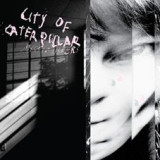
CITY OF CATERPILLAR return with their first new album in 20 years, Mystic Sisters! When guitarist/vocalist Brandon Evans, guitarist Jeff Kane, drummer Ryan Parrish and bassist/vocalist Kevin Longendyke unveiled their self-titled debut in 2002, their emotional, frenzied and often cinematic music was at the vanguard of the burgeoning screamo movement. Along with bands like Pg.99 (with whom they shared members), Majority Rule, Planes Mistaken For Stars and others, they helped develop a style of music that took hardcore into convulsive new territory. After years spent living in other parts of the country and playing in other bands—including Darkest Hour, Malady and Ghastly City Sleep, the long awaited CITY OF CATERPILLAR reunion shows snowballed into writing sessions. The result - Mystic Sisters, an album that recaptures the magic of old while taking the band’s music into exciting new territory! The winding and atmospheric title track that embodies CITY OF CATERPILLAR's experimental side features some noise violin from Evans’ former Pg. 99 bandmate Johnny Ward, while tracks like "Decider" and "Paranormaladies" showcases the band's roots with a flurry of viceral, noisey hardcore swagger. Tracked primarily at Montrose Recording in Richmond, Mystic Sisters was self-produced by the band and then mixed and mastered by Jack Shirley (Deafheaven, Bosse-de-Nage). Ultimately, CITY OF CATERPILLAR are more concerned with creating a mood than telling a story. “The band is always focused on mood,” Evans confirms. “To me, that’s the most important thing. I don’t really want people dissecting what we’re trying to say, because it’s not really about us. It never has been. What we cared about 20 years ago was innocent, raw emotion, and that’s what we care about now.”
Pink Vinyl[25,84 €]
Lionel "Vinyl" Williams is an American multimedia artist based in Los Angeles. Vinyl Williams" music is deeply intertwined with his other media of expression (graphic design, interactive website, and videos) with whom he shapes a consistent immersive new-age-infused psychedelic universe. Vinyl Williams" celestial pop is part of the construction of his own Cosmopolis, an ideal city, where the skyline is drawn by marvelous organic architecture and monumental ancient structures, where while walking on twisted paths, you can hear indistinctly lush vocals, iridescent gauzy keyboard harmonies, and rolling rhythms. Without acknowledging it, you are floating, your soul can ramble, free to imagine. Musically, Cosmopolis is a synthesis of Williams" craze, his contemporary dream-pop production, 60s sunshine pop influences, Brasilian Tropicália hints, jazz chords, and complex arrangement. With this sixth album, Cosmopolis, Vinyl Williams continues to dig deep into his parallel universe, which he has developed with a rare consistency. From chaos emerges harmony and incredible pop songs. For fans of Triptides, Gold Celeste, Toro y Moi, Unknown Mortal Orchestra, GUM, Tame Impala, Swin Mountain, Chris Cohen, Morgan Delt, Dungen, Dumbo Gets Mad, Pond, Maston, Holy Wave, Arthur Verocai, The Free Design, The Association, Once And Future Band...
Black Vinyl[23,07 €]
Lionel "Vinyl" Williams is an American multimedia artist based in Los Angeles. Vinyl Williams" music is deeply intertwined with his other media of expression (graphic design, interactive website, and videos) with whom he shapes a consistent immersive new-age-infused psychedelic universe. Vinyl Williams" celestial pop is part of the construction of his own Cosmopolis, an ideal city, where the skyline is drawn by marvelous organic architecture and monumental ancient structures, where while walking on twisted paths, you can hear indistinctly lush vocals, iridescent gauzy keyboard harmonies, and rolling rhythms. Without acknowledging it, you are floating, your soul can ramble, free to imagine. Musically, Cosmopolis is a synthesis of Williams" craze, his contemporary dream-pop production, 60s sunshine pop influences, Brasilian Tropicália hints, jazz chords, and complex arrangement. With this sixth album, Cosmopolis, Vinyl Williams continues to dig deep into his parallel universe, which he has developed with a rare consistency. From chaos emerges harmony and incredible pop songs. For fans of Triptides, Gold Celeste, Toro y Moi, Unknown Mortal Orchestra, GUM, Tame Impala, Swin Mountain, Chris Cohen, Morgan Delt, Dungen, Dumbo Gets Mad, Pond, Maston, Holy Wave, Arthur Verocai, The Free Design, The Association, Once And Future Band...
Genteel, springlike sounds emanate once more from Paris. Those who live there or have visited will know a joy in this that non-residents or travelers can only imagine, but one senses that there’s a texture to it all that bakes into the human experience when winter finally lifts and trees blossom, warm breezes blow. After being stuck at home for two years, once the weather picks up and the world hopes to shift back in gear without millions of deaths, one’s imagination begins to run. Parisian duo Zusammen Clark have codified this sound of openness and warmth using known goalposts of sound – the subtle drag of these sturdy, easygoing songs, a direct path from Jean-Charles Delarue’s previous outing in Bruit Direct outfit City Band; the descent of chord structures, a deep voice going high and staying louche. Maybe a bit of Felt’s cherry red pastoral, shades of that time in speculative fiction where Pavement signed to Postcard (remember? it was the same year that Dandelion and Les Temps Heureux got out of bed and toured coffeehouses together), the Go-Betweens just before the wheels fell off, or NYC underdogs Plates of Cake. Horns swoop in at the right moments and don’t linger. Hooks lock in and down, lead guitar casually doubles itself. Hair gets done, stubble let fashionably go. Along with bandmate and cousin Jerome Lemee, Delarue constructs a frame, pencils in the outline and begins decorating these songs with all the right touches and a confidence that knows where to place them, not just the value of the objects. This is a world of sound where everything has a story and a place, every room can provide a closet mix. It’s a world that opens into a larger world, a human world, maybe a world these two knew from childhood, maybe one they’ve built for themselves. Earlier is too well-assembled to not have a foundation in profoundly comfortable moments in life, and the knowledge of how to get there, even if one knows they can never stay. It’s a catalogue of delight, impossible to oversell. – Doug Mosurock TRACKLIST: A1 - Magyar A2 - Animals & Evidence A3 - Rest Position A4 - Swim In A Blue B1 - Parallel Lines B2 - Ho Chi Minh B3 - The Postcard B4 - Own Company
- A1: Rock This Mother
- A2: Talk To Me Girl
- A3: You Can Find Me
- A4: Check This Out
- A5: Jesus Going To Clean House
- A6: Hope You Understood
- A7: Is It What You Want
- A8: Love Is Everlasting
- A9: This Is Hip-Hop Art
- A10: Opposite Of Love
- A11: Do You Know What I Mean
- B1: Saving All My Love For You
- B2: Look Out Here I Come
- B3: Girl You Always Talking
- B4: Have A Great Day
- B5: Take My Hand
- B6: I Need Your Love
- B7: Your Town
- B8: Talk Around Town
- B9: Booty Head/Take A Little Walk
- B10: I Love My Mama
- B11: I Never Found Anyone Like You
Cassette[11,72 €]
As the sun sets on a quaint East Nashville house, a young man bares a piece of his soul. Facing the camera, sporting a silky suit jacket/shirt/slacks/fingerless gloves ensemble that announces "singer" before he's even opened his mouth, Lee Tracy Johnson settles onto his stage, the front yard. He sways to the dirge-like drum machine pulse of a synth-soaked slow jam, extends his arms as if gaining his balance, and croons in affecting, fragile earnest, "I need your love… oh baby…"
Dogs in the yard next door begin barking. A mysterious cardboard robot figure, beamed in from galaxies unknown and affixed to a tree, is less vocal. Lee doesn't acknowledge either's presence. He's busy feeling it, arms and hands gesticulating. His voice rises in falsetto over the now-quiet dogs, over the ambient noise from the street that seeps into the handheld camcorder's microphone, over the recording of his own voice played back from a boombox off-camera. After six minutes the single, continuous shot ends. In this intimate creative universe there are no re-takes. There are many more music videos to shoot, and as Lee later puts it, "The first time you do it is actually the best. Because you can never get that again. You expressing yourself from within."
"I Need Your Love" dates from a lost heyday. From some time in the '80s or early '90s, when Lee Tracy (as he was known in performance) and his music partner/producer/manager Isaac Manning committed hours upon hours of their sonic and visual ideas to tape. Embracing drum machines and synthesizers – electronics that made their personal futurism palpable – they recorded exclusively at home, live in a room into a simple cassette deck. Soul, funk, electro and new wave informed their songs, yet Lee and Isaac eschewed the confinement of conventional categories and genres, preferring to let experimentation guide them.
"Anytime somebody put out a new record they had the same instruments or the same sound," explains Isaac. "So I basically wanted to find something that's really gonna stand out away from all of the rest of 'em." Their ethos meant that every idea they came up with was at least worth trying: echoed out half-rapped exhortations over frantic techno-style beats, gospel synth soul, modal electro-funk, oddball pop reinterpretations, emo AOR balladry, nods to Prince and the Fat Boys, or arrangements that might collapse mid-song into a mess of arcade game-ish blips before rallying to reach the finish line. All of it conjoined by consistent tape hiss, and most vitally, Lee's chameleonic voice, which managed to wildly shape shift and still evoke something sincere – whether toggling between falsetto and tenor exalting Jesus's return, or punctuating a melismatic romantic adlib with a succinct, "We all know how it feels to be alone."
"People think we went to a studio," says Isaac derisively. "We never went to no studio. We didn't have the money to go to no studio! We did this stuff at home. I shot videos in my front yard with whatever we could to get things together." Sometimes Isaac would just put on an instrumental record, be it "Planet Rock" or "Don't Cry For Me Argentina" (from Evita), press "record," and let Lee improvise over it, yielding peculiar love songs, would-be patriotic anthems, or Elvis Presley or Marilyn Monroe tributes. Technical limitations and a lack of professional polish never dissuaded them. They believed they were onto something.
"That struggle," Isaac says, "made that sound sound good to me."
In the parlance of modern music criticism Lee and Isaac's dizzying DIY efforts would inevitably be described as "outsider." But "outsider" carries the burden of untold additional layers of meaning if you're Black and from the South, creating on a budget, and trying to get someone, anyone within the country music capital of the world to take your vision seriously. "What category should we put it in?" Isaac asks rhetorically. "I don't know. All I know is feeling. I ain't gonna name it nothing. It's music. If it grabs your soul and touch your heart that's what it basically is supposed to do."
=
Born in 1963, the baby boy of nine siblings, Lee Tracy spent his earliest years living amidst the shotgun houses on Nashville's south side. "We was poor, man!" he says, recalling the outhouse his family used for a bathroom and the blocks of ice they kept in the kitchen to chill perishables. "But I actually don't think I really realized I was in poverty until I got grown and started thinking about it." Lee's mom worked at the Holiday Inn; his dad did whatever he had to do, from selling fruit from a horse drawn cart to bootlegging. "We didn't have much," Lee continues, "but my mother and my father got us the things we needed, the clothes on our back." By the end of the decade with the city's urban renewal programs razing entire neighborhoods to accommodate construction of the Interstate, the family moved to Edgehill Projects. Lee remembers music and art as a constant source of inspiration for he and his brothers and sisters – especially after seeing the Jackson 5 perform on Ed Sullivan. "As a small child I just knew that was what I wanted to do."
His older brother Don began musically mentoring him, introducing Lee to a variety of instruments and sounds. "He would never play one particular type of music, like R&B," says Lee. "I was surrounded by jazz, hard rock and roll, easy listening, gospel, reggae, country music; I mean I was a sponge absorbing all of that." Lee taught himself to play drums by beating on cardboard boxes, gaining a rep around the way for his timekeeping, and his singing voice. Emulating his favorites, Earth Wind & Fire and Cameo, he formed groups with other kids with era-evocative band names like Concept and TNT Connection, and emerged as the leader of disciplined rehearsals. "I made them practice," says Lee. "We practiced and practiced and practiced. Because I wanted that perfection." By high school the most accomplished of these bands would take top prize in a prominent local talent show. It was a big moment for Lee, and he felt ready to take things to the next level. But his band-mates had other ideas.
"I don't know what happened," he says, still miffed at the memory. "It must have blew they mind after we won and people started showing notice, because it's like everybody quit! I was like, where the hell did everybody go?" Lee had always made a point of interrogating prospective musicians about their intentions before joining his groups: were they really serious or just looking for a way to pick up girls? Now he understood even more the importance of finding a collaborator just as committed to the music as he was.
=
Isaac Manning had spent much of his life immersed in music and the arts – singing in the church choir with his family on Nashville's north side, writing, painting, dancing, and working various gigs within the entertainment industry. After serving in the armed forces, in the early '70s he ran The Teenage Place, a music and performance venue that catered to the local youth. But he was forced out of town when word of one of his recreational routines created a stir beyond the safe haven of his bohemian circles.
"I was growing marijuana," Isaac explains. "It wasn't no business, I was smoking it myself… I would put marijuana in scrambled eggs, cornbread and stuff." His weed use originated as a form of self-medication to combat severe tooth pain. But when he began sharing it with some of the other young people he hung out with, some of who just so happened to be the kids of Nashville politicians, the cops came calling. "When I got busted," he remembers, "they were talking about how they were gonna get rid of me because they didn't want me saying nothing about they children because of the politics and stuff. So I got my family, took two raggedy cars, and left Nashville and went to Vegas."
Out in the desert, Isaac happened to meet Chubby Checker of "The Twist" fame while the singer was gigging at The Flamingo. Impressed by Isaac's zeal, Checker invited him to go on the road with him as his tour manager/roadie/valet. The experience gave Isaac a window into a part of the entertainment world he'd never encountered – a glimpse of what a true pop act's audience looked like. "Chubby Checker, none of his shows were played for Black folks," he remembers. "All his gigs were done at high-class white people areas." Returning home after a few years with Chubby, Isaac was properly motivated to make it in Music City. He began writing songs and scouting around Nashville for local talent anywhere he could find it with an expressed goal: "Find someone who can deliver your songs the way you want 'em delivered and make people feel what you want them to feel."
One day while walking through Edgehill Projects Isaac heard someone playing the drums in a way that made him stop and take notice. "The music was so tight, just the drums made me feel like, oh I'm-a find this person," he recalls. "So I circled through the projects until I found who it was.
"That's how I met him – Lee Tracy. When I found him and he started singing and stuff, I said, ohhh, this is somebody different."
=
Theirs was a true complementary partnership: young Lee possessed the raw talent, the older Isaac the belief. "He's really the only one besides my brother and my family that really seen the potential in me," says Lee. "He made me see that I could do it."
Isaac long being a night owl, his house also made for a fertile collaborative environment – a space where there always seemed to be a new piece of his visual art on display: paintings, illustrations, and dolls and figures (including an enigmatic cardboard robot). Lee and Issac would hang out together and talk, listen to music, conjure ideas, and smoke the herb Isaac had resumed growing in his yard. "It got to where I could trust him, he could trust me," Isaac says of their bond. They also worked together for hours on drawings, spreading larges rolls of paper on the walls and sketching faces with abstract patterns and imagery: alien-like beings, tri-horned horse heads, inverted Janus-like characters where one visage blurred into the other.
Soon it became apparent that they didn't need other collaborators; self-sufficiency was the natural way forward. At Isaac's behest Lee, already fed up with dealing with band musicians, began playing around with a poly-sonic Yamaha keyboard at the local music store. "It had everything on it – trumpet, bass, drums, organ," remembers Lee. "And that's when I started recording my own stuff."
The technology afforded Lee the flexibility and independence he craved, setting him on a path other bedroom musicians and producers around the world were simultaneously following through the '80s into the early '90s. Saving up money from day jobs, he eventually supplemented the Yamaha Isaac had gotten him with Roland and Casio drum machines and a Moog. Lee was living in an apartment in Hillside at that point caring for his dad, who'd been partially paralyzed since early in life. In the evenings up in his second floor room, the music put him in a zone where he could tune out everything and lose himself in his ideas.
"Oh I loved it," he recalls. "I would really experiment with the instruments and use a lot of different sound effects. I was looking for something nobody else had. I wanted something totally different. And once I found the sound I was looking for, I would just smoke me a good joint and just let it go, hit the record button." More potent a creative stimulant than even Isaac's weed was the holistic flow and spontaneity of recording. Between sessions at Isaac's place and Lee's apartment, their volume of output quickly ballooned.
"We was always recording," says Lee. "That's why we have so much music. Even when I went to Isaac's and we start creating, I get home, my mind is racing, I gotta start creating, creating, creating. I remember there were times when I took a 90-minute tape from front to back and just filled it up."
"We never practiced," says Isaac. "See, that was just so odd about the whole thing. I could relate to him, and tell him about the songs I had ideas for and everything and stuff. And then he would bring it back or whatever, and we'd get together and put it down." Once the taskmaster hell bent on rehearsing, Lee had flipped a full 180. Perfection was no longer an aspiration, but the enemy of inspiration.
"I seen where practicing and practicing got me," says Lee. "A lot of musicians you get to playing and they gotta stop, they have to analyze the music. But while you analyzing you losing a lot of the greatness of what you creating. Stop analyzing what you play, just play! And it'll all take shape."
=
"I hope you understood the beginning of the record because this was invented from a dream I had today… (You tell me, I'll tell you, we'll figure it out together)" – Lee Tracy and Isaac Manning, "Hope You Understand"
Lee lets loose a maniacal cackle when he acknowledges that the material that he and Isaac recorded was by anyone's estimation pretty out there. It's the same laugh that commences "Hope You Understand" – a chaotic transmission that encapsulates the duality at the heart of their music: a stated desire to reach people and a compulsion to go as leftfield as they saw fit.
"We just did it," says Lee. "We cut the music on and cut loose. I don't sit around and write. I do it by listening, get a feeling, play the music, and the lyrics and stuff just come out of me."
The approach proved adaptable to interpreting other artists' material. While recording a cover of Whitney Houston's pop ballad "Saving All My Love For You," Lee played Whitney's version in his headphones as he laid down his own vocals – partially following the lyrics, partially using them as a departure point. The end result is barely recognizable compared with the original, Lee and Isaac having switched up the time signature and reinvented the melody along the way towards morphing a slick mainstream radio standard into something that sounds solely their own.
"I really used that song to get me started," says Lee. "Then I said, well I need something else, something is missing. Something just came over me. That's when I came up with 'Is It What You Want.'"
The song would become the centerpiece of Lee and Isaac's repertoire. Pushed along by a percolating metronomic Rhythm King style beat somewhere between a military march and a samba, "Is It What You Want" finds Lee pleading the sincerity of his commitment to a potential love interest embellished by vocal tics and hiccups subtlely reminiscent of his childhood hero MJ. Absent chord changes, only synth riffs gliding in and out like apparitions, the song achieves a lingering lo-fi power that leaves you feeling like it's still playing, somewhere, even after the fade out.
"I don't know, it's like a real spiritual song," Lee reflects. "But it's not just spiritual. To me the more I listen to it it's like about everything that you do in your everyday life, period. Is it what you want? Do you want a car or you don't want a car? Do you want Jesus or do you want the Devil? It's basically asking you the question. Can't nobody answer the question but you yourself."
In 1989 Lee won a lawsuit stemming from injuries sustained from a fight he'd gotten into. He took part of the settlement money and with Isaac pressed up "Saving All My Love For You" b/w "Is It What You Want" as a 45 single. Isaac christened the label One Chance Records. "Because that's all we wanted," he says with a laugh, "one chance."
Isaac sent the record out to radio stations and major labels, hoping for it to make enough noise to get picked up nationally. But the response he and Lee were hoping for never materialized. According to Isaac the closest the single got to getting played on the radio is when a disk jock from a local station made a highly unusual announcement on air: "The dude said on the radio, 107.5 – 'We are not gonna play 'Is It What You Want.' We cracked up! Wow, that's deep.
"It was a whole racist thing that was going on," he reflects. "So we just looked over and kept on going. That was it. That was about the way it goes… If you were Black and you were living in Nashville and stuff, that's the way you got treated." Isaac already knew as much from all the times he'd brought he and Lee's tapes (even their cache of country music tunes) over to Music Row to try to drum up interest to no avail.
"Isaac, he really worked his ass off," says Lee. "He probably been to every record place down on Music Row." Nashville's famed recording and music business corridor wasn't but a few blocks from where Lee grew up. Close enough, he remembers, for him to ride his bike along its back alleys and stumble upon the occasional random treasure, like a discarded box of harmonicas. Getting in through the front door, however, still felt a world away.
"I just don't think at the time our music fell into a category for them," he concedes. "It was before its time."
=
Lee stopped making music some time in the latter part of the '90s, around the time his mom passed away and life became increasingly tough to manage. "When my mother died I had a nervous breakdown," he says, "So I shut down for a long time. I was in such a sadness frame of mind. That's why nobody seen me. I had just disappeared off the map." He fell out of touch with Isaac, and in an indication of just how bad things had gotten for him, lost track of all the recordings they'd made together. Music became a distant memory.
Fortunately, Isaac kept the faith. In a self-published collection of his poetry – paeans to some of his favorite entertainment and public figures entitled Friends and Dick Clark – he'd written that he believed "music has a life of its own." But his prescience and presence of mind were truly manifested in the fact that he kept an archive of he and Lee's work. As perfectly imperfect as "Is It What You Want" now sounds in a post-Personal Space world, Lee and Isaac's lone official release was in fact just a taste. The bulk of the Is It What You Want album is culled from the pair's essentially unheard home recordings – complete songs, half-realized experiments, Isaac's blue monologues and pronouncements et al – compiled, mixed and programmed in the loose and impulsive creative spirit of their regular get-togethers from decades ago. The rest of us, it seems, may have finally caught up to them.
On the prospect of at long last reaching a wider audience, Isaac says simply, "I been trying for a long time, it feels good." Ever the survivor, he adds, "The only way I know how to make it to the top is to keep climbing. If one leg break on the ladder, hey, you gotta fix it and keep on going… That's where I be at. I'll kill death to make it out there."
For Lee it all feels akin to a personal resurrection: "It's like I was in a tomb and the tomb was opened and I'm back… Man, it feels so great. I feel like I'm gonna jump out of my skin." Success at this stage of his life, he realizes, probably means something different than what it did back when he was singing and dancing in Isaac's front yard. "What I really mean by 'making it,'" he explains isn't just the music being heard but, "the story being told."
Occasionally Lee will pull up "Is It What You Want" on YouTube on his phone, put on his headphones, and listen. He remembers the first time he heard his recorded voice. How surreal it was, how he thought to himself, "Is that really me?" What would he say to that younger version of himself now?
"I would probably tell myself, hang in there, don't give up. Keep striving for the goal. And everything will work out."
Despite what's printed on the record label, sometimes you do get more than one chance.
A retrospective double LP compilation of the work of dutch producer Aad De Mooy. Specifically focusing on the first half of the 90's with his aliases as Interface, Time Warp and Paradise 3001 on ESP Records. This compilation attempts to encapsulate and expose the masterful prowess of Aad's work as a producer with a focus on maximum dancefloor efficiency. This double LP consists of 10 tracks ranging from downtempo acidic breaky chuggers to full on floor activators channeling tribal and early progressive trance inducing elements perfectly arranged in highly effective compositions. Can't go wrong – all killer no filler is all one can say about Aad's meticulous productions. Compiled by Castro & Nemo and re-mastered for vinyl at manmade mastering.
US talent Serge Devant makes a welcome return to Crosstown Rebels in July with the three-track Hush Hush EP. Damian Lazarus’ flagship label is familiar territory for the NYC talent, where he’s made several acclaimed appearances since 2015.
Flashback feat. Forrest gets the show underway, as soft kicks live beside pulsing synth tones and Forrest’s echoing vocals throughout. There’s a soothing feel to the piece, making it well-built for both sunrise and sunset moments, whilst still retaining enough oomph to make it perfect dancefloor material. Hot Circuit comes next, taking the form of an out-and-out club-cut packed full of low-slung, Ibiza-ready groove, whilst Hush Hush continues in a similarly punchy vein to round off the EP on a techy note.
Serge Devant has an esteemed reputation in today’s dance music industry, from playing at DC-10 to his music turning the heads of Jamie Jones and Damian Lazarus, his talent speaks for itself. Emerald City, Knee Deep In Sound and Circus Recordings are just a few of the labels he’s released on, whilst performances for international brands such as Day Zero, Music On, Get Lost and Paradise prove his standing as a globally-revered DJ and producer.