ver the years, Andreas O. Hirsch has shaped a distinctive sound, exploring the possibilities of the electro-acoustic instruments he const- ructs. The Carbophone as well as the Electrified Palm Leaf are plucked instruments akin to the African Kalimba or Mbira. In combination with effects and loops, Hirsch creates an experimen- tal space, influenced by early electronics, Asian and African music as well as the possibilities of editing and collage. The majority of the pieces on The Salamander Treaty were made using the Carbophone Jr., a small traveling version of his original Carbophone which was the basis of the previously released Early Carbophonics. Shaped by the joy of discovery, the eight tracks traverse peculiar worlds of sound, carried by a warm downbeat and analogue vibe. Alongside the Car- bophone Jr., other instruments come into play: a vibrato-soaked guitar leads through the slowly evolving ‘Rise’, marked by a recurring Shepard tone and sounds made by striking the bars of an antique wall clock. In the straightforward yet sub-aquatic ‘Te- atime Unlimited’, a pitch-shifted Morse key wanders erratically in the background. Tape-delayed har- monicas serve as a flying carpet for ‘Drifting Newts’, and rubber bands make their melodic-rhythmical appearance through ‘Back Door Minimal’.
The Salamander Treaty refers to War with the Newts, a prophetic and black-humoured science fiction novel by Karel Čapek from 1936, which tells the story of the rise of the salamanders, who become in- creasingly intelligent and eventually begin to compete with mankind. The album is a pacifist response to this dark scenario: Hirsch’s salamanders prefer to hang out under the stars (‘Drifting Newts’), drink tea (‘Tea Time Unlimited’) and — as illustrated on the back cover — write conspiratorial-pacifist demands instead of calling for war (e.g., ‘Teaoism International’, ‘White Lilies’, ‘For Congress’). In image and word, the album invites looking at the term ‘treaty’, which phonetically contains the words ‘tree’ and ‘tea’, as a friendly reminder that the drafting of every treaty and agreement on this planet should be accompanied by a peaceful spirit.
Music, mix and artwork by Andreas Oskar Hirsch. Mastered by Volker Hennes. Pressed on BioVinyl by Optimal, who state that their manufacturing process reduces CO2 emissions by approximately 90% for the PVC component. 12“ LP, coloured sleeve, download code included,
LIMITED TO 100 COPIES!.
Suche:parade
Guilherme Granado makes his first solo appearance on the Keroxen label under the guise of his Goat Unity project, the result of a plethora of collaborations with musician friends and foes.
A São Paulo native, Guilherme has been quietly building a reputation for being the go-to guy for loop based beats and groovy basslines. He has played and recorded with Mauricio Takara in Hurtmold (4 albums) and he’s also part of São Paulo Underground (also with Takara and Rob Mazurek). He also performs, produces, and records under the name Bodes & Elefantes and has toured extensively through South America, US and Europe with São Paulo Underground, Prefuse 73 et al. With Ghost Parades Guilherme goes deep into his beat based deviations whilst somehow managing to connect the dots between the Wu-Tang Clan and the Sun Ra Arkestra, adding an healthy dose of tropicalismo for good measure.
Guilherme’s Ghost Parades does an impeccable job at showcasing the multi instrumentalist composition skills filled with dubby rhythms, addictive bass lines along with celestial and hazy chants. Its a smooth journey to take here, avoiding all the obvious pit holes of the genre and keeping the listener guessing where we’re going at every turn. A spacious, open ended listening experience where loops effortlessly intertwine with live jam instrumentation.
Organic, natural beats for atypical people.
- A Painted Ship
- Cloud Prints
- On A Painted Ocean
- Sirens
- Washed Up
- Parade
- Clattering
Stille kann entweder Ruhe oder Stagnation bedeuten. Walt McClements hat sich mit diesen gegensätzlichen Kräften auseinandergesetzt, um "On a Painted Ocean" zu realisieren: eine Suite von Akkordeon und Pfeifenorgel geleiteten Stücken, die einen stetigen Kurs verfolgen, anschwellen und sich mit einer Flut von zarten Emotionen erweitern. Der Komponist und Multiinstrumentalist hat den Titel seines zweiten Albums von Samuel Taylor Coleridges berühmtem Epos "The Rime of the Ancient Mariner" und dessen Beschreibung eines Bootes, das auf See feststeckt ("As idle as a painted ship / Upon a painted Ocean"). Es ist ein Eindruck, der sowohl den Prozess als auch das Produkt von McClements' Western Vinyl Veröffentlichung widerspiegelt, vom sanften Entfalten eines rauen Schilfrohrtons im Opener ,A Painted Ship" bis hin zum düsteren, mit Effekten beladenen Drone von "Washed Up" und dem abschließenden Flattern und Signalstörungen, die sich in ,Clattering" geräuschvoll zu triumphaler Euphorie erheben. "On a Painted Ocean" ist das Ergebnis eines Zusammenflusses von Ereignissen und Inspirationen, die sich verändert haben wie das Wetter selbst. Die ersten Skizzen begannen mit dem unerwarteten Zugang zu einer Kirchenorgel in Pasadena im Jahr 2022, bevor diese Skizzen zur Seite gelegt wurden, um sich auf ein arbeitsreiches Jahr als Mitglied der Live-Band von Weyes Blood vorzubereiten. Die Monate im Tourbus mit begrenzten Instrumenten veranlassten McClements dazu, den Klang seines bearbeiteten Akkordeons auf dem Synthesizer nachzubilden, und überlagerte ihn mit den Orgelstücken. Als dieser Zyklus zu Ende ging, war McClements begierig darauf die Platte zu beenden, war sich aber nicht sicher, wie er den Faden wieder aufnehmen sollte. Festgefahren in der Flaute einer kreativen Blockade, nahm McClements seine Spuren von bearbeiteten Akkordeons und Synthesizern, Pfeifenorgel und Melodica, Zungen und Pfeifen, die durch Pedale und Computer laufen, in seine ehemalige Heimat New Orleans zum Karneval mit. Nachdem er ein Jahrzehnt in der Stadt in Louisiana gelebt hatte, bevor er nach Los Angeles zog, fand McClements in einer der ekstatischsten und bedeutungsvollsten Zeiten des Jahres neue Inspiration. Das Ethos der Kunst um der Gemeinschaft willen und die Praktiken der Fürsorge inspirierten ihn den Rat seiner Musikerkollegin und Mentorin Rachika Nayar zu befolgen und Mitstreiter einzubeziehen, darunter auch Nayar selbst, die eine zusätzliche Produktion zu ,Sirens" beisteuert. Aurora Nealand, eine alte Freundin und ehemalige Bandkollegin, antwortete ebenfalls auf den Ruf und fügte Saxophon zu den unruhigen Gewässern von ,Cloud Prints" und ,Parade" hinzu. Der letztgenannte Track ist der klangliche und konzeptionelle Höhepunkt auf McClements' Reise zur Verwirklichung von "On a Painted Ocean", wo eine steigende Tonhöhe und aufgewühlte Segel auf eine Feldaufnahme von Community Care treffen. Ein Verdienst von starken Beziehungen und gegenseitiger Unterstützung, das Album zeichnet als eine persönliche Pilgerreise auf - die Anpassung an die Gezeiten und die Erinnerung daran, dass die Gemeinschaft helfen kann, wenn man sich auf dem Meer festgefahren fühlt.
During the pandemic, The Ophelias transformed uncertainty into Spring Grove, their fourth album and most dynamic offering yet. Named after a Cincinnati cemetery, the album blends nostalgia with fresh perspective, reflecting on themes of relationships, identity, and power dynamics. Singer-songwriter Spencer Peppet draws from her OCD diagnosis during the pandemic and the clarity that comes with growing older, resulting in lyrics that explore the cracks and complexities of human connection.
Produced by Julien Baker, who adds lush textures and harmonies, Spring Grove marks a turning point in the band’s evolution. Recorded at Young Avenue Sound in Memphis, the album centers on the core quartet—Peppet, violinist Andrea Gutmann Fuentes, bassist Jo Shaffer, and drummer Mic Adams—with arrangements that balance cinematic intensity and delicacy. Gutmann Fuentes’s violin provides striking countermelodies, while Shaffer’s bass lines, inspired by doom metal, explore melodic depth. Adams’s drumming reflects his first project after transitioning, offering nuanced rhythms that blend power and tenderness.
With one queer and two trans members, the band has moved beyond the reductive label of an “all-girl” group, delving deeply into themes of womanhood and identity. Tracks like “Salome” and “Parade” examine power dynamics and friendship, while nature imagery in songs like “Cumulonimbus” and “Vulture Tree” mirrors lived experience. Across 13 tracks, the album’s cinematic and introspective journey scavenges the past for meaning, ultimately embracing transformation. On the closing track, “Shapes,” Peppet reaches serene acceptance, singing, “I see what’s coming after... a reflection in the water. I am rippling forever.”
Spring Grove captures the band’s evolution, offering a transcendent meditation on self-awareness, identity, and growth, leaving listeners with a sense of profound discovery.
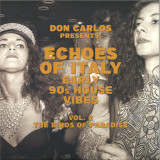
- A1: Montego Bay - Everything (Paradise Mix) 04 59
- A2: Atelier - Got To Live Together (Club Mix) 06 06
- A3: Golem - Music Sensations 04 56
- B1: The True Underground Sound Of Rome Feat. Stefano Di Carlo - Gladiators 05 26
- B2: Eagle Parade - I Believe 04 26
- C1: Dj Le Roi - Bocachica (Detroit Version) 05 28
- C2: Green Baize - Synthetic Rhythm 01 41
- C3: M.c.j. Feat. Sima - Sexitivity (Deep Mix) 05 30
- D1: Kwanzaa Posse Feat. Funk Master Sweat - Wicked Funk (Afro Ambient Mix) 06 31
- D2: Progetto Tribale - The Bird Of Paradise 06 29
- D3: Mbg - The Quite 06 59
Vol 1[28,99 €]
Googling “paradise house”, the first results to pop up are an endless list of European b&b’s with whitewashed lime façades, all of them promising “…an unmatched travel experience a few steps from the sea”. Next, a little further down, are the institutional websites of a few select semi-luxury retirement homes (no photos shown, but lots of stock images of smiling nurses with reassuring looks). To find the “paradise house” we’re after, we have to scroll even further down. Much further down.
It feels like yesterday, and at the same time it seems like a million years ago. The Eighties had just ended, and it was still unclear what to expect from the Nineties. Mobile phones that were not the size of a briefcase and did not cost as much as a car? A frightening economic crisis? The guitar-rock revival?! Certainly, the best place to observe that moment of transition was the dancefloor. Truly epochal transformations were happening there. From America, within a short distance one from the other, two revolutionary new musical styles had arrived: the first one sounded a bit like an “on a budget” version of the best Seventies disco-music – Philly sound made with a set of piano-bar keyboards! – the other was even more sparse, futuristic and extraterrestrial. It was a music with a quite distinct “physical” component, which at the same time, to be fully grasped, seemed to call for the knotty theories of certain French post-modern philosophers: Gilles Deleuze, Félix Guattari, Paul Virilio... Both those genres – we would learn shortly after – were born in the black communities of Chicago and Detroit, although listening to those vinyl 12” (often wrapped in generic white covers, and with little indication in the label) you could not easily guess whether behind them there was a black boy from somewhere in the Usa, or a girl from Berlin, or a pale kid from a Cornish coastal town.
Quickly, similar sounds began to show up from all corners of Europe. A thousand variations of the same intuition: leaner, less lean, happier, slightly less intoxicated, more broken, slower, faster, much faster... Boom! From the dancefloors – the London ones at least, whose chronicles we eagerly read every month in the pages of The Face and i-D – came tales of a new generation of clubbers who had completely stopped “dressing up” to go dancing; of hot tempered hooligans bursting into tears and hugging everyone under the strobe lights as the notes of Strings of Life rose up through the fumes of dry ice (certain “smiling” pills were also involved, sure). At this point, however, we must move on to Switzerland.
In Switzerland, in the quiet and diligent town of Lugano, between the 1980s and 1990s there was a club called “Morandi”. Its hot night was on Wednesdays, when the audience also came from Milan, Como, Varese and Zurich. Legend goes that, one night, none less than Prince and Sheila E were spotted hiding among the sofas, on a day-off of the Italian dates of the Nude Tour… The Wednesday resident and superstar was an Italian dj with an exotic name: Don Carlos. The soundtrack he devised was a mixture of Chicago, Detroit, the most progressive R&B and certain forgotten classics of old disco music: practically, what the Paradise Garage in New York might have sounded like had it not closed in 1987. In between, Don Carlos also managed to squeeze in some tracks he had worked on in his studio on Lago Maggiore. One in particular: a track that was rather slow compared to the BPM in fashion at the time, but which was a perfect bridge between house and R&B. The title was Alone: Don Carlos would explain years later that it had to be intended both in the English meaning of “by itself” and like the Italian word meaning “halo”. That wasn’t the only double entendre about the song, anyway. Its own very deep nature was, indeed, double. On the one hand, Alone was built around an angelic keyboard pattern and a romantic piano riff that took you straight to heaven; on the other, it showcased enough electronic squelches (plus a sax part that sounded like it had been dissolved by acid rain) to pigeonhole the tune into the “junk modernity” section, aka the hallmark of all the most innovative sounds of the time: music that sounded like it was hand-crafted from the scraps of glittering overground pop.
No one knows who was the first to call it “paradise house”, nor when it happened. Alternative definitions on the same topic one happened to hear included “ambient house”, “dream house”, “Mediterranean progressive”… but of course none were as good (and alluring) as “paradise house”. What is certain is that such inclination for sounds that were in equal measure angelic and neurotic, romantic and unaffective, quickly became the trademark of the second generation of Italian house. Music that seemed shyly equidistant from all the rhythmic and electronic revolutions that had happened up to that moment (“Music perfectly adept at going nowhere slowly” as noted by English journalist Craig McLean in a legendary field report for Blah Blah Blah magazine). Music that to a inattentive ear might have sounded as anonymous as a snapshot of a random group of passers-by at 10AM in the centre of any major city, but perfectly described the (slow) awakening in the real world after the universal love binge of the so-called Second Summer of Love.
For a brief but unforgettable season, in Italy “paradise house” was the official soundtrack of interminable weekends spent inside the car, darting from one club to another, cutting the peninsula from North to centre, from East to West coast in pursuit of the latest after-hours disco, trading kilometres per hour with beats per minute: practically, a new New Year’s Eve every Friday and Saturday night. This too was no small transformation, as well as a shock for an adult Italy that was encountering for the first time – thanks to its sons and daughters – the wild side of industrial modernity. The clubbers of the so-called “fuoriorario” scene were the balls gone mad in the pinball machine most feared by newspapers, magazines and TV pundits. What they did each and every weekend, apart from going crazy to the sound of the current white labels, was linking distant geographical points and non-places (thank you Marc Augé!) – old dance halls, farmhouses and business centres – transformed for one night into house music heaven. As Marco D’Eramo wrote in his 1995 essay on Chicago, Il maiale e il grattacielo: “Four-wheeled capitalism distorts our age-old image of the city, it allows the suburbs to be connected to each other, whereas before they were connected only by the centre (…) It makes possible a metropolitan area without a metropolis, without a city centre, without downtown. The periphery is no longer a periphery of any centre, but is self-centred”.
“Paradise house” perfectly understood all of this and turned it into a sort of cyber-blues that didn’t even need words, and unexpectedly brought back a drop of melancholic (post?)-humanity within a world that by then – as we would wholly realise in the decades to come – was fully inhuman and heartless. A world where we were all alone, and surrounded by a sinister yellowish halo, like a neon at the end of its life cycle. But, for one night at least, happy."
- Fire God
- Dead Meat
- Parade
- Ups
- Blessed Ignorance
- I Got A Leotard
- Lark's Vomit
- Instrumental
- Sweet Roughness Blues
- Long Way Back
- What's What
- Don't Make Me (Live At Cbgb 1983)
Bag People were Chicagoans who outgrew their home in the maelstrom of the early 80s NYC post-punk/ no-wave scene. They weren"t around long, but their compulsive noise-rock sound, unearthed from tapes lost for 40 years, looms large and stands tall next to the efforts of better-known contemporaries like Sonic Youth and Swans. A righteous puke of art-punk from a time of incredible brokenness in the world - in other words, savage sounds for today!
13 was The Doors’ first compilation album, featuring tracks from the psychedelic rock legends’ first five albums.
The compilation starts with the epic Light My Fire, written by Doors guitarist Robby Krieger, and features other classics such as People Are Strange from Strange Days, Touch Me from The Soft Parade. It also contains the blues rock classic Roadhouse Blues from Morrison Hotel; which last year celebrated its 50th anniversary.
13 is now on vinyl for the first time in 37 years and includes newly remastered audio on 180gram black vinyl.
- A1: Yves Deruyter - The Rebel (40 Years Yves Deruyter Rework)
- A2: F.u.s.e. Vs Lfo - Loop
- B1: Two Pieces - Magic Bells (Final Mix)
- B2: Channel X - Rave The Rhythm
- B3: Master Techno - My Noise
- C1: Circuit Breaker - Overkill
- C2: Dj Misjah - Karin's Paradox
- D1: Technicida - Purgatorio
- D2: Meng Syndicate - Sonar System
- D3: Epilepsia - Epilepsia
- E1: Insider - Destiny
- E2: Symphony Of Love - Quantum Leap
- F1: Ramin Feat. 2 Stripes - Brainticket
- F2: Peyote - Alcatraz
- G1: A.paul - Juice
- G2: The Effect - Green Angel (Angel Mix)
- H1: Cybersonik - Technarchy
- H2: Dna - La Serenissima
- H3: Tronikhouse - The Savage & Beyond (Savage Reese Mix)
- I1: Yves Deruyter - Back To Earth (40 Years Yves Deruyter Rework)
- I2: Dream Concept - Shy Kid (In Rhythm Mix)
- I3: All In One - Mama's Kick
- J1: F.u.s.e. - Substance Abuse
- J2: Dj Bountyhunter - The Bountyhunter
- L2: The Wavecatcher - Flight Dh2126
- M1: Yves Deruyter - Feel Free (40 Years Yves Deruyter Rework)
- M2: Methadon - Synthetic Fruits
- N1: Edge Of Motion - Set Up 707
- N2: Reese & Santonio - Rock To The Beat
- N3: Mechanical Soul Saloon - Punos
- O1: Plastikman - Panikattack
- O2: Reese - Funky Funk Funk
- P1: The Prodigy - Charly (Alley Cat Mix)
- P2: Phantasia - Inner Light
- P3: Second Chance - In Paradise
- Q1: Final Exposure - Vortex
- Q2: Quazar - Dragonfighters
- R1: Ecstasy Club - Jesus Loves The Acid
- R2: Quadrophonia - Quadrophonia
- S1: Illuminatae - Tremora Del Terra
- S2: Josh Wink - Higher State Of Consciousness (Tweekin Acid Funk Mix)
- T1: Phuture - Rise From Your Grave (Wild Pitch Mix)
- T2: Black Scorpion Aka Steve Rachmad - Empyrion
- J3: Cybersonik - Backlash
- K1: Robert Armani - Circus Bells (Full Length Original Mix)
- K2: Photon Inc. Feat. Paula Brion - Generate Power (Wild Pitch Mix)
- L1: L.s.g. - Netherworld (Dj Randy's Smoke Free Remix)
Celebrating 40th anniversary of Yves Deruyter's musical career with this 10 x 12" Vinyl Box Set. Including tracks from F.U.S.E. vs LFO, Tronikhouse, Robert Armani, L.S.G., Edge Of Motion, Plastikman, The Prodigy, Ecstasy Club, and the master himselfYves Deruyter.
Yves Deruyter - 40 Years at the Pinnacle of the Night
Forty years. A rollercoaster of a musical career, meandering through five decades, leaving timeless marks on the collective dancefloor memory. Yves Deruyter is the exception that proves the rule. An icon behind the decks, celebrated far beyond national borders for his legendary sets, impeccable musical choices, and the anthems released under his name. The result of collective effort, where Yves, with his vision and unique touch, consistently left his mark-transforming good tracks into inescapable bombs that still resonate through time.
If you've spent forty years living to the pulse of music, the night is in your DNA. Yves Deruyter, a DJ to the core-the real deal. The man who bent the night to his will, dragging weekend vibes into the workweek like a warrior, a true master behind the turntables who made his people dance. His beats: the oxygen that generations lived on.
Yves sharpened his musical weapons in the early '90s within the iconic afterparty scene of Barocci and The Globe-places that became sanctuaries in Belgium's endless night. Here, die-hard dancefloor warriors, cutting-edge music lovers, and night owls from the four corners of the globe gathered. They willingly followed Yves' masterful mixing and his razor-sharp set construction. Clubs with a more conventional timeframe were the next step, with the iconic Cherrymoon as his home base for years-alongside endless guest DJ spots and global gigs. From there, the underground pulsed through Yves' hands and crates, reaching ever-larger crowds-without ever compromising for commercial or crossover sounds. Yves stayed true to his choices, lifting his audience to euphoric heights like a craftsman, armed with his hits, hidden gems, and freshly unearthed nuggets.
From the pounding energy of Rave City to the flippy, epic flashes of Calling Earth-tracks that not only captured the spirit of the times but conquered dancefloors worldwide. This isn't just music; it's a time capsule-a connection between generations and a reminder of the energy from a golden era.
With musical partners like Roel Butzen, Frederico Santini, M.I.K.E. Push, and more recently, Insider, Yves forged a sound that etched its place into rave and dance history. From The Rebel to The House of House, parts of Yves' musical taste have become immortal pillars of dance music heritage. In the early rave days, he topped Belgium's DJ rankings year after year, elevating every club he played to the highest echelons of popularity. The same held true for the records where his name appeared like a badge of honor.
From The Globe to the globe itself-it seemed almost written in the stars. Yves, thestar DJ, became one of the instigators of the electronic music storm that put Belgium on the global map-a storm that never subsided. Festivals like Love Parade, Mayday, I Love Techno, Nature One, and Tomorrowland saw Yves as a trusted force, effortlessly commanding crowds and turning dancefloors inside out. Forty years later, that storm still ignites partygoers, vibrates through dancefloors, and keeps entire generations moving.
Even today, Yves still holds a steady residency with Yves Deruyter and Friends at Club Moustache, where his concept always sells out. Here, both fresh talent and seasoned DJs deliver a killer blend of modern electronic dance music and timeless classics, creating an atmosphere that hooks the crowd every single time.
Because partying doesn't need an excuse. But forty years? That deserves the spotlight-not as a mere milestone, but as a showcase of timelessness. Music mutates, reinvents itself for new generations, yet retains the same impact as that very first time. Yves proves that forty is just a number, and relevance isn't about trends-it's about vision, energy, and an unmistakable touch. His sets? Indestructible. His sound? A heartbeat echoing through time.
And Yves? He doesn't live in the past. Today, Yves distills those four decades into a compilation capturing the essence of his career. Belgian beats, interpreted and refined into a sound that powered raves around the world. Ten vinyls featuring not just a fiercely curated selection that contextualizes the magic of his early days, but also new versions of three unbeatable anthems-potent hits designed to turn dancefloors upside down in wonder, without losing a shred of their soul. Yves remains a beacon in the night, a searchlight for that one perfect beat-always relevant, always chasing that magical moment.
Yves Deruyter-a name spoken in the same breath as the greats of the scene. A ten-vinyl compilation is more than a celebration; it's a well-earned trophy. As unique, indestructible, and uncompromising as the man himself.
- A1: Harmony Cats - Harmony Cats' Theme
- A2: Luiza Maura - Sorriso Vermelho
- A3: Gretchen - Ela Tem Raça, Charme, Talento E Gostosura
- A4: Coisa Quente - Edmundo (In The Mood)
- B1: Zé Carlos - Venha (Remix)
- B2: Robson Jorge & Lincoln Olivetti – Suspira
- B3: Os Carbonos - Pássaro Selvagem
- B4: San Rodrigues – Fofa
- C1: Marcos Valle - Parabéns (Dança Do Daniel)
- C2: Lafayette - Sol De Verão
- C3: Roberto Cesar - Fevereiro (O Bamba)
- D1: Arlete - Quero Ser Sua Mulher
- D2: Waldirene - Queima Como Fogo
- D3: Luiza Maura - Deixa Girar
- D4: Jorge Ben - Rio Babilônia
- D5: Carlos Bivar – Elo
13 years in the making, Mr Bongo proudly presents a new compilation of beloved Brazilian disco and boogie finds from the legendary London disco connoisseurs, Horse Meat Disco. A labour of love, it showcases a tantalising cross-section of disco, funk, boogie, samba and MPB, from past to present. Unearthing tracks from the seemingly endless gold mine of Brazilian gems, the compilation features legends such as Jorge Ben, Gretchen, Marcos Valle and Robson Jorge & Lincoln Olivetti, alongside unsung heroes including Zé Carlos and Carlos Bivar.
Over 20 years ago, the Horse Meat Disco crew (James Hillard, Severino Panzetta, Jim Stanton and Luke Howard) began their weekly residency at Eagle London back in 2003. That same year, Luke made his first visit to Brazil, beginning a musical love affair that is still going strong.
“I had always wanted to go to Brazil since I was a kid, and when I finally had the opportunity to go with Princess Julia, I was just blown away. I’ve visited Rio every year since 2003, and in that time, I’ve learned Portuguese and tried to discover as much as I can about Brazilian music and popular culture. I learned to dance samba with the Paraiso School of Samba in London and paraded three times at Rio Carnival. Brazilian music was a brand-new world for me to explore and get excited about—a whole universe of genius musicians, singers, and styles.”
9 years later, Mr Bongo invited Luke down to their Brighton HQ for a listening session of some of his favourite Brazilian boogie and disco 7" finds. A compilation was green-lit, but multiple licensing delays and the release of other HMD compilations meant that it lay dormant for years.
Fast forward to 2024, and with the help of esteemed, Rio-based record collector Tee Cardaci, along with suggestions from HMD’s James Hillard, the dream of an HMD Brazilian compilation finally materialised. It’s a carefully curated collection that includes the electronic-boogie/italo-disco-esque 1984 groover 'Venha (Remix)' by the singer Źe Carlos, two cuts by Luiza Maura taken from her sought-after Deixa Girar 7", and Gretchen's sultry 'Ela Tem Raça, Charme, Talento E Gostosura' written by Jorge Ben.
At its core, this compilation captures the excitement and sense of discovery that won over Horse Meat Disco’s heart more than 20 years ago. A vibrant mix of feel-good flavours, it homes in on a sun-soaked strand of disco and boogie that has been enriched with the spirit of a nation where music serves as a central pillar of life.
"The classic album now returns with new analogue mastering and stunning smoky blue vinyl pressing
Released in Jamaica in 1971, Soul Revolution Part II is the follow-up to Bob Marley and the Wailers’ 1970 debut album Soul Rebels. Going from strength to strength on the material they recorded for Lee Perry, this 12-tracker constitutes another crop of exceptional early-roots reggae anthems. Some of the songs are among the more widely lauded efforts in the repertoire of Bob Marley, Peter Tosh and Bunny Wailer. ‘Don’t Rock My Boat’, ‘Duppy Conqueror’, ‘Sun Is Shining’ are about the most acclaimed of them and sound better than ever on this newly remastered edition using vintage analogue gear.
Recorded at the famed Randy’s Studio (also known as Studio 17) located at 17 North Parade in Kingston, Jamaica, this is the second full-length collaboration (and last!) between Bob Marley and the Wailers and producer Lee ‘Scratch’ Perry!
* 1971 classic album with new analogue mastering
* Pressed on smoky blue vinyl
* Released on the Upsetter label, celebrating the groundbreaking collaboration between Bob Marley and The Wailers and Lee ‘Scratch’ Perry "
LP in printed inner sleeve. The Joy of Coincidences is the debut album from the intriguing Barcelona-born and raised musician and singer-songwriter of British and German descent. The songs are stories and related feelings that reflect upon mankind observed through our eyes in different circumstances. This reflection is told through intimate music coming from folk-inspired pop.
The Joy of Coincidences is the debut album from the intriguing Barcelona-born and raised musician and singer-songwriter of British and German descent. Within the midst of movement, noise and chaos of the city, Bianca Steck searched for calmness and silence in order to write these twelve songs. Whether in a bar, on a tram, under a tree in a park, on a bench or on the balcony of her little apartment in Brussels overlooking the square, there must always be room for curiosity regarding the world we live in. Hence, this album was born through her compelling need for a conscious observation of our society and surroundings.
The songs are stories and related feelings that reflect upon mankind observed through our eyes in different circumstances and the consequent understanding of ourselves along this process. This reflection is told through intimate music coming from folk-inspired pop. Rooted in classical tradition, Bianca Steck chooses instruments such as harp, cello, double bass, upright piano, and flugelhorn and blends these warm sounds with synths, omnichord, drums, electric bass... in a very delicate way in order to create a dreamy landscape of sound. This carefully chosen music together with lyrics that tell real down to earth stories seen through the eyes of her imaginary world are the realm of this work.
BiancaSteck sees coincidences as small and playful interruptions of our everyday concerns, of life. We live in extremely uncertain times where many worries reign over our minds and there needs to be some kind of lightheartedness to move forward, to survive. Within all this complex spiral of thoughts, in the Joy of Coincidences the essential seed of simplicity prevails over the existential crisis.
The album is produced together with Catalan pianist and composer Nil Ciuró and features guest appearance Hania Rani with whom Bianca Steck toured as a support act across London, Paris, Berlin, Utrecht, Antwerp and other European cities and venues.
All demos were recorded in her apartment in Brussels with very simple means and were later on recorded in a studio in the mountains of Catalunya.
- The Pages Of History (Opening)
- Full Steam Ahead
- Uranium
- Paika
- Fat American Lies
- Dog Bones
- When The Music Stops
- Gorya
- There’s A Date On Every Dream
- Crystal Cave
- I Was Made To Rain On Your Parade
- Deeper
"There is great power in secrecy. Detached from the world, brewed under a strict code of confidentiality, a new lifeform came into existence. Led by none other than Sonata Arctica frontman Tony Kakko, this new beast of his gained momentum in the massive shadow of his wildly successful power metal superheroes, slowly, steadily, biding its time, waiting for the right moment. This moment is now: With his self-titled debut, Tony Kakko opens the curtains into this strange new world of his just enough to take a first peek – and instantly hunger for more. A master story teller and a wizard of conjuring musical emotions, Himmelkraft stages Kakkos trademark talents in a wholly new, unexpected and thrilling way. To him, the sky truly is the limit, bestowing upon us an album that sounds like nothing else out there – brooding and dark, menacing and eerie, stomping and monumental.
This project sees Tony Kakko enter a fascinating new era. Much like the legendary Elven smiths of old, forging away in solemn silence, Kakko has stopped the wheel of time to reinvent himself and his bold musical vision. Shrouded in mystery, a new being appears in the fog, barely discernible and yet distinct the very moment Tony Kakko starts to sing.
Yet, everything else remains just what it was from the very start – a mystery. Call them songs for a dying world or songs for a world reborn – either way, you will be intrigued how this extraordinary project will develop. And that’s a promise
"
Michelle Vagi, known artistically as Michelle, makes a powerful return after a two-year hiatus, unveiling what may be her most developed work yet. This four-track EP is crafted to capture a range of moods, showcasing her artistry and growth. A striking release from a standout artist, marking Element of Impact’s first release with style. TIP!
- A1: Easy Tonight
- A2: Bloody Mary (A Note On Apathy)
- A3: Superman (It’s Not Easy)
- A4: America Town
- A5: Something About You
- A6: Jainy
- B1: Michael Jordan
- B2: Out Of Love
- B3: The Last Great American
- B4: Love Song
- B5: Boat Parade
- B6: Alright
- B7: Do You Mind (Hidden Track)
America Town is the second studio album by American pop rock artist Five for Fighting. The album contains two of his most well-known songs, “Easy Tonight” and the Grammy-nominated “Superman (It’s Not Easy)”.
America Town features ten new songs and two songs that were re- recorded from the Message album (“Love Song” and “The Last Great American”). The album features a hidden track, “Do You Mind”.
America Town is now available on vinyl for the first time. This is a 25th anniversary edition of 1000 individually numbered copies on translucent blue coloured vinyl. The package contains a 4-page booklet.
- 1: Time To Let You Down
- 2: Basement Envy
- 3: Boomer Rang
- 4: King Of The Jungle Vs
- 5: The Boogie Man
- 6: Fed To The Dogs
- 7: Prince Of The Parade
- 8: Radio Silence/Radio
- 9: Vengeance
- 10: Kamen Rider Theme
- 11: Because I Stink
- 12: Cold Feet
- 13: Heartbeats
Celebrating 55 years in the music business! Swami John Reis is back with his second LP in eight months. Time To Let You Down is a savage blast of junk shoppe punk that kicks you in the ding ding. This eleven track LP is chock full of fist pumpers, head bumpers, stinky dumpers, meaty thumpers and toe stumpers. The tempos are often breakneck and the dense arrangements tumble like bricks into hot cheese. The undeniable sonic girth barges at will into lathered ear tubes allowing these barbaric anthems to echo in hollow domes. Feel the whip crack break skin on the acne scarred backs of our cultural oppressors. The sound is tough. The songs are a bitch. Incite your expectations with the single “Fed To The Dogs” or the title track. Salty leather and wobbly chain link fences can’t contain its rebel intent. These recordings took place Oct. 2024 and features Swami John Reis on guitar and vocals with contributions from Jason Sinclair (Hot Snakes), Joey Guevara (Swami and the Bed Of Nails), Jacob Turnbloom (Mrs. Magician) and Glen Galloway (Truman’s Water). The record was produced by John Reis, engineered and mixed by Ben Moore and mastered by Dave Gardner. Time To Let You Down is pressed on virgin, Egyptian pellets and available in limited, colorful vinyl that have been hand-swirled. You’ll not only clearly hear the difference, you will see it as well.
- A1: Introitus
- A2: Phönix
- A3: Post Mortem
- A4: Wunder
- A5: Nero
- A6: Unter Dem Banner
- A7: Herz In Der Rinde
- B1: Lumpensammler
- B2: Stahl Auf Stahl
- B3: Atlas
- B4: Kummerkind
- B5: Eisheilige Nacht
- B6: Die Erde Bebt
Totgesagte leben länger – das beweisen SUBWAY TO SALLY, die deutschen Großmeister des Folk Metal, auf ihrem 15. Studioalbum Post Mortem, das
via Napalm Records erscheint. Der 2023 erschienene Vorgänger Himmelfahrt sollte, so hatte die Band es im Geheimen geplant, die letzte
Albumveröffentlichung ihrer über 30-jährigen Karriere sein. Im Nachhinein erklärt dies auch den symbolträchtigen Titel. Doch es kam anders. Das
Albumrelease entfesselte eine unzähmbare Leichtigkeit, Energie und eine mitreißende Begeisterung, die für alle Beteiligten spürbar waren. SUBWAY
TO SALLY hatten mit ihrer Musik fraglos den Nerv der Zeit getroffen, denn auch die Reaktionen auf Himmelfahrt waren seitens der Fans wie Kritiker
überwältigend positiv und nach einer vielerorts ausverkauften Tour war klar, dass das 14. Album noch nicht das letzte Kapitel gewesen war. Aber wie
macht man weiter Post Mortem?
Ein Paradebeispiel dafür liefern die Potsdamer eindrucksvoll auf ihrem neuen Meisterwerk, das mit dem Paukenschlag „Phönix“ eröffnet wird und die
erneute kreative Auferstehung der Folk Metal Instanz feiert. Auf Post Mortem richten SUBWAY TO SALLY ihren Blick nicht zurück, aber auch nicht in
die Zukunft, sondern liefern eine scharfe Gegenwartsanalyse. Alle Songs vereinen die vertrauten Trademarks, wie großartige Melodien und
tiefgründige Texte, aber wirken dabei niemals redundant. Das Spannungsfeld zwischen Vergangenheit, Zukunft und Gegenwart, Kunst und politischer
Realität füllen SUBWAY TO SALLY gekonnt mit ihrer Musik und stellen mit Post Mortem zweifellos klar, dass sie lebendiger sind als je zuvor
- A1: Bulls On Parade 5:22
- A2: Testify 3:34
- A3: Guerrilla Radio 3:55
- B1: Sleep Now In The Fire 3:59
- B2: Freedom 5:49
- B3: Killing In The Name
The prolific, virtuosic original Bjarki Sigurðarson returns to the concept album format, with ‘A Guide To Hellthier Lifestyle’. It’s the first LP to be released on Differance.
‘A Guide To Hellthier Lifestyle’ explores the psychological landscape of contemporary social issues, offering a sideways rumination on lifestyle dilemmas and wellness obsessions, presenting itself as a response to the modern condition. It combines storytelling with innovative sound textures – encouraging listeners to pause and contemplate the absurdities of contemporary life. Neither a critique nor an endorsement, it represents an honest exploration of our world through Bjarki’s sonic lens, gleaming a heart of darkness, but eventually finding light.
The album utilises hyper-stereo techniques, soothing melodies, complex audio structures, AIgenerated voices and sampled vocals – influenced by Coil, Genesis P- Orridge, and Paul Lansky. Bjarki investigates how specific frequencies can impact consciousness, awareness, mood, and mental state, thereby influencing our perception of reality. His vaporous sound design provides a listening experience that bridges the physical and imaginative realms; sometimes placing the listener in contemplative sanctuary, and at others making them lost – somewhere strange, uneasy, disconnected.
Bjarki on his Guide To Hellthier Lifestyle
“This new album has been two years in the works. It’s sort of my take on all the social weirdness and wellness obsessions happening right now. It kicked off with a track I started in California – the story of a soul that got born into the wrong womb. During that time, I was noticing more and more of this whole ‘wellness religion’ everywhere – people trying to sell you ‘good vibes’ and random people offering you life coaching sessions on Instagram who maybe have less life experience than a houseplant. All these apps that track our every move; it’s like they’re repackaging control and calling it ‘self care’. Capitalism in yoga pants. Thats when I started putting ‘A Guide To Hellthier Lifestyle’ concept together. A never ending, self improvement rabbit hole. We are all being sold this idea that we are not quite enough and we need to buy our way out to being better.
At one point, I took a break from the album and started working on another album full of satirical speeches, AI generated voices, where I create my own voices and type in some ideas of speeches, taking the piss out of wellness gurus and life coaches. I messed a lot with these AI voice generators, creating these deep, faux serious monologues. Proper weird stuff, but it cracked me up. Reminded me of the early days, when I was 13, making tracks on Fruity Loops, mucking around with text-to- speech generators. After the break I came back to finish ‘The Guide’ on a much deeper level.
I moved part of my studio to Latvia and continued in the countryside for few months. I realised that I just wanted something beautiful. So, yeah, this album is all of that. It’s spiritual, bits and pieces from the past, all these weird cultural moments, and whatever strange places my head goes. It’s a reflection, a rebellion, a bit of a piss take. But mostly, it’s just me, doing what I do.” - Duncan Clark
The album will be released only in its entirety, December 13th digi, with no advance singles.
- A1: Shot By Both Sides
- A2: Definitive Gaze
- A3: Motorcade
- A4: The Light Pours Out Of Me
- B1: Feed The Enemy
- B2: Rhythm Of Cruelty
- B3: Back To Nature
- B4: Permafrost
- C1: Because You're Frightened
- C2: You Never Knew Me
- C3: A Song From Under The Floorboards
- D1: I Want To Burn Again
- D2: About The Weather
- D3: Parade
Magazine, eine der einflussreichsten Post-Punk-Bands, legt ihre Alben erstmals auf farbigem Vinyl neu auf, inklusive bisher ungesehener Bilder und neuer Notizen der Bandmitglieder. 'Rays & Hail 1978 - 1981' ist eine retrospektive Zusammenstellung, die Magazines wegweisenden Post-Punk-Sound einfängt und ihre innovative Mischung aus scharfen Texten und kantiger Instrumentierung zeigt.
- Wedge
- For Heaven's Sake Pt. 2
- The Doctor
- Tamper-Resistant
- State Of Being
- The Other Room
- Save Your Beers
- Jon Goes To Camp
- Parasites Lost
- Groundhog Day Parade
- The Vow
- Treatment Center Blues
- 80: 20
Recorded by Grammy-winning producer Chris Dugan (Green Day, Weezer), this LP is a triumphant return after 7 years for the Cincinnati-based quartet Introducing "80/20," the highly anticipated new album from the acclaimed punk rock band, The Dopamines. Recorded by Grammy-winning producer Chris Dugan (Green Day, Weezer), this album marks a triumphant return to the scene after 7 years for the Cincinnati-based quartet, renowned for their raw energy, blistering melodies, and unapologetically honest lyrics. "80/20" perfectly encapsulates the true sound and character of The Dopamines. Each track is a testament to The Dopamines' evolution, blending their signature breakneck tempos with refined songwriting and complex arrangements. Chris Dugan's masterful production highlights the band's musicianship, capturing every nuance of their performance with clarity and intensity. Lyrically, "80/20" delves deep into themes of alienation, addiction, and the search for meaning through the lens of a chaotic punk band. Each song is a vignette of personal struggle and societal critique, written with the brutal honesty and sharp wit that fans have come to expect from The Dopamines. Chris Dugan's involvement brings a polished edge to the album without sacrificing the raw energy that defines The Dopamines. His expertise in capturing live performances translates into a recording that feels immediate and authentic, immersing listeners in the band's world. "80/20" is more than just an album; it's a declaration of The Dopamines' place in the punk rock pantheon. With its potent mix of aggression, melody, and emotional depth, this record is set to become a staple in the collections of punk enthusiasts worldwide. Don't miss out on this landmark release from one of the most compelling bands in contemporary punk rock