
Search:parallels

- In The Beginning
- Demolition
- Reality Of Living In A Construction Site
- Water Song
- Steel I-Beams
- Taking Out The Trash
- The First Dinner
- The New Neighbors
- House For Sale
- And Now The Memory
LP comes with 24 page 8.5x11 full color booklet. In the blurred and memorial hallways of bygone time, to remember is to wander between the rooms of our own experiences, to appear and disappear, like a play of overlapping shadows. In music set drifting through the architecture of his own memories, Moses Brown weaves a story that oscillates between the past and the present, like a mason turning over stones to reconstruct his childhood home in this beautiful and disquieting soundtrack to growing up. On Stone Upon Stone, Moses' first solo LP attributed to his given name after several releases under the brilliant and despondent "Peace de Resistance" moniker, he moves sidelong into the realm of soundtracks with this score to the construction of his childhood home in a story spanning 1993-2023. Laid out in lush and provocative minimalist instrumentals, the album unfolds a story about the planning, partial construction, and dissolution of a home in constant state of becoming through the lens of its only child, coming of age under flux. Influenced by the approach of friends and collaborators Straw Man Army's OST to Charles Darwin's Voyage of the Beagle, Stone Upon Stone was originally intended as a soundtrack to a novel of the same name by Wieslaw Mysliwski, an epic set in Poland about a family's construction of a mausoleum. Struck by the story's parallels with his own family's project, he got the idea to complete the work as a personal narrative. Created from layers of different mellotron voices then separated, re-amplified, and recorded as if they were a sitting chamber orchestra, the music eerily blurs the line between human and synthetic, giving way to something akin to a memory with it's blurriness of fact and fiction. In the same spirit of association, this record is certainly influenced by other minimalists working within the confines of "soundtrack", like Philip Glass' North Star and the film work of Michael Nyman. But Brown's soundtrack works within its own peculiar depth of field, living in the listener's imagination, thriving in its own sense of loneliness, aspiration, and confusion that only childhood can evoke. Listeners will feel the entropy of aging in Stone Upon Stone, like a memoir in cascading tones, that sets it apart from so much else in DIY music, and rewards with repeated listens. For Fans of Philip Glass, Kali Malone, Julius Eastman, Mica Levi, Roedelius.
6
Since its founding back in 2014, Blume has carved a unique place in cultural landscape, issuing free-standing works, spanning the historical and contemporary, that represent singular gestures of creativity within the field of experimental sound. Joining their broad efforts in building networks of context and understanding that already includes the works by Werner Durand, Sarah Hennies, Bruce Nauman, John Butcher, Jocy de Oliveira, Mary Jane Leach, Valentina Magaletti, Alvin Curran, Julius Eastman, Alvin Lucier, and following the first ever vinyl release to attend to James Tenney's legendary Postal Pieces, the label now presents the first LP published by the visionary Swiss composer Jürg Frey. Drawing from the transformative power of breath and resonance, this release represents one of the most profound explorations of musical metamorphosis to emerge from the contemporary experimental landscape.
The completed work represents a "conjunction of these two artists" that has "activated a transformative form of experimentalism." These renderings "dance with an airy lightness, humour, and play, imbuing them with a beauty and emotiveness that can be rare within experimental music." They exist as "breaths, carrying the curiosities of life, belonging to no time and all time, to no one and everyone: a human music to be inhaled and pondered, for which the outcome remains unknown." In this liminal space between composition and interpretation, between breath and resonance, Zurria and Frey have created something that transcends the boundaries of experimental music itself, offering what might be called a metaphysical cartography of sound in its most essential form. As Bradford Bailey observes in his penetrating liner notes, "music is rarely a fixed entity," existing instead in a state of perpetual flux, "taking on the influences of its interpreters and performers." This fundamental truth finds its most eloquent expression in the transformative collaboration between Italian flutist Manuel Zurria and Frey, longtime member of the Wandelweiser Group. Where conventional recordings might preserve a definitive version, this release activates what Bailey calls "states of unknowing and continued experimentation," allowing Frey's compositions to evolve into entirely new dimensional territories. The original string quartet and piano works dissolve into breath-carried architectures of sound, where "the original remains in a constant dialogue with its transformation." This is not mere arrangement but ontological metamorphosis - an alchemical process through which crystalline harmonies are reborn as atmospheric phenomena.
The metaphysical dimensions of this transformation become clear through detailed analysis of the musical result. Where Frey's original compositions operate through what he calls "basic confidence in the clear and restricted material," Zurria's interpretation activates entirely new perceptual territories. Space holds almost atomic sense of weight against the airy punctuations of timbres, textures, and tones, creating "suspensions of time within which questions and identities posed by instrumentation fade." The Extended Circular Music pieces - each comprising "a small number of bars to be repeated an undetermined number of times" - become organizations of sound that defy being definitive or fixed. Originally scored for different combinations of violin, viola, cello, and piano, these works now exist as pure phenomena of breath and resonance, where "hanging, breath-length utterances dance and intertwine amongst complex harmonic clusters and conjunctions."
The philosophical implications of this transformation illuminate a lineage of composers who have moved "away from abstraction and responding to the need to create" something beyond mere technique. Drawing parallels to Morton Feldman's understanding of non-functional harmony, Zurria's approach represents "a transformative form of experimentalism" that activates what Frey calls the "thaumaturgic power" of music - its capacity to heal and transform consciousness itself. The result is "a radical reimagining of ambience: sprawling sonorities and resonances adrift in space, carrying the liberated traces of the work's former incarnations and their truths." In Zurria's interpretation, Frey's String Quartet n.3 becomes something approaching "an organ played in slow motion, its seals leaking," while the Extended Circular Music pieces transform into "glacial chords from a diverse palette of voicings, harmonies, timbres, and tones."
Performed by Manuel Zurria. Recorded and mixed by Zurria at BigCardo, Catania between 2022-2024, with mastering by Bruno Germano at Vacuumstudio, Bologna, this Blume release represents a profound exploration of musical transformation.

Alanis Morissette Delivers the Equivalent of a Spiritual Awakening on Supposed Former Infatuation Junkie:
Introspective Themes and Compassionate Emotions on Eastern-Tinged Album Have Grown More Relevant
1998 Smash Plays with Enhanced Detail, Rich Textures, and Sharp Focus on Mobile Fidelity’s 180g 33RPM 2LP Set:
First-Ever Audiophile Edition Strictly Limited to 3,000 Numbered Copies
1/2" / 30 IPS analogue master to DSD 256 to analogue console to lathe
Alanis Morissette refuses to adhere to convention on Supposed Former Infatuation Junkie. While most artists follow-up their breakthrough with an album that closely parallels the approaches that helped make them famous, the maverick singer-songwriter stayed true to herself and drew inspiration from travel to India before she began the recording sessions. As much as the preceding Jagged Little Pill put her on the global radar, Supposed Former Infatuation Junkie confirmed her role as a vital generational voice — and proved her blockbuster success was no fluke. Having set a mark for most sales of an LP in its debut week by a female artist, the 1998 smash remains a pop-rock staple.
Sourced from the original master tapes, strictly limited to 3,000 numbered copies, housed in a Stoughton jacket, and pressed at Fidelity Record Pressing, Mobile Fidelity’s 180g 33RPM 2LP set of Supposed Former Infatuation Junkie presents the triple-platinum LP in audiophile sound for the first time. Benefitting from defined grooves that befit the album’s nearly 72-minute length, this pressing plays with enhanced detail, refined clarity, sharper focus, and broader dynamics than prior versions.
Those traits are key given Morissette’s use of more textured and atmospheric soundscapes, not to mention her evolution into a more nuanced and controlled singer. Similarly, the scale and reach of David Campbell’s string arrangements come across as orchestrations should. Ditto the synth-based architecture shaped by producer and principal Morissette collaborator Glen Ballard. All in all, Mobile Fidelity’s collectible edition simply delivers more information via transparent means.
Notable for its balance, sophistication, and richness, Supposed Former Infatuation Junkie at heart finds Morissette pausing, taking a breath, and learning how to navigate life in a healthy manner after enduring one of the most exhausting and rocket-to-fame stretches any musician ever experienced. It’s the sonic equivalent of a spiritual awakening, a call to betterment, a brave assessment of the self and humanity as a whole. As such, the tunes on her second international (and fourth Canadian) release teem with gratitude, compassion, love, empathy — emotions that lend themselves to the largely mellow, contoured scope and Eastern-tinged melodies of the songs themselves.
“How ‘bout how good it feels to finally forgive you,” Morissette sings on the lead single “Thank U.” “How ‘bout grieving it all one at a time.” Those sentiments, and the vocalist’s embrace of concepts such as divinity and acceptance, not only provide a foundation on which Supposed Former Infatuation Junkie rests. They also reflect the personal maturation she gained from her embrace of Buddhist culture in India and a mindset bent toward notions of reconciliation, peace, and sensuality that were nearly absent in popular music in the late ‘90s.
Those themes continue on “That I Would Be Good,” a confident reflection that takes stock of one’s mental, physical, and emotional state in the face of both changing and unpleasant circumstances — and concludes with Morissette performing a flute solo, further exposing the raw intimacy of the introspective tune. She channels relatable simplicity and joy on “So Pure,” with her invocations of “dance” and “freestyle” speaking to the freedom of expression that courses throughout Supposed Former Infatuation Junkie. And perhaps no song finds Morissette showcasing her refreshed attitude toward life and opening up more than the relationship-themed “Unsent,” whose unconventional structures and lack of a chorus only add to its directness.
Akin to many albums that were ahead of their time, and despite the critical and commercial accolades afforded it upon release, Supposed Former Infatuation Junkie attracted new appreciation and perspective as it got older. Issued during an era where its ideas of serenity, absolution, tranquility, and contentment seemed largely alien, the record — akin to the ways its predecessor foreshadowed a movement — now functions as a visionary beacon that foretells of way to maintain sanity, dignity, and goodness amid a contemporary landscape filled with constant distractions, polarizing views, and incessant calls to purchase, promote, and produce without questioning the what-for purpose.
Supposed Former Infatuation Junkie dares to ask the questions and, at its best, supplies meaningful answers and alternatives that lead to longed-for enlightenment, healing, and laughter. For these reasons alone, it’s a record that never goes out of style.

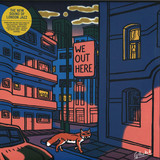
Repress of 2018’s classic compilation from Brownswood.
A primer on London’s bright-burning young jazz scene, this new compilation brings together a collection of some of its sharpest talents. A set of nine newly-recorded tracks, We Out Here captures a moment where genre markers matter less than raw, focused energy. Looking at the album’s running order, it could easily serve as a name-checking exercise for some of London’s most-tipped and hardworking bands of the past couple of years. Recorded across three long, fruitful days in a North West London studio, the crossover between each of the groups speaks to the close-knit circles which make up the scene.
Surveying the way that London’s jazz-influenced music had spread outside of its usual spaces in recent years, this album bottles up some of the vital ideas emanating from that burgeoning movement. Giving a platform to a scene where mutual cooperation and a DIY spirit are second-nature, it’s a window into the wide-eyed future of London’s musical underground.
Ubiquitous, much-lauded saxophonist Shabaka Hutchings is the project’s musical director. His own recent projects span from South Africa-connected, spiritually-minded jazz players Shabaka and the Ancestors to Sons of Kemet, who match diasporically-connected compositions with viscerally-direct live shows. His entry on the album, ‘Black Skin, Black Masks’, is typically difficult-to-define: with an off-kilter, shifting rhythmic backbone, repeated phrases – mirrored between clarinet and bass clarinet – shape the track with an alluring hue. His input ties together a deft, genre-agnostic sensibility that’s shared through all the players on the record.
Theon Cross – who’s also part of Sons of Kemet with Hutchings – starts his track, ‘Brockley’, with the solo, distinctive low rumble of his tuba. Winding and mesmeric, it sees tuba and sax lines winding together in rhythmic and melodic parallels. Ezra Collective – whose drummer and bandleader Femi Koleoso has toured with Pharaohe Monch – run a tight, Afrobeat-tipped rhythm on ‘Pure Shade’, with the final third changing gear into a melodic, momentous closing stretch.
Joe Armon-Jones, whose ludicrous chops on the piano have seen him touring with the likes of Ata Kak, showcases earworm-like, insistent motifs on ‘Go See’, balanced with a playful, improvisatory approach with room for ad-libbing and solos a-plenty. Taking a softer tact than many of the other entries, Kokoroko – whose guitarist Oscar Jerome has been making waves with his solo material – spin a lyrical, steady-paced meditation on ‘Abusey Junction’, matching chanted vocals with gently-played guitar.
Nodding to spiritual jazz influences, Maisha’s ‘Inside The Acorn’ is a wandering, explorative rumination, balancing delicate washes of piano and percussion with sharp interplay between flute and bass clarinet. In contrast, Nubya Garcia’s ‘Once’ is taut and carefully-poised, her tenor sax guiding a carefully-built energy to an explosive conclusion. And finally, Triforce’s ‘Walls’ is a performance in two parts: starting with Mansur Brown’s languorous, lyrical guitar, the second half switches up to a low-slung, g-funk-tipped groove.
Repress of 2018’s classic compilation from Brownswood.
A primer on London’s bright-burning young jazz scene, this new compilation brings together a collection of some of its sharpest talents. A set of nine newly-recorded tracks, We Out Here captures a moment where genre markers matter less than raw, focused energy. Looking at the album’s running order, it could easily serve as a name-checking exercise for some of London’s most-tipped and hardworking bands of the past couple of years. Recorded across three long, fruitful days in a North West London studio, the crossover between each of the groups speaks to the close-knit circles which make up the scene.
Surveying the way that London’s jazz-influenced music had spread outside of its usual spaces in recent years, this album bottles up some of the vital ideas emanating from that burgeoning movement. Giving a platform to a scene where mutual cooperation and a DIY spirit are second-nature, it’s a window into the wide-eyed future of London’s musical underground.
Ubiquitous, much-lauded saxophonist Shabaka Hutchings is the project’s musical director. His own recent projects span from South Africa-connected, spiritually-minded jazz players Shabaka and the Ancestors to Sons of Kemet, who match diasporically-connected compositions with viscerally-direct live shows. His entry on the album, ‘Black Skin, Black Masks’, is typically difficult-to-define: with an off-kilter, shifting rhythmic backbone, repeated phrases – mirrored between clarinet and bass clarinet – shape the track with an alluring hue. His input ties together a deft, genre-agnostic sensibility that’s shared through all the players on the record.
Theon Cross – who’s also part of Sons of Kemet with Hutchings – starts his track, ‘Brockley’, with the solo, distinctive low rumble of his tuba. Winding and mesmeric, it sees tuba and sax lines winding together in rhythmic and melodic parallels. Ezra Collective – whose drummer and bandleader Femi Koleoso has toured with Pharaohe Monch – run a tight, Afrobeat-tipped rhythm on ‘Pure Shade’, with the final third changing gear into a melodic, momentous closing stretch.
Joe Armon-Jones, whose ludicrous chops on the piano have seen him touring with the likes of Ata Kak, showcases earworm-like, insistent motifs on ‘Go See’, balanced with a playful, improvisatory approach with room for ad-libbing and solos a-plenty. Taking a softer tact than many of the other entries, Kokoroko – whose guitarist Oscar Jerome has been making waves with his solo material – spin a lyrical, steady-paced meditation on ‘Abusey Junction’, matching chanted vocals with gently-played guitar.
Nodding to spiritual jazz influences, Maisha’s ‘Inside The Acorn’ is a wandering, explorative rumination, balancing delicate washes of piano and percussion with sharp interplay between flute and bass clarinet. In contrast, Nubya Garcia’s ‘Once’ is taut and carefully-poised, her tenor sax guiding a carefully-built energy to an explosive conclusion. And finally, Triforce’s ‘Walls’ is a performance in two parts: starting with Mansur Brown’s languorous, lyrical guitar, the second half switches up to a low-slung, g-funk-tipped groove.

- 1: Synthtro
- 2: I'm So Tired (Of Living In The City)
- 3: Can't Get Through To My Head
- 4: Someone Else Is In Control
- 5: Goin' Down
- 6: Wish That She'd Come Back
- 7: Thick Skin
- 8: Too Much Tension
- 9: Watching The News Gives Me The Blues
- 10: It's Alright
- 11: Traces
Ltd edition in transparent yellow vinyl!
The Mystery Lights 2nd outing on Daptone's rock subsidiary, Wick, sees them digging deeper into their cavern of influences, taking on tips from Suicide, The Kinks and Television as they look to build on their already party fuelled, raucous sound.
The Mystery Lights story begins in 2004 in the small town of Salinas California when friends Michael Brandon and Luis Alfonso -whose shared fondness for groups like The Mc5, Velvet Underground, Dead Moon, and The Fall (just to name a few) -decided to join forces and craft their own brand of unhinged rock and roll. From there they spent the better part of 10 years touring relentlessly before migrating to Queens, New York in 2014.
With a live show known for its raw, visceral energy and relentless assault –leaving little to no stoppage between songs –they barreled through countless NYC haunts and DIY venues, quickly amassing a fervent local following. The buzz soon caught the attention of Daptone Records execs who were in the beginning stages of launching a new rock-centric imprint, Wick Records. Impressed by the groups’ musicianship, groove, endless supply of energy, and understanding of musical history the Mystery Lights were quickly signed to Wick. Though a rock band at heart, the parallels to what Daptone Records had traditionally looked for in their Soul artists was undeniable. Soon sessions were booked with Producer/Engineer Wayne Gordon, and the release of their debut single “Too Many Girls” b/w “Too Tough to Bear” launched to mass critical fanfare.
Upon the release of their self-titled full-length on June 24th 2016 The Mystery Lights were quickly crowned “one of New York’s finest garage rock bands” by NME. Extensive touring, including multiple stops in Europe, Asia and Australia followed which found the group graduating from support slots at hole-in-the-wall clubs to headlining stages at major festivals worldwide.
After two years of break-neck, non-stop touring, the group settled back into Queens to prepare for their second full-length record, Too Much Tension(out May 2019). With Wayne Gordon in the producer’s chair and several intense writing sessions under their belt the group were back at Daptone’s House of Soul and ready to track. While keeping the hard-hitting approach of the first LP, Too Much Tension finds the group digging deeper into their well of eclectic influences, enriching their sound without echoing the past. Mixing the eerie, insistent synth sounds of groups like The Normal and Suicide, the energy and swagger of punk’s golden age, the pop sensibility of The Kinks, and the stark, deliberate execution of Television -The Mystery Lights are taking their idiosyncratic brand of rock and roll to dizzying new heights.

17
For their much anticipated second release 'Music From Memory' take you into the world of Italian musician Gigi Masin....TIP!
Part of only a small and very much underground music
scene in his hometown of Venice, Gigi Masin self released two modestly pressed LP's 'Wind' (1986) and 'Wind Collector' (1991) and appeared along side Charles Hayward for the Sub Rosa compilation LP "Les Nouvelles Musiques De Chambre Volume 2" (1988).
Having met with little commercial success in Italy at the time, Gigi Masin's solo albums remained for the most part totally unknown. His music has though in recent
years, and seemingly by pure word of mouth, developed almost something of a cult following.
Gigi Masin's uniquely intricate and at times deeply emotive compositions take the listener into a realm of contemplation, a spellbound mind state where time and space appear to dissolve. His sparse and hypnotic often loop-based compositions seem to draw parallels with Detroit Techno's earliest beginnings, all at once conjuring those same feelings of both melancholic longing and ecstatic joy.

- A1: Frankie Bones - Clip On
- A2: Bryan Zentz Presents Baradatrax - Grimshots
- A3: Damon Wild - Skylab
- B1: Mike Parker - Detonations
- B2: Adamx - Change Of Gameplan
- B3: Daniel Myer - Atomic Overclub
- C1: Statiqbloom - Wax Turns To Skin
- C2: Orphx - The Moon Was In My Heart
- C3: Rhys Fulber - State Circus
- D1: Dasha Rush - Miracles
- D2: Reade Truth - No Doubt
- D3: Outlander - Presence Of Absence
12
2025 Repress
No skips, no pauses-since 1995. Sonic Groove Records of New York celebrates an important milestone: 30 years of crossing the parallels within electronic music. This special compilation features exclusively unreleased tracks by some of the most innovative and respected icons in techno and industrial music, each carefully crafting top-notch works to create an album filled with all killer, no filler selections. The legends of Sonic Groove live on!

Southern-bred, alternative R&B singer-songwriter Mereba artistically embodies self-understanding on The Breeze Grew a Fire, her grandest work and first release on Secretly Canadian. To hone in on this latest album, it was necessary for Mereba to reconnect with her whole many-sided self, from her inner child to her inseparable relationships. Mereba peacefully transmutes her beginnings, looking upon her closest kinships and friendships with a keen understanding of their steadying, inspirational force. Surrounded by the gentle Breeze of these relationships and recollections, Mereba is empowered as both an artist and mother, while also being reminded to nurture her childlike wonder. Mereba gracefully shines on the follow-up to her bounteous 2019 debut, The Jungle Is the Only Way Out. In escaping the Jungle, Mereba faced the paradigm shift of birthing a son in 2021 and getting accustomed to a rapidly changing self-outlook. Mereba's creative output has always relied on her innermost reflections and ideas on whatever was happening around her; but in motherhood, the singer's perspective widened while her inspiration became more focused, and more individually powerful. "Even though I'm fully an adult, I had to grow up in a way overnight when he my son came," Mereba explains. "The process of watching him open up to the world, learn how to engage with the world, it is very tender. I feel like it's the most reminded I've ever been of when I was a child and the first memories I have of life." The transformation brought Mereba to the intimacy of DIY recording sessions, providing an honest and organic foundation to Breeze. Mereba tapped her longtime production collaborator Sam Hoffman to co-assemble the album's rich production, which parallels its folk-like warmth. Although Mereba is a true double Earth sign-Virgo and Virgo rising-the development of Breeze was anchored by experiences and memories that span from Atlanta to L.A., Addis Ababa to Greensboro, an intention that speaks to the album's fluid nature. While nowhere near the end of her musical trek, The Breeze Grew a Fire is a loving, inspiring return to origin, one where Mereba frees a painful past, eases into future possibilities, and goes with life's flow.

Southern-bred, alternative R&B singer-songwriter Mereba artistically embodies self-understanding on The Breeze Grew a Fire, her grandest work and first release on Secretly Canadian. To hone in on this latest album, it was necessary for Mereba to reconnect with her whole many-sided self, from her inner child to her inseparable relationships. Mereba peacefully transmutes her beginnings, looking upon her closest kinships and friendships with a keen understanding of their steadying, inspirational force. Surrounded by the gentle Breeze of these relationships and recollections, Mereba is empowered as both an artist and mother, while also being reminded to nurture her childlike wonder. Mereba gracefully shines on the follow-up to her bounteous 2019 debut, The Jungle Is the Only Way Out. In escaping the Jungle, Mereba faced the paradigm shift of birthing a son in 2021 and getting accustomed to a rapidly changing self-outlook. Mereba's creative output has always relied on her innermost reflections and ideas on whatever was happening around her; but in motherhood, the singer's perspective widened while her inspiration became more focused, and more individually powerful. "Even though I'm fully an adult, I had to grow up in a way overnight when he my son came," Mereba explains. "The process of watching him open up to the world, learn how to engage with the world, it is very tender. I feel like it's the most reminded I've ever been of when I was a child and the first memories I have of life." The transformation brought Mereba to the intimacy of DIY recording sessions, providing an honest and organic foundation to Breeze. Mereba tapped her longtime production collaborator Sam Hoffman to co-assemble the album's rich production, which parallels its folk-like warmth. Although Mereba is a true double Earth sign-Virgo and Virgo rising-the development of Breeze was anchored by experiences and memories that span from Atlanta to L.A., Addis Ababa to Greensboro, an intention that speaks to the album's fluid nature. While nowhere near the end of her musical trek, The Breeze Grew a Fire is a loving, inspiring return to origin, one where Mereba frees a painful past, eases into future possibilities, and goes with life's flow.

Miki Yui is a musician, artist, and composer, originally from Tokyo, who has been based in Düsseldorf since 1994. Her whose work has long explored multiple forms of media, while documenting liminal zones of perception. On her latest album, As If, Yui creates a subtly connected suite of electronic music, drawn from improvisations and randomised processes that she has engaged with modular synthesis. Deeply poetic in its expression, even at its most minimal, the six pieces on As If have a curious tenor – they are, each of them, intensely sensuous, almost haptic listening experiences, as though the laser focus that Yui displays towards her compositions allows her to engage them as almost physical presences in the world.
One of the keys that unlocks the intimate complexity-in-simplicity of As If was Yui’s encounters with the Amazonian rainforest in Manaus, Brazil in 2018. Finding that the sounds in the rainforest both shadowed and echoed the music she had been making for two decades, she embraced the possibilities of modular synthesis, the sounds of which she discovered “have astonishing similarities to the sounds I experienced in the rainforest.” There is, indeed, something natural about the way these sounds bloom in real time; in their dedicated focus to the subtle development and mutation of several discrete parameters of sound, they grow slowly, gradually, their rhizomic structures suggesting that we are always situated within the middle of sound.
Sometimes, the material here has a kind of febrile energy, as on the ticking, clacking electronics of “Generativ”, a track that seems to rotate in the air in front of the listener, the light reflecting off its multiple surfaces as we catch the intricacies of its micro-patterns. Elsewhere, we slide into a cooled but welcoming environment, like the late-night fire-fly horizon of “Song 4”; there’s also the humid, dripping tropical sunset that’s documented on “Summernight”. It’s a music that’s hard to locate external coordinates for, though there are, perhaps, some parallels with the work of Laurie Spiegel, Eliane Radigue’s Vice Versa, and Pauline Oliveros’s “Roots of the Moment”. But As If is an extraordinary collection of naturally developing, rich studies for slowly mutating, enveloping, elemental electronics.

10
Co-produced with New York based No Wave legend Arto Lindsay, “Mente”, Thiago Nassif’s 4th full-lengther (and debut on Gearbox Records), is his most thrilling, accessible and inventive yet. Drawing on Brazilian influences (Tropicalia, Bossa Nova) yet equally inspired by No Wave, Post Punk and peak period Bowie, this is an album that filters classic counter cultures through a modern lens. Crammed full of emerging talent from Rio die Janeiro’s current pop, art and film movements, the energy draws parallels to the influential Brazilian 60’s Tropicalismo scene at a time when the need for political expression is once again informing much of Brazil’s artistic output. File Under : Alt Rock / Alt Pop / Brazilian / Post Punk
Combining his influences from No-wave, electronic music and Tropicalismo and inspired by artists such as Tom Zé, Ricardo Villalobos, Alva Noto, and James Chance, the album received the seal of approval from the “Dean of American rock critics,” Robert Christgau, who graded it A-, and was heavily played on BBC 3’s Late Junction, with Thiago appearing on the show as a guest in July 2018, as well as on the Bandcamp Weekly programme earlier in the same year.

Thoughts of You, as a phrase, might immediately associate one with feelings of love, endearment, fantasy or even obsession. These are the very sentiments that lay as cornerstones in Salvator Dragatto's debut LP for Colemine Records. The allure and drama of black & white photography have always played a vital role in how Salvator (aka Joseph Reina) not only views the world but how he hears music. Parallels in film processing to his own recording methods started becoming more and more apparent as the record was being formed; Limitations in exposures rivaling limitations in tracks. Film grain and dust sediments rivaling tape hiss and dirty EQ pots. What most would consider to be imperfections, Dragatto leaned into and found inspiration. This record is an homage to the likes of Andre' Kerte'sz, Robert Frank, Jean-Luc Godard and Rene' Groebli, who's works have impacted Dragatto's world so greatly both visually and sonically. Thoughts of You is an unabashed reflection of the noir. From the powerful thematic horn lines to the gentlest string passages, this record is a collection of themes and vignettes that explore the emotions set upon by black and white imagery.

Thoughts of You, as a phrase, might immediately associate one with feelings of love, endearment, fantasy or even obsession. These are the very sentiments that lay as cornerstones in Salvator Dragatto's debut LP for Colemine Records. The allure and drama of black & white photography have always played a vital role in how Salvator (aka Joseph Reina) not only views the world but how he hears music. Parallels in film processing to his own recording methods started becoming more and more apparent as the record was being formed; Limitations in exposures rivaling limitations in tracks. Film grain and dust sediments rivaling tape hiss and dirty EQ pots. What most would consider to be imperfections, Dragatto leaned into and found inspiration. Opaque Natural Vinyl. This record is an homage to the likes of Andre' Kerte'sz, Robert Frank, Jean-Luc Godard and Rene' Groebli, who's works have impacted Dragatto's world so greatly both visually and sonically. Thoughts of You is an unabashed reflection of the noir. From the powerful thematic horn lines to the gentlest string passages, this record is a collection of themes and vignettes that explore the emotions set upon by black and white imagery.

- 1: Thoughts Of You
- 2: Shadows
- 3: Precious Time
- 4: Monsoon Season
- 5: Rosewood Ave
- 6: Vignette #1
- 7: Vignette #2
- 8: Carried By Six
- 9: Villano
- 10: 96 Hours
- 11: Insomnia
For Fans Of... 60's and 70's French Noir Scene / Black and White film photography, The Rugged Nuggets, Dirty Art Club, Massive Attack, Misha Panfilov, The Ironsides, Doctor Bionic, Blockhead, DJ Shadow, Sven Wunder. First Salvator Dragatto full length LP to be released on Colemine. All members of The Rugged Nuggets (205k monthly listeners / 8.4k followers on Spotify) played on this LP. 60's French Noir Cinematic Soul. Produced by Joey Reina. This record is an homage to the likes of André Kertész, Robert Frank, Jean-Luc Godard and René Groebli. Artist has previously released three successful 45s. Thoughts of You, as a phrase, might immediately associate one with feelings of love, endearment, fantasy or even obsession. These are the very sentiments that lay as cornerstones in Salvator Dragatto’s debut LP for Colemine Records. The allure and drama of black & white photography have always played a vital role in how Salvator (aka Joseph Reina) not only views the world but how he hears music. Parallels in film processing to his own recording methods started becoming more and more apparent as the record was being formed; Limitations in exposures rivaling limitations in tracks. Film grain and dust sediments rivaling tape hiss and dirty EQ pots. What most would consider to be imperfections, Dragatto leaned into and found inspiration. This record is an homage to the likes of André Kertész, Robert Frank, Jean-Luc Godard and René Groebli, who’s works have impacted Dragatto’s world so greatly both visually and sonically. Thoughts of You is an unabashed reflection of the noir. From the powerful thematic horn lines to the gentlest string passages, this record is a collection of themes and vignettes that explore the emotions set upon by black and white imagery

- 1: Waste It With You
- 2: Long Way Down
- 3: Reach You
- 4: Forbidden Fruit
- 5: Sad Eyes
- 6: Anonymous In New York
- 7: The Golden Fleece
- 8: I Want More
- 9: Blue Ribbon
Recorded by long-time collaborator and producer Elliot Heinrich at the band’s own Pony Studios in East London, it’s clear that Tempesst spent time developing a sound tailored to the subject matter. Parallels can be drawn from the great alternative writers of the nineties (Stipe, Buckley, Cocker) by way of the storied lineage of the dark narrators (Cohen, Waits, Cave). “My process is mostly reactive, like writing a journal and reflecting on what I watch, read and listen to,” says Lyricist Toma Banjanin, citing “The Myth of Sisyphus” by Albert Camus as an influence of the record. Forbidden Fruit showcases a new sound, shedding their previous Spector-esque production for a modern hi-fi approach. Tempesst maintain a surrealist soundscape with precision, conjuring images of René Magritte: layered sounds within sounds to draw the listener deeper. They lean into chaos, with fuzz-infused, reverb-laden guitars that drone through the record indifferent to harmony, restrained by a swampy rhythm section. Tempesst reach for the bright lights of the expressionist late eighties while descending into the rawness of the early nineties.

Scottish newcomers, The Owls, break cover with this double sided slice of irresistible 21st Century Ska Pop. "Two Tone Summer" is an unforgettable love letter to the iconic 2-Tone movement of the late 70's and 80's, with an underlying lament at the parallels of racism, inequality, misery and social isolation which are as prevalent today as they were during the birth of the original 2-Tone movement. The flip side, "Skandal", is an acerbic Pop gem with timeless melodies and a lyric poking fun at the transparent strategy of misinformation and half truth disseminated by TV and Media to promote division and protect the establishment status quo, no matter how corrupt, and no matter how many scandals are eventually uncovered. Surely any song that has the line "whatever happened to the sweaty Prince?" has earned its place in your record collection!

- A1: Touch Down
- A2: Vanguard Ft Tyrone Isaac Stuart
- A3: Rocking
- A4: Finesse Ft Allysha Joy
- B1: Levs Ft Tyone Isaac Stuart
- B2: Medulla Oblongata Ft Rara Zulu
- B3: Dj President Believe
- C1: Givin Up Ft Allysha Joy
- C2: Dance High
- C3: Solo
- D1: Salty
- D2: Reason Ft Tyrone Isaac Stuart
- E1: The Score
- E2: The Remedy
- E3: The Journey
- F1: Travellin Ft Oliver Night
- F2: Finesse Jam Down Version
- F3: Givin Up Ft Allysha Joy Remixed By Shall I Bruk It
18
"The Remedy," is I G Culture's latest album under Likwid Continutal Space Motion, Culture draws parallels between the complex world of fungi and London's Underground dance music scene. Both are intricate networks that thrive beneath the surface, connecting diverse elements and influencing one another. The London dance music scene, like fungi, encompasses a variety of styles and genres, from drum and bass to Garage Dance Subcultures may go unnoticed to the casual observer but are musical corner stones in our society. Dance floors and clubs serve as spaces for communal healing, allowing people to let go of daily stresses and connect through music and dance. I G Culture's "The Remedy" celebrates this vibrant underground culture and highlights the interconnectedness of all musical styles. Through his innovative production and thematic depth, he underscores the transformative power of dance music, emphasizing its role in promoting well-being and unity. The idea of Fungi also is expressed in the artwork by Amsterdams 'Machine' with IG's direction, who used fungi in an original collage revealing a secret world.

Limited White VInyl Version
Solo Paraiso will be available on vinyl for the first time in 10 years and Digitally for the first time.
Solo Paraiso is Molly Nilsson’s mini-album from 2014 recorded during a 6 month residency in Buenos Aires, Argentina.
For it’s 10th Anniversary, Night School and Dark Skies Association is making the most sought after long player in Molly Nilsson’s catalogue available again on a new format with new artwork designed by Molly Nilsson and Jonas Raam.
Pop music rarely comes as honest and heartfelt as when delivered by Molly Nilsson. Having traveled around the world singing to the romantic and the doomed, Nilsson found herself in the Summer of 2014 in Buenos Aires. Inspired by the crumbling urban landscape and the heavy hearts that populate it, Sólo Paraíso is not only an ode to a specific time and space but a musical novella that meditates on youth, idealism and belonging. The soundtrack to a summer you thought you had when looking over bleached out old photo albums.
Sólo Paraíso has the feel of a bridge between the more lo fi, first phase of Nilsson’s career and the expanded sonic scope she has employed in the last decade. Recorded quickly, with instinct and feeling of paramount importance over rectitude or perfection, amongst the eight tracks of this mini LP are some of the biggest fan favourites of her career. As with all Molly Nilsson songs, each of these tracks is bursting with perfect moments. Opener Summer Cats sails over sun-kissed piano chords, chasing the sun eternally as it dips over the horizon, while show-stealer Blue Dollar draws parallels between the doomed Argentine economy and the failure of a love affair. It’s the most feel-good, romantic peon to an economic downturn you’ll ever hear. As Molly says “why is it so damn easy to break all the things that are so damn difficult to make?”
Using cracked synths, shimmering piano, heat-stroked drum machines and above all her direct, from-the-heart vocal delivery, Nilsson’s songs have never been so precise and on-point. For fellow doomed romantics, Sólo Paraíso is the perfect sound for an imperfect Summer.
