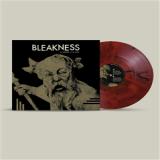
RECORDED LIVE AT MAISON DE LA RADIO, STUDIO 105 PARIS ON MARCH 2ND 1993.
FEATURING EXCLUSIVE LIVE VERSIONS OF TRACKS FROM ACROSS THE BAND’S CAREER UP TO THAT POINT. A CLASSIC, FAN-FAVOURITE SESSION, REMASTERED FROM THE ORIGINAL TAPES.
ON COLOURED VINYL! NEVER BEFORE RELEASED!
Recorded in Paris – nine urgent Dinosaur Jr classics performed at arguably the band’s 90s peak as a live outfit. Produced in conjunction with the band and INA, France. A companion piece to 2022’s best-selling ‘Seventytwohundredseconds’ MTV EP
quête:paris red
- A1: Chuck "Big Guitar" Ernest - "Blue Oasis" (With The Satellite Band)
- A3: The Wailers - "Driftwood
- A4: Lenny & The Thundertones - "The Moon Of Manakoora
- A5: Biscaynes - "Midnight In Montevideo" (With Co-Encidentals)
- A6: Red Harrison & His Zodiacs - "Chant Of The Jungle
- A7: The Palatons - "Jungle Guitar
- A8: Chayns - "Live With The Moon
- C1: Bailey's Nervous Kats - "Cobra" (Feat James Mills)
- C2: The Blazers - "Sound Of Mecca
- C3: The Gems - "Slave Girl
- C4: Jerry & The Catalinas - "The Arabian Knight
- C5: The Jaguars - "Night Walker
- C6: The Shelltones - "Blue Castaway
- C7: The Blue Bells - "Atlantis
- C8: Bill & Jean Bradway - "Paradise Isle
- D1: The Melody Mates - "Enchantment
- D2: Don Reed - "Nature Boy" (Feat The Voice Of Love)
- D3: The Baton Of Andre Brummer - "Tumba
- D4: Darla Hood - "Silent Island
- D5: Martha Raye - "Lotus Land" (With Phil Moore Orchestra)
- D6: Baha'i Victory Chorus - "Nightingale Of Paradise
- D7: Carmen - "Isle Of Love
- D8: The Monzas - "Forever Walks A Drifter
- E1: Akim - "Voodoo Drums
- E2: Don Sargent & His Buddies - "Voodoo Kiss
- E3: Joan Joyce Trio - "Captured
- E4: Pony Sherrell - "Tobago
- E5: Jerry Warren & The Valids - "Enchantress
- E6: The Centuries - "Polynesian Paradise
- E7: The Potted Palm - "My House Of Grass
- E8: The Castiles - "Enchantment
- F1: Five Glow Tones - "Quiet Village
- F2: Modesto Duran & Orchestra - "Silent Island
- F3: Ross Anderson Chorus & Orchestra - "Tam-Bu Theme
- F4: Bobby Christian - "Caravan
- F5: Bruce Norman Quintet - "Arabian Rhythm
- F6: The Slaves - "Hari's Harem
- F7: Arnie Derksen & Chise - "Similou
- F8: The Three Bars - "Caribbean Cruise" (Feat Nicky Roberts)
- G1: Robert Drasnin - "Chant Of The Moon
- G2: The Blue Jeans - "Moon Mist
- G3: Artie Barsamian - "The Enchanting Melody
- G4: Eddie Kochak & Hakki Obidia - "Jazz In Port Said
- G5: Gene Sikora & The Irrationals - "Tanganyika
- G6: Bobby Paris - "Dark Continent
- G7: Chico Jose - "Locura (Madness)
- G8: Clyde Derby - "Lost Island
It Was A Musical Cocktail Born In A Marketing Meeting: Two Parts Easy Listening, One Part Jazz, A Healthy Dollop Of Conga Drums, A Sprinkling Of Bird Calls, And A Pinch Of Textless Choir. Serve Garnished With An Alluring Female On The Album Jacket For Best Results. Exotica! The Soundtrack For A Mythical Air Conditioned Eden, Packaged For Mid-century, Tiki Torch-wielding Armchair Safariers. Be It Mosquito-bitten Torch Singers, Landlocked Surf Quartets, Fad-chasing Jazz Combos, Mad Genius Band Leaders, D-list Actors, Or A Middle Aged Loner Programming Bird Calls Into A Hammond, Exotica Was Always More Concerned With What Geography Might Sound Like Over Who Was Conducting. Captured Across Three Albums Are 48 (54 On The Cd) Curious Examples Of The Short-lived Genre's Reach, Each Summoning Their Own Sonic Visions Of Shangri La, Bringing Their Versions Of The Pacific, Africa, And The Orient To The Hinterlands Of America. Technicolor Paradise Is Where One Makes It, After All.
Various Artists - Technicolour Paradise: Rhum Rhapsodies & Others Exotic Delights
Incl. Remixes by Red Axes, Roman Flügel & Abe Duque
What does it mean to exist in sound?
It does not begin with a beat, but with a choice. With the moment when someone decides not merely to inhabit the space, but to shape it – and in doing so, makes themselves visible.
Roman Flügel stands as a constant in the background. Not as an authority, but as a collective consciousness. Since the 1990s, he has moved through club music like a seeker, never content with the first answer. House, techno, experimentation – these are not genres, but states of being. His remix thinks, hesitates, opens, strikes like a surging acid wave, warping reality and demanding true presence.
New York taught him that club music is never neutral. It is body, friction, attitude. Abe Duque’s remix carries a strangely enchanting relentlessness, a resistance to smoothness – as if the dancefloor were a place where freedom is not claimed, but fought for.
Red Axes do not enter this space; they conjure it. Their sound is raw, repetitive, circular, as if deliberately refusing linearity. House, dub, and acid elements become material for a movement that is more trance than structure. Their remix does not ask where it is going; it asks why one should ever stand still.
And then there is Tim Paris. Not at the center, but as a narrator. As someone who knows that the voice is an attitude. “That Boy” is not a pose, but a mirror, ironic, direct, vulnerable. Paris moves between new wave house and club, always aware that identity is never fixed, but formed in the moment.
This remix record is not a gathering of names. It is a situation, four perspectives on the same question:
What does it mean to exist in sound?
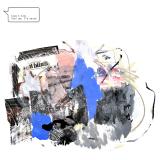
Yet sound alone does not tell the full story: like music, the visual is a space to be shaped, felt, and deciphered. The cover of Tim Paris feat. Foremost Poets – That Boy, created by Konstantin Fürchtegott Kipfmüller, a visual artist at the Hochschule für Gestaltung in Offenbach under Heiner Blum, embodies this principle. Drawing inspiration from the urban environment, Kipfmüller transforms traces of decay, weather, and time into abstract narratives that, like the music of Tim Paris, Roman Flügel, Abe Duque and Red Axes, unfold meaning layer by layer. The result is no mere adornment, but a mirror of the sonic landscape: every line, every surface an echo of the question of what it means to exist – fully, in the moment, in sound.
'Balconies' is an urgent, physical record shaped by momentum and heat. The album takes its title from a recurring metaphor: a balcony as a place of exposure and distance. Elevated, visible, yet removed from the action below. Throughout the record, Tin Fingers explore feelings of observation, displacement and restlessness, moving through places without fully belonging.
Musically, 'Balconies' marks a clear shift for the Antwerp band. Where earlier releases leaned into intimacy and melancholy, this album is louder, more direct and built for movement. Sharp, energetic songs are balanced by the band's continued attention to atmosphere and imagery.
The album was written instinctively over three months by frontman Felix Machtelinckx before being brought to the band, with arrangements coming together quickly thanks to years of shared experience. Recording took place over four hot summer days at The Old Carpet Factory on Hydra, Greece. The warmth, the sea and the island's isolation shaped both sound and mood, while limited time encouraged live recordings that capture the album's raw energy and immediacy. 'Balconies' was mixed by D. James Goodwin (The National, Kevin Morby, Whitney).
Following the release, Tin Fingers will present 'Balconies' live, with shows at De Roma (Antwerp), Mezz (Breda) and Supersonic (Paris).
With Stronger, her third EP, Mira Ló continues her rapid ascent within the French electronic scene. A cathartic project born from a period of personal upheaval, this EP is both a cry of resilience and a celebration of club culture as a space for healing. The Paris-based queer producer and DJ turns pain into creative force, and the dancefloor into refuge, release, and rebirth. Across four emotionally charged tracks, Stronger traces the contours of a club where one rises through the energy of the beat, the warmth of a caring community, and the affirmation of self through sound and movement. “This EP is my response to a very dark period in my life. I chose to turn pain into strength, to stand back up through music, and to reconnect with joy, intensity, and the collective. Each track follows a movement, of a body rising, a heart beating stronger, a soul regaining its light. Stronger is also a tribute to those who carried me when I could no longer stand on my own. It's proof that even in chaos, we can rebuild together.” Mira Ló The first chapter of this inner journey, “Riser” is a house track filled with enveloping melodies, ethereal pads, and organic chords that create a suspended sonic space. Its steady pulse and warm basslines evoke a rising from within. “I wanted this track to feel like a build-up, like breathing again. It's about that moment when you feel you're ready to rise once more, even after a fall, like a gentle but powerful wave,” says Mira Ló. With its R&B textures, pop-infused touches, and radiant production, “Brighter” glows with warmth. It captures the return of inner clarity, the rediscovery of joy and ease. Made to bring people together, it’s Instagram | Youtube | TikTok | SoundCloudboth immediate and heartfelt. “It’s a song about shining again, after the dark. I wanted something full of light and simplicity, a track that speaks to the heart and makes you want to dance without thinking.” A personal and introspective nod to the French Touch, “Higher” is driven by filtered basslines and hypnotic grooves. It channels a sense of euphoria that builds gradually, almost meditatively, like a joyful vertigo. “This track is about finding euphoria again, that moment when music lifts you beyond yourself. I grew up with the French Touch, and this is my way of coming back to it with my own voice.” Closing the journey, “Louder” is the most assertive track on the EP. Inspired by the UK bassline and garage scene, it bursts with percussive, punchy energy. This is where everything comes into full light, bold, unapologetic, and free. “I wrote Louder as a statement: I’m here, I exist, and I won’t stay silent anymore. It’s about partying as self-affirmation, as a joyful, powerful scream of identity. Meant to be played loud. Very loud.” Mira Ló, born Ana Lopez, is a queer producer and DJ based in Paris. Drawing from the full spectrum of club music, her sets and productions blend melancholic emotion with a unique, high-energy, euphoric touch - inspired by artists like Disclosure, salute, and Sammy Virji. From her early days playing in Parisian bars and intimate clubs, she quickly rose to the lineups of top French venues and festivals such as Peacock Society, Marvellous Island, and Lollapalooza - extending her reach across Europe and even to Chicago. She’s carved out a strong place for herself within the new wave of the French electronic scene, leaving a lasting impression with every appearance. In 2023, she released her debut EP Memories and was featured in Apple Music’s “Women In Electronic” series. That same year, she became a resident at Sacré in Paris, before unveiling her second EP Tribute To Chicago in 2024. She returns in 2025 with her third release, Stronger - once again proving she’s one of the most promising artists shaping the future of electronic music.
- A1: Hurts And Noises
- A2: Wake Up
- A3: I Don't Wanna Be A Rich
- A4: Terrorist Bad Heart
- A5: Provocate
- A6: Lucifer Sam (Pink Floyd)
- B1: Happy!?
- B2: So Lazy
- B3: I Feel Down
- B4: Stupido
- B5: Guilty
- B6: Caroline Says (Loo Reed)
UILTY RAZORS, BONA FIDE PUNKS.
Writings on the topic that go off in all directions, mind-numbing lectures given by academics, and testimonies, most of them heavily doctored, from those who “lived through that era”: so many people today fantasize about the early days of punk in our country… This blessed moment when no one had yet thought of flaunting a ridiculous green mohawk, taking Sid Vicious as a hero, or – even worse – making the so-called alternative scene both festive and boorish. There was no such thing in 1976 or 1977, when it wasn’t easy to get hold of the first 45s by the Pistols or the Clash. Few people were aware of what was happening on the fringes of the fringes at the time. Malcolm McLaren was virtually unknown, and having short hair made you seem strange. Who knew then that rock music, which had taken a very bad turn since the early 1970s, would once again become an essential element of liberation? That, thanks to short and fast songs, it would once again rediscover that primitive, social side that was so hated by older generations? Who knew that, besides a few loners who read the music press (it was even better if they read it in English) and frequented the right record stores? Many of these formed bands, because it was impossible to do otherwise. We quickly went from listening to the Velvet Underground to trying to play the Stooges’ intros. It’s a somewhat collective story, even though there weren’t many people to start it.
The Guilty Razors were among those who took part in this initial upheaval in Paris. They were far from being the worst. They had something special and even released a single that was well above the national average. They also had enough songs to fill an album, the one you’re holding. In everyone’s opinion, they were definitely not among the punk impostors that followed in their wake. They were, at least, genuine and credible.
Guilty Razors, Parisian punk band (1975-1978). To understand something about their somewhat linear but very energetic sound, we might need to talk about the context in which it was born and, more broadly, recall the boredom (a theme that would become capital in punk songs) coupled with the desire to blow everything off, which were the basis for the formation of bands playing a rejuvenated rock music ; about the passion for a few records by the Kinks or the early Who, by the Stooges, by the Velvet mostly, which set you apart from the crowd.
And of course, we should remember this new wave, which was promoted by a few articles in the specialized press and some cutting-edge record stores, coming from New York or London, whose small but powerful influence could be felt in Paris and in a handful of isolated places in the provinces, lulled to sleep by so many appalling things, from Tangerine Dream to President Giscard d’Estaing...
In 1975-76, French music was, as almost always, in a sorry state ; it was still dominated by Johnny Hallyday and Sylvie Vartan. Local rock music was also rather bleak, apart from Bijou and Little Bob who tried to revive this small scene with poorly sound-engineered gigs played to almost no one.
In the working class suburbs at the time, it was mainly hard rock music played to 11 that helped people forget about their gruelling shifts at the factory. Here and there, on the outskirts of major cities, you still could find a few rockers with sideburns wearing black armbands since the death of Gene Vincent, but it wasn’t a proper mass movement, just a source of real danger to anyone they came across who wasn't like them. In August 1976, a festival unlike any other took place in Mont-de-Marsan – the First European Punk Festival as the poster said – with almost as many people on stage as in the audience. Yet, on that day, a quasi historical event happened, when, under the blazing afternoon sun, a band of unknowns called The Damned made an unprecedented noise in the arena, reminiscent of the chaotic Stooges in their early adolescence. They were the first genuine punk band to perform in our country: from then on, anything was possible, almost anything seemed permissible.
It makes sense that the four+1 members of Guilty Razors, who initially amplified acoustic guitars with crappy tape recorder microphones, would adopt punk music (pronounced paink in French) naturally and instinctively, since it combines liberating noise with speed of execution and – crucially – a very healthy sense of rebellion (the protesters of May 1968 proclaimed, and it was even a slogan, that they weren’t against old people, but against what had made them grow old. In the mid-1970s, it seemed normal and obvious that old people should now ALSO be targeted!!!).
At the time, the desire to fight back, and break down authority and apathy, was either red or black, often taking the form of leafleting, tumultuous general assemblies in the schoolyard, and massive or shabby demonstrations, most of the time overflowing with an exciting vitality that sometimes turned into fights with the riot police. Indeed, soon after the end of the Vietnam War and following Pinochet’s coup in Chile, all over France, Trotskyist and anarcho-libertarian fervour was firmly entrenched among parts of the educated youth population, who were equally rebellious and troublemakers whenever they had the chance. It should also be noted that when the single "Anarchy in the UK" was first heard, even though not many of us had access to it, both the title and its explosive sound immediately resonated with some of those troublemakers crying out for ANARCHY!!! Meanwhile, the left-wing majority still equated punks with reckless young neo-Nazis. Of course, the widely circulated photos in the mainstream press of Siouxsie Sioux with her swastikas didn’t necessarily help to win over the theorists of the Great Revolution. It took Joe Strummer to introduce The Clash as an anti-racist, anti-fascist and anti-ignorance band for the rejection of old-school revolutionaries to fade a little.
The Lycée Jean-Baptiste Say at Porte d’Auteuil, despite being located in the very posh and very exclusive 16th arrondissement of Paris, didn’t escape these "committed" upheavals, which doubled as the perfect outlet for the less timid members of this generation.
“Back then, politics were fun,” says Tristam Nada, who studied there and went on to become Guilty Razors’ frontman. “Jean-Baptiste was the leftist high-school in the neighbourhood. When the far right guys from the GUD came down there, the Communist League guys from elsewhere helped us fight them off.”
Anything that could challenge authority was fair game and of course, strikes for just about any reason would lead to increasingly frequent truancy (with a definitive farewell to education that would soon follow). Tristam Nada spent his 10th and 11th unfinished grades with José Perez, who had come from Spain, where his father, a janitor, had been sentenced to death by Franco. “José steered my tastes towards solid acts such as The Who. Like most teenagers, I had previously absorbed just about everything that came my way, from Yes to Led Zeppelin to Genesis. I was exploring… And then one day, he told me that he and his brother Carlos wanted to start a rock band.” The Perez brothers already played guitar. “Of course, they were Spanish!”, jokes their singer. “Then, somewhat reluctantly, José took up the bass and we were soon joined by Jano – who called himself Jano Homicid – who took up the rhythm guitar.” Several drummers would later join this core of not easily intimidated young guys who didn’t let adversity get the better of them.
The first rehearsals of the newly named Guilty Razors took place in the bedroom of a Perez aunt. There, the three rookies tried to cover a few standards, songs that often were an integral part of their lives. During a first, short gig, in front of a bewildered audience of tough old-school rockers, they launched into a clunky version of the Velvet Underground's “Heroin”. Challenge or recklessness? A bit of both, probably… And then, step by step, their limited repertoire expanded as they decided to write their own songs, sung in a not always very accurate or academic English, but who cared about proper grammar or the right vocabulary, since what truly mattered was to make the words sound as good as possible while playing very, very fast music? And spitting out those words in a language that left no doubt as to what it conveyed mattered as well.
Trying their hand a the kind of rock music disliked by most of the neighbourhood, making noise, being fiercely provocative: they still belonged to a tiny clique who, at this very moment, had chosen to impose this difference. And there were very few places in France or elsewhere, where one could witness the first stirrings of something that wasn’t a trend yet, let alone a movement.
In the provinces, in late 1976 or early 1977, there couldn’t be more than thirty record stores that were a bit more discerning than average, where you could hear this new kind of short-haired rock music called “punk”. The old clientele, who previously had no problem coming in to buy the latest McCartney or Aerosmith LP, now felt a little less comfortable there…
In Paris, these enlightened places were quite rare and often located nex to what would become the Forum des Halles, a big shopping mall. Between three aging sex workers, a couple of second-hand clothes shops, sellers of hippie paraphernalia and small fashion designers, the good word was loudly spread in two pioneering places – propagators of what was still only a new underground movement. Historically, the first one was the Open Market, a kind of poorly, but tastefully stocked cave. Speakers blasted out the sound of sixties garage bands from the Nuggets compilation (a crucial reference for José Perez) or the badly dressed English kids of Eddie and the Hot Rods. This black-painted den was opened a few years earlier by Marc Zermati, a character who wasn’t always in a sunny disposition, but always quite radical in his (good) choices and his opinions. He founded the independent label Skydog and was one of the promoters of the Mont-de-Marsan punk festivals. Not far from there was Harry Cover, another store more in tune with the new New York scene, which was amply covered in the house fanzine, Rock News (even though it was in it that the photos of the Sex Pistols were first published in France).
It was a favorite hang-out of the Perez brothers and Tristam Nada, as the latter explained. “It’s at Harry Cover’s that we first heard the Pistols and Clash’s 45s, and after that, we decided to start writing our first songs. If they could do it, so could we!”
The sonic shocks that were “Anarchy in the UK”, “White Riot” or the Buzzcocks’s EP, “Spiral Scratch” – which Guilty Razors' sound is reminiscent of – were soon to be amplified by an unparalleled visual shock. In April 1977, right after the release of their first LP, The Clash performed at the Palais des Glaces in Paris, during a punk night organised by Marc Zermati. For many who were there, it was the gig of a lifetime…
Of course, Guilty Razors and Tristam were in the audience: “That concert was fabulous… We Parisian punks were almost all dressed in black and white, with white shirts, skinny leather ties, bikers jackets or light jackets, etc. The Clash, on the other hand, wore colourful clothes. Well, the next day, at the Gibus, you’d spot everyone who had been at this concert, but they weren’t wearing anything black, they were all wearing colours.”
It makes sense to mention the Gibus club, as Guilty Razors often played there (sometimes in front of a hostile audience). It was also the only place in Paris that regularly scheduled new Parisian or Anglo-Saxon acts, such as Generation X, Siouxsie and the Banshees, the Slits, and Johnny Thunders who would become a kind of messed-up mascot for the venue. A little later, in 1978, the Rose Bonbon – formerly the Nashville – also attracted nightly owls in search of electric thrills… In 1977, the iconic but not necessarily excellent Asphalt Jungle often played at the Gibus, sometimes sharing the bill with Metal Urbain, the only band whose aura would later transcend the French borders (“I saw them as the French Sex Pistols,” said Geoff Travis, head of their British label Rough Trade). Already established in this small scene, Metal Urbain helped the young and restless Guilty Razors who had just arrived. Guitarist for Metal Urbain Hermann Schwartz remembers it: “They were younger than us, we were a bit like their mentors even if it’s too strong a word… At least they were credible. We thought they were good, and they had good songs which reminded of the Buzzcocks that I liked a lot. But at some point, they started hanging out with the Hells Angels. That’s when we stopped following them.”
The break-up was mutual, since, Guilty Razors, for their part, were shocked when they saw a fringe element of the audience at Metal Urbain concerts who repeatedly shouted “Sieg Heil” and gave Nazi salutes. These provocations, even still minor (the bulk of the skinhead crowd would later make their presence felt during concerts), weren’t really to the liking of the Perez brothers, whose anti-fascist convictions were firmly rooted. Some things are non-negotiable.
A few months earlier (in July 1978), Guilty Razors had nevertheless opened very successfully for Metal Urbain at the Bus Palladium, a more traditonally old-school rock night-club. But, as was sometimes the case back then, the night turned into a mass brawl when suburban rockers came to “beat up punks”.
Back then, Parisian nights weren’t always sweet and serene.
So, after opening as best as they could for The Jam (their sound having been ruined by the PA system), our local heroes were – once again – met outside by a horde of greasers out to get them. “Thankfully,” says Tristam, “we were with our roadies, motorless bikers who acted as a protective barrier. We were chased in the neighbouring streets and the whole thing ended in front of a bar, with the owner coming out with a rifle…”
Although Tristam and the Perez brothers narrowly escaped various, potentially bloody, incidents, they weren’t completely innocent of wrongdoing either. They still find amusing their mugging of two strangers in the street for example (“We were broke and we simply wanted to buy tickets for the Heartbreakers concert that night,” says Tristam). It so happened that their victims were two key figures in the rock business at the time: radio presenter Alain Manneval and music publisher Philippe Constantin. They filed a complaint and sought monetary compensation, but somehow the band’s manager, the skilful but very controversial Alexis, managed to get the complaint withdrawn and Guilty Razors ended up signing with Constantin with a substantial advance.
They also signed with Polydor and the label released in 1978 their only three-track 45, featuring “I Don't Wanna be A Rich”, “Hurts and Noises” and “Provocate” (songs that exuded perpetual rebellion and an unquenchable desire for “class” confrontation). It was a very good record, but due to a lack of promotion (radio stations didn’t play French artists singing in English), it didn’t sell very well. Only 800 copies were allegedly sold and the rest of the stock was pulped… Initially, the three tracks were to be included on a LP that never came to be, since they were dropped by Polydor (“Let’s say we sometimes caused a ruckus in their offices!” laughs Tristam.) In order to perfect the long-awaited LP, the band recorded demos of other tracks. There was a cover of Pink Floyd's “Lucifer Sam” from the Syd Barrett era – proof of an enduring love for the sixties’ greats –, “Wake Up” a hangover tale and “Bad Heart” about the Baader-Meinhof gang, whose actions had a profound impact on the era and on a generation seeking extreme dissent... On the album you’re now discovering, you can also hear five previously unreleased tracks recorded a bit later during an extended and freezing stay in Madrid, in a makeshift studio with the invaluable help of a drummer also acting as sound engineer. He was both an enthusiastic old hippie and a proper whizz at sound engineering. Here too, certain influences from the fifties and sixties (Link Wray, the Troggs) are more than obvious in the band’s music.
Shortly after a final stormy and rather barbaric (on the audience’s side) “Punk night” at the Olympia in June 1978, Tristam left the band ; his bandmates continued without him for a short while.
But like most pioneering punk bands of the era, Guilty Razors eventually split up for good after three years (besides once in Spain, they’d only played in Paris). The reason for ceasing business activities were more or less the same for everyone: there were no venues outside one’s small circuit to play this kind of rock music, which was still frightening, unknown, or of little interest to most people. The chances of recording an LP were virtually null, since major labels were only signing unoriginal but reassuring sub-Téléphone clones, and the smaller ones were only interested in progressive rock or French chanson for youth clubs. And what about self-production? No one in our small safety-pinned world had thought about it yet. There wasn’t enough money to embark on that sort of venture anyway.
So yes, the early days of punk in France were truly No Future!
- C2: Back Again (Hot Toddy Remix)
- D1: Alone With You (Purple Disco Machine Remix)
- A1: Coming Home Baby (7" Edit) — Skeewiff
- A2: I Can't Give You Up — Smoove & Turrell
- A3: Ya Lookin Tight — Soopasoul
- A4: God Walked Down — The Allergies
- A5: Man Of Constant Sorrow — Skeewiff
- B1: Geno's Discotheque (Aroop Roy Remix) — Smoove & Turrell
- B2: Keep On Searching — Kraak & Smaak
- B3: Dust (Dimitri From Paris Vs. Cotonete Discomix) — Gizelle Smith
- B4: Glow — Sam Redmore
- C1: Blind Faith (Art Of Tones Extended Remix) — Izo Fitzroy
- C3: Sun Don't Shine (Sophie Lloyd Remix) — Wolfgang Valbrun
- C4: Tears (Scrimshire Remix) — Sam Redmore
- D2: Kinetic (Kraak & Smaak Remix) — Golden Girls
- D3: Speculate (Saison Remix) — Flevans
- E1: The Difference — Smoove & Turrell
- E2: Stumble (Feat. Parcels) — Kraak & Smaak
- E3: Easy Ain't Nothing (Featurecast Remix) — Ephemerals
- E4: I Feel It — The Allergies
- E5: Life Is Good (Technimatic Remix) — Ephemerals
- F1: Skyline (Kraak & Smaak Badlands Remix) — Izo Fitzroy
- F2: Wild Shadows — Flevans
- F3: Sunset Breakup — Dr Rubberfunk
- F4: You Brighten Up My Day — Hallmighty & Vanucci
Jalapeno Records are celebrating their 25th anniversary in the business. The label are marking the occasion with the release of a 3LP compilation featuring some of label boss Trevor Mac's favourite dancefloor gems from across the years. From a humble start in a basement recording studio on Holloway Road to a quarter century anniversary celebrated from their Brighton offices – Jalapeno Records has been an indie label with a mission - to bring the funk to the masses. Along the way that has taken in so many genres from chill to house, gospel to soul, breaks to drum & bass but it has all had a common thread running through it - the funk. "Twenty Five years means there are too many artists to list and this album is not supposed to be a Greatest Hits. We did that on the 20th anniversary. The album is dedicated to all of the artists that trusted us with their music and all the people who supported us along the way" says Trevor
k 11. Back Again (Hot Toddy Remix) feat. John Turrell — Kraak & Smaak
n 14. Alone with You (Purple Disco Machine Remix) [feat. Cleopold] — Kraak & Smaak
[k] 11. Back Again (Hot Toddy Remix) [feat. John Turrell] — Kraak & Smaak
[n] 14. Alone with You (Purple Disco Machine Remix) [feat. Cleopold] — Kraak & Smaak
[k] 11. Back Again (Hot Toddy Remix) [feat. John Turrell] — Kraak & Smaak
[n] 14. Alone with You (Purple Disco Machine Remix) [feat. Cleopold] — Kraak & Smaak
Take Me, I’m Yours is the first collaboration album between Alan Abrahams and Jan Jelinek. Released through the latter’s faitiche, it builds upon multi-layered vocal sketches by the former. The Paris-based artist, primarily known for his work as Portable and Bodycode, supplied Jelinek with multi-layered song sketches that the German artist subjected to a rigorous process of manipulation, excavating the ambiguities of the original material and transforming its rhythms into subtle pulses. Take Me, I’m Yours is neither a typical Abrahams record nor a classic Jelinek album—it is something third, mediating between the physicality of the voice and the abstraction of electronic sound design.
The two had crossed paths before really getting to know each other after Abrahams invited Jelinek to play at one of his Süd Electronic parties. The idea of a collaboration emerged slowly. “It started as an experiment, and over the past few years grew from a few tracks into this album,” says Abrahams. He describes recording the basic material as a “tantalizing” process, not knowing how Jelinek would transform his material, some of which was based on wordless chanting, while other tracks were working with lyrical content. However, their mutual trust allowed Jelinek to remove the harmonies, radically reduce the rhythms, and concentrate on Abrahams’ voice.
Jelinek heard something “fragile” in this voice, “moments of doubt and dark premonitions.” He points to Forever as an example. “Alan’s original song reminded me of classic vocal house, but his voice seemed to almost break,” he says. “This contradiction made the piece even bigger, because we hear a singer in the moment of an awakening.” He further accentuated such tensions through arrhythmic synth modulations and time-stretching algorithms, while also adding concrete sounds from a variety of sources. With its dedication to both transforming and amplifying the emotional qualities hidden within Abrahams’ pieces, Take Me, I’m Yours functions as a dialogue between those two singular artists.
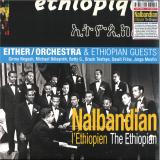
The Éthiopiques series returns! Essential archive recordings from an extremely fruitful period in Ethiopian music.
Before “Swinging Addis” took over the world, there was Moussié Nerses Nalbandian — the Armenian-born composer who shaped modern Ethiopian music. Mentor, arranger, and pioneer, he laid the foundations of Ethio-jazz.
This Éthiopiques volume revives his forgotten legacy, recorded live by Either/ Orchestra First issue ever with new exclusive photos and in depth liner 8-page insert.
“Ethiopian jazzmen are the best musicians that we have seen so far in Africa.
They really are promising handlers of jazz instruments.”
Wilbur De Paris
(1959, after a concert in Addis Ababa)
አዲስ፡ዘመን። *Addis zèmèn* **A new era.**
The time is the mid-1950s and early 1960s, just before "Swinging Addis" bloomed – or rather boomed – onto the scene. Brass instruments are still dominant, but the advent of the electric guitar, and the very first electronic organs, are just around the corner. Rock’n'Roll, R’n’B, Soul and the Twist have not yet barged their way in. Addis Ababa is steeped in the big band atmosphere of the post-war era, with Glenn Miller's *In the* *Mood* as its world-wide theme song, neck and neck with the Latin craze that was in vogue at the same period. Life has become enjoyable once again, with the return of peace after the terrible Italian Fascist invasion of Ethiopia (1935-1941). The redeployment of modern music is part and parcel of the postwar reconstruction. *Addis zèmèn* – a new era – is the watchword of the postwar period, just as it was all across war-torn Europe.
The generation who were the young parents of baby boomers** were the first to enjoy this musical renaissance, before the baby boomers themselves took over and forever super-charged the soundtrack of the final days of imperial reign. Music is Ethiopia's most popular art form, and very often serves as the best barometer for the upsurge of energy that is critical for reconstruction. Whether it be jazz in Saint-Germain-des-Prés or the *zazous* who revolutionised both jazz and French *chanson* after the *Libération*, be it Madrid's post-Franco Movida, or Dada, the Surrealists and *les années folles* that followed World War I, the periods just after mourning and hardship always give rise to brighter and more tuneful tomorrows. Addis Ababa, as the country's capital, and the epicentre of change, was no exception to this vital rule.
**Two generations of Nalbandian musicians**
Nersès Nalbandian belonged to a family of Armenian exiles, who had moved to Ethiopia in the mid-1920s. The uncle Kevork arrived along with the fabled "*Arba Lidjotch*", the** "*40 Kids*", young Armenian orphans and musicians that the Ras Tafari had recruited when he visited Jerusalem in 1924, intending to turn their brass band into the official imperial band. If Kevork Nalbandian was the one who first opened the way of modernism, pushing innovation so far as to invent musical theatre, it was his nephew Nersès who would go on to become, from the 1940s and until his death in 1977, a pivotal figure of modern Ethiopian music and of the heights it. Going all the way back to the 1950s. Nothing less. And it is Nersès who is largely to thank for the brassy colours that so greatly contributed to the international renown of Ethiopian groove. While the younger generations today venture timidly into the genealogy of their country's modern music, often losing their way amidst a distinctly xenophobic historiographical complacency, many survivors of the imperial period are still around to bear witness and pay tribute to the essential role that "Moussié Nersès" played in the rise of Abyssinia's musical modernity.
Given the year of his birth (15 March 1915), no one knows for sure if Nersès Nalbandian was born in Aintab, today Gaziantep (Turkiye/former Ottoman Empire) or on the other side of the border in Alep, Syria... What is certain is that his family, like the entire Armenian community, was amongst the victims of the genocide perpetrated by the Turks. Alep, the place of safety – today in ruins.
Before Nersès then, there was uncle Kevork (1887-1963). For a quarter of a century, he was a whirlwind of activity in music teaching and theatrical innovation. *Guèbrè Mariam le Gondaré* (የጎንደሬ ገብረ ማርያም አጥቶ ማግኘት, 1926 EC=1934) is his most famous creation. This play included "ten Ethiopian songs" — a totally innovative approach. According to his autobiographical notes, preserved by the Nalbandian family, Kevork indicates that he composed some 50 such pieces over the course of his career. This shows just how much he understood, very early on, the critical importance of song as Ethiopia's crowning artistic form. Indeed, for Ethiopian listeners, the most important thing is the lyrics, with all their multifarious mischief, far more than a strong melody, sophisticated arrangements or even an exceptional voice. (This is also why Ethiopians by and large, and beginning with the artists and producers themselves, believed for a long time — and wrongly — that their music could not possibly be exported, and could never win over audiences abroad, who did not speak the country's languages).
Last but not least, one of Kevork's major contributions remains composing Ethiopia's first national anthem – with lyrics by Yoftahé Negussié.
Nersès Nalbandian moved to Ethiopia at the end of the 1930s, at the behest of his ground-breaking uncle. Proficient in many instruments (pretty much everything but the drums), conductor, choir director, composer, arranger, adapter, creator, piano tuner, purveyor of rented pianos,... he was above all an energetic and influential teacher. From 1946 onwards, thanks to Kevork's connexion, Nersès was appointed musical director of the Addis Ababa Municipality Band. In just a few years, Nersès transformed it into the first truly modern ensemble, thanks to the quality of his teaching, his choice of repertoire, and the sophistication of his arrangements. It was this group that would go on to become the orchestra of the Haile Selassie Theatre shortly after its inauguration in 1955, which was a major celebration of the Emperor's jubilee, marking the 25th anniversary of his on-again-off-again reign.
At some point or other in his long career, Nersès Nalbandian had a hand in the creation of just about every institutional band (Municipality Band, Police Orchestra, Imperial Bodyguard Band, Army Band, Yared Music School…), but it was with the Haile Selassie Theatre – today the National Theatre – that his abilities were most on display, up until his death in 1977. To this must be added the development of choral singing in Ethiopia, hitherto unknown, and a sort of secret garden dedicated to the memory of Armenian sacred music, and brought together in two thick, unpublished volumes. Shortly before his death (November 13, 1977), he was appointed to lead the impressive Ethiopian delegation at Festac in Lagos, Nigeria (January-February 1977).
His status as a stateless foreigner regularly excluded him from the most senior positions, in spite of the respect he commanded (and commands to this day) from the musicians of his era. Naturally gifted and largely self-taught, Nerses was tirelessly curious about new musical developments, drawing inspiration from the very first imported records, and especially from listening intensely to the musical programmes broadcast over short-wave radio – BBC *First*. A prolific composer and arranger, he was constantly mindful of formalising and integrating Ethiopian parameters (specific “musical modes”, pentatonic scale, and the dominance of ternary rhythms) into his “modernisation” of the musical culture, rather than trying to over-westernise it. It even seems very probable that *Moussié* Nerses made a decisive contribution to the development of tighter music-teaching methods, in order to revitalise musical education during this period of prodigious cultural ferment. Flying in the face of all the historiographical and musicological evidence, it is taken as sacrosanct dogma that the four musical modes or chords officially recognised today, the *qǝñǝt* or *qiñit* (ቅኝት), are every bit as millennial as Ethiopia itself. It would appear however that some streamlining of these chords actually took place in around 1960. It was only from this time onward that music teaching was structured around these four fundamental musical modes and chords: *Ambassel*, *Bati*, *Tezeta* and *Antchi Hoyé*. A historical and musical “details” that is, apparently, difficult to swallow, especially if that should honour a *foreigner*. Modern Ethiopian music has Nersès to thank for many of its standards and, to this day, it is not unusual for the National Radio to broadcast thunderous oldies that bear unmistakable traces of his outrageously groovy touch.
Geckos is the collective spirit of acclaimed songwriter M. Ward, Giant Sand visionary Howe Gelb, and Irish multi-instrumentalist McKowski. Born out of an impromptu recording session that was sparked by an encounter at the wedding of a mutual friend, the project blends the rich flavors of the Southwest with indie folk, Spanish influences, and a touch of Irish mysticism. While initial recordings took place in Tucson, it became a true transatlantic project when the members returned to their hometowns and continued trading ideas. The trio eventually regrouped in studios across Ireland, London, and Bristol, where renowned English producer John Parish mixed multiple tracks. Geckos' self-titled debut is steeped in story, spontaneity, and surreal charm, channeling the spirit of three singular voices discovering a new, shared musical language.
We don’t follow trends—we redefine them. Deep In Dis proudly unveils the highly anticipated physical debut on the label of Rawaï, a dynamic Parisian artist you need on your radar.
Expect a fusion of raw percussion, peak-time rave energy, and cutting-edge house grooves, all woven together with mind-altering samples. These tracks aren’t just powerful—they’re designed for maximum impact in the darkest corners of the club.
Across four original cuts, Rawaï delivers a statement of intent: uncompromising, high-voltage music built to ignite the dance floor. This one’s strictly for true heads.
RedNilo is an Italian-Moroccan duo composed of Reda Zine and Danilo Mineo, two musicians based in Bologna linked by a deep passion
for world music, particularly African music. Their ongoing and tireless musical exploration has led them to collaborate for over a decade
on numerous artistic and recording projects. Their new album, eponymously titled RedNilo, features six tracks characterized by a sound
reminiscent of Gnawa, Hassani, Tuareg, and experimental rock. The psychedelic, raspy riffs of the electric guitar, the repetitive rhythms
of the percussion, and the rhythmic-melodic lines of the guembri represent and evoke their journey. The resulting sound material is the
culmination of their journey and their encounters with masters, artists, griots, artisans, and instrument makers in the Draa Valley in
southeastern Morocco, bringing together the two musicians' urban and experimental backgrounds and souls. The album's artwork was
designed by Moroccan artist Aali Wica, initiator and mentor of their spiritual and artistic journey to the southern African continent,
across the long black snake.
Réda Zine, a musician and documentary filmmaker born in 1977 in Casablanca, launched his musical career in the 1990s, contributing
to L'Boulevard, Africa's largest independent festival. Raised in the Casablanca medina, he was introduced to Gnawa music by various
Maallems. After studying at the Paris 3 Sorbonne University, he founded Café Mira, a project that has performed at several international
events.
From 2011 to 2014, Zine was artistic director for Creative Commons (Middle East and North Africa), where he won the #CC10 Korea
award in 2012 with the project "It will be Wonderful," which brought together musicians from over 12 countries. He has also been
involved in exhibitions on music and censorship, participating in events in major cities such as Paris, Buenos Aires, and Seoul. In Italy,
he continued his musical research with the Hardonik project and was part of the Afrobeat group Voodoo Sound Club, recording the
album Mamy Wata. Zine collaborates with artists such as Seun Kuti and has initiated educational activities related to Gnawa music,
contributing to initiatives such as the African Symphony Laboratory for improvisers. He is the co-founder of Fawda, a Gnawa-based
project, and is part of the Gnawa Rumi collective, which explores the music of the Moroccan diaspora in Italy. He directed the documentary "The Long Road to the Hall of Fame" about Public Enemy, which won an award at the Pan African Film Festival in 2015.
Danilo Mineo graduated as a national educator from the AMMnationalscholl music academy in Milan, with a thesis entitled "Afro-Cuban
Music and the Rhythm Section." Over the years, he has attended workshops and masterclasses with international artists and masters
of percussion and drums, including Horacio El Negro Hernandez, Airto Moreira, Trilok Gurtu, Luis Agudo, Arto Tuncboyaciyan, Dudu
Tucci, Dom Famularo, Karl Potter, Rodney Barreto, and Eno Zangoun, exploring the rhythmic language of various musical genres and
styles.
In addition to publishing several educational manuals for percussionists, music critics consider him a versatile percussionist, active in
various musical productions and recordings: Mop Mop, Fawda, Guglielmo Pagnozzi "Voodoo Sound Club," Fabrizio Puglisi "Guantanamo," Panaemiliana, The Mixtapers, and many others, with whom he has performed at numerous national and international music festivals (in Europe and Africa). As a percussionist and side man he has recorded numerous albums and collaborated with Italian and
international artists including: Giancarlo Schiaffini, Gianluca Petrella, Roy Paci, Roberto Freak Antoni, Famoudou Konate, Melaku Belay, Baba Sissoko, Kalifa Kone, Jamal Ouassini, Deda, Dj Lugi, Bioshi.
Plying refracted rhythms with an exacting poise, Aerae arrives on Samurai Music with a fully formed sound that plumbs the depths between techno immersion and D&B beat science.
An accomplished, palpable tension runs throughout Nefanda, Aerae's second solo release. Following up on the meditative pulse of her debut album on Annulled Music last year, the Paris-based artist digs deeper into ominous atmospheres filled with evocative reverb decays and taut, dynamic drum work - tools she wields to Redner tracks with specific meaning, coded by the Latin framing that runs through all aspects of her musical output. Contemplating the ancient language as an inescapable part of her European roots, on Nefanda Aerae ruminates on external trials and inner impulses, and conjures a jaw-clenching soundtrack to match.
'Mons' (translation: 'Mountain') speaks to challenges, strength and spiritual ascent, marked out by an urgent thrum of conga slaps and a 4/4 kick around the 170 BPM mark that finds power in minimalism even at the relatively high tempo.
The title track opts for a more broken framework, pivoting pointed percussion around a deft sub pulse while turning up the intensity with an exacting poise.
'Nefanda' translates as 'unspeakable,' or 'too horrific to name,' and the fraught, synthetic wraiths contorting through the track convey the dread the title implies.
'Fovea' (translation: 'pit') burrows deeper into spatial design with a looming low end rumble and subliminal sound sculpture, shaping out a dark, introspective chasm tipped towards disassociation. It's a powerful statement in any setting, but the all-consuming bass feels especially crafted for full, physical sound system immersion.
'Phrenesis' (translation: 'frenzy') rounds the EP out in fierce form, building up a high-pressure arrangement from ambient beginnings with ruthless control. There's a sense of duality in motion between half-time and double-time rhythmic elements, every incremental shift adding to the intensity of the track with the elegant, impactful touch that has fast become Aerae's calling card.
Finding her own language within the dialogue between techno, D&B and dark ambient, Aerae's music makes a vivid impression thanks to the ideas and intention that drive her in the studio. Nefanda confirms her status as a leading light in deep, psychedelic dance music, making something extremely personal that also reaches out beyond notions of the self like all the best transcendental music.
Loose Joints – Tell You (Today): A Rediscovered Classic Reimagined
Loose Joints was the disco brainchild of Arthur Russell - a visionary composer and producer who helped shape the sound of New York’s underground club scene. Unlike many of his contemporaries who chased polished perfection, Russell embraced rawness and spontaneity. A classically trained musician, he mastered the art of crafting “perfect imperfections,” infusing disco with a punk attitude and an intellectual edge.
“Tell You (Today)” emerged from the same legendary Blank Tape Studio sessions that gave birth to the cult favorite “Is It All Over My Face.” Like its predecessor, it features a cast of handpicked studio luminaries and disco outliers, all guided by Russell’s distinct vision. But while the DNA is similar, this track veers more toward leftfield pop, buoyed by Russell’s unmistakable vocals.
On the A-side, DFP presents a masterfully updated take on Larry Levan’s original remix. Blending unreleased outtakes with refined sonic upgrades, this “Special Version” stays true to the source material - making only the most delicate adjustments to optimize it for today’s dance floors.
The B-side is a gem in its own right. It features the elusive New Shoes Mix with Parts I & II edited here for seamless, continuous play. Long shrouded in confusion due to misprints and misattributions - from the 1983 release to various reissues - while labeled as New Shoes it has in most iterations been a variation of the Larry Levan mix.
Now, for the first time, DFP Vaults is proud to present the New Shoes Mix in its full, 15 minutes, intended glory - finally giving this lost version the recognition it deserves.
Lens Shift is a meticulously sculpted slab of wax from Fingers of God, made for Dance Data. A continuation of his distinctly sci-fi, brain-scrambling style — warped, psychological club tools engineered to melt dance floors (and maybe some neural pathways too).
First up in the Dance Data Summer 12″ Series: Fingers of God, hailing from Brussels, Belgium.
Lens Shift is a meticulously sculpted slab of wax from F.O.G., made for Dance Data. A continuation of his distinctly sci-fi, brain-scrambling style — warped, psychological club tools engineered to melt dance floors (and maybe some neural pathways too).
We first clocked the young but prolific producer via Da Capo Al Coda, a compilation from Paris-based Grid Records — and instantly knew there was more heat waiting.
Credits:
All tracks written and produced by Phillip Pettauer
Mastered by Raphael Valensi
Artwork by Jesse Pimenta
"Quit to Play Chess" is the final studio album of Cola Boyy, who tragically passed away in March 2024 after winning the hearts of neo-disco and funk enthusiasts, from Los Angeles to Paris, from Coachella to London.
After a critically acclaimed EP (Black Boogie Neon, 2018), a debut album (Prosthetic Boombox, 2021), and collaborations with the likes of MGMT, Benny Sings and The Avalanches, the self-proclaimed Disabled Disco Innovator was able to finish his new album, groovier than ever.
Without boundaries of styles, tinted with hiphop, R'n'B and drum & bass, and faithful to his very unique flow, Cola Boyy offers one last record in his image: 12 generous, inventive, psychedelic and passionate tracks. An album painting a nuanced yet lyrical portrait of its era, drawing on the diversity of the contemporary world to offer anthems for those who are in lack of them.
The album is a work of goldsmith on the production side, with music craftsmen like Andrew VanWyngarden (MGMT), Jared Solomon (producer of SZA, Lola Young, Remi Wolf, Fousheé...), Nate Fox (Chance The Rapper, Lil Wayne) and Lewis OfMan, who build "Quit to Play Chess" as the most current and genuine project of its author...
Collecting Orders For 2025 Repress
Paris-Based Record Label Phonogramme Proudly Announces Its Milestone 50th Release, a Spectacular Various Ep Featuring 4 Exclusives and Unreleased Tracks From Legendary Artists Abacus, Fred P, Byron the Aquarius, and Felipe Gordon. This Special Edition, Showcasing the Finest in House and Deep House Music, Will Be Available on Limited Red Marbled Vinyl. Dive Into the Rich Sounds and Exceptional Artistry of These Iconic Musicians, Each Bringing Their Unique Style and Creativity to This Landmark Release. Don't Miss Out on This Collector's Item, a Testament to Phonogramme's Enduring Legacy and Bright Future in the World of Electronic Music....
- A1: Speak Like A Child
- A2: Party Chambers
- A3: Mick's Up
- A4: Headstart For Happiness (Early Version)
- A5: Money-Go-Round (Parts 1&2) (Bert Bevans Remix/Club Mix)
- B1: Long Hot Summer (Extended Version)
- B2: Le Depart
- B3: The Paris Match
- B4: Spring, Summer, Autumn
- B5: Mick's Company
- C1: Mick's Blessings
- C2: The Whole Point Of No Return
- C3: Me Ship Came In!
- C4: Blue Café
- C5: The Paris Match
- C6: My Ever Changing Moods
- C7: Dropping Bombs On The Whitehouse
- D1: A Gospel
- D2: Strength Of Your Nature
- D3: You're The Best Thing
- D4: Here's One That Got Away
- D5: Headstart For Happiness
- D6: Council Meetin
- E1: My Ever Changing Moods (Long Version)
- E4: Mick’s Demo
- E5: Take It To The Top (Demo)
- E6: Dropping Bombs On The White House (Alternate Version)
- F2: A Solid Bond In Your Heart
- F3: The Big Boss Groove (12" Version)
- F4: You're The Dub Thing
- F1: Long Hot Summer (Pre Tsc Demo
- E2: Party Chambers (Alternate Version)
- E3: Up For Grabs (Demo)
When The Style Council’s debut album Café Bleu was released in 1984, Weller and wing-man Mick Talbot unveiled a cosmopolitan blend of jazz, soul, and pop that felt effortlessly sophisticated and daringly fresh. Café Bleu was more than a debut—it was a statement of intent, redefining what British pop could sound like in a new decade.
Since then, fans have been waiting for a deep dive into the Style Council vaults eager to hear any unreleased material. And now the wait is over.
The Café Bleu Special Edition is a treasure trove for Style Council devotees and music lovers alike - an immersive journey into one of the most inventive eras of Paul Weller’s career. This lavish release unveils a wealth of previously unheard material, including early demos, alternate takes, and unreleased songs that showcase the band’s restless drive for experimentation and evolution.
Nous'klaer Audio proudly presents Lenxi and her debut album: 'Did you get the dream I sent you?' A personal 10-track long player balancing IDM, indie pop and techno, which was written in and about a period of life where heartbreak and threats reinforced each other, creating an inescapable loop of isolation. Attempting to regain confidence and hope, a process of dreaming up a fictive emotional escape emerged. Paintings, sketches, voice notes, and a first few synth-lines took shape--laying the groundwork for this very album. In the tail of the storm, the London-born, Amsterdam-based producer and DJ refined her ideas further in places that carried hopeful memories. Places that felt familiar. Revisiting studios in beloved locations from the past --in London and Paris-- and seeking for the new --in studios and the Westcoast waters of L.A.-- all helped to shape those purest ideas into full songs forming a story that demanded closure. Lenxi's debut album is a stunning sequence of dreams hinting at hope combined with nostalgia--built on a strong force battling the vulnerability of being alone--and ultimately finding a way out and onto the dance-floor. The album is pressed on 180g vinyl and comes with a download-card.
- A1: Patrick Bernard - Interieurs
- A2: Cecilia Angeles - Climax Our First Day Of Love Its A Love Day
- A3: Carla Music Orchestra - A Meet With Bond
- A4: Remy Boussengui - Coco Lando
- B1: Francisco Et Son Orchestre - Cafe Rete
- B2: Francis Bebey - Crocodile Crocodile Crocodile
- B3: Michel Lorentz - Zantye An Metro
- B4: Egide Sadey - High Emotion
- B5: Princess Erika - Trop De Bla Bla Dub Version
Isle of Jura teams up with French digger Switch Groove on the next compilation titled ‘Archipelago – Cosmic Fusion Gems from France (1978-1988)’.
Switch Groove explains the concept “When I seriously began to search for and collect records, I was mostly interested in sounds from african-american, afro-latin and UK contemporary scenes. Sounds from distant territories, faraway from my native Massif Central, a highland region in the middle of France. The grass is always greener, I guess however, as I was digging in fleamarkets in the early sunday morning light, as well as spending regular sessions in second hands record shops, I began to discover hidden treasures, underground gems and side-projects of an unknown French musical repertoire.
French music is often reduced to its most famous musical forms, characters and signatures : French songwriting and voices, 60s yéyé, prog rock concept albums and soundtrack explorations, 80’s indie rock scene or more recently electronic French touch. All these sounds have a common feature : a geographical link, forged on mainland French territory, following the contour of the so-called Hexagone, the border that shapes the grounds for an homogeneous cultural expression. But beyond this showcase lie more complex, hybrid and global French productions. From French Caribbean Antilles to Parisian suburbs - especially during the ‘Sono Mondiale’ era -, in French areas outside urban cultural centers, musicians have created fusion and cosmic musical expressions. As the mid-seventies meant a greater freedom to make and record music, a wider use of electronic instruments like synthesizers and drum machines helped to deliver some magical projects you could only find lost in the middle of cheap records during a sunny record digging session. I selected these tracks, in an attempt to shape an ARCHIPELAGO that highlights significative contributions of African diasporas and ultramarine territories into French musical borders. It is the map of a land I have gradually drawn, thanks to deep listening of amazing cosmic and fusion tunes. I hope you enjoy the journey.”
CASABLANCA first started as a party exploring the depths of Arabic grooves from Northern Africa and the Middle East, brought to life by two musical legends...Parisian digger Victor Kiswell, known for his journey through the world’s rarest records and influential NTS radio sets, and Dez Andrés, a Detroit native whose roots in the city's hip-hop and house scene are matched by his love for soul, fun, and jazz. The two artists have stepped into the studio to bring the same energy and ethos from their party to this album.
Heavyweight Black Vinyl / Original glued prints on Thick Cardboard 700 gram / 2 Separated parts hand-glued / Glossy lamination / PVC outer sleeve / Insert with 10 pages Booklet 30 x 30 cm printed on Gmund Colro Felt Red Purplea d 90 Gram Favini papers with detailed interview between Tony Higgins and Mustafa's family (his sisters and children are all musicians), as well as an insight into the recording of the album with Gregory Bufford, the drummer for the session, lyrics and exclusive pictures.
Colored Vinyl Details:
Heavyweight "A side - B side solid purple + transparent blue" vinyl / Original glued prints on Thick Cardboard 700 gram / 2 Separated parts hand-glued / Glossy lamination / PVC outer sleeve / Insert with 10 pages Booklet 30 x 30 cm printed on Gmund Colro Felt Red Purplea d 90 Gram Favini papers with detailed interview between Tony Higgins and Mustafa's family (his sisters and children are all musicians), as well as an insight into the recording of the album with Gregory Bufford, the drummer for the session, lyrics and exclusive pictures.
Peronnel:
Mustafa Abdul Rahman - Tenor Saxophone, Percussion, Producer
Ahmed Abdullah - Trumpet
Malachi Thompson - Drums
Gregory Bufford - Bass
Richard Radu Williams - Piano
Rafik Abdur Rahim
Tony Smith - Guitar
Larry Banks - Synthesizer
Khalil Abdullah - Congas
Babafumi Akunyon - Percussions
Odell Grier Backing Vocals – Fred Harley, Hilda "Asia" Richbow , Linda Hall
Notes:
In the course of our deep research, we sometimes discover a hidden thread that unites musicians, songwriters, artists, and poets linked by music. Mustafa's 'Polygamy' is no exception. Apart from the music - the main reason we decided to work on this first ever re-press, a jewel at the crossroads between jazz funk, spiritual jazz and proto rap - are the many other things that make Mustafa an intriguing and fascinating character. For starters, he was a childhood friend of the Ayler brothers with whom he played in different formations. He also played with other beloved figures such as Noah Howard and Charles Tyler, on a still unreleased album recorded for Amiri Baraka's Jihad label, and worked with The Legendary Master Brotherhood and Steve Reid. This and much more will be revealed in a detailed interview between Tony Higgins and Mustafa's family (his sisters and children are all musicians), as well as an insight into the recording of the album with Gregory Bufford, the drummer for the session.
Mezerg invites his fans to join him for a new world tour, kicking off in New York and concluding at the Zenith in Paris on April 26th.
For those unfamiliar with Mezerg, his real name is Marc Mezergue. Originally from Bordeaux, he launched the project in 2017. Prior to that, he started playing piano at the age of 16, teaching himself entirely. He later pursued studies at the Bordeaux Jazz Conservatory, though he wasn't particularly inclined to follow that path further. Nevertheless, it provided him with a solid musical foundation.
Ghastly and hallucinatory – 'last liasse' is a sign of the times, alternative pop record by helen island. Within this debut album, the artist captures the saccharine gaze of digital escapism through characteristic filtered high notes, cut-up genres, and processed vocals. Providing a comprehensive overview of helen island’s self-distributed initiatives, with the ethos of the Parisian Simple Music Experience collective, the twelve tracks set a solid musical score that resonates with the age to come.
RR7005 sees the Parisian raggamuffin deejay-cum-crooner Peter Youthman joins the Red Robin flock with a haunting ballad about love gone wrong and the loneliness that results.
With nods to classic, melancholic love songs of the 80s, Peter sings over a deep, dark Naram riddim that carries the DNA of lo-fi roots anthems from the likes of Wackies.
As you'd hope, there's there's accompanying stripped back version from Naram on the flip. Mixed to tape, and fine tuned by Downbeat Mastering, this is a unique piece of music that will please those with a love for the darker side of rub-a-dub.
8 years almost to the day after releasing his unique re-interpretation album of his field recordings made in the late 90's in Tanzania, Kink Gong is back with another volume of bushmen madness. Here’s what Kink Gong aka Laurent Jean-neau has to say about his end of millennium trip:
‘’My experience in Tanzania is now over 20 years and most of the so called remix was started in Tanzania and left un-finished, then eventually retouched in Vienna, Paris, Shanghai, Kunming, Dali or Vientiane. 20 years later I searched my Tanzanian files and rediscovered unfinished tracks which are being now refreshed on this new record.
Back to the early days of the XXI century, when I lost my health trying to survive with the HADZAs, the last bushmen in northern Tanzania. In 1999 James Stephenson from NYC invited me to join his Hadzas friends. I would leave the bush to rest in a place with enough food and electricity and start to edit, loop and work on the original recordings, to trans-form them into organic abstract compositions, the only instrument I had recorded a lot with the Hadzas was the malimba and I bought different malimbas in Arusha to take back with me to Europe, I used either the original record-ings or me playing malimbas on some tracks and applied some electronic treatment to it, at that time I used Roland synths for some tracks.
The original recordings are related to scenes at night by the fire with the Hadzas, but also 3 different types of celebra-tions, Epeme Men was recorded on a moonless night with men and women singing and dancing in complete dark-ness in Mangola, an Hadza camp. Irawk Drum Under the Rain was recorded during daytime at a Multi ethnic gathering at the Franciscan Spanish catholic mission with a crowd dancing and singing under heavy rain while an IRAWK large (and wet) drum was being played, Northern Tanzania. Makonde Island was recorded in southern Tanzania at the boarder with Mozambique and is a pure scene of trance taking place on an island where the MAKONDE fishermen off the coast of Mtwara, get wild, hitting plastic containers for the sound, drunk and stoned men and women are hysterical-ly jumping and falling on each other, ending up with a few wounded.
Once again I'm responsible for this act of multicultural sabotage, but don’t forget that you can always listen to the origi-nal recordings on the Kink Gong recs collection. ‘’
Laurent Jeanneau, Berlin 2023
Bingo Club demands no rules for entry. Everyone knows your name. The hours are endless and the dress code remains
unspoken.
Martin Rousselot opened the doors to the Bingo Club at the dawn of the 2020's. Joined by Neysa Barnett, Vassili
Yatchinovsky, Marie-Paule Bargès and Emile Larroche, Bingo Club puts down its signature sound-stamp and juggles with
styles of different kinds; if five songs throb to the clank-clank of New York trains, five more drift lazily like Marseille's sailspotted waves.
Group signifiers and visual tropes are reduced to a molten wash of melodies and images that, whether heard or seen, unite
kindred spirits.
Whether as a duo or as a soloist, in English or in French, a warm mix of soothing voices is blanketed by soft rock
instrumentation. The videos are filmed with an analogue camera across the four corners of the globe.
A first EP, "Separated," released in 2020, sees a collaboration with Al Carson (Weyes Blood, Ariel Pink, Jessica Pratt...). In
2021 the single "Someday," featuring Annie Lime & Jonas San, comes out. In 2022, Bingo Club presents its debut album «
Better Lucky Than Beautiful », produced and mixed in Paris at Studio CBE by David Mestre (Sebastien Tellier, Chassol, ...).
The album is a collection of ten songs, written in different times and places, like a musical travel diary or sound-postcards.
- A1: Damian Lazarus X Jem Cooke - Into The Sun (Major League Djz Remix)
- A2: Jamie Jones - Paradise 2011 (Art Department Remix)
- B1: Pier Bucci - Hey Consuelo (Dennis Cruz Remix)
- B2: Audiojack X Jem Cooke - Feels Good (Michael Mayer Remix)
- C1: Made By Pete X Zoe Kypri - Horizons (Black Coffee Remix)
- C2: Adam Ten & Yamagucci - The K Dance
- D1: Maceo Plex - Together (2011 Mix)
- D2: Guti & Dubshape - Every Cow Has A Bird (Tibi Dabo Remix)
Damian Lazarus celebrates 20 Years of his world-renowned Crosstown Rebels imprint with a special album project of unreleased cuts and fresh remixes, featuring material from Black Coffee, Maceo Plex, Art Department, Dennis Cruz and many more.
Undeniably one of the most influential record labels within underground dance music, releasing material from Laurent Garnier, Krust and Mathew Jonson to Rósìn Murphy, Deniz Kurtel, Francesca Lombardo and Jennifer Cardini while playing a pivotal part in the careers of artists like Maceo Plex, Jamie Jones, Art Department and Seth Troxler, Crosstown Rebels stands today as a hub and platform for flourishing projects across the electronic spectrum, including via sub-label Rebellion and across a long list of showcases across the globe. More than just your everyday label, the Crosstown Rebels legacy has grown alongside its founder in equal measure, with head honcho Damian Lazarus continually showcasing, championing and spotlighting artists from across the globe who share his radiant, experimental vision for house music and beyond. Ringing in a major milestone in style, 2023 will see the biggest twelve months to date as Lazarus and Crosstown mark the 20th Anniversary of the label with a series of projects set to be unveiled in the lead-up to summer, with ‘CR20 The Album’ set for release on 12th May 2023.
“20 years ago, I dreamed a dream of creating a family of like-minded, crazy individuals from all corners of the planet - releasing music to the world and making people dance. That dream was Crosstown Rebels, and this year we are 20. Over these years, I have forged beautiful friendships, discovered very talented artists and tried my best to help, advise and support some of the most colourful characters in dance music. Crosstown Rebels is more than a record label, it is family.
So 2023 will mark the label’s 20th Anniversary. This is an opportunity for the Crosstown Rebels family, a global community of artists, DJs and creatives, and the label’s myriad of followers to celebrate this momentous milestone. There will be parties and events around the world. A killer compilation of exclusives and special remixes, a beautiful coffee table book, a short film, and a special launch event are planned to bring together the sights and sounds of the label’s unique and influential history. There’s lots to share, announce and reminisce. 20 years young.” - Damian Lazarus.
Comprised of six stellar, high-profile remixes of releases from the label’s catalogue, alongside two previously unreleased original gems, the eight-track package is a rich and exemplary showcase of the far-reaching corners of the Crosstown Rebels sound and also its globally connected family of artists and close friends.
Opening the package, Lazarus’ own 2020 collaboration ‘Into The Sun’ with regular Crosstown vocalist Jem Cooke is given a cosmic rework by Johannesburg’s Major League DJz, while Jamie Jones’ slick ‘Paradise 2011’ is stripped back and given a new lease of life by the hypnotic and heady sounds of Art Department. Opening the B-Side, Dennis Cruz brings his percussive Latin-infused signature sound palette to Chilean musician and producer Pier Bucci’s ‘Hay Consuelo’, before Audiojack’s ‘Feel Good’, another standout collaboration alongside Cooke, is taken into synth-led territories as Michael Mayer reaches for an evolving bed of captivating tones.
The second half of the project brings more excellently remixed material, both new and old, with GRAMMY-winning DJ/producer Black Coffee turning his hand to the label’s first release of 2023 in Made By Pete and Zoe Kypri’s emotive ‘Horizon Red’, unveiling reworked melodies and sparkling keys as he delivers an interpretation of a track which has featured as a staple in his sets. Next, the project welcomes Adam Ten & Yamagucci’s playful yet off-kilter and wonky ‘The K Dance’ which unveils itself as a production perfect for those late night hours and early afters, before Ellum boss Maceo Plex’s ‘Together (2011 Mix)’ brings another lost production to the mix with a driving and zipping ride through sugary synths and soaring leads. To close, Tibi Dabo turns his attention to Guti & Dubshape’s absorbing ‘Every Cow Has A Bird’, delivering a nimble minimal-led trip through lush pads and crisp percussion to round things out in style.
Alongside the album, the 20 Year celebrations will also welcome a 192-page hardback book, ’20 Years Of Magic, Madness and Music’, with words from renowned journalist and key underground music player Joe Muggs, and a feature-length documentary directed by acclaimed director David Terranova.
Crosstown has become known globally for throwing some of the world’s best parties, from the wondrous cultural journey of Day Zero Tulum to longstanding Music Week marathon Get Lost Miami. This ethos of creating magical dancefloor moments spills into the label’s 20 year celebration with its worldwide Get Lost tour, launched with Get Lost Miami, and followed by Bali, Tokyo, Ibiza, Dubai, Istanbul, Rome, Paris, London, Berlin and more, plus a special to-be-announced London showcase.
Birimingham’s TRMNL Records returns with its third release this September, coming courtesy of Paris, France’s Djebali.
Djebali has been releasing his twist on House and Techno since 2008 via the the likes of Fuse London's label and sub-label Infuse, Burnski’s Aesthetic, Chez Damier’s Balance Music, REda daRE Records and of course his own self-titled Djebali label which has been the predominant home for his output over the past decade.
Here though we see Djebali join the roster of the fledgling TRMNL Records, launched by the Birmingham club night of the same name so far the imprint has unveiled two EP’s by East End Dubs and Samu.l to date and here the story continues.
Title-cut ‘Rave Vision’ leads with a squelchy acid bassline and robust drums running alongside gritty stabs, spacey atmospheric pads and choppy vocal samples. ‘Line 56’ follows, shifting focus to dubby stab sequences, heavily swung drums and a bumpy bass groove all flowing with a subtly nuanced feel throughout.
The Hypnotic floaty sounds of ‘Cotton Candy’ then round out the release, diving deeper via an amalgamation of airy synth flutters, resonant synth licks and snaking subs atop a shuffled drum groove.
DJ Support:
Marco Carola
Chris Stussy
Rich Nxt
Davide Squillace
Mahony
Ilario Alicante
Jorge Savoretti
Silvie Loto
Hermanez
Tobi Neumann
DJ Feedback:
Rich Nxt - Top groove!
Salvo Borrelli - una bomba !!!!
Carlos Valdes - dope!
Alejo Galvez - lovely grooves!
Hermanez - Loving the grooves.
Tobi Neumann - Decent grooving & sounding tracks..
Karlos Sense - Wow!!!.Amazing EP. bro!!!
Mirko - super ep!
Mancini - Great EP as usual from Djebali!!
Sasa - Solid EP
Adrian Barr - Solid release, cool club rollers
Jade - Brilliant !
Lis Sarroca - all nice!
Juliche Hernandez - MASTER Djebali!! Amazing!!
Ocean Lam - Lovely summer vibes! Rave Version is my fav,
Chris Davis - rave vision is amazing!
Jorge Savoretti - Love Line 56, Djebali groover all the way
Lele Sacchi - cool deep acid driver, reminiscent of early 00's brit electronic deep, yess.
- A1: Love Changed Me (Dave Clarke Remix)
- A2: Love Changed Me (Steve Rachmad Remix)
- B1: New Horizons (Francois K Electronic Dub)
- B2: New Horizons (Sterac Electronics Italo Remix Vocal)
- C1: Goa (Carl Cox Remix)
- C2: Beautiful Morning (Oxia Remix)
- D1: Spirit Brothers (Anna Remix)
- D2: Psychic Journey (Steve Rachmad Remix)
- E1: Love Changed Me (Masters At Work Remix Vox Mix)
- E2: Love Changed Me (Mathew Jonson Remix)
- F1: Psychic Journey (Dj Stingray 313 Prescient Mix)
- F2: Love Changed Me (Fw_Tc Garage Remix)
- F3: Anything Is Possible (Gaetano Parisio Electrowork Remix)
Joseph Capriati is to release a selection of remixes of his epic 2020 album Metamorfosi. They arrive on limited edition triple vinyl on April 29th 2022 on his Redimension Music label, and feature the likes of DJ Stingray, Frank Wiedemann & Toto Chiavetta, Steve Rachmad, Dave Clarke, Carl Cox, Francois K, Masters at Work and more.
"I am sitting in a garden, I haven't left the property in weeks, someone is dropping off food once a week. I haven't seen a human being in ages, I feel like a reverse Schroedinger cat - do I exist when nobody sees me? I must be somewhere in France but I don't remember. I have lost my consciousness again. When I wake up I hear a broken record looping somewhere in the mansion. A washed-out opera. Behind the trees I see the dilapidated hermaphrodite sculpture in a field of verdant nettles and fern. I hear gunshots far afield, aeroplanes in the sky, sirens on the main road.
When unconscious I dreamt of sitting on the Concorde observing the scarab blue ocean and iridescent clouds from above, an erstwhile receding memory. Sometimes I hear the organ of the nearby Renaissance Cathedral merging with the Russian Church bells.
I am hallucinating again. Someone's humming in the kitchen? Singing? A Radio? I overhear two young women talking about art galleries in the neighbour's garden. Bees attack, again…..again and again. The hairspray finally intoxicates them. An amphoric japanese voice is whispering in my head saying I will die soon. Someone (something?) bangs on the vases. The fountain's water turns dark red.
Fleur calls and says mum died. The funeral will be televised on tuesday. We opt for the synthetic choir for the service. The call is suddenly interrupted. Mold is slowly taking over the house.
I go back inside."
Une Fille Pétrifiée is the debut album of new Black To Comm related entity Mouchoir Ètanche (after one recent 12" on Richter's own Dekorder label). Combining real and fake acoustic instrumentation, sampling, field recordings and excessive yet inaudible post production this is another sublime and ethereal statement. Influences are ranging from (French) Classical & Opera to the anecdotical compositions of Luc Ferrari, Chinese Opera, Chanson, Sacred Music / Church Music, JG Ballard and Surrealism.
Marc Richter records as Black To Comm for Thrill Jockey, Type and Dekorder and as Jemh Circs for his own Cellule 75 imprint. He also produces soundtracks and acousmatic multichannel installations for institutions such as INA GRM Paris, ZKM Karlsruhe and Kunstverein Hamburg.
For the 10th release label owner Barbara Preisinger is gathering seven unreleased tracks on two seperate 12inches, by previous Slices Of Life artists as well by producers who have a relationship to the label through frindship, events and personal support. Each track presents the personal unique style of it´s producer, but all have a feeling for warm sounding organic house grooves in common, what Slices Of Life stands for since the beginnings in 2009.
6 weeks after SOL10.1 hit the stores with contributions by THE MOLE, BAAZ, DANA RUH and JOHN TEJADA, the 2nd part of the SLICES OF LIFE compilation celebrating release number 10 is following: The A side of SOL10.2 is dedicated to the legendary Berlin producers and Dj duo CAB DRIVERS: - A Complex Situation' catches us with its irresistable swinging groove and filigrane synth lines. OSCAR SCHUBAQ, DJ, Producer and co-owner of the label Tardis Records, starts the B-side with - K-Beat', a rough jackin house tune, which takes a surprising turn to a sunny sounding swing during the 2nd part. The great finale of SOL10 comes from the parisian Deeply Rooted label owner and extensive vinyl collector DJ DEEP. With - Spices Of Life' he created a wonderful, atmospheric and deep piece of music carried by rolling basslines and playful melody fragments.
- Dj Deep and Cab Drivers has been worldwide very well known and respected producers, label owners and DJ´s with a large fanbase since the 90 ies. Osacr Schubaq is co-ownung the label Tardis together with Eli Verveine
- first 500 copies come in dark red printed sleeve
Thrice is nice for Dimitri the Brooklynite-By-Way-Of-Paris, who comes correct with his 3rd 3-packer of disco edit deelite for RNT! Filling up the A-side is KETTLE AMERICA, a cheeky bit of south-of-the border uptempo disco funk. I KNEAD YOU is a stomping and sermonizing version of a cherished classic, completely redone with a chorus of handclaps and gospel piano, and the record finishes with WITHOUT ROB for some re-touched dancefloor doo-wop gold!
- A1: Dj Tennis - Hello Hello
- A2: Rudy With A Hoodie - Lovelovelove
- B1: Dj Tennis & Ashee - I Wanna Know
- B2: Easttown - Bubblicious
- C1: Josh Wink - Higher State Of Consciousness (M-High Edit)
- C2: Andre Zimmer - Simpli-City
- D1: Paurro - Bubbles
- D2: Vitess - Insane
- A | Redrago - She Got It Wrong (10")
- B | Redrago - Free The Drums (10")
Manfredi Romano, founder and A&R of Life and Death Records, has been a pivotal figure in electronic music for over two decades. This year marks an important milestone as he is invited to curate the upcoming fabric presents mix for fabric Records, a release that highlights his instinctive storytelling and the distinct musical identity he has cultivated throughout his career.
Manfredi’s journey began in Italy around the turn of the millennium, tour-managing punk bands and organizing left-field music events before completing his studies in computer science at the University of Pisa. He went on to form DAZE, Italy’s first booking agency dedicated exclusively to electronic music, laying the groundwork for what would become a globally influential presence in the scene.
In 2010, he shifted focus to his own artistic project, DJ Tennis, which quickly gained international recognition for its emotive blend of house, techno, and disco. Renowned for creating intimate atmospheres in even the largest spaces, DJ Tennis has performed at leading clubs such as Circoloco Ibiza, Fabric London, and Panorama Bar Berlin, and at major festivals including Sonar, Timewarp, Primavera Sound, and Coachella. His 2022 residency at Phonox in London further showcased his ability to shape dancefloors with nuance and depth. Since 2017, he has also co-founded and curated Rakastella, the celebrated Art Basel Miami festival created in partnership with Life and Death and Innervisions.
As a producer, DJ Tennis draws from early relationships with post-rock pioneers such as Godspeed You! Black Emperor, Tortoise, and Fugazi, channelling their influence into intricately layered electronic compositions. His work has appeared on respected labels including Kompakt, Rhythm Assault, Running Back, !K7, Cercle Records, Aus Music, and Circoloco Records, alongside frequent releases on Life and Death. His remix portfolio includes collaborations with Diplo, Boys Noize, Loco Dice, WhoMadeWho, and Acid Pauli, among many others. He has also previously contributed a DJ-Kicks mix, bringing his eclectic sensibilities to one of electronic music’s most beloved series.
After extended periods living in Miami, Berlin, and Barcelona, DJ Tennis now resides in Paris. Outside the studio and club environment, Manfredi is a passionate chef who has curated menus for charity events and collaborated with Beatport at ADE, Pioneer, and Resident Advisor. He is also an avid collector of bicycles, vintage action figures, and vinyl — his record collection now surpasses eleven thousand pieces.
With the forthcoming fabric presents DJ Tennis release, he offers a deeply personal, narrative-driven statement that reflects decades of crate-digging, boundary-pushing selections, and a lifelong devotion to sound. It marks a new chapter in his artistic evolution and stands as one of the year’s most anticipated entries in the iconic series.
The first single from DJ Tennis is a collaboration with long-time studio partner Ashee, and it immediately sets the tone for the mix: warm, seductive, rhythm-driven, and emotionally charged.
“I Wanna Know” is a sleek club track built around a pulsing groove and a steady, hypnotic rhythm. The low end is rounded and warm, giving the track a driving but understated momentum. Percussion is crisp and minimal, allowing the bassline and vocal elements to take center stage. The repeating, robotic earworm of a vocal hook, “I wanna know’ is the lynchpin to the track and will remain in your head long after the track has finished.
It’s the kind of record that warms up a room early in the night, sets the tone for a sunset beach set, or adds a lush, emotional peak during a more leftfield club moment.
Artist, painter, curator Leo Vincent, is fired up off the back of supporting Soulwax, on their recent Paris and Netherlands shows. Proudly presenting two debut songs “Hello it’s me again” and “Loving isn’t easy”, co-produced with the brothers, David & Stephen Dewaele, of Soulwax/2manydjs.
Seven years ago, Leo Vincent bluffed his way into a video editing job at DEEWEE. Despite being told to not touch or ruin their gear, he later resurfaced with demos that sounded like he had anyway.
"Don’t know much about history”
"Don’t know much about biographies"
But we do know that by the time Leo Vincent arrives in your town, he will probably have destroyed two more Tascam 8-tracks.
Brussels-based, failed goalkeeper-turned-painter-turned-cameraman-turned-musician Leo, doesn’t seem to be afraid to leave his faders in the red zone for an unorthodox period of time while repairing the pitch knob. Some say it’s disco for night janitors. Some say it’s glam-rock for ravers. Others haven’t found the time to listen yet because they have real jobs.
But to fully grasp Leo Vincent's essence, imagine yourself sitting in the home cinema of the late Marc Bolan while watching a documentary on Scatman John, directed by Jacques Tati and scored by Ween, using only the instruments of Cabaret Voltaire.
- A1: Let It Hurt – 2:24
- A2: Dub, It Hurt – 0:54
- A3: My Moon – 3:05
- A4: Hang On Feat. Benji. – 3:32
- A5: Call Me Back Feat. Sadboi And Kabusa Oriental Choir – 2:56
- A6: Let Go – 3:02
- A7: Interlude 1 – 0:28
- B1: I Am What I Am What I Am – 2:39
- B2: I Dream, I Rush – 2:21
- B3: Interlude 2 – 0:53
- B4: Room333 Feat. Zacari – 3:01
- B5: Sodom And Gomorrah Feat. 36Birds – 3:34
* Edition of 500 colored vinyl (transparent purple)
* Artwork developed in collaboration with Paris-based visual artist Caroline Ventura
* Including download code
i got a song, it’s gonna make us millions is the highly anticipated new album by Sirens Of Lesbos, led by sisters Jasmina and Nabyla Serag. The dynamic release is a vibrant showcase of the group's expansive musical range, blending R’n’B/Soul, Afrobeats, electronic music, and lo-fi indie pop into a rich, genre-defying experience. With its eclectic sound and captivating melodies, the album solidifies Sirens Of Lesbos as a standout force in modern music.
Featuring on the album are the singles “Room 333” feat. Kendrick-Lamar-collaborator Zacari, a futuristic R’n’B song with progressive club beats; the epic “Call Me Back” (feat. Drake-co-signed rapper SadBoi and the Kabusa Oriental Choir); and dub-infused reggae song “Let It Hurt”, plus new song “My Moon”, which draws inspiration from artists like Bruce Hornsby, Justin Vernon, and Jai Paul. Sirens Of Lesbos have earned widespread acclaim from outlets like CLASH, COLORS, Dork, Tsugi and Earmilk, with BBC 1Xtra’s CassKidd calling the collective “magical.”
As Black women living in the diaspora, Jasmina and Nabyla navigate the intersection of their parents’ collectivist North-East African culture and the Western emphasis on individuality. Questions of identity have always been central to their journey. While society often demands clear-cut definitions, the sisters have come to embrace their multifaceted identities: “We have always been many things.”
Both artists are deeply rooted in the technical and philosophical dimensions of sound. Jasmina recently completed her Sound Arts degree, and Nabyla is now finishing hers. Their academic pursuits have included creating abstract sound installations in exhibition spaces. However, their focus for the foreseeable future is on elevating the Sirens Of Lesbos project, writing and producing standout indie pop tracks, performing live, and delivering unforgettable experiences for their audiences.
—
The vinyl version of i got a song, it’s gonna make us millions is published by Präsens Editionen, a Switzerland-based publishing house and music label. Founded in 2011 in the process of launching zweikommasieben Magazin, Präsens Editionen has since released music on vinyl, cassette, CD, and digital formats—alongside magazines, books, and other printed matter. Recent audio releases include works by Martina Lussi, spalarnia, Magda Drozd, Anom Vitruv, Belia Winnewisser, and Red On, among others.
Detroit's Big Strick for his 7 Days Entertainment label has assembled of collection of Motor City leaning sounds from local and international artists here across four vital sides of wax. Generation Next opens with taught, pinging kicks and tinny melodies on deep house gem 'Senza Via D'Uscita' then Flabaire from Paris brings more bleeping sci-fi synths to a churning and dubbed out low end. Big Strick himself layers in electrically charged, fizzing synths and ticking hi-hats to his raw and gritty 'Bang My Shit' and Ron Cook ups the pace with the blissed out bumps of heady hymn, 'Again And Again.' Pegasvs from London also stands out with his great drum programming on '808 Jazz'.
Paris Ford Bass Player Musician In the earliest years of New York’s post-disco era when roller skating rinks were packed to the rafters and dance floors were alive with funk, R&B, and early electro grooves a young artist named Paris Ford laid down a recording that would quietly endure for decades.
Roll a Skate was supposed to be release on Streetwise Records, the influential New York dance label founded by producer and DJ Arthur Baker
home to seminal club classics and cutting-edge dance sounds of the early ’80s.
Only few month ago, Paris Ford, the artist has uncovered the original 2-inch, 24-track master reel of that recording the very masters from which Streetwise pressed its vinyl rediscovered after nearly 40 years.
Listening back, even Arthur Baker reflected that if he’d heard what Ford had captured back then, he would have released it as a second single a testament to the timeless energy and feel of the recording.