Поиск:paris the black

Стили
Все
Mezerg - Vol Retardé de 42 Mn LP

Mezerg invites his fans to join him for a new world tour, kicking off in New York and concluding at the Zenith in Paris on April 26th.

For those unfamiliar with Mezerg, his real name is Marc Mezergue. Originally from Bordeaux, he launched the project in 2017. Prior to that, he started playing piano at the age of 16, teaching himself entirely. He later pursued studies at the Bordeaux Jazz Conservatory, though he wasn't particularly inclined to follow that path further. Nevertheless, it provided him with a solid musical foundation.

В наличии на складе

Есть у нас в наличии и готов к отправке

23,49
Dexter Troy - The Double Take - Part 1
 
4
также имеющийся в продаже

Part 2[13,87 €]


Swiss DJ and composer Dexter Troy has made a name for himself with notable productions on labels such as King Street Sounds, Groove Culture, and Mood Funk Records, alongside iconic artists like Kerri Chandler, Dennis Ferrer, Masters At Work, Satoshi Fumi and Dimitri From Paris.

For over 15 years, he has shared his passion for electronic music in bars, clubs, and festivals in Switzerland and abroad. His rich and diverse musical universe draws from multiple influences :house, funk, disco, all enhanced with a touch of electro-techno.

В наличии на складе

Есть у нас в наличии и готов к отправке

14,24
Setenta - Apollo Solar Drive LP

10, 9, 8, 7, 6… the countdown to blastoff has started! Paris-based band Setenta is preparing for their upcoming 20th anniversary by releasing their sixth album, Apollo Solar Drive. The record is poised to be their best yet and is the culmination of an odyssey of artistic discovery. Setenta has been constantly striving for illumination through the years, yet also exploring the dark side of the human condition along the way. As the band describes it, this record is an Afro-Latin retro-futurist tribute to the sun. If their previous album, Materia Negra, launched the Setenta space shuttle crew into the void of “dark” matter and black holes, they now change course and valiantly approach the sun at full warp speed, taking us from darkness into the light. Miraculously, Setenta manage to bring some of the rhythmic and harmonic material they’ve explored on Earth with them, yet boldly dare to go where no one has gone before, challenging themselves to take their music, and their audience, to uncharted dimensions and new realms of existence.

In keeping with the themes of Materia Negra, FIP (Radio France) selection in 2020, Setenta’s sixth mission to explore “the great beyond” of “inner space” is aptly titled Apollo Solar Drive, emphasizing the band’s turning to the life-giving light of the sun for inspiration while playfully echoing the title of Eddie Palmieri’s Latin funk and social commentary masterpiece, Harlem River Drive. The overall vibe is warm and positive, propelled by the dual energy thrusters of funky, fierce beats and deceptively complex arrangements, yet going down smooth in the best sense of the word, like your favorite tropical cocktail or classic jazz dance fusion record of the 1970s. Of course this delicious treat is served with a special Setenta flavor all its own.

This time around, Apollo Solar Drive celebrates the trajectory of the band’s unique interstellar journey by deploying a resolutely jazzy, “funkadelic” angle to their beloved Afro-Latin music. Setenta’s band members tell their truths as a collective, with an emphasis on instrumental sections, focusing on the interweaving of multiple keyboards and guitars, while condensing the vocals to group choruses, as opposed to the solo voices of the past. The overall approach is more futuristic in its conception and realization, from the arrangements to the sonic engineering, although the rhythmic base still remains rooted in Afro-Cuban traditions as well as those of other Caribbean nations.

Pablo E. Yglesias (DJ Bongohead) of Peace & Rhythm (USA)

В наличии на складе

Есть у нас в наличии и готов к отправке

20,80
JUNIOR ROY - RUN DI SESSION / TALKING YARDIE

Double A-sided lost & found Maffi 7" from 2013, with vocal cuts by Junior Roy and Lord Sassafrass.

Built from the DNA of Sleng Teng, the Heidi Riddim flips the scripts on this most classic of classics by taking it to the black keys, in a minor key style and fashion. With its thick deadly bass line at the fore, Heidi has been specifically engineered to kill tin pan sounds and discombobulate Babylonians.

On the A side, with Run Di Session, the then 16 year-old Parisian phenomenon Junior Roy demonstrates his distinctive vocal style, bearing uncanny similarities to the likes of Little Kirk and Yami Bolo at their prime. On the flip, the veteran thoroughbred Lord Sassafrass gallops across the riddim with the same panache that saw him rule dancehalls across Jamaica in the 1980s.

This is the second of the two Heidi Riddim 7"s, following up the now hard to find Speng Bond cut and the raw Dub version.

В наличии на складе

Есть у нас в наличии и готов к отправке

11,13
Byard Lancaster - The Complete Palm Recordings 1973-1974 (5x12") (BOXSET)

Souffle Continu records presents Byard Lancaster – The Complete Palm Recordings 1973-1974, the definitive package of Philadelphia-born jazz wizard Byard Lancaster including his 4 legendary albums released on Jef Gilson’s Palm Records in the 1970s, Us, Mother Africa, Exactement and Funny Funky Rib Crib, along with the first ever standalone edition of Love Always, a fifteen minute modal jazz beauty plus a 20 page booklet with rare photos and in-depth article about Byard Lancaster’s Parisian years by Pierre Crépon.

At the beginning of the 1960s, at the Berklee College of Music, Byard Lancaster met some feisty friends: Sonny Sharrock, Dave Burrell and Ted Daniel. It is easy to see why he rapidly became involved in free jazz. Once he was settled in New York, he appeared on Sunny Murray Quintet, recorded under the leadership of the drum crazy colleague of Albert Ayler.

In 1968, the saxophonist and flutist recorded his first album under his own name: It’s Not Up To Us. The following year he came to Paris in the wake of... Sunny Murray. He would come back to France in 1971 (again with Murray) and in 1973 (without Murray for a change). This is when he met Jef Gilson, the pianist and producer who encouraged him to record under his own name again. On Palm Records (Gilson’s label), he would release four albums: Us, Mother Africa, Exactement and Funny Funky Rib Crib.

“Us”, the first of the four records was recorded on November 24th, 1973 with Sylvin Marc on electric bass (a Fender... Lancaster?) and the evergreen Steve McCall on drums.

On the album, the trio works from the John Coltrane model; free jazz shook up by the timely contributions of the bassist, followed by a mesmerizing atmospheric music. Then, Lancaster delivers a sinuous solo path, which is a reminder of his unique tone. On the album’s companion single, the trio launches into great black music of a different genre which would lead the clairvoyant François Tusques to claim that Byard Lancaster is an “authentic representative of soul/free jazz”, to sum up this is Great Black Music! A few months after recording “Us”, Lancaster recorded “Mother Africa” along with Clint Jackson III, a trumpeter, partner of Khan Jamal or Noah Howard on other recordings.

On march 8th, 1974, Lancaster and Jackson headed up a group composed of Jean-François Catoire (electric and double bass), Keno Speller (percussion) and Jonathan Dickinson (drums). Together, they create an immediate impression. From the first seconds of “We The Blessed”, they develop a free jazz which rapidly abandons any virulence under the effect of blues and soul based interventions. When Gilson’s composition “Mother Africa” begins, listeners are transported into the studio, listening to the musicians setting up: chatting and joking... Then comes the melody: a dozen or so notes of a repeated theme which is accelerated and deformed according to their whims... The jazz played by the association Byard Lancaster / Clint Jackson III is rare: creative AND recreational. “We the blessed”, is apt listening to this again today!

The recording of “Exactement” required two sessions in the studio: February 1st and May 18th 1974 – in between the two dates, Lancaster recorded, alongside Clint Jackson, the excellent Mother Africa.

Two names appear on the cover of “Exactement”: Lancaster (Byard) and Speller (Keno). Byard Lancaster wanted to be precise, moving regularly from one instrument to another: first on piano, which was the first instrument he learned. On “Sweet Evil Miss Kisianga”, his inspiration is first and foremost Coltrane (even if leaning more towards Alice than John), this announces the storm to follow.

It is Lancaster’s horn-playing which really stands out: on alto (the sound of which is transformed by an octavoice on one track, "Dr. Oliver W. Lancaster") or soprano saxophones, as well as on flute or bass clarinet, the musician walks a tightrope making the most of all the risks he takes. Using the full register of his instruments, he has fun with the possibilities.

Then, Lancaster invokes or evokes Ornette Coleman, Eric Dolphy and even Prokofiev, before going into a danse alongside Keno Speller on percussion. Above all, he has a unique sound. Byard Lancaster, on whatever instrument he plays and by continually seeking, always ends up hitting the right note... ends up by playing exactement the note he had to play.

“Funny Funky Rib Crib” is an unforgettable recording (made up of several sessions dating from the middle of 1974) of creative jazz overwhelmed by funk and soul. If Lancaster had already made successful albums in the same genre – notably New Horizons, under the name Sounds Of Liberation which he co-led with Khan Jamal –, this one is an homage to James Brown and Sammy Davis enjoying the company of a host of guests including François Tusques (electric piano), Clint Jackson III (trumpet), François Nyombo (guitar), Joseph Traindl (trombone)...

Funny Funky Rib Crib’s cover is a three-quarter profile portrait of the saxophonist (who can also be heard on flute, piano and even vocals), however, on the record, it is the whole group, inspired and frenetic, that tests the melodies of “Just Test”, “Dogtown” or “Rib Crib” – the two versions of which display leader Lancaster’s art of nuance. On both sides of the album, the group also moves into a calmer groove, infused by blues and soul, “Work And Pray” and “Loving Kindness” are meditative tracks where listeners can lay back and relax before asking for more: Funny Funky Rib Crib!

The magnificent “Love Always” was originally released on the fourth (and last) volume of the Jef Gilson Anthology series released in 1975.
Recorded on 8th March 1974, it is a beautiful 15-minute-long modal jazz piece. Four notes from the bass (the relentless Jean-François Catoire, who makes up the rhythm section alongside drummer Jonathan Dickinson and percussionist Keno Speller), and the group is up and running!
On piano, Gilson shows the subtle tact of a sideman, leaving the lions’ share of the place to the horns. This allows us to hear the trumpet of Clint Jackson III and the alto (which sometimes sounds almost flute-like) of Byard Lancaster each staking their claim in a long hallucinatory march which moves from moments of direct exaltation to profoundly sensitive collective playing. And if further proof was required of the confidence that Byard Lancaster and Jef Gilson inspire, “Love Always” provides it on this one sided release exclusive to the box set.

В наличии на складе

Есть у нас в наличии и готов к отправке

110,04
Various - LTDBLBL014

Various

LTDBLBL014

12inchLTDBLBL014
Ltd,W/Lbl
31.05.2024

Prepare to groove to Limited White Label’s next black label release! LTDBLBL014 features six tracks by a diverse lineup of artists including Scruscru, James Gia, Freudenthaler, Harcia, King Of Clubs, and Bon Aime. This collection seamlessly blends the smooth melodies of jazz with the infectious beats of house. From established icons to promising newcomers, each track offers a unique sonic journey. Don't miss this VA record – the first from Limited White Label in five years. Available on May 31st, born from a passion for Jazz-House music.

В наличии на складе

Есть у нас в наличии и готов к отправке

14,24
Jlin - Akoma LP 2x12"

Jlin

Akoma LP 2x12"

2x12inchZIQ460X
Planet Mu Records
19.04.2024

Jlin’s detailed and meticulous exploration of rhythm’s inner and outer reaches has made her one of the most distinctive and recognisable voices within both the electronic and classical music worlds. Her compositions are consistently appealing and have an accessibility to them, yet often defy expectations. She exists within her own locus solus - no matter the collaborator, no matter where sounds ultimately lead her. Whatever the situation – from composing the Pulitzer Prize shortlisted ‘Perspective’ for Third Coast Percussion, to ‘Godmother’ her AI-powered collaboration with Holly Herndon, Jlin always expresses her outlook to the fullest. Her new album ‘Akoma’ sets a new benchmark in her personal road map, not only since the album features guest appearances from Björk, Philip Glass and Kronos Quartet but for her continued sonic persistence and resistance. Jlin does what Jlin does and it’s beloved across genres, across scenes and across generations. ‘Akoma’ is a new entry point into her sound and a new approach for both those who have been following diligently and those who are just now entering her world.So how did she get here? Here’s a rundown for those looking for the facts. She was both a math nerd and a steel factory worker. She got inspired by Footwork and started making tracks with mentorship assistance from RP Boo and DJ Rashad, but her music was far from typical for footwork from the get-go. In 2011, she released her first track ‘Erotic Heat’ on the Planet Mu anthology ‘Bangs & Works Vol.2.’ Fashion designer Rick Owens heard it and invited her to soundtrack his Paris Fashion Week show. Already before an EP or an album Jlin was in new cutting-edge territory. And it hasn’t stopped since. Everyday Jlin wakes up early and clocks into her home studio working hard on new music. Her discipline and craft-like approach means that those who would try to copy her sound simply can’t get to the level she is at. Since ‘Erotic Heat’ she has released two bold albums, 2015’s ‘Dark Energy’ and 2017’s ‘Black Origami.’ She has also released her soundtrack to Company Wayne McGregor’s dance piece ‘Autobiography’ (2018) and most recently (2023) the mini-album ‘Perspective.’ She’s remixed µ-Ziq, Factory Floor, Ben Frost, Max Richter, Björk, Martin Gore and others. She’s collaborated with Holly Herndon and the late SOPHIE. She’s worked with visual artists Kevin Beasley and Nick Cave. She composed a string quartet for Kronos Quartet and performed with them live in a tribute to Philip Glass. She also recently completed a tribute to Sun Ra with Kronos. ‘Perspective’, her very well received percussion work for Third Coast Percussion has further opened doors for her in classical music. She’s even thinking of one day writing an opera. She had a residency at MassMoca Museum earlier this year (2023). She’s performed live at Pitchfork Festival, Unsound Festival and too many others to mention. She’s also worked with Indian dancers, Company Wayne McGregor and renowned choreographer/MacArthur Fellow Kyle Abraham. There’s more but you get the picture - she’s working in contexts and in ways that few of her peers are able to. ‘Akoma’ is the next step - all these paths have led to this. We encourage you to tune in.

В наличии на складе

Есть у нас в наличии и готов к отправке

31,51
Captain Mustache - The Super EP

It’s been a few years since Captain Mustache took a ride with Kompakt – 2021, to be exact, when he released the “Everything” single, and subsequently made an appearance on that year’s entry in the Total series. But this visionary French producer has been busy, indeed fiercely productive, ever since, appearing on Helena Hauff’s Return To Disorder and John Digweed’s Bedrock, collaborating with Dave Clarke, Popof, The Advent, Paris The Black Fu, Keith Tucker from AUX88... and two beautifully eloquent albums, Tourbillon Nocturne and Indigo Memories. But with The Super Album, Captain Mustache returns to Kompakt with his most sublime collection yet. On The Super Album, the Captain soundtracks an imagined “whole day for party people.” He welcomes friends old and new on board: opening with the poetic club banger of “About Love”, with guest appearance from Speakwave (aka dynArec), The Super Album shifts gears into the lush, sunny “Shifting Basslines”, where Captain Mustache’s pulsing electro-disco is the perfect fit for a third collaboration with electroclash pioneers Chicks on Speed. After the deep techno pulsations of “Laser Me” and the glitzy pop shine of “Gimme Ya Mustache”, more guests arrive: Arnaud Rebotini of Black Strobe on the slinky “I Love Watching U”, and then a spoken cameo from the truly legendary French disco diva Amanda Lear on “Mustache Of The Universe”, a glitzy glitterball of a song that’s shrouded in ghostly synths. All those tracks appear on the 12” version of The Super Album – download the digital version and you get six more slices of Mustache magic. Here, the narrative turns more insular, more dancefloor focused – the party people have moved through the daytime and they’re in their element, diving deep into the night-time economy. The album spirals, beautifully, into stark electro, driving techno, with great moments of beauty and melancholy – see the pointillist arpeggios of “Everything” (which features Play Paul), the disco stomp of “Acapulco Citron”, and a breath-taking double-bill of stripped back psychedelic electro on “Pulsions Organiques”, and the layered, luscious, swooning “Clair-Obscur”. From there, it’s an astral glide into the Dopplereffekt-ish “Galaxian Symbiosis” before Foremost Poets join Captain Mustache to wave the night goodbye with the brittle, brilliant “Floorwax”. It’s a day in the life, but all in service to the pleasures of nightlife; the dancefloor is The Super Album’s beacon, your body the pliable material moulded into evocative new shapes by this dense, hypnotic, brilliantly pop album.

В наличии на складе

Есть у нас в наличии и готов к отправке

17,61
Robert Ffrench - Wondering LP

Robert Ffrench

Wondering LP

12inch333LP002
333
20.03.2023

Death Is Not The End's 333 sub-label follows the reissue of Devon Russell's Darker Than Blue LP late last year with a first-time reissue of a veritable reggae-dancehall holy grail - Robert Ffrench's 1985 LP 'Wondering'.

Pioneering artist and producer (and cousin of the late, great Pat Kelly) Robert Ffrench was born in central Kingston in 1962, recording his first records in 1979 at the age of 17. Coming out off the back of a slew of roots & early dancehall-style 45s cut with a wide range of producers thoughout the early '80s, the Wondering LP followed closely after two acclaimed LP sets ('Showcase' produced with Lord Koos & 'The Favourite' for Ossie Thomas' Black Solidarity label - plus a split showcase LP with Anthony "Gunshot" Johnson for Jah Thomas' Midnight Rock label).

Ffrench would write and produce the Wondering LP himself in it's entirity, laying down the tracks at Herman Chin-Loy's Aquarius & Michael Carroll's Creative Sounds studios with the help of engineer Christopher Daley. Representing the sound of an artist first confidently sriking out on his own, the album elegantly mixes a classic rub-a-dub & lovers rock-inspired sound with nascent digi-esque flourishes. It boasts an enviable list of contributors too, incl. Sly & Robbie, Dwight Pinkney, Robbie Lyn, Nelson Miller (Burning Spear) and Ronald "Nambo" Robinson among others, with Beres Hammond also providing backing vocals in places.

Following the release of Wondering, Ffrench would continue to write and produce, soon after releasing two further self-produced LPs for Edgar White's Parish label - and founded his own 'France' label in the late 80s, through which his productions would start to hit big, most notably alongside Courtney Melody on 'Modern Girl', and with US rapper Heavy D on the track 'More Love'. Robert's productions released through later label 'Ffrench' would go on to boast the cream of the crop of dancehall artists throughout the 90s and early 2000s, and he is often credited with discovering Buju Banton (producing his first single "Ruler" on the Stamina riddim). Ffrench is still actively producing music of his own to this day, having released singles 'Everyday of My Life' and 'Black Is a Colour' in late 2022 and Feb 2023 respectively, available through all digital platforms now.

333, under exclusive license from Robert Ffrench.

В наличии на складе

Есть у нас в наличии и готов к отправке

23,11
LTJ XPERIENCE - DEEPENING OF A GROOVE LP 2x12"

Luca LTJ Trevisi (LTJ Xperience) began his dj/producer career in the 80s. As resident dj in two of the most famous Italian clubs of the
time, Kinky in Bologna and Cap Creus in Imola, he was one of the first Italian jocks to spin House and to re-propose those black music,
jazz and latin-bossa classics from the 70s that at the end of the same decade would have given birth to the Acid Jazz and Rare Groove
movements. His first single release in 1988, titled First Job, together with Kekkotronics, was also the first release ever on Bologna
based Irma Records. It was featured in a lot of compilations of the time and entered several playlists, rapidly reaching cult status for
many UK and US djs. During the early 90s LTJ delivered a couple of singles in a kind of pre-breakbeat style: Dont Stop The Sax, released all over Europe, and Funky Superfly. He also produced US singer Tameka Starrs single Going In Circles, always for Irma Records, still a classic in the downtempo/r&b field. In the second half of the nineties Luca began to produce acid jazz bands like Bossa
Nostra, still today one of Irma Records main acts. Their first album had Vicky Anderson as special guest and today is still considered
one of the most important European acid jazz albums. In the following years he concentrated on developing his activity as collector
and rare vinyl merchant, which gave him the chance to get in touch with djs from all over the World and to discover many forgotten
gems from the past years. Thanks to this experience he was able to create two extremely successful rarities series on Irma Records:
Groovy and Suono Libero. In the meanwhile LTJ started to dj outside Italy too, performing in important venues like the Blue Note and
Jazz Café in London, Giant Step in New York and Montreux Jazz Festival in Switzerland. In 1999 saw the release of his first solo
album under the LTJ Xperience moniker. The album was produced with the collaboration of fellow Irma artist and producer Ohm Guru
and had Taka Boom and Jackson Sloan among the guests. Two of the main tracks on the album are brazil house classic Sombre
Guitar and title track Moon Beat, which became a true hit of the Chill Out genre, featured in dozens of important compilations.
After making countless productions for Irma Records, including their second album When The Rain Begins To Fall (with the participation
of the historic Spanish-American singer Joe Bataan), and the recents singles as ORGAN MIND / I LOVE YOU (favorite track by Larry
Heard ) & ON THE FLOOR / SOUND MACHINE, LTJ is devoted almost exclusively to re-edit and reconstruct tracks from the past with
the addition of sounds and rhythms in post production for labels like SUPER VALUE, SMALL WORLD DISCO, HOT GROOVY RECORDS, OH CRISTO! increasing the production of this new musical genre that is currently defined as beatdown/slo-mo, working with
international labels such as Far Out Recordings, Sleazy Beats, Future Classics, E.A.R. Music For Dreams, Apersonal Music, Roam
Recordings, !K7.

The latest three CDs on the Irma label “I Don’t Want This Groove To Ever End” (2012), “Ain’t Nothing But A Groove” (2013), “Don’t Let
The System Get You Down” (2015) and “Beggar Groove” (2017) show the funkiest and grooviest side of LTJ !
In the last years LTJ has literally toured the world, some really important and popular Festivals have booked him for his reknown DJ
Set performances, Scottish Soul Weekender (Dumfries, Scotland), Mareh Festival (Boipeba Island, Brazil), Garden Festival (Tisno,
Croatia), Jazz Refound Festival (Vercelli, Italy)
And visiting Cities like: Tel Aviv, Skopje(Macedonia), Belfast e Derry (Ireland), London, New York, Berlin, Bucarest, Amsterdam, Paris,
Marsille, Barcelona, and Vilnius (Lithuania). just to name a few.
Deepening of a Groove is the new album, the fifth dedicated to the research of sounds Disco Funk from its origins revisited by today's
rhythms and the dancefloor feeling of 2000. For the first time on this album 4 sung songs appear. Bad Side (already released in single
version) and Infiltrator are sung by Anduze, soul singer from Los Angeles also known for his collaboration with Parov Stelar. I'm Gonna
Funk U and Stranger are sung by the Marche singer AdniL for the first time in collaboration with LTJ.

В наличии на складе

Есть у нас в наличии и готов к отправке

24,58
Various - MAINSTREAM FUNK LP 2x12"

Wewantsounds continues its collaboration with Bob Shad's venerable
jazz label Mainstream Records, and present a selection of 12 turntable friendly tracks recorded between 1971 and 1975 and showcasing the
label's superb blend of Spiritual Jazz, Funk and Soul by the likes of Buddy Terry, Sarah Vaughan, LaMont Johnson and Johnny Coles.
Most of the tracks are released on vinyl for the first time since their original release in the early 70s. The 2-LP set comes with gatefold sleeve featuring never seen photos from the Mainstream vaults and new liner notes by UK journalist Paul Bowler.

Mainstream Records is one of the key independent jazz labels of the early 70s, together with Flying Dutchman, Strata East, CTI and Black Jazz. Founded by legendary label man Bob Shad (who had been head of A&R at Mercury Records and set EmArcy in the 50s), the label concentrated on Psychedelia in the 60s before switching back to Shad's jazz roots in the early 70s, signing a new crop of jazzmen fed on John Coltrane and Miles' electric experiments. Thus was born the
cult Mainstream "300 series" with its distinctive artwork and outstanding music from which this selection is largely drawn.


Giving a chance to many young jazz players and a few old friends, Shad recorded some of the most exciting jazz of the early 70s, mixing spiritual influences with funk and soul. Mainstream Records has a lot more exciting music in the vaults and 'Mainstream Funk' is just the tip of the iceberg serving as a timely reminder that Bob Shad's taste as a producer and A&R man was one of the finest on the scene.

В наличии на складе

Есть у нас в наличии и готов к отправке

30,04
Mouchoir Étanche - Une fille pétrifiée

Mouchoir Étanche

Une fille pétrifiée

12inchCELL-03LP NOCOVER
Cellule 75
30.12.2020

"I am sitting in a garden, I haven't left the property in weeks, someone is dropping off food once a week. I haven't seen a human being in ages, I feel like a reverse Schroedinger cat - do I exist when nobody sees me? I must be somewhere in France but I don't remember. I have lost my consciousness again. When I wake up I hear a broken record looping somewhere in the mansion. A washed-out opera. Behind the trees I see the dilapidated hermaphrodite sculpture in a field of verdant nettles and fern. I hear gunshots far afield, aeroplanes in the sky, sirens on the main road.
When unconscious I dreamt of sitting on the Concorde observing the scarab blue ocean and iridescent clouds from above, an erstwhile receding memory. Sometimes I hear the organ of the nearby Renaissance Cathedral merging with the Russian Church bells.
I am hallucinating again. Someone's humming in the kitchen? Singing? A Radio? I overhear two young women talking about art galleries in the neighbour's garden. Bees attack, again…..again and again. The hairspray finally intoxicates them. An amphoric japanese voice is whispering in my head saying I will die soon. Someone (something?) bangs on the vases. The fountain's water turns dark red.
Fleur calls and says mum died. The funeral will be televised on tuesday. We opt for the synthetic choir for the service. The call is suddenly interrupted. Mold is slowly taking over the house.
I go back inside."

Une Fille Pétrifiée is the debut album of new Black To Comm related entity Mouchoir Ètanche (after one recent 12" on Richter's own Dekorder label). Combining real and fake acoustic instrumentation, sampling, field recordings and excessive yet inaudible post production this is another sublime and ethereal statement. Influences are ranging from (French) Classical & Opera to the anecdotical compositions of Luc Ferrari, Chinese Opera, Chanson, Sacred Music / Church Music, JG Ballard and Surrealism.

Marc Richter records as Black To Comm for Thrill Jockey, Type and Dekorder and as Jemh Circs for his own Cellule 75 imprint. He also produces soundtracks and acousmatic multichannel installations for institutions such as INA GRM Paris, ZKM Karlsruhe and Kunstverein Hamburg.

В наличии на складе

Есть у нас в наличии и готов к отправке

19,37
Sirens Of Lesbos - i got a song, it’s gonna make us millions’

* Edition of 500 colored vinyl (transparent purple)
* Artwork developed in collaboration with Paris-based visual artist Caroline Ventura
* Including download code

i got a song, it’s gonna make us millions is the highly anticipated new album by Sirens Of Lesbos, led by sisters Jasmina and Nabyla Serag. The dynamic release is a vibrant showcase of the group's expansive musical range, blending R’n’B/Soul, Afrobeats, electronic music, and lo-fi indie pop into a rich, genre-defying experience. With its eclectic sound and captivating melodies, the album solidifies Sirens Of Lesbos as a standout force in modern music.

Featuring on the album are the singles “Room 333” feat. Kendrick-Lamar-collaborator Zacari, a futuristic R’n’B song with progressive club beats; the epic “Call Me Back” (feat. Drake-co-signed rapper SadBoi and the Kabusa Oriental Choir); and dub-infused reggae song “Let It Hurt”, plus new song “My Moon”, which draws inspiration from artists like Bruce Hornsby, Justin Vernon, and Jai Paul. Sirens Of Lesbos have earned widespread acclaim from outlets like CLASH, COLORS, Dork, Tsugi and Earmilk, with BBC 1Xtra’s CassKidd calling the collective “magical.”

As Black women living in the diaspora, Jasmina and Nabyla navigate the intersection of their parents’ collectivist North-East African culture and the Western emphasis on individuality. Questions of identity have always been central to their journey. While society often demands clear-cut definitions, the sisters have come to embrace their multifaceted identities: “We have always been many things.”

Both artists are deeply rooted in the technical and philosophical dimensions of sound. Jasmina recently completed her Sound Arts degree, and Nabyla is now finishing hers. Their academic pursuits have included creating abstract sound installations in exhibition spaces. However, their focus for the foreseeable future is on elevating the Sirens Of Lesbos project, writing and producing standout indie pop tracks, performing live, and delivering unforgettable experiences for their audiences.


The vinyl version of i got a song, it’s gonna make us millions is published by Präsens Editionen, a Switzerland-based publishing house and music label. Founded in 2011 in the process of launching zweikommasieben Magazin, Präsens Editionen has since released music on vinyl, cassette, CD, and digital formats—alongside magazines, books, and other printed matter. Recent audio releases include works by Martina Lussi, spalarnia, Magda Drozd, Anom Vitruv, Belia Winnewisser, and Red On, among others.

Сделать предзаказ

Этот продукт еще не вышел. Ты можешь сделать предзаказ, как только он появится на складе, продукт будет подготовлен к пересылке.

26,68
G-MAN - MOONBASE ALPHA (LP 2x12")

G-MAN

MOONBASE ALPHA (LP 2x12")

2x12inchNEXUS001
Circuitry
01.05.2026out soon

4/5 Mojo review: ‘Sparse, hypnotic big-room techno that builds from the bass drum up

Double LP is released on 140gm black vinyl in a transparent gloss foil sleeve, artwork and design by Ian Anderson for Designers Republic. Circuitry Electronic launches with a release that stands as a statement of intent - an artist with few true peers within English electronic music, with an album that jumps out of the speakers and slaps you around the chops. G-Man is Gez Varley - one half of Sheffield pioneers LFO, and thirty years into his solo career, with his first vinyl album release since Avanti on Force Inc way back in 2002. Speaking to DJ magazine in 2014 Gez recalled his early days working with Mark Bell as LFO: “We were influenced by groups like 808 State. Unique 3, Nightmares On Wax and also stuff like Kraftwerk, Detroit techno and early electro. So when we first hooked up and made tunes together we just wanted to rock the dancefloor at our local club The Warehouse”.

Their eponymous track ‘LFO’ – a classic of the bleep and bass techno movement – was one of the first releases on the Warp label, gate- crashing the UK’s Top 20 whilst annoying Simon Mayo along the way. Having worked with the likes of Richie Hawtin, Karl Bartos, Laurent Garnier, Art of Noise, Radiohead, YMO and Alan Wilder, in addition to the LFO output, you'd expect Gez to know his way around a techno dancefloor rhythm and drum pattern, and this is an inventive funk-filled journey that never veers too far into experimental territory yet avoids the cliches and generic tropes that too often lose the listener when techno manifests in album form.

Сделать предзаказ

Этот продукт еще не вышел. Ты можешь сделать предзаказ, как только он появится на складе, продукт будет подготовлен к пересылке.

28,36
Byard Lancaster - Us

'At the beginning of the 1960s, at the Berklee College of Music, Byard Lancaster met some feisty friends: Sonny Sharrock, Dave Burrell and Ted Daniel. It is easy to see why he rapidly became involved in free jazz. Once he was settled in New York, he appeared on Sunny Murray Quintet, recorded under the leadership of the drum crazy colleague of Albert Ayler.
'In 1968, the saxophonist and flutist recorded his first album under his own name: It’s Not Up To Us. The following year he came to Paris in the wake of… Sunny Murray. He would come back to France in 1971 (again with Murray) and in 1973 (without Murray for a change). This is when he met Jef Gilson, the pianist and producer who encouraged him to record under his own name again. On Palm Records (Gilson’s label), he would release four albums: Us, Mother Africa, Exactement and Funny Funky Rib Crib.

'Us, the first of the four records was recorded on November 24th, 1973 with Sylvin Marc on electric bass (a Fender… Lancaster?) and the evergreen Steve McCall on drums.
'On the album, the trio works from the John Coltrane model; free jazz shook up by the timely contributions of the bassist, followed by a mesmerizing atmospheric music. Then, Lancaster delivers a sinuous solo path, which is a reminder of his unique tone. On the album’s companion single, the trio launches into great black music of a different genre which would lead the clairvoyant François Tusques to claim that Byard Lancaster is an “authentic representative of soul/free jazz”, to sum up this is Great Black Music!'

нет на складе

Закажите сейчас, и мы закажем товар для вас у нашего поставщика.

27,94

Последний логин: 8 дн. назад
Various - Tchic Tchic: French Bossa Nova 1963-1974  Colored Edition LP 2x12"
  • A1: Les Masques - Il Faut Tenir (1969)
  • A2: Isabelle Aubret - Casa Forte (1971)
  • A3: Christianne Legrand - Hlm Et Ciné Roman (1972)
  • A4: Jean Constantin - Pas Tant D'chichi Ponpon (1972)
  • A5: Billy Nencioli & Baden Powell - Si Rien Ne Va (1969)
  • B1-: Marpessa Dawn - Le Petit Cuica (1963)
  • B2: Jean-Pierre Sabar - Vai Vai (1974)
  • B3: Sophia Loren - De Jour En Jour (1963)
  • B4: Isabelle - Jusqu’à La Tombée Du Jour (1969)
  • B5: Sylvia Fels - Corto Maltesse (1974)
  • C1: Frank Gérard - Comme Une Samba (1972)
  • C2: Ann Sorel - La Poupée Des Favellas (1971)
  • C3: Charles Level - Un Enfant Café Au Lait (1971)
  • C4: Andrea Parisy - Les Mains Qui Font Du Bien (1970)
  • C5: Audrey Arno - Quand Jean-Paul Rentrera (1969)
  • C6: Aldo Frank - T’as Vu Ce Printemps (1970)
  • D1: Christianne Legrand - Cent Mille Poissons Dans Ton Filet (1972)
  • D2: Clarinha - Lemenja (1970)
  • D3: Hit Parade Des Enfants - Aquarela (1976)
  • D4: Jean-Pierre Lang - Tendresse (1965)
  • D5: Magalie Noël - Une Énorme Samba (1970)
  • D6: Françoise Legrand - La Lune

Ever since the late 1950s bossa-nova revolution, Brazil’s influence on French music has been undeniable. Pierre Barouh, Georges Moustaki and a vast array of lesser known artists, all made the Musica Popular Brasileira (MPB) an axis of promotion at the service of a cool and metaphysical, modern and mixed Brazilian lifestyle. Some were seduced by the poetic languors of the bossa, some were looking for fun, and others just loved the American hybridization of jazz-bossa, jazz-samba.


What is bossa nova? One of its creators, Joao Gilberto said: "Its style, cadence, everything is samba. At the very start, we didn't call it bossa nova, we sang a little samba made up of a single note - Samba de uma nota so .... The discussion around the origins of bossa nova is therefore useless”. It is nevertheless useful to remember that these magnificent Brazilian songs, which the guitarist describes as samba, were shifted and balanced around improbable chords. "I like things that lean, the in-betweens that limp with grace," said Pierre Barrouh, quoting Jean Cocteau.


With emotion, arrangements for violin and supple guitar licks, bossa nova rapidly changed. A transformation that can be heard in the Tchic, tchic, French Bossa Nova 1963-1974 compilation, the result of a cultural reappropriation, which traveled through the United States and supplemented itself in France.

A musical revolution that has remained significant, bossa nova was born in Rio. From 1956 to 1961, Brazil lived through its golden years. In five years, the country had invented its modernist style. Elected president in 1956, Juscelino Kubitschek de Oliveira, an elegant man with a broad forehead, brandished a promising slogan: "Fifty years of progress in five years". He quickly got to work. Not worried about increasing debt, he launched the project for a new federal capital, Brasilia, designed by the communist architect Oscar Niemeyer. Volkswagen opened state-of-the-art factories and created the “fusquinha”, the Beetle. In Rio, the Vespa made its first appearance. The Arpoador Surf Club crew run into the “girl” from Ipanema, Helô Pinheiro - the tanned garota ("chick"), between a flower and mermaid, who at 17 walked by the Veloso bar, where the fiery author and composer, Tom Jobim and Vinicius de Moraes, were getting drunk on whiskey. From then on, bossa symbolized cool.

In 1958, Joao Gilberto recorded Chega de Saudade, which the directors of Philips denied, calling it "music for fagots". The marketing director, who believed in it, secretly pressed 3000 78-inch vinyls and distributed them at schools around Rio, creating a tidal wave.

American jazzmen then took over. In particular, trumpeter Dizzy Gillespie and guitarist Charlie Byrd. In November 1962, the Brazilian Ministry of Foreign Affairs funded a "Bossa-Nova" concert at Carnegie Hall in New York, inviting the genre’s pioneers. Unprepared, the show soon turned to disaster. But the troupe was invited to the White House by Jackie Kennedy. The first lady loved "the new beat" and in particular Maria Ninguem, a song by Carlos Lyra, later covered by Brigitte Bardot.

In Brazil, the 1964 military coup quickly ended this euphoria. The destructive atmosphere that ensued pushed many Brazilian musicians to leave, if not to exile. Thus, Tom Jobim, Sergio Mendes and Joao Gilberto arrived to the United States. In New York, Joao Gilberto met saxophonist Stan Getz. At the time, he was married to the Bahianese Astrud Weinert Gilberto, who had a German father. She had never sung before, but she knew how to speak English. Getz therefore asked her to replace her husband on The Girl From Ipanema. The Getz/Gilberto record with Tom Jobim on piano, was released in March 1964. Phil Ramone, the "pope of pop" was in charge of sound.

Bossa nova arrived in Paris through the classic “guitar-voice” channel (Pierre Barouh, Baden Powell, Moustaki…) But France loved jazz and Paris had already welcomed its American contributors. All these good people were to pass through Saint-Germain-des-Prés. The cabaret l'Escale became the Mecca of Latin American sound where one could find Pierre Barrouh and his friends, such as the Camara Trio, samba-jazz aces, whose only record was published by the Saravah label. With a band strangely called Les Masques (a band that included Nicole Croisille and Pierre Vassiliu, among others), the Camara Trio recorded an interesting Brazilian Sound, including the track Il faut tenir which is present on this tasty compilation of rarities.

Other enlightened musicians can also be found on the compilation, such as Jean-Pierre Sabar (songwriter for Hardy, Auffray, Leforestier ...) and the French pop rock organist Balthazar. In 1975, Sabar recorded Aurinkoinen Musiikkimatka on a Finnish label, which featured the crazy Vai, Vai, included on this record. We are now following the footsteps of Brazilian electronic musicians such as Sergio Mendes, Eumir Deodato or Marcos Valle who created funk and disco sounds on their keyboards and synthesizers. A style that influenced Véronique Sanson when she wrote Jusqu’à la Tombée de la nuit in 1969 for Isabelle de Funès, the niece of Louis and a great friend of Michel Berger - Sanson did end up singing this track on her 1992 Sans Regret record.


The pinnacle of exoticism and travel, Sylvia Fels’ Corto Maltese includes bongos, sea mist and ocean sounds. The title was taken from Jacky Chalard’s concept album written in 1974, Je suis vivant, mais j’ai peur (I am alive, but I am scared), based on Gilbert Deflez’s science fiction novel.


However, bossa nova extended the scope of popularity. "In the 1970s, I was a fan of Sergio Mendes, Getz / Gilberto. I fell in love with this music that I knew because I had been an orchestral singer, " explained Isabelle Aubret, who in 1971 delivered a composite record of covers by the very funky Jorge Ben, Orfeu Negro, Tom Jobim, Vinicius de Morais and Jean Ferrat. "I recorded this album for Meys Records in Paris, far from Brazil, with wonderful musicians, François Raubert, Roland Vincent, Alain Goraguer...". The latter wrote the arrangements for Casa Forte, a very percussive title borrowed from Edu Lobo, one of the initiators of the bossa who spent time in California. "Jazz and bossa came together and produced very rhythmic music. I love singing, it allows me to dream, to have fun, to feel a high on stage, and these songs brought me joy, made me swing, my singing felt like a dance.”


The world tours of French singers and their desire for the tropics, often brought them to Rio with its hills, forests, caipirinhas and tanned bodies. There are surprises though, like this Iemenja (Iemenja is the goddess of the sea in the Afro-Brazilian candomblé religion). Not unlike the composer and musician Jean-Pierre Lang, based in Sao Paulo, Claire Chevalier taught Brazil to Brazil. In 1970, the singer and painter published a 45-inch vinyl, Mon mari et mes amants (My husband and my lovers), under the improbable pseudonym of Clarinha (little Claire). She was then living in Rio, with her husband, Joël Leibovitz, who founded a band called Azimuth, and who owned a record label specialized in "sambas enredos" songs for samba school parades.


For its B side, she asked Pierre Perret to come up with lyrics for a song composed by Carlos Imperial: "Oh goddess of the sea, o goddess Iemenja, I bring a white rose to adorn your long hair ..." . "Perret came to see us, and we had fun, remembers Joël Leibovitz. We wrote Lemenja for fun, we recorded it at the Havaí studio, behind the Central do Brasil the central station. Erlon Chaves, the arranger who worked with Elis Regina, joined us" adding his share of Afro-Brazilian percussions and funky brass to the mix.

There is a common misunderstanding in Franco-Brazilian history: that bossa, admittedly hedonistic, is perceived as funny, even though the poets who wrote the texts are often philosophizing on the human condition. Its French interpreters pull it towards a carnival inspired universe, far removed from its fundamental essence. Thus, Jean Constantin covered the famous Samba da minha terra, an ode to the art of samba written by the classic Bahian composer Dorival Caymmi, renaming it with the enticing title of Pas tant de tchi tchi pompon: "On your pier there is no tchi tchi / when you arch your back, you know everything is alright ”(lyrics by Gérard Calvi). This expedited bossa aims for the absurd, but retains a certain elegance.

Indeed, Jean Constantin was not an idiot, the rather large man had a huge mustache and liked fantasy, (Les pantoufles à papa, Le pacha, inspired by cha-cha-cha-cha, salsa and jazz) but he was also the lyricist of Mon manège à moi interpreted by Edith Piaf, the composer of Mon Truc en plume by Zizi Jeanmaire and the soundtrack of François Truffaut’s 400 Blows. Le Poulpe, published in 1970, from which this bossa is extract, was arranged by Jean-Claude Vannier, an accomplice of Serge Gainsbourg’s Melody Nelson. In short: "There is enough of samba / By looking at the parasol / Because my poor cabeza / Is going to die in the sun".

Even the American actress Marpessa Down, who was at the heart of the bossa nova revolution with her role as Euridyce in Marcel Camus’ film Orfeu Negro, winner of the 1959 Cannes Palme d'or, fed the clichée with Je voudrais parler au petit cuica - "Tell me how you manage to always make people want to dance / It's true, I must admit that I cannot resist your magic" - in consequence, once can hear the cuica, a little drum inherited from the Bantu.


But bossa nova had many angles. Societal, of course, pushing actresses who were symbols of women's liberation like Brigitte Bardot, Jeanne Moreau, or Sophia Loren to engage in the exercise of accelerated bossa. In February of 1963, Sophia Loren made a record in French in Rome, Je ne t'aime plus, featuring the song De jour en jour, a bossa written by two Italians, Armando Trovajoli and Tino Fornai, which was released a little later by Barclay. Bossa accompanied the 1960s, a decade of moral liberation. Ann Sorel, who interpreted La Poupée des favellas, caused a sensation with L’amour à plusieurs, a provocative song written by Frédéric Bottom and Jean-Claude Vannier. As for the actress Andrea Parisy, she displayed her bourgeois cheekiness in Marcel Carné's Les Tricheurs before interpreting Les mains qui font du bien. And Magalie Noël, the friend of Boris Vian, who sung Johnny fais-moi mal, was hired to sing Une énorme Samba, composed by Alain Goraguer (arranger to Gainsbourg, Bobby Lapointe and Jean Ferrat) with lyrics by Frédéric Botton.

But in the end, of what wood is bossa nova made of? The answer is given by Christianne Legrand, daughter of Raymond the conductor, and sister to Michel the composer: "With me, with jà" - jà means "immediately" in Portuguese. In 1972, the singer, an expert in vocal jazz and a member of the Double Six, published Le Brésil de Christianne Legrand. Two songs included on the Tchic Tchic compilation that demonstrate how bossa, jazz, funk, rock, etc. work like a swiss army knife: the music is used to denounce broken systems, or miracles, HLM et ciné roman, Cent mille poissons dans ton filet, two songs from the O Cafona soundtrack, a successful telenovela broadcast, at the time in black and white, on TV Globo. The first was adapted in French by the fighter and friend of the Legrand tribe, Agnès Varda. The second is content with a play on words, jostling them into a summer fun.


Véronique Mortaigne

Сделать предзаказ17.04.2026

он должен быть опубликован на 17.04.2026

27,31
Guilty Razors - Complete Recordings 1977 - 1978

UILTY RAZORS, BONA FIDE PUNKS.


Writings on the topic that go off in all directions, mind-numbing lectures given by academics, and testimonies, most of them heavily doctored, from those who “lived through that era”: so many people today fantasize about the early days of punk in our country… This blessed moment when no one had yet thought of flaunting a ridiculous green mohawk, taking Sid Vicious as a hero, or – even worse – making the so-called alternative scene both festive and boorish. There was no such thing in 1976 or 1977, when it wasn’t easy to get hold of the first 45s by the Pistols or the Clash. Few people were aware of what was happening on the fringes of the fringes at the time. Malcolm McLaren was virtually unknown, and having short hair made you seem strange. Who knew then that rock music, which had taken a very bad turn since the early 1970s, would once again become an essential element of liberation? That, thanks to short and fast songs, it would once again rediscover that primitive, social side that was so hated by older generations? Who knew that, besides a few loners who read the music press (it was even better if they read it in English) and frequented the right record stores? Many of these formed bands, because it was impossible to do otherwise. We quickly went from listening to the Velvet Underground to trying to play the Stooges’ intros. It’s a somewhat collective story, even though there weren’t many people to start it.
The Guilty Razors were among those who took part in this initial upheaval in Paris. They were far from being the worst. They had something special and even released a single that was well above the national average. They also had enough songs to fill an album, the one you’re holding. In everyone’s opinion, they were definitely not among the punk impostors that followed in their wake. They were, at least, genuine and credible.

Guilty Razors, Parisian punk band (1975-1978). To understand something about their somewhat linear but very energetic sound, we might need to talk about the context in which it was born and, more broadly, recall the boredom (a theme that would become capital in punk songs) coupled with the desire to blow everything off, which were the basis for the formation of bands playing a rejuvenated rock music ; about the passion for a few records by the Kinks or the early Who, by the Stooges, by the Velvet mostly, which set you apart from the crowd.
And of course, we should remember this new wave, which was promoted by a few articles in the specialized press and some cutting-edge record stores, coming from New York or London, whose small but powerful influence could be felt in Paris and in a handful of isolated places in the provinces, lulled to sleep by so many appalling things, from Tangerine Dream to President Giscard d’Estaing...
In 1975-76, French music was, as almost always, in a sorry state ; it was still dominated by Johnny Hallyday and Sylvie Vartan. Local rock music was also rather bleak, apart from Bijou and Little Bob who tried to revive this small scene with poorly sound-engineered gigs played to almost no one.
In the working class suburbs at the time, it was mainly hard rock music played to 11 that helped people forget about their gruelling shifts at the factory. Here and there, on the outskirts of major cities, you still could find a few rockers with sideburns wearing black armbands since the death of Gene Vincent, but it wasn’t a proper mass movement, just a source of real danger to anyone they came across who wasn't like them. In August 1976, a festival unlike any other took place in Mont-de-Marsan – the First European Punk Festival as the poster said – with almost as many people on stage as in the audience. Yet, on that day, a quasi historical event happened, when, under the blazing afternoon sun, a band of unknowns called The Damned made an unprecedented noise in the arena, reminiscent of the chaotic Stooges in their early adolescence. They were the first genuine punk band to perform in our country: from then on, anything was possible, almost anything seemed permissible.

It makes sense that the four+1 members of Guilty Razors, who initially amplified acoustic guitars with crappy tape recorder microphones, would adopt punk music (pronounced paink in French) naturally and instinctively, since it combines liberating noise with speed of execution and – crucially – a very healthy sense of rebellion (the protesters of May 1968 proclaimed, and it was even a slogan, that they weren’t against old people, but against what had made them grow old. In the mid-1970s, it seemed normal and obvious that old people should now ALSO be targeted!!!).
At the time, the desire to fight back, and break down authority and apathy, was either red or black, often taking the form of leafleting, tumultuous general assemblies in the schoolyard, and massive or shabby demonstrations, most of the time overflowing with an exciting vitality that sometimes turned into fights with the riot police. Indeed, soon after the end of the Vietnam War and following Pinochet’s coup in Chile, all over France, Trotskyist and anarcho-libertarian fervour was firmly entrenched among parts of the educated youth population, who were equally rebellious and troublemakers whenever they had the chance. It should also be noted that when the single "Anarchy in the UK" was first heard, even though not many of us had access to it, both the title and its explosive sound immediately resonated with some of those troublemakers crying out for ANARCHY!!! Meanwhile, the left-wing majority still equated punks with reckless young neo-Nazis. Of course, the widely circulated photos in the mainstream press of Siouxsie Sioux with her swastikas didn’t necessarily help to win over the theorists of the Great Revolution. It took Joe Strummer to introduce The Clash as an anti-racist, anti-fascist and anti-ignorance band for the rejection of old-school revolutionaries to fade a little.

The Lycée Jean-Baptiste Say at Porte d’Auteuil, despite being located in the very posh and very exclusive 16th arrondissement of Paris, didn’t escape these "committed" upheavals, which doubled as the perfect outlet for the less timid members of this generation.
“Back then, politics were fun,” says Tristam Nada, who studied there and went on to become Guilty Razors’ frontman. “Jean-Baptiste was the leftist high-school in the neighbourhood. When the far right guys from the GUD came down there, the Communist League guys from elsewhere helped us fight them off.”
Anything that could challenge authority was fair game and of course, strikes for just about any reason would lead to increasingly frequent truancy (with a definitive farewell to education that would soon follow). Tristam Nada spent his 10th and 11th unfinished grades with José Perez, who had come from Spain, where his father, a janitor, had been sentenced to death by Franco. “José steered my tastes towards solid acts such as The Who. Like most teenagers, I had previously absorbed just about everything that came my way, from Yes to Led Zeppelin to Genesis. I was exploring… And then one day, he told me that he and his brother Carlos wanted to start a rock band.” The Perez brothers already played guitar. “Of course, they were Spanish!”, jokes their singer. “Then, somewhat reluctantly, José took up the bass and we were soon joined by Jano – who called himself Jano Homicid – who took up the rhythm guitar.” Several drummers would later join this core of not easily intimidated young guys who didn’t let adversity get the better of them.

The first rehearsals of the newly named Guilty Razors took place in the bedroom of a Perez aunt. There, the three rookies tried to cover a few standards, songs that often were an integral part of their lives. During a first, short gig, in front of a bewildered audience of tough old-school rockers, they launched into a clunky version of the Velvet Underground's “Heroin”. Challenge or recklessness? A bit of both, probably… And then, step by step, their limited repertoire expanded as they decided to write their own songs, sung in a not always very accurate or academic English, but who cared about proper grammar or the right vocabulary, since what truly mattered was to make the words sound as good as possible while playing very, very fast music? And spitting out those words in a language that left no doubt as to what it conveyed mattered as well.
Trying their hand a the kind of rock music disliked by most of the neighbourhood, making noise, being fiercely provocative: they still belonged to a tiny clique who, at this very moment, had chosen to impose this difference. And there were very few places in France or elsewhere, where one could witness the first stirrings of something that wasn’t a trend yet, let alone a movement.

In the provinces, in late 1976 or early 1977, there couldn’t be more than thirty record stores that were a bit more discerning than average, where you could hear this new kind of short-haired rock music called “punk”. The old clientele, who previously had no problem coming in to buy the latest McCartney or Aerosmith LP, now felt a little less comfortable there…
In Paris, these enlightened places were quite rare and often located nex to what would become the Forum des Halles, a big shopping mall. Between three aging sex workers, a couple of second-hand clothes shops, sellers of hippie paraphernalia and small fashion designers, the good word was loudly spread in two pioneering places – propagators of what was still only a new underground movement. Historically, the first one was the Open Market, a kind of poorly, but tastefully stocked cave. Speakers blasted out the sound of sixties garage bands from the Nuggets compilation (a crucial reference for José Perez) or the badly dressed English kids of Eddie and the Hot Rods. This black-painted den was opened a few years earlier by Marc Zermati, a character who wasn’t always in a sunny disposition, but always quite radical in his (good) choices and his opinions. He founded the independent label Skydog and was one of the promoters of the Mont-de-Marsan punk festivals. Not far from there was Harry Cover, another store more in tune with the new New York scene, which was amply covered in the house fanzine, Rock News (even though it was in it that the photos of the Sex Pistols were first published in France).
It was a favorite hang-out of the Perez brothers and Tristam Nada, as the latter explained. “It’s at Harry Cover’s that we first heard the Pistols and Clash’s 45s, and after that, we decided to start writing our first songs. If they could do it, so could we!”
The sonic shocks that were “Anarchy in the UK”, “White Riot” or the Buzzcocks’s EP, “Spiral Scratch” – which Guilty Razors' sound is reminiscent of – were soon to be amplified by an unparalleled visual shock. In April 1977, right after the release of their first LP, The Clash performed at the Palais des Glaces in Paris, during a punk night organised by Marc Zermati. For many who were there, it was the gig of a lifetime…
Of course, Guilty Razors and Tristam were in the audience: “That concert was fabulous… We Parisian punks were almost all dressed in black and white, with white shirts, skinny leather ties, bikers jackets or light jackets, etc. The Clash, on the other hand, wore colourful clothes. Well, the next day, at the Gibus, you’d spot everyone who had been at this concert, but they weren’t wearing anything black, they were all wearing colours.”

It makes sense to mention the Gibus club, as Guilty Razors often played there (sometimes in front of a hostile audience). It was also the only place in Paris that regularly scheduled new Parisian or Anglo-Saxon acts, such as Generation X, Siouxsie and the Banshees, the Slits, and Johnny Thunders who would become a kind of messed-up mascot for the venue. A little later, in 1978, the Rose Bonbon – formerly the Nashville – also attracted nightly owls in search of electric thrills… In 1977, the iconic but not necessarily excellent Asphalt Jungle often played at the Gibus, sometimes sharing the bill with Metal Urbain, the only band whose aura would later transcend the French borders (“I saw them as the French Sex Pistols,” said Geoff Travis, head of their British label Rough Trade). Already established in this small scene, Metal Urbain helped the young and restless Guilty Razors who had just arrived. Guitarist for Metal Urbain Hermann Schwartz remembers it: “They were younger than us, we were a bit like their mentors even if it’s too strong a word… At least they were credible. We thought they were good, and they had good songs which reminded of the Buzzcocks that I liked a lot. But at some point, they started hanging out with the Hells Angels. That’s when we stopped following them.”

The break-up was mutual, since, Guilty Razors, for their part, were shocked when they saw a fringe element of the audience at Metal Urbain concerts who repeatedly shouted “Sieg Heil” and gave Nazi salutes. These provocations, even still minor (the bulk of the skinhead crowd would later make their presence felt during concerts), weren’t really to the liking of the Perez brothers, whose anti-fascist convictions were firmly rooted. Some things are non-negotiable.
A few months earlier (in July 1978), Guilty Razors had nevertheless opened very successfully for Metal Urbain at the Bus Palladium, a more traditonally old-school rock night-club. But, as was sometimes the case back then, the night turned into a mass brawl when suburban rockers came to “beat up punks”.

Back then, Parisian nights weren’t always sweet and serene.

So, after opening as best as they could for The Jam (their sound having been ruined by the PA system), our local heroes were – once again – met outside by a horde of greasers out to get them. “Thankfully,” says Tristam, “we were with our roadies, motorless bikers who acted as a protective barrier. We were chased in the neighbouring streets and the whole thing ended in front of a bar, with the owner coming out with a rifle…”
Although Tristam and the Perez brothers narrowly escaped various, potentially bloody, incidents, they weren’t completely innocent of wrongdoing either. They still find amusing their mugging of two strangers in the street for example (“We were broke and we simply wanted to buy tickets for the Heartbreakers concert that night,” says Tristam). It so happened that their victims were two key figures in the rock business at the time: radio presenter Alain Manneval and music publisher Philippe Constantin. They filed a complaint and sought monetary compensation, but somehow the band’s manager, the skilful but very controversial Alexis, managed to get the complaint withdrawn and Guilty Razors ended up signing with Constantin with a substantial advance.

They also signed with Polydor and the label released in 1978 their only three-track 45, featuring “I Don't Wanna be A Rich”, “Hurts and Noises” and “Provocate” (songs that exuded perpetual rebellion and an unquenchable desire for “class” confrontation). It was a very good record, but due to a lack of promotion (radio stations didn’t play French artists singing in English), it didn’t sell very well. Only 800 copies were allegedly sold and the rest of the stock was pulped… Initially, the three tracks were to be included on a LP that never came to be, since they were dropped by Polydor (“Let’s say we sometimes caused a ruckus in their offices!” laughs Tristam.) In order to perfect the long-awaited LP, the band recorded demos of other tracks. There was a cover of Pink Floyd's “Lucifer Sam” from the Syd Barrett era – proof of an enduring love for the sixties’ greats –, “Wake Up” a hangover tale and “Bad Heart” about the Baader-Meinhof gang, whose actions had a profound impact on the era and on a generation seeking extreme dissent... On the album you’re now discovering, you can also hear five previously unreleased tracks recorded a bit later during an extended and freezing stay in Madrid, in a makeshift studio with the invaluable help of a drummer also acting as sound engineer. He was both an enthusiastic old hippie and a proper whizz at sound engineering. Here too, certain influences from the fifties and sixties (Link Wray, the Troggs) are more than obvious in the band’s music.

Shortly after a final stormy and rather barbaric (on the audience’s side) “Punk night” at the Olympia in June 1978, Tristam left the band ; his bandmates continued without him for a short while.

But like most pioneering punk bands of the era, Guilty Razors eventually split up for good after three years (besides once in Spain, they’d only played in Paris). The reason for ceasing business activities were more or less the same for everyone: there were no venues outside one’s small circuit to play this kind of rock music, which was still frightening, unknown, or of little interest to most people. The chances of recording an LP were virtually null, since major labels were only signing unoriginal but reassuring sub-Téléphone clones, and the smaller ones were only interested in progressive rock or French chanson for youth clubs. And what about self-production? No one in our small safety-pinned world had thought about it yet. There wasn’t enough money to embark on that sort of venture anyway.

So yes, the early days of punk in France were truly No Future!

нет на складе

Закажите сейчас, и мы закажем товар для вас у нашего поставщика.

21,43

Последний логин: 22 дн. назад
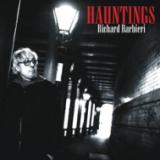
Richard Barbieri - Hauntings (2x12")

Richard Barbieri

Hauntings (2x12")

2x12inchKSCOPE1309
KSCOPE
10.04.2026
  • Snakes & Ladders ( 05:33 )
  • Anemoia ( 05:09 )
  • Victorian Wraith ( 03:02 )
  • 1890: ( 03:58 )
  • Artificial Obsession ( 05:07 )
  • Paris Sketch ( 05:47 )
  • Perfect Toys ( 03:48 )
  • Traveler ( 05:41 )
  • Reveille ( 01:54 )
  • Last Post ( 02:23 )
  • A New Simulation ( 04:38 )

JAPAN & PORCUPINE TREE SYNTHESIST RICHARD BARBIERI RETURNS WITH NEW STUDIO ALBUM 'HAUNTINGS' GATEFOLD 2LP EDITION, PRESSED ON CLASSIC BLACK VINYL. Richard Barbieri remains one of contemporary music's most distinctive voices. Emerging as a key architect of the late '70s/'80s synthesiser revolution with David Sylvian's art-rock ensemble Japan, his visionary synthesiser programming expanded the horizons of electronic music & left a lasting mark on artists from The Human League & Duran Duran to Gary Numan & Talk Talk. His subsequent & ongoing tenure with Steven Wilson's legendary progressive outfit Porcupine Tree across albums such as 'In Absentia' (2002), 'Fear Of A Blank Planet' (2007) &, most recently, 'Closure/Continuation' (2022) further affirmed his status as one of the most intuitive & unique musicians of his generation.

'Hauntings' is Barbieri's first studio album since 2021's 'Under A Spell', deepening the pensive, dark instrumental aesthetic of its predecessor. A diverse collection of immersive sound worlds, both dark & uplifting in equal measure, 'Hauntings' is influenced by a nostalgia for the past & future, & for things that didn't happen yet still manage to haunt the mind & soul. What is real & what is simulation? The album finds Barbieri at the height of his powers, his deft keyboard & sonic architecture conjuring a shadowy, creeping Lovecraftian atmosphere. The music wanders through the streets of a gloomy lamp-lit Victorian London & drifts into grain-speckled snapshots of Belle Époque Paris. These journeys into the past are contrasted with nihilistic but euphoric forays into the future, "Traveler" & "A New Simulation" bristling with the itchy modern anxiety that often runs through his best work. Contrasting the sound designs & electronics of Barbieri, the album features performances from renowned musicians Morgan Agren (drums & percussion), Percy Jones (bass guitar) & Luca Calabrese (trumpet). This 2LP 45 RPM edition of 'Hauntings' is presented in gatefold packaging & pressed on classic black vinyl.

Сделать предзаказ10.04.2026

он должен быть опубликован на 10.04.2026

38,45
YAMASUKI - LE MONDE FABULEUX DES YAMASUKI

In the spring of 1971, somewhere between Brussels, Paris and a collective pop fever dream, Le Monde Fabuleux Des Yamasuki landed on vinyl. It sounded like nothing else then and it still does not today. More than half a century later, Sdban Records proudly presents a reissue of this singular cult album, available from April 3, 2026 on vinyl.

The album was produced by Jean Kluger and written both by Jean and Daniel Vangarde (aka Bangalter, later the father of Thomas Bangalter of Daft Punk), who were alreadywell ahead of their time, long before electronic music rewrote the rules of pop culture.

Released under the name Yamasuki, also referred to as The Yamasuki Singers, or The Yamasuki's, the project was never intended as a conventional band. It was a studio-born fantasy, a concept album disguised as a pop record. What began as a standalone single quickly expanded into a full-blown pan-cultural pop opera that ignored genres and common sense with joyful abandon.

Musically, the album sits at a delirious crossroads. Psychedelic pop collides with funk rhythms, samba and bubblegum melodies, full of chants and choruses in a phonetic pseudo-Japanese, written with the help of a dictionary. Kluger and Vangarde famously recruited a children's choir to perform the vocals, and for added spectacle, they brought in a Japanese judo grandmaster, whose ritualistic shouts and battle cries erupt throughout the record.

Several singles were released. One of them, Yamasuki, with accompanying dance move, appeared in the United Kingdom and France on John Peel's Dandelion label, a fitting home for a record that thrived on the margins of pop culture. Its B-side, Aieaoa, proved even more potent. In 1975, the song was reborn as A.I.E. (A Mwana) by Black Blood, an African group recording in Belgium, this time sung in Swahili. That melody would travel even further. Aie a Mwana became the debut single of English pop group Bananarama, and in 2010 it resurfaced once more as Helele, an official song of the FIFA World Cup, recorded by South African singer Velile Mchunu with Danish percussion duo Safri Duo. That version became the most widely known incarnation of the song. With Jean Kluger directly involved, it was less a cover than a continuation of the original idea.

The album's afterlife did not stop there. Over the years, Yamasuki has been quietly sampled, covered, and featured across media far beyond the realm of novelty pop. Kono Samourai was sampled in The Healer by Erykah Badu (2007), produced by Madlib, while Yama Yama has found its way into recent pop culture as well: appearing in the television series Fargo, on Angus Stone's project Dope Lemon, and on the 2008 Late Night Tales compilation curated by Arctic Monkeys drummer Matt Helders. Proof, if any were needed, that this strange little record carries a deeper musical DNA than its playful exterior might suggest.

This new reissue of Le Monde Fabuleux Des Yamasuki proves the renewed interest and respect for this cult album, faithful to the original spirit while finally giving it back the physical presence it deserves. In an era obsessed with genres and algorithmic neatness, Yamasuki still laughs, dances and karate-kicks its way past definitions. It reminds us that pop music can be playful without being disposable, strange without being cynical and joyfulwithout explanation. The world of Yamasuki was always fabulous, we are just lucky it found its way back to us!

нет на складе

Закажите сейчас, и мы закажем товар для вас у нашего поставщика.

23,95

Последний логин: 30 дн. назад
DJ Tennis - fabric presents DJ Tennis + Redrago (2x12" + 10")

Manfredi Romano, founder and A&R of Life and Death Records, has been a pivotal figure in electronic music for over two decades. This year marks an important milestone as he is invited to curate the upcoming fabric presents mix for fabric Records, a release that highlights his instinctive storytelling and the distinct musical identity he has cultivated throughout his career.

Manfredi’s journey began in Italy around the turn of the millennium, tour-managing punk bands and organizing left-field music events before completing his studies in computer science at the University of Pisa. He went on to form DAZE, Italy’s first booking agency dedicated exclusively to electronic music, laying the groundwork for what would become a globally influential presence in the scene.
In 2010, he shifted focus to his own artistic project, DJ Tennis, which quickly gained international recognition for its emotive blend of house, techno, and disco. Renowned for creating intimate atmospheres in even the largest spaces, DJ Tennis has performed at leading clubs such as Circoloco Ibiza, Fabric London, and Panorama Bar Berlin, and at major festivals including Sonar, Timewarp, Primavera Sound, and Coachella. His 2022 residency at Phonox in London further showcased his ability to shape dancefloors with nuance and depth. Since 2017, he has also co-founded and curated Rakastella, the celebrated Art Basel Miami festival created in partnership with Life and Death and Innervisions.

As a producer, DJ Tennis draws from early relationships with post-rock pioneers such as Godspeed You! Black Emperor, Tortoise, and Fugazi, channelling their influence into intricately layered electronic compositions. His work has appeared on respected labels including Kompakt, Rhythm Assault, Running Back, !K7, Cercle Records, Aus Music, and Circoloco Records, alongside frequent releases on Life and Death. His remix portfolio includes collaborations with Diplo, Boys Noize, Loco Dice, WhoMadeWho, and Acid Pauli, among many others. He has also previously contributed a DJ-Kicks mix, bringing his eclectic sensibilities to one of electronic music’s most beloved series.

After extended periods living in Miami, Berlin, and Barcelona, DJ Tennis now resides in Paris. Outside the studio and club environment, Manfredi is a passionate chef who has curated menus for charity events and collaborated with Beatport at ADE, Pioneer, and Resident Advisor. He is also an avid collector of bicycles, vintage action figures, and vinyl — his record collection now surpasses eleven thousand pieces.

With the forthcoming fabric presents DJ Tennis release, he offers a deeply personal, narrative-driven statement that reflects decades of crate-digging, boundary-pushing selections, and a lifelong devotion to sound. It marks a new chapter in his artistic evolution and stands as one of the year’s most anticipated entries in the iconic series.
The first single from DJ Tennis is a collaboration with long-time studio partner Ashee, and it immediately sets the tone for the mix: warm, seductive, rhythm-driven, and emotionally charged.

“I Wanna Know” is a sleek club track built around a pulsing groove and a steady, hypnotic rhythm. The low end is rounded and warm, giving the track a driving but understated momentum. Percussion is crisp and minimal, allowing the bassline and vocal elements to take center stage. The repeating, robotic earworm of a vocal hook, “I wanna know’ is the lynchpin to the track and will remain in your head long after the track has finished.

It’s the kind of record that warms up a room early in the night, sets the tone for a sunset beach set, or adds a lush, emotional peak during a more leftfield club moment.

нет на складе

Закажите сейчас, и мы закажем товар для вас у нашего поставщика.

26,01

Последний логин: 11 дн. назад
Продуктов на странице:
N/ABPM
Vinyl