Fan Club Orchestra (FCO) has its roots in collaborative performances and recordings that began taking place in the late nineties in Brussels. These continued into the second decade of the new millennium around Belgium and neighbouring countries. At a time when large contemporary arts spaces were less professionalised, less obedient to
funding and attendance numbers, and Still tuned to their founding DIY impulses, FCO were able to nurture their nebulous cast of players with their unconventional ensemble of instruments to their own ends. The apparent informality of their performances, mixed with the sheer spectacle of their unfolding, transplanted the experimentalism of New York's downtown scene of the 1960s into the cracked consumer electronics period of new media art at the turn of the century. A newly regrouped FCO now present their album 'VL_Stay' on 12th Isle. This literation of FCO sees Baudoux joined by Ann Appermans on guitar and bass, and Zéphyr Zijlstra on trumpet. Appermans is an original FCO member as well as a frequent collaborator with Baudoux. Zijlstra is a jazz student at the Royal Conservatoire of Brussels. Recorded in just two weeks, the trio invoke the pedigree with which FCO first toyed, while sketching a continuity with new references.
quête:park place
Born and raised in the Swedish province Dalarna, Stockholm resident Jo Bubbles (aka Jonas Dahlström) has previously released music on Parkway Records and put out several selfreleased titles, most recently on the cassette venture Makemake tapes.
On his first outing on Västkransen Records, Jonas opens his toolbox of subtle grooves and tweaking melodies. A journey into electro, dub and italo-infused house, “Hidden Place EP” features three original club cuts and a mind-bending DnB remix from Stockholm’s hardware veteran Parallax Deep. As one of the tougher releases in Västkransen’s catalogue to date, this record doesn’t just offer solid dancefloor material, but a genuine musical treat.
- A1: Saylo
- A2: Can't Take The Hood To Heaven
- A3: Attack Of The Dreadlocks (Feat Rae Khalil)
- A4: Lynn's Lullaby (Interlude)
- A5: Brownskin Cinnamon
- A6: Grey Seas (Feat Reaper Mook)
- A7: Cowboy Leather (Feat Pink Siifu)
- A8: Overseas Sam
- B1: Bullets From A Butterfly
- B2: Pearly Gates Playlist
- B3: Things Grandma Told Me
- B4: Bygones
- B5: Lagonda (Feat Goya Gumbani)
- B6: The Card Players (Feat Jayellz)
- B7: When I Met Rose
Cassette[10,88 €]
Forest Green Vinyl
Seafood Sam is a futuristic artifact. If that description might sound confusing at first, it matches the eclectic dualities found in true originals. With his effortless cool and timeless style, the North Long Beach native defies convention and exact comparison. He's a virtuosic rapper, a stop-you-in-your tracks singer, and a symphonic producer. Welcome to the lavish life of a laid-back transcontinental man of mystery, rolling in old school Cadillacs, eating caviar with a blade in his pocket, and making plays in vintage Pelle Pelle gear. A blaxploitation icon for the Instagram age, blessed with the bars of a `90s legend and 23rd century swagger. Seafood Sam is a true hero of modernity. On his full-length album debut for up-and-coming label drink sum wtr (Kari Faux, Deem Spencer, Aja Monet) debut, Standing on Giant Shoulders, Sam splits the difference between Snoop Dogg and D' Angelo, Curren$y and David Ruffin. The songs reveal a forward-thinking sensibility rooted in ancestral soul. He creates spiritual hymns for the streets that tap into universal ideals and irrepressible groove. In an era plagued by short-term thinking, his ambitions reveal a crate-digging depth of music history and a meticulous ear for detail. The giant shoulders in the album's title refer to James Brown, Bobby Brown, and Miles Davis - the holy trinity who inspired Sam's process. From the Godfather of Soul, Sam took a perfectionist's rigor and focus. The example of Bobby Brown lent an unshakeable confidence and self-belief. While the constant artistic left turns of the trumpeter that birthed Ccool offered an aspirational archetype. The story starts in the glory days of Long Beach hip-hop. As a young child, the G-Funk era soundtracked rides in Sam's father's car. Some of his earliest memories are trying to memorize Snoop's verse on "Nuthin' But a "G" Thang." Beyond gangsta rap, the LBC has historically doubled as a capital of lowrider soul and carwash oldies. At any intersection, you could hear Dogg Food or Brenton Wood, Warren G or Barbara Lynn. This too was absorbed via osmosis. It also just so happened that the art of performance was always in Sam's blood. So at family functions, he and his sister supplied entertainment by singing karaoke renditions of The Isley Brothers. While his Harlem Shake remains a thing of local lore. Long Beach is a culturally diverse mecca of skate parks and gang life, street fashion and tricky dance moves. This is the place that raised Sam on a diet of Wu-Tang and Nelly Furtado, Lil Bow Wow and Allen Iverson. He was the middle ground between his two older brothers: one who gangbanged, the other who graduated with a master's degree from UC-Santa Barbara. But it wasn't until the end of high school that Sam started to take rap seriously. Alongside long-time collaborators like Huey Briss and Reaper Mook, Sam's name began to make waves on the northside of the city, but he was partially distracted by a modeling career that paid the bills and took him all to way to walk in Paris' fashion week. The first turning point arrived with 2018's "Ramsey," a self-produced, slick-talk anthem with over 10,000,000 streams across all platforms. With each subsequent release, Sam showcased his peerless consistency, building buzz both online and in the city streets. Spin hailed his "smooth and unhurried cadences and understated lyricism_ that sounds like nothing else in Long Beach." Clash raved about Sam's "evolution as an artist, cruising through nostalgic production with slick, witty rhymes." The culmination arrives with Standing on Giant Shoulders. It's the evidence of a master, a young sensei in the model of Quincy Jones. All rhymes, singing, production, and arrangements were handled by Sam - with an assist from his close Long Beach kinsman Tom Kendall from the group Soular System. It's hard-edged and lyrical enough for disciples of Larry June and Roc Marciano, but orchestral and melodic enough for fans of Anderson .Paak and H.E.R.
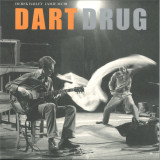
Percussionist Jamie Muir was a member of King Crimson during the recording of Larks' Tongues In Aspic, in 1973. Staying less than a year with Robert Fripp, the Scot had already cut his teeth with another master guitarist, Derek Bailey, as part of the Music Improvisation Company, along with Evan Parker, Hugh Davies and Christine Jeffrey, whose eponymous 1970 album was one of the first releases on ECM. Muir and Bailey recorded Dart Drug eleven years later, in 1981.There's no shortage of great percussionists in the brief history of free improvised music but on the strength of Dart Drug alone Jamie Muir deserves a place at High Table. Unlike for example Han Bennink and John Stevens, though, you can't hear echoes of any particular jazz drummer in Muir's playing, even if he has expressed appreciation for Milford Graves (who himself sounded like nobody else who'd come before him).What on earth did Muir's kit consist of Some instruments are clearly identifiable (bells, gongs, chimes, woodblocks); others could be... well, anything. Old suitcases thwacked with rolled up newspapers Tin cans and hubcaps inside a washing machine Who cares It sounds terrific - but if you're the kind of person who faints at the sound of nails scraping a blackboard, you might want to nip out and put the kettle on towards the end of the title track.Dart Drug is consistently thrilling, and often very amusing - but it's certainly not easy listening. In music we talk about playing with other musicians, whereas in sport you play against another opponent (or with your team against another team). Why not play against in music, too That's precisely what happens very often in improvised music, and Bailey was particularly good at it. How can a humble acoustic guitar hope to compete with a Muir in full flight Sometimes Bailey's content to sit on those open strings, teasing out yet another exquisite Webernian constellation of ringing harmonics and wait for the dust to settle in Muir's junkyard, but elsewhere he sets off into uncharted territory himself.'The way to discover the undiscovered in performing terms is to immediately reject all situations as you identify them (the cloud of unknowing) - which is to give music a future.' Bailey evidently concurred with this spoken statement by Muir, including it in his book Improvisation.Derek Bailey is no longer with us, of course, and Muir gave up performing music back in 1989. All the more reason for seeking out this magnificent, wild album.
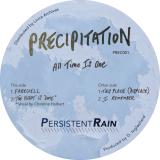
Following his ‘You Are the Music’ EP for Euphoric State, and the reissue of the underground classic ‘Voices’ by Jewellery, David Inglesfield returns with a second EP by PersistentRain – and the first release on his own label, Precipitation.
‘All Time Is One’ is a meditation on the passing – yet continuity – of time, whether across multiple decades, or just in the transition from one day to another.
Opening track ‘Farewell’ brings disparate voices and sounds from the past back to life in an intense, transcendent journey, all driven by a pulsating bassline.
‘The Night Is Done’ features a solid beat and lush array of synths, with the vocal by Bristolian Christine Hulbert the icing on the cake.
On ‘This Place (Displace)’, Inglesfield, a Londoner from birth, but recently moved to South Wales, turns to consider a corner of his beloved native city, where a once-legendary musical theatre was swept away, to become a makeshift car park in the 1960s, then the site of a brutalist block in the 1970s, now torn down yet again. ‘The first place we’re going to stop at … seems to be NOWHERE!’
‘I Remember’ closes the EP, with fragments of Fender Rhodes and strings fluttering like memories over a moody, minimal sub-bass and insistent kick.
First time reissue of JP free jazz rarity, pre-Seikatsu Kōjyō Iinkai group.
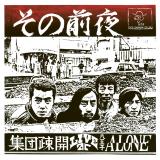
The single album self-released by the quartet Shūdan Sokai in 1977 is one of the most vital documents of mid-seventies Japanese free jazz, documenting Tokyo’s free scene at the precise moment when it began to shift to a handful of tiny venues on the western fringes of the city. In Free Jazz in Japan, Teruto Soejima identifies the extant venue Aketa no Mise in Nishi-Ogikubo as the pioneer of this decamping from the centre: a cramped basement beneath a rice shop, seating just 20 people. Musician-run, operated on a shoestring, these spaces offered a vital site for community, creativity, and a small measure of financial independence — “even though it was in a basement, in spirit it was a loft.”
Among the most active of the new venues was Alone in Hachiōji, nearly an hour from Shinjuku, in a district shaped by universities, lower rents, and a thriving counterculture. Originally opened in 1973 as a jazu kissa, Alone was unusually spacious and equipped with a stage, grand piano, and drum kit. Around 1974, Junji Mori and Yasuhiro Sakakibara began working there, booking free jazz players on weekends and establishing the venue as a crucial hub. Mori recalls early appearances by figures including Kazutoki Umezu, Toshinori Kondo, and others who would define the scene.
In early 1976, Umezu and pianist Yoriyuki Harada — recently returned from New York’s loft jazz environment, where they had played with musicians such as David Murray and William Parker — formed Shūdan Sokai with Mori and drummer Takashi Kikuchi. The name, meaning “mass evacuation,” pointed to their self-chosen exile in Hachiōji. With Alone as their home base, the quartet developed a music characterized by an infectious sense of enjoyment and a willingness to integrate free jazz with elements of song structure. Harada switched between piano and bass; the group experimented with rap-like vocal pieces, jabbering nursery rhymes over bass rhythms.
They returned to Alone on December 24 to record Sono zen’ya (Eve), releasing it on their own Des Chonboo Records, partially funded by advertisements from local businesses printed on the rear cover. The closing “Ballad for Seshiru,” dedicated to Harada’s newborn son, unfolds over a delicate piano melody that moves into emphatic chords as intertwining alto lines rise and spiral.
Alone closed in September 1977, and Shūdan Sokai soon dissolved, later morphing into the expanded Seikatsu Kōjyō Iinkai Orchestra. What remains is a recording rooted in a specific place and moment: a fiercely independent scene sustained by small rooms, close listening, and collective commitment.
- 1: Oneness
- 2: Judee Girl
- 3: National Stardom
- 4: Flight Of The Dancer
- 5: Time After Time
- 6: Blue Rose
- 710: 000 Greyhounds
- 8: A Heartbeat Away
- 9: Yellow Beach Umbrella
- 10: Here Today
- 11: Smile All The While
Just east of Hollywood, Tommy Peltier"s made sweet music in the Echo Park hills for over sixty years. A jazzman first, he recast himself in 1970 as an LA troubadour, crafting a set of glitter-light pop tunes that somehow missed release "til now. Recorded "70-"76 all over town & mixed and mastered by Jim O"Rourke, Echo Park is an encompassing trip through a whole other time and place. Echo Park captures the smooth sounds, glamour "n free spirits to be found just down the street from Tinseltown in its golden day. Tommy has continued to play music, releasing new stuff with Plastic Theatre Art Band in 1996, and a number of releases under his own name, most recently in 2011. And at the ripe young age of 90(!), he"s still playing today!
Pioen is the second album by Elisabeth Klinck & Nils Vermeulen, released on blickwinkel. It was recorded in a small chapel of a monastery in the city center of Ghent. A chapel by nature is a place of contemplation and meditation, which automatically had influence on the music. Movements slow down, attention is sharpened and the overwhelming silence of the space becomes part of the music. Sound and silence are meticulously woven into each other. Even when the music grows at times dense and heavy, there is an ever-present sense of closeness and intimacy. This is reinforced by the use of the voice, which naturally appears throughout the album, not as a separate layer but as an extension of the instruments.
The pieces – this time more curated than on their previous album Pair, Paire – arose from hours-long improvisations where sound became space and space became sound. Bringing together violin, double bass and voice, Pioen unfolds as a serene and honest journey, inviting the listener into a state of contemplation.
Elisabeth Klinck is a contemporary violinist, composer and performer based in Brussels, known or her timeless, deep-listening sound worlds. Her album Picture a Frame (2023) and Chronotopia - selected by The Quietus as one of the best albums of 2025 - were released on the Swiss label Hallow Ground. A big part of her work revolves around tactility, fragility, and a very physical approaches to sound.
Nils Vermeulen is a Belgian double bass player active in all varieties of adventurous music. He has played with Paul Lytton, Martin Küchen, Seppe Gebruers, William Parker, John Dikeman, Luis Vicente, among others. He works across many scenes, from free improv to jazz to contemporary classical music, and in many distinct constellations, such as his own groups Kabas and Jukwaa, a Norwegian free jazz trio with Tollef Østvang and Heidi Kvelvane, a string duo with Elisabeth Klinck, and as the double bassplayer of Nemo ensemble. In 2023, he released his debut solo album on Aspen Edities.
- A1: Victory Lap
- A2: Someone Else (Feat. Elyesse Mason)
- A3: Think Of Me (Feat. Fractures)
- A4: Strangers (Feat. Raphaella)
- A5: Hoodie
- A6: Hear You Speak (Feat. Tamzene)
- A7: Interlude - Running Out Of Time
- B1: Wait For You (Feat. Sapphire)
- B2: I’ll Be There
- B3: Going Home
- B4: In Your Dreams
- B5: Safe Place (Feat. Raphaella)
- B6: Still Standing (Feat. Jordan Mackampa)
- B7: Touch The Moon
- B8: Interlude - 3 Lives
Bottle Green Vinyl[34,41 €]
Der Spoken-Word-Künstler Dan Whitlam, eine der überzeugendsten neuen Stimmen aus GB, balanciert auf der 14-Track-Odysee "Strangers (Again)", seinem Debütalbum, gefühlvolle, klavierbetonte Momente und gebrochene Beats mit seiner charakteristischen Mischung aus lyrischer Ehrlichkeit und melodischem Feingefühl. So entsteht ein intimer wie auch weitläufiger Sound. Mit Gastfeatures von Raphaella, Tamzene, Saphire & Jordan Akampa fängt die LP die Dualität seiner Arbeit ein, wenn poetisches Geschichtenerzählen mit zukunftsweisender Produktion kontrastiert. Jeder Track reflektiert Verbindung und Distanz und verwebt Momente emotionaler Tiefe und Entspannung. Im Okt./Nov. 2025 startet(e) Whitlam seine bisher größte Headliner-Tour, mit ausverkauften Konzerten in Köln & Berlin, die ein intensives Erlebnis verspricht, wenn Grenzen zwischen Poesie, Soul und zeitgenössischer Musik verschwimmen. Der Londoner feiert Millionen TikTok- & Instagram-Aufrufe und wird von Künstlern wie Fred Again & Arlo Parks sowie Modemarken wie Hermes & YSL unterstützt.
[o] B8. Interlude - 3 Lives [vinyl exclusive]
- A1: Victory Lap
- A2: Someone Else (Feat. Elyesse Mason)
- A3: Think Of Me (Feat. Fractures)
- A4: Strangers (Feat. Raphaella)
- A5: Hoodie
- A6: Hear You Speak (Feat. Tamzene)
- A7: Interlude - Running Out Of Time
- B1: Wait For You (Feat. Sapphire)
- B2: I’ll Be There
- B3: Going Home
- B4: In Your Dreams
- B5: Safe Place (Feat. Raphaella)
- B6: Still Standing (Feat. Jordan Mackampa)
- B7: Touch The Moon
- B8: Interlude - 3 Lives
Black Vinyl[32,14 €]
Der Spoken-Word-Künstler Dan Whitlam, eine der überzeugendsten neuen Stimmen aus GB, balanciert auf der 14-Track-Odysee "Strangers (Again)", seinem Debütalbum, gefühlvolle, klavierbetonte Momente und gebrochene Beats mit seiner charakteristischen Mischung aus lyrischer Ehrlichkeit und melodischem Feingefühl. So entsteht ein intimer wie auch weitläufiger Sound. Mit Gastfeatures von Raphaella, Tamzene, Saphire & Jordan Akampa fängt die LP die Dualität seiner Arbeit ein, wenn poetisches Geschichtenerzählen mit zukunftsweisender Produktion kontrastiert. Jeder Track reflektiert Verbindung und Distanz und verwebt Momente emotionaler Tiefe und Entspannung. Im Okt./Nov. 2025 startet(e) Whitlam seine bisher größte Headliner-Tour, mit ausverkauften Konzerten in Köln & Berlin, die ein intensives Erlebnis verspricht, wenn Grenzen zwischen Poesie, Soul und zeitgenössischer Musik verschwimmen. Der Londoner feiert Millionen TikTok- & Instagram-Aufrufe und wird von Künstlern wie Fred Again & Arlo Parks sowie Modemarken wie Hermes & YSL unterstützt.
o B8. Interlude - 3 Lives [vinyl exclusive]
[o] B8. Interlude - 3 Lives [vinyl exclusive]
ULURU is a large sandstone rock formation in Australia. It's sacred to the Anangu, the local Indigenous of the area. For many years it had been deprived of its spiritual significance, due to mass tourism, capitalism, as well as greedy and selfishness of people who just want to make money out of it. However, as a result of the Anangu’s resilience, care and staunchness, huge changes took place in the national park around Uluru as well as in the broader public's consciousness, giving again to the Uluru the sacred identity that had been lost.
You might be reading and thinking now: so what's the point? Actually, there's no real point. I would rather say, there’s hope. The hope of seeing humans all around the world following the example of the Anangu. The hope of seeing humans finally stopping to treat the earth and all what’s part of it, what’s on and what’s in it, as a slave without soul. The hope of changing today, and if not today at latest by tomorrow. This system is failing. It's no longer sustainable, and there's no much time left.
So everybody, don't sleep, be critical.
ULURU is a large sandstone rock formation in Australia. It's sacred to the Anangu, the local Indigenous of the area. For many years it had been deprived of its spiritual significance, due to mass tourism, capitalism, as well as greedy and selfishness of people who just want to make money out of it. However, as a result of the Anangu’s resilience, care and staunchness, huge changes took place in the national park around Uluru as well as in the broader public's consciousness, giving again to the Uluru the sacred identity that had been lost.
You might be reading and thinking now: so what's the point? Actually, there's no real point. I would rather say, there’s hope. The hope of seeing humans all around the world following the example of the Anangu. The hope of seeing humans finally stopping to treat the earth and all what’s part of it, what’s on and what’s in it, as a slave without soul. The hope of changing today, and if not today at latest by tomorrow. This system is failing. It's no longer sustainable, and there's no much time left.
So everybody, don't sleep, be critical.
- 1: Loyal Girl
- 2: Outnumbered
- 3: Going To Waste
- 4: Never Be Annoyed Again
- 5: Michael
- 6: Great School Trip
- 7: Garden Trouble
"Melodic, dreamy bedroom pop with a nostalgic sheen" is how Tom Davies, creator of brand new dream-pop artist Flopsy's dream, describes this charming little album.
Some of you may know him as GeoWizard; the mad British adventurer/YouTuber who travels in straight lines, but here you get to see or indeed hear a completely different side to him - one that sings in soft, tuneful tones reminiscent of Damon Albarn or Ray Davies, builds ethereal, layered harmonies that wouldn't sound out of place on a Fleet Foxes track, and crafts gorgeous guitar and synth parts that could easily have come straight out of John Frusciante or Kevin Parker's handbook.
Written in a young Davies's bedroom between the years of 2008 and 2014, the songs themselves are far from brand new, but with the help of his good friend and writing partner Liam Rhodes (with whom he played in Birmingham Psychedelic outfit "Kinds of light"), Davies has brought these sentimental tracks to life whilst keeping them bang in line with their original vision.
The result is an album that doesn't really fit into any specific genre, in fact you could argue it's just regular old generic pop, but there's an innocence and a playfulness in there that disarms the listener and transports them to a simpler time when melody ruled supreme.
- In Monterey
- I Do
- Morning Paper
- So, Surprise
- Main Man
- Lady Of Renown
- Mighty & Concealed
- Uncle Denny
- All The Way To Georgia
- A Good Place To Fall
- To Be Continued
The rubber of ER Jurken"s pure pop fantasias meets the road on his second album, aided and inspired by a power trio of players from Chicago"s Junegrass to crank it up and out of the park. Paul Von Mertens" string and horn arrangements highlight the gritted teeth and dripping sweat that belie Ed & Co"s easy riding rock, while Jurken"s heavenly vocal choir provides balm to transcend and defy the stings of everyday misfortune.
ULURU is a large sandstone rock formation in Australia. It's sacred to the Anangu, the local Indigenous of the area. For many years it had been deprived of its spiritual significance, due to mass tourism, capitalism, as well as greedy and selfishness of people who just want to make money out of it. However, as a result of the Anangu’s resilience, care and staunchness, huge changes took place in the national park around Uluru as well as in the broader public's consciousness, giving again to the Uluru the sacred identity that had been lost.
You might be reading and thinking now: so what's the point? Actually, there's no real point. I would rather say, there’s hope. The hope of seeing humans all around the world following the example of the Anangu. The hope of seeing humans finally stopping to treat the earth and all what’s part of it, what’s on and what’s in it, as a slave without soul. The hope of changing today, and if not today at latest by tomorrow. This system is failing. It's no longer sustainable, and there's no much time left.
So everybody, don't sleep, be critical.
- Begging Dog
- Cave In On Me
- Money Tree
- The Eel
- Laughing Boy
- Clamshell Tune
- Continuing Education
- Tell Me That You Love Me
- Common Place
- Here For A Good Time
RED VINYL[22,27 €]
Begging Dog ist das Indie-Punk-Projekt des in Los Angeles ansässigen Künstlers Jeff Kleinman. Als Ventil für seine Arbeit außerhalb der Band Choir Boy widmet sich Kleinman bei Begging Dog einem rohen, hausgemachten Sound mit Anklängen an Garage Punk und einer einfachen Sprache in den Texten. DEMO 1 ist 26 Minuten lang und voller rollender Bass- und Synthesizer-Linien, charismatischer Riffs und motorischer Drum-Beats. Textlich zeichnen die Songs eine Reihe von Beobachtungen, Szenen und Charakteren aus dem Leben: einen aufdringlichen Gewerkschaftsvertreter, einen Postboten mit einem festen Job bei der Bundesbehörde, einen zwanghaften Spieler und einen geliebten Obdachlosen aus der Nachbarschaft. Ehemalige Liebschaften werden zu einer Collage zusammengefügt, die mehrere Tracks begleitet, aus dem Zusammenhang gerissen, mit unverblümten, scharfsinnigen freien Versen. Kleinman nennt Bruce Springsteen als Inspiration dafür, wie seine Songs mit schlichter Tinte geschrieben sind, wobei er direkte Einfachheit gegenüber blumiger Prosa bevorzugt. Er greift eine gemeinsame Einsamkeit auf, die sowohl universell als auch vielleicht besonders einzigartig für das Leben in Los Angeles ist, mit schnörkellosen Nuancen und Verletzlichkeit. Im Titelsong singt Kleinman: ,Niemand liebt einen bettelnden Hund", eine Zeile, die er von einem Freund übernommen hat und die die Sichtweise des Projekts verkörpert: Die Welt kann einem das Gefühl geben, ein bettelnder Hund auf der Suche nach einem Zuhause zu sein. Auf dem Titelsong singt Kleinman ,no one loves a begging dog" (niemand liebt einen bettelnden Hund) in einer Zeile ,die er von einem Freund übernommen hat und die die Sichtweise des Projekts verkörpert: Die Welt kann einem das Gefühl geben, ein bettelnder Hund auf der Suche nach Zuneigung und Sicherheit zu sein, aber es liegt auch Schönheit in der Einsamkeit und der summenden Monotonie des Ganzen. Der synthlastige Titel ,Laughing Boy" reflektiert über den Sinn des Lebens, kritisiert hohe Mieten und erwähnt gleichzeitig den Duft von Jasminbäumen sowie die störende Präsenz der Polizei. In ,Common Place", umgeben von drängenden Drum-Machine-Kicks und Verzerrungen, singt er davon, wie er sich in einem 7-Eleven-Laden in der Innenstadt wirklich lebendig fühlt, um dann zwischen einer Tragödie, die er in einem Park miterlebt hat, und schönen Erinnerungen an das Leben in einer Wohngemeinschaft in Salt Lake City hin und her zu springen, bevor er sein neues Mantra verkündet: ,Es ist vorbei." Die Kontraste hier sind es, die diese Songs menschlich machen. Kleinman nahm DEMO 1 schnell und mit wenig mehr als sich selbst auf. Live übersetzt sich das dynamische Material von Begging Dog in eine siebenköpfige Band. Kleinman nahm DEMO 1 schnell und fast alleine auf. Live wird das dynamische Material von Begging Dog von einer siebenköpfigen Band umgesetzt. ,Egal, wie gut oder schlecht es einem geht, man sucht irgendwie nach etwas mehr", sagt Kleinman, ohne zu versuchen, eine größere Bedeutung in seiner Arbeit zu finden. ,Wenn ich über diese Dinge schreibe, versuche ich nicht, sie wichtiger zu machen, als sie sind." DEMO 1 profitiert von dieser geradlinigen, alltäglichen Bescheidenheit, die Offenheit mit Entschlossenheit und eingängigen Melodien verbindet.
Hikmah is an astonishing solo piano work from virtuosic and far-ranging
sound scientist; deep and compassionate thinker and musical treasure: Pat
Thomas
Pat Thomas was Born in Oxford, UK to Antiguan parents on July 27, 1960.
Interestingly, just over 4 months separate his birth to that of fellow modern piano
master Matthew Shipp (Dec 7, 1960) - whose The Piano Equation was TAO Forms
inaugural release. Thomas is most certainly among the Black Mystery School Pianists
of which Shipp elucidates in the title essay of his recently published first book.
Eight thoroughly focused improvised and otherwise compositions recorded at Fish
Factory studio in London. The album's title, Hikmah, means "wisdom" in Arabic. The
title is also presented in two different forms of Arabic calligraphic script on the cover
artwork. This album brings the information. The vibrantly living jazz tradition and new
modes of expression in abundance are brought forth from a lifetime of work and a
decades long devotion to Sufism, understanding that the practice and performance of
this music is an elemental form of spiritual practice. As William Parker writes in the
liner notes, "the music becomes the prophet and the prayer all in one gesture." And,
"If you haven't yet heard the music of Pat Thomas, get hip to it quickly."
Attuned American audiences are most likely to have become familiar with Pat
Thomas through his work with the quartet [Ahmed] , whom over recent years have
amazed with their mesmeric, long-form explorations on the compositions of Ahmed
Abdul-Malik, and more recently, Thelonious Monk. Their debut US performance took
place in March 2025, and TAO Forms were lucky members of the rapt audience at
Roulette in Brooklyn that night; the group flew to Knoxville the next day to perform to
an equally rapt audience at Big Ears.
Available on 6- panel digipak CD printed on heavyweight board, with liner notes by
William Parker and LP with insert featuring liner notes by William Parker & Pat
Thomas Discography + download card. Ltd edition of 500.
Pruillip is a new Belgian band founded by Louis Evrard (Bert Dockx Band, Grid Ravage, Ottla) and Annelies Van Dinter (Echo Beatty, Takh & Naga Ghost). The duo started about 2 years ago after a request to play at De Nor, the open air sculpture park and venue of Dennis Tyfus. For this occasion Annelies and Louis decided to do a position switch and play each other's instruments: Annelies beating the hell out of the drums and Louis ripping up the guitar.
Pruillip: the record
Visceral meditation: that's what the self titled debut album of Pruillip is all about. Eight songs channeling elemental emotions, kickin' deep into the internal organs of the body. Low end frequency swagger droning up from Louis Evrard's amp, ready to slip into 'Place All Your Cards', slow burning sludge nugget, bolstered by the steady drum kicks of Annelies Van Dinter, where every note and strike seems to carry the weight of the world. Navigating through life, seducing you with her gloomy voice. Entering a quest into the unknown, a place you don't want to leave. A feeling increased by the abrasive and brutal 'Boterham': a punk sludge anthem for the hungry and the wild at heart, countered with the reverb-shrouded murmur 'Distracted Enthusiasm'. The lonely 'Zonnedauw' sets the mark of an apparently more resigned B-side, stretching the Pruillip universe with primitive, but so addictive, riffs in 'Mirrors', echoing vibes of 90's desert sessions while 'Offload' and the lucid state of Ataraxia seems to drift on raw emotions and a sweaty claustrophobic tension, which would fit perfectly in Wim Wenders Paris Texas movie. A whirlwind of a record, straight to the bone, leaving you flabbergasted and wanting for more.
ULURU is a large sandstone rock formation in Australia. It's sacred to the Anangu, the local Indigenous of the area. For many years it had been deprived of its spiritual significance, due to mass tourism, capitalism, as well as greedy and selfishness of people who just want to make money out of it. However, as a result of the Anangu’s resilience, care and staunchness, huge changes took place in the national park around Uluru as well as in the broader public's consciousness, giving again to the Uluru the sacred identity that had been lost.
You might be reading and thinking now: so what's the point? Actually, there's no real point. I would rather say, there’s hope. The hope of seeing humans all around the world following the example of the Anangu. The hope of seeing humans finally stopping to treat the earth and all what’s part of it, what’s on and what’s in it, as a slave without soul. The hope of changing today, and if not today at latest by tomorrow. This system is failing. It's no longer sustainable, and there's no much time left. So everybody, don't sleep, be critical.