Their masterpiece? With breaks for dayyyyyys and an almost ambient, heavy jazz atmosphere throughout, *this* is the apex of British jazz-rock fusion. We'll Talk About It Later was first released on Vertigo in 1971 and original copies are now very tricky to score. Like all the Nucleus records, it’s aged ridiculously well and this Be With re-issue, re-mastered from the original analogue tapes, shows off just why this deserves to be back in press.
Genius trumpeter and visionary composer Ian Carr was one of the most respected British musicians of his era. He was a true pioneer and saw the potential in fusing the worlds of jazz with rock, just as Miles Davis and The Tony Williams Lifetime did in the US. In late 1969, following the demise of the Rendell-Carr quintet, and tiring of British jazz, Carr assembled the legendary Nucleus. Regarding music as a continuous process, Nucleus refused to “recognise rigid boundaries” and worked on delivering what they saw as a “total musical experience”. We can get behind that.
Under bandleader Carr, Nucleus existed as a fluid line-up of inventive, skilled musicians. This constant evolution and revolution was all part of the continuous musical exploration and discovery that took jazz to new levels. And the music has kept relevant. To steal a line from a review of our re-issue of Roots, when it comes to anything Nucleus “it’s basically already hip-hop”.
We'll Talk About It Later is arguably Nucleus's best album. Not only that, it's in the top 5 of all fusion albums. By the time Nucleus entered Trident Studios in September 1970 to record Elastic Rock's successor, they had already won a best group award at the Montreux Jazz Festival. Once again presented in a Roger Dean designed die-cut gatefold sleeve it continued to demonstrate the chemistry and interplay that worked so brilliantly on Elastic Rock; Carr's sumptuous trumpet and flügelhorn lines, Karl Jenkins's funk-filled electric keyboards, Chris Spedding's wah-wah guitar, Brian Smith's sax and the rhythmic foundation of drummer John Marshall and bassist Jeff Clyne.
The group work and insane musicianship Nucleus were famed for is in evidence from the off. The intensely funky "Song for the Bearded Lady" is absolute FIRE, blasting out the speakers to leave listeners floored. Counterpoint riffing segues into a spacious groove and a Carr trumpet solo demonstrating the influence of electric Miles from the period. The stop-start funk of "Sun Child" would appeal to Soft Machine devotees whilst the genuinely touching "Lullaby for a Lonely Child" is a lovely downtempo ballad. Featuring an understated, reflective horn line from Carr and Smith and atmospheric, shimmering bouzouki from Spedding, there's an exotic flavour which contributes to the bliss. The ominous, sleazy title track retains a swaggering menace and is not the only track to lend a sort of heavy stoner rock atmosphere. The guitars and bass are deep and low throughout, conjuring heavy psych moments to go with the actual jazz and even funk. To say this album was in conversation with Bitches Brew would not be overstating the sheer brain-frying brilliance.
The Weather Report-adjacent "Oasis" opens Side B, a colossal track featuring nearly 10 minutes of steadily building melodic horns, keys and choppy guitar riffs. So ace, it could easily go on for another 10. Mesmeric. Spedding adds unique vocals to the undeniable groove of "Ballad of Joe Pimp" whilst saxophonist Smith's duet with drummer Marshall at the conclusion of "Easter 1916" - inspired by the Yeats poem about the Irish nationalist uprising in Dublin - adopts the wildness of the most incendiary free jazz.
This Be With edition of We'll Talk About It Later has been re-mastered from the original Vertigo master tapes, Simon Francis’ mastering working together with Cicely Balston's cut at AIR Studios to weave their usual magic with these wonderful recordings. The stunning die-cut sleeve has been restored with the original gatefold window pane depicting the Irish uprising in 1916. Incredible, timeless, guaranteed spine-chills.
Buscar:part one
- A1: Waves On Every Chain
- A2: Wonderful Wayne/Jackie Boy (Feat Lil Druk)
- A3: Rap Politics
- A4: Nice Guy
- A5: Brand New Benz
- B1: Vonnie Skit
- B2: Vonnie Song
- B3: Spend It (Feat Blxst & Nija)
- B4: Bitch Wyd?
- B5: Crazy World
- C1: Massacre
- C2: Masterpiece
- C3: Wavy Gang Immortal (Feat Samuel Shabazz & King Hendricks)
- C4: Code + Love Me Some More
- D1: Spill My Cup
- D2: Corner Suite
- D3: Hallelujah (Feat Gmo Stax)
- D4: Famous
Back with his second full-length release of 2022 and follow-up to the wildly successful album, “FACE,” Babyface Ray gifts fans with “MOB,” an 18-track album featuring tightly selected appearances by Lil Durk, Blxst, Ninja, Doe Boy, Samuel Shabazz,King Hendrick$ & GMO Stax. 2022 was a banner year for Ray, with him being named to XXLs Freshmen class of 2022, as well as being elected to be part of the 2022 class for YouTube Music’s Black Voices Fund. He also embarked on his first sold out nationwide headlining tour, and appeared at several notable festivals, including Rolling Loud, Lyrical Lemonade's Summer Smash, Made In America, Wireless Fest, Broccoli City and others. After making a late night appearance on Jimmy Fallon, Ray announced his second headline tour slated for 2023, entitled “Courtesy of the MOB.” If one thing is clear, it’s that Babyface Ray is a force to stay for years to come.
Formed in Mamelodi township near Pretoria, the group started out as Malombo Jazz Men with Julian Bahula on malombo drums, Abbey Cindi on flute and Philip Tabane on guitar Fusing traditional and improvised rhythms with jazz, Malombo became renowned as one of the first South African bands to fully connect jazz with the African traditions. Despite his undoubted genius, Tabane became erratic on tour and Bahula brought in another Mamelodi-based talent, guitarist Lucas “Lucky” Ranku, renaming the band Malombo Jazz Makers. The group played stadiums and festivals and were soon signed to Gallo. Recording at a studio in Pretoria, the trio debuted with the album ‘Malompo Jazz’ in 1966, showcasing the simple, spacious beauty of the Malombo sound and Abbey Cindi’s compositions, with Mahotella Queens’ Hilda Tloubatla on guest vocals. The partner follow-up album ‘Malombo Jazz Makers Vol. 2’ was recorded a year later, continuing the earthy flow of Malombo’s music. The two albums have since been recognised as unique landmarks of South African jazz through popular tracks like ‘Sibathathu’, ‘Jikeleza’ and ‘Emakhaya’. Alongside full original artwork, the albums feature a new interview with Julian Bahula.
n this Second Edition of eli.sound we bring you High-End Music with the Best exponent of Our Catalog in this moment, This time Our Happy House Side our Leader Son of Elita releases a Party Deep House with many changes of analog Synthesizers and pads chords and so on close Side A with a Incredible Argentinian Collaboration Trentz & Cajal induce to wear out all your Sneakers with a very emotional Fast Groove.
A Roman Side dresses up by hosting one of the best Romanian Exponents the great Direkt already known by all in the Underground environment releases a track with Experimental Minimalistic Trends and Organic Groove, to close our Project SOEm launches Breakbeat cut with Arpeggios and Organic Synthesizers. We assure you that this LP cannot missing from your Selection.
High Roller Records, Wiederveröffentlichung 2023, schwarzes Vinyl, ltd 150, Einleger. In den Fußstapfen der einzigartigen Mercyful Fate und zusammen mit obskureren Acts wie Alien Force, Randy und Crystal Knight gehören die Kopenhagener Witch Cross zu den besten dänischen Heavy-Metal-Bands aller Zeiten. Das 1984er Album "Fit For Fight" ist sicherlich eines der Top-5-Alben in der Geschichte des dänischen Heavy Metal. Nach einer langen Pause folgte auf "Fit For Fight" das zweite Album "Axe To Grind" im Jahr 2013 (ursprünglich veröffentlicht von Hell's Headbangers und nun auf High Roller Records für ein breiteres Publikum wiederveröffentlicht). "Axe To Grind" war für mich ein großartiges Comeback-Album", sagt Gitarrist und Gründungsmitglied Mike Koch heute. "Wir hatten einige Gastmusiker/Sänger Gastsänger und Chris Tsangarides hat das Album gemischt, es war also eine starke Verbindung zur Vergangenheit. Die Songs waren wirklich gut, vielleicht ein bisschen zu old-school, aber das ist es, was wir auf dem Album wollten."Wir waren überwältigt, wie die Presse uns gelobt hat", fährt der Witch Cross-Gitarrist fort. "Es fühlte sich gut an und gab uns das Gefühl, dass die Band das Richtige getan hat, obwohl "Fit For Fight" so ein Kultalbum war. Es gab allerdings eine Ausnahme: "In unserem Heimatland bekam "Axe To Grind" nicht so viel Aufmerksamkeit, wie wir gehofft hatten. Aber die Konzerte, die wir dort gespielt haben, waren großartig." "Axe To Grind" war das zweite Album der Band nach einer langen Pause. Wie kam es überhaupt zu der Wiedervereinigung und wann und warum hat Mike Koch beschlossen, doch ein neues Studioalbum aufzunehmen? "Ich war mit einer Menge anderer Musik beschäftigt und wollte ein Metal-Album schreiben", erklärt er. "Also habe ich angefangen Ideen zu sammeln, und als wir 2012 bei Keep It True spielten, hatten wir ‚Demon In The Mirror' aufgenommen, das wir auf dem Festival spielten, um zu sehen, wie die Leute darauf reagieren. Zusammen mit 'Demon In The Mirror' sind 'Pandora's Box' und 'Bird Of Prey' meine Lieblingssongs auf der Platte. Nach 'Keep It True' beschlossen wir, dass wir mit 'Witch' weitermachen müssen." Koch hält es jedoch nicht für richtig, zu sagen, dass "Axe To
Grind" dort weitermachte, wo "Fit For Fight" aufgehört hatte: "Nein, das stimmt nicht wirklich. Es ist eher eine Verbindung zur Vergangenheit, als zu dem, was wir 1985-86 musikalisch weitergekommen wären, wenn wir ein weiteres Album gemacht hätten. Es gibt einen Song namens 'The Chosen One' auf dem neuen Album "Angel Of Death", der meiner Meinung nach viel mehr im Stil von Witch Cross von 1985 ist."
High Roller Records, Wiederveröffentlichung 2023, schwarzes Vinyl, ltd 150, Einleger. In den Fußstapfen der einzigartigen Mercyful Fate und zusammen mit obskureren Acts wie Alien Force, Randy und Crystal Knight gehören die Kopenhagener Witch Cross zu den besten dänischen Heavy-Metal-Bands aller Zeiten. Das 1984er Album "Fit For Fight" ist sicherlich eines der Top-5-Alben in der Geschichte des dänischen Heavy Metal. Nach einer langen Pause folgte auf "Fit For Fight" das zweite Album "Axe To Grind" im Jahr 2013 (ursprünglich veröffentlicht von Hell's Headbangers und nun auf High Roller Records für ein breiteres Publikum wiederveröffentlicht). "Axe To Grind" war für mich ein großartiges Comeback-Album", sagt Gitarrist und Gründungsmitglied Mike Koch heute. "Wir hatten einige Gastmusiker/Sänger Gastsänger und Chris Tsangarides hat das Album gemischt, es war also eine starke Verbindung zur Vergangenheit. Die Songs waren wirklich gut, vielleicht ein bisschen zu old-school, aber das ist es, was wir auf dem Album wollten."Wir waren überwältigt, wie die Presse uns gelobt hat", fährt der Witch Cross-Gitarrist fort. "Es fühlte sich gut an und gab uns das Gefühl, dass die Band das Richtige getan hat, obwohl "Fit For Fight" so ein Kultalbum war. Es gab allerdings eine Ausnahme: "In unserem Heimatland bekam "Axe To Grind" nicht so viel Aufmerksamkeit, wie wir gehofft hatten. Aber die Konzerte, die wir dort gespielt haben, waren großartig." "Axe To Grind" war das zweite Album der Band nach einer langen Pause. Wie kam es überhaupt zu der Wiedervereinigung und wann und warum hat Mike Koch beschlossen, doch ein neues Studioalbum aufzunehmen? "Ich war mit einer Menge anderer Musik beschäftigt und wollte ein Metal-Album schreiben", erklärt er. "Also habe ich angefangen Ideen zu sammeln, und als wir 2012 bei Keep It True spielten, hatten wir ‚Demon In The Mirror' aufgenommen, das wir auf dem Festival spielten, um zu sehen, wie die Leute darauf reagieren. Zusammen mit 'Demon In The Mirror' sind 'Pandora's Box' und 'Bird Of Prey' meine Lieblingssongs auf der Platte. Nach 'Keep It True' beschlossen wir, dass wir mit 'Witch' weitermachen müssen." Koch hält es jedoch nicht für richtig, zu sagen, dass "Axe To
Grind" dort weitermachte, wo "Fit For Fight" aufgehört hatte: "Nein, das stimmt nicht wirklich. Es ist eher eine Verbindung zur Vergangenheit, als zu dem, was wir 1985-86 musikalisch weitergekommen wären, wenn wir ein weiteres Album gemacht hätten. Es gibt einen Song namens 'The Chosen One' auf dem neuen Album "Angel Of Death", der meiner Meinung nach viel mehr im Stil von Witch Cross von 1985 ist."
Like a winding system of trails and paths cutting through a digital forest-scape, M. Sage's Paradise Crick is shaped by time. Full of wonder and charm, designed patiently and from a rich, curious mulch of synthesized and acoustic sound, the versatile American artist and magic realist's new suite of music is an imaginary destination and a pastoral fantasy that envisions the natural and fabricated worlds as one. Matthew Sage is a musician, intermedia artist, recording engineer and producer, publisher, teacher, partner, and parent. Assembling a sprawling and idiosyncratic catalog of experimental studio music between Colorado and Chicago since the early 2010s, recent highlights include The Wind of Things (Geographic North, 2021), an ensemble-recorded expression of bow-splashed nostalgia, and the four seasonal albums of Fuubutsushi, the improvisatory ambient jazz quartet he formed with friends from afar in 2020. Sage renders projects with nuanced velocity and a completist sensibility _ when it's finished, it's done _ which is what makes Paradise Crick, his debut for RVNG Intl., a compelling outlier. Sage first staked his tent in Crick's conceptual campground five years ago from his home studio in Chicago (he's since returned to Colorado, home to the mountains and prairies often personified in his work). He had just read Richard Brautigan's Trout Fishing in America, a kaleidoscopic reflection of pastoral America's shifting identity by way of magical fishing sojourns. Inspired by that feeling, of getting lost but finding oneself in through the outdoors, he amassed over seventy demos documenting a fictional soundtrack for camping. Pull up to this park, and the sign might read, "Welcome to Paradise Crick. Fire Danger Is Low." The sequence, pruned down to thirteen tracks, courses the dewy mornings, afternoon hikes, and firelit nights of a weekend expedition. While Sage is not a filmmaker, he views the method of making this album as a similar form of world-building via structure, narrative, formal elements, and editorial refinement. Contrasted with his collaborative craft, here he is a sole auteur reclined in total autonomy, able to improvise scenes and implement special effects at will. A parallel precedent for such unchecked imagination in the M. Sage canon is A Singular Continent, his 2014 album that tilted its compass to a faraway land. Where Continent built its world layering samples as composition, Paradise Crick deploys a balance of accessible song structures with experimental instrumentation and sound design. Speckled with harmonica, autoharp, chimes, penny whistle, voice, hand percussion, and other mysteries, Crick's texture is treated as a sensorial adventure; the swamps gurgle, the lakes glisten, and the valleys breathe in robust HD. The rhythms are loose and buoyant, bursting with a few `kick and snare' moments shaped by Sage's lifelong love for drumming and headphone prone electronic music. Crick bumps more than most anything he's done before; crackling static pulses and lush vibrations reveal an intrinsic groove, a hidden beat map. In the landscapes of Paradise Crick, science and magic co-exist, 5k boulders and midi frogs share the frame with real-life memories of Midwest camping trips and the desire to feel extra human in a digitized space. Sage strived for "nature in the holodeck" but couldn't help leaving fingerprints in the simulation, and it's these traces of spirit and character that give Paradise Crick its strange allure. The album's bubbling sense of play, melody, and timbre takes cues from left-field electronic lineage; synth pioneers like Tomita and Raymond Scott up through the more expressive pop tendencies of Woo, Stereolab and the Cocteau Twins, and into contemporary composers like Sam Prekop. The album's vocabulary is uncomplicated; the gestures are sweet and inviting, intended to lull the listener. As much as Sage continues to be an experimentalist by nature in his work, with Paradise Crick, he spins a narrative. Not necessarily a concept album, but rather an invitation to take off for a weekend. That's the modus operandi down here in the Crick, we stretch out. M. Sage's Paradise Crick will be released May 26, 2023 in LP, CD, and digital editions. A portion of the proceeds from this release will benefit Earthjustice, the premier nonprofit public interest environmental law organization.
- A1: Bowery Electric - Things'll Never Be The Same
- A2: Asteroid #4 - Losing Touch With My Mind
- A3: Mogwai - Honey
- B1: Flowchart - Ode To Secret Hassle
- B2: Fuxa - Amen
- B3: Accelera Deck - I Believe It
- B4: Arab Strap - Revolution
- C1: Bardo Pond - Call The Doctor
- C2: Frontier - Hey Man
- C3: Low - Lord Can You Hear Me?
- D1: Amp - So Hot (Wash Away All Of My Tears) (Wash Away All Of My Tears)
- D2: Piano Magic - How Does It Feel?
- D3: Transient Waves - Billy Whizz
First repress since its original release in May 1998
Celebrating twenty-five years since its release as rgirl2 – the label’s first LP – Rocket Girl is reissuing its seminal compilation A Tribute to Spacemen 3 on double vinyl with spot varnish sleeve in May 2023.
Widely acclaimed at the time of its release (garnering rave reviews in the UK, US, Canadian and European music weeklies and monthlies), the collection sounds as fresh and inventive as it did three decades ago. Launched at a time when tribute albums were prevalent, A Tribute to Spacemen 3 stands apart from other covers albums in that it not only redecorates S3’s songs in a bold new palette of colours, but also acts as a time capsule documenting a very specific wave of 90s US and UK bands that shared many sensibilities – ‘post-rock’ might be the catch-all genre, but their music also encompassed psych, slowcore, analogue electronica, dream pop and space rock to varying degrees – and many of whom (Mogwai, Low, Arab Strap, Bardo Pond) have gone on to reap major critical and commercial success, and are still thriving today. In 1998 the LP was a gateway for fans of Spacemen 3 to discover these relatively unknown experimental artists operating on small independent labels either side of the Atlantic – today it is a celebration of the timeless innovation and longevity of that scene.
As author Richard Milward states in Rocket Girl 20, the 2019 book illuminating the history of the label: ‘In no way is the LP a collection of imitators simply regurgitating Spacemen 3’s songs sound-for-sound – rather, the compilation celebrates the purity and bravery of Pierce’s and Kember’s song writing (themselves never averse to a transformative cover version) while showcasing the originality and diversity of those bands they have inspired.’ It is the simultaneous simplicity and otherworldliness of S3’s songs that make them perfect fodder for reinterpretation, the band’s ‘three chords good, two chords better, one chord best’ mantra providing a solid, tantalising foundation for these bands to experiment with freely. Throbbing and humming with equal parts euphoria and melancholia, over the course of the album’s 69 minutes the tracks slide from slithering stoner psych (Asteroid #4’s ‘Losing Touch With My Mind’) to hymnal delicacy (Amp’s ‘So Hot (Wash Away All of My Tears)’ and Mogwai’s crisp, glockenspiel-chiming ‘Honey’) to zero-gravity lounge jazz (Transient Waves’ closer, ‘Billy Whizz’). There are radical reworkings: the oozing fuzztone lava of Bardo Pond’s ‘Call the Doctor’, and not least Arab Strap’s startling take on S3 live mainstay ‘Revolution’, replete with aggressive, crunching drum machine and the lyrics delivered down the telephone in Aidan Moffatt’s laconic Falkirk drawl – ‘a change, a solution, a wee… a wee revolution’ – before its explosive climax.
Degrees of Freedom is a Canadian musical group founded in 1984 in Montreal by Janet Cadman (vocals and percussion), Martin Chartrand (bass, guitar, rhythm programming and vocals) and David Curtis (keyboards, vocals, and percussion). Established as a 5-piece New Wave cover band, Degrees of Freedom evolved into its classic quartet configuration following the departure of the original guitarist and drummer, and the subsequent enlistment of Santino Mastrocola on drums. With this lineup change came a new musical mission: the writing, recording and live presentation of original material only. Since Santino's withdrawal from the band in 1988, Degrees of Freedom has carried on as a trio in the studio while augmenting concert performances with additional musicians. In February 1985, Degrees of Freedom performed at the newly formed S.O.S. (Save Our Songwriters) Club in Montreal. Like other participants in the S.O.S. project, Degrees of Freedom was rewarded with studio time to record some of its own songs. One of these, "August is an Angel" was selected to close out the locally produced 1985 band anthology album "Listen - A Faze Compilation of Montreal Music." The next year, a new track "In This Room," was included in the follow-up release "Listen 2." Both songs, with four newly recorded works, were issued in 1988 as Degrees of Freedom's eponymous sole vinyl release, informally known as the “China” album. In 2015, the music of Degrees of Freedom experienced a renaissance thanks to a new generation of club DJs, traditional and internet-based radio hosts, vinyl disc collectors, and other aficionados of synth-based music. Local and international recognition has come in the form of record sales to fans in Canada as well as in the USA, Germany, Scotland, England, Ireland, Belgium, The Netherlands, France, Spain, Lithuania, Sweden, Bulgaria, Australia, Vietnam, and Japan. Responding to the resurgence of interest, Degrees of Freedom has twice re-issued the disc (2017 and 2019). Today, with eyes on the future and the past, Janet, Martin and David continue to collaborate on new material including the songs, "Metal Flesh" and "Be This Way" both accessible on the band's YouTube channel.
From ‘OK Computer’ to ‘Screamadelica’, history has shown that a band’s third album is when shit starts to get real. When, after an introductory debut and a second that tests new waters, the particular alchemy of a group stamps its personality in ways that no other configuration of individuals can do; when the outside voices have been tempered and all that’s left is a perfect cocktail of confidence, skill and momentum. It’s a theory that’s been proven time and time again, and one that Newcastle trio Demob Happy are underlining with ‘Divine Machines’: a third album that harnesses their delicate tightrope of heaviness and melody, sweetness and riffs, and rides it up to the stratosphere.
Upon its release, Maximum Rock N Roll called it, "Psychedelic pop without the acid flashbacks. . . remarkable." AllMusic wrote, "their cover of the Easybeats' 'Sorry' is worth the price of admission alone."
This is the release that put The Three O'Clock on the map in L.A., where the band quickly became a signature part of the Paisley Underground scene, a term coined by Three O'Clock vocalist/bassist and chief songwriter Michael Quercio.
This 40th Anniversary Expanded Edition, contains the five original songs from the LP with four additional recording from the era added to make it album length. One of the additional songs is a cover of Pink Floyd's "Lucifer Sam"
"prog stalwarts deliver the goods" KKKK Kerrang!
"an album of Muse-like, slow burning guitar anthems" Rock Sound
"TPT take the baton of Pink Floyd & run with it, with the same dream- like atmosphere on the cusp of a nightmare." TERRORIZER
"the sound of a band reaching the height of their powers" Classic Rock "a high- class, mature, up to date & consistently melancholic album in between Porcupine Tree & Muse...warm, popular, contrived" Metal Hammer (DE).
The Pineapple Thief are one of the leading lights of Europe's experimental rock domain, led by post-progressive mastermind Bruce Soord, the band have built an incredibly loyal fanbase over the past 23- years through extensive touring & consistently lauded recordings. Founder Bruce Soord started The Pineapple Thief as an outlet for his music back in 1999 & has since released over 15 studio albums.
'All The Wars' saw frontman Bruce Soord mature as a songwriter & grow in confidence, allowing him the use of a 22- piece string section & a choir. Soord explains, "no expense has been spared regarding the production of this record but at its heart it's still a rock record. It's very heavy in parts & very delicate & beautiful in others." Following Storm Thorgerson's cover for 'Someone Here Is Missing', the
artwork for this album features images created by the award- winning
photographer Mark Mawson as part of his 'Aqueous' series, which was projected onto Buckingham Palace as the background to Paul McCartney's performance of 'Magical Mystery Tour' during the diamond jubilee celebrations.
Kscope are now proud to present a newly remastered LP edition of 'All The Wars'
* 300 COPIES FOR UK/EU* With a friendship stretching back nearly 20 years, it strangely ended up being a couple of childhood photographs that finally brought Ben Chasny and Rick Tomlinson together as collaborators. Both have rich musical backgrounds: Chasny being a member of the psych-rock outfit Comets on Fire but probably best known for his solo project, Six Organs of Admittance, while Tomlinson has released numerous records as Voice of the Seven Woods/Thunders and under his own name. “A mutual acquaintance, Jamie Tugwell, took me to go see Rick play live around 2005,” remembers Chasny. “Jamie kept saying how Rick was sort of an ornery fellow and that I would like him a lot. He was right. I loved his guitar playing right away, which seemed so far from what a lot of players were doing. We had drinks and hit it off. We remained friends over the years.” Chasny became a regular visitor to Tomlinson when on tour in the UK and one particular stay unearthed something serendipitous that would kickstart the making of a joint album. “I was staying at Rick’s house after a show and I looked over and saw a photo of him in a Halloween costume as a box of matches,” Chasny recalls. “It cracked me up because I have a similar photo of me as a robot and I tried to explain to him how it matched his photo.” About 6 months later Chasny found it and sent it to Tomlinson to show him the uncanny likeness of their childhood outfits. “Pretty soon after that we realized we needed to do a duo record and have those photos be on the cover,” says Chasny. “The entire record comes from the photos on the cover.” Tomlinson adds: “It was a pretty odd coincidence. Even down to us both standing on flags with a conifer behind us. We obviously had no option but to use these for the sleeve.” Recorded at Tomlinson’s house in Todmorden over three days one June, initially the pair didn’t quite know where they wanted to go with their musical direction. Tomlinson kept pulling out super rare records from his vast collection for inspiration and they sat and listened to the solo piano recordings of Popol Vuh’s Florian Fricke but they knew they needed to land on something that was intrinsically them. “We knew we wanted to do a record together but we weren’t sure what direction to take,” says Chasny. “When we first sat down to work out some ideas it was pretty much just us getting down to finally having a guitar showdown where each of us tried to outdo each other with flashy moves and ridiculous riffs and playing. After we got that out of our system, we were able to settle down and concentrate on a mood for the record to focus on.” The result is 6 instrumental tracks that capture beautifully fluid and interlocking guitars played with deft grace and skill but also a subtle looseness. On the 9 minute-plus ‘Wait For Low Tide’, the sparse and spacious back and forth playing becomes utterly hypnotic, neatly capturing the kind of natural and intuitive playing that can only come from music made between friends who understand the crucialness of leaving space for one another. While acoustic guitars are the primary means of expression on the record - from the soothing and gentle ‘i’ to the intricate playing of ‘Waking of Insects’ - the pair delve into ambient drone tape loop territory on the humming 16 minute ‘Paths of Ocean Currents and Wind Belts’, which further adds to the deeply textural, spacious and immersive feel of the album. All the tracks were recorded in one take, with the titles all stemming from translations from the Chinese book, The Dream Pool Essays, and then mixed in London at Jimmy Robertson's SNAFU studio, with additional mixing and mastering from Andrew Liles. The laid back, breezy and spontaneous approach to making this record is one that was reflective of the pair’s friendship and camaraderie, with their relationship ultimately driving the tone and feel of the finished album. “We hiked around the countryside, climbed into church bell towers, drank delicious beer in the middle of sunny afternoons, and had fantastic dinners,” says Chasny of the three-day recording period. “I think all of that wound up in the music. I really had the best time in the world.
Marvin Gaye at his very best! Two classics from Gaye’s esteemed catalogue, ‘I Wanna Be Where You Are’ and ‘I Want You’ with alternative mixes that have never been on 12 inch before. Plucked from the Deluxe Edition of the spellbinding ‘I Want You’ album that was mixed Kevin Reeves & remastered by Ellen Fitton, these two cuts have always called out for loud and proud pressing on either side of a 12.
Up first, ‘I Wanna Be Where You Are’ written by the magical pairing of Leon Ware and Arthur 'T-Boy' Ross with Ware also behind the production controls. An abbreviated cover of Michael Jackson’s hit, it sees Gaye take a brief respite from his usual steamy and sensual swooning to express his love for his family. Jackson would then return the favour, taking influence from Marvin’s 1977 hit ‘Got to Give it Up’ to make ‘Don’t Stop ‘Til You Get Enough’.
Originally a 1:17 minute segue on the album, the Unedited version clocks in at over 6 minutes, turning it from a transitionary passage to a standalone gem. Extending those delectable grooves, building and breaking with a sun-kissed, funk channelling feeling that washes over like a warm wave. With the 7 inch release trading hands for over £75 on Discogs this ain’t one to miss.
On the flip, ‘I Want You’ written by the same duo as the A, with Leon Ware once again on the production and released as part of the same ’76 album. It was an LP that introduced a change in musical styles for Gaye, songs such as this giving him a disco audience thanks to Leon Ware. The Jam-Alternate version leaves Gaye’s vocals till the final section, letting that sweet soaring soundtrack sing to its absolute emotive peak. Sunrise or sunset, this one is not to be used lightly - tears of joy on the dancefloor guaranteed.
Age of Rage aka the studio powerhouse pairing that is Dubbyman and Dan Piu is back on Sole Aspect with a third outing. The title of this one, Credo, is from the Latin word for a "firm set of beliefs and principles." It finds the duo serving up deeply soulful spirits and romantic atmospheres with dusty house beats as the vehicle. 'Open to Close' is balmy and gentle, with the dub even more warm for you to sink into. 'Fake Action' brings shuffling grooves and lush cosmic designs and 'Lover' is a smoochy closer that echoes Sade. Lovely stuff as always from this accomplished partnership.
- A1: N.y's Finest - Do You Feel Me (Club Mix)
- B1: Groove Committee - Dirty Games (Victor Simonelli Club Mix)
- B2: Street Players Vol. 1 - Make It Thru The Night
- C1: Sound Of One - I Know A Place (118 Bpm Mix)
- D1: Inner Faith - I've Been Changed (Club Mix)
- D2: International Connection - I Can't Help Myself (Previously Unreleased Instrumental Mix)
Vol.1[31,05 €]
In the words of Bill Brewster - DJ History
‘At the turn of the 1990s, there were few more successful New York house producers than Victor Simonelli. Under a dizzying array of aliases – Solution, NY’s Finest, Groove Committee, Critical Rhythm and Cloud 9 being amongst the better-known – the Brooklyn-born DJ/producer delivered a string of underground club hits during the city’s early ’90s house boom.’
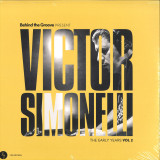
BTG presents “Victor Simonelli: The Early Years Vol 1” a collectors edition double Vinyl release - 2 X 12’s in each Vol
Launching the first Behind The Groove collectors edition vinyl series is New York’s finest Victor Simonelli with ‘The Early Years Vol 1 & 2’ double Vinyl releases. Featuring seminal house tracks such as Cloud 9’s ‘Do You Want Me’, Solution’s ‘Feel So Right’, Instant Exposure’s ‘Wanna Be With You’ and rare mixes of Raiana Page and EZ-AL, this collection brings together classic and rare Victor Simonelli cuts that reflect the early raw energy and buzz of the New York House scene. With ‘Vol 2” scheduled to follow shortly after, this is the most comprehensive collection of rare Simonelli cuts that firmly establishes his esteemed role in 90s House Music as well as introducing new fans to his inimitable sound.
Victor Simonelli is one of the early kings of NYC sampling In house music. The real deal - Victor danced at the legendary David Mancuso’s Loft sessions and developed a serious appreciation for good music. He interned for Arthur Baker at his renown Shakedown Studios (where Arthur worked with the iconic Afrika Bambatta on the seminal dance floor ’Planet Rock’ track) and went on to release hugely influential releases on seminal NYC labels 4th Floor and Nu Groove. Victor’s music was championed by the hugely celebrated iconic House Music DJ pioneers, Larry Levan and Tony Humphries at Paradise Garage & Zanzibar/WBLS/Kiss FM respectively.
Revered as a New York house heavyweight and prolific producer since the turn of the 1990s, Victor Simonelli grew up in Brooklyn, NYC, nurtured by a music loving family, with an avid record collecting father who also worked as a local party DJ. He took music lessons in piano, drums, guitar and bass, before discovering his first love, tuning into NY’s Radio Mix Shows on WBLS, WKTU and WRKS,98.7 Kiss FM) where he discovered the art of mixing and in his own words, ’I just simply got lost in the music’.
Graduating from NYC’s Centre For Media Arts, Victor got an internship in the legendary producer, Arthur Baker’s Shakedown Studios. Soon graduating to editing, mixing and then producing he worked for artists David Bowie, Quincy Jones, Debbie Harry, Sinead O’Connor and Talking Heads. Teaming up with fellow NYC producer Lenny Dee to become the Brooklyn Funk Essentials, they released records ‘Critical Rhythm’ and ‘Subliminal Aurra’ on 4th Floor before Victor went solo as Groove Committee releasing the classic ‘I Want You To Know’ on the legendary Nu Groove Records. Paradise Garage legend, Larry Levan broke ‘I Want You To Know’ rocking 2 copies on his last tour of Japan whilst King of NY House Music,Tony Humphries broke Victor’s new ‘Feels So Right’ across New York on his WBLS/Kiss FM Mastermix show and at his legendary Zanzibar club sessions. It was only a matter of time before Victor’s name became synonymous with quality House music ensuring a worldwide platform for his productions.
In the early 90s alongside his own productions, Victor Simonelli worked on high profile projects, including James Brown’s album, “Love Overdue” BeBe and CeCe Winans single featuring Mavis Staples “I’ll Take You There” and Quincy Jones’ “I’ll Be Good To You” featuring Chaka Khan and the legendary Ray Charles. Never straying too far from his clubland roots, Victor worked with Danny Tenaglia on his classic “The Harmonica Track”.
DJ gigs across the world started flooding in and Victor found himself recording for a dizzying array of labels including Tribal America, Sub-Urban, Bassline, King Street Sounds and Vibe, under a wide range of aliases. He also produced, wrote and remixed for artists such Nile Rodgers (Chic), Afrika Baambata, Hall & Oates, Frankie Knuckles, Kerri Chandler, Madonna and Michael Jackson. Famed for his own productions “It’s So Good” by Creative Force, “I Know A Place” as Sound Of One - the first release on Roger Sanchez One Records -, “Dirty Games” as well as the “Street Players Vol 1 EP”, Victor went on to set up Suburban Records with Tommy Musto and Bassline Records with two other partners. Notable releases on this label include “Do You Feel Me”, Connie Harvey’s gospel inspired, “Thank You Lord”, Urban Blues Project’s “Deliver Me”, Colonel Abrams “Not Gonna Let”, and Mone’s “Better Way”. Never ceasing to produce, DJ, run his own label and host radio shows like Groove Lift, Victor has worked with virtually every NYC producer and has nurtured a next generation talents including Angel Moraes, Jazz ‘N’ Groove, Urban Blues Project, Harlem Hustlers, Jay Jay and Julius Papp. Victor’s releases have also been used on M&S’s “Salsoul Nuggett” hit and Eddie Amador’s underground smash ‘House Music’.
In the late 90’s Victor launched his new Westside Productions, notable for the “Latin Impressions 1 & 2” releases, opened up a studio in Italy as he found himself increasingly working in Europe and now divides his time between New York and Italy. Suffice to say his unique sound of uplifting and spiritual music has kept him at the forefront of House Music and he is credited as one of its leading exponents with his string of classic releases and remixes.
Behind the Groove, branches out from its digital platform to embark on a programme of releases from the iconic pioneer producers of House Music. Esteemed for their high quality features and mixes that continue to explore, celebrate and venerate the contributions of highly respected, scene-shaping Labels, Artists, DJs and Special Events, BTG seeks to bring these talents and tales to the attention of the wider community. Unlocking the stories surrounding the pivotal roles they played and continue to play today in shaping the underground music scene we have come to know and love.
BTG presents “Victor Simonelli: The Early Years Vol 1” a collectors edition double Vinyl release, released on May 12th 2023. ‘Vol 2” follows on May 26th 2023 . These releases are the most comprehensive collection of rare Victor Simonelli cuts that firmly establish his esteemed role in 90s House Music and introduces new fans to his carefree sound.
Hania Rani announces "On Giacometti" a tender meditation on the life and art of Alberto Giacometti and family. "On Giacometti" is a collection of beautiful recordings inspired by the renowned artist and family and features some of Rani's most profoundly delicate compositions to date. Invited by film director Susanna Fanzun, to score her forthcoming documentary on the legendary artist Alberto Giacometti, Hania Rani took herself to the Swiss mountains to compose in blissful isolation. As Rani explains eloquently below the compositions are based on improvised melodies, simple harmonies and structures and inspired by the silence of the mountains as Rani returns to her main instrument, the piano. The results are beguilingly reminiscent of her beloved debut album Esja, but with subtle extra layers of synthesiser, and on two tracks cello from friend and long-running collaborator Dobrawa Czocher.
'On Giacometti' is presented as a limited edition LP with bespoke packaging featuring Les Naturals - Chocolat (Gmund) sustainable recycled paperboard made from 100 % recovered paper with Foil Artwork by Łukasz Pałczyński. Plus Double sided printed insert and download code inside.
Hania Rani "On Giacometti":
‘When I was asked to compose a soundtrack for a movie about the family of Giacometti I didn't think twice.
Alberto Giacometti, a Swiss artist, who worked mainly as painter and sculptor has been one of my favourite artists for a long time. His individual style, aesthetics and the character of his creative process is still fascinating to me on many levels, so being able to dive even deeper into his universe, getting to know not only him but also his family was an opportunity that I couldn't miss. Little did I know how far this "yes" will take me - not only mentally and on a creative level but also physically. Thanks to the director of the documentary - Susanna Fanzun and by a stroke of luck and a couple of extra questions I decided to move for a couple of months to the Swiss mountains, not far away from the place where Giacometti was born and where the place he called home was, although he didn't live there. Susanna showed me a place close to her hometown where I could rent a studio and work on the soundtrack but also for my other projects. It was the middle of a winter, the area was full of ice and snow, just like only it can happen still in the mountains. The residency house was located in a valley surrounded by high mountains and the sun in the winter season was not coming up for too long during the day. I remember she told me about it and added "that not everyone is feeling well there, but I hope you will". I did.
Being almost separated from reality, the city and its entertainments, people rushing and everything that usually takes my attention I could fully concentrate on the music and soundtrack, spending most of the day with my own thoughts and having enough space to experiment and be free in a creative process. This soundtrack would probably be a very different thing if composed in a place that I am usually living in. I took this a chance to explore something new about myself as a composer and human being, taking the opposite direction that I would usually choose for myself.
The album "On Giacometti" includes the excerpts from the soundtrack, the most representative tracks and those which became a strong voice itself. Based a lot on improvised melodies, simple harmonies, structures and silence it reminds me of my debut album "Esja" which was partly composed and recorded in another chilly place - Iceland. All these components, both mental and physical, guided me back to my main instrument - piano, which I tried to redefine again with a language of the space that I was working in. The space is usually the key element that gives me the answer about the arrangement or character of the project. Space seems to be the first to appear and music is the invisible power which is changing its angels.’ Living surrounded by mountains makes you change the perspective and understanding of scale as Alberto Giacometti once famously wrote in a letter: It gives an impression that things that are actually far away, like mountains, are close and the other ones that are not so far away, like people, seem small, watched from a distance. You feel like touching the mountain top with your finger could be as easy as touching the tip of your nose. The snow additionally protects the whole area from the noise, each sound lands softly on the ground accompanied by echoes of immeasurable space. Each scratch or whisper is becoming an autonomic entity, opening the gate to the world of ghosts and lost spirits. It's easy to think that time stands still there, while nothing is moving and changing at the first sight. But the ubiquitous ice and snow reveal the passage of time, transforming frozen paysage into the wild stream of water - each day, hour and second. Melting and vanishing, clearing the space from white powder and noise consuming surface. Invisible process for a one night traveller, becomes painfully real for longer time settlers. Time flows with each new wave of sound coming through the river, reminding us that we are part of the cycle, which endlessly repeats itself.
Four Flies' new imprint Edizioni della Notte is back with a 12-inch maxi single of infectious remixes of Francesco Fisotti's boogie funk track "La Tartana" by eclectic Neapolitan DJ/producer Whodamanny.
The original track, which comes from the 2021 album Lido Sirena (named after a beach resort in the Salento area of Apulia, where Fisotti used to spend his summers as a child), blends funky disco, synths, drum-machine beats and improvisation into an exciting new sound that Fisotti calls "Adriatic funk".
Inspired by slow-tempo but irresistible Italo and cosmic disco tunes, in particular Tonino Balsamo's 1983 "Sta Guagliona Mo Ddà" (one of the rarest Neapolitan grooves ever, recently reissued by Periodica Records), Whodamanny's two remixes amplify the original's dancefloor potential by adding a nocturnal vibe and elements such as synths and electronic drums, as well as a short vocal line ("Don't stop till the music stops") to create a catchy call-and-response effect.
Whodamanny himself explains that he produced not one, but two remixes due to his love of extended dub versions. "It's sort of a professional quirk," - he says - "but you know, it's inevitable. You're sitting at the mixer, listening over and over to a track… Of course you'll find bits you can stretch out to create a fantastic flow! And my approach is always the approach of a DJ. I want whatever I produce to work well in my DJ sets, so these remixes too were bound to be club-oriented."