Berlin-based Swedish dynamic duo of sax man Otis Sandsjö and bassist/producer Petter Eldh return with new music on We Jazz Records. Remember the hard hitting banger "Tremendoce" from Otis Sandsjö's "Y-OTIS 2"? Well, the saga continues, and the new directions are surprising to say the least, just as we like it!!! Some proper late night / early morning out there vibes on this one, and the flip is yet another step forward, bringing in Kathrin Pechlof on harp. Things are liquid, just as you would guess, but the whole consistency of the substance has flipped and evolved. A new sound. A new idea. Another new day in Mauerpark, Berlin.
Cerca:part one
CAY unveils his personal side on Another Life, a debut album rich in melancholic euphoria
The expressive, multi-faceted 10 tracker comes on Mind Against's HABITAT label in January 2026
Cologne-born producer CAY explores beyond the dancefloor with Another Life, a debut album that trades peak-time pressure for an ambitious and artful exploration of self. Far from being rooted in one genre, the record weaves his own honest vocals with a wide range of powerful rhythms that pull from progressive, broken beat, techno and trance.
For CAY, making music has always offered refuge and a place to calm his mind, process life’s chaos and channel personal experiences into sound. His journey started in the clubs of Cologne, in illegal forest raves and with trips to Berlin to soak up big room techno. His search for more purpose, away from mental demons and the darker side of the party lifestyle, led him to production. DJing followed after a push from his brother turned Manager, and while those experiences around Europe shaped his understanding of dance floor dynamics, he was never in a rush to release his early experiments.
Instead, CAY took private time to evolve into an accomplished artist with his own musical voice. Label heads Mind Against were so impressed when they heard what he sent to their demo inbox, they both reached out to collaborate, and he has since released on their label HABITAT.
With Another Life, he is making music that is multilayered and rich in narrative, rather than defined purely by big moments. It is drawn from years of writing, with more than 60 tracks whittled down to one concise, impactful statement. "There wasn't one big concept,” says CAY “but there was direction. It's a big risk for me, but I wanted to introduce people who like club music to something deeper. I want the music to say something real.”
Because of that, Another Life introduces CAY the vocalist. For the first time, he sings on several tracks. The subjects are real, whether that's an important friend, a moment with his girlfriend or, on 'Runaway', the thought of giving up and escaping everything. The lyrics are honest but often slightly oblique, so they invite your own readings rather than spelling everything out.
Sonically, the album moves between optimistic grandeur and introspective reality. It's cinematic but personal and bridges the gap between dancefloor drive and vulnerable storytelling. There is a grand scale to many of the tracks, with arching synths reaching and heavyhearted drums anchoring a groove: you'll dance, you'll cry, maybe both at the same time.
Another Life is the sound of a producer granting himself permission to sing, turn inwards and risk audience expectations. It’s intimate without being insular, club-capable without being confined, and a compelling first chapter for an artist who has spent years building toward this moment of truth.
The second release from the Époque label is a major one, featuring Niels Van Gogh’s 1998 hit single "Pulverturm”, which earned gold certifications in Belgium and South Africa and climbed into the Top 10 in the charts of many European and worldwide countries. The esteemed Brazilian techno artist ANNA delivers a rework, adding her signature touch to this iconic track.
"In 2023, while preparing for my Tomorrowland set, I was exploring iconic tracks that resonated in Belgium and could be perfect for an edit. I chose 'Pulverturm' for its powerful vocals and strong melody”, says ANNA. “What started as a quick edit turned into a labour of love, and I was so happy with the outcome that I wanted to try to release it as an official rework. We were in conversation with Niels Van Gogh when I sent the track to Charlotte de Witte, who loved it. She introduced me to Époque, and we decided to release the rework together. It's been a year since I crafted this rework, and I've never had so many artists from various genres, Techno, House, Melodic Techno, Tech House, Hard Techno, requesting a track like they did with my rework of 'Pulverturm.' It's incredibly exciting to finally share it with the world!"
Charlotte de Witte adds: “I fell in love with ANNA's masterfully crafted touch on ‘Pulverturm’ the moment she sent it to me. Being a bit of a sucker for legendary tracks that have left a deep mark on the history of electronic music myself, this one just hits all the right spots. It's been a long and challenging road to make it happen but I'm incredibly proud and honoured to have Niels Van Gogh's timeless classic ‘Pulverturm’, seen through ANNA's eyes, for the second release of Époque. A label we founded earlier this year to honour nightlife, club culture and dancefloor legacies.”
The original “Pulverturm” is a twitchy and hypnotic cut with trance infused synths over the top of the rumbling drums. There is progressive energy in the melodies and plenty of emotion in the vocals. ANNA’s version is driving and emotive with sensual vocals and bright, trance infused chords over rolling drums that bring the power.
About Époque:
Époque is a Belgian label and nightlife archive created by KNTXT and run by KNTXT and Charlotte de Witte. In collaboration with clubs and labels, past and present, Époque captures the spirit and lifestyle of our bygone discotheque culture. The Époque label reworks iconic tracks, brings back dance classics and uses club memories and aesthetics to translate these legendary compositions into unique new releases produced by today’s leading electronic music talent. Époque also designs high quality merch and party gear as an homage to the global club scene.
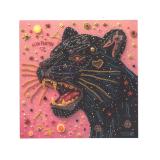
" A very limited 7” for the tropical heads, beat travellers and cosmic cumbia astronauts on the new imprint Sun Of A Beach — the free-spirited daughter of Editions de Lux, who skipped town, fell in love somewhere between Kingston and Cartagena, and came back glowing, barefoot, and heavy on the bass.
At home in the steaming rainforest as much as the urban jungle of the Chapinero district of Bogotá, Colombia’s psychedelic groove pilots Ácido Pantera deliver a double-sided tropical weapon aimed straight at late-night sweatboxes, boat parties, and sun-soaked terraces.
"Te quiero, te amo” is a declaration of love at 132 bpm, bouncing along like a low-rider over cobblestones while neon synths float in the humid air.
Flip it for “Pájaro cantor”, a sound system destroyer that will lock the floor in an acid trance that feels both ancestral and futuristic in the same breath. This one’s featured on the FC26 soundtrack and will have you shimmying like Luis Díaz right before he bangs one into the top corner!
You know what to do!"
- A1: I Told Them Feat Gza
- A2: Normal
- A3: On Form
- A4: Sittin On Top Of The World By Burna Boy & 21 Savage
- A5: Tested, Approved & Trusted
- A6: Virgil
- A7: Cheat On Me Feat Dave
- B1: Big 7
- B2: Dey Play
- B3: City Boys
- B4: Jewels Feat Rza
- B5: If I'm Lying
- B6: Thanks Feat J. Cole
- B7: Talibans Ii By Burna Boy & Byron Messia
On the 25th August, Burna Boy will release his brand-new album ‘I Told Them…’. It will be available to stream everywhere as well as on CD & Vinyl. The Pre-order will go live alongside the album announce on the 28th July. ‘I Told Them…’ features Burna’s newest hit singles ‘Sittin’ On Top Of The World (feat. 21 Savage)’, ‘Talibans II’ & ‘Big 7’ as well as a whole host of album features.
Burna Boy was born Damini Ogulu in Port Harcourt, Rivers State, Nigeria, in 1991 and began making music at just ten years old. As a teenager he honed his craft on Nigeria’s southern coast, delving into dancehall, reggae and Afrobeat’s. In the early 2010s Burna Boy emerged as one of Nigeria’s fastest-rising stars, combining influences from his Nigerian heritage with hook-filled pop stylings to create unforgettable tracks. His 2012 single ‘Like to Party’ broke into the global mainstream and paved the way for his full-length debut L.I.F.E, a year later.
Over the next five years, Burna Boy released two more albums and collaborated with a long list of high-profile artists including J Hus, Skales, Fall Out Boy and Lily Allen. African Giant was released in 2019 followed by his fifth album Twice as Tall in 2020 (which featured collabs with Chris Martin and Youssou N'Dour), both charted in several countries across the globe andgarnered worldwide acclamation, with the latter winning a Grammy Award for ‘Best Global Music Album’. Breaking cultural boundaries, he became the first Nigerian to headline a show at New York’s Madison Square Garden, he released his sixth album, Love, Damini, last year (featuring collabs with the likes of Ed Sheeran and Khalid). It deservedly became the highest-charting Nigerian album in history and currently holds the record for the only African artist to earn a no. 1 on iTunes in 16 countries worldwide.
Grad_U returns to his legendary Redscale imprint with a re-press of one of the label’s most sought-after 12-inches. Originally released as part of the series that helped define modern dub techno, Redscale 02 showcases the Lithuanian artist’s unmistakable sound, deep, analog, and endlessly evolving.
Both sides carry Grad_U’s signature weight: hypnotic low-end movement, rolling chords, and perfectly balanced textures that blur the line between club tool and meditative listening piece. Once again, Redscale reminds us why it stands as one of the most respected labels in the global dub techno scene: no hype, no compromise, just deep, timeless sound.
Announcing Perseverance Flow, the latest album from acclaimed Chicago-based ensemble Natural Information Society (NIS), release date 2024-10-24. After a trilogy of double LPs by expanded manifestations of the band that began in 2018 with Mandatory Reality & continued through Since Time Is Gravity (a Pitchfork Best Jazz & Experimental Album of the Year selection & Mojo’s #1 Underground Album of 2023), NIS returns to its core formation of Lisa Alvarado on harmonium, Mikel Patrick Avery on drums, Jason Stein on bass clarinet, & composer/multi-instrumentalist Joshua Abrams on guimbri for one continuous 37 minute composition across a single LP. As the rocket boosters on spaceship earth sputter closer to burnout, lower your stylus into a soundfield that grows stronger the deeper you travel into it; a dose of the medicine many of us look to music to deliver awaits you inside.
One of the deep contemplations of this natural information (thanks Bill Callahan) is the wide range of source materials Abrams draws from over the band’s more than 15 year history: Ideas from minimalism, modal jazz & traditional musics are regularly reimagined in these compositions. The 2021 double LP descension (Out of Our Constrictions), with guest soloist Evan Parker, reflected aspects of Abrams’ love of party music, Chicago house, & John Coltrane. *But even veteran travelers with the NIS best brace themselves for the Perseverance Flow.
Speaking to the history & the inspirations behind the album, Abrams offers: “We played the piece for a year in concert before the recording. At Electrical (Audio Studios, Chicago) we went in at 11 & were done in time to pick our kids up from school.” Abrams continues: "In a reference world, I imagine Perseverance Flow like a live extended realization of a Jaylib lost instrumental as remixed by Kevin Shields. Or vice versa. I also think it has sympathies to some of the more rhythmically intricate dance musics out of Chicago & Lisbon.”
The core NIS ensemble heard on Perseverance Flow always address Abrams’ writing with the discipline of orchestra musicians & the creativity of improvisers. But this time around, instead of inviting living legend status musicians Evan or William Parker or Ari Brown as honored guests to solo freely over the composed materials, Abrams’ invited guest collaborator was the medium of the recording studio itself. Situated at the board with engineer Greg Norman, Abrams pushed post production techniques found only sporadically on earlier NIS records deep into the heart of the music, distorting & reshaping instruments to subtly &, at times, aggressively mutate timbre & texture, color & time.
Refracting the band’s signature mesmerizing chains of overlapping rhythmic patterns through the sonic funhouse of dub makes Perseverance Flow the most formally experimental NIS album to date. Now a soundworld fully unique to itself is listening to itself, consoling & humoring itself, & consoling & humoring you. A destruction myth & a creation myth of a soundworld together at once —”energetically nutritious” (October 2025 Issue 500 The Wire) supernatural information society.
“Perseverance Flow is skipping rope in slo-mo. A dance of co-operation to rally guts & humors & keep marching through pouring tears” (Abrams).
A chopped-and-screwed love letter to the sounds of rebajada – half-speed cumbia, pioneered by Sonido Dueñez in the 1990s, and born from an overheated turntable motor that didn’t make the crowd stop dancing. With Debit’s treatment, rebajada becomes an ethereal, at times intense ambient tapestry that’s also a history lesson.
Spend any amount of time pacing the streets of Monterrey, the bustling city in the north of Mexico where Delia Beatriz, aka Debit, grew up, and you’ll be sure to catch traces of cumbia echoing from Bluetooth speakers, DIY soundsystems, or car stereos. An Afro-Latin dance form and »practica cultural« originating in Colombia in the early 19th century, cumbia evolved rapidly in the early 1900s, as a localised sound played on drums and flutes quickly modernised to integrate European instrumentation like the accordion. When it reached Mexico in the 1940s, the sound shifted again, fusing with mariachi styles and integrating further vallenato folk elements. Eventually, cumbia spread across the entirety of Latin America, splintering into a spectrum of different musical styles such as chicha in Peru, and cumbia villera in Argentina. And over in Monterrey, cumbia inadvertently found its own idiosyncratic groove.
From the 1950s to the 1970s, waves of immigrants from across Mexico and Latin America headed to Monterrey to find work, making a home in Colonia Independencia. Colombian cumbia records, shipped in from Mexico City, Houston, and Miami, became the soundtrack of the neighbourhood, relaying familiar stories to a rural working class adjusting to their new industrial reality. The sound struck a chord with locals, and huge street parties hosted by ramshackle soundsystems known as sonideros unified the diverse community. So when cumbia rebajada materialised serendipitously in the 1990s, it emphasised and highlighted the memory distortions at the heart of the immigrant experience. Local record collector, selector, and sonidero Gabriel Dueñez had been playing cumbia for hours one night when disaster struck: his turntable’s motor overheated and slowed down, turning the music into a warped groan, with half-speed voices echoing over wobbly accordion drones and splashy drums. But the crowd kept dancing, and Sonido Dueñez realised he’d struck gold – cumbia rebajada was born.
Over the next few years, he dubbed a popular series of mixtapes, hawking them at the flea market on the dried-up Santa Catarina riverbed beneath El Puente del Papa, the bridge that links downtown Monterrey with Independencia. These woozy archives became the stuff of legend, poetically but subconsciously shadowing DJ Screw’s series of epochal cassettes that appeared over the border in Houston. Beatriz uses Sonido Dueñez’s first two tapes as the starting point for »Desaceleradas«, entering into a dialogue with time, culture, and geography as she recalls the sonic ecosystem that surrounded her decades ago, long before she emigrated to the USA. If 2022’s acclaimed »The Long Count« was an attempt to recover concealed pre-Columbian history in the face of colonisation, »Desaceleradas« jumps forward, figuring out how memory and shared celebration can resist a more contemporary form of cultural erasure. As AI systems scrape, blend, and decontextualise culture around us, leaving vapid slop, »Desaceleradas« proposes a slower, more careful, and ultimately more human kind of engagement. It’s an archive with a pulse.
On »Empty Room,« David Granström works with slow transformations, cyclical and isometric patterns as well as just intonation as a way to create harmonic stability, allowing his long-form pieces to develop their own unique temporal and spatial qualities. A prolific figure in Stockholm’s experimental drone scene and a collaborator of Hallow Ground label mates Maria W Horn and Mats Erlandsson, the Swedish composer navigates through moments of quietude and crushing volume on these five tracks. Sonically and atmospherically, the pieces on »Empty Room« simultaneously call to mind Fennesz’s most meditative work or the physical experience of seeing Sunn O))) live, blending guitar recordings and synthesised sounds with forceful effects similar to those of Mario Díaz de Leon’s Oneirogen project while still being as moving and delicate as Alessandro Cortini’s solo work. The album is marked by melodies and harmonies that are the product of a peculiar working process that turned the composer into an intent listener collaborating with, rather than simply using technology.
Having been invited by the self-organising artist group The Non Existent Center for a residency to Ställbergs Gruva, a defunct iron ore mine in Sweden’s Bergslagen region, Granström took his guitar as a starting point for his compositional work that heavily relies on real-time sound synthesis. »I seldomly use the instrument as a sound source in the final compositions and rather transcribe and orchestrate the harmonic structures using sound synthesis,« he explains. »On this album however, I chose to include the actual recordings of the guitar in order to extend the spectra between non-referential synthetic sounds and embodied referential sounds.« Working with precise tunings in order to blend the timbre of the synthesis with the harmonic structures of the composition, he created composite sound objects in which the harmonic elements blend into each other.
Through the re-amplification of synthetic musical materials from the inside of the abandoned mine, his original compositions were enriched with site-specific sound qualities before he further refined them in a singular working process. Granström works with algorithmic and generative processes, using the SuperCollider programming environment and thus blurring the lines between generative and creative forms of composition. »One of the things that I like about this way of working is that it creates a distance between myself as a composer and myself as a listener of the music that is produced entirely by the system,« he says. Granström’s technologically aided eschewing of the conventions of composing doesn’t make the end result any less personal, however. By listening again and again to the newly generated output, Granström simply took on a different role in the process of finalising the music, with the technology and the sounds becoming his co-authors.
By creating systems that generate music, he gains a new perspective on (musical) time, says Granström. »There doesn't have to be a fixed length to the music at all,« he explains. »And by writing music with this in mind, my focus tends to shift towards writing cyclical structures that gradually change and transform over time.« Simple parts, in other words, that emerge as the five complex wholes that form »Empty Room,« a record that itself seems to take on different forms with every new listen.
Limited Plum Colored, Full colored Vinyl 12” Jacket 12 Inch Release
Hot on the heels of the recently released Divine Harmonics – From Then Until Now (Part One of Two) the limited orange vinyl edition that sold out within weeks, we are thrilled to announce the arrival of the highly anticipated Part Two of Kuniyuki and Joaquin “Joe” Claussell’s Divine Harmonics imprint.
This next installment is expected to surpass the excitement of both earlier releases, especially as it comes as a plum colored vinyl packaged in a stunning full-color jacket designed by the incomparable Akemi Shimada. As with all Divine Harmonics editions, this is a strictly limited full 12-inch package, created with collectors in mind.
About the Record
Recorded in a fully equipped studio in Brooklyn, New York, this project was born from the idea of gathering musicians who deeply admire Kuniyuki’s work and inviting them to contribute to the composition.
- 1: Europium Alluminate
- 2: A Circle And A Star (Vocals Susan Christie)
- 3: The Fallen By Watch Bird
- 4: Turning In Circles
- 5: Hud A Llefrith
- 6: Whispers Of Winter
- 7: Noctilumina
- 8: My Soul Was Lost, My Soul Was Lost, And No One Saved Me
- 9: Silver Chord (Vocals Wendy Flower)
- 10: Europium Alluminate (W/ Demdike Stare)
- 11: A Circle And A Star Part I
- 12: The Fallen By Watchbird (Video Edit)
- 13: Turning In Circles
- 14: Majic Milk
- 15: Whispers Of Winter (W/ Wendy Flower)
- 16: Noctilumina (W/ Anworth Kirk)
- 17: My Soul Was Lost, My Soul Was Lost & No One Saved Me
- 18: Silver Cord (W/ Samandtheplants & Wendy Flower)
- 19: A Circle And A Star Part Ii
Erweiterte Deluxe-Jubiläumsausgabe von "The Fallen By Watch Bird", das neben dem Originalalbum auch das Kompendium "The Watchbird Alluminate" enthält, alternative Versionen und Neuinterpretationen von u.a. Demdike Stare, The Focus Group, Anworth Kirk und Emma Tricca. Seit der ursprünglichen Veröffentlichung vor 15 Jahren hat sich Jane Weaver zu einer der markantesten und experimentierfreudigsten Stimmen aus UK entwickelt und eine Reihe von gefeierten Alben veröffentlicht, darunter "The Silver Globe", "Modern Kosmology", "Flock" und "Love In Constant Spectacle". Es ist ein psychedelischer Femme-Folk-Rock-Teppich, der Einflüsse aus dem osteuropäischen Kinderkino, deutschen Kunstmärchen, der TV-Musik der 70er Jahre und elektronischen Soundtracks der 80er Jahre aufgreift. Dieses konzeptionelle Album, das von Synths und Mystik durchdrungen ist, verwebt Bilder von abwesenden Seeleuten, Telekinese, Tierbotschaften und weißer Magie mit heidnischen Themen wie Tod und Wiedergeburt. Ein prägendes Meisterwerk aus ihrer ständig wachsenden Diskografie, das ihre Reise von ihren folkloristischen und poporientierten Anfängen bis hin zu den psychedelischen Synth-Pop-Experimenten von heute dokumentiert. Das Album umfasst sieben Kapitel und enthält Beiträge von Septième Soeur Wendy Flower vom Folk-Pop-Duo Wendy & Bonnie, das 1969 das Album Genesis veröffentlichte, Lisa Jen, der walisischen Sängerin auf Gruff Rhys' Candylion, der verstorbenen amerikanischen Folk-Pop-Sängerin Susan Christie und dem bosnischen Folk-Musiker und Violinisten Behar. Als Extra setzt "The Watchbird Alluminate" die Reise fort, indem es in Drone, Psychedelia, Folk und weitere Klanglandschaften eintaucht. Einzel-CD oder limitierte 2LP-Edition in Marineblau und Cremefarbenem Vinyl, Gatefold-Sleeve + Obi-Streifen & DL-Karte.
**2010 Grammy Award Winner: Best Traditional Folk Album **
‘Marvelous…exuberant’ - Rolling Stone
Nonesuch Records releases a fifteenth anniversary edition of Carolina Chocolate Drop’s 2010 Grammy Award-winning album Genuine Negro Jig, featuring founding band members Dom Flemons, Rhiannon Giddens, and Justin Robinson. The reissue includes the original album and nine bonus tracks: seven previously unreleased tracks plus a 2025 remaster of ‘City of Refuge’ and a 2025 mix of ‘Memphis Shakedown’. This release marks the album’s first time on vinyl since its original pressing in 2010.
Genuine Negro Jig was released on February 16, 2010, reaching the top ten on the Billboard Folk chart and the top of the Bluegrass chart. It won the 2011 Grammy Award for Best Traditional Folk Album. Produced by Joe Henry, it was the first of three releases on Nonesuch followed by The Carolina Chocolate Drops/ Luminescent Orchestrii EP (2011) and the Grammy nominated album Leaving Eden (2012), produced by Buddy Miller. Widely acclaimed as one of 2010’s best, Genuine Negro Jig appeared in year-end lists of NPR, Paste, and more, and was featured in Rolling Stone’s 25 Best Country-Soul Albums in 2024.
“Genuine Negro Jig remains fresh fifteen years later not only because of the Carolina Chocolate Drops’ influence on American popular culture but also because it’s an excellent record in itself,” says Dr. Dwandalyn Reece and Dr. Steven Lewis of the Smithsonian National Museum of African American History and Culture in the album’s liner notes.
Carolina Chocolate Drops formed after band members Dom Flemons, Rhiannon Giddens, and Justin Robinson met at the Black Banjo Gathering in Boone, NC in 2005. All three trained in the Piedmont banjo and fiddle musical tradition under the tutelage of Joe Thompson, who was one of the last musicians of his era and his community to carry on the southern Black string band tradition. While old-time Southern string music is often associated with Caucasian musicians from Appalachia, Giddens pointed out in an NPR interview that “it seems that two things get left out of the history books. One, that there was string band music in the Piedmont, period. And that Black folk was such a huge part of string tradition.” Carolina Chocolate Drops sought to not only correct this misunderstanding but also to keep the centuries-old string music tradition alive and developing.
The members of Carolina Chocolate Drops, who came from diverse musical backgrounds, shared singing duties and swapped instruments throughout their sets. The band recently reunited for a single show at Rhiannon Giddens’ Biscuits and Banjos festival in Durham, North Carolina in April 2025. In celebration of the 20th Anniversary of the Black Banjo Gathering, the documentary Don’t Get Trouble In Your Mind: The Carolina Chocolate Drops’ Story by Filmmaker John Whitehead was released on Amazon Prime, Apple TV, and YouTube Free4all streaming platforms.
Yes, after a hiatus of 15 months, The ReMix Collection makes a highly anticipated return as Yotto steps up to take on the Shakra Mix of Power Circle’s ‘Garden Of Peace’.
Originally released in 1993, the track was an immediate Renaissance anthem, finding favour with all their key DJs. However, it became synonymous with one man in particular, namely, John Digweed, who cemented the track’s legendary status when he included it on his Journeys By DJ compilation the following year. Even today he’s been known to slide it into the mix, most recently episode 10 of his legendary Bunker streams. And the track has other contemporary fans too; a certain Mr. Plex was heard dropping it in 2020.
In short, it’s one of those records that’s stood the test of time and grown in stature year on year. Now, its evolution takes yet another step as it joins the ranks of Renaissance’ flagship ReMix Collection series.
Yotto’s modern interpretation is a high-octane juxtaposition of thunderous bass, rising pads and THAT vocal. ”Garden Of Peace is a record I missed first time around as a kid and had only heard on a mix, never knowing what it was, so when Renaissance approached me about a remix there was a strange sense of familiarity,” he explains, “The original is full of classic progressive house mystery and, while I took the whole thing apart, I wanted to keep that emotion with my interpretation.” On the B-side there’s a re-mastered cut of the original Shakra Mix, which isn’t released digitally and remains exclusive to vinyl only.
- A1: Clean Up (Ep Mix)
- A2: Go Get Your Money
- A3: Beretta (Feat. Lucey Way)
- B1: Things
- B2: Rolling
- B:3 Go Get Your Money (B-Sharp Mix)
First Word Records are proud to bring you 'Penny Ballads', a 5-track EP from Royce Wood Junior. Royce Wood Junior is a Grammy & Mercury Award-nominated musician, songwriter and record producer from London, currently based in Brighton. As a multi-instrumentalist, he's collaborated with a litany of brilliant artists over the years, such as Jamie Woon, Nao, Disclosure, Jessie Ware, Olivia Dean, Joy Crookes, Jamie Lidell and Jordan Rakei, additionally to touring with the likes of the legendary Thomas Dolby. He's released two acclaimed solo albums to date ('The Ashen Tang' in 2015, and 'No Two Blue Ticks' in 2021). 'Penny Ballads' demonstrates RWJ's varied talents, with a collection of alternative soul compositions, each one as unique as the next. It includes the first two singles, the Poplife-Prince era flavoured 'Go Get Your Money', and the double-time future funk adrenaline shot, 'Clean Up', along with three previously-unreleased tracks. 'Beretta' is low-slung soul funk, beginning with quirky squelchy synths, before the soulful lead vocal of feature artist Lucey Way breezes in to melt everyone's hearts. 'Things' sweeps in next, an infectiously soulful midtempo heavy soul bop, with an instant earwork of a hook, like a modern-day Steely Dan / Doobie Brothers, complete with a head-nodding string section to end the track. The collection concludes on a more melancholy downtempo tip with 'Rolling'; an almost-folktronic anthem, with a key refrain that wouldn't be out of place on a 70's Stevie piece. RWJ (aka Jim Wood) says of this project… "Back in the 17 and 1800's Troubadours and minstrels would go from Tavern to Tavern selling Penny Ballads, single sheets of music and lyrics written quickly and frivolously to make a quick buck.. It strikes me that we're in a similar phase in the way we value music in 2025. An old Penny Ballad was cheap and dog-eared, ink-smudged, sung aloud by firelight, Now songs live in the digital ether, dissolved in the air, a ghostly breath paid in micro cents. The new era of Penny Balladry is here, and weird. This EP is a snapshot of my writing over a two year period. Focussed on minimal recording styles, one mic on the drums, generally first or second takes on parts and vocals, I wanted the music to feel like small moments with lyrics that talk about the weird nuances of being alive as a latter stage human on the cusp of the Ai revolution. Culturally so evolved, but physiologically still just a bunch of mammals walking about with primitive fears and needs. Just trying to reconcile it all moment to moment…" Previous support for Royce's music has included Radio 1's Future Sounds, BBC 6 Music's New Music Fix, Annie Mac, Clara Amfo, Jo Whiley (BBC Radio 2), Mary Anne Hobbs, Jamz Supernova, Tom Robinson, Huw Stephens (BBC 6 Music), Zane Lowe and MistaJam. There have been sessions previously for the likes of Red Bull and press from Huck, Line of Best Fit, Clash, Aesthetica & DIY magazine. Entirely self-written and self-produced, this EP gives a solid taste of RWJ's talents. A deeply funky diverse set of music from an immensely talented individual. 'Penny Ballads' is due to be released on vinyl & digital, 24th October 2025. The vinyl version also includes an exclusive additional mix of the first single 'Go Get Your Money'. TRACKLIST: 01: Clean Up (EP Mix) 02: Go Get Your Money 03: Beretta (feat. Lucey Way) 04: Things 05: Rolling 06: Go Get Your Money (B-Sharp Mix) Deconstructed Mixes
- A1: The Real World
- A2: Maro And Kumao
- A3: Part Of The Evening
- A4: Like Snow
- B1: The World And Me
- B2: Tracks At Dawn
- B3: A Walk
- B4: Her Story
- C1: The World Of The Sun
- C2: Between Hearts
- D1: Always By My Side
- D2: Starry Sky Blues
- D3: The Feeling Of Running
- D4: On The Waves
In March 2025, "On the Love Beach" performed solo shows in Shanghai and Beijing with Toushi Naoki to great success.
2025 marks the 30th anniversary of their memorable debut album, "On the Love Beach," and the band's first three albums are being reissued on CD and vinyl!
All three albums use the original master tapes, and each has been thoroughly remastered under the supervision of Shinji Shibayama for high-quality sound!
"On the Love Beach"'s third album, released in 1999, is a two-disc masterpiece that holds a unique position in the band's history, and many fans secretly cherish
the original LP version.
Shibayama's motivation for recording this album was to explore whether the concept he experimented with with Hallelujahs—"pursuing the uniqueness and
improvisation of the performance itself within the format of a pre-written song"—would work in a fixed band format rather than a session, and what the results would be.
It was a bold (and reckless) production approach: all basic tracks, including the lead vocals, were recorded live in the studio in one take, with no re-recordings allowed,
and overdubs like the chorus were kept to a minimum.
Although there are discrepancies between the punk-inspired performances and vocals due to the unedited concept, this is a rare example of the wild energy of a
band captured so authentically with such high sound quality in Jap-rock, and, regardless of its merits or demerits, it is undeniably compelling.
The raw sound quality, capturing the irreversible, fleeting interplay, demonstrates the outstanding engineering sense of Peace Music's Nakamura Soichiro,
and the pride of the rock band "Nagisa Nite" is evident throughout.
It's also noteworthy that this "Nagisa Nite" album contains the most solo works by Masako Takeda. Naturally, it's meticulously remastered from the original
master tapes for exceptional sound quality!
- A1: Vula – Want Ur Love
- A2: Terri Walker – Missing You (Ronnie Herel Remix)
- A3: Lukas Setto – Can You Feel The Love
- B1: Bon Garcon Ft. Michele Escoffery – Love Is Real
- B2: Tyler Daley – All I Need
- B3: Legato – Thug Luv
- C1: Zoe Kypri – Holding You
- C2: Vula – Tru Luv
- C3: Tyler Daley – 4So Long
- D1: Sebastian Mikael – Next Chapter
- D2: Anamé Rose – I Am
- D3: Slakah The Beatchild – The Cure
Blues and Soul Award winner and double MOBO Awards nominee Ronnie Herel is back with his 2nd volume of his excellent compilation series Neo-Soul Sessions. Ronnie, a massively important figure in the UK Black music scene, is a radio presenter with Mi Soul and includes BBC 1xtra in his broadcasting credits. He is a DJ of international renown and was one half of the Quartz production duo which scored memorable hits with Dina Carroll. His undisputed love for and knowledge of the Neo-Soul genre shines through in the Neo-Soul Sessions and this latest, volume 2, is no exception. Featuring tracks from artists such as Vula, Terri Walker, Aname Rose and Slakah the Beatchild, among others, Neo-Soul Sessions volume 2 is a brilliantly curated and pieced together selection of twelve tracks that absolutely nails the beauty of the later releases in the Neo-Soul genre. Played from start to finish the track selection and order is a pre-made DJ set that flows in a way that would soundtrack a dancefloor, a house party and an excellent backdrop of tunes for any time and day of the week. Ronnie's passion for championing independent artists is also evident in his selections here and the compilation serves as a platform for those voices who deserve to break through. The decision to choose six of his favourite tracks to sit alongside six exclusive and unreleased gems means that a light is now shined on every artist featured on the compilation. An absolute must for serious lovers of Neo-Soul, RnB and Black Music, Neo-Soul Sessions volume 2 is released on double vinyl LP and CD formats.
- A1: Intro: Soushiki (01:26)
- A2: Shingontachikawa (05:27)
- A3: Doman Seman (05:33)
- B1: Imiuta (03:14)
- B2: Shikigami (06:22)
- B3: Outro: Higeki (01:31)
Marble Vinyl[27,31 €]
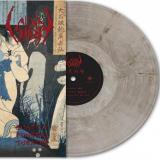
Japanese black metal legends Sigh formed in 1989/1990. The genre-classic debut ‘Scorn Defeat’ followed on Euronymous’ Deathlike Silence Productions in 1993 & with each subsequent release, Sigh grew to become one of the country’s greatest & most revered metal exports. With a journey through the strange & the psychedelic, incorporating a whole eclectic mix of genre styles & experimentation throughout their career, Sigh has remained a vital creative force in the avantgarde field whilst maintaining their old school roots, as witnessed with the stellar 2022 album, ‘Shiki’. 2025 also saw Sigh reimagining their ‘Hangman’s Hymn’ album for a release on Peaceville as part of the band’s 35th anniversary celebrations, in the shape of ‘I Saw The World’s End: Hangman’s Hymn MMXXV’.
Maintaining the core trio of Mirai Kawashima, Shinichi Ishikawa & Satoshi Fujinami & on the back of the epic & darkly symphonic opus ‘Infidel Art’ (1995), Sigh adopted a more boundary-defying approach to their writing, whilst still keeping the dark foundations & traits of the band’s fundamental sound. The result was ‘Ghastly Funeral Theatre’ which surfaced in 1997 & draped in Eastern & horror-based atmospherics, the band also embraced elements outside of metal with what was their most experimental offering to date; utilising instruments such as the saxophone as well as acoustic passages & notoriously drawing comparisons to the moods of bands such as The Beatles at times, featuring catchy hooks & structures in line with the rock music genre, but masterfully woven into Sigh’s unique blackened metal tapestry.
Continuing with Peaceville’s re-issues of Sigh’s classic early ( & until now, hard to find) works, this edition of ‘Ghastly Funeral Theatre’ contains a new master created by Patrick Engel at Temple of Disharmony, featuring a new transfer from the original DAT source.
The release also includes a new interview with main-man Mirai Kawashima conducted by Dayal Patterson of Cult Never Dies, delving into the history & inspirations behind ‘Ghastly Funeral Theatre’.
This edition of ‘Ghastly Funeral Theatre’ is presented on black vinyl.
- A1: Intro: Soushiki (01:26)
- A2: Shingontachikawa (05:27)
- A3: Doman Seman (05:33)
- B1: Imiuta (03:14)
- B2: Shikigami (06:22)
- B3: Outro: Higeki (01:31)
Black Vinyl[21,81 €]
Japanese black metal legends Sigh formed in 1989/1990. The genre-classic debut ‘Scorn Defeat’ followed on Euronymous’ Deathlike Silence Productions in 1993 & with each subsequent release, Sigh grew to become one of the country’s greatest & most revered metal exports. With a journey through the strange & the psychedelic, incorporating a whole eclectic mix of genre styles & experimentation throughout their career, Sigh has remained a vital creative force in the avantgarde field whilst maintaining their old school roots, as witnessed with the stellar 2022 album, ‘Shiki’. 2025 also saw Sigh reimagining their ‘Hangman’s Hymn’ album for a release on Peaceville as part of the band’s 35th anniversary celebrations, in the shape of ‘I Saw The World’s End: Hangman’s Hymn MMXXV’.
Maintaining the core trio of Mirai Kawashima, Shinichi Ishikawa & Satoshi Fujinami & on the back of the epic & darkly symphonic opus ‘Infidel Art’ (1995), Sigh adopted a more boundary-defying approach to their writing, whilst still keeping the dark foundations & traits of the band’s fundamental sound. The result was ‘Ghastly Funeral Theatre’ which surfaced in 1997 & draped in Eastern & horror-based atmospherics, the band also embraced elements outside of metal with what was their most experimental offering to date; utilising instruments such as the saxophone as well as acoustic passages & notoriously drawing comparisons to the moods of bands such as The Beatles at times, featuring catchy hooks & structures in line with the rock music genre, but masterfully woven into Sigh’s unique blackened metal tapestry.
Continuing with Peaceville’s re-issues of Sigh’s classic early ( & until now, hard to find) works, this edition of ‘Ghastly Funeral Theatre’ contains a new master created by Patrick Engel at Temple of Disharmony, featuring a new transfer from the original DAT source.
The release also includes a new interview with main-man Mirai Kawashima conducted by Dayal Patterson of Cult Never Dies, delving into the history & inspirations behind ‘Ghastly Funeral Theatre’.
This edition of ‘Ghastly Funeral Theatre’ is presented on black vinyl.
A student of the Weatherall school of DJing, Asa Tate has showcased an astonishingly mature approach to production over the years that belies his age. You’d be forgiven for thinking these 4 tracks had been discovered from a dusty DAT tape, locked away in the vaults of a northern Italian club and rediscovered after 30 years....Listen more closely and you’ll notice the contemporary production flair and more recent influences that make this EP a perfect reinterpretation of the mid 90s house sound: sitting somewhere between dream house and Morales finest work under the red zone moniker.
The EP wastes no time in setting it’s intentions with the A1 Title Track, “Replica” - after a brief and floaty progressive house intro the refrain “ E-e-e-e-e-e-e-ECSTASY” echoes loudly over sampled vocals, euphorias piano chords, throbbing lead synths and a bouncy tech house bass line.
“89” is a sultry deep house cut featuring rising Spanish star, Dariam Coco on Vocals. It floats like a butterfly, but stings like a bee, as the soft chords are interrupted with huge drum fills deftly transforming an after party jam to a peak time moment.
We continue to “ Unknowns” - a masterclass in building tension and holding it - this track simmers with restrained intensity for almost 6 minutes. It’s trademark Asa Tate production at its most understated and classy. We round of the EP with the fittingly titled “Last Dance” , a wistful composition that brings us back down to earth slowly, safely and gently; always grooving but never pushing - this one is the soundtrack to the end of a long summer day and reaffirms Asa Tate’s claim to be a modern master of Deep House.
In keeping with tradition, the new year brings another offering from Portuguese pianist and composer Tiago Sousa.
The fourth volume of the Organic Music Tapes series concludes this cycle that has significantly transformed Tiago Sousa’s music. Compositions in a fluid state, forming nebulae of sounds with vague contours for piano, organ, and tape loops, based on techniques pioneered by American minimalism, particularly by composers such as Steve Reich, Terry Riley, and Charlemagne Palestine.
While throughout this series the electric organ has played a more prominent role in contrast with pre-recorded loops, this is the moment when this technique is extended to the piano compositions. New opportunities arise for the repetition and variation of small motifs to induce subtle perceptions and psychoacoustic effects. This final edition represents the maturation of the Portuguese composer’s intentions surrounding the idea of organic music. In music, too, the organic world is quite different from the one built on the rules of syntax and grammar. It refers instead to a type of interdependent relationships and patient, repetitive processes that are simultaneously spontaneous and unpredictable, which shape rivers and mountains, the grain of wood, muscle fibers, or marks on a jade stone.
Enter then the fourth volume and be locked in a new theatre of eternal music by an artists that keeps pushing his own style to ebullient highs.