2025 Repress
At the end of the day, it's about human touch, personal connection and emotional reactions.
With great pleasure we are more than happy to welcome Session Restore and Bernhard Hudalla to the family with a superb debut 12" for the Mojuba sublabel a.r.t.less. A friendship and collaboration that connects musical dots between Hanover and Leipzig resulting in this release called Pathfinder EP. Session Restore might be familiar to some of you through his label rauh, from the party series he's doing in and around Hanover over the last couple of years or as one of the finest vinyl DJs the city has to offer. The debut EP for the Mojuba sub label is a true love letter in four parts to deep and dubby Techno with an emotional touch. As always, let the music do the talking and enjoy! Limited edition in hand-pulled screen-printed cover.
Поиск:part one
Все
Kirill Matveev, Rasmus Hedlund, Tm Shuffle
An Actor Is The Only Person...Who Believes In The Words He...
VUO14 delivers a journey through spacey deep techno moods, guided by Kirill Matveev. Side A features two tracks seamlessly blended into one continuous flow, inviting you to either focus on each part individually or let the narrative unfold as a whole.
On the flipside, Rasmus Hedlund takes the listener further into the night, raising the tension with a hypnotic dub excursion. Closing the record, Tm Shuffle reshapes the atmosphere into a bass-heavy, reverberated and house-tinged version - best experienced in front of a powerful sound system.
A versatile record for deep techno selectors and sonic explorers alike.
- A1: Military Cut
- A2: Mc Battle
- A3: Basketball Throwdown
- A4: Fantastic Freaks At The Dixie
- A5: Subway Theme
- A6: Cold Crush Bros At The Dixie
- B1: Double Trouble At The Amphitheater
- B2: South Bronx Subway Rap
- B3: Street Rap
- B4: Busy Bee At The Amphitheater
- B5: Fantastic Freaks At The Amphitheater
- B6: Gangbusters
- B7: Rammellzee & Shockdell At The Amphitheater
- B8: Down By Law
- C1: B Boy Beat
- C2: Yawning Beat
- C3: Crime Cut
- C4: Gangbusters
- C5: Cuckoo Clocking
- C6: Meetings
- C7: Military Cut
- C8: Razor Cut
- C9: Subway Theme
- C10: Busy Bees
- C13: Jungle Beat
- D1: Wildstyle Scratch Tool
- D2: Baby Beat
- D3: Jungle Beat
- E1: Fantastic Freaks Live At The Dixie
- C11: Down By Law
- C12: Baby Beat
GATEFOLD VINYL 2LP - TRANSPARENT BLUE + ORANGE, A2 Colour Poster, 5x Film Set Photos, Flexi Disc, Sticker Sheet
Blurring the lines between fiction and documentary, the seminal film Wild Style, directed by Charlie Ahearn and developed alongside Fred Braithwaite aka Fab Five Freddy, offered an iconic snapshot of the emerging New York hip hop scene in the early ‘80s. Considered one of the first hip hop films, it documents the styles, culture, attitudes, and most importantly, the music of this evolving era. The accompanying soundtrack remains one of the most influential in hip hop history, featuring a who’s who of artists who stood out during the movement’s nascent block party days.
“Making hip hop’s first and most beloved feature film, Wild Style, with Charlie Ahearn and creating the original music is one of my proudest accomplishments.” - Fab 5 Freddy
In celebration of Arrow Films restoring the original Wild Style film in 4K, Mr Bongo is proud to present this special-edition reissue package. The release comes as a double LP pressed on transparent blue and orange vinyl, offering a freshly curated tracklist that brings together the finest songs from previous editions, the full sought-after instrumental album, and Kenny Dope’s top edits. Also included are an A2 colour poster, five film set photos, a flexi disc containing Fantastic Freaks Live at the Dixie, and a Wild Style sticker sheet.
Originally released on Animal Records, founded by Chris Stein of Blondie fame, the soundtrack focuses on the hip hop scene as it evolved from the streets to the recording studio. Co-produced by Stein and Braithwaite, it features the Double Trouble pairing of Rodney Cee and KK Rockwell, The Chief Rocker himself Busy Bee, and the mighty line-ups of both The Cold Crush Brothers and The Fantastic Freaks, to name but a few. The music offers a transportive glimpse into the streets of the South Bronx, capturing the free-form, roaming nature of the film - it’s rough around the edges, but utterly absorbing.
Behind those foundational voices of hip hop’s first wave was a selection of backing beats that have underpinned and influenced the genre ever since. Easily mistaken for lifted breakbeats from old records, the songs on the Wild Style soundtrack are all unique creations. Overseen by Braithwaite and Stein, with Stein also on guitar and effects, they were intended as a homage to those early breakbeats. Drummer Lenny “Ferrari” Ferraro, who played for Aretha Franklin before emerging on the punk scene, and bassist David Harper laid down many of the iconic grooves, two somewhat forgotten participants in shaping a legendary sound.
Over time, the Wild Style soundtrack, with its Charlie Chase and Grand Wizard Theodore scratches, recurring sounds and motifs, and indelible lyrics, has become a hip hop touchstone: endlessly sampled and referenced, the bedrock of so much music to follow. It perfectly encapsulated the essence of the film, the scene, and hip hop’s emergence from the Bronx to the attention of the wider world. It was, and remains, the blueprint.
Clear Red Vinyl. In den späten 1990er Jahren zog Peter ,Sleazy" Christopherson mit Jhonn Balance - seinem Lebens- und Coil-Partner - von London ins ländliche Weston-super-Mare, und schuf ein Umfeld für alles, was ,musick, musick, musick!" heißt, mit einer wechselnden Mitgliedern, darunter Thighpaulsandra. Coil's Coil verdoppelte sich fast, und inmitten dieser fruchtbaren Zeit stellte Thighpaulsandra die einfache Frage: Warum spielt Coil nicht live? Nach einer 16 Jahren Wartezeit, dank des rasanten technischen Fortschritts in Form von MacBooks, DAWs, VSTs und Plug-ins waren Coil in der Lage, ihre Musik auf die Bühne zu bringen, wie sie es sich immer vorgestellt hatten. Mit der Performance konnten sie die Risiken und Freiheiten der Echtzeit-Klangmanipulation, wie Sleazy anmerkt: ,Die Show wird Minute für Minute umgestaltet die Show Minute für Minute... die Richtung ist sehr spontan, nicht so sehr in Jazz-Improvisation, sondern in einer Art Bewusstseinsstrom - Thighpaulsandra brachte uns seine Weisheit, und er konnte uns überzeugen, dass wir es schaffen konnten." Wenn Coil live spielten, waren sie, wie eine Schlange, die sich häutet" alle sechs Monate in etwas völlig anderes; in der Vorbereitung auf das 2004er "Even an Evil Fatigue"-Liveserie vorbereiteten, begannen Coil mit der Arbeit an ihrem nächsten, die Zeit definierenden Meisterwerk Black Antlers. Black Antlers zeigt die späte Coil-Periode: reduzierter, straffer und schlanker. Die Musik wurde rhythmischer, mit einer größeren Betonung auf Beats: ,Die Songs, die wir gemacht haben, sind eher... nicht Rock im eigentlichen Sinne, aber du weißt schon, konventioneller in Bezug auf die Struktur, aber jetzt ist das, was wir tun, eine Art elektronischen' Genre." Der Sound von Black Antlers ist eine mitreißende Energie, die Thighpaulsandras fortschrittliche Synthese, Balances poetische Lyrik und Christophersons Flirten mit Jazz und Ableton-gestütztem PowerBook Maximalismus. Vervollständigt wurde das Trio durch den renommierten Drehleierspieler Cliff Stapleton auf einer ,speziell in Auftrag gegebenen" elektrischen Variante, die sich in die ,seltsame und weltfremde Musik" der Band zu integrieren; der an der Royal Academy of Music ausgebildete Perkussionist Tom Edwards (der auch mit Thighpaulsandra in der der Live-Band von Spiritualized auftrat); und der Spezialist für europäische und nahöstliche Blasinstrumente Mike York an Pfeifen, Bombarde, Duduk und Balalaika.
First Word Records are proud to bring you 'Penny Ballads', a 5-track EP from Royce Wood Junior.
Royce Wood Junior is a Grammy & Mercury Award-nominated musician, songwriter and record producer from London, currently based in Brighton. As a multi-instrumentalist, he's collaborated with a litany of brilliant artists over the years, such as Jamie Woon, Nao, Disclosure, Jessie Ware, Olivia Dean, Joy Crookes, Jamie Lidell and Jordan Rakei, additionally to touring with the likes of the legendary Thomas Dolby. He's released two acclaimed solo albums to date ('The Ashen Tang' in 2015, and 'No Two Blue Ticks' in 2021).
'Penny Ballads' demonstrates RWJ's varied talents, with a collection of alternative soul compositions, each one as unique as the next. It includes the first two singles, the Poplife-Prince era flavoured 'Go Get Your Money', and the double-time future funk adrenaline shot, 'Clean Up', along with three previously-unreleased tracks. 'Beretta' is low-slung soul funk, beginning with quirky squelchy synths, before the soulful lead vocal of feature artist Lucey Way breezes in to melt everyone's hearts. 'Things' sweeps in next, an infectiously soulful midtempo heavy soul bop, with an instant earwork of a hook, like a modern-day Steely Dan / Doobie Brothers, complete with a head-nodding string section to end the track. The collection concludes on a more melancholy downtempo tip with 'Rolling'; an almost-folktronic anthem, with a key refrain that wouldn't be out of place on a 70's Stevie piece.
RWJ (aka Jim Wood) says of this project… "Back in the 17 and 1800's Troubadours and minstrels would go from Tavern to Tavern selling Penny Ballads, single sheets of music and lyrics written quickly and frivolously to make a quick buck.. It strikes me that we're in a similar phase in the way we value music in 2025. An old Penny Ballad was cheap and dog-eared, ink-smudged, sung aloud by firelight, Now songs live in the digital ether, dissolved in the air, a ghostly breath paid in micro cents. The new era of Penny Balladry is here, and weird.
This EP is a snapshot of my writing over a two year period. Focussed on minimal recording styles, one mic on the drums, generally first or second takes on parts and vocals, I wanted the music to feel like small moments with lyrics that talk about the weird nuances of being alive as a latter stage human on the cusp of the Ai revolution. Culturally so evolved, but physiologically still just a bunch of mammals walking about with primitive fears and needs. Just trying to reconcile it all moment to moment…"
Previous support for Royce's music has included Radio 1's Future Sounds, BBC 6 Music's New Music Fix, Annie Mac, Clara Amfo, Jo Whiley (BBC Radio 2), Mary Anne Hobbs, Jamz Supernova, Tom Robinson, Huw Stephens (BBC 6 Music), Zane Lowe and MistaJam. There have been sessions previously for the likes of Red Bull and press from Huck, Line of Best Fit, Clash, Aesthetica & DIY magazine.
Entirely self-written and self-produced, this EP gives a solid taste of RWJ's talents. A deeply funky diverse set of music from an immensely talented individual.
'Penny Ballads' is due to be released on vinyl & digital, 24th October 2025.
The vinyl version also includes an exclusive additional mix of the first single 'Go Get Your Money'.
The core duo of Max D and Matt Papich debut on Peak Oil following full-lengths for Future Times and PAN with a fresh suite of tactile, diffuse fusion. Half the collection emerged from a 2021 session at Tempo House rounded out by Dustin Wong, Mezey, and Jeremy Hyman, while the rest took shape in moments both collaborative and isolated, collaged together with CDJs into something more liquid and liminal than the sum of its parts.
Across fractured jazz, pitch-shifted downtempo, revelatory guitar, and interstitial interplay, Lifted’s sound is one of flux, fragments, and filigree. Oblique harmonic synergies dusted in chance encounters and rogue acoustics. Diverse moods mapped with split strings and the space between notes. Music untethered by form or expectation, snaking like an ungrounded cable through a geodesic dome of deep-listening.
I Am An Instrument Vol. 1 was recorded live in Copenhagen Denmark and what you hear is 100% improvised music. When the band performs there is nothing planned, except for which one of the members will start the song. After the initial note, it is everything goes. There were no edits in post production so what you hear is what you heard at the venue back in 2019.
Interstitial Spaces is Martin Brandlmayr’s debut release on Faitiche. In this award-winning radio collage, the well-known drummer and composer (Radian, Polwechsel) explores the quiet moments in music and film recordings.
The last notes of a piece of music fade out in the space. The pianist and the violinist remain frozen in place, holding their breath. The sound engineer sits silently at the desk. Once he has switched off his tape machine, the dull drone of a ship’s horn is heard in the distance. Otherwise, not a sound. Or was there something else hidden in the white noise?
Interstitial Spaces is based on short excerpts from music recordings, films, TV adverts and field recordings. Brandlmayr takes these quiet scenes, intervals in which nothing seems to happen, and brings them into the foreground, subjecting them to a microscopic spotlight. Moments in which one hears only the space itself, or the subtle presence of someone in the space: faint breathing, footsteps and the soft creak of a chair. We also hear preparations for an orchestra rehearsal: the musicians are all busy tuning their instruments, talking to each other, the concert has not yet begun.
This leads to a shift in perception: incidental details hidden in the hubbub of voices or in the silence suddenly take on a leading role. In the empty spaces, we discover various shades of noise, sharpening our awareness of sonic peculiarities. In a gentle rhythm, Brandlmayr’s radio collage offers a sequence of strange, not immediately identifiable sounds that are woven in the second part into a dense structure. At the end, the carefully captured sounds are released back into the empty space. Interstitial Spaces is a bold spectacle that celebrates the eventful uneventfulness.
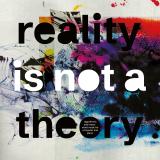
Recorded in concert at the University of Sheffield in March 2025, Reality Is Not A Theory is the first collaboration between Mark Fell and Pat Thomas. Major figures in British experimental music since the 1990s, Fell and Thomas have developed their rigorous practices from radically different backgrounds and perspectives: where Fell’s singular take on synthetic abstraction emerged from Sheffield’s electronic underground, Thomas is a virtuoso improvising pianist steeped in jazz and modernist art music who has simultaneously worked with sampler-based electronics for decades. As the record’s wonderfully academic subtitle explains, we are presented here with two sides of ‘algorithmic and improvised music for computer and piano’, exemplifying both players’ insatiable search for new (and sometimes uncomfortable) playing situations.
The performance begins with Fell’s electronics close to the timbres of acoustic percussion, attacks that suggest wood, metal or glass threaded along a rapid pulse while Thomas focuses on the lowest registers of the piano, deadening the strings. As Fell’s electronics start to ring out and occupy more harmonic space, Thomas turns to wide, repeated clusters, which slowly expand into patterns of chords. Like in his recent solo recordings and his trio work with Joel Grip and Anton Gerbal, Thomas’ playing combines extreme dissonance with a deep lyrical sense. Fell’s work gradually shifts its focus toward drum sounds, drawing on the microtemporal processes that have characterized his practice in recent decades. Heard together with Thomas’ probing piano, the computer sounds call up unexpected associations with the klangfarben antics of improv drummers like Paul Lovens or Tony Oxley. Throughout its second half, the music grows increasingly frenetic, as Thomas sounds out rapid, irregularly repeated figures and beautifully sour chords in the upper register, while Fell’s percussion develops into angular pan-pipe-like feedback and waves of glissandi.
With great confidence and patience, Fell and Thomas often let their individual contributions remain rhythmically distinct and unsynchronised, allowing unexpected correspondence and coincidence to guide the music’s development. Recorded in a hall named after Sheffield steel manufacturer and Master Cutler Mark Firth, the location might suggest a model for understanding how Fell and Thomas interact here: two workers in the same workshop, each immersed in their own part of the production process. Arriving in a striking sleeve designed by Mark Fell, with liner notes by Francis Plagne, Reality Is Not A Theory is an invigorating document of the meeting of two mavericks of contemporary music.
For his last solo record ‘Through a Room’, Bill Nace shifted his usual saturated guitar sound and added tapes, hurdy gurdy, doughnut pipe, bird calls and the mysterious Japanese taishōgoto. Setting up for the final night of his three day residency at OTO with only the taishōgoto soundchecked, Nace hoped that Parker would arrive with his small soprano as its opposite. “I’ve been interested in state change, you know, playing until there’s a shift in time.” Known for his development of multiphonics to produce a constantly shifting pattern, Evan Parker has evolved an instantly recognizable sound - his work the soprano most distinct. Happily, it was the soprano Evan brought with him and as soon as the two start to play they entwine - taking off in a double helix of keys and reed primed for endless reconfiguration. Space warps under the velocity of playing, the pitch rising unrelentingly. It felt like unending lift off in the room, sheer energy until the last note makes remember your feet have been on the floor the whole time. Total time bending shredding.
–
"They had never played together before. They had never even met each other before this springtime 2024 concert at London’s Café Oto.
Evan Parker, circular breathing maestro of the saxophone, a legend in the universe that is Free Improvisation since the late 1960s and Bill Nace, one of the most intriguing experimental “noise” guitarists of the 1990s/2000s underground scene.
For those of us who have been enamored by the live and documented work of both these gents, this Café Oto duo was a must-hear event. It could have gone anywhere musically and that would have been totally fine. Particularly with Evan having a history of being thrown into a variety of challenging collaborations throughout his career, employing the learned elegance of trust in his own sensitivity to listening, responding, leading, following, sparring, intertwining, dialoguing, creating in the instant and, essentially, dignifying the non-hierarchical grace of chance.
The aesthetics of socialist consideration in Evan Parker’s playing, in his community of expanded and personal technique, for a younger player such as Bill Nace, strikes an exemplary model. This notion of respect would be entirely the reason Nace, when offered a residency at the most critical “new music” room in England, would request to play in duo with Parker.
Bill Nace came to prominence mostly during the apex of experimental music activity in and around Western Massachusetts in the early days of the aughts, with a focus on visual art and free improvisation guitar action. He could be found in the daytime hours, his head hanging down over a notepad, penning fine-tuned illustrations and abstract line drawings, while in the evenings he’d be attending any number of basement noise gigs, many of which he’d be participating in. His guitar style came across as being informed as much as by the physicality of his writing utensils in friction to the page as it was to his hearing and redefining of radical recordings ranging anywhere from the Black Unity Group to Black Flag.
Utilizing various metal files and other small cylindrical objects Bill would allow his guitar and amplifier to be in tandem with the improvisatory movements of his body as the instrument balanced, intentionally and, at times, precariously, upon his lap. The performances came across thrilling and daring and they would be mostly in the context of venues nothing more than a low-ceilinged damp and dank New England basement, a clutch of people hanging onto rusty pipes or sitting up on dilapidated washer/dryer machines, the shards of Bill’s “file guitar” sounds ringing out like the most alive music on Earth.
By the time Bill reached Café Oto in early 2024 he had relocated to Philadelphia all the while releasing a succession of collaborative LPs on his Open Mouth label to present his developing progression of solo and collaborative work. He also would find himself considerably engaged with playing the electric taishōgoto, a keyboard-activated string instrument from Japan which can exist as a one, two, four, five, or six string oblong sound object. Bill’s approach to the taishōgoto would not be too unlike his approach to the traditional electric guitar, though no outboard implements such as files, sticks, and rocks are utilized. The similarity would lie wholly with Bill’s full immersion of high velocity action-playing where, with the taishōgoto, an electric drone beauty occurs. The flurry of sonics and resultant harmonics emanating from the amplifier (which Bill opts to dial into with borderline loud-as fuck volume settings) furthers the meta-mantra properties of the instrument in an astounding display of drone dynamism.
This sound world of Bill’s two-stringed taishōgoto on this Café Oto night worked beautifully with Evan Parker’s improvisatory saxophone conceptions. The duology achieved instant lift off at ground zero only to find it’s eventual finale as if it were organically ordained. Time seemingly morphed from its ancient human construct of control, rendered inconsequential to the torrential transcendence of the room wildly activated by the magic resonance of the multi-directional pan-spatial sonance of the music as if it were some beatific blessing. It was one of those nights where art as a liberating force of spirit gifted the listeners with an offering of exaltation and joy. It was entirely mystical and mind blowing. A night of Total Music."
Thurston Moore, London, 2025
- A1: Filastrocca (Nursery Rhyme) 1:11
- A2: Scuola Di Retorica (School Of Rethorics) 2:08
- A3: Retarius In Lotta (Retarius' Fight) 2:13
- A4: Scena, Fiaba, Pantomima (Scene, Tale, Pantomime) 5:24
- A5: Quartilla 0:31
- A6: Quartiere Dei Bordelli (Brothels' Quarter) 2:26
- A7: Mercato, Nebbia (Market, Fog) 1:02
- A8: Orgia (Orgy) 2:34
- B1: Bali 7:02
- B2: Epitaffio (Epitaph) 1:09
- B3: La Nave (The Ship) 1:34
- B4: Inizio Tempesta (Storm Begins) 1:04
- B5: Tempesta Violenta (Violent Storm) 1:30
- B6: Succhiata (Sucking) 0:12
- B7: Naufragio (Shipwreck) 1:33
- B8: Giardino Di Circe (Circe's Garden) 0:43
- B9: Proseleno 0:51
- B10: La Maga (The Witch) 1:19
- B11: Mangiando Il Cadavere + L'uccello (Eating The Corpse + The Bird) 2:27
Within the world of theatrical archives, there are the known, the unknown, the forgotten, and the lost. Demetrio Stratos' stage compositions for Teatro dell'Elfo's groundbreaking 1979 production Satyricon - directed by future Oscar winner Gabriele Salvatores - represents one such lost artifact now wondrously returned to life. This radical sonic work, integrating extended vocal techniques, Balinese instruments, and pioneering whale song recordings, stands as the final masterpiece of Italy's most visionary vocal experimenter, lost for over four decades until Die Schachtel's extraordinary recovery. As Stratos himself explained: "The musical operation performed on Satyricon is particular: the composer-musician here does not compose, but borrows ready-made music, vivisects it, melts it, intervenes and recomposes it on magnetic tape. The structure of the signifier, from a morphological point of view, presents itself as a conceptual collage." The music is obtained by utilizing compositions and musical elements from David Behrman, Joan La Barbara, Balinese Ketyak, Turkish Nay flute, Yugoslavian bagpipe, Pan flute, and whale song, with synthesizer interventions by Paolo Tofani. It began as part of something known - a wild, immersive theatrical event that inaugurated Teatro dell'Elfo's historic venue in 1979, was almost entirely forgotten, becoming lost and then unknown. The original production marked a radical departure for the company: no longer popular street theatre, but a dark, immersive, sophisticated spectacle that transformed their space into a rough wooden arena with a sand floor. Demetrio Stratos, working with Paolo Tofani (fellow Area member), created an entire sonic universe that subverted every conventional function of stage music. Their composition wasn't accompaniment, but autonomous sonic dramaturgy that integrated extended vocal techniques, archaic electronic elements, Nay flutes, Balinese instruments, and pioneering whale song recordings. The result was a three-dimensional soundscape that enveloped audiences, creating an otherworldly acoustic dimension. Stratos' score even intervened in the actors' vocal delivery, with the recordings capturing both the performance and his coaching sessions with the cast. The production featured young actors destined for fame - Elio De Capitani, Ferdinando Bruni, Cristina Crippa, Corinna Agustoni, Ida Marinelli - guided by Gabriele Salvatores in this adaptation of Petronius' ancient novel. Shortly after the Satyricon performances, Stratos was hospitalized for the condition that would lead to his death at just 33 years old. This work represents his final composition - a haunting farewell from one of Italy's most innovative sound artists. Die Schachtel presents this recovered work in collaboration with Teatro dell'Elfo, pulled from the original magnetic tape and carefully restored. Satyricon '79 is one of the great artifacts of 1970s Italian avant-garde - a wild, grinding sonic expose which sucks the ear into its depths, made in the spirit of collaboration and creative risk-taking. The edition includes critical apparatus with essays, testimonies from protagonists, and period photographic documentation, documenting an unrepeatable moment where theatre, vocal research and sonic experimentation converged. This release marks a poignant moment in experimental music history - Stratos' final work, now rescued from the archives and restored to its rightful place in the canon of Italian avant-garde masterpieces. A true wonder of towering historical importance. As essential as it gets for any fan of experimental music, or the history of the Italian avant-garde. Fully restored and newly mastered from the original analog tapes. Absolutely essential.
- Invisible
- The Archaeoptimist - Part 1
- Electric Monk
- The Archaeoptimist - Part 2
- Afourthoughts
- Next Step
- St. Jerome In The Wilderness
"PROG-ROCK LEGENDS SPOCK’S BEARD ARRIVE ON MADFISH WITH NEW ALBUM THE ARCHAEOPTIMIST. GATEFOLD 2LP VERSION, PRESSED ON RED VINYL. “mad time signatures, impossible harmonies, intense arrangements…sensational”
THE PROG REPORT “a true heir of the legacy of bands as Yes, Gentle Giant, Pink Floyd & old Genesis…a truly fascinating voyage.” METAL TEMPLE If Spock’s Beard have taught us anything over their 30+ years in the business, it’s that they have no interest in becoming their own tribute act. The Archaeoptimist - their latest offering & first release on Madfish - is not a retreat into old habits, but a recalibration. Just when you think they’re settling in, they kick the walls out instead. At the centre of this particular storm is Ryo Okumoto, whose fingerprints are all over the album - not just as a performer, but as a driving creative force. Teaming up with co-writer Michael Whiteman (I Am the Manic Whale) & longstanding bandmembers Alan Morse & Ted Leonard, Ryo has helped shape an album that is undeniably Spock’s Beard with a characteristic wry smile to boot. The album was produced by Okumoto & recorded at each band member’s respective home studios. Esteemed producer Rich Mouser (Dream Theater/Weezer) takes up the mixing & mastering duties. Over more than 30 years, Spock’s Beard have established themselves as one of modern progressive music’s most exciting & consistent acts, with live shows as renowned as their studio work & tours that draw sold-out audiences across the globe. Their albums regularly chart worldwide, with 2018’s Noise Floor reaching #3 on the UK Official Rock & Metal Chart & #6 on the Official Progressive Albums Chart.
Originally released in 2011 during the second big coming of deep house, Maya Jane Coles' 'Focus Now' EP returns as part of 20/20 Vision's Full Circle 30th Anniversary series. It's been out of print for years and harks back to a very different sound from Coles, who has since spread her sonic wings into many different worlds. This reissue features all three original tracks, starting with 'Focus Now,' a soft focus and bubbly blend of pulsing synths and rubbery drums, 'Little One' which was something of a warehouse classic of its time, and 'Senseless' with Coles' own vocals and slow motion drum churn. Alongside those is 'The High Life', another syrupy and warm blend of smooth drums and aching vocal hooks that, like the rest of the cuts, is freshly remastered.
- A1: Whole World In My Town 03 05
- A2: Welt In Einer Stadt (2025 Version) 03 59
- A3: Morgen 02 27
- A4: Lilac 03 01
- A5: Gaze Aus Staub 02 29
- A6: Autumn In Paris 04 44
- B1: Gentle Giants 03 42
- B2: Alles Vor Augen 03 47
- B3: Nothing Heavy 03 41
- B4: Ich Sehe Den Blumen Beim Sterben Zu (2025 Version) 04 40
- B5: No More Roses 03 50
»Lilac« is the first Donna Regina album since 2019’s »Transient.« The world has changed considerably since then, which has also left its mark on the Berlin indie pop duo. The songs released as part of the 2021 single »Welt in einer Stadt« (»World in a City«) for Karaoke Kalk had already dealt with the pandemic-induced standstill and its effects on urban space, and also the rest of the album shows that Günther and Regina Janssen have been influenced by recent social and political developments. »In ›Lilac,‹ I imagine good ol’ Earth as a big ol’ bear shaking us off because it can’t stand us anymore,« says Regina Janssen. It has become a serious album, Günther affirms, but he is also adamant that it is not a sad one. Musically, Donna Regina have remained true to the spirit of their early work, recently re-released by Karaoke Kalk: their arrangements are as minimalist as they are emotionally rich.
»The music is always there,« says Regina Janssen about the creation of the tracks on »Lilac.« As always, the two record their music »track by track and without computers,« as Günther notes. Samples play a smaller role this time than on earlier albums, with analogue instruments such as a monophonic synthesiser and, above all, guitars coming to the fore again. This frames lyrics that are being delivered by Regina in German, English, or in both languages. They delve even further into the intricacies of urban life. »Cities are underrated! What a civilisational achievement it is to have so many people living under one sky,« says Regina. »They constantly put you in touch with the unfamiliar. Sometimes they’ll be overwhelming, and they are always alive.« This ambivalence shapes the tone of the album that ponders on the state of the world today.
Starting with the ominous sounds of »Whole World In My Town,« through the dreamscapes of »Autumn In Paris,« to the elegiac conclusion of »No More Roses,« Regina and Günther Janssen move through different timbres and styles with a few select means. Their preference for minimalist electronics becomes evident at times, while elsewhere the pieces open up to balladic arrangements in which the guitar plays a leading role. This turns »Lilac« into a city by itself, the songs forming its soundscape: every neighbourhood looks different, every street has its own character.
- A1: Valse Hot
- A2: Kiss And Run
- B1: I Feel A Song Coming On
- B2: Count Your Blessings
- B3: Pent-Up House
Plus 4 was originally released on Prestige in 1956 and features Sonny Rollins playing with the Cliff Brown/Max Roach Quintet. Described as a particularly strong hard bop set, the album contains 5 cuts, including 2 Rollins originals “Pent-Up House” and one of his best known pieces, “Valse Hot”. This new edition of the album is released as part of the OJC Series on 180-gram vinyl pressed at RTI with all-analogue mastering from the original tapes at Cohearent Audio and a Stoughton Tip-On Jacket.
Channeling inventive sound design into incisive, characterful techno variations, Jurango returns to Livity Sound with an eight-track double EP — his longest release to date. Taíno Gold captures a moment in time for Bristol-based Nate Reece's continually evolving sound as it draws on the full spectrum of UK club music.
Following a debut for Livity's reverse label in 2021 and last year's An Amorphous Mass EP, Reece is more assured than ever tackling a variety of club-focused cuts. The tracks on the release all came together before, during and after a two-month visit to Reece's grandparents' home — an idyllic tropical environment in a small community at the top of a hill in the northern part of Jamaica.
Taíno Gold refers to the island's indigenous Taíno community and the legend of a witch luring Spanish settlers into a trap on the Martha Brae river. There are no messages explicitly embedded in the music, but the release is both a personal reflection of Reece's own experiences and family heritage, plus a reminder about the enduring sceptre of colonialism and the continued need to fight against it. From absorbing Jamaica's fraught history through museum and plantation visits to the abundant nature in the garden surrounding his grandparent's house, the double EP marks a place in time for Reece, with eight advanced, ear-catching tracks as the end result.
From the cascading arps of 'Black Torches' to the tunnelling chords of 'Waiting For Trelawny', the melodic dimension of the Jurango sound is more confident than ever. 'Hibiscus' is a shimmering celebration of dub techno and crooked drum pressure and 'Chalk On Trees' basks in aqueous, fathoms-deep pads to close out the EP. Elsewhere, Reece brings new textural and tonal detail to his percussive workouts, splashing acidic noise around the angular experimentation of 'Maybe It's Broken' and firing off double-time rhythms to inject 'Double Sevens' with infectious urgency.
With the space afforded by a longer release, Reece widens out the scope of his artistic identity while absorbing the particular scene and setting that surrounded him while making the tracks. Taíno Gold is a vibrant next step for Jurango and a natural continuation of his work with Livity Sound.
Livity Sound is a label set up by Peverelist in 2011 as a vehicle for a raw and exploratory strain of UK techno, rooted in the heritage of UK dance music and sound system culture. It has since become one of the UK's foremost protagonists for cutting edge underground electronic music.
- Live Like Ya Mean It
- Worth Fighting For
- It’s Going To Be Alright
- Heaven In This Hell
- Running Back To Your Heart
- Lethal Dose Of Lose
- Archer’s Song
- Seeing Is Believing
- No One Wins
- Hang On Til Tomorrow
- When The Summer Ends
Seit Midnite City 2017 wie ein Tornado die Welt im Sturm eroberten, die müde Musikszene am Kragen packten, ihr wieder Leidenschaft, Spaß, Melodie und Farbe einflößten und sich an die Spitze kämpften, wurden sie zu den wahren Königen des Hair Metal! Die Formation veröffentlichte bisher vier von den Kritikern gefeierte Alben, wobei ihr zweites Werk „There Goes The Neighbourhood“ neben vielen anderen Auszeichnungen als eines der besten Alben in der Geschichte des japanischen Burrn Magazin gelistet wurde. Seitdem tourt Midnite City mit ihrer mitreißenden, energiegeladenen Show durch die ganze Welt, headlined unzählige Tourneen in Großbritannien, spielt Shows in ganz Europa, Amerika, Brasilien und Australien, und absolvierte zwei ausverkaufte Tourneen in Japan, wobei sie eine ständig wachsende Fangemeinde auf der ganzen Welt, bekannt als „The Midnite Army“, begeistert. Im November 2025 kehren die Briten mit ihrem bisher stärksten Album, „Bite The Bullet“, zurück, das alle Erwartungen erfüllt, die Fans an ein Midnite City-Album haben. Von superpoppigem, eingängigem und hooklastigem Partyrock über melodische Rockmonster bis hin zu arena-tauglichen Powerballaden und Glam-Metal-Hymnen mit Attitüde und einer Prise Glam – knüpft „Bite The Bullet“ dort an, wo Platin-Bands Ende der 80er Jahre aufgehört haben. Und keine andere Band der Szene schafft dies derzeit mit mehr Authentizität, Überzeugung, Stil oder Selbstbewusstsein, wodurch die Midnite City wie ein leuchtendes Licht in einem Meer an Nachahmern scheint. Gemischt vom Grammy-preisgekrönten Produzenten Chris Laney (Europe, Crash Diet, Crazy Lixx etc.) liefert „Bite The Bullet“ einen Sound, der wie geschaffen ist für die größten Stadien rund um den Globus und auf einen Schlag alles zurückbringt, was den Hair Metal der späten 80er Jahre so aufregend, energiegeladen und extravagant machte. Midnite City liefert erneut ein Album, das dafür gemacht ist, aufgedreht und laut gespielt zu werden! Die Party fängt gerade erst an ... und alle sind eingeladen. Seht euch die Band auf ihrer Tour 2025/2026 an. Line-up: Rob Wylde (vocals, guitar), Miles Meakin (lead guitar), Josh Williams (bass guitar), Ryan Biggs (drums), Shawn Charvette (keyboard)
- A1: Off Stage—Med Dark Fade Out (Exit) (Starts Edit)
- A2: On Stage—Strike (Falls) (A) (Vinyl Edit)
- A3: Off Stage—Walk (A) (Vinyl Edit)
- A4: On Stage—Crystal
- B1: Off Stage—Pile & Surfaces (B)
- B2: Off Stage—Leaf K2
- B3: Off Stage—K2 Line (Vinyl Edit)
- B4: Strike Ftx (B) (Vinyl Edit)
- C1: On Stage—Strike Ftx (C)
- C2: Off Stage—Stick & Clap (D1)
- C3: Off Stage—Tree Transition (A)
- C4: Off Stage—Stick Walk (Crystal Approach)
- C5: On Stage—Crystal (Rush)
- D1: Reiy C & Swing Mic (B) (Vinyl Edit)
- D2: Off Stage—Surfaces (All) (Vinyl Edit)
- D3: Off Stage—Leaf K2X
- D4: Alt Stage—Drom (A) (Billy Fulcrum)
- D5: On Stage—Everybody Cycles (Vinyl Edit)
- D6: On Stage—Strike Snx (Vinyl Edit)
- D7: Med Dark Fade Out (Vinyl Edit)
Slip is Paul Abbott’s response to his 3 day residency at OTO in 2023. It’s a continued exploration of the acoustic-digital hybrid drum setup Abbott has been developing for some time, which involves drum kit and synthetic sounds combined closely—through an entanglement of limbs and cables—in an intimate but strange relationship with each other.
Paul Abbott hasn’t had any formal musical training, but has a long history of making music, having collaborated for years with Seymour Wright, Pat Thomas, Michael Speers, Cara Tolmie, Anne Gillis and many others. Eventually, led by a profound suspicion of what is fixed or limited, Abbott began finding other ways to organise sound - or what he calls ‘material’:
“I wanted a way to 'persuade' or guide the possibility of something happening - my activity or the events of an algorithmic composition - for example, but without certainty or formalism. It felt to me, during playing, that certain ideas had a particular sort of shape, but more than the form of a line. I began to write alongside (before/after) playing the drums, and ‘characters’ began to enter the scene as a more wobbly, and therefore appropriate option to notation. Working with these characters allowed me to simultaneously approach body, imagination, language and music: without dividing things up or separating these aspects from each other. It allowed me to leave things messy and entangled, whilst trying to deal with form and specificity: wanting to have some things feel or respond differently to other things at other times.”
In approaching his residency, Abbott developed a fixed cast of characters - crystal, lleaf, reiy.F, reiy.C, strike, nee, qosel, sphu and aahn. They each communicate using different kinds of movement and drum kit/s, and Abbott choreographed them as ‘dances’ based on different feelings, or outlines of behaviours suggestive of ways of moving (body, drums, sounds). He then arranged these characters into ‘compositions’: one for each performance day, with each composition featuring multi-layered activity - options for behaviours, ways to move around the rooms, play drums, develop synthetic sounds, change the lights or re-distribute the sound in the space.
After the performances, Abbott took home 9 hours of recordings split into up to 28 multitrack channels for each day, and re-organised his cast once more into a performance for 2LP, CD and digital. It’s an enormous amount of work - but Abbott is activated by the process. For him, the pleasure of unstable edges, possibilities, slippages, is the vital attraction. Like all living organisms, Abbott’s characters have malleability and responsivity. They stimulate a bundle of possible behaviours, a tendency to act a certain way, a temperament, a boundary of respective limits or affordances.
It’s an affective way of working, inclusive of Roscoe Mitchell, Sun Ra, Nathaniel Mackey and Milford Graves. In ‘Pulseology’(2022), Milford Graves reminds us, ‘Breath varies, so cardiac rhythm never has that (metronomic) tempo. It’s always changing. All the alignments of the heart are determined based on the needs of the cells, specifically tissues and organs. The heart knows if it needs to speed up.’ In Slip, to slip, in a heartbeat, is to descend not into the grid of the even metre accorded to the heartbeat, but into a play of mutability and modality. To change is the condition of the heart.
MD008 is here! — a bold new chapter in theever-evolving world of re-edits. This latest instalmentis a masterclass in versatility and emotion: four distinct cuts, four immersivesoundscapes, each crafted to ignite the dancefloor in its own unforgettableway. From hypnotic vocal firestorms to cinematic tributes, MD008 is a recordthat transcends trends and celebrates the timeless art of groove. Vinyl-only,limited edition — a future classic in the making.
A1 –TVGLips
A relentless vocal workout built to commandattention from the very first beat. “TVGLips” is a powerhouse opener —hypnotic, high-energy, and unapologetically intense. Its driving rhythm andsoaring vocal lines lock dancers into a euphoric trance, pushing momentumhigher with every bar. A weapon of choice for peak-time sets.
A2 –Tu Sei
Radiating pure nostalgia, “Tu Sei” channelsthe neon-lit spirit of the 1980s with a contemporary twist. Shimmering synths,heartfelt melodies, and a groove steeped in retro romance make this track anirresistible dancefloor moment. Equal parts cinematic and soulful, it’s a loveletter to a bygone era — and a timeless anthem for now.
B1 –Inquinada
Where new wave attitude meets disco power.“Inquinada” is a darkly seductive cut that pulses with underground energy — rawbasslines, mechanical percussion, and shimmering synth layers collide to createa sound that’s both nostalgic and futuristic. Perfectly balancing edge andallure, it’s a track that keeps the floor moving deep into the night.
B2 –Gatto Fresco
Closing the EP is aheartfelt homage to one of music’s greatest icons. This is a tribute toFreddie, and it’s pure celebration — anthemic, uplifting, and full of life.With its soaring melodies and infectious groove, it captures the unbreakablespirit and theatrical brilliance of Freddie’s legacy, leaving dancersexhilarated and inspired as the lights come up.
LimitedEdition, Vinyl Only
True to form, MD008 ispressed in strictly limited quantities — once it’s gone, it’s gone forever.Collectors, selectors, and lovers of the edit craft: this is a piece you’llwant in your collection.
Back in 2023, I picked up a record by Jacob Dwyer — I was completely captivated. His lyrics weren’t just words; they were portals. I had to track him down. After some digging, I made contact — and asked him if he would like to collaborate with me.
He said yes.
Fast forward through months of back-and-forth, and then it landed — in my inbox — Tom’s House: a one-hour audio-drama written and performed by the incomparable Jacob Dwyer. It’s a hypnotic, surreal journey through the mind of someone returning home after 15 years — disorienting, poetic, and fully immersive.
To accompany this masterwork, I put together my take on Canon HF10 — 12 minutes of deep, rolling tech grooves, bouncing acid basslines, freaked-out synths, and lyrical gold. (“He demanded a fried egg sandwich…”)
Flip to the B-side and things get wild with The Baby Legit Upside Down — a full-tilt burner packed with razor-sharp 808 electro/techno drums, squelchy 101 bass stabs, swirling pads, and an evolving sub that’ll shake the foundations. Dwyer’s voice threads through the chaos with uncanny flair — bizarre, brilliant, unforgettable. The title means what it says.
We close the EP with Red Flowers — slowing the tempo, diving into squelchy breaks and textural weirdness, as Jacob drops in snippets of conversation with his sister, alongside more sharp, off-kilter reflections on Tom’s House.
Check the full audio-drama: Jacob Dwyer – Tom’s House