Buscar:partners in time

Estilos
Todo
Makaya McCraven - In These Times LP

Today Chicago-based percussionist, composer and producer Makaya McCraven announces the details of his new album In These Times, which is set for release on September 23rd via International Anthem / Nonesuch / XL Recordings. The first offering from the new album is a song tiled "Seventh String," which encapsulates the various musical dimensions present on McCraven's new album, a career-defining body of work that is a remarkable new peak for the already-soaring McCraven. In These Times is a collection of polytemporal compositions inspired as much by broader cultural struggles as McCraven's personal experience as a product of a multinational, working class musician community. It's the recording that he's been trying to create for 7+ years, as it's been consistently in process in the background while he's put forth a prolific run of releases including: In The Moment (2015), Highly Rare (2017), Where We Come From (2018), Universal Beings (2018), We're New Again (2020), Universal Beings E&F Sides (2020), and Deciphering the Message (2021). With contributions from over a dozen musicians and creative partners from his tight-knit circle of collaborators - including Jeff Parker, Junius Paul, Brandee Younger, Joel Ross, and Marquis Hill - the music was recorded in five different studios and four live performance spaces while McCraven engaged in extensive post-production work at home. Featuring orchestral, large ensemble arrangements interwoven with the signature "organic beat music" sound that's become his signature, the album is an evolution and a milestone for McCraven, the producer. But moreover, it's the strongest and clearest statement we've yet to hear from McCraven, the composer. Profiled in the New York Times, Vice, Pitchfork, Rolling Stone, the Guardian, and NPR, among other publications, Makaya and the music he makes today is what Passion of Weiss explains, "is part of a necessary conversation about the next evolution of the Black improvised music known colloquially as 'jazz.' He's found the threads connecting the past with the present, and is either wrapping them with new colors and textures, or he's plucking them gleefully like the strings of a grand instrument." McCraven, who has been aptly called a "cultural synthesizer" and "beat scientist," has a unique gift for collapsing space, destroying borders and blending past, present, and future into poly-textural arrangements of post-genre, jazz-rooted 21st century folk music. In These Times encompasses his artistic ethos, his experiences, identity and lineage, while pushing his music to new heights.

Reservar20.10.2022

debe ser publicado en 20.10.2022

23,07
Lee Tracy & Isaac Manning - Is it What You Want

As the sun sets on a quaint East Nashville house, a young man bares a piece of his soul. Facing the camera, sporting a silky suit jacket/shirt/slacks/fingerless gloves ensemble that announces "singer" before he's even opened his mouth, Lee Tracy Johnson settles onto his stage, the front yard. He sways to the dirge-like drum machine pulse of a synth-soaked slow jam, extends his arms as if gaining his balance, and croons in affecting, fragile earnest, "I need your love… oh baby…"

Dogs in the yard next door begin barking. A mysterious cardboard robot figure, beamed in from galaxies unknown and affixed to a tree, is less vocal. Lee doesn't acknowledge either's presence. He's busy feeling it, arms and hands gesticulating. His voice rises in falsetto over the now-quiet dogs, over the ambient noise from the street that seeps into the handheld camcorder's microphone, over the recording of his own voice played back from a boombox off-camera. After six minutes the single, continuous shot ends. In this intimate creative universe there are no re-takes. There are many more music videos to shoot, and as Lee later puts it, "The first time you do it is actually the best. Because you can never get that again. You expressing yourself from within."

"I Need Your Love" dates from a lost heyday. From some time in the '80s or early '90s, when Lee Tracy (as he was known in performance) and his music partner/producer/manager Isaac Manning committed hours upon hours of their sonic and visual ideas to tape. Embracing drum machines and synthesizers – electronics that made their personal futurism palpable – they recorded exclusively at home, live in a room into a simple cassette deck. Soul, funk, electro and new wave informed their songs, yet Lee and Isaac eschewed the confinement of conventional categories and genres, preferring to let experimentation guide them.

"Anytime somebody put out a new record they had the same instruments or the same sound," explains Isaac. "So I basically wanted to find something that's really gonna stand out away from all of the rest of 'em." Their ethos meant that every idea they came up with was at least worth trying: echoed out half-rapped exhortations over frantic techno-style beats, gospel synth soul, modal electro-funk, oddball pop reinterpretations, emo AOR balladry, nods to Prince and the Fat Boys, or arrangements that might collapse mid-song into a mess of arcade game-ish blips before rallying to reach the finish line. All of it conjoined by consistent tape hiss, and most vitally, Lee's chameleonic voice, which managed to wildly shape shift and still evoke something sincere – whether toggling between falsetto and tenor exalting Jesus's return, or punctuating a melismatic romantic adlib with a succinct, "We all know how it feels to be alone."

"People think we went to a studio," says Isaac derisively. "We never went to no studio. We didn't have the money to go to no studio! We did this stuff at home. I shot videos in my front yard with whatever we could to get things together." Sometimes Isaac would just put on an instrumental record, be it "Planet Rock" or "Don't Cry For Me Argentina" (from Evita), press "record," and let Lee improvise over it, yielding peculiar love songs, would-be patriotic anthems, or Elvis Presley or Marilyn Monroe tributes. Technical limitations and a lack of professional polish never dissuaded them. They believed they were onto something.

"That struggle," Isaac says, "made that sound sound good to me."

In the parlance of modern music criticism Lee and Isaac's dizzying DIY efforts would inevitably be described as "outsider." But "outsider" carries the burden of untold additional layers of meaning if you're Black and from the South, creating on a budget, and trying to get someone, anyone within the country music capital of the world to take your vision seriously. "What category should we put it in?" Isaac asks rhetorically. "I don't know. All I know is feeling. I ain't gonna name it nothing. It's music. If it grabs your soul and touch your heart that's what it basically is supposed to do."

=

Born in 1963, the baby boy of nine siblings, Lee Tracy spent his earliest years living amidst the shotgun houses on Nashville's south side. "We was poor, man!" he says, recalling the outhouse his family used for a bathroom and the blocks of ice they kept in the kitchen to chill perishables. "But I actually don't think I really realized I was in poverty until I got grown and started thinking about it." Lee's mom worked at the Holiday Inn; his dad did whatever he had to do, from selling fruit from a horse drawn cart to bootlegging. "We didn't have much," Lee continues, "but my mother and my father got us the things we needed, the clothes on our back." By the end of the decade with the city's urban renewal programs razing entire neighborhoods to accommodate construction of the Interstate, the family moved to Edgehill Projects. Lee remembers music and art as a constant source of inspiration for he and his brothers and sisters – especially after seeing the Jackson 5 perform on Ed Sullivan. "As a small child I just knew that was what I wanted to do."

His older brother Don began musically mentoring him, introducing Lee to a variety of instruments and sounds. "He would never play one particular type of music, like R&B," says Lee. "I was surrounded by jazz, hard rock and roll, easy listening, gospel, reggae, country music; I mean I was a sponge absorbing all of that." Lee taught himself to play drums by beating on cardboard boxes, gaining a rep around the way for his timekeeping, and his singing voice. Emulating his favorites, Earth Wind & Fire and Cameo, he formed groups with other kids with era-evocative band names like Concept and TNT Connection, and emerged as the leader of disciplined rehearsals. "I made them practice," says Lee. "We practiced and practiced and practiced. Because I wanted that perfection." By high school the most accomplished of these bands would take top prize in a prominent local talent show. It was a big moment for Lee, and he felt ready to take things to the next level. But his band-mates had other ideas.

"I don't know what happened," he says, still miffed at the memory. "It must have blew they mind after we won and people started showing notice, because it's like everybody quit! I was like, where the hell did everybody go?" Lee had always made a point of interrogating prospective musicians about their intentions before joining his groups: were they really serious or just looking for a way to pick up girls? Now he understood even more the importance of finding a collaborator just as committed to the music as he was.

=

Isaac Manning had spent much of his life immersed in music and the arts – singing in the church choir with his family on Nashville's north side, writing, painting, dancing, and working various gigs within the entertainment industry. After serving in the armed forces, in the early '70s he ran The Teenage Place, a music and performance venue that catered to the local youth. But he was forced out of town when word of one of his recreational routines created a stir beyond the safe haven of his bohemian circles.

"I was growing marijuana," Isaac explains. "It wasn't no business, I was smoking it myself… I would put marijuana in scrambled eggs, cornbread and stuff." His weed use originated as a form of self-medication to combat severe tooth pain. But when he began sharing it with some of the other young people he hung out with, some of who just so happened to be the kids of Nashville politicians, the cops came calling. "When I got busted," he remembers, "they were talking about how they were gonna get rid of me because they didn't want me saying nothing about they children because of the politics and stuff. So I got my family, took two raggedy cars, and left Nashville and went to Vegas."

Out in the desert, Isaac happened to meet Chubby Checker of "The Twist" fame while the singer was gigging at The Flamingo. Impressed by Isaac's zeal, Checker invited him to go on the road with him as his tour manager/roadie/valet. The experience gave Isaac a window into a part of the entertainment world he'd never encountered – a glimpse of what a true pop act's audience looked like. "Chubby Checker, none of his shows were played for Black folks," he remembers. "All his gigs were done at high-class white people areas." Returning home after a few years with Chubby, Isaac was properly motivated to make it in Music City. He began writing songs and scouting around Nashville for local talent anywhere he could find it with an expressed goal: "Find someone who can deliver your songs the way you want 'em delivered and make people feel what you want them to feel."

One day while walking through Edgehill Projects Isaac heard someone playing the drums in a way that made him stop and take notice. "The music was so tight, just the drums made me feel like, oh I'm-a find this person," he recalls. "So I circled through the projects until I found who it was.

"That's how I met him – Lee Tracy. When I found him and he started singing and stuff, I said, ohhh, this is somebody different."

=

Theirs was a true complementary partnership: young Lee possessed the raw talent, the older Isaac the belief. "He's really the only one besides my brother and my family that really seen the potential in me," says Lee. "He made me see that I could do it."

Isaac long being a night owl, his house also made for a fertile collaborative environment – a space where there always seemed to be a new piece of his visual art on display: paintings, illustrations, and dolls and figures (including an enigmatic cardboard robot). Lee and Issac would hang out together and talk, listen to music, conjure ideas, and smoke the herb Isaac had resumed growing in his yard. "It got to where I could trust him, he could trust me," Isaac says of their bond. They also worked together for hours on drawings, spreading larges rolls of paper on the walls and sketching faces with abstract patterns and imagery: alien-like beings, tri-horned horse heads, inverted Janus-like characters where one visage blurred into the other.

Soon it became apparent that they didn't need other collaborators; self-sufficiency was the natural way forward. At Isaac's behest Lee, already fed up with dealing with band musicians, began playing around with a poly-sonic Yamaha keyboard at the local music store. "It had everything on it – trumpet, bass, drums, organ," remembers Lee. "And that's when I started recording my own stuff."

The technology afforded Lee the flexibility and independence he craved, setting him on a path other bedroom musicians and producers around the world were simultaneously following through the '80s into the early '90s. Saving up money from day jobs, he eventually supplemented the Yamaha Isaac had gotten him with Roland and Casio drum machines and a Moog. Lee was living in an apartment in Hillside at that point caring for his dad, who'd been partially paralyzed since early in life. In the evenings up in his second floor room, the music put him in a zone where he could tune out everything and lose himself in his ideas.

"Oh I loved it," he recalls. "I would really experiment with the instruments and use a lot of different sound effects. I was looking for something nobody else had. I wanted something totally different. And once I found the sound I was looking for, I would just smoke me a good joint and just let it go, hit the record button." More potent a creative stimulant than even Isaac's weed was the holistic flow and spontaneity of recording. Between sessions at Isaac's place and Lee's apartment, their volume of output quickly ballooned.

"We was always recording," says Lee. "That's why we have so much music. Even when I went to Isaac's and we start creating, I get home, my mind is racing, I gotta start creating, creating, creating. I remember there were times when I took a 90-minute tape from front to back and just filled it up."

"We never practiced," says Isaac. "See, that was just so odd about the whole thing. I could relate to him, and tell him about the songs I had ideas for and everything and stuff. And then he would bring it back or whatever, and we'd get together and put it down." Once the taskmaster hell bent on rehearsing, Lee had flipped a full 180. Perfection was no longer an aspiration, but the enemy of inspiration.

"I seen where practicing and practicing got me," says Lee. "A lot of musicians you get to playing and they gotta stop, they have to analyze the music. But while you analyzing you losing a lot of the greatness of what you creating. Stop analyzing what you play, just play! And it'll all take shape."

=

"I hope you understood the beginning of the record because this was invented from a dream I had today… (You tell me, I'll tell you, we'll figure it out together)" – Lee Tracy and Isaac Manning, "Hope You Understand"

Lee lets loose a maniacal cackle when he acknowledges that the material that he and Isaac recorded was by anyone's estimation pretty out there. It's the same laugh that commences "Hope You Understand" – a chaotic transmission that encapsulates the duality at the heart of their music: a stated desire to reach people and a compulsion to go as leftfield as they saw fit.

"We just did it," says Lee. "We cut the music on and cut loose. I don't sit around and write. I do it by listening, get a feeling, play the music, and the lyrics and stuff just come out of me."

The approach proved adaptable to interpreting other artists' material. While recording a cover of Whitney Houston's pop ballad "Saving All My Love For You," Lee played Whitney's version in his headphones as he laid down his own vocals – partially following the lyrics, partially using them as a departure point. The end result is barely recognizable compared with the original, Lee and Isaac having switched up the time signature and reinvented the melody along the way towards morphing a slick mainstream radio standard into something that sounds solely their own.

"I really used that song to get me started," says Lee. "Then I said, well I need something else, something is missing. Something just came over me. That's when I came up with 'Is It What You Want.'"

The song would become the centerpiece of Lee and Isaac's repertoire. Pushed along by a percolating metronomic Rhythm King style beat somewhere between a military march and a samba, "Is It What You Want" finds Lee pleading the sincerity of his commitment to a potential love interest embellished by vocal tics and hiccups subtlely reminiscent of his childhood hero MJ. Absent chord changes, only synth riffs gliding in and out like apparitions, the song achieves a lingering lo-fi power that leaves you feeling like it's still playing, somewhere, even after the fade out.

"I don't know, it's like a real spiritual song," Lee reflects. "But it's not just spiritual. To me the more I listen to it it's like about everything that you do in your everyday life, period. Is it what you want? Do you want a car or you don't want a car? Do you want Jesus or do you want the Devil? It's basically asking you the question. Can't nobody answer the question but you yourself."

In 1989 Lee won a lawsuit stemming from injuries sustained from a fight he'd gotten into. He took part of the settlement money and with Isaac pressed up "Saving All My Love For You" b/w "Is It What You Want" as a 45 single. Isaac christened the label One Chance Records. "Because that's all we wanted," he says with a laugh, "one chance."

Isaac sent the record out to radio stations and major labels, hoping for it to make enough noise to get picked up nationally. But the response he and Lee were hoping for never materialized. According to Isaac the closest the single got to getting played on the radio is when a disk jock from a local station made a highly unusual announcement on air: "The dude said on the radio, 107.5 – 'We are not gonna play 'Is It What You Want.' We cracked up! Wow, that's deep.

"It was a whole racist thing that was going on," he reflects. "So we just looked over and kept on going. That was it. That was about the way it goes… If you were Black and you were living in Nashville and stuff, that's the way you got treated." Isaac already knew as much from all the times he'd brought he and Lee's tapes (even their cache of country music tunes) over to Music Row to try to drum up interest to no avail.

"Isaac, he really worked his ass off," says Lee. "He probably been to every record place down on Music Row." Nashville's famed recording and music business corridor wasn't but a few blocks from where Lee grew up. Close enough, he remembers, for him to ride his bike along its back alleys and stumble upon the occasional random treasure, like a discarded box of harmonicas. Getting in through the front door, however, still felt a world away.

"I just don't think at the time our music fell into a category for them," he concedes. "It was before its time."

=

Lee stopped making music some time in the latter part of the '90s, around the time his mom passed away and life became increasingly tough to manage. "When my mother died I had a nervous breakdown," he says, "So I shut down for a long time. I was in such a sadness frame of mind. That's why nobody seen me. I had just disappeared off the map." He fell out of touch with Isaac, and in an indication of just how bad things had gotten for him, lost track of all the recordings they'd made together. Music became a distant memory.

Fortunately, Isaac kept the faith. In a self-published collection of his poetry – paeans to some of his favorite entertainment and public figures entitled Friends and Dick Clark – he'd written that he believed "music has a life of its own." But his prescience and presence of mind were truly manifested in the fact that he kept an archive of he and Lee's work. As perfectly imperfect as "Is It What You Want" now sounds in a post-Personal Space world, Lee and Isaac's lone official release was in fact just a taste. The bulk of the Is It What You Want album is culled from the pair's essentially unheard home recordings – complete songs, half-realized experiments, Isaac's blue monologues and pronouncements et al – compiled, mixed and programmed in the loose and impulsive creative spirit of their regular get-togethers from decades ago. The rest of us, it seems, may have finally caught up to them.

On the prospect of at long last reaching a wider audience, Isaac says simply, "I been trying for a long time, it feels good." Ever the survivor, he adds, "The only way I know how to make it to the top is to keep climbing. If one leg break on the ladder, hey, you gotta fix it and keep on going… That's where I be at. I'll kill death to make it out there."

For Lee it all feels akin to a personal resurrection: "It's like I was in a tomb and the tomb was opened and I'm back… Man, it feels so great. I feel like I'm gonna jump out of my skin." Success at this stage of his life, he realizes, probably means something different than what it did back when he was singing and dancing in Isaac's front yard. "What I really mean by 'making it,'" he explains isn't just the music being heard but, "the story being told."

Occasionally Lee will pull up "Is It What You Want" on YouTube on his phone, put on his headphones, and listen. He remembers the first time he heard his recorded voice. How surreal it was, how he thought to himself, "Is that really me?" What would he say to that younger version of himself now?

"I would probably tell myself, hang in there, don't give up. Keep striving for the goal. And everything will work out."

Despite what's printed on the record label, sometimes you do get more than one chance.

No en stock

Haga su pedido ahora y le encargaremos el artículo en nuestro proveedor.

11,72

Ültimo hace: 3 Años
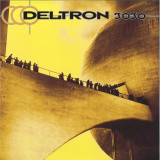
Deltron 3030 - Deltron 3030 LP 2x12"

The super group Deltron 3030 is composed of producer Dan the Automator, rapper Del tha Funkee Homosapien and DJ Kid Koala and sometimes features guest artists who also take on varying futuristic pseudonyms. Originally released in 2000 on the now-defunct 75ARK record label, this hip hop concept album was released the same year as the Gorillaz' first 12" and is on a similar plane. Following the release of Deltron 3030, all three members participated in the Gorillaz' self-titled debut album. With Del aka Deltron Zero on vocals, Dan the Automator aka The Cantankerous Captain Aptos on production, and Kid Koala aka Skiznoid the Boy Wonder on turntables, this album takes the listener on a paranoid journey set in a dystopian year 3030 dealing with viruses, the apocalypse, an oppressive government, and a war waged against a huge company called the Corporate Bank of Time that rules the universe, all to the well-crafted and consistent musical backing of the Automator. Appearances by Damon Albarn (The Gorillaz, Blur), Prince Paul, Peanut Butter Wolf, DJ Money Mark, Paul Barman, Mark Bell (Bjork, production), Sean Lennon, and Mr. Lif compliment Del's vocal style and add the right amount of flavor to this classic period piece.

No en stock

Haga su pedido ahora y le encargaremos el artículo en nuestro proveedor.

36,93

Ültimo hace: 3 Años
Vegyn - Like A Good Old Friend LP

PLZ Make It Ruins founder Vegyn is an artist that
pushes diverse sonics in both his solo work and his
collaborations. ‘Like A Good Old Friend’ sees him
follow up 2019’s debut album ‘Only Diamonds Cut
Diamonds’ with a six track EP that effortlessly
traverses electronic, dance, alternative and rap
influences whilst retaining a playful, carefree
attitude.
Vegyn created an impact on a global level through
collaborating with Frank Ocean on his seminal
‘Endless’ and ‘Blonde’ projects, a partnership that
lives on with Vegyn co-hosting Ocean’s Blonded
show.
Vegyn’s other production credits, collaborations
and remixes include Travis Scott, Kali Uchis, Dean
Blunt, KUČKA, Duval Timothy, John Glacier,
SebastiAn (Ed Banger), Porches.
12” with printed inner sleeve.

No en stock

Haga su pedido ahora y le encargaremos el artículo en nuestro proveedor.

27,69

Ültimo hace: 8 Meses
The Flower Kings - Space Revolver (Re-issue 2022) 2x12" + CD

Back In The World of Adventures Swedish progressive rock legends The Flower Kings, and longtime label-partners InsideOutMusic, will begin an extensive reissue campaign in 2022, which will see the entire catalogue of the band reissued on CD & Vinyl in remastered editions, with it being the first time many of the albums have been available on wax. First up are 1995’s Back In The World of Adventures & 1996’s Retropolis, which both featured the line-up of Roine Stolt, Tomas Bodin, Michael Stolt, Jaime Salazar, Hasse Fröberg, Ulf Wallander and Hasse Bruniusson. They will be available as Ltd CD Digipak & Gatefold 2LP+CD & LP-booklet, both featuring remastered and partly remixed audio and expanded artwork and photo material from that period. Retropolis Swedish progressive rock legends The Flower Kings, and longtime label-partners InsideOutMusic, will begin an extensive reissue campaign in 2022, which will see the entire catalogue of the band reissued on CD & Vinyl in remastered editions, with it being the first time many of the albums have been available on wax. First up are 1995’s Back In The World of Adventures & 1996’s Retropolis, which both featured the line-up of Roine Stolt, Tomas Bodin, Michael Stolt, Jaime Salazar, Hasse Fröberg, Ulf Wallander and Hasse Bruniusson. They will be available as Ltd CD Digipak & Gatefold 2LP+CD & LP-booklet, both featuring remastered and partly remixed audio and expanded artwork and photo material from that period. Stardust We Are Swedish progressive rock legends The Flower Kings, and longtime label-partners InsideOutMusic, will begin an extensive reissue campaign in 2022, which will see the entire catalogue of the band reissued on CD & Vinyl in remastered editions, with it being the first time many of the albums have been available on wax. ‘Stardust We Are’ was the bands third studio album, and first double-album. It features the epic 25-minute title track which has since become one of the bands signature songs. They will be available as Ltd 2CD Digipak & Gatefold 3LP+2CD & LP-booklet, both featuring remastered and partly remixed audio and expanded artwork. Flower Power Swedish progressive rock legends The Flower Kings, and longtime label-partners InsideOutMusic, will begin an extensive reissue campaign in 2022, which will see the entire catalogue of the band reissued on CD & Vinyl in remastered editions, with it being the first time many of the albums have been available on wax. ‘Flower Power’ was the bands fourth studio album, and second double-album. It features the nearly 60 minute epic ‘Garden of Dreams’. They will be available as Ltd 2CD Digipak & Gatefold 3LP+2CD & LP-booklet, both featuring remastered and partly remixed audio and expanded artwork.

Reservar07.10.2022

debe ser publicado en 07.10.2022

24,79
The Flower Kings - The Rainmaker (Re-issue 2022) 2x12" + CD

Back In The World of Adventures Swedish progressive rock legends The Flower Kings, and longtime label-partners InsideOutMusic, will begin an extensive reissue campaign in 2022, which will see the entire catalogue of the band reissued on CD & Vinyl in remastered editions, with it being the first time many of the albums have been available on wax. First up are 1995’s Back In The World of Adventures & 1996’s Retropolis, which both featured the line-up of Roine Stolt, Tomas Bodin, Michael Stolt, Jaime Salazar, Hasse Fröberg, Ulf Wallander and Hasse Bruniusson. They will be available as Ltd CD Digipak & Gatefold 2LP+CD & LP-booklet, both featuring remastered and partly remixed audio and expanded artwork and photo material from that period. Retropolis Swedish progressive rock legends The Flower Kings, and longtime label-partners InsideOutMusic, will begin an extensive reissue campaign in 2022, which will see the entire catalogue of the band reissued on CD & Vinyl in remastered editions, with it being the first time many of the albums have been available on wax. First up are 1995’s Back In The World of Adventures & 1996’s Retropolis, which both featured the line-up of Roine Stolt, Tomas Bodin, Michael Stolt, Jaime Salazar, Hasse Fröberg, Ulf Wallander and Hasse Bruniusson. They will be available as Ltd CD Digipak & Gatefold 2LP+CD & LP-booklet, both featuring remastered and partly remixed audio and expanded artwork and photo material from that period. Stardust We Are Swedish progressive rock legends The Flower Kings, and longtime label-partners InsideOutMusic, will begin an extensive reissue campaign in 2022, which will see the entire catalogue of the band reissued on CD & Vinyl in remastered editions, with it being the first time many of the albums have been available on wax. ‘Stardust We Are’ was the bands third studio album, and first double-album. It features the epic 25-minute title track which has since become one of the bands signature songs. They will be available as Ltd 2CD Digipak & Gatefold 3LP+2CD & LP-booklet, both featuring remastered and partly remixed audio and expanded artwork. Flower Power Swedish progressive rock legends The Flower Kings, and longtime label-partners InsideOutMusic, will begin an extensive reissue campaign in 2022, which will see the entire catalogue of the band reissued on CD & Vinyl in remastered editions, with it being the first time many of the albums have been available on wax. ‘Flower Power’ was the bands fourth studio album, and second double-album. It features the nearly 60 minute epic ‘Garden of Dreams’. They will be available as Ltd 2CD Digipak & Gatefold 3LP+2CD & LP-booklet, both featuring remastered and partly remixed audio and expanded artwork.

Reservar07.10.2022

debe ser publicado en 07.10.2022

24,79
SOL MESSIAH - GOD CMPLX LP (2x12")

12" Widespine Gloss Jacket, Full Color Printed Record Sleeves, 1x Red & Black Marbled Vinyl, 1x Blue & Black Marbled Vinyl and Free Digital Download Card. Growing up in his hometown of Atlanta, artist/producer Sol Messiah has always been inundated with the rich and energizing spirit of Hip Hop culture. Breakdancing from a young age eventually led him joining the legendary Rock Steady Crew out of New York City and learning and mastering the skill of DJing. From there, he began taking an interest in production too, which ultimately led him to working alongside legendary Atlanta producer, Dallas Austin. While Sol Messiah's time with Austin created a deep catalog filled with timeless tracks for TLC, Madonna, Boyz II Men and more, he eventually chose to pursue his own path independently and spent years building a stunning catalog of his own, producing popular tracks for Chamillionaire, David Banner, Nappy Roots, Dead Prez and more. Soon, Sol Messiah would embark on a fruitful musical partnership with a fierce lyricist named Sa-Roc. Together, Sa-Roc and Messiah have released over a dozen projects thus far, including Sa-Roc's groundbreaking 2020 debut on Rhymesayers Entertainment, The Sharecropper's Daughter. As a duo, Sa-Roc and Sol Messiah have amassed a global reach, touring internationally and rocking crowds across continents. They have performed at the legendary Jazz Cafe in London, performed live for BBC, and have shared the stage with luminaries such as Common, The Roots and Jay Electronica. On GOD CMPLX, Sol Messiah connects with some of the finest MCs in the game to create an impressive collection of Hip Hop music that's both innovative and inspiring. Featuring guest performances from KXNG Crooked, Sa-Roc, Evidence, Locksmith, Slug (Atmosphere), Murs, Aesop Rock, Baba Zumbi (Zion I), Che Noir, Lyric Jones and more, GOD CMPLX is a powerful and engaging project serving as a testament to Sol Messiah's skills both as a producer as well a visionary.

Reservar30.09.2022

debe ser publicado en 30.09.2022

27,69
Lee Tracy & Isaac Manning - Is it What You Want LP

As the sun sets on a quaint East Nashville house, a young man bares a piece of his soul. Facing the camera, sporting a silky suit jacket/shirt/slacks/fingerless gloves ensemble that announces "singer" before he's even opened his mouth, Lee Tracy Johnson settles onto his stage, the front yard. He sways to the dirge-like drum machine pulse of a synth-soaked slow jam, extends his arms as if gaining his balance, and croons in affecting, fragile earnest, "I need your love… oh baby…"

Dogs in the yard next door begin barking. A mysterious cardboard robot figure, beamed in from galaxies unknown and affixed to a tree, is less vocal. Lee doesn't acknowledge either's presence. He's busy feeling it, arms and hands gesticulating. His voice rises in falsetto over the now-quiet dogs, over the ambient noise from the street that seeps into the handheld camcorder's microphone, over the recording of his own voice played back from a boombox off-camera. After six minutes the single, continuous shot ends. In this intimate creative universe there are no re-takes. There are many more music videos to shoot, and as Lee later puts it, "The first time you do it is actually the best. Because you can never get that again. You expressing yourself from within."

"I Need Your Love" dates from a lost heyday. From some time in the '80s or early '90s, when Lee Tracy (as he was known in performance) and his music partner/producer/manager Isaac Manning committed hours upon hours of their sonic and visual ideas to tape. Embracing drum machines and synthesizers – electronics that made their personal futurism palpable – they recorded exclusively at home, live in a room into a simple cassette deck. Soul, funk, electro and new wave informed their songs, yet Lee and Isaac eschewed the confinement of conventional categories and genres, preferring to let experimentation guide them.

"Anytime somebody put out a new record they had the same instruments or the same sound," explains Isaac. "So I basically wanted to find something that's really gonna stand out away from all of the rest of 'em." Their ethos meant that every idea they came up with was at least worth trying: echoed out half-rapped exhortations over frantic techno-style beats, gospel synth soul, modal electro-funk, oddball pop reinterpretations, emo AOR balladry, nods to Prince and the Fat Boys, or arrangements that might collapse mid-song into a mess of arcade game-ish blips before rallying to reach the finish line. All of it conjoined by consistent tape hiss, and most vitally, Lee's chameleonic voice, which managed to wildly shape shift and still evoke something sincere – whether toggling between falsetto and tenor exalting Jesus's return, or punctuating a melismatic romantic adlib with a succinct, "We all know how it feels to be alone."

"People think we went to a studio," says Isaac derisively. "We never went to no studio. We didn't have the money to go to no studio! We did this stuff at home. I shot videos in my front yard with whatever we could to get things together." Sometimes Isaac would just put on an instrumental record, be it "Planet Rock" or "Don't Cry For Me Argentina" (from Evita), press "record," and let Lee improvise over it, yielding peculiar love songs, would-be patriotic anthems, or Elvis Presley or Marilyn Monroe tributes. Technical limitations and a lack of professional polish never dissuaded them. They believed they were onto something.

"That struggle," Isaac says, "made that sound sound good to me."

In the parlance of modern music criticism Lee and Isaac's dizzying DIY efforts would inevitably be described as "outsider." But "outsider" carries the burden of untold additional layers of meaning if you're Black and from the South, creating on a budget, and trying to get someone, anyone within the country music capital of the world to take your vision seriously. "What category should we put it in?" Isaac asks rhetorically. "I don't know. All I know is feeling. I ain't gonna name it nothing. It's music. If it grabs your soul and touch your heart that's what it basically is supposed to do."

=

Born in 1963, the baby boy of nine siblings, Lee Tracy spent his earliest years living amidst the shotgun houses on Nashville's south side. "We was poor, man!" he says, recalling the outhouse his family used for a bathroom and the blocks of ice they kept in the kitchen to chill perishables. "But I actually don't think I really realized I was in poverty until I got grown and started thinking about it." Lee's mom worked at the Holiday Inn; his dad did whatever he had to do, from selling fruit from a horse drawn cart to bootlegging. "We didn't have much," Lee continues, "but my mother and my father got us the things we needed, the clothes on our back." By the end of the decade with the city's urban renewal programs razing entire neighborhoods to accommodate construction of the Interstate, the family moved to Edgehill Projects. Lee remembers music and art as a constant source of inspiration for he and his brothers and sisters – especially after seeing the Jackson 5 perform on Ed Sullivan. "As a small child I just knew that was what I wanted to do."

His older brother Don began musically mentoring him, introducing Lee to a variety of instruments and sounds. "He would never play one particular type of music, like R&B," says Lee. "I was surrounded by jazz, hard rock and roll, easy listening, gospel, reggae, country music; I mean I was a sponge absorbing all of that." Lee taught himself to play drums by beating on cardboard boxes, gaining a rep around the way for his timekeeping, and his singing voice. Emulating his favorites, Earth Wind & Fire and Cameo, he formed groups with other kids with era-evocative band names like Concept and TNT Connection, and emerged as the leader of disciplined rehearsals. "I made them practice," says Lee. "We practiced and practiced and practiced. Because I wanted that perfection." By high school the most accomplished of these bands would take top prize in a prominent local talent show. It was a big moment for Lee, and he felt ready to take things to the next level. But his band-mates had other ideas.

"I don't know what happened," he says, still miffed at the memory. "It must have blew they mind after we won and people started showing notice, because it's like everybody quit! I was like, where the hell did everybody go?" Lee had always made a point of interrogating prospective musicians about their intentions before joining his groups: were they really serious or just looking for a way to pick up girls? Now he understood even more the importance of finding a collaborator just as committed to the music as he was.

=

Isaac Manning had spent much of his life immersed in music and the arts – singing in the church choir with his family on Nashville's north side, writing, painting, dancing, and working various gigs within the entertainment industry. After serving in the armed forces, in the early '70s he ran The Teenage Place, a music and performance venue that catered to the local youth. But he was forced out of town when word of one of his recreational routines created a stir beyond the safe haven of his bohemian circles.

"I was growing marijuana," Isaac explains. "It wasn't no business, I was smoking it myself… I would put marijuana in scrambled eggs, cornbread and stuff." His weed use originated as a form of self-medication to combat severe tooth pain. But when he began sharing it with some of the other young people he hung out with, some of who just so happened to be the kids of Nashville politicians, the cops came calling. "When I got busted," he remembers, "they were talking about how they were gonna get rid of me because they didn't want me saying nothing about they children because of the politics and stuff. So I got my family, took two raggedy cars, and left Nashville and went to Vegas."

Out in the desert, Isaac happened to meet Chubby Checker of "The Twist" fame while the singer was gigging at The Flamingo. Impressed by Isaac's zeal, Checker invited him to go on the road with him as his tour manager/roadie/valet. The experience gave Isaac a window into a part of the entertainment world he'd never encountered – a glimpse of what a true pop act's audience looked like. "Chubby Checker, none of his shows were played for Black folks," he remembers. "All his gigs were done at high-class white people areas." Returning home after a few years with Chubby, Isaac was properly motivated to make it in Music City. He began writing songs and scouting around Nashville for local talent anywhere he could find it with an expressed goal: "Find someone who can deliver your songs the way you want 'em delivered and make people feel what you want them to feel."

One day while walking through Edgehill Projects Isaac heard someone playing the drums in a way that made him stop and take notice. "The music was so tight, just the drums made me feel like, oh I'm-a find this person," he recalls. "So I circled through the projects until I found who it was.

"That's how I met him – Lee Tracy. When I found him and he started singing and stuff, I said, ohhh, this is somebody different."

=

Theirs was a true complementary partnership: young Lee possessed the raw talent, the older Isaac the belief. "He's really the only one besides my brother and my family that really seen the potential in me," says Lee. "He made me see that I could do it."

Isaac long being a night owl, his house also made for a fertile collaborative environment – a space where there always seemed to be a new piece of his visual art on display: paintings, illustrations, and dolls and figures (including an enigmatic cardboard robot). Lee and Issac would hang out together and talk, listen to music, conjure ideas, and smoke the herb Isaac had resumed growing in his yard. "It got to where I could trust him, he could trust me," Isaac says of their bond. They also worked together for hours on drawings, spreading larges rolls of paper on the walls and sketching faces with abstract patterns and imagery: alien-like beings, tri-horned horse heads, inverted Janus-like characters where one visage blurred into the other.

Soon it became apparent that they didn't need other collaborators; self-sufficiency was the natural way forward. At Isaac's behest Lee, already fed up with dealing with band musicians, began playing around with a poly-sonic Yamaha keyboard at the local music store. "It had everything on it – trumpet, bass, drums, organ," remembers Lee. "And that's when I started recording my own stuff."

The technology afforded Lee the flexibility and independence he craved, setting him on a path other bedroom musicians and producers around the world were simultaneously following through the '80s into the early '90s. Saving up money from day jobs, he eventually supplemented the Yamaha Isaac had gotten him with Roland and Casio drum machines and a Moog. Lee was living in an apartment in Hillside at that point caring for his dad, who'd been partially paralyzed since early in life. In the evenings up in his second floor room, the music put him in a zone where he could tune out everything and lose himself in his ideas.

"Oh I loved it," he recalls. "I would really experiment with the instruments and use a lot of different sound effects. I was looking for something nobody else had. I wanted something totally different. And once I found the sound I was looking for, I would just smoke me a good joint and just let it go, hit the record button." More potent a creative stimulant than even Isaac's weed was the holistic flow and spontaneity of recording. Between sessions at Isaac's place and Lee's apartment, their volume of output quickly ballooned.

"We was always recording," says Lee. "That's why we have so much music. Even when I went to Isaac's and we start creating, I get home, my mind is racing, I gotta start creating, creating, creating. I remember there were times when I took a 90-minute tape from front to back and just filled it up."

"We never practiced," says Isaac. "See, that was just so odd about the whole thing. I could relate to him, and tell him about the songs I had ideas for and everything and stuff. And then he would bring it back or whatever, and we'd get together and put it down." Once the taskmaster hell bent on rehearsing, Lee had flipped a full 180. Perfection was no longer an aspiration, but the enemy of inspiration.

"I seen where practicing and practicing got me," says Lee. "A lot of musicians you get to playing and they gotta stop, they have to analyze the music. But while you analyzing you losing a lot of the greatness of what you creating. Stop analyzing what you play, just play! And it'll all take shape."

=

"I hope you understood the beginning of the record because this was invented from a dream I had today… (You tell me, I'll tell you, we'll figure it out together)" – Lee Tracy and Isaac Manning, "Hope You Understand"

Lee lets loose a maniacal cackle when he acknowledges that the material that he and Isaac recorded was by anyone's estimation pretty out there. It's the same laugh that commences "Hope You Understand" – a chaotic transmission that encapsulates the duality at the heart of their music: a stated desire to reach people and a compulsion to go as leftfield as they saw fit.

"We just did it," says Lee. "We cut the music on and cut loose. I don't sit around and write. I do it by listening, get a feeling, play the music, and the lyrics and stuff just come out of me."

The approach proved adaptable to interpreting other artists' material. While recording a cover of Whitney Houston's pop ballad "Saving All My Love For You," Lee played Whitney's version in his headphones as he laid down his own vocals – partially following the lyrics, partially using them as a departure point. The end result is barely recognizable compared with the original, Lee and Isaac having switched up the time signature and reinvented the melody along the way towards morphing a slick mainstream radio standard into something that sounds solely their own.

"I really used that song to get me started," says Lee. "Then I said, well I need something else, something is missing. Something just came over me. That's when I came up with 'Is It What You Want.'"

The song would become the centerpiece of Lee and Isaac's repertoire. Pushed along by a percolating metronomic Rhythm King style beat somewhere between a military march and a samba, "Is It What You Want" finds Lee pleading the sincerity of his commitment to a potential love interest embellished by vocal tics and hiccups subtlely reminiscent of his childhood hero MJ. Absent chord changes, only synth riffs gliding in and out like apparitions, the song achieves a lingering lo-fi power that leaves you feeling like it's still playing, somewhere, even after the fade out.

"I don't know, it's like a real spiritual song," Lee reflects. "But it's not just spiritual. To me the more I listen to it it's like about everything that you do in your everyday life, period. Is it what you want? Do you want a car or you don't want a car? Do you want Jesus or do you want the Devil? It's basically asking you the question. Can't nobody answer the question but you yourself."

In 1989 Lee won a lawsuit stemming from injuries sustained from a fight he'd gotten into. He took part of the settlement money and with Isaac pressed up "Saving All My Love For You" b/w "Is It What You Want" as a 45 single. Isaac christened the label One Chance Records. "Because that's all we wanted," he says with a laugh, "one chance."

Isaac sent the record out to radio stations and major labels, hoping for it to make enough noise to get picked up nationally. But the response he and Lee were hoping for never materialized. According to Isaac the closest the single got to getting played on the radio is when a disk jock from a local station made a highly unusual announcement on air: "The dude said on the radio, 107.5 – 'We are not gonna play 'Is It What You Want.' We cracked up! Wow, that's deep.

"It was a whole racist thing that was going on," he reflects. "So we just looked over and kept on going. That was it. That was about the way it goes… If you were Black and you were living in Nashville and stuff, that's the way you got treated." Isaac already knew as much from all the times he'd brought he and Lee's tapes (even their cache of country music tunes) over to Music Row to try to drum up interest to no avail.

"Isaac, he really worked his ass off," says Lee. "He probably been to every record place down on Music Row." Nashville's famed recording and music business corridor wasn't but a few blocks from where Lee grew up. Close enough, he remembers, for him to ride his bike along its back alleys and stumble upon the occasional random treasure, like a discarded box of harmonicas. Getting in through the front door, however, still felt a world away.

"I just don't think at the time our music fell into a category for them," he concedes. "It was before its time."

=

Lee stopped making music some time in the latter part of the '90s, around the time his mom passed away and life became increasingly tough to manage. "When my mother died I had a nervous breakdown," he says, "So I shut down for a long time. I was in such a sadness frame of mind. That's why nobody seen me. I had just disappeared off the map." He fell out of touch with Isaac, and in an indication of just how bad things had gotten for him, lost track of all the recordings they'd made together. Music became a distant memory.

Fortunately, Isaac kept the faith. In a self-published collection of his poetry – paeans to some of his favorite entertainment and public figures entitled Friends and Dick Clark – he'd written that he believed "music has a life of its own." But his prescience and presence of mind were truly manifested in the fact that he kept an archive of he and Lee's work. As perfectly imperfect as "Is It What You Want" now sounds in a post-Personal Space world, Lee and Isaac's lone official release was in fact just a taste. The bulk of the Is It What You Want album is culled from the pair's essentially unheard home recordings – complete songs, half-realized experiments, Isaac's blue monologues and pronouncements et al – compiled, mixed and programmed in the loose and impulsive creative spirit of their regular get-togethers from decades ago. The rest of us, it seems, may have finally caught up to them.

On the prospect of at long last reaching a wider audience, Isaac says simply, "I been trying for a long time, it feels good." Ever the survivor, he adds, "The only way I know how to make it to the top is to keep climbing. If one leg break on the ladder, hey, you gotta fix it and keep on going… That's where I be at. I'll kill death to make it out there."

For Lee it all feels akin to a personal resurrection: "It's like I was in a tomb and the tomb was opened and I'm back… Man, it feels so great. I feel like I'm gonna jump out of my skin." Success at this stage of his life, he realizes, probably means something different than what it did back when he was singing and dancing in Isaac's front yard. "What I really mean by 'making it,'" he explains isn't just the music being heard but, "the story being told."

Occasionally Lee will pull up "Is It What You Want" on YouTube on his phone, put on his headphones, and listen. He remembers the first time he heard his recorded voice. How surreal it was, how he thought to himself, "Is that really me?" What would he say to that younger version of himself now?

"I would probably tell myself, hang in there, don't give up. Keep striving for the goal. And everything will work out."

Despite what's printed on the record label, sometimes you do get more than one chance.

No en stock

Haga su pedido ahora y le encargaremos el artículo en nuestro proveedor.

23,49

Ültimo hace: 3 Años
Yhdessa - Along The Simple Line

Purple Vinyl

Concentric Records present this special edition EP by the Berlin-based duo YHDESSA - composed of Dutch-Italian composer and poly- instrumentalist Grand River and Sardinian electronic music experimentalist Enrica Falqui.

Entitled Along The Simple Line, the 5-track EP is a unique sonic journey that merges in pure form the distinct worlds of the two composers, exposing a warm and delicate essence. Perfectly punctuated, and in a pace of its own, the album gently and precisely unfolds through touching musical spaces, dramatic textures, entrancing rhythms and unexpected vocal lines, revealing a wonderful depth. The result is so perfectly uniting as if woven by the same two hands.

Yhdessa is a collaborative project made up of Grand River and Enrica Falqui which was conceptualised in 2017 while the duo shared a music studio and were living as a couple in Berlin. Their first piece, released in 2018 on the label One Instrument Records, was named after the Vermona E-Piano and is composed entirely using the analogue synthesizer that was built in 1978. Following this came their lingering soundscape Waldorf Micro Q featured on the record “One Instrument Volume 01” as well as an impelling remix of Dunes by Jiska Huizing and Rudi Valdersnes.

Aimée Portioli is a Berlin-based Dutch-Italian composer and sound designer who records and performs as Grand River. The name Grand River evokes nature, scale, and movement, all key forces in Portioli’s work. Her first release as Grand River was the resolute 2017 Crescente EP, which includes Flies, a composition named by XLR8R as one of the best tracks of that year. She followed this with her melodious debut album Pineapple (Spazio Disponibile, 2018), which garnered praise from The Quietus, amongst others. The moving and dynamic subsequent album, Blink A Few Times To Clear Your Eyes (Editions Mego, 2020) was lauded by Resident Advisor and The Verge, and was elected among the best albums of 2020 by Inverted Audio. Separately, Grand River’s work has appeared on compilations by Ghostly International, Tresor, Longform Editions and has composed an official remix for Tangerine Dream.

Enrica Falqui is a Sardinian music producer and DJ currently based in Berlin. With artistic versatility as one of her defining traits: she comfortably traverses between the dimensions of electronic music. For over a decade she has dedicated herself to the study of sound and the relentless excavation of lesser-known music, which has earned her bookings all over the world and commissions for her productions from some of the most respected labels including Marignal Returns which released Plexus, a mini-album of cool, divergent compositions. Enrica is also part of the coveted duo, ERIS, whose debut and sophomore EPs, Moments and Champions League, found their home on the illustrious Cabaret Recordings. The releases entwine the forceful with the ethereal and create an original, future-facing and club-orientated sound. Moloko, a drum-focussed track laced with weaving synths, was considered by Resident Advisor as one of the best tracks of 2019.

Aimée and Enrica’s musical union through Yhdessa, is one of colour and warmth. It expresses an experimental electro-ambient side of the two composers, to form a style that is meditative, other-worldly and at times introspective. Although, the two are now, no longer romantically engaged, they maintain a passionate friendship to match this profound musical partnership.

Reservar23.09.2022

debe ser publicado en 23.09.2022

20,46
Makaya McCraven - In These Times LP

Today Chicago-based percussionist, composer and producer Makaya McCraven announces the details of his new album In These Times, which is set for release on September 23rd via International Anthem / Nonesuch / XL Recordings. The first offering from the new album is a song tiled "Seventh String," which encapsulates the various musical dimensions present on McCraven's new album, a career-defining body of work that is a remarkable new peak for the already-soaring McCraven. In These Times is a collection of polytemporal compositions inspired as much by broader cultural struggles as McCraven's personal experience as a product of a multinational, working class musician community. It's the recording that he's been trying to create for 7+ years, as it's been consistently in process in the background while he's put forth a prolific run of releases including: In The Moment (2015), Highly Rare (2017), Where We Come From (2018), Universal Beings (2018), We're New Again (2020), Universal Beings E&F Sides (2020), and Deciphering the Message (2021). With contributions from over a dozen musicians and creative partners from his tight-knit circle of collaborators - including Jeff Parker, Junius Paul, Brandee Younger, Joel Ross, and Marquis Hill - the music was recorded in five different studios and four live performance spaces while McCraven engaged in extensive post-production work at home. Featuring orchestral, large ensemble arrangements interwoven with the signature "organic beat music" sound that's become his signature, the album is an evolution and a milestone for McCraven, the producer. But moreover, it's the strongest and clearest statement we've yet to hear from McCraven, the composer. Profiled in the New York Times, Vice, Pitchfork, Rolling Stone, the Guardian, and NPR, among other publications, Makaya and the music he makes today is what Passion of Weiss explains, "is part of a necessary conversation about the next evolution of the Black improvised music known colloquially as 'jazz.' He's found the threads connecting the past with the present, and is either wrapping them with new colors and textures, or he's plucking them gleefully like the strings of a grand instrument." McCraven, who has been aptly called a "cultural synthesizer" and "beat scientist," has a unique gift for collapsing space, destroying borders and blending past, present, and future into poly-textural arrangements of post-genre, jazz-rooted 21st century folk music. In These Times encompasses his artistic ethos, his experiences, identity and lineage, while pushing his music to new heights.

No en stock

Haga su pedido ahora y le encargaremos el artículo en nuestro proveedor.

19,79

Ültimo hace: 3 Años
Saib - Unwind LP

Saib

Unwind LP

12inchJAKARTA173LP
JAKARTA
16.09.2022

Saib is the prolific producer and guitarist whose insatiable desire to create comes from his childhood: passionate about Bossa Nova, Japanese Anime Soundtracks, Jazz as well as old school Hip-Hop, he draws his inspiration from composers and musicians such as Yoko Kanno, Joe Pass and Nujabes. Bathing in the cosmopolitan culture of Casablanca, a melting pot at the crossroads of the two African and European continents. This diversity is a constant in his music, where groove and melody are skillfully mixed in a style inspired by the classic hip-hop productions of the 90s. Hip Hop beats form the backbone of Saib’s musical palette, as his style skips from Jazz flavors to lounge experiments and to upbeat four on the floor grooves ... and sometimes within a single track.

Saib’s hyper-productivity has allowed him to release, over the last five years, seven albums and more than a dozen EPs and singles, including releases on labels such as Chillhop Music, Cold Busted, Majestic Casual and Blue Note Records. Saib’s tracks are a regular fixture on Editorial Playlists including Spotify’s “Jazz Vibes” (2 million Likes) and “lofi beats” and have accumulated more than 500 million plays on streaming platforms.

Saib’s new LP, “Unwind” maintains the stupendous head-nodding grooviness that listeners have come to love from the young producer with a healthy added dose of Tropical and Lounge/Bossa-jazz influence. Album and single artwork done by star-Moroccan photographer Ismail Zaidy (IG: @l4artiste) who has seen his work featured in GQ Middle East, Art Basel, BASE Milano, Vogue Arabia, and has done partnerships with The Sims and Adobe. LP design work done by Jakarta label mainstay, Robert Winter. “Unwind” also includes features by Rotterdam’s ØDYSSEE and legendary Hip-Hop MC Masta Ace. Jakarta is ecstatic to share such a career-defining work, arriving digitally and physically September 16th, 2022.

The albums 1st single, “Mushroom Samba” arrives Wednesday, June 29th along with the vinyl pre-order announcement. The track is deliciously groovy, and is a perfect example of the kind of sunny, jubilant grooves to be encountered on the LP. Saib takes the lofi-expertise he’s become known for since his 2015 debut and brings a freshness to the beat-genre. The song is perfect for the onset of summer and will have you humming along to the brass refrain by the songs end.

2nd single, “Pennywise,” will be released July 13 and features legendary Hip-Hop MC Masta Ace on the album’s only vocal track. The track is a surefire splash of hip-hop that’s both nostalgic and forward-moving. Ace sounds as fresh as ever, flowing over a head-bobbing beat with lush, tropical guitar inflections. While the beat brings to mind sandy shores and sun rays, Ace’s two verses invoke skyscrapers and boomboxes, making “Pennywise” a perfect track for your summer hip-hop fix.

Saib’s 3rd single is the stunning, swirling, and utterly smooth “Cosmic Dust” with Rotterdam producer ØDYSSEE arriving August 10. Keeping with the tropical essence, the track comes and goes like waves on a beach. Soft sounds flow like water before the drums and bass wash in, building to a saxophone and piano heavy crescendo. Like the tide, the beat recedes and the track ends as gently as it began, leaving you wanting to hear it all again.

Single 4, the moody “Suave” arrives August 24 and is bossa nova at its core. What starts off with a familiar Brazilian groove quickly takes a hip-hop turn, with a smooth bass drop and crisp drums layered over bossa nova keystrokes. Warm / timeless saxophone punctuate the track, providing a mellow break between basslines and closing out the end. “Suave” is a sunny and soul-soothing fusion of bossa nova, jazz, and hip-hop, perfect for closing out the summer with.

“Unwind” is a project steeped in the beats that keep you moving and grooving but with a sonic and visual aesthetic palette that goes deeper and groovier than the surface level lo-fi artists that have proliferated in the last 5 years. Ranging from FloFilz and eevee imbued vibrations to Jonwayne-styled beats, Saib brings forth a sonic spa session that invokes a state of calm that leaves you an uplifting and energetic plateau. Dig it.

No en stock

Haga su pedido ahora y le encargaremos el artículo en nuestro proveedor.

19,96

Ültimo hace: 3 Años
Charley Crockett - The Man From Waco

Charley Crockett will release his latest album The Man From Waco on September 9th via Son of Davy/Thirty Tigers. Crockett wrote or co-wrote all 14 songs on the album, and in many ways The Man From Waco is the purest distillation of his artistry to date. What started as a demo session with producer Bruce Robison at Robison’s studio The Bunker outside Austin, TX turned into the first album Crockett has ever made with his band The Blue Drifters backing him from start to finish. Mostly first takes with only a handful of overdubs, The Man From Waco finds Crockett refining his singular “Gulf & Western” sound which continues to captivate an ever-growing legion of fans. “I just wanted an honest partnership: do it at your place, live to tape, everybody in the room,” Crockett says of the recording experience, and Robison was happy to accommodate. “The magic is in the performances on that tape. That’s what Bruce wanted to do, that’s what I wanted to do. When we were done, I said ‘these are masters, not demos.’” Crockett won “Emerging Act of the Year” at the 2021 Americana Honors & Awards and made his Austin City Limits TV debut a month later. He received billboards in Times Square from Spotify and CMT, performed at several top tier festivals including Austin City Limits and Merlefest, and was featured in an exhibit at the Country Music Hall of Fame and Museum. 'Music City USA' released in Sept 2021, stayed at #1 on the Americana radio charts for six straight weeks and the album debuted on 14 different Billboard charts. Globally, Crockett’s music has been streamed over 190 million times, with 93 million streams coming in the past year. 'Lil' G.L. Presents Jukebox Charley', released in April 2022, was celebrated by press outlets such as Holler, Billboard, The Tennessean, Saving Country Music, Rolling Stone and more. Charley's success has caught the attention of CBS' Anthony Mason, who produced a CBS Mornings segment that was televised April '22.

Reservar09.09.2022

debe ser publicado en 09.09.2022

22,27
Various - All Things Considered Vol.2 LP

823 is a multifaceted Perth-based record label, fashion brand, and artistic community, founded by Australian producer and all-around creative, Ta-ku (846k monthly listeners on Spotify). With an ethos of attention to detail and appreciation for the everyday things in life, 823 doesn’t stick to any particular genre. 823’s releases include Cabu’s (800k Monthly Listeners on Spotify) “So Far To Go” EP, Ta-ku and matt mcwaters’s duo project “Black and White,” which featured Masego collaboration “Flight 99” (14 million streams on Spotify), their debut release with Australian producer and instrumentalist Kuzich, and multiple sold out clothing capsules. “All Things Considered Vol. 1” set off a collaborative series of curated compilations, featuring both budding and well-established artists around the world including Idealism, Wun Two, pastels, SwuM, Jinsang, Saltyyyy V, and more. “All Things Considered Vol. 2” sees the continuation of this project, this time in partnership with fellow Perth-based powerhouse, Butter Goods.

Butter Goods is a Perth clothing brand rooted in skating culture and style, but drawing inspiration from hip-hop, jazz, and music at large. Butter Goods has been featured in major publications, including GQ, Complex, and HYPEBEAST. They’ve collaborated on releases with Peanuts and Puma, and have reached international levels of popularity. Butter Goods co-founder Garth Mariano’s deep love for and eclectic tastes in music drive his creativity, and are front and center in his partnership with Ta-ku and 823 on “All Things Considered Vol 2,” where the two team up to curate a wide-ranging compilation.

Arriving on September 2nd, 2022, “All Things Considered Vol. 2” is an exploration of Ta-ku’s and Mariano’s extensive and often overlapping musical palettes in two parts. The record pays homage to the love of instrumental music and hidden gems of new school jazz and funk that act as a source of inspiration and nostalgia for the both of them. The collaboration brings together over a dozen producers and instrumentalists from Sydney to Chicago, including Jadu Jadu, Gnarly, Tenderlonius, silentjay, and more. Side A is curated by Ta-ku and 823. It’s as much a love letter to the past as it is a nod to the future of beat-making. Featuring sample heavy, drum looped beats, sprinkled with the occasional ear candy for the attentive listener, it presents cruisy soundscapes & easy listening. Side B is curated by Garth and Butter Goods. It’s a raw and eclectic companion to Side A, leaning heavily into the texture and grit of multi-layered jazz and funk-driven beats.

As with any 823 release, the project is as visual as it is sonic. The artwork and visualizers are a celebration of Garth’s love of thrift culture and old nature documentaries, fused with 823’s design aesthetic of bringing everyday inspirations to the forefront. CRT style visuals are paired with 90’s spin, slide and fade away transitions. When partnered with the music, each visualizer could easily work as the intro for an episode of a VHS series of nature docos.

1st single, “senzu bean,” arrives on July 7th and kicks off Side A, showcasing Ta-ku’s hip-hop-centric tastes. Sydney producer Jadu Jadu teams up with UK-based TAMBALA, apltn, and Makzo for a vibrant instrumental. From a head-nodding bassline beneath fuzzy synths, to soft horn licks sprinkled over electronic drums, “senzu bean” is sonically rich and multilayered.

2nd single, “Too Much” by UK producer saaaz arrives July 20th. It’s a moody and low-tempo beat that builds itself up over time, complete with cryptic vocal samples and syrupy drums and bass. Also off of 823’s Side A, “Too Much” maintains a laid-back hip-hop theme but with saaaz’s signature and definitive lo-fi twist.

3rd single, “Goodmorning” from Baro Sura and silentjay of Melbourne arrives August 3rd, kicking off Butter Good’s Side B. The track is bright from start to finish and is a sun-filled track perfect for closing out the summer with. Final single, “Fool’s Gold” by Los Angeles producer L.Dre arrives August 17th. The infinitely creative beatmaker layers soft hums and the sounds of crashing waves over crisp drums and an infectious bassline. Together, it makes for a beat that sounds like it was made outside, under the sun, and is best enjoyed in the same way.

Focus track, “Seventh Wonder” by Tenderlonius, comes off of Side B, and is a window into the ideas and palettes on both sides of the compilation. The beat slowly fades in, one sound at a time, until it reaches a full-fledged groove, soaked in synths, bass, and horns, that’s impossible not to move to.

On the whole, “All Things Considered Vol. 2” is a forward-focused, sonic journey into the minds behind two of today’s great creative brands, and is as artistically eclectic and varied as those minds are, and a proud follow-up to its first volume.

LP contains A2 poster on uncoated stock.

No en stock

Haga su pedido ahora y le encargaremos el artículo en nuestro proveedor.

20,63

Ültimo hace: 3 Años
DANNY ELFMAN - BIGGER. MESSIER. LP (2x12")

Following his triumphant performances at the 2022 Coachella Music and Arts Festival, Danny Elfman delivers Bigger.Messier., an ambitious double -album collection of remixed and reimagined tracks from his highly acclaimed Big Mess album. This sprawling, 23 track collection (available on 2 LP or 2 CD) features tracks reworked by some of the most groundbreaking and subversive artists around today. Bigger.Messier. views the Grammy and Emmy Award-winning composers songs through the lens of luminaries from diverse sides of the music business, including Trent Reznor, Iggy Pop, Squarepusher and Ghostemane. Elfman once again has achieved a kind of artistic liberation on the record that had been eluding him for decades, and connecting him to brand new audience. Born and raised in southern California, Elfman began his career as part of a surrealist, avant-garde musical theater troupe known as The Mystic Knights of Oingo Boingo. The group would eventually morph into the critically acclaimed rock band Oingo Boingo, whose high-energy performances and genre-bending sound garnered them a fanatically devoted cult following in the 1980s and '90s. Among the group's early fans was fledgling director Tim Burton and Paul Reubens (aka Pee-wee Herman), who enlisted Elfman to score their first feature film, Pee-wee's Big Adventure. The collaboration would prove to be the start of a long and fruitful partnership for Elfman and Burton, with Elfman going on to score a string of iconic Burton features like Batman, Beetlejuice, Big Fish, Edward Scissorhands, and The Nightmare Before Christmas. To date, Elfman has scored more than 100 films

No en stock

Haga su pedido ahora y le encargaremos el artículo en nuestro proveedor.

26,43

Ültimo hace: 3 Años
Lera Lynn - Something More Than Love LP

Limited to: 300 copies.

Lera Lynn blurs the boundaries between genres, carving out a sound inspired by art-pop, indie-folk and the outer edges of American roots music. She’s a singer. She’s a songwriter. She’s a road warrior. She’s a multi-instrumentalist and producer. She’s a mother.

Texas born, Nashville resident Lera Lynn is just as comfortable creating an album entirely by herself, as she is collaborating with her heroes. In 2018, she worked with T Bone Burnett and Rosanne Cash on tracks that were not only picked up by the TV show True Detective, but Lynn was cast as a recurring character who performs in a dive bar frequented by the main characters.

However, nothing could have prepared Lynn for the lessons learned during motherhood. She welcomed her first son during the early months of the pandemic and began writing down her insights, chronicling this newfound experience of shifting priorities, strange endings, and new beginnings. Inside, she was battling postpartum depression. Outside, a bigger picture began taking shape: a feeling of interconnectedness, of cyclic renewal, of the knowledge that every beginning is an end and every end is a beginning. Those realizations coalesced into Something More Than Love, a record filled with synthesizers, lush soundscapes, the pop-noire punch of Lynn's voice, and the most dynamic melodies of her career.

Inspired by the cyclical patterns that shape our place in the world, Something More Than Love was co-produced and largely performed by Lynn and her partner, Todd Lombardo (Kacey Musgraves/Donovan Woods/Kathleen Edwards). They'd met years earlier, not long after Lynn relocated to Nashville from her college town (and musical launchpad) of Athens, Georgia. "My first time ever co-writing a song was in Nashville with Todd," she says of the ACM-nominated multi-instrumentalist. The two became fast friends and, eventually, partners; their creative chemistry giving way to romance and a growing family. That partnership reached a new milestone in 2021, with the newfound parents sharpening their creative instincts and expanding their palette for Lynn's sixth album.

"A lot of people were making records during the pandemic," Lynn notes, "and all they had was time. But it was the opposite experience for us. We created this whole record while still in the fog of early parenthood, and we didn't have the luxury of waiting for lightning to strike. We had to be focused and intentional."

Striking a balance between intimate self-reflection and universal insight, Something More Than Love poses big questions over even bigger-sounding music, with tempos and layered arrangements that find Lynn at her most dynamic. Illusion opens the album with spacey synthesizers before snapping into a taut, 1980s-influenced groove, combing reverb and rhythm into a song that swoons one minute and struts the next. I'm Your Kamikaze — a deconstructed burst of indie garage-rock, heavy on melody and percussive pulse — unfolds like a salute to self-sacrifice, with Lynn dedicating her own existence to ensuring her child's flourishing. What Is This Body? finds her reassessing her ideas of physical identity and womanhood, while the album's gorgeous title track makes room for slow-burn strings and a meteoric chorus.

Together, those songs turn Lera Lynn's experience with absolute surrender — surrendering oneself to the trials and triumphs of motherhood — into a universal record about the experiences that bind us together. This isn't just Lynn's story. It's the story of a life cycle that repeats itself over and over, every termination point becoming a starting line, every death matched by a rebirth, every edge giving way to the circular slope of the ouroboros.

Reservar19.08.2022

debe ser publicado en 19.08.2022

28,53
COLD EMBRACE - Versus Recentem Mundum LP

The name COLD EMBRACE has stood for heavy, epic Doom Metal for over 24 years now. Lyrically, a lot revolves around nature-loving paganism. But there are also everyday experiences about people on the lyrical menu. The band was founded by Andreas Libera (bass, vocals). The first permanent line-up came about in 1998 during the recording of the third demo through a collaboration with Michael Hahn
(INCUBATOR, ex-RHYTHM JUNKIES (guitar, vocals)), who was in charge of the recording as a producer, moreover, who recorded some lead and melodic guitars. The was the result of the collaboration was the debut „Ode to Sorrow“ from 1999, which triggered positive reactions from the press (Orkus, Metal Hammer etc.). After the release, COLD EMBRACE got the opportunity to accompany New Orleans sludge doom legends CROWBAR on their German tour dates. In 2001, the second album, Age of Doom, a thoroughbred epic Viking Doom record, was produced. They were not idle at all and already in August
2003 they recorded the compositions for the EP „Buran“. Some of these were songs that were not included on the two albums. Since no label could be found, the hitherto successful band and project slowly but surely fizzled out. At some point the involved partners sat together and listened to the „BuranEP“ after a long break. It was concluded that a few new songs and a qualitatively adjusted remaster would be a good start.

So „Buran“ was remixed, mastered and new songs were added. The result will be released in 2022 by the authentic label ALLEGRO TALENT MEDIA under the album title „Versus Recentem Mundum“. At the same time, it should serve as a prelude to the fourth full-length album, which is scheduled for release in 2023.

Reservar19.08.2022

debe ser publicado en 19.08.2022

13,82
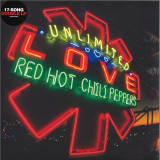
Red Hot Chili Peppers - UNLIMITED LOVE LP 2x12"

Red Hot Chili Peppers will unveil their new album and twelfth full-length offering, Unlimited Love Warner Records, on April 1, 2022. It notably marks their first recording with guitarist John Frusciante since 2006 and first with producer and longtime collaborator Rick Rubin since 2011. To herald Unlimited Love, the Los Angeles band just shared the first single and music video “Black Summer.”

“Our only goal is to get lost in the music. We (John, Anthony, Chad and Flea) spent thousands of hours, collectively and individually, honing our craft and showing up for one another, to make the best album we could. Our antennae attuned to the divine cosmos, we were just so damn grateful for the opportunity to be in a room together, and, once again, try to get better. Days, weeks and months spent listening to each other, composing, jamming freely, and arranging the fruit of those jams with great care and purpose. The sounds, rhythms, vibrations, words and melodies had us enrapt.

We yearn to shine a light in the world, to uplift, connect, and bring people together. Each of the songs on our new album UNLIMITED LOVE, is a facet of us, reflecting our view of the universe. This is our life’s mission. We work, focus, and prepare, so that when the biggest wave comes, we are ready to ride it. The ocean has gifted us a mighty wave and this record is the ride that is the sum of our lives. Thank you for listening, we hope you enjoy it.

ROCK OUT MOTHERFUCKERS!” - Anthony Kiedis, Flea, Chad Smith, John Frusciante

On lead track “Black Summer,” ethereal guitar underlines introspective lyrics as the rhythm unlocks a hypnotic drum groove highlighted by evocative bass. It quietly inhales only to exhale with a massive refrain, “It’s been a long time since I made a new friend, waiting on another black summer to end,” before a guitar solo echoes to the heavens and back.

Unlimited Love resumes a three-decade partnership with Rick Rubin Johnny Cash, Adele. Their creative collaboration spans legendary albums, including the diamond-selling Blood Sugar Sex Magik 1991, Californication 1999, By The Way 2002, and Stadium Arcadium 2006.

The interplay between the band borders on intergalactic once again—yet elevated to another stratosphere altogether. Unlimited Love represents the united spirit of four individual souls still fearlessly exploring the future of their eternal friendship and musical congregation.

This summer, Red Hot Chili Peppers will launch their first tour in support of Unlimited Love. They’ve invited a dynamic cohort of guests along for the ride at select dates, including Anderson.Paak & The Free Nationals and Thundercat and will be playing stadium dates in the UK in June 2022.

No en stock

Haga su pedido ahora y le encargaremos el artículo en nuestro proveedor.

32,14

Ültimo hace: 3 Años
Lawn - Bigger Sprout

‘’The band brings out instrumentation and vocal melodies that are of the same lineage as more modern indie bands like Parquet Courts and Ought. “ POST-TRASH

Hailing from Puerto La Cruz, Venezuela and Nashville, Tennessee, Rui DeMagalhaes and Mac Folger found a middle ground in skewness. Heavily influenced by kiwi pop acts like The Bats and The Clean, as well as British post-punk pioneers Swell Maps and Wire, Lawn maintains a balance of classic pop sensibilities and sharp, curious energy.
Indeed, Lawn's sound is a marriage between two different songwriting approaches that make both members step out of their comfort zones without losing their bearings. The result is a partnership that thrives in exploring how their differences make them a solid unit. DeMagalhaes and Folger are different, but never at odds.

After approaching their second full-length with a sense of ease and composure, New Orleans' Lawn found themselves embracing a sense of urgency for their follow-up work, Bigger Sprout. Written, rehearsed, and recorded under a month-long period, Bigger Sprout explores a feeling of urgency as a theme and a catalyst: urgency to get out of uncomfortable situations, urgency to take relationships more seriously, urgency to work on themselves, urgency to play shows again, urgency to record, urgency to start a family, urgency to make plans and leave old settings behind, urgency to grow up and become more in tune to your surroundings, urgency to quit old habits and pick up new ones. The EP, co-written with former drummer Hunter Keene, is a document that embodies the anxieties of change, for better or worse. This idea is juxtaposed by including a remastered version of Big Sprout, their first-ever release, as side B. Big Sprout, which was also written and recorded over a short period of time, has never been released in any physical capacity. The inclusion of these songs provides a contrast into who the members of Lawn were in their early 20s against who they are now.

Reservar12.08.2022

debe ser publicado en 12.08.2022

18,45
CALIFONE - ROOTS & CROWNS LP

Califone

ROOTS & CROWNS LP

12inchTHRILL1631
Thrill Jockey
22.07.2022

Available on vinyl for the first time in 10 years, with new cover design by Tim Rutilli Califone's earliest roots lie in the band Red Red Meat, from whence came Califone's founding members Tim Rutili and Ben Massarella and its longtime producer Brian Deck. The band's first release was a self-titled EP on Flydaddy in 1998, followed later by the full-length debut, Roomsound, in 2001 (later reissued on Thrill Jockey) and eventually the band's Thrill Jockey debut, Quicksand/ Cradlesnakes in 2003. After touring for the release of Roomsound, Califone had little time off to take in the impact of the music they were creating. In three years, they recorded four albums (two instrumental, two song-based including Heron King Blues) and toured heavily in between with Wilco, Modest Mouse, The Sea and Cake and others. After the tour for Heron King Blues in 2004, Califone finally took a breath and came back together in late 2005 to begin recordings. They worked on it in chunks at 4Deuces Studio in Chicago with Brian Deck, in Long Beach and Phoenix with Michael Krassner, and at home in Los Angeles and Chicago until May 2006. The time away and each member's individual work naturally brought new elements into the sound of Califone's music. Both Rutili's and Becker's soundtrack work are more atmospheric, however the challenge of enhancing a scene of film without cluttering it or overwhelming it informed their approach to the new recording. Similarly, the burglary of Califone's equipment during the band's last tour (including guitars, banjo, a 1917 violin, bells and more) altered the sound as they had to find new gear on a tight budget. The instruments are new partners, new sounds that forced them to stretch in new directions. Limitations, obstructions and darkness, and the new possibilities they illuminate; roots and crowns. "In that way", says Rutili, "this album is a conscious and resolved thing. It fully realizes ideas we touched on in the past and where we come from as a band, and takes us into our next phase of life."

Reservar22.07.2022

debe ser publicado en 22.07.2022

28,53
CALIFONE - ROOTS & CROWNS LP

Califone

ROOTS & CROWNS LP

12inchTHRILL163
Thrill Jockey
22.07.2022

Available on vinyl for the first time in 10 years, with new cover design by Tim Rutilli Califone's earliest roots lie in the band Red Red Meat, from whence came Califone's founding members Tim Rutili and Ben Massarella and its longtime producer Brian Deck. The band's first release was a self-titled EP on Flydaddy in 1998, followed later by the full-length debut, Roomsound, in 2001 (later reissued on Thrill Jockey) and eventually the band's Thrill Jockey debut, Quicksand/ Cradlesnakes in 2003. After touring for the release of Roomsound, Califone had little time off to take in the impact of the music they were creating. In three years, they recorded four albums (two instrumental, two song-based including Heron King Blues) and toured heavily in between with Wilco, Modest Mouse, The Sea and Cake and others. After the tour for Heron King Blues in 2004, Califone finally took a breath and came back together in late 2005 to begin recordings. They worked on it in chunks at 4Deuces Studio in Chicago with Brian Deck, in Long Beach and Phoenix with Michael Krassner, and at home in Los Angeles and Chicago until May 2006. The time away and each member's individual work naturally brought new elements into the sound of Califone's music. Both Rutili's and Becker's soundtrack work are more atmospheric, however the challenge of enhancing a scene of film without cluttering it or overwhelming it informed their approach to the new recording. Similarly, the burglary of Califone's equipment during the band's last tour (including guitars, banjo, a 1917 violin, bells and more) altered the sound as they had to find new gear on a tight budget. The instruments are new partners, new sounds that forced them to stretch in new directions. Limitations, obstructions and darkness, and the new possibilities they illuminate; roots and crowns. "In that way", says Rutili, "this album is a conscious and resolved thing. It fully realizes ideas we touched on in the past and where we come from as a band, and takes us into our next phase of life."

Reservar22.07.2022

debe ser publicado en 22.07.2022

31,30
Artículos por página
N/ABPM
Vinyl