There are records that come from the soul. No matter how primitive may be the recording techniques the musician has access to, the soul gets its way to the heart and mind of the listener. Samtvogel' is one of those records. Günter Schickert recorded that amazing piece of human greatness in 1974, using the media he had at the time, putting his brain at work to find the best way of taping everything he had to say. When I was recording Samtvogel' in 1974 I had only 2 Taperecorders. I played one track and while listening I added the second one. And so on. Four times. When I mixed all together I borrowed a 3rd taperecorder. And still added the last track to the master. I had a small mixer with 2 stereo and 1 mono but it was possible to pan tracks. No equalization. It all came out of my still living G2000 Dynacord guitar amplifier, of course valve, with no master, even the voice recorded through it. If I made a mistake in 1 track I had to repeat it from the beginning. And if while mixing I was not fast enough in changing the tape I had to start again. So it took me more than 3 months to get ready.'
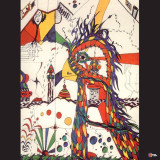
Thanks to these three months of work, between June and September of 1974, 'Samtvogel' was privately issued that same year. It would later be issued on the Brain label, with a small change in the artwork -titles added to the front cover, which weren't on the original private pressing. Brain also reissued it on the label's Rock On Brain' LP series, this time with a completely different sleeve. The album contained two tracks on side one and just one on side two, and its sound has often been compared to the most explorative works of Syd Barret - however it must be pointed that Schickert did not need any mind spreading substances to allow his sounds float out of his mind & soul, they just came out in the most natural way. It will also appeal to fans of the echoed athmosferic guitar work of other kraut innovators such as Ash Ra Tempel, Manuel Götsching or A.R. & The Machines, and some may find on the vocal passages certain resemblances to Damo Suzuki on Can's 'Tago-Mago' era.
The Wah Wah reissue is housed in a quality sleeve that reproduces that of the original 1974 private pressing and features a 4 page insert with liners and photos - sound remastered at Eastside mastering Berlin. Get this bird now, before it flies away again!
Cerca:pas cam
Two records came out in 1988 that forever changed the perception of "experimental" or "serious" music produced in Portugal. These were "Plux Quba" by Nuno Canavarro and "Música de Baixa Fidelidade" by Tózé (António) Ferreira. Both were released by the same label - Ama Romanta -, an influential independent imprint closely linked to avantgarde pop band Pop Dell'Arte. Because those records appeared in what could be perceived as an "alternative pop" framework, they rescued this difficult music from Academia. It helps that Canavarro played in a successful new wave pop band (Street Kids) during the period 1980-83. By association, being a friend since 1976, António was in close contact with many of the musicians and bands that were part of the equally celebrated and detested Portuguese Rock Boom (roughly 79-82).
He was not a musician then but through his friendship with Canavarro, who had the means to acquire electronic equipment, António became involved with that equipment and shared Canavarro's passion for experimentation and curiosity for knowledge. They tried to get hold of as many technical magazines as possible and learn while testing ideas. In 1983, Street Kids were about to break up, young lives drafted into the Army and maybe, in Canavarro's case, a whole new passion for challenging music similar to his bandmate Nuno Rebelo, by then in the process of discovering a wide range of "other" music mainly through Jorge Lima Barreto. Barreto, who had started Telectu with Vítor Rua, possessed a huge book and record collection and, like Rua before them, Canavarro, Rebelo and Ferreira became fascinated by the pool of knowledge they now had access to by frequenting Barreto's house in Lisbon. He was roughly a decade older, had published several books and other writings throughout the 1970s, cultivated an anarchic stance and a penchant for cultural indoctrination. Rebelo was the first to be introduced via his contact with Rua (who had invited him to play in his other band GNR).
Overwhelmed, he felt the need to share his enthusiasm with friends and eventually took a few to the house in true pilgrimage fashion. To see the Light. Among the few he led there was even João Peste, founder of Ama Romanta. Canavarro and Ferreira preceded him.
Ferreira recalls an exciting learning process added to his experiments with Canavarro's array of synths such as the Korg Ms 20, Korg polysix, ARP Axxe, Roland SH-01, the Ensoniq Mirage sampler... He read in a magazine article about someone who had studied at the Institute of Sonology (then in Utrecht, Netherlands) and went there during a vacation trip in the Summer of 1983. He became excited by the prospect of studying at the Institute but money was a problem. Canavarro, on the other hand, was admitted there in the following year. Back in Portugal, Ferreira eventually abandoned his Chemical Engineering studies in Lisbon's Technical Institute in favour of a more focused music practice. He collaborated with Telectu during 1984 and 85 as a sort of technical engineer, implementing some recording solutions and background tapes and went to work at a thermoelectric power plant in Sines, hoping to make enough money to fund his musical studies. He did and proceeded with the paperwork for admission at the Institute of Sonology, now based in The Hague. António studied there in 1986-87 and the present album includes two compositions developed at the Institute: "More Adult Music" and "This Is Music, As It Was Expected", both featuring the voice of Rodney Waschka II. Among other activities and talents, Rodney is an expert in computer music and to António his voice sounded similar to Robert Ashley's, whose work he admired.
What happened at the Institute was a systematization of António's self-taught practice. Computer software, Musique Concrète, noise and silence, organisation of abstract ideas and sounds. The original notes on the back sleeve of the LP give some indication of process and thinking, but a more detailed account was given by António in the liner notes of the CD reissue in 2002, which are also included in this 2025 LP reissue.
The music sounds deep and detailed, despite the fact of António calling it low-fi ("Baixa Fidelidade"). It flows like an improvised performance where several musicians might be responding to each other, respectful of their mutual space. Drama occurs, as a natural emotional connection is sought by the listener. Piano, bells, drone, processed voices, even the clear narrative of Rodney Waschka II, contribute to create a sort of alternative perceptual reality. The sounds are almost tangible, more a part of the physical world than ethereal manifestations and thus it would not be correct to invoke "ambient music" as a selling point. But although "physical" and distinct, this music is still alien, more so in Portugal's 1988 environment. In March, helped by Canavarro, António set up a home studio and there he recorded the remaining material for this album: "Algumas Pessoas Olharam O Sul E Viram Deserto", "Um Som, Seguido De Uma Cena Negra E Malva" and "O Verão Nasceu Da Paixão De 1921".
"Música de Baixa Fidelidade" stands not only as a proof of great resilience but as one of those magnificent works of art coming from someone who balanced technical inclination and emotional sensibility. Because of that, Tózé Ferreira is able to decode the phantom world of sound for anyone who cares to experience the sensation of inhabiting a version of the Future. First ever vinyl reissue, reproduction of the original artwork with an additional insert. Made in collaboration with the artist and the support of Paulo Menezes (Plancton Music), who provided valuable assistance. Remastered by Taylor Deupree.
- A1: To A Child
- A2: The Right To Vote
- A3: A Wilderness
- A4: Melody In The Sky
- A5: Late For Love
- A6: A Free Thinker
- A7: Man In The Moon
- B1: Talk To A Green Tree
- B2: Trees Of The Ages
- B3: The Brighter Song
- B4: Roadnotes
- B5: Sophia
- B6: Mother’s Spiritual
- B7: Refrain
Mother’s Spiritual is the eighth studio album by New York City-born singer, songwriter, and pianist Laura Nyro. The album was originally released at the beginning of 1984, following a year of difficult and expensive recording sessions, and came more than five years after its well-received predecessor, 1978’s Nested. Thanks to a small buzz surrounding Nyro’s return to the spotlight after a period of semi-retirement, Mother’s Spiritual became her last US chart entry, reaching #182 on the Billboard 200.
Musically, the album stands out as the most serene and easygoing of all Nyro’s works, presenting a more maternal tone compared to the wilder and more experimental nature of albums like Eli and the Thirteenth Confession and New York Tendaberry. Thematically, the focus shifts from personal explorations of passion and love to broader societal concerns, such as environmentalism, motherhood, and feminism. Laura Nyro was Inducted into the Songwriters Hall of Fame in 2010 and the Rock and Roll Hall of Fame in 2012.
"With their dulcet fusion of ‘60s French ye-ye pop, slinky Studio One reggae, and liminal Brazilian tropicalia, Claude Fontaine’s songs embody the best kept dreams of a globally connected world. The second album from the Los Angeles artist reflects the dream of creating the soundtrack for this utopia by the sea.
Released on Innovative Leisure, La Mer is a mesmerizing portal. It’s impossible for it to exist outside of the modern moment, but it floats on the gilded dust of the past. At times, Fontaine channels Jane Birkin as backed by Jorge Ben. Francois Hardy locked into sonic reverie with Mulatu Astatke, or Margo Guryan making lovers rock.
None of this is a happy accident. For her second opus, Fontaine assembled some of the most gifted musicians of the last five decades. First and foremost is her co-writer and producer, the multi-platinum Grammy-Award winning Lester Mendez, whose resume includes everyone from Grace Jones and Baaba Maal to Shakira and Nelly Furtado.
As with Fontaine’s self-titled first album, the legendary Tony Chin appears on guitar, bringing the orphic tones expected from someone who has played with some of the greatest reggae musicians of all-time (King Tubby, Dennis Brown, Lee Perry, Jackie Mittoo, Max Romeo, Sly & Robbie). On bass, there’s Ronnie McQueen, one of the co-founders of Steel Pulse. Sergio Mendes’ percussionist, Gibi Dos Santos, supplies propulsive locomotion. So does Ziggy Marley’s drummer, Rock Deadrick. And that’s just the abridged list of storied instrumentalists who appear on La Mer."
- A1: Dear John
- A2: Angel Artist Feat Tom Misch
- A3: Ice Water
- A4: Ottolenghi Feat Jordan Rakei
- A5: You Don't Know Feat Rebel Kleff & Kiko Bun
- A6: Still
- A7: It's Coming Home
- A8: Desoleil (Brilliant Corners) Feat Sampha)
- B1: Loose Ends Feat Jorja Smith
- B2: Not Waving, But Drowning
- B3: Krispy
- B4: Sail Away Freestyle
- B5: Looking Back
- B6: Carluccio
- B7: Dear Ben Feat Jean Coyle-Larner
Loyle Carner will release his highly anticipated sophomore record, 'Not Waving, But Drowning' on 19 April via AMF Records.
'Not Waving, But Drowning' follows Loyle's BRIT (Best Male, Best Newcomer) and Mercury Prize nominated, top 20 debut 'Yesterday's Gone'. The bedrock of honest and raw sentimentality that you heard on 'Yesterday's Gone' left an inextinguishable mark on music in general and UK Hip Hop in particular, standing out as an ageless, bulletproof debut.
'Not Waving, But Drowning', Loyle's new album, gives yet more evidence - as if it were needed - of his razor-sharp flow and his unique storytelling ability. Yes, he can rap, but he allies that with the sensitivity of a poet, the observational skills of a novelist, and warmth of your best friend. The album opens with 'Dear Jean', a letter to his mother in which he's telling her that he has found the love of his life, 'a woman from the skies', and he's moving out.
It goes without saying that Loyle's music is hard to categorise, but what is even more impressive is that for someone who grew up listening to Mos Def, Biggie Smalls, Roots Manuva, and Wu Tang Clan, he doesn't sound like any of them. Although he might from time to time give lyrical nods to them, he's no imitator.
Loyle loves cooking. There are two tracks on this album named after chefs. The British-Israeli chef Yotam Ottolenghi, and the now deceased Italian chef Antonio Carluccio. 'Ottolenghi' the first single from the album was featured on the BBC Radio 1 B-list, BBC 6 Music A-list and has already been streamed over 5 million times.
Loyle refers to real life for everything, the title of 'Yesterday's Gone' came from a song of his step father, the title of his new album 'Not Waving, But Drowning' comes from a poem by his grandfather, which in turn came from a Stevie Smith poem. What you hear on the track 'Krispy' is real. He is pouring his heart out to his best friend Rebel Kleff after their relationship went downhill, he invites him on the track to say his piece but he doesn't turn up, so we get a flugel solo instead.
Loyle also has his own personal black consciousness movement. When he refers to his 'fathers' in the track 'Looking Back' he really is referring to two fathers. His biological father, a black man who he knows, but knows very little of, and his step father, a poet and musician who happens to be a white man but died a sudden unexpected death from epilepsy (SUDEP). With no real emotional ties to his biological father, but a deep connection with a deceased step-father, where does a young child turn He succinctly captures many of the great, unspoken, cultural and historical paradoxes of multicultural Britain on 'Looking Back'.
An album like this is hard to find. It is for those who like their Hip Hop to have soul, and their soul to have spirit. This is because it works on so many levels, but it is reflecting the personality of its creator. There are a host of collaborators here, Jorja Smith, Rebel Kleff, Kiko Bun, Kwes, Jordan Rakei, Sampha, Tom Misch and more, but none are overpowering. They blend righteously into place.
Loyle is not bitter with people who have let him down, or a society that lets so many down, but the combination of anger and love he has gives his voice the perfect blend of strength and vulnerability. This might be a coming of age album, but it's also a coming of ageless album. Loyle's 2019 Spring tour - which includes London's Roundhouse - sold out within 20 minutes of being on sale.
Not Waving, But Drowning
A rapper that raps about family is hard to find. The boys in the 'hood' tend not to be that interested in how much a 'brother' loves his mother, or how much he misses his dad, or even how much he misses his best friend. The boys in the 'hood' tend to be obsessed with the size of their cars, girls, bank accounts, and other personal 'possessions'. Loyle Carner's Mercury and BRIT Prize nominated debut 'Yesterday's Gone' (Released 2017), made it clear that he wasn't that kind of rapper. In fact, every time I talk to him about his work we talk about the world, and we tended to confuse ourselves by calling his work rap, poems, or songs, sometimes in the same sentence. They are in truth all of these things.
Here's some poetry.
Honestly I need them.
I hate them but I grieve them
I think I've finally found the reason
Trust
Like the fire needs the air.
I won't burn unless you're there.
'Not Waving, But Drowning', Loyle's forthcoming new album, gives us yet more evidence, (if it were needed), that he still has what rappers call, flow, but he hasn't lost any of his story telling qualities. Yes, the boy can rap, but a rapper with the sensitivity of a true poet, the observational skills of a novelist, and warmth of your best friend. The album opens with 'Dear Jean', a letter to his mother in which he's telling her that he has found the love of his life, (a woman from the skies), and he's moving out. He really loves the woman from the skies, but he still loves his mum, and so he reassures her that there is no competition, and tells her that 'She's not behind me or behind you, but beside we and beside two', his words. Or to put it another way, moving out without moving out. My words.
It goes without saying that Loyle's music is hard to categorise, but what is even more impressive is that for someone who grew up listening to Mos Def, Biggie Smalls, Roots Manuva, and Wu Tang Clan, he doesn't sound like any of them. Although he might from time to time give lyrical nods to them, he's no imitator. He says finding his own voice was something he always found easy. Although young, (in terms of a musical career), he has confidence in his own words and his own voice, and has never been tempted to sound like he's been hanging out in the USA, or rolling in 'Grime' on the mean streets of East London. And so when it comes to the creative process he doesn't simply find a beat to jump on and ride. Beats are important, but they are tenderly layered with samples, keyboards, or live drums, all imaginatively assembled for the laying on of words. Some tracks start with the idea, some with poetry, and some with a verse from a singer or some other melodic inspiration, but there is no formula.
Here's some poetry.
Don't hold any memories of us
Rather hold you everyday until the memories are dust
Yo we only caught the train
Cos you know I hate the bus
A prolific reader, who has dyslexia is hard to find. Add ADHD (Attention deficit hyperactivity disorder) to that and life should become even more difficult. To deal with your difficulties you devise coping strategies, which can differ from person to person. Loyle loves cooking. There are two tracks on this album named after chefs. The British-Israeli chef Ottolenghi, and the now deceased Italian chef Antonio Carluccio. Loyle describes himself as 'weird' because he is happy to read a cookbook as if he was reading a novel or a book of poetry. He has opened a cookery school for young adults not just because he loves food and wants to make more of it, but because it is one of the few things that can focus the ADHD mind. And when it comes to his other love, football, his approach is the same. Focus. He wanted to be a striker he says, up front scoring goals, but found his best position was in midfield because he was able to focus, check options, and see passes ahead of time, providing passes for other players just when they needed them. He says, 'You don't grow out of ADHD, you grow into it.' Loyle is also working with Levi's® on their music project where he is mentoring young musicians over a six month period, culminating at Liverpool Sound City festival.
More poetry.
When the going is tough
I wait till it falls on deaf ears
Hearsay
Without the boundaries of love
He also said, 'Ask most people and they will say that they love their mothers, but most are not going to rap about her'. On his first album Loyle's mum Jean wrote about the 'scribble of a boy' that growing up would take things apart to see how they worked. On this album she speaks with pride about a man who has found his place in the world.
Yes, poetry.
I'm still looking for the answers
Trying to find the right questions
Still waiting for my fathers
But can't break them in to sections
This poetry is serious. Loyle has his own personal black consciousness movement. He told me that he always felt safe at home, and being the darkest one in the family never meant a thing, but then when he had to face the outside world he felt hostility. It shook him up. Now he had to start asking questions, but what were the questions. This is serious. When he refers to his 'fathers' in the verse above taken from the track 'Looking Back' he really is referring to two fathers. His biological father, a black man who he knows, but knows very little of, and his step father, a poet and musician who happens to be a white man but died a sudden unexpected death from epilepsy (SUDEP). So to whom would a young black (or mixed race) kid turn He succinctly captures many of the great, unspoken, cultural and historical paradoxes of multicultural Britain when he says, 'My great grandfather could of owned my other one.' We are a people descended from enslaved people on one hand, and enslavers on the other, something we are still struggling to come to terms with, and this can be apparent in one family. A big book could have told you that, but here we get it in one line on the track, Looking Back.
Loyle refers to real life for everything. The album is peppered with captured moments that he records on his phone. These moments can range from conversations with taxi drivers, to capturing the moment when England scores a goal in the world cup. The title of 'Yesterday's Gone' came from a song of his step father, the title of his new album 'Not Waving but Drowning' comes from a poem by his grandfather, which in turn came from a Stevie Smith poem. What you hear on the track 'Krispy' is real. He is pouring his heart out to his best friend after their relationship went downhill, he invites him on the track to say his piece but he doesn't turn up, so we get a flugel solo instead. Yes people, this is real.
An album like this is hard to find. It is for those who like their Hip Hop to have soul, and their soul to have spirit, this is an album for those who have, (I'm sorry, I'm going to say it), emotional intelligence. This is because it works on so many levels, but it is reflecting the personality of its creator. There are a host of collaborators here, Jorja Smith, Rebel Kleff, Kiko Bun, Jordan Rakei, Sampha, Tom Misch and more, but none are overpowering. They blend righteously into place. Loyle is not bitter with people who have let him down, or the society that has let him down, but the combination of anger and love he has gives his voice the perfect blend of strength and vulnerability. This might be a coming of age album, but it's also a coming of ageless album. His first album worked, and this second album is a continuation of that work. Not creating a form, but being formless, as someone like Bruce Lee once said.
And here's some poetry from mum.
We talked long in to the darkest hours
Until we saw the burnished sky
And our eyes stung
As our words blurred and became thoughts
As we were silenced by the dawn
We clung to each other like sailors in a storm
Reissue!
WRWTFWW Records is honored to reissue revered UK electronic duo Ultramarine’s best kept secret from their discography, the superb A User’s Guide album, available as a limited double LP housed in a beautiful heavyweight sleeve with inside out printing.
On the rare occasions that Ultramarine’s story is told, the duo’s fifth album, 1998’s A User’s Guide, tends to get omitted from the narrative. Radically different to anything the duo released before or since, it has remained a slept-on, timeless and inherently futurist classic ever since.
Unavailable on vinyl since the year it was released – in part because the label it originally came out on, New Electronica, folded shortly afterwards – A User’s Guide was the result of a conscious decision by Ultramarine members Paul Hammond and Ian Cooper to change their working methods and the “sound palette” that underpinned their work.
Out went the partially improvised hybrid electronic/acoustic sounds and the collaborations with guest musicians they’d become famous for. They were replaced by painstakingly created electronic sounds and textures, metallic motifs, spaced-out chords, rhythms rooted in contemporary techno and drum & bass culture, and nods aplenty to pioneering music of the period, from the post-rock atmospherics of Tortoise, and the hazy dub techno of Basic Channel, to the tech-jazz of Detroit, the minimalism of Berlin, and the musically expansive warmth of Chicago deep house.
It may have taken a year to create – part of which was spent developing this head-spinning new sound – but the results were undeniably unearthly and effortlessly forward-thinking. Over a quarter of a century may have passed since it first appeared in record stores, but A User’s Guide still sounds fresh and modern – a remarkable achievement given the relatively sparse and basic equipment used in the making of the album.
As this first vinyl reissue conclusively proves, the material showcased on A User’s Guide has lost none of its sparkle in the 26 years that have passed since its release. For proof, check the head-nodding IDM bubbliness of opener ‘All of a Sudden’, the queasy, lopsided tech-jazz of ‘Sucker For You’, the locked-in beats and mind-mangling motifs of ‘Zombie’, the ghostly, out-there electro of ‘Ambush’, the Autechreesque ‘Ghost Routine’ and the triumphant closing cut ‘What Machines Want’, a classic of minimalistic, jazz-flecked techno futurism.
Fully remastered from the original DATs by Jason G at Transition Studios, the 2024 vinyl edition of A User’s Guide thrusts Ultramarine’s most overlooked album back into the spotlight. This WRWTFWW edition also features brand new contextualizing sleeve notes, complete with new quotes on the production process from Ultramarine, by dance music historian Matt Anniss (author of Join The Future: Bleep Techno and the Birth of British Bass Music, and founder of online electronic music platform Jointhefuture).
Points of interests For fans of electronic, leftfield, postrock, tech-jazz, IDM, minimalism, futurist electronica, dub techno, house, experimental, Autechre, Tortoise, Basic Channel, forgotten gems from superb discographies, very good music, and very very very very good music.
Official vinyl reissue of legendary UK electronic’s duo Ultramarine’s timeless and radical album A User’s Guide.
Southern-bred, alternative R&B singer-songwriter Mereba artistically embodies self-understanding on The Breeze Grew a Fire, her grandest work and first release on Secretly Canadian. To hone in on this latest album, it was necessary for Mereba to reconnect with her whole many-sided self, from her inner child to her inseparable relationships. Mereba peacefully transmutes her beginnings, looking upon her closest kinships and friendships with a keen understanding of their steadying, inspirational force. Surrounded by the gentle Breeze of these relationships and recollections, Mereba is empowered as both an artist and mother, while also being reminded to nurture her childlike wonder. Mereba gracefully shines on the follow-up to her bounteous 2019 debut, The Jungle Is the Only Way Out. In escaping the Jungle, Mereba faced the paradigm shift of birthing a son in 2021 and getting accustomed to a rapidly changing self-outlook. Mereba's creative output has always relied on her innermost reflections and ideas on whatever was happening around her; but in motherhood, the singer's perspective widened while her inspiration became more focused, and more individually powerful. "Even though I'm fully an adult, I had to grow up in a way overnight when he my son came," Mereba explains. "The process of watching him open up to the world, learn how to engage with the world, it is very tender. I feel like it's the most reminded I've ever been of when I was a child and the first memories I have of life." The transformation brought Mereba to the intimacy of DIY recording sessions, providing an honest and organic foundation to Breeze. Mereba tapped her longtime production collaborator Sam Hoffman to co-assemble the album's rich production, which parallels its folk-like warmth. Although Mereba is a true double Earth sign-Virgo and Virgo rising-the development of Breeze was anchored by experiences and memories that span from Atlanta to L.A., Addis Ababa to Greensboro, an intention that speaks to the album's fluid nature. While nowhere near the end of her musical trek, The Breeze Grew a Fire is a loving, inspiring return to origin, one where Mereba frees a painful past, eases into future possibilities, and goes with life's flow.
Coloured Vinyl[27,52 €]
The third album Fort Sensible by Brisbane alt-rockers Tape/Off is a genuine labour of love, a passionate dose of opinionated heart-on-sleeve rock’n’roll representing not just a place but a time with its cache of meticulously-crafted guitars, robust rhythms and socially-conscious lyrics mining both the personal and the political.
While musically they veer seamlessly between intricacy and intensity their words cut straight to the quick, the songs caustic and catchy in equal measure, making Fort Sensible by far the most ambitious and accessible album in the band’s storied decade-plus history.
Tape/Off’s first two albums - Chipper (2014) and Broadcast Park (2018) - were both longlisted for the prestigious Australian Music Prize, yet Fort Sensible takes the tried and tested Tape/Off aesthetic to a whole new level as the band seek to both share the creative load and fully harness their innate collective chemistry.
The guitars of Nathan Pickels and Ben Green weave together like an electric tapestry, the resultant soundscapes both intricate and ambitious whilst still entirely capable of busting out massive riffs with the best of them, their inherent simpatico now built upon by years of experience playing off each other. From a rhythmic perspective Tape/Off's propulsive drummer Branko Cosic's immense power and Cameron Smith's robust, expressive basslines combine to provide the perfect rhythmic bottom-end throughout the record.
Excitingly Tape/Off's sonic palette has been broadened substantially on the new album, with Pickels' angry and angst-laden diatribes throughout Fort Sensible now augmented by Green and Smith taking vocal turns at junctures, adding a whole new dynamic and dimension to proceedings.
At a time when our leaders seem lacking and the world needs the redemptive powers of art and music more than ever, Tape/Off announce themselves as a serious force to be reckoned with the uncompromising power and beauty of Fort Sensible!
- Tout Tremblant De Fièvre (1969, Single "Tout Tremblant De Fièvre")
- Fac,On De Parler (1971, Album "Acte Ii")
- Annie, Christine Ou Patricia (1972, Single "Il Faut Rêver")
- A Bas Tous Les Privilèges (1973, Compilation "La Révolution Française")
- Les Indiens Du Dernier Matin (1974, Album "Acte Iii")
- Mon Premier Hold-Up (1975,Album "N°1 Usa Hits Of The 60'S")
- Disco Circus (François K Edit) (1978, 12" Single)
- Bains Douches (1980, Album "De Sang Froid")
- J't'ai Vu Dans Le Canoe' (1983, Single "Solange")
- Pourquoi Tu M'la^ches Pas? (1985, Single "Trop Sentimental")
As soon as Martin Circus was born in 1969, the band laid foundations for the French "Pop Musique" genre, deliberately turning its back on both French yéyés and rock'n'roll to better embrace psychedelia and the French language. In 1971, they were a pioneering, innovative group moving as fast as a speeding train, building upon everything they found on the way. However, faced with band members changing often, management issues and music evolution, Martin Circus ended up trying to fit in every style: soul, R&B, glam rock, disco, new wave, 80s mainstream music. To follow their journey is to listen to the world shifting along music charts. Behind the scenes, since the very first days of the band, one man had been pulling all the strings. Manager and artistic director Gérard Hugé used to work for both the band and the label - this has never been good news. What he cared about the most was getting records out, no matter who played on them. In the mid-70s, he registered the Martin Circus name, granting himself full power over the band. Deciding that it no longer had either a lyricist or a composer, he made the remaining musicians embark on a series of American 60s hits adaptations. As a result, they made tons of money : "Marylène" was a huge hit and gave them a new impulse. The Martins adopted a new look by wearing shiny Courrèges-style suits and platform boots, and on stage they performed dance moves choreographed by the eccentric Amadeo. They completely fit into the disco craze which was about to take over. Still, their music blended doo-wop and rockabilly with glam rock and funk music. They eventually hit disco with a soundtrack in the mannerof French disco groups such as Space and Voyage. Effortlessly, they released the epic 14- minute "Disco Circus", a track which was to become a real underground gem. DJ and remixer François Kevorkian then released it on the American Prelude label in a self-edited version, shortened to 7 minutes while retaining all the dazzling passages of the original track. It came to be a hit in the clubs of New York and Chicago, making a lasting impression on everyone who heard it. It got sampled on at least 40 tracks over the following decades and featured in dozens of bootlegs and prestigious compilations - by Laurent Garnier, Carl Craig, Juan Atkins, Joey Negro, The Beatnuts, The Rapture, and by Danny Krivit in the DJ culture film Maestro. As the 80s arrived, Martin Circus once again changed the way they looked and their style. Inspired by Devo and their cold dance music, by Buggles' synthpop and Plastic Bertand's postpunk. Throughout their career full of ups and downs, Martin Circus nonetheless managed to keep up with one stable element: contrary to what they seemed, the musicians never took the easy way out. Their playing and arrangements were consistently flawless and polished, they relentlessly dedicated themselves to playing quality music and this can only compel admiration. As Coco Chanel once said, "Fashion goes out of fashion, style never does."
Originally released and sold on their fall 2009 US tour, Flower-Corsano Duo’s “The Chocolate Cities” stands as one of the group's most spirited releases. Recorded live in Cambridge, England and Geneva, Switzerland these recordings capture the power and energy being harnessed by the duo at a time of frequent touring, just after the release of their monumental double-LP “The Four Aims.” Michael Flower is perhaps best known for his work in Vibracathedral Orchestra, along with a slew of other bands, collaborations, and solo work. Meanwhile, Chris Corsano is well known as one of the premier drummers of modern times, and a frequent collaborator of Joe McPhee, Bill Orcutt, Bill Nace, Paul Flaherty, and many more. As a duo Flower and Corsano present an endlessly shifting and transforming sound, meshing elements of free jazz, drone, and ecstatic psychedelia into something all its own. While Corsano guides with his nimble and dynamic drumming, Flower plays amplified Japan Banjo (also known as a Shahi Baaja) providing melody, lead, and drone, often simultaneously. Gripping even in its quietest passages, thoughtful even in its most unrestrained crescendos, “The Chocolate Cities” documents a duo at the height of their collective prowess. Saved from the obscurity of its original CDr format and presented for the first time on vinyl with stunning new artwork by Chris Corsano, “The Chocolate Cities” stands as testament to the power of two magnificent players even 15 years on.
- A1: Progetto Tribale - The Sweep
- A2: Onirico - Echo Giomini
- A3: Open Spaces - Artist In Wonderland
- B1: Alex Neri – The Wizard (Hot Funky Version)
- B2: M C.j. Feat. Sima - To Yourself Be Free - Instrumental Mix Energy Prod
- B3: Mato Grosso - Titanic Expande
- C1: Dreamatic - I Can Feel It (Part 1)
- C2: Carol Bailey - Understand Me Free Your Mind (Dream Piano Remix)
- C3: The True Underground Sound Of Rome - Secret Doctrine
- D1: Don Carlos - Boy
- D2: Lazy Bird – Jazzy Doll (Odyssey Dub)
Vol 2[28,99 €]
Volume 1 of this expertly curated project of 90s Italian House - put together by Don Carlos.
If Paradise was half as nice… by Fabio De Luca.
Googling “paradise house”, the first results to pop up are an endless list of European b&b’s with whitewashed lime façades, all of them promising “…an unmatched travel experience a few steps from the sea”. Next, a little further down, are the institutional websites of a few select semi-luxury retirement homes (no photos shown, but lots of stock images of smiling nurses with reassuring looks). To find the “paradise house” we’re after, we have to scroll even further down. Much further down.
It feels like yesterday, and at the same time it seems like a million years ago. The Eighties had just ended, and it was still unclear what to expect from the Nineties. Mobile phones that were not the size of a briefcase and did not cost as much as a car? A frightening economic crisis? The guitar-rock revival?! Certainly, the best place to observe that moment of transition was the dancefloor. Truly epochal transformations were happening there. From America, within a short distance one from the other, two revolutionary new musical styles had arrived: the first one sounded a bit like an “on a budget” version of the best Seventies disco-music – Philly sound made with a set of piano-bar keyboards! – the other was even more sparse, futuristic and extraterrestrial. It was a music with a quite distinct “physical” component, which at the same time, to be fully grasped, seemed to call for the knotty theories of certain French post-modern philosophers: Gilles Deleuze, Félix Guattari, Paul Virilio... Both those genres – we would learn shortly after – were born in the black communities of Chicago and Detroit, although listening to those vinyl 12” (often wrapped in generic white covers, and with little indication in the label) you could not easily guess whether behind them there was a black boy from somewhere in the Usa, or a girl from Berlin, or a pale kid from a Cornish coastal town.
Quickly, similar sounds began to show up from all corners of Europe. A thousand variations of the same intuition: leaner, less lean, happier, slightly less intoxicated, more broken, slower, faster, much faster... Boom! From the dancefloors – the London ones at least, whose chronicles we eagerly read every month in the pages of The Face and i-D – came tales of a new generation of clubbers who had completely stopped “dressing up” to go dancing; of hot tempered hooligans bursting into tears and hugging everyone under the strobe lights as the notes of Strings of Life rose up through the fumes of dry ice (certain “smiling” pills were also involved, sure). At this point, however, we must move on to Switzerland.
In Switzerland, in the quiet and diligent town of Lugano, between the 1980s and 1990s there was a club called “Morandi”. Its hot night was on Wednesdays, when the audience also came from Milan, Como, Varese and Zurich. Legend goes that, one night, none less than Prince and Sheila E were spotted hiding among the sofas, on a day-off of the Italian dates of the Nude Tour… The Wednesday resident and superstar was an Italian dj with an exotic name: Don Carlos. The soundtrack he devised was a mixture of Chicago, Detroit, the most progressive R&B and certain forgotten classics of old disco music: practically, what the Paradise Garage in New York might have sounded like had it not closed in 1987. In between, Don Carlos also managed to squeeze in some tracks he had worked on in his studio on Lago Maggiore. One in particular: a track that was rather slow compared to the BPM in fashion at the time, but which was a perfect bridge between house and R&B. The title was Alone: Don Carlos would explain years later that it had to be intended both in the English meaning of “by itself” and like the Italian word meaning “halo”. That wasn’t the only double entendre about the song, anyway. Its own very deep nature was, indeed, double. On the one hand, Alone was built around an angelic keyboard pattern and a romantic piano riff that took you straight to heaven; on the other, it showcased enough electronic squelches (plus a sax part that sounded like it had been dissolved by acid rain) to pigeonhole the tune into the “junk modernity” section, aka the hallmark of all the most innovative sounds of the time: music that sounded like it was hand-crafted from the scraps of glittering overground pop.
No one knows who was the first to call it “paradise house”, nor when it happened. Alternative definitions on the same topic one happened to hear included “ambient house”, “dream house”, “Mediterranean progressive”… but of course none were as good (and alluring) as “paradise house”. What is certain is that such inclination for sounds that were in equal measure angelic and neurotic, romantic and unaffective, quickly became the trademark of the second generation of Italian house. Music that seemed shyly equidistant from all the rhythmic and electronic revolutions that had happened up to that moment (“Music perfectly adept at going nowhere slowly” as noted by English journalist Craig McLean in a legendary field report for Blah Blah Blah magazine). Music that to a inattentive ear might have sounded as anonymous as a snapshot of a random group of passers-by at 10AM in the centre of any major city, but perfectly described the (slow) awakening in the real world after the universal love binge of the so-called Second Summer of Love.
For a brief but unforgettable season, in Italy “paradise house” was the official soundtrack of interminable weekends spent inside the car, darting from one club to another, cutting the peninsula from North to centre, from East to West coast in pursuit of the latest after-hours disco, trading kilometres per hour with beats per minute: practically, a new New Year’s Eve every Friday and Saturday night. This too was no small transformation, as well as a shock for an adult Italy that was encountering for the first time – thanks to its sons and daughters – the wild side of industrial modernity. The clubbers of the so-called “fuoriorario” scene were the balls gone mad in the pinball machine most feared by newspapers, magazines and TV pundits. What they did each and every weekend, apart from going crazy to the sound of the current white labels, was linking distant geographical points and non-places (thank you Marc Augé!) – old dance halls, farmhouses and business centres – transformed for one night into house music heaven. As Marco D’Eramo wrote in his 1995 essay on Chicago, Il maiale e il grattacielo: “Four-wheeled capitalism distorts our age-old image of the city, it allows the suburbs to be connected to each other, whereas before they were connected only by the centre (…) It makes possible a metropolitan area without a metropolis, without a city centre, without downtown. The periphery is no longer a periphery of any centre, but is self-centred”.
“Paradise house” perfectly understood all of this and turned it into a sort of cyber-blues that didn’t even need words, and unexpectedly brought back a drop of melancholic (post?)-humanity within a world that by then – as we would wholly realise in the decades to come – was fully inhuman and heartless. A world where we were all alone, and surrounded by a sinister yellowish halo, like a neon at the end of its life cycle. But, for one night at least, happy.
Recorded in 1997, Mountain Top features the commanding vocals of Tony Roots, backed by the legendary Firehouse Crew and produced by the visionary Fada Waz (Clifton Carnegie). This record’s release was driven by the people, evidenced and encouraged by the countless wheel-ups and sing-alongs during King Original’s international tour dates over the last three years whenever this seminal recording was dropped in the set.
Tony Roots, known for his cultural and spiritual themes, delivers a powerful vocal performance, reminding us that life’s most important journey is overcoming obstacles to find ‘Jah Love on the Mountain Top.’ This message is as relevant in today’s fast-paced, easy-come-easy-go consumer culture as it was when recorded three decades ago.
The Firehouse Crew renowned for their work with iconic acts like Luciano and Sizzla—shine brightly on this riddim, with the MPC drum machine-centered sound of 90s Jamaican roots reggae. An up-tempo 4/4 steppers beat layered with rich analogue textures and soulful instrumentation defines this timeless recording.
The first of many collaborations between Studio 55, Before Zero Records, and Footsie, the King Original legacy continues into the future, honouring the enduring contributions of Fada Waz and his collaborators.
Clifton Carnegie aka Ras Wazair aka Fada Waz - Clifton Carnegie, known as Ras Wazair, founded King Original Sound System in 1973, establishing it as East London’s foremost reggae sound. Operating under his Studio 55 moniker, he collaborated with legends like Johnny Osbourne, Barry Brown, Michael Prophet, Cornell Campbell, and Frankie Paul through imprints such as Original Sounds, Studio 55, and Original International. A mentor to many of the UK’s top sound systems and a key figure in London’s RasTafari community, Ras Wazair’s connections with prominent Jamaican artists, bands, and producers like Fattis Burrell ensured that Jamaican music remained an influential force in the UK sound system scene.
King Original
Founded in 1973 by Fada Waz, King Original Sound System shaped East London’s reggae scene for over two decades. Fada Waz and his son Footsie—a UK Grime pioneer who in later years expanded the legacy through his KO LP series and sold-out King Original mixed-genre events at London’s top venues—worked together until Footsie assumed full control following Fada Waz’s passing in 2021. Having worked with artists such as Dizzee Rascal, Arctic Monkeys, The Prodigy, D-Double E, Wiley, and Skepta, Footsie’s dedication to King Original has reinvigorated the legacy that underpins all UK bass music—the reggae sound system. Joining Footsie is his brother, Wazair’s last born Ras D also Jah Model, and long-time collaborator Sir Spyro, producer of two UK number-one hits with Stormzy and son of UK reggae stalwart Nerious Joseph. Armed with cutting-edge QSS sound system technology, King Original continues to set trends, shaping the future of UK bass music.
Tony Roots
Hailing from Manchester, Jamaica, in the 1980s, Tony Roots emerged alongside iconic figures like Garnet Silk and Tony Rebel. While his peers remained in Jamaica, Tony moved to the UK, where he went on to release ten albums and numerous singles, including hits like Grow Your Natty Dread Locks and Hola Zion. A steadfast champion of Rastafari, Tony has collaborated with legends such as the Firehouse Crew, earning worldwide respect and a devoted following within both the reggae community and the UK sound system scene.
The Firehouse Crew
Formed in 1986, The Firehouse Crew became a cornerstone of the 1990s roots-reggae revival. Initially associated with King Tubby’s Firehouse label before establishing their own, the band rose to prominence through collaborations with producer Philip “Fattis” Burrell at Xterminator Records. Their contributions to timeless albums like Luciano’s Where There is Life highlight their extraordinary musicianship. Over the years, The Firehouse Crew has backed iconic artists such as Sizzla, Buju Banton, and Beres Hammond, cementing their legacy as masters of roots reggae.
- 1: A Day Walks By
- 2: Glow Emits
- 3: Window Dream
- 4: Poem
- 5: Flex
- 6: A Go To
- 7: Explain A Green
- 8: Something New All Day
- 9: Shedding Shredding
- 10: Do You Know What I Mean
The Durutti Column, Linda Perhacs, Penguin Cafe Orchestra, Judee Sill. Hello and welcome to Decide Which Way The Eyes Are Looking, the new record by Lina Tullgren. It is a deeply gorgeous intervention, a carefully ornamented dilemma, the most inviting crisis. Made with a host of Los Angeles musicians, Decide exposes Tullgren's daring and trust. Each song is a ring of curious sound: the skip of harp strings, the flutter of woodwinds, the ratchet of percussion, the euphonium's sigh. And at the center of each wreath, Tullgren sings, finding this space between Judee Sill and Sam Jayne. It's a tone that signals weariness, but a weariness hand-in-hand with tenacity. There's a clarity, a kind of immovability. Lina Tullgren's first record came in 2016, a homemade, under-the-skin set of laments. Subsequent LPs and constant touring cemented Tullgren's reputation as a composer of "wide-eyed wonder paired with a resonant despair." 2019's Free Cell showed Tullgren lingering in the margins of their songs, finding places both aloof and spare. Floodgates opened; Tullgren spent the subsequent years exploring deep listening, improvised music, and extended technique. They developed a patience and faith in cooperation that ranged at the far edge of song. Collaborations with Mayo Thompson and Claire Rousay furthered this development. This was not a break with the past for Tullgren, rather it was an opportunity to see how far a song could go. And from that distance, deep in a landscape of drone and tension, Tullgren returned to the bright vulnerability of a lyric and a hook. Weaving together the affective and the radical, Tullgren took the quiet isolation of a shoreline cabin to write the songs that would become Decide Which Way The Eyes Are Looking. For Tullgren, Decide is a culmination of all the work they've done throughout their life: the melodic, the dense, the confessional, the unknowable. It's also a tribute to collaboration. Describing the sessions as having "a lot of space and a lot of ease,"" Tullgren invited musicians from a vast field of songmaking to play on the recording: Leng Bian, Zach Burba, Luke Csehak, Corey Fogel, Jenny Hirons, Tara Milch, Tim Ramsey, Michael Sachs, Jude Tedaldi, Marta Tiesenga and Ben Varian. Jonny Kosmo's backhouse was offered as a cozy, easygoing space for the players to create their parts together, and the record was completed by Tullgren and Luke Csehak together at their Los Angeles home. In Tullgren's words: "I feel really strongly that this album is a portrait of the community I found in Los Angeles." Decide Which Way The Eyes Are Looking is a quiet masterpiece: a generous, memorable journey. It is the result of five years of labor, the product of abandoning the pop song entirely and starting over. Whatever wanderings or doubt fueled it, Decide is also entirely at ease: a record on which Tullgren sings "and I know/what to do now" and "I know exactly what to do" in subsequent songs, clear in the revelations this path has given the
Especial welcomes new artist DJ 1985 to the label. As so often, the idea of pushing new music has been the raison d'etre of the past decade. An EP of a love for Acid, from the breaks anthem of the title We Trippin’ to exploring the ethereal and even mind-melting Ambient House and Balearic of how the Roland TB-303 has become a fundamental element in the history of electronic music.
Soviet born; Belgrade exile Stanislav Grishchuk is DJ 1985. A man of many monikers, came to House later, originally progressing from Breaks, Hardcore and onto Drum and Bass as DJ Saint Man, a Mixmaster in the truest sense, switching it up to include Ghetto House and Booty, DJing led to producing, finally seeing DJ 1985 emerged to encompass Acid, Bleep, Breakbeat, Chicago and beyond.
A DJ supreme from the old school – check his Boiler Room mix for live vinyl dexterity – his productions nod to Aphex Twin and the Rephlex / UK lineage, the Techno. Electro of masters Underground Resistance and Drexciya and on to Italo, Italian House and early 90s New Jersey and New York’s golden period and of course the masters Kraftwerk, all influence the sounds of this debut EP.
Starting as 808 and 909 Electro and Techno jams, all the tracks are recorded live, MPC, synth and drum machines, no computers involved. We Trippin’ is built around the “Think” break, with trippy 303 line, some 808, synths and off we go “we trippin”.
Dolphin and Sirens was inspired by the Boka Bay dolphins of Montenegro, near where the recording was made. A flotation bath of warm dreamy acid beats and aquatic found sound, fast, shifting breaks, the Adriatic Sea of Croatia and beyond beckoning.
Catland’s title is a nod to Stanislav’s love of all the feline, but the breaks’n’303 cut is an endlessly uplifting spark, celestial, a cosmic evolutionary odyssey.
DJ 1985 completes his debut EP with the aptly titled The Last One. Spherular, mysterious, this rise of spatial breaks is a reawakening of symbolic music that is touched by both East and West. Stanislav’s music intersects, trans-national, almost spiritual and psychedelic. Live jamming, more hearted, the snap electro percussion, dream-laden pads are twinned with an ethereal otherness via the endless possibilities of the TB-303.
X-Coast unveils 9-track 2xLP The Riviera Collection on his label Riviera Records.
Hot on the heels from remixing instant dance hits such as Shygirl's '4eva' and DJ Gigola's 'La Batteria' and spotted in the studio with adored vocalists Eartheater and Miss Bashful, Serbian-born, NYC-based DJ/producer X-Coast returns with a collection of signature tracks that feel like the lost treasure chest of his dance island.
X-Coast is your favorite DJ's favorite producer, whose tracks you’ve undoubtedly danced to, whether on a massive festival stage or at an intimate, underground rave. Over the past decade, he has quietly but consistently shaped the pulse of dancefloors worldwide, with a distinctive style that traverses genres like house, techno, electro, drum and bass, and trance. This rare versatility has led X-Coast to release on the likes of Mall Grab’s Steel City Dance Discs, Diplo’s Higher Ground, Anetha’s Mama Told Ya and DJ Haus’s Unknown To The Unknown, to name a few.
What sets X-Coast apart is not just his ability to move fluidly between styles but the unique character embedded in every track. His productions have an undeniable warmth and authenticity, often evoking the raw, euphoric spirit of the 90s and 00s rave era. This nostalgic yet forward-thinking approach makes his music feel timeless, effortlessly blending old-school rave energy with modern production techniques. It's a quality that has made him a go-to for DJs across the board, whether they’re playing peak-time techno sets or deep, groovy house sessions.
On The Riviera Collection, released on his own label, Riviera Records, X-Coast opens the vault to reveal a diverse range of tracks that showcase his deep connection to multiple eras of electronic music. This collection reflects the breadth of his eclectic DJ sets, where various sounds and styles converge into a cohesive journey. Each track feels like a contemporary reimagining of a classic moment in dance music history.
From the early 2000s tribal influences layered with X-Coast’s signature chord work on ‘Neapolis,’ to the soaring, synthetic trance energy of ‘Desert Storm,’ and the infectious, camp vibe of the diva house ‘Hold Me Baby,’ the collection takes us on a nostalgic trip back to the origins of rave culture. It echoes a time when DJs crafted a journey through genres, playing everything from house to trance to techno in one seamless night.
The collection’s first hidden gems and long-awaited singles are “Da Boing Boing Trak” and "Put Your Hands Together". Both staples in his sets at iconic venues and festivals like Pitch Music & Arts, fabric, Circoloco, AVA Festival, Melt!, and Intercell, this track has been in high demand among fans, finally seeing its release. With The Riviera Collection, X-Coast continues to cement his status as a versatile producer capable of bridging the gap between past and present, while delivering music that moves crowds everywhere.
- A1: Bells
- A2: Night Drive
- B1: Gaming Man
- B2: Fuyuukan
- C1: Gotta Have House
- C2: Machibouke
- D1: Way Of Jungle
- D2: Quiet Town Of Tokyo
- E1: Right Here Right Now
- E2: Sora - Sky Magic
- F1: Water Melodies
- F2: Nippon No Natsu
- G1: Rain
- G2: Orange Moon
- H1: I Know You Like It
- H2: Tokyo 018
- I1: Time Traveling
- I2: This Moment
- J1: Timeless
- J2: Take Yours
- K1: Night Drive (Reprise)
- K2: Simoon
- L1: Lens 1992
- L2: Bass Man
WRWTFWW Records is in a state of total bliss as it announces the release of the Pitstop Box compiling all 24 tracks from Japanese house music pioneer Shinichiro Yokota’s two acclaimed albums Do It Again and Again (2016) and I Know You Like It (2019). The collection, available on vinyl for the first time ever, is presented as six 45rpm-cut 12inches housed (!) in a superb slipcase box set created by Lopetz, designer, illustrator, typographer, and co-founder of Swiss graphic design studio Büro Destruct. Included as bonuses are two sticker sheets.
Previously only available on CD in Japan via cult electronic label Far East Recording, Shinichiro Yokota’s album discography finally gets a long overdue vinyl release in the form of a limited-edition box set housing (!) six 12inches and a total of 24 songs showcasing the house legend’s celebrated sound. With a production style drawing from a rich blend of funk, hip hop, electronic, and Japanese influences, Yokota’s music is loved for its simplicity, its hypnotic quality, and, most importantly, its SOUL – homegrown 90s soulful melodic club music…pure love!
The Pitstop Box, full of dancefloor treasures and sprinkled with downtempo gems, not only defines Yokota’s personal journey but also resonates as an essential contribution to the house genre and Japanese music in general. It includes his house hits (“Right Here Right Now”, “Night Drive” and the list goes on), a cover of “Simoon” by Haruomi Hosono’s Logic System, and a collaboration with his longtime partner and electronic music hero Soichi Terada.
Shinichiro Yokota began his musical history in Tokyo, inspired by electronic music giants such as Yellow Magic Orchestra and Kraftwerk. He co-founded Far East Recording with the great Soichi Terada (who also worked with WRWTFWW for the Omodaka compilation) in 1990. After releasing the now highly sought after Far East Recording album with Terada in 1992 (from which his viral hit “Do It Again” is from), he took a hiatus from music and, most notably, brought his passion for sports cars to the next level by launching Night Pager, a company he started with his wife, specializing in tuning sports cars and modifying limiters for competition racers. It’s this side of Yokota’s life which has inspired the design of the Pitstop Box. He triumphantly came back to music with the album Do It Again and Again in 2016, consisting of unreleased 90s recordings as well as new material, and followed it up with I Know You Like It in 2019. His work has influenced generations of producers, and has expanded Japanese house music's reach on the global stage. Experience it on vinyl now.
Full unadulterated pleasure forever - from night drives to dancefloors.
- By Any Means
- Bullets (Feat. Conway The Machine)
- Smoked & Butchered (Feat. Styles P)
- 7: 30 (Feat. Westside Gunn)
- Drug Rap
- Toast
- By Any Means (Instrumental)
- Bullets (Instrumental)
- Smoked & Butchered (Instrumental)
- 7: 30 (Instrumental)
- Drug Rap (Instrumental)
More than a decade into his career, Harlem emcee Smoke DZA has become one of hip-hop’s most recognizable voices. Vividly narrating his own remarkable lifestyle with slick wordplay, DZA has amassed an unprecedented catalog for an independent artist, with more than 40 projects to his name featuring the likes of Kendrick Lamar, A$AP Rocky, Wiz Khalifa, Action Bronson, Ty Dolla $ign, ScHoolboy Q, Cam’ron, Wale, and more. A key member of burgeoning Buffalo collective Griselda Records, Benny The Butcher is a formidable lyricist known for powerful flows and complex punchlines steeped in his real criminal past. In recent years, Benny has continued his ascent, signing with iconic label Def Jam and releasing a series of acclaimed studio albums featuring collaborations with Lil Wayne, J. Cole, Snoop Dogg, Rick Ross, Big Sean, and more. In 2019, Smoke DZA and Benny The Butcher linked for the joint project Statue Of Limitations, entirely produced by the legendary Pete Rock. The union of three supremely talented artists drew immediate attention online, leading to coverage from outlets like Complex, Okayplayer, The Fader, HipHopDX, RapRadar, Stereogum, Hypebeast, and more. Finding genuine chemistry over Pete’s raw instrumentation, DZA and Benny deliver a cohesive exploration of Empire State street life on this memorable collection, which features appearances by Westside Gunn, Conway The Machine, and Styles P. To celebrate the 5th anniversary of its release, Statue Of Limitations is now available on vinyl for the first time in years, complete with the previously unavailable Pete Rock instrumentals.
Denmark"s leading outlet for jazz April Records presents their first debut of 2025 from a brand new quintet of some of the country"s most well known and respected young musicians - collectively called Oh People. Inspired by the works of Duke Ellington in the 20"s and combining them with sounds that came to life over half a Century later with a palpable sense of joy and love, "Part-Time Elegance" is set to release on January 17th on April Records. Exploring the idioms and tropes of the golden age of jazz, the record is built from deep pocket swing, lovesick ballads, percolating latin grooves, and upbeat melodies that can"t help but bring a smile to one"s face. With undertones of contentment and playfulness, each song evokes a sound and style of some of the 20th"s Century"s greatest jazz composers before evolving into passages of animated improvisation from Denmark"s finest new-generation soloists. Anyone who has been keeping up to date with Denmark"s prolific scene will recognize the members of "Oh People" from their solo projects and contributions to many of the nation"s leading jazz innovations. Jonas Due"s trumpet can be heard in the DR Big Band, and popular modern outfit OTOOTO. Andreas Toftemark cut his teeth working and learning as a musician in New York, before returning to Denmark to establish himself with two releases under his own name, receive the prestigious Bent Jædig Prize, and become one of the country"s busiest artists. Casper Christensen"s deep roots in the jazz tradition and Brazilian, coupled with the warm, acoustic sound of his guitar have seen him perform with the likes of Nana Rashid, Jesper Lodval and his own quartet. Lasse Morck has released three albums under his own name, drawing on South American musical traditions as well as literature and mythology. Henrik Holst has spent over a decade contributing his talents to Danish outfits like the Kathrine Windfeld Big Band and Jeppe Zacho Quintet, as well as international jazz legends Mike Stern, Gilad Hekselman and Immanuel Wilkins.
- A1: Pupper
- A2: The Beautiful World
- A3: Stray
- A4: Piano Tree
- A5: Introverts As Leaders
- A6: Our Secret
- B1: Good Afternoon
- B2: Oh Lauren
- B3: The Door
- B4: Look
- B5: Elevation
David Allred is a prolific composer and producer based in Portland, Oregon. His new album The Beautiful World captures an enriched, realised understanding of why he composes in the first place. Dedicated to the expression of existential themes such as death, grief, longing and loss, the album’s core theme centres around the suicide of a young girl Lauren, who was a family friend to Allred. For as long as he could remember, Allred always created music out of a kind of dissociative state which he finds alluringly easy to lapse into. A repetition of a motif is usually where he begins composing. But unlike his previous works, The Beautiful World firmly has one foot in reality and is deeply intertwined with Allred’s relationships, past and present. Through his correspondence with Erased Tapes label head and the album’s producer, Robert Raths, over the past year, he came to realise that everyone has a Lauren in a way – someone they’d lost. Through writing to Raths, Allred was able to draw out this thread from the work and position it more clearly as the central concept to this work. The music doesn’t reflect the chaos of trauma, instead it has a therapeutic quality. It was through this dialogue that Allred was able to create what may be his most cohesive body of work to date. The 11 track album unfolds around Oh Lauren, providing the core of the album’s sentiment – how grief returns to us throughout life over and over. Embedded more than halfway through the album, Allred allows listeners to cohabit a meditative space through ambient textures, drones and ballads echoing the vocal sincerity of Arthur Russell, Daniel Johnston and the hypnotic storytelling of Robert Ashley. To truly reckon with The Beautiful World’s emotional position, listeners must understand the importance of the figure of Lauren, and the significance she has had throughout Allred’s life. Lauren’s suicide as a child provided the catalyst for Allred’s lifelong grief. But it was death anxiety and grief itself which provided Allred a link to a universal relationship that people have with each other and the world they live in. Impermanence and loss are the driving force behind all of our connections. The trance-like nature of the album perhaps comes from David Allred’s time sense – particularly when it comes to memory and trauma. Time becomes non-linear rather than a straight line – where one can repeat or return to the same themes but older and in a different frame of mind. Grief continues to manifest itself in life and despite personal growth, there will always be moments where the same feeling will manifest itself again. The album encourages listeners to sit with the concept of grief, and Allred is hopeful they can find comfort and learn to process it in a healing way. The Beautiful World is therefore heavily influenced by Allred’s work in therapy, particularly his relationship to writing music. In the past, Allred would be composing music as a means to dissociate from his life, but the album sees him engaging and connecting more authentically than ever with others and himself. Despite his prolific previous works being made in the company of others, Allred needed to step back from the scenes that he’s worked in to discover what he really wanted to create. Allred concludes: “In the power of love, curiosity, humour, and reconciliation, we give you The Beautiful World.”