quête:pas cam

Genres
Tout
Various - Tchic Tchic: French Bossa Nova 1963-1974  Colored Edition LP 2x12"
  • A1: Les Masques - Il Faut Tenir (1969)
  • A2: Isabelle Aubret - Casa Forte (1971)
  • A3: Christianne Legrand - Hlm Et Ciné Roman (1972)
  • A4: Jean Constantin - Pas Tant D'chichi Ponpon (1972)
  • A5: Billy Nencioli & Baden Powell - Si Rien Ne Va (1969)
  • B1-: Marpessa Dawn - Le Petit Cuica (1963)
  • B2: Jean-Pierre Sabar - Vai Vai (1974)
  • B3: Sophia Loren - De Jour En Jour (1963)
  • B4: Isabelle - Jusqu’à La Tombée Du Jour (1969)
  • B5: Sylvia Fels - Corto Maltesse (1974)
  • C1: Frank Gérard - Comme Une Samba (1972)
  • C2: Ann Sorel - La Poupée Des Favellas (1971)
  • C3: Charles Level - Un Enfant Café Au Lait (1971)
  • C4: Andrea Parisy - Les Mains Qui Font Du Bien (1970)
  • C5: Audrey Arno - Quand Jean-Paul Rentrera (1969)
  • C6: Aldo Frank - T’as Vu Ce Printemps (1970)
  • D1: Christianne Legrand - Cent Mille Poissons Dans Ton Filet (1972)
  • D2: Clarinha - Lemenja (1970)
  • D3: Hit Parade Des Enfants - Aquarela (1976)
  • D4: Jean-Pierre Lang - Tendresse (1965)
  • D5: Magalie Noël - Une Énorme Samba (1970)
  • D6: Françoise Legrand - La Lune

Ever since the late 1950s bossa-nova revolution, Brazil’s influence on French music has been undeniable. Pierre Barouh, Georges Moustaki and a vast array of lesser known artists, all made the Musica Popular Brasileira (MPB) an axis of promotion at the service of a cool and metaphysical, modern and mixed Brazilian lifestyle. Some were seduced by the poetic languors of the bossa, some were looking for fun, and others just loved the American hybridization of jazz-bossa, jazz-samba.


What is bossa nova? One of its creators, Joao Gilberto said: "Its style, cadence, everything is samba. At the very start, we didn't call it bossa nova, we sang a little samba made up of a single note - Samba de uma nota so .... The discussion around the origins of bossa nova is therefore useless”. It is nevertheless useful to remember that these magnificent Brazilian songs, which the guitarist describes as samba, were shifted and balanced around improbable chords. "I like things that lean, the in-betweens that limp with grace," said Pierre Barrouh, quoting Jean Cocteau.


With emotion, arrangements for violin and supple guitar licks, bossa nova rapidly changed. A transformation that can be heard in the Tchic, tchic, French Bossa Nova 1963-1974 compilation, the result of a cultural reappropriation, which traveled through the United States and supplemented itself in France.

A musical revolution that has remained significant, bossa nova was born in Rio. From 1956 to 1961, Brazil lived through its golden years. In five years, the country had invented its modernist style. Elected president in 1956, Juscelino Kubitschek de Oliveira, an elegant man with a broad forehead, brandished a promising slogan: "Fifty years of progress in five years". He quickly got to work. Not worried about increasing debt, he launched the project for a new federal capital, Brasilia, designed by the communist architect Oscar Niemeyer. Volkswagen opened state-of-the-art factories and created the “fusquinha”, the Beetle. In Rio, the Vespa made its first appearance. The Arpoador Surf Club crew run into the “girl” from Ipanema, Helô Pinheiro - the tanned garota ("chick"), between a flower and mermaid, who at 17 walked by the Veloso bar, where the fiery author and composer, Tom Jobim and Vinicius de Moraes, were getting drunk on whiskey. From then on, bossa symbolized cool.

In 1958, Joao Gilberto recorded Chega de Saudade, which the directors of Philips denied, calling it "music for fagots". The marketing director, who believed in it, secretly pressed 3000 78-inch vinyls and distributed them at schools around Rio, creating a tidal wave.

American jazzmen then took over. In particular, trumpeter Dizzy Gillespie and guitarist Charlie Byrd. In November 1962, the Brazilian Ministry of Foreign Affairs funded a "Bossa-Nova" concert at Carnegie Hall in New York, inviting the genre’s pioneers. Unprepared, the show soon turned to disaster. But the troupe was invited to the White House by Jackie Kennedy. The first lady loved "the new beat" and in particular Maria Ninguem, a song by Carlos Lyra, later covered by Brigitte Bardot.

In Brazil, the 1964 military coup quickly ended this euphoria. The destructive atmosphere that ensued pushed many Brazilian musicians to leave, if not to exile. Thus, Tom Jobim, Sergio Mendes and Joao Gilberto arrived to the United States. In New York, Joao Gilberto met saxophonist Stan Getz. At the time, he was married to the Bahianese Astrud Weinert Gilberto, who had a German father. She had never sung before, but she knew how to speak English. Getz therefore asked her to replace her husband on The Girl From Ipanema. The Getz/Gilberto record with Tom Jobim on piano, was released in March 1964. Phil Ramone, the "pope of pop" was in charge of sound.

Bossa nova arrived in Paris through the classic “guitar-voice” channel (Pierre Barouh, Baden Powell, Moustaki…) But France loved jazz and Paris had already welcomed its American contributors. All these good people were to pass through Saint-Germain-des-Prés. The cabaret l'Escale became the Mecca of Latin American sound where one could find Pierre Barrouh and his friends, such as the Camara Trio, samba-jazz aces, whose only record was published by the Saravah label. With a band strangely called Les Masques (a band that included Nicole Croisille and Pierre Vassiliu, among others), the Camara Trio recorded an interesting Brazilian Sound, including the track Il faut tenir which is present on this tasty compilation of rarities.

Other enlightened musicians can also be found on the compilation, such as Jean-Pierre Sabar (songwriter for Hardy, Auffray, Leforestier ...) and the French pop rock organist Balthazar. In 1975, Sabar recorded Aurinkoinen Musiikkimatka on a Finnish label, which featured the crazy Vai, Vai, included on this record. We are now following the footsteps of Brazilian electronic musicians such as Sergio Mendes, Eumir Deodato or Marcos Valle who created funk and disco sounds on their keyboards and synthesizers. A style that influenced Véronique Sanson when she wrote Jusqu’à la Tombée de la nuit in 1969 for Isabelle de Funès, the niece of Louis and a great friend of Michel Berger - Sanson did end up singing this track on her 1992 Sans Regret record.


The pinnacle of exoticism and travel, Sylvia Fels’ Corto Maltese includes bongos, sea mist and ocean sounds. The title was taken from Jacky Chalard’s concept album written in 1974, Je suis vivant, mais j’ai peur (I am alive, but I am scared), based on Gilbert Deflez’s science fiction novel.


However, bossa nova extended the scope of popularity. "In the 1970s, I was a fan of Sergio Mendes, Getz / Gilberto. I fell in love with this music that I knew because I had been an orchestral singer, " explained Isabelle Aubret, who in 1971 delivered a composite record of covers by the very funky Jorge Ben, Orfeu Negro, Tom Jobim, Vinicius de Morais and Jean Ferrat. "I recorded this album for Meys Records in Paris, far from Brazil, with wonderful musicians, François Raubert, Roland Vincent, Alain Goraguer...". The latter wrote the arrangements for Casa Forte, a very percussive title borrowed from Edu Lobo, one of the initiators of the bossa who spent time in California. "Jazz and bossa came together and produced very rhythmic music. I love singing, it allows me to dream, to have fun, to feel a high on stage, and these songs brought me joy, made me swing, my singing felt like a dance.”


The world tours of French singers and their desire for the tropics, often brought them to Rio with its hills, forests, caipirinhas and tanned bodies. There are surprises though, like this Iemenja (Iemenja is the goddess of the sea in the Afro-Brazilian candomblé religion). Not unlike the composer and musician Jean-Pierre Lang, based in Sao Paulo, Claire Chevalier taught Brazil to Brazil. In 1970, the singer and painter published a 45-inch vinyl, Mon mari et mes amants (My husband and my lovers), under the improbable pseudonym of Clarinha (little Claire). She was then living in Rio, with her husband, Joël Leibovitz, who founded a band called Azimuth, and who owned a record label specialized in "sambas enredos" songs for samba school parades.


For its B side, she asked Pierre Perret to come up with lyrics for a song composed by Carlos Imperial: "Oh goddess of the sea, o goddess Iemenja, I bring a white rose to adorn your long hair ..." . "Perret came to see us, and we had fun, remembers Joël Leibovitz. We wrote Lemenja for fun, we recorded it at the Havaí studio, behind the Central do Brasil the central station. Erlon Chaves, the arranger who worked with Elis Regina, joined us" adding his share of Afro-Brazilian percussions and funky brass to the mix.

There is a common misunderstanding in Franco-Brazilian history: that bossa, admittedly hedonistic, is perceived as funny, even though the poets who wrote the texts are often philosophizing on the human condition. Its French interpreters pull it towards a carnival inspired universe, far removed from its fundamental essence. Thus, Jean Constantin covered the famous Samba da minha terra, an ode to the art of samba written by the classic Bahian composer Dorival Caymmi, renaming it with the enticing title of Pas tant de tchi tchi pompon: "On your pier there is no tchi tchi / when you arch your back, you know everything is alright ”(lyrics by Gérard Calvi). This expedited bossa aims for the absurd, but retains a certain elegance.

Indeed, Jean Constantin was not an idiot, the rather large man had a huge mustache and liked fantasy, (Les pantoufles à papa, Le pacha, inspired by cha-cha-cha-cha, salsa and jazz) but he was also the lyricist of Mon manège à moi interpreted by Edith Piaf, the composer of Mon Truc en plume by Zizi Jeanmaire and the soundtrack of François Truffaut’s 400 Blows. Le Poulpe, published in 1970, from which this bossa is extract, was arranged by Jean-Claude Vannier, an accomplice of Serge Gainsbourg’s Melody Nelson. In short: "There is enough of samba / By looking at the parasol / Because my poor cabeza / Is going to die in the sun".

Even the American actress Marpessa Down, who was at the heart of the bossa nova revolution with her role as Euridyce in Marcel Camus’ film Orfeu Negro, winner of the 1959 Cannes Palme d'or, fed the clichée with Je voudrais parler au petit cuica - "Tell me how you manage to always make people want to dance / It's true, I must admit that I cannot resist your magic" - in consequence, once can hear the cuica, a little drum inherited from the Bantu.


But bossa nova had many angles. Societal, of course, pushing actresses who were symbols of women's liberation like Brigitte Bardot, Jeanne Moreau, or Sophia Loren to engage in the exercise of accelerated bossa. In February of 1963, Sophia Loren made a record in French in Rome, Je ne t'aime plus, featuring the song De jour en jour, a bossa written by two Italians, Armando Trovajoli and Tino Fornai, which was released a little later by Barclay. Bossa accompanied the 1960s, a decade of moral liberation. Ann Sorel, who interpreted La Poupée des favellas, caused a sensation with L’amour à plusieurs, a provocative song written by Frédéric Bottom and Jean-Claude Vannier. As for the actress Andrea Parisy, she displayed her bourgeois cheekiness in Marcel Carné's Les Tricheurs before interpreting Les mains qui font du bien. And Magalie Noël, the friend of Boris Vian, who sung Johnny fais-moi mal, was hired to sing Une énorme Samba, composed by Alain Goraguer (arranger to Gainsbourg, Bobby Lapointe and Jean Ferrat) with lyrics by Frédéric Botton.

But in the end, of what wood is bossa nova made of? The answer is given by Christianne Legrand, daughter of Raymond the conductor, and sister to Michel the composer: "With me, with jà" - jà means "immediately" in Portuguese. In 1972, the singer, an expert in vocal jazz and a member of the Double Six, published Le Brésil de Christianne Legrand. Two songs included on the Tchic Tchic compilation that demonstrate how bossa, jazz, funk, rock, etc. work like a swiss army knife: the music is used to denounce broken systems, or miracles, HLM et ciné roman, Cent mille poissons dans ton filet, two songs from the O Cafona soundtrack, a successful telenovela broadcast, at the time in black and white, on TV Globo. The first was adapted in French by the fighter and friend of the Legrand tribe, Agnès Varda. The second is content with a play on words, jostling them into a summer fun.


Véronique Mortaigne

pré-commande17.04.2026

il devrait être publié sur 17.04.2026

27,31
Sokratis Votskos Quartet - Pajko, Fire In The Forest On The Mountain LP

A few words for the album
Moment’s Aeternity:
a 12/8 composition celebrating the raw power of the “moment”, marked by whirling improvised moments between drums, bass clarinet and Harris P’s Armenian duduk.

Pajko, fire in the forest on the mountain:
in Sokratis own words: “I have a really vivid memory as a child. I was staring at the Djena mountain from my window in Archangellos which sits on the Pajko mountain. A little beam of light shone far in the horizon; it was a fire that in my little eyes looked as if the giants of Almopia were trying to communicate with each other using phryktoria (a way of contacting through fire in Ancient Greece).”

Footprints of some Giant Steps:
While the classic compositions of two true Jazz Giants- Wayne Shorter and John Coltrane- are certainly different, they do both connect in a mystical way. Rearranged in 5/8 combining half of each melody and half of each one’s chord progression, keeping the form of the piece for improvisation, still in 5.

Oson Zeis Fainou (Seikilo’s Epitaph):
found in a tomb stone in the Northeast of Greece, this is the only melody saved from the ancient times. It is accompanied by lyrics contemplating the meaning of life:
Ὅσον ζῇς φαίνου
μηδὲν ὅλως σὺ λυποῦ πρὸς ὀλίγον ἐστὶ τὸ ζῆν τὸ τέλος ὁ xρόνος ἀπαιτεῖ.
‘’While you live, shine
don’t feel blue for anything because our life is short and time demands an end.’’

Here is to Oghene K:
’’Hey man, where is the groove?’’, he would say, just to trigger another wave of inspiration for Sokratis. Oghene was a true force of nature, a well of kindness, a masterful artist that left this world too early. This one is for him.

Balkan Riff (for Milcho Leviev):
Milcho Leviev (1936-2019), was a long-time friend and collaborator and a true inspiration for expression, creativity and colorfulness. Expressing the deep sentiments evoked by the Balkan sound and history, this is a sorrowful dialogue between bass clarinet and contrabass.

Spirits of Djena:
one of the most esoteric and personal moments of the album. Composed and recorded during the challenging times of the COVID-era, you can hear the baritone and tenor saxophone firmly grounded on a crispy, hypnotizing contrabass groove.

Sokratis Votskos Quartet
Kostas Anastasiadis / Giorgos Klountzos - Chrysidis: Drums
Leandros Pasias: Piano
Vaggelis Vrachnos: Contrabass
Sokratis Votskos: Soprano Saxophone, Bass Clarinet and Compositions


Sokratis Votskos is a jazz saxophonist, clarinetist, composer, educator, and bandleader from Greece. Deeply invested in unearthing the folk sounds and heritage music of Greece and Eastern Europe, he weaves these into modern jazz compositions though the use of melodies, polyrhythms, and his reedy, timeless tone. He leads the Sokratis Votskos Quartet, he is one half of Kolida Babo and member of the Reggetiko Project. A highly regarded sideman and ensemble player, he has worked extensively with renowned jazz musicians with several highly acclaimed releases (MiC, Jazzman, Walt Disney and now Fair Weather Friends Records).

He has performed his music in numerous venues and festivals worldwide from Vinterjazz in Copenhagen, to the EFG London Jazz Festival where he performed at the legendary Ronnie Scott’s alongside Greg Foat.

He is also an archaeoacoustics researcher and enthusiast, having completed his Master studies on the field of ancient ritualistic caves of Greece research.

Leandros Pasias was born in Thessaloniki, Greece. At age 10 was introduced to piano, continuing his studies at the Modern Conservatory of Thessaloniki and later at the Conservatorium van Amsterdam in the department of jazz piano.Ηe holds a classical harmony diploma and a BA at the Department of Music Studies at the Aristotle University of Thessaloniki. In 2020 he received jazz improvisation lessons from Aaron Parks.

With a series of appearances in multiple international jazz festivals, Leandros has collaborated with a wide range of musicians from Nicolas Masson and James Wylie to Marina Osk, Ivo Papasov and Haris Lambrakis, among others.

A member of the Yako Trio, he released “OdesSea” on Fair Weather Friends Records (2021).

Vangelis Vrachnos was born in Thessaloniki, Greece, in 1989. While he started playing the bass at the age of 12, alongside his brother, his studies would commence a few years later. Introduced to double bass at the age of 23, he undertook jazz double bass studies at the Codarts Αcademy of Rotterdam. He has participated in several festivals such as the Technopolis and Odessa international jazz festivals. Since returning to his hometown, in 2015, he has been a founding member of Mordana and Yako Trio and has collaborated with a series of musicians like James Wyllie, Sokrates Votskos and Dimitis Agelakis, among others.

Kostas Anastasiadis is a tireless researcher, that has been diligently studying Tradition and its evolution, creating a fresh amalgam of sound moods. His mature improvisational virtuosity highlights a uniquely individual artistic expression and was recognized with the ̈Unique Individual Stylist" award by the PIT (Percussion Institute of Technology) in Los Angeles, California. He has been associated with various ensembles that have garnered significant interest in the global music scene. As an educator, he is the founder of "The Harmony of Rhythm" musical method, which aims to explore and establish the elements that constitute the concept of rhythm.

Giorgos Klountzos-Chrysidis was born in Thessaloniki in 1991. Following studies at the Modern Conservatory of Thessaloniki, he moved to France and the Conservatoire de Nice. With performances at well-known festivals like Nice Jazz Festival, Nuits du Sud and Jazz à Vienne, he had the opportunity to meet the American drummer Leon Parker, who encouraged him to move to Paris, where he spent the next two years under his tutoring and guidance.

In 2016, came a defining moment in his career as he traveled to New York for the first time. He participated in the quartet of saxophonist Diego Rivera for a series of performances and attended lessons by Rodney Whitaker and Randy "Uncle G" Gelispie at Michigan's State University.

Collaborations include Xavier Davis, Ricky Ford, Nicolas Masson, Diego Rivera, Craig Bailey, Baptiste Herbin, Marc Abrams, Pantelis Stoikos, Antonis Anissegos, David Lynch, Ziad Rajab and Ivo Papasov, among others.

pré-commande17.04.2026

il devrait être publié sur 17.04.2026

30,67
Hánkel Bellido - A Change of Mourning

Taking place in the Paras district, Cangallo province, in the Ayacucho region of the Central-South Sierra of Peru - this is a recording of a ritual held on February 5th 2020 for the one year anniversary of the death of Mrs. Sofía Miranda de Bellido, recorded by her grandson Hánkel Bellido.

At noon the coffin of "Mamay Sofía" was presented, so that her relatives could say goodbye for the last time. Following tributes from family members, these songs dedicated to her life and her passing were sung.

The townspeople were notified of the events by the sound of bells that produce a peculiar and powerful sound, and that can be heard in the other nearby towns of Paras. It is said that these bells were greased with human fat, and brought from the Cerro de Pasco region during colonial times. The bells must be played all morning until the change of mourning takes place.

At midnight the songs of the Almakunapaq (also known as San Gregorios) mass began. These are unique to the Andean peoples - a fusion of Andean and Christian syncretic traditions - and are said to help the dead to enter the eternal Kingdom.

It was 4am when the change of mourning took place, and in accordance with traditions, the friends & family announce the presence of harp and violin players, to liven up the proceedings with songs of joy and merriment until the next day.

"Mamay Sofia, manan wañukunkichu, kawsakuchkankim sunquykupi; sichus qunqarusqaykiku, chaymi ichaqa wañukunki!"

"I have not died, I will die on the day that you forget me!"

pré-commande17.04.2026

il devrait être publié sur 17.04.2026

10,04
Elijah Minnelli - Clams As A Main Meal

Even in these most turbulent of times, dub musician and fatigued onlooker Elijah Minnelli remains an inexplicable stalwart on the lower rungs of the Breadminster County Council.

His latest record ‘Clams As A Main Meal’ continues his astute siphoning of council funds, this time with help from the Breadminster Board of Abstinence. As a further mark of respect, the original head of the Board, Dr. K'houldoux, graces the cover art in his infamous ‘Looming Moon of Desire’ guise.*

As fine a backdrop as any for Minneli’s off-brand dub experiments, and ‘Clams...’ is the truest representation of his varied wheelhouse yet...

We find vocal appearances from dub goliath Dennis Bovell and Welsh-language singer Carwyn Ellis. A pair of tracks which build on 2024’s acclaimed ‘Perpetual Musket’, a collection of folk songs reworked alongside reggae vocalists, released by FatCat Records. It garnered glowing reviews, with nods from The Guardian and The Quietus concluding with prominent appearances on their respective yearly round-up lists.

Elsewhere, the album finds Minnelli in a more experimental mode, all wheezing contraptions and cockeyed bass, creaking with the weight of creation, a satisfying tactility laid seam-side up.

As well as ‘Perpetual Musket’, the new album follows years of sold out 7" singles, handmade and self-released. Online, the tracks have amassed global streams numbering in the millions. His tracks have found play across an eclectic range of radio mixes and dance floors, most notably the likes of Andrew Weatherall, Batu, Optimo and Zakia Sewell (BBC6Music).

It is perhaps worth mentioning that this everbuilding interest in his work is at great odds with the growing suspicions amongst his fellow townsfolk, who see his Breadminster County Council Music Initiative as nothing more than an empty cash-grab.

Further Reading on the Breadminster Board of Abstinence

In the late 70s, Breadminster was awash with the last vestiges of the hippy era. Though the flared silhouette of the lower leg remained, the utopian ideals that had once flowed merrily around the youth's shaded ankles had begun to wane. LSD and free love had led to a sharp spike in population and a generation of children raised by air-headed psychonauts unprepared for the bleary-eyed strictures of parenthood.

Aware of the crisis, the County Council entrusted Dr. Paulinque K'houldoux to spearhead a pushback, and it was his pro-abstinence movement - a mixture of education initiatives and radical renutrition campaigns - that came to impact Breadminster's census deep into the new millennium.

Being a pseudo-archipelago Breadminster has fundamentally limited resources, however deep-seated ties to distant coastal villages meant that oysters were a regular part of the local diet. K'houldoux pinpointed this as a factor in the town's overpopulation, and believed that simply replacing these with clams (a “lesser mollusk”) would help lower the erotic urges of the people. It was his “anti-aphrodesia” movement that first championed the idea of “Clams As A Main Meal,” and the slogan “Consider Abstinence” carried the message yet further.

The Breadminster Board of Abstinence soon became involved in all cultural happenings in the area, with K'houldoux MCing at prominent festivals and performances, sometimes dressed as the “Looming Moon of Desire” - an idea of his relating to the tide, seafood, menstrual cycles, and his privately held celestial predilections.

It was in 1981 that it was revealed Dr. K'houldoux had never fully qualified as a doctor and was seeking exile in Breadminster due to a series of botched bracelet heists in which he had previously been involved. K'houldoux was subsequently extradited to Basingstoke, where he served 3 of a 12-year sentence, owing to the lunar-oriented prisoner health campaigns he helped implement.

It has been a strange twist of bureaucratic fate that the Breadminster Board of Abstinence has never stopped receiving public funding, despite its lack of clear utility. And while its roots are tied to a rose-tinted past, the Board continues to sponsor cultural events and projects to this day.

An extract from: Eugeniq Schooner's article in Sydney Parishioner: “Clams, Breadminster and Countercultural Abstinence Trends” (2008)

pré-commande17.04.2026

il devrait être publié sur 17.04.2026

24,16

Last In: 4 months ago
VARIOUS - TEN YEARS OF GALA LP 2x12"

GALA announce Ten Years of GALA – a compilation marking a decade of independent culture

Ten Years of GALA is both an archive and a horizon: a reflection on where GALA has come from, and a signal of what lies ahead.

Founded in 2016 as a one-day gathering in South London, GALA has grown into a global point of reference for dancers, artists and collectives drawn together by a shared commitment to independence, collaboration and underground music culture. Rather than charting success through scale alone, the festival has consistently prioritised integrity, community and musical curiosity – values that underpin this release.

Spanning fifteen tracks, Ten Years of GALA unfolds as a considered journey. It opens with an intimate spoken contribution from Charlie Dark, grounding the compilation firmly in GALA’s home of Peckham before gradually expanding outward into fuller, club-focused terrain. From there, the record moves between moods and tempos, tracing a path from reflective moments into the physical language of the dancefloor.

The compilation brings together longtime friends of the festival alongside newer voices drawn into its orbit in recent years. Each artist contributes a distinct perspective, but collectively the tracks form a coherent portrait – not of a single sound, but of a shared ethos shaped over ten years of gatherings, collaborations and days spent dancing together.

Rather than a retrospective in the conventional sense, Ten Years of GALA functions as a living document. It captures fragments of past editions, scenes and relationships, while remaining firmly oriented toward the future. These are not museum pieces, but records designed to be played, shared and folded back into the spaces from which they came.

Together, the compilation holds a piece of GALA’s first decade – not as a closed chapter, but as a foundation for what comes next.

pré-commande17.04.2026

il devrait être publié sur 17.04.2026

29,37
Sarah/Shaun - Someone's Ghost

Sarah/Shaun

Someone's Ghost

12inchHM030EP
Hobbes Music
14.04.2026

Following Parnell March’s Back Bar Grooves EP in February and November’s release of the Dust Tears (lead song from Sarah/Shaun’s debut) remixes, Edinburgh’s Hobbes Music label returns with a second EP of dream pop from husband-and-wife duo Sarah/Shaun (pronounced simply Sarah Shaun), alias Sarah and Shaun McLachlan (pronounced McLochlun), who wooed hearts and wowed critics with debut EP ‘It’s True What They Say?’ last year.

‘It’s True What They Say?’ attracted fans across the board: Artist Of The Week in The Scotsman, rapturous reviews from The Skinny and Tokyo's Ban Ban Ton Ton blog, BBC 6Music airplay courtesy of Nemone (Mary Anne Hobbs' Morning Show), more radio play from Radio Scotland's Roddy Hart & Vic Galloway, plus Simone Butler (Primal Scream) and Jim Sclavunos (Bad Seeds) via their respective Soho Radio shows, not forgetting ringing endorsements from the likes of David Holmes, Youth, Kevin Bales (Spiritualized), Brent Rademaker (Beachwood Sparks) and Julian Corrie (Franz Ferdinand).

They played gigs supporting Glasgow's huge Glasvegas, at festivals (Kendall Calling, Dunbar Music, Hidden Door), plus a slew of venues across the Scottish capital, ending the year with a trio of shows supporting Glaswegian 80s pop legends The Bluebells at Aberdeen’s Tunnels, Dunfermline’s PJ Molloys and Edinburgh’s Liquid Rooms, while The List magazine tipped them among their Ones To Watch For 2025, with journalist Fiona Shepherd suggesting they were “blending the starry-eyed pop of Sonny & Cher with the electronic experimentation of Chris & Cosey.”

Very much the companion piece to the debut EP but arriving a full twelve months later, Someone’s Ghost is emblematic of the duo’s desire not to rush things or release anything half-baked.

“I’ve always wanted to create the perfect pop record and I do really feel that we’ve achieved that with this one,” says Shaun. And he’s clearly not the only person who thinks so.

REVIEWS, FEEDBACK ETC:

"I LOVE that! Dreamy dreamy pop." ROY MOLLOY (Marvellous Crane/Alex Cameron) on BLAST RADIO, Sydney
“the Scottish music scene’s cream of the cool... buzzy drum beats, high, distant chimes, and heavenly electronics…. very ethereal.” THE SKINNY

"Listening to Sarah/Shaun is like eavesdropping on a noir dreampop, long-distance phone call between them both, across two separate sonic locations. On this stunning 4-song EP, Sarah’s voice, effortlessly mesmerising, draws you into these big beautiful and haunting passages of perfect dream-pop. All beautifully produced in a multi-layered-scape of low-fi analogue textures, epic cinematic crescendos, intense electro-pulse grooves and warped psycho-pop guitar riffs. Within the songs lurk a sense of unresolved emotions, longing and pathos. There are shades of classic Lee Hazelwood & Nancy Sinatra but also Post-Punk Electronica and Beach House. But what a unique sound they’ve created of their own. I love it" DAVID MCCLUSKEY (The Bluebells)
"Absolutely beautiful" SEAN JOHNSTON (A Love From Outer Space)
"Lovely stuff here! Total quality." MARTYN 'MASH' HENDERSON
"Ooooh. Everything the last record promised is here. Well done" GEORGE T aka George Demure (Accident Machine)
"Vince clark Era Depeche Mode in places" KEVIN BALES (Spiritualized)
"Sounds cool. Well done" PETE KEMBER (Sonic Boom, Spacemen 3)
"Glorious, it (Debbie Harry) grabs hold of you and doesn't let go." IAIN DAWSON aka RAVECHILD (Everyone Wants To Play The Hits Podcast)

SOMEONE’S GHOST

Born out of an incredibly anxious, stressful time, the songwriting process for these recordings has been something of a personal tonic for Shaun…

“There was a period when I was having nightmares,” he reveals. “Apparently I was saying there was someone in the room, I was talking to that person and Sarah was seeing all this while I was still asleep.

So, I was thinking that this was my ghost. I started writing songs because I was going through something and I was dealing with something and writing songs was a comfort. My ghost was a comfort, whether it was real or not. The idea of it was a comfort.”

“I firmly believe that everyone has someone who watches over them but all of the songs are essentially about being there for someone,” he says. “Everybody needs someone but also everyone needs to stay real and keep what you have, keep it close, never let it go. If you don’t have it, continue to tell people you’re there for them. It’s about loving and hoping people will be good to you in return.”

While Shaun took the songwriting lead on Filter Of Love and EP closer The Sound Which Stresses The Sound Of My Ears, Debbie Harry was originally instrumentally conceived by producer Jaguar Eyes, alias Ali Chisholm, later lyrically completed by Shaun, and the EP’s lead track, Anhedonia, and one of its stand-outs (much like Starbed on the debut) was conceived by Sarah, as a result of experiencing a bit of a spiritual epiphany of her own.

“When I first heard the word Anhedonia, I didn't know what it meant but when I found out I thought about it quite a bit. How sad it would be to have no enjoyment in anything,” she explains. “This song is really about my own personal beliefs. When I have been down, that's one of the things that helps me the most. It talks about trying to make amends but realising, for some things, you can't. But I think with any kind of faith comes hope… which is always a good thing.”

A record about hope, truth, honesty, a belief in something bigger than oneself… and all set to a soundtrack that wouldn’t feel out of place in a David Lynch or Eighties feature film. What more could anyone ask for, really?

There’s equally a desire to offer something universal and positive to anyone who tunes in. The labels for the 12” edition reveal the dual mantras “Who just wants to survive?” and “It’s about time to live a little”, with both messages also engraved in each record’s run-out grooves. T-shirts accompanying debut EP It’s True What They Say? bore the slogan “Kill Them With Kindness” - leading caps intentional. Shaun carries the acronym KTWK everywhere he plays, as a reminder: it’s stitched into his guitar strap. And this particular wee pebble has already caused a few ripples: people have been approaching him at gigs to acknowledge their appreciation and respect for it.

"We feel we have made an honest, open, colourful, body of work,” say the duo. “We hope to go out and play the songs with the guys (our band) and then potentially make more records. We are taking things as they come. Everything has been organic so far, after all. We are looking forward to whatever this brings."

En stock

Disponible en stock et prêt pour l'expédition

18,70
SABRI BROTHERS - JAMI (REMASTERED)

Devoting an album entirely to the Persian poetry of Jami, aluminary of the Sufi tradition, was one of Haji Ghulam Farid Sabri"s cherished ambitions for a long time. This dream came true for the Qawwali icon when he visited Berlin in July 1991 at the invitation of the Heimatklänge ("Home Soundsfrom Home Planet Earth") festival, accompanied by his 14-year-old son Amjad. After Ghulam Sabri"s untimely death on the 5th of April 1994, Amjad Sabri became his musical successor, thereby passing on the Sufi Qawwali mastership of the Sabri family to the next generation. This all came to an end when Amjad was murdered for his Sufi beliefs in the streets of Karachi on the 22nd of June 2016. Thus, Jami is not only a memorial to the Sufi Muslim tradition and the Persian poet but also to Ghulam Farid Sabri and Amjad Sabri. It remains their only record in Farsi.

pré-commande20.04.2026

il devrait être publié sur 20.04.2026

22,27
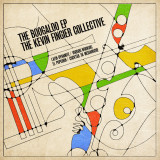
THE KEVIN FINGIER COLLECTIVE - THE BOOGALOO EP

Acid Jazz has been releasing Kevin Fingier’s productions on group label Fingier Records for the past 5 years, and there’s always that unmistakable Latin touch. It all started with ‘Latin Dynamite’, which sold out 15 days before its release. Then came ‘Cocktail de Medianoche’, another instant sellout, followed by ‘Why Don’t You Go Home’ (making them the best-selling 7” singles on Acid Jazz since Paul Weller and ‘Andy Smith’s Are You Trying to Be Lonely’).

For the second pressing of ‘Latin Dynamite’ (which, again, sold out), Fingier added a fiery Latin take on the R&B classic ‘It’s Your Voodoo Working’. And when he released his first album, ‘Not Strictly Soul’, he hid a Latin gem within it: ‘El Popcorn’—now available on 7” for the first time, ready to ignite Northern Soul and R&B all-nighters. Now, for the first time, these four Latin Soul monsters come together in one explosive Boogaloo EP! Presented on a beautiful graphic picture sleeve with signature Fingier labels

pré-commande20.04.2026

il devrait être publié sur 20.04.2026

20,38
BOO WILLIAMS - LOST OF TIME 2x12"

BOO WILLIAMS

LOST OF TIME 2x12"

2x12inchCCE047
Chiwax
20.04.2026

CHIWAX CLASSIC EDITION prouldy presents Boo Williams - Lost Of Time.
This fantastic release from 1995 came originally out on legendary Relief Records.
The 2026 version contains a new mastering.
Don't feed the Discogs Sharks!

pré-commande20.04.2026

il devrait être publié sur 20.04.2026

26,01
Quinteplus - Quinteplus

Quinteplus

Quinteplus

12inchVAMPI349
Vampisoul
10.04.2026

This first-time reissue of Quinteplus’ 1971 album revives a key moment in Argentine jazz, featuring crisp trumpet and tenor sax, electric piano-driven funk and modal grooves, and a tight, spacious rhythm section. It showcases prominent figures like Jorge Anders and “Pocho” Lapouble.

==================================

Quinteplus was born in Buenos Aires at the end of the 1960s, emerging directly from the ideas and experiments of the legendary Agrupación Nuevo Jazz. Founded in the early ’60s, this collective brought together some of the most forward thinking figures in Argentine jazz functioned as a creative lab where musicians questioned where jazz could go next. Among the key ideas discussed was the fusion of jazz with Argentine folk styles such as zamba, chacarera, malambo, cueca, and candombe, as well as a deeper look into African rhythms as a bridge between musical worlds.

Two members of that collective, keyboardist Santiago Giacobbe and bassist Jorge “Negro” González, carried those ideas forward when they formed Quinteplus in 1969. The group came together naturally: all the musicians already knew each other and had played in different projects around the Buenos Aires scene. They shared a strong admiration for Julian “Cannonball” Adderley’s quintet, along with a clear goal—to develop a modern jazz language grounded in local Argentine rhythms.

From the start, Quinteplus stood out for its openness and adventurous spirit. Rhythm was central, and so was experimentation. The band belonged to a generation of Argentine jazz musicians eager to explore electric instruments and new textures, anticipating what would soon be known as jazz-rock. This was happening in Buenos Aires at the very same time Miles Davis was opening new doors with “In a Silent Way” and “Bitches Brew”. Giacobbe introduced one of the first Fender electric pianos in Argentina, while González pioneered the amplification of the upright bass and even developed a hybrid electric, boxless version of the instrument. Trumpeter Gustavo Bergalli, meanwhile, maintained close ties with the emerging Argentine rock scene, collaborating with Luis Alberto Spinetta and appearing on Almendra’s first album.

In 1971, Quinteplus recorded its first and only studio album for EMI. The original lineup featured Jorge Anders on tenor saxophone, Bergalli on trumpet, Giacobbe on keyboards, González on upright and electric bass, and Norberto “Pocho” Lapouble on drums and percussion—who also illustrated the album’s iconic sleeve. The record is a refined showcase of the band’s musical vision: original compositions, fluent jazz language, folk-derived rhythms, funky electric textures, tight ensemble playing, and standout brass solos. Though critically praised, the album received little label support and sold modestly, eventually becoming a sought-after collector’s item.

Quinteplus disbanded in 1973, their music was perhaps too bold and unconventional for its time.

En stock

Disponible en stock et prêt pour l'expédition

23,11
Kiran Leonard - Real Home LP
  • 1: Pass Between Houses
  • 2: Theatre For Change
  • 3: Real Home
  • 4: Treat Me A Stranger
  • 5: Utopia Of Bog
  • 6: Void Attentive
  • 7: My Love, Let's Take The Stage Tonight
  • 8: The Kiss
  • 9: He Had Always Led

Cathartic avant-rock, literate DIY folk & experimental composition exploring displacement, love, climate change, belonging & the places we call home - RIYL Jim O’Rourke, Richard Youngs, This Heat, Richard Dawson, Flying Nun. ‘Real Home’ is the new album by the Manchester-born, London-based artist Kiran Leonard. His sixth album proper (not including innumerable tour-only CD-Rs and short-run cassettes), since his precocious debut in 2013, ‘Real Home’ finds Leonard invigorated by inspiration and experience, making passionate, literate, and mercurial music that explores displacement, love, memory, climate change, connections to home and more. Encompassing songs recorded after moving to South London, ‘Real Home’ reflects on ideas of belonging and domesticity through folkloric, stream-of-consciousness songwriting. Across nine tracks, Leonard traces lived impressions of the household and the city, expressing sentiments of dislocation, alienation and stasis, but contentment too. Infusing the avant-rock effervescence, terraced dynamics and visionary lyricism of his music with what he defines as a greater sense of openness, Leonard is as versatile, fervent and imaginative as ever on ‘Real Home’, yet his music is somehow more intimate, affecting, and acutely expressive. Shaped by dual considerations of simplicity and formalism, ‘Real Home’ is by turns beautiful, allusive, and ruminative, an album on which Leonard considers what his songs have resembled in the past and what they mean now. In recent years, Leonard has crafted eloquent chamber music inspired by the likes of James Joyce and Clarice Lispector (‘Derevaun Seraun’), responded to contemporary politics and communication breakdown in the digital age (‘Western Culture’), and compiled solo works and ensemble recordings for a longform ode to Jonas Mekas and to one of Leonard’s enduring themes; home (‘Trespass On Foot’). On ‘Real Home’, Leonard reiterates this abiding thematic focus yet ascends to new, different heights, in music of cathartic delicacy and dissonance where all the myriad dimensions of his work to date seem to crystallize. There are sinuous songs about struggle and defying the pace of city life through drift and diversion (‘Pass Between Houses’), stirring songs of intense feeling and crescendo, described as a form of speculative detective fiction (‘Theatre for Change’). There are touching solo piano ballads (the title track), symbolic contentions with carbon capture and climate change (‘Utopia of Bog’), modes of experimental minimalism (‘Void Attentive’), and other profuse feats of compositional range, embroidered with wild tendrils of narrative and lyrical depth. A record to pore over, and get lost in. Exemplifying the vast aesthetic scope of Leonard’s music, lead single ‘My Love, Let’s Take The Stage Tonight’ is inspired by country lodestar Hank Williams, Russian poetry and a late period love poem by William Carlos Williams. Yet for Leonard, the song signals a sense of accessible materiality, and is the product of a more linear approach to writing songs: “My imitation of the great Hank Williams, in spirit if not in substance…This is one of the best efforts on Real Home at a song-as-object. Looking at it now I realise I was trying to write a song that made itself known as a song to the listener, and I wonder whether that’s crucial if you want a song to transcend its context. And that this is either accomplished through a total openness – by being inviting, by laying the tricks of the song out plain to see, as Williams and his many ghostwriters did so well – or by adopting a knowing aloofness, positioning oneself against the listener but letting it be known that that’s what it’s doing. In this song I try both, but mostly the former: as in, I wanted to write a song where every line follows on from the next.” Imbuing the endlessly elaborate and inventive qualities of his music with a newfound streak of candid, clear-cut melodicism, Leonard has reached a special place in his artistry, on a record that feels familial, and expresses closeness. Assembled with affiliates including Lauren Auder, Otto Willberg, Jasper Llewellyn (caroline), Tom Hardwick-Allan (Shovel Dance Collective), Magda McLean (caroline, The Umlauts), Alex Mckenzie (caroline, Shovel Dance Collective), Isabelle Thorn (Dear Laika) & more, the recording process had a significant influence on the subject matter of ‘Real Home’, in sessions defined by close-knit camaraderie and artistic eccentricity: “The theme of the home obviously recurs throughout the record; the album was mostly recorded in domestic spaces with friends, and the name of the album is Real Home. I like the qualifier ‘real’, like you’re getting past the cloak of the word and towards the thing-itself…also nearly all the percussion in this record was recorded on items from my dad’s shed (jam jars, sandpaper, blocks of wood, etc). Real home record!” ‘Real Home’, like anything by Kiran Leonard, is a record of dazzling multiplicity. Yet it’s a companionable prospect with a central premise; a collection of songs where listeners old and new can find a home. An album led by a scene; of Leonard standing at the threshold, ready to welcome you inside. “Exceptional songs that linger” - The Guardian // “An autodidact of amazing talent & energy” – Pitchfork // “A ridiculous amount of talent…confrontational, celebratory, provocative or perverse – he manages all of these emotions & more” - The Quietus /

pré-commande24.04.2026

il devrait être publié sur 24.04.2026

21,81
Stevie Cox and Ansboy - Twice Like Rice LP

Stevie Cox and Ansboy: two powerhouses of the Glaswegian club scene join forces for their collaborative debut EP on Rhythm Section INTL- ‘Twice Like Rice’. It’s a weighty four-track EP designed for the dancefloor, taking in myriad influences from dub techno, breaks, trance and good old fashioned house music. The Ep is full of deep, pulsating rhythms, lush textures and emotive peaks - all road tested in Stevie’s Iconic home turf: Sub Club.

Stevie Cox has long been a name long ruminating on everyone's lips, as a resident DJ of the iconic ‘Sub Club’ with an ever-growing tour schedule and back catalogue of releases via the likes of Klasse Wrecks and Optimo. Whilst the name Ansboy may be new to some, it is a fresh alias for the grammy nominated producer and mixdown engineer Robert Etherson who has long been a staple in the Scottish scene with an international touring repertoire under his belt.

The two friends met in their hometown of Glasgow and began their musical journey together last year after Robert taught Stevie how to do mixdowns. The pair clicked effortlessly, quickly discovering they shared the same passion for emotive, deep and progressive dance music. Their first track together - which took shape in the form of ‘Drift’ - a high-energy synth led anthem, came out with a special selection of tracks curated by Bradley Zero for his exclusive SHOUTS Summer sampler in 2025.

For the Twice Like Rice EP, their work evokes all corners of the dancefloor, kicking things off with ‘GC’ - a peak time breaks-infused trancey-heater - a master class in building dancefloor tension which gives way into a searing crescendo. Things spin towards a darker percussive focus on the more intense ‘Twice Like Rice’.

On the b-side things return to blissful euphoria with ‘Virgil’ - a warm up dub-techno ballad, before the emotional release of ‘Subculture closure’ inspired ‘Carter21’.

pré-commande24.04.2026

il devrait être publié sur 24.04.2026

15,08
Various - Summer’s End Sampler (3x12")

All Day I Dream bids farewell to another radiant summer with its Summer’s End Sampler, a 12-track collection of deep, melodic, and transportive sounds. Carefully woven together from a mix of rising favorites and emerging talents, the compilation encapsulates the warmth, nostalgia, and new beginnings that arrive with seasonal change.

pré-commande24.04.2026

il devrait être publié sur 24.04.2026

27,31

Last In: 3 months ago
Mattias El Mansouri - Sense Data

Phonica welcomes Mattias El Mansouri, a Swedish-born DJ and producer of Moroccan/Chilean descent who has been behind some of our favourite releases over the past few years on labels such as Aniara and Nous'klaer.

On the 'Sense Data' 12", El Mansouri expands on his atmospheric House and Techno explorations with three deep yet dancefloor primed pieces that hold personal resonance for him.

El Mansouri, who holds a degree in Theoretical Philosophy, explains:

"'Sense Data' are the immediate elements of perception; what is directly given to the senses before any judgment or interpretation. In vision, these appear as colored, shaped patches; in other senses, as sounds, tastes, smells, or tactile qualities. For example, seeing a brown table with a white coaster involves sense data of a brown patch and a white roundish patch, from which one infers the presence of a table and coaster."

On the record's flip, we have the beautiful "Cielo Vacío' and 'Ouzo Hallon' dub version of 'Sense Data'. El Mansouri continues:

"Cielo Vacío translates to “empty sky” in Spanish. The track serves as a eulogy for my brother, who passed away in December 2023. I chose this title because it resonates with the sonic and emotional atmosphere of the piece. Its ambiguity is intentional, carrying both the weight of grief that lingers after losing someone you love, and a strange, fragile peace you extend toward the departed. It reflects the hope that, wherever they are, whether or not one believes in an afterlife, they have found rest.

Ouzo Hallon translates to Ouzo (the Greek liquor)+Hallon (Raspberry). It’s a long drink that my (Greek) ex came up with last summer, mixing ouzo, raspberry syrup/raspberry juice and ice. It became a thing in our little friend group, consisting of mostly Greeks, and every time we all hang out we would all just drink ouzo hallon until we couldn’t stand straight. I always wanted to name a track Ouzo Hallon, just for the fun of it, and what better way to get the chance than now!"

En stock

Disponible en stock et prêt pour l'expédition

17,02
Intrusion - A Gentle Embrace

Intrusion

A Gentle Embrace

12inchINTRUSION05-RE
Echospace
27.04.2026

Over a decade has passed since this was released, and it has truly aged like fine wine. This release features 2 timeless cuts from the mind and soul of intrusion, mixed and recorded near the heart of Detroit. This was beautifully remastered by dub innovator and pioneer, Stefan Betke POLE @ scape mastering in Berlin, DE. The recordings were pulled from the session masters conducted by Bazza @ Alchemy Mastering in London to ensure a perfectly balanced mix and preserving the soul and spirit of the original tape master. The first incarnation of "A Gentle Embrace" came in the form of three extended reshapes from cv313 & variant and now we're proud to offer the original work on beautiful crystal/silver mixed clear 150 gram wax! :)

On side A the most pristine of dub techno is on offer here, this is Detroit techno stripped down to its most minimal core. A gorgeous subtle ambient soundscape exploring the deepest end of dub and house with gentle surges of organic elements, field recordings and modular movements simply out of this world. The "Reduction" mix on side B captures those chilling glacial soundscapes, trademark basslines and mesmerizing gaseous atmospheres subtly layer into the mix. Otherworldly to say the very least, this is music to swim in, breathe in and to pray to - for the spirit and the soul. Essential!

pré-commande27.04.2026

il devrait être publié sur 27.04.2026

15,76

Last In: 10 years ago
Fireground - Refreshing Part 2

Fireground

Refreshing Part 2

12inchTRESOR386
Tresor
03.04.2026

As with the band’s 2023 release of the same name, Refreshing Part 2 is a decisive and fierce collection of percussive techno that nonetheless travels its path with a heightened level of funkiness.
The Italian duo describe the concept behind this collection as being “not about resetting, but about balancing. Refreshing means reconnecting with the present and with the future…focusing on one’s own way in order to prevent the flow from becoming automatic, uncontrolled, and
without orientation. It is more a direction than a path.”
The four tracks on the 12” are hypnotic dives into a full spectrum of club music: the rhythms and sound design guiding the subconscious into visions of past, present and future intermingled, a reminder that all moments co-exist simultaneously.
Side A passes from the stripped-down intensity of The Way through to Elisir (Elixir), which manages to pull off a trick of feeling light and floaty while maintaining the power of its predecessor. The flip side opens with the forceful drive of Activate before making way to the
percussive elasticity of Family Tree, a track which closes out the EP by recalling, in both name and sound, how that which came before deeply affects the now, though often in ways only subliminally perceived.
Digital-only track Fixed in Flux continues this concept, and the overall themes of Refreshing Part 2, with further evocations of intent and movement; remaining present in change, without resisting it, yet without dissolving into it.

En stock

Disponible en stock et prêt pour l'expédition

10,88
Octo Octa - Sigils For Survival LP 2x12"

Acclaimed producer, DJ, and dancefloor healer Octo Octa (Maya Bouldry-Morrison) announces her fourth full-length album, Sigils For Survival. Following 2013's Between Two Selves, 2017's Where Are We Going?, and 2019's Resonant Body, the new record marks a decade since Maya publicly came out as transgender in November 2015. ''As an autobiographical artist, I set out to write an album that would be a milestone for this past decade of joy and sorrow,'' Maya explains. ''Sigils For Survival is my attempt to encapsulate the intentions and techniques that I used to move through life into a spell.'' For each of the record's eight tracks, Maya drew a sigil. Each is a personal symbol intended to ''bind magic to the song and seal its intention.'' These drawings appear throughout the physical edition's design. Maya's sister, New York artist Hope Morrison, incorporated each sigil into her original paintings, which comprise the album's vivid artwork. Hope Morrison, whose imagery translates the sigils' energy into vivid form; the layout was designed by Jo?o Ervedosa. Created entirely on hardware instruments and later mixed in Logic, Sigils For Survival captures the tactile immediacy of live performance. Maya preserved the feel of MIDI-clock drift and off-grid recording, letting her machines interact in the rhythmic pocket, rather than confirming them to a click. Alongside her signature deep, ecstatic electronics, the album features hand-played dulcimer, hand-pan, and recorder. Her voice also returns, carrying spells of love, protection, and transformation. Across Sigils For Survival, Octo Octa channels the ecstatic house lineage into an intimate ritual space. The music speaks of immediacy, play, and communion -- of magic as method, love as survival, and sound as spellcraft. Sigils For Survival is both a document of ten years lived fully and an invocation for the next chapter -- a glowing testament to music's power to protect, transform, and set the spirit free.

pré-commande30.04.2026

il devrait être publié sur 30.04.2026

27,52
KALIA VANDEVER - WE FELL IN TURN

'We Fell In Turn' is the solo debut from Brooklyn-based trombonist, composer, and quartet leader Kalia Vandever. Vandever, who plays with Harry Styles and Japanese Breakfast, “sculpts her trombone’s golden tones into dazzling compositions” (Pitchfork), writing music that tends to “dip you into a feeling or a pattern or a breathing speed, and keep you there” (The New York Times). In 2022, Vandever released Regrowth, an album that “features the ecstatic, brilliant melodies that have become Vandever’s signature sound” (Bandcamp). This spring, Vandever brings contemplative reflection to We Fell in Turn, a brave and understated work from an ascending voice in American jazz.

Recorded over three days in upstate New York, 'We Fell In Turn' is improvisational — a stark palate of solo trombone, voice, effects, and little more. “My solo process has always been heavily rooted in improvisation,” says Vandever. “I wanted the process to feel similar to the way I perform. Lee Meadvin, who engineered and produced the album, had a heavy hand in the creative process as well. He would dictate prompts before I started improvising and those pieces ended up shaping a lot of the imagery that comes up throughout the record.”

Connecting the dots between Jeff Parker’s 'Forfolks', and early releases from Grouper, 'We Fell In Turn' is a study of space and patience, embracing vulnerability in its sparse adornment. At times, the album is reminiscent of Patrick Shiroishi’s 'Hidemi', both in its familial inspiration and solo instrument study, while sharing the ineffable feel of William Basinski’s 'The Disintegration Loops' — the traces of her trombone folding in on themselves in an organic loop. Emotionally generous throughout, Vandever acts as a torchbearer for jazz’s historical yearning for connection.

On 'We Fell in Turn' Vandever draws inspiration from childhood memories — events that shaped her approach to love, community, and partnership, and her maternal homeland of Hawaii. “We were exploring childhood memories, earliest experiences with disappointment and pain, and my Hawaiian roots,” says Vandever. “We Fell In Turn came after I titled the track "We Wept In Turn". Both come from the intangible feeling of waking up from vivid dreams, particularly the experience of falling right before waking up or waking up in tears.”

Through this exploration into her heritage, Vandever also found guidance. “In Hawaiian mythology, ‘aumākua are known as ancestral spiritual guides that manifest in different forms, whether physical or intangible,” says Vandever. “My ‘aumākua visits me in my dreams, usually with a reassuring hug or a reminder of my past. Memories and early experiences seem to escape me, but find their way back in dreams.” And now they’ve found their way into 'We Fell in Turn', Kalia Vandever’s stunning solo debut.

pré-commande30.04.2026

il devrait être publié sur 30.04.2026

25,63
Heavenphetamine - The Sun On A Winter Day LP

Who would expect that a new Krautrock release on Macadam Mambo would come from a Japanese band called Heavenphetamine?! The duo/couple have been touring all over Europe in the past two years, and started to build a serious fan base, as every performance they deliver is leaving an imperishable memory. This is on a date in Belgrade at Karmakoma that they met with Sacha. They had this album recorded and auto-release on tape but not on vinyl, and it came completely naturally to decide to release it as a LP on Macadam Mambo. The tracks on the album are new versions a bit different from the tape, let’s say a bit more mature and minimal than from the first ones recorded and give the feeling of listening to a masterpiece in the genre. It can be dark and profound but also enough light to bring back this little sun that has trouble to shine in the winter. This album has been highly influenced by their experience with the war in Ukraine, and the friendship they made there, where it has been recorded, and it express this mix of emotions due to the feeling of exasperation and the hope to see someday this conflict come to an end and the relief of the peace…

En stock

Disponible en stock et prêt pour l'expédition

17,23
IZCO - POWERSCROFT LP

IZCO

POWERSCROFT LP

12inchBWOOD446LP
Brownswood Recordings
01.05.2026

East London producer and DJ IZCO announces his debut solo studio album ‘POWERSCROFT’, set for release on 1st May via Brownswood Recordings. The album’s first single, ‘Strike a Pose’ featuring the vocals of Camille Munn offers an early glimpse into the project. To celebrate the release, he will go on a run of UK dates from March to May, culminating at London’s Jazz Cafe.
Named after the road where he grew up, ‘POWERSCROFT’ marks a defining new chapter for an artist who has spent the past decade shaping the sound of UK dance music. Drawing from jungle, broken beat, grime, garage, soul and dub, the album channels the energy of the dancefloor while remaining deeply rooted in memory, instinct and identity. It captures what it feels like to be inside IZCO’s world, where thoughts, memories and influences collide.

Hailing from East London, IZCO is a producer and DJ spearheading a new generation that is bringing soul back to the dancefloor. Shaped by the rich musical heritage of his hometown, he has developed a sound that feels familiar yet forward-looking, diverse yet distinctly his own. That sound has taken him across the globe, from New York to Tokyo, alongside standout sets at We Out Here, Outlook and Glastonbury.

IZCO began his journey making grime beats for local rappers including Capo Lee, Novelist and Reek0, before becoming a key figure in the UK’s evolving garage and dance music landscape. In 2018, he launched his long-running Rinse FM show and released his debut EP Tek 5, earning early underground acclaim. His production credits include PinkPantheress’ breakout track ‘Passion’, created alongside Jkarri, as well as collaborations and remixes for artists such as Katy B and Greentea Peng.
Beyond his solo work, IZCO is a label head, promoter and co-founder of the Brighter Days Family, a collective built on community, craft and cooperation. With ‘POWERSCROFT’, he steps fully into the spotlight, presenting his most personal and fully realised body of work to date. “This album is about channeling my true musical personality and character,” he says. “I’m marking a new chapter by paying tribute to my foundations.”

pré-commande01.05.2026

il devrait être publié sur 01.05.2026

26,01
Articles par page:
N/ABPM
Vinyl