
pré-commande30.11.2022
il devrait être publié sur 30.11.2022
37,77 €
il devrait être publié sur 30.11.2022
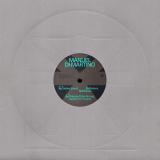
Following the beginning of its vinyl series, Rinascimento Elettronico returns with its second physical/digital release, a five-track journey shaped around hypnotic tension, bleep-driven patterns and deep, groove-oriented rhythms.
Manuel Di Martino delivers two dancefloor-focused compositions where driving percussion and intricate grooves meet the hypnotic and mental side of techno. Framing the release, an intro and outro create a continuous listening experience, setting the atmosphere and bringing the journey to its conclusion.
Completing the EP, Orbe reinterprets “Materia” through his distinctive hypnotic approach, pushing the sound deeper into a mental and immersive dimension.
il devrait être publié sur 30.10.2026
Walking the solitary path of damp scent martinou brings forth the first deliverance from label sewer sender. SSNDR001 introduces martinou with A-side 'needless' focusing on melodic tendencies, breaking it down into
reverse madness. B-side 'procedure' is strictly rhythmic fit for both 45 and 33 rpm play. with function in mind this release of raw sewage is constructed for the sole purpose of club play.
Disponible en stock et prêt pour l'expédition

Following releases of the UFO and Supercar soundtracks, Thunderbirds is the third in the series from Gerry and Sylvia Anderson’s iconic TV shows. It is newly compiled, mastered and designed by the creative team at Fanderson (The Official Gerry and Sylvia Anderson Appreciation Society), who have access to Barry Gray's original studio tapes.
The album features 37 tracks from 19 episodes (series 1 and 2), including the Thunderbirds main theme and closing titles. The tracks were not programmed to follow the episode order but to achieve an integrated listening experience. The best bits of the sixties’ soundscapes are here. The Thunderbirds soundtrack is an effective time capsule as Gray’s music veers into British spy genre, Latin pop, exotica, urban jazz and military marches. Beautifully composed and conducted, the score reflects the moods of the scenes, from dangerous to romantic and no-nonsense to silly.
Barry Gray was a classically trained composer and a versatile musician, and was amongst the first composers to use electronic instruments in music for television. Best known for creating the music for most of the Gerry & Sylvia Anderson television series in the 1960's and 70's (Fireball XL5, Thunderbirds, UFO, Space:1999), Barry Gray’s complete musical opus is still not commercially available in its entirety.
il devrait être publié sur 03.07.2026

"Over the past three decades, Philipp Lauer has produced an incredible body of work, deploying a myriad of aliases, both as a solo artist and as a part of collaborative projects. From his hardware-steeped Frankfurt studio Pyramide 2, he has built this catalogue through original material and remix commissions, taking on the full spectrum of electronic music while retaining an unmistakable signature. He combines a hands-on approach to rhythm and composition with a DIY MO and a love of big hooks. The level of expertise at hand seems to facilitate a playfulness that subtly permeates all layers of his work. He's a pop melody natural who just so happens to love fiddling with synthesizers, drum machines, and effects an equal amount. All of these qualities are exemplified on "Embalmed In Martino": Lauer's four-track ode to the Belgian Martino sauce, a spicy tomato-based condiment, and arguably the essential ingredient to top off the namesake raw meat sandwich. On "Embalmed", which makes use of instrumentation that would fit right in on an early eighties Manchester cut, and "Martino", where a sturdy, electroclash flavored arp bass provides the stamina, a slew of big and small riffs easily work their way in, thirsting for our ears. On the other side, "Transactional" combines Miami basslines and similarly electro-fundamental twinkling synth work with a flanger-laced 4/4 beat, while "Don't You Know" features soaring synthwave patterns and the only vocal samples on the EP. Both sport rich arrangements as well, right down to the cowbell overdubs. Lauer's often lauded for his "summery sound". In this light ALT026 lands right on time - yet we might disagree here, as it's suited for all seasons, and all terrains, both the shiny festival grounds and the dim-lit club floors."
Commandez maintenant et nous commanderons l'article pour vous chez notre fournisseur.

Stacey Kent is an American jazz singer in the mould of the greats, with a legion of fans, a host of honors and awards including a Grammy nomination, album sales in excess of 2 million and more than one billion streams, and Platinum, Double-Gold and Gold-selling albums that have reached a series of chart-topping positions.
Stacey, a comparative literature graduate with a passion for music, travelled to Europe to further her studies after receiving her degree from Sarah Lawrence College in NY. Through a series of twists of fate, she found herself in London where she enrolled in a graduate music program at the Guildhall School of Music and Drama, where she met her future husband and musical partner, Jim Tomlinson.
Kent's musical journey began with childhood piano lessons. A keen ear and true voice lead her to search out opportunities to express her love of music. However, nothing suggested the shift from the academic path to the one that propelled her to international recognition as one of the foremost jazz singers of her generation. With a catalogue of 13 studio albums, including the Platinum selling, Grammy-nominated Breakfast On The Morning Tram (Blue Note/EMI 2007) and an impressive list of collaborations, Stacey has graced the stages of nearly 60 countries over the course of her career.
Her worldwide fan base is testimony to her ability to express the emotional heart of her songs with delicately nuanced interpretations that transcend borders and defy categorization. Her unique multi-lingual repertoire includes standards, chanson, Bossa Nova, and originals written by Jim Tomlinson, her saxophonist/producer/composer/arranger husband in collaboration with the Nobel Prize-winning author, Kazuo Ishiguro with whom they have worked since 2006. She has also recorded with Brazilian legends, Marcos Valle, Roberto Menescal and Danilo Caymmi, and the celebrated French string quartet, the Quatuor Ébène.
Stacey's last studio album, Summer Me, Winter Me, was released in November 2023 on Naïve Records. A collection of fans' requests from her as yet unrecorded concert repertoire, Summer Me, Winter Me entered the French jazz charts at number 1 and has quickly established itself as a new highlight in her discography. She now returns with A Time For Love.
il devrait être publié sur 03.04.2026

The long awaited reissue of one of the bests albums of rare Eastern and psychedelic Jazz by the famous Hungarian guitarist. Carefully remastered by prolific Grammy nominated sound engineer Jessica Thompson. For fans of Grant Green, John Abercrombie, Pat Martino, Joe Pass, Wes Montgomery, Tal Farlow. Ultimate collector’s item for those who are deeply in Jazz and guitar music.
il devrait être publié sur 31.03.2023

But the continuous stream wouldn't provide sufficient answers for long. Observing rudimentary structures sewer sender became tantalized with a vision of reverbation fromlower vaults of confinement. Waves reminiscent of solid concrete yet deeply seated below the ocean surface form and merges with the narrow surroundings.
Manitou takes the first step by setting a clear form for something deep seated. Proceedingextends the notion of martinous inaugural appointment Procedure' with a take on industrial
drums reverbing from the depths. Never (Anthem) takes the first part of the EP to fruition with stripped anthemic stabs and alarms to a strict and cleanly distorted beat. Jargonsolidifies concrete solid with enigmatic percussions over jaunty kick patterns. I have lost again focuson a dramatic narrative with hypnotic vocal stabs rolling over an intense kickand climatic builds. Needlessness frames the entire release combining both the concrete solid and the deep sea seated with again a take on martinous inaugural release Needless, leaving the frail thematic stab subdued by syncopated kicklike percussion and soaring
hihats to create a toollike appearance.
Commandez maintenant et nous commanderons l'article pour vous chez notre fournisseur.

Giacomo “Mino” di Martino started his musical career in several early 1960s Italian beat bands. By 1968 he had found enormous success with pop superstars I Giganti. After a brief split in 1970 –during which Mino formed Il Supergruppo with Ricky Gianco and other greats of the Italian scene– he came back to I Giganti in 1971. With them and with new advanced ideas that set the band pretty far away from the sophisticated pop and beat sounds they had been so successful with, they would record the amazing Terra in Bocca conceptual LP, an adventurous experimental album that explored the obscure connections between the Italian state and the mafia. A delicate topic full of political criticism which also found them having to fight censorship –it was played only once in the radio. This fact, along with the advanced new sound probably being too far ahead from the mainstream audience’s taste, turned the record into a commercial flop. Nowadays Terra in Bocca is a highly regarded album among critics, afficionados and collectors, and a pretty seminal one for the Italian scene of the seventies, since it can even be seen as a precursor to the works on the Cramps label. Gianni Sassi, producer and photographer who founded Cramps was involved in the release of Terra in Bocca –his is the amazing cover concept.
After the Terra in Bocca experience, Mino’s will was to keep exploring new musical paths and free his mind to experimentation. Along with his wife, actress and singer Edda “Terra” di Benedetto, they formed the Albergo Intergalattico Spaziale, just after the brief post-Giganti project Telaio Magnetico (with Franco Batiatto, among others) was over. The Albergo was a venue where artists from diverse disciplines, mainly musica and theatre, could meet and create works together.
On the musical side of the community, Mino and Terra explored the cosmic sonorities that were coming from Germany and mixed them with the Italian experimental scene of names like Franco Battiato, Luciano Berio or Roberto Cacciapaglia. It is from the sessions that took place in the Albergo from 1974 onwards that the Albergo Intergalattico Spaziale LP came out. Originally released in 1978 the compositions had been made during those years of exploration, the goal not being the release of an album but the aim to explore new sounds and experiment with music. Eventually it was decided to present a sample of all that work, and a few copies of the Albergo Intergalattico Spaziale LP were privately pressed.
The record sleeve and notes on the insert reivindicate the fight against nuclear power. The music is dominated by Mino’s keyboards, creating amazing space sounds reminiscent of those from 1950s and 1960s science fiction B movies brought to the most avantgardist experimentation of the moment, exploring new sounds with the newest keyboards available. This intriguing background sets the athmosphere for Terra’s voice to improvise all over.
Commandez maintenant et nous commanderons l'article pour vous chez notre fournisseur.

To a degree, all musicians are a product of their environment, the places they record and the venues they play. For proof, check out the alumni of the n-wave era CBGBs venue in New York, Cabaret Voltaire’s Western Works studio in Sheffield or more recently London’s Total Refreshment Centre.
We can now add to that list the Constellations Workshop in Colwick, Nottingham, a project that provides employment through making studio furniture, for out-of-work musicians. It was here, after-hours, that the music on Brown Fang’s impressive and ear-catching debut album took shape.
Both members of Brown Fang, bassist John Thompson and guitarist Henry Scott AKA Henry Claude, have a long association with the Constellations Workshop. Though their musical projects are manifold – Thompson having toured with the likes of The Nectarine No9 and The Selecter, with Scott being both a mainstay of Nottingham jazz circuit and recording ambient music as Fang Jr – the work provided by the community-minded project has kept their heads above water and allowed them a space to record in when the shutters go down and the bandsaws get switched off.
Yet the music showcased on Sherwood Pines is more morning-fresh and sun-kissed than industrial and sawdust-sprinkled. Combining the pair’s brilliant musicianship – think languid bass guitars and Pat Martino-esque jazz guitar licks – with saucer-eyed electronics, occasional downtempo drum machine rhythms and plenty of glistening special effects, the set’s eight tracks are as blissful and becalmed as an early morning saunter through Sherwood Forest on a misty autumn morning.
For proof, check epic opener ‘Tracing Paper’, a slow-build ambient soundscape in which bubbly electronic lead lines and colourful chords sashay around Scott’s sparkling, laidback guitars, and the beguiling ‘That’s All You Can Think’, a subtle tribute to Steve Reich masterpiece ‘Electric Counterpoint’ in which slow-burn, stretched out synthesizer sounds wave in and out of a gradually evolving cycle of delay-laden electric guitar motifs.
The band’s love of classic American minimalism – as well as a shared love of the Duratti Column and Robert Fripp – comes to the fore on ‘HDMI I Love You’, which boasts a deliciously dubby bassline, Tangerine Dream style synths and the deepest of ambient chords, while ‘I Nearly Married a Human’ and ‘Fridgewords’ balance bespoke electronics – languid, dewy eyed and comforting – with Scott’s gorgeously laidback, slow-release guitars.
Every great album needs a triumphant conclusion, and Sherwood Pines is no different. You can hear everything that makes Brown Fang great on ‘Goodbye Donkey Jacket’, from the pin sharp, effects laden jazziness of Scott’s guitars and the fluid dexterity of Thompson’s bass, to the pleasingly spacey pulse of the synths and the gentle rhythms of the soft-focus machine drums. It’s a confident, ear-catching conclusion to a debut album that’s been years in the making.
Commandez maintenant et nous commanderons l'article pour vous chez notre fournisseur.

Jamaica Suk’s 17-track, quadruple-volume ‘Uncertain Landscapes’ series continues with its second part, bringing five tracks of uncompromising cutting-edge techno.
NovaMute artist Nicolas Bougaïeff kicks off with the rasping sounds of ‘Nocturne 1’, a tense juggernaut of a track. Sheet metal textures clash up against eerie FX the most throbbing of kick drums, with a twisted, distorted feel to the breakdown.
Keith Carnal’s ‘Infringement’ injects rhythmic bleep patterns into its chattering percussion, creating an almost dubby feel that’s contrasted with an urgent energy. Well-timed filtering adds to the tension.
The warped wiggle of Helrad’s ‘Groove Addicts’ comes next, with intense machine energy filtering up from the depths. A manic cacophony of detuned bleeping creates a heavy, relentless feel over the succinct beat.
Insolate’s ‘Sanchin’ rocks a pulsating bass chug that underpins washed-out textures and synth delays, with rasping metallic sounds washing over the track in the second half while the shuffling percussion keeps ticking away.
Manuel Di Martino channels some classic Detroit vibes in the chattering clap & snare patterns and rolling groove of ‘Runout’. Resonant tones blip, loop and pitch-shift in hip-shaking fashion to give the feel of a classic Jeff Mills set in action.
Commandez maintenant et nous commanderons l'article pour vous chez notre fournisseur.

Club Internacional dig deep to launch their new global reissue series in style with two long lost cuts from Rio-based label Top Tape. First up is Jose da Silva aka Zeca Do Trombone.
A massively respected instrumentalist, he has worked his trade over the years with many of Brazil's leading artists such as Tim Maia, Milton Nascimento, Elizeth Cardoso, Beth Carvalo, Martino Da Vila, Gonzaguinha and Carlos Dafe amongst others.
He also produced a very much sought after LP in 1976 alongside Roberto Sax which was finally re-released this year on Mad About Records. Tema Do Brisa dates from a few years later in 1978 and is Zeca's only solo 45 single. Never released on digital and never reissued on vinyl before, it is with great pleasure that Club Internacional re-launch this psychedelic jazz and heavily funk influenced gem with its still stunningly fresh sounding drum patterns to a new generation of listeners. Fans of jazz, funk, rare groove and Brazilian music in general will appreciate the strong vibes of this original track and be delighted to finally have this record in their hands. The track represents a unique moment in the career of a great musician fully in control of his instrument and more than willing to test its musical boundaries. Zeca continues to play out as an artist regularly in Brasil right up to the present time.
On the flip side, Sambacanas, or Os Sambacanas as they were sometimes also known, were a group of Samba musicians recorded by the Sao Paulo based producer Julio Nagib.
Although they were mostly known for a samba covers LP entitled 'Sucessos Da Juventude Em Tempo De Samba' (re-released in the UK under the title 'Fly Me To Brazil'), this song, Panga, Danga, Panga, was the A side of their only 45 single release for Top Tape which came out in 1976. Again this track has never been re-released before in its 45 single version, and has not been made available digitally. A beautiful example of raw and simple Batucada-style Brazilian samba music infused with Latin funk vibes, it features excellent vocals and percussion including the berimbau and cuica. Club Internacional hopes you enjoy this journey back to rediscover these very different, but wonderful, long lost sounds of Brazil on this limited edition vinyl 45 pressing to add to your record collection. Each Club Internacional edition may take some time, but it will be worth the wait!
Commandez maintenant et nous commanderons l'article pour vous chez notre fournisseur.
