- A1: Gone To Sorrow; Written-By – J. Browne*
- A2: Sleeping Serenade
- A3: Homeward Bound; Written-By – P. Simon*
- A4: Sands Of Love
- A5: My Life Has Changed
- A6: Return Home; Written-By – A. Brackett*
- A7: Her Invention
- A8: Look Around Rock; Written-By – P. Nichols*
- B1: The Now
- B2: Rainbows
- B3: Simple Complexities
- B4: Every Little Prayer
- B5: Is There Anything I Can Do
- B6: Dark On You Now
- B7: Roses Gone
Suche:pat san
- A1: Actarus
- A2: Connection Transpacifique Feat Sandra Zettpunkt
- A3: Wolkman
- A4: Donovan Magic Orchestra
- A5: Macadam Bubblegum
- A6: Pack Ur Patience Feat Sandra Zettpunkt
- B1: Fréquence Gaie Feat Maxwell Farrington
- B2: Lust Pill!
- B3: Memphis Sounds
- B4: Why Ya Wanna Wait Feat Eric D Clark
- B5: Danceteria Feat Alex Alkiu
Hologram Teen is the solo project (and anagram) of former Stereolab keyboardist Morgane Lhote. Her colourful playful songs are heavily influenced by disco and 80s French pop.
Initially from Paris, Morgane relocated to Los Angeles where she concentrated on her solo material. Captain Fluo is a disco-fuelled love letter to 1980s Paris and its underground nightlife, record store discoveries and the exhilaration of growing up as a gay teenager in a world of self-discovery.
Produced and mixed by Andrew Claristidge (Acid Washed) at Duca Sonora Studios in Brittany Captain Fluo is a vibrant fusion of propulsive beats, bouncy synths and funky basslines. Morgane’s signature keyboards weave through a constellation of guest vocalists including Sandra Zettpunkt, Maxwell Farrington, Eric D Clark and Alex Aikiu. From the euphoric pulse of ‘Lust Pill’ to the radio crooner nostalgia of ‘Fréquence Gaie’ each track is a portal to the dance floors and late-night airwaves of a bygone era.
Drawing inspiration from French pop icons like France Gall, Michel Berger and Louis Chedid alongside the sleek productions of Italo disco pioneers Kasso and the genre-defining touch of David Bowie, Nile Rogers, Quincy Jones and Depeche Mode, Captain Fluo is a heartfelt ride through an era when music was liberation.
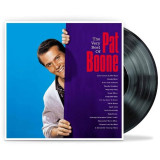
- A1: Love Letters In The Sand
- A2: Moody River
- A3: Ain't That A Shame
- A4: Why Baby
- A5: Sugar Moon
- A6: Long Tall Sally
- A7: It's Too Soon To Know
- A8: I'll Be Home
- B1: April Love
- B2: Speedy Gonzales
- B3: Don't Forbid Me
- B4: Tutti Frutti
- B5: Friendly Persuasion (Thee I Love)
- B6: Remember You're Mine
- B7: I Almost Lost My Mind
- B8: A Wonderful Time Up There
Pat Boone or Elvis Presley? That was the burning question on
the lips of Fifties teen America. Certainly, the two were the most
successful solo artists of rock’s breakthrough years. But while
Presley was the good-looking ‘white kid who sang black’, Boone
was married, God-fearing and covered hits by African-American
artists to chart-topping if unthreatening effect. Elvis, of course, is
no longer with us though his image and influence will never fade.
Pat Boone is still alive and there’s no doubting he was
responsible for some of the best-remembered classic pop of the
era.
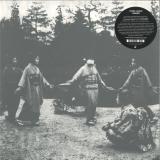
- Reality Blur
- Unknown Threads
- Moving Underground
- Second Field
- Birds Eye View
- Birds Eye View 2
- Trembling Forest
TWICE A MAN pflanzten die Saat für "The Coloured Breeze Is a New Dimension" mit dem Song 'Dahlia', einem "neuen" Stück, das sie zur Ergänzung der Albumkompilation "Songs of Future Memories" geschrieben hatten. Drei Jahre lang düngte und hegte das schwedische Dark-Electronic-Trio den Keim, bis er feste Wurzeln in ihrem musikalischen Erbe fand und damit begann, neugierige Ableger in neue fruchtbare Böden jenseits der zuvor errichteten Klanggartenmauern zu senden. "The Coloured Breeze Is a New Dimension" ist ein organisches Gebilde, das etwas Neues schafft, indem es seine musikalische DNA auf verschiedene Weise rekombiniert. Als Ergebnis erblühen die frischen Songs in vielen elektronischen Farbnuancen. TWICE A MAN waren schon immer Vorreiter. In ihrem Heimatland Schweden waren sie die anerkannten Pioniere der elektronischen Musik. Und schon lange bevor es in Mode kam, positionierten sich die Schweden als selbstbewusste Umweltschützer. Musikalisch wurden sie liebevoll mit Bezeichnungen versehen wie: "Ultravox auf Gras - wenn auch melancholisch und ohne zuckriges Pathos" oder "wie ein trauriger Gary Numan, aber mit einem warmen, organischen Touch". In ihrem Sound finden sich auch sanfte Anklänge an TANGERINE DREAM, KLAUS SCHULZE und THE HUMAN LEAGUE neben vielen anderen möglichen Referenzen. Als sich Sänger, Gitarrist und Keyboarder Dan Söderqvist im Jahr 1977 mit dem Synthesizer-Spieler Karl Gasleben zusammenkam, gründete das Duo zunächst COSMIC OVERDOSE, die erste elektronische Band Skandinaviens, aus der dann TWICE A MAN hervorging. Während ihrer bemerkenswerten Karriere veröffentlichten die Schweden zahlreiche Alben, inklusive spezieller Projekte, und zwei Kompilationen. Sie spielten zahllose Konzerte und schufen den Soundtrack für sieben abendfüllende Theateraufführungen im Königlichen Dramatischen Theater in Stockholm, Musik für Filme, Ausstellungen, Tanzaufführungen und sogar Computerspiele. Die Natur spielt auch in den Texten und im Sound von "The Coloured Breeze Is a New Dimension" wieder eine große Rolle. TWICE A MAN haben ein musikalisches Äquivalent dazu geschaffen, Trost in der Natur, Kunst und der Freude an Büchern zu finden, um zumindest für eine Weile den Übeln der modernen Welt zu entkommen.
- 1: Ten Degrees Of Strange
- 2: Nether
- 3: The World To Come
- 4: Flood In The Desert
- 5: Tree Rings
- 6: Gods And Monsters
- 7: Enkidu Walked
- 8: Bonedigger
- 9: I Can’t Swim There
- 10: Home And Dry
- 11: Ferryman
Johnny and Robert began work on the album in the first weeks of the pandemic, wanting to make music that sang of those dangerous, disorienting spring days; when birdsong was brighter –– and the sense of bewilderment more powerful –– than any of us had known before. They drew inspiration in part from The Epic of Gilgamesh, the oldest surviving work of world literature; an epic poem from Ancient Mesopotamia that contains the earliest version of the Flood Myth. To Johnny and Robert, Gilgamesh resonated eerily with the present moment –– and it catalysed their song-writing. For Gilgamesh is a story of friendship, love, loss, grief, bad governance and good dreaming; of natural disaster and environmental crisis. It also contains the first recorded act of human destruction of the natural world: when Gilgamesh and Enkidu travel to the Sacred Cedar Wood, slay the guardian spirit of the forest, and cut down the trees with their axes, thereby bringing catastrophe upon themselves. Johnny and Robert wrote the album between March 2020 and February 2021, during a year in which we all wandered unsure of our path, lost in the cedar wood. The songs were composed in large part as a correspondence, through a back-and-forth of notebook pages, voice-recordings and WhatsApp-messages, at a time when lockdowns made meeting in person impossible. The first eight songs were recorded in an off-grid cottage deep in a Hampshire forest, with the sounds of chainsaws felling trees drifting in through the windows along with the birdsong. The result is an album at once urgent and ancient, which fuses poetry, landscape, myth and music into something unique. These are songs that ring with hope, love and sadness –– and one need not know anything about The Epic of Gilgamesh to be touched by them.
Under the right conditions, half-remembered dreams can meld seamlessly into hazy present moments. Time spent alone can be an emotional blank canvas, and an opportunity to deconstruct sense and feeling; a patchwork of snippets both rooted in memory and abstracted from reality. The title of ‘quilted lament’ perfectly captures the way Gretchen Korsmo and claire rousay’s overlapping missions come together to do just this. Worn polaroid melodies and snatched everyday noises seem overheard through windows onto the street. They feel emotionally twinned, claire and Gretchen, it’s not always possible to tell where one ends and the other begins. Their musical thoughts and DNA are sewn together into a mini symphony of warmly embracing movements.
Built remotely between pre-existing friends in the underground music scene, the duo layered ideas onto audio files, and sent them back (and forth). And these luscious instrumentals truly do feel assembled by intuition, casually crafted with little need for guidance. “claire and I are both emo,” explains Korsmo. “We are both former texas-dwellers too and relate over both the woes and beauties of being in the American DIY experimental music scene.” Buoyant piano keys and hushed layer vocals tracks sit alongside a humming field-recorded scrapbook; a neighbour caught in a moment of private inspiration while street noise elevates; a private hymnal in the bathroom while the washing machine ends its cycle. Both artists take field sounds from a wealth of Zoom and Tascam recordings made in the last half-decade in Santa Fe, San Antonio, Los Angeles, Kamakura, Japan and elsewhere – from a baseball game announcer in Santa Fe, to the sound of a friend eating a juicy peach. At times, the bedroom walls seem to grow thin amid atmospheric creaks and disembodied whispers. Despite its very emo core, this is a recording engulfed in an intense sense of bliss, more at peace than we’ve heard either artist before.
- Forty (Feat. Chris Clarke And Mickey Factz)
- Worthy (Feat. Cashus King And Scienze)
- Simple (Feat. Sene And Chester Watson)
- Love (1-4) (Feat. Wyldeflowher, Geminelle, Yah Ra, Lexxus, And Noveliss)
- Dance (Feat. Phoenix Cruz And Charles Hamilton)
- Happy (Feat. Kota The Friend And R.a.p Ferreira)
- Knowledge (Feat. Triune And Tristate)
- Bible (Feat. Propaganda And Pch)
- Human (Feat. Homeboy Sandman And Asher Roth)
- Loser (Feat. Cashus King And Stik Figa)
- Joy (Feat. Fashawn And Choosey
In the turbulent world of hip-hop, few artists are able to make the transition from hot young star to acclaimed rap luminary. Los Angeles emcee Blu has followed this rare path, graduating from a spot on the 2009 XXL Freshman list to an expansive catalog with more than 25 celebrated releases. Now, the talented lyricist is celebrating his remarkable journey with Forty, a new album entirely produced by influential beatsmith August Fanon, who has crafted tracks for Westside Gunn, Mach-Hommy, Tha God Fahim, billy woods, Navy Blue, and more. “This album is a celebration of me reaching 40 years of age,” Blu explains. “All the content is a reflection of where I am mentally at the age of 40.” With intricate verses packed with wisdom and maturity, the collection finds Blu and a host of guests reflecting on happiness, religion, love, knowledge, humanity, and more.
Fanon brings these tracks to life with a unique production approach, taking it back to basics with soul heavy soundscapes Blu describes as “straight loops, no drum programming or layers, just really soulful loops.” With appearances by Kota The Friend, Asher Roth, R.A.P. Ferreira, Mickey Factz, Homeboy Sandman, Chester Watson, Fashawn, and more, Forty is a timless experience from an artist who remains a vital presence in any decade of life.
With her album *innenleben, Miriam Hanika opens a new chapter in her music—full of depth, contrasts, and expressive power.
Together with the Poesie Orchester and the Dandelion Quintet, she creates her own musical and lyrical universe. Recorded independently with 18 musicians, innenleben, her fifth album, is released on LOUISE, the artist’s own label.
With this album, the singer, oboist, and poet breaks free and follows her own path: clear, warm-hearted, and full of hope. These new songs feel like a deep breath in a confusing time.
DE: Mit ihrem Album, *innenleben schlägt Miriam Hanika ein neues Kapitel ihrer Musik auf,voller Tiefgang, Gegensätze und Ausdruckskraft.
Gemeinsam mit dem Poesie Orchester und dem Dandelion Quintett erfindet sie ihren eigenen musikalischen und lyrischen Kosmos. In Eigenregie mit 18 Musiker*innen aufgenommen, erscheint ihr fünftes Album *innenleben auf LOUISE, dem eigenen Label der Musikerin. Ein Album mit dem sich die Sängerin, Oboistin und Dichterin freischwimmt und ihr eigenes Dinge macht: Klar, warmherzig und hoffnungsvoll, die neuen Lieder sind wie ein großes Aufatmen in einer verwirrenden Zeit.
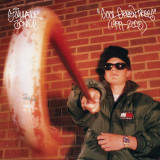
"U.S. Maple's first album, before they fell all apart on """"Sang Phat Editor"""". This is the album that """"rocks"""". Disjointed machinations, poppy locksteps and jarring sideways excursions all leading down a path to nowhere's-ville. Engineered by Jim O'Rourke with a cold. Pressed on Muleta Maroon Colored Vinyl LP includes a vinyl-only bonus track plus a Two-Sided Footlong OBI and Lyric Sheet.
In high school, the members of U.S. Maple never said a word to anyone. And although this had disastrous results (stolen shoes, constant de-pantsing, gum in the hair, etc...), a fire was burning inside each one of them.
A beginning was struck in Chicago, early in 1995. The four met near the corner of Grand and Western Avenues to devise a working method for reorganizing rock and roll, keeping what was felt to be it’s most important core elements.
The mumblings are slick. The melodies are souped-up and soured. The drums are spastic bursts of laughter, rocket fuel and confetti. It is fronted by a singer who reminds one or the other of Kevin Costner's stoner bro. A 7” single and a version of AC/DC’s Sin City are the first to be recorded.
U.S. Maple’s debut full-length, “Long Hair In Three Stages” was recorded late in 1995 with Jim O'Rourke at Solid Sound Studios in Hoffman Estates, Illinois. This was Jim's first legitimate recording session with a rock and roll band. The album receives critical acclaim. Soon thereafter, U.S. Maple find themselves flying coach to Deutschland for a European tour. The extensive six-week tour spans 12 countries and includes a Peel Session for the BBC's John Peel Show. More history is made.
""""Long Hair In Three Stages"""" goes on to be ranked #85 on the Alternative Press “90 Greatest Albums of the '90s” list. We all know better."
- A1: Patina Shift
- A2: Blistex
- A3: Rust Halo
- A4-: Lesio
- B1: Sightjacker Ft. Visio
- B2: Here Used To Be A Star
- B3: Spume (Formerly An Icefield)
- B4: Hypnoxia
- C1: Astral Trepidation Ft Jiyoung Wi
- C2: Spotshadowsphere
- C3: Cable Eater
- C4: Velvet Myst Ft. Heith
- D1: Nerveghost
- D2: Relaxus
- D3: L’ Inaperçu Nous Traverse Ft. Bernardino Femminielli And Habib Bardi
Corrosiv, the sophomore album from Orchestroll, reveals the duo at their most mature and vulnerable. Originally conceived as a reflection on hybridity and bastardization, the album deploys New Age and ambient compositional tropes as a launchpad, exposing their trite sanctity to the realities of corrosion. Having come of age in the 1970s and 1980s, the New Age movement perdures today as a domain of contradictions; its promise of transcendence riddled with the very commercialized dogma from which its adherents claim to flee. Healing modalities such as reiki, crystal therapy, and sound baths are simultaneously pathways to solace and sites of exploitation; their sonic counterparts—ethereal synth pads, shimmering textures, celestial drones—claim to facilitate meditation and enlightenment while devolving into empty signifiers of vitality. With Corrosiv, Orchestroll displays neither reverence nor disdain toward New Age: they exhume it instead, revealing the saccharine effervescence and commodified murk undergirding its aesthetics. The result is intoxicating—disquieting.
Born from a two-week residency at EMS Studios and expanded through a performance at MUTEK Montreal’s 25th anniversary, Corrosiv has since outgrown its original conceptual nucleus, taking on a broader scope. Its inquiry into New Age ideology’s voided rhetoric and aesthetic mysticism now informs a broader interrogation of cultural mediocrity, anti-authoritarianism, gatekeeping, music industry toxicity, and the crumbling edifice of late capitalism and techno-feudalism—all the mechanisms by which meaning is stripped from ceremony, and once-potent forms of knowledge are subsumed into the machinery of economic extraction, severed from their original essence, and transformed into hollow simulacra. Corrosiv distills these themes through a loose narrative: a soul, fixated on wellness as dictated by cosmetic economism, becomes ensnared in an endless afterlife, unable to transcend and shed its dilapidated consciousness.
Framed as an act of audio dissolution, the album thus engages in an alchemical process, whereby complex waveshaping, morphing synthesis, and distortion enact a ritual of fragmentation. There is also friction: between the rigid, mechanical imposition of systematized order and the untamed, chaotic force of organic metamorphosis. Here corrosion and confinement are not solely conceptual motifs; they are enacted in real time, sculpting the album’s terrain. Scraping, tarnishing, degradation—the languid wear of form and substance—become instruments in their own right: buffing as abrasion, entrapment as transformation, corrosion as a means of reconfiguration. The ‘protagonist,’ if there must be one, is the listener, caught within the throes of structural determinism and the potential for emancipation, unable to pass into something greater as the specters of collapsed futures accumulate in the margins.
Corrosiv extends its reach through collaborations with familiar voices: Heith (PAN), VISIO (Haunter), Femminielli (Drowned by Locals), Habib Bardi (Interzone), and Jiyoung Wi (Enmossed, Psychic Liberation, Doyenne) each leave their imprint on its sprawling landscape. At 1h16m, it is a procession, dense with earworms that burrow into the listener’s unconscious.
Misshapen, broken-down metals leach copper into blood, acid reflux burning through the core. Psyche disaggregates into cosmic turmoil, drifting between planes—tongue on rustline, gullet laced with solvent hymns, molars unlatching, bitcrushed to marrowspill. A spasm of brine, ferrous scripture, venomtext blooming in leaden rivulets, cartilage smoldering in phosphor decomposition, synapses drowning in a quicksilver choir. Crest of bile, churning ore, breath clotting into arsenic mist, vein-thread cinched, a corrosive gospel, limb by limb, oxidized to silence.
Ultimately, as the music exhales its final breath, its residue refuses to dissipate—and stillness alone remains. There are no conclusions here—no resolution, no collapse—only the slow drift outward of a vessel unmoored, lost in the sea of symbolic souring. Corrosiv sings the song of a world barren of prophecy, littered with aesthetic detritus. Whether this magic has been transfigured or simply worn away is unclear: the last breath dissipates, but the oxidation does not stop. The silence, too, will decay.
Conceptualized, composed, performed, recorded, mixed, engineered and produced by Jesse Osborne-Lanthier, and Asaël Richard-Robitaille in 2023 and 2024 at Elektron Musik Studion (EMS) - Stockholm, Sweden and Landsc8pe Studio - Montréal, QC, Canada.
Artwork by Jesse Osborne-Lanthier.
Mastered by Stephan Mathieu @ Schwebung Mastering.
- Be The Man
- Dust On A Dime
- Out Of Tomorrows
- Standing Again
- More Than A Friend
- Dragonfly
- Scared (To Admit It)
- Young Girl
- To Lose Your Mind
- Say Goodbye (And Mean It)
This project started in 2022 in the basement of Graham Jonson's (Quickly, Quickly)'s home in Portland, Oregon. They made `Scared (To Admit It)' in a day, and let it sit for a long time. Ava's song `From Me' blew up online, which led to new creative friendships. Ava started to work with Acrophase Records, it all felt very new and unreal. What followed was a writing frenzy, going through old voice memos looking for promising song ideas, and working with four different producers that each allowed Ava to tell a different story with their incredible help and talents. Ava spent a month in Nashville recording the majority of the project with Josef Kuhn. She felt free to experiment, ask questions, change her mind, and they ate so many epic sandwiches on lunch breaks. "Dragonfly" feels like a patchwork quilt of post-college. Surviving sexual harassment and assault, and allowing herself to speak about it freely after spending almost a decade being ashamed. It's kinda all over the place, but so is she. Ava feels no longer afraid to say everything on her mind since working on this project.
Vinyl[22,27 €]
In the vibrant streets of Tembisa, South Africa, amidst the sprawling urbanity connecting Johannesburg and Pretoria, the story of Moskito began. Formed in 2001 by Mahlubi "Shadow" Radebe and the late Zwelakhe "Malemon" Mtshali, the group first emerged as a powerhouse of pantsula dancers. However, their undeniable passion for music soon led them down a new path_ one that would cement their place in kwaito history. Spending countless hours on the street corners of their township, where they were born and raised, Shadow and Malemon danced and sang with an infectious energy that attracted crowds. It wasn't long before the duo decided to channel their talents into a kwaito group, and after adding friends Patrick Lwane and Menzi Dlodlo, Moskito was born. (Pantsula dancing emerged in the 1950s among Black South Africans in townships and continually evolved until it became intertwined with kwaito music culture. The stylized, rapid foot movements and characteristic low-dancing became associated with kwaito as it took over South African urban culture into the early 2000s.) With limited resources, the group displayed immense creativity, recording demos using two cassette decks and instrumental tracks from other artists. They would rap and sing over an instrumental playing on one deck while the second deck records their performance. Their determination paid off when they submitted their demo to Tammy Music Publishers, who were captivated by Moskito's style. "Kwaito was the thing `in' at the time. If you did music you did kwaito. We wanted to fit in and actually it was easy," says Radebe. "We didn't have engineers in the group, so the first time in a real studio was with Percy and Thami to record Idolar." That same year, the group released their debut album, Idolar, under Tammy Music. The album was an undeniable success reaching gold status selling over 25,000 units and earning them a devoted fan base across South Africa and neighboring countries like Botswana, Swaziland, Namibia and Zimbabwe. Moskito collaborated with industry legends such as Chilly Mthiya Tshabalala, who was known for his work with Thiza and Spoke "H." They drew inspiration from Thami Mdluli a.k.a Professor Rhythm, who had dominated the disco scene back in the 80s and 90s. Mdluli helped with musical arrangements and executive produced the album and signed on producer-engineer Percy Mudau, while Shadow and Malemon took pride in composing most of their songs. Like many of the rising kwaito artists of the time, they didn't have music production or engineering backgrounds so they required support from engineers together their ideas down on tape. They were inspired from South African kwaito icons like Trompies, Mdu, Mandoza, and Arthur Mafokate, alongside international heavyweights like Snoop Doggy Dogg, Dr. Dre, 2Pac, and R. Kelly, Moskito created a sound that was uniquely theirs_a perfect blend of local flavor and global influence.
Amuleto Apotropaico has a way to fend off demons by channeling a secular spiritualism rooted in a rigorous but playful connexion to the infinite possibilities of noise. The propulsion of their continuous music ebbs into and flows out of this primordial flux through their unique brand of brutalist liturgy.
Amuleto Apotropaico is a Portuguese duo consisting of António Feiteira (drums & electronics) and Francisco Pedro Oliveira (guitar, flute & electronics) formed in 2021. Having grown up together, saturated in the lore of their hometown of Santa Maria da Feira, the duo now resides in Porto and continues to moor their rhythmic rituals in the traditions of Northern Iberia.
None of this is a nostalgic look back to a time-that-never-was. Amuleto Apotropaico's cycles are ouroboric: every step forward invokes a simultaneous step backward such that their observance of sonic ceremony (seeming to invoke a now-forgotten tradition) becomes a constructivist gesture that shapes its own legacy. If time-travel exists, this duo has found out how.
For their self-titled first release (also the first release of the Perf label), António Feiteira has culled, recomposed and processed recordings from the band's last two years of concerts in order to create a exciting 4-tracker. Apotropia I & II, which open sides A and B on the vinyl release, are both textural meditations on subtle density. Feiteira's sensitive percussion flourishes are married to Oliveira's modular-enhanced flute and guitar patterns. Albedo e Rito showcases the duo's sense of melodic contour while crescendoing to a peak of lightness. Bruxa do Calhau Branco, lifts the whole journey into an astral dimension where multi-layered drums, synths and digital clicks breathe out, announcing that their moment of worship has settled back into the ubiquitous hubbub of room hum.
In the vibrant streets of Tembisa, South Africa, amidst the sprawling urbanity connecting Johannesburg and Pretoria, the story of Moskito began. Formed in 2001 by Mahlubi "Shadow" Radebe and the late Zwelakhe "Malemon" Mtshali, the group first emerged as a powerhouse of pantsula dancers. However, their undeniable passion for music soon led them down a new path_ one that would cement their place in kwaito history. Spending countless hours on the street corners of their township, where they were born and raised, Shadow and Malemon danced and sang with an infectious energy that attracted crowds. It wasn't long before the duo decided to channel their talents into a kwaito group, and after adding friends Patrick Lwane and Menzi Dlodlo, Moskito was born. (Pantsula dancing emerged in the 1950s among Black South Africans in townships and continually evolved until it became intertwined with kwaito music culture. The stylized, rapid foot movements and characteristic low-dancing became associated with kwaito as it took over South African urban culture into the early 2000s.) With limited resources, the group displayed immense creativity, recording demos using two cassette decks and instrumental tracks from other artists. They would rap and sing over an instrumental playing on one deck while the second deck records their performance. Their determination paid off when they submitted their demo to Tammy Music Publishers, who were captivated by Moskito's style. "Kwaito was the thing `in' at the time. If you did music you did kwaito. We wanted to fit in and actually it was easy," says Radebe. "We didn't have engineers in the group, so the first time in a real studio was with Percy and Thami to record Idolar." That same year, the group released their debut album, Idolar, under Tammy Music. The album was an undeniable success reaching gold status selling over 25,000 units and earning them a devoted fan base across South Africa and neighboring countries like Botswana, Swaziland, Namibia and Zimbabwe. Moskito collaborated with industry legends such as Chilly Mthiya Tshabalala, who was known for his work with Thiza and Spoke "H." They drew inspiration from Thami Mdluli a.k.a Professor Rhythm, who had dominated the disco scene back in the 80s and 90s. Mdluli helped with musical arrangements and executive produced the album and signed on producer-engineer Percy Mudau, while Shadow and Malemon took pride in composing most of their songs. Like many of the rising kwaito artists of the time, they didn't have music production or engineering backgrounds so they required support from engineers together their ideas down on tape. They were inspired from South African kwaito icons like Trompies, Mdu, Mandoza, and Arthur Mafokate, alongside international heavyweights like Snoop Doggy Dogg, Dr. Dre, 2Pac, and R. Kelly, Moskito created a sound that was uniquely theirs_a perfect blend of local flavor and global influence.
- 1: Obbakoso
- 2: Caminando
- 3: Variant
- 4: Mi Tambor
- 5: Suuru
- 6: Tarpon
Elipsis is the convergence of three musical personalities deeply rooted with one foot in the tradition and one foot in the future. Pedrito Martínez (Eric Clapton, Paul Simon, Sting, Wynton Marsalis), master percussionist, Yoruba priest, and one of the iconic voices of Cuba, seamlessly weaves Afro-Cuban tradition with an innovative approach to every project he touches. Mexico City-bred Antonio Sánchez is equally admired for his work as a solo artist (with guest appearances by people like Thom Yorke, Trent Reznor, and Dave Matthews), sideman (Michael Brecker, Chris Potter, Avishai Cohen), drummer for the Pat Metheny Group for almost two decades, and Oscar-nominated film scorer (Birdman). Michael League is best known as the founder of the 5-time Grammy-winning, Texas-born instrumental music ensemble Snarky Puppy, but has spent the majority of his career producing records by artists like David Crosby, Youssou N’Dour, Susana Baca, Silvana Estrada, and Los Muñequitos de Matanzas. The result of these three musicians is future folklore- a delicate balance of each member’s roots and the insatiable desire to push the tradition into places one can only imagine.
- Blest
- We Belong
- Massive
- Unfair
- Perfect Pear
- Fall Apart
- Worst Of Times
- True
- Gimme Ocean
- Blitz!
Yuno's full-length debut, Blest, out May 16 on Sub Pop, finds the enigmatic indie-pop visionary transforming the emo-tinged suburban malaise of his 2018 Moodie EP into more expansive, widescreen pop drama - suited for big moves and bigger stages. The kaleidoscopic sound he devised as a millennial hermit in his childhood bedroom in Florida has since broadened his horizons, taking him on tour with Unknown Mortal Orchestra and Superorganism, and soundtracking various series for Netflix and HBO. Imbued with elements of dream-pop, rock, trap, and psychedelia, his eclectic songs serve as bids for love and connection, which especially in the fractured era of social media, have resonated with many listeners who find solace in his vulnerability. Yuno's superpower lies in the way he mines a multitude of genres for their pop potential and surfaces with a tapestry that feels novel and fresh. Take, for instance, "Blest," the immediate, blissful, and bright title track, which is inspired by Rich Harrison-breakbeats and Neptunes-esque jangle. Or the breezy single, "True," in which Yuno moderates a lover's quarrel with slick, trap percussion. Amid the breakbeated dream-rock of "Gimme Ocean," he introduces his guitar solo with a searing emo scream, run through an EarthQuaker Devices pedal. Don't let his sanguine aura or his sherbet pink wardrobe fool you; he can shred as hard as he wants to when he wants to. All songs on Blest were written and performed by Yuno, co-produced by Yuno and Frank Corr (Morning Silk), who also contributed keyboards, drums, and guitar throughout the record, with additional production and instrumentation by Patrick Wimberly (Chairlift) at The CRC in Brooklyn, and Nick Sanborn (Sylvan Esso) at Betty's in Durham, NC. Blest was mixed by Steve Vealey and mastered by Joe La Porta.
- The Olive Branch
- Peace River Crossing
- We Belong To Each Other
- Mountain Of Companions
- Elements Of Harmony
- The White Flag
- Change
- Civilian Casualties
- Who Are You?
- Harmonic Allusions
"Movements of Air" is the highly anticipated fifth album from Daniel Herskedal's acclaimed trio, featuring Eyolf Dale on piano and Helge Andreas Norbakken on drums and percussion. Marking his tenth remarkable release with Edition Records, this album seamlessly bridges his foundational trio debut, "Slow Eastbound Train," with previous masterpieces like "The Roc" and "Voyage."
Over the past decade, Daniel Herskedal has consistently pushed the boundaries of the tuba, crafting music that is both profoundly introspective and expansively cinematic. At its core, "Movements of Air" delves into themes of hope, the pursuit of a better future, and the very essence of musical creation. With masterful performances from all members and intricate compositions, Herskedal navigates the delicate balance between good and evil, war and peace. Tracks such as "The Olive Branch" and "Peace River Crossing" showcase his ability to create emotionally resonant soundscapes, while pieces like "Elements of Harmony" and "Harmonic Allusions" highlight his innovative approach to harmony and texture.
This album stands as a testament to Herskedal's extraordinary talent, transcending the traditional limits of his instrument to deliver music that is both emotionally compelling and artistically groundbreaking.
Daniel Herskedal's exceptional achievements further underscore his artistic prowess and versatility. His notable arrangement of"San Francisco (Be Sure to Wear Flowers in Your Hair)" for the 2019 film "The Last Black Man in San Francisco," produced by Brad Pitt, was later featured in Coca Cola's global 'Open Like Never Before' advertising campaign. His extensive collaborations include performances with prestigious ensembles such as the BBC Concert Orchestra, the Royal Norwegian Navy Band, and the Russian Patriarchate Choir of Moscow. His collaborative project with Marja Mortensson won the Norwegian Grammy in 2019, and in 2021,he secured The Ambies Award for Best Original Score and Music Supervision for the podcast "9/12." Additionally, his work with artists like Keaton Henson and Emilie Nicolas on their album "Out of the Fog" further highlights his versatility and collaborative spirit.
- Poltergeist
- The Tower Of Seth
- Violent Invasion
- Thunderbeast
- Nimbus
- Dance Of The Spiders
- Tyrants Of Wrath
- Lost In The Sands
- Nocturnal Opus 666
- Nazghul
- Dark Wings Of Death
Black Vinyl[24,79 €]
Nachdem es drei Demos und ein Split-Album mit vier gleichgesinnten Acts aufgenommen hatte, veröffentlichte das Quartett sein Debütalbum "Handed to Execution", auf das ein Jahr später die EP "Transylvanian Nightmare" folgte. Während beide von Kritikern und Fans gleichermaßen gut aufgenommen wurden, legen Phantom jetzt mit ihrem zweiten Album "Tyrants of Wrath" noch einen drauf. Die neue Platte ist eine Parforceritt durch die geschätzten Traditionen des Genres - man denke an Razor, Dark Angel, Merciless, Living Death und natürlich Slayer als Referenzen - und verleiht ihnen einen frischen Dreh, sei es in Form von ‚Nimbus', einer Hommage an Phantoms Einflüssen von Kultbands wie Manilla Road, Gotham City und Heavy Load, oder in Bezug auf die abenteuerliche Struktur von ‚Nazguhl', einem von vielen Ausflügen ins Unkonventionelle, die den extremen Metal der Mexiakner überraschenderweise nicht kompromittieren. "Tyrants of Wrath" wurde von der Band und Héctor Northen in den Nehtron Studios in Mexiko aufgenommen und abgemischt. Das Mastering übernahm Patrick Engel im Temple of Disharmony in Deutschland. Phantom touren im September/Oktober 2025 mit den Brasilianern Evilcult durch Europa.
- Poltergeist
- The Tower Of Seth
- Violent Invasion
- Thunderbeast
- Nimbus
- Dance Of The Spiders
- Tyrants Of Wrath
- Lost In The Sands
- Nocturnal Opus 666
- Nazghul
- Dark Wings Of Death
Blood-Red Vinyl[26,01 €]
Nachdem es drei Demos und ein Split-Album mit vier gleichgesinnten Acts aufgenommen hatte, veröffentlichte das Quartett sein Debütalbum "Handed to Execution", auf das ein Jahr später die EP "Transylvanian Nightmare" folgte. Während beide von Kritikern und Fans gleichermaßen gut aufgenommen wurden, legen Phantom jetzt mit ihrem zweiten Album "Tyrants of Wrath" noch einen drauf. Die neue Platte ist eine Parforceritt durch die geschätzten Traditionen des Genres - man denke an Razor, Dark Angel, Merciless, Living Death und natürlich Slayer als Referenzen - und verleiht ihnen einen frischen Dreh, sei es in Form von ‚Nimbus', einer Hommage an Phantoms Einflüssen von Kultbands wie Manilla Road, Gotham City und Heavy Load, oder in Bezug auf die abenteuerliche Struktur von ‚Nazguhl', einem von vielen Ausflügen ins Unkonventionelle, die den extremen Metal der Mexiakner überraschenderweise nicht kompromittieren. "Tyrants of Wrath" wurde von der Band und Héctor Northen in den Nehtron Studios in Mexiko aufgenommen und abgemischt. Das Mastering übernahm Patrick Engel im Temple of Disharmony in Deutschland. Phantom touren im September/Oktober 2025 mit den Brasilianern Evilcult durch Europa.
- 01: The Stone, Part I (Live)
- 02: The Stone, Part Ii (Live)
- 03: The Stone, Part Iii (Live)
- 04: The Stone, Part Iv (Live)
- 05: The Stone, Part V (Live)
- 06: The Stone, Part Vii (Live)
PURPLE TRAP, the powerful trio of KEIJI HAINO (voice, guitar), BILL LASWELL on bass and RASHIED ALI (drums), recorded live on stage at The Stone.
Recorded in december 2005, this furious live album by what can easily be called a super group remained unreleased till in 2023 BILL LASWELL made it accessible in a rough-mixed digital version for his bandcamp subscribers program exclusively. For this vinyl version, the music has been newly mixed by DIRK DRESSELHAUS (SchneiderTM) and mastered / cut by RUY MARINÉ at Dubplates & Mastering Berlin.
PURPLE TRAP, the trio of LASWELL / HAINO / ALI, reunited for this one-off gig as part of a 5-day-HAINO-festival at John Zorn's venue "The Stone", seven years after its only album Decided ... Already The Motionless Heart Of Tranquility, Tangling The Prayer Called "I" had been recorded (released on Tzadik in 1999).
The six untitled tracks (+ one as digital bonus) deliver what can be expected from such musical masters:
RASHIED ALI, iconic free jazz drummer who played with JOHN and ALICE COLTRANE, PHAROAH SANDERS, SONNY ROLLINS, JAMES BLOOD ULMER and countless more, is all drums, from quiet tiny sounds to high-energy rhythm patterns.
KEIJI HAINO, one of the most prolific artists of the Japanese experimental / noise scene for almost 50 years now, switches between truculent guitar splatters and full-on psychedelic outbursts.
BILL LASWELL, who as producer and musician created a massive body of work in fiields as diverse as ambient, world music, funk, jazz (and often hybrids of these), has proven his mastery in improvisation in projects like MASSACRE, PAINKILLER or (early) MATERIAL and provides the low-end grounding with his signicature bass sound, or adds effect-laden ornaments to the whole.
An overdue addition to a very small body of work by a clearly under-documented supergroup!
Credits:
KEIJI HAINO: voice, guitar BILL LASWELL: bass RASHIED ALI: drums
Recorded at The Stone, New York, december 15th, 2005. Edited by James Dellatacoma at Orange Music, West Orange, NJ. Mixed by Dirk Dresselhaus at the Zone, Berlin. Mastered & cut by Ruy Mariné at D&M, Berlin.
Layout & design by kaidoh. Cover photography by Jasmin Bär.