The music of Dewey Mahood is steadfast in its pursuit of transcendence. For the past two decades as Plankton Wat, Mahood has contoured his melodic guitar playing into wholly transfiguring pieces. His fluid compositions apply ethereal, elastic textures to grounded rhythmic grooves that recall the cosmic and the earthly in equal measure. Hidden Path is an album built on reflection and discovery, turning the thrill of exploring obscured passages into inward revelations. Originally presented as a limited cassette in 2017, and now presented on vinyl for the first time, remastered by Amy Dragon, Hidden Path is a distillation of Mahood's musical practice as a way of life, a patient celebration of the unexpected, unhurried and exhilarating.
Deluxe orange LP edition is limited to 500, jacket artwork features drawing by Dewey Mahood.
quête:patient
Following releases with YAM, Tiff’s Joints, Dr Banana and Touching Bass, artist Romaal Kultan (Ollie Malin) now inaugurates his own record label, Personal Discs.
No Time Like The Future showcases Romaal Kultan’s finest productions, charting a distinct personal trajectory between hiphop, house and broken beat. Opener One Moment Please is a sassy boom bap affair, with an unexpected nod towards jungle. Music Room, made in collaboration with producer Cypriano, is a patient, moody chugger — a tapestry of piano, organic percussion and crackly vinyl samples laced with acid.
On the B-side, Personal Effects delivers a unique, hypnotic broken beat groove, where swelling synths and a twinkling Rhodes meditate together in careful arrangement. Finally, the intimate title track No Time Like the Future stomps off into the sunrise, carried along by a rolling, yearning dreaminess.
Each one of these tracks represents a special, all-too-rare moment of ecstasy in the studio. I hope that this feeling lives on in the music.
So far the record has received support from Alexander Nut, Mr Scruff, Lefto, Kai Alcé, Bradley Zero, Mary Anne Hobbes, K15, Dr Banana, Alex Attias, EVM128, Zakia, Shy One, Tereza, Alia, Earl Jeffers, Footshooter, K-Lone, Poison Zcora, Dean Chew, Marcia Carr, Leanne Wright, Dead Man’s Chest and more.
"'AYII' is a collection of roadside Souvenirs on the rural highway of our
inevitable evolution," shares Jon Stone.
"Polaroids
Storms. Open fields. Tears. Therapy. Burning of fields to make way for new
growth. We've attempted to open personal doors that have been patiently waiting,
annoyingly, stubbornly waiting for a sliver of truth. Hopefully we've delivered."
Kristy Osmunson adds, "Parenthood. This album was created during the most
pivotal time in life made while creating two humans. If I could capture the
process this music brought about in five words I would say, sobriety, health,
growth, responsibility and joy. This last five years has been a massive transition.
Playing festivals, weddings, funerals, therapy sessions, and music lessons has
become the soundtrack of life. 'Gonna Be You' landed on this planet the same
weekend as my first son so I will love that song through eternity. As she always
does, this music brought about a full revolution in my existence as a human." The
11-track project was produced by American Young, Kyle Schlienger, Lee Brice, and
John Vesley.
Founded in 2006 by Vincent Bertholet (Hyperculte), the Orchestre Tout Puissant Marcel Duchamp is a large-scale project. Designed as a real orchestra, the size of the ensemble has varied over time. Now with 12 members, 14 in the past or 6 at the beginning, the ensemble has scoured the stages of Europe todemonstrate that the formula "the more the merrier" has never been more true than on stage. Whether in prestigious festivals (Paléo Festival de Nyon, Fusion Festival, Incubate, Womad, Bad Bonn Kilbi, Jazz à la Vilette) or on the four albums released since its launch, the group shows an incredible fluidity. The Orchestre Tout Puissant Marcel Duchamp (a mischievous title in homage to traditional African groups -Orchestre Tout Puissant Konono nd1, Orchestre Tout Puissant Polyrytmo etc... -and to one of the greatest dynamizers of 20th century art) embraces the forms of its musicians while pushing them to their limits. The result is a powerful, experimental, unstable and terribly alive, organic sound.
“hi leaves” is the new full-length record from soft tissue, the duo of Glasgow-based artists Feronia Wennborg and Simon Weins. Following their self-titled debut for Penultimate Press in 2019, this collection examines microsound by way of extended amplification technique, bone conduction, domestic recordings, and digital feedback. Tracks like “plant pot” and “kettle” appear to disclose their source material, presenting wonderfully tactile environments of highly articulate sound. Wennborg and Weins prove themselves to be masterful arrangers of discrete, organic material, weaving together knotty and immersive compositions from these sharp, prickly sounds. Ultimately, soft tissue inhabits an intoxicating soundworld somewhere in between the patient abstractions of composerly EAI music, the haptic indulgences of ASMR, and the diffuse digital pastorals of the 90’s a-musik/Cologne scene.
Quindi Records returns once more to the swooning romanticism of Cabaret du Ciel, the long-running project from Andrea Desidera and Gian Luigi Morosin. After the contemporary material which made up long-player The Breath Of Infinity, Raintears heads back into the group's archives and focuses on a limited cassette release from 1991.
Originally released on Morosin's own Ionisation Tapes, Raintears is described as heralding a new phase for Cabaret du Ciel following their earlier Solarisation and Weather Colours cassettes. This revised, expanded version of the release opens with 'Raintears (Piano Version)', which originally came out on an Ionisation compilation entitled Imago Sonora 1. Truly evoking the spirit of the track and its meaning, it was recorded on a rainy Sunday afternoon when Desidera's friend and trained pianist Francesco Martignon heard the original melody for 'Raintears' and proceeded to improvise on the theme, with Desidera and Morosin embellishinbg Martignon's exquisite playing with subtle touches of synth and sampling. In its fragile, tape-worn repose, the piece is loaded with the delicate ambience a rainy Sunday afternoon implies - calm, melancholic and wistful.
'A New Day' is a piece cast in light and shade, contrasting two core melodic phrases expressed through synth and guitar, with a light touch of speech sampling adding to the cinematic poise of the track. 'Time Of The Twins' originally appeared as a single track on the cassette release, but here it's framed as two distinct parts which meet in the middle. The first half is patient, gliding ambience rich in the harmonic interplay and winding narratives which typifies Cabaret du Ciel overall. The second half opens up like a flower looking for the sun, all pronounced keys pirouetting across the fundamental chord progression established in the first chapter.
'A Delvaux Postcard', previously titled 'East Roads', takes on a spectral, spacious form as it passes by slow, rhythmic pulses and freewheeling synths, momentarily joined by scattered shards of sampled voice layered and filtered in a manner which reminded Morosin of Belgian surrealist painter Paul Delvaux. The EP closes with the original version of 'Raintears' (billed here as 'Raintears II'), a plaintive and disarmingly beautiful ambient piece centered on Desidera's light and poignant playing. As Morosin himself describes, "Andrea is in a full state of grace, touching the listener through his fingers with the notes into their deepest emotions. The first time I listened to the basic version, I was just speechless."
With the VOI 029 we are presenting the UK-based Mercy System, also known as Adam Crawford. Growing up in a small town on the outskirts of Manchester, he brings a dark, swung, early dubstep influence to his beats. With "Recognise" Crawford now lands his debut EP on Voitax, a personal project that represents his patiently accumulated skill set in sound design, as part of an excellently produced dystopian UK Bass four-tracker. This powerful package combines high-definition sample work with outstanding arrangements. With the right eye for voice shaping, crowned with beautifully placed drone delays, dense bass, and broken drum patterns, this EP also explores the realms of Dubstep nuanced with UK Garage, Grime, and Dancehall, while keeping its unique character. We are thrilled to hear more to come from this newbie among the UK ass producers.
Flashback to 2008. Barack Obama is in charge of the US, China is hosting the Summer Olympics and Amy Winehouse's 'Back To Black' is ruling the charts. In Belgium - more specifically in Aalst - four friends of friends decide to make music together. A year or so later, Intergalactic Lovers achieves its first successes and in 2011, with 'Greetings and Salutations', the band records its first album. The press is wildly enthusiastic, the gigs are piling up, the train is rolling...
13 years and two more successful albums ('Little Heavy Burdens' (2014) and 'Exhale' (2017)) later, singer Lara Chedraoui, guitarist Maarten Huygens, bassist Raf De Mey and drummer Brendan Corbey know each other like the back of their hands as they have navigated many waters together, both professionally and privately. The unbreakable foursome is ready to start the next chapter in the career of Intergalactic Lovers. "We kept a low profile the last two years" Brendan admits, "but we always have to disappear for a while after a tour. From the stage and from each other. Otherwise, you couldn't keep doing this for 13 years alongside a job, a family..."
Stopped in the middle of a French and English tour by the Covid epidemic,
THE CELTIC SOCIAL CLUB immediately threw itself into the writing and
recording of what will become its fourth album - Combining absence and
distance, the seven Franco-Irish have patiently built, through the Channel
and from their respective home studios, these twelve titles which are
certainly, to this day, the most free, elegant and successful in their
discography
With great bursts of rock energy, pop melody and folk magic, DANCING OR
DYING? is simply a great record made by a band imposing a sound, a style and a
name.
The Times running a full page feature, mid February - (band are flying out
journalist to a big show they have in France). UK Full band show at Nell's, London
on 24th Feb. Festival confirmed Wickham, Beautiful Days, Glastonbury, Tolpuddle
Martyrs, Little Orchard. Julian Spear PR Andy Prevezer Plugging Mdnight Mango
Agent
This crazy project brings good vibes... Many generations and loads of smiles ! These 12 tunes have been patiently put aside with musicians who patiently wait for this project to come out. I must thanks them... And to thanks them in addition to the LP comes an insert with a crazy comics by ExpExp and.. on the other size a board game to play (maybe with your exp fenwick dragsters ^^ ) … Ah about the music : it's a full pumpin selecta, with some old school fellow of the genre like X-Tech, Crystal and Fky, some middle ages not-so—old but so-soso like Little Guy, Tournevis … or Matelk and Protokick .. or more fresh like Pandro... Through … this is a bible to me. And I'm really happy to deliver a beautiful project precise in the music, the cut, the mastering, the visual and all that.... Enjoy dancing, partying and stand up straight towards the cops !
Orison is the latest aural exploration between zake & City of Dawn and a predecessor to their previous orchestral effort, 'A Sorrow Unrequited'. Orison is a prayer or plea to a deity. The archaic origins of the term stem from the Latin language simply meaning to 'speak to God'. Patient and solemn symphonic drifts that foster stillness, boundless thought, introspection, and eternal contemplation.
The mysterious trio Pandilla LTD provide the first release on Ozy, a new sub-label run by Miguel Melo from Lisbon’s Carpet & Snares family. Never ones to tread the easiest path, Pandilla show off their full range of moods and tempos on this 4-tracker, opening with the jazzy and glitchy breaks of vignette ‘Beat Untitled’. This leads into ‘aWARe’, a downtempo epic of cinematic ambience and released tension that contrasts with the more dancefloor-ready cuts on the B. With its patient dubby tick-tock, ‘Mind Trick’ feels like a long-lost Basic Channel side-project, while the more extrovert ‘Trying To Go’ closes things in style with a shimmy and a shake.
Kapingbdi came together in Liberia, West Africa, during the late 1970’s and had their own unique style. This six to seven-piece band played original compositions in a vibrant mix of African Rhythms, Soul, Spiritual Jazz, Funk and Rock. Led by Kojo Samuels on sax, flute and vocals “Born in The Night” presents the essential tracks from their rare studio LPs produced between 1978-1981. The work has been carefully edited and remastered in 2019 for vinyl LP and a 6-Page Digipack CD, which includes two additional recordings. Kapingbdi toured through Europe and the U.S. and were the only Afro funk band to ever come out of Liberia.
Kapingbdi hail from Liberia, West Africa and have their own imitable style. They effortlessly combine traditional African music in a modern mix of Jazz, Funk, Soul and Rock. The band is a fusion of the old and the new.
The word "Kapingbdi" is taken from the Sierra Leone language Mende and means "born in the night". Kojo Samuels was given the name by his Latin teacher whilst attending high school in Freetown, They often meet and debate at night in the city and soon after Kojo is called Kapingbdi. The name serves as a description of his origin. Born In Lagos, Nigeria in 1943. The son of slave children. His mother from Nigeria and father from Sierra Leone who moved the family to Liberia, during the 1950’s.
Kojo has played music for as long as he can remember. He starts with the harmonica and later becomes a drummer and percussionist in his first band at school. During his art studies 1965-1972, he tours Germany and works as an art teacher in the USA. His band Kapingbdi is reorganized five times and consists of up to seven musicians. In a VW-Bulli he drives the group from concert to concert and if the drummer fails, he jumps in himself. Between 1978 and 1981 three Kapingbdi LPs are produced for the independent label Trikont, recorded in Hamburg and Munich. During this creative period, the band plays at festivals in Africa and Europe. In 1984, the band tours the United States and shortly after, they came to an end.
At their best, Kapingbdi would rouse the audience with original compositions like "Human Rights", justice for all, especially for South Africans, and "You Go Go You Go Come". The officials and employees in the government departments have no time for the common man, for any questions such as job search, scholarship or similar, he receives the answer "go, come back tomorrow" and the same thing the following day. Or "Now Is The Time For Cry For Love." Now it is time to scream for love and finally, time for humanity and justice. Despite immense difficulties, the musicians consciously live and work in Africa and are at home in Liberia.
On April 12, 1980, ordinary soldiers and non-commissioned officers organize a coup against the government. This is an attempt to put an end to a policy of exploitation of the Liberian people. Whilst efforts to eradicate poverty, lawlessness and illiteracy are obvious throughout the country, Liberia is still Americanized to a high degree. This is evident, as the radio programs of that time almost exclusively played American disco music. Under these conditions, the people seek a reconnection to their folk music, and Kapingbdi were aware of this. Kojo tried many times to come together with traditional Liberian musicians. This passion takes him north of the country. Meeting and playing with the old hornblowers and playing music on traditional instruments, such as the elephant tusk.
Kapingbdi make high quality tape copies of their own vinyl LPs and patiently try to displace all unauthorized tapes from the domestic "market". Nevertheless, it is hard to make a living through music in Liberia. Kapingbdi, is now celebrated. The radio plays are in abundance, but royalties are not forthcoming. Their musical link is the feeling of Afrobeat and Highlife, which is found in each of the many Kapingbdi pieces. They embody Jazz, which is understood to be the most refined example of black music outside of Africa. In Liberia, Jazz is virtually impossible to hear. Bright shining names such as John Coltrane, Charlie Parker or Miles Davis were widely unknown. Thus, the Black Jazz, including its Back-To-Africa movement of the 60’s and 70‘s, passes by without leaving a trace in Africa itself.
Kojo's claim at the time, was to make African music with the depth, sensitivity and the freedom of the technical level of Jazz. This makes Kapingbdi the torchbeares. The underpaid prophets in small Liberia. It is the passion with which the founder of the band continues to work on their music for years. Tirelessly, stimulating and encouraging his fellow musicians. This is ultimately responsible for the success of Kapingbdi in Liberia itself. The local audience seems to listen to the band in fascinated astonishment. One wonders about the ability to develop as demonstrated by Kapingbdi on the basis of their music. It is African and unusually jazzy, danceable and better than the American disco music heard on the radio.
Rather than chase the money and the job opportunities in Europe, Kapingbdi are firmly rooted in Africa. The musicians live in Monrovia, the capital of Liberia, at the Kabingbdi workshop, located in the Congotown area on the eastern edge of the sprawling city. Kojo works here as a sculptor, painter, batik artist and musician. The sales revenue that his activities generate, gives him the opportunity to support the development of African Jazz music. The highest percentage of funds are from Germany and Kojo’s work ethic is “to work on your own thing“. The stance taken aims to support the welfare of Liberians and Africans. The other musicians of the group live in a second house that is nearby.
For the sake of consistency, Kapingbdi is a full-time band. However, the revenue, from all of the sources, could not keep them afloat. Equally, as important to the group are Kojos's knowledge of traditional African music and his sculpting skills. His knowledge is shared with others at the afternoon workshops. It is here that they discuss new lyrics, engage in political debate and the self-imposed task of improving conditions in Africa. At times the debate became heated, especially during rehearsals. This was regarded as good and integrative, sowing the seeds of innitiative to keep the band together.
From 1980 to 1985 Kojo also opened and ran the club "Panjebota", located on the grounds of the U.S. Consulate in Monrovia. Almost every evening Kapingbdi perform the song "Wrong Curfew Walk", whose lyrics lament the killing of citizens during the curfew imposed by the Liberian government. When the head of state Samuel Doe hears the song, he behaves agressively and forces Kojo to close the "Panjebota". Kojo had already moved on. Soonafter he meets Fela Kuti at the Africa-Festival and plays concerts in Germany with Cecil Taylor's workshop band.
Kapingbdi is for thinking, dreaming, dancing. What they sing about is what they have experienced. Kojo Samuels is 76 years old today and still follows his vocation as a critical musician, artist and activist.
Ekkehart Fleischhammer / Sonorama 2019 (with the help of original press sheets and the memories of Kojo Samuels)
"In Vivo" is the result of the photographic work of Klavdij Sluban at the Fleury-Mérogis Young Offender Institution (France) from 1995 to 2016 Beds in addition to his work from Izalco prison, located in El Salvador, from 2008 visiting rooms connected to the music of Gareth Davis.
Gareth Davis is an artist, composer and musician living in Amsterdam. He plays clarinet(s), the result of a somewhat impulsive purchase whilst window shopping in Covent Garden, London, around ten years before the turn of the century. The serendipitous location of a rather wonderful (and equally important, rather cheap) second hand record shop less than 10m from the bus stop required for seven years of schooling, combined with delivering newspapers on a daily basis, lead to a somewhat eclectic, dusty and generally unclassified taste in music.
The result. Activity covering sonic art and contemporary classical music through rock, improvisation and noise with collaborations that have included the premiering of new written pieces by composers such as Bernhard Lang, Peter Ablinger, Toshio Hosokawa and Jonathan Harvey, soloist with orchestras including the SWR Symphonieorchester, Warsaw Philharmonic and Orquesta de la Comunidad de Madrid, performances with groups and performers ranging from the Neue Vocalsolisten and Arditti Quartet through to improvisers Elliott Sharp and Frances Marie Uitti, electronic artists Robin Rimbaud and Merzbow and multimedia work with artists including Christian Marclay and Peter Greenaway.
"In Vivo" is his second solo release after to have recorded a bunch of collaborative albums with artists such as Scanner, Machinefabriek, Steven R. Smith, Kleefstra Brothers, Frances-Marie Uitti, Merzbow, Adain Baker, Duane Pitre and more...
Klavdij Sluban, winner of the European Publishers Award for Photography 2009, of the Leica Prize (2004) and of the Niépce Prize (2000), main French prize in photography, is a French photographer of Slovenian origin born in Paris in 1963.
He develops a rigorous and coherent body of work, nourished by literature, never inspired by immediate and sensational current affairs, making him one of the most interesting photographers of his generation. The Balkans, the Black Sea, the Baltic Sea, the Caribbean, Central America, Russia, China and the Antarctic (first artistic mission in the Kerguelen islands) can be read as many successive steps of an in-depth study of a patient proximity to the encountered real.
His images have been shown in such leading institutions as the Metropolitan Museum of Photography of Tokyo, the Maison Européenne de la Photographie in Paris, the Rencontres d’Arles, the Museum of Photography in Helsinki, the Fine Arts Museum in Canton, the Musée Beaubourg, the Museum of Texas Tech University. His many books include East to East (published simultaneously by Actes Sud, Dewi Lewis, Petliti, Braus, Apeiron & Lunwerg with a text by Erri de Luca), Entre Parenthèses, (Photo Poche, Actes Sud), Transverses, (Maison Européenne de la Photographie) and Balkans -Transit, with a text by François Maspero (Seuil). Since 1995, Sluban has been photographing teenagers in jails. In each prison he organizes workshops with the young offenders to share his passion. First originated in France, in the prison of Fleury-Mérogis with support of Henri Cartier-Bresson during 7 years, as well as Marc Riboud and William Klein punctually. This commitment was pursued in the disciplinary camps of Eastern Europe –Serbia, Slovenia, Ukraine, Georgia, Moldavia, Latvia – and in the disciplinary centres of Moscow and St Petersburg as well as in Ireland. From 2007 to 2012, Sluban has been working in Central America with imprisoned youngsters belonging to maras (gangs) in Guatemala and Salvador. In 2015, he started photographing imprisoned teenagers in Brazil. In 2013, the musée Niépce showed a retrospective of K.Sluban’s work, After Darkness, 1995-2012. In 2015/16, he was awarded the Villa Kujoyama Residence in Kyoto, Japan. K.Sluban is member of national and international jurys, such as prix Niépce, prix de la Jeune Photographie de Niort, prix Leica, All About Photo…
"In Vivo" is the result of the photographic work of Klavdij Sluban at the Fleury-Mérogis Young Offender Institution (France) from 1995 to 2016 Beds in addition to his work from Izalco prison, located in El Salvador, from 2008 [visiting rooms] connected to the music of Gareth Davis.
Gareth Davis is an artist, composer and musician living in Amsterdam. He plays clarinet(s), the result of a somewhat impulsive purchase whilst window shopping in Covent Garden, London, around ten years before the turn of the century. The serendipitous location of a rather wonderful (and equally important, rather cheap) second hand record shop less than 10m from the bus stop required for seven years of schooling, combined with delivering newspapers on a daily basis, lead to a somewhat eclectic, dusty and generally unclassified taste in music.
The result. Activity covering sonic art and contemporary classical music through rock, improvisation and noise with collaborations that have included the premiering of new written pieces by composers such as Bernhard Lang, Peter Ablinger, Toshio Hosokawa and Jonathan Harvey, soloist with orchestras including the SWR Symphonieorchester, Warsaw Philharmonic and Orquesta de la Comunidad de Madrid, performances with groups and performers ranging from the Neue Vocalsolisten and Arditti Quartet through to improvisers Elliott Sharp and Frances Marie Uitti, electronic artists Robin Rimbaud and Merzbow and multimedia work with artists including Christian Marclay and Peter Greenaway.
"In Vivo" is his second solo release after to have recorded a bunch of collaborative albums with artists such as Scanner, Machinefabriek, Steven R. Smith, Kleefstra Brothers, Frances-Marie Uitti, Merzbow, Adain Baker, Duane Pitre and more...
Klavdij Sluban, winner of the European Publishers Award for Photography 2009, of the Leica Prize (2004) and of the Niépce Prize (2000), main French prize in photography, is a French photographer of Slovenian origin born in Paris in 1963.
He develops a rigorous and coherent body of work, nourished by literature, never inspired by immediate and sensational current affairs, making him one of the most interesting photographers of his generation. The Balkans, the Black Sea, the Baltic Sea, the Caribbean, Central America, Russia, China and the Antarctic (first artistic mission in the Kerguelen islands) can be read as many successive steps of an in-depth study of a patient proximity to the encountered real.
His images have been shown in such leading institutions as the Metropolitan Museum of Photography of Tokyo, the Maison Européenne de la Photographie in Paris, the Rencontres d’Arles, the Museum of Photography in Helsinki, the Fine Arts Museum in Canton, the Musée Beaubourg, the Museum of Texas Tech University. His many books include East to East (published simultaneously by Actes Sud, Dewi Lewis, Petliti, Braus, Apeiron & Lunwerg with a text by Erri de Luca), Entre Parenthèses, (Photo Poche, Actes Sud), Transverses, (Maison Européenne de la Photographie) and Balkans -Transit, with a text by François Maspero (Seuil). Since 1995, Sluban has been photographing teenagers in jails. In each prison he organizes workshops with the young offenders to share his passion. First originated in France, in the prison of Fleury-Mérogis with support of Henri Cartier-Bresson during 7 years, as well as Marc Riboud and William Klein punctually. This commitment was pursued in the disciplinary camps of Eastern Europe –Serbia, Slovenia, Ukraine, Georgia, Moldavia, Latvia – and in the disciplinary centres of Moscow and St Petersburg as well as in Ireland. From 2007 to 2012, Sluban has been working in Central America with imprisoned youngsters belonging to maras (gangs) in Guatemala and Salvador. In 2015, he started photographing imprisoned teenagers in Brazil. In 2013, the musée Niépce showed a retrospective of K.Sluban’s work, After Darkness, 1995-2012. In 2015/16, he was awarded the Villa Kujoyama Residence in Kyoto, Japan. K.Sluban is member of national and international jurys, such as prix Niépce, prix de la Jeune Photographie de Niort, prix Leica, All About Photo…
Recommended if you like: Com Truise, Toro Y Moi, Tycho, Tourist. British Columbia producer Jamison Isaak didn’t anticipate an adulthood of globe-trotting songcraft, but teenage exposure to iconic French house music videos cast a spell on him that still holds: “I knew then this is what I wanted to do'’ Catalyzed by synthetic sights and sounds from oceans away, he patiently taught himself primitive software and recording programs, reverse engineering the heady, swooning horizons of the dance music that had permanently bewitched him. A decade later, having amassed an expansive discography of soft-focus synth pop and romantic electronic a crisscrossing the planet many times in the process the subtext of his project’s journey rings clear: “Teen Daze is dream fulfillment'’ Enter Interior. An ode to electric futures glimpsed in ecstatic heights, from bedrooms to big rooms, it’s an album of first loves refracted through prisms of wisdom, wounds, and wonder. Filter house and flashing lights; soft acid and vaporous neon; bumping clubs in spiral towers: “Like what the teenagers in Akira might be listening to'’ Collaborative cameos by multi-instrumentalist Joseph Shabason (on sublime fantasia opener “Last Time In This Place”) and vocalist Cecile Believe (on the glitch-glamorous anthem “2AM (Real Love)”) evocatively expand the record’s palette but otherwise Interior is Izaak’s love letter to his own artistic awakening, to the paradigm shifts inherent in youthful discovery and remote dreaming — your world exploded, your life forever changed. Years of devotion and divergence have honed his craft radically; tracks like “Nite Rune “Nowhere and“Translation”are among the most supreme bangers in the entire Teen Daze canon, a delirious fusion of textural finesse and emotional transcendence. It’s music of skylines, escape, and sensual energy, forever cresting through nights that never end.
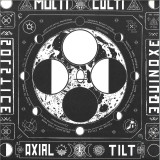
Multi Culti launch a new quarterly 12" series in step with the seasons beginning with SOLSTICE I:
Post-pandemic lockdown inspiration can be found in the great planetary balancing act that has taken place since a cataclysmic impact with an asteroid caused mass extinction and set our earth’s orbit off axis. This AXIAL TILT, or obliquity, is responsible for the seasons, and life as we know it has evolved around these unleashed forces. As our lives and for many, careers, have spun dramatically off axis as of late, we look ahead to the coming seasons, with the hope that we can weather the changes, and maintain inner stability. To aid in this quest, Multi Culti promises to deliver sonic support with utmost regularity at the peak moments of cosmic significance, with each Solstice and Equinox.
Beginning this journey are some of the label’s most beloved artists. Israeli duo RED AXES provide a chakra-elevating soundtrack with their inimitable blend of psych-garage-tronica, a sun-kissed banger that signals a long-awaited return to the togetherness of the dancefloor.
ZILLAS ON ACID turn in a robustly wiggly jam that electrifies, frazzling zaps and frenetic percussion recall the fritzy tension of the past year, a cathartic shock-treatment for traumatized dancers looking to get back to prime spine-shaking shape.
Mexico managed to stay open for the most part, and TYU seems to have not skipped a beat here, still in perfect form after breaking out as one of the hottest young producers to emerge in recent years. Dark disco, Mexi-chug, call it what you want, but the emergent genre is never better represented than here… spooky, phosphorescent tribal dance, Tulumminati-tested and approved.
Finally, the big guy - MANFREDAS - whose remixes and edits have been highlight-reel material the past couple of years, delivers a long awaited original track with his requisite heavy-weight swag. Wonky tunings and a chunky downtempo beat underpin Manny’s trademark masterful arrangement style, building patiently, with breakdowns that managed to wring every last drop of impact out of an odd, other-worldy assortment of sounds.
CMD aka Corina MacDonald is a Montreal-based DJ, producer and host of the program Modular Systems on CKUT 90.3 FM. She has released on JACKTONE, EXPERIMENTAL HOUSEWIFE’S PERFECT LOCATION RECORDS, FUR TRADE RECORDINGS, and BASIC_SOUNDS. For her vinyl debut, she brings us four entrancing, slightly dubby and acidic techno dance floor cuts perfect for the smooth edges of the late night.
The A-side opens up with “Social Factory Reset”, modular jacking techno with an infectious acid swell and patient pads. “Shaping Inner Space” is an apt title. The tempo is slightly faster than A1, and it sounds like an extraterrestrial night out. Euphoric synth twists bring in the break while the bass drum toys with the rhythm only to zap it back home with the force of cosmic gravity.
“Dream-Life Cycles” opens up the B-side tough, with an acid line and bass drum syncopation sure to bring out the stomp. Modular tweets fire off in stereo; pads bring in the harmony; and a nuanced and pleasantly surprising vocal line brings the euphoria on home. “Body Locked” closes the EP with an athletic, cosmic techno track that doesn’t shy away from the trance palette. Step out of your body and onto the dance floor!
Bill Evans catapulted to the top of the jazz world in June 1961 after reeling off three straight masterpiece sessions at New York's Village Vanguard with his trio. Yet the emotional highs came to a screeching halt shortly thereafter when bassist Scott LaFaro died in a car accident. Devastated, Evans refrained from playing for nearly a year. If not for an inspirational collaboration of tremendous creative outpouring, one wonders what fate may have befallen Evans. Undercurrent, the outcome of two studio sessions with guitarist Jim Hall, is that project.
Mastered on Mobile Fidelity's world-renowned mastering system and pressed at RTI, this Silver Label LP edition bursts forth with brilliant textures, you-are-there realism, and extraordinary tonalities. No other version outside of this analogue copy brings you face-to-face with these two jazz giants' sonic communion, a kind of spiritual musical summit on which Evans' deft keyboard touches and Hall's reliably subtle phrasings seamlessly mesh and wonderfully dance, the compositions streaked with natural instrumental decay, full-frequency extensions, and poignant emotionalism that, on this LP, you can feel.
While Evans managed to sit down for a few one-off takes between LaFaro's passing and these April-May 1962 dates, he largely remained on hiatus and abstained from recording. Whether it owes to the intimate pairing, he and Hall's brotherly chemistry, or the exquisite selection of program material, the results consistently come across as the equivalent of a private meditation - such is the level of introspective depth and quietly shaded interplay throughout. For Evans, the duet clearly functions as therapy, a healing episode in which his partner patiently lays back, shadowing moves and suggesting others, neither musician interested in the spotlight but each striving for (and achieving) transcendent beauty.
In tackling standards such as Rodgers and Hart's "My Funny Valentine" and the Broadway classic "Darn That Dream," as well as the Hall original "Romain," the pair traverses complex harmonies with the astute elegance of a figure skater. At times, Evans and Hall go for broke on a hard-swinging romps, yet it's their implied melancholy and drifting, softly struck melodic refrains on waltzes and ballads that bestows Undercurrent with a nuanced romanticism and whispered atmosphere befitting the record's title.
Indeed, even the album's cover - an iconic photograph by Toni Frissell - exhibits the surreal, almost-hallucinogenic properties of the fare contained within.