2024 Repress
Alarico returns to Mutual Rytm with his 'Drops Of You' EP, packed with his mind-bending signature rhythms while focussing on a more minimal and atemporal approach than before.
Milan-based artist Alarico has firmly arrived on the world stage in recent years. Taking cues from the harder realms of techno of the 90s, he adds his own quirky rhythms and quickened sense of groove to showcase his modern take on the genre. Building on material dropping via his own Katana Records, with high-profile support from bigname DJs across the scene, he breaks new ground again here on this compelling new EP as he returns to SHDW's label Mutual Rytm with 'Drops Of You'.
Excellent opener '0 Kelvin' races out of the blocks with wiry synths and percussion that sounds like knives being sharpened, all over tight, punchy techno drums. 'One More' then gets more twisted with freaky synth line scurrying about the mix while hammering hits and bouncy drum programming races onwards into an unknown future.
'Asma' slips into a deeper but no less impactful groove - the tightly coiled drum funk is overlaid with soulful vocal whispers and militant snares that cannot fail to sweep dancers away. Next, the slick 'Sunburn' keeps the pace high and is another warp-speed techno excursion with bold drum patterns and dry hi-hats cutting up the beats. It's a fulsome sound fleshed out with great synth detail and euphoric vocal cries, before closer 'Drops Of You' layers broken beats, vocal snippets and psychedelic synth colours into an intense and emotional workout.
Alongside the vinyl cuts, three digital-only offerings are also loaded into this one as a trio of treats in the form of 'Sino', 'What For' and 'Erased', with each track harnessing pacy, energetic rhythms, a mix of bright and murky sonics, and tunnelling grooves crafted for maximum impact.
Alarico 'Drops Of You' drops via Mutual Rytm on 8th September 2023
Поиск:pattern mode
Все
Repress!
RYUICHI SAKAMOTO'S 1985 ELECTRONIC AND AMBIENT CLASSIC RELEASED OUTSIDE OF JAPAN FOR THE FIRST TIME SINCE ITS ORIGINAL RELEASE WITH NEW LINER NOTES BY ANDY BETA AND AUDIO REMASTERED BY SEIGEN ONO
Wewantsounds continues their Ryuichi Sakamoto reissue series with the release of the 1985 album "Esperanto", composed for a performance by New York avant garde choreographer Molissa Fenley. Produced and performed by Sakamoto with contribution by Arto Lindsay and Japanese percussionist Yas-Kaz, "Esperanto" is a fascinating instrumental work mixing electronica, ambient and synth pop. Released in Japan in 1985 on Midi Inc.s' School label, the album has never been released outside of Japan until now. This special reissue comes with original artwork including a 2 pages insert with a new introduction by Journalist Andy Beta. The audio has been remastered in Tokyo by Seigen Ono.
"Esperanto" originally came out in 1985 and was Ryuichi Sakamoto's sixth solo album. Coming after his stint with the influential Yellow Magic Orchestra, and also the worldwide success of Sakamoto's 1984 soundtrack for the film "Merry Christmas Mr. Lawrence" (in which he starred alongside David Bowie), "Esperanto" was a return to Sakamoto's leftfield roots.
?Composed as the soundtrack to a performance by New York choreographer Molissa Fenley (a show commissioned by Japanese producer Shozo Tsurumoto), the album was masterminded by Sakamoto with the help of the cutting-edge electronic technology of the time (the only external contributions are by Arto Lindsay on guitar and Japanese composer Yas-Kaz on percussion).
?Indeed, the album is a fascinating soundscape experimenting with the new sampler technology - which, according to Ryuichi Sakamoto from a conversation with journalist Andy Beta mentioned in the liner notes, needed a computer that was huge at the time.
?Esperanto is composed of eight tracks displaying a varied mix of influences. "A Wongga Dance Song" is pulsating with rhythms while "A Rain Song" adopts a minimalist mode with its distinctive
repetitive pattern. "Dolphins" and "A Carved Stone" are captivating ambient pieces showcasing Sakamoto's talent for setting beautiful abstract melodic ornaments over atmospheric tones.
?One of the highlights of the album is "Adelic Penguins", a fascinating proto techno piece with a funky twist stretching over six minutes which echoes the electro funk of 1981's album "Hidari Ude No Yume." "Ulu Watu", a collage-like piece featuring bird motives and a tropical soundscape closes the album with an experimental note. It's interesting to note that, a year later, the tracks from "Esperanto" would be turned into an experimental video project by New York visual artists Kit Fitzgerald and Nam June Paik collaborator Paul Garrin.
?A unique album in Ryuichi Sakamoto's rich discography, "Esperanto" is a groundbreaking work worth rediscovering in its full glory.
2024 Reissue
Deep in View is the debut album from Cola, a new project from Ought members Tim Darcy and Ben Stidworhty. Built on a foundation of elegant guitar grooves and knotty rhythms, Deep in View offers meditations on modern life and technology through curious lyrical vignettes, where everyday objects and scenes are never just as they seem. Cola, which most obviously is the fizzy beverage that’s bound “to poison most ordinary life on Earth,” as Darcy recites in spoken word on closing track “Landers,” but is also a term in poetics, as well as acronyms related to social security (Cost of Living Adjustment) and aeronautics (Collision on Launch Assessment).
The album sounds streamlined and intentional, as the rhythms of the punchy and exuberant guitar parts, urgent basslines, and unexpected drum patterns all tangle with each other in an elegant dance. At the center of all these elements is Darcy, whose characteristically wry voice shifts from detached to decisive to distressed, throughout the album’s course. Both enigmatically dense in meaning but precisely intricate in sound, Deep in View is an album that sparks novel interpretations with every listen, like an art object that takes on new shape with each angle from which you hold it.
Good news! Pacific Rhythm returns with its first long player of 2024 on July 5th from ZG, a collaborative effort from Zansika Lachhani and Grant (aka Tony from Frank & Tony). The LP titled “Out Of The Unknown” is the followup to the duo’s first incredibly well-received self-titled LP that landed back on NYC-based label Scissor & Thread in 2022.
Over the course of 6 tracks, ZG takes their sound a step further, building rich, deep, and complex rhythm patterns paired with thoughtful and unexpected musical arrangements. The voice of Zansika ties it all together to create a unique and singular vision of modern deep dance music informed by the duo’s life-long musical journey.
“Out Of The Unknown” effortlessly flows through dramatic atmospheric downtempo landscapes, MPC-style beatmaking, late 90’s deep house, and beautifully builds a bridge between UK and US-inspired sounds. Enjoy the trip! It’s certainly a beautiful one.
Citing sources from early Dub influenced Clash, Blitz and The Modern Lovers - Spiritual Cramp exist in a strange vacuum somewhere between David Byrne's oversized suit and a bar fight between a bunch of drunk goons on Polk Street in SF. Hate for the police, the government and the status quo are reoccurring themes in Bingham's lyrics. The sounds borrow from the past, echoes of late 70's / early 80's working class rock and punk, which function on the upbeat, showcasing very bright guitars yet generating darker vocal rhythms and darker patterning.
Black Truffle is thrilled to present the first vinyl reissue of David Rosenboom’s unique Future Travel, originally released on the short-lived Detroit label Street Records in 1981 and here presented in an expanded edition with an additional LP of wild, previously unheard live and studio material from the same period.
Future Travel emerged from the confluence of two important streams in Rosenboom’s work at this time. First, his exploration of ‘propositional music’, defined as ‘complete cognitive models of music’ that start from the radical question, ‘What is music?’ In this case, the music belongs to the universe of Rosenboom’s In the Beginning (1978-1981), in which proportional relationships determine the material available to the composer in all musical parameters (harmonic relationships, melodic shapes, rhythmic subdivisions, dynamics, and so on). Second, the work documents a key moment in Rosenboom’s long collaboration with synthesizer pioneer Don Buchla. Having played a role in developing concepts for some of the modules of the Buchla 300 Series Electric Music Box (an innovative analogue modular system controlled by micro-processors), Rosenboom went on to write the software for Buchla’s hybrid analogue-digital keyboard synthesiser, the Touché, the instrument heard most prominently here.
In a way that no purely analogue synthesizer could, the 300 Series and Touché allowed Rosenboom to work with the In the Beginning algorithms in real time, the synthesizers becoming ‘intelligent instruments’ that actively collaborate with the performer. Developing the open structures of the electronic pieces from In the Beginning, Future Travel explored the possibilities of simply ‘playing the system’, recording live at Francis Ford Coppola’s Zoetrope studio in San Francisco. Working from loose sketches, Rosenboom added acoustic instruments to the electronic sounds and, on some pieces, the processed voice of Jacqueline Humbert. Like Rosenboom’s collaboration with Humbert on the abstracted synth-chanson of Daytime Viewing, this music set out deliberately to challenge the ‘stratified and illusorily coagulated identities in the musical culture of the time,’ refusing distinctions between ‘serious’ and popular music. But where Daytime Viewing achieves this in part through genre references, Future Travel is bracingly sui generis, existing in a unique universe where radical formalisation à la Xenakis spontaneously gives rise to expressive jazz harmonies and old-timey folk melodies.
The crystalline quality of many of the Touché sounds gives Future Travel a sparkling, immediately enticing surface, its layers of shifting ostinato patterns pulsating outside conventional meter, rippling like waves on the surface of water. On opener ‘Station Oaxaca’, ping-ponging synth arpeggios and hand percussion accompany a sentimental violin melody, abruptly overtaken by layered keyboard runs, before the entry of tinkling marimba-like sounds reframe the scene as sci-fi Martin Denny exotica. ‘Time Arroyo’ begins as an austere study in staccato synth sounds in multiple overlapping tempi, reminiscent of Ligeti’s famous ‘clock’ rhythmic effects. Before long, it opens up into a melodic passage with the gentle heroism of classic Roedelius, which proves to be only a brief interlude before the layers of rhythmically distinct synthesiser patterns begin to build and accelerate into an increasingly dense cacophony. The wildest twists and turns are saved for the epic closer ‘Nova Wind’, where the arrangement focuses on Rosenboom’s virtuoso piano playing, perfectly embodying the project’s radical disregard of stylistic orthodoxies as he moves from hyperactive pointillistic flurries to a kind of space-age gospel.
At several points throughout the record, the distinctive voice of Jacqueline Humbert is heard reading passages from the text component of In the Beginning, a dialogue between The Double (an embodiment of humanity’s timeless desire to replicate itself in spiritual and technological copies) and two Spirit Characters. Fittingly, as all are conceived as embodiments of a future form of techno-human collective consciousness, distinctions between the three characters are not immediately evident in Humbert’s delivery, just as the music blurs the boundaries between intelligent computing and human spontaneity. Adorned with a striking retro-futurist cover (and here accompanied by extensive new liner notes and archival images), Future Travel is a time capsule of radical imaginings at the birth of our digital age, reminding us of utopian possibilities of which our own present seems so often to fall short.
BLACK, MINT & BONE Vinyl[30,46 €]
Seit ihrer Gründung haben REZN die reinen, monochromen Tiefen des Underground-Metal erforscht und sie mit den kaleidoskopischen Freuden von Psychedelia, Prog-Rock und Shoegaze verschmolzen. Mit ihrem neuesten Album Burden loten sie die tiefsten, düstersten Gräben ihres Sounds aus, ohne dabei den Bezug zum Kosmos zu verlieren. An der Schnittstelle zwischen den düsteren Dimensionen moderner Psych-Acts wie Black Angels, der höhlenartigen Düsternis und den mit Hall durchtränkten Gitarren von Bands wie Spectral Voice und den taumelnden Low-End-Meditationen von Künstlern wie OM haben REZN ein Album von ungeheurer, den Verstärker anbetender Wucht und mitreißender Instrumentierung geschaffen. Burden wurde zeitgleich mit ihrem vorherigen Album Solace im Juli 2021 aufgenommen, aber anstatt ein Doppelalbum zu veröffentlichen, teilten REZN das Material in zwei separate Platten auf, jede mit ihrem eigenen emotionalen Timbre. Musikalisch bevorzugt Burden Riffs gegenüber Atmosphäre, Perkussion gegenüber Äther, Dissonanz gegenüber Schönheit, aber es gibt dennoch eine unbestreitbare Kohäsion zwischen ihm und seinem Vorgänger. Die Verbindung von brachialer Gewalt und erhabenen Texturen war schon immer eine Schlüsseltaktik in REZNs Ansatz - eine Dualität, die vielleicht ihre Tournee-Vergangenheit mit den Synästhesie-induzierenden Metallurgie-Kollegen Elder und Russian Circles erklärt - aber das Spektrum der quecksilbrigen Temperamente der Band fühlte sich noch nie so klar definiert und vollständig erforscht an wie auf Burden. Selbst die zurückhaltendsten Momente von Burden fühlen sich wie die Ruhe vor dem Sturm an, ein sich sammelnder Schwung vor dem strafenden Schlussstück und der Leadsingle ,Chasm", einem megalithischen, krautigen Brecher, der durch ein brennendes Gitarrensolo von Russian Circles' Mike Sullivan noch verstärkt wird. LP mit Lyric-Sheet & DLC, Digipack-CD mit Lyric-Sheet!
Black Vinyl[27,31 €]
Seit ihrer Gründung haben REZN die reinen, monochromen Tiefen des Underground-Metal erforscht und sie mit den kaleidoskopischen Freuden von Psychedelia, Prog-Rock und Shoegaze verschmolzen. Mit ihrem neuesten Album Burden loten sie die tiefsten, düstersten Gräben ihres Sounds aus, ohne dabei den Bezug zum Kosmos zu verlieren. An der Schnittstelle zwischen den düsteren Dimensionen moderner Psych-Acts wie Black Angels, der höhlenartigen Düsternis und den mit Hall durchtränkten Gitarren von Bands wie Spectral Voice und den taumelnden Low-End-Meditationen von Künstlern wie OM haben REZN ein Album von ungeheurer, den Verstärker anbetender Wucht und mitreißender Instrumentierung geschaffen. Burden wurde zeitgleich mit ihrem vorherigen Album Solace im Juli 2021 aufgenommen, aber anstatt ein Doppelalbum zu veröffentlichen, teilten REZN das Material in zwei separate Platten auf, jede mit ihrem eigenen emotionalen Timbre. Musikalisch bevorzugt Burden Riffs gegenüber Atmosphäre, Perkussion gegenüber Äther, Dissonanz gegenüber Schönheit, aber es gibt dennoch eine unbestreitbare Kohäsion zwischen ihm und seinem Vorgänger. Die Verbindung von brachialer Gewalt und erhabenen Texturen war schon immer eine Schlüsseltaktik in REZNs Ansatz - eine Dualität, die vielleicht ihre Tournee-Vergangenheit mit den Synästhesie-induzierenden Metallurgie-Kollegen Elder und Russian Circles erklärt - aber das Spektrum der quecksilbrigen Temperamente der Band fühlte sich noch nie so klar definiert und vollständig erforscht an wie auf Burden. Selbst die zurückhaltendsten Momente von Burden fühlen sich wie die Ruhe vor dem Sturm an, ein sich sammelnder Schwung vor dem strafenden Schlussstück und der Leadsingle ,Chasm", einem megalithischen, krautigen Brecher, der durch ein brennendes Gitarrensolo von Russian Circles' Mike Sullivan noch verstärkt wird. Indie-Handel exklusives farbiges Vinyl in Black, Mint and Bone A side/ B side, LPs mit Lyric-Sheet & DLC, Digipack CD mit Lyric-Sheet.
J & M Music Co US welcomes LeBaron James for another standout four-tracker that brings raw house and smooth disco together on one EP. Up first is 'Always Be True' is a deceptively simple sound that brings straight-up dancefloor beats with hooky pads. 'House Party' then has more heavy kicks and wild percussive patterns to liven up any party and 'One' then brings a more cool and laid-back disco groove that has a slick modern twist. Last but not least is 'Sugar And Spice' which brings a touch of sophisticated and chic instrumental vibes. It's a fourth different sound on a versatile EP.
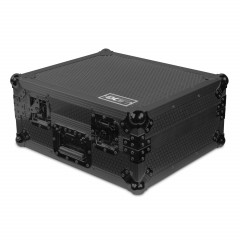
UDG Ultimate Flight Case Multi Format Turntable Black MK2 not only transport your complete set up easily & securely, but also facilitates devices to be setup within minutes. With these premium features incoporated, the UDG Ultimate Flight cases provide premium professional quality in a very stylish modern black colored combination.
Fits: Technics SL-1200MK7, Reloop RP-8000MK2, Denon DJ VL12 Prime, Pioneer PLX-1000, Audio Technica LP120XUSB, or similar size turntables
Specification
Specification
EAN 8718969212762
Color Black
Weight 7,80 kg / 17.16 lbs
Outer Dimensions (W x H x D) 51.1 x 42.6 x 23 cm | 20.1 x 16.7 x 9.1 inch
Inner Dimensions (W x H x D) 45.1 x 38.6 x 7.8 cm | 17.7 x 15.2 x 3.1 inch
Material Heavy duty construction of 9 mm thick plywood
Protection Extra-wide black solid aluminum profiles
Secure stacking due to stackable ball corners
Sturdy construction
Full padded interior keeps controller well-protected
High density diamond embossed EVA foam protective padding
Extra's Laminated in a black finish with a honeycomb/hexagonal "Stage Grip" pattern
Fits Technics SL-1200MK7, SL-1200GR, SL-1200GAE, SL-1210GR
Pioneer PLX-1000
Denon DJ VL12 Prime
Reloop RP-8000MK2, RP-7000MK2, RP-4000MK2, RP-2000MK2, RP-1000MK2
Stanton ST-150, STR8.150, T.52, T.55 USB, T.62, T.92 USB
Vestax PDX-3000
Numark TTX
Audio Technica LP120-USB, LP1240-USB, LP120XUSB, LP1240-USBXP, LP140XP, LP3, LP5, LP7, LPW40WN
American Audio Power Drive 2.2
Mixars LTA, STA
or similar size turntables
And accessories
Tangential Music is pleased to present the new album from veteran Spanish DJ and producer, Dj Toner (aka Antonio Herrera). Alongside his co-writer/arranger Daniel Molina and with guests that include the legendary Blue Note Records innovator Erik Truffaz and Grammy winning flautist and saxophonist Jorge Pardo, he has created a 10 track collection of slow-burning instrumentals that straddle the worlds of hip hop, jazz and electronica.
With a personal, precision tooled approach to his craft, the Andalusian has offered up an album of finely modelled downbeat moods.
At first glance, ‘Out Side’ is made up of recognisably superior hip hop instrumentals but if you listen carefully, and with patience, one can hear a craftsman at work. A wooden box is just a box until you look closer. The hidden joints, the perfect lining up of the grain, the years of artisanal graft and laser-focussed attention to detail that go into making something that has nothing present, that doesn’t deserve to be there. This is how Dj Toner operates.
The two singles that preempt the album’s release reveal different sides of his craft. ‘Camina’ struts with tough intentions. Soundtrack-y in an exploitation police drama manner, the get-out-of-my-way drum break and tension-filled chords suggest the bad cop, Erik Truffaz’s piercing lyrical trumpet lines, the good. The Afro-jazz horns led second release ‘Surprise’ is an altogether more playful, sunbaked affair. Sensual and slow-burning, there’s still an edge but it’s too hot to quarrel.
Dj Toner’s minimalist attitude to creation is shared with his co-composer Molina - an individual’s contribution may be cut to the bone, leaving just its aura or tone. The echo of a piano, a single blast of tuneful wind from a flute, a perfectly positioned drum hit.
Since the Wu-Tang Clan’s RZA began applying his beatmaking prowess to movie soundtracks, the hip hop instrumental has been acknowledged as something to listen to, as much as being used as a DJ tool or backing for an MC. Dj Toner’s instrumentals can, therefore, be seen as soundtracks. Soundtracks to his life and craft, vignettes of his environment in both the urban sprawl and the wider and slower spaces of “el campo”.
The sweet-tempered jazz-blues of ‘La Rimosa’ is a gentle welcome to the album. A simple, laid back groove with the most romantic of piano hooks that one could imagine Common dropping rhymes on. You’re kept on your toes with the odd purposeful moment of discordant interruption but the tender heart of the composition is never far away.
‘O’Beat’ hints at John Coltrane with the sparse but full-sounding upright bass before a head-snap break leads into a curious piano groove, a vintage organ swirls into a psychedelic fractal, whilst the bluesy female vocal snippets add the spice, that zing in the Granadan gazpacho.
The flamenco guitar driven ‘Flama’ is an excellent example of intricate sample placement and musicality. Old school (school yard) scratch interludes, sweet piano hooks, a minimalist but knife sharp flute contribution from Jorge Pardo, and the crunchiest of drums taking us for an intriguing walk round the corner.
We’ve mentioned them before but it’s on ‘Sweetband’ that we can feel that Wu-Tang dread hanging off its shoulders. A brooding orchestral number with powerful horns and a cavernous piano hit. The title of the piece is in stark contrast to the dark shadows of the tune.
Erik Truffaz returns in fine form on the super lethargic jazz-funk-hop of ‘The Day’. His instantly identifiable muted trumpet sound paints dazzling colours over the more earthy tones of the filtered down keys as a rubbery upright bass keeps the forward momentum. Dj Toner’s ‘Blessed Are The Weird People’ album, was rated in Jazz Magazine as one of the 20 jazz albums of 2021, so he isn’t some dilettante when it comes to playing with the complex hues of jazz but he does like to strip it to its bare essentials.
‘Fanega’ sees a gorgeous flute contribution from Jorge Pardo. An eerie boom-bap groove with sprinkles of electronic pulses and washed out chords is the canvas on which the award-winning multi-instrumentalist evokes the heat shimmer of the savannah.
‘Esperanza’ translates as ‘hope’ in English and this lovely slow, swinging jazzy groove really does provoke feelings of positivity and belief. Sublime vibraphone and another stunning trumpet offering from Erik Truffaz, take us on a journey of warm days and possibilities, the shuffling drums and sweet chord patterns are nicely finished off by a tranquil horn chorus towards its unhurried end.
‘Under Beat’ ends on a beefy boom-bap groove with a liquid funk bassline, elegant synth strings and old school scratching. Again, there’s that undisputable soundtrack edge, action and motion, the smell of the city.
There you have it, 10 tracks that go beyond the surface, deep into the dedicated craft of Dj Toner. Decades of experience and collaboration purified and refined into beat-heavy emotions, listen closely or crank it up, it’s down to you!
A bit more than half a decade on from his widely acclaimed debut Vanishing Points from 2018, Swiss guitarist, composer, and improv musician Manuel Troller releases his new record Halcyon Future. A rhythmically dense and ambiguous, yet joyful ride for unstable times, a plea for warmth and hopeful resistance.
Troller’s mode of incorporating, zooming in, and expanding on small elements from improvised sessions creates a multilayered work of driving rhythms and abstract, vibrating textures. Opening with Halcyon Future I’s distinctive open pulse, this first piece guides us through subtle harmonic shifts that are almost unrecognizable as they take place over extended time, overlapping and creating a sense of ambiguity until the piece reaches an almost optimistic level with Mario Hänni’s unexpected introduction of driving acoustic drums. Relentlessly and with increasing excitement, heavy electronic 80s bass drums and an armada of layered hi-hats push them on, leading to the all-incorporating melodic finale.
The two long pieces Halcyon Future I and Halcyon Future II focus on forward momentum. In between them stands DNA, a purposely directionless contemplation on emotion as such. It is raw, naked, and confrontational, with a tender and subtly changing chord progression creating intimacy and proximity, abstraction and warmth, like a beautifully vibrant hologram for the listener to walk around in.
The B-side with its 20-minute Halcyon Future II features playful futuristic guitars, enhancing and challenging the stereo image that Troller is already well-known for. As it’s given time to develop and take root, the ever-varying guitar interactions densify and the staccato patterns jump out of the speakers with joy, creating excitement and building momentum. Compared to Side A, things turn to a slightly more complex rhythmical, melodic, and harmonic feel here. There are easy references, such as Manuel Göttsching’s E2-E4 or Pat Metheny performing Steve Reich’s Electric Counterpoint, but Troller goes a different and very much more concrete way. Although the piece has been recorded in various places and through a long process of overdubbing, there is an astonishingly strong live feel to it, from beginning to the end, from the slow rise to the full spectrum and the almost krautrock-like finale. Improvisers Hans Koch on soprano saxophone and Michael Flury on heavily fuzzed trombone join in, while Troller and Mario Hänni on many guitars, bass, drum machines, and acoustic drums provide a joyous driving entity, not giving up until it all breaks down again. There is overkill and brute force, though never without depth and a vision of future.
In the musical scope of Halcyon Future, there is no need for an absolute definition of things. A continuously changing interpretation of repetitive and variable elements fading in and out of focus tells a story of an excited sense of acceptance. Feelings of transcendence stem from Troller’s layering of constantly shifting rhythmic structures with unforeseen improvised harmonic changes. Drum machine parts overlayed with acoustic drums shift between musical modes, anchoring the album on the verge of a jazz-influenced, motorik, post-ECM balearic plateau. Abstract textural elements gently swirl around and behind all that is rhythm, providing a submissive counterpoint. As with much of Troller’s work, Halcyon Future is an album that unfolds slowly, revealing more of its richness, detail, and subtle beauty at each listen.
Halcyon Future is a joint release by three:four records and meakusma.
Bank NYC is very excited to present the definitive statement of Collector, "No Prospects". Collector is the solo guise of Jason Campbell, resident of Newcastle, Australia. Since 2014, Campbell has been channelling the industrial malaise of his hometown through his unique take on heavy electronics. After a series of releases on global-spanning labels such Steel City Dance Discs (UK), Nice Music (AUS), Clan Destine (SCO) & Night People (US), the debut long-player for Bank NYC finds Collector embracing true album form for the first time in his discography. Across eight pieces, Collector delivers a bleak sonic narrative via a hardware-only approach to production: Analog drum machine patterns are intricately intertwined with menacing synth lines, and driving bass is met with the unrelenting clatter of tightly-sequenced field recordings taken straight from the heart of local industry.
Thematically, "No Prospects" navigates the downfall of Newcastle's BHP Steelworks at the end of the 20th century. Acknowledged widely as the largest de-industrialisation event in Australian history, the closure of the Steelworks in 1999 marked a dramatic cultural shift where blue-collar vocations were vanquished due to an economic slump, and were consumed by the trending cosmopolitanism seen in adjacent cities. "No Prospects" draws on Campbell's family lineage in the Newcastle's steelworks, providing a rich, personal context to an industry that both gives and takes away. The sharp intensity of the album is sustained by dramatic shifts in pace: the devestating slow burners of 'Two From Five' and 'Ricochet' are instinctually offset by the frenetic 'CFT' and 'Workers Club Collapse', which showcase Campbell's no-nonsense approach to shaping an almost club-ready breed of modern industrial techno. Although diverse across both sides, cohesion is found in Campbell's toolkit of samples that are unmistakably Collector. The album's eponymous track, 'No Prospects', serves as an introspective centrepoint - a largely arrhythmic excursion shrouded in familiar brooding, textural drones, and underpinned by the chug of machinery on the brink of collapse.
Although forever indebted to the spirit of local electronic outcasts, Bloody Fist Records, Collector's "No Prospects" is a remarkably distinct statement straight from the heart of Australia's Steel City. The complexity of arrangements speak to Campbell's long association in experimental music communities, whilst the persistent feeling of dread conveys a uniquely regional story of decay and futility. Pure Novocastrian industrial electronics.
(Jam El Mar Remix) DJ Ghost and Robert Armani resurrect their hugely popular turn-of-the-millennium collaboration with the superb ‘Hit Hard Baby (WTF)
DJ Ghost and Robert Armani resurrect their hugely popular turn-of-the-millennium collaboration with the superb ‘Hit Hard Baby (WTF)’. A formidable duo when it comes to churning out mind bending techno and hard-edged grooves, these guys first got together in 2001 delivering the bouncy vibes of ‘Hard One’ followed by ‘Airport’ and ‘Funk That’, all of which got included on a raft of compilations and enjoyed by many around the world. Individually they are accomplished in their own right. Ghost is an iconic figure in Belgium and a stalwart within the Bonzai family. Robert Armani needs no introduction, ‘Circus Bells’, ‘Ambulance’, ‘Hit Hard’ anyone? Since the mid-eighties he’s been right up there with DJ greats, and in 1992 he started releasing his own brand of house, acid house and techno. Legend is an understatement when it comes to both these guys and we’re delighted to see them back at it in the studio once again.
The release opens with ‘Hit Hard Baby (WTF)’, introing with dark kick drums and raspy hi hats. Classic techno percussions weave intricate patterns as tension mounts, taking us to the break where hypnotic notes build alongside a snare roll to the drop and back to full-on dark mode for the duration. ‘The Underground’ is up next, combining sick techno grooves with massive rave stabs and murky acid lines. Powered by a solid drum arrangement that packs a punch, this one is destined for peak time greatness. The first of two versions of ‘H.O.H’ begins with the Original Mix. Keeping with darker tones of the release, this one goes straight for the jugular as chunky kicks and pulsating, mesmeric basses combine along with clangy percussions and a classic vocal hook that will destroy the dancefloor. Another legend joins us to round out the release with Jam El Mar stepping up for remix duties on ‘H.O.H’. Hailed as a pioneer of trance alongside the late great Mark Spoon, Jam El Mar remains a much-revered name on the scene and we know amazing things happen when he’s let loose in the studio. Ramping up the energy on this one Jame El Mar whips up a frenzy to get the crowd moving. Heavy hitting kicks with layers of rhythmic percussions get the toes tapping while gnarly techno basses and electrifying synths combine alongside that instantly recognisable vocal. A monster tune that is not to be missed.
Syncrophone Presents the Very First Vinyl Release From Aleqs Notal’s Label : Industrial Light. This Premiere Sees Notal Partnering Up With Long Time Friend and Fellow Producer Modern House Quintet. Throughout Four Tracks &Ndash; Two From Each Musician &Ndash; This Release Dives Into Several Sub-Genres of Electronic Music and Provides Four Compelling Songs. on the A1 Side, Message From the P Opens Up the Record With a Classical Notal’s Signature Sounds : Ron-Trent-Ish Pad and Organ Samples, Supported by Additional Snares and Several Lines of Hi-Hats. This Delicate House Track, With Its Acid Line Chord Core Is Perfect to Open Up a Set. A2 Drinking Workers Sees Notal Weave His Hi-Hats Patterns Around a Typical Detroit-House Bass Line. Architected and Thought Like Scratches (Due to His Hip-Hop Background), Hi-Hats Set the Tone and Enhance the Track as a Back-and-Forth Game With the Bass, Contributing to the Overall Depth of the Song. Once Again, Notal Shows His Creativity About Blending Different Sub-Genres Into a Single Track. on the Flip Side, Modern House Quintet Presents Two Very Different Tracks (Although Both Are Clearly Made for the Floors). B1 Nadrezacalenis Associates Several Layers of Shakers and Subtle Hi-Hats &Ndash; Combined With Percussion &Ndash; in Order to Emphasize the Lush Rhodes Chords And, Later, the Entrancing Vibraphone Notes. Last but Not Least, B2 Dioskouron Is Clearly a Track for a Peak Time Moment. With Its Detroit-Techno Atmosphere, Its Tr-909 Drums Pattern, Its Textures (The Discreet, Yet There, Pad) and Its Pace, DJs Can Rely on This Great Addition for an Ideal 3 Am Set to See Heads Nod and Bodies Swing. as for All the Previous I.l Releases, Artwork Is Made by Jn/wl. ...
Fast approaching the label's two year anniversary, what better way to celebrate than with a double header of LP's from the stalwarts of the modern atmospheric scene. Fresh from his incredible album on Over/Shadow, ASC continues to find a new lease of life rekindling the atmospheric drum & bass scene of the 90's, slowing down the pace to reveal a depth that's just not achievable with higher tempos. Reflections is the culmination of ASC's work in the genre, picking up where others jumped off, and breathing new life into music with old school breaks and sensibilities at its core.
A1 - Still Motion
Opening the album with the airy sounds of a lively coastline, Still Motion is a glorious, unique throwback gem which takes inspiration from elysian points in time in the history of atmospheric drum & bass. Snappy beats and eager kick drums contrast perfectly to the serenity of the keys and a warm, soothing bassline which rumbles along below, unleashing a deep three note melody which will be in your head all day from the first listen.
A2 - Glaciers
Delicate beat work and timid bells introduce Glaciers, before jungly breaks take over and the depth of the piece takes shape with long, mournful strings punctuated by an emotive melody, boring its way into your soul. The track displays a dense, contemplative vibe that must be heard to comprehend, heavy with impact as you are compelled to release your own inner thoughts to slowly dance with ASC's intense production.
B1 - Mirage
Another slice of intense atmospherics awaits with Mirage, beginning with crisp breaks and the sounds of water droplets plunging into the abyss. A cacophony of effects are splashed around the mix while melancholic pad work surrounds the ever-changing breaks, patient melodies waiting their turn to seize the moment. The distinctive ''feel my soul'' vocal sample delivers a simple message - this is a track from within.
B2 - Constellations
Switching up the vibe is Constellations, opening with ASC serving up a barrage of detailed breakbeats that frolic merrily before soothing pads rise in the backdrop, joined by a serene female vocal sample and calming echoed effects. Mild intrigues its atop as our breaks are gradually and subtly layered with intricate detail towards a laid-back conclusion, offering a perfect mid-point breather to the LP.
C1 - Diffusion
An eerie, continuous melody - slightly reminiscent of Tubular Bells - opens and punctuates Diffusion, leading into a typically punchy and energetic masterclass of edited breaks. Tense pad work provides a haunting backdrop to the track, while understated sub bass hides beneath a quadruple hit of low, tuneful tones. The distinctively pitched vocal sample complements the composition to create a truly unique slice of atmospheric drum & bass.
C2 - Dreams
Utilising a detailed, zestful break previously heard in certain classics from the old Progression Sessions days, ASC showcases his superb editing skills to chop the break into something quite scintillating and new. Dreams is one of those tracks which has something fresh to offer the ear each time you listen, riddled with complexity yet also dancefloor friendly with some sumptuous pad work and whispered samples in the backdrop.
D1 - Frozen in Time
A deeply atmospheric piece, Frozen in Time delivers a weighty break pattern which thumps its way into the foreground while a tense, endless melody reflexively grips your attention - and holds it. Building a dramatic, thoughtful vibe with long, washing synths and rising notes, ASC's aural storytelling prowess works in parallel to the nervous energy of the melody, creating a memorable slice of ethereal drum & bass.
D2 - Prototype
Closing out the LP we have something suitably special with Prototype, taking inspiration from far & wide with an experimental feel, showcasing ASC's versatility and command of the apache break. Beats are edited and scattered like dense confetti in the mix, as a varied array of effects mingle around clouds of synths and deep basslines. A signature female vocal yearns ''take me away'' - Prototype, like the rest of the album before it, fulfills that desire in style.
Words by Chris Hayes (Spatial / Red Mist)
- A1: Pikiran Dan Kepentingan (Thoughts And Concerns)
- A2: Fenomena Demi Fenomena (From Phenomena To Phe-Nomena)
- A3: Lubuk Yang Terdalam (The Depths Of The Depths)
- A4: Manusia Oh Manusia (Human, Oh Human)
- B1: Selalu Ada Jalan Keluar (There Is Always A Way Out)
- B2: Meyakini Sebuah Jawaban (Believe In An Answer)
- B3: Kepada Cahaya Yang Menerangi Jiwa (To The Light Which Illuminates The Soul)
Born in 1977, in Malang, East Java, Wukir Suryadi began playing music for theatre at the age of 12 with the Idiot The-ater Studio, and later with the Rendra Theater Workshop. In his solo work, and as a member of Senyawa, Error Scream, Bendera Hitam Setengah, Potro Joyo and other groups, Wukir breaks the boundaries of traditional music, death metal and avant-garde performance. On this new release, “Cycle and Prayer,” recorded in 2023, he expands the edges of his unique artistic world further, by digging in to meditative improvisation, art, and community building in his home workshop in the mountains of central Java. These recordings vibrate inwards, toward the microcosmic ecologies of forests and rivers; they distort outwards, resonating with global waves of apocalyptic change that are forcing all living beings to the edges of existence on earth. The result is a meditative poem that moves, as its titles an-nounce, from phenomena to phenomena, praying that humans find a way out from the depths of the depths to the light that illuminates the soul.
An essential mode of creative work for Wukir is the creation of unique instruments, using these sound sources as “bullets of expression.” In addition to the spear-like tube zither Bambu Wukir, he has created the Solet, Enthong, Garu, Luku, Arrows, and Industrial Mutant instruments, which in addition to being used in live performance, have been exhibited in the Instrument Builders Project and the 2017 Jakarta Biennale. In the past few years, Wukir has begun to collaborate with local guitar makers, carpenters, and suppliers of native endemic wood in the mountain region of Salatiga. Using earthen bricks along with local woods (suren, coconut, mindi, and waru lengis) as building materials, he constructed a new studio and workshop space in Tingkir, where this album was made. The trees, water and air of the local environment have exerted a powerful influence in Wukir’s documentations of instrumental sound. On this recording, he uses the simple Cetta guitar, an instrument designed in Bali and made for Indonesian children and local communities of folk and popular musicians, in order to explore the different sonic characteristics of a more “normal” instrument built from local wood.
The themes of the album -- cycle and prayer -- arise from a foreboding series of meta-events that shook Indonesia and the world over the past years, following one after the other: the COVID-19 pandemic, the Ukrainian-Russian war, the Kanjuruhan Stadium tragedy in which football supporters were gassed and killed by police, revelations of govern-ment failures and corruption, the rise of personal vehicles, the increasing disturbance of natural patterns of the rainy season and other ecological cycles. “In these waves of technology and narratives of truth made for certain interests, playing a sound at a certain frequency and repeating can try to bring images and feelings to a certain point of con-sciousness,” Wukir told me. “Sound is a prayer that creates a change, whether gradual or rapid, in the behaviour of living things, to face the demands of the time, as humans struggle to live according to what they believe.” The draw-ings and sketches used for the cover spontaneously emerged alongside the recordings, as an instinctive depiction of “time and sound, nature that is outside of oneself, and nature that is within.”
After 20 years of living on the road in different places, Six Organs of Admittance had returned home to Humboldt County - a far country, to some, but still part of the world through which creatures of all kinds are moving through and contributing to. And some of them are human. Alone together - forming connection and exchange out of thought and expression - no different from the people on the other side of the Redwood Curtain. It was there, where Six Organs had long ago emerged, in the name of everything cycling, of circles that spiral concentrically and remain unbroken, the new music was conceived. In moments, it was as if the future had somehow wrapped around 360 degrees; elsewhere, the systems and patterns inside the writing and recording only became evident later - like a recognition that cumulus and nimbus clouds which passed through the sky the day before contained familiar shapes. Informing the songs accordingly as he went, Ben picked up on modes both musical and lyrical, threading backward through the time of Six Organs of Admittance. Almost marinating in it as a way of life. Working on the music and the vocals, then spending some time with them while stepping away from them. Walking the dog and coming back to them Time is Glass is made of that kind of time. Alone time. Recorded in the visceral environs of home, Time is Glass is sharply focused, even as misty impressionist mountains float through the background. Sweet and spiny, "The Mission" sings its purpose, before turning abruptly to the orchestral rumble of "Hephaestus": rural industrial psychedelia, ecosystem goth, synths arcing to lift a helplessly earthbound community into the firmament above. Winding almost imperceptibly back into song with "Slip Away", the time of the record becomes clear, moves fluidly, relaxed but aware, from event to event. People and things coming around again. The intuit, passing through wormholes and time, sounding deep then dissolving into the universal. The acoustic sounds ringing, layered suddenly, then clear again. Explosions of a new kind of distortion. Ecstatic melodies. Communing. The space of a day. The space of a season. Time is Glass, and Six Organs of Admittance is here and will be here, again.
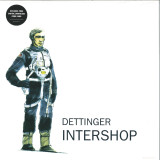
Dettinger’s Intershop and Oasis have long been held, by many fans of ambient and electronic music, to be some of the finest albums in their field. Produced by the mysterious Olaf Dettinger, about whom not much is publicly known, they were some of the earliest full-lengths released by the then-nascent Kompakt, and in many ways, they both articulated and defined the sound that would come to be known as Pop Ambient, while also existing, somehow, to the leftfield of any clearly recognisable genre.
Beautiful, sui generis works, it is a rare pleasure to see them being reissued on vinyl for a new generation of listeners to embrace. Originally released on CD only in 1999, Intershop was Kompakt’s first artist full-length. The music here simmers and broods, with opulent banks of tone marking out territory for rhythms that seem to be built from the clacking detritus of technology – hisses, thunks, knocks. Bass is deployed carefully, each drop a dubbed-out depth charge; drones spin and spiral, warping and weaving between the beats.
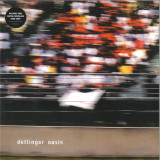
Oasis, released in 2000, refined the palette that Dettinger had explored on its predecessor. A blurred crusade of ambient texturology, its unassuming patterns, and subtle, incremental dynamics, admit to real beauty, and a kind of abstract sensuality that you don’t often experience with music that is, perhaps, similarly tooled, but not as poetic. Through seemingly simple gestures – whether lushly expansive repetitions, hyper-acute tremolo tones, or ear-tickling rhythms – it builds complex emotional resonance. It’s no surprise to discover Oasis is held in high esteem by artists like Panda Bear of Animal Collective, who once said of Dettinger, “For us, he was the dude.”
There is, of course, other music to know Dettinger by, too – his three excellent EPs for Kompakt, Blond (1998), Puma and Totentanz (1999), the latter of which, Michael Mayer once argued, “invented dubstep.” There is also a small, yet graceful run of compilation contributions, many of which can be found on Kompakt’s Total and Pop Ambient series. All this music has plenty to recommend it, sharing a clarity of purpose, and a rare, human warmth and depth. But Intershop and Oasis are the releases that distil Dettinger’s singular vision, and allow him, should he wish, to claim his place as a modern master of ambient and electronic music.
Dettingers Intershop und Oasis werden von vielen Fans von Ambient und elektronischer Musik seit langem als einige der besten Alben in diesem Bereich angesehen. Produziert von dem mysteriösen Olaf Dettinger, über den nicht viel bekannt ist, gehörten sie zu den ersten Alben, die von der damals aufstrebenden Plattenfirma Kompakt veröffentlicht wurden. In vielerlei Hinsicht formulierten und definierten sie den Sound, der später als Pop-Ambient bekannt werden sollte, während sie gleichzeitig irgendwie links von jedem klar erkennbaren Genre existierten.
Es ist eine seltene Freude zu sehen, dass diese wunderschönen Werke auf Vinyl wiederveröffentlicht werden, um sie einer neuen Generation von Hörern zugänglich zu machen. Ursprünglich wurde Intershop 1999 nur auf CD veröffentlicht und war Kompakts erstes komplettes Künstleralbum. Die Musik hier brodelt und brütet, mit opulenten Klangbänken, die das Territorium für Rhythmen abstecken, die aus dem klappernden Gerümpel der Technik gebaut zu sein scheinen – Zischen, Klopfen, Schaben. Der Bass wird sorgfältig eingesetzt, jeder Drop ist eine synchronisierte Tiefenladung; Drones drehen und winden sich spiralförmig und verflechten sich zwischen den Beats.
Oasis, das im Jahr 2000 erschien, verfeinerte die Palette, die Dettinger auf seinem Vorgänger erkundet hatte. Ein verschwommener Kreuzzug der Ambient-Texturologie, dessen unaufdringliche Muster und subtile, schrittweise Dynamik echte Schönheit und eine Art abstrakter Sinnlichkeit zulassen, die man nicht oft bei Musik erlebt, die vielleicht ähnlich ausgestattet, aber nicht so poetisch ist. Durch scheinbar einfache Gesten – seien es üppig ausladende Wiederholungen, hyperakute Tremolotöne oder ohrenbetäubende Rhythmen – baut sie eine komplexe emotionale Resonanz auf. Es ist keine Überraschung, dass Oasis von Künstlern wie Panda Bear von Animal Collective hoch geschätzt wird, der einmal über Dettinger sagte: “Für uns war er DER Typ”.
Es gibt natürlich auch noch andere Musik, die Dettinger bekannt macht – seine drei ausgezeichneten EPs für Kompakt, Blond (1998), Puma und Totentanz (1999), von denen letztere, wie Michael Mayer einmal kühn behauptete, “den Dubstep erfand”. Es gibt auch eine kleine, aber feine Reihe von Compilation-Beiträgen, von denen viele auf Kompakts Total- und Pop-Ambient-Serien zu finden sind. All diese Musik ist sehr empfehlenswert und zeichnet sich durch eine klare Zielsetzung und eine seltene, menschliche Wärme und Tiefe aus. Aber Intershop und Oasis sind die Veröffentlichungen, die Dettingers einzigartige Vision destillieren und es ihm ermöglichen, seinen Platz als moderner Meister der Ambient- und elektronischen Musik zu behaupten, sollte er dies wünschen.
Dettinger’s Intershop and Oasis have long been held, by many fans of ambient and electronic music, to be some of the finest albums in their field. Produced by the mysterious Olaf Dettinger, about whom not much is publicly known, they were some of the earliest full-lengths released by the then-nascent Kompakt, and in many ways, they both articulated and defined the sound that would come to be known as Pop Ambient, while also existing, somehow, to the leftfield of any clearly recognisable genre.
Beautiful, sui generis works, it is a rare pleasure to see them being reissued on vinyl for a new generation of listeners to embrace. Originally released on CD only in 1999, Intershop was Kompakt’s first artist full-length. The music here simmers and broods, with opulent banks of tone marking out territory for rhythms that seem to be built from the clacking detritus of technology – hisses, thunks, knocks. Bass is deployed carefully, each drop a dubbed-out depth charge; drones spin and spiral, warping and weaving between the beats.
Oasis, released in 2000, refined the palette that Dettinger had explored on its predecessor. A blurred crusade of ambient texturology, its unassuming patterns, and subtle, incremental dynamics, admit to real beauty, and a kind of abstract sensuality that you don’t often experience with music that is, perhaps, similarly tooled, but not as poetic. Through seemingly simple gestures – whether lushly expansive repetitions, hyper-acute tremolo tones, or ear-tickling rhythms – it builds complex emotional resonance. It’s no surprise to discover Oasis is held in high esteem by artists like Panda Bear of Animal Collective, who once said of Dettinger, “For us, he was the dude.”
There is, of course, other music to know Dettinger by, too – his three excellent EPs for Kompakt, Blond (1998), Puma and Totentanz (1999), the latter of which, Michael Mayer once argued, “invented dubstep.” There is also a small, yet graceful run of compilation contributions, many of which can be found on Kompakt’s Total and Pop Ambient series. All this music has plenty to recommend it, sharing a clarity of purpose, and a rare, human warmth and depth. But Intershop and Oasis are the releases that distil Dettinger’s singular vision, and allow him, should he wish, to claim his place as a modern master of ambient and electronic music.
Dettingers Intershop und Oasis werden von vielen Fans von Ambient und elektronischer Musik seit langem als einige der besten Alben in diesem Bereich angesehen. Produziert von dem mysteriösen Olaf Dettinger, über den nicht viel bekannt ist, gehörten sie zu den ersten Alben, die von der damals aufstrebenden Plattenfirma Kompakt veröffentlicht wurden. In vielerlei Hinsicht formulierten und definierten sie den Sound, der später als Pop-Ambient bekannt werden sollte, während sie gleichzeitig irgendwie links von jedem klar erkennbaren Genre existierten.
Es ist eine seltene Freude zu sehen, dass diese wunderschönen Werke auf Vinyl wiederveröffentlicht werden, um sie einer neuen Generation von Hörern zugänglich zu machen. Ursprünglich wurde Intershop 1999 nur auf CD veröffentlicht und war Kompakts erstes komplettes Künstleralbum. Die Musik hier brodelt und brütet, mit opulenten Klangbänken, die das Territorium für Rhythmen abstecken, die aus dem klappernden Gerümpel der Technik gebaut zu sein scheinen – Zischen, Klopfen, Schaben. Der Bass wird sorgfältig eingesetzt, jeder Drop ist eine synchronisierte Tiefenladung; Drones drehen und winden sich spiralförmig und verflechten sich zwischen den Beats.
Oasis, das im Jahr 2000 erschien, verfeinerte die Palette, die Dettinger auf seinem Vorgänger erkundet hatte. Ein verschwommener Kreuzzug der Ambient-Texturologie, dessen unaufdringliche Muster und subtile, schrittweise Dynamik echte Schönheit und eine Art abstrakter Sinnlichkeit zulassen, die man nicht oft bei Musik erlebt, die vielleicht ähnlich ausgestattet, aber nicht so poetisch ist. Durch scheinbar einfache Gesten – seien es üppig ausladende Wiederholungen, hyperakute Tremolotöne oder ohrenbetäubende Rhythmen – baut sie eine komplexe emotionale Resonanz auf. Es ist keine Überraschung, dass Oasis von Künstlern wie Panda Bear von Animal Collective hoch geschätzt wird, der einmal über Dettinger sagte: “Für uns war er DER Typ”.
Es gibt natürlich auch noch andere Musik, die Dettinger bekannt macht – seine drei ausgezeichneten EPs für Kompakt, Blond (1998), Puma und Totentanz (1999), von denen letztere, wie Michael Mayer einmal kühn behauptete, “den Dubstep erfand”. Es gibt auch eine kleine, aber feine Reihe von Compilation-Beiträgen, von denen viele auf Kompakts Total- und Pop-Ambient-Serien zu finden sind. All diese Musik ist sehr empfehlenswert und zeichnet sich durch eine klare Zielsetzung und eine seltene, menschliche Wärme und Tiefe aus. Aber Intershop und Oasis sind die Veröffentlichungen, die Dettingers einzigartige Vision destillieren und es ihm ermöglichen, seinen Platz als moderner Meister der Ambient- und elektronischen Musik zu behaupten, sollte er dies wünschen.