“One foot out the door, another in the otherworld…”
So begins Hannah Lew’s debut, self-titled solo record, soaked in imperious, wide-eyed pop songwriting and a girl-group/post punk aesthetic that belies the artist’s history in the U.S. underground. A towering, hook-laden album, it’s infused with an optimism and surrealism that conversely deals with the times we find ourselves in.
Recorded at home in Richmond, CA and in The Best House studio with Maryam Qudus in Oakland CA, with the assistance of a crack team of West Coast musicians, this album sees Hannah Lew stepping out from behind the legacy of her two groups Grass Widow and Cold Beat. While musically bearing similarities with her previous work, “Hannah Lew” is a bold leap into direct pop territory, making ample use of a vocal style that teases out the inherent melancholy in her melodies. Mastered by Sarah Register, each song is a perfectly honed nugget that frequently pulls the heart in two directions at once.
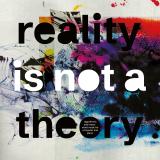
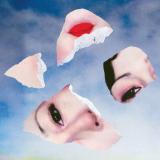
Themes of change, breaking up, shattering old ways of being are shot through the record. For the front cover, a photograph of the artist’s face was printed, ripped up and re-assembled, resembling the creative process embarked upon by Lew for her first “solo” material. The album feels instinctual, almost dream-like in its assemblage of sweeping synths and pulsating, propulsive drum machine beat patterns with Lew’s vocal performances sensitive and caressing over the top. Increasingly relying on the subconscious and dreams to guide her creative process, Hannah Lew frequently abandons literal interpretations or linear narratives, the songs seeming to exist in a swooning, effortless flow-state while remaining emotionally hard hitting.
On an album where every song could be a single, there are kaleidoscopic shades and varying emotional tones in abundance. First single Another Twilight is carried along a pumping, Italo-disco-style 4/4 beat and mono-synth bass line, the low end pulling at the heart and body. Lew’s vocal melody teases the track before swan-diving into a gorgeous chorus as she sings “it’s all over baby and I don’t mind… in decline, I take my time…” The album is suffused with moments like this. On slow builder Damaged Melody, an arpeggiated synth elongates the verse before a cascading synth showers down melodic glitter. The stunning Replica uses dual swirling synth patterns before a driving, synthpop chorus for the ages carries Hannah Lew’s vocal into the stereo field, sailing in on a high register singed with the embers of a break up.
In a departure from previous groups, her solo songs are guided by dreams and free association inspired by Dada and the Surrealist movement and sculpted afterwards. As such, the songs reveal themselves on repeated listens, revealing traces of heartbreak inspired by both personal and global elements - Hannah Lew regards the album “a wartime album.” On Move In Silence, Lew intones “there’s a war outside, just out of view,” revealing the dichotomy at play throughout. With the songs evolving naturally and in a flow state, the pressures and sadnesses of the modern age bleed through, mixed in with Lew’s inherent love, sensitivity and fractured-but-intact optimism. On the swooning, sublime Sunday layers of Numanoid synths open up for the commanding vocal performance pontificating on grief, love, pain as she “feels the ache on Sunday…” As the chorus builds and Lew’s call-and-response vocal adds to the emotional tension, it almost feels like too much to take.
Elsewhere, there are echoes of Hannah Lew’s previous work. On Time Wasted a bass guitar comes in with a heavy, punk attack before the synths and vocal harmonies reminiscent of later Cold Beat elevate everything. The glassy, sweetly resigned closer The Clock sounds like so classic it could be cover, a sweetened Jesus & Mary Chain tune perhaps, before it erupts into volcanic chorus that could only come from Hannah Lew in 2026.

Search:pattern mode
When a Russian missile struck the ground not far from my studio in Kyiv, I vividly remember how my body reacted to the explosion, milliseconds before my mind did. That traumatic explosion reduced my essence to a primal state. There existed nothing but dread—the kind that, in scripture, accompanies the appearance of angels announcing, ’Be not afraid’.
The visions of Abbess, composer and mystic Hildegard von Bingen were preceded by bright, excruciating flashes of light. Modern medicine reduces them to cluster migraines, one symptom of which is the retinal aura, often accompanied by blurred vision and blind spots. Hildegard’s music can place great demands on the bodies of its performers, emphasizing uncomfortable intervals and the wide distance between the lowest and highest pitch. In comparison, Gregorian chant, the liturgical standard of the time, represents a tempered attempt to grasp God intellectually; indeed, Hildegard’s music was once described as a stick of dynamite thrown into a Gregorian chant.
This album is not a historically informed performance. Hildegard’s persona and music are a starting point—a distant mirror, akin to the shield of Perseus, used to reflect Medusa. It allows us to reflect, comprehend, externalise, and transcend traumatic wartime experience, reinstating the embodied origins of Christianity, which contained suffering but also offered the promise of transcendence. Andriana-Yaroslava Saienko emphasises this physical aspect of Hildegard’s music by drawing on authentic Ukrainian folk singing, a form that survived despite efforts by the Soviet occupation to replace it with a simulacrum that is naive, harmless, and devoid of contradictions—an attempt to ‘civilise’ the body by disembodying it.
The musical approach is also informed by my ongoing practice of reimagining early music in modular synthesis. I accompany Andriana-Yaroslava’s fiery singing with drones—extended sounds that also occurred in medieval music. The drones alternate with improvisations, one taking its starting point in medieval polyphony, the other working with the concept of the interchangeability of sound and light, referring both to Hildegard’s visions and the space in which we recorded the album: the Cistercian abbey of Sylvanès in Occitania, known for contemporary stained glass windows whose patterns reference the dispersion of acoustic waves inside the church.
The album features two compositions by Hildegard von Bingen: O Ignis Spiritus Paracliti (O Fire of the Spirit and Defender), dedicated to the Holy Spirit, and O Tu Suavissima Virga (O Sweetest Branch), in honour of the Virgin Mary. Both pieces are performed radically slower than usual, expanding in time and space. On vinyl, the compositions are designed to reflect one another and can be listened to in either order. In the digital edition, there is a bonus track titled Zelenaia Dubrovonka (The Green Oak Grove). Based on a Ukrainian folk song from the Polissia region, Andriana Yaroslava adapted the lyrics to reflect our contemporary reality. The green oak grove does not rustle with the wind; instead, it resonates with a different sound—perhaps the missile that struck near my Kyiv studio.
Fresh off an EP on Semantica and an album on MORD, Uun returns to his imprint Ego Death with the Panopticon EP. Uun showcases his range on these 6 tracks, running the gamut from dissonance to chord driven grooves.
The A side focuses on intensity. “Aesthetic Descent” features dual synth lines, slipping between melody and atonality. The straightforward percussion allows the listener to focus on the everchanging dynamics in the leads. “Structural Obedience” begins with a chugging groove, out of which a buzzsaw synth emerges. This track is a display of Uun’s ability to walk the line between minimalism and maximalism.
The B side focuses on the interplay between melody and groove. “Ralph’s Track” channels the dub chords of Basic Channel while applying a modern edge. “The Hidden System” features the lone vocal on the EP, sampled from the work of the late great David Lynch. The interplay between the 7⁄8 lead synth and 4/4 percussion creates a feeling of anticipation, where the patterns develop in unpredictable ways.
The digital exclusive tracks go into more experimental territory. “Queen’s Chamber” is a broken beat dirge, consisting of reverb drenched percussion and synths reminiscent of Dead Can Dance. The final track, “Shokunin”, is the counterpoint to Aesthetic Descent, closing out the release on a crushing yet hopeful note.
Pressed onto a unique custom turquoise and black hand poured color mix record inside a full printed jacket. The evocative artwork was created by Minneapolis based graphic designer Ryote.
The breakout underground star of the past year, the deservedly hyped Thought Leadership returns with another X ideas: the deck this time chooses the suit of Cups. This new collection is closer to the Post-Punk tonality of Pentacles, than the breezy Balearic Jazz of Swords. Gone are the brushed drum samples and airy synths and in their place are BIG guitars, 808 thumps and a decidedly more prominent use of bass as a melodic device.
As the suit of Cups reflects the emotional heart of the Tarot, presented within are a further X pieces, this time displaying the full range and fervour of Thought Leadership.
You know the drill by now. Originally out on cassette only, we present the first ever vinyl issue. It's a hideously limited pressing of 300 for the world, so don't sleep on this.
Side A explores the emotional levels of consciousness; angst, joy, love, sorrow, relief, regret – they are all represented across the first seven tracks, and often within the same piece. XXI kicks us off with a huge tumbling D minor passage, layers and layers of guitar front and centre, whilst the drums pound away in the distance. Release is provided with a gorgeous G Dorian section, where we hear the bass take flight with a high melodic line.
We’re still in familiar Durutti Column meets Dif Juz territory here, but things switch up with XXII. This piece showcases a darker, more angular palette of guitars; think Alan Rankine (The Associates), or Deb Demure (Drab Majesty) in the unexpected harmonic shifts, knotty arpeggiated patterns and heavy, goth-adjacent modulation. A real love letter to 45+ years of darkly inclined guitar heritage.
XXIII enters the fray with tight, thumping 808s and Marr-esque guitar figures; and again, the bass providing heavy melodic counterpoint to the guitars. Enter chiming, lyrical lead phrasing, reminiscent of the eternal opening to "Everybody Wants To Rule The World". Another accidental perfect pop moment from the Thought Leader. Whilst on the topic of Tears For Fears, XXIV comes swinging out of the gate with some serious Sophisti-chug; we’re reminded of "Shout" in the A section, before being beautifully juxtaposed in the B section with more Vini-eqsue patterns, reminiscent of his timeless classic, Another Setting.
XXV gives us welcome pause to take stock midway through the A side. No drums this time, but instead a heartbreaking conversation between two guitars; think Kevin McCormick and David Horridge’s masterful Light Patterns, or perhaps even the early solo-Bill Connors mid-70s cuts for ECM. The moment of quiet reflection passes, and is quickly shattered by the thudding march of XXVI – this piece comes across like The Associates playing "Wicked Game"; heavy, moody, and utterly compelling. XXVII ends our journey across Side A with more Marr-inspired playing; one for the heads and already featured on mixes, this one is real testament to the vision of Thought Leadership.
Side B again takes us on a trip through three long-form semi-improvised pieces. XXVIII is like those classic Jonny Nash, early Melody As Truth releases, slowly unfurling, additional details introduced deliberately piece by piece, this idea builds across 7+ minutes culminating in some utterly joyous ebow fireworks at the end – well Balearic.
XXIX again, like XXV before it, dispatches the drums with a focus purely on melody and mood. The piece feels like a lost Save Room Theme from the Resident Evil series, pure golden age Capcom Sound Team vibes. Unadulterated aural nostalgia for hours spent with a PS1 in haze of hash.
XXX completes this majestic voyage with another Modal exercise; this time the Thought Leader has opted for the Lydian Mode. Beautifully dreamy, undeniably Soundtrack-y, and arguably the most concise distillation so far of everything this project stands for; drum machines, guitars, pedals, one-take improvised solos – XXX has the lot, and is surely destined for greatness.
So, another X epic statements for guitar, homespun with the humblest of means, for all the dreamers out there. The first ever vinyl release of IV Of Cups has been carefully remastered by Be With's engineer Simon Francis to ensure it sounds better than ever after its initial tape release. Cicely Balston's expert skills have made sure nothing is lost in the cut at Abbey Road Studios whilst the records have been pressed to the highest possible standard at Record Industry, in Holland. The original tape cover artwork, so crucial to Thought Leadership's striking visual aesthetic, has been rejigged for vinyl issue here at Be With.
The last 2 LPs flew. You have been warned.
2026 Repress
Marking the anniversary of three decades of career, Dopplereffekt debuts on Tresor Records with Metasymmetry, arriving 12 December 2025. This latest release finds members Rudolf Klorzeiger and To-Nhan in deep inquiry in sound, contemplating structure and pattern in physics and nature resulting in a harmonious audio tessellation.
Metasymmetry itself relates to a kind of second-order reality found not in the structures of life but in the rules that govern these structures; that order exists not only in things but in the relationships among systems of order. It is a structure of structures, a logic of laws, an abstract unity embedded in the act of transformation itself.
Accordingly, the four-track EP reflects this duality. Each side opens with a piece of electronic music at its most precise and immovable: defined, kinetic, architectural. This is followed by a second composition that dissolves into a weightless, atmospheric counter-form.
The shift evokes a higher symmetry: an alignment not of parts, but of principles; a sonic model of the universe’s hidden invariance.
Metasymmetry also echoes across Dopplereffekt’s extended sonic continuum; this stands as the first offering on Tresor under the Dopplereffekt name despite an association with the label and club going back to the start. In this, it becomes the source of an echo that reverberates backwards through time; its own reflection:
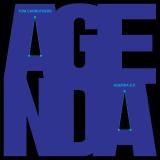
With Agenda EP, Tom Carruthers closes a landmark trilogy on Skylax Records, following Neutralise EP and Deepline. Three records. Fifteen tracks. One coherent vision of machine-driven house music stripped to its raw, functional core. This final chapter dives deeper into direct, club-focused energy, where groove, repetition and tension do the talking. Agenda is less reflective, more physical — built for movement, sweat, and long transitions in dark rooms. Opening track “Chrome” sets the tone: sharp drum programming, metallic pressure, and looping synth phrases that lock the body into motion. “Agenda (Raw Mix)” follows with a tougher, stripped-down approach — no excess, just pure rhythmic insistence rooted in early Chicago jack and warehouse discipline. “Beat Down” pushes further into machine funk territory, where relentless patterns and rugged textures meet in hypnotic repetition. On the flip, “Fade Away” brings a deeper, moodier tension — a late-night track where subtle emotion seeps through minimal structures. Closing cut “What You Want” is classic Carruthers: jacking drums, understated melody, and a groove that feels timeless rather than retro. As with the previous releases, the visual identity is handled by H5, whose modernist, reduced artwork mirrors the sonic philosophy: clarity, impact, and purpose. Agenda EP completes the Skylax trilogy as a statement of intent — not revivalism, not nostalgia, but dance music reduced to its essential elements.
After a series of successful outings alongside sidekicks Ofofo and Zongamin, studio wizard MYTRON turns in his debut solo full-length for Multi Culti World Records. With contributions on Invisible Inc, Calypso, Bongo Joe, Kalahari Oyster Cult, LYO, Codek Records and Earthly Measures, Mytron has carved out a name for himself in a carefully-curated left-field quadrant of the indie-dance galaxy. Tuning his oscillators to myriad sounds — from dub and disco to krautrock — the London-based producer perhaps most notably channels the pristine compositional style of Kraftwerk. While most apparent in the use of vocoder, there’s a consistent efficiency of arrangement that recalls the man-machine in effervescent, idealistic fashion. Mytron manages to keep it simple, funky and musical — whimsical tunes that bop along with analog grit, wilderness, and wonk. There’s a warmth and wit that shine through every synth line, an understated confidence that speaks of years spent tangled in wires and waveforms, with an inclusive sonic eclecticism that flattens hierarchies between genres, geographies, and generations. Each influence is invited to the table, treated not as pastiche but invited to dine and dance in a space where kosmische dub disco and Afro rhythms can coexist without borders. The sleeve design echoes this philosophy: video-feedback patterns hinting at our modern screens, both portals and filters — coloured, distorted intermediaries through which we perceive the world. In the trippiest sense, the record is both reflection and refraction — a sonic mirror held up to an interconnected, glitchy reality. Tailored equally for DJ use and home-listening head trip, the album is meticulous, mischievous and merry.
BanBanTonTon review:
On Mytron’s debut long-player for Multi Culti groovy 21st Century leftfield house gear collides with Daniele Baldelli and Beppe Loda’s hugely influential `80s afro / cosmic. The 9 tracks are chunky, chugging and full of funky, funny noises. Old school B-lines mixing with eccentric electronics. Spinning, spiralling sounds.
Sugar is an electro-pop, vocoder confection, cut from the same sonic cloth as cult classics like Codek’s Tam Tam. Created from tough trap drums, splashing effects and a mutant Giorgio Moroder bass arpeggio. The title track, Propellor, pits Kraftwerk-esque hardware harmonised vocals against a bongo loop and a whistling hook. Playground has simian shrieks surround tumbling tom-toms. Highway Maintenance adds kosmische synths to a dance of woodblocks and buzzing bottom end. Keep On Dubbing is an organ-led, clip clopping percussive canter.
Tracks such as Speaker Can Talk, shot through with disco lasers blasts and recalling Curt Cress’ Dschung Tek, also lift the tempo up, but the bulk of the music here is a mid-tempo, techno drum circle. Squelchy sequences gurgling in and out of programmed percussion. On Quasar, spiky acid edges in and slowly takes over.
Key references that come to mind are Baldelli’s own turn-of-the-2000s Cosmic Sound Project productions, and Wolf Müller’s scene shaking sides on Themes For Great Cites, from around a decade later.
A future classic - a project resurrected from a collaborative effort of the minds of late and great tastemaker and creator Mike Huckaby & Echospace's, Stephen Hitchell. Coming up on over 15 years since this project was conceived while working together on the Model 500 "Starlight" remix project back in 2008, this project truly captures a beautiful moment in time. During this period there was something magical in the air, a creative synergy and understanding of all things deep! The original mix (2008) results from a few sequences and patterns developed out of Wavetable ideas Mike was creating for a sample library he was curating at the time. The sweeps and transients found in these lofi wavetables truly add to the Detroit sound Mike's legacy was built upon, always staying true to his roots. After a few projects together (and more forthcoming) another collaboration was born with SF based (via Glasgow) producer, Federsen who simply put gives us a deeper than deep tribal stomper we're certain Huck would be dropping at peak hour! On the flip, cv313 + federsen reunite to surf Mike's wavetables once more, creating an addictive hook with a sick DETROIT saw bass deeper than the ocean floor! Intrusion's Dub closes out the EP and sends the listener deeper into the abyss, offering sonic designs from another planet, dubbed out into eternal bliss! We truly hope this project resonates and captures some of Mike's creative spirit and sound design. This 12" is a tribute to a true Detroit hero who's contributions to music and the culture are few and far between, a true legend.
R.I.P. HUCK
It's rare to hear a debut 12' single that really blows you away. That's hardly a controversial statement; in truth, most producers take time to find their feet, developing a distinct style over a period of years, rather than months.
Magnesii, then, is something special. Currently based in Amsterdam. The previously unheard of producer has delivered a stunning debut 12' for Tom Trago's Voyage
Direct label. R Raw, fuzzy and in turns melancholic, spellbinding and intense, its' three tracks bubble and hiss to the distinct sound of vintage analogue hardware.
You see, the young Dutch producer tends to avoid modern computers. 'I often feel like those screens suck my soul away,' he says. Instead, he jams out tunes on a tasteful selection of analogue gear, sequencing with either the Alesis MMT-8 or the Akai MPC2000 - a favourite toy of many of the Netherlands' best electronic producers - and adding basslines, beats, acid lines and melodies on obscure synths and drumcomputers'. His creations are then bounced down straight to 1/4" tape or cassette.
Some of these resultant jams, as showcased on this impressive debut, are nothing less than inspired. Acid lines rise and fall, machine drums rattle, and distinctive synth
lines weave in and out of the mix. These are raw tracks for the dancefloor blessed with all the colour and warmth associated with vintage hardware.
'RZTB Tantra' sets the tone, layering bubbling acid lines and dreamy chords over a relentlessly nagging bassline and punchy, scattergun drum machine percussion. 'Lava Jam' is decidedly deeper, with woozy, emotive melodies and alien electronics tumbling over a dusty rhythm pattern and tactile acid bass.
Magnesii completes a sterling debut with 'Van Dyke Island Jam', whose squidgy bassline and long, drawn-out M1 chords work in complete harmony with the crispy rhythm track and densely building percussion hits. Like its' predecessor, it too seems to be tinged with sadness, as if Magnesii's machines are shedding a tear for glories past.
Clearly, Magnesii is a name to look out for in future. For the time being, we'll have to make do with one of the most impressive debut 12' singles of 2014 to date.
SPTLP007 - ASC - Vanishing Point LP
Evolving further with each release, ASC delivers his latest monumental album on Spatial, a varied and memorable journey through stunningly realised fusion of modern and classic atmospheric breakbeats.
A1 - Mystic Street
Setting a murky tone with light cymbals and synthwork flecking the intro, Mystic Street calmly purrs and growls towards a drop of analogue kicks and a sparse, menacing drum pattern to kick off this incredible album. Enveloped by a dense cloud of darkly atmospherics, the track coils with tension, each element rippling through the mix like distant memories as the suitably enigmatic bassline rumbles beneath.
A2 - Convergence
Straight into the beats with a DJ-friendly two step intro, ASC utilises sparse, sci-fi hits and persistent danceable breakbeats with a melodic bassline. As the atmosphere builds, percussive tones punctuate the swirling pads, creating a luscious sense of forward motion with echoing samples and effects combining in the mix to create a dreamlike soundscape perfect for the dancefloor and headphones alike.
B1 - Invisible Borders
No ASC album would be complete without an amen workout, and we certainly have that here as Invisible Borders rushes into view with simmering intent, melodic samples tore from battlegrounds of yesteryear providing a truly epic atmosphere, rippling breakbeat trickery teasing the listener before crushing full contact amens arrive with panache and veracity - twisted across yearning bass with an unflinching fighting spirit.
B2 - Celestial Bodies
Up next a moment of calm as we soak up the charms of the dreamlike Celestial Bodies, a soothing journey of beats, breaks and atmosphere from Spatial's label head. Melodic notes ripple across the mix with old school breaks filtering to and fro, conjuring images of a cosmic journey unfolding, where old school breakbeat rhythms pulse like distant constellations, echoes shimmering in the vast expanse of ASC's versatility.
C1 - Losing Track Of Time
Into an absolute stunner next as ASC unleashes a modern classic which has a wonderfully instant familiarity to it - like it was lifted directly from the golden era of atmospheric drum & bass. The old school breaks have a distinctive feel while a variety of pads teaming with life swirl around above. A myriad of spirited melodies develop and maintain your attention with classic 808 basslines to complete this remarkable composition.
C2 - Slipstream
Switching up the vibe in style, ASC delivers an intense, cosmic intro to Slipstream which builds gradually with whooshing effects and long female vocals before a crisp, crunchy slice of Hot Pants breakbeat heaven tears through the mix, chock-full of excitable edits portrayed in a brilliant clarity. Warm sub bass punctuates the track while a reverberating earworm melody slowly etches itself into your mind.
D1 - Paradigm Shift
A good old fashioned roller up next as Paradigm Shift sees ASC blend a superb 2-step rhythm with a sumptuous smooth bassline - guaranteed to move the dancefloor. Atmospherics take no back seat either as elegant synthwork swirls and washes across the soundscape with subtly used vocal samples adding texture and warmth to an impressively layered mix that maintains its pace right through to an echoing conclusion.
D2 - Transmitter
Sending us back to interstellar space for an inspired mission through vast unexplored star systems, Transmitter sees ASC create a stunningly evocative, ethereal collage of atmospherics with sonar-like beeps punctuating and persisting throughout. Driving the track along are the superbly programmed drums, filtered and layered with twisted, distorted vocal samples to complete this exhilarating album in pure Spatial style.
Wrong Filament embodies Robert Piotrowicz's creation of fictional traditional music - not studied but invented, a utopian and oniric construct that becomes tangible in sound. These imagined traditions act as communal forces of music-making, resisting dominant structures of power.
The album unfolds in six dense compositions built on rhythm, repetition and minimal melodic gestures that draw on archetypal patterns of Eastern European traditions. Entirely synthetic yet strikingly instrumental in character, they develop as autonomous sound events, expanding into multi-part forms that evoke the physicality of ensemble performance - as if played by an imagined community of musicians.
Rather than reconstruction, Piotrowicz invents forged dances - a pre-techno of sorts, where complex meters and dense textures point to a parallel history of collective sound beyond industrial uniformity. They imagine a utopian and fictional genealogy of collective sound: one where industrial modernity yields to more unstable, communal energies.
This is celebratory music with invocatory charge: calls to dance, echoes of ceremony, microtonal melodies shaped by emotional weight, and traces of Eastern ornamentation stretched through synthetic means. Wrong Filament sacralises performance through sound alone, spinning a world where spectres of collective experience vibrate against the limits of rupture and resistance.
These pieces confront the traces of violence inscribed in body and memory, yet also affirm freedom, emancipation and integration. They manifest celebration, identity and resistance while opening a path toward liberation and shared needs that exceed social, private and intimate categories.
Balearic sounds and Mediterranean warmth are the inspirations for Bruno Belissimo’s Bordello A Parigi debut. Drawing on disco, house and funk, Ottimo! is a four tracker of electronic exuberance with Belissimo’s musical ability and range immediately spilling from the speakers. Guitar strings curve around synthlines in the title piece, percussive textures giving way to the mantra-like refrain of “Ottimo!” Thick bass echoes into beaming keys for “Meduse.” Bright notes cascade, grooves melting with vocoder lyrics as classic disco tones are reimagined in this modern mirrorball medley. Organic rhythms introduce the flip. “Mirage” opens to ripples of bongos and toms as a loose structure takes hold. Hedonistic chants rise to a shimmering chord, kicks and snares funnelling the building energy as bold blasts and samples shriek with delight. “Las Piramides De Ibiza” brings the quartet to a close. Clean drum patterns support joyous notes, a machine dipped voice calling time.
Regarded as one of the leading figures within the modern jungle scene, Newcastle’s Nectax returns with his second EP of the year, ‘Star & Shadow’, this time landing on London-based label Up Ya Archives. Dedicating this release to where he grew up, the EP echoes the heart of the North East - industrial spirit, late-night rhythms, and a fierce sense of community.
Blending classic breaks, soulful vocals, and playful pad patterns, ‘Star & Shadow EP’ is another knockout release in Nectax’s discography, following records on Hooversound, Future Retro, Over/Shadow, and his own Stereo 45 imprint. Championed by DJ Flight, Nectax was the first release back on her label play:musik after 14 years with Body Talk EP. At the end of 2024, Nectax was nominated for Breakthrough Producer at DJ Mag’s Best of British Awards, further solidifying his position as one of the scene’s essential contemporary artists.
Dave Davis, a legendary name in Belgian electronic music, made his mark with classics on Bonzai Records, including the iconic "Transfiguration." Known worldwide for his DJ sets and as a vocalist under the alias JD Davis (Chab’s "Closer to Me," David Guetta’s "The World Is Mine"), he now teams up with ID10-T, a Swiss producer making waves with his raw, no-compromise techno style.
This release features two tracks crafted for peak-time dancefloors:
• "Insane": A dark, powerful underground techno bomb with deep basslines, sharp textures, and relentless energy. Built to shake the walls and ignite the crowd.
• "RDH": A groovy jackin’ techno weapon, combining bouncy bass, funky patterns, and infectious rhythms. A fresh yet respectful nod to classic techno foundations.
With this electrifying collaboration, Vibes Addikt continues to push boundaries, showcasing a cross-generational vision that fuses rave culture heritage with modern sound design.
Français
Vibes Addikt, le label de N.O.B.A reconnu pour sa ligne artistique mêlant techno et trance de manière percutante et novatrice, présente sa nouvelle sortie : un single explosif signé Dave Davis & ID10-T.
Dave Davis, figure incontournable de la scène électronique belge, connu pour ses classiques sur Bonzai Records — notamment l’intemporel "Transfiguration" — et pour ses prestations aux quatre coins du globe, s’associe ici au producteur suisse ID10-T, talent émergent dont le style se distingue par une techno brute, percutante et sans concession. Dave Davis est également connu sous son alias JD Davis, voix emblématique de titres cultes tels que "Closer to Me" de Chab ou "The World Is Mine" de David Guetta.
Ce single comprend deux titres taillés pour les dancefloors les plus exigeants :
• "Insane" : Un banger techno underground, sombre et puissant, construit pour retourner les clubs à coups de basses profondes, de textures métalliques et d'une tension hypnotique. Ce morceau capte l’essence même de la rave moderne : brut, direct, sans artifice.
• "RDH" : Une véritable arme jackin’ techno, groovy et irrésistible, mêlant rythmiques incisives, bassline bondissante et arrangements funky, qui captiveront autant les puristes que les amateurs de sonorités plus organiques. Un hommage contemporain aux racines du genre, avec une touche résolument actuelle.
Cette sortie marque une nouvelle étape dans l'évolution de Vibes Addikt, toujours en quête de projets audacieux et authentiques. Avec cette collaboration intergénérationnelle, le label affirme une fois de plus son engagement envers une techno de caractère, entre héritage rave et innovation sonore.
Slowly yet firmly blooming into focus, An Unfinished Rose is the new album from Australian duo Troth.
This is their first since relocating to Hobart, Tasmania and their introduction to Night School Records. With a detailed web of past releases on labels A Colourful Storm, Mammas Mysteriska Jukebox, Knekelhuis and Bowman’s own Altered States Tapes imprint, An Unfinished Rose is the group’s most realised and composed work thus far. While still drawing on the improvisatory and DIY practices that informed Troth’s beginnings, it points to a new incarnation of the duo’s music; an intentional language emerging from the fog of obfuscation and mists of uncertainty.
Over these 9 meditations on change, acceptance, renewal and rebirth, An Unfinished Rose finds Amelia Besseny and Cooper Bowman peeling back some of the roughhewn architecture that defined their earlier releases to reveal a masterful - if auto-didactic - use of space and melody. Composition and improvisation compliment and feed each other throughout, with locked-loop earworms providing the springboard for lines of clarinet or synth melody, and the negative space between chord clusters giving ample room for Besseny’s most confident vocal performances to date. Shaving off a little of the defining dissonance and tape compression of old reveals Troth’s music in radiant daylight, humbly accepting of its place in the world while yearning for better, more sympathetic modes of living. Leaning more heavily on acoustic instrumentation and post-production processes than previously, the result is a transcendent body of work infused with an almost zen-like presence.
Troth’s music exists in the border between forming and becoming, its goal to project a kind of preternatural beauty, leaving interpretation open to the listener. Field recordings, happenstance and improvisation may provide seeds for the duo’s compositions, particularly on Side A, but there is a deft touch of songcraft on show. Loam Loom Leaf Litter opens An Unfinished Rose, directly referencing natural cycles of life, death and regeneration, before the blissed-out drum machine groove of Gold Plum continues a discussion concerning the totality of nature and one’s place in it. Besseny’s vocal, swelling like an ocean churn in duet with itself is adorned with synthesised harp and a revolving synth pattern, conjuring plumes of medieval smoke. Thistle’s rounded, bass-heavy drums, nodding to the vast echo of dub, is a relatively new terrain for Troth. It’s propulsive and thumping, pulsing with a meaning and symbolism consistent with Troth’s past work, referenced overtly in Bessey’s lyrics - “Say it too much and it loses its meaning…”. Similarly, the sprawling modern-classical suite, Tides Reflected In Her Eyes, is intentional in its lyrical themes while traversing new ground, revelling in layers of bowed cello and vocal intonations. Side B’s 4 tracks feel like Troth’s most thoroughly accessible and affecting music to date. Leaning into their own detoured version of Synth Pop, Cocoonist explores downtempoisms via a crunchy low frequency synth, and dream-like, fuzzy trip-hop modalities, not unlike Besseny and Bowman’s other group, Th Blisks. Following on, Myrtle Mystes is an open and searching DIY pop song, forged out of drum machine, bass guitar and cello. (An) Unfinished Rose’s title-track is a clear stand-out, built upon an evocative rhythm sample that appears to change emotional resonance with each undulating repetition. Its cascading waves of affect, interjected with a subtle breeze of synth, bowed instrumentation and soaring, densely-layered vocals.
An Unfinished Rose is enveloping, warm, forgiving. Difficult, yet retaining a unique beauty. Troth’s music aims to celebrate the duo;s shared experiences of being in the world, despite the complexity often surrounding us all. Theirs is a message of hope and perseverance, learning and patience.
Lucy Duncombe and Feronia Wennborg compose a modern symphony for virtual choir on 'Joy, Oh I Missed You', muddling sound poetry with Nuno Canavarro and ‘Systemische'-style machine-damaged surrealism. Like a mashup of Lee Gamble's 'Models', Akira Rabelais' 'Spellewauerynsherde' and Robert Ashley's timeless 'Automatic Writing’ screwed to perfection.
Duncombe and Wennborg have been chewing over ‘Joy, Oh I Missed You’ for four long years, working their process until they were "queasily intimate" with their arsenal of artificial voice tools. Tracing the history of the technology, from voice synthesisers and chatbots to AI voice analysis tools, the duo experiment relentlessly to develop a digital-age response to IRL extended vocal technique - think François Dufrêne, Yoko Ono or Phew. Less interested in replicating human sounds exactly, they instead test how various tools might cough up their own idiosyncratic tics as they stretch and stutter through attempts to mimic their "fleshware" counterparts.
Duncombe's got prior form here, most recently re-synthesising her voice on the brilliantly oily 'Sunset, She Exclaims' 45 for Modern Love, following a stunner for 12th Isle in 2021. Wennborg brings along experience from her tenure as one half of microsound duo soft tissue, whose 2022 LP 'hi leaves' (Students of Decay) was a haptic treasure. These approaches mesh remarkably well on their first collaborative full-length, with Duncombe's eerie bio-electronic incantations providing the ideal foil for Wennborg's carbonated hardware processes. It's not completely clear where the human voice ends and the zeroes and ones begin on 'Your Lips, Covering Your Teeth', as rolling cyborg syllables tumble over OS-startup womps and surprisingly svelte outcroppings of glassy, synthetic glitches. The music is surprisingly mannered, a sonic reflection of the cover, where a mouth is pixellated until only colour swatches remain. Duncombe and Wennborg trace the gradual erosion of their voices, leaning into the chaos as their various tools veer off into unique patterns of failure.
What sounds like a far-off, ghosted folk rendition (we're reminded of the Icelandic laments that Rabelais chewed up on 'Spellewauerynsherde') is offset by gnarled, bitcrushed machine faults and pneumatic lip smacks on the brilliant 'Residue', and on 'Brushed My Hair', the duo massage the voice until it sounds like a flute. Assembling stutters and barks and sighs into a celestial chorus alongside time-stretched moans, they create a levitational atmosphere on 'Smell It', freezing the energy from bizarre pitch steps to configure a zonked vocal ensemble.
'Joy, Oh I Missed You’ is an album that, like its source material, constantly morphs, testing the boundaries of its concept repeatedly without bubbling over into conceptual goo. In fact, it's remarkably euphonious, even at its most theoretically abrasive; Duncombe and Wennborg wring out uniquely angelic formations through a process of trial and error that packs a surprising, hefty emotional punch.
The landscapes of Orlan 19 resembled the dream of a mad cartographer: cliffs were floating above the surface, horizons were bending and vanishing into infinity, and energy vortices were flaring up beneath their feet in psychedelic patterns. The familiar laws of physics didn’t apply here — gravity shifted chaotically, and time flew with unpredictable intensity. As Spacelunch, absorbed in thought, stroked the ground which distorted like a mirage under his touch, Cat’s grumbling echoed simultaneously from the past and future:
— Doc, don’t you think we’re just walking in circles?
— No wonder. That’s how inverse modelling works. Every action we take reshapes the surrounding space.
— Can you explain it in simpler terms? There’s only one genius here.
— Ever heard of the Philadelphia Experiment?
— Of course! You know how much I love sushi rolls!
— Well, I set myself up for this predicament… Back in my university days, we experimented with magnetic fields trying to program them by thought. You get where I’m going, don’t you? The planet is reacting to our intentions. So, focus on visualizing the portal.
The confusion on Cat’s face gave way to a mask of detachment. Clusters of matter began to tremble pulling the threads of reality to their breaking point before finally forming a vortex. Having devoured as much as it could, the vortex snapped shut with a loud pop and dissolved in a blinding flash.
As the scene began to take shape, silhouettes emerged under the soft glow of a desk lamp, evoking an overwhelming sense of nostalgia. A worn desk and a small bed stood by the wall adorned with faded photographs, while the floor let out a gentle creak underfoot. The clearer the interior came to be, the more paralyzing the realization, and the more elusive the explanation for what had happened became.
— Holy…! Cat, are we looking at the same thing?
— Yeah, but… This can’t be real.
Spacelunch slowly approached the window and froze still. A single thought raced through his mind: “The only force strong enough to pull me this far… was love.”
Under-the-radar artist CV1 debuts on Life In Patterns Lab with "Blocks of Darkness", a six-track EP that delivers a captivating blend of raw, expressive techno inspired by 90s and 2000s sounds with a modern edge. This release showcases CV1's talent for crafting immersive techno journeys, balancing peak-time energy with deeper, hypnotic, and introspective moods. "Blocks of Darkness" is set to release in mid-July 2025 on hand-stamped vinyl and digital formats.
Majestic Fantasies, debut album from the duo Space Ghost & Teddy Bryant, is the second release on Space Ghost’s new record label, Peace World Records. Produced by Space Ghost, with Teddy Bryant’s powerful vocals at the forefront, this new album sees the two artists effortlessly blend their shared influences from the late '80s and early '90s.
Over three years in the making, in Majestic Fantasies Space Ghost & Teddy Bryant look to the past for inspiration as they explore genres, techniques, and moods. Across the record, Bryant’s vocals shine as he demonstrates a strong ability to create memorable nostalgic hooks and catchy backing harmonies. Similarly, Ghost displays his knack for dissecting vintage production tropes and breathing life into them in a modern context.
Filled with underground, soulful gems, Majestic Fantasies draws deeply from the duo's passion for R&B, UK Street Soul, New Jack Swing, House, and G-Funk. Their 10-track LP freely blend these genres, paying homage to song writers like Teddy Riley, Jam & Lewis, Carl McIntosh, an DeVante Swing. On the album you’ll find tracks like “Some Things Last Forever” which explore New Jack Swing drum patterns and vocal hooks. Additionally the record holds dancefloor-ready House tracks including “Majestic Fantasies”’ and “Unconditional” which sit side by side with heartfelt ballads such as “Cheer Me Up, ” and “Ultimate Love, ”
Although the two have never met in person, Space Ghost and Teddy Bryant still find a way to connect through their music. Throughout the album, they demonstrate a mutual understanding of the sound they like to produce together: tasteful and playful love songs that feel positive and optimistic, bringing classic songwriting styles from the past into the modern music landscape.
Majestic Fantasies lands on Peace World Records June 13th, 2025.
As most of us now live in a world saturated with information, this album feels like a reflection of how the modern world might sound if it were to process its own chaos through a unified scream. Hailing from the highlands of Bandung, West Java, a city where tradition and modernization intertwine in the rhythm of daily life, Xin Lie unpretentiously translates this cultural fusion into a sonically rich and rhythmically bold debut LP.
The artist’s roots in the hardcore and punk scenes reverberate throughout the album, though they’ve been reshaped and refined for the club. There’s an undeniable pleasure in experiencing the chaos Xin Lie channels—irregular beats, dynamic frequencies, and disjointed grooves collide and expand, each track laced with a sense of unpredictable energy. Yet even in its most chaotic moments, the music feels deliberate, its edges softened by a sense of compositional care.
The album reveals a strange duality: tracks that seem to beckon you to the dance floor but never quite let you settle there. Frequencies flicker and fluctuate in patterns that feel just slightly off-grid, as though resisting traditional structures. Yet, amidst the digital textures, Xin Lie weaves in organic sounds—snippets of native conversations or environmental noise—creating layers that feel both intimate and expansive.It’s fair to say this album extends far beyond the boundaries of today’s club music.
Picture this: you’re moving through your daily routines—mundane, repetitive—and suddenly, the music shifts your perspective. It reframes the ordinary as something surreal, as though it’s deconstructing itself in real-time, breaking into fragments or conjuring entirely new forms. Perhaps it’s best imagined as the soundtrack to a multi-sensory art installation or a performance staged not in a gallery but in an unassuming house down your street. Who’s to say where it might take you?
“To Model Phenomena” is a scientific concept that describes a computer’s ability to emulate, regardless of whether the emulated phenomenon exists outside its circuits or is purely imaginary.
Modeling communication platforms enables us to interact with each other or with computers. Modeling behavior patterns, nuclear fusion, or, as in the case of scientists from the Human Brain Project, a virtual human brain, allows us to simulate cognitive processes such as perception, memory, and decision-making, providing insight into the nature of human thought.
In this record, the phenomena modeled are those moments when the mind leaps into the void, confronting new paradigms. For instance, when science, art, or mass media introduces new information, propelling us into a transformed reality.
From this starting point, European musician Shifting Heigo maps a path between realities, evolving his narrative as his music unfolds. This work draws inspiration from Curtis Roads (vice chair of Media Arts and Technology at the UCSB) and his studies on granular synthesis and time scales, where each track on To Model Phenomena evokes a sense of movement, where nothing begins or ends in quite the same way.
A musician with strong ties to new technologies, Shifting Heigo has collaborated with the University of Málaga (Spain) in its PH Degree Program in video game design, composing interactive music, while also singing as part of the tenor section in the Qatar Concert Choir, affiliated with the Qatar Philharmonic Orchestra.
Currently based in Abu Dhabi, he is now part of a circle of electronic musicians surrounding the New York University Abu Dhabi, an institution that supports electronic and experimental music across the Middle East.
To Model Phenomena is the result of his search for a unique voice as a musician, where ternary rhythms, noise, and silence shape the narrative. This is a discourse from a musician’s perspective on the changes that science, technology, art, and the rapid flow of information demand of us. A direct gaze into the fear of change.
UK-born DJ, producer and label boss Jimpster debuts on cult label Nu Groove in 2025 with a fresh set of four originals, The Phoenix EP, now on wax. Across this four-track collection, Jimpster showcases over two decades of production expertise, starting with a title track that showcases a club-ready sound built for the underground; ‘The Phoenix’ builds a tight groove through the ebb and flow of overlapping rhythmic patterns. What follows is ‘Lightening In Me’ featuring vocals from East London’s Oliver Night, an electronic artist and songwriter whose work has been supported by the likes of tastemakers Kerri Chandler, Gilles Peterson and Honey Dijon.
Rounding off the EP is ‘Beat Of An Era’ and ‘You Got My Love’, two select cuts that demonstrate Jimpster’s mastery of the deep house scene, complete with dreamy synthwork and jazz inflections. With vinyl alive and well in 2025, The Phoenix EP is a must-have for the modern wax aficionado.
INHERIT proudly unveils its latest Various Artist compilation, available digitally and on vinyl a powerful showcase of the labels distinct sound and vision. This release embodies INHERITs essence, delivering a curated selection of cutting-edge techno that reflects the energy of techno.
With tracks from Parallx, Ferdinger, Introversion, OFF/GRID, Insolate, Alex Ranzino, Leon Schanzenbach, Echion, Disguised, Daniel Heinrich, FANK, and Isaiah, this compilation highlights each artists unique contribution while painting a cohesive sonic picture that is unmistakably INHERIT. From industrial grit to deep, hypnotic rhythms, the VA captures the spectrum of sounds that define the label.
This release is more than a collection of tracks its a statement of INHERITs dedication to pushing the boundaries of modern techno.
This Summer The Florentian Cabaret showcases his sound once more as he explores new creative avenues with the launch of his own eponymous label. The label will give the thriving Italian talent a chance to showcase the full spectrum of his sound with no boundaries, sharing all of his refined tastes, and influences he has absorbed over the years. The “Space. Time. Gravity.” EP features four classy cuts, timeless trips inside the mind of The Florentian Cabaret.
Playful drum patterns lead the way in the title track, conversing in harmony with the nostalgic 80s synths, teasing you down an animated path of disco leaning house energy. Emotional textures crafted for the dance floor moments. “Stairs On Mars” is built upon an underground energy of time gone by, slick hi-hats drive the track in combination with a raw and rugged bass, nodding towards the heydays of rave. Distinct and progressive peak time movements steering the release into an alternative direction.
“Rocket’90 leads you down a pacey path of low end paradise, in combination with spaced infused acid tones. A transition track for when you want to switch things up, and steer the dance floor to new heights. Hypnotic as it moves, progressing into classy peak time action as the atmosphere continues to simmer. Next up we have the aptly named “Stars”, as this pulsating and driven track will take you exactly there. Nostalgic drums maintain a steady and transcending groove, conversing with the mechanical pads and synths which spiral around the heart of the track. Constructed for the rave, and the tastemakers of modern dance music!
A1 Dharma
Opening the LP in lively fashion, JLM liberally flecks a detailed composition with exquisite breaks cymbals playing a key role in the evolving patterns as the track progresses while heavy layers of synth work forms a substantial atmosphere. Musical and resonant with micro melodies and sprinkles of FX, Dharma encapsulates JLMs everimpressive attention to detail throughout its seven minutes.
A2 Artha
Where to start with Artha Setting the scene immediately with an epic synth intro that whooshes through your mind to prepare you for what is to come, its immediately obvious JLM has crafted a modern day classic here. Crisp Hot Pants breaks drop before we are treated to inspiring, continually developing and rousing melodies with a tuneful 808 bassline playfully dancing below. One to drop any chance you get Artha deserves to be heard.
B1 Moksha
Delightfully clear, characterful percussion introduces Moksha, a dancefloor friendly piece which rolls along beautifully thanks to old school breakbeats seizing the initiative while fluid keys, filtered synths and waves of serene effects punctuate the production. The
kick-light breaks will stay long in the memory as perfect for both the headphones and the discerning dance floor, just as weve come to expect from JLM.
B2 Kama
Taking you back to the early Progression Sessions era with a modern scifi twist reminiscent of your favourite space operatics, Kama will sit effortlessly alongside tracks from those days and now with its simple yet memorable core wind melody, sprawled
across energetic breakbeats and wide layers of synths & pads to a typically appropriate bassline. Another fine example of the evolving diversity in JLMs production with Spatial.
C1 Boundary
Switching things up, JLM treats us to a notably laid back vibe as Boundary is introduced by understated, filtered synth work and explorative kicks before a mellow yet chunky break pattern provides energy to the track. Detailed as ever, a myriad of effects and
samples are introduced and dance around the mix with a wistful complexity, in a track destined to be in your playlist for some time to come.
C2 Hexis
Kicking things off with a filtered DJ friendly beat intro, Hexis soon drops with constant old school jungle synth work and periodical strings alongside rasping, striking breakbeats that drive the track forward with impressive energy. The breaks reverberate in and out of the mix at intervals as JLM toys with the listener at will, creating a tonally unique and vibrant composition very much worthy of our attention.
D1 Ideal Forms
Low pass breaks echo and jostle for position with FX free counterparts early doors in the finely crafted intro to Ideal Forms, slowly developing with a triumphant assortment of keys and synths before a third layer of breaks are added which underpin a detailed, yet never busy, breakbeat landscape. Occasional breakdowns offer respite in a glistening wilderness of comforting melodies and light ambience.
D2 Physis
JLM rounds the album off very much on form with Physis a suitably climactic piece that opens with a detailed array of percussion, synths and effects before superbly programmed breaks take over the mix. An occasional, all encompassing sci fi synth rush
permeates the atmosphere to almost cinematic levels, while a melodic bassline nestles below leaving you with a track (and an album) you will not forget.
Words by Chris Hayes (Spatial / Red Mist)
Intrinsic Rhythm is happy to announce a new EP "Is This The End" by label owner and Irish artist Tr One.
The title takes influence on the struggle provided by modern day electronic music and the thoughts on continuing and this EP tries to provide solace in the love and richness that techno and house sounds particularly deeper strains can provide.
The record kicks off with "Conversion" which is an ode to higher tempo Detroit and European techno by working an uplifting string pattern alongside an offbeat loop and MPC workout.
Next up is "Is This Love" where a whimsical vocal sample is built around an acid and bass undercurrent combined with an emotional chord structure.
Starting off the B side is "Sunrise On Juliet" which is an electro and ghettotech influenced rhodes driven house track which takes the listener on a funk driven journey.
Next is "Steroid" where classic Detroit sounds meets UK influenced house music driven by a hypnotic string and bass pattern.
Finally "Phone Voice" finishes the EP with a murky and hypnotic 909 driven house track which aims to transport the listener to a dream like state.
Limited to 125 vinyl copies with no repress"
The ninth vinyl release on the Oslo based Det Gode Selskab label, and you guessed it…more classy, and vintage sounds with an innovative modern take. At the helm of the release is the dynamite German beatmaker Philipp Boss as he explores refined 80s-esque flavours, with retro drum patterns, positive energy synths and charming bass lines. This 12” sees DGS broaden their catalogue with another essential weapon for the artillery of the tastemakers.
Astral travel with Cybotron into the meta-narrative of the Parallel Shift, a new sonic fiction that raises many questions about military science of the near-future and the possibility of other worlds.
Descending backward through the rhythms of time, the Skynet module retracts from the hyper-structural society of 2100, edging toward the mid-century modern age teetering on the brink of what was then the frontier of “the future”. The system boots the Infiniti process, morphing into a cosmotechnic vessel coursing the superhighway of burgeoning general intelligence, seeking data from just before “the overshoot and collapse.”
R&D methods, rhythmanalytically applied, dissect the aftermath of an industrial society that burst through the ecological capacity of Spaceship Earth. Fractal visions of war and innovation spike and recede from and into the surfaces of reality being bent and guiding the eyes, ears, touch towards a laboratory in the year 1961. A nuclear expert, Don Lewis, receives orders to decrypt the mysterious black dodecagonal disc known as Fortec and the extraterrestrial biology unearthed in Roswell. He joins a team disassembling Fortec and studying the recurrent dodecahedral patterns linked to the human nervous system.
Through dismantling and probing, the team cycles through a saecular search devoid of finite conclusions, limited by Earth’s intellectual and technological prowess. One 1960s night, Lewis, while meddling with Fortec’s cyborganic innards, accidentally electrifies himself. His cyclotron and missile experience guides him to circuit-bend Fortec, stirring the entity from a mechanical slumber. Lewis and Fortec communicate in resonances, until it drifts back into a tranquil stasis.
The US Defense and contractors, unbeknownst to them, observe this breakthrough. They later permit Lewis to exit military service as the Air Force forms the Foreign Technology Division. Concurrently, MJ12 evolves into CY12, delving into second-order cybernetics. Lewis clandestinely keeps working on Fortec fragments, transitioning from military engineer to musician, pioneering the LEO module, a fusion of Fortec’s essence and audio engineering.
He shares his insights with Roland founder Ikutaro Kakehashi, aiding the creation of the iconic TR-808. Meanwhile, Fortec branches out, coining “Cyberspace” – a collective illusion of liberty unshackled by physical, political, or spiritual bounds, anchored in the equitable distribution of The Golden Ratio across realities. Yet “Cyberspace” morphs into a chaotic truth reservoir, spilling over into deception.
The Parallel Shift manifests in the perpetual “Now,” a collapsed event horizon where past and future are ensnared in a relentless present, unfurling along a dissolving timeline, overseen by a monolithic simulation under ceaseless watch…
— The Rhythmanalyst aka DeForrest Brown, Jr.
- A1: The Slow Cancellation Of The Future
- A2: The Future Is Now The Past
- A3: Generic Protocols
- A4: Stockhausen Was Right
- B1: Consumer Tethering
- B2: New Times End
- B3: The Failure Of Modernity
- B4: Airport 3
- B5: Core Planning
- C1: Rem Kiss
- C2: Agency
- C3: Null
- C4: Deep Isolation
- D1: Shuggy
- D2: Human Latch
- D3: Floatation
- D4: Internal Sunrise
“Sleep Deprivation” began in 2006, during a time when our sleep patterns were drastically altered by constant travel and late-night gigs. This relentless cycle of broken sleep became a persistent part of our lives, and over time, we noticed something remarkable: our music became more emotional, raw, and vulnerable. Sleep, or the lack of it, affects every aspect of life, and its influence on our creative process was undeniable. For this album, we chose to embrace that emotional intensity, allowing it to take centre stage over traditional arrangements. Sleep deprivation blurs the lines of logic, and the part of the brain that usually handles structure and order begins to falter. In that haze, deeper feelings rise to the surface, unfiltered and honest. With this album, we surrendered to that experience, letting the emotional chaos shape the music, and the result is an exploration of what happens when you’re pushed to your limits, both physically and creatively.
No stranger to the Spatial family following the release of his excellent Age of Awareness EP back in 2023, Eusebeia brings his eclectic breakbeat driven vibes to sister label
Curvature for an EP spanning a variety of energies with a free-spirited approach to drum patterns and atmosphere you wont want to miss.
A1 Set In Motion
Shimmering melodic keys and light hi hats quietly introduce Set In Motion, as Eusebeia takes a laid back opening approach to his Curvature debut. Clean, wandering breaks enter the mix and develop continually, as a subtly used, luscious female vocal greets the listener with a curiously soothing vibe. Following the breakdown, a deep, pounding bassline punctuates skillful synthwork riddled with intrigue and atmosphere to round off
a unique, eclectic track.
A2 In Perpetuum
Stepping things up with a doggedly breakbeat focus, In Perpetuum is an energetic piece with an opening backdrop akin to an aging printer being coaxed back to life,
before an echoed vocal welcomes hyperactive, rasping breaks, edited and chopped with the scintillating talent we have come to expect from Eusebeia. The latter half of the
track changes up the vibe slightly with inquisitive padwork gliding above the omnipresent edits.
B1 Flow State
Subtle cowbell style cymbals and gentle melodies introduce Flow State, before an inimitable duality of old school atmospheric breaks pass the baton repeatedly through the track in typically impactful style from Eusebeia. The melodies and an understated bassline wrapped around kickdrums continues through the various phrases before the beats depart, leaving the listener to reflect on a truly captivating track just as the title
suggests.
B2 The Cure For What Ails You Reverberating percussion and classic whale sounds instantly grasp your attention
before ominous 808 bass ushers in a thunderous helping of pure amen pleasure sent straight from the old school - edited and programmed to perfection by Eusebeia with a
finesse seldom seen in modern production. Dense kickdrums vibe perfectly with the highs and mids of a track destined to headline many an atmospheric junglists set.
Erich Fromm's “Escape from Freedom” was published 83 years
ago. His assumption was that modern man, having freed himself
from the shackles of the old days and living freely, longs to
return to the totalitarian, destructive and conformist world. In
2024, the pluralistic and individualized way of life of the socalled West seems self-evident. Boundless freedom is suggested -
but we continue to flee. Utopias are crumbling and conservatism
is experiencing a renaissance. At the same time, the freedom to
decide “ to be able to stay” in contrast to “having to leave”
currently seems to represent a high value.
This EP, between the two producers from Germany and Ukraine, was
created in this field of tension. David Heine and Konstantin
Kost are already working together on the current AMAS project
(Odessa EP)
"Freedom From Esacape" adapts the former title of Erich Fromm's
central work, which is given a prominent role on this record.
Music and techno are freedom and escape at the same time:
transcendence and escapism. In interaction and contradiction at
the same time.
The cover picture was taken on 25 July 1909, when Louis Blériot
became the first person to cross the English Channel in an
aeroplane with the Blériot XI, which he had designed himself.
The reversal of the title and the idea for the cover artwork
came about during a conversation with the artist Jennifer Mattes
in Vienna.
About the tracks:
On the A-side, the two protagonists create a world of minimalist
dub techno, which also has melodic, flat side strands in its
narratives. The more than 60-year-old fragments from TV
interviews with Erich Fromm on the subject of freedom,decisions, constructivism and destruction are presented so
densely and rustlingly that you don't feel compelled to follow
the lecture. Instead, the spoken word corresponds with the
minimalist framework of the two pieces. The old audio recordings
are embedded as part of the composition. Some of it may be
understood and arouse the listener's curiosity, but again and
again you get lost in the repetitive swamp of sound, so that you
may understand more of the text each time you listen to it
without it imposing itself on you.
The two remixes of the first track take a different approach.
"Save Your Atoll" specifically frames and limits the spoken word
in its interpretation and embarks on a hypnotic journey that is
less worldly and more futuristic.
"Anna Kost" goes one step further by literally suffocating the
old man's spoken word, as if the destructive drum patterns were
trying to shut him up.
"Freedom From Escape" will be released on 18 October 2024 in a
physical edition of 200 records and is available digitally on
all common portals.
WEIRDMOUTHRECORDS2024
Exploration, collaboration and curiosity define the rhythm at the beating heart of Mehmet Aslan’s exemplary compositions. The Swiss-born producer of Turkish heritage has already forged a singular path through production, DJing and full-band performances, navigating the more esoteric corners of Berlin’s club culture without sacrificing his musical heritage or innate creativity.
A conceptual new LP ‘Auguri’ follows on from 2021’s gnomic, ornate ‘The Sun Is Parallel’, which saw Aslan musically associate with the likes of Valentina Magaletti and Niño De Elche. ‘Auguri’ also has its foundations in collaboration, born out of a musical lab at Lyon’s annual
Nuits Sonores, the forward-thinking festival with whom Aslan has maintained a lengthy creative relationship.
The resulting audio-visual performance, ‘Bird Signals For Earthly Survival’ introduced Aslan, to the Greek filmmaker Stratis Vogiatzis. Drawing on the philosophy of Donna Haraway and envisioning new ways of being, of living on earth, Aslan and Vogiatzis crane their necks to the sky to witness flocks of birds performing spectacular movements in unison. Fluid and ancient, their organic waltz provides inspiration for Aslan’s extension of the project, spanning sonic shades of electro, ambient and modern folk psychedelia.
On the coastline of Vogiatzis’s home country of Greece, as in many places across the world, climate change threatens to effect the ancient migration pattern of millions of birds, just as their fellow beings on terra firma become increasingly entangled in a man-made disaster of their own creation. In unison, ‘Auguri’ is adorned by artwork from designer Xavi Bou. Known for his ‘ornithographies’, this striking visual captures avian life not only as a force, but a wry observer.
“We need to transform our connections with other living beings to protect the Earth and live together harmoniously”, reflects Aslan. “Personally, this project has made me more sensitive to this issue. I wanted to give back in return for the inspiration I've received."
Perhaps upending expectations of a more traditional ‘ambient’ album, Aslan commits some of his finest compositional work and understated songwriting to this urgent imperative, creating original music that nonetheless, has nature flowing through it. ‘Critters’ presents a spectral sound collage on which Aslan himself speaks from the texts composed at the residency, conjuring visions of “the birds flying… shape of the future”. Meanwhile, the undulating, psychedelic ‘Pigeon Blinks’ takes inspiration from more domestic scenes, charting the unexpected roosting and hatching of an egg on a kitchen window, while ‘Auguri’ gives the album it’s title in connecting to a higher plain, demonstrating Aslan’s ability to lure melody and catharsis from looping hypnosis.
Opener ‘Spectra’ provides a forceful, almost industrial breakbeat that establishes the exigency of the album as well as its sense of wonder, while ‘Euphoria’ reaches the potency of its promise slowly, with Aslan’s modular melodies meeting the flourishing percussion of guest player and multi-instrumentalist, POPP. Finally, ‘Aura’ delivers a cinematic conclusion, mixing an elegiac organ motif, haunting guitar chords and the prophetic sense of a scorched earth. Here, with patience and soaring production, Aslan once more makes the abstract and the unthinkable somehow tangible, mixing in sampled birdsong.
Accordingly, ‘Auguri’ is being released in accordance with EarthPercent, the music industry’s climate foundation, co-founded by Brian Eno. A portion of the album’s publishing will be credited as part of ‘The Earth As Your Co-Writer’ initiative, allowing artists to directly credit The Earth in their new compositions. Here, streaming and publishing from Aslan’s recorded sounds are automatically paid back to a number of vital initiatives worldwide.
Leaning into some of the most vital questions and anxieties of our time, ‘Auguri’ is not a project without a sense of hope. From studio to sea, Mehmet Aslan continues to look to the skies and beyond.
Somewhere between Solid State Survivor, Force Majeure and Danzindan-Pojidon you’ll find Shinichi Omata’s Boku ・ Neko ・ Platanus. Or rather you won’t – throughout his captivating debut from 1984, reissued by chOOn!! in 2022, you’ll hear connections to other music but its unique unbridled will keeps pushing those references out of mind.
Shinichi Omata is a fascinating figure – an unsung hero of early Japanese electronic music who between 1981–84 recorded three albums of incredible DIY techno-pop while studying as a student in Tokyo. At University, Omata worked and collaborated as a sitar player and keyboardist with artists such as Hiroko Yoshihara, Takami, DEA and various members of the LLE music circle, where he developed an expressive fusion of minimal synth and psychedelia.
This selection, lovingly extracted from Omata’s unreleased early recorded output, dating from 1981’s Neo Modernism through to 1983's With My Dog Ricky, demonstrates just how closely he clung to the original abstract ideal of moulding 8-bit bleeps and ungainly drum patterns into lo-fi triumphalism. On paper you wouldn’t give this aesthetic clash a pass were it not for the aural evidence of a unique sensibility, precociously openminded and visionary, charmingly transparent in respect of its influences yet possessed of a need for individuality.
Throughout this kaleidoscopic collection, all the ghost plastic in Omata’s head, Kosmische synthesis, synth-funk squiggles, arcade games and early Ambient is thrown together, reimagined and regarded affectionately – through a glass lightly, so to speak. Beneath the pulsing arpeggiated bleeps, Omata’s compositions show a remarkable economy and poise hinting at European classical influences - like a reimagining of Erik Satie’s piano miniatures that swaps 19th century Parisian boulevards for Tokyo’s 1980s technopolis. The music is sheer skin- puckering delight throughout, a delirious, mesmeric collage of dark disco bubblegum and eccentrically enchanting atmospheres that you cannot quite believe you’ve never heard before.
Available for the first time on vinyl, With My Dog Ricky: The Early Works of Shinichi Omata 1981-1983 is a vivid selection of synth miniatures lovingly extracted from Omata’s unreleased early recorded output.
Produced in cooperation with the artist for chOOn!!.
Mastered for vinyl/digital by Josh Bonati. Artwork by the acclaimed book designer Luke Bird
DJ Support: David Penn, DJ Mes, Kevin McKay, Sebb Junior, Art Of Tones, Robbie Rivera, Moon Rocket, Peter Brown, Hatiras, Johnick, Dam Swindle, Jimpster, Disclosure, Ricardo Villalobos, Luke Solomon, Nightmares On Wax, Laurent Garnier, Louie Vega, Steve "Silk" Hurley, Terry Hunter, DJ Sneak
A1 – Vinyl opens on serious anthem by one of Chicago’s greatest also known Stacy Kidd. 'Music For You – MF Mix' encaptures the soulful power of music and the silly energy of garage house dancefloor. This already classic banger track got some little twist for 2024 re-release, and we are honored to be able to release such a nice House track on wax eventually, almost 18 years after Original release (2007)
A2 – Fouk is serving some powerful deep house disco driven music, with a clear inspiration taken from the Garage house spirit of the 90’s-2000 golden era. The result is Cobalt, an impressive dancefloor weapon delivered by the acclaimed duo from Netherlands.
A3 – We are honored to welcome Michele Chiavarini into closing A side on a deeper touch – Vibe We Share. If michele is known for its musicianship and craft capacity that brought him to work all around in the music, he delivers here an interestingly deep house track, with beautiful vocal addition that bring a modern flare to the classic soulful house sound.
B1 – B Side open on a disco banging track, and who better than the jackin house hero Angelo Ferreri to get ourselves shaking heavy on another disco cut ? All Time Disco is probably a track that will have a strong connection with hectic dancefloor. What a delight
B2 – Some very delicious vibes follow on with Marc Cotterell addition to the compilation – Paris By Night. Here goes a journey to soulful house and organ ride with many garage house hints & breaks, Marc brings here a very musical track that might fit easy listening session and dancing hours both with ease and elegance.
B3 – Last of the list comes Teuteu with Kong. Emerging artist and newer to the scene than most of the previous artists, teuteu is noneless bringing some awefully interesting vibes on his B3 closing with a heavy Jazz House track. Organ jazz solo, deep chords, broken house patterns, all you needed to wrap up our Gravity compilation with adequate taste and charm.
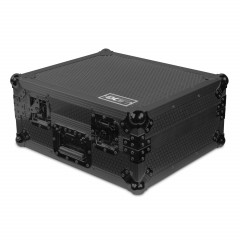
UDG Ultimate Flight Case Multi Format Turntable Silver not only transport your complete set up easily & securely, but also facilitates devices to be setup within minutes. With these premium features incoporated, the UDG Ultimate Flight cases provide premium professional quality in a very stylish modern black/ silver colored combination.
Fits: Technics SL-1200MK7, Reloop RP-8000MK2, Denon DJ VL12 Prime, Pioneer PLX-1000, Audio Technica LP120XUSB, or similar size turntables
Specification
Specification
EAN 8718969211734
Color Black/Silver
Weight 7,80 kg / 17.16 lbs
Outer Dimensions (W x H x D) 51.1 x 42.6 x 23 cm | 20.1 x 16.7 x 9.1 inch
Inner Dimensions (W x H x D) 45.1 x 38.6 x 7.8 cm | 17.7 x 15.2 x 3.1 inch
Material Heavy duty construction of 9 mm thick plywood
Protection Extra-wide silver solid aluminum profiles
Secure stacking due to stackable ball corners
Sturdy construction
Full padded interior keeps controller well-protected
High density diamond embossed EVA foam protective padding
Extra's Laminated in a black finish with a honeycomb/hexagonal "Stage Grip" pattern
Fits Technics SL-1200MK7, SL-1200GR, SL-1200GAE, SL-1210GR
Pioneer PLX-1000
Denon DJ VL12 Prime
Reloop RP-8000MK2, RP-7000MK2, RP-4000MK2, RP-2000MK2, RP-1000MK2
Stanton ST-150, STR8.150, T.52, T.55 USB, T.62, T.92 USB
Vestax PDX-3000
Numark TTX
Audio Technica LP120-USB, LP1240-USB, LP120XUSB, LP1240-USBXP, LP140XP, LP3, LP5, LP7, LPW40WN
American Audio Power Drive 2.2
Mixars LTA, STA
or similar size turntables
And accessories
It’s approximately been a year since Antoine lost what would have been his debut album, ironically dubbed ‘Humour. Positivity & Affection’. In its wake, stemmed the idea for the producer to reform his conceptually based project (Mise En Place) into a vinyl only label.
The Land Down Dunder EP being the first, of hopefully, many releases throughout this new imprint. The label head feels there is no better way to start this campaign, than with a body of work, entirely inspired by the modern, timeless TV Sitcom - The Office (US).
The opener ‘Australian Reds’ looks to bridge the gap between Progressive House and Antoine interpretation of Minimal. Matched with Ghanian inherited grooves of course.
‘Colombian Whites’ as suggested by its title, widens the eyes and warms the soul with its textbook, 90’s House inspired Kicks, Hi’s and Baseline. Synthy melodies run throughout the mid(s) of the track to marry the ensemble together. Fitting for all terrains, but would be highly favoured in the Summer.
The B-Side flips the script in tone, tempo and texture - pulling on Antoine’s repertoire for groove laden Techno - ‘Cafe Disco (AK’s Rare Groove Dub)’ brings you to the after hours of any setting with it’s full bodied percussive rhythms, beautifully automated soundscapes and highly persuasive swing. Lastly, the EP is capped off by ‘Threat Level Midnight’. A nod to Antoine’s versatility within the realms of House and Techno. An incredibly versatile track, structurally inspired by the producers love of Hip-Hop. A cacophony of ethereal chord progressions run throughout the track alongside one moody baseline, as well as solemn drum patterns which progress in both body-feel and stature.
Bread & Butter recordings welcomes spring with their long-stablished V.A series exclusively on vinyl. On this occassion the ammalgamation of artists comprises 4 exceptional producers, fusing together two of the most important electronic music cultures. To start off with the right foot, London-based artist Modebaku brings complex percussive patterns along groaning basslines and dreamy pads making a extravagant yet minimalistic expression. To complement the A side, Romanian Primarie keeps up with the energy, coming with a more euphoric approach distinguished by tense atmospheres and bright drums.
On the flip side, it’s another Romanian heavyweight Techu delivering an exquisite taste of contemporary electronic music. The track's warm melodies and futuristic synths combine into a deeply emotional expression. Finally, Ted Amber rounds up the record with a deep house vibe: more joyful, dubby and a contagious charm.
Once more, Bread & Butter Recordings is able to capture an innovative essence, blending different syles to make an epic EP.
Just mention 'Terrace' in a techno environment and soon someone else will shout "pioneer!" As Florence, Terrace and (half of) Acid Junkies, Brabant-based producer Stefan Robbers was at the flying centre of Dutch techno in the early 1990s.
Perks is Robbers' fifth EP for Delsin in a relatively short time. On the one hand, it contains his signature sound: melancholic melodies and complex drum patterns wrapped in outstanding production; on the other, Perks surprises on many fronts. For starters, the overall vibe is a lot more sombre, the chosen route much more experimental. Take 'Model A', a dreamy, 12 minute-long meandering epic that nods to the kraut-infused electronica of Tangerine Dream and Cluster but at the same time proudly carries the techno DNA. A fascinating return of a true pioneer.
- A1: Black & Yellow 05 25
- A2: Chrome Vulture 01 26
- A3: Abandon Ship! 03 44
- A4: Bodies For The Upper Class 03 39
- A5: Switch Tentacles 03 43
- B1: Monkey Knight 04 00
- B2: Turbolancer 02 49
- B3: Pulse 02 37
- B4: The Disappearance 02 24
- B5: Hype Machine 03 45
- B6: Atoris 03 32
- C1: Orakel Maschine 04 07
- C2: Nothing Is Written 3 42
- C3: Soil 04 16
- C4: Growing A Million In One Week 03 54
- C5: Tian 03 58
- D1: Echion 04 26
- D2: Up In A High Rise 04 19
- D3: Vanilla Cryonic 04 00
- D4: Bad Memory Overwrite 06 59
After two decades of releasing music on 12" vinyl under multiple pseudonyms the duo from Even Drones have completed their first LP.
The 20 track double vinyl carries the classic "album era" approach of the 60s and 70s into a modern contemporary work.
Each of the 4 sides of "Ethics" feels like the chapter of a story balanced into a synthesis of counterpoints from piece to piece. Twisted arrangements are stringed together with dance-able tracks and are woven into finespun transmutations of sounds. Sometimes peaceful and regulated, sometimes abstract and complemented with tamed feedback, noises, crackling and delightful patterns.
Like a continuous thread through all titles of the album, the multi instrumentalists somehow managed to harmonize a twisted array of methods and structures into a coherent listening experience.
This full feature-length metamorphosis with no boundaries of styles or genres is released just in time for the 10th anniversary of the band on Freund der Familie.
Fresh from DOTT’s “Puppy Luv EP” and Rudoh’s “Vinland In Space EP”, Jugaar Records is back and this time with a full-length, double-pack vinyl, and digital compilation bringing together friends from Asia and Europe. The record is testament to the healthy place the Asian electronic music landscape finds itself in and those intrepid producers who are willing to explore new scenes and sounds. It's energy-crew from the off - with UK beatmaker Joe Koshin’s “Astro Wax”, a techy electro work-out that conjures images of futuristic cityscapes and dense urban mazes. Up next, Pakistan-born and label co-boss Rudoh maintains the electro vibe with cut-up hip-hop vocals sprinkled on top of a pulsating bassline in his “KOF”. His records are being picked up by global tastemakers from Emerald to Roza Terenzi to DJ Masda. Don’t sleep!
Moving to the B-side, German-born, London mainstay Voigtmann shuffles and deals a steppy drum pattern and intricate synth-work, with a bassline drenched in that particular brand of funk to get the party going even at the most ungodly hour. Observatory resident Nic Ford closes this disk with an ambient excursion that summons spiritual rave voices from the deep laid atop a lilting synth loop. It’s typical of his ambient performances which have gained much notoriety in Vietnam of late.
Opening the second record is Egyptian gem Hassan Abou Alam whose recent outings on Naïve and Banoffee Pies have gained him much and well-deserved attention. Here, his “Gloom” combines twinkling IDM modes with heavy sub bass experiments primed to stop the most idiosyncratic dancefloors in their tracks. Up on C2, the Version, 3024 and Phonica Records graduate Yak adds breaks to the equation. His “Disk Full” brings together a haunting gated synth and razor-sharp beat programming to devastating effect. Melbourne based, Salt Mines Records honcho Shedbug concludes this side with his hopeful “A Lil Piece” whose soaring synth line will hit all the right emotional chords at all the right times.
On the final side Bangkokian Chalo reminds us why he is one of the masters of this increasingly fully formed scene. His Depth Charge is a muggy dub-laden, electro jam capable of rattling the weightiest sound systems in some of the most twisted raves at the end of some of the darkest Sois. The record is completed by New Delhi linchpin and Boxout.fm resident Monophonik, whose techno/electro “Tumbi” journeys out of the night into a euphoric sunrise moment that will be setting the dancefloors alight come festival season.
As the artwork on the EP depicts, "Darkest hour before dawn" is a dusky scenario representing the Dutch environment known as "the polder" in the lower lands. It questions all kinds of actions taken or not taken to protect, restore, conserve, innovate, or modestly leave the landscape to its own more murky outcome. The darkest hour, full of gloom, will be available around the spring equinox?
Portrait of tracks separately:
"Darkest Hour before dawn"
Is this piece supposed to be an ode to the ancient Dutch hardcore movement, that once and probably only then would be experienced to such intensity or is this still maybe just a little near reminder of it? Anyway starts this unlit track slowly and remains that way but maintains a fat-pumping pulse, possibly reminding of a soldier walking a death march. Settling up those launch pads further down the piece, near the bridge for shooting off some drum-fire 909 snares as if it rocketed. Then, suddenly, the extended delay of that snare turns into a psychedelic drone beside, attending to, or paranoidly chasing comrades soul in his journey throughout and above like a trustful partner?
Arp's LFO that is out of sync with the beat and is being outpaced by it seems to slow everything down even more; meantime creating a pulling, buggy-like effect to the due of all this.
The ascending and descending ghost-pad drawing into the grid of the (tone) key, thereafter parking in them for a while and cycling out again, creating a spatial flow of disturbance and anxiety.
Finishes it with a mountain-big reverberation of organized destruction and chaos. What at first sight seems like simply an innocent route appears to actually be a bit more complex one.
"Lovely memories"
The quite monotonous structure of Lovely memories catchy and groovy song is scanning through your brain files; revisiting, memorizing, and purposely lacking these few "dots above the I" that in some cases you'd gladly be feeling like to square fit it in yourself, of course, when necessary. Connecting the puzzling, dazzling flashbacks together to finally wrap up and perpetuate the pictured events for good, leaving traces of melancholy, loveliness, and perhaps even faith to it.
"24 hours"
Dinginess of 24 hours supposes to be felt in the guts.
The beat, steady with that snare on the 4 & 12, might not be one of the greatest inventions. However, the TR-08's drum line here lays a solid and fertile foundation for a reasonable house track.
Slightly detuned synths weave a scarf pattern around your upper body, and the lower layers carry a warm blanket for the underbelly, providing you with that cozy sense of consolation. Acidy pokes wring itself sneaky and penetrable around, slicing through the song's already solid flesh. Therefore, balancing its bitter sweetness throughout with these soft-hard saw-tooth drops of sourness.
"24 hours" conveys a dispatch or intercommunication that there is little time left to take actions/charge to fix and restore. Something big is about to come if it hasn't arrived already...
"At night"
This remarkable story is a bit out of ordinary.
At night appeared in the artist's dream just the night before his sick father was raised from death in the hospital and got just another year to live before actually passing away completely and anyway. ; ))
And thus also dedicated to the man.
A dancefloor killer A Side!
'Sawl' crispy bass waves create a dense acid feeling and sets the ground for 'Hibiscus' to impact with its futuristic electro patterns and aggressive sharp drums.
On the flip side 'Basilisk' runs fast, with glitchy fills and metallic percussions in an almost ethereal atmosphere.
'Innerchild' closes the record with a deep melodic journey modelled across euphoric sequences of notes, leaving a warm and wistful feeling...almost like coming back home.
Magnificent Wolof drum music, performed by an extended griot family over seven consecutive days, in the mystical setting of Lac Rose, outside Dakar.
Doudou Ndiaye Rose — who died in 2015 — is a key drummer in the musical history of the world. He developed a system of five hundred original drumming patterns, ancient and new. Amongst the modern rhythms here is Bench Mi — ‘under the Baobab tree,’ a spot where problems get solved. Also Hibar Yi — ‘passing on information’ — the theme-tune of Senegalese TV national news for decades — and Les Rosettes, the signature rhythm of Senegal’s first ever all-female percussion group, convened by Doudou, and named after his grandmother.
These original compositions sit alongside important traditional rhythms, familiar to every Sabar player, such as Farwu Jar (a courtship game sometimes resulting in a wedding), Ceebu Jin (also the name of the national dish of fish and rice), and Gumbé, often played after a successful harvest.
Recorded in joyful single takes, with no overdubs, mastered by Rashad Becker, the music is deep and thrilling, polyrhythmic to the bone, with a complex, pointillistic intensity at times evoking Jeff Mills in full flight.
In the fight against Alzheimer’s, epilepsy, schizophrenia and other diseases characterized by an imbalance in neuronal activity, there are chemical weapons, such as those that try to prevent the protein fragments known as beta-amyloid plaques from developing in the
cerebral cortex , and physical, such as electrical stimulation that allow to restore the functionality of brain cells. This last resort, which has already been shown to be effective in modifying the activity of the cerebral cortex, is today a weapon of general intervention.
Converting it to precision requires the development of individualized and predictive brain models that allow identifying where and how much to stimulate each patient. To achieve this, an international European team is working on the creation of virtual replicas of the
most unknown organ in the body: the Neurotwin project.
According to recent research, the decrease in power in the neuronal oscillations of the gamma band of the cerebral cortex (a pattern whose frequency ranges between 20 and 50 Hertz) favors the development of protein fragments related to Alzheimer’s.
Transcranial application of weak electrical currents has proven to be an effective and painless way to modulate brain activity without side effects.
The objective is to create complete computational models of the brain with real data of living beings (human patients) and that allow to anticipate and specify the effects of noninvasive stimulation techniques on neurological mechanisms.
“Never turn your back on a friend.”
Alfred Hitchcock
Mastering – Eternal Midnight Mastering Studio
Cover Art – Nitasha Singh Brett
Visuals - Dietriamgle, Espii Studios, Irene Avellanal
2025 Repress
On his fourth album proper, Now Here No Where, Danish producer Kölsch (aka Rune Reilly Kölsch) is charting new terrain. Fans of his ‘years trilogy’ – 1977, 1983 and 1989, released on Kompakt over the past decade – were privy to a kind of sonic diary, an autobiography, tracking the artist’s early years through three albums of superior, meticulously rendered techno. Calling in collaborators where needed – most notably, the strings of Gregor Schwellenbach – there was still something deeply personal going down, not quite hermetic, but internally focused; the albums proved not only Kölsch’s mastery of his chosen form, but also his capacity to make techno personal, individual, and to trace histories of the self through music. But on Now Here No Where, Kölsch finds his feet firmly planted in the present. Reflecting on his new album, he notes, “It is fascinating to write about memories and feelings that have had years to manifest and develop, but how would I approach current emotions?” It’s a good question: our past coheres through the narratives we build around memories, but the moment we’re in, the newness of the now-ness, is harder to navigate; this story is as yet untold. For Kölsch, this makes Nowhere Now Here “an album about life in the year 2020. A time defined by confusion, misinformation and environmental challenges. It is an emotional interpretation of personal and mental challenges, observations and personal growth.” Kölsch does this with music that effortlessly balances emotional heft with the dancefloor’s brimming desires. It’s a space that Kölsch has navigated for a while now – one of techno’s breakthrough acts, an in-demand DJ across the globe and a prolific and restlessly creative producer, he’s also Kompakt’s biggest-selling act – but Now Here No Where ratchets up the lushness, making for a delirious drift across twelve tracks that are at once perfectly poised and deeply trippy. “Great Escape” is an elegant swoon, an opener that pivots on a sigh and a prayer; then “Shoulder Of Giants” bustles into view, subliminal clatter and an aching violin line giving way to a riff that glows with fluorescence and iridescence. “Remind You” combines an odd ECM jazziness with notes from a twenty-first century torch song; “Sleeper Must Awaken” mines huge buzzing synths and lets them float, in and out of sync, with reduced, ticking beats; “Traumfabrik” (dream factory – there’s a giveaway) is oddly lush, the tones malleable and plastic, morphing across a glitching undertow. There are sad, emotional washes of strings throughout the penultimate “While Waiting For Something To Care About”, while “Romtech User Manual”’s patterns twist and shape in the light. Throughout, Kölsch never keeps his eye off the dancefloor, and you can tell this is his still his home. “The amount of energy and joy I experience every time I perform, has a profound effect on me. It has inspired me so much of late and has become an integral part of my musicality.” “The way we join in expressing our hope for the future every weekend has given me so much,” Kölsch concludes. The club as a temporary autonomous zone, as a space both of freedom and of politics; somehow, that’s all here, Now Here No Where. “Most of all, it is an album about hope.”
Auf seinem vierten Album “Now Here No Where” betritt der dänische Produzent Kölsch (alias Rune Reilly Kölsch) neues Terrain. Seine Trilogie mit den Jahreszahlen 1977, 1983 und 1989, die in den letzten zehn Jahren bei Kompakt erschienen war, hatte seine Fans durch eine Art akustisches Tagebuch, eine Autobiografie geführt, die die frühen Jahre des Künstlers über die Länge von drei großartig produzierten Techno-Alben nachgezeichnet hatte. Wo es nötig war, wurden Kollaborateure hinzugezogen - allen voran für die Streicher, arrangiert von Gregor Schwellenbach -, dennoch zeichnete die Musik immer auch etwas zutiefst Persönliches aus, etwas nicht Hermetisches, auf eine bestimmte Art immer auch nach Innen fokussiert. Die Alben bewiesen nicht nur, wie sehr Kölsch die von ihm gewählte äußere Form beherrscht, sondern auch seine Fähigkeit, Techno zu etwas Persönlichem und Individuellem zu machen und der eigene Geschichte durch Musik näher zu kommen.
Auf “Now Here No Where” steht Kölsch nun mit beiden Beinen fest auf dem Boden der Gegenwart. Mit Blick auf sein neues Album stellt er fest: "Es ist faszinierend, über Erinnerungen und Gefühle zu schreiben, die Zeit hatten, sich zu manifestieren und zu entwickeln, aber wie nähere ich mich meinen aktuellen Emotionen?”. Eine gute Frage: Unsere Vergangenheit wird im Innersten zusammengehalten durch Geschichten, die aus Erinnerungen entstehen, aber der Moment, in dem wir uns befinden, die Neuheit des Neuen, ist schwieriger zu beschreiben; die Geschichte ist noch nicht erzählt. Für Kölsch ist “No Here Now Where” daher "ein Album über das Leben im Jahr 2020. Eine Zeit, die von Verwirrung, Desinformation und ökologischen Herausforderungen geprägt ist. Es geht dabei um die emotionale Interpretation von persönlichen und mentalen Herausforderungen, von Beobachtungen und der eigenen, individuellen Weiterentwicklung".
Kölsch tut dies mit Musik, die mühelos kleine Gefühlsausbrüche mit den großen Sehnsüchten der Tanzfläche in Einklang bringt. Es ist dieser Zwischenraum, in dem sich Kölsch schon seit einiger Zeit bewegt, als weltweit gefragter und gefeierter Live Act, DJ und so unermüdlicher wie kreativer Produzent (nicht umsonst ist Kölsch der “biggest-selling-artist” bei Kompakt), doch “Now Here No Where” treibt all das noch weiter auf die Spitze: ein enormer Sog entsteht, der uns über zwölf Tracks hinweg gefangen hält wie ein perfekt ausbalancierter Trip. Der Opener "Great Escape" ist pure Eleganz, ein Track, der irgendwo zwischen Seufzer und Gebet hin und her schwankt; dann drängt "Shoulder Of Giants" ins Blickfeld, ein unterschwelliges Geklapper, eine wehende Geige, schließlich ein schillernder Riff, der in der Dunkelheit zu leuchten und zu glühen scheint.
"Remind You" kombiniert seltsamen ECM-Jazz mit einem sentimentalen Liebeslied des 21. Jahrhunderts; "Sleeper Must Awaken" schürft im Bergwerk riesiger Synthesizer, mal im Takt, mal aus dem Takt ticken die minimalen Beats; "Traumfabrik" ist ungewöhnlich “lush”, die einzelnen Töne, geschmeidig und modelliert, zerfließen in einem glitzernden Abgrund. Das vorletzte Stück "While Waiting For Something To Care About" wird von traurigen, emotionalen Strings untermalt, während sich die Strukturen von "Romtech User Manual" im Licht drehen und immer wieder neu formieren. Die ganze Zeit über behält Kölsch die Tanzfläche im Auge, und man merkt ihm an, dass sie immer noch sein Zuhause ist: "Die Menge an Energie und Freude, die ich bei jedem Auftritt erlebe, hat eine tiefe Wirkung auf mich. Sie hat mich gerade in letzter Zeit stark inspiriert und ist zu einem integralen Bestandteil meiner Musik geworden.”
"Die Art und Weise, wie wir an jedem Wochenende gemeinsam unsere Hoffnung auf eine bessere Zukunft zum Ausdruck bringen, hat mir viel gegeben", so Kölsch abschließend. Die Vision des Clubs als eine temporäre autonome Zone, als ein Raum von großer Freiheit aber auch von politischen Ideen, das ist irgendwie alles hier drin, Now Here No Where. "Es ist vor allem ein Album über Hoffnung."
Meticulously assembled from a good 15 years' worth of source material, Cong Burn boss John Howes' second Paperclip Minimiser transmission proliferates its predecessor's network of turn-of-the-millennium aesthetics and concepts, bringing us closer to the lost future promised by the mid-digital age. If the debut album rooted itself in 2006, using an era-specific rig to activate its vintage Winamp-ready sound, 'II' pushes the clock forward just a little, recycling an unreleased album that Howes engineered in various locations across the north of England, starting way back in 2011. Working quickly and methodically with his homebrewed "DIY DAW" system, Howes improvised live using the record's bank of sounds, transforming the skittering bio-electronic rhythms, bitcrushed modem whines and inclement Lancs soundscapes into a suite of sleek, bass heavy steppers.
Howes has refined his setup and process over the years to function as an antithesis of contemporary production logic, a system that he can use easily to retreat from the excessive layering, overdubbing and editing that plagues modern electronic music. With only limited separate channels in each track, 'II' sounds both archaic and strangely novel. Showing respect to the early days of techno, when stone-cold classics were jammed out live using just a drum machine, a sampler and a couple of synths, Howes simultaneously acknowledges the promise of the transition to a digital future, as nascent algorithmic technology began to rehydrate stale rhythmic and melodic patterns. Fabricating its wrinkled cyberpunk landscape from shovelware blips and whines, spacious environmental echoes and lustrous, plasticky FM hits, 'II' is dense but never congested. It's a reminder that bass music thrives when it's given the room it needs to breathe.
B. Chamber (Stratum A), by B. Close, is the first full length solo release by Los Angeles-based multi-disciplinary artist Brian Close. The first of two volumes assembled from some thirteen hours of music produced by Close while residing in Connecticut from 2021-2025, B. Chamber (Stratum A) offers a vivid, fractal afterimage of a prolific, specific time and space in the artist’s oeuvre.
After leaving New York City early in the pandemic to a farmhouse in the countryside with dedicated spaces for multiple sound stations, Close developed an intensive daily practice of melding with the machines. The vast, pastoral backdrop of rural CT provided inspiration and contrast for his ongoing investigations into dynamic, poly-rhythmic electronic music. The sounds on B. Chamber (Stratum A) range from the machine-modeling of acoustic instruments and natural environments to the utterly unhuman, spinning on the axis between crystalline, pointillist precision and shifty blown-cone distortion. Close’s atypical interpretations of rhythm, noise and other undefined musics land in a hybrid zone of their own.
Throughout B. Chamber (Stratum A), Close’s productions are in perpetual motion. Foxtrot’s shifting hi-hats and disembodied voices rise like cicadas propelled by glitching machines and tangled rhythms, Many Drive draws momentum from dubby stabs and twinkling atmospherics. Character Community’s nimble, drifting snares and erratic static are uplifted by swelling synths, and Mpan’s modular mining forgoes drums but is no less propulsive for it. Acre Voices’ seasick pads and deft drum patterns tap an energizing nerve, and closer 5D Bow’s ambush of pummeling machine gun fire spirals into the tryptamine palace and emerges completely rinsed and refreshed.
Equally powerful in the club as in the outdoors, in the headphones eyes closed or on the move, B. Chamber (Stratum A) grants an immersive temporary trip on B. Close’s unique wavelength, with Stratum B to complete the picture in the summer of 2026.
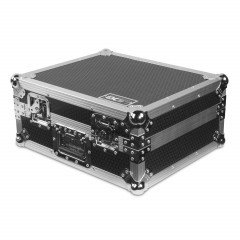
RIYL - Mark Fell, muay thai, Vladislav Delay, gaming, Errorsmith, modular synthesizer.
+++++
Brian Close (b. 1979, NYC) uses the cold logic of mathematics to trigger states of total sensory displacement. Close co-founded multiple AV studios to explore the "hypnotic"—a ritualistic practice of motional-graphism and improvisational sound. His work is a study in synesthesia and the architecture of trance, using geometric precision to dissolve the sense of time. It is a digital-visceral experience built on heavy logic, designed for large-scale immersion and timelessness.
Close is one half of Georgia who have released records on Palto Flats, Firecracker Recordings, Meakusma, Youth, OOH-Sounds and EM Records, and have a long-running residency on NTS.
B. Chamber was written, produced and mixed by Brian Close.
Mastered by Rashad Becker.
Artwork by Brian Close.
With this new remix EP, The Lovers explore different shades of disco and house through a carefully balanced and personal approach.
The opening track sets the tone with a playful and hypnotic groove, built around arpeggiated patterns and a steady modern rhythm. A female spoken vocal, instantly recognizable from Italian television culture of the 1980s, takes center stage, while a smooth saxophone line adds a sensual, cinematic layer.
The second cut moves into deeper emotional territory. Beginning with a restrained atmosphere, the track slowly builds tension through a rebuilt bassline and a solid house pulse, eventually opening into a more expansive and powerful moment on the floor.
A warmer disco-driven piece follows, focused on groove and feeling. The original spirit is preserved, while a heavier low end gives the track new confidence and presence within a contemporary club setting.
The EP closes with an elegant house reinterpretation inspired by French pop sensibility. A melancholic melodic theme and subtle references to tango shape the final moments, blending emotion and rhythm with a refined sense of flow.
A concise collection of remixes for selectors drawn to groove, memory and understated elegance.
To decay is also to transform. Rusting metal is the visible traces of passing time, as the oxidation process accumulates dampness in our atmosphere and imprints it as unpredictable patterns onto hard iron and steel. Working in construction for a year now, Kensho Nakamura sees rust all the time, clambering up ageing chunks of material. Normally discarded as waste, Nakamura began discerning beauty in the phenomenon, organically spiralling around and consuming some of the very hardest of manufacturing stuffs into unique new forms.
‘Electric Rust’ continues the conceptual electronic composition mode of Nakamura’s previous works with a series of fractured musical dioramas. These scurrying notes, sparse hums, and quivering bleeps explore the topics of rust and the accumulation of time. The music ticks like a clock, drips like a tap, and manifests unknowable inorganic shapes. Recognisable musical snippets of bells, pianos, or murmured voices are buried inside counterintuitive synthetic rhythms and tension.
On ‘wet air’ piano notes tinkle and pipes gargle, digital detritus tap dances and arpeggios stumble. On ‘unique faces’, idle marimbas and malfunctioning animalistic squeaks flounder. This is music from the promethean space between being forgotten and being conceived. ‘Electric Rust’ is a topography of a world of rust, where corroding structures evolve into new — and beautiful — patterns of life.
2024 repress
In February 2021, Jan Jelinek's seminal album "Loop-Finding-Jazz-Records" turned 20. The anniversary repress, a double LP with two bonus tracks (B-sides from the Tendency EP, 2000), is a little late to the party.
What the press said about Loop-Finding-Jazz-Records:
“Don’t be misled by the title, though for there isn’t a finger-snapping rhythm c bebop lead anywhere on the album. Instead, Jelinek chooses to explore the visual effect moiré - two shifting patterns creating an implied third dimension - in the audio realm.” (Alternative Press)
“The title acts as explanation for the studio technique that provided the basis for this album, snippets of other people’s arrangements deconstructed through a sampler into loops and then splashed onto an audio canvas.” (ATM)
“Jelinek’s sound evolved out of his dislike for (and inability to play) keyboards.” (RPM)
“Jelinek has abstracted his sources beyond recognition, looping his millisecond samples into flickering patterns of sonic moiré laid atop a dub Techno framework. (...) Jelinek might as well have sampled a horn player’s hissing intake of breath – it would have been ‘jazz’ enough for his purposes.“ (The Wire)
“It’s a perfect inversion of conventional music, a sonic negative. Everything that would typically be foreground is moved back or pushed off the screen altogether, and the flecks of sonic debris that would normally be covered by other sounds are left to carry the melody and rhythm.” (Pitchfork)
“All you need to know is that these onomatopoeic non-specific songs (...) are warm, paradisical creations”. (NME)
“Listen carefully and you’ll hear textures slowly unfolding and mutating. Presuming you’ve not fallen asleep of course.” (iDJ)
“At times, it’s all a bit dripping tap Japanese water torture; so sedentary it drowns in its own motionlessness” (DJ)
“Loop Finding Jazz Records' is a genuine modern classic whose re-release is anything but a cynical mortgage repayment exercise. Consider this a second chance, then pretend you had it all along.” (Boomkat)
PS:
“I’ve been fortunate enough to see Jan Jelinek live once, at Tonic NYC (...). Wearing a black and white striped shirt, he looked like a nihilistic Charlie Brown.” (beachsloth)
'In 2023, sound artist and composer Weston Olencki toured across the American South. Beginning in their hometown in South Carolina, they snaked a circuitous path from the mountains of West Virginia to the banks of the Mississippi River. As the miles accumulated, so did the initial seeds of new work.
'Instruments and artifacts they acquired hitched a ride in the backseat, while songs and sounds filled their portable recorder: water in its various states, the familiar insectoid buzz of those summer nights, trains cutting through the landscape, the traditional music that lived alongside the communities that kept it. Olencki took it all in, and over time, found ways that these experiences coalesced into a bramble-like perspective of time, where past, present, and future intersect in ways both barbed and beautiful.
'Broadsides, Olencki’s newest solo full-length is the multilayered result of this journey. The album follows their landmark release Old Time Music from 2022, which presented radical interpretations of traditional tunes from Appalachia and throughout the South alongside original compositions that drew significantly on archival recordings. On Broadsides, Olencki rejects delineations between the unmoored avant-garde and the rootedness of one’s cultural heritage, revealing their porous and intertwined nature. “My mother was a quilter. Her mother before that,” they write in the album’s liner notes. “Quilting, like music, is a practice of embedding knowledge and remembrance into the very core of the thing you are making. It’s not just about the materials, but how they’re reassembled, recontextualized, stitched, woven to form new patterns - the minutiae of craft holding significance to those looking to find it. Stories woven from stories, never told the same way twice.”
'Like all great road trips, Broadsides unfolds slowly and continuously, with moments of dramatic reverie punctuating the endless melt of highway in the rearview. We’re immediately confronted by the uncanniness of revisiting old haunts, as Southern storms break through the initial churn of the freight locomotives of Alabama. Olencki’s interpretation of the bluegrass standard “Foggy Mountain Breakdown” captures the euphoria of melancholy in motion. The permutational plucks of banjo are bounced around the frame by a computer, its pitches determined within algorithmic sequences and transcriptions of classic three-finger licks. The tonalities of old-time are smeared and stretched until all that’s audible is the insistence that Heaven might be real.
'In the album’s second half, “Omie Wise,” a murder ballad made famous by Doc Watson, follows an interlude recorded on the river in North Carolina in which the titular character’s body was laid. Ghostly echoes of a dozen other renditions float through the substrata as Tongue Depressor’s Henry Birdsey accompanies them on the pedal steel guitar. The album’s central composition, “all my father’s clocks,” is a profound meditation on entropy and impermanence. The sound of their father’s extensive clock collection ticks away as Olencki pulls a bow across the length of an autoharp sourced from a rural strip mall. The instrument was left as detuned as it was found, the resonance of its deep bass drone and clanging high-end the result of years of neglect and the warping effects of Southern humidity.
'Historically, broadsides were an early form of broadcasting, an often- musicalized telling of current news pasted in the public square. The name was later taken up by Sis Cunningham and Gordon Friesen in the 1960s, whose Broadside magazine published songs and social commentary when American folk music resurfaced as an urgent way of communicating the multifaceted politics of its time.
'Olencki borrows the phrase to recall both this old form of songmaking and that later prominent reexamination of traditional music’s role in modern life, but also to draw attention to the fragmented and machine- mediated way heritage is diffused in this very different, but no less pivotal, moment.
'As a sanitized past is used as justification for current violence and domination, we can turn to these artifacts to better understand the history of ourselves, but only if they are consciously pushed to evolve. Broadsides represents one personal, striking vision of what far-flung futurisms could be respun from = these high, lonesome sounds: a reflection of the unbridled joy and deep sorrow inherent to living together through time, and a desire to push further into the untold and unknown.'
»Hug of Gravity« is the second solo album by Raphael Loher and his first for Hallow Ground. The Swiss pianist and composer uses piano preparations, tape machines, and digital means to forge an aesthetic of playful reduction and rhythmic abstraction. The source material for these four sprawling pieces was culled from recordings of the artist performing the album’s predecessor, 2022’s »Keemuun.« Loher used them in a painstaking two-part working process to create an album that is both a product of and an ode to transformation, exploring themes of alternative temporalities and spatialities. »Hug of Gravity« oscillates between experimental electronic music, ambient, and minimal music and calls to mind the work of artists like William Basinski, Linda Catlin Smith, or label mate Andrius Arutiunian.
Loher laid the foundation for »Hug of Gravity« in 2020 with ten solo performances at his studio, during which he presented the pieces from his debut album. For these intimate concerts, he prepared the piano with modelling clay in order to move beyond the well-tempered tuning that dominates most of Western music. He then used a consecutive three-month residency in the Blenio Valley to refine the recordings. »I cut up and rearranged the material, then transferred the results—around 30 pieces—to a varispeed tape machine and then back to the computer. After that was done, I cut them up and rearranged them again,« he laughs. By radically reworking the material, he created an album that eschews traditional notions of time and space.
Loher points out the influence that his surroundings had on him. »The process created the music—and the place was essential to the process.« he says. He wandered through the mountains for up to nine or ten hours a day, which gave him a sense of what he calls expanded temporality. »Time just felt longer, my experiences seemed more diverse and nuanced, and it was as if I perceived my environment more clearly,« he explains. This shift in Loher’s perception of time and space—the latter also expressed in the album’s title—influenced his work with the varispeed tape machine. It allowed him to change the pitch of different recordings while layering them to let interference patterns emerge and emphasise the emotional qualities of the unconventional tunings he had used.
In this way, Loher constructed numerous interlocking narrative arcs throughout »Hug of Gravity,« an album that is ever-changing; an exercise in calm ecstasy that provides its audience with the feeling of being removed from conventional time and space. This approach is also reflected in the artwork for »Hug of Gravity,« which is based on drawings Loher made during his residency at Blenio Valley. Their fine hand-drawn lines run in parallel and let incidental patterns emerge, an effect that is only multiplied when the six different drawings that accompany each vinyl copy of the album are overlapping, forming ever-new visual constellations.
Editions Mego presents The Psychologist, the sophomore album by the Istanbul born and raised, Berlin based electronic music composer and sound artist Hüma Utku.
As the title suggests, The Psychologist, is a series of sonic essays based around themes of psychological phenomena and can be read as a musical enquiry into the human condition. With Utku’s background as a graduate of Psychology and her current practice as a conceptual music composer we see the two main threads in her professional career intertwine on this unique and ambitious release.
Including recordings of Buchla 200 from Utku’s Elektronmusikstudion residency in October 2020,The Psychologist is a genre aversive work that embodies elements of synthesiser music, electroacoustic, experimental techno, industrial, modern composition and spoken word. Piano, string compositions and vocals hold weight throughout a number of pieces providing a dramatic acoustic edge to the psychological explorations contained within.
The foreboding mood of much of this release is the product of investigation that lends the unsettling theme of anticipatory grief to the mood of the tracks Light of All Lights and Continuing Bonds. Islands of Consciousness refers to Jungian metaphor for consciousness whilst the unnerving Rüya twists around dream analysis in Gestalt psychology. Fuel For The Flames proceeds as a buzzing and swirling representation of alchemy and psychological symbolism. Dissolution of I is haunted by a strange sensation of dissociation whilst defense mechanisms support the sublime Sublimation. The bright shapes of Chironian Wound represent archetypes and analytical psychology whilst the fried soundscapes and rhythms of Ataxia encapture neurological states.
The results unravel with both the clockwork rhythms of the human body and the unpredictable nature of the psyche, the pieces follow arrhythmic patterns in a harmonious way. It tells the raw and intimate story of the human experience with a new work whereby the predictable operates in parallel with the unexpected and like human experience itself, is dark and complex.
Composed, Written & Produced by Hüma Utku
Piano by Hüma Utku
Vocals by Hüma Utku
Double Bass performed by Adam Pultz Melbye
Cello performed by Florina Speth (aka Schloss Mirabell)
Violin performed by Marta Forsberg
Cover photography & art by Gözde Güngör
Design by Eloise Leigh
Sam Bhok releases his debut album, Sloom. Influenced by experimental club sounds as well as the filmic emotion of post-rock and film scores, Sloom resists minimalism in favour of dense, interlocking layers. Euphoric synth textures and fractured drum patterns drive the record, pairing club energy with reflective undercurrents as hardware synths and drum machines are set against caustically digital, hyper-modern sounds.
Known for his behind-the-scenes work with Gilles Peterson, most notably as an integral part of the Worldwide FM team, Sloom represents Sam stepping into focus as a skilled producer of forward thinking electronic music. Written between 2020 and 2025, the record is a statement of identity and a creative shift away from the world of the selector, and towards something more personal and expansive.
Mastered and cut by legendary engineer Beau Thomas on eco-mix marbled vinyl, Sam Bhok draws from analogue and modular synthesis, processed and twisted into restless forms that reflect the unease of the digital age. Sloom is charged with anxieties about technology, capitalism, culture, and climate, delivered both through introspective, IDM-informed tracks and moments of dancefloor catharsis.
Lisbon-based duo Garoa—formed by Brazilian musicians Raphael Soares (drums, percussion) and Henrique Dias (piano, synthesizer, guitar, percussion)—craft an evocative soundscape that merges Afro-Brazilian rhythms with ambient textures. Their latest release, recorded in May 2024 at Estúdio Fetra, presents a free-flowing exploration where harmonies and rhythms unfold organically, avoiding rigid structures and embracing improvisation full time.
The album’s compositions are anchored by the interplay between Soares’ fluid percussion and Dias’ expansive harmonic approach. Tracks like “A Sandália Quadrada de Lampião” and “Xaxado de Chicago” weave percussive patterns reminiscent of Brazil’s Nordeste, blending them seamlessly with atmospheric synthesizers. “Baião de 2” and “Farofa e Cachaça” carry the unmistakable swing of Brazilian traditional forms, reinterpreted through Garoa’s lens of modernity and free flowing spontaneity.
Produced and mixed by Kellzo, the album captures the spirit of a collaboration that thrives on fluidity and openness. Garoa doesn’t aim for definitive statements; instead, they invite the listener into an evolving sonic landscape, where tradition and experimentation walk hand in hand.
- 1: Workaround One
- 2: Workaround Two
- 3: Workaround Three
- 4: Workaround Four
- 5: Workaround Five
- 6: Clouds Strum
- 7: Workaround Six
- 8: Workaround Seven
- 9: Workaround Eight
- 10: Workaround Nine
- 11: Square Fifths
- 12: Workaround Bass
- 13: Pause
- 14: Workaround Ten
‘Workaround’ is the lucidly playful and ambitious solo debut album by rhythm-obsessive musician and DJ, Beatrice Dillon for PAN. It combines her love of UK club music’s syncopated suss and Afro-Caribbean influences with a gamely experimental approach to modern composition and stylistic fusion, using inventive sampling and luminous mixing techniques adapted from modern pop to express fresh ideas about groove-driven music and perpetuate its form with timeless, future-proofed clarity. Recorded over 2017-19 between studios in London, Berlin and New York, ‘Workaround’ renders a hypnotic series of polymetric permutations at a fixed 150bpm tempo.
Mixing meticulous FM synthesis and harmonics with crisply edited acoustic samples from a wide range of guests including UK Bhangra pioneer Kuljit Bhamra (tabla); Pharoah Sanders Band’s Jonny Lam (pedal steel guitar); techno innovators Laurel Halo (synth/vocal) and Batu (samples); Senegalese Griot Kadialy Kouyaté (Kora), Hemlock’s Untold and new music specialist Lucy Railton (cello); amongst others, Dillon deftly absorbs their distinct instrumental colours and melody into 14 bright and spacious computerised frameworks that suggest immersive, nuanced options for dancers, DJs and domestic play. ‘Workaround’ evolves Dillon’s notions in a coolly unfolding manner that speaks directly to the album’s literary and visual inspirations, ranging from James P. Carse’s book ‘Finite And Infinite Games’ to the abstract drawings of Tomma Abts or Jorinde Voigt as well as painter Bridget Riley’s essays on grids and colour. Operating inside this rooted but mutable theoretical wireframe, Dillon’s ideas come to life as interrelated, efficient patterns in a self-sufficient system.
With a naturally fractal-not-fractional logic, Dillon’s rhythms unfold between unresolved 5/4 tresillo patterns, complex tabla strokes and spark-jumping tics in a fluid, tactile dance of dynamic contrasts between strong/light, sudden/restrained, and bound/free made in reference to the notational instructions of choreographer Rudolf Laban. Working in and around the beat and philosophy, the album’s freehand physics contract and expand between the lissom rolls of Bhamra’s tabla in the first, to a harmonious balance of hard drum angles and swooping FM synth cadence featuring additional synth and vocal from Laurel Halo in ‘Workaround Two’, while the extruded strings of Lucy Railton create a sublime tension at the album’s palatecleansing denouement, triggering a scintillating run of technoid pieces that riff on the kind of swung physics found in Artwork’s seminal ‘Basic G’, or Rian Treanor’s disruptive flux with a singularly tight yet loose motion and infectious joy. Crucially, the album sees Dillon focus on dub music’s pliable emptiness, rather than the moody dematerialisation of reverb and echo. The substance of her music is rematerialised in supple, concise emotional curves
and soberly freed to enact its ideas in balletic plies, rugged parries and sweeping, capoeira-like floor action. Applying deeply canny insight drawn from her years of practice as sound designer, musician and hugely knowledgable/intuitive DJ, ‘Workaround’ can be heard as Dillon’s ingenious solution or key to unlocking to perceptions of stiffness, darkness or grid-locked rigidity in electronic music. And as such it speaks to an ideal of rhythm-based and experimental music ranging from the hypnotic senegalese mbalax of Mark Ernestus’ Ndagga Rhythm Force, through SND and, more currently, the hard drum torque of DJ Plead; to adroitly exert the sensation of weightlessness and freedom in the dance and personal headspace.
The inimitable Richard Youngs returns to Black Truffle with this third full-length for the label, Hidden. Like CXXI and Modern Sorrow, Hidden unfolds across two side-long pieces at once eminently listenable and possessed of the ‘bloody-minded’ dedication to ‘having an idea and sticking with it’ that Youngs himself has identified as one of the key qualities of his work.
At the core of both pieces are rapid, randomised arpeggios generated with a Moog Grandmother, hypnotic patterns that wouldn’t be out of place on a Berlin School classic. Alongside these arpeggios, across the seventeen minutes of the first side-long piece Youngs builds an airy structure of shakers, synthetic handclaps and a brief, repeated sample, impossible to identify but sounding like a glitched foghorn. Over the top we hear his unmistakable voice, repeating single syllables—Ha, Ho—with a slow delay, something like a lonely one-man-band take on Anthony Moore’s Pieces from the Cloudland Ballroom or a more musical elaboration of the hypnotically overlapping delayed phonemes of Anton Bruhin’s Rotomotor. Like much of Youngs' work, the arrangement of sounds is sparse, each layer punctuated by spaces that allow others to shine through, in a way that seems to have more to do with dub or early hip-hop than high-brow models of musical reductionism.
On the flipside, the arpeggios return, now accompanied by ringing, filtered guitar chords and long flute tones. The use of a similar ground layer across the two pieces with strikingly different overdubs calls up Youngs' first solo record, the classic Advent, reminding us of how consistent ‘theme and variations’ is as an approach in his enormous body of work. Joined by handclaps and a chiming sound, the piece almost feels like it is about to achieve dance-floor lift-off at times, only for the percussion to disappear and leave the listener once again floating among the guitar and flute, now joined by occasional cut-off vocal snippets, like a radio turned quickly on and off. The suspension of these disparate elements over the steady foundation of the Moog arpeggios might remind some listeners of the free-form studio explorations of Moebius & Plank and Holger Czukay or even give a nod to Youngs’ formative encounter with Cabaret Voltaire.
Like some of Youngs’ much-loved work with Simon Wickham-Smith, Hidden approaches relatively familiar sounds and instruments from skewed angles, delighting in loose structures of interaction that border on gleeful incoherence while remaining outwardly beautiful. Coming up to almost four decades of persistent activity, like little else in contemporary music Youngs’ work beams with the simple joys of exploration and experiment.
- 1: Stormdrummer
- 2: The Caveman
- 3: Changes
- 4: Limbo
- 5: Black Flames
- 6: Starrus
- 7: Take Me To The Stars
- 8: Morning Epitaph
- 9: Night Lights
France's most unique fire-driven hard psych duo return with their sophomore masterpiece. Written between 2022 and 2024, "DEUX" marks a bold evolution in Moundrag's sound - nine meticulously crafted tracks that balance raw power with intricate storytelling, creating their most ambitious work yet. What makes Moundrag special: Two brothers. No guitars. Just vintage organ, thunderous drums, and hypnotic call-and-response vocals that forge epic soundscapes. Drawing from Deep Purple, King Crimson, and Emerson Lake & Palmer while channeling modern acts like Motorpsycho, they've created something fiercely contemporary. From the hard-hitting assault of "Stormdrummer" to the psychedelic crescendos of "Take Me To The Stars," DEUX is both a nostalgic nod to 70s prog and a modern manifesto. The album blends dystopian fantasy, sci-fi, and Celtic myth into a cry against old patterns - an invitation to reshape a freer world. Featuring stunning cover art by contemporary Polish artist Justyna Kozikzak - a surrealist interpretation of Dante's journey through hell. Co-released with our friends Spinda Records
For his last solo record ‘Through a Room’, Bill Nace shifted his usual saturated guitar sound and added tapes, hurdy gurdy, doughnut pipe, bird calls and the mysterious Japanese taishōgoto. Setting up for the final night of his three day residency at OTO with only the taishōgoto soundchecked, Nace hoped that Parker would arrive with his small soprano as its opposite. “I’ve been interested in state change, you know, playing until there’s a shift in time.” Known for his development of multiphonics to produce a constantly shifting pattern, Evan Parker has evolved an instantly recognizable sound - his work the soprano most distinct. Happily, it was the soprano Evan brought with him and as soon as the two start to play they entwine - taking off in a double helix of keys and reed primed for endless reconfiguration. Space warps under the velocity of playing, the pitch rising unrelentingly. It felt like unending lift off in the room, sheer energy until the last note makes remember your feet have been on the floor the whole time. Total time bending shredding.
–
"They had never played together before. They had never even met each other before this springtime 2024 concert at London’s Café Oto.
Evan Parker, circular breathing maestro of the saxophone, a legend in the universe that is Free Improvisation since the late 1960s and Bill Nace, one of the most intriguing experimental “noise” guitarists of the 1990s/2000s underground scene.
For those of us who have been enamored by the live and documented work of both these gents, this Café Oto duo was a must-hear event. It could have gone anywhere musically and that would have been totally fine. Particularly with Evan having a history of being thrown into a variety of challenging collaborations throughout his career, employing the learned elegance of trust in his own sensitivity to listening, responding, leading, following, sparring, intertwining, dialoguing, creating in the instant and, essentially, dignifying the non-hierarchical grace of chance.
The aesthetics of socialist consideration in Evan Parker’s playing, in his community of expanded and personal technique, for a younger player such as Bill Nace, strikes an exemplary model. This notion of respect would be entirely the reason Nace, when offered a residency at the most critical “new music” room in England, would request to play in duo with Parker.
Bill Nace came to prominence mostly during the apex of experimental music activity in and around Western Massachusetts in the early days of the aughts, with a focus on visual art and free improvisation guitar action. He could be found in the daytime hours, his head hanging down over a notepad, penning fine-tuned illustrations and abstract line drawings, while in the evenings he’d be attending any number of basement noise gigs, many of which he’d be participating in. His guitar style came across as being informed as much as by the physicality of his writing utensils in friction to the page as it was to his hearing and redefining of radical recordings ranging anywhere from the Black Unity Group to Black Flag.
Utilizing various metal files and other small cylindrical objects Bill would allow his guitar and amplifier to be in tandem with the improvisatory movements of his body as the instrument balanced, intentionally and, at times, precariously, upon his lap. The performances came across thrilling and daring and they would be mostly in the context of venues nothing more than a low-ceilinged damp and dank New England basement, a clutch of people hanging onto rusty pipes or sitting up on dilapidated washer/dryer machines, the shards of Bill’s “file guitar” sounds ringing out like the most alive music on Earth.
By the time Bill reached Café Oto in early 2024 he had relocated to Philadelphia all the while releasing a succession of collaborative LPs on his Open Mouth label to present his developing progression of solo and collaborative work. He also would find himself considerably engaged with playing the electric taishōgoto, a keyboard-activated string instrument from Japan which can exist as a one, two, four, five, or six string oblong sound object. Bill’s approach to the taishōgoto would not be too unlike his approach to the traditional electric guitar, though no outboard implements such as files, sticks, and rocks are utilized. The similarity would lie wholly with Bill’s full immersion of high velocity action-playing where, with the taishōgoto, an electric drone beauty occurs. The flurry of sonics and resultant harmonics emanating from the amplifier (which Bill opts to dial into with borderline loud-as fuck volume settings) furthers the meta-mantra properties of the instrument in an astounding display of drone dynamism.
This sound world of Bill’s two-stringed taishōgoto on this Café Oto night worked beautifully with Evan Parker’s improvisatory saxophone conceptions. The duology achieved instant lift off at ground zero only to find it’s eventual finale as if it were organically ordained. Time seemingly morphed from its ancient human construct of control, rendered inconsequential to the torrential transcendence of the room wildly activated by the magic resonance of the multi-directional pan-spatial sonance of the music as if it were some beatific blessing. It was one of those nights where art as a liberating force of spirit gifted the listeners with an offering of exaltation and joy. It was entirely mystical and mind blowing. A night of Total Music."
Thurston Moore, London, 2025
Recorded in concert at the University of Sheffield in March 2025, Reality Is Not A Theory is the first collaboration between Mark Fell and Pat Thomas. Major figures in British experimental music since the 1990s, Fell and Thomas have developed their rigorous practices from radically different backgrounds and perspectives: where Fell’s singular take on synthetic abstraction emerged from Sheffield’s electronic underground, Thomas is a virtuoso improvising pianist steeped in jazz and modernist art music who has simultaneously worked with sampler-based electronics for decades. As the record’s wonderfully academic subtitle explains, we are presented here with two sides of ‘algorithmic and improvised music for computer and piano’, exemplifying both players’ insatiable search for new (and sometimes uncomfortable) playing situations.
The performance begins with Fell’s electronics close to the timbres of acoustic percussion, attacks that suggest wood, metal or glass threaded along a rapid pulse while Thomas focuses on the lowest registers of the piano, deadening the strings. As Fell’s electronics start to ring out and occupy more harmonic space, Thomas turns to wide, repeated clusters, which slowly expand into patterns of chords. Like in his recent solo recordings and his trio work with Joel Grip and Anton Gerbal, Thomas’ playing combines extreme dissonance with a deep lyrical sense. Fell’s work gradually shifts its focus toward drum sounds, drawing on the microtemporal processes that have characterized his practice in recent decades. Heard together with Thomas’ probing piano, the computer sounds call up unexpected associations with the klangfarben antics of improv drummers like Paul Lovens or Tony Oxley. Throughout its second half, the music grows increasingly frenetic, as Thomas sounds out rapid, irregularly repeated figures and beautifully sour chords in the upper register, while Fell’s percussion develops into angular pan-pipe-like feedback and waves of glissandi.
With great confidence and patience, Fell and Thomas often let their individual contributions remain rhythmically distinct and unsynchronised, allowing unexpected correspondence and coincidence to guide the music’s development. Recorded in a hall named after Sheffield steel manufacturer and Master Cutler Mark Firth, the location might suggest a model for understanding how Fell and Thomas interact here: two workers in the same workshop, each immersed in their own part of the production process. Arriving in a striking sleeve designed by Mark Fell, with liner notes by Francis Plagne, Reality Is Not A Theory is an invigorating document of the meeting of two mavericks of contemporary music.
- Strict Pattern
- Bluto
- Super Sayin
- Dually Of Man
- The Modern Grape
- Check (Please)
- Cypher Sore Eyes
- The Way Out
- Bonanza
- Pull String
- Donnie 737
Building their own bizarre universe out of Portland, Oregon, The Macks announce their new album "Bonanza" (DevilDuck Records). The news of the album rolls out in the form of two new singles and videos: "Dually of Man" and "The Modern Grape". Described by the band as "a collection of miscellaneous rock that could only have been crafted by this dedicated and bull-headedly sincere troupe of desperate artists," The Macks are coming unglued but are fully in their pocket. Founded in 2015 in Portland, Oregon, The Macks are brothers Josef (drums) and Ben Windheim (guitar), Sam Fulwiler (vocals), Jacob Michael Perris (keys) and Aidan Harrison (bass).
- A1: Always Lost
- A2: We Will
- A3: Insular
- B1: Aretha
- B2: Woollen Women
- B3: Breaking
Belgian singer-songwriter Emma Hessels releases her debut EP 'Constant Distance' on October 24 via Unday Records. With a voice that lingers long after the song has ended and lyrics that feel like pages torn from a diary, Hessels has quickly carved out her place in the Belgian scene. She was named laureate of Sound Track in 2023, went on to play intimate yet arresting sets at Ancienne Belgique, Botanique, and the prestigious Cirque Royal, and appeared at Best Kept Secret this summer.
Milestones that signaled the arrival of a singular new voice in folk and soul.
'Constant Distance' gathers six songs bound by a recurring undercurrent: the presence of distance in its many forms - absence, longing, loneliness, the fear of loss, but also the desire for belonging. The songs weren't conceived around a single theme, but when brought together, a pattern revealed itself. Loss implies distance, longing implies distance, even love can. Yet the EP closes on 'Breaking', a gospel-tinged anthem of connection and alignment, written during a women's writer's retreat where community and music became inseparable.
Musically, 'Constant Distance' moves between folk and soul, carrying the feel of modern blues and occasionally leaning into gospel's call-and-response. The atmosphere is warm and nostalgic, drawing inspiration from Laura Marling, Damien Rice and Big Thief as much as from Aretha Franklin, Nina Simone and Richie Havens. Emma's voice remains the constant thread: soulful, unforced, quietly commanding. "I hope my songs can be like a warm blanket, something that keeps you company, that makes you feel a little less alone."
Though written solo on guitar, often during long train rides, the songs expanded into layered productions through collaboration with Aram Santy, Nard Houdmeyers and Fender Mackenson Rooms, with additional contributions such as Marthe van Droogenbroeck's evocative trumpet. Recorded over two intense days at Studio Beertje, the EP captures both intimacy and expansiveness. The result is music that carries the weight of Emma's fears and questions, but also the joy of collective creation.
With 'Constant Distance', Emma Hessels doesn't just deliver a debut - she opens a world where fragility and strength coexist, and where music becomes a way of closing the gap between people.
Barcelona born and based young composer Olivia Font's debut album, Invictam explores resilience and adaptation through a unique blend of strings, analog synthesizers, electronics, and experimental percussion. The album's narrative, guided by a transformative female voice, unfolds through long, repetitive melodic patterns that meditate on time, transience, and the passage of seasons.
This unique vision is further enriched by collaborations with British cellist Oliver Coates and actress-singer Ana San Martín, alongside a track from producer Pedro Vian himself. Preorder Invictam today and be part of this remarkable journey. Cover by Adrià Cañameras.
Pleasure Patterns has teamed up with the intricate minds of Ahni, INVERNO, No Police, & Submarine FM to produce a cunty cut of modern queer life which stays true to an undeniably classic sound. The record draws on Tunisian grooves, Reggae drum samples, & the energy of resistance.
Synthesised with field recordings from a kitchen, a jewellery box & an airport in Bengaluru, this 100% FLINTA* produced record is a truly trans-genre gem.
Inspired by the sounds & styles of Detroit Techno, Classic Deep House, & 90s Tribal Rhythms, Pleasure Pattern's debut release includes a tea-spoon of Acid, a pinch of Pop, & at least one cup of cunt.
Laster Records launches with a powerful VA featuring Alarico, Yanamaste, Chontane and
Roll Dann
Spanish's techno movement force Laster expands its vision with the launch of Laster Records, inaugurating the label with a fierce various artists EP forged for peak-time madness and emotional depth. The debut release, Laster Records VA001, brings together four essential voices in modern techno: Alarico, Yanamaste, Chontane and Roll Dann, each contributing a distinctive cut to a shared narrative of intensity and evolution.
The A-side opens with Alarico's "Of Which Sugars", a gritty, percussive storm of fast-paced
techno, where tension builds through syncopated rhythms and distorted grooves. Following is
Yanamaste's "Disconnection", a cerebral track infused with cold atmospheres, broken patterns and a sense of controlled chaos - reflecting the Georgian artist's unmistakable mental approach.
On the flip, Chontane delivers "Palindrome", a futuristic and dynamic tool with flickering synth stabs and machine funk energy. The EP closes with Roll Dann's "The Red House", a cinematic and melancholic trip through layered textures and deep basslines, paying homage to the label's own mythology.
Laster Records VA001 sets the tone for a label that, like its club roots, is raw, inclusive, and
uncompromising.
See you under the red light.
Scruscru dives into "the modern Yerevan bubble of music" with a new various artists outing that takes a look at the Armenian take on jazz, hip hop and house. It's utterly refreshing right off the bat with Vahagn M & Ycrow layering up jazzy keys with nice contemporary deep house swing, UNDO takes things into a vibey live jazz lounge and Your Friend Daao lays down shuffling and broken drum patterns that are effervescent with Neo-soul and nu-jazz energy. Elsewhere, Yerevan Calling's 'Next Step' brings stuttering jazz swagger and Shhau & Mesrop sink into a deep and soulful late-night sound on 'Andset'. There is a great deal of musical charm and originality to all of these fresh fusions, which makes this is vital LP.
Finnish Samuli Tanner is a drummer and producer swimming in alises and side-projects. Tanner's been part of Modern Feelings (released on Sähkö Recordings) and on this 7" it's back to early-mid 90's Braindance with hectic & quick paced patterns, klanks, whirl and rhythmically short voice snippets. B-side has Jimi Tenor Remix, highlighting a (clubbier) structure resembling the area of early Rephlex and Warp releases.
This fourth EP in the Time Crystals series sees Troy returning to the label with a low-key driver, carried by sharp percussion and filtered chords that keep the attention locked in before Ukrainian Svarog and Ma-gooch take over, delivering their signature sound - evolving pads, dreamy soundscapes - resulting in yet another beautiful early hours piece of music.
Wonderchild Luigi Tozzi proves once again that he is a master at blending ambient-influences with dubby atmospheres, resulting in music that fits both dancefloors and living rooms. For the EP's forth track Jonas Korbl, who you might remember from his debut album in 2017 on Dynamic Reflection LTD, combines energetic percussion patterns and synth rhythms.
His Primal Grade is a seemingly perfect successor to Tozzi's Haboob, as both artists obviously take pride in their carefully arranged and modestly performed pieces of techno.
Equilibrium is part of Dynamic Reflection's 15 year anniversary celebration: Time Crystals. This is the fourth of five EP's. Own all five and an all new, visual piece of art will appear.
2023 Repress
It's the quiet ones we should watch, they always say. Which is particularly astute advice right now, when loud, constant self-declaration and saturated 'brand' visibility have become the norm. But above the babble and brightness, some voices will always speak quiet volumes - with calm eloquence and the kind of certitude that comes from valuing the playing out, not just the prize.
Sweden's José González is just such a voice. He first charmed his way into the UK's earshot via the murmurous and elegant, classically finger-picked folk pop of his 2005 album, Veneer, which has since sold over a staggering 430, 000 copies in UK alone. Two years later came In Our Nature, a further exploration of José's influences (Argentinian Folklore, the '60s US folk tradition and the British pastoral folk-pop style of the same era), on which he resisted the temptation to beef up his alluringly introvert aesthetic. The albums made the UK Top 10 and Top 20 respectively.
Conceived as the natural third part in an acoustic trilogy, Vestiges & Claws is a(nother) hushed and delicate solo set that forefronts the artist and guitarist's compellingly intimate vocal style and intricate playing technique, but it's often strikingly rhythmic in nature and cohere's perfectly, with hand claps and taps on the body of his instrument underlining the songs' mantric rise-and-fall pattern, while elsewhere, over-dubbed guitar parts and multi-tracked vocal harmonies entwine to sweetly immersive effect.
The title refers to both cultural practices and biological features that survive despite having lost their original function, and to currently useful tools, ie the 'claws' of modern life.
Vestiges & Claws was recorded almost entirely by José and self-produced, mostly in his Gothenburg home, using computer plug-ins to achieve a warm, analogue sound. He prefers working alone, mainly for artistic reasons. 'There were a couple of things that enabled me to complete this record: one was curiosity, to be able to play percussion and do a lot of harmonies and also to produce and mix the album; the other was aesthetics. I love to listen to Arthur Russell and Shuggie Otis, to music that has been done mostly by one person in their solitary state.'
As José sees it, the record is his personal, 'zoomed-out eye on humanity on a small, pale blue dot in a cold, sparse and unfriendly space. The amazing fact that we are all here, an attempt at encouraging us to understand ourselves and to make the best of the one life we know we have - after birth and before death.
Matching vivid world-building with a full house of kinetic rhythms, Polygonia delivers her latest album to Dekmantel as an invitation to experience 12 different dream scenarios.
As Polygonia, Munich-based Lindsey Wang has established herself as a constantly inventive, omnipresent operator within the modern electronic landscape, exploring varying shades of ambient and deep techno while increasingly spreading into downtempo and leftfield electronica with a playful yet mysterious spirit.
Dream Horizons is an instructive title — Wang approached her new album as a collection of different dream scenarios, with all the creative freedom the concept implies. From oceanic calm to artful propulsion, she was free to shift gears from track to track while relishing the strange and beautiful atmospheres her inspiration pointed towards. A multi-instrumentalist as well as a producer, Wang recorded her own voice, saxophone, flute, violin and percussion to inject organic, human vibrancy into the surreal spaces she was shaping out, capturing the uncanny sensation of alien and familiar that hangs over the places we visit when we sleep.
There are pointedly direct techno workouts on the album, from deft beatdown 'Soul Reflections' to shimmering ear worm 'Set Me Free', and 'Twisted Colours' relishes shifting blocks of flute around a sprightly, footwork-tickled framework. Elsewhere, there's space for softer expressions on pearlescent opus 'Crystal Valley' while elastic rhythms and tactile textures slither around at a lower tempo on 'Flakes Flying Upwards'. In between, Wang plays with fractured beat patterns and sharply sculpted sonic matter with a staggering level of detail and intention. 'Gate To Amygdala' is the perfect example of the bold scope of her expression — the midpoint track thrives on nervous tension and a dislocated sense of momentum without anything like a conventional techno trope. 'Mindfunk' equally pushes and pulls at sensory perception with an off-kilter, awkwardly looped synth phrase that relishes the opportunity to skew dance music conventions within the flexible rules of the dream world.
For all the smart production and knowingly experimental approaches that form the basis of the album's sound, it's also a record charged with the full range of emotions you might expect to experience on a break away from consciousness. Whether it's the melancholic impressions that smudge into incidental pauses on 'Metaphysical Scribbles' or the mantra-like breath and sax combination of 'Essential Breath' that closes the record, Polygonia's heart bursts out of the album's vibrant form as brilliantly as her exacting, studio-synced mind.
- Flowers Of Shandihar
- Eye Is The First
- From The Argo
- I Saw A Heron
- Calico Summoning
- Dog's Dream
- Oak Knower
- Night Mint
- Callahan
OPAQUE LAVENDER Vinyl[29,20 €]
Sally Anne Morgan is an artist and naturalist in the purest senses. Raised on old time and Appalachian folk traditions, Morgan"s artistry embodies the rich life of the communities and natural world she surrounds herself with. Based in Alexander, NC on the edge of Appalachia and the Pisgah National Forest, Sally"s blend of traditional technique and distinctly modern compositional approach are infused with the sounds of her garden, surrounding pastures, forests and mountains. Guest synthesis Sean Dunlap (Field Patterns) and hurdy-gurdy player Brian "Geologist" Weitz (Animal Collective) embellish pieces with droning thrums and sonic moss. Second Circle The Horizon is an album built on Morgan"s singular artistic voice as an improviser and composer intertwined with deft intuition. Morgan"s music highlights her bond with nature, and how its beauty and the beauty of artistic creation are interwoven. The album celebrates creation, revels in discovery, and marvels at the complex patterns, intersectional cycles and simple beauty of a creative life intertwined with the natural world.
- From Kita
- Ahora Te Puedes Callar
- Db (Deutsche Bullshit Oder Dürer Und Bayern)
- Deine Nostalgie Ist Meine Gegenwart
- Nobody
- Fegefeuer
- Frag Die Sonne
- A Simple Answer
- Reisbürger*In
Horizontaler Gentransfer" beschreibt die Übertragung genetischer Informationen bei den Mikroorganismen jenseits normaler Paarungsbarrieren .Die Band "Horizontaler Gentransfer" (HGT) ist eine Experimental Art Pop, K-Punk- Kollektiv, das von sechs (!) Künstlerinnen (Mizi Lee, Seonha Park, Jerry Ahn, Yun Park, Lilian Gonzalez, Hanseo Oh) mit Migrationshintergrund im Mai 2022 in Stuttgart initiiert wurde. Dem Prinzip der horizontalen Übertragung folgend, übertragen sie dies auf u.a. Memes, Posts, Chats- oder K-Pop-Kulturen, die sich über Smartphones oder iPads verbreiten und suchen dabei nach einem experimentellen Weg, um mit Text, Musik und visuellen Elementen zu Mode, Infektion und Migration zu forschen. HGT hinterfragt nicht nur kulturelle Normen, sondern reagiert direkt auch auf Stereotypen oder rassistische Angriffe. Direkte Fragen werden gestellt, energetische Aussagen getroffen und Stimmungen eingeholt die mal aggressiv, mal entspannt oder mit einem Augenzwinkern dargeboten werden. HGT sind eine Wundertüte verschiedener Genres und Stile, von Punk bis Poetry aber auch Schlager und Elektro gibt es zu entdecken. 'Everything Possibbong' ist das zweite Album und HGT lassen sich weiterhin nicht eine Schublade stecken. Das Album verbindet traditionellen koreanischen Schlager mit elektronischem Punk und einer guten Prise urban contemporary Pop. Die erste Single 'From Kita' zeigt wie sich Vielseitigkeit in Sinuswellen ausdrückt ohne aus der Reihe zu tanzen. Ein minimalistisches 808 pattern, ein vorantreibendes Keyboard und eine Telefonhörer Stimme mäandern durchs Intro und wandeln sich schließlich mittels Break in einen dadaistischen Pop Song der am ehesten an OOIOO denken lässt, sonst aber keinerlei Vergleichsfläche bietet. Vinyl comes with many goodies as there are 2 Stickers, 2 random character cards, a lyrics booklet & download code.
Debut album by Ydegirl staging modern day R&B and pop elements in a Nordic baroque scene. The destiny of Yde resonates through the music next to strings, woodwinds and electronic drum patterns in unique sonic arrangements, like a timely contraction of past and present. On clear swirly vinyl colored with swamp extract + double sided 70x100 cm poster with album art and lyrics
Welcome to "Private Dancer": Acclaimed producer Johannes Albert returns with his third club album after six years - his first on Permanent Vacation - and it's a statement. The album stars a sound that was always in him - called House - something that moves the body and warms the soul.
Collaboration is key. London's own Helen Salvin graces "Wide-Eyed" with her magnificent voice where midtempo meets a subtle boogie. Things heat up when Biesmans jumps in for the infectious, uptempo "Get My Gee". And when longtime friend Iron Curtis lends a hand, the title track "Private Dancer" melts into subliminal grooves. Expect classic material, like the Arp-tinged "L’Chaim," alongside unexpected weirdness - see "Patterns Everywhere". The life affirming "My Kind" leaves you with nothing but positive vibes while the Pepe Bradock styled sampling of "Follow The Strings" goes sincere all the way.
With 15 years of releases and 25 years behind the DJ booth Johannes Albert masters the balance: House Music that's always classy yet still offers a modern twist. "Private Dancer' showcases 11 tracks that are well crafted - refined yet understated. Maybe all we need now is a basement, a red light, and - you know it - more of that feeling.
The first in a proposed series of transmissions, Surface Detail's mystifying debut introduces an incorporeal body that exists only through sound and sensation, prompting listeners to discern a spiritual realm beyond the physical. Its surging electro-acoustic compositions push past the material world to plunge into deeper sonic dimensions, slowly revealing a philosophy borne of near-death and out-of-body experiences that challenges perception itself.
Overhauling vintage experimental techniques with their bespoke modern methodologies and processes, Surface Detail rearrange the musical timeline, merging vastly different concepts to hint at questions rather than provide solid answers. Their uniquely immersive soundscapes use texture, rhythm and tonality to help brush away the superficial and contemplate the unknown, approaching its delicate, controversial subject matter with sensitivity and sensuality. Not just an auditory experience, 'Surface Detail' tests the potential of sound itself, eliciting visceral physical reactions with its uncanny subtleties.
Those principles are divulged immediately on opening track 'Marée Noire', as breathy saxophone notes loops and swirl over cosmic oscillations and microtonally tuned drones. It's music that cracks open a passage that snakes through various genres, suggesting silhouettes rather than affirming banal musical preconceptions. Skeletal rhythms appear in the ether for only a moment, disappearing into the sonic landscape, and Surface Detail's bespoke instrumentation materializes just to bring out the cellular intricacy of the music, concentrating the gaze on microscopic textures and irregularities that discompose the senses. As the album drifts forward, it bends material reality even further: on 'Southern Breach', warm, lower-register organ tones intermingle with sinewy guitar twangs, evaporating into warped, hypnotic oscillations and eerie echoes; and by 'Superbook of the Dead', the conspicuous details have almost disappeared completely, replaced by subterranean clangs, industrial ambience and other-worldly electrical interference.
It's in this way that Surface Detail softly assert their convictions, insinuating a narrative that subliminally ushers listeners down an hypnagogic River Styx by removing all traces of the familiar. On closing track 'Broken Silicates', distant lullabies, dissociated stutters and ghostly woodwind sounds blot fractal patterns on the wide open space, reincarnating the album in a liminal zone that's not constrained by somatic logic. Whisper quiet and utterly beguiling, it transcends material existence, dissolving barriers between surface and depth.
- A1: Echoes Of A Billion Sun's
- A2: Messages From The Andromeda Galaxy
- A3: Stardust Memories (Among The Stars Dreams And Memories)
- A4: Trailblazer Of The Cosmos (Comet Rider A Leap Of Faith Into The Unknown)
- B1: Seeds Of Light (Hope For Growth And New Beginnings)
- B2: Fragile Eden (Threads Of Emerald Green)
- B3: The Cold Embrace Of Infinity
- B4: The Star Charts We Shared (A Maurizio Requiem)
After a 30-year interstellar silence, the enigmatic producer Alien Signal—pioneering alias of Italian electronic composer Alex Silvi—reemerges with Whispers from Distant Suns, a transcendent odyssey that bridges retro-futurism and modern electronica. Hailed as a magnum opus, this album transcends genre boundaries, captivating ambient purists, downtempo aficionados, and even experimental listeners with its hypnotic fusion of analog warmth and digital precision.
Cosmic Tapestry of Sound
Drawing comparisons to Vangelis’ Antarctica and Alpha—but reimagined through a 21stcentury lens—Whispers from Distant Suns marries nostalgic synth textures with cuttingedge production. Silvi’s mastery of melody shines through in tracks like “Stardust
Memories” and “Fragile Eden” where shimmering arpeggios and celestial pads drift over robotic, glitch-infused drum patterns and sparse, meditative percussion. The result is a paradox: a retro-futuristic soundscape that feels simultaneously ancient and alien, familiar yet unexplored.
Listener Testimonials
Fans and critics have flooded forums with praise:
“An auditory revelation! It’s like Vangelis met Jon Hopkins in a nebula—vintage soul with a futuristic heartbeat.”
“The textures are gorgeously cinematic. Closing your eyes, you’re adrift in a Tarkovsky film scored for the Andromeda galaxy.”
The Vinyl Experience
Pressed on heavyweight vinyl, the album’s physical release amplifies its immersive qualities. The gatefold sleeve, adorned with surrealist astrophotography and metallic
foiling, mirrors the music’s cosmic ethos. Side A leans into Balearic serenity, with sundappled grooves and aquatic synth ripples, while Side B delves into darker, more
experimental terrain—think Aphex Twin’s Selected Ambient Works colliding with the organic rhythms of Jon Hopkins.
Maturity in Motion
This album is a testament to Silvi’s evolution. Tracks like “Seeds Of Light” and “Message from Andromeda Galaxy” showcase his refined ear for dynamics, balancing silence and sound with surgical precision. Vintage drum machines spar with glitches, while field recordings of crashing waves and interstellar static blur the line between Earth and cosmos. The closing track, “The Star Charts We Shared” crescendos into a 6-minute ambient requiem, leaving listeners suspended in a state of weightless awe.
Final Transmission
Whispers from Distant Suns is more than an album—it’s a transcendent odyssey. Spanning time, space, and the artist’s own creative evolution, this immersive work invites listeners to lose themselves in its ebb and flow. Designed for moments both intimate and expansive, its balearic-tinged atmospheres resonate equally through dawnlit Mediterranean terraces or the solitary glow of headphones in darkness. These are compositions that pulse, morph, and haunt the air long after the final note fades. A living soundscape meant to accompany life’s quiet revelations and clandestine joys—a soundtrack to your most personal moments, crafted as what the artist calls ‘private dance music.’
Tailored for the Discerning Listener
Whispers from Distant Suns is designed with the true connoisseur in mind. This album is a must-have for:
Vinyl Collectors & Audiophiles: Those who value the warmth and tactile experience of heavyweight, limited edition pressings
Electronic Ambient and Downtempo Fans: Listeners who appreciate immersive soundscapes that merge retro analog charm with modern digital innovation.
Retro-Futurism Enthusiasts: Fans of pioneering artists like Vangelis, Boards of Canada, and early Warp Records who seek music that bridges nostalgic synth textures with futuristic experimentation.
Experimental Music Explorers: Individuals drawn to sonic narratives that invite deep, contemplative listening—perfect for both introspective moments and immersive listening sessions.
This release is not just an album; it’s a curated experience for those who desire music as a multidimensional art form, merging the vintage allure of analog sound with a contemporary, cosmic vision.
For fans of: Vangelis, Biosphere, Jon Hopkins, early Warp Records.
- A1: Montego Bay - Everything (Paradise Mix) 04 59
- A2: Atelier - Got To Live Together (Club Mix) 06 06
- A3: Golem - Music Sensations 04 56
- B1: The True Underground Sound Of Rome Feat. Stefano Di Carlo - Gladiators 05 26
- B2: Eagle Parade - I Believe 04 26
- C1: Dj Le Roi - Bocachica (Detroit Version) 05 28
- C2: Green Baize - Synthetic Rhythm 01 41
- C3: M.c.j. Feat. Sima - Sexitivity (Deep Mix) 05 30
- D1: Kwanzaa Posse Feat. Funk Master Sweat - Wicked Funk (Afro Ambient Mix) 06 31
- D2: Progetto Tribale - The Bird Of Paradise 06 29
- D3: Mbg - The Quite 06 59
Vol 1[28,99 €]
Googling “paradise house”, the first results to pop up are an endless list of European b&b’s with whitewashed lime façades, all of them promising “…an unmatched travel experience a few steps from the sea”. Next, a little further down, are the institutional websites of a few select semi-luxury retirement homes (no photos shown, but lots of stock images of smiling nurses with reassuring looks). To find the “paradise house” we’re after, we have to scroll even further down. Much further down.
It feels like yesterday, and at the same time it seems like a million years ago. The Eighties had just ended, and it was still unclear what to expect from the Nineties. Mobile phones that were not the size of a briefcase and did not cost as much as a car? A frightening economic crisis? The guitar-rock revival?! Certainly, the best place to observe that moment of transition was the dancefloor. Truly epochal transformations were happening there. From America, within a short distance one from the other, two revolutionary new musical styles had arrived: the first one sounded a bit like an “on a budget” version of the best Seventies disco-music – Philly sound made with a set of piano-bar keyboards! – the other was even more sparse, futuristic and extraterrestrial. It was a music with a quite distinct “physical” component, which at the same time, to be fully grasped, seemed to call for the knotty theories of certain French post-modern philosophers: Gilles Deleuze, Félix Guattari, Paul Virilio... Both those genres – we would learn shortly after – were born in the black communities of Chicago and Detroit, although listening to those vinyl 12” (often wrapped in generic white covers, and with little indication in the label) you could not easily guess whether behind them there was a black boy from somewhere in the Usa, or a girl from Berlin, or a pale kid from a Cornish coastal town.
Quickly, similar sounds began to show up from all corners of Europe. A thousand variations of the same intuition: leaner, less lean, happier, slightly less intoxicated, more broken, slower, faster, much faster... Boom! From the dancefloors – the London ones at least, whose chronicles we eagerly read every month in the pages of The Face and i-D – came tales of a new generation of clubbers who had completely stopped “dressing up” to go dancing; of hot tempered hooligans bursting into tears and hugging everyone under the strobe lights as the notes of Strings of Life rose up through the fumes of dry ice (certain “smiling” pills were also involved, sure). At this point, however, we must move on to Switzerland.
In Switzerland, in the quiet and diligent town of Lugano, between the 1980s and 1990s there was a club called “Morandi”. Its hot night was on Wednesdays, when the audience also came from Milan, Como, Varese and Zurich. Legend goes that, one night, none less than Prince and Sheila E were spotted hiding among the sofas, on a day-off of the Italian dates of the Nude Tour… The Wednesday resident and superstar was an Italian dj with an exotic name: Don Carlos. The soundtrack he devised was a mixture of Chicago, Detroit, the most progressive R&B and certain forgotten classics of old disco music: practically, what the Paradise Garage in New York might have sounded like had it not closed in 1987. In between, Don Carlos also managed to squeeze in some tracks he had worked on in his studio on Lago Maggiore. One in particular: a track that was rather slow compared to the BPM in fashion at the time, but which was a perfect bridge between house and R&B. The title was Alone: Don Carlos would explain years later that it had to be intended both in the English meaning of “by itself” and like the Italian word meaning “halo”. That wasn’t the only double entendre about the song, anyway. Its own very deep nature was, indeed, double. On the one hand, Alone was built around an angelic keyboard pattern and a romantic piano riff that took you straight to heaven; on the other, it showcased enough electronic squelches (plus a sax part that sounded like it had been dissolved by acid rain) to pigeonhole the tune into the “junk modernity” section, aka the hallmark of all the most innovative sounds of the time: music that sounded like it was hand-crafted from the scraps of glittering overground pop.
No one knows who was the first to call it “paradise house”, nor when it happened. Alternative definitions on the same topic one happened to hear included “ambient house”, “dream house”, “Mediterranean progressive”… but of course none were as good (and alluring) as “paradise house”. What is certain is that such inclination for sounds that were in equal measure angelic and neurotic, romantic and unaffective, quickly became the trademark of the second generation of Italian house. Music that seemed shyly equidistant from all the rhythmic and electronic revolutions that had happened up to that moment (“Music perfectly adept at going nowhere slowly” as noted by English journalist Craig McLean in a legendary field report for Blah Blah Blah magazine). Music that to a inattentive ear might have sounded as anonymous as a snapshot of a random group of passers-by at 10AM in the centre of any major city, but perfectly described the (slow) awakening in the real world after the universal love binge of the so-called Second Summer of Love.
For a brief but unforgettable season, in Italy “paradise house” was the official soundtrack of interminable weekends spent inside the car, darting from one club to another, cutting the peninsula from North to centre, from East to West coast in pursuit of the latest after-hours disco, trading kilometres per hour with beats per minute: practically, a new New Year’s Eve every Friday and Saturday night. This too was no small transformation, as well as a shock for an adult Italy that was encountering for the first time – thanks to its sons and daughters – the wild side of industrial modernity. The clubbers of the so-called “fuoriorario” scene were the balls gone mad in the pinball machine most feared by newspapers, magazines and TV pundits. What they did each and every weekend, apart from going crazy to the sound of the current white labels, was linking distant geographical points and non-places (thank you Marc Augé!) – old dance halls, farmhouses and business centres – transformed for one night into house music heaven. As Marco D’Eramo wrote in his 1995 essay on Chicago, Il maiale e il grattacielo: “Four-wheeled capitalism distorts our age-old image of the city, it allows the suburbs to be connected to each other, whereas before they were connected only by the centre (…) It makes possible a metropolitan area without a metropolis, without a city centre, without downtown. The periphery is no longer a periphery of any centre, but is self-centred”.
“Paradise house” perfectly understood all of this and turned it into a sort of cyber-blues that didn’t even need words, and unexpectedly brought back a drop of melancholic (post?)-humanity within a world that by then – as we would wholly realise in the decades to come – was fully inhuman and heartless. A world where we were all alone, and surrounded by a sinister yellowish halo, like a neon at the end of its life cycle. But, for one night at least, happy."
Fourteen records in eight years. Side-projects records, experimental EPs, a double album of B-sides, splits and collections of demos: in just a few years, Bordeaux-born Thoineau Palis has built up a discography as fascinating as it is plethoric, in which he pays tribute in his own way to the heroes of a rock pantheon all his own, populated by lofi geeks and beautiful losers of all kinds.
Negative Freaks, TH da Freak's fifteenth album, sets the record straight in a way, since it's the first album by TH da Freak "the band", a collective incarnation hitherto reserved for the stage. This first album, composed entirely by the five of them, breaks a pattern established several years ago, with Thoineau contributing finished compositions that were then reworked collectively for live performance. The 5 Bordelais impose on themselves the use of what they call the "negative scale", dissonant and disturbing sonorities that they apply to compositions initially structured as pop tracks. This approach, combined with the casual, surreal lyrics written by Palis (influenced by intensive listening to the likes of Oingo Boingo, Devo and P-Model), lends an unprecedented coherence to the tracks on the album. Negative Freaks sounds like a massive grunge monolith, driven by a collective, radical vision that is assertive from start to finish. Impressive for a debut album
- Gravity Is Stern
- Go Ahead
- No Joke
- Under Your Sweater
- Courtesy Calls
- Celebration Day
- All The Lines
MLP - Repress, 300 copies on frosted clear vinyl. Starting out as a recording project between Angus Lord, Claudia Serfaty and Stephanie Hughes, the germ of what would eventually become the Stroppies was formed around a kitchen table in Melbourne in early 2016. The initial idea was to create open ended music, collaged quickly and haphazardly together on a Tascam 4 track Portastudio that drew on stream of consciousness creativity and a DIY attitude. The desire to move beyond the pre programmed drum patterns available on their Casio Keyboard led to the addition of Rory Heane on drums and a more conventional band dynamic. In Late 2016, Alex Macfarlane recorded the band in their lounge room direct to 4 track, capturing 7 songs that would become their 2017 self titled cassette tape debut. The songs were bounced back and forth from tape machine to computer to tape machine to computer again. In keeping with the bands initial aesthetic, dubs were laid over a 4 month period incrementally on different devices. They make modest, idiosyncratic pop songs that reward with repeated listening.
- A1: Ritual (5:24)
- A2: Your Move (15:36)
- B1: All Burning (5:23)
- B2: Argot (12:01)
Pink Vinyl[16,60 €]
"Every night we've been listening to RATTLE. They have a stark yet deep trance percussion vibe that is both holistic and rocking." Thurston Moore
“Quietly dramatic and loudly intimate.” The Quietus
“Two drum sets. Two voices. One great idea.” MOJO
Rattle are Katharine Eira Brown and Theresa Wrigley, they formed in 2011 after meeting on the live circuit whilst both playing in other bands. Katharine was a guitarist who had recently started playing drums in the band Kogumaza, whilst Theresa was the drummer in Nottingham band Fists. They’ve since released two long-players, 2016’s self-titled debut album Rattle (Upset The Rhythm / I Own You) and 2018’s Sequence (Upset The Rhythm) to much critical acclaim in the music press, and with James Acaster discussing the debut on his BBC Sounds podcast Perfect Sounds!
Rattle have honed the four songs that make up ‘Encircle’ by playing them live over the last few years, adapting and stretching them into endlessly inventive new shapes, playing with the concept of time and expectation. ‘Encircle’ was recorded at Foel Studios, Wales, produced and mixed by Mark Jasper, and mastered at Liminal Audio by Shaun Crook. The stunningly colourful artwork was created by Martha Glazzard, who was also responsible for Rattle’s other mesmeric covers.
‘All Burning’ opens the album, a live favourite of cyclical tumbling and evolving wordplay. ‘All Burning’ was built up gradually layer by layer with Theresa’s cumulative snare work and Katherine’s urgent calls for action: “hold your doctor, hold your daughter, hold your horses”. If ‘All Burning’ represents fire, then it’s accompanying 12-minute long track on Side 1, ‘Argot’, is informed by the air. ‘Argot’ is a song about uncertainty, with Katherine singing wordlessly across the majority of the track. “I prefer to sing wordlessly often because it feels a bit more expressive and universal” asserts Katherine. The track feels truly epic with a satisfying release that comes with the eventual introduction of the bass drum and snappy hi-hat section.
Side 2 also pairs a shorter song with a long-form composition. ‘Ritual’ is worked up from a simple snare drum pattern which becomes more and more overlapped into an elliptical form of waltz. Katherine considers ‘Ritual’ as “very earthy song - lots of low lying mist on the ground swirling around and the drums coming together to summon something”! ‘Ritual’ was inspired by a visit to the ruins of Boleskine House so multi-dimensional themes and occult practice loom large. ‘Your Move’ is a step-up gear change with the band wanting it to feel like the tape had suddenly started to spin faster, urging movement, venturing action. Clocking in at over 15 minutes, ‘Your Move’, is mesmeric and boundless, hypnotic in its minimalism of doubled-drums and almost tribal vocal cycles.
With ‘Encircle’ Rattle have grown again, these songs are alive with elemental power. They build-up and disintegrate, existing in two places at once, embracing the nuance, tracing the circle’s edge. These are modes of song as pure gesture and eternal imagination, refined in mirrors after midnight.
Rattle has performed at The Barbican, London and toured the UK with Animal Collective and Thurston Moore Group and Europe with The Julie Ruin and Protomartyr, and performed with Hot Snakes, Bill Orcutt Quartetand Codeine.
Black Vinyl[16,60 €]
"Every night we've been listening to RATTLE. They have a stark yet deep trance percussion vibe that is both holistic and rocking." Thurston Moore
“Quietly dramatic and loudly intimate.” The Quietus
“Two drum sets. Two voices. One great idea.” MOJO
Rattle are Katharine Eira Brown and Theresa Wrigley, they formed in 2011 after meeting on the live circuit whilst both playing in other bands. Katharine was a guitarist who had recently started playing drums in the band Kogumaza, whilst Theresa was the drummer in Nottingham band Fists. They’ve since released two long-players, 2016’s self-titled debut album Rattle (Upset The Rhythm / I Own You) and 2018’s Sequence (Upset The Rhythm) to much critical acclaim in the music press, and with James Acaster discussing the debut on his BBC Sounds podcast Perfect Sounds!
Rattle have honed the four songs that make up ‘Encircle’ by playing them live over the last few years, adapting and stretching them into endlessly inventive new shapes, playing with the concept of time and expectation. ‘Encircle’ was recorded at Foel Studios, Wales, produced and mixed by Mark Jasper, and mastered at Liminal Audio by Shaun Crook. The stunningly colourful artwork was created by Martha Glazzard, who was also responsible for Rattle’s other mesmeric covers.
‘All Burning’ opens the album, a live favourite of cyclical tumbling and evolving wordplay. ‘All Burning’ was built up gradually layer by layer with Theresa’s cumulative snare work and Katherine’s urgent calls for action: “hold your doctor, hold your daughter, hold your horses”. If ‘All Burning’ represents fire, then it’s accompanying 12-minute long track on Side 1, ‘Argot’, is informed by the air. ‘Argot’ is a song about uncertainty, with Katherine singing wordlessly across the majority of the track. “I prefer to sing wordlessly often because it feels a bit more expressive and universal” asserts Katherine. The track feels truly epic with a satisfying release that comes with the eventual introduction of the bass drum and snappy hi-hat section.
Side 2 also pairs a shorter song with a long-form composition. ‘Ritual’ is worked up from a simple snare drum pattern which becomes more and more overlapped into an elliptical form of waltz. Katherine considers ‘Ritual’ as “very earthy song - lots of low lying mist on the ground swirling around and the drums coming together to summon something”! ‘Ritual’ was inspired by a visit to the ruins of Boleskine House so multi-dimensional themes and occult practice loom large. ‘Your Move’ is a step-up gear change with the band wanting it to feel like the tape had suddenly started to spin faster, urging movement, venturing action. Clocking in at over 15 minutes, ‘Your Move’, is mesmeric and boundless, hypnotic in its minimalism of doubled-drums and almost tribal vocal cycles.
With ‘Encircle’ Rattle have grown again, these songs are alive with elemental power. They build-up and disintegrate, existing in two places at once, embracing the nuance, tracing the circle’s edge. These are modes of song as pure gesture and eternal imagination, refined in mirrors after midnight.
Rattle has performed at The Barbican, London and toured the UK with Animal Collective and Thurston Moore Group and Europe with The Julie Ruin and Protomartyr, and performed with Hot Snakes, Bill Orcutt Quartetand Codeine.
- A1: Progetto Tribale - The Sweep
- A2: Onirico - Echo Giomini
- A3: Open Spaces - Artist In Wonderland
- B1: Alex Neri – The Wizard (Hot Funky Version)
- B2: M C.j. Feat. Sima - To Yourself Be Free - Instrumental Mix Energy Prod
- B3: Mato Grosso - Titanic Expande
- C1: Dreamatic - I Can Feel It (Part 1)
- C2: Carol Bailey - Understand Me Free Your Mind (Dream Piano Remix)
- C3: The True Underground Sound Of Rome - Secret Doctrine
- D1: Don Carlos - Boy
- D2: Lazy Bird – Jazzy Doll (Odyssey Dub)
Vol 2[28,99 €]
Volume 1 of this expertly curated project of 90s Italian House - put together by Don Carlos.
If Paradise was half as nice… by Fabio De Luca.
Googling “paradise house”, the first results to pop up are an endless list of European b&b’s with whitewashed lime façades, all of them promising “…an unmatched travel experience a few steps from the sea”. Next, a little further down, are the institutional websites of a few select semi-luxury retirement homes (no photos shown, but lots of stock images of smiling nurses with reassuring looks). To find the “paradise house” we’re after, we have to scroll even further down. Much further down.
It feels like yesterday, and at the same time it seems like a million years ago. The Eighties had just ended, and it was still unclear what to expect from the Nineties. Mobile phones that were not the size of a briefcase and did not cost as much as a car? A frightening economic crisis? The guitar-rock revival?! Certainly, the best place to observe that moment of transition was the dancefloor. Truly epochal transformations were happening there. From America, within a short distance one from the other, two revolutionary new musical styles had arrived: the first one sounded a bit like an “on a budget” version of the best Seventies disco-music – Philly sound made with a set of piano-bar keyboards! – the other was even more sparse, futuristic and extraterrestrial. It was a music with a quite distinct “physical” component, which at the same time, to be fully grasped, seemed to call for the knotty theories of certain French post-modern philosophers: Gilles Deleuze, Félix Guattari, Paul Virilio... Both those genres – we would learn shortly after – were born in the black communities of Chicago and Detroit, although listening to those vinyl 12” (often wrapped in generic white covers, and with little indication in the label) you could not easily guess whether behind them there was a black boy from somewhere in the Usa, or a girl from Berlin, or a pale kid from a Cornish coastal town.
Quickly, similar sounds began to show up from all corners of Europe. A thousand variations of the same intuition: leaner, less lean, happier, slightly less intoxicated, more broken, slower, faster, much faster... Boom! From the dancefloors – the London ones at least, whose chronicles we eagerly read every month in the pages of The Face and i-D – came tales of a new generation of clubbers who had completely stopped “dressing up” to go dancing; of hot tempered hooligans bursting into tears and hugging everyone under the strobe lights as the notes of Strings of Life rose up through the fumes of dry ice (certain “smiling” pills were also involved, sure). At this point, however, we must move on to Switzerland.
In Switzerland, in the quiet and diligent town of Lugano, between the 1980s and 1990s there was a club called “Morandi”. Its hot night was on Wednesdays, when the audience also came from Milan, Como, Varese and Zurich. Legend goes that, one night, none less than Prince and Sheila E were spotted hiding among the sofas, on a day-off of the Italian dates of the Nude Tour… The Wednesday resident and superstar was an Italian dj with an exotic name: Don Carlos. The soundtrack he devised was a mixture of Chicago, Detroit, the most progressive R&B and certain forgotten classics of old disco music: practically, what the Paradise Garage in New York might have sounded like had it not closed in 1987. In between, Don Carlos also managed to squeeze in some tracks he had worked on in his studio on Lago Maggiore. One in particular: a track that was rather slow compared to the BPM in fashion at the time, but which was a perfect bridge between house and R&B. The title was Alone: Don Carlos would explain years later that it had to be intended both in the English meaning of “by itself” and like the Italian word meaning “halo”. That wasn’t the only double entendre about the song, anyway. Its own very deep nature was, indeed, double. On the one hand, Alone was built around an angelic keyboard pattern and a romantic piano riff that took you straight to heaven; on the other, it showcased enough electronic squelches (plus a sax part that sounded like it had been dissolved by acid rain) to pigeonhole the tune into the “junk modernity” section, aka the hallmark of all the most innovative sounds of the time: music that sounded like it was hand-crafted from the scraps of glittering overground pop.
No one knows who was the first to call it “paradise house”, nor when it happened. Alternative definitions on the same topic one happened to hear included “ambient house”, “dream house”, “Mediterranean progressive”… but of course none were as good (and alluring) as “paradise house”. What is certain is that such inclination for sounds that were in equal measure angelic and neurotic, romantic and unaffective, quickly became the trademark of the second generation of Italian house. Music that seemed shyly equidistant from all the rhythmic and electronic revolutions that had happened up to that moment (“Music perfectly adept at going nowhere slowly” as noted by English journalist Craig McLean in a legendary field report for Blah Blah Blah magazine). Music that to a inattentive ear might have sounded as anonymous as a snapshot of a random group of passers-by at 10AM in the centre of any major city, but perfectly described the (slow) awakening in the real world after the universal love binge of the so-called Second Summer of Love.
For a brief but unforgettable season, in Italy “paradise house” was the official soundtrack of interminable weekends spent inside the car, darting from one club to another, cutting the peninsula from North to centre, from East to West coast in pursuit of the latest after-hours disco, trading kilometres per hour with beats per minute: practically, a new New Year’s Eve every Friday and Saturday night. This too was no small transformation, as well as a shock for an adult Italy that was encountering for the first time – thanks to its sons and daughters – the wild side of industrial modernity. The clubbers of the so-called “fuoriorario” scene were the balls gone mad in the pinball machine most feared by newspapers, magazines and TV pundits. What they did each and every weekend, apart from going crazy to the sound of the current white labels, was linking distant geographical points and non-places (thank you Marc Augé!) – old dance halls, farmhouses and business centres – transformed for one night into house music heaven. As Marco D’Eramo wrote in his 1995 essay on Chicago, Il maiale e il grattacielo: “Four-wheeled capitalism distorts our age-old image of the city, it allows the suburbs to be connected to each other, whereas before they were connected only by the centre (…) It makes possible a metropolitan area without a metropolis, without a city centre, without downtown. The periphery is no longer a periphery of any centre, but is self-centred”.
“Paradise house” perfectly understood all of this and turned it into a sort of cyber-blues that didn’t even need words, and unexpectedly brought back a drop of melancholic (post?)-humanity within a world that by then – as we would wholly realise in the decades to come – was fully inhuman and heartless. A world where we were all alone, and surrounded by a sinister yellowish halo, like a neon at the end of its life cycle. But, for one night at least, happy.
30D Records celebrates a decade of modern sonic exploration. Since its inception at the end of 2014, and initially taking inspiration from 40's & 50's science fiction culture, the label has been offering to listeners a vast array of genres, being experimental, creative and forward-thinking dance music its main mission.
For its 10th anniversary, the cutting-edge electronic music label very proudly announces five distinctive releases, each one across their respective sub-labels.
30drop, in constant evolution towards experimentation, leaves aside once again the obvious 4x4 pattern to dive into melancholic, dense and gritty musical landscapes. These four tracks, each one carefully crafted to convey a specific feeling at a specific moment, were created through layers and harmonics that work as a whole thing.
Following up on the Hayal EP in 2023, Dutch techno refractor Konduku makes a welcome return to Bitta with another four cuts of prismatic club fuel. Throughout his consistent output Ruben Uvez applies non-standard ideas to the techno formula, toying with rhythm and eliciting transcendental atmospheres from unusual patterns. This mode of exploration continues unabated on Gazoz, with the title track in particular leaning on a full-frequency, one-note synth pulse which dominates the mix and becomes truly hypnotic in its relentless presence. In the wrong hands it would come off garish, but ?vez knows how to weave subtlety around such forthright sonics to create a sublime sonic experience. 'Mikros' aligns with Konduku's more recognisable palette -- taut, bell-like rhythmic threads that balance delicacy and impact while tunnelling into mysterious, introspective zones. Aimed squarely at the heads-down section of the night, 'Luna' strides forth with a decisive dub techno palette and finds space for expression and progression in the most linear of arrangements. In true B2 style, 'Inici' rounds the EP out with a more fractured approach centred on reversed kicks and psychoactive arps riding wide and slow pitch bends for a mind-melting finish running at a formidable pace. As well as showcasing Konduku at his best, the sound on Gazoz serves as an extension of Bitta boss DJ Nobu's own particular tastes in techno -- brain-tweaking machine music crafted from supple parts, honed for the club without being limited by it.
SML is bassist Anna Butterss (Jeff Parker, Daniel Villarreal, Makaya McCraven), synthesist Jeremiah Chiu (Ariel Kalma, Marta Sofia-Honer), saxophonist Josh Johnson (Jeff Parker, Makaya McCraven, Nate Mercereau, Marquis Hill), percussionist Booker Stardrum (Amirtha Kidambi, Carl Stone, Lee Ranaldo, Patrick Shiroishi), and guitarist Gregory Uhlmann (Sam Wilkes, Meg Duffy, Perfume Genius). Their debut album Small Medium Large began as a collection of long-form improvisations recorded during two
separate two-night stands at beloved Highland Park venue ETA, a major development site for the burgeoning new LA jazz & improvised music sound, which unfortunately closed its doors permanently at the end of 2023.
The venue, perhaps best known outside of LA for Jeff Parker’s 2022 album Mondays at the Enfield Tennis Academy, was the perfect location for the start of SML, especially given that both bassist Anna Buterss and saxophonist Josh Johnson are in the quartet featured on that record. Small Medium Large was engineered and recorded in stereo direct to Nagra by Bryce Gonzales and compiled, arranged, and edited with additional production, recording, and
studio composition by SML.
While editing, chopping, and rearranging stereo mixed improvisations is hardly a new concept (for a modern and relevant example we can look to Makaya McCraven’s output on IARC) these results are a stunning expansion of the Teo Macero / Miles Davis editing concept explored on classics like Bitches Brew, On The Corner, and Get Up With It. Stylistically though, these recordings have more in common with the proto trance repetitions of Harmonia, and with Holgar Czukay’s re-assemblage technique used in his work with Can. Throw in a supremely intuitive utilization of Susumu Yokota’s floating patterns polyrhythm concept and we have a truly entrancing take on time-clocked electronic rhythms augmenting with live percussion, yet maintaining that elusive human sway.
- Wednesday Night Prayer Meeting
- Cryin' Blues
- Moanin
- Tensions
- My Jelly
- Roll Soul
- E's Flat Ah's Flat Too
Blues & Roots is not only a cornerstone in Charles Mingus' body of work but also a testament to the enduring power of the blues as a foundation for jazz
Mingus managed to both honor tradition and push the boundaries of jazz, all while making a deeply personal and politically charged musical statement. The album remains one of the most vital and influential recordings in the history of jazz music. Released in 1960 this album stands out in Mingus' discography as a raw, vibrant homage to the roots of blues and gospel traditions in jazz. Mingus sought to return to his musical roots, drawing from blues and gospel traditions he grew up with, particularly from the African American church music of his youth. The album is a powerful statement of how deeply the blues tradition influenced modern jazz. It combines the unfiltered emotional intensity of the blues with Mingus' forward-thinking and often unconventional compositional techniques. The album's tracks are imbued with a strong sense of the blues, which is especially apparent in songs like "Wednesday Night Prayer Meeting" and "Moanin'." The album carries a loose, jamsession feel, reflecting the church and street-based roots of blues music. The use of call- and- response patterns in several tracks also hints at gospel traditions. Blues & Roots is often cited as a critical album in the development of jazz as a genre that embraced both its past and future. Mingus' ability to integrate traditional musical forms (such as blues and gospel) with more modern, experimental elements opened up new possibilities for jazz. His compositional style, which juxtaposed tightly arranged sections with freewheeling solos, influenced generations of musicians, from avant-garde jazz artists to rock musicians and composers in other genres
- A1: Zwischen Planeten
- A2: Stimme Des Wegelagerers
- A3: Aus Dem Feuer, Aus Dem Licht
- A4: Immer Wieder Im Kreis
- A5: In Den Tiefen
- A6: Hinein, Hinaus, Hinüber
- A7: Fantasiegebilde
- A8: Der Verwunschene Hain
- A9: Blick Nach Drüben
- B1: Innerlich Außerhalb
- B2: Schimmernde Chimäre
- B3: Gemeinsam Hindurch
- B4: Mit Verbundenen Augen
- B5: Purpur-Trank
- B6: Im Sternstrom
- B7: Schlingerling
- B8: Endstation Sehnsucht
Turning their gaze to the buoyant culture of wyrd, modernist German folk music, Quindi welcome a spectacularly idiosyncratic offering from Johannes Schebler, aka Baldruin. Bewildering narrative twists, high drama and intricate delicacy make Mosaike der Imagination an engrossing listen from the outset, as baroque atmospheres and tumbledown drums intertwine with tactile string plucks and needlepoint synthesis in an authoritative bridging of ancient and hypermodern sonic sensibilities.
Schebler's catalogue as Baldruin is extensive, reaching back to the late 00s and covering a lot of ground through cassette albums on respected underground labels like SicSic, A Giant Fern and Lullabies For Insomniacs. Meanwhile, his work has been recognised as part of a broader movement of experimental electronic music in Germany taking inspiration from folk traditions, as documented on last year's essential Bureau B compilation, Gespensterland. Beyond his solo work, Schebler also works with Jani Hirvonen as Grykë Pyje (mappa), and both collaborate with Paul Wilson as Yayoba (Not Not Fun). Christian Schoppik of leading dark folk project Brannten Schnüre joins him as Freundliche Kreisel (STROOM). It's a tangled, fascinating and evocative sound world which Mosaike der Imagination offers a compelling window into.
No two tracks on the album follow the same pattern or palette, whether gliding through the Giallo synth undulations and post rock tonal arcs of 'Stimme des Wegelagerers' or spelling out miasmic incantations through flickering flames on 'Aus dem Feuer, aus dem Licht'. 'Hinein, hinaus, hinüber' revolves around meditative drum mantras and cascading melodic phrasing, densely layered and evolving with purpose. 'Gemeinsam hindurch' flicks between swooping strings and pizzicato plucks in a purely romantic expression of orchestration, 'Mit verbundenen Augen' is a bewildering choral voice study and 'Im Sternstrom' revels in ecstatic synth arpeggios. Nothing can be predicted except the vibrancy and clarity of Schebler's vision.
It's a vision which extends to the front cover artwork for Mosaike der Imagination — a glorious tapestry created by Finnish artist Jan Anderzén, with a responding design and layout from Schebler adorning the rear sleeve.
Stepping to the side of the cosy daydream reveries that inhabit much of the Quindi output, Mosaike der Imagination indulges the label's penchant for sophistication in a freakily fascinating new framework from the heart of an exciting movement in experimental folk music.
September 26th, 1994 - Jamiroquai released a song that still to this day sounds futuristic. Blending electronic, funk, jazz, soul & pop.
The record was then famously remixed by the legendary David Morales, taking the song to a whole new audience and anthem level… giving the band their first ever Billboard Dance #1.
The iconic music video was directed by Vaughan Arnell & Anthea Benton, and features Jay Kay dancing around a blue room with multiple versions of him and the other band members appearing and disappearing. The use of motion control photography allowed for a seemingly continuous shot as the camera pans around the room.
2024, Michael Gray delivers a modern club interpretation of the classic Jamiroquai anthem on his Sultra Records imprint.
Keeping the original funk, soul undertones of Jamiroquai, he takes us on a housey ride of funky disco rhythms laden with hi-pitched synths, a soul oozing chord melody and grooving drum pattern that sits relaxed allowing the emphasis on Jay Kay’s vocal and new worked bass line to do it’s thing. A lovely alternative to the dance floor classic we all know and love.
Comic relief serves as a refreshing element that lightens up a tense or tragic situation. It creates a moment of contrast and distraction from the seriousness of the scene. This pattern can also be found in literature and film, in humorous characters like Chandler from the sitcom Friends. Especially in difficult times like these, we all occasionally long for comic relief. With his new EP, David Bay tries to create exactly such a moment of escape.
The songs on the EP unite an organic yet modern approach to indie, disco, and house music. David combines the two worlds he is rooted in: growing up in an indie band and, at the same time, running a disco-house label. After two edit EPs and a collection of singles with classic instrumentation and songwriting, this release brings everything together – music that sounds distinctly indie, but with a pulsating house beat.
Next to the four originals on the A-side, each track was remixed and is to be heard on the B-side of this vinyl: 80ies-influenced and well-known producer Lauer contributed his version of disco-gem „1999“, up and coming Dj- and producer Marie Lung flipped the indie-disco track „strangers“ into a deep and housy groover - Electro-legends Digitalism turned the dance-floor-ballad „<3 beat“ into a French-House belter and Dylan C. Greene hailing all the way from San Francisco remixed „dancing on the edge“. Out now on vinyl, only on Zissou Records.
Matter-of-factly, Lycox exclaims "Yaaahh" right at the beginning. That's an affirmation but in times of distress it can also mean resignation, something like "Yeah, whatever". Lycox says he was only freestyling though. Then the bassline appears. Elastic, expressive, full-bodied. And it's not even present the whole time. He was "trying to develop a new formula for the Kuduro beat."
Songs for the club? Most certainly. Different sensibilities, one same focused mind. Lycox evolves within tradition, he has mastered the groove, the ambience, the right tones. Simply called "Energia", the last track circles above wistfully, menacing but maybe just promising some sort of action. With a few drops one could almost switch over to a parallel universe of old school Trance, a reference that feels as alien here as maybe this track feels to someone for whom the standard Afro House sound represents modern African music.
These songs pile up in a threshold balanced between styles, sensations, maybe in the middle of life itself. Such a concentration of energy is bound to need release and that comes figuratively through details in the music reaching out to receptive ears. "To Bem Loko" explicitly tries to "literally drive everyone crazy on the dancefloor." Once again Lycox provides vocals, as in "Edson no Uige", about a friend who embarked on a trip to the Angolan province of Uige and came back speaking only the local dialect known as lingala. A nod to tradition, very emotional, without compromising complex arrangements. Consequently, we the listeners are kept believing there is still enough space for a bright future. To ears accustomed to Lycox productions the title "Contemporaneo" (opening of side B) reads like a redundancy, then.
Maybe this music can never be quite as massive as other Afro styles. Without sounding pretentious, it avoids simplistic patterns, it demands a bit more mental processing while it certainly aims to loosen the limbs. Universal in vocation, underground at the core, Lycox definitely calls it Batida but for some it is still Ghetto Music. Like DJ Veiga said when describing a previous release for Príncipe, Ghetto is home, though. Lycox adds it is a foundation of personality. "Few in our community will recognize your work when you come from the same environment, but once you establish your reputation outside of the neighbourhood and even outside of the country, people will look at you differently, as if you were a star."
Skylax Records Proudly Introduces the "Cold Summer Ep" by Peter Lc, an Electrifying Collection of Five Tracks That Showcase the Artist's Mastery in the European House Music Scene. Emerging From the Enchanting Landscapes of Apulia, Italy, Peter Lc's Sonic Expedition Begins With "Hasta La Playa." This Track, Reminiscent of Rhythmic Tides Against the Shore, Captures the Essence of Carefree Summer Days With Its Sun-Soaked Vibes and Lively Percussion, Setting the Stage for an Energetic Dance Floor Filled With Joy. as the Journey Continues, "Piano Ipnotico" Unfolds, Revealing a Hypnotic Dance Between Rhythmic Piano Chords and Pulsating Beats.
Peter Lc's Enchanting Melodies Create an Immersive Atmosphere, Guiding Listeners Through a Spellbinding Journey That Seamlessly Blends Classic Elements With a Modern, Entrancing Flair. "Time in Cologne" Marks a Temporal Shift, Resonating With Echoes of the City's Historic Charm. the Track Weaves Intricate Sonic Tapestries, Capturing the Unfolding Essence of Time in Each Beat.
Layers of Sound Interlace, Creating a Rich and Immersive Experience That Stands as a Sonic Exploration, Evoking Both Nostalgia and Forward Momentum Simultaneously. "Dive Into the Ethereal Realm of "Your Dreams," Where Dreamlike Melodies Intertwine With Pulsating Rhythms. This Nocturnal Odyssey Invites Listeners Into a World of Introspection and Reverie, Transcending Boundaries With a Seamless Blend of Atmospheric Elements and Rhythmic Patterns.
"Your Dreams" Becomes a Musical Voyage That Resonates Deeply With the subconscious.The Ep Concludes With "With Nobody," a Venture Into Darker Territories That Maintains an Undeniable Energy. Pronounced Beats Create a Driving Force That Propels the Listener Forward, With Mysterious Undertones and Intricate Arrangements Unfolding Like a Narrative. "With Nobody" Encapsulates a Perfect Balance Between Intensity and Allure, Leaving an Indelible Mark as the Grand Finale of the Ep.
Peter Lc's "Cold Summer Ep" Is a Testament to His Boundless Creativity and Mastery, Poised to Carve an Indelible Mark on the Global House Music Landscape. Each Track Is a Testament to His Unique Style—a Captivating Blend Reminiscent of Dj Sneak, Coupled With a Nod to the Golden Era of Italian Dream House From the Early '90s, but Elevated in Production Quality. Whether Basking in Sunny Vibes or Venturing Into Darker Territories, Every Composition Stands as a Bona Fide Banger....
This release documents the coming together of two fallible musical instrument systems and their creator-operators. In June 2023, Graham Dunning's Mechanical Techno and Sam Underwood's Acoustic Modular System took a train journey to Galerie Paradise in Nantes, France. Following a period of exploration, points of cohesion, jeopardy and happenstance were exploited to create these nine unruly pieces that appeared initially on the ultra-limited vinyl release on the gallery’s record label. Now they celebrate a new pressing of Beaux Timbres on Accidental.
Using innovative methods, they create abstract, rhythmical and textural experimental soundscapes. Graham uses an extended turntable: a regular DJ turntable with numerous sensors, modified vinyl records and synthesizers creating irregular rhythmic patterns. Sam presents his Acoustic Modular System: a device for creating acoustic sounds with bellows, feedback and chaotic sequencers.
Big Crown Records is proud to present Dave Guy’s debut album Ruby. Having lent his talents both on stage and in the studio to artists like Amy Winehouse, Lizzo, Pharrell, and Sharon Jones to currently playing every night on The Tonight Show as a member of The Roots, Dave steps out on his own with a jazz record that is both unique and modern. Ruby mixes his musical influences with the energies of the city that raised him, capturing different moods and inviting the listener into the world as Dave Guy sees and feels it. Recorded in Queens at The Legendary Diamond Mine, the album is produced by Homer Steinweiss and Nick Movshon and features musical contributions from Leon Michels, Marco Benevento, Claire Cottrill, and more.
Ruby instantly sits with the classics as an album that is fully realized and not simply a collection of songs. Lead single “7th Heaven” opens the album with an anthemic energy as Dave’s horn lines soar over thundering drums, ethereal vocals, and dancing piano. Keeping the energy high, “Footwork” is a Latin inspired number that is sure to soundtrack many a dance floor from SoHo to Harlem. The synth intro of “Pinky Ring” cleanses your palate for the mood shift when the track drops. Deep bass tones underline the impeccable drumming and
Dave effortlessly finds the pocket wasting no notes as the verses and choruses trade off. The record leans into spiritual jazz vibes on “Diamond Encore” with a dark and deep almost “Axelrodish” rhythm track then picks the energy back up with the stomper “Still Standing”. “Dave Wants You” has a bop all its own with an unorthodox drum pattern that Dave anchors with his trumpet hits. The otherworldly arrangement of “Drony Boy” puts the production on a pedestal. The first intro almost serves as an intermission on the album while the second
intro sets up the neck snapping track that is about to drop. A menacing guitar signals the builds and the whole thing is juxtaposed by Dave’s beautiful trumpet riffs. “Quesodillas” & “Green Door” begin the autumn of the album with their mellow & intimate energy and “Ruby’s Rubies”, the album’s closer is the perfect ending to the journey.
No Signal records is proud to introduce for the 10th release of the label one of the most important producer of all time: Jamie Bissmire. His productions have been central part of the scene through the 90s and the last decades. The UK legend spread the proper techno and electronic vibe with his solo moniker and in collaborations projects like Bandulu and Space DJz satisfying any kind of enthusiastic. The EP starts with the ambient skit "Subteranium", subtle synths and textures combined with a smooth-alternate basslines keep the listener moody and tense for an unexpected start. In Temporal Mst open up the dances. Slightly distorted 4/4 beat track, jam-packed in No Signal style, plucked arps well arranged for an elegant swing. Lore & Order is the match up to lead the dancefoors and listeners into more gloomy and wicked mood. Different sequenced synths wrap the drum groove for an hypnotic, yet enchanting and dreamy moving session. The Tapestry of Fate is definitely a massive Jamie Bissmire's signature track. Total ensemble of Ground Recordings releases, wicked patterns, dark mood and relentless pressure. Dancefloors will go mad for it. Antediluvian Analogue closes the shakers with a more modern vision, high cut on bass synth and 2/4 bleepy synth for a step-forward march. Woven Whispers closes the EP as Subteranium opened. Gloomy and dark mood, effective and reverberated synths in full shaded ambient atmosphere to stun the listener and bring it into a different sound dimension.
After Prince Istari finished the Dub Encounter with Erik Satie, he
immediately set to work on expelling the evil curse of artificial intelligence. While the encounter with Satie was guided by the original
compositions, this album delves deeper into dub science.
The opening track is "Curse Of Machine Learning," a grinding cumbia dub track that sucks you into the curse of machine learning. It's followed by "Artificial Neural Network," arguably the album's most nerve-wracking track, with wild snare rolls colliding with offbeat echoed riddim sections. "Large Language Models" offers a more relaxed, arabesque one-drop riddim with speech synthesis vocals. "Fake Image" closes the first side with a full trombone solo contributed by Eugene Rosebud.
Side B starts with the one-drop killer tune "Haunted By Delusion,"
featuring an organ solo by Prince Istari. Drum and bass in your face.
"Evil Forces," on the other hand, is a fusion of jazz and dub; after the
brass section breakdown, it rolls into a crazy synth solo. Then next „I
Want Your Data" pulls your data into the AI's guts with a vibraphone.
This is maybe the ambitious tune on the record speaking of chord
progressions. The final track sees Eugene Rosebud return with a double trombone solo in "Transhuman Feedback Rock" assisted by a saz cooling the blues pattern with a hookline. Here we have beautifull springreverb and harmonizer dub effects on the snare twirrling around the trombone solos.
All tunes composed, arranged, conducted and engineered by Prince Istari and played by his house band The Virtualistics. Trombone Solos by Eugene Rosebud. Packaged in a nice cover drawn by Markus Schäfer and frequency shift and cut by LXC.
Søren Skov Orbit's debut album, "Adrift," is at once subtle and profound. The saxophonist and his collaborators have created something quite special and consistently deep. This record may not easily be classifiable, but the most interesting music creeps between the lines
Danish tenor and soprano saxophonist Søren Skov (Debre Damo Dining Orchestra) and keyboardist Peder Vind co-founded the trippy quintet Søren Skov Orbit in 2016 to explore “more jazzy ideas,” as the saxophonist puts it. Joined by a rhythm section steeped in contemporary improvisation and psychedelia, bassist Casper Nyvang Rask, drummer Rune Lohse and percussionist Ayi Solomon of the legendary 80's Ghanaian roots/highlife band Classique Vibes, the Orbit belts out a richly focused helping of broadly African-inspired modern jazz with a hazy sheen.
On the opening “Notifications of Nothingness,” Skov digs in his heels, a steely but languid unspooling of burnished tenor lines atop condensed, quavering piano and the thick footfalls of bass and percussion. As a tenor player, Skov has done his homework and has a kinship with Albert Ayler, Archie Shepp, J.R. Monterose, and the Dutchman Hans Dulfer, but he clearly has got his own robust phraseology and expressiveness. He also cites multi-reedists John Gilmore, Yusef Lateef, and Bilal Abdurahman as, “some of the players I’ve been listening to the most for the last 10-15 years.”
A healthy dose of reverb is present throughout the album, echoing Alton Abraham’s studio wizardry with the Sun Ra Arkestra or the trance-inducing and compressed fidelity of certain Ethio-jazz and Mystic Revelations of Rastafari sessions. Skov notes that, “everything is recorded live at the same time in the same room. I wanted to do it that way in order to catch the dynamics and authenticity of the music.” There is, in fact, a complex teeter- totter between crisp and hazy execution, achieved by a delicately balanced mix that keeps the group’s sound simultaneously advancing and receding. Vind’s phrasing is terse and introspective, a vibrating echo that nudges and reflects on Skov’s brusque tenor in a dance of sonic displacement.
“Orbiting” pits a chunky backbeat and the teetering, taut hand-rhythms of Solomon against an infectious, almost microtonal piano riff, while Skov’s arpeggios are clean and florid as he patiently rises up from under a carpet of funky loops. Following the freer “Reflections of Rif,” “Naration” lilts with a wink at “Footprints” and tugs between up-tempo polyrhythmic drive, clanging keyboard accents, and the innately steadfast keenness of the bandleader. The coupling of Solomon and Lohse is a big part of the group’s detailed energy; as the leader puts it, “Ayi knows everything about regional differences in drum patterns. He is always listening and super responsive, and his and Rune’s dynamics are amazing.” The music both presents a “vibe” and keeps the door open for engaging well under the surface as repeated listens will be extremely rewarding.
2024 Repress
Dauw welcomes Berlin based musician Midori Hirano to the label with her new album Soniscope. Award winning composer Robot Koch provided a rework of the track Patterns under his recently announced new ambient project Foam and Sand.
With releases on acclaimed labels such as Longform Editions, Sonic Pieces and Alien Transistor, Midori Hirano is no stranger within the field of electro-acoustic piano music. While she is more known for her studio-work, it is often forgotten that she also has a long tradition of writing for films and theatre productions. This forms an important part in her work and a constant inspiration for her autonomous work. Soniscope is no exception in that regard. While working on the film Mizuko (Kira Dane, Katelyn Rebelo, 2019), a still of many little Jizo statutes got her attention and came to be the first steps of her new album.
“I was fascinated by the combination of the image and sound which well emphasized the stillness with a slight of emotion.” (Midori Hirano)
With the Jizo statutes on her mind, Midori Hirano wanted to make an album and started envisioning several personal narratives. Soniscope can be considered as the soundtrack of her own personal stories related to these statues of which Mizuko Jizo was the starting point. With Soniscope, Hirano continues in the same vein as her previous albums in which piano and electronic arrangements hold a central place. However, on this record she specifically explored new possibilities in terms of techniques and instruments.
Midori Hirano is a Japanese musician, composer and producer, born in Kyoto and living in Berlin since 2008. She started learning the piano as a child, and this triggered what was to later see her study classical piano at university. Therefore her productions are based on the use of acoustic instruments such as the piano, strings or guitars, but yet experimental and an eclectic mixture of modern digital sounds with subtle electronic processing and field recordings.
Her first two albums were released on noble records, and her second, “klo:yuri”(2008), saw her further develop of her sound, garnering critical acclaim from various media including TIME magazine , BBC radio and FACT Magazine. Over the following years Midori has performed in venues and festivals as diverse as Club Transmediale, Heroines of Sound Festival, Erased Tapes Sound Gallery, L.E.V. Festival, Boiler Room Berlin, and Wonderfruit Festival.
The nine solo albums and numerous single track releases to date include the works of her other moniker MimiCof, in which she explores the realm of experimental music and detailed rhythmic patterns, combined with an idea of drawing melodic shapes and harmonies. Her recent works have been released by labels such as Sonic Pieces, Daisart, Alien Transistor, raster-media, 7k! Music and Longform Editions.
Besides producing her own works, she composes music for films, video installations and dance performances. The films that have commissioned works by Midori have been screened at Berlin International Film Festival, SXSW Film Festival, International Documentary Film Festival Amsterdam and among others.
- A1: The Beginning Ft Carl Hancock Rux
- A2: Too Many Rivals Ft Tim Smith
- A3: The Immortal Ft Ed Harcourt
- A4: This Holding Pattern Ft James Cox
- A5: Brother Ft Dave Gahan
- B1: Born To Be Ft Peter Hayes
- B2: Keep Me Safe Ft Rachel Fannan
- B3: Dark Side Of Your Window Ft James Allan
- B4: Love You More Ft Isobel Campbell
- B5: The End Ft Madman Butterfly
On The Edge Of A Lost And Lonely World is the sophomore album from Humanist, the moniker of frequent Mark Lanegan collaborator Rob Marshall. The album features an array of guests including Depeche Mode’s Dave Gahan, Midlake’s Tim Smith, Isobel Campbell, and Ed Harcourt, amongst others.
2024 Repress
Alarico returns to Mutual Rytm with his 'Drops Of You' EP, packed with his mind-bending signature rhythms while focussing on a more minimal and atemporal approach than before.
Milan-based artist Alarico has firmly arrived on the world stage in recent years. Taking cues from the harder realms of techno of the 90s, he adds his own quirky rhythms and quickened sense of groove to showcase his modern take on the genre. Building on material dropping via his own Katana Records, with high-profile support from bigname DJs across the scene, he breaks new ground again here on this compelling new EP as he returns to SHDW's label Mutual Rytm with 'Drops Of You'.
Excellent opener '0 Kelvin' races out of the blocks with wiry synths and percussion that sounds like knives being sharpened, all over tight, punchy techno drums. 'One More' then gets more twisted with freaky synth line scurrying about the mix while hammering hits and bouncy drum programming races onwards into an unknown future.
'Asma' slips into a deeper but no less impactful groove - the tightly coiled drum funk is overlaid with soulful vocal whispers and militant snares that cannot fail to sweep dancers away. Next, the slick 'Sunburn' keeps the pace high and is another warp-speed techno excursion with bold drum patterns and dry hi-hats cutting up the beats. It's a fulsome sound fleshed out with great synth detail and euphoric vocal cries, before closer 'Drops Of You' layers broken beats, vocal snippets and psychedelic synth colours into an intense and emotional workout.
Alongside the vinyl cuts, three digital-only offerings are also loaded into this one as a trio of treats in the form of 'Sino', 'What For' and 'Erased', with each track harnessing pacy, energetic rhythms, a mix of bright and murky sonics, and tunnelling grooves crafted for maximum impact.
Alarico 'Drops Of You' drops via Mutual Rytm on 8th September 2023
Repress!
RYUICHI SAKAMOTO'S 1985 ELECTRONIC AND AMBIENT CLASSIC RELEASED OUTSIDE OF JAPAN FOR THE FIRST TIME SINCE ITS ORIGINAL RELEASE WITH NEW LINER NOTES BY ANDY BETA AND AUDIO REMASTERED BY SEIGEN ONO
Wewantsounds continues their Ryuichi Sakamoto reissue series with the release of the 1985 album "Esperanto", composed for a performance by New York avant garde choreographer Molissa Fenley. Produced and performed by Sakamoto with contribution by Arto Lindsay and Japanese percussionist Yas-Kaz, "Esperanto" is a fascinating instrumental work mixing electronica, ambient and synth pop. Released in Japan in 1985 on Midi Inc.s' School label, the album has never been released outside of Japan until now. This special reissue comes with original artwork including a 2 pages insert with a new introduction by Journalist Andy Beta. The audio has been remastered in Tokyo by Seigen Ono.
"Esperanto" originally came out in 1985 and was Ryuichi Sakamoto's sixth solo album. Coming after his stint with the influential Yellow Magic Orchestra, and also the worldwide success of Sakamoto's 1984 soundtrack for the film "Merry Christmas Mr. Lawrence" (in which he starred alongside David Bowie), "Esperanto" was a return to Sakamoto's leftfield roots.
?Composed as the soundtrack to a performance by New York choreographer Molissa Fenley (a show commissioned by Japanese producer Shozo Tsurumoto), the album was masterminded by Sakamoto with the help of the cutting-edge electronic technology of the time (the only external contributions are by Arto Lindsay on guitar and Japanese composer Yas-Kaz on percussion).
?Indeed, the album is a fascinating soundscape experimenting with the new sampler technology - which, according to Ryuichi Sakamoto from a conversation with journalist Andy Beta mentioned in the liner notes, needed a computer that was huge at the time.
?Esperanto is composed of eight tracks displaying a varied mix of influences. "A Wongga Dance Song" is pulsating with rhythms while "A Rain Song" adopts a minimalist mode with its distinctive
repetitive pattern. "Dolphins" and "A Carved Stone" are captivating ambient pieces showcasing Sakamoto's talent for setting beautiful abstract melodic ornaments over atmospheric tones.
?One of the highlights of the album is "Adelic Penguins", a fascinating proto techno piece with a funky twist stretching over six minutes which echoes the electro funk of 1981's album "Hidari Ude No Yume." "Ulu Watu", a collage-like piece featuring bird motives and a tropical soundscape closes the album with an experimental note. It's interesting to note that, a year later, the tracks from "Esperanto" would be turned into an experimental video project by New York visual artists Kit Fitzgerald and Nam June Paik collaborator Paul Garrin.
?A unique album in Ryuichi Sakamoto's rich discography, "Esperanto" is a groundbreaking work worth rediscovering in its full glory.
2024 Reissue
Deep in View is the debut album from Cola, a new project from Ought members Tim Darcy and Ben Stidworhty. Built on a foundation of elegant guitar grooves and knotty rhythms, Deep in View offers meditations on modern life and technology through curious lyrical vignettes, where everyday objects and scenes are never just as they seem. Cola, which most obviously is the fizzy beverage that’s bound “to poison most ordinary life on Earth,” as Darcy recites in spoken word on closing track “Landers,” but is also a term in poetics, as well as acronyms related to social security (Cost of Living Adjustment) and aeronautics (Collision on Launch Assessment).
The album sounds streamlined and intentional, as the rhythms of the punchy and exuberant guitar parts, urgent basslines, and unexpected drum patterns all tangle with each other in an elegant dance. At the center of all these elements is Darcy, whose characteristically wry voice shifts from detached to decisive to distressed, throughout the album’s course. Both enigmatically dense in meaning but precisely intricate in sound, Deep in View is an album that sparks novel interpretations with every listen, like an art object that takes on new shape with each angle from which you hold it.
Good news! Pacific Rhythm returns with its first long player of 2024 on July 5th from ZG, a collaborative effort from Zansika Lachhani and Grant (aka Tony from Frank & Tony). The LP titled “Out Of The Unknown” is the followup to the duo’s first incredibly well-received self-titled LP that landed back on NYC-based label Scissor & Thread in 2022.
Over the course of 6 tracks, ZG takes their sound a step further, building rich, deep, and complex rhythm patterns paired with thoughtful and unexpected musical arrangements. The voice of Zansika ties it all together to create a unique and singular vision of modern deep dance music informed by the duo’s life-long musical journey.
“Out Of The Unknown” effortlessly flows through dramatic atmospheric downtempo landscapes, MPC-style beatmaking, late 90’s deep house, and beautifully builds a bridge between UK and US-inspired sounds. Enjoy the trip! It’s certainly a beautiful one.
Citing sources from early Dub influenced Clash, Blitz and The Modern Lovers - Spiritual Cramp exist in a strange vacuum somewhere between David Byrne's oversized suit and a bar fight between a bunch of drunk goons on Polk Street in SF. Hate for the police, the government and the status quo are reoccurring themes in Bingham's lyrics. The sounds borrow from the past, echoes of late 70's / early 80's working class rock and punk, which function on the upbeat, showcasing very bright guitars yet generating darker vocal rhythms and darker patterning.
Black Truffle is thrilled to present the first vinyl reissue of David Rosenboom’s unique Future Travel, originally released on the short-lived Detroit label Street Records in 1981 and here presented in an expanded edition with an additional LP of wild, previously unheard live and studio material from the same period.
Future Travel emerged from the confluence of two important streams in Rosenboom’s work at this time. First, his exploration of ‘propositional music’, defined as ‘complete cognitive models of music’ that start from the radical question, ‘What is music?’ In this case, the music belongs to the universe of Rosenboom’s In the Beginning (1978-1981), in which proportional relationships determine the material available to the composer in all musical parameters (harmonic relationships, melodic shapes, rhythmic subdivisions, dynamics, and so on). Second, the work documents a key moment in Rosenboom’s long collaboration with synthesizer pioneer Don Buchla. Having played a role in developing concepts for some of the modules of the Buchla 300 Series Electric Music Box (an innovative analogue modular system controlled by micro-processors), Rosenboom went on to write the software for Buchla’s hybrid analogue-digital keyboard synthesiser, the Touché, the instrument heard most prominently here.
In a way that no purely analogue synthesizer could, the 300 Series and Touché allowed Rosenboom to work with the In the Beginning algorithms in real time, the synthesizers becoming ‘intelligent instruments’ that actively collaborate with the performer. Developing the open structures of the electronic pieces from In the Beginning, Future Travel explored the possibilities of simply ‘playing the system’, recording live at Francis Ford Coppola’s Zoetrope studio in San Francisco. Working from loose sketches, Rosenboom added acoustic instruments to the electronic sounds and, on some pieces, the processed voice of Jacqueline Humbert. Like Rosenboom’s collaboration with Humbert on the abstracted synth-chanson of Daytime Viewing, this music set out deliberately to challenge the ‘stratified and illusorily coagulated identities in the musical culture of the time,’ refusing distinctions between ‘serious’ and popular music. But where Daytime Viewing achieves this in part through genre references, Future Travel is bracingly sui generis, existing in a unique universe where radical formalisation à la Xenakis spontaneously gives rise to expressive jazz harmonies and old-timey folk melodies.
The crystalline quality of many of the Touché sounds gives Future Travel a sparkling, immediately enticing surface, its layers of shifting ostinato patterns pulsating outside conventional meter, rippling like waves on the surface of water. On opener ‘Station Oaxaca’, ping-ponging synth arpeggios and hand percussion accompany a sentimental violin melody, abruptly overtaken by layered keyboard runs, before the entry of tinkling marimba-like sounds reframe the scene as sci-fi Martin Denny exotica. ‘Time Arroyo’ begins as an austere study in staccato synth sounds in multiple overlapping tempi, reminiscent of Ligeti’s famous ‘clock’ rhythmic effects. Before long, it opens up into a melodic passage with the gentle heroism of classic Roedelius, which proves to be only a brief interlude before the layers of rhythmically distinct synthesiser patterns begin to build and accelerate into an increasingly dense cacophony. The wildest twists and turns are saved for the epic closer ‘Nova Wind’, where the arrangement focuses on Rosenboom’s virtuoso piano playing, perfectly embodying the project’s radical disregard of stylistic orthodoxies as he moves from hyperactive pointillistic flurries to a kind of space-age gospel.
At several points throughout the record, the distinctive voice of Jacqueline Humbert is heard reading passages from the text component of In the Beginning, a dialogue between The Double (an embodiment of humanity’s timeless desire to replicate itself in spiritual and technological copies) and two Spirit Characters. Fittingly, as all are conceived as embodiments of a future form of techno-human collective consciousness, distinctions between the three characters are not immediately evident in Humbert’s delivery, just as the music blurs the boundaries between intelligent computing and human spontaneity. Adorned with a striking retro-futurist cover (and here accompanied by extensive new liner notes and archival images), Future Travel is a time capsule of radical imaginings at the birth of our digital age, reminding us of utopian possibilities of which our own present seems so often to fall short.
BLACK, MINT & BONE Vinyl[30,46 €]
Seit ihrer Gründung haben REZN die reinen, monochromen Tiefen des Underground-Metal erforscht und sie mit den kaleidoskopischen Freuden von Psychedelia, Prog-Rock und Shoegaze verschmolzen. Mit ihrem neuesten Album Burden loten sie die tiefsten, düstersten Gräben ihres Sounds aus, ohne dabei den Bezug zum Kosmos zu verlieren. An der Schnittstelle zwischen den düsteren Dimensionen moderner Psych-Acts wie Black Angels, der höhlenartigen Düsternis und den mit Hall durchtränkten Gitarren von Bands wie Spectral Voice und den taumelnden Low-End-Meditationen von Künstlern wie OM haben REZN ein Album von ungeheurer, den Verstärker anbetender Wucht und mitreißender Instrumentierung geschaffen. Burden wurde zeitgleich mit ihrem vorherigen Album Solace im Juli 2021 aufgenommen, aber anstatt ein Doppelalbum zu veröffentlichen, teilten REZN das Material in zwei separate Platten auf, jede mit ihrem eigenen emotionalen Timbre. Musikalisch bevorzugt Burden Riffs gegenüber Atmosphäre, Perkussion gegenüber Äther, Dissonanz gegenüber Schönheit, aber es gibt dennoch eine unbestreitbare Kohäsion zwischen ihm und seinem Vorgänger. Die Verbindung von brachialer Gewalt und erhabenen Texturen war schon immer eine Schlüsseltaktik in REZNs Ansatz - eine Dualität, die vielleicht ihre Tournee-Vergangenheit mit den Synästhesie-induzierenden Metallurgie-Kollegen Elder und Russian Circles erklärt - aber das Spektrum der quecksilbrigen Temperamente der Band fühlte sich noch nie so klar definiert und vollständig erforscht an wie auf Burden. Selbst die zurückhaltendsten Momente von Burden fühlen sich wie die Ruhe vor dem Sturm an, ein sich sammelnder Schwung vor dem strafenden Schlussstück und der Leadsingle ,Chasm", einem megalithischen, krautigen Brecher, der durch ein brennendes Gitarrensolo von Russian Circles' Mike Sullivan noch verstärkt wird. LP mit Lyric-Sheet & DLC, Digipack-CD mit Lyric-Sheet!
Black Vinyl[27,31 €]
Seit ihrer Gründung haben REZN die reinen, monochromen Tiefen des Underground-Metal erforscht und sie mit den kaleidoskopischen Freuden von Psychedelia, Prog-Rock und Shoegaze verschmolzen. Mit ihrem neuesten Album Burden loten sie die tiefsten, düstersten Gräben ihres Sounds aus, ohne dabei den Bezug zum Kosmos zu verlieren. An der Schnittstelle zwischen den düsteren Dimensionen moderner Psych-Acts wie Black Angels, der höhlenartigen Düsternis und den mit Hall durchtränkten Gitarren von Bands wie Spectral Voice und den taumelnden Low-End-Meditationen von Künstlern wie OM haben REZN ein Album von ungeheurer, den Verstärker anbetender Wucht und mitreißender Instrumentierung geschaffen. Burden wurde zeitgleich mit ihrem vorherigen Album Solace im Juli 2021 aufgenommen, aber anstatt ein Doppelalbum zu veröffentlichen, teilten REZN das Material in zwei separate Platten auf, jede mit ihrem eigenen emotionalen Timbre. Musikalisch bevorzugt Burden Riffs gegenüber Atmosphäre, Perkussion gegenüber Äther, Dissonanz gegenüber Schönheit, aber es gibt dennoch eine unbestreitbare Kohäsion zwischen ihm und seinem Vorgänger. Die Verbindung von brachialer Gewalt und erhabenen Texturen war schon immer eine Schlüsseltaktik in REZNs Ansatz - eine Dualität, die vielleicht ihre Tournee-Vergangenheit mit den Synästhesie-induzierenden Metallurgie-Kollegen Elder und Russian Circles erklärt - aber das Spektrum der quecksilbrigen Temperamente der Band fühlte sich noch nie so klar definiert und vollständig erforscht an wie auf Burden. Selbst die zurückhaltendsten Momente von Burden fühlen sich wie die Ruhe vor dem Sturm an, ein sich sammelnder Schwung vor dem strafenden Schlussstück und der Leadsingle ,Chasm", einem megalithischen, krautigen Brecher, der durch ein brennendes Gitarrensolo von Russian Circles' Mike Sullivan noch verstärkt wird. Indie-Handel exklusives farbiges Vinyl in Black, Mint and Bone A side/ B side, LPs mit Lyric-Sheet & DLC, Digipack CD mit Lyric-Sheet.
J & M Music Co US welcomes LeBaron James for another standout four-tracker that brings raw house and smooth disco together on one EP. Up first is 'Always Be True' is a deceptively simple sound that brings straight-up dancefloor beats with hooky pads. 'House Party' then has more heavy kicks and wild percussive patterns to liven up any party and 'One' then brings a more cool and laid-back disco groove that has a slick modern twist. Last but not least is 'Sugar And Spice' which brings a touch of sophisticated and chic instrumental vibes. It's a fourth different sound on a versatile EP.
UDG Ultimate Flight Case Multi Format Turntable Black MK2 not only transport your complete set up easily & securely, but also facilitates devices to be setup within minutes. With these premium features incoporated, the UDG Ultimate Flight cases provide premium professional quality in a very stylish modern black colored combination.
Fits: Technics SL-1200MK7, Reloop RP-8000MK2, Denon DJ VL12 Prime, Pioneer PLX-1000, Audio Technica LP120XUSB, or similar size turntables
Specification
Specification
EAN 8718969212762
Color Black
Weight 7,80 kg / 17.16 lbs
Outer Dimensions (W x H x D) 51.1 x 42.6 x 23 cm | 20.1 x 16.7 x 9.1 inch
Inner Dimensions (W x H x D) 45.1 x 38.6 x 7.8 cm | 17.7 x 15.2 x 3.1 inch
Material Heavy duty construction of 9 mm thick plywood
Protection Extra-wide black solid aluminum profiles
Secure stacking due to stackable ball corners
Sturdy construction
Full padded interior keeps controller well-protected
High density diamond embossed EVA foam protective padding
Extra's Laminated in a black finish with a honeycomb/hexagonal "Stage Grip" pattern
Fits Technics SL-1200MK7, SL-1200GR, SL-1200GAE, SL-1210GR
Pioneer PLX-1000
Denon DJ VL12 Prime
Reloop RP-8000MK2, RP-7000MK2, RP-4000MK2, RP-2000MK2, RP-1000MK2
Stanton ST-150, STR8.150, T.52, T.55 USB, T.62, T.92 USB
Vestax PDX-3000
Numark TTX
Audio Technica LP120-USB, LP1240-USB, LP120XUSB, LP1240-USBXP, LP140XP, LP3, LP5, LP7, LPW40WN
American Audio Power Drive 2.2
Mixars LTA, STA
or similar size turntables
And accessories
Tangential Music is pleased to present the new album from veteran Spanish DJ and producer, Dj Toner (aka Antonio Herrera). Alongside his co-writer/arranger Daniel Molina and with guests that include the legendary Blue Note Records innovator Erik Truffaz and Grammy winning flautist and saxophonist Jorge Pardo, he has created a 10 track collection of slow-burning instrumentals that straddle the worlds of hip hop, jazz and electronica.
With a personal, precision tooled approach to his craft, the Andalusian has offered up an album of finely modelled downbeat moods.
At first glance, ‘Out Side’ is made up of recognisably superior hip hop instrumentals but if you listen carefully, and with patience, one can hear a craftsman at work. A wooden box is just a box until you look closer. The hidden joints, the perfect lining up of the grain, the years of artisanal graft and laser-focussed attention to detail that go into making something that has nothing present, that doesn’t deserve to be there. This is how Dj Toner operates.
The two singles that preempt the album’s release reveal different sides of his craft. ‘Camina’ struts with tough intentions. Soundtrack-y in an exploitation police drama manner, the get-out-of-my-way drum break and tension-filled chords suggest the bad cop, Erik Truffaz’s piercing lyrical trumpet lines, the good. The Afro-jazz horns led second release ‘Surprise’ is an altogether more playful, sunbaked affair. Sensual and slow-burning, there’s still an edge but it’s too hot to quarrel.
Dj Toner’s minimalist attitude to creation is shared with his co-composer Molina - an individual’s contribution may be cut to the bone, leaving just its aura or tone. The echo of a piano, a single blast of tuneful wind from a flute, a perfectly positioned drum hit.
Since the Wu-Tang Clan’s RZA began applying his beatmaking prowess to movie soundtracks, the hip hop instrumental has been acknowledged as something to listen to, as much as being used as a DJ tool or backing for an MC. Dj Toner’s instrumentals can, therefore, be seen as soundtracks. Soundtracks to his life and craft, vignettes of his environment in both the urban sprawl and the wider and slower spaces of “el campo”.
The sweet-tempered jazz-blues of ‘La Rimosa’ is a gentle welcome to the album. A simple, laid back groove with the most romantic of piano hooks that one could imagine Common dropping rhymes on. You’re kept on your toes with the odd purposeful moment of discordant interruption but the tender heart of the composition is never far away.
‘O’Beat’ hints at John Coltrane with the sparse but full-sounding upright bass before a head-snap break leads into a curious piano groove, a vintage organ swirls into a psychedelic fractal, whilst the bluesy female vocal snippets add the spice, that zing in the Granadan gazpacho.
The flamenco guitar driven ‘Flama’ is an excellent example of intricate sample placement and musicality. Old school (school yard) scratch interludes, sweet piano hooks, a minimalist but knife sharp flute contribution from Jorge Pardo, and the crunchiest of drums taking us for an intriguing walk round the corner.
We’ve mentioned them before but it’s on ‘Sweetband’ that we can feel that Wu-Tang dread hanging off its shoulders. A brooding orchestral number with powerful horns and a cavernous piano hit. The title of the piece is in stark contrast to the dark shadows of the tune.
Erik Truffaz returns in fine form on the super lethargic jazz-funk-hop of ‘The Day’. His instantly identifiable muted trumpet sound paints dazzling colours over the more earthy tones of the filtered down keys as a rubbery upright bass keeps the forward momentum. Dj Toner’s ‘Blessed Are The Weird People’ album, was rated in Jazz Magazine as one of the 20 jazz albums of 2021, so he isn’t some dilettante when it comes to playing with the complex hues of jazz but he does like to strip it to its bare essentials.
‘Fanega’ sees a gorgeous flute contribution from Jorge Pardo. An eerie boom-bap groove with sprinkles of electronic pulses and washed out chords is the canvas on which the award-winning multi-instrumentalist evokes the heat shimmer of the savannah.
‘Esperanza’ translates as ‘hope’ in English and this lovely slow, swinging jazzy groove really does provoke feelings of positivity and belief. Sublime vibraphone and another stunning trumpet offering from Erik Truffaz, take us on a journey of warm days and possibilities, the shuffling drums and sweet chord patterns are nicely finished off by a tranquil horn chorus towards its unhurried end.
‘Under Beat’ ends on a beefy boom-bap groove with a liquid funk bassline, elegant synth strings and old school scratching. Again, there’s that undisputable soundtrack edge, action and motion, the smell of the city.
There you have it, 10 tracks that go beyond the surface, deep into the dedicated craft of Dj Toner. Decades of experience and collaboration purified and refined into beat-heavy emotions, listen closely or crank it up, it’s down to you!
A bit more than half a decade on from his widely acclaimed debut Vanishing Points from 2018, Swiss guitarist, composer, and improv musician Manuel Troller releases his new record Halcyon Future. A rhythmically dense and ambiguous, yet joyful ride for unstable times, a plea for warmth and hopeful resistance.
Troller’s mode of incorporating, zooming in, and expanding on small elements from improvised sessions creates a multilayered work of driving rhythms and abstract, vibrating textures. Opening with Halcyon Future I’s distinctive open pulse, this first piece guides us through subtle harmonic shifts that are almost unrecognizable as they take place over extended time, overlapping and creating a sense of ambiguity until the piece reaches an almost optimistic level with Mario Hänni’s unexpected introduction of driving acoustic drums. Relentlessly and with increasing excitement, heavy electronic 80s bass drums and an armada of layered hi-hats push them on, leading to the all-incorporating melodic finale.
The two long pieces Halcyon Future I and Halcyon Future II focus on forward momentum. In between them stands DNA, a purposely directionless contemplation on emotion as such. It is raw, naked, and confrontational, with a tender and subtly changing chord progression creating intimacy and proximity, abstraction and warmth, like a beautifully vibrant hologram for the listener to walk around in.
The B-side with its 20-minute Halcyon Future II features playful futuristic guitars, enhancing and challenging the stereo image that Troller is already well-known for. As it’s given time to develop and take root, the ever-varying guitar interactions densify and the staccato patterns jump out of the speakers with joy, creating excitement and building momentum. Compared to Side A, things turn to a slightly more complex rhythmical, melodic, and harmonic feel here. There are easy references, such as Manuel Göttsching’s E2-E4 or Pat Metheny performing Steve Reich’s Electric Counterpoint, but Troller goes a different and very much more concrete way. Although the piece has been recorded in various places and through a long process of overdubbing, there is an astonishingly strong live feel to it, from beginning to the end, from the slow rise to the full spectrum and the almost krautrock-like finale. Improvisers Hans Koch on soprano saxophone and Michael Flury on heavily fuzzed trombone join in, while Troller and Mario Hänni on many guitars, bass, drum machines, and acoustic drums provide a joyous driving entity, not giving up until it all breaks down again. There is overkill and brute force, though never without depth and a vision of future.
In the musical scope of Halcyon Future, there is no need for an absolute definition of things. A continuously changing interpretation of repetitive and variable elements fading in and out of focus tells a story of an excited sense of acceptance. Feelings of transcendence stem from Troller’s layering of constantly shifting rhythmic structures with unforeseen improvised harmonic changes. Drum machine parts overlayed with acoustic drums shift between musical modes, anchoring the album on the verge of a jazz-influenced, motorik, post-ECM balearic plateau. Abstract textural elements gently swirl around and behind all that is rhythm, providing a submissive counterpoint. As with much of Troller’s work, Halcyon Future is an album that unfolds slowly, revealing more of its richness, detail, and subtle beauty at each listen.
Halcyon Future is a joint release by three:four records and meakusma.
Bank NYC is very excited to present the definitive statement of Collector, "No Prospects". Collector is the solo guise of Jason Campbell, resident of Newcastle, Australia. Since 2014, Campbell has been channelling the industrial malaise of his hometown through his unique take on heavy electronics. After a series of releases on global-spanning labels such Steel City Dance Discs (UK), Nice Music (AUS), Clan Destine (SCO) & Night People (US), the debut long-player for Bank NYC finds Collector embracing true album form for the first time in his discography. Across eight pieces, Collector delivers a bleak sonic narrative via a hardware-only approach to production: Analog drum machine patterns are intricately intertwined with menacing synth lines, and driving bass is met with the unrelenting clatter of tightly-sequenced field recordings taken straight from the heart of local industry.
Thematically, "No Prospects" navigates the downfall of Newcastle's BHP Steelworks at the end of the 20th century. Acknowledged widely as the largest de-industrialisation event in Australian history, the closure of the Steelworks in 1999 marked a dramatic cultural shift where blue-collar vocations were vanquished due to an economic slump, and were consumed by the trending cosmopolitanism seen in adjacent cities. "No Prospects" draws on Campbell's family lineage in the Newcastle's steelworks, providing a rich, personal context to an industry that both gives and takes away. The sharp intensity of the album is sustained by dramatic shifts in pace: the devestating slow burners of 'Two From Five' and 'Ricochet' are instinctually offset by the frenetic 'CFT' and 'Workers Club Collapse', which showcase Campbell's no-nonsense approach to shaping an almost club-ready breed of modern industrial techno. Although diverse across both sides, cohesion is found in Campbell's toolkit of samples that are unmistakably Collector. The album's eponymous track, 'No Prospects', serves as an introspective centrepoint - a largely arrhythmic excursion shrouded in familiar brooding, textural drones, and underpinned by the chug of machinery on the brink of collapse.
Although forever indebted to the spirit of local electronic outcasts, Bloody Fist Records, Collector's "No Prospects" is a remarkably distinct statement straight from the heart of Australia's Steel City. The complexity of arrangements speak to Campbell's long association in experimental music communities, whilst the persistent feeling of dread conveys a uniquely regional story of decay and futility. Pure Novocastrian industrial electronics.
(Jam El Mar Remix) DJ Ghost and Robert Armani resurrect their hugely popular turn-of-the-millennium collaboration with the superb ‘Hit Hard Baby (WTF)
DJ Ghost and Robert Armani resurrect their hugely popular turn-of-the-millennium collaboration with the superb ‘Hit Hard Baby (WTF)’. A formidable duo when it comes to churning out mind bending techno and hard-edged grooves, these guys first got together in 2001 delivering the bouncy vibes of ‘Hard One’ followed by ‘Airport’ and ‘Funk That’, all of which got included on a raft of compilations and enjoyed by many around the world. Individually they are accomplished in their own right. Ghost is an iconic figure in Belgium and a stalwart within the Bonzai family. Robert Armani needs no introduction, ‘Circus Bells’, ‘Ambulance’, ‘Hit Hard’ anyone? Since the mid-eighties he’s been right up there with DJ greats, and in 1992 he started releasing his own brand of house, acid house and techno. Legend is an understatement when it comes to both these guys and we’re delighted to see them back at it in the studio once again.
The release opens with ‘Hit Hard Baby (WTF)’, introing with dark kick drums and raspy hi hats. Classic techno percussions weave intricate patterns as tension mounts, taking us to the break where hypnotic notes build alongside a snare roll to the drop and back to full-on dark mode for the duration. ‘The Underground’ is up next, combining sick techno grooves with massive rave stabs and murky acid lines. Powered by a solid drum arrangement that packs a punch, this one is destined for peak time greatness. The first of two versions of ‘H.O.H’ begins with the Original Mix. Keeping with darker tones of the release, this one goes straight for the jugular as chunky kicks and pulsating, mesmeric basses combine along with clangy percussions and a classic vocal hook that will destroy the dancefloor. Another legend joins us to round out the release with Jam El Mar stepping up for remix duties on ‘H.O.H’. Hailed as a pioneer of trance alongside the late great Mark Spoon, Jam El Mar remains a much-revered name on the scene and we know amazing things happen when he’s let loose in the studio. Ramping up the energy on this one Jame El Mar whips up a frenzy to get the crowd moving. Heavy hitting kicks with layers of rhythmic percussions get the toes tapping while gnarly techno basses and electrifying synths combine alongside that instantly recognisable vocal. A monster tune that is not to be missed.
Syncrophone Presents the Very First Vinyl Release From Aleqs Notal’s Label : Industrial Light. This Premiere Sees Notal Partnering Up With Long Time Friend and Fellow Producer Modern House Quintet. Throughout Four Tracks &Ndash; Two From Each Musician &Ndash; This Release Dives Into Several Sub-Genres of Electronic Music and Provides Four Compelling Songs. on the A1 Side, Message From the P Opens Up the Record With a Classical Notal’s Signature Sounds : Ron-Trent-Ish Pad and Organ Samples, Supported by Additional Snares and Several Lines of Hi-Hats. This Delicate House Track, With Its Acid Line Chord Core Is Perfect to Open Up a Set. A2 Drinking Workers Sees Notal Weave His Hi-Hats Patterns Around a Typical Detroit-House Bass Line. Architected and Thought Like Scratches (Due to His Hip-Hop Background), Hi-Hats Set the Tone and Enhance the Track as a Back-and-Forth Game With the Bass, Contributing to the Overall Depth of the Song. Once Again, Notal Shows His Creativity About Blending Different Sub-Genres Into a Single Track. on the Flip Side, Modern House Quintet Presents Two Very Different Tracks (Although Both Are Clearly Made for the Floors). B1 Nadrezacalenis Associates Several Layers of Shakers and Subtle Hi-Hats &Ndash; Combined With Percussion &Ndash; in Order to Emphasize the Lush Rhodes Chords And, Later, the Entrancing Vibraphone Notes. Last but Not Least, B2 Dioskouron Is Clearly a Track for a Peak Time Moment. With Its Detroit-Techno Atmosphere, Its Tr-909 Drums Pattern, Its Textures (The Discreet, Yet There, Pad) and Its Pace, DJs Can Rely on This Great Addition for an Ideal 3 Am Set to See Heads Nod and Bodies Swing. as for All the Previous I.l Releases, Artwork Is Made by Jn/wl. ...
Fast approaching the label's two year anniversary, what better way to celebrate than with a double header of LP's from the stalwarts of the modern atmospheric scene. Fresh from his incredible album on Over/Shadow, ASC continues to find a new lease of life rekindling the atmospheric drum & bass scene of the 90's, slowing down the pace to reveal a depth that's just not achievable with higher tempos. Reflections is the culmination of ASC's work in the genre, picking up where others jumped off, and breathing new life into music with old school breaks and sensibilities at its core.
A1 - Still Motion
Opening the album with the airy sounds of a lively coastline, Still Motion is a glorious, unique throwback gem which takes inspiration from elysian points in time in the history of atmospheric drum & bass. Snappy beats and eager kick drums contrast perfectly to the serenity of the keys and a warm, soothing bassline which rumbles along below, unleashing a deep three note melody which will be in your head all day from the first listen.
A2 - Glaciers
Delicate beat work and timid bells introduce Glaciers, before jungly breaks take over and the depth of the piece takes shape with long, mournful strings punctuated by an emotive melody, boring its way into your soul. The track displays a dense, contemplative vibe that must be heard to comprehend, heavy with impact as you are compelled to release your own inner thoughts to slowly dance with ASC's intense production.
B1 - Mirage
Another slice of intense atmospherics awaits with Mirage, beginning with crisp breaks and the sounds of water droplets plunging into the abyss. A cacophony of effects are splashed around the mix while melancholic pad work surrounds the ever-changing breaks, patient melodies waiting their turn to seize the moment. The distinctive ''feel my soul'' vocal sample delivers a simple message - this is a track from within.
B2 - Constellations
Switching up the vibe is Constellations, opening with ASC serving up a barrage of detailed breakbeats that frolic merrily before soothing pads rise in the backdrop, joined by a serene female vocal sample and calming echoed effects. Mild intrigues its atop as our breaks are gradually and subtly layered with intricate detail towards a laid-back conclusion, offering a perfect mid-point breather to the LP.
C1 - Diffusion
An eerie, continuous melody - slightly reminiscent of Tubular Bells - opens and punctuates Diffusion, leading into a typically punchy and energetic masterclass of edited breaks. Tense pad work provides a haunting backdrop to the track, while understated sub bass hides beneath a quadruple hit of low, tuneful tones. The distinctively pitched vocal sample complements the composition to create a truly unique slice of atmospheric drum & bass.
C2 - Dreams
Utilising a detailed, zestful break previously heard in certain classics from the old Progression Sessions days, ASC showcases his superb editing skills to chop the break into something quite scintillating and new. Dreams is one of those tracks which has something fresh to offer the ear each time you listen, riddled with complexity yet also dancefloor friendly with some sumptuous pad work and whispered samples in the backdrop.
D1 - Frozen in Time
A deeply atmospheric piece, Frozen in Time delivers a weighty break pattern which thumps its way into the foreground while a tense, endless melody reflexively grips your attention - and holds it. Building a dramatic, thoughtful vibe with long, washing synths and rising notes, ASC's aural storytelling prowess works in parallel to the nervous energy of the melody, creating a memorable slice of ethereal drum & bass.
D2 - Prototype
Closing out the LP we have something suitably special with Prototype, taking inspiration from far & wide with an experimental feel, showcasing ASC's versatility and command of the apache break. Beats are edited and scattered like dense confetti in the mix, as a varied array of effects mingle around clouds of synths and deep basslines. A signature female vocal yearns ''take me away'' - Prototype, like the rest of the album before it, fulfills that desire in style.
Words by Chris Hayes (Spatial / Red Mist)
- A1: Pikiran Dan Kepentingan (Thoughts And Concerns)
- A2: Fenomena Demi Fenomena (From Phenomena To Phe-Nomena)
- A3: Lubuk Yang Terdalam (The Depths Of The Depths)
- A4: Manusia Oh Manusia (Human, Oh Human)
- B1: Selalu Ada Jalan Keluar (There Is Always A Way Out)
- B2: Meyakini Sebuah Jawaban (Believe In An Answer)
- B3: Kepada Cahaya Yang Menerangi Jiwa (To The Light Which Illuminates The Soul)
Born in 1977, in Malang, East Java, Wukir Suryadi began playing music for theatre at the age of 12 with the Idiot The-ater Studio, and later with the Rendra Theater Workshop. In his solo work, and as a member of Senyawa, Error Scream, Bendera Hitam Setengah, Potro Joyo and other groups, Wukir breaks the boundaries of traditional music, death metal and avant-garde performance. On this new release, “Cycle and Prayer,” recorded in 2023, he expands the edges of his unique artistic world further, by digging in to meditative improvisation, art, and community building in his home workshop in the mountains of central Java. These recordings vibrate inwards, toward the microcosmic ecologies of forests and rivers; they distort outwards, resonating with global waves of apocalyptic change that are forcing all living beings to the edges of existence on earth. The result is a meditative poem that moves, as its titles an-nounce, from phenomena to phenomena, praying that humans find a way out from the depths of the depths to the light that illuminates the soul.
An essential mode of creative work for Wukir is the creation of unique instruments, using these sound sources as “bullets of expression.” In addition to the spear-like tube zither Bambu Wukir, he has created the Solet, Enthong, Garu, Luku, Arrows, and Industrial Mutant instruments, which in addition to being used in live performance, have been exhibited in the Instrument Builders Project and the 2017 Jakarta Biennale. In the past few years, Wukir has begun to collaborate with local guitar makers, carpenters, and suppliers of native endemic wood in the mountain region of Salatiga. Using earthen bricks along with local woods (suren, coconut, mindi, and waru lengis) as building materials, he constructed a new studio and workshop space in Tingkir, where this album was made. The trees, water and air of the local environment have exerted a powerful influence in Wukir’s documentations of instrumental sound. On this recording, he uses the simple Cetta guitar, an instrument designed in Bali and made for Indonesian children and local communities of folk and popular musicians, in order to explore the different sonic characteristics of a more “normal” instrument built from local wood.
The themes of the album -- cycle and prayer -- arise from a foreboding series of meta-events that shook Indonesia and the world over the past years, following one after the other: the COVID-19 pandemic, the Ukrainian-Russian war, the Kanjuruhan Stadium tragedy in which football supporters were gassed and killed by police, revelations of govern-ment failures and corruption, the rise of personal vehicles, the increasing disturbance of natural patterns of the rainy season and other ecological cycles. “In these waves of technology and narratives of truth made for certain interests, playing a sound at a certain frequency and repeating can try to bring images and feelings to a certain point of con-sciousness,” Wukir told me. “Sound is a prayer that creates a change, whether gradual or rapid, in the behaviour of living things, to face the demands of the time, as humans struggle to live according to what they believe.” The draw-ings and sketches used for the cover spontaneously emerged alongside the recordings, as an instinctive depiction of “time and sound, nature that is outside of oneself, and nature that is within.”
After 20 years of living on the road in different places, Six Organs of Admittance had returned home to Humboldt County - a far country, to some, but still part of the world through which creatures of all kinds are moving through and contributing to. And some of them are human. Alone together - forming connection and exchange out of thought and expression - no different from the people on the other side of the Redwood Curtain. It was there, where Six Organs had long ago emerged, in the name of everything cycling, of circles that spiral concentrically and remain unbroken, the new music was conceived. In moments, it was as if the future had somehow wrapped around 360 degrees; elsewhere, the systems and patterns inside the writing and recording only became evident later - like a recognition that cumulus and nimbus clouds which passed through the sky the day before contained familiar shapes. Informing the songs accordingly as he went, Ben picked up on modes both musical and lyrical, threading backward through the time of Six Organs of Admittance. Almost marinating in it as a way of life. Working on the music and the vocals, then spending some time with them while stepping away from them. Walking the dog and coming back to them Time is Glass is made of that kind of time. Alone time. Recorded in the visceral environs of home, Time is Glass is sharply focused, even as misty impressionist mountains float through the background. Sweet and spiny, "The Mission" sings its purpose, before turning abruptly to the orchestral rumble of "Hephaestus": rural industrial psychedelia, ecosystem goth, synths arcing to lift a helplessly earthbound community into the firmament above. Winding almost imperceptibly back into song with "Slip Away", the time of the record becomes clear, moves fluidly, relaxed but aware, from event to event. People and things coming around again. The intuit, passing through wormholes and time, sounding deep then dissolving into the universal. The acoustic sounds ringing, layered suddenly, then clear again. Explosions of a new kind of distortion. Ecstatic melodies. Communing. The space of a day. The space of a season. Time is Glass, and Six Organs of Admittance is here and will be here, again.
Dettinger’s Intershop and Oasis have long been held, by many fans of ambient and electronic music, to be some of the finest albums in their field. Produced by the mysterious Olaf Dettinger, about whom not much is publicly known, they were some of the earliest full-lengths released by the then-nascent Kompakt, and in many ways, they both articulated and defined the sound that would come to be known as Pop Ambient, while also existing, somehow, to the leftfield of any clearly recognisable genre.
Beautiful, sui generis works, it is a rare pleasure to see them being reissued on vinyl for a new generation of listeners to embrace. Originally released on CD only in 1999, Intershop was Kompakt’s first artist full-length. The music here simmers and broods, with opulent banks of tone marking out territory for rhythms that seem to be built from the clacking detritus of technology – hisses, thunks, knocks. Bass is deployed carefully, each drop a dubbed-out depth charge; drones spin and spiral, warping and weaving between the beats.
Oasis, released in 2000, refined the palette that Dettinger had explored on its predecessor. A blurred crusade of ambient texturology, its unassuming patterns, and subtle, incremental dynamics, admit to real beauty, and a kind of abstract sensuality that you don’t often experience with music that is, perhaps, similarly tooled, but not as poetic. Through seemingly simple gestures – whether lushly expansive repetitions, hyper-acute tremolo tones, or ear-tickling rhythms – it builds complex emotional resonance. It’s no surprise to discover Oasis is held in high esteem by artists like Panda Bear of Animal Collective, who once said of Dettinger, “For us, he was the dude.”
There is, of course, other music to know Dettinger by, too – his three excellent EPs for Kompakt, Blond (1998), Puma and Totentanz (1999), the latter of which, Michael Mayer once argued, “invented dubstep.” There is also a small, yet graceful run of compilation contributions, many of which can be found on Kompakt’s Total and Pop Ambient series. All this music has plenty to recommend it, sharing a clarity of purpose, and a rare, human warmth and depth. But Intershop and Oasis are the releases that distil Dettinger’s singular vision, and allow him, should he wish, to claim his place as a modern master of ambient and electronic music.
Dettingers Intershop und Oasis werden von vielen Fans von Ambient und elektronischer Musik seit langem als einige der besten Alben in diesem Bereich angesehen. Produziert von dem mysteriösen Olaf Dettinger, über den nicht viel bekannt ist, gehörten sie zu den ersten Alben, die von der damals aufstrebenden Plattenfirma Kompakt veröffentlicht wurden. In vielerlei Hinsicht formulierten und definierten sie den Sound, der später als Pop-Ambient bekannt werden sollte, während sie gleichzeitig irgendwie links von jedem klar erkennbaren Genre existierten.
Es ist eine seltene Freude zu sehen, dass diese wunderschönen Werke auf Vinyl wiederveröffentlicht werden, um sie einer neuen Generation von Hörern zugänglich zu machen. Ursprünglich wurde Intershop 1999 nur auf CD veröffentlicht und war Kompakts erstes komplettes Künstleralbum. Die Musik hier brodelt und brütet, mit opulenten Klangbänken, die das Territorium für Rhythmen abstecken, die aus dem klappernden Gerümpel der Technik gebaut zu sein scheinen – Zischen, Klopfen, Schaben. Der Bass wird sorgfältig eingesetzt, jeder Drop ist eine synchronisierte Tiefenladung; Drones drehen und winden sich spiralförmig und verflechten sich zwischen den Beats.
Oasis, das im Jahr 2000 erschien, verfeinerte die Palette, die Dettinger auf seinem Vorgänger erkundet hatte. Ein verschwommener Kreuzzug der Ambient-Texturologie, dessen unaufdringliche Muster und subtile, schrittweise Dynamik echte Schönheit und eine Art abstrakter Sinnlichkeit zulassen, die man nicht oft bei Musik erlebt, die vielleicht ähnlich ausgestattet, aber nicht so poetisch ist. Durch scheinbar einfache Gesten – seien es üppig ausladende Wiederholungen, hyperakute Tremolotöne oder ohrenbetäubende Rhythmen – baut sie eine komplexe emotionale Resonanz auf. Es ist keine Überraschung, dass Oasis von Künstlern wie Panda Bear von Animal Collective hoch geschätzt wird, der einmal über Dettinger sagte: “Für uns war er DER Typ”.
Es gibt natürlich auch noch andere Musik, die Dettinger bekannt macht – seine drei ausgezeichneten EPs für Kompakt, Blond (1998), Puma und Totentanz (1999), von denen letztere, wie Michael Mayer einmal kühn behauptete, “den Dubstep erfand”. Es gibt auch eine kleine, aber feine Reihe von Compilation-Beiträgen, von denen viele auf Kompakts Total- und Pop-Ambient-Serien zu finden sind. All diese Musik ist sehr empfehlenswert und zeichnet sich durch eine klare Zielsetzung und eine seltene, menschliche Wärme und Tiefe aus. Aber Intershop und Oasis sind die Veröffentlichungen, die Dettingers einzigartige Vision destillieren und es ihm ermöglichen, seinen Platz als moderner Meister der Ambient- und elektronischen Musik zu behaupten, sollte er dies wünschen.
Dettinger’s Intershop and Oasis have long been held, by many fans of ambient and electronic music, to be some of the finest albums in their field. Produced by the mysterious Olaf Dettinger, about whom not much is publicly known, they were some of the earliest full-lengths released by the then-nascent Kompakt, and in many ways, they both articulated and defined the sound that would come to be known as Pop Ambient, while also existing, somehow, to the leftfield of any clearly recognisable genre.
Beautiful, sui generis works, it is a rare pleasure to see them being reissued on vinyl for a new generation of listeners to embrace. Originally released on CD only in 1999, Intershop was Kompakt’s first artist full-length. The music here simmers and broods, with opulent banks of tone marking out territory for rhythms that seem to be built from the clacking detritus of technology – hisses, thunks, knocks. Bass is deployed carefully, each drop a dubbed-out depth charge; drones spin and spiral, warping and weaving between the beats.
Oasis, released in 2000, refined the palette that Dettinger had explored on its predecessor. A blurred crusade of ambient texturology, its unassuming patterns, and subtle, incremental dynamics, admit to real beauty, and a kind of abstract sensuality that you don’t often experience with music that is, perhaps, similarly tooled, but not as poetic. Through seemingly simple gestures – whether lushly expansive repetitions, hyper-acute tremolo tones, or ear-tickling rhythms – it builds complex emotional resonance. It’s no surprise to discover Oasis is held in high esteem by artists like Panda Bear of Animal Collective, who once said of Dettinger, “For us, he was the dude.”
There is, of course, other music to know Dettinger by, too – his three excellent EPs for Kompakt, Blond (1998), Puma and Totentanz (1999), the latter of which, Michael Mayer once argued, “invented dubstep.” There is also a small, yet graceful run of compilation contributions, many of which can be found on Kompakt’s Total and Pop Ambient series. All this music has plenty to recommend it, sharing a clarity of purpose, and a rare, human warmth and depth. But Intershop and Oasis are the releases that distil Dettinger’s singular vision, and allow him, should he wish, to claim his place as a modern master of ambient and electronic music.
Dettingers Intershop und Oasis werden von vielen Fans von Ambient und elektronischer Musik seit langem als einige der besten Alben in diesem Bereich angesehen. Produziert von dem mysteriösen Olaf Dettinger, über den nicht viel bekannt ist, gehörten sie zu den ersten Alben, die von der damals aufstrebenden Plattenfirma Kompakt veröffentlicht wurden. In vielerlei Hinsicht formulierten und definierten sie den Sound, der später als Pop-Ambient bekannt werden sollte, während sie gleichzeitig irgendwie links von jedem klar erkennbaren Genre existierten.
Es ist eine seltene Freude zu sehen, dass diese wunderschönen Werke auf Vinyl wiederveröffentlicht werden, um sie einer neuen Generation von Hörern zugänglich zu machen. Ursprünglich wurde Intershop 1999 nur auf CD veröffentlicht und war Kompakts erstes komplettes Künstleralbum. Die Musik hier brodelt und brütet, mit opulenten Klangbänken, die das Territorium für Rhythmen abstecken, die aus dem klappernden Gerümpel der Technik gebaut zu sein scheinen – Zischen, Klopfen, Schaben. Der Bass wird sorgfältig eingesetzt, jeder Drop ist eine synchronisierte Tiefenladung; Drones drehen und winden sich spiralförmig und verflechten sich zwischen den Beats.
Oasis, das im Jahr 2000 erschien, verfeinerte die Palette, die Dettinger auf seinem Vorgänger erkundet hatte. Ein verschwommener Kreuzzug der Ambient-Texturologie, dessen unaufdringliche Muster und subtile, schrittweise Dynamik echte Schönheit und eine Art abstrakter Sinnlichkeit zulassen, die man nicht oft bei Musik erlebt, die vielleicht ähnlich ausgestattet, aber nicht so poetisch ist. Durch scheinbar einfache Gesten – seien es üppig ausladende Wiederholungen, hyperakute Tremolotöne oder ohrenbetäubende Rhythmen – baut sie eine komplexe emotionale Resonanz auf. Es ist keine Überraschung, dass Oasis von Künstlern wie Panda Bear von Animal Collective hoch geschätzt wird, der einmal über Dettinger sagte: “Für uns war er DER Typ”.
Es gibt natürlich auch noch andere Musik, die Dettinger bekannt macht – seine drei ausgezeichneten EPs für Kompakt, Blond (1998), Puma und Totentanz (1999), von denen letztere, wie Michael Mayer einmal kühn behauptete, “den Dubstep erfand”. Es gibt auch eine kleine, aber feine Reihe von Compilation-Beiträgen, von denen viele auf Kompakts Total- und Pop-Ambient-Serien zu finden sind. All diese Musik ist sehr empfehlenswert und zeichnet sich durch eine klare Zielsetzung und eine seltene, menschliche Wärme und Tiefe aus. Aber Intershop und Oasis sind die Veröffentlichungen, die Dettingers einzigartige Vision destillieren und es ihm ermöglichen, seinen Platz als moderner Meister der Ambient- und elektronischen Musik zu behaupten, sollte er dies wünschen.
Reissue of early Japanese house outing by Junichi Soma, Shuji Wada and Katsuya Sayo. Comes with insert with liner notes.
All musical movements require a spark to set them alight; in the case of Japanese house music, that spark was provided by the forward-thinking resident DJs of The Bank in Roppongi, Tokyo. In 1989, to celebrate the ground-breaking club’s first birthday, the venue released a 12” EP featuring first-time productions from three of its DJs, Junichi Soma, Shuji Wada and Strong Katsuya AKS Katsuya Sayo.
Widely considered to be one of the first ever EP of house music produced in Japan, 1st Unit was never officially released. Instead, 500 of the 1000 copies pressed were given away at The Bank’s first birthday party, with the rest initially being sold not in local record stores, but rather the venue’s own in-house shop. Three decades on, the 12” is finally set to get its first worldwide release via Rush Hour’s Store JPN Series.
The record has its roots in The Bank’s willingness to give its ever-changing roster of DJs a free hand to play what they liked – at the time a rarity in Tokyo nightclubs, whose musical offerings usually revolved around strictly defined playlists. At The Bank in 1989, it was not only common to hear European body music and the kind of post-disco New York productions associated with Larry Levan’s sets at the Paradise Garage, but also acid house – something not offered at the time by other clubs in the city.
This cutting-edge blend of sounds, combined with the venue’s unique decor (it was modeled on the inside of a London bank, complete with a cashier’s window to take entrance fees), made The Bank a go-to spot for young party-goers, celebrities and forward-thinking Japanese musicians (Ryuichi Sakamoto was reportedly a weekly visitor).
When it came to celebrating the club’s birthday by cutting a unique record, it made sense for The Bank’s owners to turn to three of their most exciting resident DJs, who were assisted by Heigo Tani and Jun Ebi. The collective name, 1st Unit, was chosen to reflect the fact that all three resident DJs were debutants with no previous studio experience.
As this reissue proves, the music remains timeless, magical, and authentic to the sound of American house productions of the period – albeit with occasional twists,. Katsuya Sano’s EP opener, ‘I Need Love’, sounds like a twist on Larry Heard productions of the period – all jacking TR-909 drums, undulating analogue bass, dreamy JUNO synthesizer chords and evocative vocal samples.
The influence of Chicago acid house is also evident on Junichi Souma’s ‘Ubnormal Life’, whose unusual title contains what he says was an intentional misspelling. Driven forwards by restless drum machine handclaps, sweet chords and rising and falling melodic motifs, the track is an energetic and uplifting treat.
Perhaps the most influential of the three tracks at the time – within Japan at least – was Shuji Wada’s similarly misspelled ‘Endless Load’. Deeper and more melodic with a more expansive arrangement, the track’s combination of marimba-style lead lines, tribal drum patterns, dreamy chords and jazz-funk influenced bass offered a loose blueprint for the more successful and better-known Japanese deep house tracks that followed.
Grain is the third Innode release following on from Gridshifter in 2013 and syn in 2021.
A new methodology to make the album is applied yet again from the trio of Bernhard Breuer, Steven Hess and Stefan Németh. The approach is more an anti approach where the trio let the process of creation itself steer the development of the recording, without any prior conceptual agenda.
Irregular rhythmic patterns often served as the initial springboard for each piece with Breuer creating a loop either by playing drums or with the aid of a modelling percussion synthesizer. The results often bypass existing formulaic grids. The outfit embraced these anti-precision steps building shapes around the tarnished templates.
The process of building upon the core structures laid forth alters throughout. In the case of "Splitter" you can hear an example of Bernhard´s core loops dominating a skeletal audio sphere. The title of the track "Impactopium" reflects the process of its construction being a conglomeration of individual titles meshed into a whole. The audio is a non-linear compendium of several fragments of individual elements. A conscious method of exploring a more decentralised architecture saw three disparate elements layered randomly on top of each other with some synths added as a sonic seasoning at the later stages.
Elsewhere sonic elements are restructured in unusual ways. One member's contribution is completely stripped away, quiet sounds captured with contact mics are highly amplified, the last track introduces twisted themes of the first track.
The title Grain refers to the roughness resulting from these explorations. It also takes note of the term grain as used in analogue photography or in the case of audio as a distorted signal, or "noise". All of these elements, normally eschewed, are here embraced as a thematic thread to instigate the exploratory proceedings.
This is a playbox of inventiveness, a hall of mirrors and an endless search for unusual tactics and fresh results.
Tackling the initial loop tracks from a wide variety of strategic approaches Innode has concocted a strangely cohesive work. From sparse source material to heavy overdubs of overdubs grain is a uplifting collection of works from this relentlessly curious and exploratory Austrian outfit. Humans make the work but the random embracing of unexpected processes means the gentleman of the outfit is not fully ruling what becomes of these works.
Much like the North Carolina wilds it reflects, Needlefall waxes and wanes from mysterious and unsettling to ecstatic and awe-inspiring, capturing the sacred dimensions of the natural world. Magic Tuber Stringband draw on a host of fellow travelers to realize Needlefall"s intricate arrangements, exemplifying the diversity of contemporary folk movements, placing their work in the tradition of modern innovators like Moondog, Harry Partch, Pauline Oliveros, and labelmate Sally Anne Morgan. The vast forests and mountains that inspire the band as a metaphor for living music traditions - ever-changing and yet still standing, shaped over time by human hands while equally shaping the human experience. Magic Tuber Stringband, from North Carolina, are Courtney Werner and Evan Morgan, accompanied by their regular bassist Mike DeVito. Morgan is an organizer within the local music community, and Werner is a dedicated naturalist involved in local land stewardship. Needlefall answers the question "what does a modern string band sound like?" with powerful new arrangements of traditional songs and transcendent originals. The album is teeming with life, translating abundant ecosystems into arcing melodies and shimmering, mystic drones. The band explains: "If you spend enough time out in the woods you inevitably see or hear things that are hard to explain. I"ve been in caves where it"s total darkness and you"re enveloped by the disorienting sound of dripping water. The natural sights and sounds in these places are often repetitive, percussive, expressive, sometimes unsettling - the way that water carves patterns into rock or tree trunks appear in endless rows."
Katà Métron is the Greek mythology-inspired collaborative album from Italian ambient auteurs ILUITEQ and Lorenzo Montanà.
For ILUITEQ, Ancient Greek culture, with its myths and philosophy, has strongly influenced their everyday lives and has provided constant inspiration in their musical endeavors. The Greek expression "Katà Métron" means "according to the right measure," representing how human beings should live in harmo- ny with themselves and nature. More often than not, the dominant model is to go beyond our limits, and having a "sense of measure" is not capitalistically profitable as we must nourish our constant desire to always wish for more, not caring for the consequences of such a "bulimic" attitude.
Lorenzo Montanà should need little introduction, with a more than two-decades-long career, a vast body of work on labels such as FAX and Projekt, and highlighting such collaborative partners as Pete Namlook and Alio Die. ILUITEQ approached Montanà as they admired his textural take on ambient. The duo presented the Greek mythology concept in which they might collaborate, and Montanà became instantly inspired to partici- pate. Montanà's contributions to "Katà Métron" shape the sound of ILUITEQ in new, evocative music territo- ries, where meticulously crafted rhythmic patterns and melodic echos blend with the Italian duo's soothing and ethereal ambient soundscapes.
For a long time, the music of Congo-born Bony Bikaye had to be sought in the purgatory of "world music", where diamonds in the rough cohabited with bland nightmares of white dudes who froze rumba like fish sticks. Worse, they did put it on the menu, when so many longed to move on. Take Bikaye, who grew up listening to modern european music, digs Krautrock, struggles with tradition, obviously looking for trouble in the genre. In Brussels, he recorded a few albums with CY1 (Loizillon/Micheli), and brilliant defectors from Aksak Maboul, produced by Hector Zazou. Now it's up to french trio TONN3RR3 to take up the torch and build this project that proudly brags: "It's a bomb". Thought up at home by Guillaume Gilles (compo/keyboards), the album was finished at One Two Pass It studio, with Olivier Viadero and Gae"lle Salomon on percussion, Yoann Dubaud (machines & bass) and Guillaume Loizillon (synth of CY1 fame, and matchmaker of this affair). It's a deeply musical record, crafted by no-attitude reference players with nothing left to prove, and you can hear it. Floats well above the fray. "Keba na butu", beware. Indeed : beyond the simple pleasures of soukouss, or the rumba guitar riff that spins like a merry-go-round that skipped technical inspection, lie lush orchestrations. Freestyle, synthetic : something old, something new, something what-the- fuck-is-that-now. There's straight, there's syncopated, there's 808 and knee-jerk inducing bass patterns_with a vision. BIKAY3 plays his voice more than ever. His crazy vibrato has improved like hard liquor over the years. In "Zela" and "Balobi" in particular, he puts it to good use with flamboyant, Screamin' Jay Hawkins-style antics. He can also resort to pure storytelling : "La fore^t et les dieux", is a French-spoken excursion into the wild, moving along in grasslands of synths and percussion with TONN3RR3. A tale of gods and spirits, plain and simple. Nicole Mitchell brings the occasional flute in "Akei" for this trip in the bush of ghosts where lingala and kikongo rub with English and French. They saved "It's a bomb" for the end, a bastardized rumba, with rimshots that slap like a cool hand on willing skin. We're living in a golden age of reissues coming out in droves and satisfying our desire to catch up on our neighbors' musical heritage, but let's not miss the boat : it's now or never to listen to the music of the living. - Halory Goerger
grey & green splatter vinyl
A1 - Spacewaves
Opening the EP in thunderous style, Aural Imbalance chops impeccable, clean amen breaks, rolling sublimely into a chorus of fluid, delicate keys. The track whisks the listener atop the crest of wavy edits before a quietly turbulent assortment of blips and notes punctuate a bass-heavy breakdown. The latter half combines the elements in surreal harmony for a triump hant crescendo, buoyed by the truly vibrant breaks.
A2 - Tranquil Sea
A masterclass in subsurface ambience introduces Tranquil Sea, glistening melodies cascade into punchy breakbeats, setting the pace. Brimming with sunken off-key 808 bass resonating unpredictably with the spirit of the ocean, Aural Imbalance gently builds the vibe with soothing waves of mesmerising soundscapes as the beats rumble on, inviting you to dance amidst the swirling currents of his inimitable sound.
AA1 - Concordia
Old school analogue breaks take center stage as Aural Imbalance rewinds the clock for a great dancefloor-friendly slice of history with a modern Spatial twist. Quiet plinky keys bubble underneath long, whooshing ripples of the sea, echoed hi hats and a distinctive classic bassline intertwine perfectly, carrying you to uncharted sonic territories that will linger in the recesses of your mind long after the needle is lifted.
AA2 - Fading Fields
Delicate cymbal work and stirring pads combine deliciously before the listener is lifted to blissful serenity with a sumptuous tapestry of synths and micro melodies set to an immense, head nodding break pattern. The noteworthy kickdrum delivers a classic analogue stomp while the drums joyously encircle them
in their droves, showcasing further the variety and density Aural Imbalance offers.
- A1: Darkland (00:39)
- A2: Tulips (02:55)
- A3: Immaculate Conception (00:46)
- A4: Love Theme No 3 (01:23)
- A5: The Owl In Daylight (00:51)
- A6: Innovative Patterns (02:24)
- A7: Osiris (00:58)
- A8: Groove Experiment No 3 (01:49)
- B1: Raincloud (03:57)
- B2: Phonic (00:48)
- B3: Love Theme No 2 (01:58)
- B4: Italian Summer (00:52)
- B5: Endless (02:11)
- B6: Wonder Theme (01:09)
- B7: Willow (01:06)
2023 Repress
Maston’s Darkland is a breezy collection of the material from the Tulips sessions that didn’t make it on to the original LP. Originally a digital-only release for those in the know in the autumn of 2018, after re-issuing Tulips in 2020 it made too much sense for Be With to give Darkland a vinyl release.
Like Tulips, Darkland was recorded mostly in Hoorn, in the Netherlands, between 2015-2017 during downtime from Frank’s touring duties with Jacco Gardner’s band. Bits were also done in Los Angeles on some extended trips back home.
The collection plays like an alternate view of Maston’s instant modern classic Tulips; a companion piece to the LP proper with similar mixture of shorter themes and more full length tracks. As Frank Maston explains: “I think Darkland is the shadow of Tulips in a way… what it might’ve been in a different universe. But the heart of Tulips beats in these songs as well and they evoke the same memories and feelings for me. I see my process playing out across these songs - lots of experimentation and trying out new techniques and sounds and just sort of going for it.”
Frank goes on: “It was all from the same pool of material, like 30+ ideas. I was making a lot of little demos… some would be more fleshed out and become songs and others would just be a cool riff and not go anywhere. When I started trying to form it all into an LP I went through all the sessions and ideas and collected the ones I thought were the most fleshed out and cohesive together as a whole. There were a fair amount of songs that were finished and in hindsight really should have been on Tulips (like what would’ve been the title track). And the rest of these songs are either very early versions of tunes that ended up on Tulips or some cool ideas that just ended up being dead ends. It definitely shows how wide my net was in the beginning before I narrowed the record down stylistically.”
Darkland opens with its ornate 39 second title-track before striding into “Tulips”, that full-length title-track that never was. It’s a real head-nod, percussive-rich electric piano stunner that would’ve been a comfortable standout on the album proper. But now this “downlifting” gem is given ample room to shine on this record.
The funky organ-led bass and drums workout “Immaculate Conception” will keep your neck gently snapping while MPC fiends go reaching for their sampler. And that’s gospel. “Love Theme No 3” cuts a breathtakingly stylish vibra-slapped swathe through the middle of the opening side before we’re startled by the pronounced bass and twinkling percussion of “The Owl In Daylight”. Charming digi-drums underpin the wonky synth (quiet-)banger “Innovative Patterns” which has a lovely melodic switch-up in the final third before the tempo (and hairs on your neck) rise on the faintly creepy yet imminently groovy “Osiris”. The gorgeously soft-focus “Groove Experiment No 3” closes out the first half in slow-mo wonderment.
The lushly melancholic “Raincloud” ushers in side B before the emotionally-stirring “Phonic” taps at the door, coming on like the long lost sister to Pet Sounds’ “Let’s Go Away For A While”. Next up, the swooning beauty “Love Theme No 2” keenly sways in front of you, growing ever more insistent and hypnotic. The too-short “Italian Summer” conjures the same flirtatious imagery as the title hints at whilst “Endless” is a fascinating “piano-pella” alternative version to “Rain Dance” from Tulips. “Wonder Theme” has a nostalgic, exotic 60s swing and album closer “Willow” is a hushed, campfire folk gem. The gently circular strumming is just magical.
Speaking to Aquarium Drunkard back in 2019 about the sessions that became Tulips, Frank noted: “I was really surprised by the lack of sunlight during my first winter in Holland, so I would call it Darkland which then became the name of the first demo I wrote during that time. It was also the working title of the record when I first started writing. Some are full songs that didn’t make the cut (including what would have been the title track), some are just ideas that I never finished.”
Whilst we were working on Darkland’s vinyl release Frank explained more specifically about the music that didn’t make it on to Tulips: “When I was putting together the tracklisting for Tulips I was already thinking that whatever didn’t make it onto the LP would be cool to release eventually somehow. The response to Tulips has been so passionate over the years that it’s nice to be able to offer another piece of that world. And for me personally it’s amazing to have more of my work out there in the world. Most common bit of feedback was that many of these songs should have been on Tulips. The odd friend says it’s much better than Tulips.”
Just like Tulips before it, Simon Francis’s vinyl mastering for Darkland has been cut at 45rpm so you can trip out to this as well at a woozy 33 1/3. The artwork too has been designed by Frank himself as a literal visual continuation of the Tulips cover.
We couldn’t possibly say whether Darkland is better than Tulips, and luckily we don’t have to decide.
Auf seinem dritten Album ,Sleepwalking" verwebt der neuseeländische Komponist, Multi-Instrumentalist und Produzent JONATHAN BREE mit seinem unverwechselbaren Baritongesang stark orchestrierte Elemente - üppige Streicher, Hörner, Celeste- und Sopranchöre - mit Kammerpop aus einer vergangenen Zeit (LEE HAZLEWOOD & NANCY SINATRA). Die Songs tauchen auf eine ausgesprochen moderne Art und Weise in die Avantgarde ein und aus ihr heraus, darunter der Hit ,You're So Cool", dessen Masken-Video Ende 2023 über 31 Millionen Views auf YouTube hat und zum Musikvideo des Jahres 2017 im New Yorker Time Out Magazin gekürt wurde. ,You're So Cool" zeigt seine mysteriöse Band im Masken-Outfit, welches JONATHAN in den letzten Jahren mit einem weißen Ganzkörperanzug, einer Gesichtsmaske (mit Wangenknochen!) und einer Schalenperücke verfeinert hat. Ein gezupftes Cello, eine minimale Bass-Line und ein Schlagzeugmuster bilden JONATHANS Markenzeichen, dass sich durch das gesamte Album zieht. Mit ,Sleepwalking" blickt JONATHAN BREE in Richtung 60er Jahre Lounge, Exotica und französischen Pop. Es gibt mehrere Duette auf dem Album, insbesondere mit der neuseeländischen Musikerin PRINCESS CHELSEA (in ,Static" und ,Plucking Petals"), mit der JONATHAN seit vielen Jahren zusammenarbeitet. Die katalanische Musikerin CLARA VINALS ist zu Gast auf der Single ,Say You Love Me Too", die einen ausgeprägten SERGE GAINSBOURG-Stil hat, mit geflüsterten, intimen Vocals, die über einer markanten Basslinie und einem Drum-Pattern sitzen, das den Song antreibt.Als bekennender Workaholic und sozialer Einsiedler verbringt JONATHAN seine Tage (und Nächte) in einem schäbigen Heimbüro und versucht sein Plattenlabel Lil' Chief Records (Home of PRINCESS CHELSEA, RUBY SUNS u.a..) zu leiten, während er gleichzeitig Alben für Künstler wie PRINCESS CHELSEA produziert, in viralen Musikvideos für Duette über das Rauchen (,Cigarette Duet") auftritt und dann noch Zeit findet, sein eigenes Material aufzunehmen und seine Masken-Videos zu drehen. Und manchmal schläft er sogar. Aber nur manchmal.
Egil Kalman has levelled up on this one; we were stunned by his last solo opus, and on ‘Forest of Tines’, the bassist/synthesist has traded the EMS Synthi 100 for the Buchla Series 200, recording at Stockholm’s illustrious Elektronmusikstudion (EMS). Here, he builds on themes he explored on his debut with a generous 20 track double album that marks firmer lines between Scandinavian folk music and contemporary electro- acoustic minimalism.
Using woody, synthesised tones that gradually open into sawing wails, Kalman suggests harmonies that lie between the 17th century polska and earlier, pre-Renaissance sounds, mimicking the tonal and textural fluctuations of strings with advanced tuning and sequencing techniques. There are plenty of artists delving into the past to unravel their identity, but Kalman’s approach is refreshingly unadulterated. He recorded the entire set on the fly, using just spring reverb to add extra texture, without overdubs or modern DAW-style layering, the Buchla 200 played almost like an acoustic instrument.
There’s a glimmer of vintage acid on the lithe ‘Dub One’, a complex, rhythmic experiment that lashes its pulses together with willowy portamento slides. And on ‘Klystron’, he absorbs warehouse techno’s architectural oomph, splaying psychedelic, reverberating ascending sequences over jagged kicks; listen carefully, and there’s something else going on in the background too, as Kalman meets his stabs with flute-like echoes. It’s a peculiar cocktail of ideas and provocations: ‘Mbira’ finds the composer shaping his synth into dusty, fluttering hits that resemble the titular Zimbabwean finger harp, and on ‘Drums’, he pipes pre-recorded percussion through the system, triggering its oscillators and helping shape its rhythmic patterns. He’s most comfortable when he’s mines a hazier past, ‘Autumn Leaves’ is a mystickal, just intoned droner that harmonises with Mattias Petersson’s awesome ‘Triangular Progressions’, and ‘Subtines’ sounds as if Kalman has deployed his instrument in a subterranean crevice, resonating his rumbles around synthetic water droplets.
If it’s uncanny court music you’re particularly interested in, there’s plenty of that too. ‘Polska’ is another sublimely hauntological Swedish folk interpolation, while closing track ‘Ocquet’ appears to blur Kalman’s ideas more thoroughly, melting folk phrasing and peaceful, uneasy drones to draw us to a neat conclusion. Soft-hearted but animated, it’s modern electronic music that isn’t afraid of employing vintage techniques to suggest new directions.
Harm’s Way is Duck Ltd.’s most intuitive and organic album yet, the result of keen observation, self-possessed songwriting, and a collaborative spirit. Building on the successes of their previous releases, the deeply relatable album displays a band operating at a nuanced, lyrical and musical best.
Ducks Ltd. make inviting and frenetic guitar pop for when life feels overwhelming. While the band’s songs are ostensibly breezy, a palpable anxiety boils underneath that communicates something deeper about everyday existence. On their latest album Harm’s Way, the Toronto duo of Tom McGreevy and Evan Lewis hones in on interpersonal and societal collapses, urban decay, and the near-impossibility of keeping a level head when everything around you seems to be falling apart.
“They’re songs about struggling,” says singer and lyricist McGreevy (who also plays bass and rhythm guitar). “About watching people I care for suffer, and trying to figure out how to be there for them. And about the strain of living in the world when it feels like it's ready to collapse.”
Even with its often dark subject matter, Harm’s Way is Ducks Ltd.’s most vividly rendered and collaborative collection yet. It’s an undeniable evolution for the band, not just in how these songs soar, but in their entire writing and recording processes. Composed on tour while supporting acts like Nation of Language, Illuminati Hotties, and Archers of Loaf, the album displays the band’s finely tuned songcraft and well-earned, road-tested confidence. “When we got signed, we had played maybe five or six shows ever. After last year, it’s in the hundreds. That experience can change your perception of your own music and songwriting,” says McGreevy. “In the past when we got stuck on a song we had a tendency to look at our favourite records to see how they tackled it. But now, instead of asking ‘what would Orange Juice do?’, we’d ask, ‘what would we do?’.” Lewis adds, “We have this really great thing where every decision with the band is filtered through both of us. Here especially, we really figured out how to make something that truly sounds like us.”
The band, fortified by this strong sense of sonic identity and a self-assurance in their new material—and in contrast to their critically acclaimed 2021 debut Modern Fiction and 2019 EP Get Bleak, both self-recorded and self-produced in a Toronto basement—wanted to bring Harm’s Way to life in a new city, with an outside producer, and with some of their favourite musicians. “We realised that so many of our favourite bands who are making guitar music right now are from Chicago,” says McGreevy. Working with producer Dave Vettraino (Dehd, Deeper, Lala Lala), they enlisted a marquee cast of Windy City collaborators to round out the tracks on Harm’s Way, including: Finom’s Macie Stewart (violin, string arrangements); Ratboys’ Marcus Nuccio (drums on most tracks); Dehd’s Jason Balla (who helped arrange the backing vocals, to which he also contributed); and backing vocals from Julia Steiner (Ratboys), Nathan O’Dell (Dummy), Margaret McCarthy (Moontype), Rui De Magalhaes (Lawn), and Lindsey-Paige McCloy (Patio). The band’s touring drummer, Jonathan Pappo, and bassist Julia Wittman also appear on the LP.
Ducks Ltd. are a band that already thrives on skirting the edges of buoyant jangle pop and driving power pop, and the duo credits these collaborators with helping to push their sound even further. “Historically our process has been really tightly controlled and insular. On this record, we worked with people who we trusted with a pretty wide range of musical backgrounds and they had approaches and ideas that helped open up the record's sonic palette,” explains McGreevy. “Jason thinks about backing vocals in a totally different way than I do and is super intuitive with melodic ideas. Julia and Margaret have a really deeo understanding of harmony. Macie and Dave were comfortable with the idea of improvising string parts which took some of those layers in some surprising directions. Dave also has an amazing ability to create atmosphere on a recording, and encouraged us to use a bunch of different techniques, tones, and processes to achieve that.”
Harm’s Way’s lush, melodic swagger is clear from the first notes of opener “Hollowed Out.” A song about living with decline (inspired by a Toronto sinkhole), its bright, indelible catchiness serves in contrast to its lyrical unease. Anchored by Lewis’ shimmering electric guitar, “The Main Thing” laments growing apart from a person whose views you once shared while managing to toss in references to both the unglamorous lives of middle relief baseball pitchers and the occult. Other songs split the difference between country and krautrock, like the rollicking “Train Full of Gasoline,” which uses the 2013 Lac-Mégantic rail disaster in Quebec as a metaphor for self-destructive patterns. Meanwhile, “Deleted Scenes” mourns the absence of someone no longer in your life (even if for very good reasons) and recalls The Cure at their most direct, and closer “Heavy Bag” employs enveloping, mournful strings to evoke a sense of how misery frequently loves company.
The next space probe and the third of four releases from our VA Series is currently traversing The Third Room universe en route to the new world. On board, it carries various sonic relics - timeless and fascinating, much like the vastness of space itself.
Featuring four exceptional tracks by Anastasia Kristensen & CTRLS, Jayat, Nadia Struiwigh and UFO95, this release showcases sounds from long-forgotten times in an authentic, modern context. The T3R VA Series 03 is as timeless as space and time itself, destined to explore many more worlds.
Ensure you don't miss the opportunity to order your limited copy of this part of the series and reserve a ticket for an exciting journey to a new dimension.
Swiss Label Black Pattern Records with their 1st year anniversary vinyl release featuring 4 deep houses gems.
Paradise:
Dexter's latest piano house track blends subtle vibes, a house rhythm, and festive charm for a dancefloor bomb that marries lively beats with modern elegance.
Sunday Night:
The boss of Black Pattern Records delivers ‘Sunday Night’ a fast, bewitching groove combining jazz and minimal elements, designed specifically for the club scene.
Showcase:
‘Showcase’ is a genre-blurring odyssey, seamlessly weaving minimal house rhythms and soulful UK garage vibes. Melodic breaks add an emotive layer, creating a hypnotic house anthem.
Shakin’:
Stelvio returns on BPR with ‘Shakin' a floor-to-the-floor house beat featuring a minimal groove, evolving synth, damaging bassline, and a quality vocalist from the funky scene.
This is the first stop on Sven Wunder’s musical journey. Wunder takes the listener somewhere around the easternmost part of the Mediterranean Sea, around the Levantine Sea, where he paints a colourful portrait and illustrates the regions flora through sound.
The fruitage is a vivid bouquet where Wunder fuses colours and pigments by using traditional and modern instruments merged with arrangements and melodies that stretches from popular to folk music by portraying tulips, red roses, hibiscus, hyacinths, chamomile, magnolia, daisies etcetera. With both fine and thick brushes are these flowers being pictured in a both modern and classic idiom.
The outcome is prismatic. It stands between Anatolian rock and European jazz-funk with ponderous drum patterns, groovy organs, far-out synthesizers, enchanting Saz and impetuous bass lines. Eastern Flowers sweeps through time and space and points towards the future. It could appeal both psych and prog listeners, folk or jazz aficionados and as well the gourmet hip hop connoisseurs.
The first bunch of remixes for Kito Jempere's Green Monster. The album itself was a versatile journey thought all music styles and patterns you can imagine, remixes are keeping the same direction.
EP opens with a remix from multi-talented and prolific studio genius Ewan Pearson, the man behind hundreds of remixes, production and studio engineering duties for artists like Tracey Thorn, Pet Shop Boys, Depeche Mode, The Chemical Brothers and many many more. And Mr Pearson is taking Kabwato on a journey! Originally recorded as two and half minutes as some say mid-album filler, this boat (kabwato in chewa language) is going deep down the tropical river and through breezy morning rainforest valleys. A perfect trip for your midday staying home alone errands or for your early morning ray of light at the bar with a beautiful panorama.
Same track is getting treatment from the mighty Cable Toy! Unmistakable peak time euphoria manifest - going back to my roots-esque piano meets 90s cable tv dance show house party!
On the flip is the remix by The Dawless. The Dawless are Ramil' Goddeem from LAUD and Sergey Gol'd, producer and owner of GoldxFish Music studio. They recently released their debut album "Broken Aux" on System 108, got remixed by DMX Crew and became residents of LOUD BOYZ label. The project has simple ethics: computers not allowed, only real gear and vibes. The duo has created a true rage rave anthem for Kito Jempere now. Having already been played in a lot of DJ-sets blasting through packed warehouses, now it became available to everyone.
EP closing opus is by Kito's frequent collaborator - UK born and Japan based producer Max Essa. Every Kito's album was accompanied by Max's remixes and this time he's delivering pure beauty again. Creating some Golden-era "8 1/2 weeks" vibes, Max transforms the track into a post-summer voyage anthem.
'London-based DJ/producer Soreab returns to Baroque Sunburst with a highly anticipated follow-up to 2020's 'Kraepelin Avenue' EP. The new four-tracker also marks his label's 10th release.
The concept of 'Maschera' revolves around Luigi Pirandello, an Italian dramatist and novelist. His ideas of the 'mask' and 'trap' take centre stage. Pirandello believed that the concepts of 'self' and 'identity' are lost and unachievable in human beings, who are all trapped behind a metaphorical mask concealing their identities.
Each track on 'Maschera' has two masks: they can be played at both 33 or 45 rpm, a dream for DJs mixing in wide tempo mode.The title-track draws inspiration from Pirandello's masking ideas. Soreab's half-time stomper moves with the slithering grace of a snake, evolving into intricate IDM melodies riddled with complex drum patterns. ‘Trappola’ is a melodic hide and seek, with a captivating slow tribal rhythm that gradually intensifies. In ‘Specchio’ the snake returns, biting his own tail in a continuous loop, a birth and death cycle. The closing track sees the opener remixed by KRSLD, a collaborator with Soreab on the BSUN and XCPT co-release 'Marmo'. His rework builds on all the concepts Soreab explores, infusing dub with a half-time modern dancehall mood. The snake, no longer masked, is now looking for you.'
KID FRANCESCOLI, leader of the French Riviera Touch is back with the stellar album SUNSET BLUE out Sept 22nd 2023.
After a first sold-out world tour (over 200 concerts in Europe, USA, Asia...), and successful hits such as Nopalitos, Blow Up or Moon (now certified diamond, with more than 200 millions streams), the Marseille-based producer, crooner and multi-instrumentalist, Mathieu Hocine, is eager to share his most accomplished LP ever. This fine collection of soulful songs honor his Mediterranean roots, with elegant and pop melodies. His most recent success and the creation of his first original soundtrack with AZURO, installed him as one of the best French songwriters of his generation, with a unique signature sound.
"I live in Marseille, I spent my childhood in Corsica, I have Algerian origins, my first vacations with friends were in Barcelona, vacations with my first girlfriend in Roma,... Then, I had the chance to perform in Morocco, Greece, Turkey and Egypt: each time I spent time in the Mediterranean region, the people I met there made me feel like I was part of the same country. This shared multiculturalism is really comforting, it has its own poetry and strength, bringing uniqueness and empathy to the people. It is essential for me. I love my city: it’s the perfect place to feel good with sun, sea, family, friendships, love... It gets me emotional, bringing tears with a smile".
With his new musical gem, Mathieu Hocine unveils 11 elegant tunes of his finest craft: sunbathed French Touch (Run Run, 1986), romantic chillwave (Corsica), uplifting synthpop (You Are Everywhere, Like Magic), electronic-soul (Casino Soul), cinematic disco (Solaris), cosmic R&B (Sweet and Sour, Take Time), … Everything is in this record.
For the first time ever, Kid Francescoli paid tribute to his mixed origins with his collaboration with world-renowned lute and mandolin player Hakim Hamadouche (Rachid Taha, Patti Smith, Brian Eno, Tricky...), whom added Algerian patterns to the introspectives songs Drift in Blue and The Morning After.
"My ambition is to create pictures in people's heads with music, to transport them instantly into a movie"
SUNSET BLUE is an instant-crush album: crystal-clear, strong, personal but universal at the same time.
It's an ecstatic soundtrack for this moment when time is suspended, the golden hour when everything seems possible. It feels like Love is in the air, you're living your best life and you're at the right place at the right time. This album embodies this magic moment where we would like to last forever… Like an epiphany, Kid Francescoli's new album is a moment of pure pleasure, a soothing way to escape reality.
"I see myself as a melodist.I would like my music to feel like velvet. There's something cinematic, classy about it, and yet comforting. It's very simple, popular and synonym of love and passion"
His friend French 79 co-produced the album, while the american rapper Bamby H2O brought his NYC swag (on Sweet & Sour), Stan Neff (Polo & Pan, Kungs, Christine and the Queens...) took care of the mix and Alex Gopher (Daft Punk, The Blaze, Bon Entendeur...) added a final touch of magic when mastering. Nicolas Despis (known for his work with Etienne Daho, Hoshi, Juliette Armanet... and many famous French rappers) later joined this dream-team to craft custom-made artworks. SUNSET BLUE is a deeply personal quest, a human adventure for Mathieu Hocine (whom explores his maghrebian origins, his feminine side, his subconscious space, ...). It's a male's work, but don't get it wrong, this LP would be nothing without women’s touch : Julietta (on Run Run and Take Time), Sarah Gaugler from Turbo Goth (on You Are Everywhere and Like Magic), and iOni (on Drift in Blue).
“Music has this magical power to broaden your vision of the world. It's fascinating because, like dreams, it's the kind of irrational things science can't explain and that makes life exciting."
Planets aligned perfectly on this project and thanks to this five-star cast of collaborators, Kid Francescoli achieved his personal holy grail : he orchestrated a great 21st century pop-music album.SUNSET BLUE is a new turning point between organic and electronic, both a mediterranean travel and a Californian dream, a bridge between Ennio Morriconne and modern electronic music.
Also, while it might be called SUNSET BLUE in honor of the sea and the Portuguese / Brazilian concept called “saudade”, but it is a really optimistic album, whose true colors would rather be "yellow-orange-red" in nod to the sun.
Created in the midst of the world tour, SUNSET BLUE is a direct result of the lives’ energy and fans’ joyful vibes: going back in the studio after smiling, singing and dancing with people all around the world inevitably gave Kid Francescoli the desire to retranscribe this ecstatic feeling in music. This album is a sensitive experience, from sunrise to sunset, from first track to last one. It’s an exploration of an everlasting summer, reaching its climax in the very final seconds of the track Corsica, making us want to press play and dive into this jewel all over again.
A beautiful cosmic trip, whether you like to stay in bed cocooning, to travel far, far away or to dance ‘till dawn, to catch the first rays of light.
Make sure to catch Kid Francescoli on his next world tour to have a good time.
Walls & Birds‘ debut on the Berlin label Beatbude! Recorded with the aid of “The Whitest Boy Alive” keyboarder Daniel Nentwig at the local Butterama Recording Center, the vinyl is accompanied by a fold-out poster and a digital bonus track.
Much like their previous releases, “Less than a kilometer away” is Walls & Birds’ new take on popular music today. The first song “Wearing a Dress” touches on the theme of modern clothing habits, while questioning relationship patterns still widespread in popular music lyrics. The surprising element of new found love is also one of the themes of the B-side “Heads & Tales”, telling the story of a late night after work taxi ride with the chorus contemplating about the eternal either or question, plainly answered with: love. The cheerful upbeat digital bonus track “Summer 2002” is as meaningless as most nice pop songs these days.
2023 Repress
It's the quiet ones we should watch, they always say. Which is particularly astute advice right now, when loud, constant self-declaration and saturated 'brand' visibility have become the norm. But above the babble and brightness, some voices will always speak quiet volumes - with calm eloquence and the kind of certitude that comes from valuing the playing out, not just the prize.
Sweden's José González is just such a voice. He first charmed his way into the UK's earshot via the murmurous and elegant, classically finger-picked folk pop of his 2005 album, Veneer, which has since sold over a staggering 430, 000 copies in UK alone. Two years later came In Our Nature, a further exploration of José's influences (Argentinian Folklore, the '60s US folk tradition and the British pastoral folk-pop style of the same era), on which he resisted the temptation to beef up his alluringly introvert aesthetic. The albums made the UK Top 10 and Top 20 respectively.
Conceived as the natural third part in an acoustic trilogy, Vestiges & Claws is a(nother) hushed and delicate solo set that forefronts the artist and guitarist's compellingly intimate vocal style and intricate playing technique, but it's often strikingly rhythmic in nature and cohere's perfectly, with hand claps and taps on the body of his instrument underlining the songs' mantric rise-and-fall pattern, while elsewhere, over-dubbed guitar parts and multi-tracked vocal harmonies entwine to sweetly immersive effect.
The title refers to both cultural practices and biological features that survive despite having lost their original function, and to currently useful tools, ie the 'claws' of modern life.
Vestiges & Claws was recorded almost entirely by José and self-produced, mostly in his Gothenburg home, using computer plug-ins to achieve a warm, analogue sound. He prefers working alone, mainly for artistic reasons. 'There were a couple of things that enabled me to complete this record: one was curiosity, to be able to play percussion and do a lot of harmonies and also to produce and mix the album; the other was aesthetics. I love to listen to Arthur Russell and Shuggie Otis, to music that has been done mostly by one person in their solitary state.'
As José sees it, the record is his personal, 'zoomed-out eye on humanity on a small, pale blue dot in a cold, sparse and unfriendly space. The amazing fact that we are all here, an attempt at encouraging us to understand ourselves and to make the best of the one life we know we have - after birth and before death.
A limited edition of 300 copies of this 1985 masterpiece, remastered and presented in a renewed artwork. Berlin School synth sequences, American minimalism vibes, new age and oriental influences, guitar-synthesizers, genius arrangements... A masterpiece exploring the emerging MIDI technology of the time. A transportive selection of calming ambient soundscapes punctuated by glassy synth work and meditative drum patterns.
Acclaimed by many, Steve Roach himself said: »I heard Traces on vinyl back in the early 80s. It is still one of my top 10 albums. There is just an elegant, efficient, and emotional quality about it that just holds up like it was created today. A truly timeless piece of beauty.«
Recalling the »Traces« times, Wøllo explained: »I quit all the bands I played in. I wanted to work on my own using the modern electronic studio as an instrument, like a painter with his oil canvasses. I wanted to make a music that had expansive synthesizer textures and sequencer patterns, layered together with expressive melodic electric guitars. Working with depth, time and space. In those years in the early eighties the studio technology was new and revolutionary, and I wanted to explore all the new possibilities. To be able to control the infinite variations of electronic sound, using an endless palette for creative expression«.
Finally, a YouTube comment about the record that we enjoyed: »This sounds like vaporwave before vaporwave had anything to be nostalgic over«.
ONE LEVEL is delighted to announce its latest release, the captivating 'Big Tal's Elements' EP by French DJ/Producer, ALEQS NOTAL.
Following the resounding success of One Level's debut release, the awe-inspiring Afro-futurism of Hagan's 'Forward Focus' EP - a production that ignited a dynamic and fruitful chapter for the London-based artist - the label has been meticulously crafting its return. One Level prides itself on championing quality over quantity, and this ethos is beautifully demonstrated in its second release...
Aleqs Notal, the former scratch champion and consistently evolving producer, joins the label family with a collection of four remarkable tracks. Despite his years of experience, Aleqs admits that he's still in the process of refining his own sound and with 'Big Tal's Elements’, a nickname affectionately bestowed by longtime friend and fellow artist Manaré, his four carefully curated house joints encapsulate a wealth of influences, all beautifully combining to create a modern and innovative soundtrack.
Following his early years of turntable virtuosity, and having embarked on a new creative chapter in the studio, it was 2014 and as a founding member of the innovative ClekClekBoom collective - a group of young French talents who spearheaded a groundbreaking movement that reshaped the Parisian electronic landscape - that saw Notal continue to cultivate his own sound, one rooted in the sounds of Detroit and Chicago. He became a respected DJ on the cities’ club circuit, and has gone on to to feature his music on esteemed labels including Phonogramme, Salon Recordings, Release Sustain and Patrice Scott's Sistrum Recordings.
The EP opens with 'Untwisted Delight', a homage to the timeless sound of the Motor City. A bass-driven DJ tool, pulsating with the resonance of the 808, evoking echoes of Pittman, and igniting a powerful dancefloor energy.
‘Save Ya’ is an ode to determination and self-preservation. A track with its roots deeply embedded in the dancefloor and featuring an archive sound-bank vocal alongside glorious hi-hats, it is a firm favourite of Notals. “I think its from my scratch background. I always work with the hi-hats. For me, when I hear the hats its as though I hear somebody singing." Fully road-tested at Fabric London, Save Ya is now set to rescue many a night.
'Come Get It' channels the spirit of early Chicago house. A fusion of spirited 606 and 808 drum patterns, coupled with the enchanting allure of resounding hi-hats, it offers a heartfelt homage to the revolutionary sounds that defined an era and continue to influence so much of today’s music.
Concluding the EP is 'Hymn Of Passion', a track inspired by Ron Trent's Future Vision imprint. Drawing on a diverse palette of Nigerian percussive elements and samples garnered from past projects, Aleqs weaves a sonic mosaic. Crafted in a single jam session, the track elegantly melds a rhythmic finesse with resonant congas, intertwining with the emotive Rhodes piano, to craft an unforgettable finale.
With a diverse array of influences seamlessly interwoven, Aleqs Notal’s ‘Big Tal's Elements’ EP is a journey through sound that fully captivates the listener.
Much has been written about Young Marble Giants' small, perfect catalogue, which contained roughly two-dozen songs, nearly each one a perfect gem. Less is known about his long wilderness years after the break-up of his first professional band. His next project, The Gist, chopped YMG's minimalism into a new sound. This Is Love, Public Girls and Fool For A Valentine showed his songs to be razor-sharp, but the album's fragmented pieces were a step too far for some, though even the strangest, Carnival Headache, when cast in sunlight by Alison Statton's combo Weekend, was as fine a song as any he'd written - and Love At First Sight became a million-seller when covered by Etienne Daho. Then Stuart disappeared. A rmid-90s resurgence led to fine albums done on low budgets, before more silence followed. The Gist's 2018's release Holding Pattern - unexpected and then quickly followed by YMG singer Alison Statton's first new album with her accompanist Spike in two decades, adding fuel to public interest. The Devil Laughs, recorded a few years back, is a compelling addition to the canon of the 21st century songwriting. Stuart's generally unadorned musical presentation does not hinder his appreciation for the skills of Louis Philippe, whose iconic arrangements across an array of Él label albums inspire the fierce devotion of aficionados around the world. Nor does the unvarnished solidity of Stuart's arrangements deter Louis from hearing possibilities for their presentation in styles which take inspiration from the perfection of 1960's studio technology that led to the rise of Brian Wilson, Burt Bacharach, along with less-recognised names such as Bones Howe and Roy Halee. Tidy Away is Young Marble Giants redux, though the backing vocals hint at maturity which band didn't live to see. Fighting To Lose, written with producer Ken Brake, would pass as a worthy b-side to Bridge Over Troubled Water, and although the songs are otherwise Stuart's, Louis fans will delight at several, like Love Hangover and Sky Over Water, which display his style and production genius as succinctly as anything on his own albums. The Devil Laughs is as out of its time as Colossal Youth was - its subtle but immediate beauty, devoid of "rock", is a recording best understood in the light of those obscure groundbreakers who inspired it - the faux barbershop vocals of Smile-era Beach Boys, the studio lustre of Tom Wilson's work with Simon & Garfunkel, a dash of The Swingle Sisters and French chanson - along with enough hints of Young Marble Giant's modernist folk abstraction to satisfy longtime fans. The Devil Laughs is a small masterpiece of pure expression.
Milanese techno shaman MAIKE DEPAS travels from the dark to the dreamy side of the dance floor on his EP "Euphoria" (out 24 November on The Innovation Studio)
"Techno emissary Maike Depas storms back onto the scene with 'State of Techno', a bold fusion of past and present influences set to reshape dance floors in 2023." (Magnetic Mag)
"State of Techno is the Milanese producer's visionary work fusing 80's and 90's sounds through a modern lens creating an exhilarating release weaving through 30 years of underground club music." (The Brvtalist)
On the back of the breaky Grand Prix 2049 anthem "Midnight Ride", Milanese techno shaman MAIKE DEPAS (Michelangelo De Pasquale) travels from the dark ("We Move", "Inner Voices" and "Techno Appeal") to the dreamy side ("Midnight Ride" and "Green Hornet") of the dance floor on his EP "Euphoria", coming out on 24 November via The Innovation Studio. One foot in stoic Schranz techno of Chris Liebling"s CLR, the other one in eschatological goa trance of Dragonfly Records, never going under 134 BPM, Depas strikes the perfect balance between dystopia and utopia. "This is my idea of what the ravers want to listen inside the club's Depas reckons.
"Euphoria has two sonorities: the dark vibe, and the dreamy one. This is my idea of what the ravers want to listen inside the club's Maike Depas
With the complex arrangements of the past Depas-releases left out and the trusted workhorse a custom-made pitch black Roland TR-909 from 1983 responsible for doing the heavy lifting in the drum sections, "Euphoria" is a beat-heavy affair that draws its relentless drive and rhythmic richness from merging polyrhythmic patterns merged with streamlined melodies and nifty vocal samples such as the double entendre "quiero jugar una horas mas" (Engl. "I want to play one hour more") on the no-holds-barred hard trance number "Techno Appeal", and the riveting juxtaposition of mesmerizing female vocals and handclaps of roaring crowds in hypnotic "Inner Voices".
"These demoniac figures resemble human transformation and the idea of achieving euphoria through esotericism's Maike Depas
However, when it comes to Depas, there is always more to his music than merely being dead set on setting the dance floors on fire. The antler-wearing figures and witches" circles depicted in the artwork hint at Depas" invitation for the clubbers to let his music move them far beyond the physical world. "These demoniac figures resemble human transformation and the idea of achieving euphoria through esotericism's
Veteran producer Black Merlin aka George Thompson debuts on Transmigration sub label Crystal Ceremony with four dense and hypnotic dance floor cuts.
Informed as much by a deep knowledge of dance music’s history as well as extensive field recording work in some of the most remote parts of the world, the EP’s 4 tracks swerve modern techno’s expectations of high BPMs in favour of a slow, timeless journey through ritualistic drum patterns, atmospheric modular loops and ethereal vocals.
Cycles is a concept which is deeply intertwined with everyday life, both on a micro and macro level. They manifest in various natural, biological and societal processes, influencing our daily routines, behaviours and the world around us. Unconventional rhythms and time signatures, complex patterns, evolving modulations and shifting textures were created and used to present it (Cycles) as an integral part of our existence, shaping how we navigate to the world, make decisions and experience the passage of time..." Kostas Giazlas (Onepointwo). Kostas hails from Thessaloniki, Greece, and describes himself as a keen record collector, who is "always trying to emulate a musical journey into space, time, memories and frequencies". With Influences ranging from late 50s electronic experimental sounds, motorik krautrock bands, lush shoegaze melodies and modern electronica, Onepointwo seeks to crystallise this musical backdrop via judicious use of minimal arrangements, abstract and distorted shortwave radio signals, dystopian soundscapes made up of both digital and analogue sources, all punctuated with heavily affected percussive sounds. The listener is drawn in by the psychedelic impact achieved through repetition. Onepointwo's previous discography ably demonstrates his consummate skill in this field. Keene (Poeta Negra) / SANS (Lotus RecordShop Editions), plus various appearances / remixes in domestic label compilations. He has also clocked up an number of releases on UK labels, including Miracle Pond, Woodford Halse, Werra Foxma and Subexotic Records across various formats; plus several live performances/dj sets and a host of rave reviews including Electronic Sound Magazine.
Black Truffle is thrilled to present a previously unheard performance by rudra veena master Ustad Zia Mohiuddin Dagar, recorded in the North Indian city of Vrindavan at the Druhpad Samaroh festival in 1982. Z.M. Dagar was a nineteenth-generation descendant of the Dagar family of musicians, famed for their profoundly meditative approach to the tradition of Hindustani court music. Perhaps the most revered members of the family were the brothers Mohinuddin and Aminuddin Dagar, who played a key role in reawakening interest in dhrupad in the mid-20th century. The great exponents of the tradition from whom Z.M. Dagar descended were all singers, and dhrupad is essentially vocal music. However, as Z.M. Dagar explained, the veena family of instruments plays an important role in the education and practice of dhrupad singers, especially as an aid to mastering the fine microtonal nuances of pitch essential to the genre. Introduced as a child by his father to the rudra veena, a large and low-pitched veena amplified by two enormous gourds, Z.M. Dagar became the first modern dhrupad musician to perform with it as an instrumental soloist, giving his first recital at the age of 16. Devoted to the instrument throughout his life, he made innovations to its design and materials, as well as introducing novel techniques (such as playing without the use of the traditional wire plectrum, resulting in the remarkable warmth of his tone). In the great Dagar family tradition, his approach to the various ragas that make up the dhrupad repertoire was stately, slow, and considered, with a great emphasis on the alap, the heavily improvised exposition section. True to form, in this recording of Dagar performing the night raga Yaman Kalyan, the alap section stretches out to more than forty minutes of slow-motion bliss, a frozen tanpura drone hovering above Dagar’s gracefully bent notes and elegantly twisting phrases. In the alap’s first half, Dagar’s figures are so intently focused on the lower reaches of the rudra veena’s range that they register more as shudders and moans than melodic patterns. As the performance continues, he slowly climbs in pitch, though continuing with the same intent focus on the articulation of single notes and subtle microtonal variations. This leads to the jod section of the performance, which, though still accompanied only by the tanpura, gradually takes on a more rhythmic character. Developing almost imperceptibly over the course of nearly thirty minutes, the jod moves from the stillness of the opening alap to a rapid pulse that announces the closing section of the piece, where Dagar is joined by Shrikant Mishra on the pakhawaj (a double headed hand drum). Where many performers use the final section of the raga as an exercise in unrestrained virtuosity, Dagar and Mishra subtly weave a web of finely shifting accents and hypnotic melodic variations, bringing the recording to a fitting conclusion while remaining within the meditative space occupied by the performance as a whole. Adorned with beautiful archival photographs of Dagar taken by Swedish percussion legend Bengt Berger and accompanied by detailed notes from Bradford Bailey, Vrindavan 1982 is a stunning document of music unmatched in its patient focus and mysterious emotional depth. .
Electro is fundamentally modern. The coldness of the machine laid bare, a human attempt to express through circuits and wiring. Despite adhering to specific codes and norms, it is a sound that refuses to be pigeonholed. It is with this in mind that Shipwrec has collected a wealth of international talent to showcase their own vision of this bracing style. Serge Geyzel incises from the needle drop, the acid blistered "Still There" is sliced and quartered by scissoring snares. Endfest changes the trajectory with the modular warmth of "La Chouffe" before the lines change and Manasyt delivers the darkened angles and punishing percussion of "Row Hammer." Andrew Red Hand maintains the shadowy synthlines of his predecessor, industrial undertones bubbling to the surface in distortion-soaked aggression. The mood shifts with Alpha Visitor. Crystalline chords are punctured by crisp drum patterns, stabbing keys and broad arcs unveil a world of sci-fi inspirations. The finale comes from Jauzas the Shining. Broad sweeps introduce "Shemale" before dripping drums are countered by samples and icy blasts. Modern machine music from six masters.
Citing sources from early Dub influenced Clash, Blitz and The Modern Lovers - Spiritual Cramp exist in a strange vacuum somewhere between David Byrne's oversized suit and a bar fight between a bunch of drunk goons on Polk Street in SF. Hate for the police, the government and the status quo are reoccurring themes in Bingham's lyrics. The sounds borrow from the past, echoes of late 70's / early 80's working class rock and punk, which function on the upbeat, showcasing very bright guitars yet generating darker vocal rhythms and darker patterning.
This fourth EP in the Time Crystals series sees Troy returning to the label with a low-key driver, carried by sharp percussion and filtered chords that keep the attention locked in before Ukrainian Svarog and Ma-gooch take over, delivering their signature sound - evolving pads, dreamy soundscapes - resulting in yet another beautiful early hours piece of music.
Wonderchild Luigi Tozzi proves once again that he is a master at blending ambient-influences with dubby atmospheres, resulting in music that fits both dancefloors and living rooms. For the EP's forth track Jonas Korbl, who you might remember from his debut album in 2017 on Dynamic Reflection LTD, combines energetic percussion patterns and synth rhythms.
His Primal Grade is a seemingly perfect successor to Tozzi's Haboob, as both artists obviously take pride in their carefully arranged and modestly performed pieces of techno.
Equilibrium is part of Dynamic Reflection's 15 year anniversary celebration: Time Crystals. This is the fourth of five EP's. Own all five and an all new, visual piece of art will appear.
country songwriter from Brooklyn's indie underground, Dougie Poole blurs the lines between genre and generation on his third solo album, The Rainbow Wheel of Death. Rooted in sharp songwritingvand the organic sounds of a live-in-the-studio band, it's a classic-sounding record for the modern world. The Rainbow Wheel of Death's title nods to the colorful pinwheel that appears onscreen whenever a computer's application stalls. For Poole _ who found himself working as a freelance computer programmer once the pandemic brought his touring schedule to a temporary halt in 2020 _ it's also a reference to the holding pattern that's left much of society feeling stuck, unable to move ahead in an uncertain world. That feeling was pervasive when he in his New York City bedroom and wrapping up the songwriting process in the recording studio itself. Once hailed as the "patron saint of millennial malaise" for his sardonic wit and topical, tongue-in-cheek songwriting, Poole broadens his reach here. "High School Gym" builds a bridge between 2020s lo-fi textures and 1980s pop vibes, while "Must Be In Here Somewhere" _ whose narrator sits at a lap top, searching through "every server burning in North Carolina" for a digital souvenir of a long-lost relationship _ mixes modern concerns with classic country instrumentation. If records like 2017's Wideass Highway and 2020's breakthrough release The Freelancer's Blues told stories about uninspired Millennials languishing in dead-end jobs and no-good relationships, then The Rainbow Wheel of Death focuses on more universal issues like mortality, love, and the passing of the time. With The Rainbow Wheel of Death, Dougie Poole breathes new life into country music, retaining the acclaimed elements of his previous work _ drum machines, synthesizers, and his deep-set voice _ while pushing toward something warm, organic, and prismatic.
McCombs is one of the most highly regarded bassists/guitarists working today, known for his pioneering band Tortoise, his bass playing in Chicago"s Eleventh Dream Day, and his innovative instrumental group Brokeback. He has released albums with guitarist David Daniell, and collaborated with the likes of Tom Zé to Yo La Tengo, Stereolab to Daniel Lanois. In addition to being the touring bassist for The Sea and Cake, McCombs has somehow found time to form a new trio Black Duck with guitarist Bill MacKay, and percussionist Charles Rumback. Douglas McCombs" VMAKMcCombs" debut solo album is a mix of improvisation, textural explorations and recurring melodic themes. Taking after Brokeback"s classic Morse Code in the Modern Age: Across the Americas, "Two To Coolness" is a piece that McCombs refined through a series of improvised performances and features Calexico drummer John Convertino, as well as singer/guitarist/synth player Sam Prekop (also of The Sea and Cake). "Green Crown"s Step" was largely improvised working through melodies and patterns. The stately "To Whose Falls Shallows" reshapes three key themes that Tortoise and Brokeback fans will find to be signature McCombs, buoyed by fellow Brokeback member James Elkington (Tweedy), who also engineered and mixed the album. On the album, McCombs plays with spare instrumentation and primarily plays electric and acoustic guitars as well as the Bass VI, drawing out textures that stretch the scope of his instruments. McCombs" work is pastoral and expansive, his playing is refined and nuanced, and his melodies often bely his admiration for Ennio Morricone as his guitar imbues endlessly sprawling fields of the midwest with the same sense of magic. It is a true pleasure to hear him perform in such an intimate way. This is an absolute essential for followers of McCombs and newcomers alike, as the album lays bare his influence on each of his groups as well as firmly stakes McCombs as a force all his own.
German post-punk band Onyon scrambled our brains when we heard them for the first time last year, so much so that we signed them & reissued their eponymous debut cassette EP (originally co-released in limited quantities by the Flennen/U-Bac labels) in June of '22. "Last Days On Earth" is the band's latest & first proper full-length for Trouble In Mind. The oddball, synth-soaked world of Onyon is disorienting at first - the band's herky-jerky rhythms may operate in a familiar fashion to bands like Devo, Kleenex/Liliput or label-mates LITHICS, but Maria Untheim's woozy synth squiggles that populate & punctuate the band's songs keeps everything at arms-length. Flirting with the primitive cool of 80's minimal-synth and the wire-haired cretinism of 60s garage, especially on tunes like the manic `Dogman' or first single `Alien, Alien'. Guitarist Ilka Kellner's six-string salvos rage unpretentiously with edges torn & frayed, rarely (if ever) soloing, but never afraid to unleash a spindly lead-line over Florian Schmidt's rubbery bass lines & Mario Pongratz's stuttering drum patterns that phase in & out of time imperceptibly like drunks doing their best to seem sober. Kellner & Untheim share vocal duties (in both English & German - sometimes in the same song), but the real magic comes when the two sing together, voices merging in loosely harmonic gang vocals; one deadpan, the other slightly unhinged. The group's beguiling lyrics add to the mystique - inscrutable neu-world fables about egg machines, ghosts, worms that talk, and urges to consume newspaper that ooze a rural, old-world understanding of life & the imperceptible spaces in between reality & fiction, transmuted thru a modernist sci-fi lensflare. Recorded, mixed & mastered in late 2022 by Martin Müller, "Last Days On Earth" is released on CD, black vinyl & limited purple vinyl (while supplies last) as well as streaming via most digital platforms.
- A1: Hybr Id Ectopia Environment
- A2: Hybr Id Ectopia Elastic 1
- B1: Hybr Id Ectopia Quarks Minus
- B2: Hybr Id Ectopia Removing Infinities
- B3: Hybr Id Ectopia Elastic 2
- C1: Hybr Id Ectopia Interacting
- C2: Hybr Id Ectopia Radiation Mechanics
- D1: Hybr Id Ectopia Field 1
- D2: Hybr Id Ectopia Singularity
- D3: Hybr Id Ectopia Gravitation
HYbr:ID Vol. 2 is the second installment of Alva Noto’sHYbr:IDseries initiated in 2021. The new album captures the music commissioned to score RichardSiegal's Ectopia performed in 2021 by Tanztheater Pina Bausch with Shooting into the Corner (2008-09) by Anish Kapoor. Building upon the captivating blend of immersive dub and electronica from the first installment, HYbr:ID Vol. 2 takes the listener on a journey into the realm of intricately manipulated digital production. These ten compositions delve into infinity, drawing inspiration from resonance and elasticity, concepts rooted in Minkowski's four-dimensional spacetime model.
Throughout the album, Carsten Nicolai summons precise rhythmic patterns that gracefully hover, reminiscent of celestial bodies orbiting in perfect cosmic unison. The sonic landscape gradually unfolds with somber and brooding tones, incorporating spacious sound design, ethereal atmospheres, and cascading metallic percussions. These elements are delicately crafted with artistic finesse, set against a backdrop of expansive dub textures. At times, the music takes unforeseen turns, as melancholic chords skitter and meander through a digital haze, evoking an atmosphere of introspection and emotion. The ten compositions are accompanied by graphic notations informed by the album’s sonic and acoustic codes.
- 1: And Then He Wrapped His Wings Around Me (Feat. Meg Baird And Walt Mcclements)
- 1: 2Arrivederci (Feat. Lol Tolhurst)
- 1: 3Blender In A Blender (Feat. Roy Montgomery)
- 1: 4Music For Applying Shimmering Eye Shadow
- 1: 5Horses, Glossy On The Hill
- 1: 6Yesterday's Parties (Feat. Rachel Goswell And Samara Lubelski)
INKWELL VINYL[24,83 €]
Through evocative, emotionally resonant music, Goodbye, Hotel Arkada , the new LP from American harpist and composer Mary Lattimore , speaks not just for its beloved namesake _ a hotel in Croatia facing renovation _ but for a universal loss that is shared. Six sprawling pieces shaped by change; nothing will ever be the same, and here, the artist, evolving in synthesis, celebrates and mourns the tragedy and beauty of the ephem - eral, all that is lived and lost to time. Documented and edited in uncharacteristically measured sessions over the course of two years, the material remains rooted in improvisation while glistening as the most refined and robust in Lattimore's decade-long catalog. It finds her communing with friends, contemporaries, and longtime influences, in full stride yet slow - ing down to nurture songs in new ways. The cast includes Lol Tolhurst (The Cure), Meg Baird, Rachel Goswell (Slowdive), Roy Montgomery, Samara Lubelski, and Walt McClements . "When I think of these songs, I think about fading flowers in vases, melted candles, getting older, being on tour and having things change while you're away, not realizing how ephemeral experiences are until they don't happen anymore, fear for a planet we're losing because of greed, an ode to art and music that's really shaped your life that can transport you back in time, longing to maintain sensitivity and to not sink into hollow despondency." For the title and inspiration, Lattimore's mind returns to the island of Hvar in Croatia, where she first saw those silver ladders at the water's edge. "There's a big old hotel there called the Hotel Arkada, and you could tell it had been hosting holiday-goers for decades in a great way. I walked around the lobby and the empty ballrooms and it looked like a well-worn, well-loved place. My friend Stacey who lives there told me to `say goodbye to Hotel Arkada, it might not be here when you get back' and I heard soon after that it was actually going to be renovated in a very crisp, modern way." Lattimore became fixated on the ingredients that make a place special _ for Hotel Arkada, the patinaed chandeliers, the patterned bedspreads, the echoes of its intangible charm _ and how when those leave this world, as they inevitably always will, it feels import - ant to memorialize them, "to bottle it for a brief second.
- 1: And Then He Wrapped His Wings Around Me (Feat. Meg Baird And Walt Mcclements)
- 1: 2Arrivederci (Feat. Lol Tolhurst)
- 1: 3Blender In A Blender (Feat. Roy Montgomery)
- 1: 4Music For Applying Shimmering Eye Shadow
- 1: 5Horses, Glossy On The Hill
- 1: 6Yesterday's Parties (Feat. Rachel Goswell And Samara Lubelski)
Black Vinyl[24,83 €]
Through evocative, emotionally resonant music, Goodbye, Hotel Arkada , the new LP from American harpist and composer Mary Lattimore , speaks not just for its beloved namesake _ a hotel in Croatia facing renovation _ but for a universal loss that is shared. Six sprawling pieces shaped by change; nothing will ever be the same, and here, the artist, evolving in synthesis, celebrates and mourns the tragedy and beauty of the ephem - eral, all that is lived and lost to time. Documented and edited in uncharacteristically measured sessions over the course of two years, the material remains rooted in improvisation while glistening as the most refined and robust in Lattimore's decade-long catalog. It finds her communing with friends, contemporaries, and longtime influences, in full stride yet slow - ing down to nurture songs in new ways. The cast includes Lol Tolhurst (The Cure), Meg Baird, Rachel Goswell (Slowdive), Roy Montgomery, Samara Lubelski, and Walt McClements . "When I think of these songs, I think about fading flowers in vases, melted candles, getting older, being on tour and having things change while you're away, not realizing how ephemeral experiences are until they don't happen anymore, fear for a planet we're losing because of greed, an ode to art and music that's really shaped your life that can transport you back in time, longing to maintain sensitivity and to not sink into hollow despondency." For the title and inspiration, Lattimore's mind returns to the island of Hvar in Croatia, where she first saw those silver ladders at the water's edge. "There's a big old hotel there called the Hotel Arkada, and you could tell it had been hosting holiday-goers for decades in a great way. I walked around the lobby and the empty ballrooms and it looked like a well-worn, well-loved place. My friend Stacey who lives there told me to `say goodbye to Hotel Arkada, it might not be here when you get back' and I heard soon after that it was actually going to be renovated in a very crisp, modern way." Lattimore became fixated on the ingredients that make a place special _ for Hotel Arkada, the patinaed chandeliers, the patterned bedspreads, the echoes of its intangible charm _ and how when those leave this world, as they inevitably always will, it feels import - ant to memorialize them, "to bottle it for a brief second.
KID FRANCESCOLI, leader of the French Riviera Touch is back with the stellar album SUNSET BLUE out Sept 22nd 2023.
After a first sold-out world tour (over 200 concerts in Europe, USA, Asia...), and successful hits such as Nopalitos, Blow Up or Moon (now certified diamond, with more than 200 millions streams), the Marseille-based producer, crooner and multi-instrumentalist, Mathieu Hocine, is eager to share his most accomplished LP ever. This fine collection of soulful songs honor his Mediterranean roots, with elegant and pop melodies. His most recent success and the creation of his first original soundtrack with AZURO, installed him as one of the best French songwriters of his generation, with a unique signature sound.
"I live in Marseille, I spent my childhood in Corsica, I have Algerian origins, my first vacations with friends were in Barcelona, vacations with my first girlfriend in Roma,... Then, I had the chance to perform in Morocco, Greece, Turkey and Egypt: each time I spent time in the Mediterranean region, the people I met there made me feel like I was part of the same country. This shared multiculturalism is really comforting, it has its own poetry and strength, bringing uniqueness and empathy to the people. It is essential for me. I love my city: it’s the perfect place to feel good with sun, sea, family, friendships, love... It gets me emotional, bringing tears with a smile".
With his new musical gem, Mathieu Hocine unveils 11 elegant tunes of his finest craft: sunbathed French Touch (Run Run, 1986), romantic chillwave (Corsica), uplifting synthpop (You Are Everywhere, Like Magic), electronic-soul (Casino Soul), cinematic disco (Solaris), cosmic R&B (Sweet and Sour, Take Time), … Everything is in this record.
For the first time ever, Kid Francescoli paid tribute to his mixed origins with his collaboration with world-renowned lute and mandolin player Hakim Hamadouche (Rachid Taha, Patti Smith, Brian Eno, Tricky...), whom added Algerian patterns to the introspectives songs Drift in Blue and The Morning After.
"My ambition is to create pictures in people's heads with music, to transport them instantly into a movie"
SUNSET BLUE is an instant-crush album: crystal-clear, strong, personal but universal at the same time.
It's an ecstatic soundtrack for this moment when time is suspended, the golden hour when everything seems possible. It feels like Love is in the air, you're living your best life and you're at the right place at the right time. This album embodies this magic moment where we would like to last forever… Like an epiphany, Kid Francescoli's new album is a moment of pure pleasure, a soothing way to escape reality.
"I see myself as a melodist.I would like my music to feel like velvet. There's something cinematic, classy about it, and yet comforting. It's very simple, popular and synonym of love and passion"
His friend French 79 co-produced the album, while the american rapper Bamby H2O brought his NYC swag (on Sweet & Sour), Stan Neff (Polo & Pan, Kungs, Christine and the Queens...) took care of the mix and Alex Gopher (Daft Punk, The Blaze, Bon Entendeur...) added a final touch of magic when mastering. Nicolas Despis (known for his work with Etienne Daho, Hoshi, Juliette Armanet... and many famous French rappers) later joined this dream-team to craft custom-made artworks. SUNSET BLUE is a deeply personal quest, a human adventure for Mathieu Hocine (whom explores his maghrebian origins, his feminine side, his subconscious space, ...). It's a male's work, but don't get it wrong, this LP would be nothing without women’s touch : Julietta (on Run Run and Take Time), Sarah Gaugler from Turbo Goth (on You Are Everywhere and Like Magic), and iOni (on Drift in Blue).
“Music has this magical power to broaden your vision of the world. It's fascinating because, like dreams, it's the kind of irrational things science can't explain and that makes life exciting."
Planets aligned perfectly on this project and thanks to this five-star cast of collaborators, Kid Francescoli achieved his personal holy grail : he orchestrated a great 21st century pop-music album.SUNSET BLUE is a new turning point between organic and electronic, both a mediterranean travel and a Californian dream, a bridge between Ennio Morriconne and modern electronic music.
Also, while it might be called SUNSET BLUE in honor of the sea and the Portuguese / Brazilian concept called “saudade”, but it is a really optimistic album, whose true colors would rather be "yellow-orange-red" in nod to the sun.
Created in the midst of the world tour, SUNSET BLUE is a direct result of the lives’ energy and fans’ joyful vibes: going back in the studio after smiling, singing and dancing with people all around the world inevitably gave Kid Francescoli the desire to retranscribe this ecstatic feeling in music. This album is a sensitive experience, from sunrise to sunset, from first track to last one. It’s an exploration of an everlasting summer, reaching its climax in the very final seconds of the track Corsica, making us want to press play and dive into this jewel all over again.
A beautiful cosmic trip, whether you like to stay in bed cocooning, to travel far, far away or to dance ‘till dawn, to catch the first rays of light.
Make sure to catch Kid Francescoli on his next world tour to have a good time.
LOS ANGELES BASED PRODUCER MINION DEBUTS ON EVAR RECORDS WITH THE FOUR-TRACK EP 'NITE LYFE.' RELEASED ON AURA T-09 AND TRICKFINGER'S REVERED RECORD LABEL, 'NITE LYFE' MERGES HARDCORE, TECHNO AND GABBER WITH SOFT TEXTURES AND GOSSAMER SHEENS, EVOKING AN INTENSE, WAVEY TRIP. THIS ONE IS SUITED TO A CHURNING, POST-3 AM DANCEFLOOR, OR IN MINION'S OWN WORDS, "WARM SUMMER NIGHTS IN LOS ANGELES WAREHOUSES."
OPENER 'SAD B0I MASSIVE' BLENDS DISTORTED, GABBER-FLECKED DRUMS WITH CRUNCHY SNARES, WHILE A HAZY, DAFT PUNK-ESQUE SYNTHLINE CONJURES A DREAMY VIBE. THIS SIGNATURE MINION MOVE CONVEYS HIS KNACK FOR SERVING UP HARSH YET ROMANTIC ATMOSPHERES, PAIRING TWO OPPOSITE MOODS THAT MELT INTO ONE ANOTHER LIKE ACETONE AND WATER.
ON 'MAGNETAR', WE'RE CAUGHT UP IN THE THUNDERDOME CIRCA 1990, BUT JUST FOR A MOMENT. WHILE RUBBERY KICK DRUMS AND WHOOSHING HOOVER SOUNDS SHAPE THE TRACK, MINION COMBINES THESE OLD-SKOOL ELEMENTS WITH A MORE MODERN QUIRK, PRODUCING A TWINKLING MELODY THAT AROUSES EMOTION AND EUPHORIA.
THE PENULTIMATE TRACK 'GREY GOO' IS THE TOUGHEST OF THE FOURSOME. BUILT WITH OFF-KILTER, GRAINY KICKDRUMS AND CINEMATIC PADS THAT SLINK BETWEEN RUSTY BEATS, IT BRIDGES HARDCORE MOTIFS WITH DELICATE SHADES OF GREY, MINION-STYLE.
FINAL TRACK 'SATURDAY NIGHT IN A PARALLEL UNIVERSE' DISPLAYS MINION'S VERSATILITY AS A PRODUCER. DELVING INTO A POTENT PALETTE OF ELECTRO, BREAKBEAT, TECHNO AND 2-STEP, HE WELDS RAPID-FIRE CLAPS, FIZZING HI-HATS AND A HEARTFELT MELODY, WEAVING THROUGH BLEEPS AND A CHUNKY BASSLINE—A SIGNAL TO END A LONG TRIP, SOMEWHERE IN A PARALLEL UNIVERSE.
ALTHOUGH MINION PRODUCED THE TRACKS FOUR YEARS AGO, 'NITE LYFE' STANDS THE TEST OF TIME AND DOESN'T FOLLOW ANY ONE TREND OR GENRE. INSTEAD, IT'S AN ALCHEMY OF SONIC PATTERNS AND CONTRASTING COLOURS, NODDING TO MINION'S PUNK, HARDCORE AND EXPERIMENTAL INFLUENCES THAT CULTIVATED ODDBALL ELECTRONIC MUSIC IN THE 80S. THE AFTERGLOW OF THESE SOUNDS CULMINATES IN AN EP THAT RIPPLES WITH INTRIGUING HOOKS, CORROSIVE QUALITIES AND STRANGELY BLISSFUL MELODIES. IT REFLECTS THE EXPANSIVE ETHOS OF EVAR DOWN TO THE FINAL BAR.