Warehouse Find! Test Pressing
Pattern Select aka Milton Jackson and Show-B have gone well and truly back to the raw on this, their first collaborative work together and debut EP for Delusions Of Grandeur. Both producers have been busy on some top quality projects just recently with Milton Jackson remixing Recloose for Planet E and Show B producing for Robert Owens on Compost. The pair met at a party in Munich, promptly fell in love, and soon enough Pattern Select was born.
Kicking off Tale Of The Tape sees the pair go deep n dark on this low-slung groove where demonic laughter rides the driving hats and insesant crashes until the filtering arpeggiated synth line joins the fun. Tale Of The Dub gives us a stripped back, dub-infused version which goes a little lighter on the craziness of the first version but without losing any of the deep, hypnotic funk.
Cottam is a producer who will need little introduction seeing as he's been getting hyped from all corners of the electronic scene following a series of untitled vinyl only EP's on his own Cottam label. Brilliant releases on Story and Use Of Weapons followed, and now we're very happy to have him bring his own unique take on house music here on this remix of Tale Of The Tape.
Finally, another original entitled Matrix drops the bpm's further for a lazy, hazy, hiphop inspired jam with deep atmospherics and simple rolling groove.
Suche:pattern select
VA – Parallel Sequences continues MixCult Records’ tradition of curating forward-thinking soundscapes for refined dancefloors. This four-track compilation brings together the finely tuned craftsmanship of Kirill Matveev, Genning, Overt, and Dawn Gab — producers with surgical precision and a deep understanding of space, groove, and sonic narrative. Together, they present a multi-faceted EP rooted in dub techno and tech house, designed with intention and built to navigate a wide emotional range throughout the night.
A1. Kirill Matveev – Never Losing That Track (Overt Remix) is a masterclass in momentum. It rises patiently yet confidently — perfect for steering the atmosphere toward something uplifting, with each element unfolding with deliberate purpose.
A2. Genning – Parallel shifts the energy into shadowy territory. Deep, dubby, and melancholic, it acts as a reset moment — cooling the air while preserving depth, tension, and forward motion.
On the flip, B1. Dawn Gab – Call Of The Wind moves between melodic phrases and swinging percussive patterns, offering a graceful push-and-pull that feels fluid, textured, and inviting.
Finally, B2. Genning & Kirill Matveev – Blueberry brings the release to its emotional peak with bright, expressive energy. Melodic and high-spirited, it is engineered precisely for a euphoric moment on the floor.
This EP is a toolkit for thoughtful selectors — designed to glide through introspection, propulsion, and release with clarity and finesse. Whether opening a night, shaping the arc, or closing with warmth, Parallel Sequences delivers depth, agility, and emotional charge in perfect balance.
With this new remix EP, The Lovers explore different shades of disco and house through a carefully balanced and personal approach.
The opening track sets the tone with a playful and hypnotic groove, built around arpeggiated patterns and a steady modern rhythm. A female spoken vocal, instantly recognizable from Italian television culture of the 1980s, takes center stage, while a smooth saxophone line adds a sensual, cinematic layer.
The second cut moves into deeper emotional territory. Beginning with a restrained atmosphere, the track slowly builds tension through a rebuilt bassline and a solid house pulse, eventually opening into a more expansive and powerful moment on the floor.
A warmer disco-driven piece follows, focused on groove and feeling. The original spirit is preserved, while a heavier low end gives the track new confidence and presence within a contemporary club setting.
The EP closes with an elegant house reinterpretation inspired by French pop sensibility. A melancholic melodic theme and subtle references to tango shape the final moments, blending emotion and rhythm with a refined sense of flow.
A concise collection of remixes for selectors drawn to groove, memory and understated elegance.
"On its Various 2 compilation, Altered Circuits returns with a gripping four-track selection by an equal number of distinct-voiced artists. Perrax En La Calle sees tINI merge sturdy drums, arpeggiated basslines, and ominous synth work. She knows what makes the floor tick blindfolded, and keeps the energy high here, channelling electronic body music and Italo into a contemporary club knockout. Up next is Ionic, a fusion of quirky, pointillist hooks that play call and response, driven by 909 kicks and a sub pattern underneath. Mogwaa spellbinds, and often pulls the rug only to reveal more intricate melodic needlework -- it's done so nimbly and enticingly, there's no way not to get drawn in. On the flip side, rising talent Desiree Falessi joins with the peak time Scandal. Statically-charged basslines mesh with reverb-drenched percussion salvos, and as slinky pads and subtle theme variations emerge, the intensity builds toward a tipping point. Closer Flex features a sharp arpeggiated bassline that funnels through misty, LFO-steered synths, scattered alarm-like melodies, muffled vocals, and gated-reverb snares. When classic high-pass modulation intermezzos are introduced, Monile demonstrates how sparse means, when deployed precisely, can sustain considerable tension."
Tom Joyce’s sought after Sounds Benefit label marks their milestone tenth release with “7 Years Of Sounds Benefit”, a carefully curated selection of essential artists and rising talents presented as a double vinyl LP. The two slabs of wax manoeuvre between innovative electro and refined flavours of house and techno for trained ears.
First up is a reissue from S-Max, New Delhi Projects, previously released on Below back in ‘99. A chugging display of sounds that were way ahead of their time. After featuring on SND002, Ben Cohen makes his comeback on the label with Short Night, a breakbeat journey which boasts beautiful and emotive chord progressions. The B side features somewhat of a rarity as Etienne shares a track, Gateway Experience, futuristic energy from the accomplished producer, layered with subtle yet effective acid tones. Label head Tom Joyce delivers 7:15pm, a dreamy quest through melt in your mind synths and punchy electro drum patterns.
As we approach the second vinyl, we uncover further gems from the archive as Lowtec kindly shares his unreleased La Java 2014, which was created circa. 2000. Javier Carballo and Aniano have been making positive movements with their Hdz moniker in recent times, and Moog is another stamp of approval, a warm bass line converses with the crisp drums and spaced out elements. On the flip, Berlin based Englishman Rob Amboule turns out a killer elasticated groove which takes you for a late night shuffle in Scrap It. Huge fun for the hazy hours on the dance floor. Nuversion, formerly known as Juliano, showcases his debut track under this name with Crepuscule, addressing further pensive moods with his classy production. Ending the fantastic release in a meditative state of mind, cruising on sweet melodies.
Achievement presents a vinyl edition combining selected originals from Wigbert's Momentum album with remixes from the Momentum Remixes series. The A-side features reworks by Cirkle, Linear System, and Red Rooms. The B-side includes Wigbert's originals Synapse Impulse and Pattern Cycle, alongside Linear System's Deep Version of Supercell. The release highlights the core material of Momentum in both its original and reinterpreted forms.
- A1: Anything (Feat. Maja)
- A2: Holding Patterns
- A3: Whirlwind (Extragalactic Mix)
- B1: Flicker Of Us
- B2: Fluffy Toy (Feat. Creams)
- B3: We Can Touch The Sky
- C1: Wawes Of Desire (Sunset Mix)
- C2: Cool Breeze
- C3: Back To Nowhere (Feat. Ben Holz)
- D1: It's In Your Eyes (Feat. Aérea Negrot)
- D2: Oh Boy (Feat. Alessandro Tartari)
- D3: Flawed People (Feat. Unconscious Honey)
Massimiliano Pagliara celebrates 20 years of music production with a special anniversary compilation on Funnuvojere. The release brings together solo productions and collaborations spanning a rich and abundant period that began when Pagliara acquired his first analogue machines, five years after moving to Berlin from Milan, where he worked as a professional dancer and choreographer.
The compilation features 20 previously unreleased tracks, deeply infused with italo grooves, wonky bass-lines, balearic pads, drama, love, sex, and dreams. These tracks evoke a wide spectrum of moments, ranging from intimate, pleasure-driven home listening to full-blown dance-floor euphoria. Throughout the compilation, one can feel Pagliara’s enthusiasm for discovery—his excitement in encountering new machines and immediately putting them to work.
Pagliara’s sonic identity is unmistakable, present in every track and in the compilation as a whole. Like the facets of a crystal, the music reflects his many nuances while maintaining a strong, coherent core. Tracks such as Waves of Desire pay homage to Dream House, reimagined through contemporary production with cosmic tones and infectious drums. Flicker Of Us reveals a dramatic tension between a rowdy bass-line and melancholic pads, while We Can Touch The Sky features Pagliara himself on vocals, blending synth-pop with elements of new wave and glam rock. Cool Breeze unfolds as a sunlit, optimistic walk through a wide Berlin avenue—funky, warm, and filled with curiosity for what lies ahead.
A notable strength of the compilation lies in its collaborations, which highlight Pagliara’s joy in working with other producers and vocalists. Each collaboration reveals a distinct character: the balearic sensibility of A Journey of Discovery with Gatto Fritto, the French house flavour of Neon Memories with Alinka, the 70s disco inflection of It’s In Your Eyes with the late Aérea Negrot, and the driving techno attitude of Whirlwind with Fabrizio Mammarella, to name just a few.
Ultimately, this compilation stands as both a gift to Massimiliano’s long-time fans and an open invitation to new listeners. It offers entry into a world shaped by beauty, order, balance, and ecstasy—guided by an enduring love for the craft.
It's rare to hear a debut 12' single that really blows you away. That's hardly a controversial statement; in truth, most producers take time to find their feet, developing a distinct style over a period of years, rather than months.
Magnesii, then, is something special. Currently based in Amsterdam. The previously unheard of producer has delivered a stunning debut 12' for Tom Trago's Voyage
Direct label. R Raw, fuzzy and in turns melancholic, spellbinding and intense, its' three tracks bubble and hiss to the distinct sound of vintage analogue hardware.
You see, the young Dutch producer tends to avoid modern computers. 'I often feel like those screens suck my soul away,' he says. Instead, he jams out tunes on a tasteful selection of analogue gear, sequencing with either the Alesis MMT-8 or the Akai MPC2000 - a favourite toy of many of the Netherlands' best electronic producers - and adding basslines, beats, acid lines and melodies on obscure synths and drumcomputers'. His creations are then bounced down straight to 1/4" tape or cassette.
Some of these resultant jams, as showcased on this impressive debut, are nothing less than inspired. Acid lines rise and fall, machine drums rattle, and distinctive synth
lines weave in and out of the mix. These are raw tracks for the dancefloor blessed with all the colour and warmth associated with vintage hardware.
'RZTB Tantra' sets the tone, layering bubbling acid lines and dreamy chords over a relentlessly nagging bassline and punchy, scattergun drum machine percussion. 'Lava Jam' is decidedly deeper, with woozy, emotive melodies and alien electronics tumbling over a dusty rhythm pattern and tactile acid bass.
Magnesii completes a sterling debut with 'Van Dyke Island Jam', whose squidgy bassline and long, drawn-out M1 chords work in complete harmony with the crispy rhythm track and densely building percussion hits. Like its' predecessor, it too seems to be tinged with sadness, as if Magnesii's machines are shedding a tear for glories past.
Clearly, Magnesii is a name to look out for in future. For the time being, we'll have to make do with one of the most impressive debut 12' singles of 2014 to date.
Making his long-awaited return to Spatial, JLM Productions serves up another sizzling andvaried concoction of atmospheric breakbeat goodness.
A1 - Unraveling
Opening with a blissful, playful melody which fades in and out of effects and padwork,Unravelling shows off an insanely crisp 2-step break at its core - definitely suited for thedancefloor with a buoyant bassline rumbling beneath the waves. The track leaps furtherinto life with JLM adding some additional drums to elevate the breaks further still, all withserene, harmonious melodies dancing around in the mix.
A2 - Forced Perspective
A purposeful melody opens Forced Perspective as JLM Productions unleashes a stellarblend of atmospheric bliss with a unique epic urgency. Sci-fi synthwork surrounds anenergetic selection of drums edited with trademark clarity as layers upon layers of synthintertwine dynamic patterns with ease. This is a great example of JLM's expansive suite ofinfluences combining to create a deliciously detailed and unique whole.
AA1 - Surface Scan
Light cymbals commence a DJ-friendly intro to the second track, Surface Scan. Bothrousing and deep, smooth padwork leads into a drop which brings with it long, whooshingmelodic synths and crunchy stacked breakbeats. As the atmosphere develops, JLM addsin a bunch of effects and subtle, sumptuous sci-fi synthwork, strings and more to completeanother masterpiece from a true pillar of "old school brand new" methodology.
AA2 - Mixed Motive
Straight into a serving of subdued breaks perfect for the intro, JLM rounds off this stunningEP with Mixed Motive. This is a track which explores the atmospheric drum & basslandscape in style. Our creatively-edited breaks soon evolve into a crescendo of joyousdrum patterns with an old 720-style stabby melody punctuating the mix while deep &melodic basslines jostle below, adding dense texture to a stunning piece of music.
Words by Chris Hayes (Spatial / Red Mist)
Celebrated DJ, producer, and sonic explorer Auntie Flo (aka Brian d’Souza) — described by The Guardian as “one of global club culture’s most vital voices” — returns this autumn with ‘Birds of Paradise’: a rhythmically rich, emotionally resonant, and ecologically grounded new album, out 23 October via his A State of Flo imprint. The album will be launched with a special live show at London’s Jazz Caféon the same day.
‘Birds of Paradise’ draws on d’Souza’s global club experience while deepening his connection with the natural world. Built around classic Roland drum machines and iconic vintage synths, the record is a joyful, body-driven celebration of rhythm and movement, but one grounded in ecology and place. The album’s spiritual centre lies in Saligao, Goa, near d’Souza’s maternal homeland where his Auntie Florie (where the name is derived from) is buried. Where he found his ‘paradise’ nearby, staying in a converted fisherman’s hut and recorded dawn choruses from a riverside studio overlooking mangrove-lined waters. Environmental textures from Japan also make their way into the music, creating a sonic map rooted in lived experience.
“Birds of Paradise is about finding beauty and rhythm in a chaotic world. It’s about listening, to nature, to our bodies, to what’s real. It’s a reminder that dance music can be both joyful and grounded.” The album blends Afro-Latin polyrhythms with Western 4/4 patterns, fusing instinctive, dancefloor energy with field recordings that anchor the music in the earth. Described by d’Souza as “tropical with a few deeper edges, a balance of light and dark.”
The new record follows the acclaimed ‘In My Dreams, I’m A Bird and I’m Free’, which earned 4 stars and Global Album of the Month from The Guardian, featured in Disco Pogo’s Albums of the Year, and received support from Luke Una, Resident Advisor, Juno, Bandcamp, Mixmag, DJ Mag, Electronic Sound, The Skinny, Beatport, Ban Ban Ton Ton, and more. The album’s launch show at Omeara London sold out. Other recent projects include the ‘Outernational Dance’ EP on cult label Multi Culti, event series ‘Plants Can Dance (and Mushroom’s Sing)’ which explore plant and fungi bioelectricity as a means of live composition, and ‘Black Beacon’, a haunting cassette release and soundwalk series recorded on the abandoned military island of Orford Ness. There, d’Souza explored the eerie intersection of nature, decay, and deep time, gaining special access to restricted buildings to capture long-form soundscape compositions.
Alongside his production work, d’Souza has emerged as a leading voice at the intersection of sound and science. He curated music for Imperial College’s groundbreaking psychedelic therapy trials, developing six-phase playlists to guide participants through psilocybin-assisted sessions treating conditions such as fibromyalgia and gambling addiction. His five-hour ambient set at Watching Trees Festival, selected as Resident Advisor’s Mix of the Day, continued this exploration into the therapeutic potential of sound in altered states. He also spent six months collaborating with BBC producer Tom Raine on a documentary for BBC World Service, centred on a two-week journey through Kenya and Goa. There, he performed live, led plant music workshops, and joined a deep listening retreat rooted in field recording. “I realised my studio isn’t just four soundproofed walls filled with instruments — it’s the journey itself. It’s the people I meet, the natural world I listen to, and the connections I feel.”
This same commitment to deep listening fuels his live concept Plants Can Dance, a project that combines the biosonification of plants and fungi with modular synthesis. The next event, on 14 September at Hideout Hackney Wick, will feature performances by Stella Z and Lapalace, with d’Souza and resident Lamine playing live alongside responsive plants in collaboration with Repot Hackney Wick and the label Music To Watch Seeds Grow By. “I’ve spent years exploring how electronic music can connect us, not just to each other, but to the natural world. Whether it’s translating mushroom data into melody or capturing birdsong at dawn, it’s about finding resonance across bodies, ecosystems, and machines.”
Rooted in his Goan and Kenyan heritage and shaped by years of travel and collaboration, d’Souza’s creative mission is simple: to reconnect the electronic world with the natural one. Through A State of Flo, he continues to blur the boundaries between club culture, sound art, and ecological awareness.

Black Truffle is pleased to announce Melopea, presenting two new pieces highlighting the incredible voice of Amelia Cuni (1958-2024), the great Italian singer, based in Berlin in later life, whose mastery of the classical Indian dhrupad developed in parallel with a commitment to contemporary experimental approaches. After two stunning archival releases documenting traditional dhrupad performances in India in the 1990s (BT079 and BT092), the two side-long pieces here embody the freedom with which Cuni explored new contexts and settings for her singing.
Both make use of a long recording of Cuni singing the pentatonic Raag Bhoop (or Bhopali) made in 2012 by her partner Werner Durand in Berlin. ‘Melopea’ began from Cuni and Durand’s superimposition of this recording with violinist Silvia Tarozzi and cellist Deborah Walker’s performance of Éliane Radigue’s ‘Occam River II’. Inspired by the beauty of this chance encounter (and other experiments with non-synchronous collaboration during the pandemic years), Tarozzi and Walker recorded independently, without hearing Cuni’s voice but ‘having her present in memory’. Tarozzi and Walker’s bowed strings places Cuni’s magisterial performance in a new context, emphasising, as Radigue commented upon hearing the initial layering of her piece with Cuni’s voice, a shared ‘searching toward the partials, overtones, these natural constituents of acoustical sounds in their richness’. Beginning with whispered bowed harmonics, the violin and cello swap the stability of dhrupad’s traditional tanpura drone for a slowly evolving, uneasy web of harmonic interactions recalling some of Harley Gaber’s work, sometimes sitting on dissonances for long periods or allowing changing interference patterns to come to the fore. Primarily focusing on her lower register, Cuni’s performance demonstrates her mastery of microtonal pitch subtleties, elegant sweeping glissandi and meditatively unhurried pacing.
The continuation of the same recording by Cuni forms the foundation of ‘Bhoop-Murchana’, with Anthea Caddy on cello and Werner Durand on soprano saxophone. In contrast to the randomised layering of the first piece, here Durand and Caddy have carefully selected pitches based on the raag Cuni sings, using the ‘Murchana’ form, which uses the constituent notes of the raag as tonics of new raags, retaining the same interval structure. Both players who have developed tones of striking depth and harmonic purity on their instruments, Caddy and Durand’s patient long tones are simultaneously rigorously grounded in the physical properties of sound and possessed of an immaterial, floating quality. Combined with Cuni’s voice and, near the piece’s end, her contributions on hammered and plucked tanpura, the effect borders on miraculous. To surrender to this music is like slipping into an onsen pool, feeling the instantaneous release of every tension. Accompanied by liner notes from Durand, Tarozzi and Walker, Melopea is both a moving tribute to the profound art of Amelia Cuni and, for the uninitiated, a perfect introduction to it.
A favourite selector for many within the underground, UK-born, Ibiza-based Miller has built a reputation for his hypnotic, low-end-led productions and seamless ability to weave obscure rhythmic patterns into immersive DJ sets. Founder of the Real Gang collective, he honed his craft as a resident at Ibiza institutions The Zoo Project and Ibiza Underground, where his dynamic, vinyl-focused style earned him recognition as a key player in the island’s grassroots scene. This natural progression has since led to the launch of Tomodachi, his new club, an intimate space that refl ects his artistic ethos and evolving infl uence on the island.
Harley Maxwell, meanwhile, brings a raw energy to the project, blending his sharp vocal delivery and lyrical edge with Miller’s meticulous production style. Their collaborative debut at fabric, during Miller’s all-night set, showcased a shared ability to push conventional boundaries, as they provided a fi rst glimpse into the music that would in turn become ‘Caviar’.
The EP opens with the title cut, a stripped-back yet infectious roller that glides between deep basslines, textured percussion, and subtle melodic fl ourishes. ‘How It Runs’ follows with its sharp drum work, zippy synths, and a playful groove built for the dancefl oor. Rounding off the release, the vinyl-only ‘Dreaming Experience’ sees Miller step out solo as he delves into deeper territories with hazy atmospherics, creating a tripped-out late-night journey. Arriving at a pivotal moment for both artists, their ‘Caviar’ EP signals a bold debut on FUSE – a label celebrated for its commitment to forward-thinking club music.
ZUG is without a doubt one of the leading and most compelling forces in contemporary European body and minimal electronic music. Once again joining forces with Oráculo Records, they present a retrospective that traces the arc of their already extensive and influential career. The result is a powerful compilation that blends previously unreleased material with some of their most iconic tracks to date—specially remixed and remastered for this edition. Every piece captures ZUG’s signature approach: a fusion of machine precision and raw physicality that transcends genre limitations. Tailored for fans of truly experimental, humanized electronica, primal drum patterns, and proto, body-shaking basslines, this release is a visceral listening experience from beginning to end. This is body music in its purest form. Presented in a ONE-OFF, truly limited edition of 300 copies, lacquer-cut and pressed on 180g high-quality solid BLACK vinyl. All tracks have been specially remastered and mastered for vinyl by Daniel Hallhuber at Young and Cold Studios (Germany).
Repress!
For the upcoming release on KNTXT, label boss Charlotte de Witte announces a dual EP release. “The Selected EP and Pressure EP, to me, are the perfect reflection of the music I have been playing over the years.” says Charlotte de Witte. “On the Selected EP people will find the straightforward Techno sound with the Acid twist, that I love to bring to the floor when I’m touring.”
“It’s counterpart, the Pressure Ep, is an extension of the mixes that I assemble for my BBC Residency.
A more ambient approach, that’s rougher around the edges.”“Both releases can be seen as an ode to the techno I love and cherish.” concludes de Witte. On the subject of the dual release Charlotte says “For me this duality is essential to explore my interests both as a producer and DJ. Therefore it also made sense to me to release them simultaneously, as we also combine our label releases with events and our weekly radio show.”
A1 - Tried So Hard
Intensely atmospheric from the outset, Tried So Hard sees ASC explore a more minimal approach to breakbeats with sparse drums and kicks tentatively held at arm's length by imposing hi hats. Dripping with depth and a dense layer of synthwork enveloping the landscape, this unique track develops continually with a suite of interlocking effects while the vocal yearns "I've tried so hard" - both haunting and thought provoking.
A2 - Parallel Seas
Cheery synths and lively bongos introduce us to Parallel Seas, which quickly becomes a glorious, powerful amen workout providing that perfect blend of atmospheric bliss alongside crunchy, analogue amens programmed with ASC's exquisite attention to detail - crashing triumphantly to an upbeat rhythm, littered with rousing vocal hits, elegant synthwork and nods to yesteryear galore.
AA1 - Alacrity
An energetic, surging breakbeat powers Alacrity as ASC utilises breaks reminiscent of classic driving atmospheric tracks of the past from scene legends including Intense and Artemis. Uniquely constructed with a pulsating, fluid energy, the break pattern utilises relentless kicks, cymbals and a wonderful long snare primed to move the dancefloor as synths wash and a lush vocal whooshes along in ecstasy.
AA2 - Glimmer Of Hope
Jumping straight in with a DJ-friendly beat intro, ASC selects a crisp, definitive selection of old school cuts for Glimmer of Hope, chopped and served with a barrage of sci-fi effects, micro melodies, a bellowing, rumbling bassline and a serene intensity driven by dreamy pads resulting in a perfect patchwork of elements, offering endless layers of detail for your ears to pick through with each listen.
Words by Chris Hayes (Spatial / Red Mist)
Berlin techno talent Regent returns to Mutual Rytm with second 12" release, 'Delta Hyve' - a five-track package lined with peak-time heat.
Regent is an ever-growing voice in the global techno conversation. His tracks have found their way into high-profile sets worldwide and are renowned for their impressive blend of the past and the present. Versatile but always designed for maximum impact, delivering an impressively crafted sound made for powerful systems, this new outing offers a wealth of different moods and grooves for various parts of the night. Returning to SHDW's Mutual Rytm imprint following 2023's successful 'Coral Knife' EP, he unveils a fresh selection of cuts that emphasise his emergence with 'Delta Hyve'.
The title cut 'Delta Hyve' opens up with devastating low ends and busy synths that scurry about the mix to bring dynamism to the rooted drums, while 'Ophaal' delivers thumping kicks and coarse, textured hits scrape and scratch, while supersized hi-hats bring the intensity to all new levels. 'Hygea Core' brings the pressure with hunched-over drum patterns and a sense of urgency in the bass, while creepy pads create an unsettling atmosphere. 'New Narrative' powers on like a train with high-speed rhythms and metallic percussive surfaces, all sweeping you off your feet, before 'Ree 54' switches things up with bright synth flashes and more extraverted grooves that hark back to the machine soul of early Detroit techno.
The first digital bonus, 'Presence', is intense and tinged with the grit of a warehouse and menacing vocals, while 'Rheplica' delivers unrelenting loopy drum funk with shattered glass melodies to close the show.
Pic Cover[14,92 €]
Aussie techno innovator Alpharisc returns to Mutual Rytm for a second standout EP.
Shane Yates, aka Alpharisc, has been living and breathing techno for over 30 years. He first began producing in the mid-90s and has amassed a fine hardware collection that lends his sounds a raw, rugged feel. After breaking through with the Wetmusik party and label collective, he has let his music do the talking and isn't afraid of colouring it with a hint of nostalgia. Previous material has come via several notable labels over the years, but his most recent outings have been on SHDW's Mutual Rytm imprint, with his solo EP 'Ram Face' from 2023 becoming an underground favourite alongside a fine outing as part of the label's 'Federation Of Rytm II' and 'Federation Of Rytm III' compilations. Once again, he returns in style, uncovering an impactful selection of gems across his new 'Remain Seated' EP.
The opener 'Peace Be With You' is a straight-up techno weapon with urgent synth flashes peeling off the groove like a police siren. The drums hit hard in true Alpharisc style before 'Hail' builds on that with a more hard-edge groove topped with frosty waves of white noise that electrify the dance floor. 'Remain Seated' brings a hint of trance-leaning energy with its bright sheets of synth lighting up the driving drums and saw-tooth bass loops. Next, 'Look At This' is another brilliantly forceful techno sound with slamming drums and rusty synth loops, layering melancholic pads up top and adding a cerebral edge, while closer 'In Your Mind' is from the Jeff Mills school of synth-laced and serene deep techno with lush pads radiating cosmic light. As a bonus, digital-only cut 'Expedition' brings some backlit celestial synth work to a rubbery and pummelling drum pattern for pure techno escapism.
Black Truffle is thrilled to announce Spilla, the second album from Nantes-based Ensemble Nist-Nah, 48 minutes of music for Gamelan, drum kits, wood and metal percussion instruments, and plucked strings that will surely count as one of the most electrifying records you hear this year. Founded by the Australian drummer/percussionist Will Guthrie in 2019, continuing the explorations begun in solo form on Nist-Nah (Black Truffle, 2020), the ensemble (eight or nine core members with occasional guests) has been consistently active in the half-decade since: composing, rehearsing, recording and touring Europe (with a mass of equipment in tow) to great acclaim. Spilla tracks the continuing evolution of the project since the recording of their first album, Elders (Black Truffle, 2022). The two sides of this record document two different iterations of the group, and the members' compositional input has increased: each side contains one piece by a member other than Guthrie. It has become clearer than ever that Ensemble Nist-Nah is not an attempt at a European Gamelan ensemble but rather a hybrid percussion ensemble that uses instruments from a Javanese Gamelan alongside other percussion to perform original music informed by a variety of South East Asian music but also by everything from free jazz to contemporary hip-hop: while Nist-Nah and Elders both featured traditional Javanese pieces, on Spilla the only tune not generated by a member of the group is by Guthrie’s long-time musical hero and occasional collaborator Roscoe Mitchell.
The two short pieces that open the record could almost be the two sides of a wild 7” selected to show off what the Ensemble can do. On opener ‘Gerak Maju’, intricately skittering open-snare patterns bounce over clanging metal, chiming bell-like tones and deep gong hits, adapting the rhythm-register connections heard in traditional Gamelan musics—where the lowest pitched sounds are heard least frequently—to a cut-up breakbeat straight off Feed Me Weird Things. ‘Strollabout’ then moves into an entirely different realm of meditative repeating patterns, performed entirely on Chinese, Javanese and Vietnamese gongs. The remaining seven pieces, ranging from three to twelve minutes, offer up a wealth of different percussive, compositional and arrangement possibilities. On ‘Ghostly Klang’, two drumkits mirror each other’s moves, bouncing hats and snares across the stereo field in a way that recalls On the Corner and the jittering hi hat patterns of trap, while slow moving melodies on the tuned instruments add a sense of majesty contrasted by scurrying details in resonant wood. The epic closing track presents a take on Roscoe Mitchell’s ‘Uncle’, performed by the Art Ensemble of Chicago on their classic Urban Bushmen live album. Where the Art Ensemble used Mitchell’s dirge-like melody as a jumping off point for virtuosic improvisational flights, Ensemble Nist-Nah rethink the piece as a near-static dialogue between the monumental, slow-moving sequence of unison tuned percussion notes and a textural cloud that grows in richness and intensity from whispering cymbal rolls into a mass of gong overtones and bowed metal.
Beautifully recorded and mixed, Spilla arrives in a sleeve decorated with core member Charles Dubois’ drawings of cymbals and gongs. Against the backdrop of a wider musical landscape dominated by over-produced electronic slop and bland harmonic wallpaper, Ensemble Nist-Nah stands out as a reminder, vital and unpretentious, of the joys and possibilities of human beings playing instruments together.
- A1: Banchee - Evolmia
- A2: The Dirty Filthy Mud - Forest Of Black
- A3: Wool - Love, Love, Love, Love, Love
- A4: Spencer Mac - Ka-Ka Baya Mow-Mow (Sing A Little Love Song)
- B1: Trifle - One Way Glass
- B2: Brainticket - Black Sand
- B3: Emma De Angelis - Trip
- B4: Blonde On Blonde - Castles In The Sky
- C1: The Braen's Machine - Fall Out
- C2: Eddie Warner & Roger Roger - Shut Up
- C3: Köy Karde?Ler - Shürük
- C4: The Children - Beautiful
- D1: Moebius & Beerbohm - Doppelschnitt (Richard Norris Edit)
- D2: Demon Fuzz - Past, Present & Future
"Throughout all my time as a musician and producer, ever since Jack the Tab, I've been focused on developing a single idea: Blending psychedelic sounds and effects with rhythm." Richard Norris, Strange Things Are Happening White Rabbit 2024
Over the past few years Eskimo Recordings have invited some of the best crate diggers around to curate compilations that don't just reveal the hidden contents of their record bags but something about themselves too. Now, following in the footsteps of the likes of Bill Brewster and Psychemagik, producer, musician, DJ, writer and more, Richard Norris, takes us on a globetrotting psychedelic journey with the epic 42 track collection, Mr Norris Changes Brains.
For over forty years Richard has played a part in many of the UK's most important music subcultures. Whether sharing stages with the likes of Tracey Thorn as a pubescent punk in St. Albans, or running freakbeat nights in Liverpool and working at the pioneering psychedelic label Bam Caruso, co-producing the UK's first acid house inspired LP with Throbbing Gristle's Genesis P. Orridge or riding the wave of creativity that the second summer of love unleashed all the way to the Top of the Pop studios as The Grid, Richard's career has continually seen him work to expand both his own and the public's musical horizons.
With Mr Norris Changes Brains it's the most recent part of his mercurial career that he's focused on. Drawing inspiration from his post 2006 adventures as one half of Beyond the Wizard's Sleeve, alongside Trash's Erol Alkan, this compilation shows how a more connected world has blown the dust off a paradoxically sometimes straightjacketed scene. The result is a dizzyingly wide-ranging collection that explores the further out there reaches of worldwide psychedelia and dancefloor mayhem.
"A lot of these tracks are fairly recent discoveries, things that I've discovered from around the time I started working with Erol and going right up to today," Richard explains. "Whether that's from going out to play and finding new records in places like Istanbul or just connecting with people online from all around the world. Psych can sometimes be a sort of narrow-minded field, with everything having to sit in its specific niche, but more and more people are open to new sounds and that's allowed for a much broader selection."
Despite their disparate origins what does unite these tracks is that they aren't just there to zone out to on a bean bag as projections of swirling coloured oils and psychedelic patterns wash over you. Mr Norris may change brains but his DJ sets also move feet, and whether it's their killer guitar riffs, oscillating synths floor shaking drums or soulful Hammond organs these are all cuts that from festival tents to underground clubs have proven time and time again to get people dancing.
"With a lot of these tracks there's a kind of fun element in them," says Richard. "It's still psychedelia, but they've also got these solid, funky grooves. They sound phenomenal on the dancefloor and as much as these records might excite old psych heads, this compilation is also for a new generation out there who might have never heard anything like this before and, just like when I was 18 and heard The 13th Floor Elevators for the first time, think 'Oh, my God, what on earth is this and more importantly what else is out there?'"
- A1: Iron Butterfly - Iron Butterfly Theme
- A2: Rare Bird - Devil's High Concern
- A3: Paul St. John - Flying Saucers Have Landed
- A4: Chris Hodge - We're On Our Way (2010 Remaster)
- B1: Juantrip - Shadows
- B2: 62 Miles From Space - Time Shifts
- B3: White Trash - Road To Nowhere
- C1: Blue Phantom - Diodo
- C2: The Mannheim Rock Ensemble - Hungarian Dances
- C3: Limousine - Barriers
- D1: Ugo Busoni - Rullio
- D2: Bernard Estardy - Cha Tatch Ka
- D3: Kate - Shout It
- D4: Dyna-Might - Need You
- D5: La Metamorfosi - Scusa, Eh!
"Throughout all my time as a musician and producer, ever since Jack the Tab, I've been focused on developing a single idea: Blending psychedelic sounds and effects with rhythm." Richard Norris, Strange Things Are Happening White Rabbit 2024
Over the past few years Eskimo Recordings have invited some of thebest crate diggers around to curate compilations that don't just reveal the hidden contents of their record bags but something about themselves too. Now, following in the footsteps of the likes of Bill Brewster and Psychemagik, producer, musician, DJ, writer and more, Richard Norris, takes us on a globetrotting psychedelic journey with the epic 42 track collection, Mr Norris Changes Brains.
For over forty years Richard has played a part in many of the UK's most important music subcultures. Whether sharing stages with the likes of Tracey Thorn as a pubescent punk in St. Albans, or running freakbeat nights in Liverpool and working at the pioneering psychedelic label Bam Caruso, co-producing the UK's first acid house inspired LP with Throbbing Gristle's Genesis P. Orridge or riding the wave of creativity that the second summer of love unleashed all the way to the Top of the Pop studios as The Grid, Richard's career has continually seen him work to expand both his own and the public's musical horizons.
With Mr Norris Changes Brains it's the most recent part of his mercurial career that he's focused on. Drawing inspiration from his post 2006 adventures as one half of Beyond the Wizard's Sleeve, alongside Trash's Erol Alkan, this compilation shows how a more connected world has blown the dust off a paradoxically sometimes straightjacketed scene. The result is a dizzyingly wide-ranging collection that explores the further out there reaches of worldwide psychedelia and dancefloor mayhem.
"A lot of these tracks are fairly recent discoveries, things that I've discovered from around the time I started working with Erol and going right up to today," Richard explains. "Whether that's from going out to play and finding new records in places like Istanbul or just connecting with people online from all around the world. Psych can sometimes be a sort of narrow-minded field, with everything having to sit in its specific niche, but more and more people are open to new sounds and that's allowed for a much broader selection."
Despite their disparate origins what does unite these tracks is that they aren't just there to zone out to on a bean bag as projections of swirling coloured oils and psychedelic patterns wash over you. Mr Norris may change brains but his DJ sets also move feet, and whether it's their killer guitar riffs, oscillating synths floor shaking drums or soulful Hammond organs these are all cuts that from festival tents to underground clubs have proven time and time again to get people dancing.
"With a lot of these tracks there's a kind of fun element in them," says Richard. "It's still psychedelia, but they've also got these solid, funky grooves. They sound phenomenal on the dancefloor and as much as these records might excite old psych heads, this compilation is also for a new generation out there who might have never heard anything like this before and, just like when I was 18 and heard The 13th Floor Elevators for the first time, think 'Oh, my God, what on earth is this and more importantly what else is out there?'"
- A1: André Brasseur - Saturnus
- A2: Contessa Vittoria - Can We Stay Together
- A3: Klaus Weiss - Time Signals
- A4: Brainstorm - You Are Whats Gonna Make It Last
- B1: Paladin - The Fakir
- B2: A To Austr - Thumbquake & Earthscrew
- B3: Dave - In My Mind
- C1: Relatively Clean Rivers - Journey Through The Valley Of O
- C2: The Advancement - Stone Folk
- C3: The Pretty Things - The Sun
- C4: Poll - Psachno Na Vro To Filo Mou
- D1: Higamos Hogamos - Moto Neurono
- D2: The Invisible Girls - Huddersfield Wastes
"Throughout all my time as a musician and producer, ever since Jack the Tab, I've been focused on developing a single idea: Blending psychedelic sounds and effects with rhythm." Richard Norris, Strange Things Are Happening White Rabbit 2024
Over the past few years Eskimo Recordings have invited some of the best crate diggers aroundto curate compilations that don't just reveal the hidden contents of their record bags but something about themselves too. Now, following in the footsteps of the likes of Bill Brewster and Psychemagik, producer, musician, DJ, writer and more, Richard Norris, takes us on a globetrotting psychedelic journey with the epic 42 track collection, Mr Norris Changes Brains.
For over forty years Richard has played a part in many of the UK's most important music subcultures. Whether sharing stages with the likes of Tracey Thorn as a pubescent punk in St. Albans, or running freakbeat nights in Liverpool and working at the pioneering psychedelic label Bam Caruso, co-producing the UK's first acid house inspired LP with Throbbing Gristle's Genesis P. Orridge or riding the wave of creativity that the second summer of love unleashed all the way to the Top of the Pop studios as The Grid, Richard's career has continually seen him work to expand both hisown and the public's musical horizons.
With Mr Norris Changes Brains it's the most recent part of his mercurial career that he's focused on. Drawing inspiration from his post 2006 adventures as one half of Beyond the Wizard's Sleeve, alongside Trash's Erol Alkan, this compilation shows how a more connected world has blown the dust off a paradoxically sometimes straightjacketed scene. The result is a dizzyingly wide-ranging collection that explores the further out there reaches of worldwide psychedelia and dancefloor mayhem.
"A lot of these tracks are fairly recent discoveries, things that I've discovered from around the time I started working with Erol and going right up to today," Richard explains. "Whether that's from going out to play and finding new records in places like Istanbul or just connecting with people online from all around the world. Psych can sometimes be a sort of narrow-minded field, with everything havingto sit in its specific niche, but more and more people are open to new sounds and that's allowed for a much broader selection."
Despite their disparate origins what does unite these tracks is that they aren't just there to zone out to on a bean bag as projections of swirling coloured oils and psychedelic patterns wash over you. Mr Norris may change brains but his DJ sets also move feet, and whether it's their killer guitar riffs, oscillating synths floor shaking drums or soulful Hammond organs these are all cuts that from festival tents to underground clubs have proven time and time again to get people dancing.
"With a lot of these tracks there's a kind of fun element in them," says Richard. "It's still psychedelia, but they've also got these solid, funky grooves. They sound phenomenal on the dancefloor and as much as these records might excite old psych heads, this compilation is also for a new generation out there who might have never heard anything like this before and, just like when I was 18 and heard The 13th Floor Elevators for the first time, think 'Oh, my God, what on earth is this and more importantly what else is out there?'"
*all original recordings from mid 90s Estonian released cassettes. Fascinating interpretations of the UK breakbeat and Jungle sounds recorded when the world felt like a much bigger place.
Since hearing the first breakbeats via the Finnish radio nightly shows introducing the burgeoning UK scene, Virko Veskoja, later head figure of Lu:k, was completely swept away by this new technological language that sounded like machines trying to initiate contact with people. The fluttering rhythm patterns, strings and vocal lines haunting the pathways of the infinite network. Like hip hop taken over by Skynet.
Reimagining it all in mid-90’s Estonia, a fresh and dirt-poor republic newly welcomed to the family of sovereign states on the outskirts of Eastern Europe, was challenging, to say the least. Finally, with the help of entry level music programs, custom-made soundcards and self-built computers by the other Lu:k-head Tõnis Valk, Lu:k took the first tentative steps in the history of Estonian jungle.
Eight Lu:k cuts have been compiled into a handy selection, a true sign of the times when uncertainty came with certain hope and optimism – new territories to chart, new frontiers to conquer. A time of innocence captured so sublimely in Lu:k’s music.
The compilation starts with menacing orchestration that sounds like the birth of a civilization, like in „2001: A Space Odyssey“, or the arrival of Godzilla, only to give way to sweeeet strings and the inimitable Minnie Riperton in “Lovin U”, combining all the essential elements of Lu:k in a track that has remained uncorroded by time since its inception in 1994.
The following “Demo 3” is its antithesis – fast and nervous, a harbinger of the darker days of neurofunk and techstep ahead. More in line with the social realities of the time, when something (or someone) could materialise out of thin air and attack you just as violently as those beats here.
“La:v” was Lu:k’s signature track throughout their brief career that went on only for a few years, 1994-1997. Lifted to heaven’s by Petula Clarks’s wonderful vocals, it perfectly captures the pure essence of creation. “I made it in my bedroom. Something like that just came out. Sorry”, says Virko apologetically.
From the themes of love we are led towards darker scenarios again with “Drunk-Drive”, a more vengeful cut reminiscent of early Ram Records’ nocturnal dangers, skylines shaped by basslines. Previously only available on the uber-rare “Raadiomaja valvelauas” CD compilation from 2005.
“In the Limelight” is lifted from their second album “Dreams in Drums” from 1996 (only released on cassette), and if it’s meant to address their new-found underground celebrity status in Estonia, there is surprisingly little elation here – the track rather consists of introspective strings and beats that sound almost melancholic.
Out of the remaining three tracks, “Proov2mix” and “Kadunud leitud” are the result of a treasure hunt amongst the old, obsolete harddrives – little nuggets that were condemned to obscurity until now. Between them, another vocal-led cut “010”, a non-album track only featured on two comps until now, is a strong reminder of Lu:k’s prodigious ability to handle vocal lines and morph them together with their own weaving synthetic melodies, strong pads and commanding beats.
Lu:k’s music has been largely unavailable for the better part of this century, with original tapes and CD’s changing hands for a small fortune. This vinyl release couldn’t come at a better time, bringing a seminal chapter of Estonian dance music’s mythical history to light again, both for the old-school acolytes and new converts.
All music by Virko Veskoja
Blank Code is a Detroit, USA techno outfit that have released music by artists like Bas Mooy, Mike Parker, Brian Sanhaji, DJ Hyperactive, Drumcell, and many more.
The newest Blank Code release is Decoder with his 'Distant Beings' EP, a fellow American from Dallas who has gained many devoted supporters from having releases on Jeff Mills' Axis Records, Amotik Records, TWR72's Float, Edit Select Records, Molecular Recordings, and Science Cult, amongst others.
Beginning with "Missing Sector," a dystopian and airy soundscape of captivating rattlesnake hisses and muted tones of melody and suspense amidst a stuttering kick pattern.
"Strange Interaction" follows with an abstract approach overall, but using a solid, rhythmic beat as a pulsing constant. Static crackles create mesmerising textures and light tom drums are met with wandering waves of analogue whispers and skipping hats.
"Farther" introduces deep and looping modular frequencies that dance around in a sci-fi aesthetic. This sublimely hypnotic track has an ethereal quality of patience and draws influence from dubby and atmospheric styling.
Finishing with "Elevation," it instantly has an experimental vibe that seems mysterious and menacing. Cyclical mid tones create a sonic suction before phasing pulses add even more tension to this esoteric adventure.
- A1: Montego Bay - Everything (Paradise Mix) 04 59
- A2: Atelier - Got To Live Together (Club Mix) 06 06
- A3: Golem - Music Sensations 04 56
- B1: The True Underground Sound Of Rome Feat. Stefano Di Carlo - Gladiators 05 26
- B2: Eagle Parade - I Believe 04 26
- C1: Dj Le Roi - Bocachica (Detroit Version) 05 28
- C2: Green Baize - Synthetic Rhythm 01 41
- C3: M.c.j. Feat. Sima - Sexitivity (Deep Mix) 05 30
- D1: Kwanzaa Posse Feat. Funk Master Sweat - Wicked Funk (Afro Ambient Mix) 06 31
- D2: Progetto Tribale - The Bird Of Paradise 06 29
- D3: Mbg - The Quite 06 59
Vol 1[28,99 €]
Googling “paradise house”, the first results to pop up are an endless list of European b&b’s with whitewashed lime façades, all of them promising “…an unmatched travel experience a few steps from the sea”. Next, a little further down, are the institutional websites of a few select semi-luxury retirement homes (no photos shown, but lots of stock images of smiling nurses with reassuring looks). To find the “paradise house” we’re after, we have to scroll even further down. Much further down.
It feels like yesterday, and at the same time it seems like a million years ago. The Eighties had just ended, and it was still unclear what to expect from the Nineties. Mobile phones that were not the size of a briefcase and did not cost as much as a car? A frightening economic crisis? The guitar-rock revival?! Certainly, the best place to observe that moment of transition was the dancefloor. Truly epochal transformations were happening there. From America, within a short distance one from the other, two revolutionary new musical styles had arrived: the first one sounded a bit like an “on a budget” version of the best Seventies disco-music – Philly sound made with a set of piano-bar keyboards! – the other was even more sparse, futuristic and extraterrestrial. It was a music with a quite distinct “physical” component, which at the same time, to be fully grasped, seemed to call for the knotty theories of certain French post-modern philosophers: Gilles Deleuze, Félix Guattari, Paul Virilio... Both those genres – we would learn shortly after – were born in the black communities of Chicago and Detroit, although listening to those vinyl 12” (often wrapped in generic white covers, and with little indication in the label) you could not easily guess whether behind them there was a black boy from somewhere in the Usa, or a girl from Berlin, or a pale kid from a Cornish coastal town.
Quickly, similar sounds began to show up from all corners of Europe. A thousand variations of the same intuition: leaner, less lean, happier, slightly less intoxicated, more broken, slower, faster, much faster... Boom! From the dancefloors – the London ones at least, whose chronicles we eagerly read every month in the pages of The Face and i-D – came tales of a new generation of clubbers who had completely stopped “dressing up” to go dancing; of hot tempered hooligans bursting into tears and hugging everyone under the strobe lights as the notes of Strings of Life rose up through the fumes of dry ice (certain “smiling” pills were also involved, sure). At this point, however, we must move on to Switzerland.
In Switzerland, in the quiet and diligent town of Lugano, between the 1980s and 1990s there was a club called “Morandi”. Its hot night was on Wednesdays, when the audience also came from Milan, Como, Varese and Zurich. Legend goes that, one night, none less than Prince and Sheila E were spotted hiding among the sofas, on a day-off of the Italian dates of the Nude Tour… The Wednesday resident and superstar was an Italian dj with an exotic name: Don Carlos. The soundtrack he devised was a mixture of Chicago, Detroit, the most progressive R&B and certain forgotten classics of old disco music: practically, what the Paradise Garage in New York might have sounded like had it not closed in 1987. In between, Don Carlos also managed to squeeze in some tracks he had worked on in his studio on Lago Maggiore. One in particular: a track that was rather slow compared to the BPM in fashion at the time, but which was a perfect bridge between house and R&B. The title was Alone: Don Carlos would explain years later that it had to be intended both in the English meaning of “by itself” and like the Italian word meaning “halo”. That wasn’t the only double entendre about the song, anyway. Its own very deep nature was, indeed, double. On the one hand, Alone was built around an angelic keyboard pattern and a romantic piano riff that took you straight to heaven; on the other, it showcased enough electronic squelches (plus a sax part that sounded like it had been dissolved by acid rain) to pigeonhole the tune into the “junk modernity” section, aka the hallmark of all the most innovative sounds of the time: music that sounded like it was hand-crafted from the scraps of glittering overground pop.
No one knows who was the first to call it “paradise house”, nor when it happened. Alternative definitions on the same topic one happened to hear included “ambient house”, “dream house”, “Mediterranean progressive”… but of course none were as good (and alluring) as “paradise house”. What is certain is that such inclination for sounds that were in equal measure angelic and neurotic, romantic and unaffective, quickly became the trademark of the second generation of Italian house. Music that seemed shyly equidistant from all the rhythmic and electronic revolutions that had happened up to that moment (“Music perfectly adept at going nowhere slowly” as noted by English journalist Craig McLean in a legendary field report for Blah Blah Blah magazine). Music that to a inattentive ear might have sounded as anonymous as a snapshot of a random group of passers-by at 10AM in the centre of any major city, but perfectly described the (slow) awakening in the real world after the universal love binge of the so-called Second Summer of Love.
For a brief but unforgettable season, in Italy “paradise house” was the official soundtrack of interminable weekends spent inside the car, darting from one club to another, cutting the peninsula from North to centre, from East to West coast in pursuit of the latest after-hours disco, trading kilometres per hour with beats per minute: practically, a new New Year’s Eve every Friday and Saturday night. This too was no small transformation, as well as a shock for an adult Italy that was encountering for the first time – thanks to its sons and daughters – the wild side of industrial modernity. The clubbers of the so-called “fuoriorario” scene were the balls gone mad in the pinball machine most feared by newspapers, magazines and TV pundits. What they did each and every weekend, apart from going crazy to the sound of the current white labels, was linking distant geographical points and non-places (thank you Marc Augé!) – old dance halls, farmhouses and business centres – transformed for one night into house music heaven. As Marco D’Eramo wrote in his 1995 essay on Chicago, Il maiale e il grattacielo: “Four-wheeled capitalism distorts our age-old image of the city, it allows the suburbs to be connected to each other, whereas before they were connected only by the centre (…) It makes possible a metropolitan area without a metropolis, without a city centre, without downtown. The periphery is no longer a periphery of any centre, but is self-centred”.
“Paradise house” perfectly understood all of this and turned it into a sort of cyber-blues that didn’t even need words, and unexpectedly brought back a drop of melancholic (post?)-humanity within a world that by then – as we would wholly realise in the decades to come – was fully inhuman and heartless. A world where we were all alone, and surrounded by a sinister yellowish halo, like a neon at the end of its life cycle. But, for one night at least, happy."
UK-born DJ, producer and label boss Jimpster debuts on cult label Nu Groove in 2025 with a fresh set of four originals, The Phoenix EP, now on wax. Across this four-track collection, Jimpster showcases over two decades of production expertise, starting with a title track that showcases a club-ready sound built for the underground; ‘The Phoenix’ builds a tight groove through the ebb and flow of overlapping rhythmic patterns. What follows is ‘Lightening In Me’ featuring vocals from East London’s Oliver Night, an electronic artist and songwriter whose work has been supported by the likes of tastemakers Kerri Chandler, Gilles Peterson and Honey Dijon.
Rounding off the EP is ‘Beat Of An Era’ and ‘You Got My Love’, two select cuts that demonstrate Jimpster’s mastery of the deep house scene, complete with dreamy synthwork and jazz inflections. With vinyl alive and well in 2025, The Phoenix EP is a must-have for the modern wax aficionado.
INHERIT proudly unveils its latest Various Artist compilation, available digitally and on vinyl a powerful showcase of the labels distinct sound and vision. This release embodies INHERITs essence, delivering a curated selection of cutting-edge techno that reflects the energy of techno.
With tracks from Parallx, Ferdinger, Introversion, OFF/GRID, Insolate, Alex Ranzino, Leon Schanzenbach, Echion, Disguised, Daniel Heinrich, FANK, and Isaiah, this compilation highlights each artists unique contribution while painting a cohesive sonic picture that is unmistakably INHERIT. From industrial grit to deep, hypnotic rhythms, the VA captures the spectrum of sounds that define the label.
This release is more than a collection of tracks its a statement of INHERITs dedication to pushing the boundaries of modern techno.
DJ Support - Wehbba, Ilario Alicante, Marco Faraone, Paco Osuna, Cristian Varela, Mauro Picotto, Adam Beyer, Richie Hawtin, Luigi Madonna, Joseph Capriati, Eli Brown, Marco Carola and Charlotte de Witte.
Joseph & Indira's ‘Mantra’ is another testament to ARTCORE's ever-increasing weight in Techno and global electronic dance music and features a duo of racy cuts laden with signature sonics from both artists, kicking off with 'Ananda' and its potent classic Techno feel, with a prominent Capriati core of thumping kicks, crisp percussive drive and progressive energy shifts and playful twists, laced with Indira's hypnotic exotic vocal chops and gritty LFO shots.
'Mantra' rounds off the release with an inverted sound transition, leaning heavier into the 'Psy' sound that has seen Indira's notoriety skyrocket. Flooded with undulating low-end movement, creative off-beat flare, shifting rhythmic patterns and uplifting musicality, its immersive blend of darker sounds and spiritually utopian nuances makes for an undeniably unique statement track.
Whilst famed for his endless spree of unforgettable mainstage performances and international club shows, including standout residencies in Ibiza, Joseph Capriati's studio productions have been carefully selected and rare in recent years. With the emergence of their latest studio productions, Joseph and Indira's ‘Mantra’ release serves as a stamp of approval from one of Techno's most respected tastemakers and an insight into the potential of ARTCORE's indelible impact on global dance music.
Somewhere between Solid State Survivor, Force Majeure and Danzindan-Pojidon you’ll find Shinichi Omata’s Boku ・ Neko ・ Platanus. Or rather you won’t – throughout his captivating debut from 1984, reissued by chOOn!! in 2022, you’ll hear connections to other music but its unique unbridled will keeps pushing those references out of mind.
Shinichi Omata is a fascinating figure – an unsung hero of early Japanese electronic music who between 1981–84 recorded three albums of incredible DIY techno-pop while studying as a student in Tokyo. At University, Omata worked and collaborated as a sitar player and keyboardist with artists such as Hiroko Yoshihara, Takami, DEA and various members of the LLE music circle, where he developed an expressive fusion of minimal synth and psychedelia.
This selection, lovingly extracted from Omata’s unreleased early recorded output, dating from 1981’s Neo Modernism through to 1983's With My Dog Ricky, demonstrates just how closely he clung to the original abstract ideal of moulding 8-bit bleeps and ungainly drum patterns into lo-fi triumphalism. On paper you wouldn’t give this aesthetic clash a pass were it not for the aural evidence of a unique sensibility, precociously openminded and visionary, charmingly transparent in respect of its influences yet possessed of a need for individuality.
Throughout this kaleidoscopic collection, all the ghost plastic in Omata’s head, Kosmische synthesis, synth-funk squiggles, arcade games and early Ambient is thrown together, reimagined and regarded affectionately – through a glass lightly, so to speak. Beneath the pulsing arpeggiated bleeps, Omata’s compositions show a remarkable economy and poise hinting at European classical influences - like a reimagining of Erik Satie’s piano miniatures that swaps 19th century Parisian boulevards for Tokyo’s 1980s technopolis. The music is sheer skin- puckering delight throughout, a delirious, mesmeric collage of dark disco bubblegum and eccentrically enchanting atmospheres that you cannot quite believe you’ve never heard before.
Available for the first time on vinyl, With My Dog Ricky: The Early Works of Shinichi Omata 1981-1983 is a vivid selection of synth miniatures lovingly extracted from Omata’s unreleased early recorded output.
Produced in cooperation with the artist for chOOn!!.
Mastered for vinyl/digital by Josh Bonati. Artwork by the acclaimed book designer Luke Bird
There’s something to be said for getting noticed, for standing out from the crowd. West London’s T.Williams is one of those people, having accomplished a full sweep of merited recognition over the years. Emerging onto the house scene in 2010, T.Williams instantly marked himself as a breakthrough artist with a difference; his unique take on house music turning heads.
Far from a newcomer, his path as a musical artist started in the grime scene as Dread.D. Signed at the tender age of 17 with grime anthem Invasion on Jon E Cash’s Black Ops label, Williams went on to have mass success in the grime and bass world selling thousands of singles worldwide. After a five-year reign, Williams found himself veering towards the world of house music. With a new found love for the sound and its sub-genres, T.Williams forged a signature sound influenced by his grime days, jungle, and garage. With a style that undoubtedly impacts, T.Williams’ crossover has been the catalyst for his success. Not only rife with groove and feeling but meticulously produced and engineered with deep rumbling basslines, the unapologetic bounce of grime and smooth vocals that bleed through African infused percussion work.
While in 2010 the industry took note when hit record ‘Heartbeat’ featuring vocalist Terri Walker made an impression, it was throughout 2011 that T.Williams defined himself - releasing solo works on his imprint Local Action and Pattern with remixes for Maya Jane Coles, Ben Westbeech and Skream. Not stopping at pricking the ears of fellow artists and those on the dancefloor, the end of 2011 saw Williams nominated for ‘Best Breakthrough DJ’ by DJ Mag, ‘DJ Stars of 2012’ by Time Out and featured in The Guardian.
Two relationships came to the forefront in 2012 that propelled Williams to greater heights. The first was his weekly show on legendary London station, Rinse FM and the second, Williams’ relationship with label PMR through his remix of Javeon McCarthy’s ‘Lost Time’. The remix was named Record of the Week by BBC Radio 1 and supported by tastemakers Annie Mac and Fearne Cotton. From here T. signed to the label exclusively releasing his debut EP for the label in September 2012, and in the process receiving further support from BBC Radio 1. Further remixes of Mikky Ekko, Wretch 32 and Lianne La Havas followed suit, as well as his biggest to date - Disclosure’s ‘Latch’. Powering dancefloors across the globe, T. went on to play three US tours, numerous festival stages, and deliver a second EP on PMR titled ‘Feelings Within’. The EP once again spanned a number of bases, from club bangers to heartfelt vocal driven tracks alike. Gaining his own monthly residency show with BBC Radio 1, 2013 ended with T. having played over 100 shows across four continents.
2017 marked the launch and release of the first collaborative EP with UK producer Julio Bashmore, via their joint independent Conch Records, a label aiming to push out more underground cross-genre music with heavy rotation from the likes of Moxie and Shy One. With an ever-expanding global tour schedule and further solo releases on the legendary NYC house label Strictly Rhythm turning heads, T.’s upward trajectory has never showed signs of slowing down. Selected to soundtrack the social media campaign for boxer Anthony Joshua in 2019 and now using his technical prowess as a musician to educate the next generation of rising stars at London’s respected Point Blank Music School has cemented his status as one of the UK music scene’s key players.
On the occasion of the release of the book “AtomTM, the noncon- formist virtuoso”, the Valencian labels Fill-Lex Records and In- dustrial Complexx join forces to release “Transitions”, a limited edition of only 200 copies that brings together a select compila- tion of tracks by Lassigue Bendthaus on side A, and the EP The Overcom by AtomTM.
Side A opens with Transitory (Anti-Matter Edit), an alternative version released only on the 1991 CD maxi Automotif, in which the German producer shows a premature ability to generate com- plex rhythmic patterns and futuristic electronic textures. Infor- mation, the second cut on this A-side, was originally released on Biohazard in 1992 and its sound mixes influences from styles such as EBM and electro. Render appears on the album of the same name, released in 1994 and only on CD, and here we can observe the sonic evolution of Lassigue Bendthaus in which he integrates a heavier rhythm.
The B-side of Transitions hosts the two tracks from The Overcom EP, released by AtomTM in digital format in May 2022. Kuro- sawa sounds like a transgressive industrial with a fast cadence. On The Overcom, the EP’s closing track, the rhythmic intensity continues, and even intensifies to the point of focusing much of the track on percussive patterns.
AtomTM, the nonconformist virtuoso is a book that explores the artistic evolution of one of the most multifaceted and ver- satile producers on the international electronic music scene. It offers an insight into the progression and different musical paths that this German artist has taken since the mid-80s to the present day.
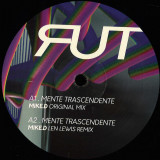
The fast rising FUTURA imprint from Leon, releases its new release from Mexican DJ Producer Mike.D with stellar remixes from Len Lewis and Do Or Die to complete the package .
Salomon Records founder Mike.D hails from Juarez Chihuahua, and is considered one of the new generation talents of DJs and producers from northern Mexico. His music selection and mixing abilities have given him the opportunity to play at the legendary Mexican venue Hardpop for many years. As a producer he’s released on labels like Kanja Records, Kina Music, The Lab, Dream Culture and more which has cemented his place in the scene. His music is regularly supported and played by the likes of Arapu, Sepp, Cosmjn, Maher Daniel, Mihai Pol, Sublee, YokoO and more.
For his debut release on Futura, he drops 2 originals the first of which is the title track ‘Mente Trascendente’. An edgy minimal deep tech house track with a grooving electronic bassline, deep atmospheric pads, classy beat pattern all combining to create an elegant 8 minute journey. The second on the package is Len Lewis’s remix of ‘Mente Trascendente’. Len Lewis released his first track back in ‘93 on Jumpin & Pumpin, which then led to records on the likes of the legendary Swag. Lewis’ designated name for his sound is, SiTH, Sinister Tech House, claiming its mysterious name after a Mixmag reviewer used this description for his music many years ago. His remix fits this name perfectly, powerful low bassline drives the track effortlessly, and smooth breakdown combining with eerie incidentals and pads, treated vocal cuts providing the signature hook for the track. This is a remix that’s perfect for the heads in the scene.
Next up we have ‘Sendero Interno’. The original mix is a pure minimal work out right from the outset. The stripped back and delicate beats use popping sounds for filling the frequencies, and work perfectly against the backdrop of the brooding pads and synths make this an classy introspective underground track, which is everything the Futura label is about. To round things off we have the final remix which comes from My Own Jupiter DJ Producer, Do Or Die. Well known for producer techno and electro the fast rising producer, delivers an acid house sci-fi esq work out on this remix with punching beats cutting through the mix, whilst retaining the brooding synths and samples from the original and adding in some special vocal cuts to keep this remix unique and perfect for the floor.
Neotnas feat. Philosopher is a new collab of electronic music producers from Russia (Chelyabinsk and Moscow accordingly). As the environment of the cities mentioned as well as social milieu vary significantly a profound personal reflection of the artists results in a very specific outlook sculpted by both history and presence of Russia – a surprisingly nice stuff inspired mainly by jazz, ambient and trip-hop. Four new tracks give a deep insight into the way the artists feel the groove and associate it within a dancefloor culture regarding its roots and worldwide influence. Two of them (Jazz Engine and You're Mine) – are 124 BPM house party cuts place all the emphasis on intensively syncopated TR-808 hi-hats layered with properly selected percussive jazz elements and flavored with brass licks and reverbed chords, catchy vox and driving by a grit kick and pumping low bass patterns. Another one (Spirits Of A Dawn) cautiously takes a listener to a personal journey to the edge of an imaginary big city, leaving its downtown, and moving out of the night shade slowly, coming near a sleepy morning glimmering focusing on a light sparks of a new day. The last but not the least track (Traffic Love) is a dense powerful banger galvanizes trip-hop beats and house chords with a lush and mystic 90`s female vocal all together aimed to stir up a crowd on a dancefloor and make them wet and happy. This release – fresh and diverse – will definitely hits it off with a large audience and joins a marketplace properly.
“Tectonic” is a concise portrait of SIMON BERZ’s geological sound explorations across continents over the last 15 years: drums, electronics, and a set of electronically manipulated basalt stones from Iceland.
SIMON BERZ is a transdisciplinary drummer, sound artist, and music educator based in Switzerland and Berlin. Working at the intersection of improvised music, sound art, and performance, and deliberately crossing boundaries between disciplines, his aesthetics are shaped by a sustained engagement with natural materials, particularly stone, and their sonic transformation through electronic manipulation. Beyond his performance work, BERZ founded BADABUM as an art label and a music school.
For the last 30 years, BERZ has been performing in Japan, China, Russia, the USA, Cuba, Iceland, Turkey, and across Europe. He has collaborated with artists including BILL LASWELL,BABY SOMMER, DAMO SUZUKI (CAN), JAMES TURRELL, JIMI TENOR, JOHN SINGLAIR, JOJO MAYER (NERVE), KONDO TOSHINORI, KIDD JORDAN, LAUREN NEWTON, LEE “SCRATCH“ PERRY, MAURO PAWLOWSKI (dEUS), NILS PETTER MOLVÆR, NIKI GLASPIE, NORBERT MÖSLANG, PAUL LOWENS, PFADFINDEREI, ROB MAZUREK, SKÚLI SVERRISSON, and he was the live drummer for APPARAT. As BERZ understands artistic practice as energy emerging from nature and through dialogue with people, his recorded output is intentionally selective, with one highlight being “Beats versus Breath” with KONDO and LASWELL (2023). Alongside a regular drumkit and electronics, he has developed his own instruments such as the “Lithophon” in which resonating stones are turned into amplified sound through water drops, and “Tectonic”, a set of Icelandic basalt stones shaped through electronic manipulation. These self- built instruments form the material basis for his performances, installations, and sound recordings.
“Tectonic” is also the title of BERZ’s latest work: a summary of his geological sound explorations across continents. From Iceland to Indonesia and Bali, from New Orleans to China, in caves and at shores, BERZ carried his millions-of-years-old basalt stones as both instrument and collaborator. On Java, he met Baron, a builder of stone gamelan instruments. At the Pacitan Tabuhan Cave (Indonesia) he performed with MISBACH BILOK and WUKIR SURYADI (SENYAWA) who work with corals as instruments. BERZ brought these encounters and “field recordings” to the Stöðvarfjörður studio in Iceland, where he recorded with his “Tectonic” set-up, drums, and electronics. The music was later mixed in Berlin by DIRK DRESSELHAUS (SCHNEIDER TM). The resulting album moves from club-driven tracks to ambient passages, from gamelan-inspired textures to HipHop-like beat patterns. It resists easy categorization while staying direct and physical in its impact.
A chance meeting in Mexico City set Points of Inaccessibility into motion. When Ibero-American composer Rafael Anton Irisarri crossed paths with Dutch media artist Jaco Schilp at MUTEK in 2024, a conversation about how technology shapes perception revealed an unexpected common ground. Schilp invited Irisarri to a spring 2025 residency at Uncloud, the Utrecht-based collective he co-founded, where Irisarri's sound began to take form amid an environment shaped by Schilp’s visual research.
The Uncloud studio was located inside the former Pieter Baan Centre, a forensic psychiatric prison where suspects of violent crimes were once confined. Its long history of silence and containment shaped the atmosphere in which the project developed. Within this setting, Irisarri coaxed long bowed-guitar tones through a network of pedals and looping systems. The raw gestures thickened into a vaporous and architectural field of sound. Schilp processed the material through a custom point-cloud software patch that produced images in continuous flux. The visuals flickered, dissolved and reformed like memories that resist coherence, functioning as a digital Rorschach that reflected the observer’s own perception.
Amid these spectral echoes, the project evolved into an examination of how the past persists within present signals. Memory endures as residue and interference, continually shaping perception even when its source has faded.
Schilp’s visual process required a continuous stream of sound in real time. Irisarri improvised throughout the residency, generating material that allowed the visuals to develop in parallel. Once back in his New York studio, he began shaping the recordings by carving pathways through the improvisations and mapping selected passages into MIDI. This process allowed him to build outward from the bowed-guitar material with minimal overdubs, adding Prophet 5 textures, Moog bass and strings that expanded the harmonic field while keeping the original performances at the center. To refine the structure, Abul Mogard provided editorial input, working with Irisarri’s stems to guide transitions and strengthen the overall pacing. The material, originally created under conditions of immediacy and constraint, evolved into a fully realized work through careful revision, patience and sustained reworking.
The title engages the geographic concept of the Poles of Inaccessibility, locations defined solely by their distance from all surrounding points. Irisarri adapts this idea to the conditions of digital life, where new forms of inaccessibility arise through the informational enclosures that structure perception. What appears to be a fully connected network often produces a deeper kind of separation, one shaped by the filtering logic of the systems that mediate experience. In this sense, the digital sphere mirrors its geographic counterpart. We inhabit spaces saturated with signals, yet the possibility of genuine contact becomes increasingly remote.
At its core, Points of Inaccessibility considers what can be understood as the new rituals of capitalist realism. Irisarri uses the term digital shamanism to describe the forms of simulated connection that organize contemporary life. These systems promise comfort through algorithms, influencers and AI interlocutors, yet they often reproduce the same conditions that generate loneliness in the first place. What appears as connection becomes the echo of connection, a sequence of gestures that imitate solidarity while withholding it. Like the geographic poles, these rituals are defined by distance. They pull us into environments where everything is illuminated, yet meaningful proximity becomes increasingly rare. In this sense, the work approaches a hauntology of the present, a reflection on futures that have stalled and intimacies that have been thinned by the algorithmic infrastructures that surround us.
This thematic tension unfolds across the album’s four movements. Faded Ghosts of Clouds introduces the work with textures that rise and dissipate in slow cycles, creating an atmosphere that resists clear definition. Breaking the Unison occupies a pivotal position in the sequence and focuses on the moment when the individual and the system fall out of alignment. Its shifting patterns trace the scattering of signals that once suggested connection, revealing the instability at the heart of contemporary perception. Signals from a Distant Afterglow forms the center of the album and features vocals by Karen Vogt, whose presence enters the sound field like a fragile transmission shaped by distance and delay. The closing piece, Memory Strands, follows motifs that appear, recede and briefly intersect before returning to quiet. Across these movements, the album outlines a landscape in which emergence and disappearance continually inform one another.
Listening to Points of Inaccessibility is an encounter with a sound field that is constantly in flux. Elements surface briefly, shift position and recede, creating a sense of motion that resists stable interpretation. The music moves between closeness and vastness, carrying traces of memory while withholding a clear point of resolution.
The album’s visual identity completes the project’s conceptual arc. In Mexico City, where Irisarri and Schilp first met, Daniel Castrejón transformed stills from Schilp’s point-cloud visuals into the cover image. The final artwork captures a single suspended frame of the digital material, a moment extracted from a field that is normally in constant motion. Its surface recalls the texture and abstraction found in the work of Catalan artist Antoni Tàpies, where material presence and erasure coexist within the same plane.
What emerges is a work that examines the tension between technological systems and human presence. Points of Inaccessibility asks whether connection is still possible within environments shaped by mediation and delay, or whether we have become isolated points within the very networks that promise proximity. What possibilities for relation persist within environments organized by algorithms and interruption? And how are we meant to understand presence when so much of it is constructed at a distance?
Points of Inaccessibility will be released on BioVinyl on February 6, 2026, with audiovisual performances planned throughout 2026.
Mastered by Stephan Mathieu
Artwork by Jaco Schilp
Design and layout by Daniel Castrejón
Artist photo by Iulia Alexandra Magheru.
Announcing Perseverance Flow, the latest album from acclaimed Chicago-based ensemble Natural Information Society (NIS), release date 2024-10-24. After a trilogy of double LPs by expanded manifestations of the band that began in 2018 with Mandatory Reality & continued through Since Time Is Gravity (a Pitchfork Best Jazz & Experimental Album of the Year selection & Mojo’s #1 Underground Album of 2023), NIS returns to its core formation of Lisa Alvarado on harmonium, Mikel Patrick Avery on drums, Jason Stein on bass clarinet, & composer/multi-instrumentalist Joshua Abrams on guimbri for one continuous 37 minute composition across a single LP. As the rocket boosters on spaceship earth sputter closer to burnout, lower your stylus into a soundfield that grows stronger the deeper you travel into it; a dose of the medicine many of us look to music to deliver awaits you inside.
One of the deep contemplations of this natural information (thanks Bill Callahan) is the wide range of source materials Abrams draws from over the band’s more than 15 year history: Ideas from minimalism, modal jazz & traditional musics are regularly reimagined in these compositions. The 2021 double LP descension (Out of Our Constrictions), with guest soloist Evan Parker, reflected aspects of Abrams’ love of party music, Chicago house, & John Coltrane. *But even veteran travelers with the NIS best brace themselves for the Perseverance Flow.
Speaking to the history & the inspirations behind the album, Abrams offers: “We played the piece for a year in concert before the recording. At Electrical (Audio Studios, Chicago) we went in at 11 & were done in time to pick our kids up from school.” Abrams continues: "In a reference world, I imagine Perseverance Flow like a live extended realization of a Jaylib lost instrumental as remixed by Kevin Shields. Or vice versa. I also think it has sympathies to some of the more rhythmically intricate dance musics out of Chicago & Lisbon.”
The core NIS ensemble heard on Perseverance Flow always address Abrams’ writing with the discipline of orchestra musicians & the creativity of improvisers. But this time around, instead of inviting living legend status musicians Evan or William Parker or Ari Brown as honored guests to solo freely over the composed materials, Abrams’ invited guest collaborator was the medium of the recording studio itself. Situated at the board with engineer Greg Norman, Abrams pushed post production techniques found only sporadically on earlier NIS records deep into the heart of the music, distorting & reshaping instruments to subtly &, at times, aggressively mutate timbre & texture, color & time.
Refracting the band’s signature mesmerizing chains of overlapping rhythmic patterns through the sonic funhouse of dub makes Perseverance Flow the most formally experimental NIS album to date. Now a soundworld fully unique to itself is listening to itself, consoling & humoring itself, & consoling & humoring you. A destruction myth & a creation myth of a soundworld together at once —”energetically nutritious” (October 2025 Issue 500 The Wire) supernatural information society.
“Perseverance Flow is skipping rope in slo-mo. A dance of co-operation to rally guts & humors & keep marching through pouring tears” (Abrams).
- Somewhere, Nowhere
- Angles Mortz
- False Prophet
- Fluoride Stare
- The Void
- Ascension
- Just A Kid
- Host
- Landslide
- Renaissance
- 7: Am
- Blue In Grey
2026 Repress
Flickering in ultraviolet, there is an elusive place where blue pill meets red, ups become downs, and day merges with night. Those liminal spaces where anything is possible is where you’ll find Nightbus and their hypnotic debut album Passenger. Doom, uncertainty, and opportunity lurk in the shadowy corners of their murky existence with stops at disassociation, co-dependency, and addiction before reaching its final destination - a glimmer of hope.
The in-between of Nightbus’ own Gotham lies where Manchester’s city pulse meets Stockport’s outer realm. An audio-visual entity formed among a musical family of friends, freaks, and foes in messy mills and after hours on dancefloors alike, their sound bleeds from tension where collective creative forces are bound together and collide with the fallout of being torn apart. Before even playing a show, their So Young released single ‘Mirrors’ – a knowing nod of respect to some well-known gloomy Northerners - may have made old school indie heads shimmy at shows in Salford’s The White Hotel but also signalled the duo’s knack for offering listeners a Bandersnatch approach to hitchhiking their own personal Nightbus in whatever direction they choose to take. “Everyone can have their moment with our songs; the music is our response to who we are as young people, living in the city full of this energy right now,” they say.
Whilst reverb hefty melodies and dread-filled loops embody isolation from writing at each of their home studio set-ups, magic happens in the ether across 90s trip-hop, indie sleaze and electronica; Jake’s production layers Olive’s pop sentimentality with drums and samples whilst tales of a cast of faceless characters place Olive as puppet master; her severed self’s perspective manipulating their stringed limbs at arm’s length to see how their stories play out when scenes reflecting her own lie close to the bone. “It’s a bit fucked; like having this out of body experience with a made-up movie running through my head,” she says. “As I write I can see they’re all from a similar world, but they allow me to explore different feelings without giving away part of myself.”
Recorded at The Nave in Leeds with producer-engineer Alex Greaves (Heavy Lungs, Working Men’s Club), surprise and danger lies in every crevice. Brooding whispers turn to chants on 6-minute opus ‘Host.’ Improvised when performed live, its immersive shift in tempo leads to hefty dub courtesy of Jake’s pedals. Even then, you won’t know shit’s hit the fan until its mid-point reveal when ominous bass blasts a thunderous soundtrack as its protagonist defiantly walks away after committing the perfect crime. “It makes you wait, and more songs should have sirens,” Olive grins.
Leaning deeper into alter-egos via the video game-psychological horror of a Silent Hill dystopia, the band’s Fight Club moment ‘Angles Mortz’ turns its literal translation of death angles on its head as it reflects upon kink and internalised shame reincarnated as pride. Elsewhere the ice cool ‘Landslide’ is a Requiem for a Dream about the addiction of being in a band; ‘The Void’ explores co-dependency and estranged relationships; and carefully selected samples revive house track ‘Just A Kid’ from the band’s early incarnation. Passenger’s every direction is to face challenges head on. “That is what’s so great about horror; you can see through predictable patterns so when the unexpected occurs it's more realistic and uncomfortable… I want to own the dark stuff!”
As for Passenger’s first single, the pulsating ‘Ascension’ is a spiralling deep dive into death, suicide, and legacy around who or what we leave behind. A noughties club banger by way of NYC beats - ergonomically designed for those who like to stay out a little too often and too late - it throbs like a house party’s partition wall as the literal levelling up undergoes a neon transformation; blue glitching to pink, diffusing the white construct of the Nightbus Matrix. “It really does feel like the end of something and was purposely written that way,” they say, “the ascension is like a firework going off!”
With wheels in motion, Nightbus has become a movement surpassing sonic realms. Between shows from Porto to Brighton taking in The Great Escape, Rotterdam’s Left Of The Dial and Paris’ Supersonic; DJing; remixing; guesting (BDRMM’s Microtonic album); and even enlisting talented like-minds to craft a 3-part queer coming-of-age music video series which ties in with a new ‘hyperpop’ phase in the evolution of their popular Nightbus Soundsystem club night, heads are now being turned from sports brands to high-end fashion designers. “There are things we can’t reveal just yet,” tells Olive, “but we’re excited about the direction this beast we’ve created is heading.” As the album philosophises and asks one ultimate question; what does it truly mean to be ‘Passenger’? Nightbus may not claim to offer a definitive answer, but it might make you feel a bit better about those demons.
Sam Bhok releases his debut album, Sloom. Influenced by experimental club sounds as well as the filmic emotion of post-rock and film scores, Sloom resists minimalism in favour of dense, interlocking layers. Euphoric synth textures and fractured drum patterns drive the record, pairing club energy with reflective undercurrents as hardware synths and drum machines are set against caustically digital, hyper-modern sounds.
Known for his behind-the-scenes work with Gilles Peterson, most notably as an integral part of the Worldwide FM team, Sloom represents Sam stepping into focus as a skilled producer of forward thinking electronic music. Written between 2020 and 2025, the record is a statement of identity and a creative shift away from the world of the selector, and towards something more personal and expansive.
Mastered and cut by legendary engineer Beau Thomas on eco-mix marbled vinyl, Sam Bhok draws from analogue and modular synthesis, processed and twisted into restless forms that reflect the unease of the digital age. Sloom is charged with anxieties about technology, capitalism, culture, and climate, delivered both through introspective, IDM-informed tracks and moments of dancefloor catharsis.
- A1: A Slow Dancing Society (Feat. Flitz&Suppe)
- A2: B-Stone (Feat. Franz Bumm)
- A3: Cruisin (Feat. Malev Da Shinobi)
- A4: Routines
- A5: Green Roses (Feat. Novine & Leavv)
- A6: Downtown
- A7: Reconnect
- B1: Melange (Feat. Yan Nay & Franz Bumm)
- B2: Sunday Afternoon (Feat. J-Tek & Christian Jalon)
- B3: Home Valleys
- B4: Now You Know (Feat. Cloudhead)
- B5: Come Up
- B6: Synthesis (Feat. Kenji)
- B7: Sirocco (Feat. Yan Nay)
Infotext ENG
After establishing himself as one of Europe's most distinctive voices in instrumental hip-hop, Mr. Käfer is ready to tell a different story. His third solo album, A Past Sense, arriving via Melting Pot Music on 11th November, shows a bold creative evolution from his signature lo-fi aesthetic into lush, collaborative territory that spans continents and genres.
His sixth project for Melting Pot Music marks a creative leap from the mood-driven, jazz-tinged instrumentals that built his reputation on releases like Lost Reflections (2019), Orientation (2020), and Now/Again I and II (2021, 2023). Now he's orchestrating a 14-track journey that weaves together hip-hop, soul, jazz, and North African rhythms through collaborations with carefully selected artists including Novine (GER), J-Tek (US), Kenji (US) and Cloudhead (AT).
Thematically, the album explores how memory reshapes identity, questioning the gap between who we were and who we've become. The visual side comes courtesy of acclaimed photographer and art director Robert Winter, capturing this nostalgic-yet-progressive spirit. A Past Sense will also be released on LP.
With A Past Sense, Mr. Käfer steps out from behind the boards and into the spotlight—trading lo-fi playlist comfort and algorithm-driven streams for something deeper. A past sense, maybe. But definitely a future sound.
Infotext DE
Europas instrumentaler Hip-Hop bekommt einen neuen Sound. Mit seinem dritten Soloalbum „A Past Sense“ verabschiedet sich Mr. Käfer von seiner lo-fi-geprägten Vergangenheit und erschafft ein Werk, das über Genres und Kontinente hinausgeht.
Wo frühere Veröffentlichungen wie „Orientation“ (2020) und die „Now/Again“-Serie (2021/2023) durch intime, jazzgetränkte Instrumentals bestachen, öffnet sich „A Past Sense" neuen Horizonten. Auf 14 Tracks verschmelzen Hip-Hop-Fundamentals mit Soul-Harmonien, Jazz-Improvisationen und nordafrikanischen Rhythmus-Patterns.
Die Kollaborationen mit Novine (Deutschland), J-Tek und Kenji (beide USA) sowie Cloudhead (Österreich) sind dabei keine Gastauftritte, sondern organische Begegnungen, die Mr. Käfers Musik in unerwartete Richtungen lenken. Er bricht bewusst aus der Blase algorithmusgetriebener Lo-Fi-Playlists aus und setzt auf echte musikalische wie menschliche Verbindungen.
Thematisch kreist „A Past Sense" um die Macht der Erinnerung und die Frage, wie Vergangenheit unsere Gegenwart formt. Diese konzeptionelle Tiefe spiegelt sich auch in der visuellen Umsetzung wider: Fotograf und Art Director Robert Winter entwickelte eine Bildsprache, die Nostalgie und Zukunftsvision in perfekter Balance hält.
Mit „A Past Sense" positioniert sich Mr. Käfer neu im internationalen Beat-Kosmos. Das Album erscheint am 11. November über Melting Pot Music – digital und auf Vinyl.
Scintillating, alchemical kosmische; visionary, deep, and luminous; and beautifully sleeved, with gold foiling and silver ink.
Works In Metal fans out a set of acid treatments and finely sharpened blades — cutting, shaping, suspending form. Sounds are melted down and forged as if liquid metal.
The works are paired. Arc’s Blue Flame previews the smoking volatility at the album’s core. Echoes and resonance soften the dissonant, bright textures; all overlaid with Fofana’s signature, percussive kick drums. Welding drills into the discordant thrills and spills of metamorphosis. Sparks fly and the bittersweet arc of change unfolds.
Fofana discreetly folds in text, poetry, and field recordings, spooring their decomposition and recomposition with a prismatic point of view. The coupling Obscure Light (Decomposition) and Obscure Light (Recomposition) marks something new in his music. The pulse is brightly honed, cascading beyond the dancefloor, exultingly eluding musical genre.
Works in Metal is perhaps Fofana’s most narrative album. At its heart is the killer, extended Lure of the Fragment / So Another Sound Suggests Itself. Melodies circle in call-and-response patterns, balancing proximity and distance, signalling the inward gravity required to work with metal. A nested story-line, with birds flying in; an album within an album. Dredging up memories and associations, Fofana filters in selections from his sound-archives. Layered with synths, field recordings become instruments in their own right. The last three minutes proffer precious clarity — a memory, in miniature, flashed onto molten metal.
In 1943 Suzanne Césaire declared that ‘our surrealism will then supply them the leaven from their very depths. It will be time finally to transcend the sordid contemporary antinomies: Whites-Blacks, Europeans-Africans, civilized-savage: the powerful magic of the mahoulis will be recovered, drawn from the very wellsprings of life. Colonial idiocies will be purified by the welding arc’s blue flame. The mettle of our metal, our cutting edge of steel, our unique communions — all will be recovered’. Works in Metal is a tribute to her prophecy; its enactment, sculpted in sound.
Ken Jacobs, an essential figure of avant-garde cinema, developed the »Nervous Magic Lantern« in the 1960s — a self-made apparatus containing a spinning shutter, a light source, and lenses set in a wooden frame. Hand-painted circular slides, gently moved by hand, produce flickering imagery: geometric patterns, Rorschach-like inkblots, and three-dimensional forms that seem to float beyond the screen. These hallucinatory visions challenge perception and suggest what Jacobs once called »a whole new play of appearances«.
Unlike Jacobs’ politically charged works, the »Nervous Magic Lantern« is patently abstract, examining how the brain regulates perception. For these performances, Jacobs requested »sounds of daily life« — environmental recordings that anchor the phantasmagoria in reality. Field tapes of Chinatown streets, conversations, and other uncategorisable sounds became the material for Aki Onda’s sonic compositions, adding narrative resonance to the abstract visuals and creating an almost documentary dimension.
This album documents a performance of »Nervous Magic Lantern« at Spiral Hall, organised by Sound Live Tokyo on November 3, 2015. Jacobs’ selection and sequencing of slides offered improvisatory space, mirrored by Onda’s flexible arrangement of cassette recordings. The result is a work where life and art dissolve into one another — a soundtrack for life in the depth of illusion.
Music by Aki Onda Cassette field recordings by Ken Jacobs