DJ Qiu & Playchild's "Da Boops": a timeless relic of House Music, emerging after three decades. Despite its obscurity, it's a testament to musical resilience. Featuring two tracks blending vocals, classic beats, and captivating patterns, each exudes a jazzy atmosphere. "Good 4 You" brings impetuous energy, while "Peace, Love..." offers dense engagement. These assertive choices redefine the essence of musical revival, resonating with both intimate settings and dance floors.
Suche:patterns
J & M Music Co US welcomes LeBaron James for another standout four-tracker that brings raw house and smooth disco together on one EP. Up first is 'Always Be True' is a deceptively simple sound that brings straight-up dancefloor beats with hooky pads. 'House Party' then has more heavy kicks and wild percussive patterns to liven up any party and 'One' then brings a more cool and laid-back disco groove that has a slick modern twist. Last but not least is 'Sugar And Spice' which brings a touch of sophisticated and chic instrumental vibes. It's a fourth different sound on a versatile EP.
Black Truffle is pleased to announce Resonant Trees, the first vinyl release from French composer-performer Léo Dupleix. An active member of the international community of younger musicians working with just intonation, Dupleix has composed works for solo instrumentalists and ensembles in Europe and Japan, as well as performing extensively on harpsichord, piano and electronics. His music is distinguished by a formal clarity and elegance of surface, gently shaping pure intervals into delicate melodic patterns and shimmering harmonic planes.
Resonant Trees presents two side-long pieces for harpsichord and ensemble, both setting slowly repeating patterns played on harpsichord and guitar within an environment of sustained tones. Dupleix performs on a French double manual harpsichord (tuned to a just intonation scheme of his own devising) and Prophet synthesizer, joined by Juliette Adam (bass clarinet), Johanna Bartz (traverso flute), Cyprien Busolini (viola), Fredrik Rasten (6- and 12-string guitars), and Mara Winter (traverso flute). The harpsichord begins Resonant Tree I alone, slowly sounding out a series of arpeggiated chords that emphasise the unique (and for unaccustomed listeners, sometimes unsettling) harmonic and timbral qualities of justly tuned intervals. Long tones from synthesiser, bass clarinet, viola and Baroque traverso flutes slowly creep into the spaces between the arpeggiated chords, joined after several minutes by delicate patterns of harmonics played by Rasten on acoustic guitars.
On Resonant Tree II, a similar structure and ensemble (without the flutes) are used with quite different results. We again hear only the harpsichord at first, but this time playing a series of flowing melodic lines, each of which is repeated several times. Joined again by long tones from the ensemble, here the viola is particularly prominent and its interplay with the harpsichord creates fascinating acoustic effects. In both pieces, repetition gives the music a static, stable quality while, at the same time, the exact shape of the repeating patterns remains difficult to grasp. As Dupleix writes, these pieces dream of music as ‘space and a sound that one could grasp in one’s hand.’ As the near-static quality of the repetitions and long tones with little incident make these two stretches of musical time feel like spaces for the listener to inhabit, the small variations on a narrow range of related material act like a three-dimensional object whose each facet is examined in turn. At once austere and seductive, Resonant Trees takes its place beside the work of contemporaries like Catherine Lamb, while also calling up the languorous melodic world of Mamoru Fujieda, the dignified melancholy of Satoshi Ashikawa’s classic Still Way and the espaliered chamber atmospherics of the Obscure catalogue.
Tangential Music is pleased to present the new album from veteran Spanish DJ and producer, Dj Toner (aka Antonio Herrera). Alongside his co-writer/arranger Daniel Molina and with guests that include the legendary Blue Note Records innovator Erik Truffaz and Grammy winning flautist and saxophonist Jorge Pardo, he has created a 10 track collection of slow-burning instrumentals that straddle the worlds of hip hop, jazz and electronica.
With a personal, precision tooled approach to his craft, the Andalusian has offered up an album of finely modelled downbeat moods.
At first glance, ‘Out Side’ is made up of recognisably superior hip hop instrumentals but if you listen carefully, and with patience, one can hear a craftsman at work. A wooden box is just a box until you look closer. The hidden joints, the perfect lining up of the grain, the years of artisanal graft and laser-focussed attention to detail that go into making something that has nothing present, that doesn’t deserve to be there. This is how Dj Toner operates.
The two singles that preempt the album’s release reveal different sides of his craft. ‘Camina’ struts with tough intentions. Soundtrack-y in an exploitation police drama manner, the get-out-of-my-way drum break and tension-filled chords suggest the bad cop, Erik Truffaz’s piercing lyrical trumpet lines, the good. The Afro-jazz horns led second release ‘Surprise’ is an altogether more playful, sunbaked affair. Sensual and slow-burning, there’s still an edge but it’s too hot to quarrel.
Dj Toner’s minimalist attitude to creation is shared with his co-composer Molina - an individual’s contribution may be cut to the bone, leaving just its aura or tone. The echo of a piano, a single blast of tuneful wind from a flute, a perfectly positioned drum hit.
Since the Wu-Tang Clan’s RZA began applying his beatmaking prowess to movie soundtracks, the hip hop instrumental has been acknowledged as something to listen to, as much as being used as a DJ tool or backing for an MC. Dj Toner’s instrumentals can, therefore, be seen as soundtracks. Soundtracks to his life and craft, vignettes of his environment in both the urban sprawl and the wider and slower spaces of “el campo”.
The sweet-tempered jazz-blues of ‘La Rimosa’ is a gentle welcome to the album. A simple, laid back groove with the most romantic of piano hooks that one could imagine Common dropping rhymes on. You’re kept on your toes with the odd purposeful moment of discordant interruption but the tender heart of the composition is never far away.
‘O’Beat’ hints at John Coltrane with the sparse but full-sounding upright bass before a head-snap break leads into a curious piano groove, a vintage organ swirls into a psychedelic fractal, whilst the bluesy female vocal snippets add the spice, that zing in the Granadan gazpacho.
The flamenco guitar driven ‘Flama’ is an excellent example of intricate sample placement and musicality. Old school (school yard) scratch interludes, sweet piano hooks, a minimalist but knife sharp flute contribution from Jorge Pardo, and the crunchiest of drums taking us for an intriguing walk round the corner.
We’ve mentioned them before but it’s on ‘Sweetband’ that we can feel that Wu-Tang dread hanging off its shoulders. A brooding orchestral number with powerful horns and a cavernous piano hit. The title of the piece is in stark contrast to the dark shadows of the tune.
Erik Truffaz returns in fine form on the super lethargic jazz-funk-hop of ‘The Day’. His instantly identifiable muted trumpet sound paints dazzling colours over the more earthy tones of the filtered down keys as a rubbery upright bass keeps the forward momentum. Dj Toner’s ‘Blessed Are The Weird People’ album, was rated in Jazz Magazine as one of the 20 jazz albums of 2021, so he isn’t some dilettante when it comes to playing with the complex hues of jazz but he does like to strip it to its bare essentials.
‘Fanega’ sees a gorgeous flute contribution from Jorge Pardo. An eerie boom-bap groove with sprinkles of electronic pulses and washed out chords is the canvas on which the award-winning multi-instrumentalist evokes the heat shimmer of the savannah.
‘Esperanza’ translates as ‘hope’ in English and this lovely slow, swinging jazzy groove really does provoke feelings of positivity and belief. Sublime vibraphone and another stunning trumpet offering from Erik Truffaz, take us on a journey of warm days and possibilities, the shuffling drums and sweet chord patterns are nicely finished off by a tranquil horn chorus towards its unhurried end.
‘Under Beat’ ends on a beefy boom-bap groove with a liquid funk bassline, elegant synth strings and old school scratching. Again, there’s that undisputable soundtrack edge, action and motion, the smell of the city.
There you have it, 10 tracks that go beyond the surface, deep into the dedicated craft of Dj Toner. Decades of experience and collaboration purified and refined into beat-heavy emotions, listen closely or crank it up, it’s down to you!
A bit more than half a decade on from his widely acclaimed debut Vanishing Points from 2018, Swiss guitarist, composer, and improv musician Manuel Troller releases his new record Halcyon Future. A rhythmically dense and ambiguous, yet joyful ride for unstable times, a plea for warmth and hopeful resistance.
Troller’s mode of incorporating, zooming in, and expanding on small elements from improvised sessions creates a multilayered work of driving rhythms and abstract, vibrating textures. Opening with Halcyon Future I’s distinctive open pulse, this first piece guides us through subtle harmonic shifts that are almost unrecognizable as they take place over extended time, overlapping and creating a sense of ambiguity until the piece reaches an almost optimistic level with Mario Hänni’s unexpected introduction of driving acoustic drums. Relentlessly and with increasing excitement, heavy electronic 80s bass drums and an armada of layered hi-hats push them on, leading to the all-incorporating melodic finale.
The two long pieces Halcyon Future I and Halcyon Future II focus on forward momentum. In between them stands DNA, a purposely directionless contemplation on emotion as such. It is raw, naked, and confrontational, with a tender and subtly changing chord progression creating intimacy and proximity, abstraction and warmth, like a beautifully vibrant hologram for the listener to walk around in.
The B-side with its 20-minute Halcyon Future II features playful futuristic guitars, enhancing and challenging the stereo image that Troller is already well-known for. As it’s given time to develop and take root, the ever-varying guitar interactions densify and the staccato patterns jump out of the speakers with joy, creating excitement and building momentum. Compared to Side A, things turn to a slightly more complex rhythmical, melodic, and harmonic feel here. There are easy references, such as Manuel Göttsching’s E2-E4 or Pat Metheny performing Steve Reich’s Electric Counterpoint, but Troller goes a different and very much more concrete way. Although the piece has been recorded in various places and through a long process of overdubbing, there is an astonishingly strong live feel to it, from beginning to the end, from the slow rise to the full spectrum and the almost krautrock-like finale. Improvisers Hans Koch on soprano saxophone and Michael Flury on heavily fuzzed trombone join in, while Troller and Mario Hänni on many guitars, bass, drum machines, and acoustic drums provide a joyous driving entity, not giving up until it all breaks down again. There is overkill and brute force, though never without depth and a vision of future.
In the musical scope of Halcyon Future, there is no need for an absolute definition of things. A continuously changing interpretation of repetitive and variable elements fading in and out of focus tells a story of an excited sense of acceptance. Feelings of transcendence stem from Troller’s layering of constantly shifting rhythmic structures with unforeseen improvised harmonic changes. Drum machine parts overlayed with acoustic drums shift between musical modes, anchoring the album on the verge of a jazz-influenced, motorik, post-ECM balearic plateau. Abstract textural elements gently swirl around and behind all that is rhythm, providing a submissive counterpoint. As with much of Troller’s work, Halcyon Future is an album that unfolds slowly, revealing more of its richness, detail, and subtle beauty at each listen.
Halcyon Future is a joint release by three:four records and meakusma.
Bank NYC is very excited to present the definitive statement of Collector, "No Prospects". Collector is the solo guise of Jason Campbell, resident of Newcastle, Australia. Since 2014, Campbell has been channelling the industrial malaise of his hometown through his unique take on heavy electronics. After a series of releases on global-spanning labels such Steel City Dance Discs (UK), Nice Music (AUS), Clan Destine (SCO) & Night People (US), the debut long-player for Bank NYC finds Collector embracing true album form for the first time in his discography. Across eight pieces, Collector delivers a bleak sonic narrative via a hardware-only approach to production: Analog drum machine patterns are intricately intertwined with menacing synth lines, and driving bass is met with the unrelenting clatter of tightly-sequenced field recordings taken straight from the heart of local industry.
Thematically, "No Prospects" navigates the downfall of Newcastle's BHP Steelworks at the end of the 20th century. Acknowledged widely as the largest de-industrialisation event in Australian history, the closure of the Steelworks in 1999 marked a dramatic cultural shift where blue-collar vocations were vanquished due to an economic slump, and were consumed by the trending cosmopolitanism seen in adjacent cities. "No Prospects" draws on Campbell's family lineage in the Newcastle's steelworks, providing a rich, personal context to an industry that both gives and takes away. The sharp intensity of the album is sustained by dramatic shifts in pace: the devestating slow burners of 'Two From Five' and 'Ricochet' are instinctually offset by the frenetic 'CFT' and 'Workers Club Collapse', which showcase Campbell's no-nonsense approach to shaping an almost club-ready breed of modern industrial techno. Although diverse across both sides, cohesion is found in Campbell's toolkit of samples that are unmistakably Collector. The album's eponymous track, 'No Prospects', serves as an introspective centrepoint - a largely arrhythmic excursion shrouded in familiar brooding, textural drones, and underpinned by the chug of machinery on the brink of collapse.
Although forever indebted to the spirit of local electronic outcasts, Bloody Fist Records, Collector's "No Prospects" is a remarkably distinct statement straight from the heart of Australia's Steel City. The complexity of arrangements speak to Campbell's long association in experimental music communities, whilst the persistent feeling of dread conveys a uniquely regional story of decay and futility. Pure Novocastrian industrial electronics.
Castle Face present Dan Rincon’s (OSEES, Wild Thing, Apache, Personal and the Pizzas) premier solo release Spotlight City.
Artificial landscapes and melodies comprised of Moog Grandmother, Mellotron and a kinky Modular system span from beautiful and lilting to haunting and etherial. The album was a years long learning experience of getting all components and ingredients to link arms and blend comfortably. Wrangling was part of the process. Strings soaring and sines weaving. Sometimes in the atmosphere, sometimes in the Earth’s core, sometimes flanked by neon blur as it hums & weave patterns through a world imagined in vintage sci-fi pulp.
“I was listening to a lot of solo Roedelius and Conrad Schnitzler records while writing this record and I’d say that both have been hugely inspirational on what I want to do as a solo recording artist. The way both of those of those artist pushed the early, chaotic electronic music into something more melodic is really inspiring to me, it’s not that dissimilar than trying to get melodies out of a modular synthesizer.”
An absolute necessary slab for anyone a fan of CF, OSEES, Popol Vuh soundtracks , 8 bit video game accompaniment & 80s Tangerine Dream. Burn one and burn out.
(Jam El Mar Remix) DJ Ghost and Robert Armani resurrect their hugely popular turn-of-the-millennium collaboration with the superb ‘Hit Hard Baby (WTF)
DJ Ghost and Robert Armani resurrect their hugely popular turn-of-the-millennium collaboration with the superb ‘Hit Hard Baby (WTF)’. A formidable duo when it comes to churning out mind bending techno and hard-edged grooves, these guys first got together in 2001 delivering the bouncy vibes of ‘Hard One’ followed by ‘Airport’ and ‘Funk That’, all of which got included on a raft of compilations and enjoyed by many around the world. Individually they are accomplished in their own right. Ghost is an iconic figure in Belgium and a stalwart within the Bonzai family. Robert Armani needs no introduction, ‘Circus Bells’, ‘Ambulance’, ‘Hit Hard’ anyone? Since the mid-eighties he’s been right up there with DJ greats, and in 1992 he started releasing his own brand of house, acid house and techno. Legend is an understatement when it comes to both these guys and we’re delighted to see them back at it in the studio once again.
The release opens with ‘Hit Hard Baby (WTF)’, introing with dark kick drums and raspy hi hats. Classic techno percussions weave intricate patterns as tension mounts, taking us to the break where hypnotic notes build alongside a snare roll to the drop and back to full-on dark mode for the duration. ‘The Underground’ is up next, combining sick techno grooves with massive rave stabs and murky acid lines. Powered by a solid drum arrangement that packs a punch, this one is destined for peak time greatness. The first of two versions of ‘H.O.H’ begins with the Original Mix. Keeping with darker tones of the release, this one goes straight for the jugular as chunky kicks and pulsating, mesmeric basses combine along with clangy percussions and a classic vocal hook that will destroy the dancefloor. Another legend joins us to round out the release with Jam El Mar stepping up for remix duties on ‘H.O.H’. Hailed as a pioneer of trance alongside the late great Mark Spoon, Jam El Mar remains a much-revered name on the scene and we know amazing things happen when he’s let loose in the studio. Ramping up the energy on this one Jame El Mar whips up a frenzy to get the crowd moving. Heavy hitting kicks with layers of rhythmic percussions get the toes tapping while gnarly techno basses and electrifying synths combine alongside that instantly recognisable vocal. A monster tune that is not to be missed.
DJ Support: Gilles Peterson, Sean Johnston, Jaye Ward, Max Essa and Francois K
Limited to 300 copies
Having been long-time admirers of one another from afar, Hell Yeah and Michele Mininni finally come together for Pop Archetypes. It is a multifaceted debut album that collides broken beats, worldly rhythms, jazz, eastern melodies, live drums and much more into one thrilling 15-track opus that arrives on May 31st.
Italian artist Mininni has always had a leftfield take on electronic music and imbued it with rhythms, melodies and instruments from around the globe. He has released it on cult labels like R&S, Optimo Trax, Internasjonal and Curle Recordings but has saved his magnificent debut album for Hell Yeah. It is much more than a collection of sounds he has already explored and instead finds him heading off into all new territory without losing his signature sense of inventive and beguiling rhythm and melody. It is a multicultural journey that takes in heterogeneous styles and diverse influences but distills them all into one cohesive album with its own unique storyline.
Says Mininni of the record, 'I wanted each track to be like pieces of a unique, multifaceted picture, like walking through train cars or progressing through the levels of a video game, all filtered through my own vision and concentrated into 36 minutes. I wanted a pop album rooted in the extraordinary richness of popular music and projected into the future, a continuum where pieces communicate with each other and are received by the ears in symbiotic balance.'
Despite that concept, the album is a spontaneous listen full of surprises, left turns and original ideas that all hold together in thrilling fashion. It kicks off with the tumbling jazz drums and swirling synths of 'Spinning Around Cotton Candy', takes in mellifluous melodic layers and broken beats on 'Golden Room' and 'Slipped Air' casts you adrift amongst gorgeous piano keys and refracted vocals on the suspensory 'Vertigo'. There are jungle interludes with Eastern string melodies like 'Bangkok Tempo', lavish fusions of organic and synthetic sounds on 'Kundalini' and more charming Far Eastern rhythms on 'Muting Cat'. 'Congoflash' brings electrifying cosmic rays to busy hand drum patterns, 'The Magic Of Synesthesia' combines dark amen breaks and bright and uplifting flutes while 'Carousel Of Tears' douses you in watery melodies and celestial pads that awaken the soul.
Pop Archetypes is an adventurous work packed with meticulous and infinite details but all with an overarching narrative that makes it far more than the sum of its parts.
Repress!
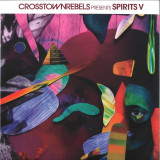
The release of Crosstown Rebels’ SPIRITS compilation is always a bastion moment for the label. The first edition came to prominence in 2017 and we’ve been graced with an annual compilation ever since, showcasing a consistent habit to champion established artists and breakthrough ones alike. Now, Crosstown Rebels’ lauded SPIRITS series will see the light of day once more in June, with the release of SPIRITS V.
NYC-native Layla Benitez leads proceedings with Fides, a progressive-leaning, introspective number that retains an inherent danceability throughout. It kicks off the compilation with a driving energy, one that’s perfectly matched by Trabajar - the Crosstown Rebels debut of recent Hot Creations inductee Mr.Diamond.
A techy-inspired cut, punchy four-four drum patterns create a distinctive late-night feel, as UK-talent Denney soon arrives with Kill The Soundboy. Showcasing the groove-laced house sound with which he’s become best known, the near seven-minute piece is sure to light up many a club setting this year, paving the way for Talk To Me. It’s a collaborative venture between Munich-based artist ASK:ME and El Muerto, with Soulfoot featuring on vocals. Retaining a vintage Detroit style, the fast-paced tempo creates a natural excitement before Romanian-born mainstay GruuvElement’s gifts us the minimal-toned Boom Room.
Building with tribal-like percussion and salsa-inspired instrumentals, it’s a playful excursion into dance music’s outer realms, paving the way for young Peruvian producer Chinonegro with My Moment. Whether it be the pluck of a guitar string or a jazzy trumpet solo, there’s an inherent authenticity to the six-minute piece, as a mid-track breakdown gives way to whispering hats and a rhythmic underlying backbone.
The penultimate offering comes from French-born, London-based regular Maglia, who serves up the enchanting Rayiys. The chirping of birds resides atop an ever-changing bassline, leaving us open and ready for the VA’s closing saga: Thanks Moon, by Spain’s I AM JAS. A heady combination of beautiful lyrical contributions combines with softly moving electronic elements, to leave us in a state of calm, inward reflection. Rounding off proceedings on a note of quietude, it reminds us of the final moments in clubland, transporting our psyche to sunrise, fond memories and everything in between.
Over a period of nineteen years, Damian Lazarus’ Crosstown Rebels has evolved into a world-renowned institution, garnering global audiences thanks to a consistent schedule of quality releases. In years since it’s earliest beginnings, the likes of Maceo Plex, Art Department, Seth Troxler, Ali Love, Mathew Jonson, Pier Bucci, Acid Pauli, Dennis Kurtel, Francesca Lombardo, Glimpse, Aphrohead, Fur Coat and a plethora of other figureheads have all found their home on the label.
The roster is international, showcasing how Crosstown has shaped a truly global scene. Releases are born in different continents by artists who hail from different countries, resulting in a sound that resonates worldwide. Perhaps most pivotal to the label’s success is its musical output: no part is governed by boundary or genre. It’s underpinned by a truly eclectic sound, one that reflects the diversity of Damian’s love for music itself. An album from drum and bass icon DJ Krust here, a maiden LP from Audiojack there… traversing genres has been Damian’s forte for decades - and Crosstown epitomises that as a result.
- A1: Welcome To Mathematics
- A2: Ten And A Hundred
- A3: Plus And Minus Five
- A4: Soft Mirrors
- A5: Colliding Clowns
- A6: Swaggering Cowboy
- A7: Plus And Minus Eight
- A8: Accelerating Athletes
- A9: Halving Rectangles
- A10: Myriad Mosaics
- A11: Shapely Patterns
- A12: Composite Cookbook
- A13: Agitated Banjo
- A14: Clocking The Day
- A15: Jumping Pyramids
- B1: Shadows In Four Aspects
- B2: Unitary Climb
- B3: Colossal Triangle Split
- B4: Apple Tree Angles
- B5: Child’s Angled Views
- B6: Old Seagull And Chips
- B7: Seaside Romp
- B8: Fair By The Sea
- B9: Tranquil Snail
- B14: Running Big And Wee
- B15: Take It Away
- B10: Masts And Nets
- B11: Numbered Rows
- B12: Slipping And Sliding
- B13: Perfect Postman
Limited black vinyl. Full colour sleeve with unseen pics of Ron Geesin in his studio doing maths stuff on the back.
Wow! So you’re telling me Ron Geesin made this kooky electro groovy score to a really progressive maths educational programme on Central TV in 1980 and it’s musically anarchic and amazing and it’s never been issued before? Until now. Wow again!!!! And there’s 30 tracks!!! Trunk Records we love you...
Basic Maths was the second educational TV Series for the Midlands-based ITV station for which I composed, played and recorded all music and noises. The first series, also for budding mathematicians in the 7-10 age group, was Leapfrog in 1978 produced by ATV (Associated Television): Basic Maths was for the newly-formed Central Television, the work spanning 1980-1981; both series were of twenty-eight parts.
The most worthy idea for both of these series was to project mathematics into life by means mainly of non-verbal sound and vision, with both animated and live action films, linked by two presenters, Fred Harris and Mary Waterhouse. In my role as Media Composer, I had had quite enough of voice overs, therefore music well under, so this fairly radical educational approach at the time encouraged my creative juices to run unhindered. Of course the sound had to do something with the picture and not just use it as a carrier for peacock display. It had to duet, play with and explain the visual content using novel and engaging techniques, so this involved the usual and sometimes intricate mathematical calculations which constantly exercised my already reasonable school maths.
Church Andrews and Matt Davies weave intricate patterns from Fibonacci sequences on new mini-album, Yucca.
Producer and composer Church Andrews (aka Kirk Barley) and drummer Matt Davies return to explore the outer limits of rhythm on a six-track suite that is at once angular and fluid, natural and systematic. Drawn to the restrictions of working solely with one synth and live drums, the pair found creativity in limitation, developing a compositional dialogue between the sonic timbres of Kirk’s productions and Matt’s percussive practice.
Evoking the primitive yet complex form of the plant from which it takes its name, Yucca features tracks that are built around rhythmic ratios of the Fibonacci sequence. Mirroring spiral patterns exhibited in nature, each track evolves like a cellular structure of its own, from the livewire syntax of ‘Chirp’ and the deconstructed ebb and flow of ‘Ferns’, to the mini-album’s title track, where crisp grooves flit between modulated electronics like fireflies.
“I’ve always been inspired by music that is complex without sounding complex,” Matt explains. He maintains a sense of bounce amid the intricate phrasing and cites drummers Roy Haynes and his grandson Marcus Gilmore as inspirations, alongside sabar drummers from Senegal and Mridangam drumming of South India.
With a shared background in hip-hop and the swung beats of J Dilla and Flying Lotus, Kirk Barley and Matt Davies were also inspired by the minimalism of Terry Riley and the sparse palette of dub techno.
Written and recorded in Lewisham in the spring and summer of 2023, Yucca follows the release of Axis in 2022, with the duo having also performed at festivals such as Rewire and Waking Life, and recorded live sessions for FACT magazine and Worldwide FM.
The third release on Yorkshire-based Odda Recordings, following Kirk Barley’s Marionette and Flaer’s Preludes, Yucca confirms the label’s reputation for championing music on the unstable ground between the organic and the synthetic.
Syncrophone Presents the Very First Vinyl Release From Aleqs Notal’s Label : Industrial Light. This Premiere Sees Notal Partnering Up With Long Time Friend and Fellow Producer Modern House Quintet. Throughout Four Tracks &Ndash; Two From Each Musician &Ndash; This Release Dives Into Several Sub-Genres of Electronic Music and Provides Four Compelling Songs. on the A1 Side, Message From the P Opens Up the Record With a Classical Notal’s Signature Sounds : Ron-Trent-Ish Pad and Organ Samples, Supported by Additional Snares and Several Lines of Hi-Hats. This Delicate House Track, With Its Acid Line Chord Core Is Perfect to Open Up a Set. A2 Drinking Workers Sees Notal Weave His Hi-Hats Patterns Around a Typical Detroit-House Bass Line. Architected and Thought Like Scratches (Due to His Hip-Hop Background), Hi-Hats Set the Tone and Enhance the Track as a Back-and-Forth Game With the Bass, Contributing to the Overall Depth of the Song. Once Again, Notal Shows His Creativity About Blending Different Sub-Genres Into a Single Track. on the Flip Side, Modern House Quintet Presents Two Very Different Tracks (Although Both Are Clearly Made for the Floors). B1 Nadrezacalenis Associates Several Layers of Shakers and Subtle Hi-Hats &Ndash; Combined With Percussion &Ndash; in Order to Emphasize the Lush Rhodes Chords And, Later, the Entrancing Vibraphone Notes. Last but Not Least, B2 Dioskouron Is Clearly a Track for a Peak Time Moment. With Its Detroit-Techno Atmosphere, Its Tr-909 Drums Pattern, Its Textures (The Discreet, Yet There, Pad) and Its Pace, DJs Can Rely on This Great Addition for an Ideal 3 Am Set to See Heads Nod and Bodies Swing. as for All the Previous I.l Releases, Artwork Is Made by Jn/wl. ...
Crucial reissue of the cult Electric Capablanca LP, on SWIMS.
"A mechanical ghost in the corner of our room, The Electric Capablanca spins spectres, shades and sonics while nobody looks.
Lifestyle product for a Dolce Vita dreamer, the device – abandoned by one careless owner – now dreams up probable chaos."
Released September 2019, enjoy these new hallucinations from no known author; a machined mega-puzzle of miscalculated patterns, automatic failures and lost coffee house betas.
Turn the dials to creak splinters of 70s Italian midi classical (Venosta, Musci), imagined mitteleuropa ambient (Froese, Popol Vuh) and spiritual mathematics from the old new world (Spiegel, Hassell, Riley).
CapablancaCapbalancaCapalabancaCapabalanca
Dub & Sound International returns for a third time and this one welcomes legendary Jamaican trombonist Vin Gordon who is rightly 'Digging The Vibes.' The title track kicks off and pairs his playful patterns with a Dubsetters rhythm and some nice sunny and soothing melodies from Trommie aka Don Drummond Jr.. After the horn-led, organic and unhurried instrumental comes a dub that is fleshed out with a little more echo and is a sublime bit of roots. A second version adds another perspective to the original and we already look forward to hearing more from this project.
Fire-splattered vinyl is opaque red vinyl with yellow & orange starburst. As C418, composer and producer Daniel Rosenfeld designs sounds to resonate in both physical and pixelated realms. Best known for his original soundtracks to Minecraft, the single best-selling video game of all time, he's developed a discography of instrumental music over the last decade that traverses electronic pop patterns, neo-classical dreamscapes, and sparse ambient motifs. The latter element has broken from the "8-bit" pigeonholing of game music and earned him accolades that reference artists like Erik Satie (The Guardian) and Brian Eno (VICE). In 2015, after quietly self-releasing Minecraft Volume Alpha and Minecraft Volume Beta, Rosenfeld partnered with Ghostly International to reissue Minecraft Volume Alpha on vinyl and CD. The release garnered attention from proper music critics and the gaming community alike, becoming one of the most sought after records in the Ghostly catalog. Now, following several restocks of Alpha to fervent fan response, it is time for the soundtrack's second installment to shine. For the legion of listeners and players to, at long last, have Minecraft Volume Beta in tangible formats. Originally self-released in 2013, Minecraft Volume Beta was C418's longest batch of music to date at nearly 140 minutes. The collection features tracks that were "silently" added to Minecraft during its music updates and a few that never officially entered the game. The run time is now adapted to fit the double LP format, while digital downloads include the full set Rosenfeld's unmistakable abilities are on display; he creates a sweeping variety of musical ideas that mirror the limitless universe of Minecraft. Ghostly International is thrilled to give this unique collaboration its due treatment and hopes to see the creative inspiration which drives Minecraft and Rosenfeld continue to disperse by virtue of this unexpectedly universal music.
Following on from his atomic single release, Phonk On The Dancefloor, Sofia’s Raredub now presents his highly anticipated full EP via Mutual Pleasure Records. Rare, Raw and Ready is a high-voltage introduction to the Bulgarian bass baron, a title that is fully justified with this latest venture of sound.
Raredub wastes no time in setting the pace for this project, as we’re thrown straight into the searing furnace with opening track BAMBA. Having been road-tested by the likes of KETTAMA, KiNK, Skin On Skin and Raredub himself, BAMBA, with its infectious vocals, gut-hurdling bassline and devious rave-stab melodies, is a carefully constructed weapon of sound, with proven devastating results.
We’re then brought to Juicy Fruit, which sees both Raredub and Mutual Pleasure’s head-honcho Partiboi69 lock palms to create a deeply sensual, highly contagious dance-floor anthem that sees the producer masterfully blend hissing hi-hats and a series of infectious rising chord patterns and melodies which, when combined, are certainly set to cause nothing but dance-floor destruction.
Since being played as the opening track to Partibo69 and DJ Heartstring’s stingzone set, L.L.L is a track which, with its mind-warping bassline,euphoria ladened vocals and pad-work, has enjoyed a growing sense of anticipation from listeners, eager for its arrival.
Snappy Chulo sees Raredub again use a series of piercing rave-stabs to drive his sound, which is partnered with a plethora of electronic experimentation and instrumentation, before the seismic bassline of Break Of Dawn see Raredub bring the walls and ceiling crumbling down; presenting a suitably fitting finale to this atomic attack on the senses.
Rare, Raw and Ready brings Raredub’s prowess for production to the fore, as the Bulgarian producer conducts wild electronic experiments, bending genres and sound into form, to create a versatile, highly contagious and highly atomic serving of sound.
The prolific and versatile Ian Martin arrives on Shipwrec with four tracks that make up Future Dawn. Cosmic Garden opens. A piece that blurs genre lines; soft synth-lines are coupled with ruffled rhythms that immerse the listener in gentle orchestral ebbs and flows. Sounds of isolation introduce Future Dawn, modulations reaching over an ever-widening expanse before strings descend. Drums arrive late in this atmospheric journey, one that pulses with a primal energy while conjuring vivid images. The ominously titled Dead Calm opens the flip. Soundtracks have always been an inspiration for Martin and the scores of the silver screen are at the forefront of this work. Brittle beat patterns are the bedrock on which melodies whirl - a bitter acid bass bubbling as tension builds to paranoic peaks. Darker skies loom with the marine chop of Phantom Machine finishing. A flotsam and jetsam of hi hats swirl in the liquid undulations of distorted bass and aquatic echoes, rougher rusted rhythms providing ballast to the eddies and maelstrom of Martin's machines.
Aural Imbalance has enjoyed a colourful and celebrated journey through music over the years, taking in ambient soundscapes, deep house and of course, a pioneering role in atmospheric drum & bass. With Spatial, he has unearthed a pure, varied musical prowess seldom seen, with the ability to control both the lighter aspects of the mix as well as expert breakbeat craft. Infinity Spectrum showcases the breadth of talent Aural Imbalance possesses in one incredible package, not to be missed.
A1 - Aurealis
Opening the album with a wonderfully serene track, Aural Imbalance delicately rolls out his trademark smooth ambience with building cymbals and an energetic break merging perfectly in the mix - along with a great, pounding undertone of bass. Riddled with old-school sensibilities, Aurealis layers the building blocks until the track opens up further through a superbly lush breakdown, blooming like a flower in the summer sun before the breaks return.
A2 - Glistening Stars
Washing strings and the chitter-chatter of playful effects introduce Glistening Stars, before familiar, crisp old school breaks steal the limelight. A happy earworm melody soon reveals itself, and the breaks are gradually filtered back in following an other amazing breakdown before the melody takes on new life. Packed with detail and soul, this track will repeat on you long after you've moved on.
B1 - Alpha
Curious, apprehensive tones punctuate a fascinating intro, with a deep old school bassline creeping out first to greet us, before the hi-hat laden break loses its inhibitions and roams free.
Crafting a deliciously textured atmosphere, Aural Imbalance continues to showcase the breadth of his production techniques in his Spatial form, flecking the track with sumptuous melodies to create yet another gem.
B2 - Stargazers
This piece opens with a special blend of quiet, epic serenity, evoking hope and wonder as amen cymbal work and a stabbing snare-heavy break pattern rise and fall in the surrounding symphony. The quietly musical bassline plays a key role in the aural world-building here, complementing the breaks it harmonises with superbly. Aural Imbalance allows the composition to breathe and flourish for a superbly executed final act. Delightful.
C1 - Slow Motion
Introduced with quietly filtered breaks, Slow Motion dials back the pace with a break pattern which relaxes the snare while still maintaining a playful energy as the kicks and bass bumble along below. A uniquely atmospheric yet eccentric melody takes shape with dreamy pads filling the backdrop, and calming scatterings of echoing effects colliding and combining to generate a blissful collage of sound.
C2 - Apparition
Switching up the vibe we have Apparition, which boldly utilises long, tranquil yet purposeful pad work before an immense break pattern riddled with stark snares and a jumpy bassline which rides the smothered kickdrums so well, they appear to be fused as one. The breaks on this are truly special and will move the discerning dancefloor for sure, Aural Imbalance continuing to reveal a never-ending depth to his sound.
D1 - Artificial Satellite
Introduced with smooth synths and DJ-friendly hi hats, Artificial Satellite sees Aural Imbalance laying down a fresh showcase of old-school breakbeats, laced with that inimitable Spatial flavour. A swirling low-key sci-fi vibe punctuates the breakdown before the beats re-emerge. A deep, brooding bassline pulses beneath throughout, while the perfectly executed breaks enjoy their final flourish.
D2 - Unknown Forces
Finally, up steps Unknown Forces for a blistering finale to the LP. Aural Imbalance is at his amen-editing best here with a truly superb showcase of analogue break patterns to nourish the ears and set pulses racing on the dancefloor. Deep bass elevates the gentle intro before thumping kicks begin an epic workout, chopped to perfection with synths and strings flying gracefully above. We couldn't have a Spatial LP without an amen banger could we? What a way to end
Words by Chris Hayes (Spatial/Red Mist)
- A1: Pikiran Dan Kepentingan (Thoughts And Concerns)
- A2: Fenomena Demi Fenomena (From Phenomena To Phe-Nomena)
- A3: Lubuk Yang Terdalam (The Depths Of The Depths)
- A4: Manusia Oh Manusia (Human, Oh Human)
- B1: Selalu Ada Jalan Keluar (There Is Always A Way Out)
- B2: Meyakini Sebuah Jawaban (Believe In An Answer)
- B3: Kepada Cahaya Yang Menerangi Jiwa (To The Light Which Illuminates The Soul)
Born in 1977, in Malang, East Java, Wukir Suryadi began playing music for theatre at the age of 12 with the Idiot The-ater Studio, and later with the Rendra Theater Workshop. In his solo work, and as a member of Senyawa, Error Scream, Bendera Hitam Setengah, Potro Joyo and other groups, Wukir breaks the boundaries of traditional music, death metal and avant-garde performance. On this new release, “Cycle and Prayer,” recorded in 2023, he expands the edges of his unique artistic world further, by digging in to meditative improvisation, art, and community building in his home workshop in the mountains of central Java. These recordings vibrate inwards, toward the microcosmic ecologies of forests and rivers; they distort outwards, resonating with global waves of apocalyptic change that are forcing all living beings to the edges of existence on earth. The result is a meditative poem that moves, as its titles an-nounce, from phenomena to phenomena, praying that humans find a way out from the depths of the depths to the light that illuminates the soul.
An essential mode of creative work for Wukir is the creation of unique instruments, using these sound sources as “bullets of expression.” In addition to the spear-like tube zither Bambu Wukir, he has created the Solet, Enthong, Garu, Luku, Arrows, and Industrial Mutant instruments, which in addition to being used in live performance, have been exhibited in the Instrument Builders Project and the 2017 Jakarta Biennale. In the past few years, Wukir has begun to collaborate with local guitar makers, carpenters, and suppliers of native endemic wood in the mountain region of Salatiga. Using earthen bricks along with local woods (suren, coconut, mindi, and waru lengis) as building materials, he constructed a new studio and workshop space in Tingkir, where this album was made. The trees, water and air of the local environment have exerted a powerful influence in Wukir’s documentations of instrumental sound. On this recording, he uses the simple Cetta guitar, an instrument designed in Bali and made for Indonesian children and local communities of folk and popular musicians, in order to explore the different sonic characteristics of a more “normal” instrument built from local wood.
The themes of the album -- cycle and prayer -- arise from a foreboding series of meta-events that shook Indonesia and the world over the past years, following one after the other: the COVID-19 pandemic, the Ukrainian-Russian war, the Kanjuruhan Stadium tragedy in which football supporters were gassed and killed by police, revelations of govern-ment failures and corruption, the rise of personal vehicles, the increasing disturbance of natural patterns of the rainy season and other ecological cycles. “In these waves of technology and narratives of truth made for certain interests, playing a sound at a certain frequency and repeating can try to bring images and feelings to a certain point of con-sciousness,” Wukir told me. “Sound is a prayer that creates a change, whether gradual or rapid, in the behaviour of living things, to face the demands of the time, as humans struggle to live according to what they believe.” The draw-ings and sketches used for the cover spontaneously emerged alongside the recordings, as an instinctive depiction of “time and sound, nature that is outside of oneself, and nature that is within.”